
Knowing the cost of your clothing vendors is one of the most important steps in building a profitable fashion brand. Vendor cost affects your retail price, profit margin, production budget, inventory decisions, cash flow, marketing spend, and long-term growth. If you do not understand your true vendor cost, you may sell products that look successful but quietly lose money.
Many new clothing brands ask vendors for a unit price and stop there. But the real cost of production is more than the price per garment. It includes fabric, trims, labels, packaging, sampling, printing, embroidery, washing, quality control, shipping, duties, taxes, warehousing, returns, and payment fees. Without a full cost picture, it becomes difficult to price products correctly or compare vendors fairly.
A clothing vendor may quote $8 for a T-shirt, $18 for a hoodie, or $25 for a dress. Those numbers may look simple, but they rarely tell the complete story. One vendor may include fabric and trims. Another may charge separately. One may include packaging. Another may not. One may quote a low price but require a high MOQ. Another may have a higher unit price but lower total investment. This is why understanding vendor cost is not only about finding the cheapest supplier. It is about knowing the real cost behind every product decision.
In this guide, we will explain why it is important to know the cost of your clothing vendors, what costs you should calculate, how vendor pricing affects profit, and how fashion brands can use cost knowledge to make better sourcing and production decisions.

What Does Clothing Vendor Cost Really Mean?
Clothing vendor cost means the total amount you pay, directly or indirectly, to get a garment produced and ready for sale. Many people think vendor cost only means the unit price from the manufacturer. In reality, that is only one part of the full cost.
A clothing vendor may charge for cutting, sewing, fabric, trims, labels, printing, embroidery, washing, finishing, folding, packaging, and carton packing. Some vendors include many of these in one price. Others separate each cost. The only way to know your true cost is to ask for a detailed breakdown.
For example, if a vendor quotes $12 per sweatshirt, you need to know what is included. Does that price include the fleece fabric? Rib? Drawcord? Label? Hang tag? Embroidery? Packaging? Quality inspection? Carton packing? Or is it only the cut-and-sew labor? If these details are unclear, your cost planning becomes weak. You may think the product is profitable, but later discover extra charges that reduce your margin.
Vendor Cost vs Landed Cost
Vendor cost and landed cost are related, but they are not the same.
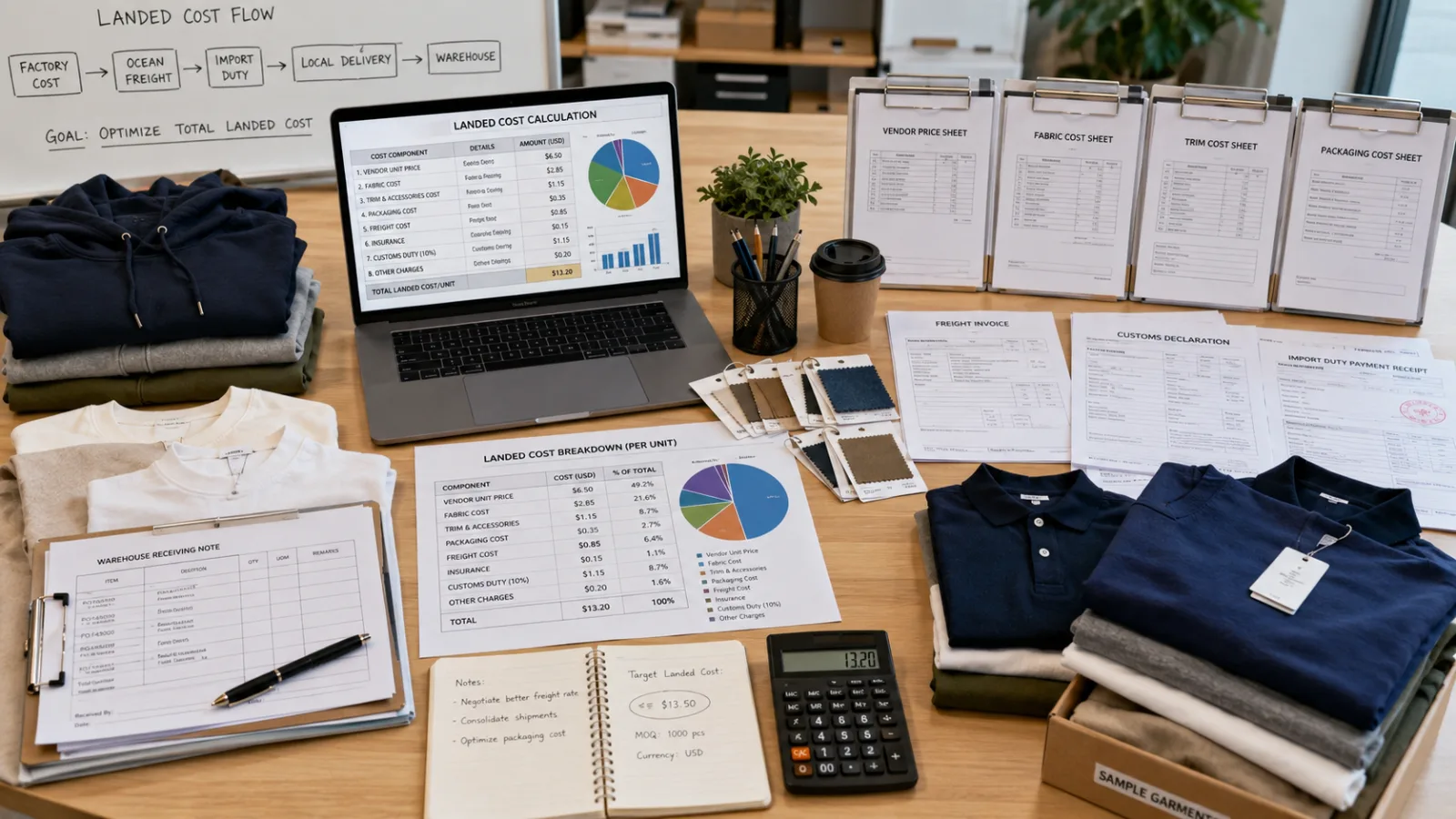
Vendor cost is the price charged by the clothing supplier or manufacturer. Landed cost is the full cost of getting the product into your warehouse or fulfillment center.
Landed cost may include:
- Vendor unit cost
- Sampling cost
- Fabric and trim cost
- Packaging cost
- Quality inspection cost
- Freight cost
- Customs duties
- Taxes
- Insurance
- Bank fees
- Warehouse receiving cost
For fashion brands, landed cost is often more important than factory price because it shows the real cost of inventory before selling.
Why This Difference Matters
A vendor may offer a low production price, but if shipping, duties, packaging, and inspection are high, the final landed cost may not be competitive. Another vendor may quote a higher unit price but include more services and offer smoother logistics. Without calculating landed cost, you cannot compare vendors accurately.
1. Vendor Cost Helps You Set the Right Retail Price
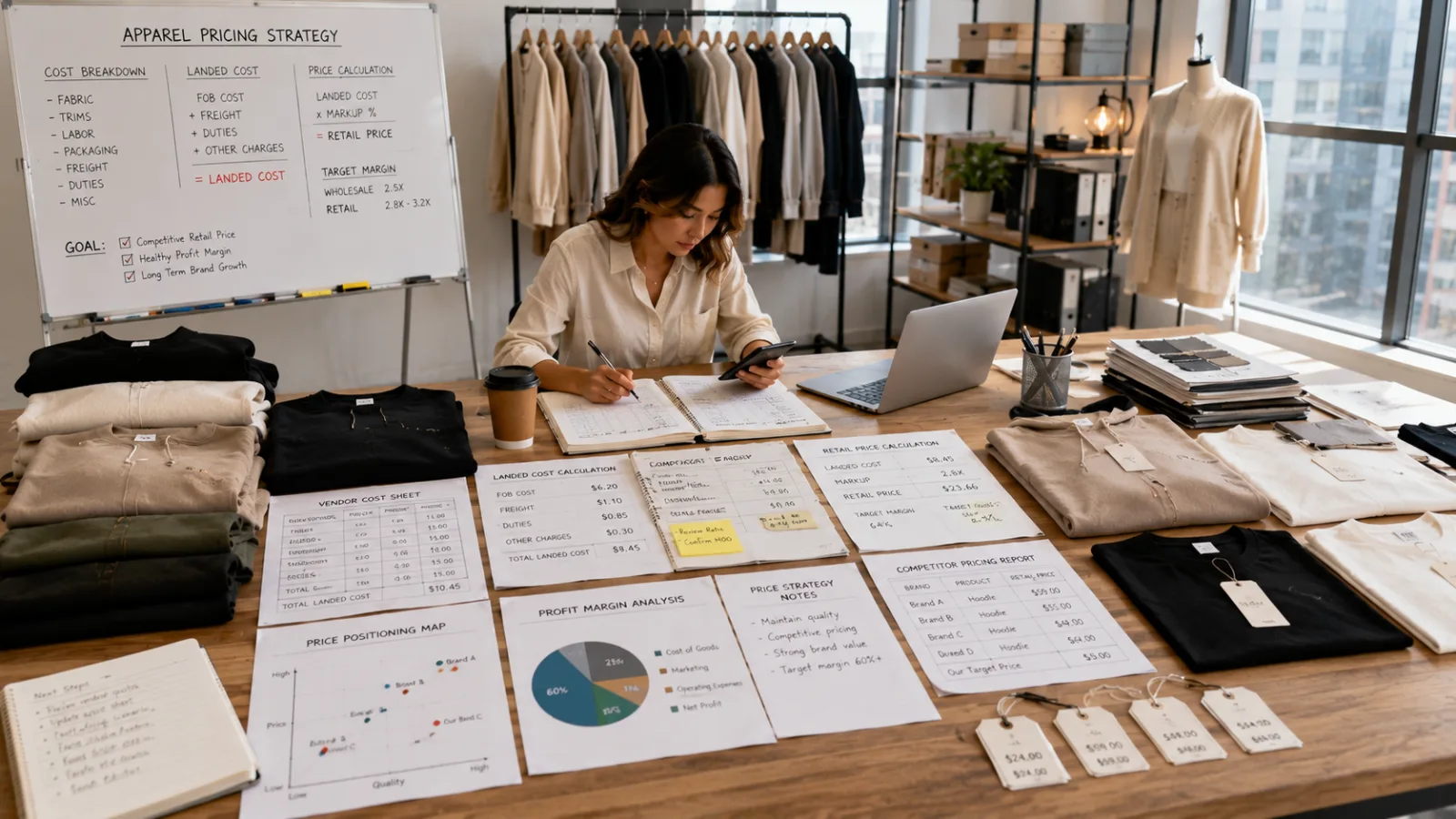
The first reason to know the cost of your clothing vendors is pricing. You cannot set a profitable retail price if you do not know what the product truly costs.
Many new fashion brands price products emotionally. They look at competitors, guess what customers might pay, or choose a price that “feels right.” Competitor research is useful, but pricing must also be based on your actual cost structure.
If your landed cost for a hoodie is $28 and you sell it for $45, your margin may be too low after marketing, platform fees, packaging, returns, and overhead. If your landed cost is $14 and you sell it for $58, you may have more room for profit, promotions, and wholesale pricing.
Cost-Based Pricing Matters
A strong pricing strategy begins with cost. You need to know how much it costs to make and deliver the product before deciding the selling price.
A simple pricing structure should consider:
- Product landed cost
- Target gross margin
- Marketing cost
- Fulfillment cost
- Returns allowance
- Platform fees
- Wholesale margin if applicable
- Discount and markdown strategy
- Brand positioning
Fashion brands often need enough margin to cover more than production. A product that looks profitable at first may become weak after advertising costs, return shipping, packaging, and discounts.
Example
If a dress costs $22 from the vendor but $31 after packaging, freight, duties, and warehouse receiving, your real base cost is $31. If you sell it for $60, your gross margin is much lower than you might think. If you later run a 25 percent discount, your profit may almost disappear.
Knowing the full vendor cost helps you avoid underpricing.
2. Vendor Cost Protects Your Profit Margins
Profit margin is one of the most important numbers in a fashion business. You can have strong sales and still struggle if your margins are weak. Knowing the cost of your clothing vendors helps you protect your margins before production begins.
A profit margin is the difference between what a product costs and what it sells for. But in clothing, margin can be affected by many hidden costs. If vendor pricing changes unexpectedly or if the quote does not include key details, your profit can shrink quickly.
Why Margins Disappear
Margins often disappear because brands forget to include:
- Sample development
- Pattern making
- Size grading
- Custom labels
- Hang tags
- Packaging
- Print setup
- Embroidery digitizing
- Fabric testing
- Quality inspection
- Freight
- Duties
- Returns
- Markdowns
- Payment processing fees
- Warehouse costs
A product may have a strong margin at full price but become weak after discounts. This is why vendor cost must be calculated before production, not after inventory arrives.
Vendor Cost Helps You Negotiate Better
When you understand your cost breakdown, you can negotiate smarter. Instead of asking, “Can you make it cheaper?” you can ask more useful questions.
- Can we reduce cost by using stock fabric?
- Can we simplify the trim?
- Can we increase quantity for a better price?
- Can we use standard packaging for the first run?
- Can we replace embroidery with print?
- Can we adjust construction without hurting quality?
- Can we reduce fabric waste through better marker planning?
Good cost knowledge helps you lower cost without damaging the product.

3. Vendor Cost Helps You Compare Suppliers Fairly
Not all vendor quotes are equal. One of the biggest mistakes fashion brands make is comparing suppliers only by unit price. A supplier that looks cheaper may not actually be cheaper when you review the full cost.
For example:
Vendor A quotes $9 per T-shirt but does not include labels, packaging, or shipping.
Vendor B quotes $11 per T-shirt and includes labels, basic packaging, and carton packing.
Vendor C quotes $10 per T-shirt but has a higher MOQ and longer lead time.
At first, Vendor A looks cheapest. But after adding extra costs, Vendor B may offer better value. Vendor C may be suitable for larger production but risky for a small brand.
What to Compare Beyond Unit Price
When comparing clothing vendors, look at:
- Unit cost
- MOQ
- Sample cost
- Fabric inclusion
- Trim inclusion
- Label cost
- Packaging cost
- Printing or embroidery cost
- Production lead time
- Quality control process
- Payment terms
- Shipping terms
- Communication quality
- Defect rate
- Reorder flexibility
- Past product experience
A higher unit price may be worth it if the vendor has better quality, clearer communication, faster delivery, lower defect rates, and fewer hidden charges.
Total Value Matters More Than Cheapest Price
The cheapest supplier can become expensive if they deliver poor quality, miss deadlines, or create rework. The goal is to find the best value supplier, not the lowest quote.
Knowing the cost of your clothing vendors gives you the information needed to compare suppliers logically. You can see who is truly cost-effective and who is only cheap on paper.

4. Vendor Cost Helps You Plan Your Production Budget
A fashion brand needs a realistic production budget before placing orders. Vendor cost helps you understand how much money you need to launch or restock products. Without this information, you may commit to a collection that your budget cannot support.
Production budgeting is especially important for new brands because cash is limited. A founder may want to launch 12 styles in multiple colors, but vendor costs may only support 4 strong styles. Knowing the numbers early helps you make smarter choices.
Budgeting Before Production
Your production budget should include:
- Product development
- Tech packs
- Samples
- Fabric
- Trims
- Labels
- Packaging
- Bulk production
- Quality control
- Shipping
- Duties and taxes
- Warehouse receiving
- Photography samples
- Extra units for damages or exchanges
If you only budget for garment production, you may run out of money before products are ready to sell.
Cost Helps You Control Collection Size
Vendor cost helps you decide how many styles, colors, and sizes to produce. A smaller, focused collection may be better than a large collection with weak inventory depth.
For example, producing 10 styles with very limited stock may create a scattered launch. Producing 4 styles with better size and color planning may create a stronger customer experience.
Vendor Cost Helps Avoid Overproduction
When you understand costs clearly, you are less likely to over-order. High MOQ, low unit price, and supplier pressure can tempt brands to buy too much. But if the total investment is too high, overproduction can damage cash flow.

5. Vendor Cost Helps You Understand MOQ Pressure
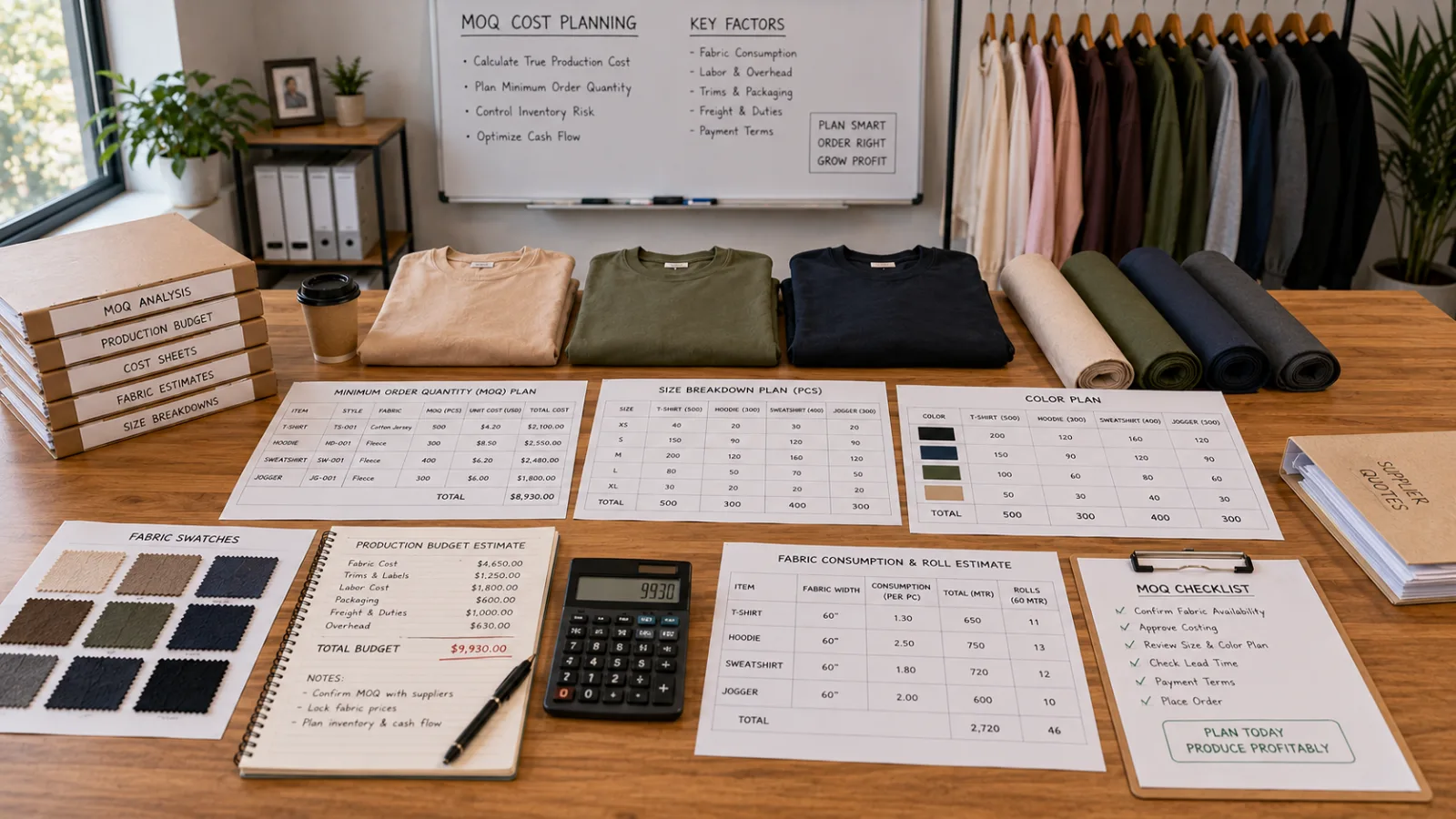
MOQ, or minimum order quantity, is one of the biggest cost-related challenges in apparel production. A vendor may offer a good unit price, but only if you order a large quantity. This can create pressure for new brands.
Knowing vendor cost helps you understand whether an MOQ is realistic for your budget and sales plan.
Why MOQ Affects Total Cost
A vendor may quote:
$6 per unit at 1,000 pieces
$8 per unit at 500 pieces
$11 per unit at 200 pieces
The lowest unit cost may look attractive, but the total investment is much higher. If your brand cannot sell 1,000 pieces quickly, the lower unit price may become risky.
MOQ also applies to fabric, trims, labels, packaging, and custom colors. You may be able to produce 300 garments, but the fabric mill may require enough fabric for 800. This can create deadstock fabric or force a larger order.
Cost Helps You Decide Quantity
Vendor cost helps you calculate:
- Can I afford this MOQ?
- Can I sell this inventory?
- Will this quantity create overstock risk?
- Is a higher unit cost safer for a smaller test run?
- Should I reduce colors or styles?
- Should I use stock fabric instead of custom fabric?
For startups, a higher unit cost with lower MOQ may be smarter than a low unit cost with high inventory risk.
6. Vendor Cost Helps You Manage Cash Flow
Cash flow is the movement of money in and out of your business. In fashion, cash flow can become difficult because production requires money before sales happen. You may pay deposits, sample fees, fabric costs, packaging costs, and shipping costs weeks or months before customers buy the product.
Knowing vendor cost helps you plan when money is needed and how much cash you must keep available.
Apparel Cash Flow Challenges
Most clothing vendors require payment in stages. A common structure may include a deposit before production and balance before shipment. That means you may need to pay most of the production cost before inventory reaches your warehouse.
If you do not understand total vendor cost, you may run short of cash before launch. You may not have enough money left for product photography, marketing, fulfillment, website updates, or customer service.
Cost Visibility Helps You Plan
When you know vendor costs, you can create a cash flow schedule.
- Sample payment date
- Deposit payment date
- Fabric payment date
- Trim payment date
- Balance payment date
- Shipping payment date
- Customs and duties date
- Warehouse receiving date
- Marketing launch budget
- This helps prevent surprises.
Vendor Cost Also Affects Reorders
If a product sells well, you may need to reorder quickly. But if your cash is tied up in other inventory, you may miss the opportunity. Knowing vendor cost helps you plan reorder funds before products sell out.

7. Vendor Cost Helps You Avoid Hidden Fees
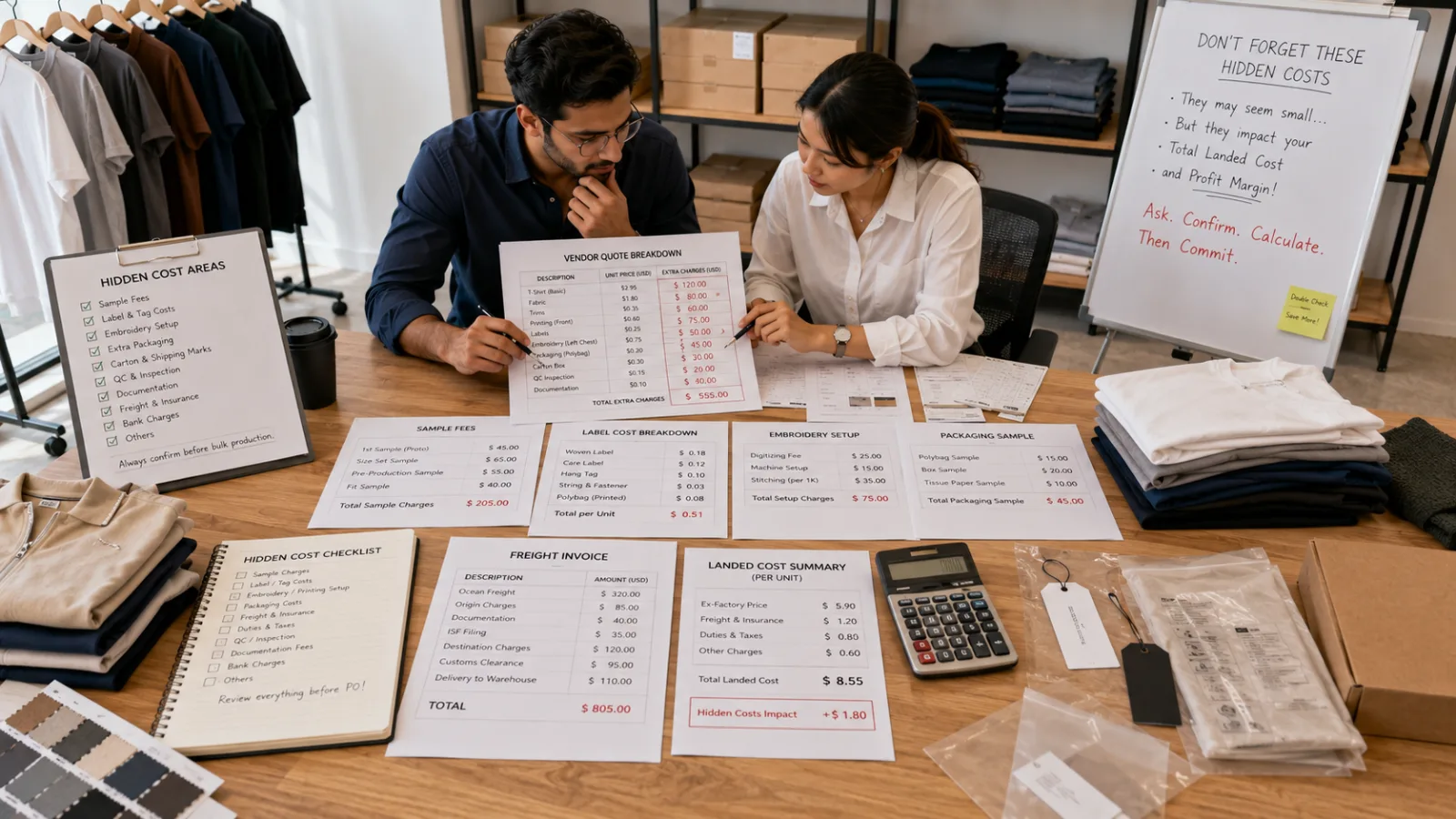
Hidden fees can quickly damage your budget. Many clothing brands are surprised when costs appear after they have already started working with a vendor. Sometimes these costs are normal, but they become a problem when they are not discussed early.
Common Hidden Vendor Costs
- Pattern making
- Sample revisions
- Size grading
- Fabric sourcing
- Custom dyeing
- Print screen setup
- Embroidery digitizing
- Special washing
- Custom labels
- Hang tags
- Barcode stickers
- Individual polybags
- Carton packing
- Rush production
- Inspection fees
- Bank transfer fees
- Freight handling
- Storage fees
- Rework charges
A professional vendor should explain what is included and what is extra. If they do not, ask.
Why Hidden Costs Are Dangerous
Hidden costs make your pricing inaccurate. If you set retail prices before knowing these costs, you may discover later that your margin is too low. Hidden costs can also cause tension with suppliers if you feel surprised or misled.
How to Protect Yourself
Request a detailed quotation before paying. Ask the vendor to list included and excluded services. Confirm whether pricing includes fabric, trims, labels, packaging, printing, embroidery, washing, quality control, and shipping. Keep all agreements in writing. A clear written quote helps avoid disputes later.
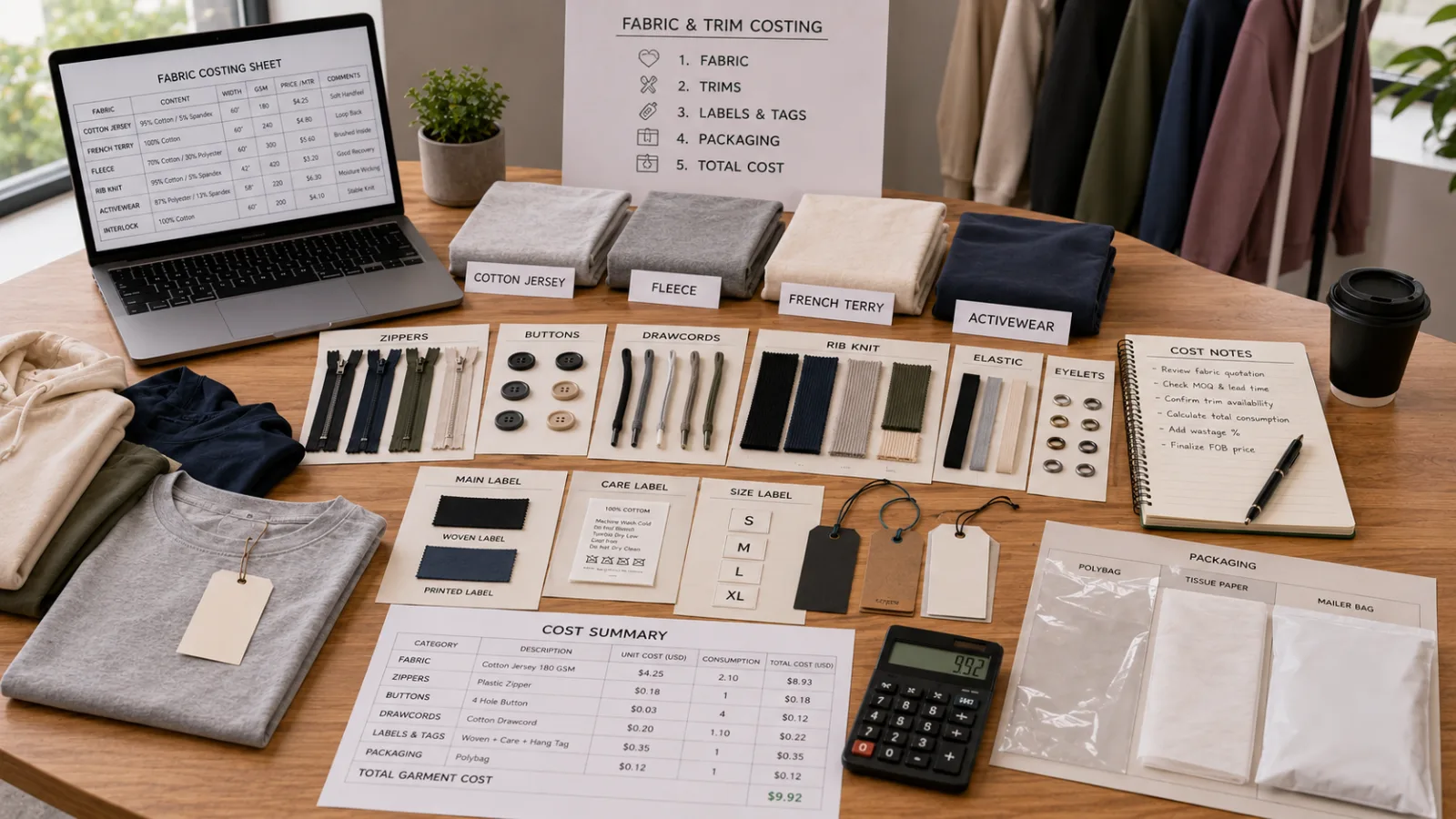
8. Vendor Cost Helps You Choose the Right Fabric and Trims
Fabric and trims are major parts of clothing cost. A small change in material can significantly affect the final price. Knowing vendor cost helps you choose materials that match your budget, quality expectations, and retail price.
Fabric Cost Matters
Fabric cost depends on composition, weight, construction, finish, dyeing, printing, certification, and availability. Organic cotton usually costs more than standard cotton. Custom-dyed fabric costs more than stock fabric. Heavy fleece costs more than lightweight jersey. Technical activewear fabric costs more than basic polyester. If you do not understand fabric cost, you may choose materials that make your product too expensive to sell profitably.
Trim Cost Matters Too
Trims include buttons, zippers, drawcords, elastic, rib, labels, hang tags, patches, snaps, lining, and packaging. These details may look small, but they add up quickly.
For example, a custom metal zipper, woven label, special hang tag, embroidery patch, and branded polybag can raise the cost of a jacket or hoodie significantly.
Cost Helps You Make Trade-Offs
Knowing cost allows you to make smart trade-offs. You may choose premium fabric but standard packaging. Or you may use stock fabric and invest more in fit. Or you may reduce one trim detail to protect margin without hurting the product.
9. Vendor Cost Helps You Plan Wholesale and Retail Margins
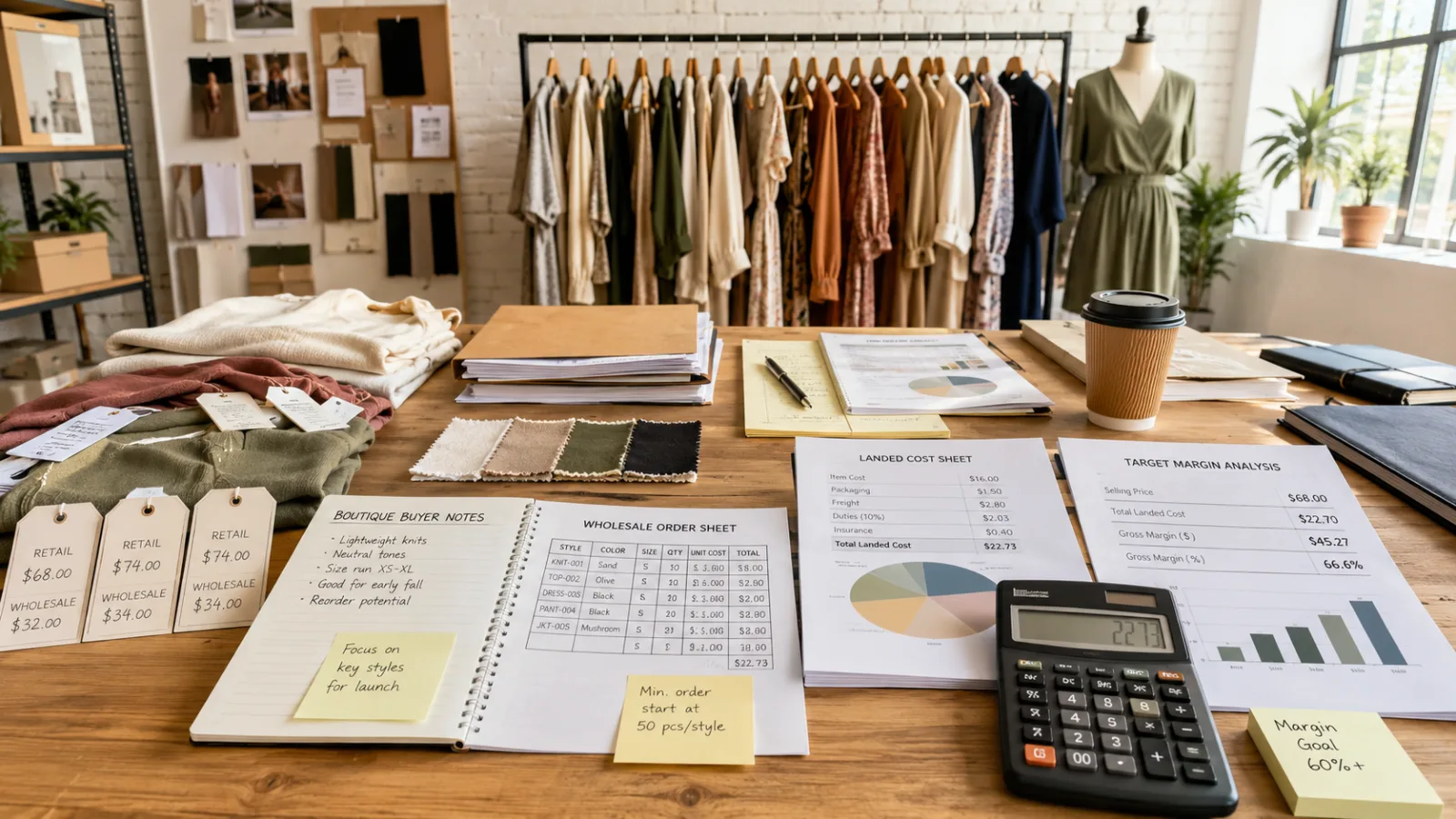
If your clothing brand plans to sell wholesale, vendor cost becomes even more important. Wholesale pricing usually requires a lower selling price than direct-to-consumer retail. If your production cost is too high, wholesale may not be profitable.
Why Wholesale Needs Strong Costing
A product that works for direct retail may not work for wholesale. For example, if your landed cost is $25 and your retail price is $75, your direct margin may look acceptable. But if a boutique wants to buy at $37.50 wholesale, your margin becomes much tighter.
Wholesale buyers also expect consistency, delivery reliability, packaging, labeling, and sometimes special terms. These costs must be included in your pricing model.
Cost Helps You Build Pricing Tiers
A strong fashion brand may need different pricing structures:
- Direct-to-consumer retail price
- Wholesale price
- Distributor price
- Outlet price
- Markdown price
- Bundle price
- Clearance price
Vendor cost helps you know how low you can go without losing money.
Protecting the Brand
If your cost is too high, you may discount too often or price too high for the market. Both can hurt growth. Strong vendor costing helps you create a pricing model that supports both brand value and business sustainability.
10. Vendor Cost Helps You Make Better Scaling Decisions
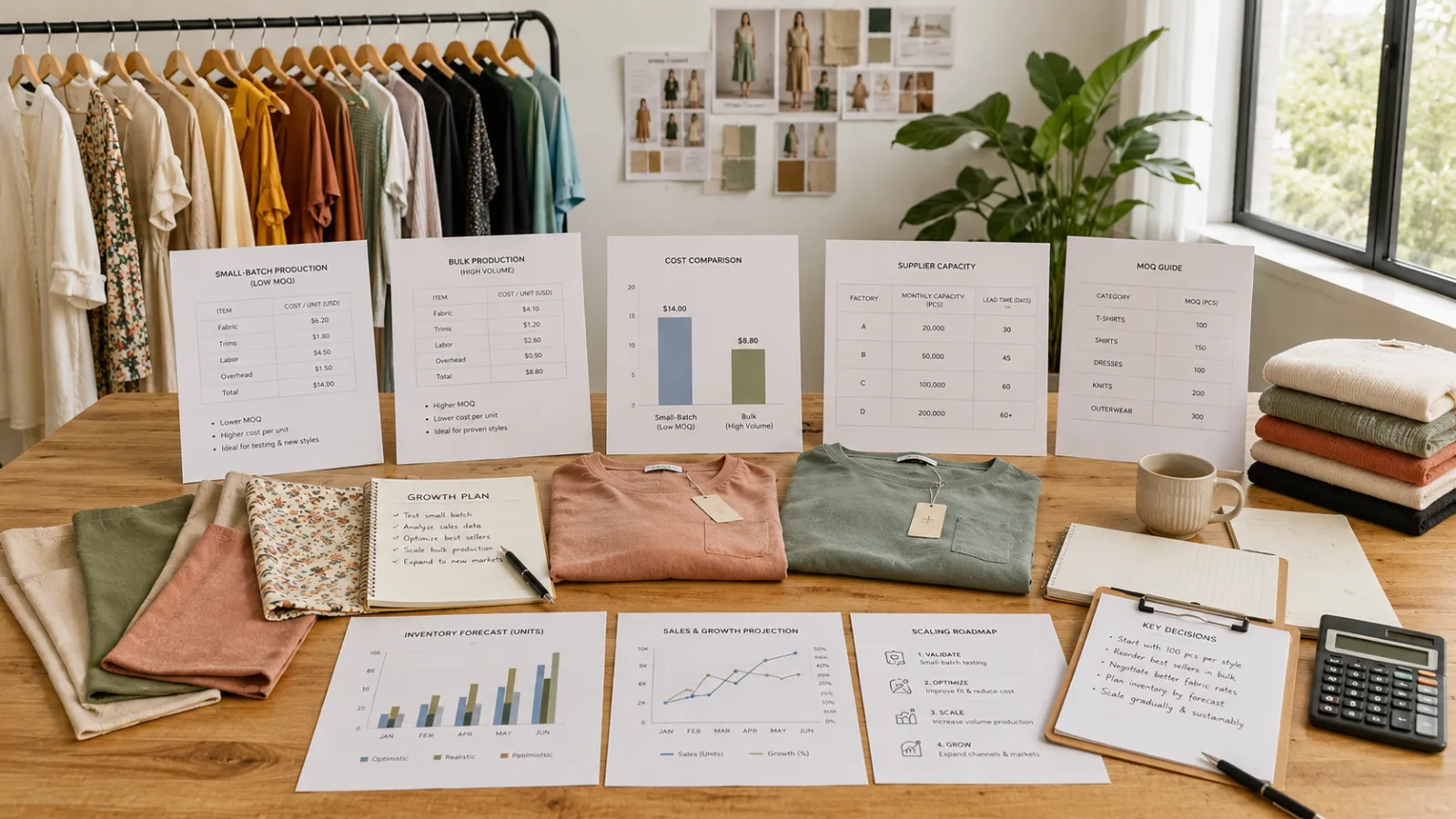
A fashion brand’s cost structure may work at a small scale but change as the brand grows. Knowing vendor cost helps you decide when to increase order quantities, negotiate better rates, switch suppliers, or diversify production.
Scaling Changes Cost
As order volume grows, some costs may decrease. Larger production runs can reduce unit cost. Fabric mills may offer better pricing. Packaging suppliers may lower cost per piece. Freight may become more efficient.
But scaling can also increase risk. Larger orders require more cash, stronger quality control, better logistics, and more accurate demand forecasting.
Cost Helps You Decide When to Scale
Before increasing order quantity, ask:
- Can we sell the extra inventory?
- Will the lower unit cost improve total profit?
- Can we afford the larger deposit?
- Will storage costs increase?
- Can the vendor maintain quality at larger volume?
- Do we need a second supplier?
- Can we reorder instead of overproducing?
Knowing vendor cost helps you scale with numbers instead of emotion.
Scaling Is Not Just Buying More
Scaling means building a stronger production system. It may require better tech packs, stronger quality checks, improved supplier agreements, better forecasting, and more organized inventory planning.
What Costs Should You Ask Clothing Vendors to Break Down?
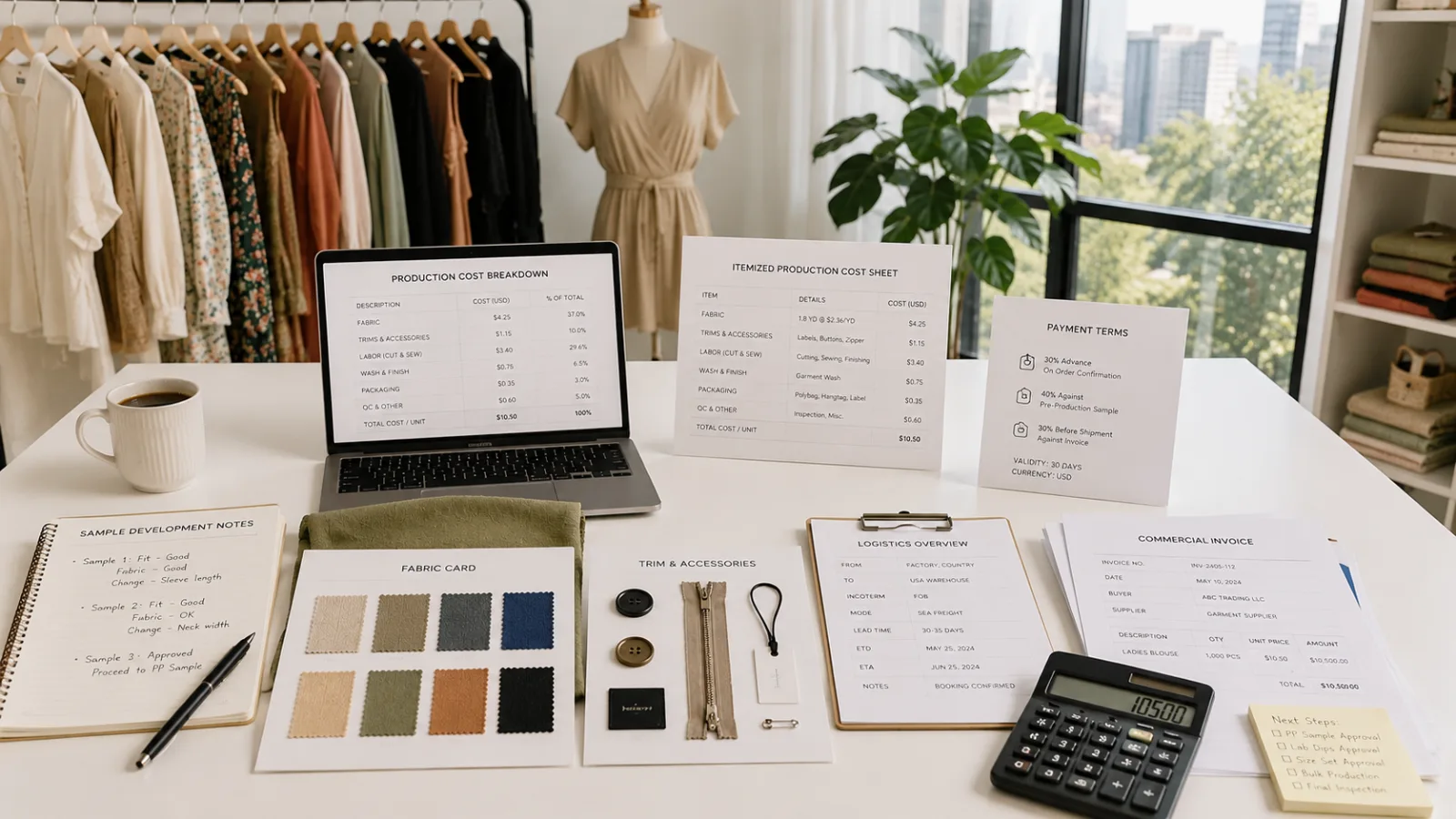
When speaking with clothing vendors, ask for a detailed breakdown instead of accepting one vague number.
Ask About Product Costs
- Fabric cost
- Cutting cost
- Sewing cost
- Thread cost
- Trim cost
- Finishing cost
- Washing cost
- Printing cost
- Embroidery cost
- Label cost
- Packaging cost
- Carton cost
Ask About Development Costs
- Tech pack support
- Pattern making
- Sample development
- Sample shipping
- Fit revisions
- Size grading
- Pre-production sample
- Strike-offs or lab dips
Ask About Logistics Costs
- Freight terms
- Export documents
- Shipping method
- Customs support
- Insurance
- Duties and taxes
- Warehouse delivery
Ask About Payment Costs
- Deposit amount
- Balance payment timing
- Currency
- Bank fees
- Refund policy
- Late change fees
- Rush order fees
- The more clearly you understand these costs, the better you can plan.
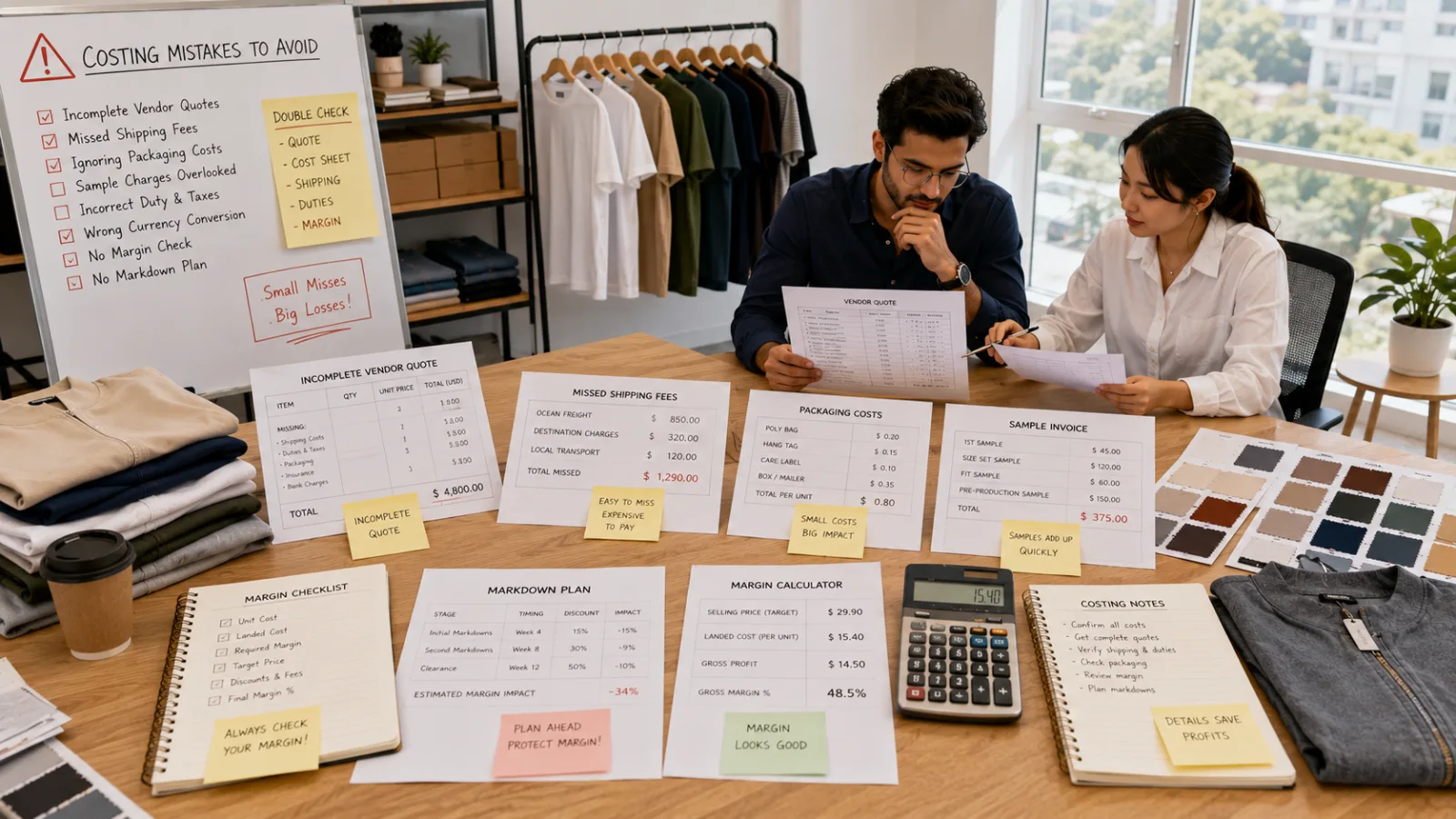
Common Mistakes Brands Make With Vendor Costs
Many clothing brands make the same costing mistakes when working with vendors.
Mistake 1: Looking Only at Unit Price
Unit price is important, but it does not show the full cost.
Mistake 2: Forgetting Shipping and Duties
International production can become expensive after freight, customs, and taxes.
Mistake 3: Not Including Packaging
Custom packaging, labels, hang tags, and barcode stickers can add significant cost.
Mistake 4: Ignoring Sample Costs
Sampling is part of product development. It should be included in your budget.
Mistake 5: Underestimating Returns
Returns reduce profit, especially in eCommerce fashion.
Mistake 6: Not Planning Markdown Margin
If you ever discount, your original pricing must allow room for it.
Mistake 7: Comparing Vendors Unequally
Do not compare one all-inclusive quote against another quote that excludes key services.
Mistake 8: Not Updating Costs
Fabric, freight, labor, and exchange rates can change. Review costs regularly.
How to Build a Clothing Vendor Cost Sheet
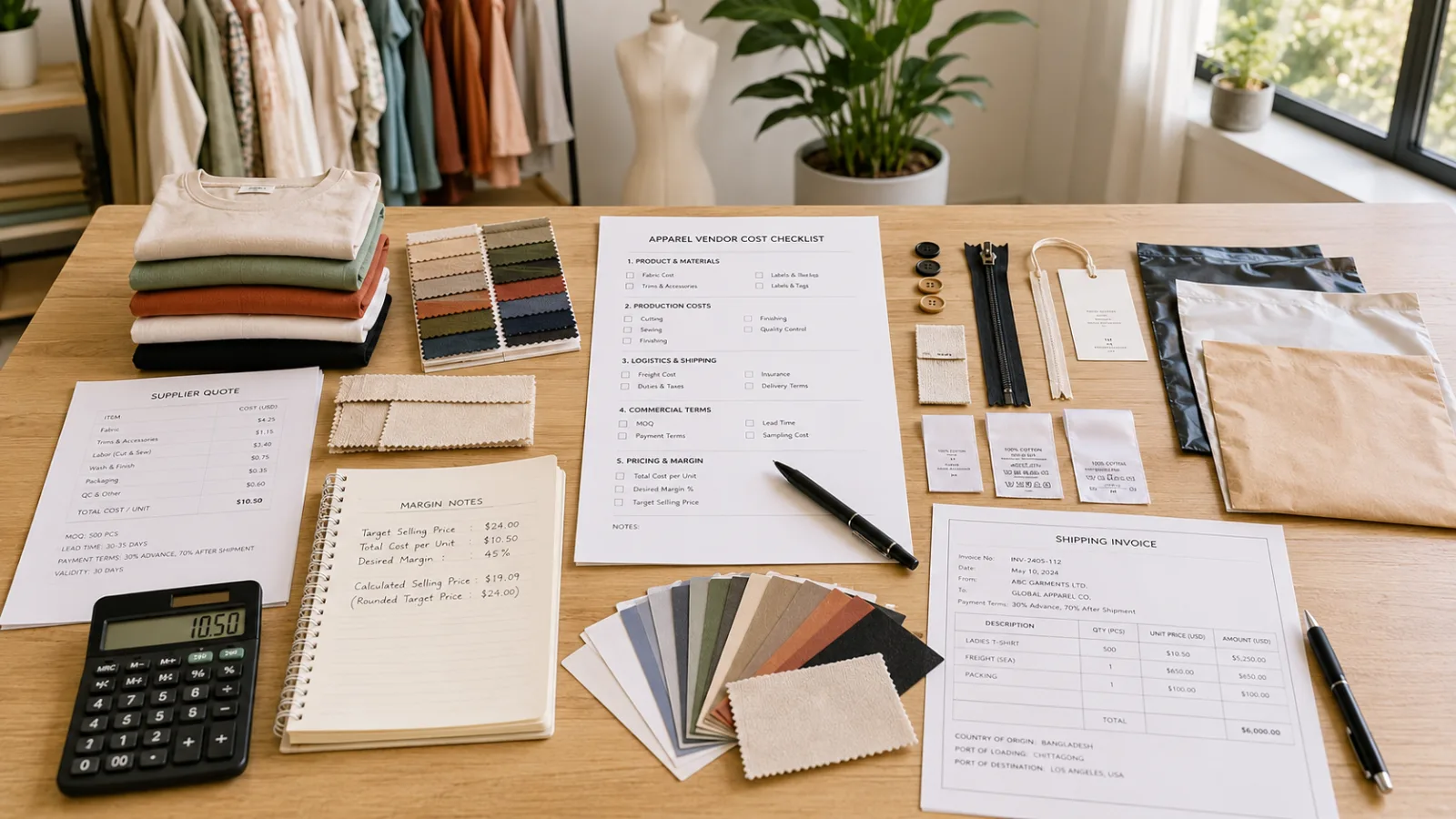
A vendor cost sheet helps you track every product cost in one place. It can be simple at first, but it should be detailed enough to guide pricing and production decisions.
Include These Columns
- Product name
- Style number
- Vendor name
- MOQ
- Fabric cost
- Trim cost
- Labor cost
- Print or embroidery cost
- Label cost
- Packaging cost
- Sample cost
- Freight cost
- Duties and taxes
- Landed cost
- Retail price
- Wholesale price
- Gross margin
- Payment terms
- Lead time
- Notes
Why Cost Sheets Help
A cost sheet helps you compare products and vendors. It also helps you see which products are profitable and which need adjustment. If one style has weak margin, you can review fabric, trim, construction, packaging, or price before production begins.
Keep It Updated
Vendor costs can change. Update your cost sheet whenever fabric prices, shipping rates, MOQ, or supplier terms change. An outdated cost sheet can lead to poor pricing decisions.
ApparGlobal
For apparel brands, knowing the cost of clothing vendors becomes much easier when product development, sourcing, sampling, MOQ planning, and quality control are organized from the beginning. A vendor quote is only useful when the brand understands what is included, what is excluded, and how the final landed cost affects retail pricing and profit margins.
Many clothing brands struggle because they compare vendors only by unit price without reviewing fabric quality, trim costs, packaging, sample fees, production lead time, quality checkpoints, and shipping terms. This can lead to inaccurate pricing, weak margins, hidden costs, and inventory decisions that hurt cash flow.
Companies such as ApparGlobal help clothing brands align product development, fabric sourcing, vendor coordination, sample review, cost planning, MOQ strategy, production timelines, and quality expectations. For brands developing T-shirts, hoodies, activewear, kidswear, streetwear, uniforms, private label apparel, or custom collections, this kind of production-focused support can make vendor costing more transparent and reliable.
When brands work with a partner that understands tech packs, fabric behavior, trim standardization, supplier communication, cost breakdowns, quality checkpoints, and bulk production requirements, they can make better pricing decisions and move from idea to finished product with more confidence.
Clothing Vendor Cost Checklist
Use this checklist before approving a vendor quote:
- Do I know the full unit cost?
- Do I know what is included in the quote?
- Do I know what is excluded?
- Have I confirmed fabric cost?
- Have I confirmed trim cost?
- Have I included labels and packaging?
- Have I included sample fees?
- Have I included print or embroidery setup?
- Have I included shipping?
- Have I included duties and taxes?
- Have I calculated landed cost?
- Have I checked MOQ impact?
- Have I compared vendors fairly?
- Have I calculated retail margin?
- Have I calculated wholesale margin?
- Have I planned for markdowns?
- Have I kept the quote in writing?
- Have I updated my cost sheet?
This checklist helps fashion brands avoid pricing mistakes and hidden cost surprises.
Final Thoughts
Knowing the cost of your clothing vendors is essential for building a profitable fashion brand. Vendor cost affects almost every major business decision, including retail price, wholesale price, product margin, production budget, MOQ strategy, cash flow, supplier comparison, fabric selection, scaling, and inventory planning.
A clothing vendor’s unit price is only the starting point. The real cost may include fabric, trims, labels, packaging, sampling, printing, embroidery, washing, quality control, shipping, duties, taxes, warehousing, returns, and payment fees. If these costs are not understood early, your pricing can become inaccurate and your profit margins can disappear.
Strong vendor costing helps you make better decisions. It allows you to compare suppliers fairly, avoid hidden fees, negotiate smarter, choose the right materials, plan production budgets, and protect cash flow. It also helps you decide whether a product is truly worth producing.
For new clothing brands, cost clarity is one of the best forms of protection. It prevents emotional decisions and helps turn creative ideas into financially realistic products. For growing brands, cost knowledge supports better scaling, supplier diversification, wholesale planning, and long-term profitability.
In fashion, a product should not only look good. It must also make business sense. When you understand the cost of your clothing vendors, you can price with confidence, produce with control, and build a brand that is not only stylish, but sustainable as a business.