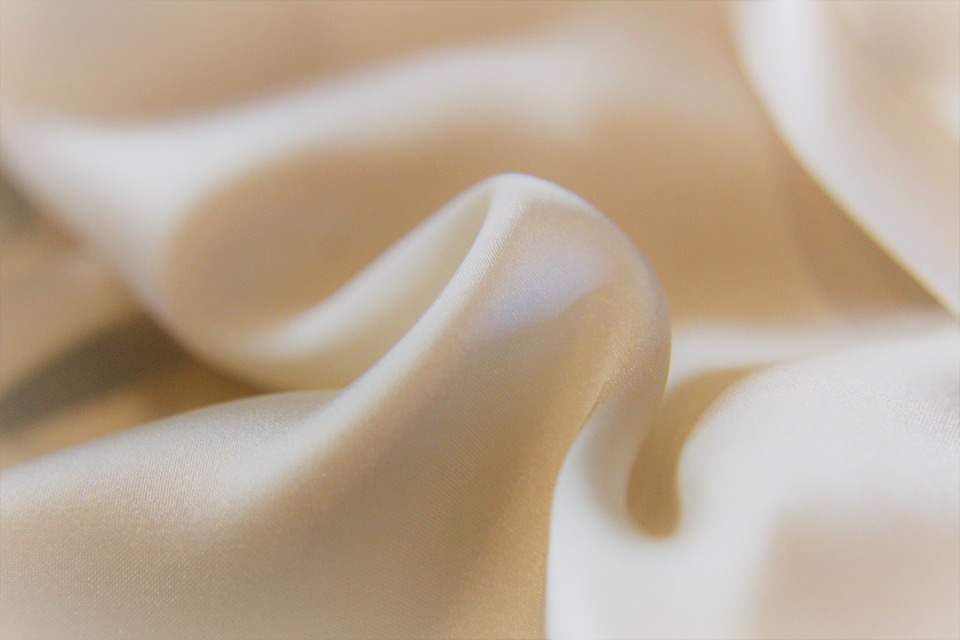
Satin is one of the most versatile fabrics used in fashion, home textiles, accessories, beauty products, and special occasion design. Its smooth surface, elegant shine, soft touch, and flowing drape make it instantly recognizable. From wedding gowns and evening dresses to pillowcases, robe sets, scarves, linings, event decor, and luxury packaging, satin has a wide range of practical and aesthetic applications.
However, satin is often misunderstood. Many people think satin is a fiber, but satin is usually a weave structure. It can be made from silk, polyester, nylon, acetate, viscose, or blended fibers. This means satin can be luxurious and breathable in one product, affordable and durable in another, or lightweight and delicate in another.
The application of satin depends heavily on its fiber content, fabric weight, finish, drape, opacity, stretch, durability, and care requirements. A lightweight charmeuse satin may be perfect for a slip dress, but too delicate for heavy upholstery. A duchess satin may be ideal for bridal gowns, but too structured for soft sleepwear. Polyester satin may work well for affordable event decor, while silk satin may be preferred for high-end scarves, luxury robes, and premium eveningwear.
This guide explores the most common satin fabric applications and use cases in detail. You will learn where satin works best, which satin type suits each product, when to avoid satin, and what apparel brands should consider before using satin in production.
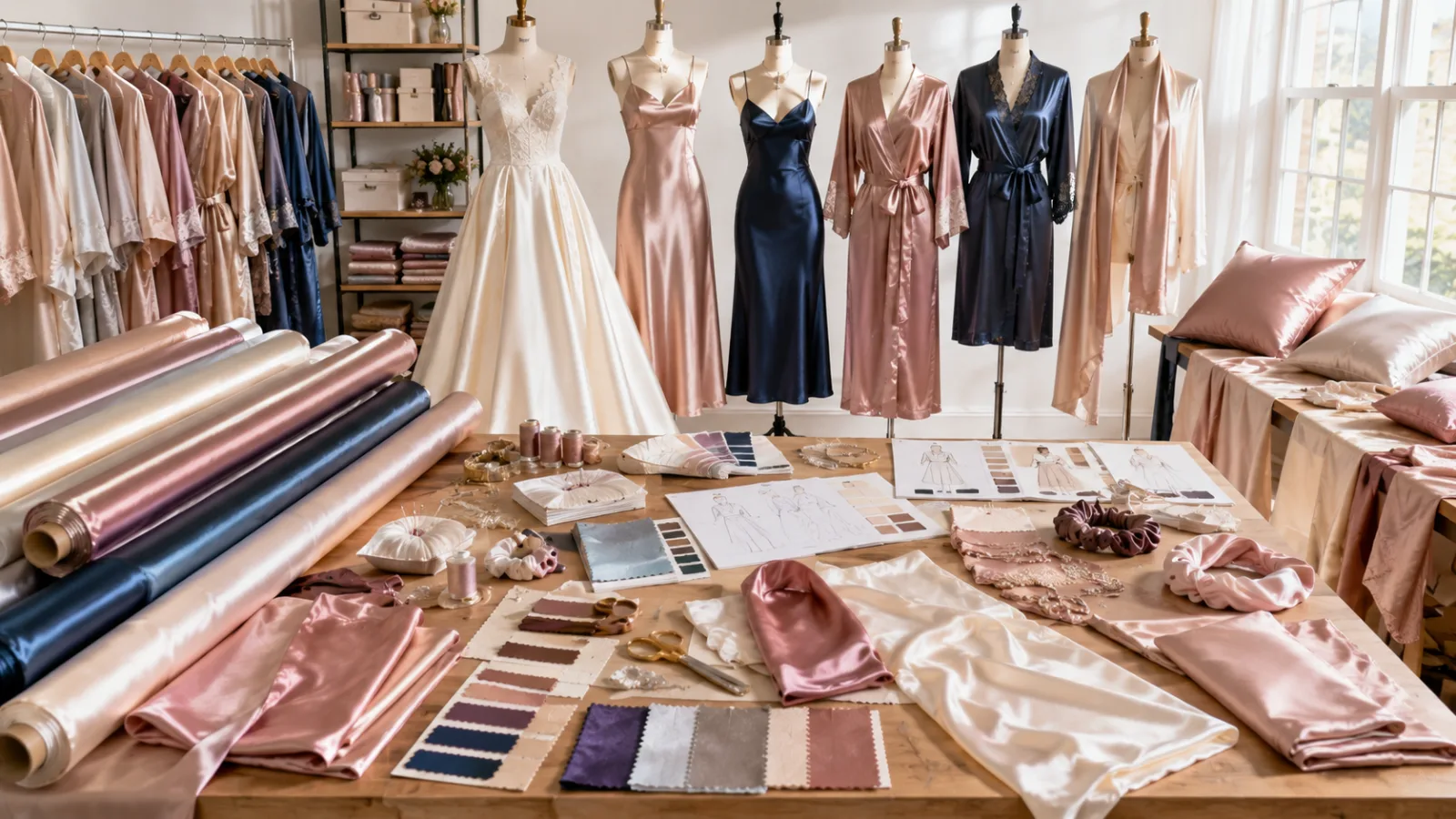
What Is Satin Fabric?
Satin is a fabric created using a satin weave. In this weave structure, yarns float over several yarns before passing under one. These longer surface floats create satin’s signature smoothness and shine.
Satin usually has:
- A glossy front surface.
- A duller back side.
- A smooth hand feel.
- Elegant drape.
- Light-reflecting appearance.
- Soft surface texture.
- Varying levels of weight and structure.
Satin can be made from different fibers, including:
- Silk.
- Polyester.
- Nylon.
- Acetate.
- Viscose.
- Rayon.
- Cotton blends.
- Elastane blends.
Because satin can be made from many fibers, not all satin performs the same way. Silk satin may feel luxurious and breathable. Polyester satin may be more affordable and easier to maintain. Stretch satin may work well for fitted garments. Duchess satin may offer structure for bridalwear and formal dresses.
This is why satin should always be chosen according to the final product, not just by appearance.
Placement Instruction: Place this section after the introduction. It explains the foundation of satin before discussing applications.
Image Generation Prompt:
Create a realistic textile education scene showing satin weave fabric with a glossy face and dull back, yarn cones, silk, polyester, nylon, viscose, and acetate fiber samples, and satin swatches on a clean fabric table, no logos, no readable text, 16:9.
Why Satin Is Used Across So Many Product Categories
Satin is popular because it offers both visual and functional benefits. It can make a product look elegant, feel smooth, and move beautifully.
The main reasons satin is used across different industries include:
- It reflects light beautifully.
- It feels smooth against the skin.
- It creates elegant drape.
- It works well for formal garments.
- It can be produced at different price points.
- It can be lightweight or structured.
- It works as both outer fabric and lining.
- It gives products a premium visual finish.
- It can be dyed in rich colours.
- It supports both fashion and home textile applications.
Satin is especially useful when a product needs softness, shine, fluidity, or a more polished appearance. This makes it popular in fashion design, bridalwear, lingerie, sleepwear, home decor, accessories, and beauty-related textiles.
However, satin is not ideal for every product. It can snag, show water marks, feel slippery during sewing, and require delicate care. The best use cases are those where satin’s beauty and comfort outweigh its handling challenges.
Satin Fabric Applications in Fashion
Fashion is one of the largest application areas for satin. Designers use satin when they want garments to look elegant, soft, fluid, polished, or luxurious.
Satin can be used in:
- Dresses.
- Blouses.
- Skirts.
- Pants.
- Bridal gowns.
- Eveningwear.
- Lingerie.
- Sleepwear.
- Robes.
- Jackets.
- Linings.
- Scarves.
- Ties.
- Hair accessories.
- Costumes.
- Performancewear.
The right satin depends on the garment style. Lightweight satin is better for flowing silhouettes, while heavier satin works well for structured designs.
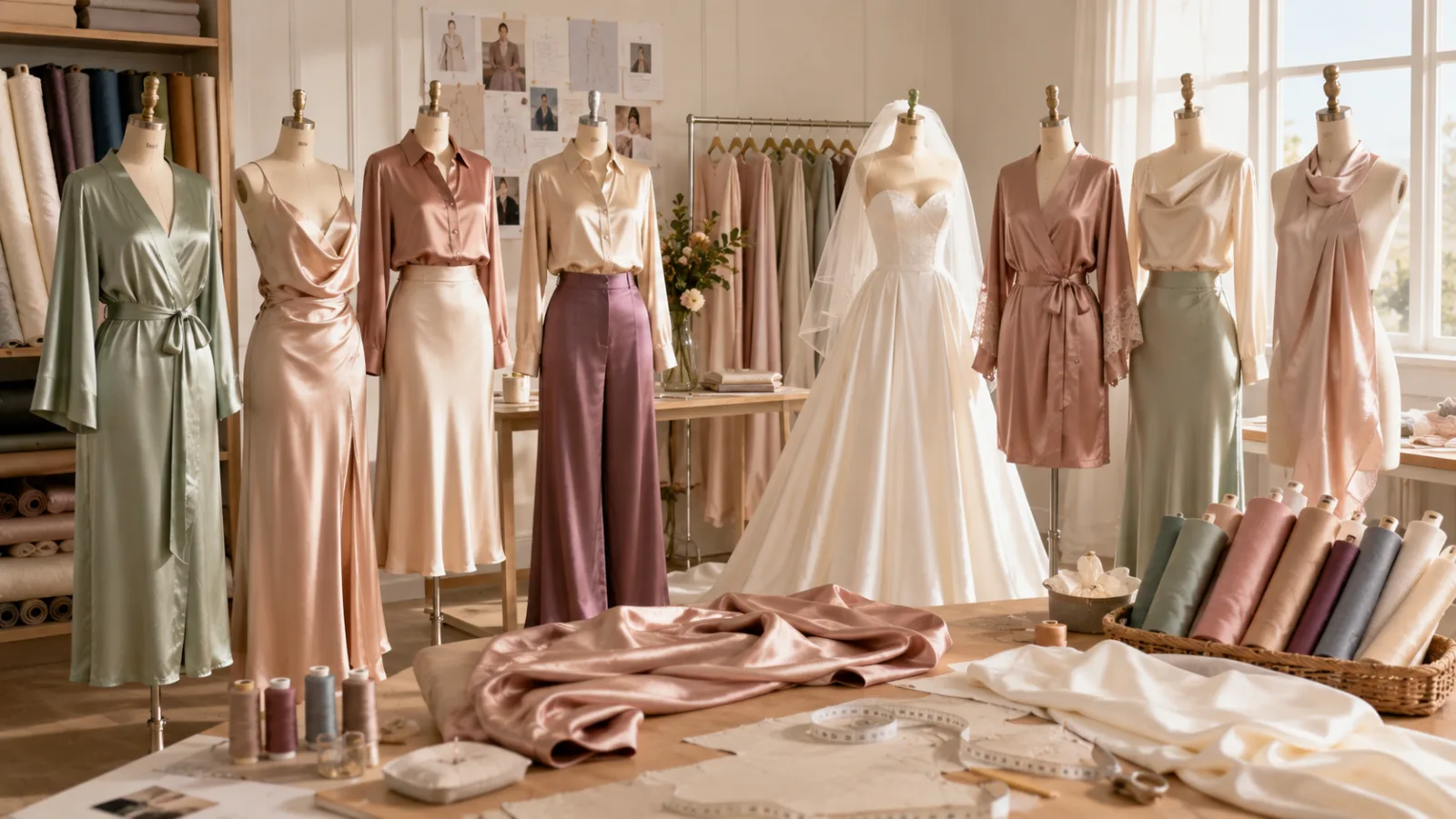
1. Satin for Evening Dresses
Satin is one of the most popular fabrics for evening dresses because it looks elegant under light and creates a polished formal appearance. Its shine gives dresses a refined look, while its drape helps create movement.
Satin evening dresses may include:
- Slip dresses.
- Bias-cut gowns.
- Cocktail dresses.
- Ball gowns.
- Draped dresses.
- One-shoulder dresses.
- Formal maxi dresses.
- Red-carpet-style gowns.
Lightweight satin creates soft, fluid eveningwear. Heavier satin creates more structured dresses with dramatic shape.
Best satin types for evening dresses include:
- Charmeuse satin.
- Crepe-back satin.
- Duchess satin.
- Stretch satin.
- Silk satin.
- Polyester satin for affordable eveningwear.
Satin is especially useful for evening dresses in jewel tones, black, champagne, navy, burgundy, emerald, and metallic-inspired shades
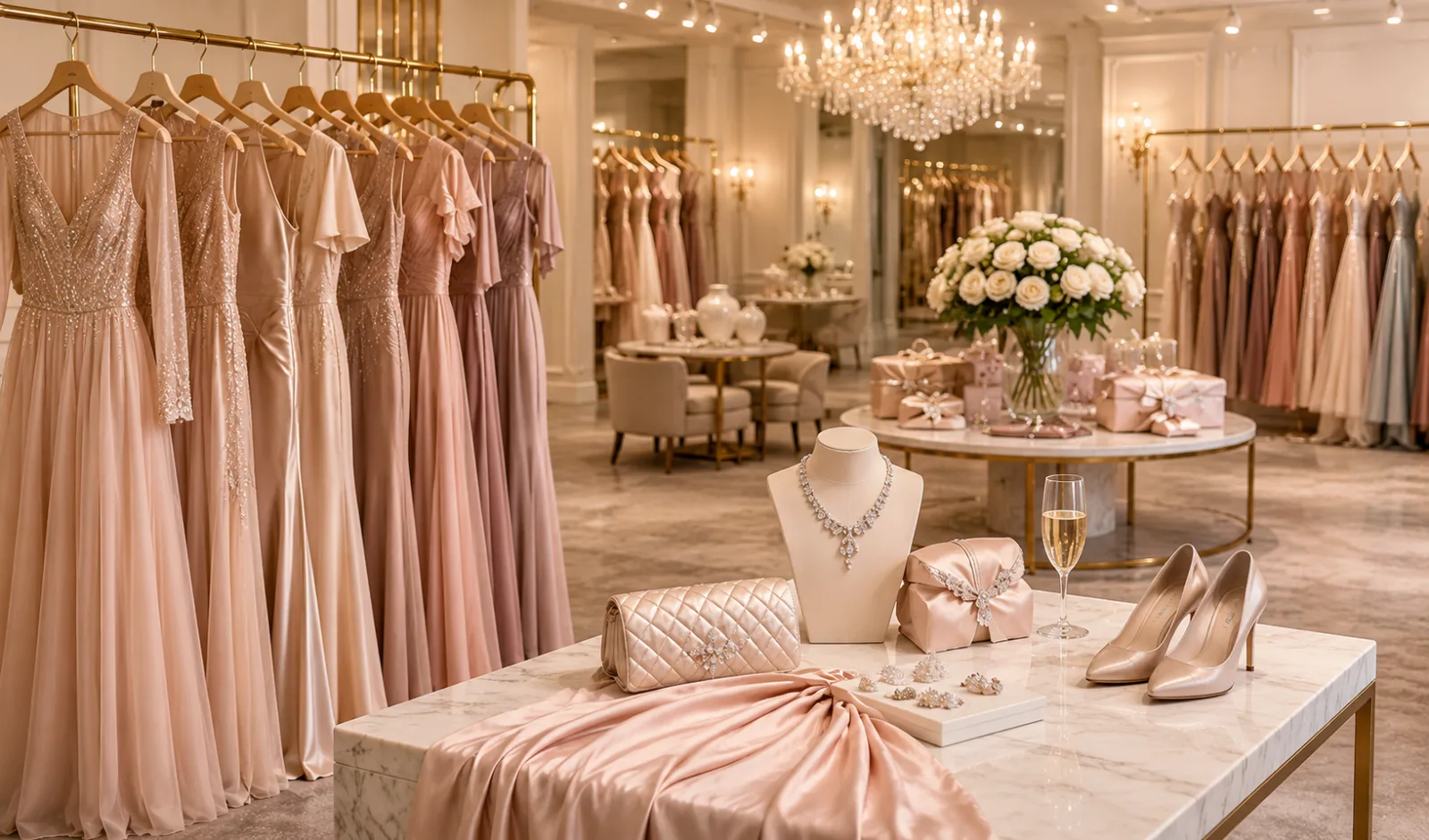
2. Satin for Bridalwear
Satin is widely used in bridal fashion because it feels formal, elegant, and timeless. It can create smooth silhouettes, structured gowns, dramatic skirts, and refined bridal details.
Satin is commonly used for:
- Wedding gowns.
- Bridesmaid dresses.
- Bridal robes.
- Flower girl dresses.
- Bridal sashes.
- Veils with satin edging.
- Wedding gloves.
- Bridal accessories.
- Reception dresses.
Duchess satin and bridal satin are often chosen for structured wedding gowns because they provide body and shape. Silk satin may be selected for luxury bridalwear, while polyester satin can be used for more affordable bridal and bridesmaid collections.
Satin works beautifully with:
- Lace.
- Tulle.
- Organza.
- Chiffon.
- Beading.
- Embroidery.
- Pearls.
- Appliqué.
- Corsetry.
- Draped bodices.
Satin bridalwear requires careful handling because shiny surfaces can show seam issues, pressing marks, wrinkles, or water spots. Sampling and skilled sewing are essential for a clean final product.
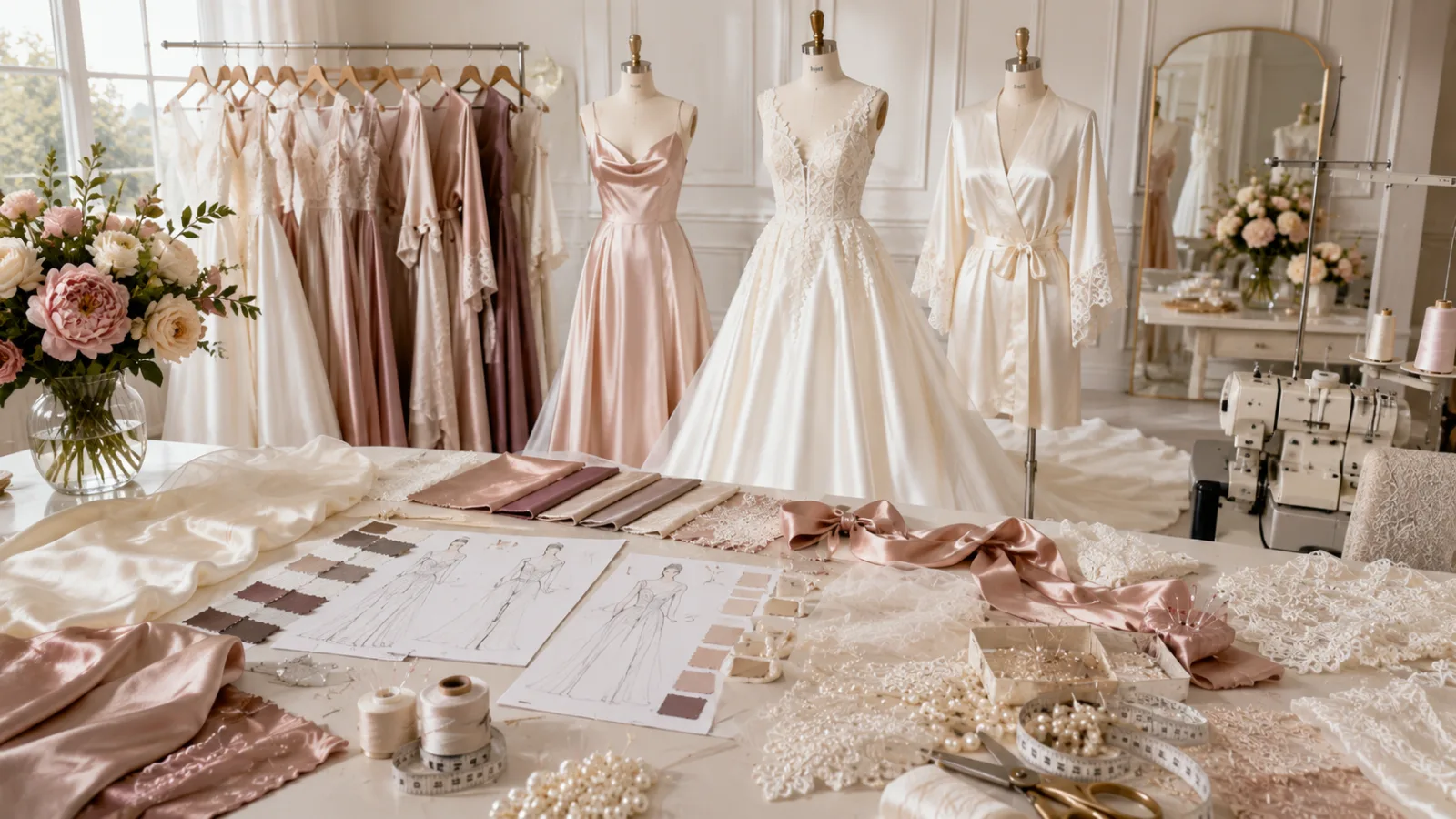
3. Satin for Lingerie and Intimate Apparel
Satin is commonly used in lingerie because of its smooth feel, shine, and soft contact with the skin. It can create a romantic, premium, or delicate look depending on the fabric weight and design.
Satin is used in:
- Camisoles.
- Slips.
- Chemises.
- Bralettes.
- Robes.
- Dressing gowns.
- Pajama sets.
- Lingerie trims.
- Bias-cut intimate garments.
- Luxury loungewear.
The smooth surface helps satin feel comfortable against the body. Lightweight satin is especially suitable for soft, fluid lingerie styles.
Satin for lingerie may include:
- Silk satin.
- Polyester satin.
- Stretch satin.
- Charmeuse satin.
- Satin blends with elastane.
For intimate apparel, comfort and breathability matter. Brands should test softness, stretch, seam quality, care performance, and skin feel before production.
4. Satin for Sleepwear and Robes
Satin is popular for sleepwear because it feels smooth, soft, and luxurious. It is commonly used in robes, pajama sets, nightgowns, sleep shirts, and loungewear.
Common satin sleepwear products include:
- Pajama shirts.
- Pajama trousers.
- Robes.
- Nightgowns.
- Camisole sets.
- Sleep shorts.
- Dressing gowns.
- Bridal party robes.
- Luxury loungewear sets.
Silk satin can feel more breathable and premium, while polyester satin is often more affordable and widely available. Stretch satin can be used for more fitted sleepwear styles.
Satin robes are also popular for bridal parties, spa products, hotel gifts, and luxury packaging concepts.
For sleepwear, brands should consider:
- Breathability.
- Washability.
- Softness.
- Seam comfort.
- Skin feel.
- Static build-up.
- Durability after washing.
- Colourfastness.
- Size flexibility.
5. Satin for Blouses and Shirts
Satin blouses and shirts are popular in both casual and formal wardrobes. The smooth surface gives tops a refined appearance, while the drape creates soft movement.
Satin is used for:
- Button-down shirts.
- Tie-neck blouses.
- Wrap tops.
- Cami tops.
- Formal shirts.
- Office blouses.
- Statement sleeves.
- Draped tops.
- Evening tops.
- Occasionwear separates.
Satin blouses can work well for office wear, dinner outfits, party looks, and smart-casual styling. Matte satin or crepe-back satin may be preferred when the shine needs to be more subtle.
Brands should consider opacity when using satin for blouses. Some lightweight satin can be too sheer without lining or layering.
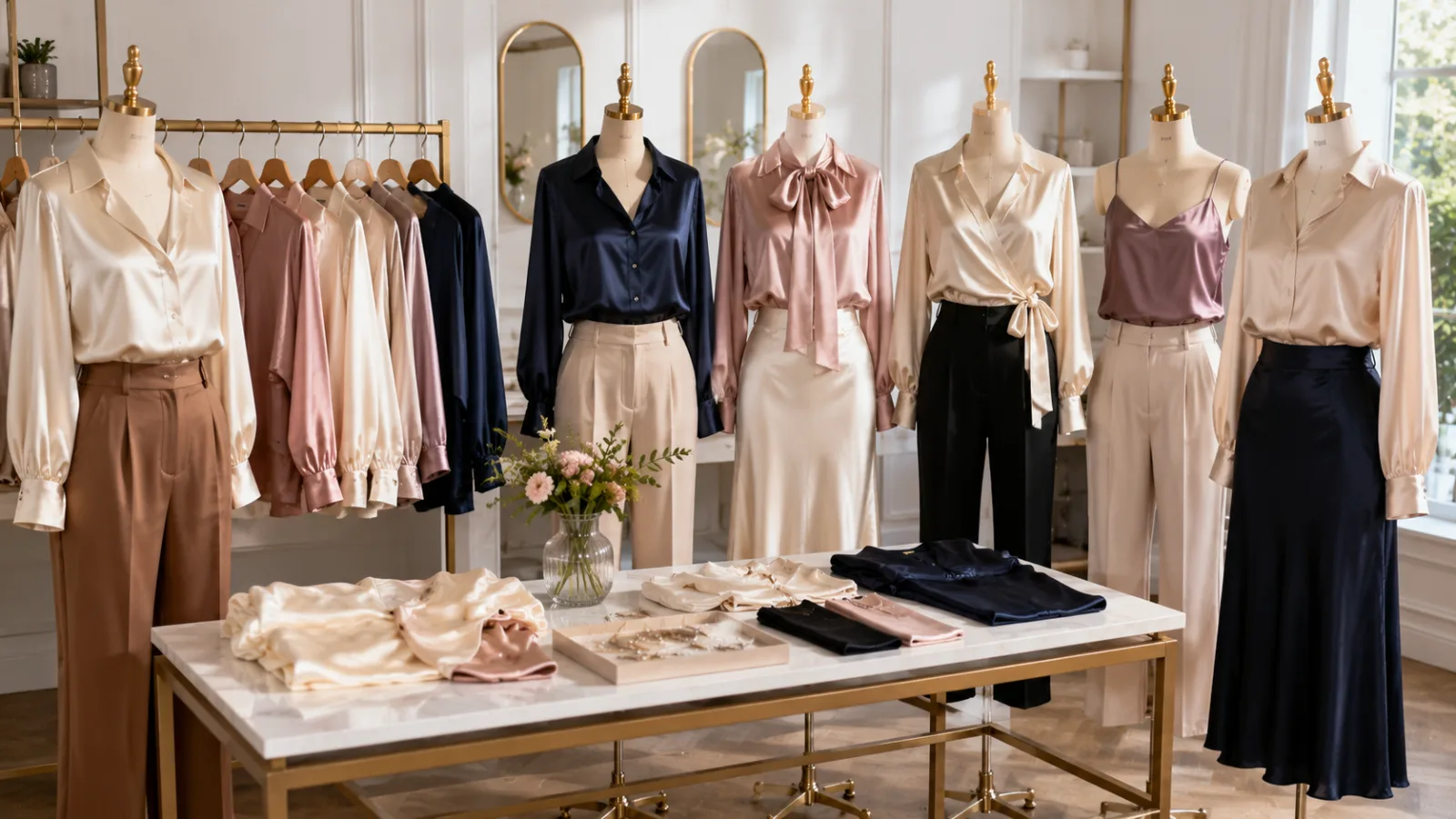
6. Satin for Skirts and Pants
Satin can create elegant skirts and pants with soft movement. It is especially popular for evening separates, occasionwear, partywear, resortwear, and elevated casual outfits.
Satin is used for:
- Slip skirts.
- Bias-cut skirts.
- Maxi skirts.
- Midi skirts.
- Wide-leg trousers.
- Palazzo pants.
- Tailored satin pants.
- Co-ord sets.
- Occasionwear bottoms.
Satin slip skirts became popular because they can be styled casually with knitwear or dressed up with heels and blouses. Wide-leg satin trousers can also create a relaxed but polished look.
For satin pants and skirts, important considerations include:
- Opacity.
- Static control.
- Seam strength.
- Wrinkle resistance.
- Waistband comfort.
- Lining requirements.
- Fabric weight.
- Movement and drape.
7. Satin for Jacket and Coat Linings
Satin is one of the most common lining fabrics for jackets, coats, blazers, dresses, skirts, and bags. As a lining, satin helps garments slide easily over the body and gives the inside of the product a polished finish.
Satin linings are used in:
- Blazers.
- Wool coats.
- Formal jackets.
- Leather jackets.
- Dresses.
- Skirts.
- Waistcoats.
- Handbags.
- Suit jackets.
- Outerwear.
Benefits of satin linings include:
- Smooth feel.
- Easy layering.
- Reduced friction.
- Better garment structure.
- Cleaner interior finish.
- More premium appearance.
- Easier wearing and removal.
Polyester satin, acetate satin, and viscose satin are common lining options. Premium brands may use silk satin or higher-quality lining fabrics for luxury garments.
8. Satin for Scarves, Ties, and Fashion Accessories
Satin is commonly used in accessories because it offers shine, softness, and a polished surface for colour and print.
Satin accessory applications include:
- Scarves.
- Neckties.
- Bow ties.
- Pocket squares.
- Sashes.
- Hair ribbons.
- Headbands.
- Scrunchies.
- Gloves.
- Belts.
- Evening bags.
- Decorative trims.
Silk satin is often used for premium scarves and luxury accessories. Polyester satin can be used for affordable fashion accessories, promotional products, and event styling.
Satin works well for printed accessories because the smooth surface can help colours appear vivid. However, brands should test print sharpness, colourfastness, and edge finishing.
9. Satin Pillowcases
Satin pillowcases are popular because they feel smooth and gentle against hair and skin. They are often marketed as a more comfortable sleep surface compared with rougher pillowcase fabrics. Satin pillowcases may help reduce friction, which can be useful for:
- Curly hair.
- Textured hair.
- Dry hair.
- Frizz-prone hair.
- Skin comfort.
- Sleep comfort.
- Luxury bedding sets.
Satin pillowcases can be made from silk satin, polyester satin, or satin blends. Silk satin is usually more expensive and breathable, while polyester satin is more affordable and easier to find. ZZZZZZZZZZImportant factors for satin pillowcases include:
- Fabric smoothness.
- Breathability.
- Washability.
- Seam quality.
- Envelope or zip closure.
- Colourfastness.
- Skin feel.
- Durability.
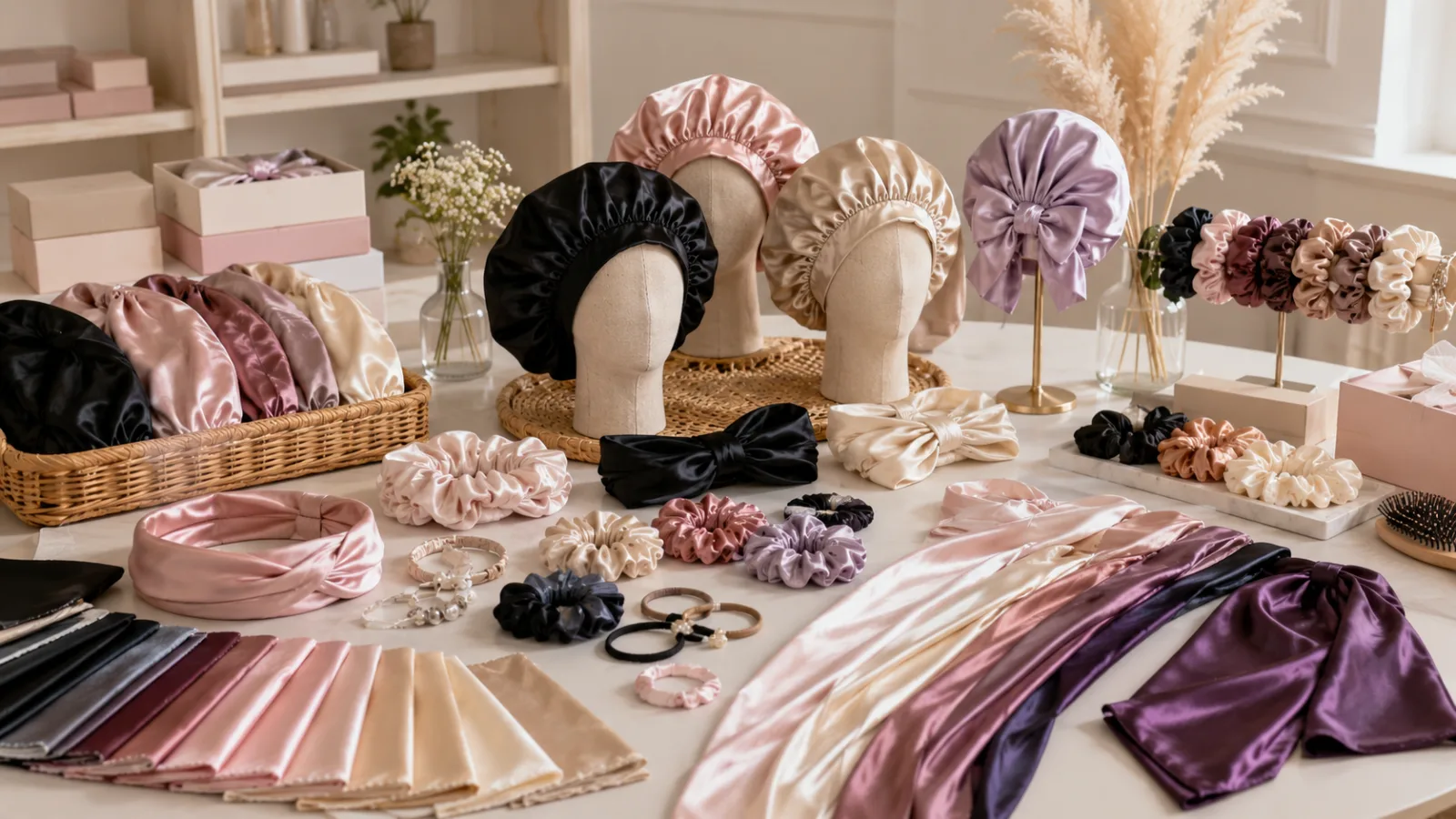
10. Satin Bonnets, Headwraps, and Scrunchies
Satin is widely used for hair bonnets, headwraps, and scrunchies because it provides a smooth surface that can help reduce hair friction.
Common satin hair products include:
- Bonnets.
- Headwraps.
- Scarves.
- Scrunchies.
- Hair ribbons.
- Turban-style wraps.
- Sleep caps.
- Protective hair accessories.
These products are especially popular for textured, curly, coily, dry, or breakage-prone hair.
For brands developing satin hair accessories, key considerations include:
- Soft elastic.
- Secure fit.
- Breathability.
- Wash durability.
- Seam comfort.
- Colourfastness.
- Edge finishing.
- Fabric weight.
- Stretch if required.
Satin hair accessories also work well for gifting, beauty sets, salon retail, sleepwear collections, and lifestyle brands.
Satin Fabric Applications by Satin Type
Different satin types serve different purposes. Choosing the correct type is essential for performance, comfort, cost, and appearance.
Charmeuse Satin Use Cases
Charmeuse satin is lightweight, soft, and fluid. It usually has a glossy front and dull back.
Best for:
- Slip dresses.
- Blouses.
- Scarves.
- Lingerie.
- Sleepwear.
- Robes.
- Bias-cut garments.
- Luxury tops.
Charmeuse is ideal when the product needs soft drape and body-skimming movement.
How to Choose Satin for the Right Application
Selecting satin should always begin with the end use. A fabric that works for a pillowcase may not work for a wedding gown. A satin suitable for event decor may not be comfortable enough for sleepwear.
Before choosing satin, consider the following factors.
1. Product Category
Start by identifying the final product. Is it a dress, lining, pillowcase, robe, curtain, costume, scarf, or packaging item?
Each product has different performance requirements.
2. Fabric Weight
Lightweight satin works well for fluid garments. Medium-weight satin works for blouses, dresses, and sleepwear. Heavy satin works better for structured gowns, decor, and formal pieces.
3. Drape
Soft drape is important for slip dresses, blouses, scarves, and robes. More structure is needed for bridal gowns, formal skirts, and jackets.
4. Opacity
Some satin fabrics are sheer or semi-sheer. Garments may need lining or a heavier satin if opacity is important.
5. Breathability
For sleepwear, robes, lingerie, and summer garments, breathability matters. Silk satin may be more comfortable than synthetic satin in some cases.
6. Durability
For frequent-use items, check snag resistance, seam strength, wash performance, and colourfastness.
7. Care Requirements
Some satin is machine washable. Some requires hand washing or dry cleaning. The care method should match customer expectations.
8. Cost and Price Point
Silk satin may suit luxury products, while polyester satin may suit affordable fashion, linings, costumes, and event decor.
Satin Use Case Comparison Table
Care and Maintenance of Satin Fabric
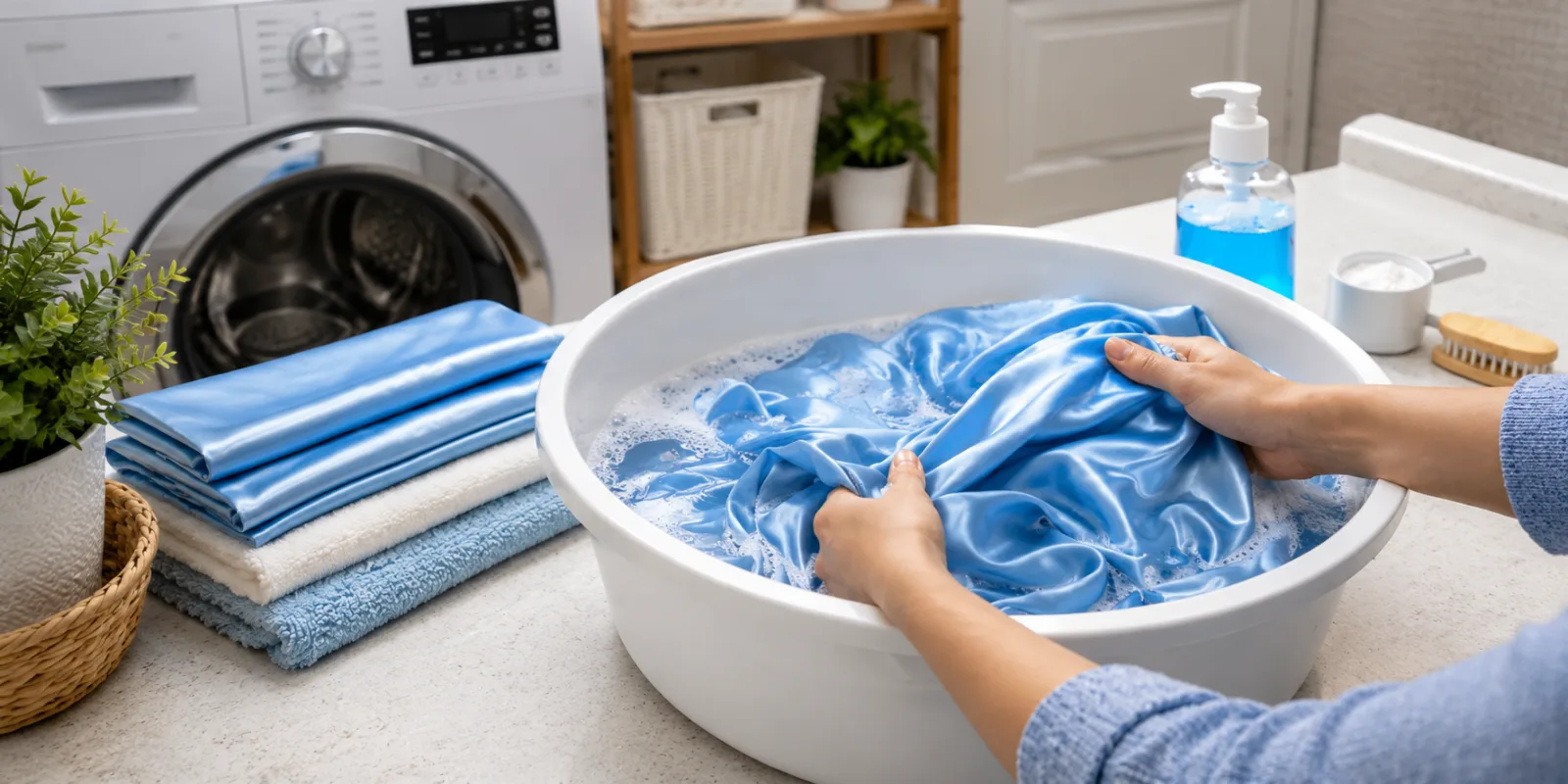
Maintaining satin’s pristine condition requires special care due to its delicate weave and susceptibility to snagging and staining. Here are some tips to keep your satin items looking their best:
- Hand Wash or Dry Clean: When possible, hand wash satin in cold water or take it to a professional dry cleaner to prevent damage.
- Use Mild Detergents: If machine washing is necessary, use a mild detergent on a delicate cycle, and place satin items in a mesh laundry bag to reduce friction.
- Air Dry: Always air dry satin to maintain its texture and avoid heat damage from dryers.
- Iron Carefully: Use a low-temperature setting and place a pressing cloth between the iron and the fabric to avoid scorching.
ApparGlobal: Supporting Satin Fabric Sourcing and Product Development
Satin can create beautiful products, but the right result depends on careful fabric selection, sampling, supplier matching, costing, construction testing, and production planning. A satin fabric that looks attractive on a swatch may behave differently after cutting, sewing, pressing, washing, or wearing.
ApparGlobal helps apparel brands connect satin fabric choices with practical product development and manufacturing workflows. Whether a brand is creating satin dresses, bridalwear, robes, sleepwear, scarves, linings, accessories, or premium private-label products, the process should begin with proper sampling and production testing.
Fashion brands can explore:
- Sampling Program to test satin fabric, fit, drape, opacity, seam quality, washing, finishing, and packaging before bulk production.
- Private Label Program to develop customized satin garments or accessory products using structured apparel foundations.
- Manufacturing Support to coordinate fabric sourcing, costing, supplier communication, quality control, and production planning.
- Vendor Program to identify suitable satin fabric suppliers, trim vendors, and apparel manufacturing partners.
- Manufacturer Catalog to review production capabilities for dresses, sleepwear, bridalwear, linings, accessories, and other satin product categories.
- Resources for more guidance on fabric selection, garment costing, sampling, and apparel manufacturing.
With the right development process, brands can use satin’s smoothness, shine, and elegance while reducing risks such as poor seam quality, snagging, incorrect fabric weight, weak opacity, and production inconsistencies.
Satin Fabric Application Checklist
Use this checklist before choosing satin for a product.
Product Fit
- The product category is clearly defined.
- Satin supports the intended look.
- The shine level matches the design.
- The drape suits the garment shape.
- The fabric weight is appropriate.
- The product does not require heavy abrasion resistance.
Fabric Quality
- Fiber content is confirmed.
- Satin type is identified.
- Fabric weight is tested.
- Opacity is checked.
- Colourfastness is reviewed.
- Snag risk is tested.
- Shrinkage is checked.
- Surface defects are inspected.
Comfort and Performance
- Skin feel is comfortable.
- Breathability is suitable.
- Stretch is tested if needed.
- Static behavior is reviewed.
- Wrinkle behavior is checked.
- Care method matches customer expectations.
- The fabric performs well after washing or cleaning.
Manufacturing Readiness
- Cutting method is planned.
- Sewing tests are completed.
- Seam finishing is approved.
- Pressing method is tested.
- Lining needs are reviewed.
- Packaging method is confirmed.
- Quality inspection standards are clear.
- Bulk production risks are identified.
Customer Experience
- Product photos show satin accurately.
- Care instructions are clear.
- Fabric description is honest.
- Price reflects satin quality.
- Packaging protects the fabric.
- Returns risk is considered.
Frequently Asked Questions About Satin Fabric Applications
1. What is satin fabric used for?
Satin fabric is used for dresses, bridalwear, eveningwear, blouses, sleepwear, robes, lingerie, linings, scarves, ties, pillowcases, bedding, hair accessories, event decor, costumes, and luxury packaging.
2. Is satin good for dresses?
Yes, satin is excellent for many dress styles because it offers shine, smoothness, and elegant drape. It is commonly used for slip dresses, evening gowns, cocktail dresses, bridesmaid dresses, and wedding gowns.
3. Is satin good for bridalwear?
Yes, satin is widely used in bridalwear. Duchess satin, bridal satin, and silk satin are especially popular for wedding gowns because they provide elegance, structure, and a formal appearance.
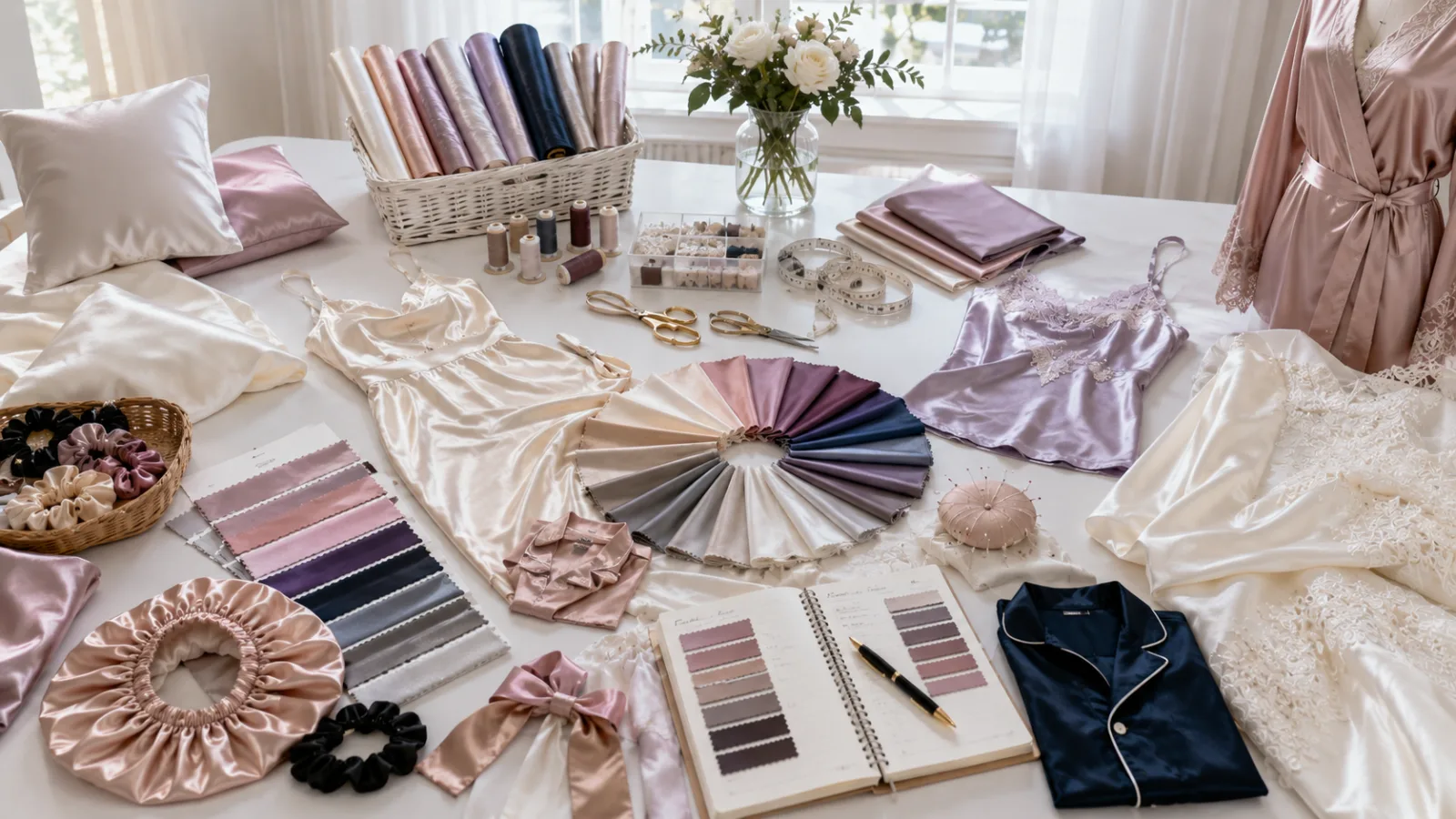
4. Can satin be used for everyday clothing?
Satin can be used for everyday clothing such as blouses, skirts, shirts, and trousers, but it may require more care than cotton, denim, jersey, or twill. It works best when the garment has an elevated or polished style.
5. Is satin good for sleepwear?
Yes, satin is commonly used for sleepwear because it feels smooth and soft. However, breathability depends on fiber content. Silk satin is usually more breathable than many synthetic satin fabrics.
6. Why is satin used for linings?
Satin is used for linings because it feels smooth, reduces friction, helps garments slide over the body, hides interior seams, and gives jackets, coats, dresses, and bags a more polished finish.
7. Is satin good for pillowcases?
Satin pillowcases are popular because they feel smooth and can reduce friction against hair and skin compared with rougher fabrics. Silk satin is more premium, while polyester satin is more affordable.
8. Can satin be used for curtains?
Yes, satin can be used for decorative curtains and drapery. It is especially useful for event backdrops, stage curtains, and formal interiors. However, durability, lining, sun exposure, and cleaning requirements should be considered.
9. Is satin suitable for upholstery?
Satin is usually better for decorative cushions and accent pieces than heavy-use upholstery. It may snag or show wear under frequent friction, so stronger fabrics are better for sofas, chairs, and heavy-use furniture.
10. What is the best satin for clothing?
The best satin depends on the garment. Charmeuse satin is good for soft dresses and blouses. Duchess satin is good for structured gowns. Stretch satin is useful for fitted garments. Silk satin is suitable for luxury clothing. Polyester satin works for affordable fashion and costumes.
11. What satin is best for event decor?
Polyester satin is commonly used for event decor because it is affordable, available in many colours, and works well for table runners, chair sashes, bows, and backdrops.
12. What should brands check before using satin in production?
Brands should check fiber content, fabric weight, opacity, drape, snag resistance, seam quality, shrinkage, colourfastness, wash performance, care requirements, cutting behavior, sewing difficulty, and packaging needs before bulk production.
Conclusion
Satin fabric has a wide range of applications because it combines visual elegance with a smooth surface and graceful drape. It can be used in luxury fashion, commercial clothing, bridalwear, sleepwear, accessories, home textiles, hair care products, event decoration, costumes, and packaging.
In fashion, satin is popular for evening dresses, wedding gowns, blouses, skirts, robes, lingerie, linings, scarves, and formal separates. In lifestyle products, it appears in pillowcases, bedding, hair bonnets, scrunchies, decorative cushions, curtains, and gift packaging. In creative industries, satin is used for stage costumes, photography styling, performance wear, and event decor because it reflects light beautifully.
However, satin should be selected carefully. Not every satin is suitable for every product. The best satin application depends on fiber content, weave quality, weight, drape, opacity, breathability, durability, care requirements, and production method. Charmeuse satin works well for fluid garments. Duchess satin supports structured bridalwear. Stretch satin suits fitted designs and performance pieces. Polyester satin is practical for affordable fashion, costumes, linings, and decor. Silk satin is ideal for premium clothing, scarves, robes, and luxury products.
For apparel brands, satin offers strong design opportunities, but it also requires thoughtful development. Sampling, fabric testing, seam review, pressing tests, quality inspection, and careful packaging are all important before bulk production. When satin is matched to the right product, it can create a beautiful result. It adds shine, softness, movement, and a sense of refinement. When used without testing, it can lead to production issues, customer care problems, or poor durability.
The key is to choose satin with purpose. Understand the product, test the fabric, plan the construction, and align the material with the customer’s expectations. That is how satin becomes more than a beautiful fabric. It becomes the right fabric for the right application.