
The fashion industry moves fast. New brands launch every day, trends change overnight, and consumers expect quality, speed, transparency, and sustainability all at once. Behind every successful clothing brand, there is usually one critical factor most customers never see: the garment manufacturer.
For startups and growing fashion labels, finding a reliable and ethical garment manufacturer can feel overwhelming. On the surface, many factories appear professional. Their websites showcase polished photos, impressive production claims, and promises of premium quality. But once production begins, many brand owners discover hidden problems such as inconsistent quality, poor communication, delayed shipments, unethical labor conditions, or unexpected costs.
This is one of the biggest reasons fashion businesses struggle during scaling. The wrong manufacturing partner can damage your reputation, increase returns, delay launches, and reduce customer trust.
The challenge is not simply finding a factory. The real challenge is finding a manufacturing partner that is reliable, transparent, scalable, and ethically aligned with your brand values.
In this guide, we will break down why finding a trustworthy garment manufacturer is so difficult, the common mistakes fashion brands make, warning signs to avoid, and what you should actually look for instead if you want long-term success.
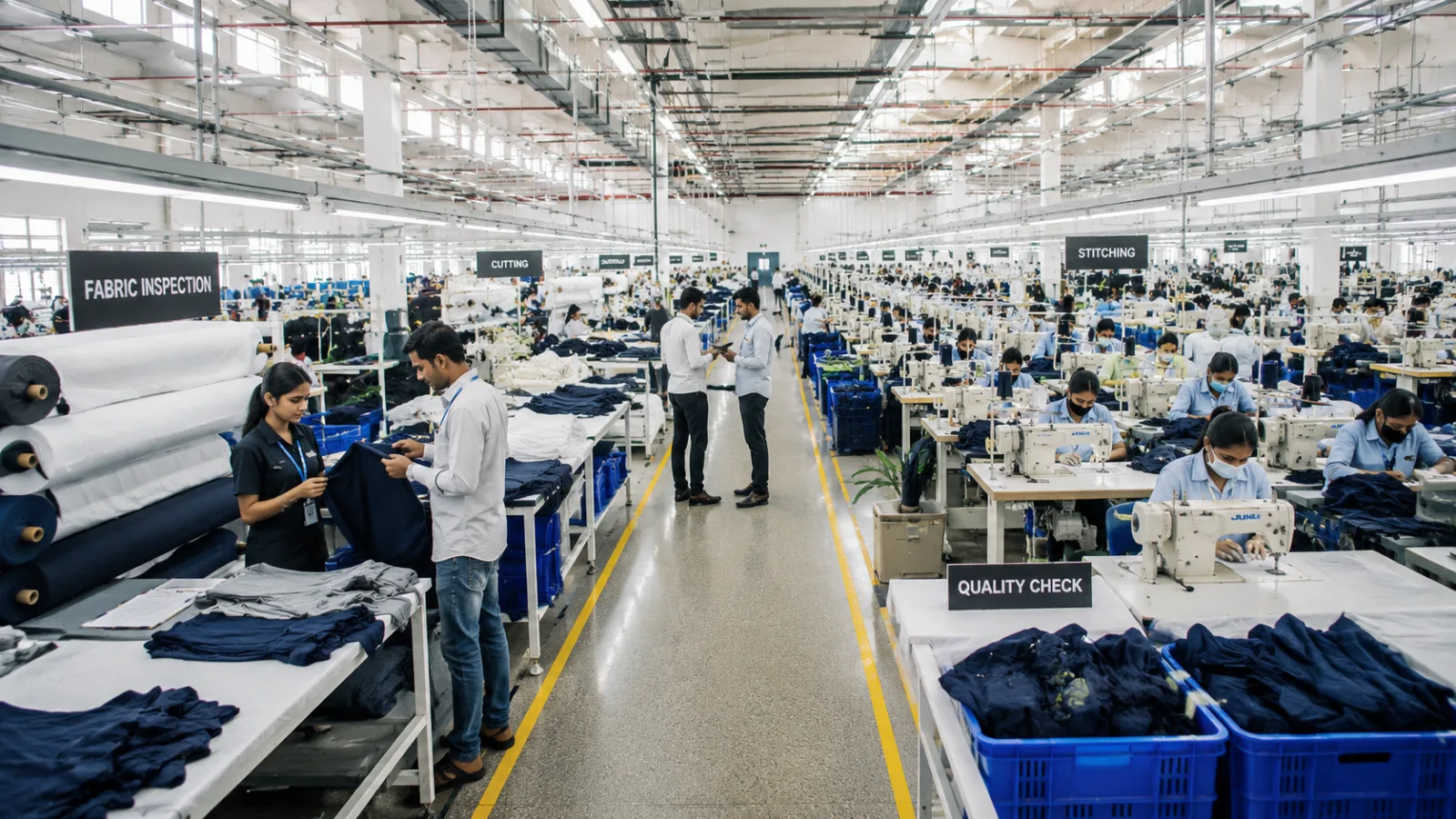
Why It’s So Difficult to Find a Reliable Garment Manufacturer
The Fashion Manufacturing Industry Is Extremely Fragmented
Unlike industries with highly standardized systems, garment manufacturing is fragmented across thousands of factories worldwide. Manufacturers vary significantly in:
- Production quality
- Ethical standards
- Communication ability
- Technical expertise
- Capacity
- Pricing structure
- Material sourcing
- Compliance systems
Two factories may appear identical online but operate completely differently in reality.
Some manufacturers specialize in luxury apparel, while others focus on fast fashion mass production. Some excel at knitwear but struggle with woven garments. Others may offer attractive prices but lack quality control systems.
This fragmentation makes it difficult for brands to evaluate factories accurately before placing production orders.
Many Factories Prioritize Volume Over Brand Relationships
One of the harsh realities of garment manufacturing is that many factories prioritize large-volume clients. Smaller and mid-sized brands often receive less attention unless they already generate significant monthly orders.
As a result, emerging brands frequently experience:
- Slow response times
- Lower production priority
- Inconsistent communication
- Delayed sampling
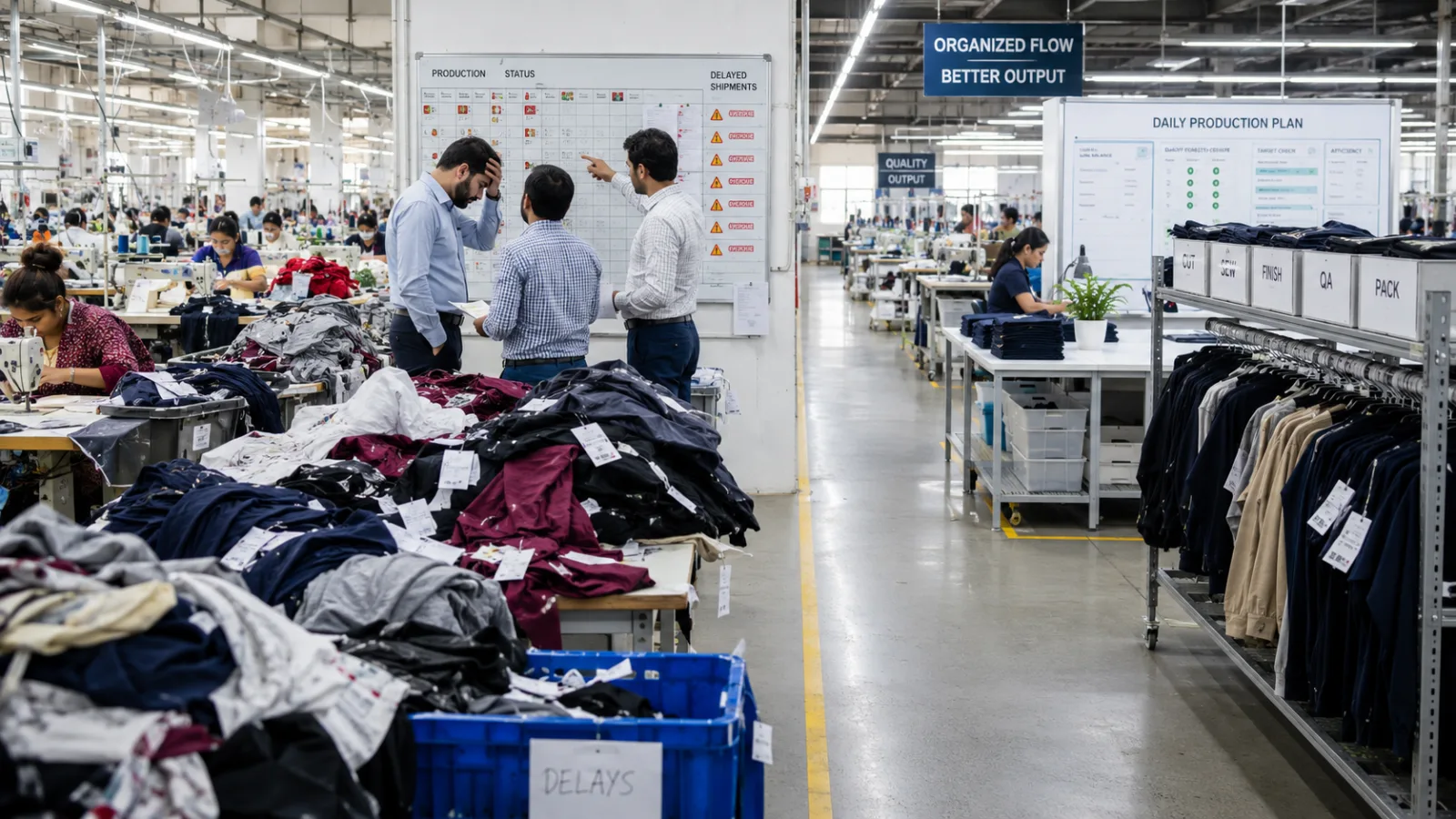
- Missed deadlines
- Reduced quality attention
Factories handling multiple international buyers may shift resources toward their largest accounts during peak seasons.
This creates instability for growing brands that need dependable support during product development and scaling.
Online Manufacturer Listings Can Be Misleading
Many brands begin their sourcing journey through online directories, sourcing platforms, or social media. While these tools can help identify potential suppliers, they also create confusion.
Not every manufacturer online is actually a factory.
Some are:
- Trading companies
- Middlemen
- Brokers
- Production coordinators
- Outsourcing agents
This lack of transparency creates major problems because brands often believe they are working directly with a factory when production is actually subcontracted elsewhere.
Subcontracting without visibility can lead to:
- Poor quality control
- Unethical labor practices
- Production inconsistency
- Delayed communication
- Pricing inflation
Without clear supply chain visibility, brands lose control over their products.

Ethical Manufacturing Is Difficult to Verify
Many factories promote themselves as “ethical,” “sustainable,” or “eco-friendly.” However, these claims are not always supported by real operational practices.
Some factories may:
- Underpay workers
- Ignore overtime regulations
- Use unsafe working environments
- Outsource production without disclosure
- Lack environmental compliance systems
Unfortunately, ethical claims are easy to market but harder to validate.
This creates confusion for fashion brands that genuinely want responsible manufacturing partners.
Consumers today are increasingly aware of labor ethics and sustainability. If a brand unknowingly works with unethical suppliers, the reputational damage can be significant.
Quality Control Is Often Inconsistent
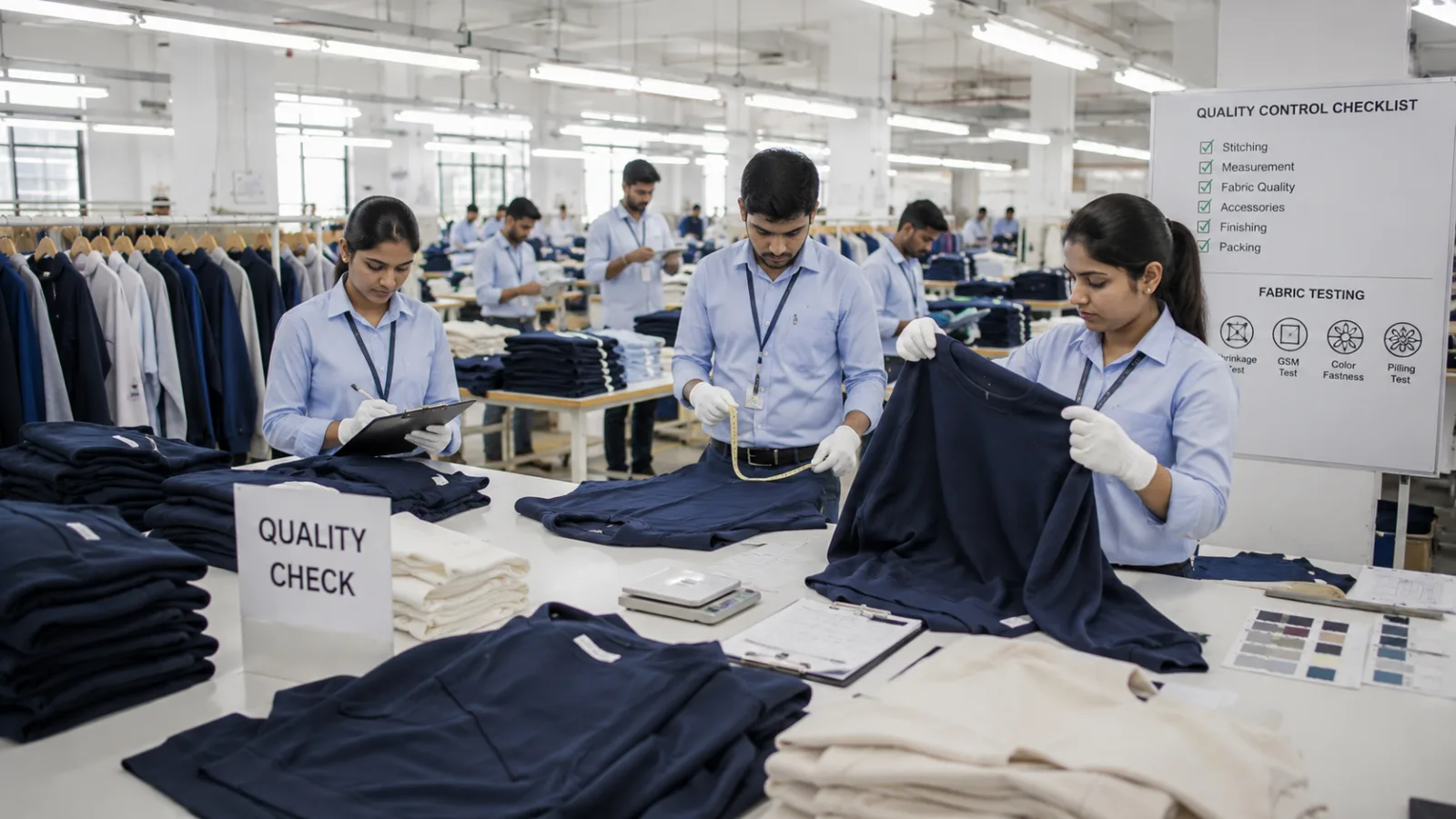
Quality inconsistency is one of the most common complaints in apparel production.
A factory may produce excellent first samples but fail to maintain the same quality during bulk manufacturing. This happens because some manufacturers lack structured quality assurance systems.
Common quality issues include:
- Incorrect measurements
- Fabric inconsistencies
- Color mismatches
- Weak stitching
- Poor finishing
- Defective trims
- Shrinkage problems
- Printing errors
Inconsistent quality increases:
- Product returns
- Negative reviews
- Customer dissatisfaction
- Financial losses
Reliable quality control is one of the most important factors when choosing a manufacturer.
The Hidden Problems Brands Often Discover Too Late
Poor Communication Delays Everything
Communication issues are one of the biggest sourcing frustrations for fashion brands.
Many manufacturers respond quickly before securing orders but become inconsistent afterward. Delayed communication can create major production disruptions, especially when brands need urgent updates about:
- Sampling
- Fabric sourcing
- Production timelines
- Shipment status
- Quality corrections
A reliable manufacturer should provide:
- Clear timelines
- Transparent updates
- Fast responses
- Dedicated communication channels
- Professional production tracking
Without communication clarity, even good factories become difficult partners.
Cheap Pricing Often Comes With Hidden Costs
Many startups search for the cheapest manufacturer to protect their budget. While cost matters, extremely low pricing usually creates larger problems later.
Factories offering unusually low prices may compensate through:
- Lower-quality materials
- Reduced labor standards
- Minimal quality control
- Inexperienced workers
- Production shortcuts
- Hidden charges
In apparel manufacturing, extremely cheap production often becomes expensive through:
- Product defects
- Reproduction costs
- Shipping delays
- Customer refunds
- Brand reputation damage
The goal should not be finding the cheapest factory. The goal should be finding the best long-term production value.
Some Factories Accept Orders Beyond Their Capacity
A common issue in the garment industry is overbooking.
Some manufacturers accept more orders than they can realistically manage because they want to maximize revenue during busy seasons.
This leads to:
- Delayed production
- Rushed quality
- Worker overload
- Missed shipment deadlines
- Inconsistent outputs
When production capacity is stretched too far, quality almost always suffers.
Why Ethical Manufacturing Matters More Than Ever
Consumers Are Paying Attention
Modern consumers increasingly care about:
- Fair labor practices
- Sustainable sourcing
- Worker safety
- Environmental impact
- Supply chain transparency
Customers no longer buy products based only on design. They also evaluate brand values.
Fashion brands connected to unethical factories may face:
- Social media backlash
- Customer distrust
- Negative press
- Retail partnership risks
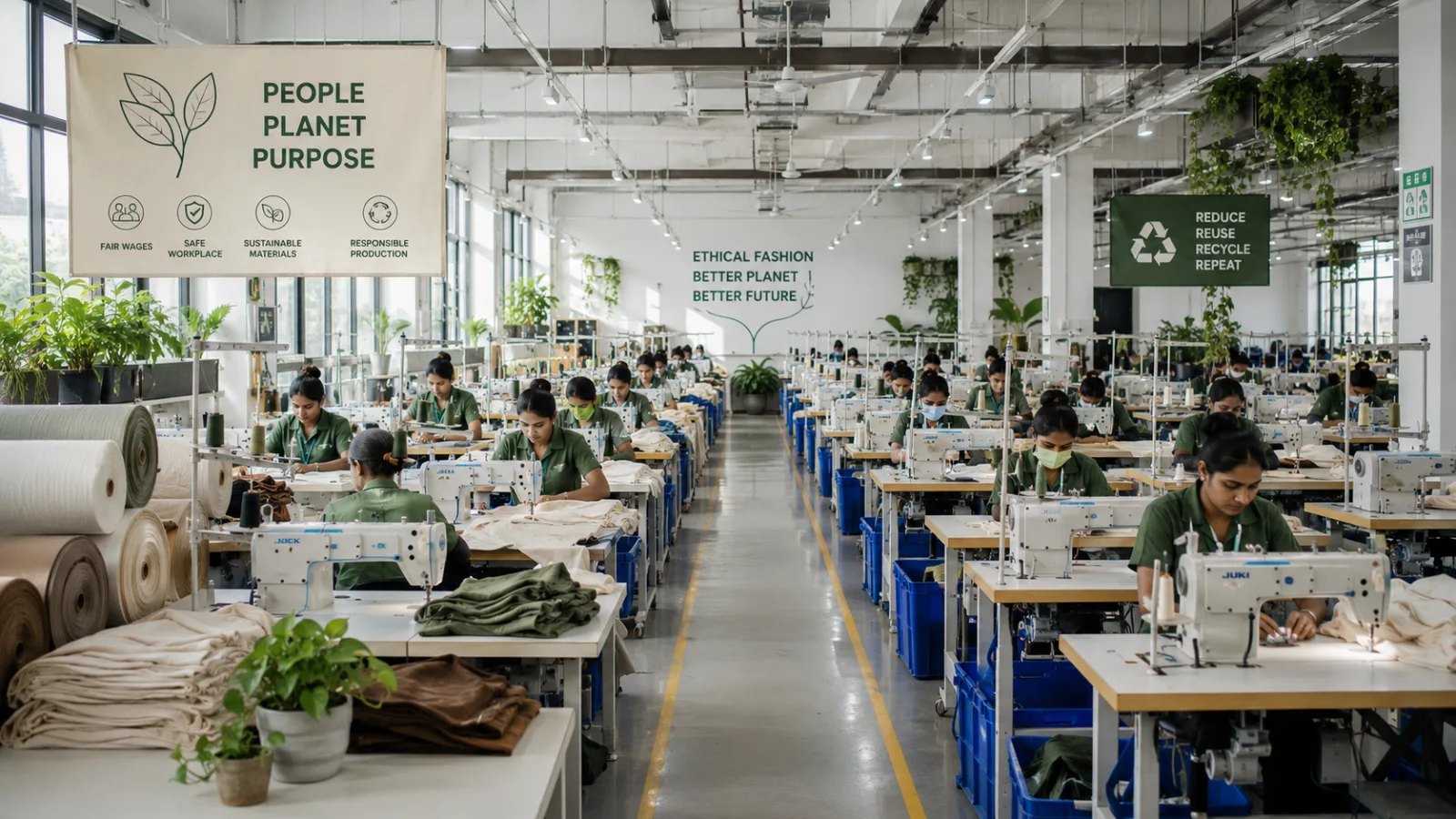
Ethical manufacturing is no longer optional for many brands. It has become part of long-term brand credibility.
Ethical Production Improves Product Quality
Factories that treat workers fairly often produce better-quality garments.
Why?
Because ethical factories usually invest more in:
- Skilled labor
- Training
- Process consistency
- Worker retention
- Safer production systems
When workers are underpaid, overworked, or constantly replaced, product quality becomes unstable.
Reliable manufacturing and ethical manufacturing are often closely connected.
Sustainable Manufacturing Reduces Long-Term Risk
Sustainable production is not only about environmental responsibility. It also reduces operational risks.
Manufacturers with strong sustainability systems are often better organized in:
- Material sourcing
- Waste management
- Chemical control
- Compliance documentation
- Process standardization
These systems usually indicate stronger operational discipline overall.
What to Look for Instead in a Garment Manufacturer
Transparency Over Marketing Promises
The best manufacturers are transparent, not overly promotional.
Instead of flashy marketing language, reliable factories provide:
- Clear production capabilities
- Honest MOQ information
- Realistic lead times
- Factory photos and videos
- Compliance documentation
- Process explanations
Transparency is one of the strongest indicators of trustworthiness.
Ask questions such as:
- Do they own the factory?
- Is production outsourced?
- What products are they strongest at?
- What quality systems do they use?
- How do they manage production delays?
Reliable partners answer clearly rather than avoiding details.
Strong Product Development Support
A good manufacturer does more than sew garments.
Strong apparel partners help brands with:
- Tech pack understanding
- Fabric recommendations
- Fit corrections
- Construction improvements
- Sampling guidance
- Production optimization
This support becomes extremely valuable for:
- Startups
- Scaling brands
- Fashion entrepreneurs
- Growing private labels
Manufacturing is not only production. It is also product development strategy.
Consistent Communication Systems
Reliable factories build structured communication systems.
Look for manufacturers that:
- Assign dedicated merchandisers or account managers
- Provide regular production updates
- Share sample progress clearly
- Use organized approval processes
- Communicate professionally and consistently
Good communication reduces production stress dramatically.
Real Quality Control Processes
Do not rely only on sample quality.
Instead, ask manufacturers about:
- Inline inspections
- Final quality inspections
- Measurement tolerance systems
- Fabric testing procedures
- Defect management processes
- Packaging inspections
Reliable manufacturers treat quality control as a structured system, not a last-minute task.
Ask for examples of:
- QC reports
- Production checklists
- Inspection workflows
- Measurement charts
These details reveal how seriously a factory manages consistency.
Production Scalability
Many factories can produce small orders successfully. Fewer factories can support long-term scaling.
If your brand grows, your manufacturer should be able to grow with you.
Look for partners capable of:
- Managing increasing order volumes
- Expanding production planning
- Supporting repeat collections
- Handling seasonal demand
- Maintaining quality at scale
Scalability matters because changing manufacturers during growth can disrupt your entire supply chain.
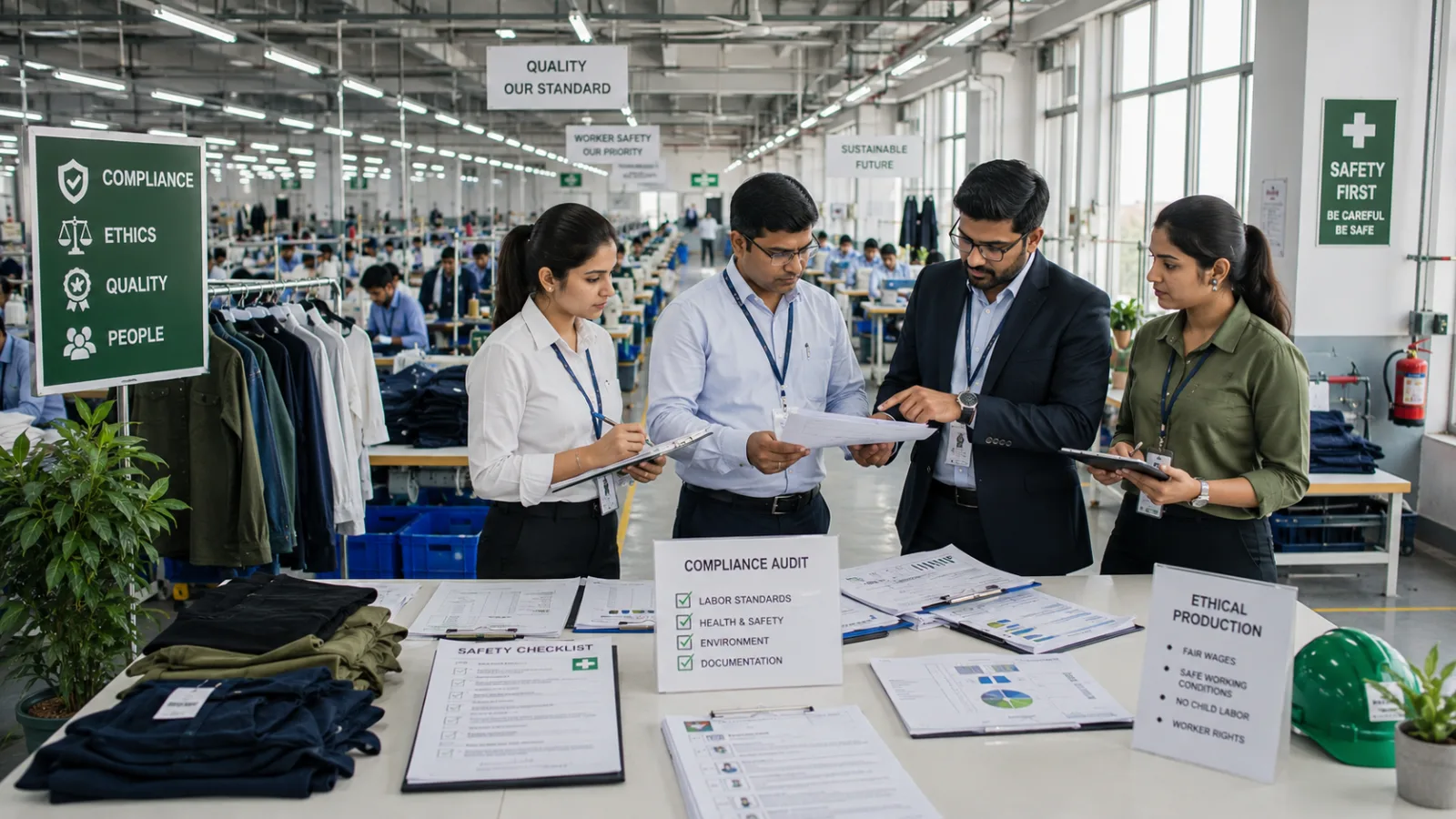
Ethical and Compliance Standards
Ethical manufacturing should involve real operational standards, not vague promises.
Look for evidence of:
- Safe working conditions
- Worker protection systems
- Compliance audits
- Transparent labor policies
- Environmental responsibility
You do not always need a factory with every global certification immediately, especially as a startup. However, you should look for signs of operational responsibility and transparency.
Questions Every Fashion Brand Should Ask a Manufacturer
What Products Are You Best At?
Some factories specialize in:
- Activewear
- Streetwear
- Denim
- Knitwear
- Luxury garments
- Outerwear
- Basics
- Children’s clothing
Choosing a factory outside its specialization increases production risk.
A manufacturer experienced in your product category usually delivers:
- Better fit consistency
- Faster development
- Improved construction quality
- Stronger material knowledge
What Is Your Sampling Process?
The sampling stage reveals a lot about a factory’s professionalism.
Ask about:
- Sample timelines
- Revision handling
- Fit development
- Material sourcing
- Communication process
- Approval systems
Poor sampling experiences often predict larger bulk production problems later.
How Do You Handle Quality Issues?
No factory is perfect. The important question is how problems are handled.
Reliable manufacturers:
- Acknowledge issues quickly
- Investigate root causes
- Provide corrective actions
- Improve processes
Avoid manufacturers that become defensive or avoid accountability.
Can You Share Production References or Case Studies?
While some factories protect client confidentiality, experienced manufacturers can usually provide:
- General production examples
- Process demonstrations
- Product category samples
- Capability overviews
This helps brands evaluate real experience levels.
Common Red Flags to Avoid
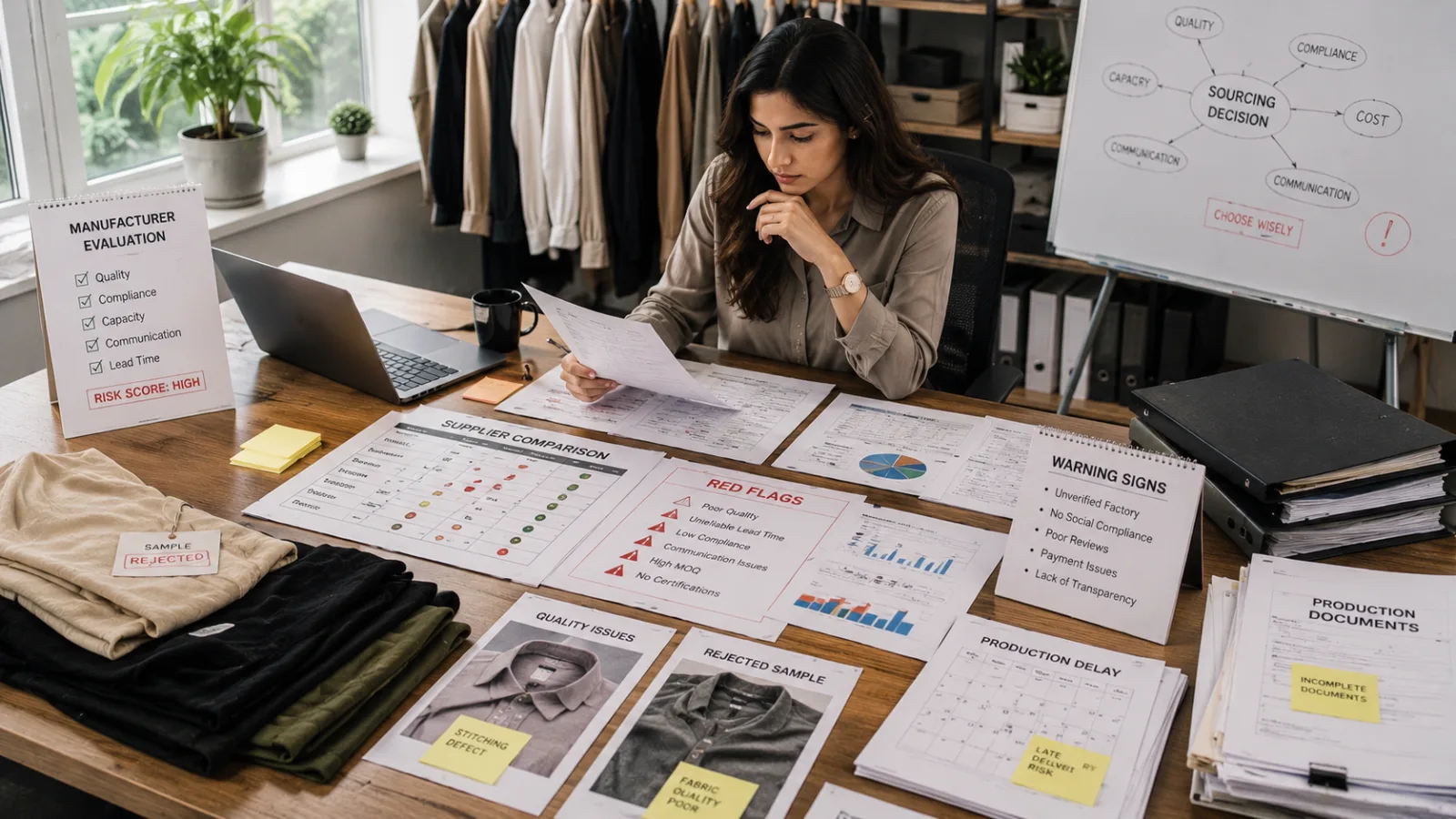
Unrealistically Low Prices
If pricing seems dramatically lower than industry averages, investigate carefully.
Cheap pricing often signals:
- Inferior materials
- Poor labor standards
- Weak quality systems
- Hidden outsourcing
Vague Answers
Reliable manufacturers explain their systems clearly.
Be cautious if a factory avoids direct answers about:
- Production processes
- Factory ownership
- Worker conditions
- Quality systems
- Lead times
Transparency matters.
Inconsistent Communication Early On
If communication is already inconsistent before production begins, it usually worsens later.
Professional communication should be stable from the start.
No Clear Production Workflow
Strong factories operate through structured systems.
If a manufacturer cannot clearly explain:
- Sampling stages
- Quality control
- Timeline management
- Production approvals
then operational problems may appear later.
Overpromising Everything
Be cautious of factories claiming they can:
- Produce every category
- Handle every volume
- Deliver extremely fast
- Offer the cheapest price
- Guarantee perfection
Reliable manufacturers are realistic about strengths and limitations.
The Importance of Building Long-Term Manufacturing Relationships
Strong Partnerships Improve Stability
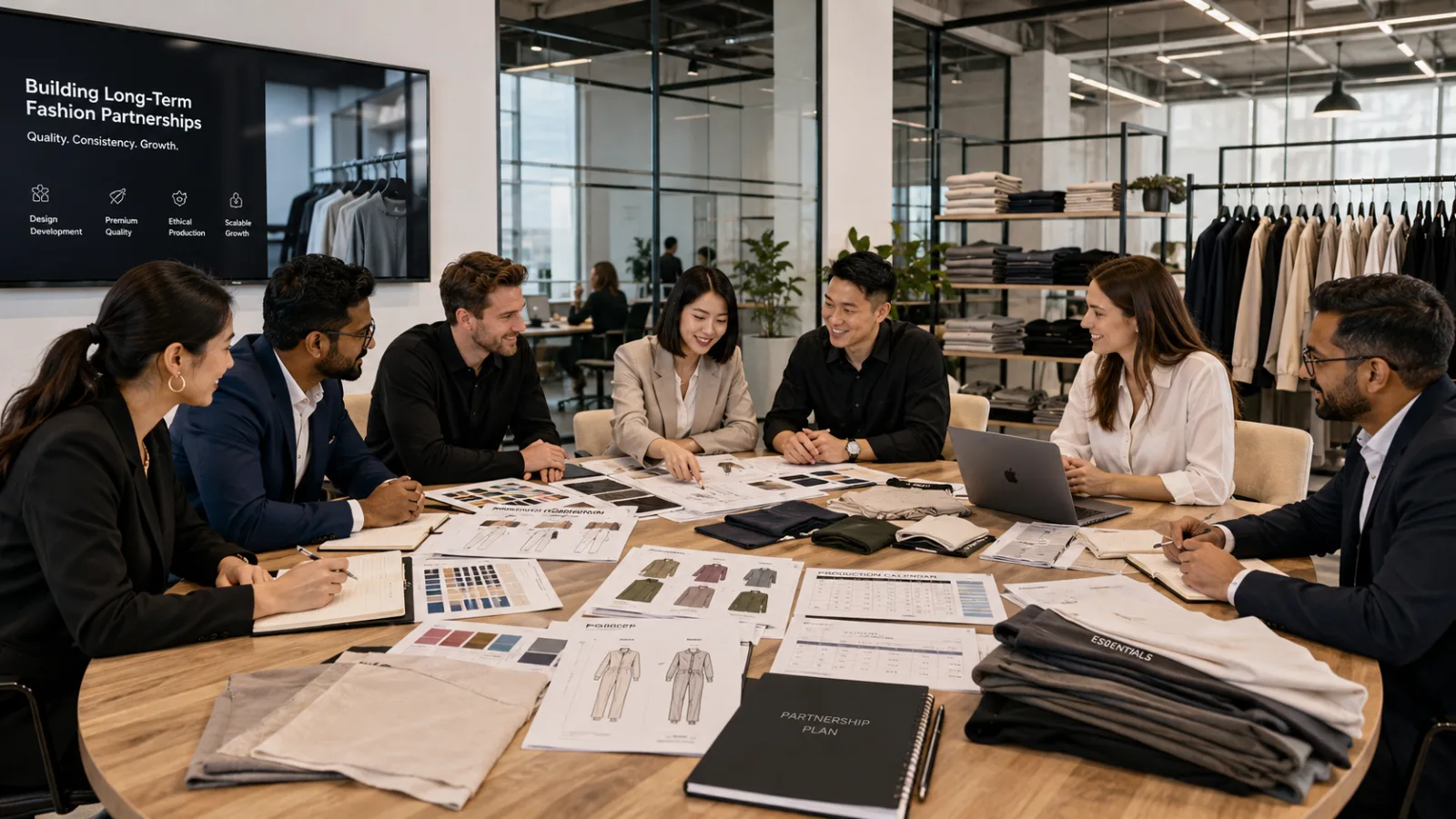
The best manufacturing relationships are collaborative, not transactional.
Long-term partnerships improve:
- Product consistency
- Communication efficiency
- Pricing stability
- Production planning
- Brand understanding
Manufacturers who understand your brand deeply can support growth far more effectively.
Reliable Manufacturers Help Brands Scale Smarter
Experienced manufacturing partners can guide brands through:
- MOQ planning
- Fabric sourcing optimization
- Bulk production scaling
- Collection development
- Cost management
- Lead time forecasting
This strategic support becomes extremely valuable during growth phases.
Trust Reduces Operational Stress
Fashion production already involves enough complexity:
- Deadlines
- Logistics
- Seasonal launches
- Inventory planning
- Retail schedules
Reliable manufacturing partnerships reduce unnecessary stress by creating predictability and operational confidence.
How Modern Fashion Brands Should Approach Sourcing Today
Focus on Operational Alignment
The best factory is not always the largest or cheapest.
The right partner is the manufacturer that aligns with your:
- Product category
- Brand positioning
- Quality expectations
- Communication style
- Scaling goals
- Ethical values
Operational alignment matters more than surface-level marketing.
Start Smaller and Validate Carefully
Before committing to large production runs:
- Test communication
- Evaluate sample quality
- Review consistency
- Assess responsiveness
- Understand workflows
Gradual relationship building reduces sourcing risk significantly.
Prioritize Systems Over Promises
Reliable manufacturers rely on systems:
- Quality systems
- Production systems
- Communication systems
- Compliance systems
Strong operational systems create consistent outcomes.
Promises alone do not.
The Future of Ethical Garment Manufacturing
The apparel industry is changing rapidly.
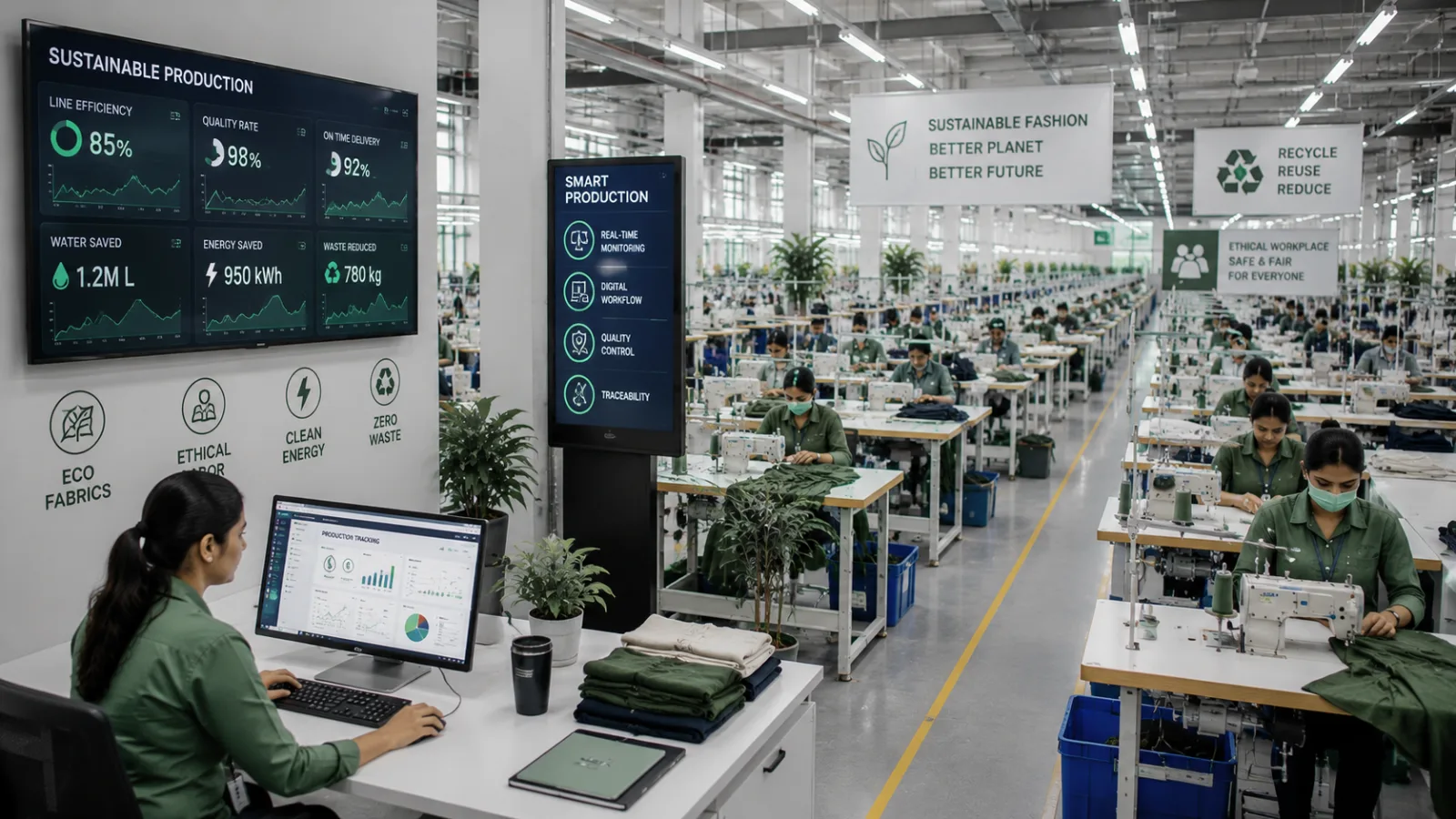
Fashion brands are increasingly demanding:
- Transparency
- Traceability
- Sustainability
- Ethical sourcing
- Smaller flexible MOQs
- Faster development cycles
At the same time, consumers are becoming more informed about how products are made.
This shift is pushing manufacturers to improve:
- Worker conditions
- Environmental responsibility
- Production visibility
- Quality management
- Supply chain accountability
Factories that adapt to these expectations will become stronger long-term partners for modern brands.
Final Thoughts
Finding a reliable, ethical garment manufacturer is difficult because apparel production is far more complex than most brands initially expect. The industry includes thousands of factories with varying standards, capabilities, and operational systems. Many sourcing problems arise not from bad intentions alone, but from weak processes, poor communication, lack of transparency, and unrealistic expectations.
The solution is not chasing the cheapest production option or the factory with the most attractive website.
Instead, successful fashion brands should focus on:
- Transparency
- Communication consistency
- Ethical responsibility
- Product specialization
- Quality systems
- Scalability
- Long-term operational alignment
A reliable manufacturing partner becomes more than a supplier. They become part of your brand’s foundation. When you choose the right partner, production becomes more stable, product quality improves, customer trust grows, and scaling becomes significantly easier.
In today’s fashion industry, ethical and reliable manufacturing is no longer just a competitive advantage. It is one of the most important pillars of building a sustainable, respected, and profitable apparel brand.