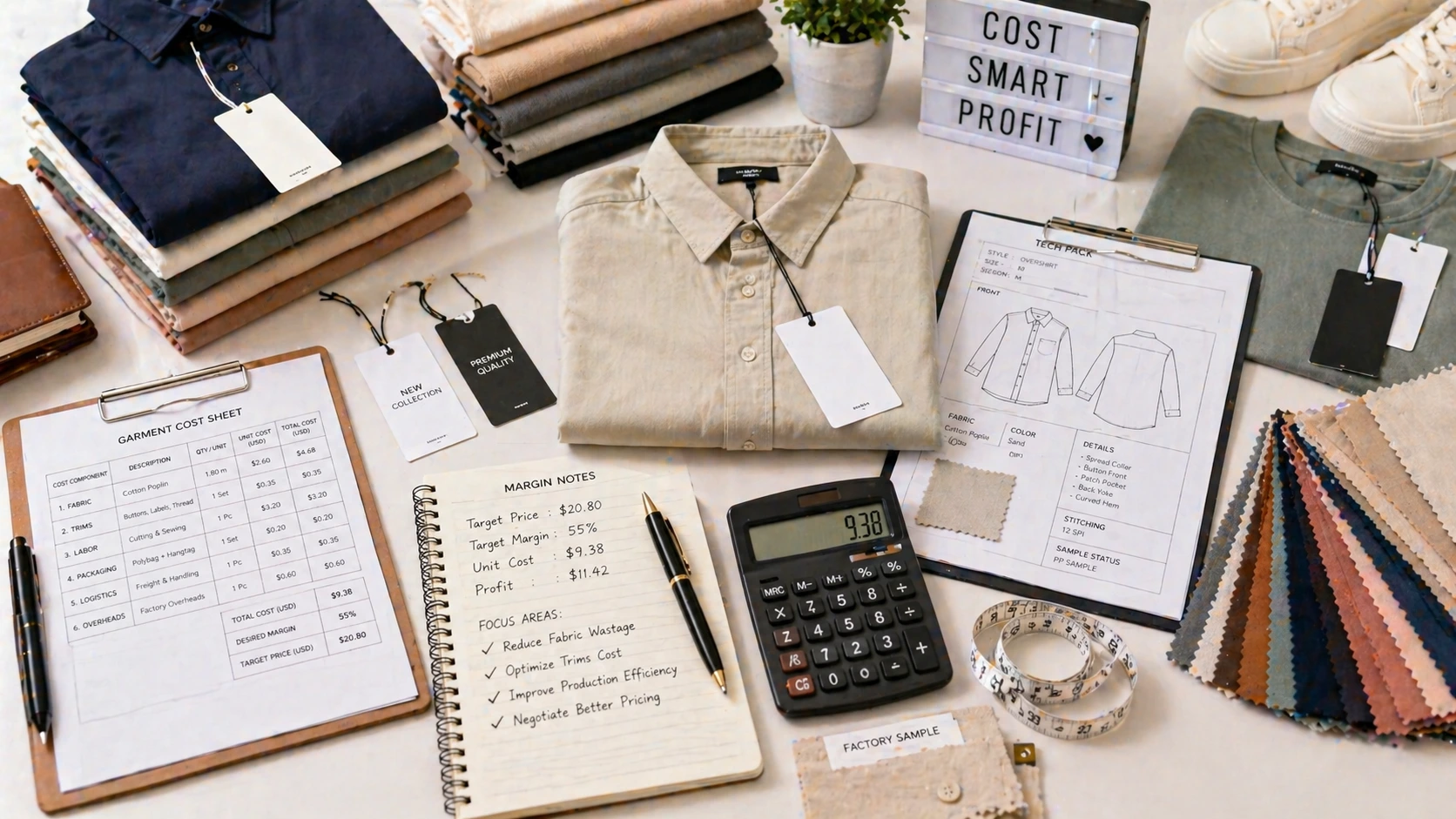
Many fashion brands fail because they only track factory quotes. Learn how to calculate the true cost of your garments to protect margins and scale.
Fashion brands often focus heavily on design, branding, packaging, social media, and launch strategy. Those things matter, but many clothing businesses struggle for a simpler reason: they do not fully understand the true cost of their garments. A dress may look profitable on paper, a t-shirt may seem inexpensive to produce, and a jacket may appear to have strong markup, but once sampling, fabric waste, trims, logistics, revisions, defects, returns, and marketing costs are added, the real margin can shrink fast.
That is why understanding garment pricing is not only a finance task. It is a core part of building a successful fashion brand. If you do not know what a garment truly costs, you cannot price it properly, forecast profit accurately, negotiate with suppliers effectively, or scale with confidence. You may sell well and still lose money. You may increase sales and still weaken your business. You may think a product is a bestseller when it is actually damaging your margin.
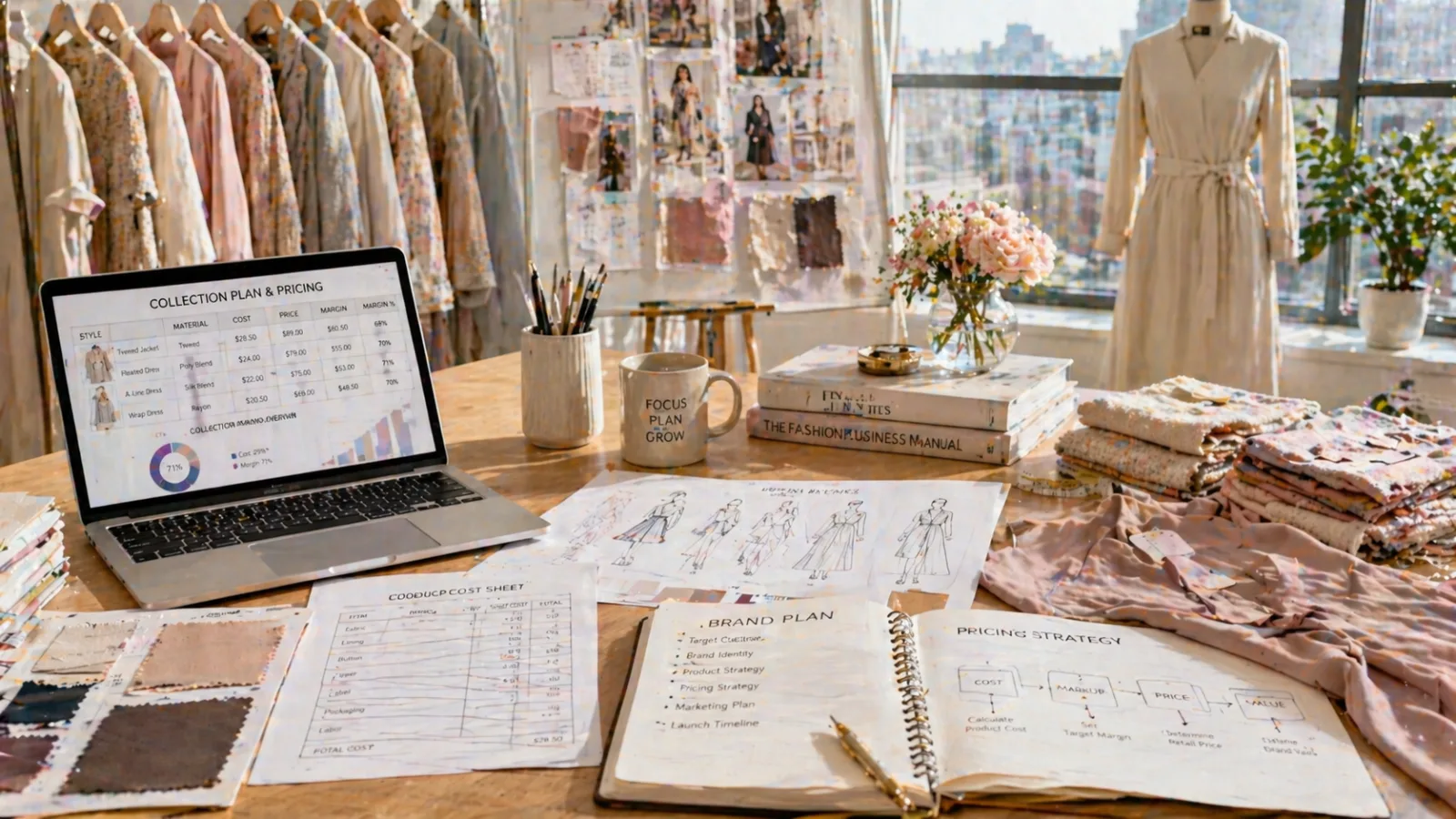
The true cost of fashion goes far beyond fabric and sewing. It includes product development, sourcing choices, labor, packaging, shipping, warehousing, compliance, photoshoots, promotions, returns, and the hidden losses that come from poor planning. Strong brand owners understand that every garment carries both a visible cost and an invisible cost. The visible cost is easy to quote. The invisible cost is what usually decides whether the business becomes sustainable or stressful.
In this guide, we will break down what the true cost of a garment really means, why brand owners must understand it, where most hidden expenses come from, and how to make smarter pricing decisions that protect both brand growth and long-term profitability.
Why garment costing matters so much in fashion
Many emerging brands make one of two mistakes. They either price too low because they want to stay competitive, or they price too high without understanding whether the customer sees enough value. Both problems usually come from weak costing.
Garment costing matters because it affects:
- retail pricing
- wholesale pricing
- target margin
- reorder decisions
- marketing spend
- inventory planning
- long-term sustainability of the business
If your garment cost is unclear, everything built on top of it becomes unstable. For example, a brand might calculate only the factory price and forget to include freight, customs, packaging, photoshoot cost, paid ads, ecommerce fees, and return risk. The result is a selling price that looks healthy but leaves very little real profit.
A brand owner who understands costing makes better decisions about:
- which products to continue
- which styles to drop
- which vendors to use
- which materials are worth the investment
- how to price with confidence
In simple terms, fashion businesses do not fail only because of bad design. Many fail because they misunderstand cost structure.

What does the “true cost” of a garment actually mean?
The true cost of a garment is the full cost of bringing that product from concept to customer. It is much more than the manufacturing quote. Many brand owners look only at the factory cost, sometimes called FOB, CM, or unit production cost. That number is important, but it is only one part of the equation.
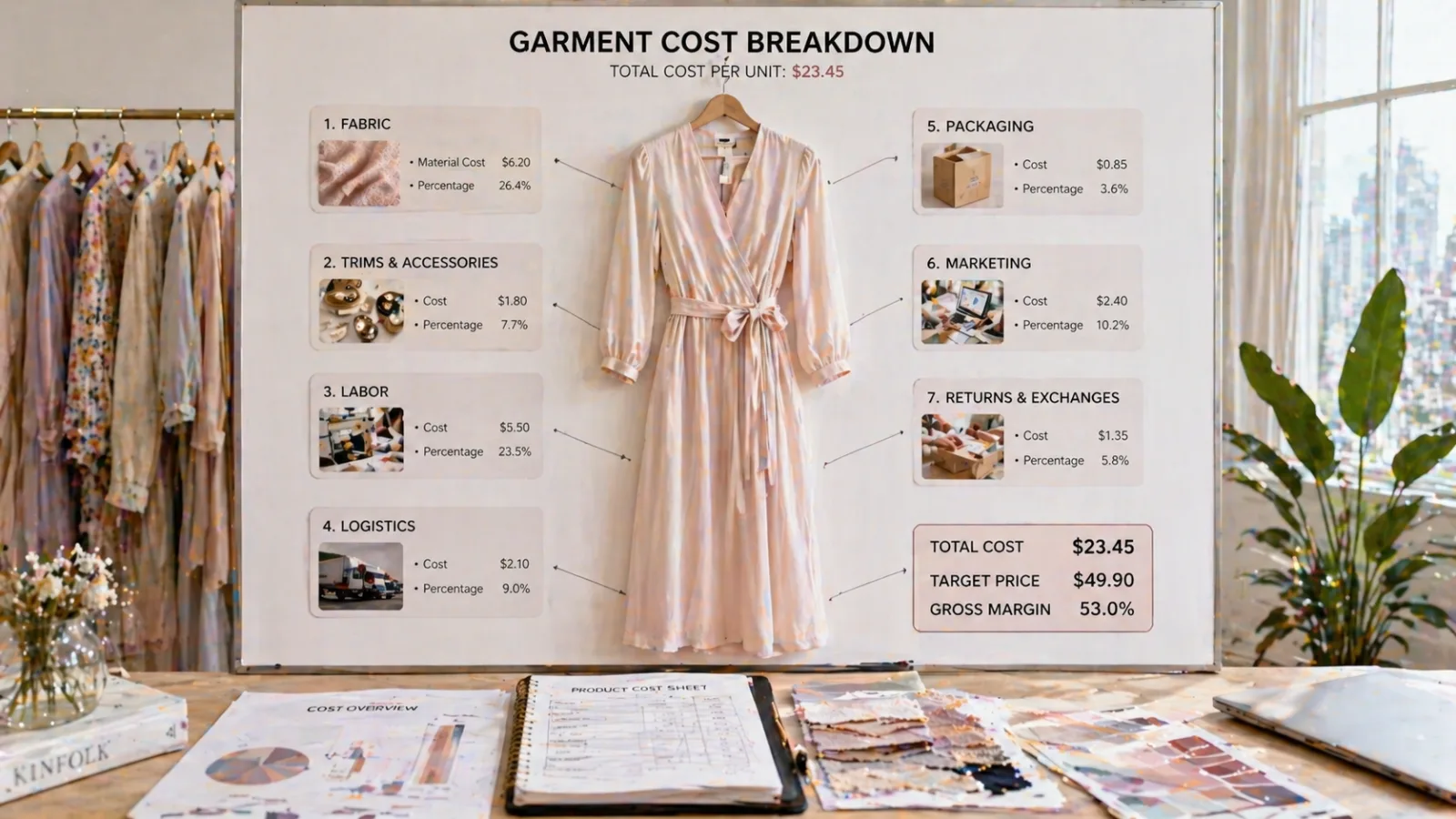
The true cost usually includes:
Product development cost
This includes tech packs, pattern making, fit development, sampling, sample shipping, revision rounds, and pre-production approvals.
Material cost
This includes fabric, lining, trims, labels, buttons, zippers, embroidery, print applications, washing, and finishing.
Manufacturing cost
This includes cutting, sewing, pressing, packing, and factory overhead built into the quote.
Logistics cost
This includes shipping, freight, customs duties, import fees, courier charges, warehousing, and transport delays.
Brand-side selling cost
This includes product photography, content creation, website expenses, platform fees, transaction fees, and marketing spend.
Risk cost
This includes defective units, production delays, markdowns, unsold inventory, returns, exchanges, and customer service issues.
That is the true cost. It is the full business cost of turning an idea into a sold garment.
The biggest mistake brand owners make when pricing garments
The biggest mistake is treating the factory quote as the final cost.
For example, imagine a brand produces a hoodie for $18 from the factory. At first glance, pricing it at $55 may feel safe. But if the brand later adds sample costs, shipping, customs, packaging, photography, influencer gifting, ads, ecommerce fees, and return handling, that $18 hoodie may actually cost far more than expected.
This leads to several problems:
- margins are weaker than planned
- discounting becomes dangerous
- scaling increases stress instead of profit
- cash flow becomes tight
- bestsellers do not create enough real return
This is why fashion pricing should never begin with “What can I sell this for?” It should begin with “What does this really cost me?”
The visible costs every brand owner must calculate
Some garment costs are easy to identify and should always be tracked from the beginning.
1. Fabric cost
Fabric is often the largest single material cost in a garment. The price depends on fiber type, GSM, finish, dye method, order quantity, and source. A heavyweight organic cotton French terry will cost very differently from a lightweight polyester jersey.
2. Trims and accessories
Zippers, elastics, buttons, labels, hangtags, drawcords, polybags, tissue, patches, and embroidery all add cost. These items may seem small individually, but together they can change the unit price noticeably.
3. Cut and sew labor
Labor cost depends on garment complexity, construction method, seam count, time per piece, factory location, and MOQ. A basic tee and a lined blazer do not carry the same sewing logic.
4. Washing and finishing
Garment dye, enzyme wash, softener wash, distressing, embroidery finishing, printing, pressing, and special treatments increase cost and often increase risk too.
5. Packaging
Custom packaging, branded boxes, inserts, woven labels, hangtags, and premium presentation all affect final cost. These visible costs are important, but they are still not the whole story.

The hidden costs that damage profit
Hidden costs are where many fashion businesses lose money without realizing it.
Sampling costs
Most products do not get approved in one round. Sample development may include first sample, fit sample, sales sample, pre-production sample, and multiple revisions. If you create many styles, this cost adds up quickly.
Shipping small quantities
Sampling courier fees, trim shipments, and urgent deliveries are much more expensive per piece than bulk freight.
Fabric waste and overconsumption
Pattern inefficiency, cutting waste, damaged fabric, and excess yardage all increase real material cost.
Defect handling
If 5 to 10 percent of a batch has to be repaired, repacked, discounted, or replaced, your true cost rises immediately.
Delays
Late production can force air shipping, postponed launches, lost sales windows, or cancelled campaigns.
Returns and exchanges
In direct-to-consumer fashion, the cost of returns can seriously affect actual profitability. A garment is not fully profitable just because it sold once.
Marketing cost per product
Some garments need much more ad spend to sell than others. If one dress needs high content production and paid promotion to move, its true selling cost is higher than the unit production cost suggests. These are the costs brand owners often underestimate, and they are exactly why understanding the full cost of fashion matters.
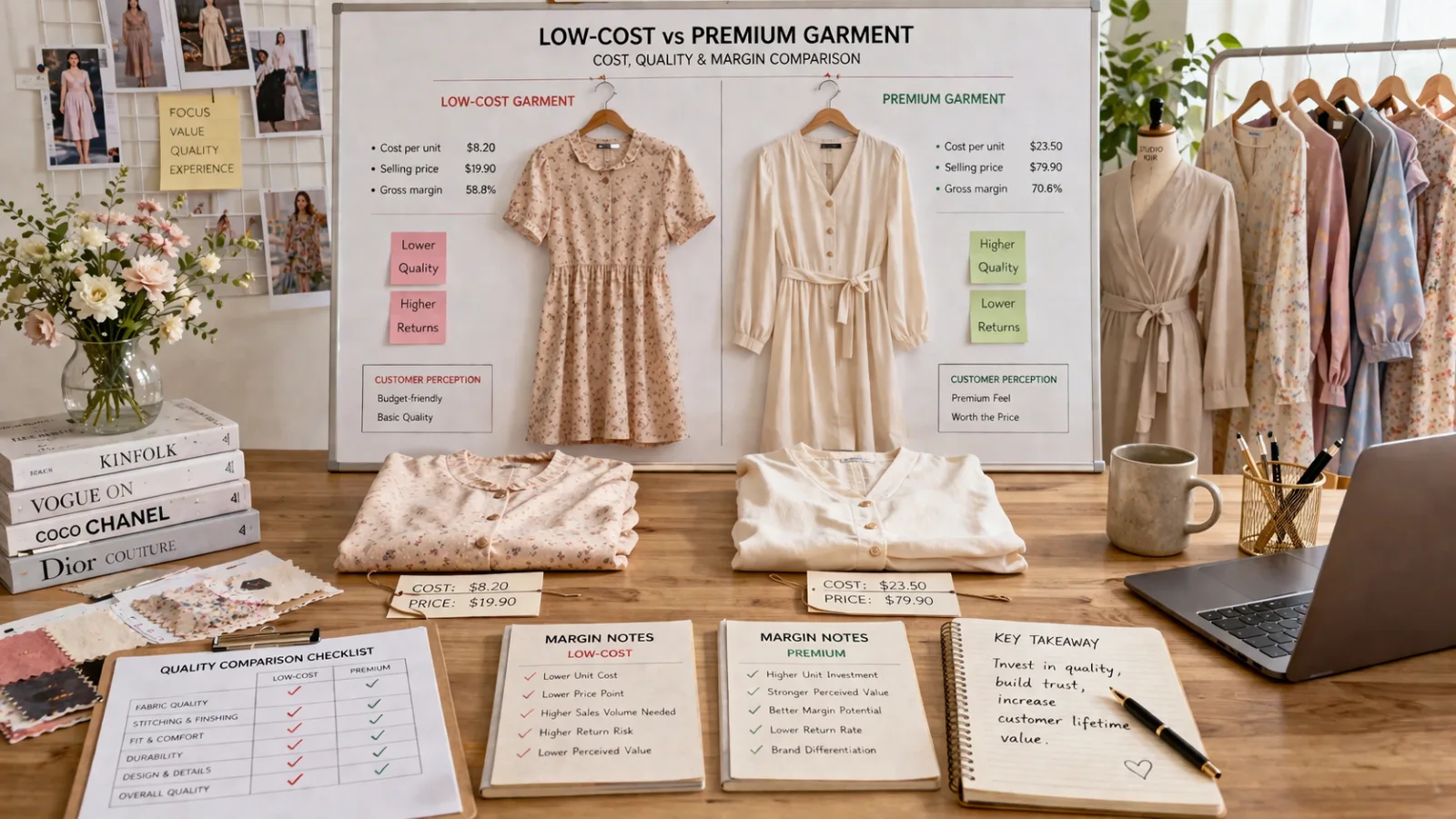
Why low garment cost does not always mean better business
A cheaper garment is not always the smarter product.
Sometimes a lower-cost item creates:
- lower perceived value
- weaker brand positioning
- more quality complaints
- more returns
- more customer dissatisfaction
- less pricing flexibility
In contrast, a better-made garment with stronger materials may cost more but allow:
- higher pricing
- stronger brand trust
- better repeat purchase rate
- lower defect rate
- better photos and presentation
- more long-term value
This is especially important for premium or growing brands. If you focus only on reducing unit cost, you may weaken the overall product and hurt the brand over time. The goal is not the cheapest garment. The goal is the best balance between cost, quality, brand positioning, and profitability.
How brand owners should think about pricing
Strong pricing comes from understanding three things clearly:
1. Your true landed cost
This is the total cost of getting the garment ready to sell, not just making it.
2. Your business model
Wholesale, direct-to-consumer, marketplace selling, and boutique retail all require different pricing structures.
3. Your brand position
A premium brand, mass-market label, and niche designer brand cannot use the same pricing logic.
A good price should cover:
- total product cost
- operating cost
- marketing cost
- return risk
- desired profit margin
It should also leave room for:
- promotions
- wholesale discounting if needed
- seasonal markdowns
- growth reinvestment
Without that buffer, a brand becomes vulnerable very quickly.
Questions every brand owner should ask before approving a garment
Before moving a garment into production, every brand owner should ask:
- What is the exact total cost of this style?
- How many sample rounds did it require?
- What is the true landed cost after freight and packaging?
- How much marketing support will this product need?
- What margin do I keep after likely discounts?
- Is the quality level strong enough for the retail price?
- Can this garment be reordered easily?
- Is the vendor stable enough for repeat production?
- Will returns or fit issues likely reduce margin?
- Does this product strengthen the brand enough to justify its cost?
These questions help turn fashion pricing into a strategic process instead of a guess.

The connection between costing, quality, and brand trust
Customers may not know your exact production cost, but they can feel when the price and product do not match.
If a customer pays a premium price and receives:
- weak stitching
- poor fit
- thin fabric
- low-end trims
- bad packaging
- inconsistent finishing
they will lose trust quickly.
This is why garment costing is not separate from brand building. It affects perceived value directly. When the cost structure is understood properly, a brand can decide where to invest:
- better fabric
- stronger fit development
- cleaner trim choices
- improved finishing
- better packaging
- more reliable production partners
That investment often improves both product value and customer confidence.
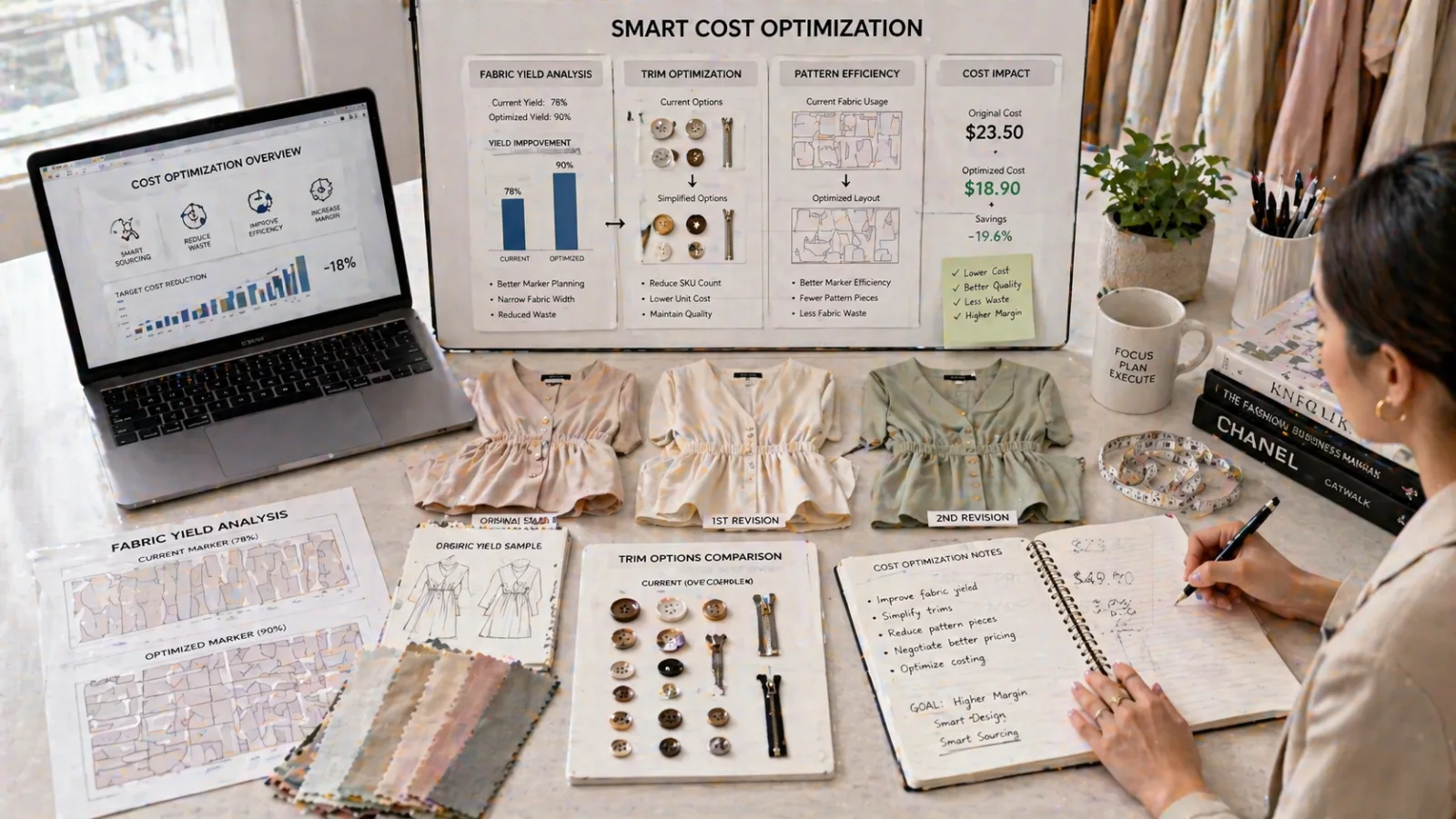
How to lower garment cost without damaging quality
Lowering cost is not always bad. The key is knowing where to optimize intelligently.
Better ways to reduce cost include:
- improving pattern efficiency to reduce fabric waste
- simplifying unnecessary trims
- reducing over-designed packaging
- choosing more scalable fabrics
- consolidating shipments
- increasing order efficiency
- improving sampling accuracy to reduce revisions
- working with better-organized vendors
Riskier ways to cut cost include:
- reducing fabric quality too far
- using weaker trims
- removing quality control
- rushing sample approval
- using factories that are too cheap but unreliable
Smart savings protect the product. Weak savings damage it.
Why the true cost of fashion also includes responsibility
The true cost of fashion is not only financial. It also includes the impact of sourcing decisions. If a garment is cheap because labor is poorly managed, quality control is weak, or production conditions are unsafe, the price tag does not reflect the real cost behind it.
For brand owners, understanding garment cost should also mean asking:
- how was this made
- who made it
- what standards were followed
- what risks sit behind the quote
A brand that ignores these questions may appear profitable in the short term but can face serious brand damage later.
ApparGlobal
Many fashion brands understand garment pricing more clearly when they work with manufacturing partners that understand fabric behavior, fit development, trim control, production planning, and quality checkpoints. Companies such as ApparGlobal help clothing brands align product development, sourcing choices, sample refinement, and bulk production expectations so garment costing becomes more transparent, more structured, and more reliable as the business grows.

Conclusion
The true cost of fashion is much bigger than the factory quote. For brand owners, understanding that difference is one of the most important business skills they can develop. A garment’s real price includes development, materials, trims, labor, freight, packaging, marketing, returns, and risk. When those costs are ignored, pricing becomes weak, margins shrink, and growth becomes harder.
Strong fashion businesses understand their garments at every level. They know what the product costs, what the product earns, and what the product risks. They also know that a better garment often creates stronger long-term value than a cheaper one built on unstable decisions.
If you want to build a healthier fashion brand, do not ask only what your garments cost to make. Ask what they truly cost to develop, launch, sell, and support. That is where smarter pricing and stronger profit begin.
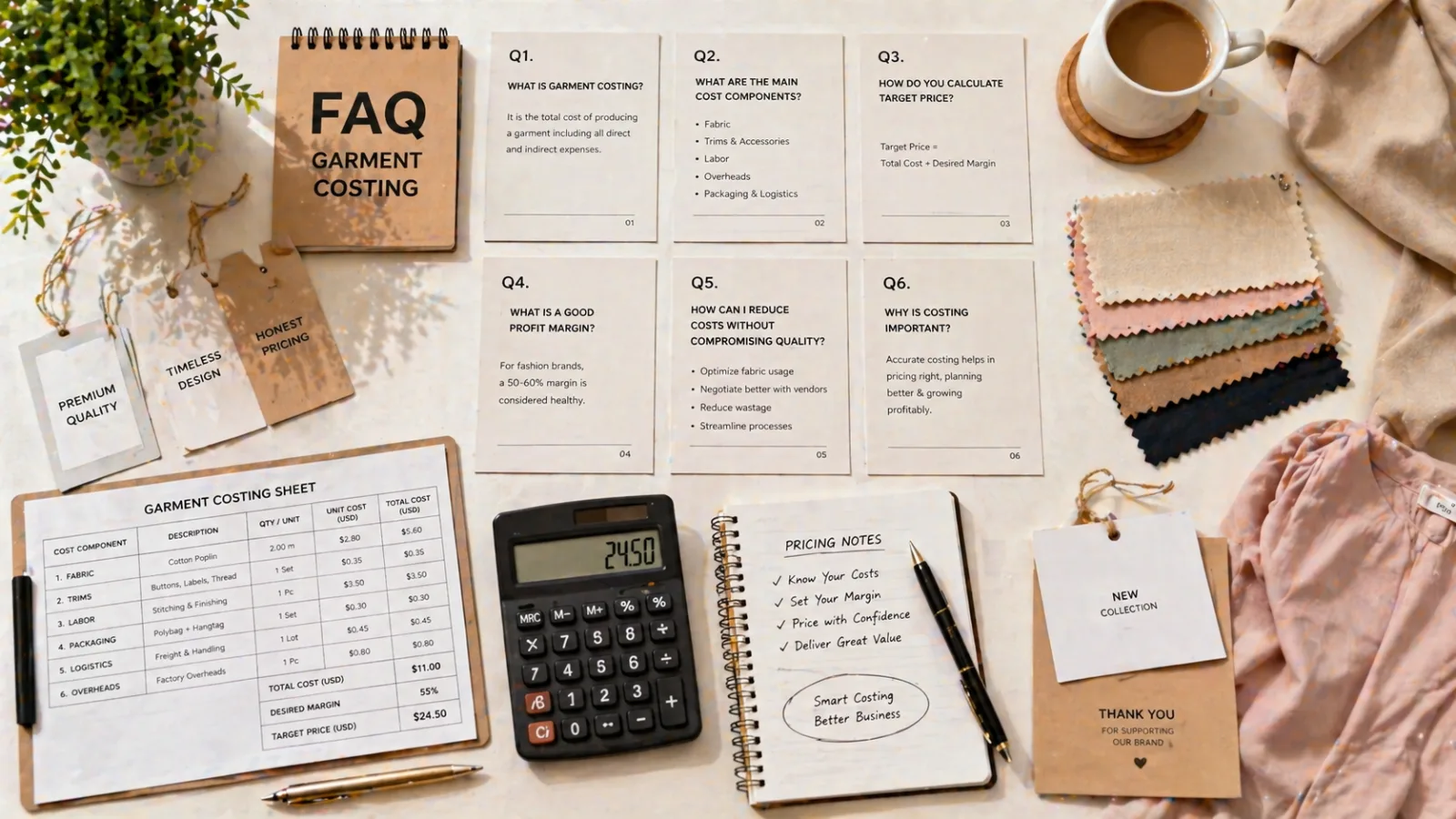
FAQs
What is the true cost of a garment?
The true cost includes development, materials, trims, manufacturing, shipping, packaging, marketing, returns, and other hidden operational expenses.
Why do many fashion brands price garments incorrectly?
Because they often look only at the factory cost and forget logistics, sampling, marketing, and return-related costs.
Is a low manufacturing cost always good?
No. A low manufacturing cost can weaken quality, brand trust, and pricing power if the product no longer delivers enough value.
What hidden costs affect clothing brands the most?
Common hidden costs include sample revisions, shipping, defects, delays, fabric waste, returns, and extra marketing spend.
Why must brand owners understand garment costing?
Because costing affects pricing, margin, growth, vendor decisions, and long-term business sustainability.