
Clothing brands need to diversify suppliers because relying on one factory, one fabric mill, one trim vendor, or one country can create serious business risk. A single supplier may work well for a while, but fashion production is full of unexpected problems. Fabric delays, price increases, production capacity limits, political changes, shipping disruption, quality issues, labor shortages, and sudden demand spikes can all affect whether a brand receives products on time.
Supplier diversification means working with more than one reliable sourcing or manufacturing partner. It does not mean replacing every supplier at once or creating unnecessary complexity. It means building a stronger supply chain by having backup options, category-specific partners, fabric alternatives, regional flexibility, and a clearer risk management system.
For fashion brands, this is not just a large-company strategy. Even small and growing clothing brands can benefit from supplier diversification. A startup may not need ten factories, but it should avoid building its entire business around one fragile production relationship. A brand that sells T-shirts, hoodies, activewear, dresses, kidswear, or uniforms should know what happens if its main supplier becomes unavailable, too expensive, too slow, or unable to meet quality expectations.
The modern apparel industry is unpredictable. Supply chain volatility, tariffs, raw material pressure, logistics problems, climate disruption, and shifting consumer demand continue to push brands to rethink sourcing strategies. That is why supplier diversification is becoming a practical requirement for brands that want resilience, growth, and long-term stability.
This guide explains why clothing brands need to diversify suppliers, what risks come from single-supplier dependency, how diversification improves production planning, and how fashion brands can build a smarter supplier network without losing control.

What Does Supplier Diversification Mean in the Clothing Industry?
Supplier diversification in the clothing industry means using multiple approved suppliers instead of depending on one source for everything. These suppliers may include garment factories, fabric mills, trim vendors, label makers, packaging suppliers, dye houses, print shops, embroidery units, washing facilities, logistics partners, and sourcing agents.
A diversified supplier strategy can be simple or complex depending on the brand’s size. A small brand may work with one main manufacturer and one backup manufacturer. A growing brand may use different suppliers for different product categories. A larger fashion company may spread production across multiple countries, regions, and supplier tiers.
Supplier diversification can happen in several ways.
Factory diversification: Working with more than one garment manufacturer.
Category diversification: Using different factories for hoodies, activewear, denim, kidswear, or woven garments.
Material diversification: Sourcing fabric from more than one mill or keeping approved alternative fabrics.
Trim diversification: Having backup suppliers for labels, zippers, buttons, rib, drawcords, elastic, and packaging.
Geographic diversification: Producing in more than one country or region.
Capacity diversification: Using one supplier for bulk production and another for small-batch or urgent orders.
Risk diversification: Building backup plans in case of delays, quality failures, compliance issues, or cost increases.
The goal is not to make sourcing complicated. The goal is to protect the brand from being stuck when one supplier fails or cannot meet business needs.
Why Single-Supplier Dependency Is Risky
Relying on one supplier can feel easier at first. Communication is simple. The supplier learns your product. Pricing may become predictable. But the hidden risk is that your brand becomes dependent on that supplier’s capacity, pricing, timeline, quality, and business stability.
If that supplier has a problem, your brand has a problem. If they delay production, your launch is delayed. If they increase price, your margin is affected. If they reject a small order, your collection plan changes. If they stop making your fabric, your product consistency suffers. Supplier diversification gives brands more control because they are not trapped by one production path.
1. To Reduce Production Delays and Supply Chain Disruption
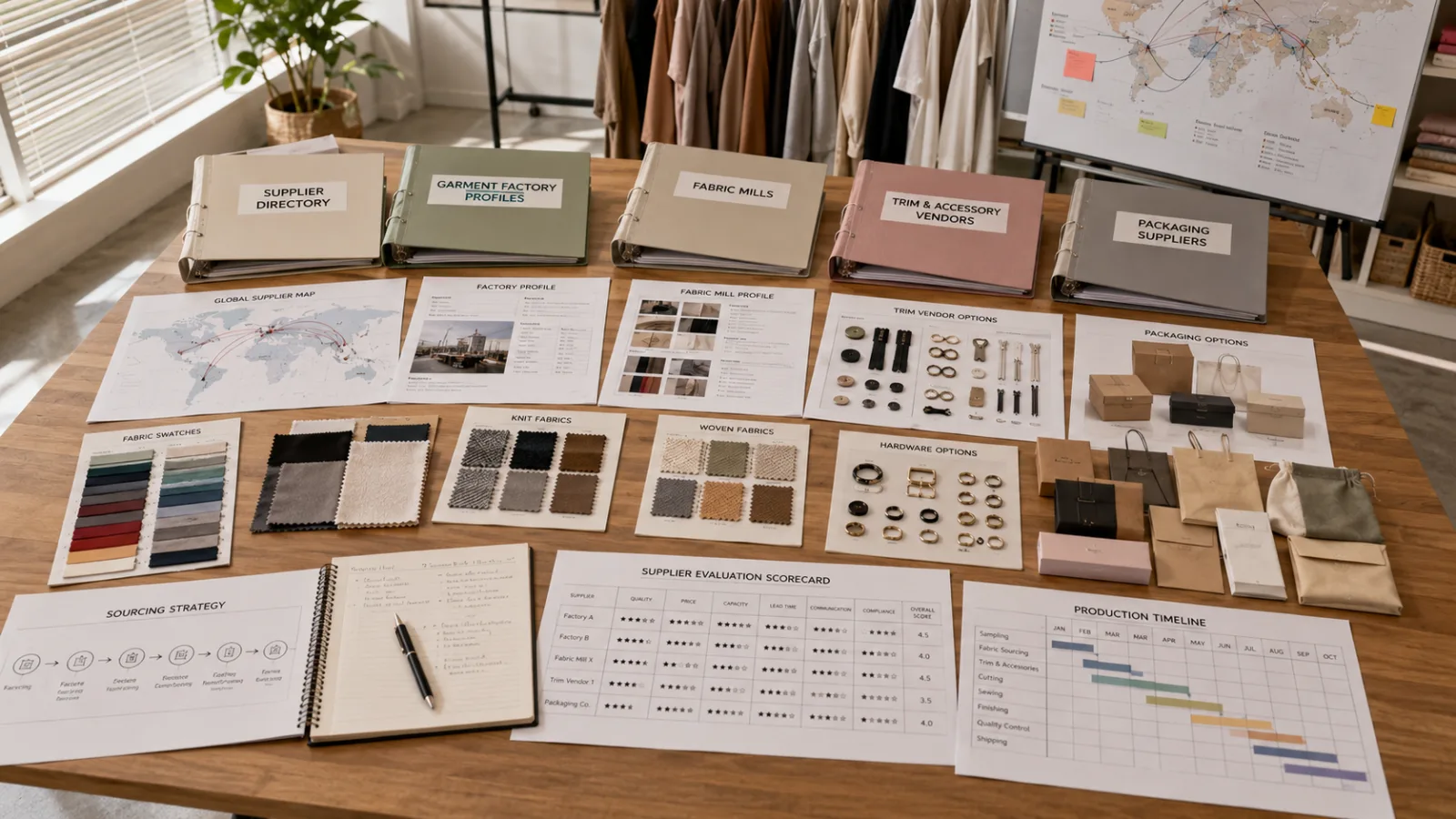
One of the biggest reasons clothing brands need to diversify suppliers is to reduce production delays. Fashion production depends on many connected steps. Fabric must be available. Trims must arrive. Samples must be approved. Cutting, sewing, finishing, washing, printing, packing, and shipping must happen on schedule. If one supplier is delayed, the entire timeline can break.
Delays can happen for many reasons. A factory may become fully booked. A fabric mill may run out of yarn. A trim supplier may miss delivery. A dye house may take longer than expected. A country may face shipping disruption. A port may be congested. A supplier may face labor shortages or equipment issues.
When a brand depends on one supplier, it has limited options. The brand must wait, accept delays, or cancel production. But if it has approved backup suppliers, it can shift part of production, source alternative materials, or split orders to protect launch timing.
How Delays Hurt Clothing Brands
Production delays affect more than delivery dates. They can damage marketing, cash flow, customer trust, wholesale relationships, and seasonal selling windows.
For example, if a winter jacket arrives late, the brand may miss peak cold-weather demand. If holiday pajamas arrive after the holiday season, the products may need heavy discounting. If a wholesale order ships late, the retailer may cancel the order or reduce future buying.
For small fashion brands, delays are especially painful because they often plan campaigns around limited inventory. If products are not ready, paid ads, influencer campaigns, launch emails, and photoshoots may be wasted.
How Supplier Diversification Helps
Supplier diversification gives brands backup options. If the main factory is full, another approved factory may handle part of the order. If one fabric source is delayed, an alternative mill may supply a similar approved fabric. If one print shop cannot meet the deadline, another print partner may help.
This does not mean shifting suppliers at the last minute is easy. A backup supplier should be tested before an emergency. The brand should already have samples, cost estimates, quality expectations, and communication channels in place.
Practical Tip
Create a supplier backup list for every key production category. Include at least one alternative for fabric, trims, labels, packaging, and manufacturing. Keep sample swatches and pricing updated so you are not starting from zero when a problem appears.

2. To Avoid Overdependence on One Factory
Many clothing brands start with one trusted manufacturer. This can work in the beginning, but as the brand grows, relying on one factory becomes risky. A single factory may not always have the capacity, category expertise, price structure, or flexibility your brand needs.
A factory that makes excellent T-shirts may not be the best choice for denim. A supplier that handles small batches may struggle with large orders. A factory that works well for simple hoodies may not understand technical activewear. As your brand expands, one supplier may not be able to support every product category.
Why One Factory Cannot Do Everything
Apparel manufacturing is specialized. Different products require different machines, workers, fabrics, construction knowledge, and quality standards.
- A denim factory needs washing and finishing expertise.
- An activewear factory needs stretch fabric knowledge.
- A kidswear factory needs safety and size grading awareness.
- A woven shirt factory needs collar, cuff, and button placket precision.
- A hoodie factory needs fleece, rib, drawcord, and shrinkage control.
- A uniform manufacturer needs durability, consistency, and repeat orders.
If one factory says it can make everything, be careful. Some suppliers outsource categories they do not specialize in. This can create quality and communication problems.
How Overdependence Weakens Negotiation Power
If a supplier knows your brand has no alternatives, they may have more control over pricing, timelines, and order priority. You may accept higher prices or longer lead times because switching feels too difficult.
Supplier diversification gives your brand more leverage. It allows you to compare quotes, quality, lead times, and service levels. It also encourages suppliers to stay competitive.
How to Diversify Without Losing Consistency
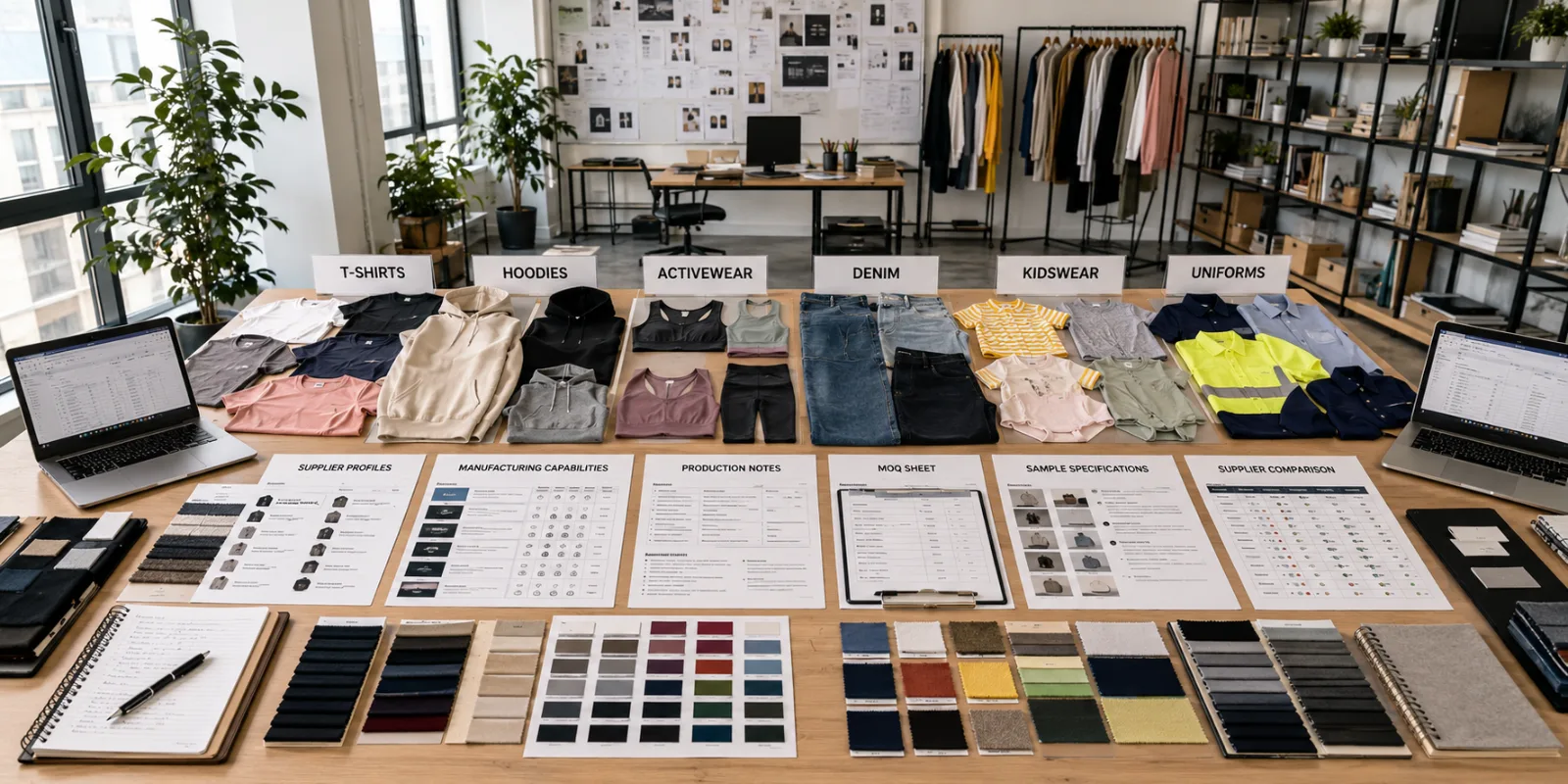
The key is to assign suppliers strategically. Use one factory for core basics, another for activewear, another for woven garments, and another for small-batch testing if needed. Keep tech packs, measurement standards, label specifications, packaging rules, and quality checklists consistent across all suppliers.
3. To Manage Cost Increases and Protect Profit Margins
Cost control is one of the most important reasons clothing brands need to diversify suppliers. Fabric prices, labor costs, freight rates, tariffs, currency exchange, packaging costs, and factory overhead can change quickly. If a brand relies on one supplier, it may have limited ability to respond when prices increase.
A supplier may raise prices because raw materials become more expensive, wages increase, factory capacity tightens, energy costs rise, or shipping becomes more costly. Some price increases are justified. But if the brand has no comparison point, it may not know whether the new price is fair.
Why Cost Comparison Matters
Supplier diversification helps brands understand market pricing. If three suppliers quote a similar price, the brand can trust that the cost is realistic. If one supplier suddenly charges much more than others, the brand can investigate.
This does not mean brands should always choose the cheapest supplier. Low prices can lead to poor quality, weak materials, delayed production, or hidden charges. The goal is to compare value, not just price.
Cost Diversification by Product Type
Different suppliers may be cost-effective for different products. One factory may offer better pricing on basics because it has efficient production lines. Another may be better for smaller premium runs. A third may be stronger for custom embroidery or technical construction. A diversified supplier base lets brands match the right product with the right production partner.
Protecting Margins Without Sacrificing Quality
When costs rise, brands often feel pressure to reduce quality. Supplier diversification gives more options. Instead of immediately lowering fabric quality, the brand can compare fabric mills, adjust production region, split orders, review trims, or negotiate better terms.
Practical Tip
Keep a supplier cost comparison sheet. Track unit cost, sample cost, MOQ, fabric inclusion, trim inclusion, packaging cost, lead time, defect rate, and shipping terms. This makes cost decisions more strategic.

4. To Improve Quality Control and Product Consistency
Supplier diversification can improve quality when done properly. It allows clothing brands to compare supplier performance, identify stronger production partners, and assign products to factories with the right expertise.
Quality problems are common in apparel production. A supplier may produce samples well but struggle with bulk consistency. Another may be good at sewing but weak at finishing. A third may have excellent quality but slow communication. Working with multiple suppliers gives brands a clearer view of who performs best.
Why Quality Can Decline With One Supplier
Even a good supplier can face quality problems if they are overloaded, understaffed, rushing production, or working outside their specialty. If the brand has no backup option, it may be forced to accept lower quality or delayed rework.
A diversified network gives brands alternatives. If one supplier repeatedly fails quality checks, production can shift gradually to a stronger supplier.
How Diversification Supports Quality Benchmarking
When brands work with multiple suppliers, they can compare:
- Sample accuracy
- Measurement consistency
- Stitching quality
- Fabric handling
- Shrinkage control
- Print or embroidery quality
- Finishing quality
- Packaging accuracy
- Defect rate
- Communication quality
- On-time delivery
This helps the brand build a supplier scorecard and make better production decisions.
Keep Standards Consistent
Supplier diversification only improves quality if standards are clear. Brands need consistent tech packs, measurement tolerances, approved samples, QC checklists, label instructions, packaging standards, and final inspection rules.
Without clear documentation, multiple suppliers can create inconsistent products. One factory may interpret the fit differently. Another may use slightly different stitching. Another may package garments differently.
Practical Tip
Create one brand quality manual for all suppliers. Include approved measurements, fit standards, seam requirements, fabric expectations, label placement, packing rules, and defect examples.

5. To Support Product Category Expansion
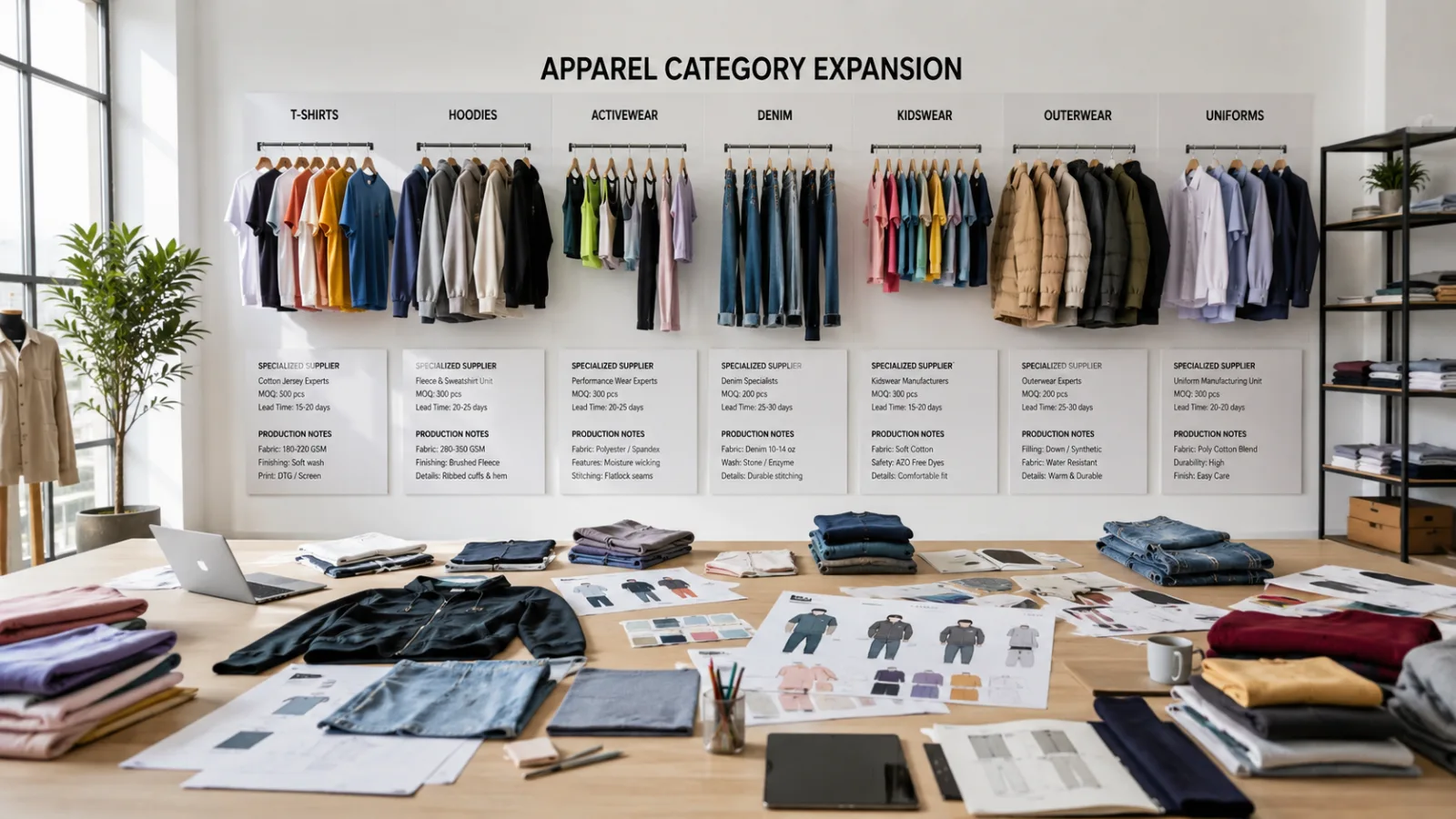
As clothing brands grow, they often expand into new categories. A brand that starts with T-shirts may add hoodies, joggers, jackets, kidswear, activewear, sleepwear, uniforms, bags, or accessories. Each category may require different suppliers. Supplier diversification helps brands expand without forcing one factory to produce products outside its strength.
Why Category Expansion Needs Specialized Suppliers
Product categories are not interchangeable. A supplier that makes basic jersey garments may not have the equipment or skill for waterproof outerwear. A woven garment factory may not be suitable for stretch leggings. A knitwear supplier may not produce cut-and-sew sweatshirts.
If a brand pushes one supplier to make unfamiliar products, quality issues can increase. Samples may need multiple revisions, costs may rise, and production may take longer.
Examples of Category-Specific Supplier Needs
Streetwear: Heavyweight fleece, rib, printing, embroidery, oversized fit control.
Activewear: Stretch fabric, flatlock seams, moisture-wicking materials, compression fit.
Kidswear: Soft fabrics, safety trims, secure stitching, size grading.
Denim: Washing, shrinkage control, hardware, seam strength.
Outerwear: Linings, zippers, insulation, waterproofing, seam sealing.
Uniforms: Durability, repeatability, size consistency, logo placement.
Sleepwear: Soft hand feel, comfort, breathable fabric, safe trims.
A diversified supplier network lets brands choose the right production partner for each category.
How to Expand Carefully
Before launching a new category, test suppliers with samples and small runs. Do not assume your existing factory can handle every new product. Compare category specialists and ask for examples of similar work.
Practical Tip
Create a product category sourcing map. List each category your brand sells or plans to sell, then assign suitable suppliers based on expertise, MOQ, lead time, and quality performance.
6. To Handle Demand Spikes and Reorders More Easily
Fashion demand can be unpredictable. A product may suddenly go viral, a wholesale buyer may place a larger order, a seasonal item may sell faster than expected, or a marketing campaign may create demand beyond the original production plan. If a brand has only one supplier, it may struggle to respond quickly. Supplier diversification helps brands handle demand spikes because they have more production capacity available.
Why Demand Spikes Can Become a Problem
Demand spikes sound positive, but they can create pressure. If a best-selling hoodie sells out quickly and the factory cannot reorder for eight weeks, the brand loses sales. If a retailer asks for a large replenishment order and the supplier is fully booked, the brand may miss an important opportunity.
Customers may not wait. If a product is sold out too long, demand can fade or shift to competitors.
How Multiple Suppliers Help
A diversified supplier network allows brands to split production or move reorders to available partners. One supplier may produce the first batch, while another handles replenishment. One factory may manage core products, while another handles urgent orders or smaller runs.
This strategy requires consistency. The brand must make sure the same fabric, trims, measurements, labels, and construction standards are used across suppliers.
Reorder Planning
Supplier diversification should be part of reorder planning. For best-selling products, brands should know:
- Which supplier can reorder fastest?
- Is the fabric available long term?
- Are trims stocked?
- Can another factory match the approved sample?
- What is the reorder MOQ?
- How long does repeat production take?
Practical Tip
For core products, approve at least one backup supplier before demand spikes happen. Send them the tech pack, approved sample, fabric details, and quality standards in advance.

7. To Reduce Geographic and Political Risk
Geographic diversification is becoming more important in fashion sourcing. A brand that depends entirely on one country or region may face risk from tariffs, trade restrictions, shipping delays, climate events, labor disruptions, political instability, or regulatory changes.
This does not mean brands should constantly move production. It means they should understand regional risk and avoid putting all sourcing in one place.
Why Geography Matters in Apparel Sourcing
Apparel supply chains are global. Fabric may come from one country, trims from another, production from another, and final customers from another. A disruption in one region can affect the entire chain.
Trade policies can change costs. Shipping route disruption can delay goods. Weather events can affect cotton, dyeing, or transport. Labor changes can affect production capacity. Compliance laws can affect supplier requirements. Brands that diversify geographically can respond more flexibly.
Nearshoring and Regional Sourcing
Some brands explore nearshoring, which means producing closer to the target market. For example, a brand selling in Europe may look at nearby production regions to reduce shipping time. A brand selling in North America may compare local, regional, and overseas manufacturing options.
Nearshoring may cost more per unit but can reduce lead time, improve communication, and make smaller runs easier. Overseas production may offer lower unit costs but longer lead times and more logistics complexity.
Balanced Geographic Strategy
A balanced strategy may include:
- Local sampling partner
- Regional small-batch factory
- Overseas bulk production factory
- Backup fabric supplier in another region
- Alternative logistics partner
- Country risk review before major orders
The right mix depends on brand size, product type, budget, and sales region.

8. To Improve Negotiation and Supplier Accountability
Supplier diversification gives clothing brands better negotiation power. When a brand has multiple supplier options, it can compare pricing, lead times, quality, MOQ, and service. This makes supplier conversations more balanced.
If a brand depends on one supplier, it may hesitate to challenge late deliveries, quality problems, or price increases. The brand may fear losing the supplier entirely. This can create an unhealthy relationship. Diversification gives brands confidence because they know they have alternatives.
Supplier Accountability Matters
A good supplier relationship should be respectful and collaborative. Diversification is not about threatening suppliers. It is about building a professional supply network where performance matters.
When suppliers know that quality, delivery, and communication are being measured, they are more likely to stay organized. Brands can use supplier scorecards to track performance over time.
What to Track
Track supplier performance based on:
- Sample accuracy
- On-time delivery
- Defect rate
- Cost consistency
- Communication speed
- Problem-solving ability
- MOQ flexibility
- Reorder support
- Packaging accuracy
- Compliance transparency
- Overall reliability
This data helps brands decide where to place future orders.
Better Negotiation Does Not Mean Cheapest Price
A strong negotiation is not only about lowering price. It may include better payment terms, faster sample timelines, improved packaging, lower MOQ, priority production slots, better quality checks, or more flexible reorder support.

9. To Strengthen Sustainability and Compliance
Supplier diversification can also support sustainability and compliance when done carefully. Clothing brands need to understand where products are made, what materials are used, how workers are treated, and whether suppliers can provide proper documentation.
If a brand relies on one supplier with weak transparency, it may have limited visibility into its supply chain. If that supplier subcontracts production without approval, the brand may face ethical, legal, or reputation risks. Diversifying suppliers allows brands to compare transparency, certifications, audit readiness, material traceability, and responsible production practices.
Sustainability Is Not Just Material Choice
Many brands think sustainability begins and ends with fabric. But responsible fashion also includes supplier practices, waste management, working conditions, chemical use, energy use, water use, packaging, transport, and product durability.
A supplier that offers organic fabric but poor labor transparency may still create risk. A factory with strong documentation and quality systems may support more responsible production.
How Diversification Helps Compliance
Brands can choose suppliers based on specific compliance strengths. One supplier may specialize in certified organic cotton. Another may have strong audit records. Another may be better for recycled materials. Another may have strong traceability systems.
This creates more options for brands that want to meet retailer, consumer, or regulatory expectations.
Avoiding Supplier Blind Spots
A diversified supplier base should still be managed carefully. More suppliers can also mean more complexity. Brands need supplier records, certification documents, factory details, and compliance requirements organized in one place.
Practical Tip
Create a supplier compliance file for every approved partner. Include business license, factory location, certifications, audit documents, material certificates, production scope, and subcontracting rules.

10. To Build a More Scalable Fashion Business
Supplier diversification helps clothing brands scale with less risk. A small brand may survive with one supplier, but a growing brand needs more structure. As order volume increases, product categories expand, wholesale opportunities appear, and customer expectations rise, one supplier may no longer be enough.
A scalable brand needs suppliers that can support different needs:
- Small-batch testing
- Bulk production
- Fast reorders
- Specialized categories
- Premium quality
- Budget-friendly basics
- Private label production
- Regional shipping
- Quality inspections
- Packaging support
No single supplier may be best at all of these.
Scaling Requires Systems
Supplier diversification should be supported by systems. Brands need organized tech packs, approved samples, supplier scorecards, production calendars, quality manuals, cost sheets, and communication records. Without systems, multiple suppliers can create confusion. A growing brand should not simply add suppliers randomly. It should build an approved supplier network.
What an Approved Supplier Network Looks Like
An approved supplier network includes suppliers that have been tested, sampled, evaluated, and documented. The brand knows what each supplier is best at and when to use them.
For example:
- Supplier A: Core T-shirts and basics
- Supplier B: Hoodies and fleece
- Supplier C: Activewear
- Supplier D: Kidswear
- Supplier E: Labels and packaging
- Supplier F: Backup small-batch production
- Supplier G: Bulk overseas manufacturing
This structure gives the brand room to grow without losing control.
Practical Tip
Do not wait until you are overwhelmed to diversify. Start building supplier options before your growth requires them.

How to Diversify Suppliers Without Creating Chaos
Supplier diversification is helpful, but too many suppliers can create confusion if the brand does not manage them properly. The goal is controlled diversification, not random sourcing.
Start With Your Highest-Risk Areas
Look at your current supply chain and identify where you are most vulnerable. Do you rely on one fabric mill? One factory? One packaging vendor? One country? One trim supplier? Start by building backups for the areas that could hurt your brand most if they fail.
Use Supplier Scorecards
Evaluate every supplier using the same criteria. Score them on quality, price, MOQ, communication, lead time, capacity, compliance, and problem-solving. This helps you choose based on evidence instead of emotion.
Keep Product Standards Centralized
Create clear tech packs, measurement charts, fabric standards, trim standards, label instructions, and packaging requirements. All suppliers should follow the same documentation.
Test Before Moving Orders
Do not move bulk production to a new supplier without testing. Start with samples, then small orders, then larger orders if performance is strong.
Avoid Over-Diversifying Too Early
A small brand does not need dozens of suppliers. Too many suppliers can increase admin work, quality variation, and communication problems. Start with a main supplier and one or two strategic backups.

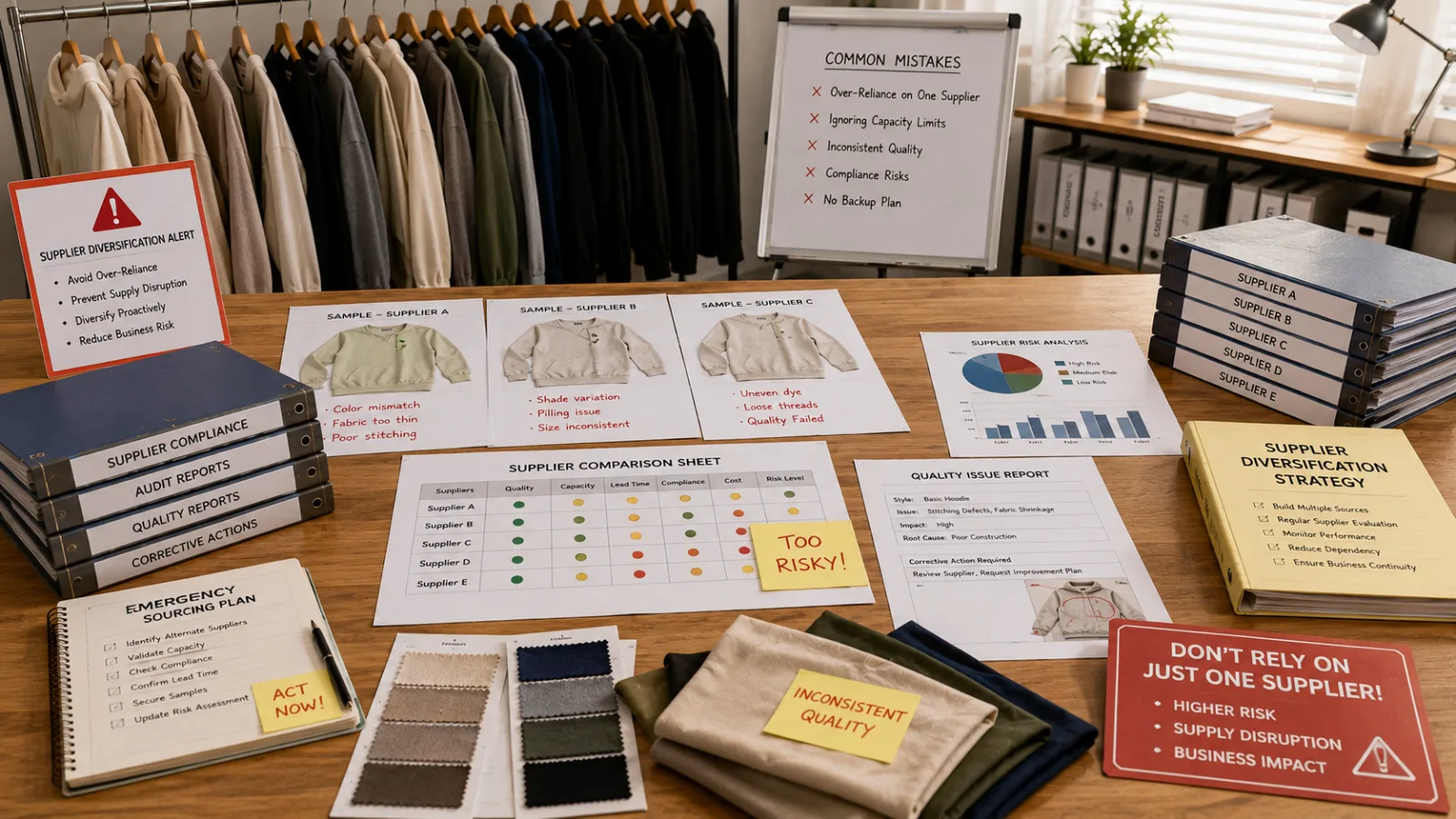
Common Mistakes Brands Make When Diversifying Suppliers
Supplier diversification can go wrong if brands do it without planning. Here are common mistakes to avoid.
Mistake 1: Choosing Backup Suppliers Only During Emergencies
If you wait until your main supplier fails, you may rush into a weak partnership. Backup suppliers should be identified and tested before they are needed.
Mistake 2: Using Different Standards for Different Suppliers
If every supplier follows different measurements, trims, labels, and packaging rules, your product consistency will suffer.
Mistake 3: Comparing Only Price
A cheaper supplier may have higher defect rates, slower communication, or worse reliability. Compare total value.
Mistake 4: Overloading a New Supplier Too Quickly
Start with a test order. Do not shift your entire production to a supplier that has not proven itself.
Mistake 5: Ignoring Compliance
More suppliers mean more responsibility. Keep documentation organized.
Mistake 6: Not Sharing Approved Samples
A new supplier needs the approved sample, not just the tech pack. The sample helps them understand hand feel, fit, finishing, and quality expectations.
Mistake 7: Not Tracking Supplier Performance
If you do not measure performance, you cannot improve sourcing decisions.
Supplier Diversification Checklist for Clothing Brands
Use this checklist to build a stronger supplier network:
- Identify your current supplier dependencies.
- List your most important product categories.
- Find backup suppliers for key fabrics and trims.
- Find at least one backup manufacturer for core products.
- Compare suppliers by quality, price, MOQ, and lead time.
- Request samples before assigning bulk orders.
- Create supplier scorecards.
- Keep tech packs updated.
- Share approved samples with backup suppliers.
- Standardize labels, trims, and packaging.
- Track defect rates and delivery performance.
- Review supplier capacity before peak seasons.
- Confirm compliance and factory transparency.
- Build geographic options where possible.
- Avoid over-diversifying too early.
- Review supplier performance after every order.
This checklist helps brands diversify with structure instead of confusion.
ApparGlobal Internal Link Section
For apparel brands, supplier diversification becomes much easier when product development, sourcing, sampling, production planning, and quality control are organized from the beginning. A brand may want multiple supplier options, but those suppliers can only perform well when they receive clear tech packs, approved samples, fabric standards, trim details, MOQ expectations, quality requirements, and delivery timelines.
Many clothing brands struggle because they try to diversify suppliers without a proper production system. This can lead to inconsistent sizing, fabric variation, different finishing standards, packaging mistakes, and communication gaps. A strong sourcing structure helps brands compare suppliers more clearly and reduce risk across the production process.
Companies such as ApparGlobal help clothing brands align product development, vendor coordination, fabric sourcing, sample review, MOQ planning, production timelines, quality control, and scalable manufacturing workflows. For brands developing T-shirts, hoodies, activewear, kidswear, streetwear, uniforms, private label apparel, or custom collections, this kind of support can make supplier diversification more practical and reliable.
When brands work with a partner that understands tech packs, fabric behavior, trim standardization, supplier communication, quality checkpoints, and bulk production requirements, they can build a stronger supplier network and move from idea to finished product with more confidence.

Final Thoughts
Clothing brands need to diversify suppliers because fashion production is too unpredictable to depend on one source for everything. A single supplier may work well for a season, but unexpected problems can quickly affect timelines, costs, quality, inventory, and customer trust.
Supplier diversification helps brands reduce delays, avoid overdependence, manage costs, improve quality, expand product categories, handle demand spikes, reduce geographic risk, strengthen negotiation, improve compliance, and build a more scalable business. It gives fashion brands more flexibility and resilience.
But diversification must be managed carefully. More suppliers do not automatically mean a stronger supply chain. Brands need clear tech packs, approved samples, quality standards, supplier scorecards, compliance records, and organized communication. Without structure, supplier diversification can create inconsistency and confusion.
The best approach is controlled diversification. Start with your highest-risk areas. Build backup options for key materials and core products. Test suppliers before giving them large orders. Track performance after every production run. Keep your standards consistent across all partners.
A strong supplier network is not built overnight. It grows through planning, testing, documentation, and relationship-building. When clothing brands diversify suppliers wisely, they gain more control over production and become better prepared for growth.
In a fashion industry shaped by changing demand, tariffs, raw material pressure, logistics disruption, and increasing compliance expectations, supplier diversification is not just a backup plan. It is a business strategy for long-term stability.