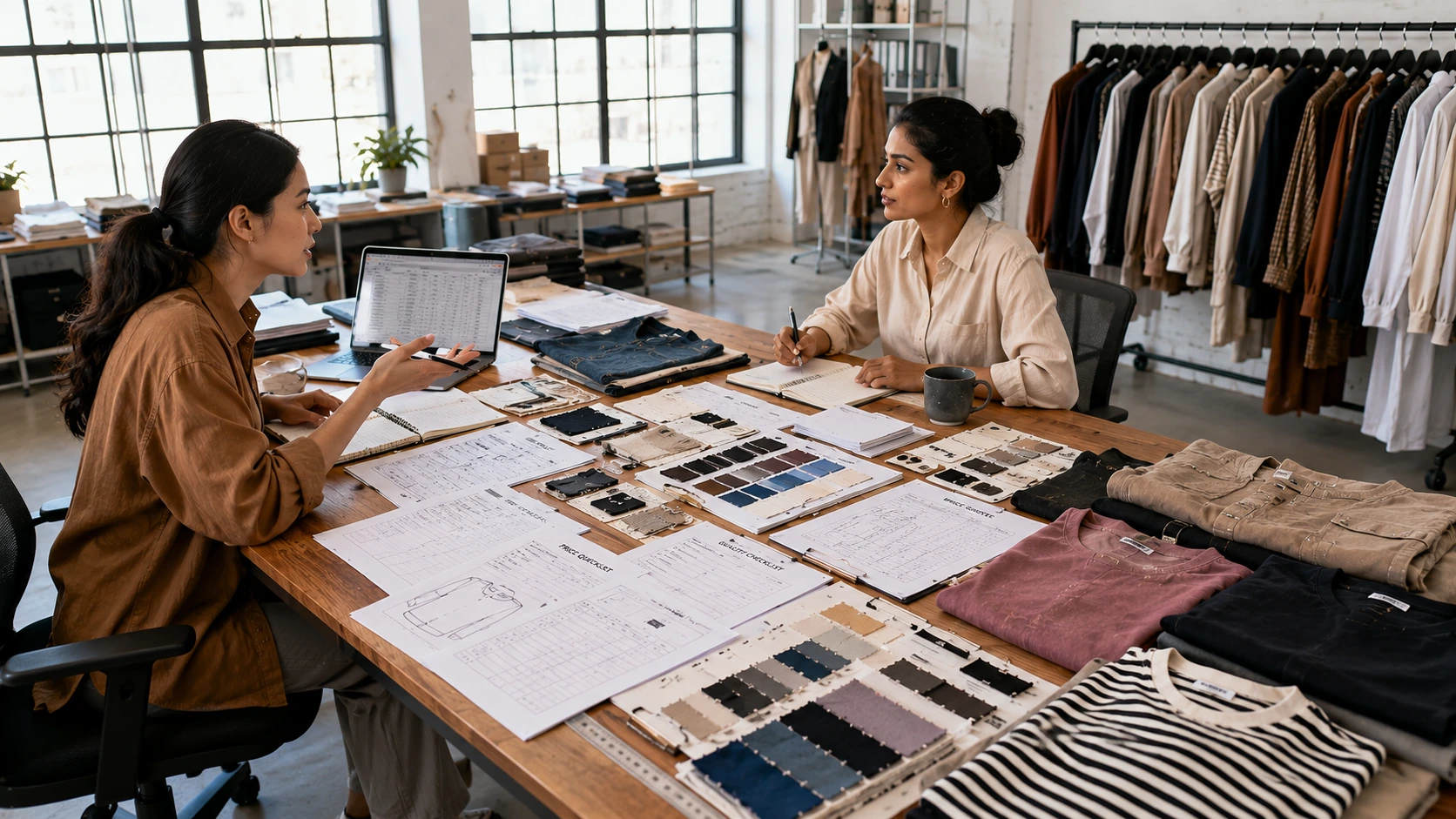
Choosing the right clothing supplier is one of the most important decisions for any fashion brand, boutique owner, private label business, eCommerce store, or apparel startup. Your clothing supplier is not just someone who makes garments. They directly affect your product quality, pricing, delivery timeline, brand reputation, customer satisfaction, and profit margin. A good supplier can help your brand grow with better production support, reliable communication, consistent quality, and practical cost guidance. A poor supplier can create delays, quality issues, hidden costs, wrong sizing, missed launch dates, and unhappy customers.
That is why asking the right questions before working with a clothing supplier is so important.
Many new apparel brands focus only on one question: “What is your price?” Price is important, but it is not enough. A low price does not always mean good value. A supplier may offer an attractive unit cost but fail on quality, communication, compliance, packaging, delivery, or consistency. In clothing production, the cheapest quote can become expensive if you receive defective garments, wrong measurements, poor fabric, delayed shipments, or products that do not match your approved sample.
The better approach is to ask smart, detailed questions before placing an order. These questions help you understand whether the supplier is reliable, experienced, transparent, and suitable for your product type. They also help you compare suppliers properly instead of making decisions based on price alone.
In this guide, we will cover the top 10 important questions you should ask a clothing supplier before starting production. Each question is explained in detail so you know why it matters, what answers to expect, and what red flags to watch for. Whether you are sourcing T-shirts, hoodies, activewear, kidswear, dresses, uniforms, streetwear, denim, or private label clothing, these questions will help you make a smarter supplier selection decision.

Why Asking the Right Questions Matters Before Choosing a Clothing Supplier
Before discussing the top questions, it is important to understand why the supplier interview process matters so much. Many apparel businesses make the mistake of treating supplier selection as a quick price comparison. They send the same product image to several suppliers, ask for the lowest price, and choose whoever responds fastest. This approach can create serious problems later.
Clothing production has many moving parts. A single garment may involve fabric sourcing, pattern making, grading, sampling, trims, labels, stitching, printing, embroidery, washing, finishing, quality control, packing, shipping, and documentation. If one part goes wrong, the final product can fail. That is why supplier selection should be handled carefully.
Asking detailed questions helps you understand how the supplier works. You can learn whether they produce your type of garment, whether they can handle your order quantity, whether they offer custom labels, whether they follow quality control steps, and whether they can deliver within your timeline.
Good suppliers usually welcome detailed questions. They understand that serious buyers need clarity before investing money. They will explain their process, pricing, MOQ, sample development, quality standards, production timeline, and shipping options. Weak suppliers often avoid details, give vague answers, rush you to pay, or promise everything without asking enough about your product.
The quality of a supplier’s answers can tell you a lot about their professionalism. If they respond clearly, ask smart follow-up questions, and explain limitations honestly, that is a good sign. If they only say “yes, we can do it” to everything, you should be careful.

1. What Types of Clothing Do You Specialize In?
The first important question to ask a clothing supplier is about their specialization. Not every supplier is suitable for every product category. A supplier that makes basic cotton T-shirts may not be the right choice for structured jackets. A factory that produces sportswear may not be experienced in luxury dresses. A supplier that handles denim may not understand the details of kidswear, lingerie, knitwear, uniforms, or technical outerwear.
Asking about specialization helps you understand whether the supplier has real experience with your product type. This matters because different clothing categories require different fabrics, machines, construction methods, quality checks, and production knowledge.
For example, activewear requires stretch fabric knowledge, seam strength, moisture-wicking materials, compression fit, and strong stitching. Hoodies require knowledge of fleece weight, shrinkage, rib quality, hood shape, drawcord finishing, and print placement. Kidswear requires comfort, safety, durability, soft fabrics, secure trims, and careful sizing. Denim requires washing, fading, hardware, seam strength, and shrinkage control.
A supplier with category experience can guide you better. They may suggest suitable fabrics, cost-saving construction methods, practical trims, and production improvements. They can also warn you if your design has a technical issue that may increase cost or create quality problems.
Why This Question Matters
Choosing a supplier without category experience can lead to costly mistakes. They may accept your order but struggle during sampling or production. You may face repeated sample revisions, poor fit, fabric issues, incorrect finishing, or inconsistent quality.
A specialized supplier usually understands common problems before they happen. This saves time, money, and frustration.
What to Ask in Detail
You can ask:
- What clothing categories do you mainly produce?
- Have you made products similar to mine before?
- Can you show examples of similar garments you have produced?
- What fabrics do you usually work with?
- Do you handle custom designs or only ready-made styles?
- Do you have experience with my required printing, embroidery, washing, or finishing method?
Good Answer Example
A strong supplier may say something like:
“We mainly produce streetwear, hoodies, T-shirts, joggers, and sweatshirts. We work with cotton jersey, French terry, fleece, rib, and heavyweight fabrics. We can handle screen printing, embroidery, puff print, and custom labels. We can also help with sampling and size grading.”
This type of answer shows practical experience.
Red Flags to Watch For
Be careful if the supplier says they can produce every type of garment without giving details. Some suppliers accept all orders but outsource the work to unknown factories. This can make quality control harder. lso be careful if they cannot show any similar product examples or if they avoid explaining their capabilities.

2. What Is Your Minimum Order Quantity?
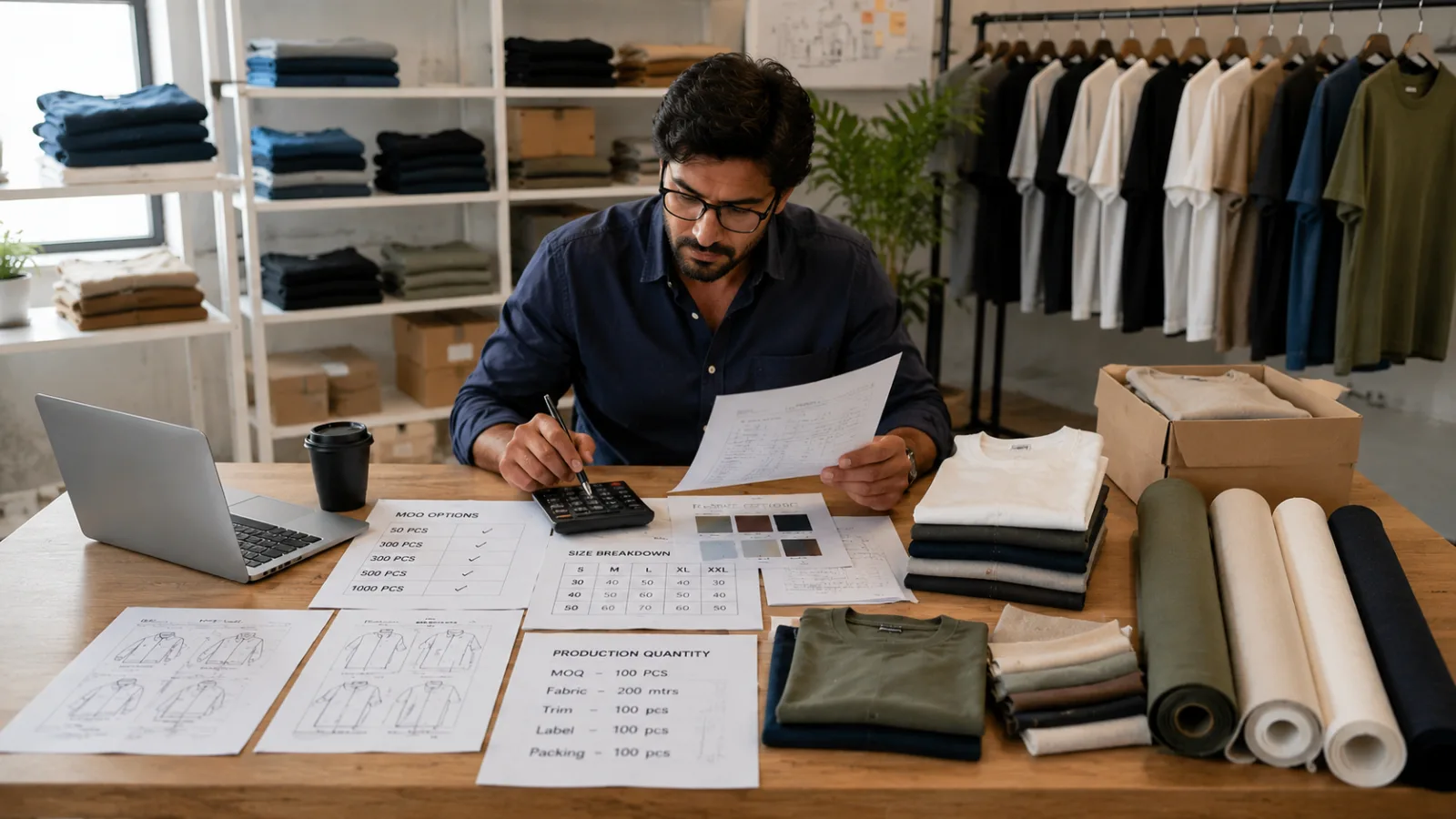
Minimum order quantity, often called MOQ, is one of the most important questions to ask a clothing supplier. MOQ means the smallest number of pieces the supplier is willing to produce. It may apply per style, per color, per size, or per fabric.
MOQ directly affects your budget, cash flow, inventory risk, and launch strategy. A supplier may offer a very low unit price, but if their MOQ is too high, the total order cost may not fit your business. For example, a supplier may quote $5 per T-shirt, but only if you order 1,000 pieces. Another supplier may quote $8 per T-shirt but accept 100 pieces. For a new brand, the second supplier may be more realistic even though the unit price is higher. This is why you should never look at unit price alone. Always compare MOQ and total investment.
Why This Question Matters
MOQ determines how much money you need upfront. It also affects how much inventory you must store and sell. If you order too much too early, your money may get stuck in unsold products. This can limit your ability to test new designs, run marketing campaigns, or improve your next collection.
Small brands often need flexible MOQ because they are still testing product-market fit. A lower MOQ allows you to test customer demand, collect feedback, and avoid large inventory mistakes.
What to Ask in Detail
Ask the supplier:
- What is your MOQ per style?
- Is the MOQ per color or total quantity?
- Can I mix sizes within the MOQ?
- Can I mix colors within the MOQ?
- Is there a different MOQ for custom fabric?
- Is there a different MOQ for stock fabric?
- Do you offer sample runs or small-batch production?
- Can you reduce MOQ if I pay a higher unit price?
These questions help you understand the real production requirement.
Good Answer Example
A professional supplier may say:
“Our MOQ is 200 pieces per style if you use stock fabric. If you need custom dyed fabric, the MOQ may be 500 pieces per color. You can mix sizes within the order. For first-time clients, we can discuss a trial order with a slightly higher unit cost.”
This answer gives useful detail and shows flexibility.
Red Flags to Watch For
Be careful if the supplier gives unclear MOQ information. For example, they may say “MOQ is 100 pieces” but later explain that it means 100 pieces per color and per design. That can quickly increase your total quantity. Also be cautious if a supplier pressures you to order a large quantity before sampling or testing product quality.
3. What Is Included in Your Price Quote?
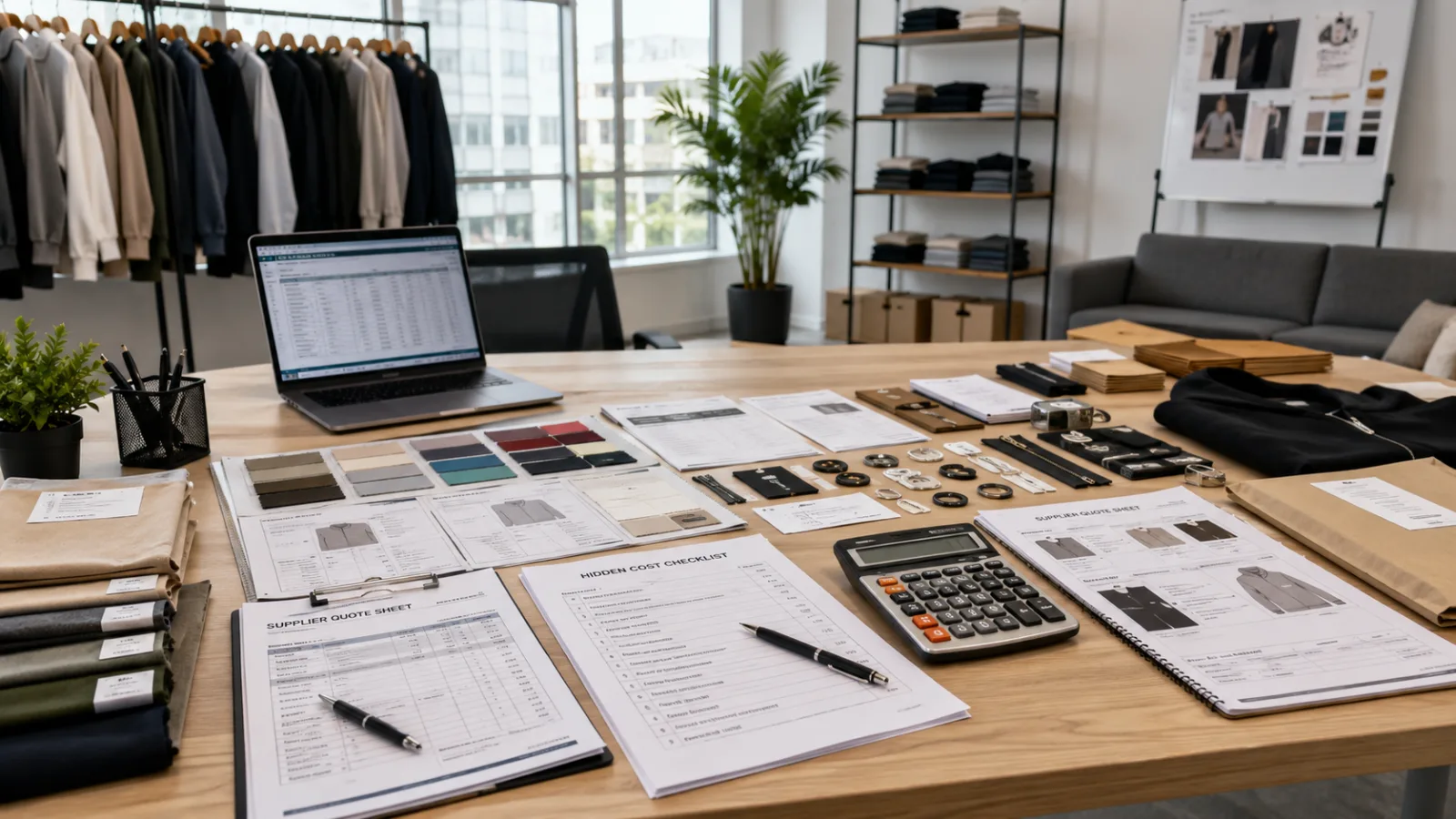
Price is important, but you need to know what the price includes. A supplier may quote a low unit cost, but that price may not include fabric, trims, labels, packaging, printing, embroidery, washing, quality inspection, or shipping. Another supplier may quote a higher unit cost but include more services. Without a detailed cost breakdown, you cannot compare suppliers fairly.This is one of the most important questions to ask a clothing supplier because hidden costs can destroy your budget.
A professional supplier should explain exactly what is included in the quote and what will be charged separately. This helps you avoid surprises later.
Why This Question Matters
Many clothing brands make the mistake of comparing only the unit price. For example, Supplier A quotes $6 per piece and Supplier B quotes $8 per piece. At first, Supplier A looks cheaper. But if Supplier A charges extra for labels, packaging, printing setup, and quality checking, the final cost may become higher than Supplier B.
A clear quote protects your budget and helps you understand the true cost per garment.
What to Ask in Detail
Ask your supplier:
- Does the price include fabric?
- Does the price include trims?
- Does the price include labels and tags?
- Does the price include packaging?
- Does the price include printing or embroidery?
- Does the price include washing or finishing?
- Does the price include quality control?
- Does the price include carton packing?
- Does the price include shipping?
- Are there any setup fees?
- Are there any extra charges I should know about?
Common Extra Costs
Extra costs may include sample fees, pattern making, size grading, custom dyeing, print screen setup, embroidery digitizing, special washing, packaging, hang tags, barcode stickers, shipping cartons, inspection fees, freight charges, customs duties, and bank transfer fees.
Not every extra cost is unfair. Some services naturally cost more. The issue is not the extra charge itself. The issue is whether the supplier explains it clearly before you place the order.
Good Answer Example
A reliable supplier may say:
“The quoted price includes fabric, cutting, sewing, basic trims, finishing, and carton packing. Custom labels, hang tags, individual polybags, embroidery, and shipping are charged separately. We can provide a full breakdown before sampling.”
This type of answer gives you better control.
Red Flags to Watch For
Be careful if a supplier refuses to give a detailed cost breakdown. Also be careful if they keep adding new charges after you have already started the process. This can be a sign of poor planning or dishonest pricing.
4. Can You Provide Samples Before Bulk Production?
Never place a bulk order without checking a sample first. A sample allows you to evaluate the supplier’s quality, construction, sizing, fabric, finishing, and attention to detail. It also shows whether the supplier understands your design requirements.
A sample is not just a preview. It is a test of the supplier’s capability. There are different types of samples in clothing production. A development sample shows the first version of your design. A fit sample checks measurements and shape. A pre-production sample confirms the final garment before bulk production. A production sample shows what is coming from the actual bulk order. For serious clothing production, the pre-production sample is especially important. It becomes the approved reference for bulk production.
Why This Question Matters
Sampling helps prevent expensive mistakes. If the sample is wrong, you can correct the issue before producing hundreds or thousands of pieces. Without sampling, you may receive an entire order with wrong measurements, poor fabric, weak stitching, incorrect labels, or bad print placement.
Sampling also helps you judge communication. A good supplier will ask questions, follow your tech pack, suggest improvements, and explain what is possible. A weak supplier may ignore details, guess measurements, or send something far from your requirements.
What to Ask in Detail
Ask the supplier:
- Do you provide samples before bulk production?
- How much does a sample cost?
- Is the sample fee refundable after a bulk order?
- How long does sampling take?
- How many sample revisions are included?
- Can you make a fit sample?
- Can you make a pre-production sample?
- Will bulk production match the approved sample?
- Can you send fabric swatches before sampling?
What to Check in a Sample
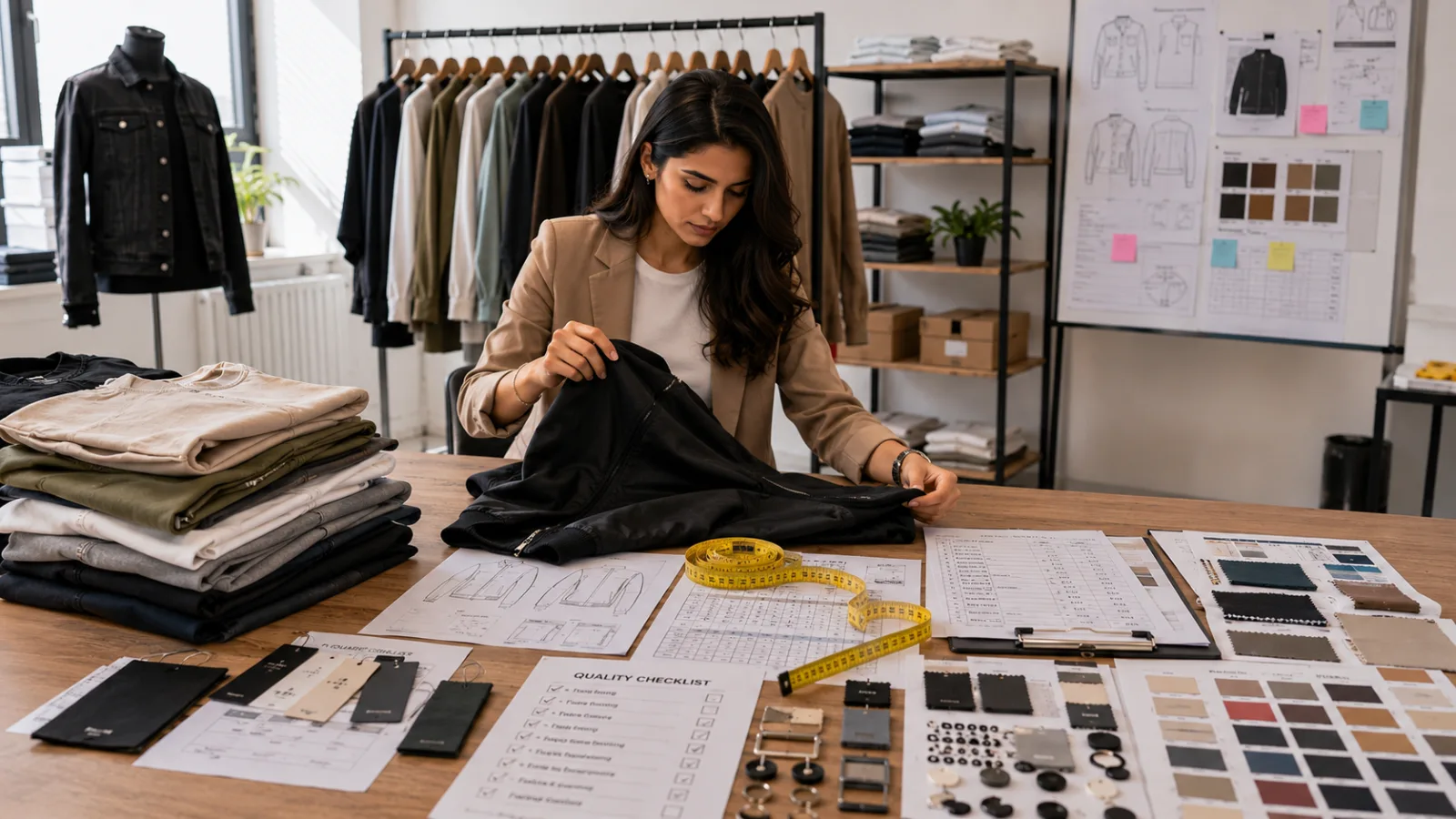
When you receive the sample, check fabric feel, garment weight, stitching, seam strength, measurements, fit, print quality, embroidery quality, label placement, color accuracy, shrinkage, finishing, and packaging. Wash the garment if needed to test durability.
Compare the sample with your tech pack. If the supplier cannot follow clear instructions during sampling, they may struggle during bulk production.
Good Answer Example
A professional supplier may say:
“Yes, we provide development samples and pre-production samples. Sampling usually takes 7 to 14 days depending on fabric and design. The sample cost depends on the product, and part of the fee can be adjusted in the bulk order.”
Red Flags to Watch For
Be cautious if a supplier refuses to provide samples. Also be careful if they say bulk production will be fine without sample approval. This is risky for any custom clothing order.
5. What Is Your Production Lead Time?
Production lead time means how long the supplier needs to complete your order after all approvals are confirmed. This includes material sourcing, cutting, sewing, finishing, quality control, packing, and shipment preparation.
Lead time is important because it affects your launch date, marketing calendar, inventory planning, and customer delivery promises. If your supplier misses the deadline, your entire sales plan can be delayed.
Many brands underestimate production time. They think the supplier can start immediately, but production usually begins only after the sample is approved, deposit is paid, fabric is ready, trims are confirmed, and production schedule is available.
Why This Question Matters
Fashion is often seasonal. If you are launching summer dresses, winter jackets, school uniforms, holiday products, or event-based collections, timing matters. A delay of a few weeks can reduce sales opportunities.
Asking about lead time early helps you plan realistically. It also helps you identify suppliers who overpromise. A supplier who promises an unrealistically fast timeline may be trying to win the order without proper planning.
What to Ask in Detail
Ask the supplier:
- What is your sample lead time?
- What is your bulk production lead time?
- When does production time officially start?
- Do you have current production capacity?
- Can you meet my target delivery date?
- What happens if production is delayed?
- Do you provide production updates?
- Can you send photos during production?
How much time is needed for quality control and packing?
Factors That Affect Lead Time
Lead time depends on product complexity, fabric availability, order quantity, custom dyeing, printing, embroidery, washing, trims, labels, packaging, factory workload, and shipping method.
A simple stock fabric T-shirt may be produced faster than a custom dyed jacket with embroidery, special trims, and branded packaging.
Good Answer Example
A reliable supplier may say:
“Sampling usually takes 10 to 14 days after receiving the tech pack and sample payment. Bulk production takes 30 to 45 days after sample approval, deposit payment, fabric confirmation, and trim approval. We will share production updates during the process.”
This answer is realistic and clear.
Red Flags to Watch For
Be careful if a supplier promises very fast production without reviewing your design. Also be cautious if they cannot explain when the timeline starts. A vague timeline can lead to confusion later.

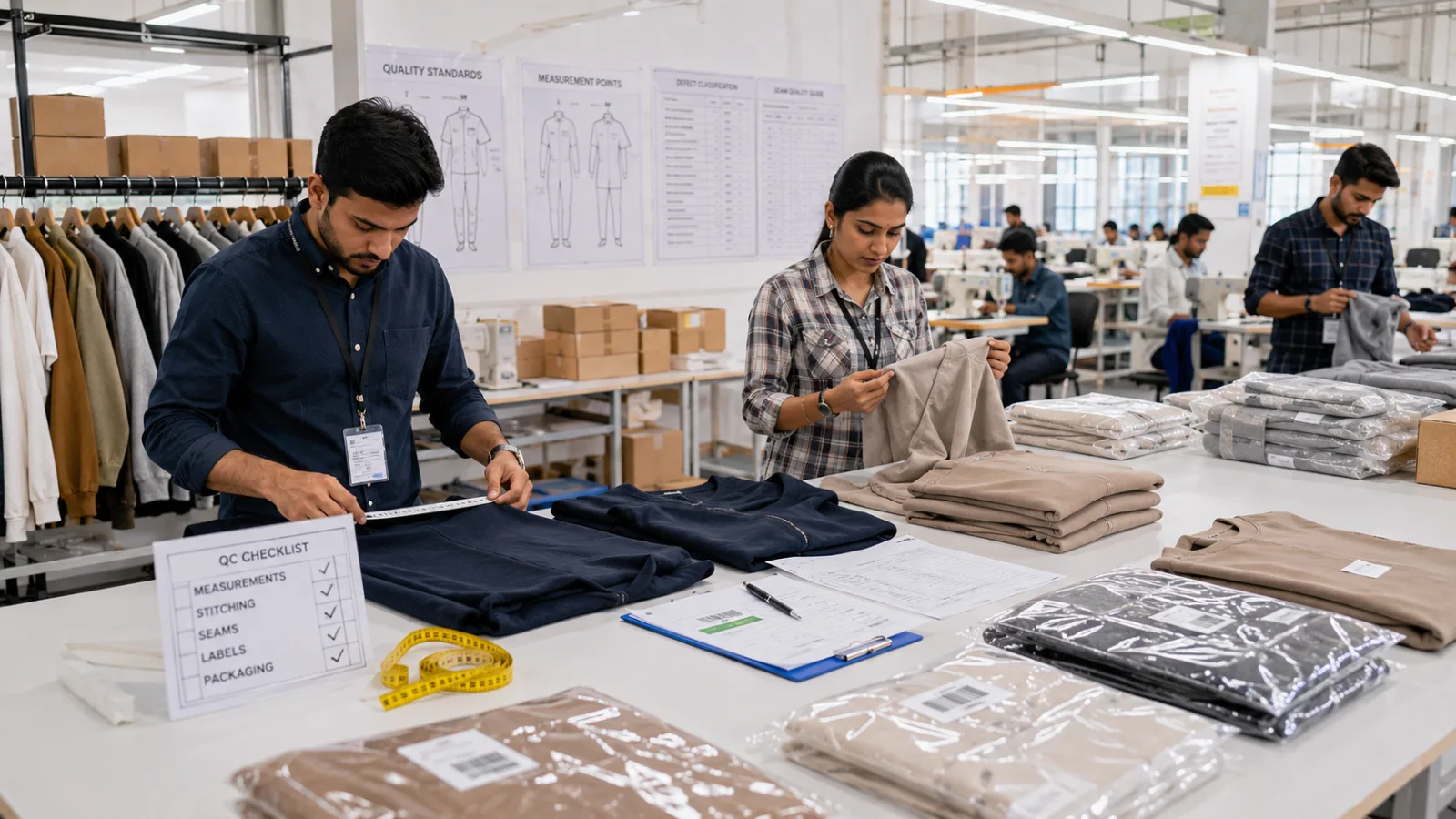
6. What Quality Control Process Do You Follow?
Quality control is one of the most important parts of clothing production. Even if the sample looks good, bulk production can still have problems if the supplier does not follow a proper quality control process.
Quality control checks whether garments meet the approved sample, size chart, construction standard, fabric requirement, finishing quality, packaging instructions, and overall brand expectation.
A supplier with strong quality control can reduce defects, returns, customer complaints, and wasted inventory.
Why This Question Matters
Clothing quality issues can damage your brand quickly. Customers may forgive a delayed launch once, but they are less likely to forgive poor fabric, bad stitching, wrong sizing, fading print, broken zippers, or uncomfortable fit.
Quality problems also cost money. You may need to offer refunds, replacements, discounts, or repairs. In some cases, you may not be able to sell the defective stock at all. Asking about quality control helps you understand whether the supplier checks products properly or simply packs and ships them.
What to Ask in Detail
Ask the supplier:
- What quality control steps do you follow?
- Do you inspect fabric before cutting?
- Do you check measurements during production?
- Do you inspect stitching and finishing?
- Do you compare bulk production with the approved sample?
- Do you check labels and packaging?
- Do you provide inspection reports?
- Can I arrange third-party inspection?
- What happens if defective pieces are found?
- What is your acceptable quality level?
Important Quality Control Stages
A strong supplier may check quality at several stages:
- Fabric inspection before cutting
- Cutting inspection
- Inline production inspection
- Measurement checking
- Print or embroidery inspection
- Final garment inspection
- Packaging inspection
- Carton inspection before shipment
- The more organized the process, the lower the risk of major defects.
Good Answer Example
A professional supplier may say:
“We inspect fabric before cutting, check measurements during sewing, inspect stitching and finishing, compare bulk garments with the approved sample, and do final inspection before packing. We can also share photos or reports if required.”
Red Flags to Watch For
Be careful if a supplier says, “Do not worry, quality is good,” but cannot explain their process. General promises are not enough. You need a clear quality control system.
Also be cautious if the supplier does not allow third-party inspection. Reliable suppliers usually accept inspection if the buyer pays for it.
7. What Fabrics, Trims, and Materials Can You Source?
Fabric and materials play a major role in clothing quality, pricing, comfort, durability, and customer satisfaction. A supplier may be good at sewing, but if they cannot source the right fabric, your final product may not meet your expectations.
Before choosing a clothing supplier, ask what fabrics, trims, labels, and packaging materials they can source. This is especially important for custom clothing, private label apparel, sustainable fashion, activewear, streetwear, luxury garments, or kidswear.
Why This Question Matters
Fabric affects almost everything. It affects fit, feel, shrinkage, drape, breathability, durability, washing performance, print quality, and production cost. If the fabric is wrong, the garment will not perform well.
Trims also matter. Zippers, buttons, drawcords, elastic, rib, snaps, labels, tags, and packaging all contribute to the final product experience. Poor trims can make even a good garment feel cheap.
A strong supplier can help you choose materials that match your design, budget, and target customer.
What to Ask in Detail
Ask the supplier:
- What fabric types can you source?
- Do you offer stock fabrics?
- Can you source custom fabrics?
- Can you provide fabric swatches?
- Can you match fabric weight and composition?
- Can you source sustainable or certified materials?
- What trims can you provide?
- Can you make custom labels and hang tags?
- Can you provide branded packaging?
- Can you test fabric shrinkage or color fastness?
Stock Fabric vs Custom Fabric
Stock fabric is usually easier, faster, and more budget-friendly. Custom fabric gives you more control but often requires a higher MOQ, longer lead time, and additional cost.
If you are a new brand, stock fabric may be a smart starting point. Once you have steady sales, you can explore custom fabric development.
Good Answer Example
A reliable supplier may say:
“We can source cotton jersey, fleece, French terry, rib, denim, woven fabric, polyester blends, and some sustainable options. We can provide fabric swatches before sampling. For custom dyeing, MOQ and lead time will be higher.”
This answer helps you plan realistically.
Red Flags to Watch For
Be careful if the supplier cannot provide fabric details such as composition, weight, or shrinkage behavior. Also be cautious if they substitute fabric without your approval.

8. What Are Your Payment Terms?
Payment terms are a critical part of working with any clothing supplier. Before placing an order, you need to understand how much deposit is required, when the balance is due, what payment methods are accepted, and what happens if there are production issues.
Most clothing suppliers require a deposit before starting bulk production. The balance is often paid before shipment. Common terms may include 30 percent deposit and 70 percent before shipping, or 50 percent deposit and 50 percent before shipping. Terms can vary depending on supplier, order size, relationship, product type, and country.
Why This Question Matters
Payment terms affect your cash flow and risk. If you pay too much upfront without proper sample approval or written agreement, you may have less protection. If payment timing is unclear, disputes can happen later.
Clear payment terms help both sides work professionally.
What to Ask in Detail
Ask the supplier:
- What deposit do you require?
- When is the balance payment due?
- What payment methods do you accept?
- Do you accept bank transfer, card, PayPal, escrow, or trade assurance?
- Are there any bank fees?
- Is the sample fee separate?
- What happens if the order is delayed?
- What happens if there are quality problems?
- Can payment terms improve after repeat orders?
- Do you provide invoices and official documents?
Protecting Yourself Financially
For new suppliers, avoid paying the full amount upfront unless you have strong trust, legal protection, or a secure payment system. Always keep written records of price, quantity, specifications, payment terms, delivery terms, and approval conditions.
If possible, connect payments to production milestones. For example, deposit after sample approval, balance after final inspection, and shipment after payment clearance.
Good Answer Example
A professional supplier may say:
“For bulk orders, we require 30 percent deposit after sample approval and 70 percent balance before shipment after final inspection. We provide invoice, packing list, and production details.”
This type of answer is clear and common.
Red Flags to Watch For
Be careful if a new supplier asks for full payment before sampling or refuses to provide an invoice. Also be cautious if payment details change repeatedly during negotiation.

9. Do You Offer Private Labeling, Custom Branding, and Packaging?
If you are building a clothing brand, branding matters. Your labels, hang tags, packaging, size labels, care labels, and finishing details shape how customers experience your product. That is why you should ask whether the supplier offers private labeling and custom branding services.
Some suppliers only produce blank garments. Others offer full private label production, including custom neck labels, woven labels, printed labels, hang tags, packaging bags, barcode stickers, cartons, and branded finishing.
Why This Question Matters
Branding makes your product feel professional and retail-ready. Even if the garment quality is good, poor labeling or packaging can make the product feel unfinished. For eCommerce brands, packaging can also improve customer experience and encourage repeat purchases.
Private labeling is especially important if you are selling through your own website, boutiques, marketplaces, or retail channels.
What to Ask in Detail
Ask the supplier:
- Do you offer private label clothing production?
- Can you add custom neck labels?
- Can you make woven labels or printed labels?
- Can you add care labels and size labels?
- Can you produce hang tags?
- Can you provide branded packaging?
- Can you add barcode stickers or SKU labels?
- What is the MOQ for custom labels?
- What is the cost of branding and packaging?
- Do I need to provide label artwork?
Branding Details to Confirm
You should confirm label size, material, placement, color, stitching method, care information, packaging type, and barcode requirements. If selling internationally, make sure care labels and fiber content details follow the target market’s requirements.
Good Answer Example
A reliable supplier may say:
“Yes, we offer private labeling. We can provide woven neck labels, care labels, hang tags, size stickers, and custom packaging. Please provide artwork files, and we will confirm MOQ and cost.”
This shows the supplier understands branded apparel production.
Red Flags to Watch For
Be careful if the supplier adds labels without confirming placement or artwork. Also be cautious if they cannot explain label MOQ, material options, or packaging costs.

10. How Do You Handle Shipping, Delivery, and Documentation?
Shipping is often one of the most underestimated parts of clothing production. A supplier’s unit price may look affordable, but shipping, customs duties, taxes, and delivery charges can significantly affect the final cost.
Before choosing a clothing supplier, ask how they handle shipping and documentation. This is especially important if you are sourcing from another country.
Why This Question Matters
Shipping affects cost, timeline, risk, and inventory planning. Delays in shipping can affect product launches and customer orders. Missing documents can create customs problems. Wrong shipping terms can lead to unexpected costs. A reliable supplier should explain shipping options clearly and help you understand what is included.
What to Ask in Detail
Ask the supplier:
- Do you handle international shipping?
- What shipping methods do you offer?
- Can you ship by air, sea, courier, or freight forwarder?
- What are the estimated shipping costs?
- What is the estimated delivery time?
- What shipping terms do you use?
- Do you provide commercial invoice and packing list?
- Do you provide certificates if needed?
- Can I use my own freight forwarder?
- Who is responsible for customs duties and taxes?
Understanding Shipping Terms
You may hear terms like EXW, FOB, CIF, DAP, or DDP. These terms define who is responsible for shipping costs, export handling, insurance, customs clearance, duties, and final delivery.
If you are not familiar with these terms, ask the supplier to explain them clearly. Do not assume shipping is included unless it is written in the quote.
Good Answer Example
A professional supplier may say:
“We can ship by courier for small orders and by air or sea freight for larger orders. We can work with your freight forwarder or recommend shipping options. We provide commercial invoice, packing list, and carton details. Duties and taxes depend on your country and shipping terms.”
This answer gives you practical information.
Red Flags to Watch For
Be careful if a supplier cannot explain shipping terms or documentation. Also be cautious if they quote product prices without explaining shipping responsibility.

Bonus Question: Can You Share References, Certifications, or Proof of Past Work?
Beyond the top 10 questions, it is also smart to ask for proof of credibility. A clothing supplier may sound professional, but you should still verify their experience as much as possible.
Depending on the supplier and your order size, you can ask for product photos, factory photos, client references, certifications, audit reports, compliance documents, or examples of previous work. Not every supplier can share client names because of confidentiality, but they should be able to show some proof of capability.
Why This Question Matters
Proof helps reduce risk. It shows whether the supplier has real production experience and whether they are organized enough to work with serious buyers.
For certain product categories, compliance may be very important. Kidswear, uniforms, sustainable fashion, organic cotton products, and export garments may require specific documentation or safety standards.
What to Ask in Detail
Ask the supplier:
- Can you share examples of past work?
- Do you have product photos from similar orders?
- Do you have factory certifications?
- Do you follow ethical manufacturing standards?
- Can you support fabric certificates if needed?
- Can you provide references or reviews?
- Have you worked with international buyers before?
Supplier Red Flags You Should Never Ignore
Asking the right questions is important, but you also need to watch how the supplier answers. Sometimes the answer itself is less important than the way they communicate.
A supplier may be risky if they avoid direct answers, rush you to pay, refuse samples, give unclear pricing, promise unrealistic timelines, or say yes to everything without reviewing your tech pack. Serious suppliers usually ask questions before quoting because they need product details to estimate cost properly.
Common Red Flags
- The supplier gives a price without understanding your product.
- They refuse to provide samples.
- They cannot explain MOQ clearly.
- They avoid written quotes.
- They keep changing prices.
- They promise extremely fast production without reviewing details.
- They do not explain fabric specifications.
- They avoid quality control questions.
- They refuse third-party inspection.
- They pressure you to pay quickly.
- They cannot provide invoices or documents.
- They communicate poorly before payment.
If you see multiple red flags, pause before moving forward. It is better to delay production than to lose money on the wrong supplier.

How to Compare Clothing Supplier Answers
After asking these questions, do not choose a supplier based only on one answer. Compare the full picture. A good supplier should offer a balance of quality, price, MOQ, communication, lead time, flexibility, and reliability.
Create a simple supplier comparison sheet. Add columns for product specialization, MOQ, sample cost, unit price, included services, lead time, quality control, fabric sourcing, payment terms, branding options, shipping support, and communication quality. Then rate each supplier. This helps you make a calm, logical decision instead of choosing based on the cheapest price or fastest reply.
Supplier Comparison Factors
- Product category experience
- MOQ flexibility
- Clear cost breakdown
- Sample quality
- Production lead time
- Quality control process
- Fabric and trim sourcing ability
- Payment terms
- Branding and packaging options
- Shipping support
- Communication quality
- Transparency and professionalism
A supplier who gives clear, detailed answers may be more valuable than one who gives a slightly cheaper quote but avoids important details.
Clothing Supplier Question Checklist
Here is a simple checklist you can use before choosing a clothing supplier:
- What clothing categories do you specialize in?
- What is your MOQ per style, color, and size?
- What is included in your price quote?
- Can you provide samples before bulk production?
- What is your sample and bulk production lead time?
- What quality control process do you follow?
- What fabrics, trims, and materials can you source?
- What are your payment terms?
- Do you offer private labeling and custom packaging?
- How do you handle shipping, delivery, and documentation?
- Can you share references, certifications, or proof of past work?
This checklist can save you from many common sourcing mistakes.
ApparGlobal
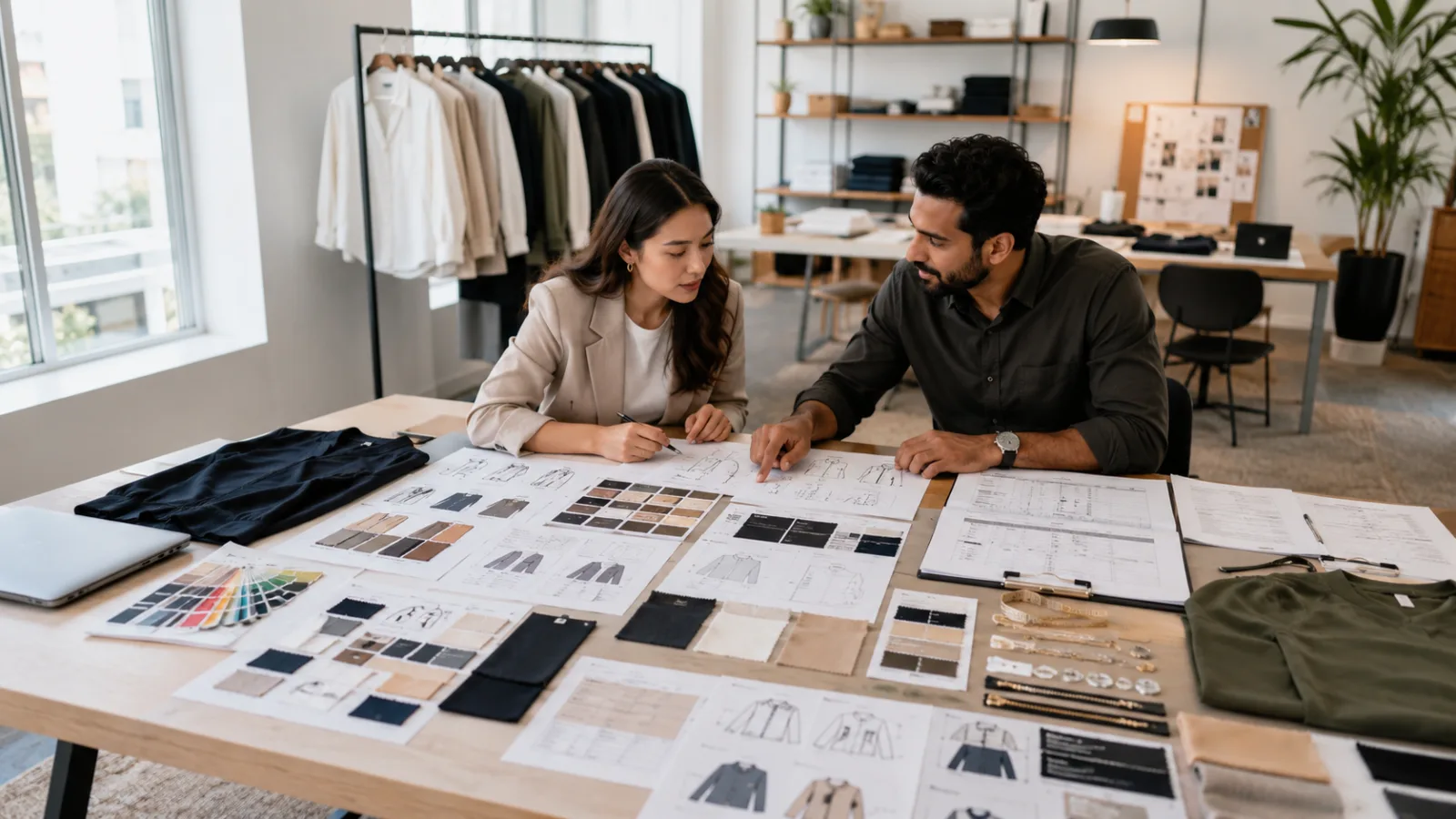
Many apparel brands choose the wrong clothing supplier because they ask only about price and ignore the production systems behind the quote. But reliable supplier selection becomes much easier when brands work with manufacturing partners that understand tech packs, MOQ planning, fabric sourcing, trim selection, sampling, quality checkpoints, production timelines, private labeling, and scalable garment manufacturing workflows.
Companies such as ApparGlobal help clothing brands make supplier decisions with more structure and confidence. Instead of treating sourcing as a simple price comparison, ApparGlobal supports brands through product development, vendor coordination, material planning, sample review, bulk production preparation, and quality-focused manufacturing support. This helps reduce confusion around supplier communication, hidden costs, fabric choices, MOQ requirements, and production expectations.
For growing fashion brands, this kind of support can make the difference between a risky production order and a more reliable manufacturing process. When the right systems are in place from the beginning, brands can ask better supplier questions, compare vendors more clearly, control product quality, and move from concept to bulk production with fewer mistakes.
Whether a brand is developing T-shirts, hoodies, activewear, kidswear, streetwear, uniforms, private label apparel, or custom garments, working with a production-focused partner like ApparGlobal can help align design ideas, sourcing decisions, supplier capabilities, and final product standards. This makes the entire supplier selection process more practical, more transparent, and more growth-ready.
Final Thoughts
Asking the right questions before choosing a clothing supplier can protect your budget, improve product quality, reduce production risk, and help you build a more reliable apparel business. A supplier is not just a production contact. They are part of your brand’s supply chain, customer experience, and long-term growth.
The most important questions cover product specialization, MOQ, pricing, samples, lead time, quality control, fabric sourcing, payment terms, branding, and shipping. These questions help you understand whether the supplier is truly capable of handling your order professionally.
Do not rush supplier selection. Take time to compare answers, review samples, check quality, understand costs, and confirm everything in writing. A reliable supplier will not be annoyed by serious questions. They will appreciate that you are organized and committed to building a quality product.
The best clothing supplier is not always the cheapest one. The best supplier is the one who can deliver the right product, at the right quality, within a realistic budget, and on a timeline your business can trust. When you ask better questions, you make better sourcing decisions. And better sourcing decisions create stronger fashion brands.