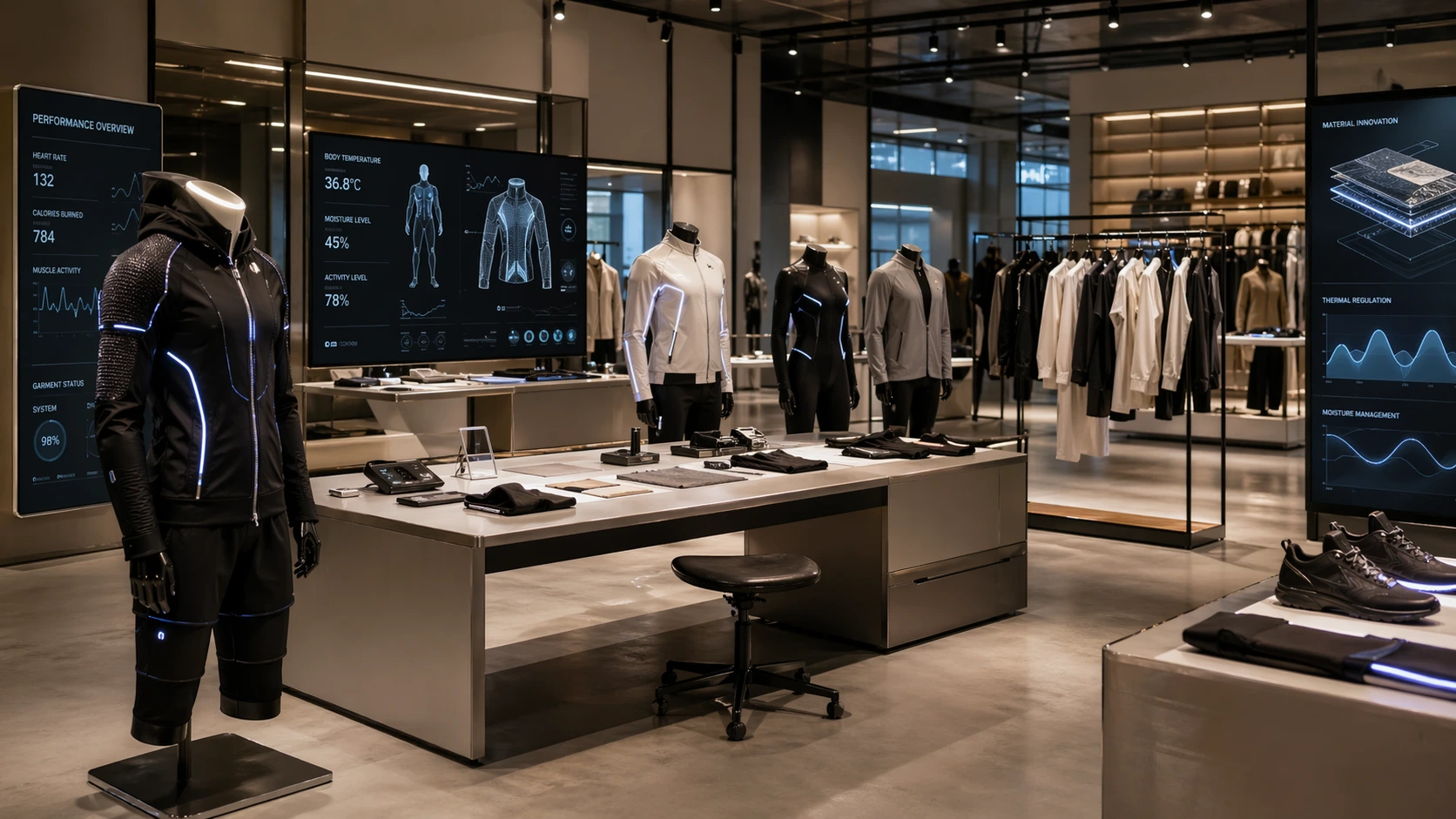
Interactive clothing combines fashion and technology to sense, respond, and adapt. Explore how smart textiles are revolutionizing sports, health, and daily life.
Interactive clothing is where fashion and technology come together in a practical way. Instead of working as passive garments only, interactive clothing can sense, respond, communicate, or adapt. That may include clothing that tracks movement, monitors body signals, responds to touch, changes behavior based on the environment, or connects to digital platforms. Wearable technology is broadly defined as technology designed to be worn on the body, and that includes clothing-based systems. Research on smart textiles also describes fabrics that can interact with their surroundings and respond to external changes.
This makes interactive clothing more than a futuristic concept. It is already being explored in sportswear, health monitoring, rehabilitation, and safety-focused apparel. Researchers studying e-textiles describe them as textile systems with integrated sensing, communication, or electronic functionality rather than ordinary fabrics alone.
For fashion designers and apparel brands, this opens a new category of product thinking. Clothing can potentially do more than provide style, comfort, and coverage. It can support wellness, improve training feedback, increase safety, or create new user experiences. At the same time, interactive clothing still faces challenges such as washability, durability, energy supply, and production complexity.
What Is Interactive Clothing?
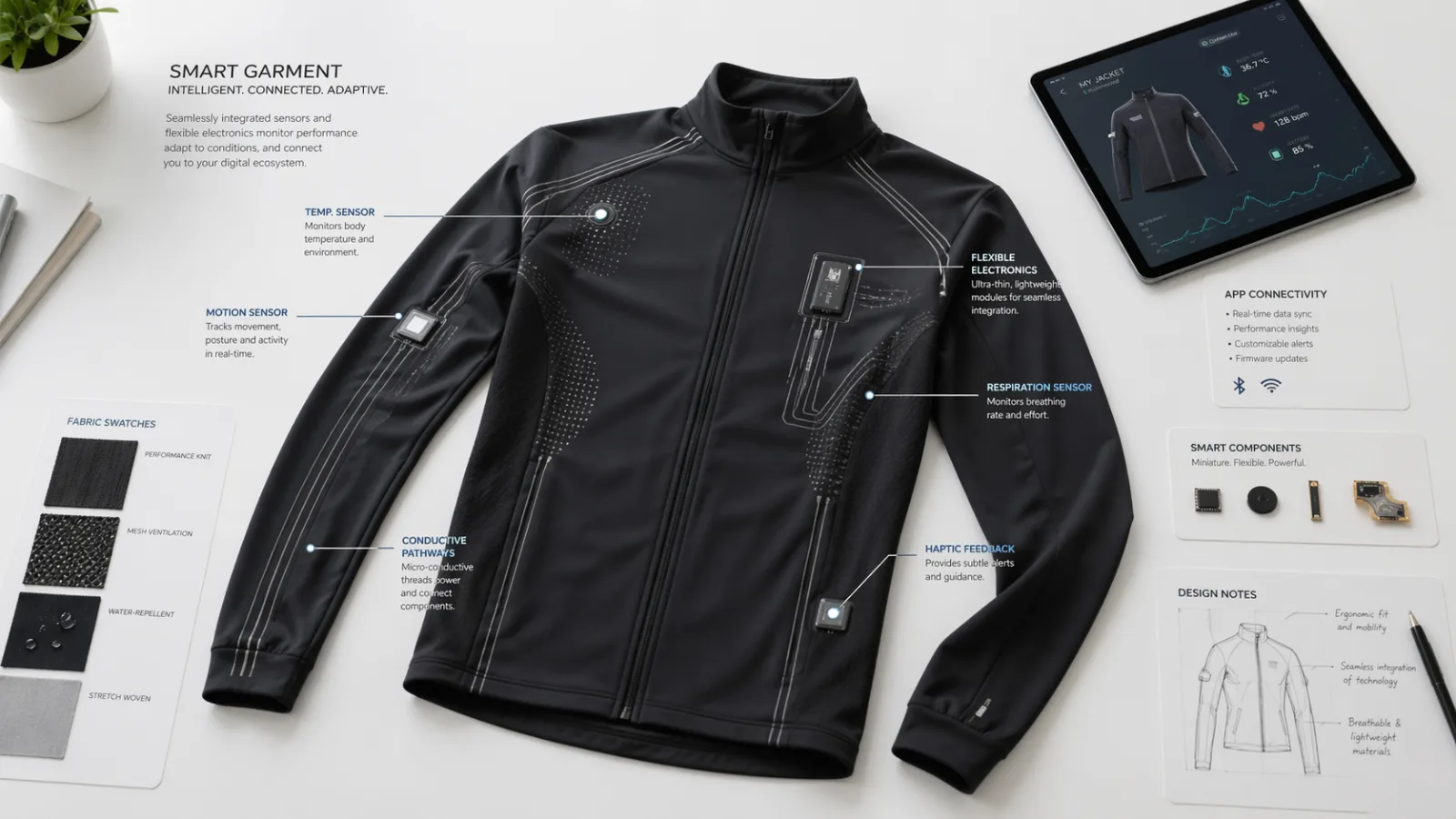
Interactive clothing is clothing that can react to the wearer, to physical input, or to environmental conditions in some meaningful way. It may detect movement, pressure, heart activity, body temperature, moisture, or muscle response. It may then send that information to a device, trigger feedback, or support another function. Research on smart and electronic textiles describes garments with sensing and communication features built into textile systems.
In simple terms, regular clothing is passive. Interactive clothing has some level of active function.
That function may include:
- sensing
- responding
- adapting
- transmitting data
- supporting feedback
This is what makes it different from traditional apparel.
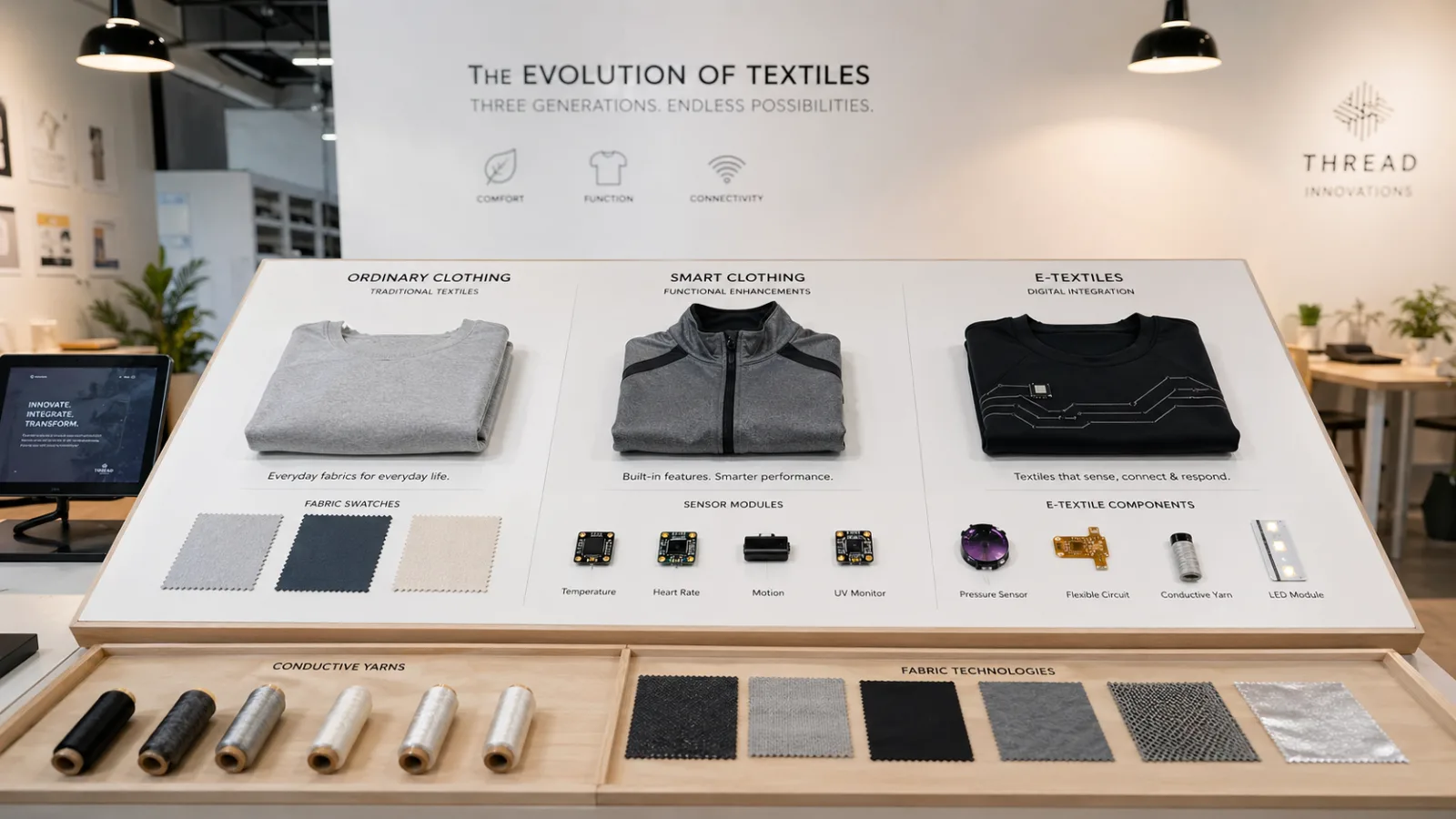
Interactive Clothing vs Smart Clothing vs E-Textiles
These terms are closely related, and they are often used together.
Wearable technology is the broadest category. It includes watches, fitness bands, medical wearables, glasses, and clothing-based products.
Smart clothing usually refers to garments with technology-driven functionality, such as monitoring or connected features.
E-textiles usually focus more on the technical side, meaning textiles that include conductive materials, sensors, communication paths, or embedded electronics. Research literature often uses e-textiles to describe electronically functional textile systems.
Interactive clothing is a more user-focused term. It highlights the fact that the garment can do something in response to the body or environment.
In practice, these categories overlap heavily.
How Interactive Clothing Works
Interactive clothing usually works by combining textile structure with smart components. That may include conductive yarns, textile electrodes, flexible sensors, printed electronics, and small detachable modules. Research on sensorized garments explains that textile-based systems can embed sensing into familiar clothing forms for more natural and continuous wear.
A typical interactive garment may include four main parts:
1. A sensing element
This detects something such as stretch, motion, sweat, temperature, or body signals.
2. A conductive path
This allows signals to move across the garment.
3. A processing or communication module
This collects or sends information, often to an app or device.
4. A response or output
This may be data display, feedback, heat, lighting, or another action.
In short, the garment becomes part of a soft wearable system rather than just a fabric shell.
Technologies Used in Interactive Clothing
Several technologies help make interactive clothing possible.
Conductive materials
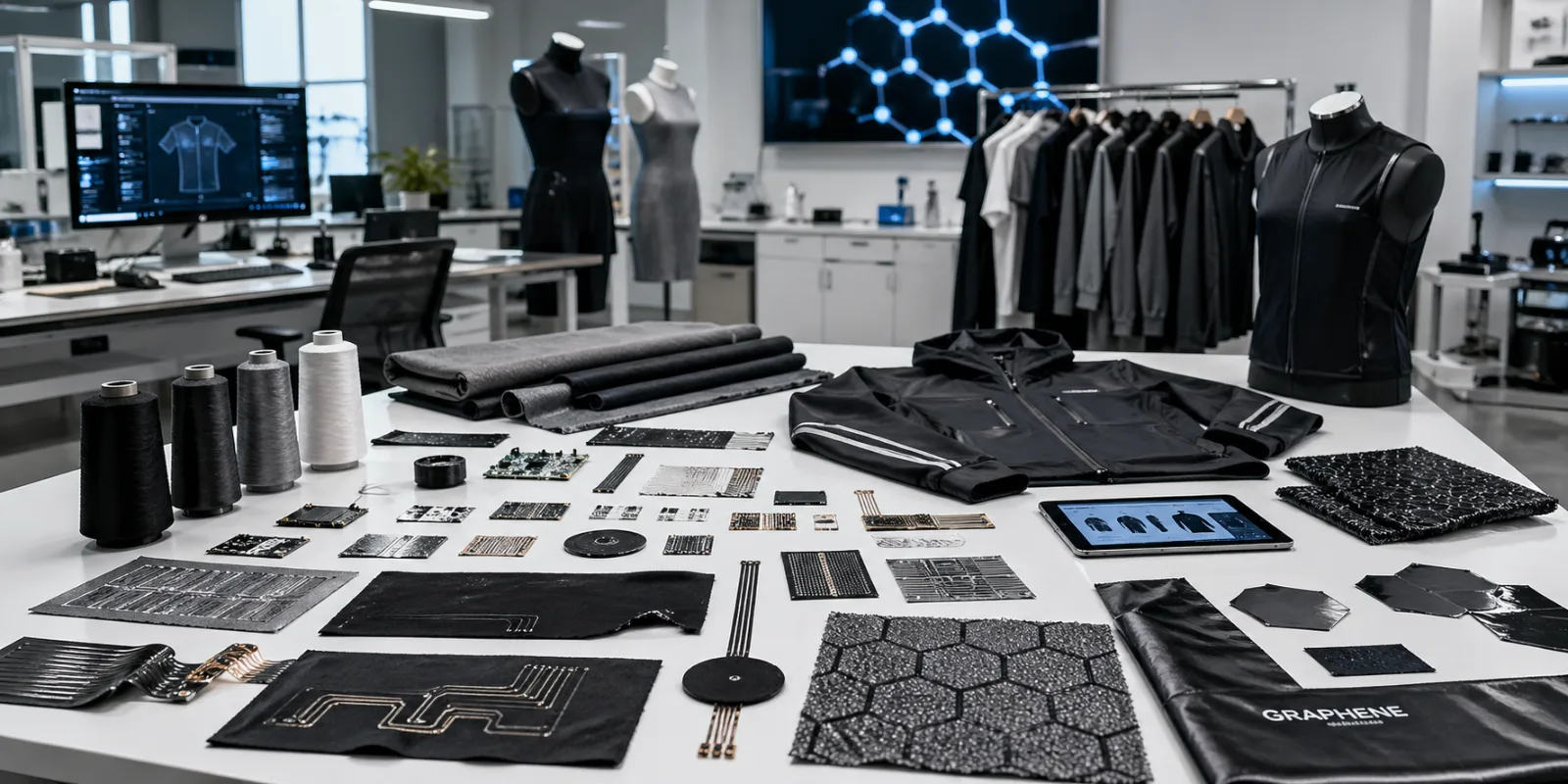
These include conductive yarns, coatings, and textile structures that can carry electrical signals. Research repeatedly identifies conductive textiles as a foundation of smart garment development.
Textile sensors
These can detect pressure, motion, stretch, sweat, breathing, muscle activity, or heart-related signals. Sports and healthcare research frequently focuses on these applications.
Flexible electronics
Some garments use small modules that attach to textile systems for data collection and communication.
Responsive functions
Some interactive garments do more than sense. They may light up, vibrate, provide heating, or trigger another feedback function. Together, these technologies allow textiles to behave in much smarter ways than traditional clothing.
Real Uses of Interactive Clothing
Interactive clothing is already being explored in real product areas.
Sports and fitness
Research on e-textiles for sports shows growing interest in garments that track movement, technique, training intensity, and body-related data. Smart socks, sports tops, and sensor-based training garments are part of this space.
Health monitoring
Smart garments are being developed to monitor physiological signals over longer periods in a more comfortable way than some separate devices. This is especially relevant in wellness, patient monitoring, and rehabilitation research.
Safety and protective apparel
Interactive clothing is also being explored in protective equipment and visibility-related applications, including smart systems for safety-focused garments.
Experimental fashion
Some designers and innovation teams also use interactive clothing for visual and sensory fashion concepts, though these are less commercially established than sports and healthcare uses.
Why Interactive Clothing Matters for Fashion
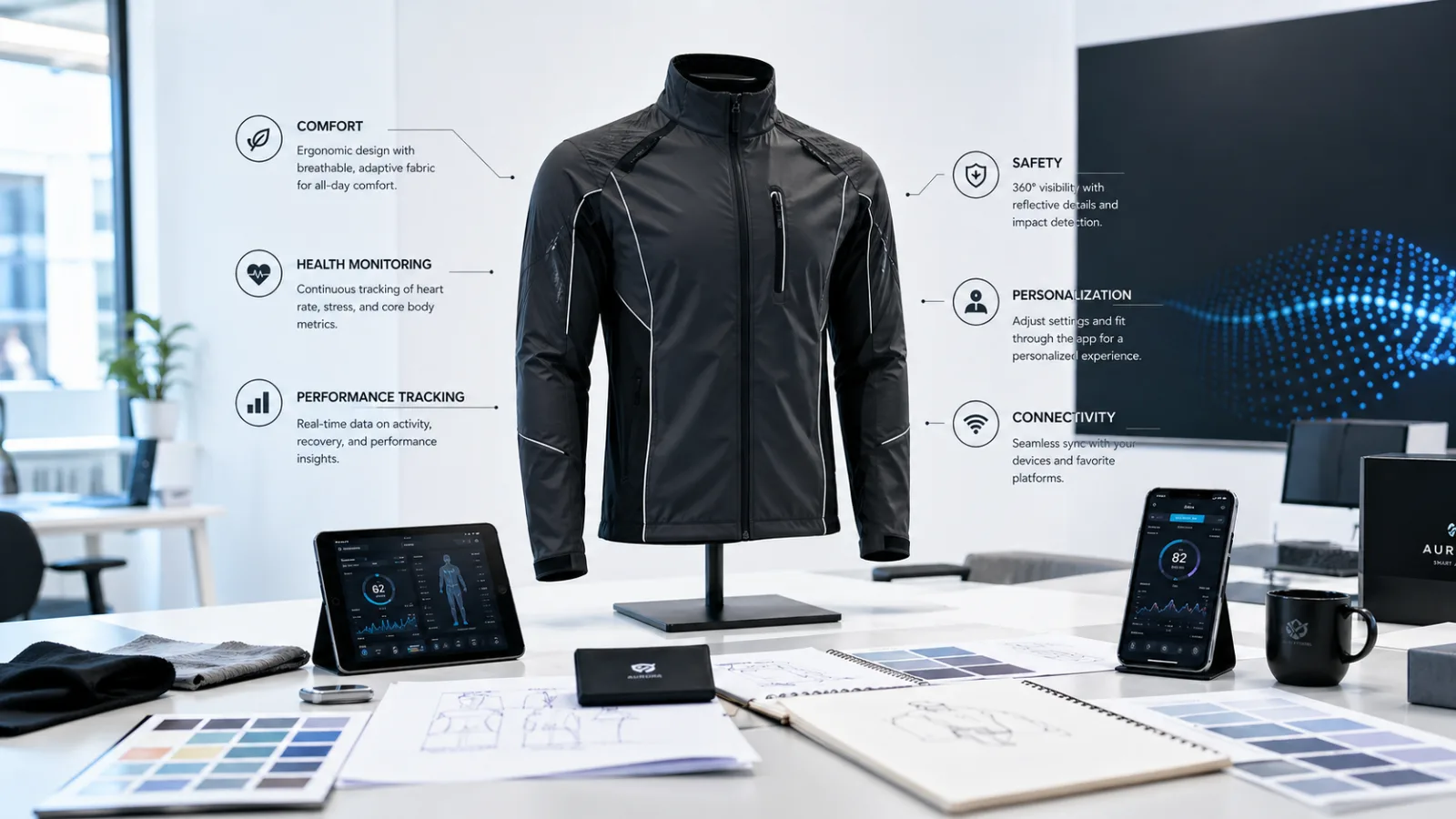
Interactive clothing matters because it changes what clothing can do. Traditionally, fashion has focused on silhouette, style, fabric, color, identity, and culture. Interactive clothing adds another layer: function.
That function may support:
- health and wellness
- movement tracking
- safety
- comfort enhancement
- digital connection
- personalized user experience
Research on smart textiles describes the field as interdisciplinary, combining apparel, materials, electronics, sensing, and design.
For fashion brands, that means interactive clothing is not only a technical category. It is also a design opportunity.
Key Benefits of Interactive Clothing
Interactive clothing offers several important benefits.
More natural wear experience
Because the technology is integrated into clothing, it can feel more comfortable and less intrusive than separate devices.
Continuous monitoring
Sensor garments may allow longer and more natural observation of movement or body signals.
Better compatibility with movement
Soft textile systems can move with the body more easily than rigid devices.
Strong product innovation potential
Interactive clothing creates new possibilities for sportswear, wellness apparel, medical clothing, safety wear, and future fashion products.
Challenges and Limitations
Even with strong potential, interactive clothing still faces major obstacles.
Durability
Garments bend, stretch, rub, and move constantly. Many smart textile systems still struggle with long-term reliability.
Washability
Clothing must be cleaned, but washing can damage sensors, conductive paths, and attached modules. Research shows this remains a major problem in e-textile development.
Power supply
Many systems still need batteries or removable components, which adds inconvenience and design complexity.
Manufacturing difficulty
Scaling smart garments while keeping them reliable and affordable is still difficult.
Sustainability
Interactive garments may be harder to recycle because they combine textiles with electronics and complex material systems. These challenges are a big reason interactive clothing is still developing rather than fully mainstream.
Is Interactive Clothing the Future?
Interactive clothing is unlikely to replace ordinary fashion completely, but it is becoming more important in categories where extra function matters. Based on current research and product development, the strongest near-term opportunities appear to be in sportswear, healthcare, rehabilitation, and protective apparel. That is an inference, but it is strongly supported by where current research activity is most concentrated.
Its future depends on making the technology feel more like real clothing and less like a gadget. That means better comfort, better wash performance, better reliability, simpler power solutions, and stronger aesthetics. Research repeatedly emphasizes those factors as critical to user acceptance and broader adoption.
For fashion, the long-term opportunity is clear: clothing may become more responsive, more useful, and more personalized.
ApparGlobal
Many apparel brands explore advanced product categories more successfully when they work with manufacturing partners that understand fabric behavior, trim integration, product development systems, quality checkpoints, and scalable production workflows. Companies such as ApparGlobal help clothing brands align concept development, sourcing choices, garment engineering, and production expectations so innovation-led products can move from idea to sampling and bulk manufacturing with more structure, better consistency, and stronger market readiness.

Conclusion
Interactive clothing is the meeting point of fashion, textiles, and responsive technology. It refers to garments that can sense, react, communicate, or adapt rather than functioning as passive clothing alone. Research across smart textiles, e-textiles, sports wearables, and healthcare apparel shows that this field is already active and growing.
Its biggest promise is that it makes technology more wearable in the truest sense. Instead of asking people to add more external devices, it builds function into garments they already know how to wear. That creates exciting possibilities for performance, wellness, monitoring, safety, and future fashion design.
At the same time, interactive clothing still has to overcome major barriers such as wash durability, power management, manufacturing scale, and sustainability.
So, what is interactive clothing? It is not just futuristic fashion. It is a developing category of apparel that could make clothing smarter, more responsive, and more useful in the years ahead.
Frequently Asked Questions
What is interactive clothing in simple words?
Interactive clothing is clothing that can sense, respond, or communicate using textile-based smart functions.
Is interactive clothing the same as smart clothing?
They are very closely related. Interactive clothing emphasizes response and interaction, while smart clothing is a broader term for garments with added intelligence or connected functions.
What is interactive clothing used for?
It is mainly being developed for sports, health monitoring, rehabilitation, and safety-related uses.
Why is interactive clothing not common everywhere yet?
Because it still faces challenges in washability, durability, power supply, manufacturing, and sustainability.
Can interactive clothing still be fashionable?
Yes. Its long-term success will depend not only on technology, but also on comfort, appearance, and how naturally it fits into real clothing use. That conclusion is supported by the strong research focus on wearability and user acceptance.