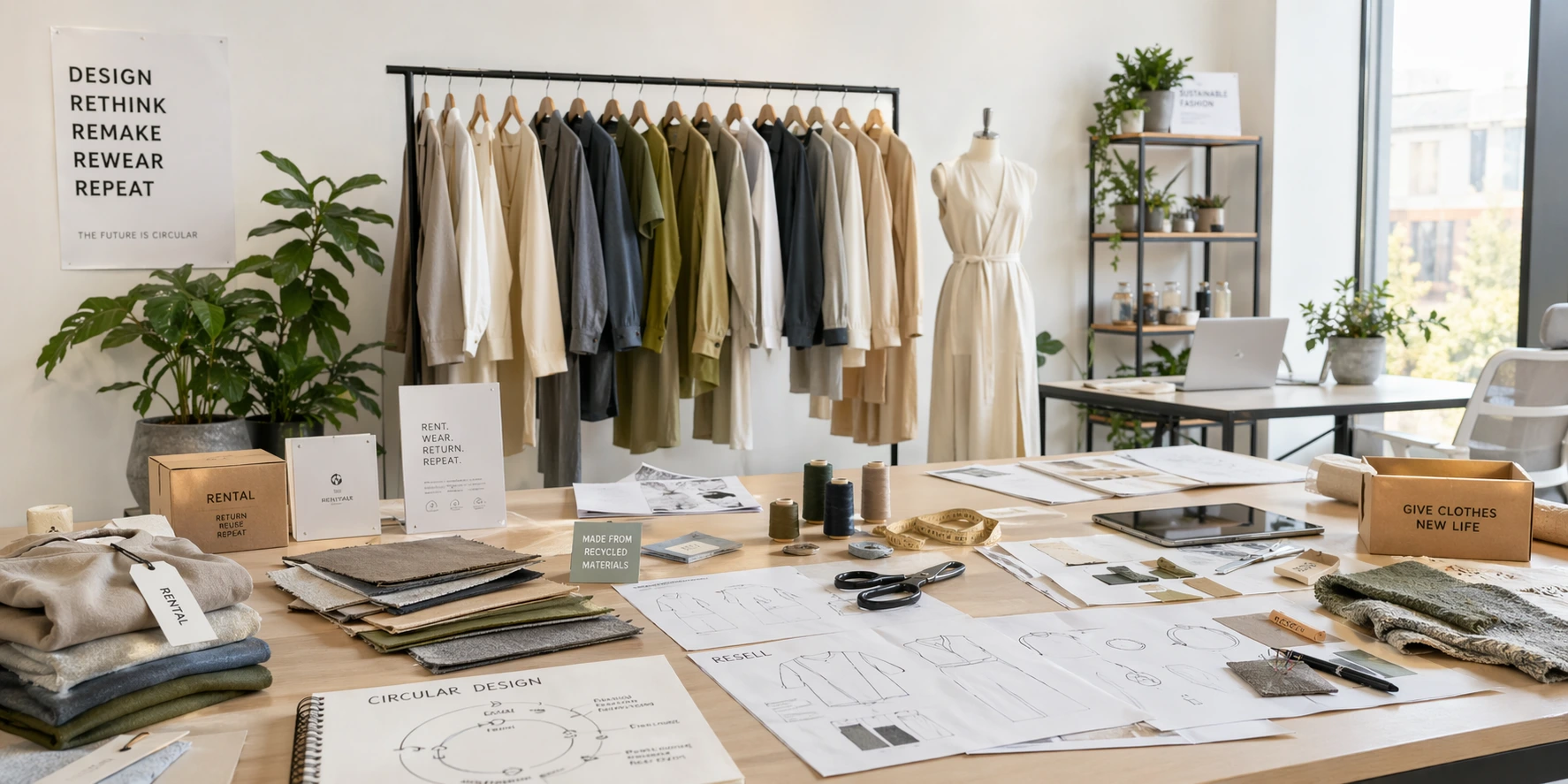
Circular fashion moves beyond the throwaway model by designing clothes to last longer through repair, resale, reuse, and better production systems.
Fashion has long followed a linear model: make clothing, sell it, wear it, and eventually throw it away. Circular fashion is a different approach. It aims to keep garments, textiles, and materials in use for as long as possible through better design, longer wear, repair, resale, reuse, remaking, and recycling. Instead of treating clothing as short-life products, circular fashion treats it as something that should hold value beyond a single purchase.
This shift matters because the traditional fashion system creates major waste and puts heavy pressure on natural resources. Large volumes of clothing are produced, used briefly, and discarded, while many garments are difficult to repair, reuse, or recycle because of poor design, mixed materials, and low-quality construction. Circular fashion tries to solve that by rethinking how fashion is designed, produced, used, and recovered.
In simple terms, circular fashion is not only about recycling old clothes. It is about creating a smarter system where clothing lasts longer, materials stay useful, and waste is reduced from the beginning. For brands, this means thinking beyond fast turnover. For consumers, it means using clothes in ways that extend their life. For the industry as a whole, it means moving from a throwaway model to a more durable and lower-waste future.
What Is Circular Fashion?
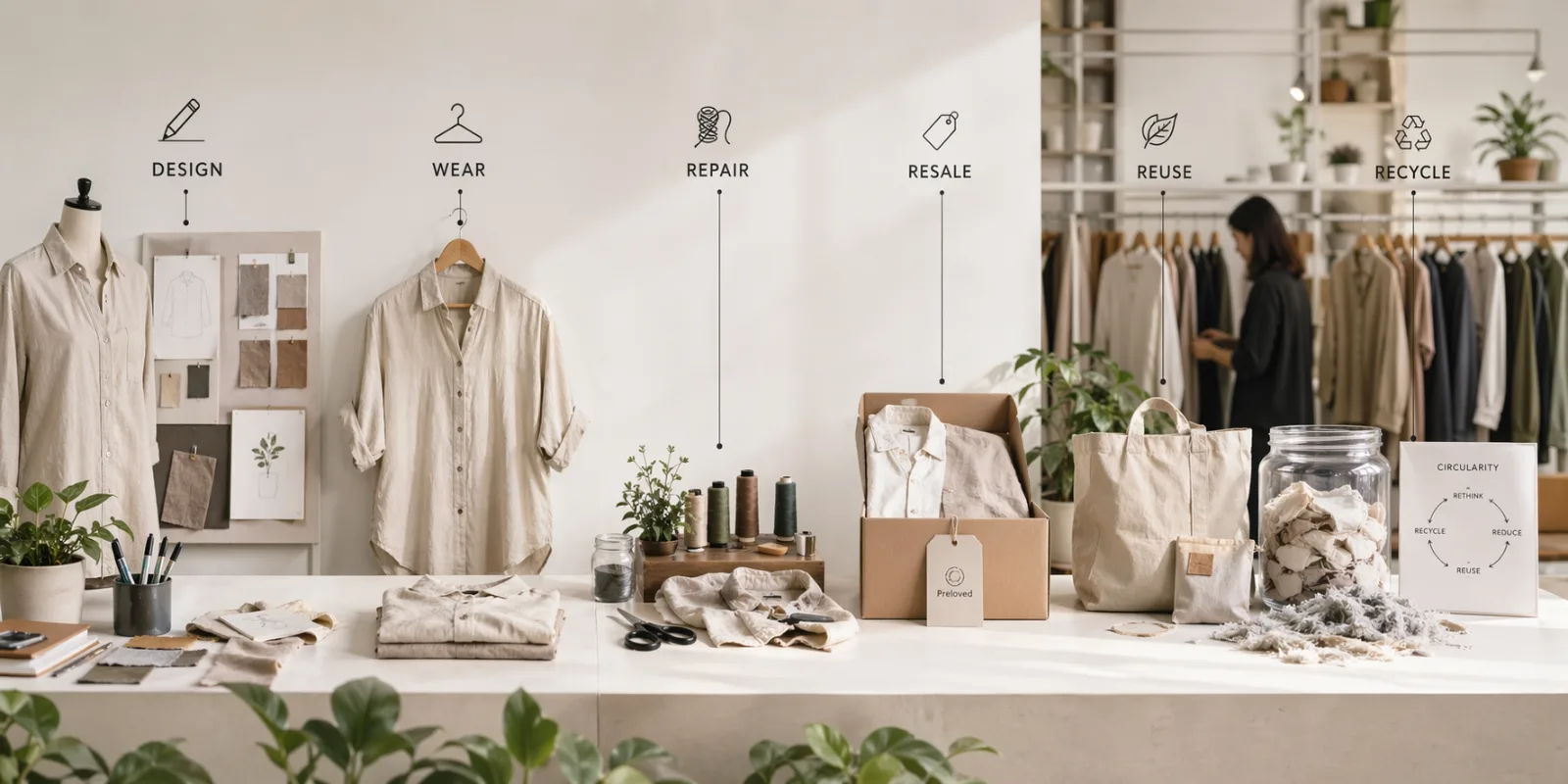
Circular fashion is a model of fashion that keeps products and materials in circulation for as long as possible. It focuses on reducing waste, extending product life, and creating systems where garments can be reused, repaired, resold, remade, or recycled instead of quickly ending up as waste.
A circular fashion product is usually designed with a longer life in mind. It may use more durable materials, better construction, and a design that makes it easier to repair or recover later. A circular fashion system also creates pathways after the first use phase. A garment may be passed on, resold, rented, repaired, or turned into something else rather than simply discarded.
That is the main difference between circular fashion and the standard fashion model. In a linear system, value ends when the customer stops using the product. In a circular system, brands try to preserve that value for as long as possible.
Why Circular Fashion Matters
Circular fashion matters because the apparel industry has become heavily dependent on short product lifecycles, frequent replacement, and rising textile waste. Many garments are made quickly and cheaply, used for a short period, and thrown away before their full value is realized.
This creates several problems:
More waste
When clothing is not reused or recycled, large amounts of textile waste build up in landfills or low-value disposal streams.
More resource pressure
A system based on constantly producing new clothes requires ongoing use of raw materials, water, energy, and chemicals.
Lower product value
If garments are poorly made and hard to repair, their value drops quickly after purchase.
Growing regulatory and market pressure
More governments, brands, and consumers are starting to push for textiles that are more durable, repairable, and recyclable.
Circular fashion matters because it offers a way to reduce waste while also creating a more practical, long-term approach to clothing production and use.
Circular Fashion vs Linear Fashion
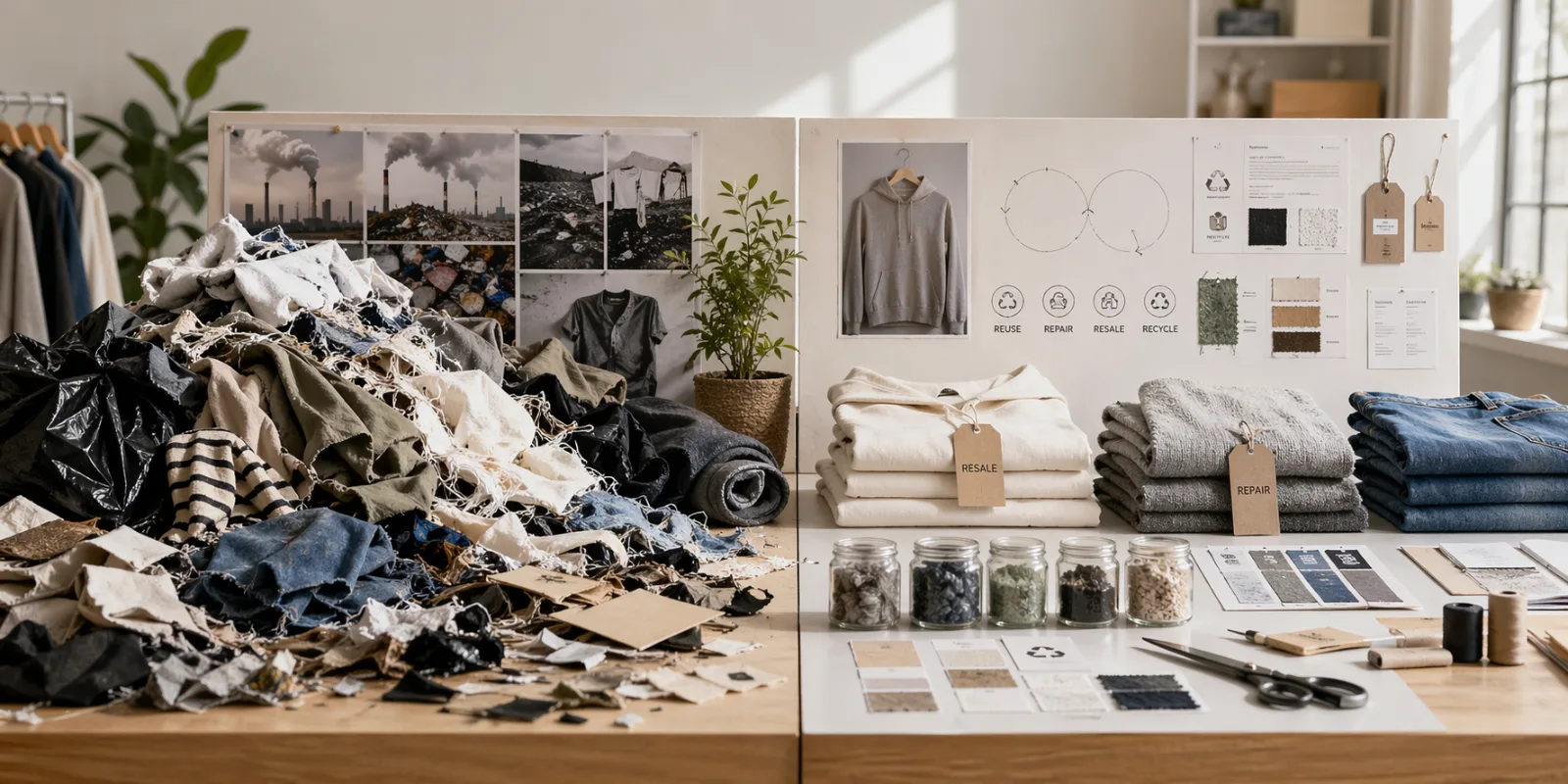
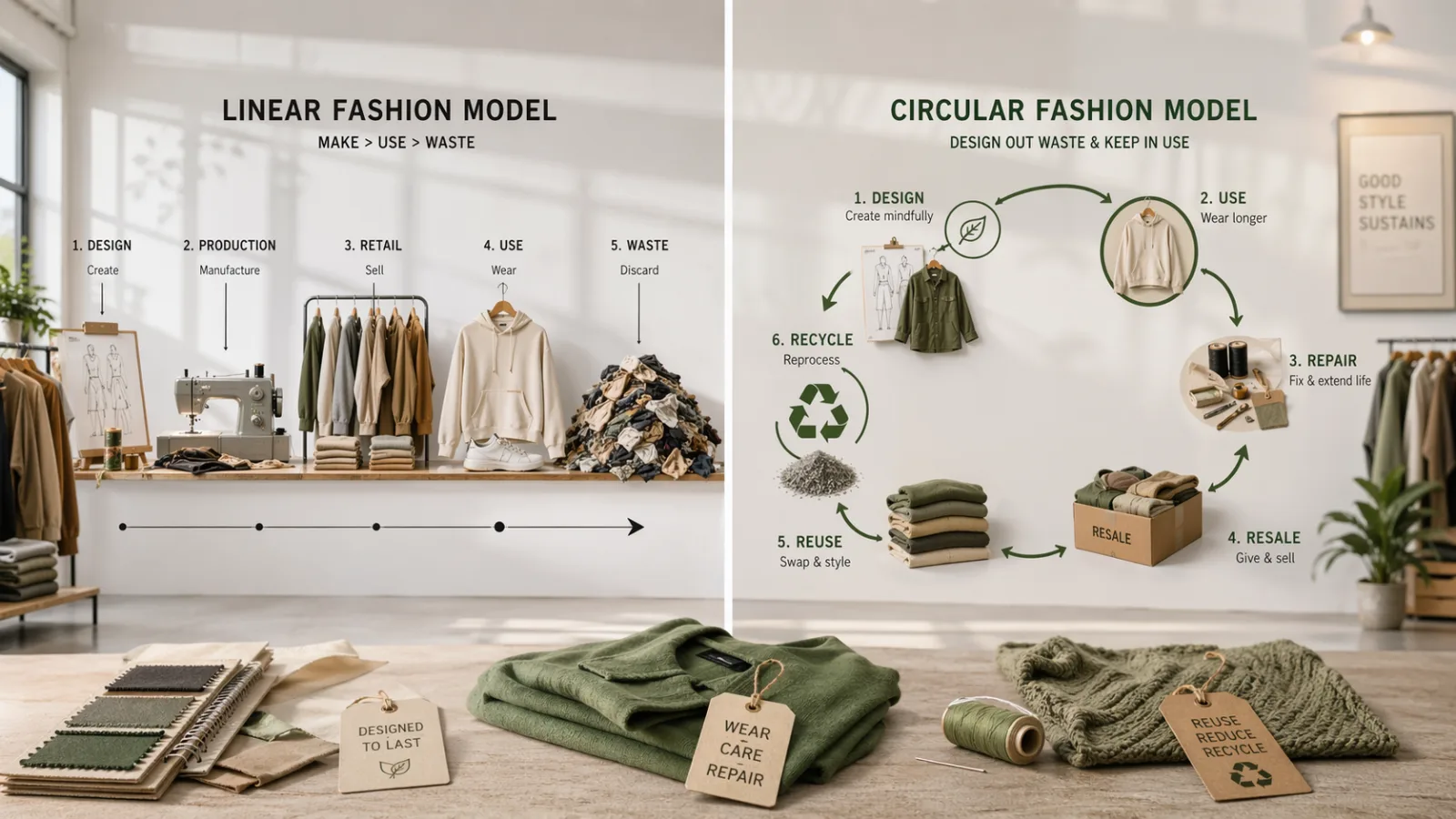
The easiest way to understand circular fashion is to compare it with linear fashion.
Linear fashion
Linear fashion follows a simple path:
- take raw materials
- make products
- sell products
- use products
- throw them away
This model depends on constant new production and usually treats the end of first use as the end of the product’s value.
Circular fashion
Circular fashion tries to break that pattern. It follows a model more like this:
- design better products
- use safer or more suitable materials
- make garments last longer
- repair or refresh them
- resell, rent, or reuse them
- recover materials where possible
Instead of ending with disposal, the goal is to keep the product or material moving through useful cycles.
Circular Fashion vs Sustainable Fashion
These terms are related, but they are not exactly the same.
Sustainable fashion
Sustainable fashion is a broader term. It can include:
- lower environmental impact
- better labor practices
- safer chemistry
- reduced water use
- lower emissions
- more responsible sourcing
Circular fashion
Circular fashion is more specific. It focuses on:
- keeping products in use longer
- reducing waste
- designing for repair and recovery
- supporting resale, reuse, remaking, and recycling
A brand can be interested in sustainability without being truly circular. For example, it might use better fibers but still sell products that are hard to repair or recycle. In the same way, a brand can experiment with resale but still fall short in other sustainability areas. The strongest strategy usually combines both.
The Main Principles of Circular Fashion
Circular fashion is built around a few core ideas.
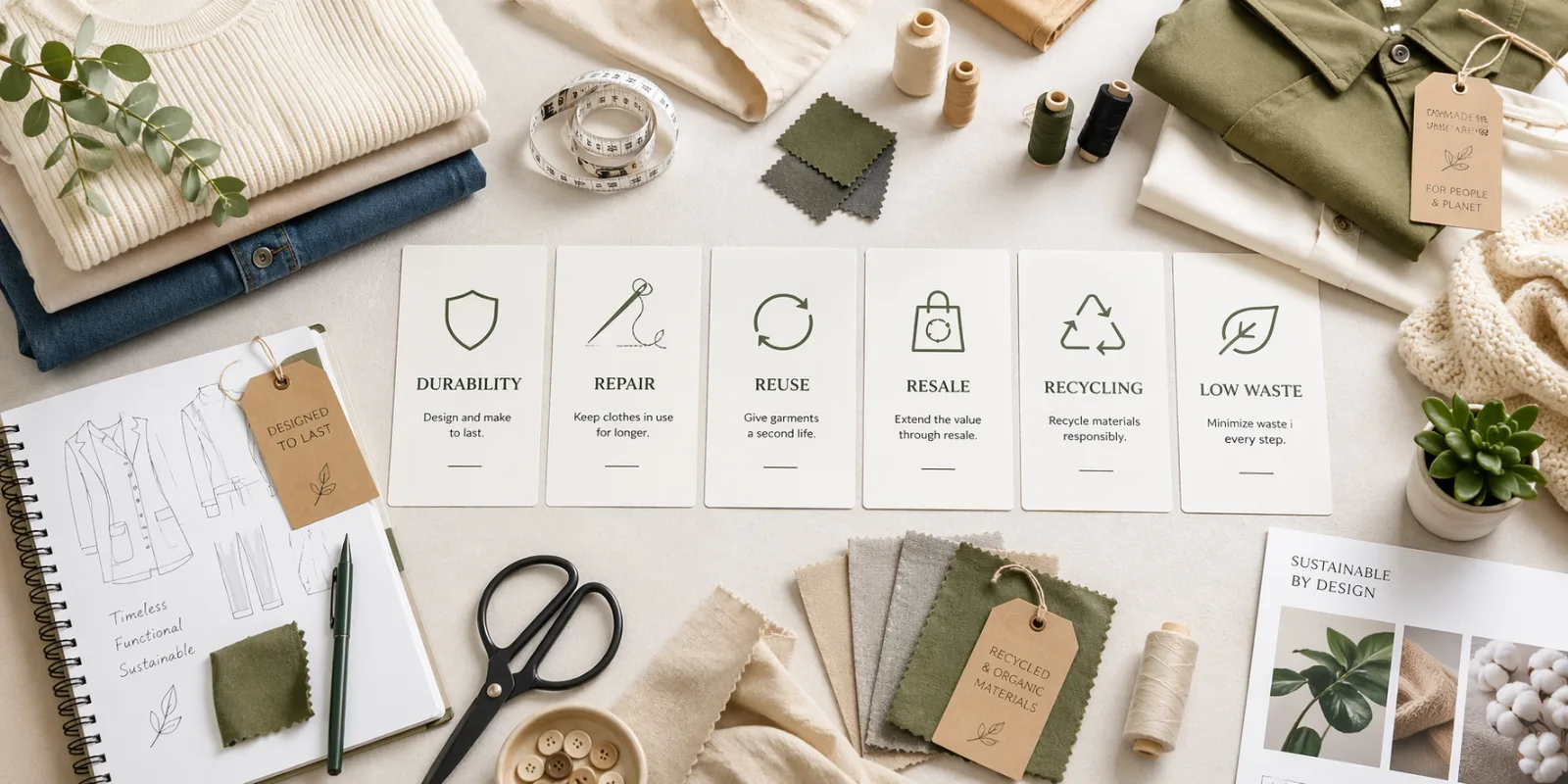
Design for longer use
Products should be made to last. That means better materials, stronger construction, and designs people want to keep wearing.
Keep products in use
Clothing should not lose value after one owner. Repair, resale, donation, rental, and refurbishment all help garments stay useful longer.
Keep materials in circulation
When a garment can no longer be worn, its materials should ideally be recovered and reused in another form.
Reduce waste from the start
Waste reduction should begin in design and production, not only at the disposal stage.
Support better systems
Circular fashion only works when brands, manufacturers, retailers, and consumers all contribute to keeping products and materials moving through useful cycles.
What Circular Fashion Looks Like in Practice
Circular fashion becomes easier to understand when you look at real examples. A circular brand might make a jacket from durable materials, offer repairs, and later take it back for resale or remaking. A circular retailer might create a secondhand section where pre-owned items are cleaned and sold again.
A circular clothing company might build garments with fewer mixed materials so they are easier to recycle later. A repair-focused brand might offer spare buttons, replacement zippers, or mending support to help customers keep products longer.
Other examples include:
- resale platforms
- rental services
- take-back programs
- remade collections using old garments or deadstock
- products built for easier disassembly
- repair services in stores or through partners
The point is not just to sell a product. The point is to keep it useful for as long as possible.
Circular Fashion Business Models
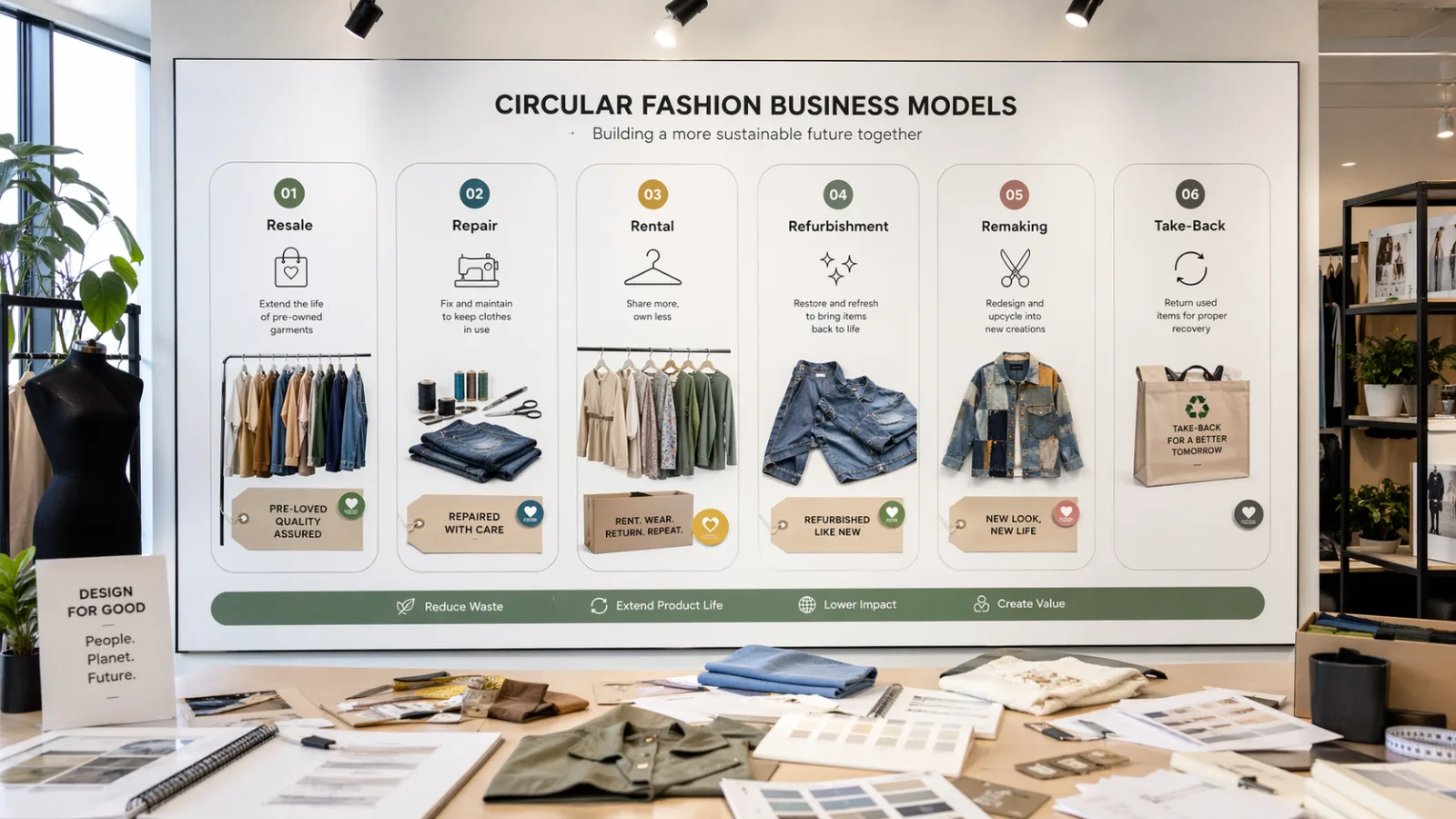
One of the biggest changes in circular fashion is that it creates value in more than one way. Instead of depending only on first sale, brands can earn through continued use models.
Resale
Resale allows products to move from one owner to another instead of going to waste. It works especially well for quality garments that still have value after initial use.
Repair
Repair helps customers keep garments longer. This can include mending, replacement parts, alterations, or simple support that prevents early disposal.
Rental
Rental is useful for categories where ownership may not matter as much, such as occasionwear, maternitywear, or short-use fashion items.
Refurbishment
Refurbishment restores garments so they can be sold or used again in better condition.
Remaking or upcycling
Old garments, deadstock, or leftover textiles can be turned into new products rather than discarded.
Take-back programs
These programs collect used products after the customer is done with them. The value depends on what happens next, whether the garments are reused, remade, or recycled.
The Role of Design in Circular Fashion
Design is one of the most important parts of circular fashion because many waste problems begin long before a product reaches the customer.
A garment that is low quality, difficult to repair, or impossible to recycle is already limiting its future options. That is why circular design matters.
Designing for circularity often means:
- choosing durable materials
- reducing unnecessary complexity
- making repair easier
- using trims that can be replaced
- improving seam quality
- thinking about what will happen after long-term use
- avoiding material combinations that block recovery
Circular design also includes emotional durability. If a product feels timeless, useful, and worth keeping, people are less likely to discard it quickly.
Materials in Circular Fashion
Materials are a major part of circular fashion, but they are not the whole story.
Recycled materials
Recycled fibers can help reduce dependence on virgin raw materials and keep existing materials in use longer.
Renewable materials
Some circular strategies also favor renewable materials, especially when they come from more responsible systems.
Safer materials
Circularity works better when products are made with materials and chemistry that do not create problems for reuse or recycling later.
Still, a better material does not automatically make a product circular. A recycled garment that is badly made and never reused may still fall short. Circularity depends on how the material, product design, use phase, and recovery system all connect.
Circular Fashion and Textile Waste
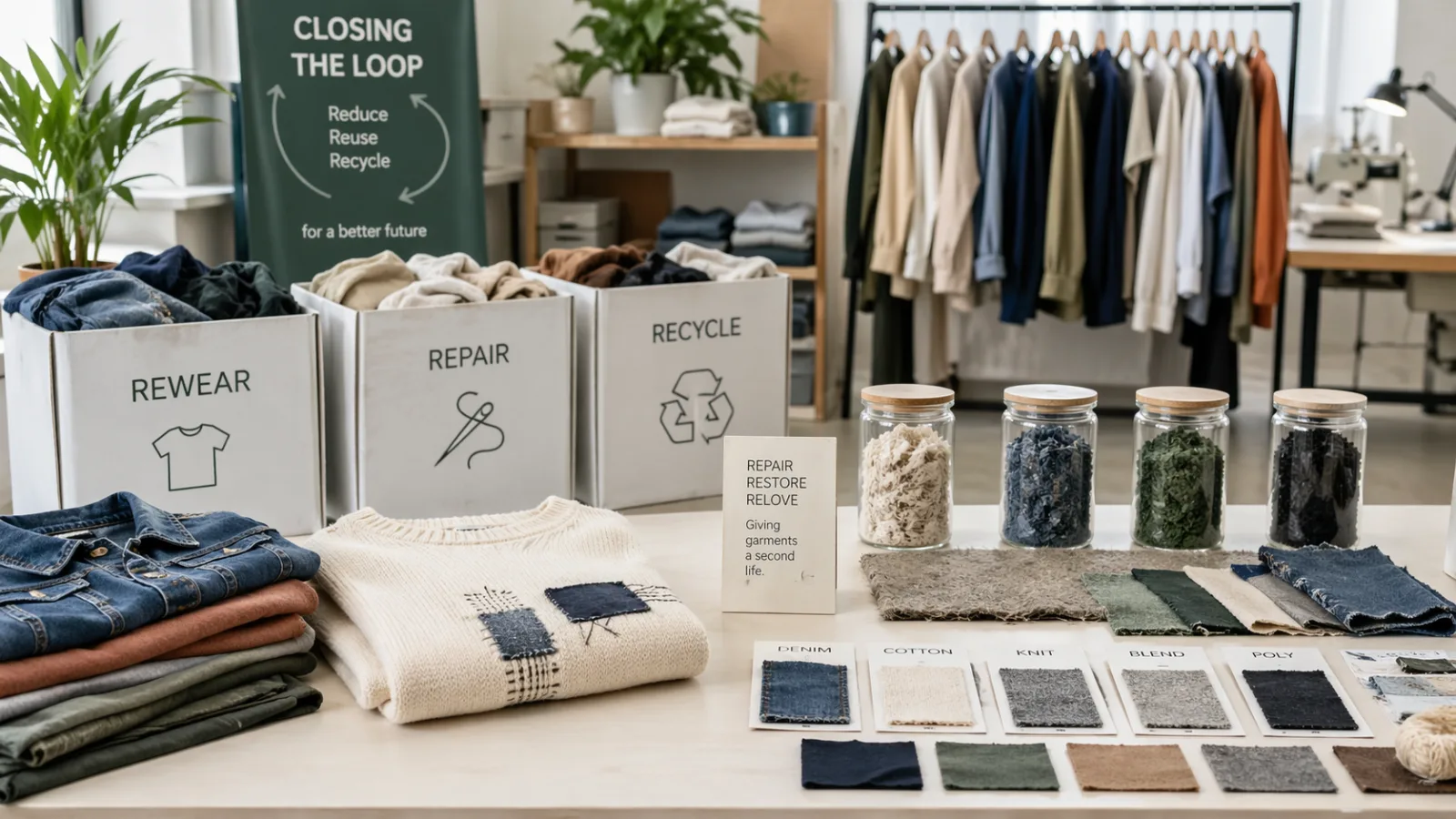
Textile waste is one of the biggest reasons circular fashion has become such an important topic. Huge volumes of clothing are discarded each year, and much of that material loses value because it is not designed for long use or useful recovery. Circular fashion tries to reduce textile waste in two main ways:
Prevent waste
The best approach is to avoid waste before it happens by making clothing last longer and by keeping garments in active use.
Recover value
When garments reach the end of their wearable life, circular systems try to recover value through reuse, remaking, or recycling.
Preventing waste is usually more effective than dealing with it after it appears. That is why circular fashion focuses so heavily on product life extension.
Why Circular Fashion Is Challenging
Circular fashion is a strong idea, but it is not easy to implement at scale.
Infrastructure is limited
Repair, resale, take-back, and recycling all need systems, labor, logistics, and cost structures that many markets do not yet have.
Many products are not designed for circularity
Blended fibers, coatings, poor construction, and hard-to-remove trims can make products difficult to recover.
Circular claims can be overstated
A brand may promote a take-back program or recycled collection, but that does not automatically make the whole business circular.
Economics can be difficult
Repair and recovery can be labor-intensive, while low-cost fast fashion still pushes customers toward replacement rather than maintenance. That is why circular fashion requires more than marketing. It needs real operational change.
What Brands Can Do to Become More Circular
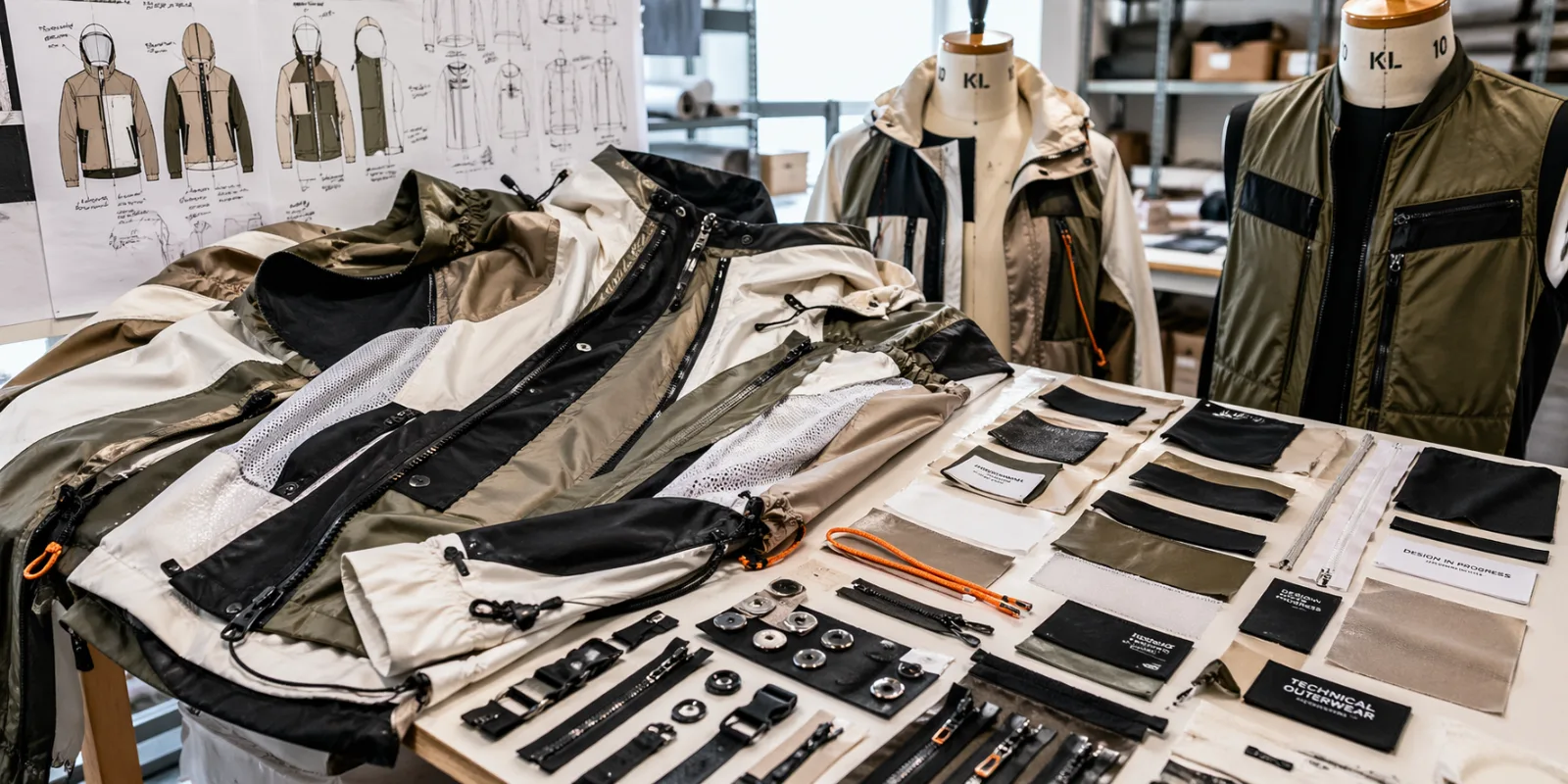
Brands that want to move toward circular fashion can start with practical actions.
Improve durability
Make products that hold up better in real use.
Simplify product construction
Reduce unnecessary complexity that makes repair or recycling harder.
Support repair
Offer services, instructions, or product features that make repair easier.
Build resale or take-back options
Help products stay useful after the first customer is done with them.
Use better materials wisely
Choose materials that support longer life and more realistic recovery options.
Work with the right manufacturing partners
Circular progress becomes easier when suppliers understand product quality, trim standards, durability goals, and long-term production consistency.
What Consumers Can Do in a Circular Fashion System
Consumers are not the only part of the solution, but they still play an important role.
Helpful actions include:
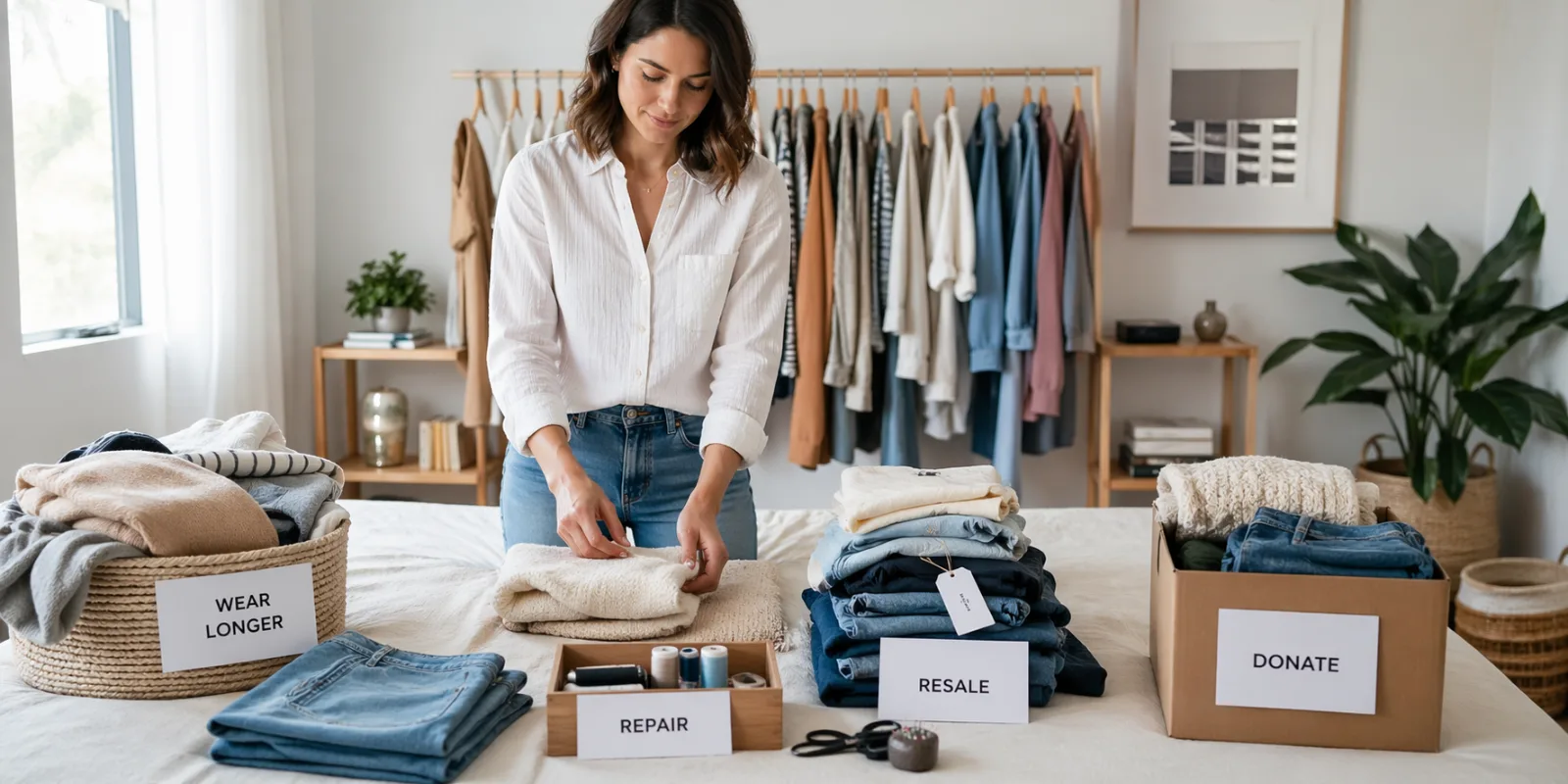
- buying fewer but better garments
- wearing clothes longer
- repairing items when possible
- reselling or donating responsibly
- choosing brands that support repair or resale
- avoiding unnecessary disposal
Still, consumers cannot solve everything alone. If products are badly designed or brands do not offer circular pathways, the customer has limited options. Circular fashion works best when industry systems and customer behavior support each other.
Is Circular Fashion the Future?
Circular fashion is not the only answer to every challenge in the apparel industry, but it is clearly becoming one of the most important directions. As waste concerns, policy pressure, and customer expectations grow, brands are being pushed to think beyond simple sell-and-discard models.
The future of fashion is likely to include more:
- repair
- resale
- take-back systems
- recycled materials
- product traceability
- durability-focused design
- lower-waste production approaches
Circular fashion may not replace every part of the traditional model overnight, but it is already reshaping how many brands think about product life, material value, and long-term responsibility.
ApparGlobal
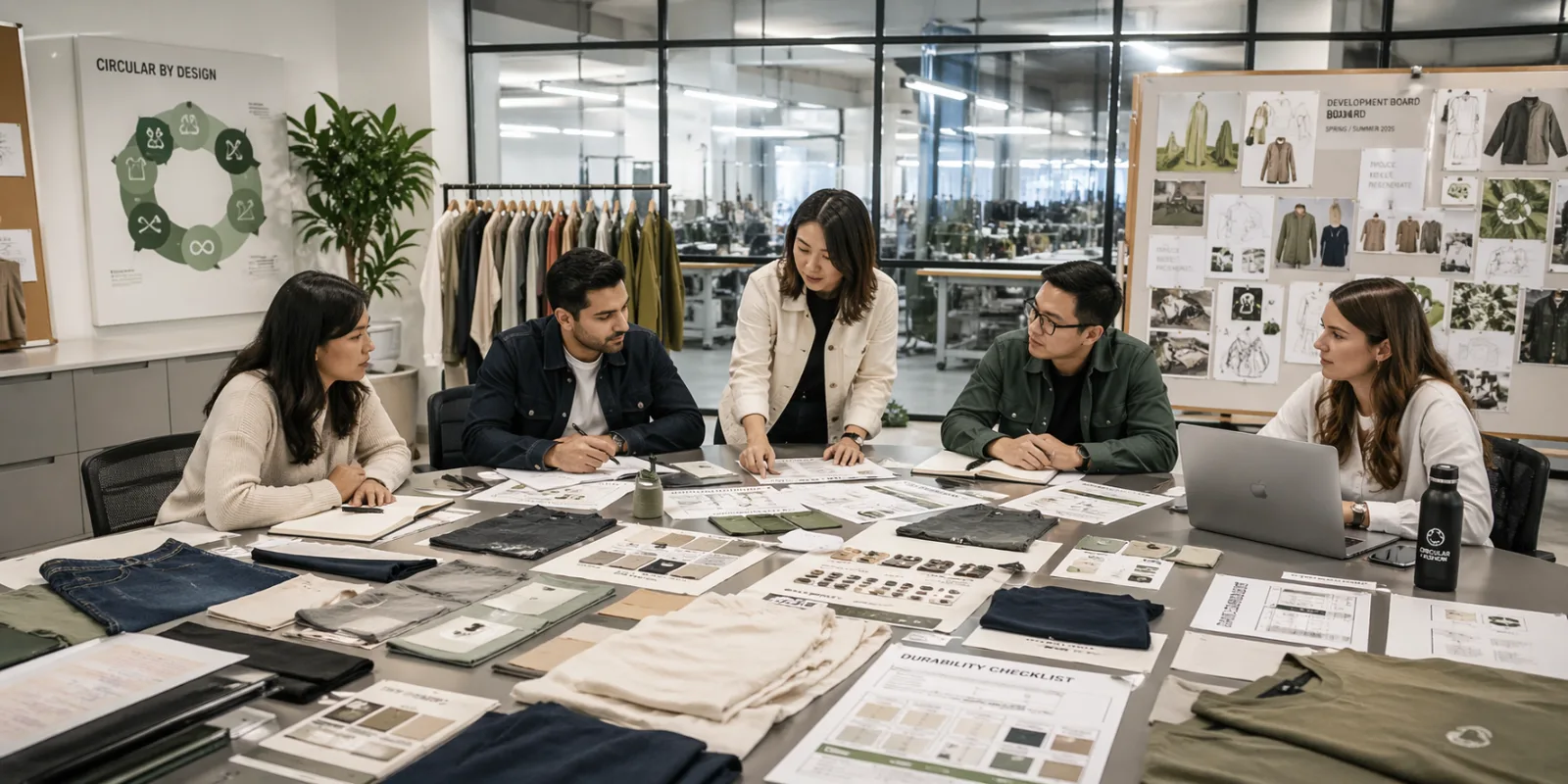
Many apparel brands move toward circular fashion more effectively when they work with manufacturing partners that understand product durability, material selection, trim standardization, repair-friendly construction, scalable quality control, and end-of-life planning. Companies such as ApparGlobal help clothing brands align product development, sourcing choices, production systems, and quality expectations so garments are built with stronger consistency, longer use potential, and better readiness for circular models such as resale, repair, remaking, and lower-waste production
Conclusion
Circular fashion is a better way of thinking about clothing. Instead of treating garments as products with a short life and quick disposal, it focuses on keeping them useful for as long as possible through better design, longer wear, repair, resale, reuse, remaking, and smarter recovery.
What makes circular fashion important is not just the idea of recycling. It is the bigger shift away from a waste-heavy fashion model and toward a system that protects more value. For brands, that means building better products and better after-use systems. For consumers, it means using clothing more thoughtfully and choosing options that reduce waste.
Circular fashion is still evolving, and there are real challenges around infrastructure, cost, and product design. But the direction is clear. As the apparel industry faces more pressure to reduce waste and improve sustainability, circular fashion is becoming one of the strongest frameworks for creating a more durable, practical, and responsible future.
Frequently Asked Questions About Circular Fashion
What is circular fashion in simple terms?
Circular fashion means making and using clothing in a way that keeps products and materials useful for longer instead of quickly throwing them away.
Is circular fashion the same as sustainable fashion?
No. Sustainable fashion is broader, while circular fashion focuses more specifically on longer use, reduced waste, repair, reuse, and recycling.
Why is circular fashion important?
It is important because it helps reduce textile waste, extend product life, and lower dependence on constant new production.
What are examples of circular fashion?
Examples include resale, rental, repair services, take-back programs, remade garments, and clothing designed for longer life.
Is recycling enough to make fashion circular?
No. Recycling is only one part of a circular fashion. Real circularity also includes durability, repair, reuse, and better design from the start.
What is the biggest challenge in circular fashion?
One of the biggest challenges is building the systems needed to make repair, resale, collection, and recovery work at scale.