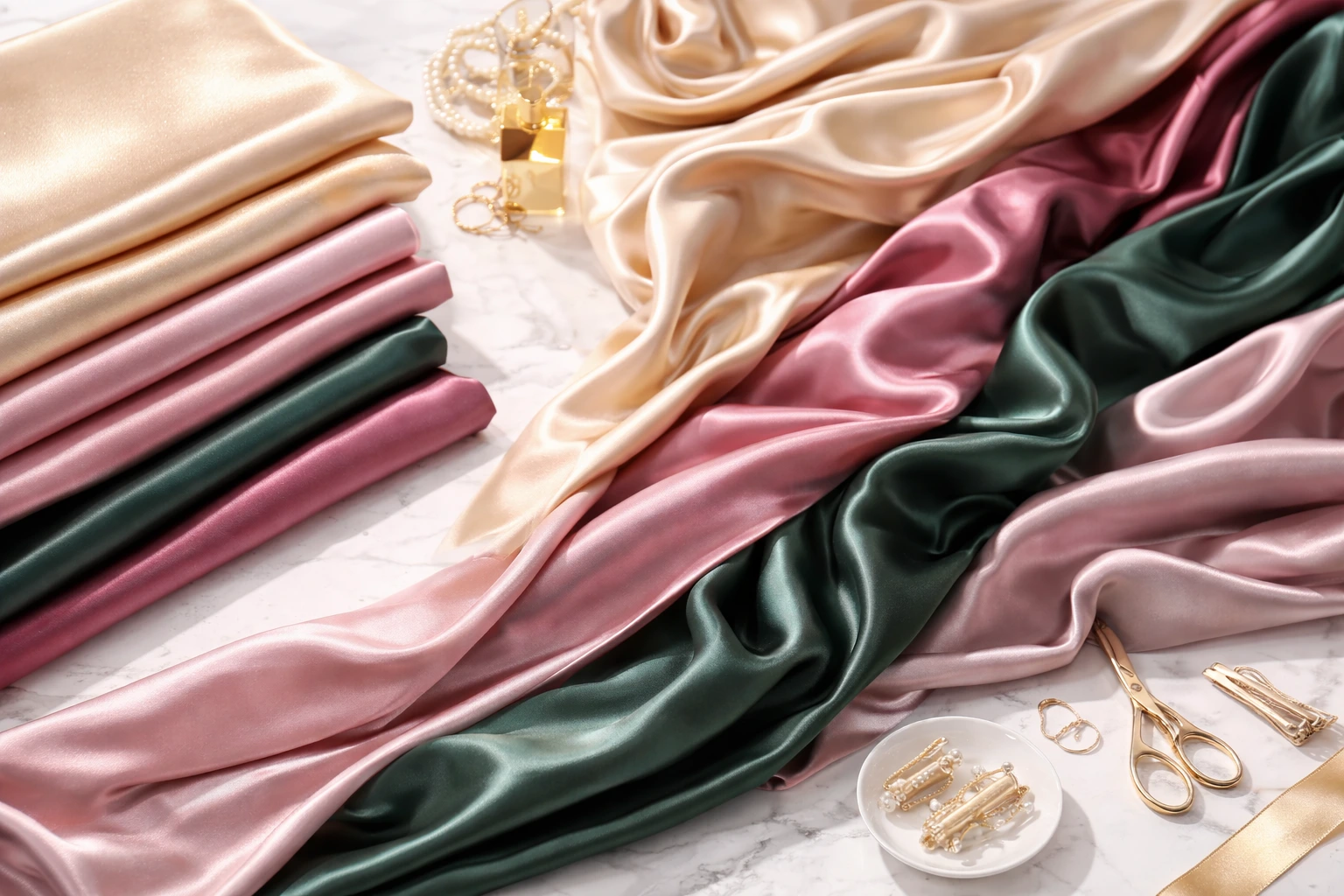
Satin is one of the most recognizable fabrics in fashion and home textiles. Its smooth surface, elegant shine, and soft drape make it a popular choice for evening dresses, bridalwear, lingerie, scarves, blouses, linings, pillowcases, bedding, and decorative interiors.
But satin is also one of the most misunderstood fabrics.
Many people think satin is a fiber, like cotton, silk, or polyester. In reality, satin is usually a type of weave. It can be made from different fibers, including silk, polyester, nylon, acetate, viscose, and blended yarns. This means satin can feel luxurious and expensive in one product, but affordable and easy to produce in another. The beauty of satin comes from its weave structure. Satin fabric usually has a glossy front surface and a duller back surface. The smooth face reflects light beautifully, giving satin its signature shine. This makes it ideal for garments and products where elegance, softness, and visual appeal matter.
However, satin also has limitations. It can snag, show watermarks, become slippery during sewing, wrinkle depending on the fiber, and require careful maintenance. Some satin fabrics are breathable and luxurious, while others may trap heat or feel less premium.
This guide explains the advantages and disadvantages of satin fabric in detail. You will learn what satin is, how it is made, the main types of satin, where it is used, how it compares with other fabrics, how to care for it, and how clothing brands can decide whether satin is the right choice for their products.
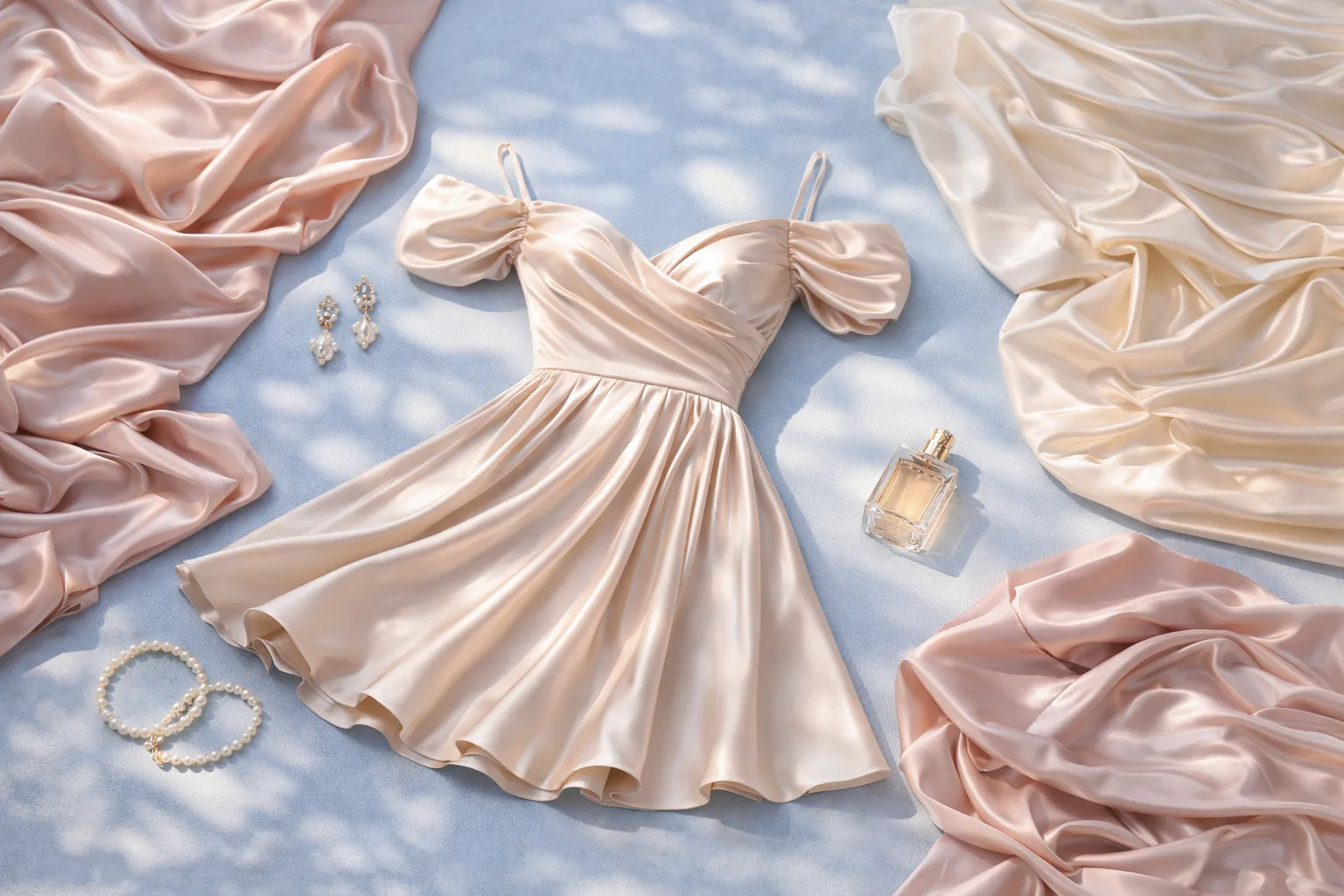
What Is Satin Fabric?
Satin is a fabric made using a satin weave structure. In this weave, yarns float over several yarns before passing under one. This creates a smooth, glossy surface with fewer visible interlacings.
The result is a fabric that often feels soft, fluid, and elegant.
Satin can be made from different fibers, such as:
- Silk.
- Polyester.
- Nylon.
- Acetate.
- Viscose.
- Rayon.
- Cotton blends.
- Elastane blends.
This is why satin quality can vary widely. A silk satin evening gown may feel very different from a polyester satin costume or an acetate satin lining.
Satin is often described by both its weave and fiber content. For example:
- Silk satin.
- Polyester satin.
- Stretch satin.
- Crepe-back satin.
- Duchess satin.
- Charmeuse satin.
- Satin lining.
- Bridal satin.
The weave gives satin its shine and smoothness. The fiber determines many of its comfort, cost, durability, care, and sustainability qualities.
Is Satin a Fabric or a Weave?
Satin is technically a weave, not a fiber. This is one of the most important things to understand before discussing satin’s advantages and disadvantages.
A fiber is the raw material used to make yarn. Examples include cotton, silk, polyester, wool, nylon, and viscose. A weave is the way yarns are interlaced to create fabric. Common weave types include plain weave, twill weave, and satin weave.
So satin fabric can be made from several different fibers, but it gets its smooth, glossy surface from the satin weave.
For example:
Understanding this difference helps buyers, designers, and brands choose the correct satin for the intended product.
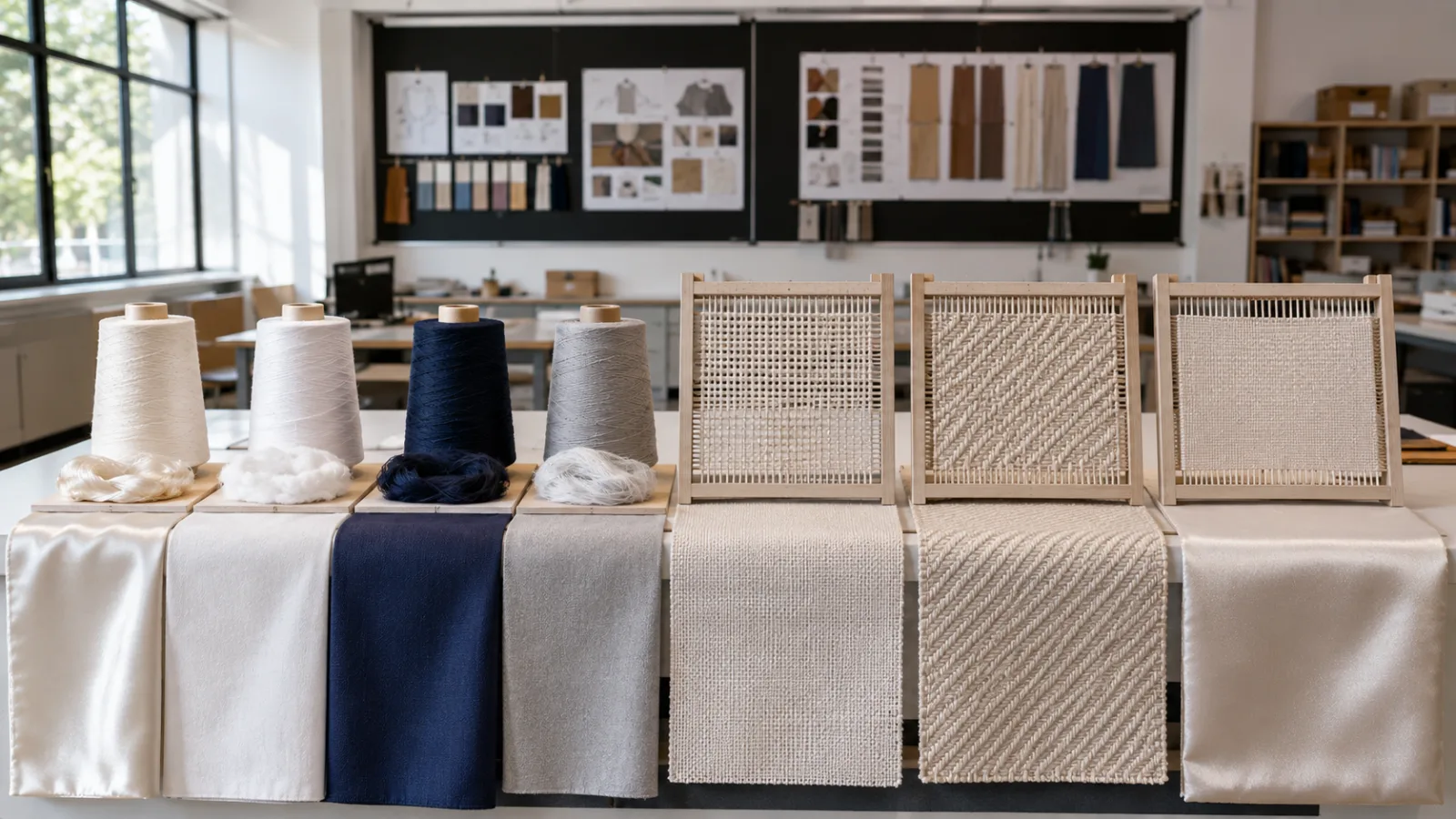
How Is Satin Made?
Satin is made by weaving yarns in a structure that creates long floating yarns on the fabric surface. These floats reflect light and create the smooth, shiny appearance associated with satin.
In most satin fabrics, one side looks glossy while the other side appears more matte. The glossy side is usually used as the visible face of the garment or product.
The production process may include:
- Selecting the fiber.
- Spinning or preparing yarn.
- Weaving the fabric using a satin weave.
- Dyeing or printing the fabric.
- Applying finishing treatments.
- Inspecting the fabric for defects.
- Cutting and sewing into finished products.
Finishing plays an important role in satin’s final appearance. A satin fabric may be treated to improve shine, softness, drape, wrinkle resistance, or stability.
Because satin has floating yarns on the surface, it can be more vulnerable to snagging than many plain-weave fabrics. The same structure that creates beauty can also create handling challenges.
Key Characteristics of Satin Fabric
Satin is known for several visual and physical characteristics.
Common satin characteristics include:
- Glossy surface.
- Smooth hand feel.
- Soft drape.
- Elegant appearance.
- Light reflection.
- Fluid movement.
- Duller back side.
- Potential slipperiness.
- Possible snagging.
- Varying breathability depending on fiber.
- Varying durability depending on fiber and weight.
Satin can be lightweight and delicate or thick and structured. A light charmeuse satin may flow beautifully, while duchess satin may provide more body for bridal gowns or formalwear.
The final performance depends on:
- Fiber content.
- Yarn quality.
- Fabric weight.
- Weave density.
- Finishing.
- Dyeing process.
- Garment construction.
- Care method.
This is why satin should not be judged only by appearance. Two satin fabrics can look similar but perform very differently.
Advantages of Satin Fabric
Satin offers a range of benefits that make it a popular choice in fashion and home textiles.
1. Luxurious Appearance
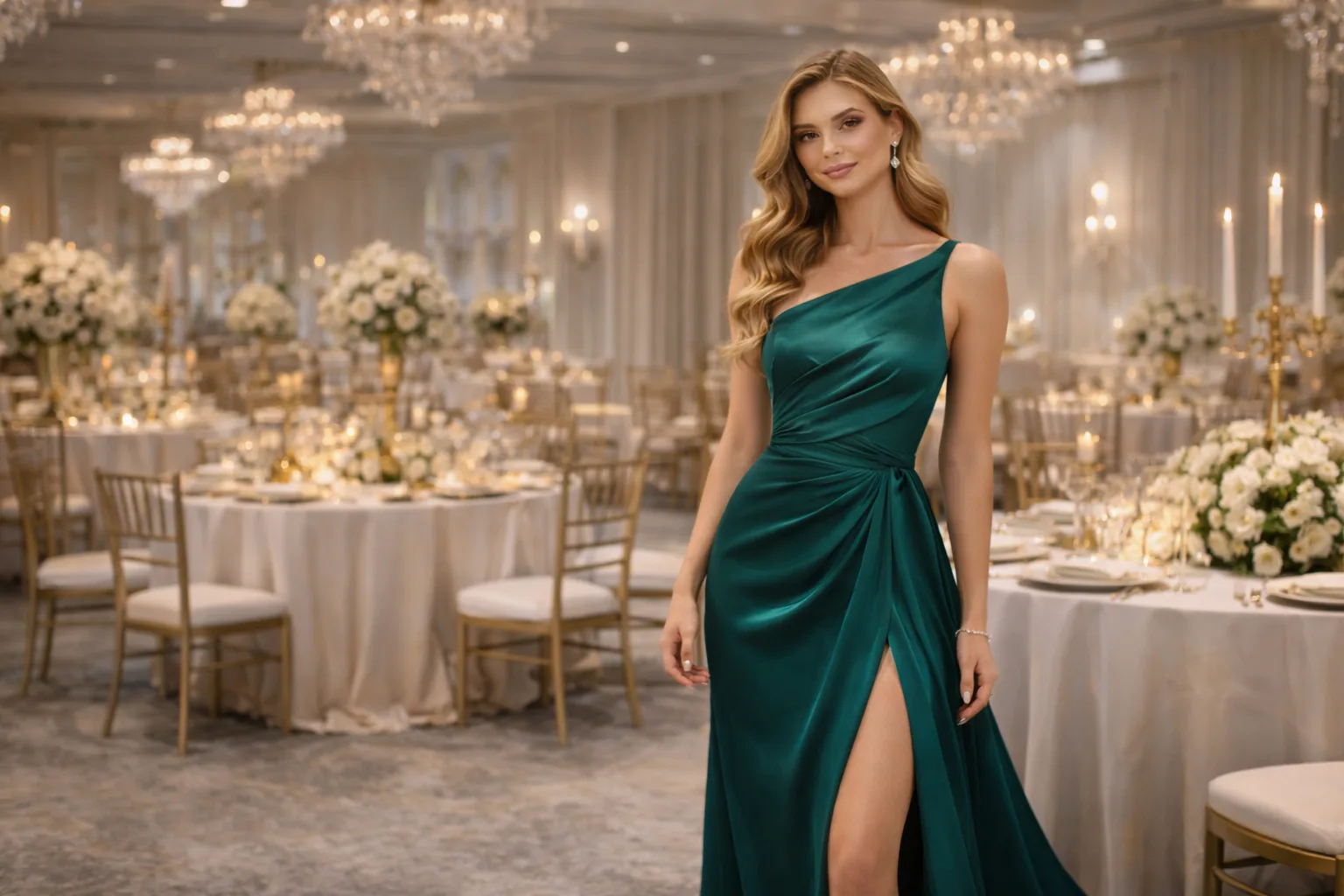
One of the biggest advantages of satin is its elegant and luxurious look. The glossy surface reflects light beautifully, giving garments a sophisticated and high-end appearance.
This is why satin is commonly used in:
- evening gowns
- bridal wear
- formal dresses
- luxury bedding
The visual appeal of satin makes it ideal for occasions where style and presentation are important.
2. Smooth and Soft Texture
Satin is incredibly smooth to the touch. Its soft surface makes it comfortable to wear and pleasant against the skin.
This is especially beneficial for:
- sleepwear
- lingerie
- pillowcases
The reduced friction also helps prevent hair breakage and skin irritation, which is why satin is popular in beauty and skincare routines.
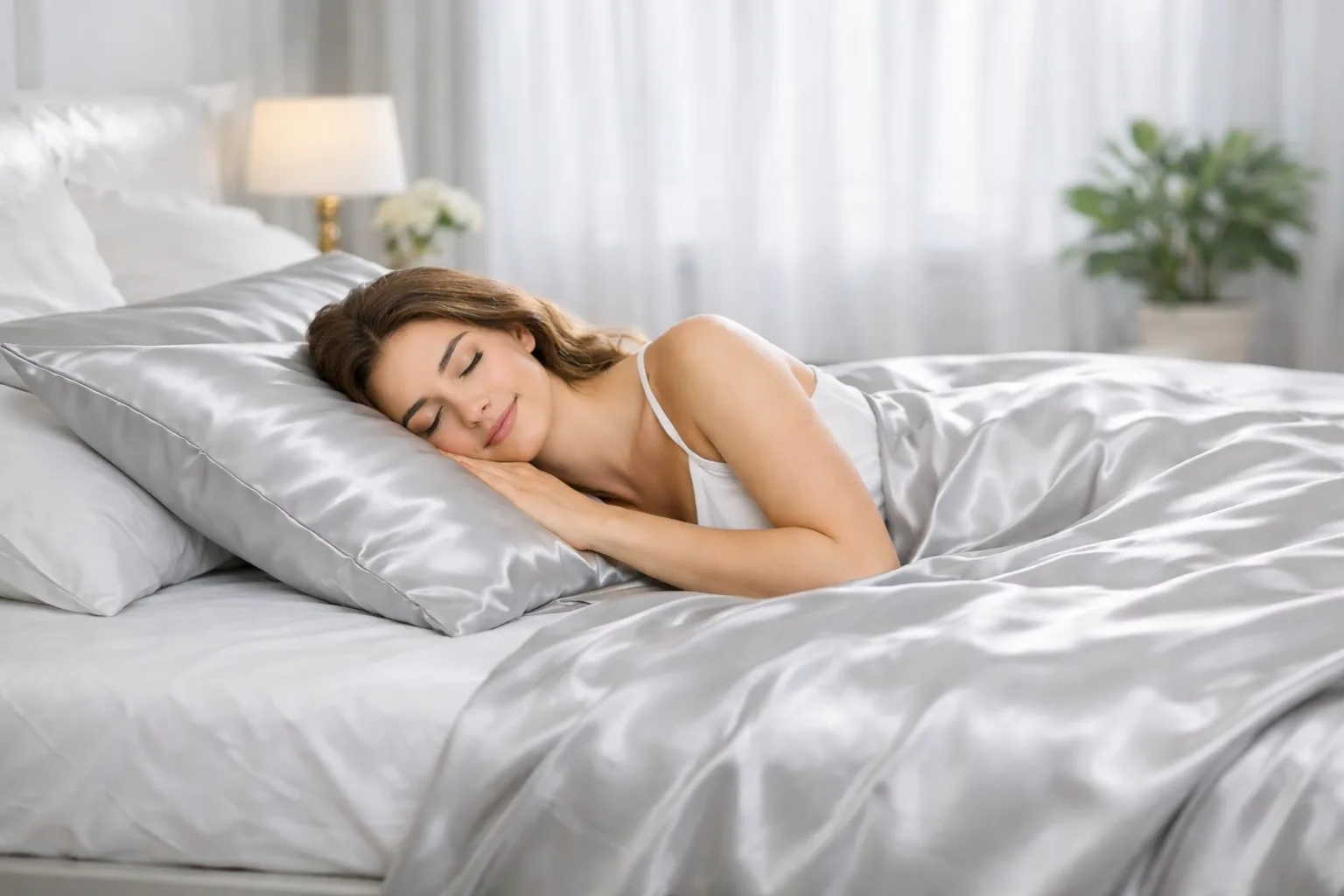
3. Excellent Drape
Satin has a natural fluidity that allows it to drape beautifully. This makes it perfect for garments that require movement and flow.
Designers often choose satin for:
- flowing dresses
- skirts
- blouses
The way satin falls enhances the overall silhouette of the garment.
4. Versatility Across Applications
Satin is used in a wide range of industries, including fashion, interior design, and accessories.
Its versatility allows it to be used for:
- clothing
- upholstery
- curtains
- bedding
- decorative items
This makes satin a flexible fabric suitable for various needs.
5. Available in Different Price Ranges
Because satin can be made from different fibers, it is available at various price points.
- silk satin is premium and expensive
- polyester satin is budget-friendly
- blended satin offers mid-range options
This accessibility makes satin suitable for both luxury and everyday use.
6. Lightweight and Comfortable
Most satin fabrics are lightweight, making them comfortable to wear for extended periods.
This is particularly useful for:
- formal events
- summer clothing (depending on fiber type)
Lightweight satin garments feel less restrictive and more breathable than heavier fabrics.
7. Enhances Color and Shine
Satin fabric holds color exceptionally well. The reflective surface enhances the richness and depth of colors.
This makes satin ideal for:
- bold fashion designs
- vibrant garments
- statement pieces
8. Reduces Friction for Hair and Skin
Satin is often recommended for pillowcases because it reduces friction.
Benefits include:
- less hair breakage
- reduced frizz
- smoother skin
- fewer wrinkles
This has made satin popular in beauty and wellness markets.
Disadvantages of Satin Fabric
While satin has many advantages, it also comes with certain limitations that should be considered.
1. Slippery Texture
The smooth surface of satin can make it difficult to handle, especially during sewing or garment construction.
Challenges include:
- fabric shifting during cutting
- difficulty in stitching
- need for careful handling
This can increase production complexity.
2. Prone to Snagging
Satin is more delicate than many other fabrics. It can easily snag or pull when exposed to rough surfaces.
This is particularly true for:
- silk satin
- lightweight satin fabrics
Snagging can damage the appearance of the fabric.
3. Limited Breathability (in Synthetic Satin)
Not all satin fabrics are breathable.
- silk satin is breathable
- polyester satin can trap heat
This can make synthetic satin less comfortable in hot or humid conditions.
4. Requires Careful Maintenance
Satin requires special care to maintain its quality.
Common care challenges include:
- sensitivity to high heat
- need for gentle washing
- risk of damage during drying
Improper care can reduce the fabric’s lifespan.
5. Wrinkles and Creases
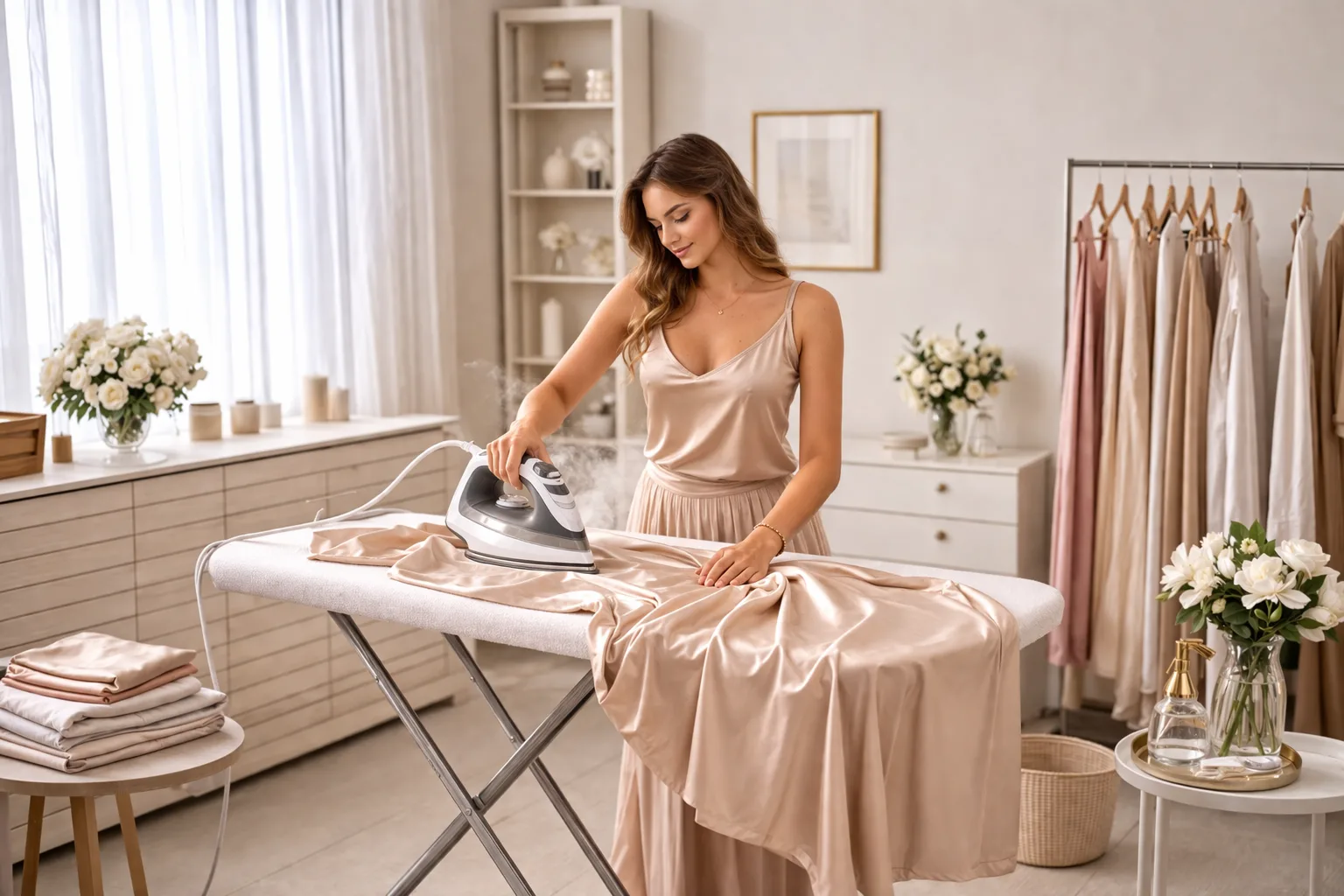
Although satin resists some wrinkles, it can still crease, especially during storage.
These creases can be difficult to remove without proper ironing techniques.
6. Can Show Water Stains
Satin, particularly silk satin, can show water spots if not handled properly.
This makes it less forgiving compared to other fabrics.
7. Not Always Suitable for Casual Wear
Satin’s formal appearance may not be ideal for everyday clothing in all settings.
It is often better suited for:
- formal occasions
- evening wear
rather than daily casual outfits.
8. Cost Variability
While satin can be affordable, high-quality satin (especially silk) can be expensive.
This can limit accessibility for some consumers.
Satin Advantages and Disadvantages at a Glance
Satin is best when its shine, softness, and drape support the product’s purpose. It is less suitable when durability, easy care, matte appearance, or high breathability are the main priorities.
Common Types of Satin Fabric
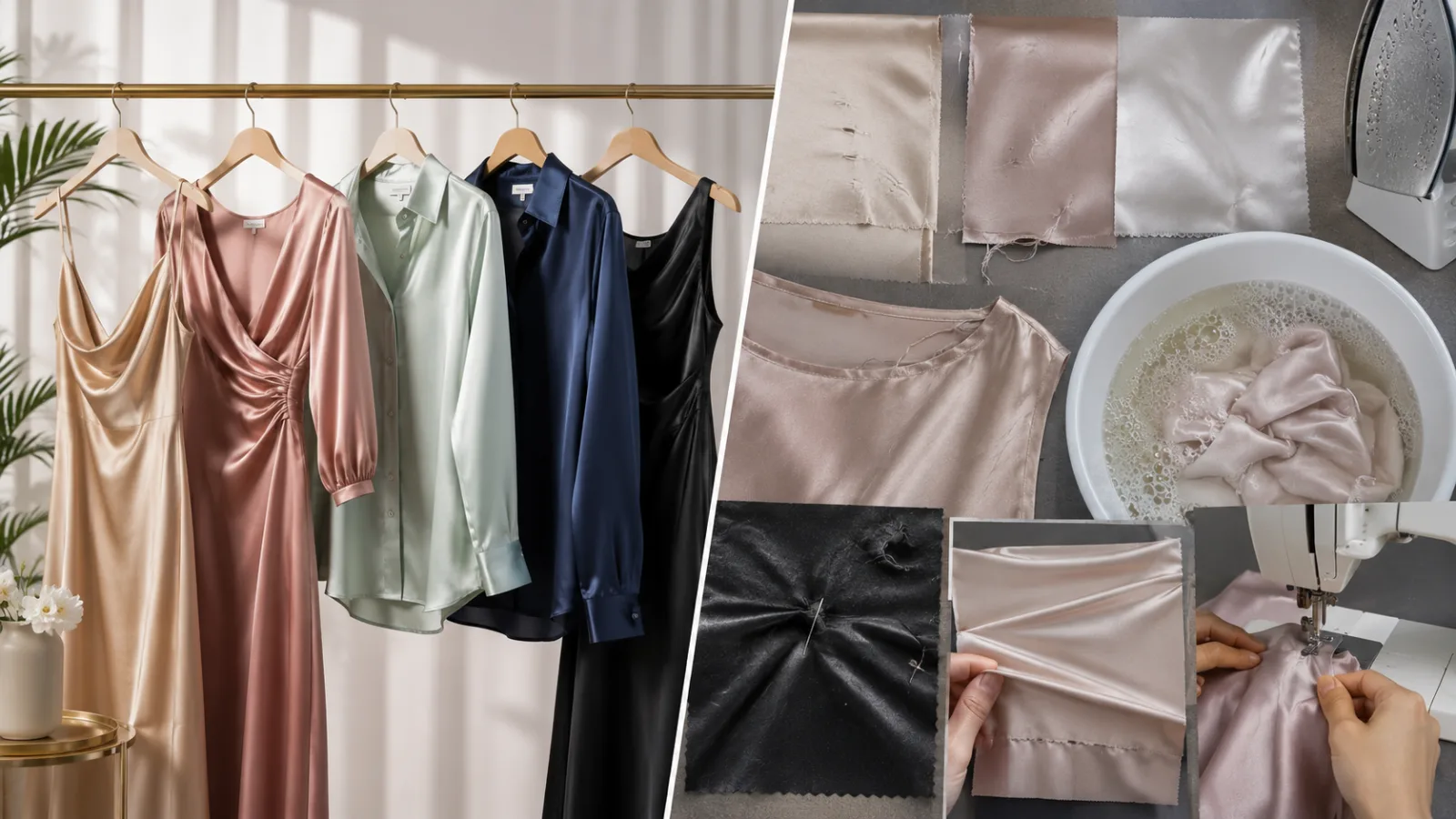
Different satin types are used for different products. Choosing the right satin type is essential.
Charmeuse Satin
Charmeuse is lightweight, soft, and fluid. It often has a glossy face and dull back.
Best for:
- Slip dresses.
- Lingerie.
- Blouses.
- Scarves.
- Sleepwear.
Duchess Satin
Duchess satin is heavier, structured, and commonly used for bridal and formalwear.
Best for:
- Wedding gowns.
- Ball gowns.
- Structured dresses.
- Formal skirts.
Crepe-Back Satin
Crepe-back satin has one glossy satin side and one textured crepe side. Designers can use either side depending on the desired effect.
Best for:
- Eveningwear.
- Dresses.
- Blouses.
- Occasionwear.
Stretch Satin
Stretch satin includes elastane or spandex for flexibility.
Best for:
- Fitted dresses.
- Dancewear.
- Costume design.
- Body-hugging garments.
Bridal Satin
Bridal satin is usually smooth, heavier, and structured. It is often used for wedding and formal garments.
Best for:
- Bridal gowns.
- Bridesmaid dresses.
- Formalwear.
Polyester Satin
Polyester satin is affordable, widely available, and durable.
Best for:
- Costumes.
- Event decor.
- Affordable eveningwear.
- Linings.
- Accessories.
Silk Satin
Silk satin is luxurious, soft, and naturally elegant.
Best for:
- Premium eveningwear.
- Luxury sleepwear.
- Scarves.
- High-end blouses.
- Bridal pieces.
Satin vs Silk: What Is the Difference?
Satin and silk are often confused, but they are not the same. Silk is a natural fiber. Satin is a weave.
A fabric can be both silk and satin if it is made from silk yarn using a satin weave. This is called silk satin.
A fabric can also be polyester satin, nylon satin, acetate satin, or viscose satin.
If someone says “satin is cheaper than silk,” they are usually comparing polyester satin with silk fabric. But silk satin is one of the more luxurious satin options.
Satin vs Sateen: What Is the Difference?
Satin and sateen are related but not identical.
Satin is usually made with filament fibers such as silk, polyester, or nylon. These long, smooth fibers help create a glossy surface.
Sateen is usually made from spun yarns, often cotton. It uses a satin-like weave but usually has a softer, less glossy finish.
Sateen is common in:
- Bedsheets.
- Pillowcases.
- Shirts.
- Cotton dresses.
- Home textiles.
Satin is often shinier and more fluid, while sateen is usually softer, more breathable, and more cotton-like.
When Should You Choose Satin?
Satin is an excellent choice when you need:
- elegant and formal clothing
- smooth and soft textures
- visually appealing garments
- luxury bedding or décor
It is particularly suitable for occasions where appearance and comfort are equally important.
When Should You Avoid Satin?
Satin may not be ideal when:
- durability is a priority
- the fabric will face rough use
- breathability is essential (in synthetic versions)
- low maintenance is required
In such cases, other fabrics may be more practical.
When Should You Avoid Satin?
Satin is not ideal for every product.
You may want to avoid satin when the product needs:
- Heavy abrasion resistance.
- Matte appearance.
- Easy machine washing.
- Rugged durability.
- High breathability.
- Outdoor performance.
- Workwear strength.
- Low maintenance.
- Minimal shine.
- Rough-use practicality.
Satin may not be the best choice for:
- Workwear uniforms.
- Outdoor technical clothing.
- Heavy-duty bags.
- Casual basics.
- High-friction products.
- Children’s playwear.
- Very hot weather activewear.
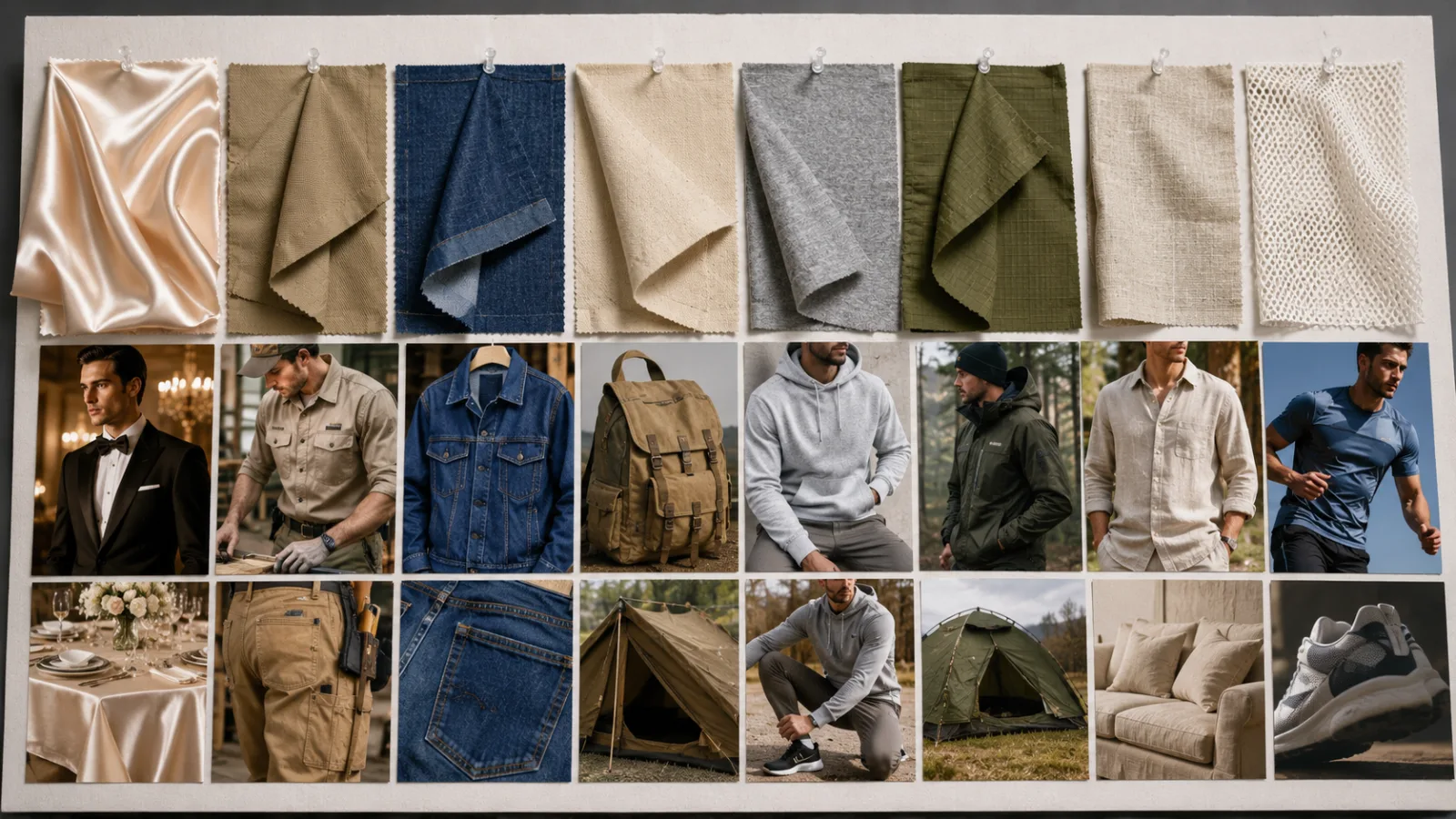
In these cases, fabrics such as cotton twill, denim, canvas, jersey, ripstop nylon, polyester mesh, crepe, linen, or performance knits may be more suitable.
How to Choose the Right Satin Fabric
Choosing satin requires more than selecting the prettiest shine.
Before buying satin, check:
- Fiber content.
- Fabric weight.
- Drape.
- Breathability.
- Stretch.
- Snag resistance.
- Opacity.
- Colorfastness.
- Care requirements.
- Sewing difficulty.
- End use.
- Price.
- Supplier reliability.
- Minimum order quantity.
For garments, create a sample before ordering bulk fabric. A satin that looks beautiful on a swatch may behave differently when cut, sewn, pressed, washed, or worn.
For brands, the right satin should match:
- Product purpose.
- Target customer.
- Price point.
- Brand positioning.
- Care expectations.
- Production capability.
- Quality standards.
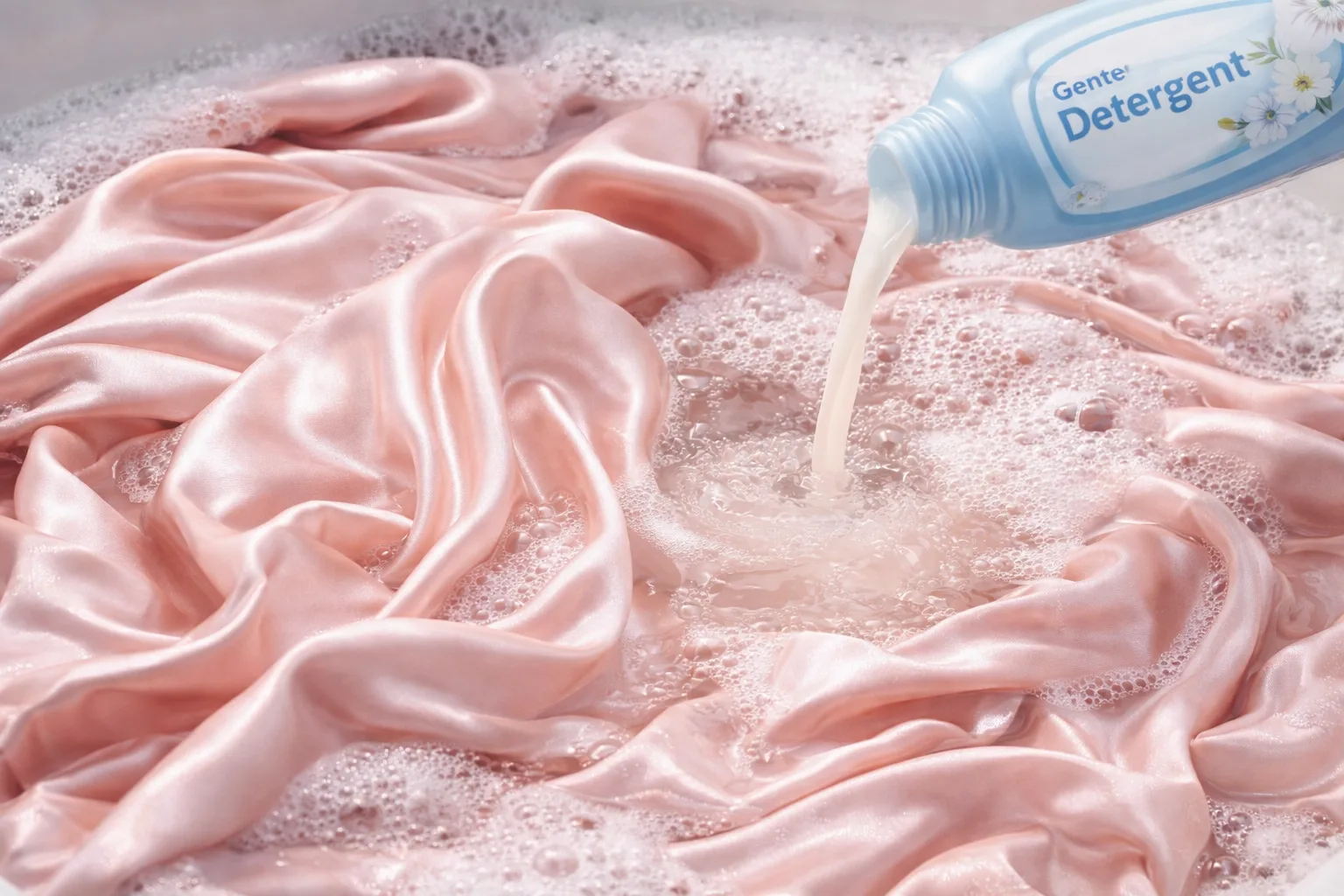
How to Care for Satin Fabric
Proper care is essential to maintain satin’s beauty and durability.
Washing
- use gentle detergent
- hand wash or delicate cycle
- avoid harsh chemicals
Drying
- air dry
- avoid high heat
Ironing
- use low temperature
- iron inside out
Storage
- store in a cool, dry place
- avoid overcrowding
Following these steps helps preserve satin’s shine and texture.
Is Satin Fabric Worth It?
Satin is worth it for those who value elegance, comfort, and style. Its unique combination of beauty and versatility makes it a popular choice across industries.
However, it is important to choose the right type of satin based on your needs and to understand its care requirements.
ApparGlobal: Supporting Satin Fabric Sourcing and Product Development
Choosing satin for a clothing line requires more than selecting a glossy fabric. Brands need to understand fiber content, fabric weight, drape, opacity, construction difficulty, care requirements, costing, supplier reliability, and production quality before moving into bulk manufacturing.
ApparGlobal helps apparel brands connect fabric selection with structured product development and manufacturing planning. For satin-based products, this can be especially valuable because satin may require careful sampling, skilled sewing, quality inspection, and packaging control.
Fashion brands can explore:
- Sampling Program to test satin fabric, fit, drape, opacity, construction, seam quality, and finishing before bulk production.
- Private Label Program to develop satin garments using established apparel foundations and customized design details.
- Manufacturing Support to coordinate fabric sourcing, production planning, quality control, and supplier communication.
- Vendor Program to identify suitable satin fabric suppliers and apparel manufacturing partners.
- Manufacturer Catalog to review production capabilities for dresses, blouses, sleepwear, linings, accessories, and other satin product categories.
- Resources for further guidance on fabric selection, garment costing, sampling, and apparel manufacturing.
With the right development process, brands can use satin’s shine, softness, and elegance while reducing risks such as poor seam quality, snagging, incorrect fabric weight, weak opacity, and production inconsistencies.
Satin Fabric Checklist
Use this checklist before buying or producing satin products.
Fabric Quality
- Fiber content is confirmed.
- Satin type is identified.
- Fabric weight is suitable.
- Drape matches the design.
- Surface shine is appropriate.
- Opacity is acceptable.
- Snag risk is reviewed.
- Color is approved.
Garment Performance
- Fit sample is tested.
- Seam quality is checked.
- Fabric slipping is controlled.
- Lining needs are reviewed.
- Stretch is tested if needed.
- Wrinkle behavior is checked.
- Breathability is considered.
- Care method is realistic.
Production Planning
- Supplier reliability is confirmed.
- Minimum order quantity is understood.
- Fabric defects are checked.
- Cutting method is planned.
- Sewing skill is available.
- Pressing method is tested.
- Packaging is suitable.
- Quality inspection is scheduled.
Customer Experience
- Product photos show satin accurately.
- Care instructions are clear.
- Fabric description is honest.
- Shine matches customer expectations.
- Price reflects quality.
- Return risks are considered.
Frequently Asked Questions About Satin Fabric
1. What is satin fabric?
Satin is a fabric made using a satin weave. It usually has a glossy front surface and a duller back surface. Satin can be made from silk, polyester, nylon, acetate, viscose, or blended fibers.
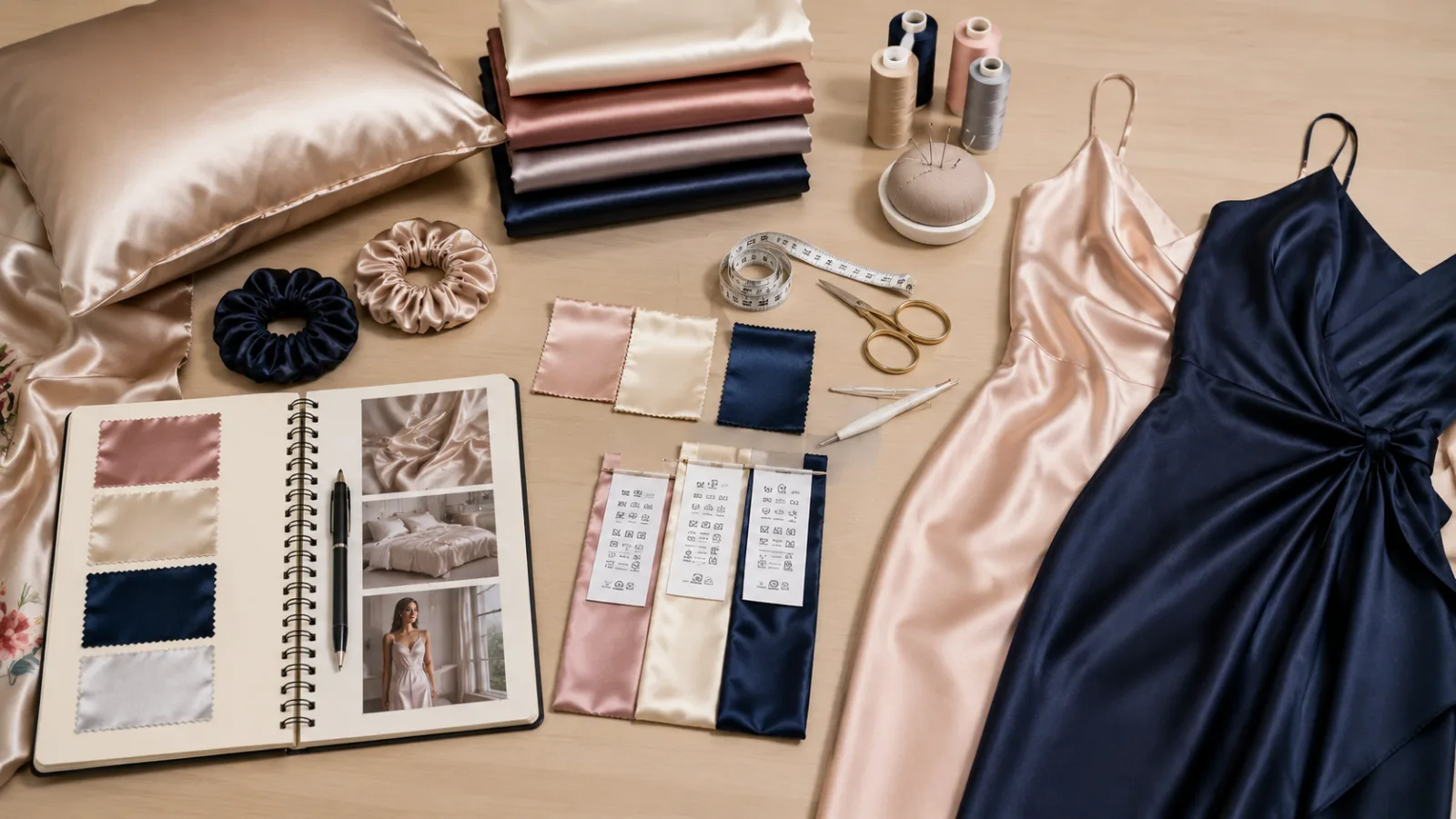
2. Is satin the same as silk?
No. Satin is a weave, while silk is a natural fiber. Satin can be made from silk, but it can also be made from polyester, nylon, acetate, or other fibers.
3. What are the main advantages of satin?
The main advantages of satin include its luxurious shine, smooth feel, soft drape, elegant appearance, rich color reflection, and versatility for fashion, lining, accessories, and home textiles.
4. What are the main disadvantages of satin?
The main disadvantages of satin include snagging, sewing difficulty, water sensitivity, delicate care needs, possible wrinkles, variable breathability, and inconsistent quality depending on fiber and construction.
5. Is satin good for summer?
Some satin fabrics can work for summer, especially lightweight silk satin or breathable blends. However, polyester satin may feel warm or less breathable in hot weather.
6. Is satin good for sleepwear?
Yes, satin is often used for sleepwear because it feels smooth and soft. The best choice depends on comfort, breathability, washability, and fiber content.
7. Does satin wrinkle easily?
Some satin wrinkles more easily than others. Silk and acetate satin may wrinkle more than polyester satin. Heavier satin may resist wrinkles better than lightweight satin.
8. Can satin be washed?
Some satin can be washed, but care depends on fiber content. Polyester satin may allow gentle washing, while silk satin may require hand washing or professional cleaning. Always check the care label.
9. Why does satin snag?
Satin can snag because its weave structure creates long floating yarns on the surface. These yarns can catch on jewelry, rough nails, zippers, or sharp objects.
10. Is satin expensive?
Satin price varies widely. Silk satin is usually expensive, while polyester satin is more affordable. Cost depends on fiber, weight, quality, finishing, and supplier.
Conclusion
Satin is a beautiful and versatile fabric known for its shine, smoothness, and elegant drape. It can make garments and home textiles feel refined, polished, and visually rich.
Its advantages are clear. Satin looks luxurious, feels soft, reflects color beautifully, drapes well, works across many product categories, and can be produced at different price points. It is especially popular for eveningwear, bridalwear, lingerie, sleepwear, scarves, linings, pillowcases, and decorative textiles.
However, satin also has disadvantages. It can snag, show watermarks, wrinkle, feel less breathable depending on fiber, require delicate care, and create challenges during cutting and sewing. Low-quality satin may look overly shiny, feel uncomfortable, or perform poorly after use.
The most important point is that satin is not one single fabric. Satin is a weave, and its quality depends on fiber content, yarn quality, weight, finish, construction, and production standards.
Silk satin may offer luxury and breathability. Polyester satin may offer affordability and durability. Stretch satin may support fitted garments. Duchess satin may provide structure for bridalwear. Charmeuse satin may create soft, flowing silhouettes. For consumers, the best satin is the one that matches comfort, care needs, budget, and intended use. For clothing brands, satin should be selected through sampling, testing, costing, and production planning.
When chosen carefully, satin can create products with strong visual appeal and premium character. When chosen poorly, it can lead to care problems, production defects, and customer dissatisfaction.