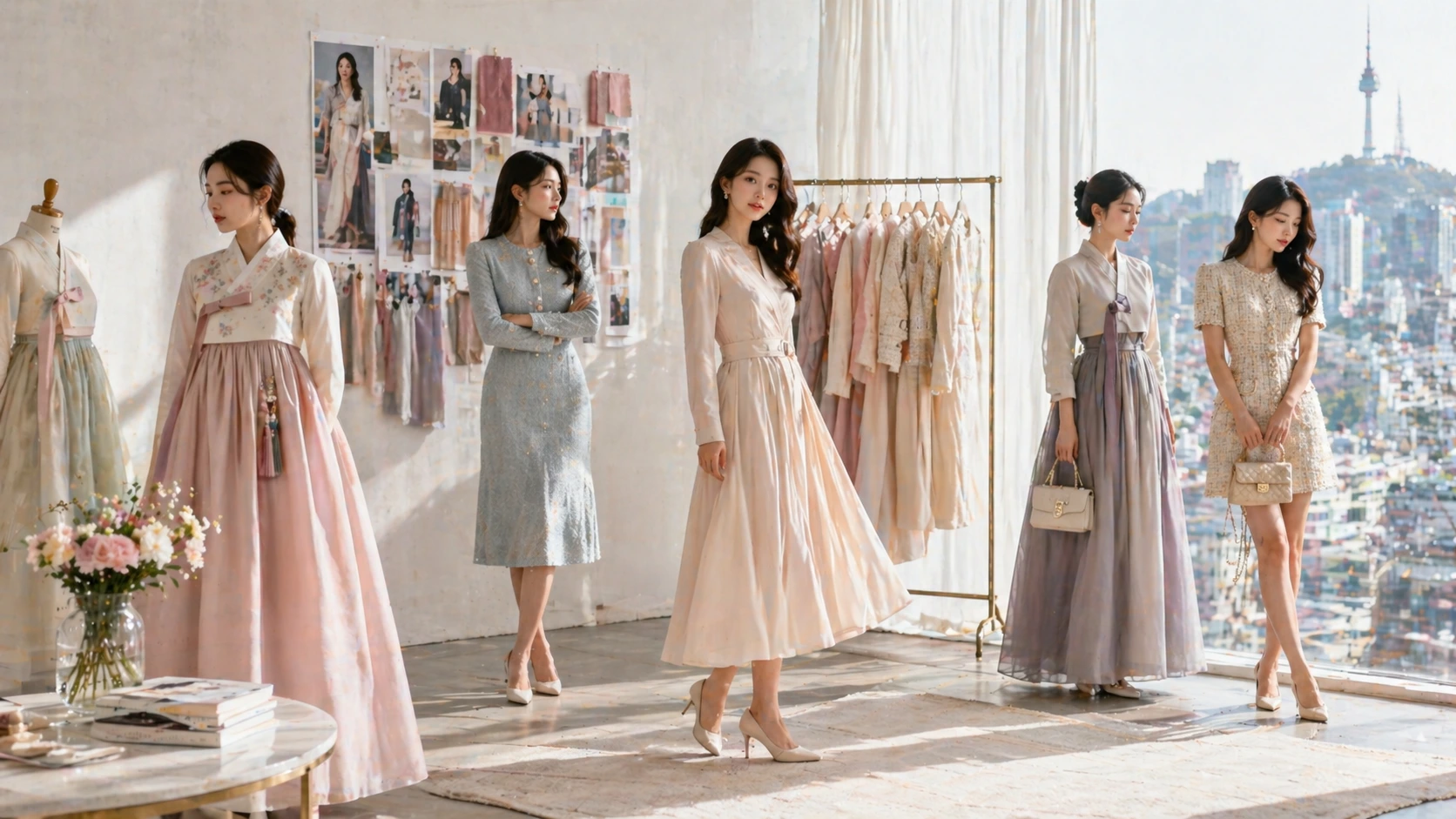
Explore 10 iconic Korean dress styles, from traditional hanbok and modern reinterpreted designs to chic tweed minis and elegant, minimalist A-line midi or shirt dresses.
Korean fashion has become globally admired for its ability to balance softness, structure, trend awareness, and cultural identity. Seoul’s fashion scene is widely recognized for being trend-sensitive, visually polished, and highly aware of both global fashion and local style codes. Vogue’s recent coverage of Seoul also describes the city as a fast-moving luxury and fashion market shaped by discovery, authenticity, and a digitally native generation.
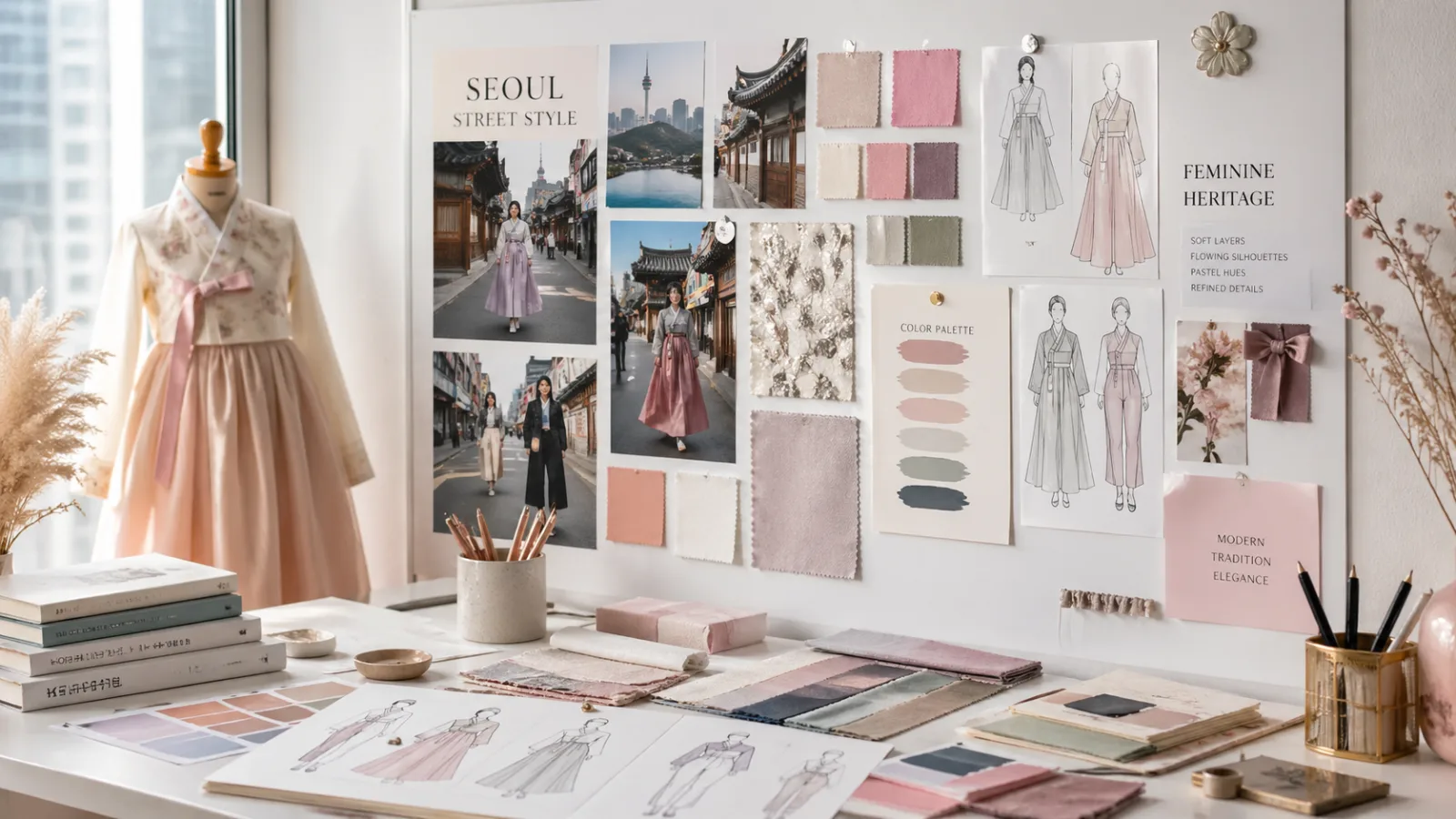
When people search for the top Korean dresses, they are often looking for more than one thing. Some want the timeless beauty of hanbok, Korea’s traditional dress. Others are looking for modern Korean fashion dresses inspired by K-drama styling, Seoul street style, or elegant contemporary brands. The good news is that the Korean dress style is not limited to one silhouette. It includes traditional elegance, modern reinterpretation, romantic dresses, sleek city looks, and soft feminine shapes that feel current without losing charm.
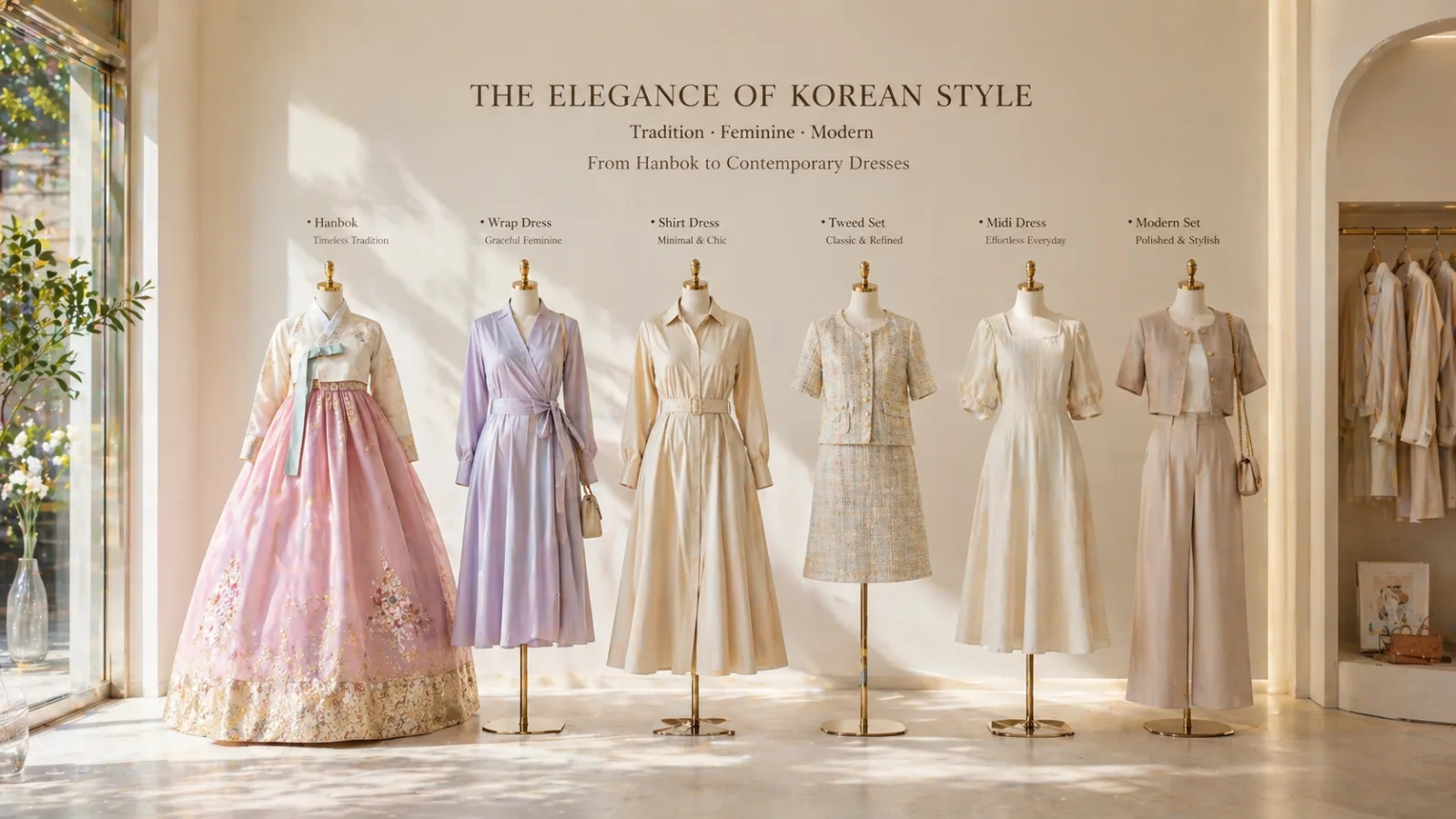
This guide explores 10 Korean dress styles that capture the beauty, elegance, and versatility of Korean fashion. Rather than focusing on a single shopping list, this article looks at the dress categories and style directions that best represent Korean fashion influence today. That makes it more useful whether you are a fashion lover, a designer, a boutique owner, or simply someone looking for Korean outfit inspiration.
What makes Korean dresses so appealing?
Korean dresses are appealing because they often combine elegance with wearability. Traditional Korean clothing, especially hanbok, is known for graceful lines, soft volume, and a strong sense of cultural beauty. Korea’s official tourism resources continue to present hanbok as a central part of Korean visual identity, while modern hanbok brands and shops increasingly offer updated versions for everyday life and special occasions.
At the same time, modern Korean fashion tends to favor:
- clean silhouettes
- soft femininity
- refined layering
- subtle romantic details
- polished everyday styling
- trend-aware but wearable shapes
That is why Korean dresses often feel both stylish and approachable. They can look delicate and elegant without becoming overly formal, and they often photograph beautifully because of their attention to shape, movement, and color.
1. Traditional Hanbok
The most iconic Korean dress is, of course, the hanbok. It is the traditional Korean dress and remains one of the most beautiful garments in world fashion culture. Korea’s official tourism resources continue to highlight hanbok as an important cultural experience, especially at major heritage sites and historical destinations.
A traditional hanbok is known for:
- a graceful, voluminous skirt
- a short fitted jacket called the jeogori
- soft curves and elegant proportions
- beautiful color combinations
- movement that feels fluid and ceremonial
Hanbok remains one of the best Korean dress choices for:
- weddings
- cultural events
- formal portraits
- festivals
- traditional celebrations
Its timeless appeal comes from the way it creates elegance through line and proportion rather than tight structure.
2. Modern Hanbok
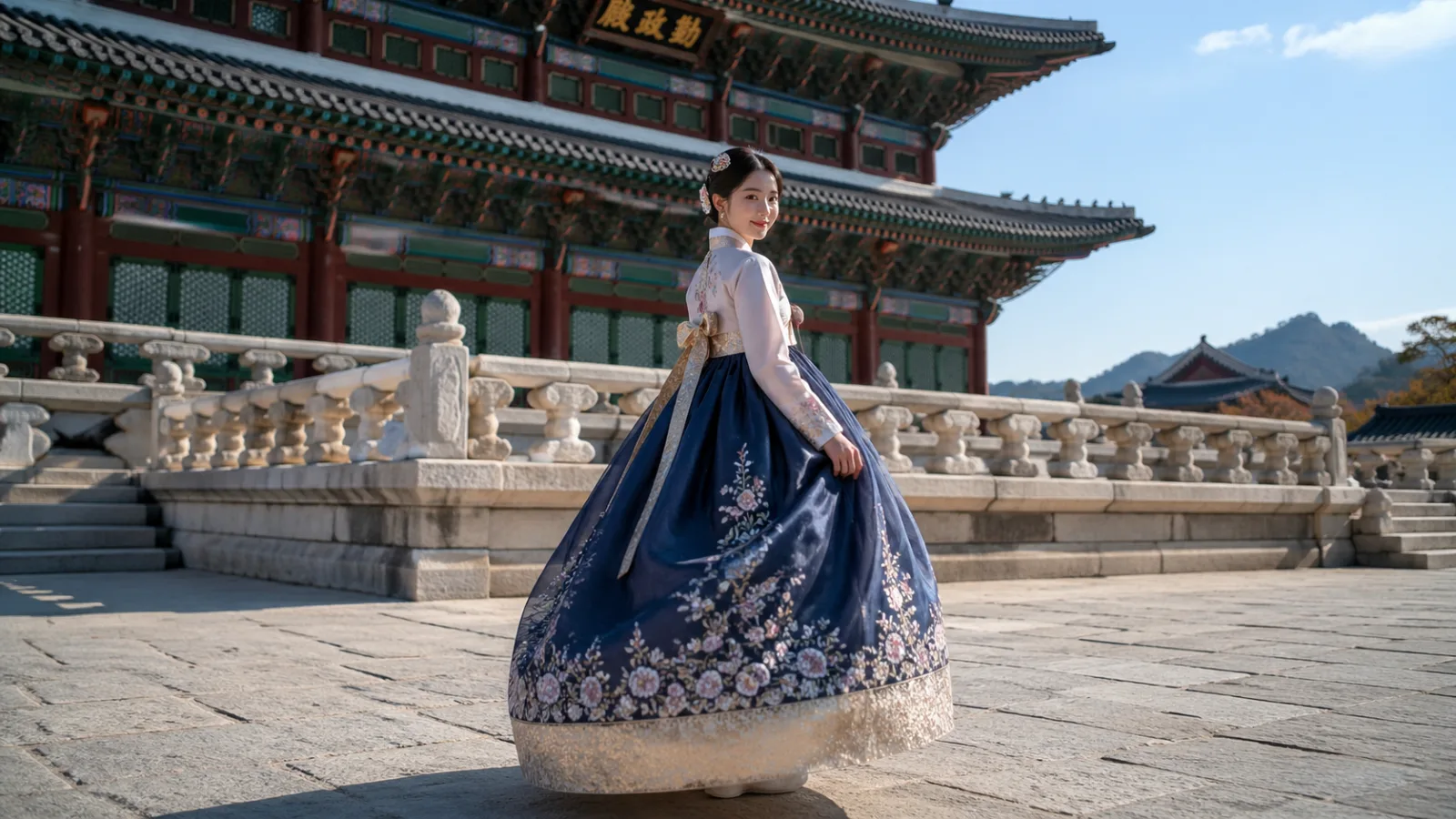
Modern hanbok, sometimes called modified or contemporary hanbok, is one of the most important Korean fashion developments. Vogue reported years ago that hanbok had made a meaningful comeback in Seoul street style, especially among younger generations looking for ways to make traditional dress feel current. Korea’s official tourism sources also describe modified hanbok as more practical for everyday life while still preserving traditional beauty.
Modern hanbok usually features:
- simpler construction
- easier movement
- softer daily-wear fabrics
- more subtle traditional references
- cleaner color palettes
- hybrid silhouettes that blend East and West
This style is ideal for people who love Korean heritage but want a dress they can wear more naturally in modern settings.
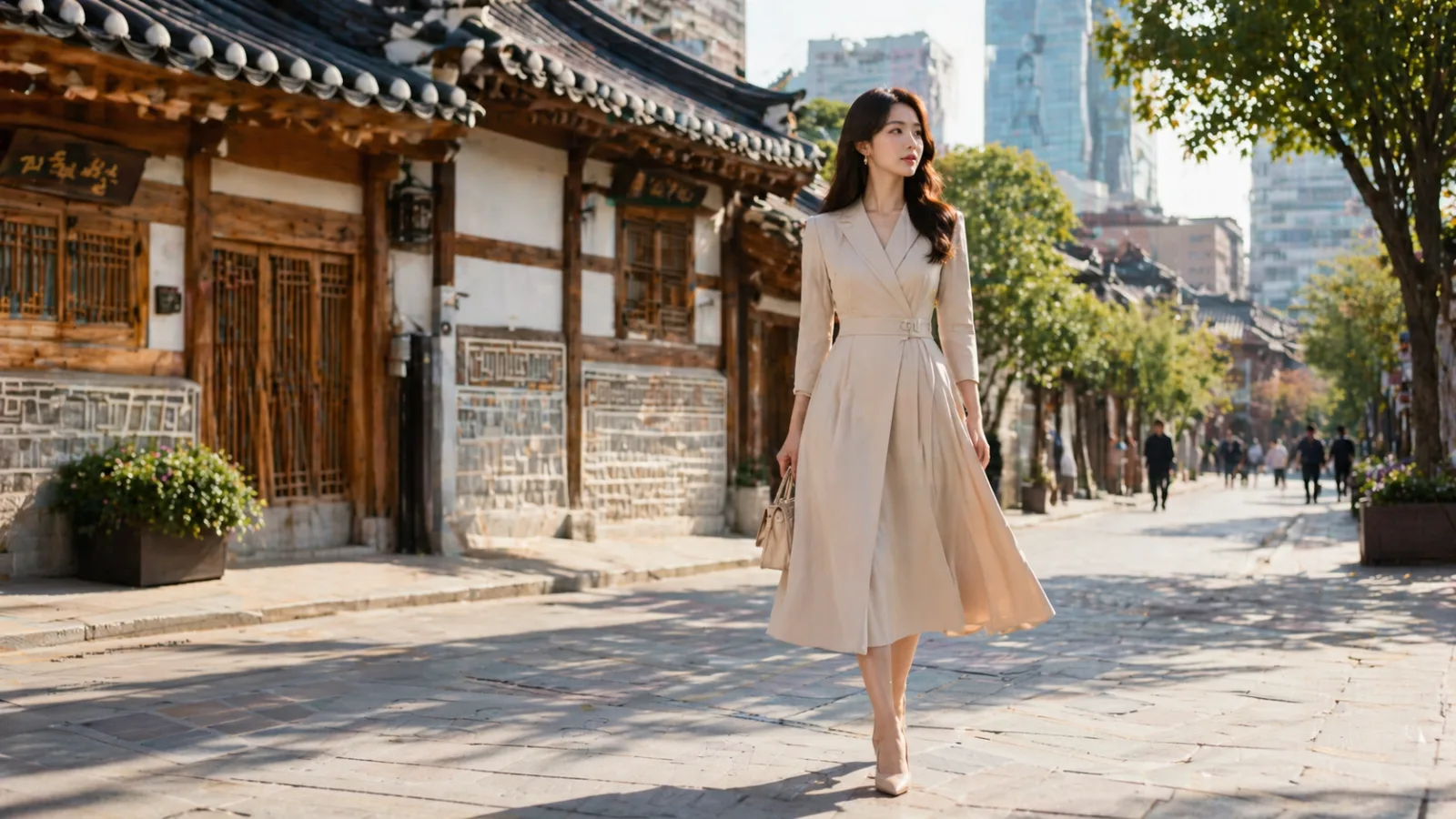
3. Korean A-Line Midi Dresses
One of the most wearable Korean dress styles is the A-line midi dress. Korean fashion often favors silhouettes that feel neat, feminine, and flattering without being overly body-conscious. The A-line midi fits that perfectly.
Why it works so well:
- it feels polished and modest
- it suits casual and semi-formal dressing
- it creates soft movement
- it works in many fabrics and seasons
In Korean fashion styling, an A-line midi dress often looks especially elegant when paired with:
- simple flats or low heels
- a cropped cardigan
- a clean shoulder bag
- soft neutral or pastel tones
This kind of dress captures the quiet sophistication that many people associate with modern Korean style.
4. Romantic Floral Dresses
Romantic floral dresses are a strong part of modern Korean fashion, especially in spring and summer. They fit naturally with Korea’s broader preference for soft femininity, graceful movement, and visually delicate styling.
A Korean-style floral dress often includes:
- smaller or softer floral motifs
- light chiffon or airy fabric
- puff sleeves or gathered shoulders
- midi or ankle length
- a gentle waistline rather than harsh structure
These dresses are popular because they feel:
- dreamy
- elegant
- youthful without looking childish
- very photogenic
If you want a Korean dress style that feels instantly pretty and easy to wear, a romantic floral dress is one of the best options.
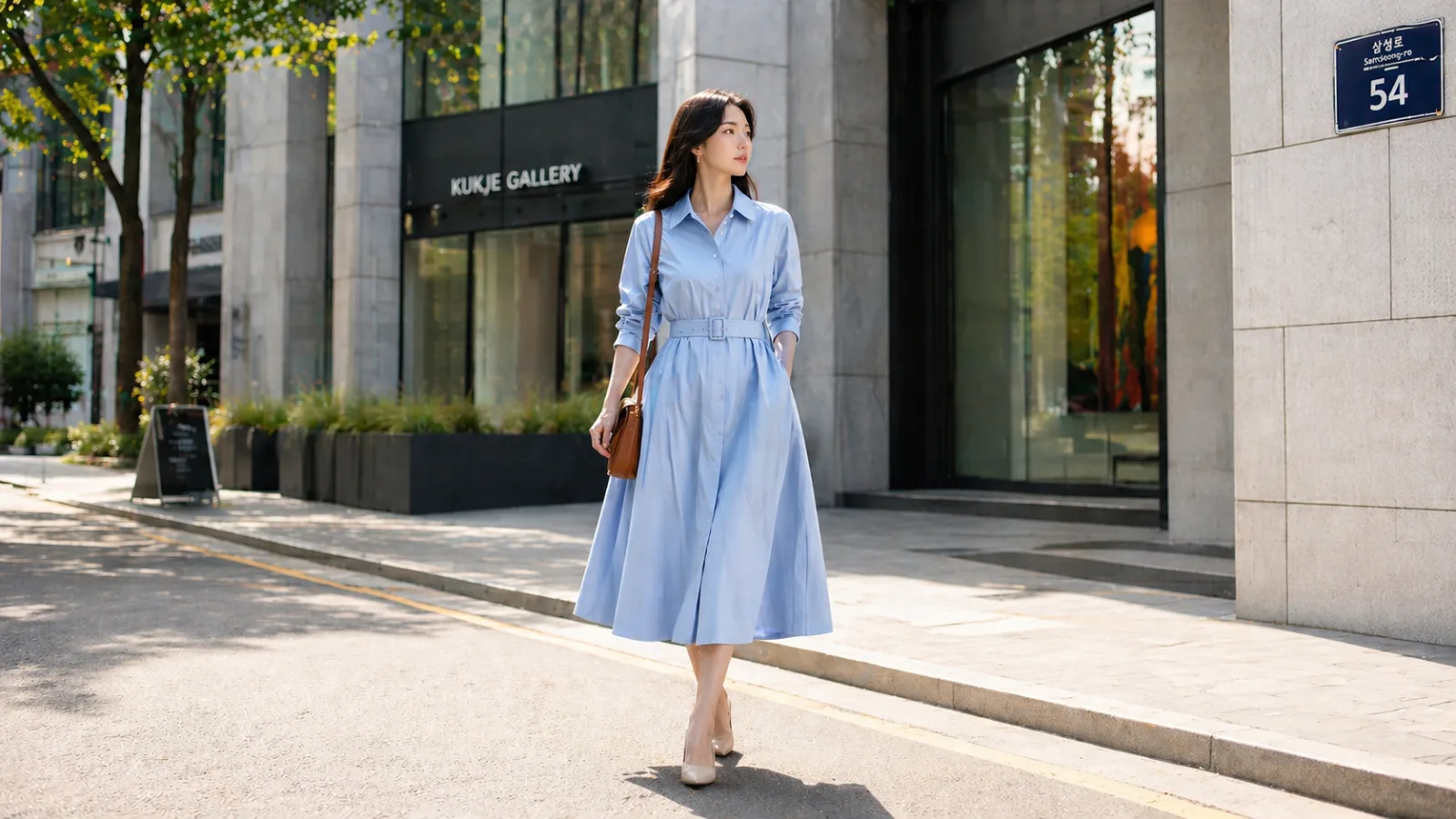
5. Shirt Dresses with Clean Structure
Korean fashion is often strongest when it combines softness with neat structure. The shirt dress reflects that balance very well. It is simple, refined, and easy to style for daily wear.
A Korean-style shirt dress often features:
- a crisp collar
- a longer hemline
- a soft waist tie or belt
- subtle volume in the skirt or sleeve
- clean monochrome or muted colors
This is one of the most versatile Korean dress styles because it works for:
- office wear
- casual city looks
- brunch outfits
- travel wardrobes
- smart minimalist styling
It also fits the polished, understated side of Seoul fashion very well.
6. Slip Dresses and Soft Layering Dresses
Vogue once pointed to boudoir-inspired slip dressing as a notable Seoul street-style direction, showing how Korean fashion can make softer, more intimate silhouettes feel stylish in everyday life.
In Korean fashion, slip dresses are often styled in a more layered and wearable way than in some Western fashion contexts. Instead of being worn as a stand-alone statement, they may be paired with:
- fitted tees
- sheer blouses
- cropped knits
- oversized shirts
- lightweight jackets
This creates a look that feels:
- elegant
- soft
- youthful
- fashion-forward without being too revealing
A Korean slip dress look works especially well in satin, matte silk-like fabrics, or soft neutrals.
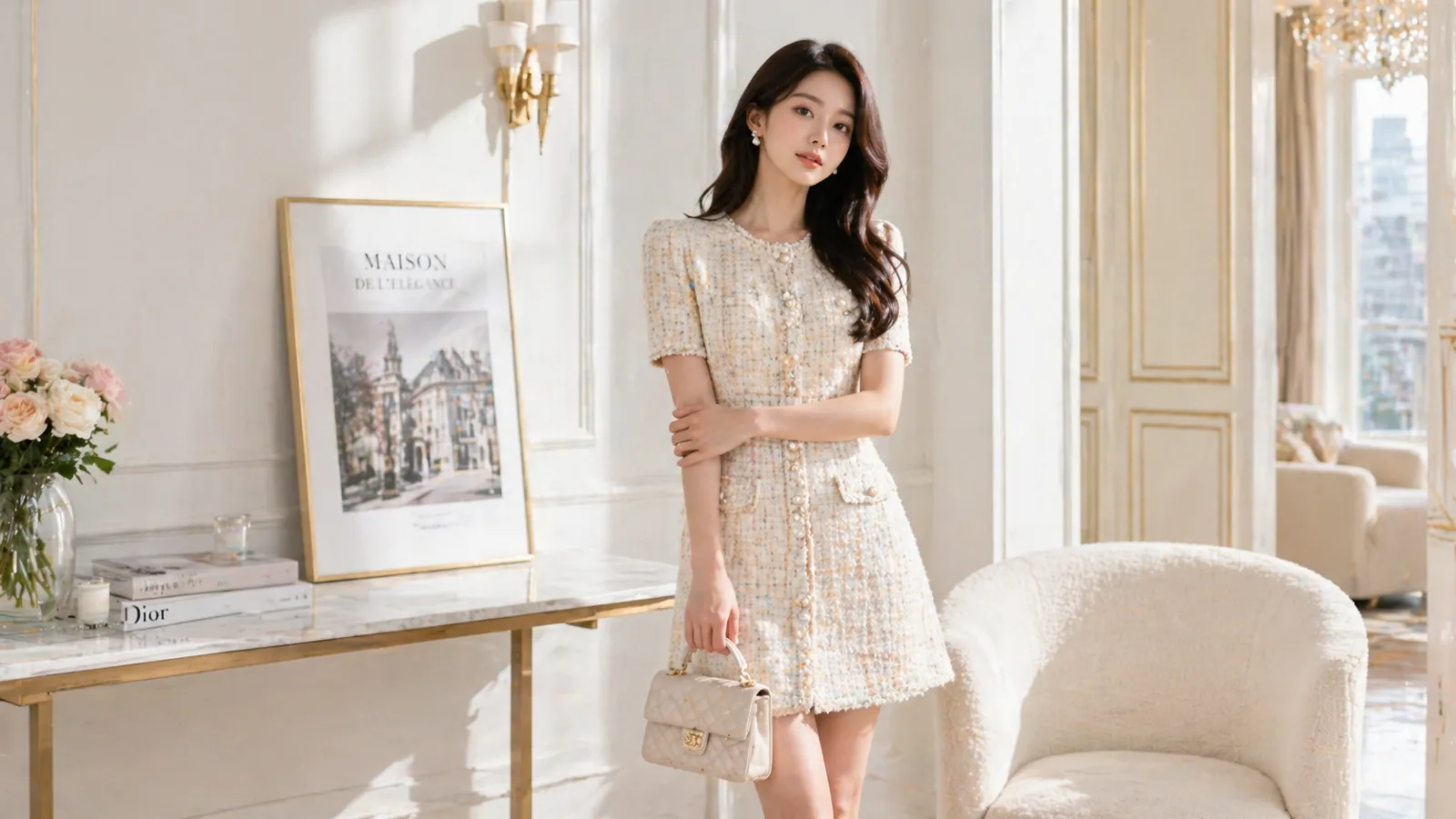
7. Tweed Mini Dresses
The tweed mini dress has become one of the clearest dress categories linked to polished Korean fashion, especially through K-drama styling and luxury-inspired contemporary looks. It brings together elegance, structure, and a youthful high-end mood.
Common details include:
- short structured silhouette
- textured tweed fabric
- decorative buttons
- pocket detailing
- fitted waist or clean tailored line
- refined neutral or pastel color palette
Why it remains popular:
- it feels polished and expensive
- it photographs well
- it works for fashion-forward daywear
- it carries a soft luxury mood without full formalwear
For anyone looking for a Korean dress style with a slightly more elevated city look, this is a strong option.
8. Knit Dresses with Soft Minimalism
Knit dresses fit beautifully into Korean fashion because they support one of its most important qualities: understated elegance. Instead of relying on loud prints or dramatic cuts, Korean-style knit dresses often create beauty through softness, fit, and tone.
Key features often include:
- ribbed or fine-gauge knit
- body-skimming but not overly tight shape
- long sleeves or sleeveless clean cuts
- midi length
- soft neutral palette like cream, taupe, gray, or black
This kind of dress is perfect for:
- autumn and winter wardrobes
- minimalist styling
- quiet luxury looks
- everyday elegance
It is also one of the easiest Korean dress styles to adapt across age groups and personal styles.
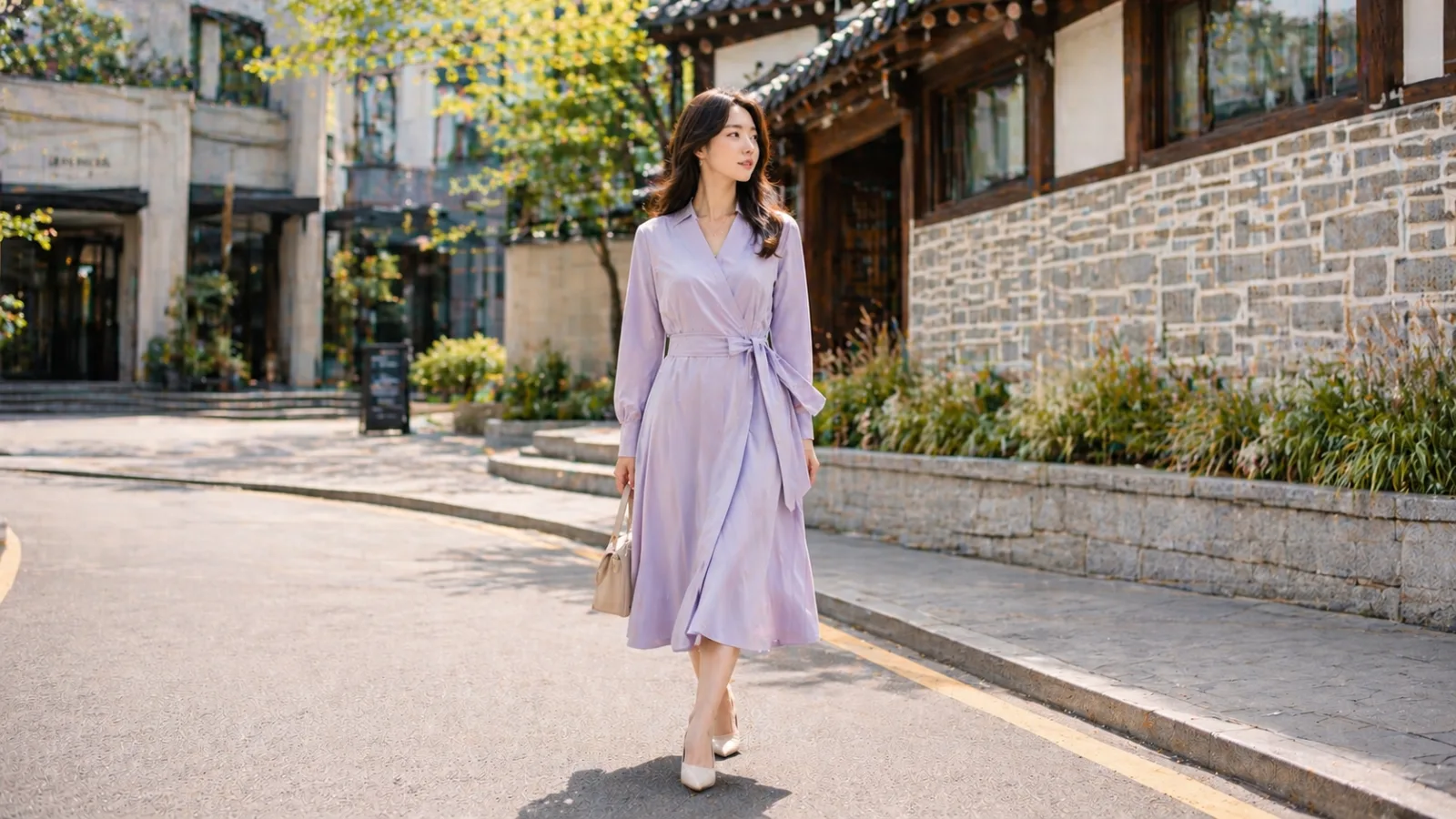
9. Wrap Dresses with Feminine Ease
Wrap dresses are not uniquely Korean in origin, but they fit Korean fashion aesthetics extremely well because they combine:
- soft femininity
- comfortable fit
- graceful waist definition
- movement without stiffness
A Korean-inspired wrap dress often feels lighter and more refined than a heavily dramatic version. It may feature:
- small floral prints
- soft solids
- midi hems
- gently puffed sleeves
- more delicate draping
This is one of the best Korean dress choices for someone who wants elegance that feels easy rather than highly styled.
10. Hanbok-Inspired Couture and Occasion Dresses
One of the most beautiful categories in Korean dress design is the hanbok-inspired occasion dress. This style takes elements from traditional hanbok and reinterprets them in formalwear, bridalwear, or couture-inspired evening fashion.
Korea tourism resources highlight designers and hanbok specialists who blend traditional Korean and Western design, including stores and creators known for wedding and party dresses with hanbok influence.
These dresses may include:
- hanbok-style volume
- structured ribbon or wrap elements
- curved bodice lines
- wide sleeves
- embroidered nature motifs
- soft traditional color inspiration
This category is especially powerful because it shows how Korean dress culture can evolve while still honoring its roots.
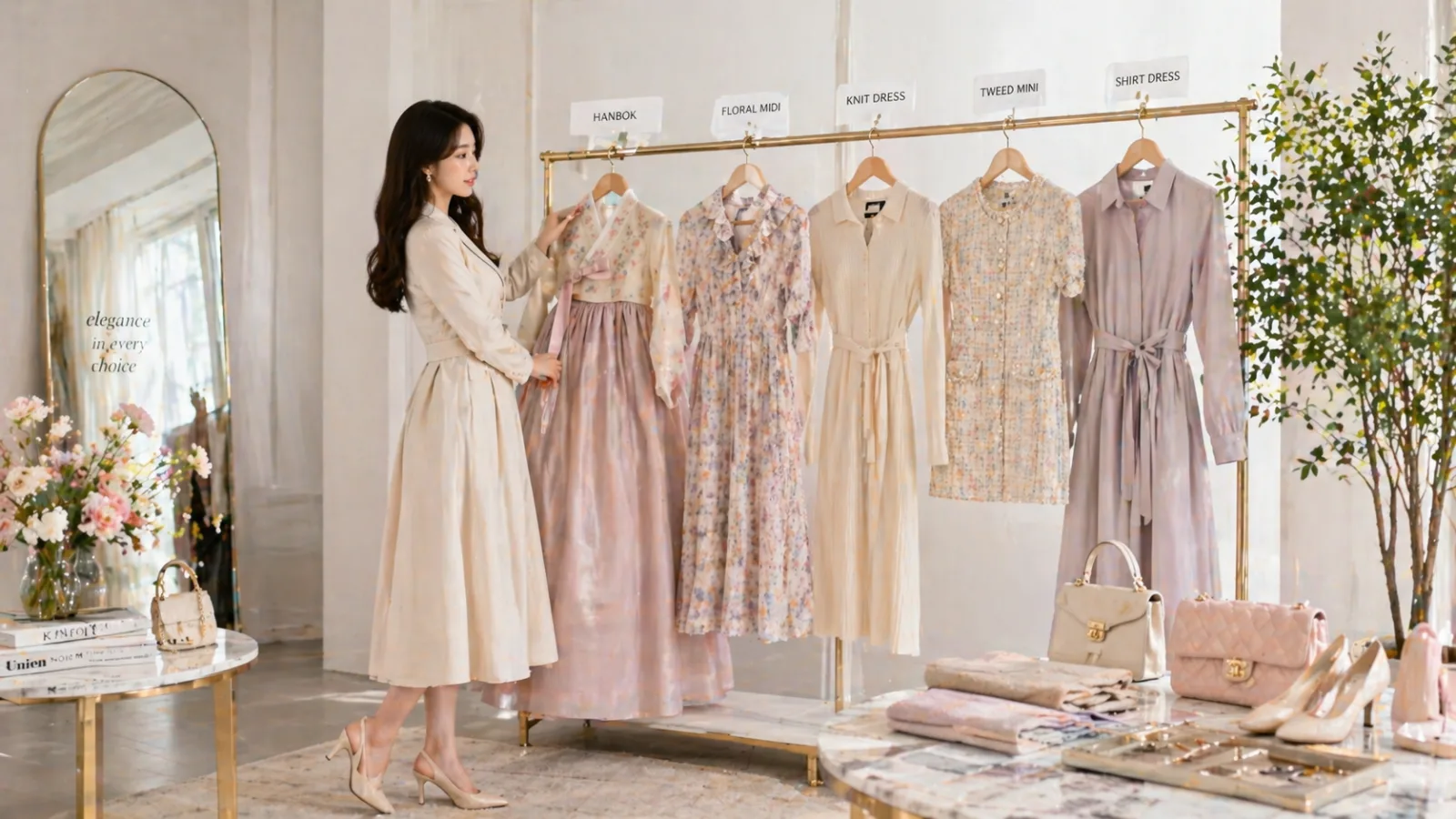
How to choose the right Korean dress style
The best Korean dress for you depends on what you want from the look.
- Choose traditional hanbok if you want cultural beauty and formal elegance.
- Choose modern hanbok if you want heritage with everyday practicality.
- Choose A-line midi or shirt dresses if you want clean daily wear.
- Choose floral or wrap dresses if you want softness and feminine charm.
- Choose tweed mini dresses if you want polished K-drama-inspired style.
- Choose knit dresses if you prefer minimalist elegance.
- Choose hanbok-inspired couture dresses if you want statement occasionwear with Korean identity.
The beauty of Korean fashion is that it offers both timeless tradition and modern versatility.
Why Korean dresses continue to influence global fashion
Korean dresses continue to attract global attention because they offer a rare mix of:
- cultural richness
- refined femininity
- wearable silhouettes
- visual softness
- trend awareness
Vogue’s coverage of hanbok revival and Seoul fashion, along with Korea tourism’s emphasis on both traditional and modified hanbok, shows that Korean dress culture is not static. It continues to evolve through both heritage and modern style.
That ongoing evolution is what makes Korean dresses so compelling. They are not only beautiful. They are adaptable.
ApparGlobal
Many clothing brands develop dress collections more successfully when they work with manufacturing partners that understand fabric behavior, fit development, trim control, sample refinement, and quality checkpoints. Companies such as ApparGlobal help fashion brands align design direction, sourcing decisions, product construction, and bulk production expectations so elegant dress concepts can move from sketch to manufacturing with more structure, stronger consistency, and better market readiness.
Conclusion
Korean dresses are beautiful because they express elegance in different ways. Traditional hanbok brings cultural grace and timeless identity. Modern hanbok makes that beauty more wearable. Floral dresses, shirt dresses, tweed minis, knit dresses, wrap silhouettes, and hanbok-inspired occasionwear show how Korean fashion blends softness, refinement, and trend awareness into styles people around the world continue to admire.
If you are exploring Korean fashion for the first time, the best place to start is not with only one dress. It is with the full range. Korean style is powerful precisely because it moves so naturally between heritage and modernity. That is what gives these dresses their lasting charm.
FAQs
What is the most traditional Korean dress?
The hanbok is the traditional Korean dress and remains the most iconic Korean garment.
What is modern hanbok?
Modern hanbok is an updated version of traditional hanbok designed to be more practical for everyday wear while keeping Korean design influence.
What are the most popular Korean dress styles today?
Popular Korean dress styles include modern hanbok, floral midi dresses, shirt dresses, tweed mini dresses, knit dresses, wrap dresses, and hanbok-inspired occasion dresses. Korean fashion also continues to reflect Seoul’s trend-sensitive style culture.
Why are Korean dresses so elegant?
They often combine graceful silhouette, refined color, soft styling, and a balance between femininity and structure. Traditional hanbok especially contributes to this image of elegance.
Are Korean dresses only traditional?
No. Korean dresses include both traditional styles like hanbok and modern fashion dresses influenced by Seoul street style, contemporary design, and K-fashion aesthetics.