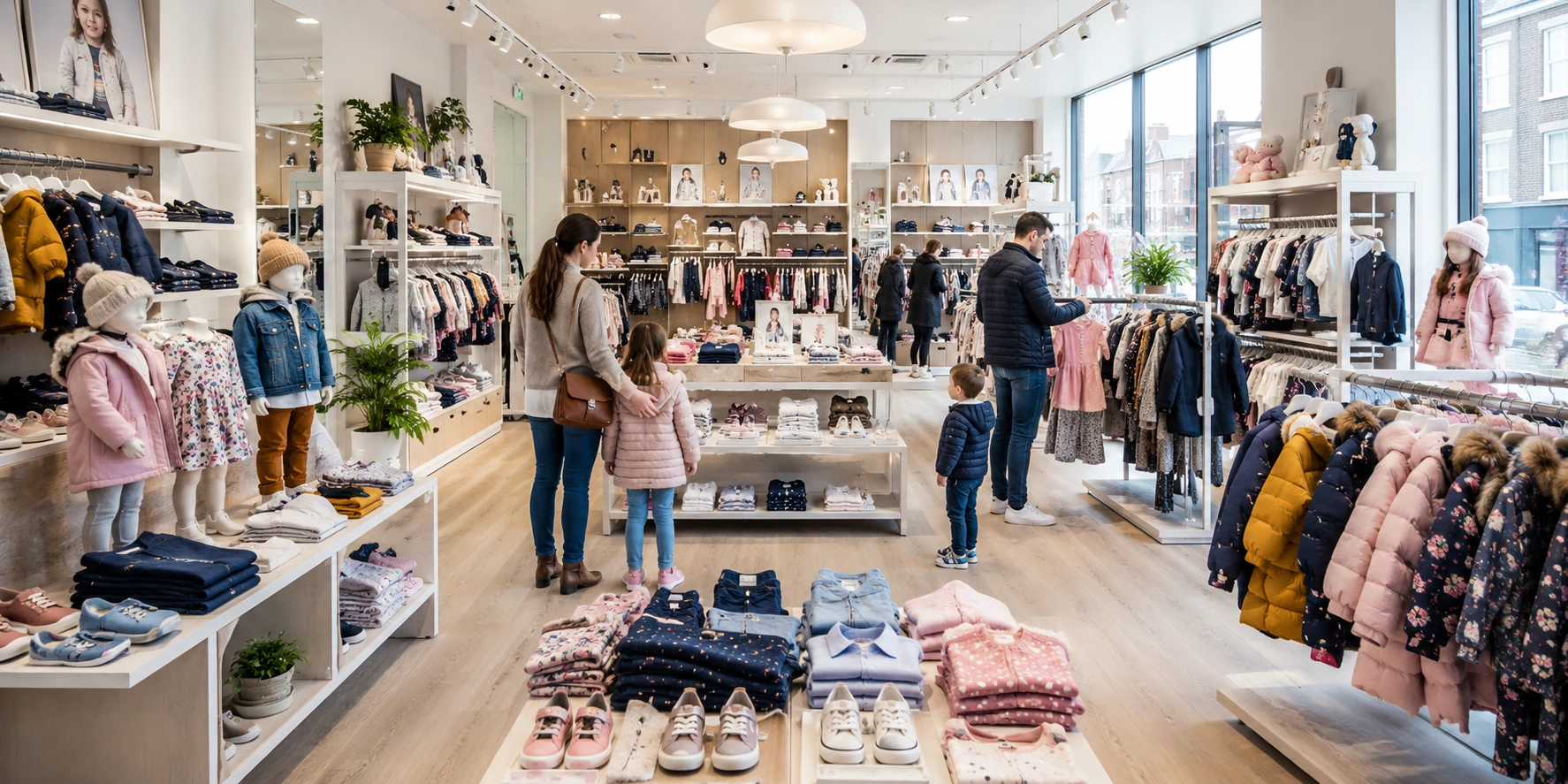
Finding the right kids clothing brands in the UK can feel simple at first, but any parent knows it becomes more complicated once real life gets involved. Children grow quickly, play hard, change sizes faster than expected, and need different outfits for school, nursery, weekends, holidays, parties, sports, and cold British weather. Parents are not just looking for cute clothes. They need comfort, durability, value for money, easy washing, practical sizing, and styles children actually want to wear.
The UK kidswear market offers a wide range of options, from affordable supermarket clothing to premium childrenswear, high street fashion, organic cotton brands, occasionwear specialists, and everyday essentials. Some brands are better for school uniforms. Some are better for babies and toddlers. Some work well for fashion-conscious older kids. Others are loved for soft fabrics, playful prints, sustainable materials, or reliable multipacks.
This guide covers the top 10 kids clothing brands in the UK and explains what makes each one useful for parents. Instead of only listing popular names, we will look at what each brand is best for, what age groups they suit, what parents should consider before buying, and how to choose the right brand for different needs.
Whether you are shopping for newborn basics, toddler outfits, school clothes, weekend wear, party dresses, smart shirts, kids’ coats, organic cotton pyjamas, or affordable everyday clothing, this guide will help you make a more confident choice.
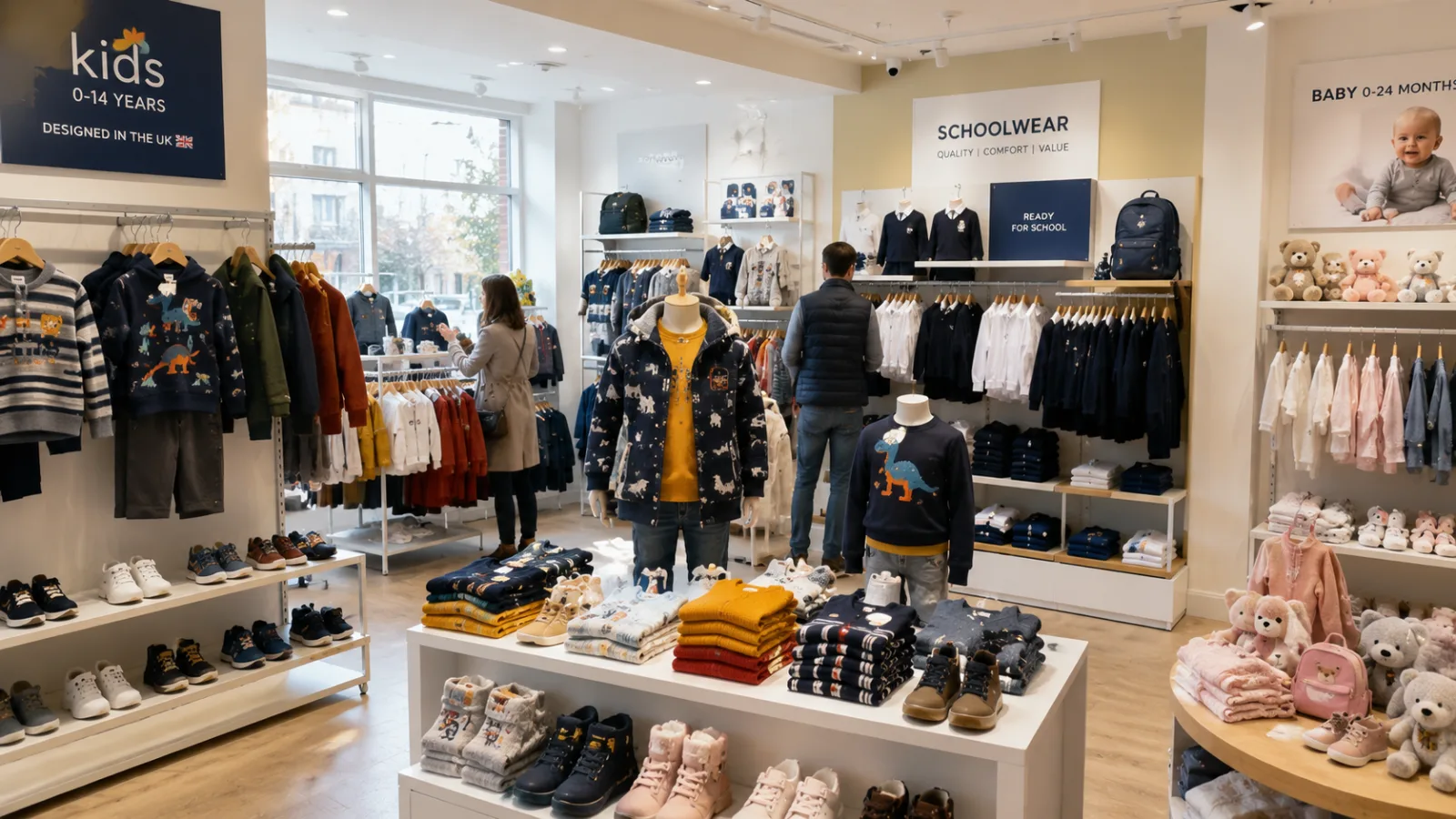
What Parents Should Look for in Kids Clothing Brands
Before choosing the best kids clothing brand, parents should think beyond style. Children’s clothes need to perform well in daily life. A beautiful outfit is not useful if it shrinks after one wash, feels uncomfortable, restricts movement, or becomes too worn after a few weeks.
The first thing to consider is comfort. Kids need soft fabrics, flexible fits, breathable materials, and clothes that do not irritate the skin. This is especially important for babies, toddlers, and children who are sensitive to rough seams, tight waistbands, itchy labels, or stiff fabrics.
Durability is another major factor. Children run, climb, spill food, sit on floors, play outdoors, and wear clothes harder than adults. Good kidswear should survive repeated washing and everyday activity. Reinforced knees, quality stitching, strong zips, secure buttons, and colourfast fabrics can make a big difference. Parents should also think about sizing. Some brands run small, some are more generous, and some offer better fits for tall, slim, or broader children. When shopping online, size guides and customer reviews can be very helpful.
Value matters too. The cheapest clothing is not always the best value if it wears out quickly. At the same time, premium clothing is not always necessary for everyday use. A smart parent wardrobe often mixes budget basics, durable schoolwear, a few higher-quality coats or shoes, and special occasion outfits.
Finally, parents should consider purpose. A brand that is excellent for baby sleepsuits may not be the best for school trousers. A trendy brand may be great for older kids but less practical for nursery. The best choice depends on the child’s age, lifestyle, season, and how often the clothing will be worn.
1. Next: Best for Everyday Kidswear and Reliable Variety
Next is one of the most popular kids clothing brands in the UK because it offers a broad range of children’s clothing, shoes, schoolwear, babywear, nightwear, coats, accessories, and occasion outfits. Its official kids section highlights thousands of products online, with next-day delivery and free returns mentioned on the site, making it a convenient choice for busy parents.
One of the biggest strengths of Next is variety. Parents can shop for babies, toddlers, younger children, older children, and teens in one place. This is useful for families with more than one child because it reduces the need to shop across multiple stores.
Next is particularly strong for everyday clothing. T-shirts, leggings, jeans, joggers, dresses, hoodies, pyjamas, coats, and school basics are usually easy to find. The brand also does well with seasonal clothing, such as summer outfits, winter coats, Christmas jumpers, holiday wear, and smart casual pieces.
For parents, Next often feels like a safe middle-ground option. It is not the cheapest brand, but it generally offers dependable quality, practical designs, and a wide range of styles. It is also a strong choice for children who need both everyday basics and smarter outfits. Next is a good option for parents who want reliable clothing without spending too much time comparing different brands. The range is large enough to cover most everyday needs, but still familiar and easy to shop.
Best for: Everyday kidswear, school basics, baby clothes, shoes, coats, and family shopping convenience.
2. Marks & Spencer: Best for Quality Basics and Schoolwear
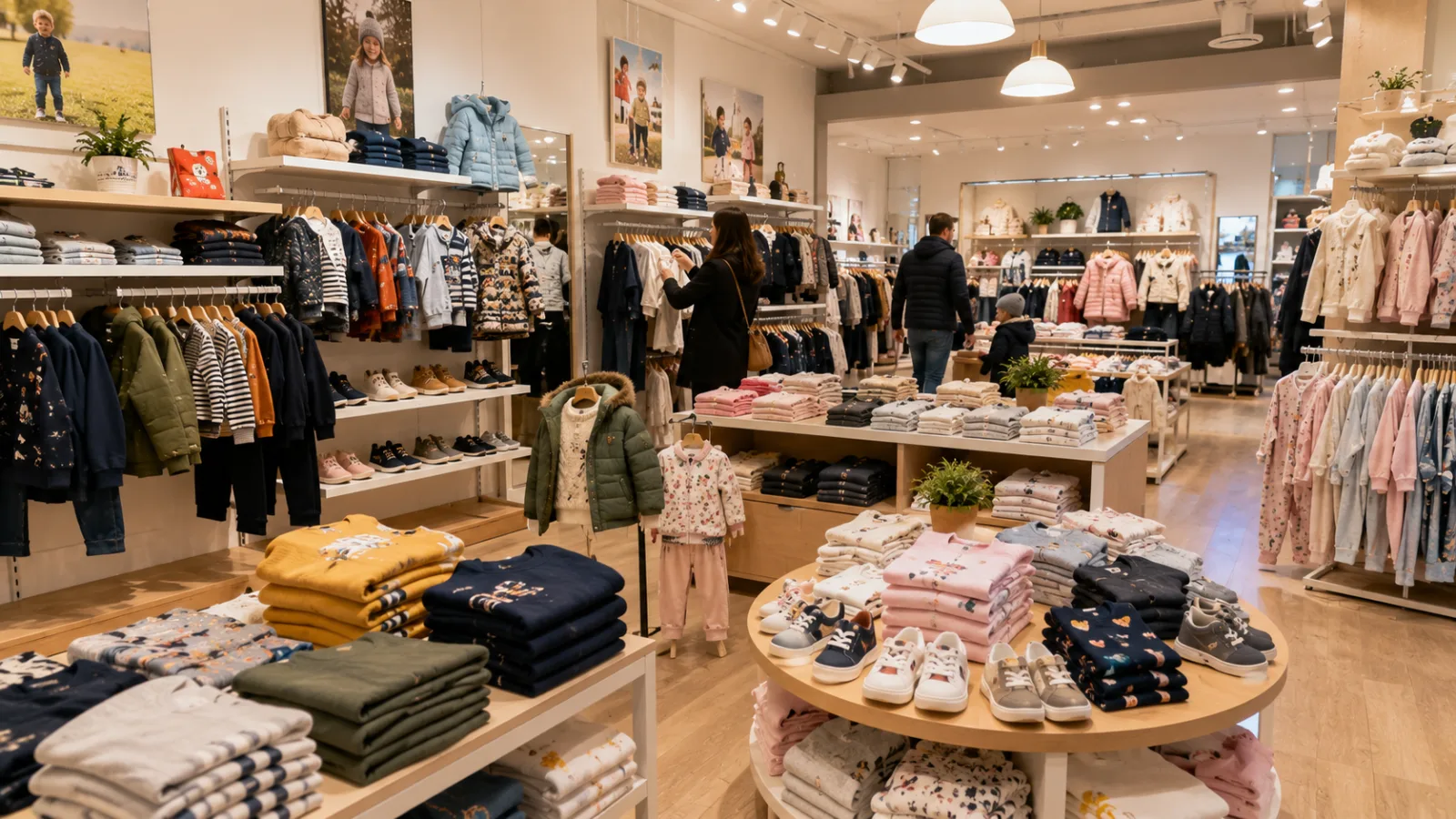
Marks & Spencer is a trusted name for children’s clothing in the UK, especially for parents who care about comfort, quality, and practical everyday wear. M&S describes its kids’ clothing collection as suitable for everyday essentials and special occasions, with girls’ tops, skirts, trousers, and wider kidswear categories available online.
M&S is especially popular for school uniform and basics. Many parents choose it for polo shirts, school trousers, skirts, dresses, jumpers, socks, underwear, vests, tights, and pyjamas. The brand’s kidswear often focuses on practical features, simple colours, and easy-care fabrics.
For younger children, M&S baby and toddler clothing is often known for soft fabrics, multipacks, sleepsuits, bodysuits, and simple everyday pieces. For older children, the brand offers casualwear, sportswear-inspired basics, coats, swimwear, and seasonal clothing.
One of the reasons parents return to M&S is consistency. The clothing usually feels parent-friendly rather than overly trend-focused. It works well for families who want pieces that can be washed frequently and worn repeatedly. M&S may not always be the first choice for highly fashion-led kids, but it is a strong choice for reliable wardrobe foundations. If parents are building a practical children’s wardrobe, M&S is often one of the best places to start.
Best for: Schoolwear, underwear, pyjamas, basics, baby essentials, and reliable quality. 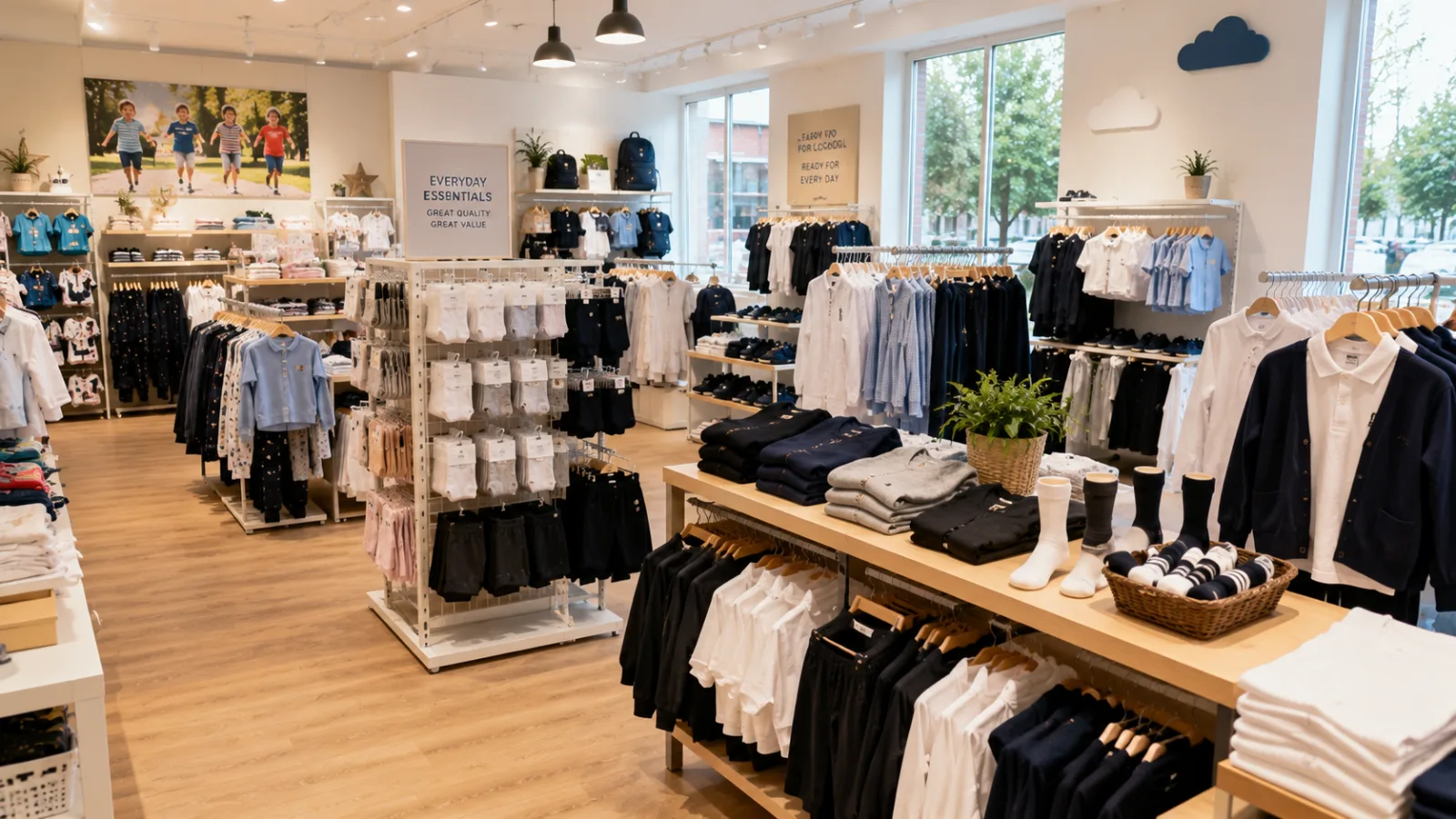
3. George at ASDA: Best for Budget-Friendly Kids Clothing
George at ASDA is a strong option for parents who want affordable kids clothing without overcomplicating the shopping process. George’s official kidswear section includes boys’ and girls’ tops, party dresses, jeans, T-shirts, and more, while its wider clothing section covers women, men, kids, homeware, baby products, and toys.
For families on a budget, George is useful because children grow quickly and often need frequent replacements. Everyday T-shirts, leggings, joggers, school clothes, socks, underwear, pyjamas, babywear, and seasonal outfits can often be found at accessible prices.
George is also practical for parents who already shop at ASDA. The ability to combine grocery shopping with kids clothing purchases can save time, especially for basics and last-minute needs. The brand is especially suitable for nursery clothes, play clothes, school basics, and affordable seasonal updates.
Parents may choose George for items that children will wear heavily, stain often, or grow out of quickly.
While premium details may vary compared to higher-priced brands, George remains a very practical choice for everyday family life. It is a good brand for parents who want value, convenience, and broad availability.
Best for: Affordable everyday clothing, playwear, school basics, baby clothes, and budget family shopping.
4. Tu Clothing at Sainsbury’s: Best for Practical Supermarket Kidswear
Tu Clothing is Sainsbury’s in-house fashion brand and is a convenient option for parents who want accessible kidswear with everyday style. Tu’s official kids section includes children’s fashion, and the brand notes that Tu clothing can be found in selected Sainsbury’s stores across the UK.
Tu is especially useful for parents who want practical kids clothing while doing regular household shopping. The range often includes schoolwear, babywear, casual outfits, coats, nightwear, underwear, socks, and seasonal clothing.
One of Tu’s strengths is balancing affordability with style. The clothing is generally practical, but it often includes trend-aware colours, prints, and seasonal pieces. This makes it useful for parents who want budget-friendly clothes that still look current. For younger children, Tu can be a good source of multipacks, sleepsuits, leggings, joggers, tops, dresses, and everyday nursery clothing. For older kids, parents can often find casualwear, basics, and school items.
Tu is a strong choice for families who prefer simple, accessible shopping and want children’s clothes that work for daily routines. It may not offer the same premium feel as more expensive brands, but it delivers strong practicality for the price.
Best for: Affordable supermarket kidswear, schoolwear, baby basics, casual clothing, and seasonal value.
5. H&M Kids: Best for Trendy Affordable Basics
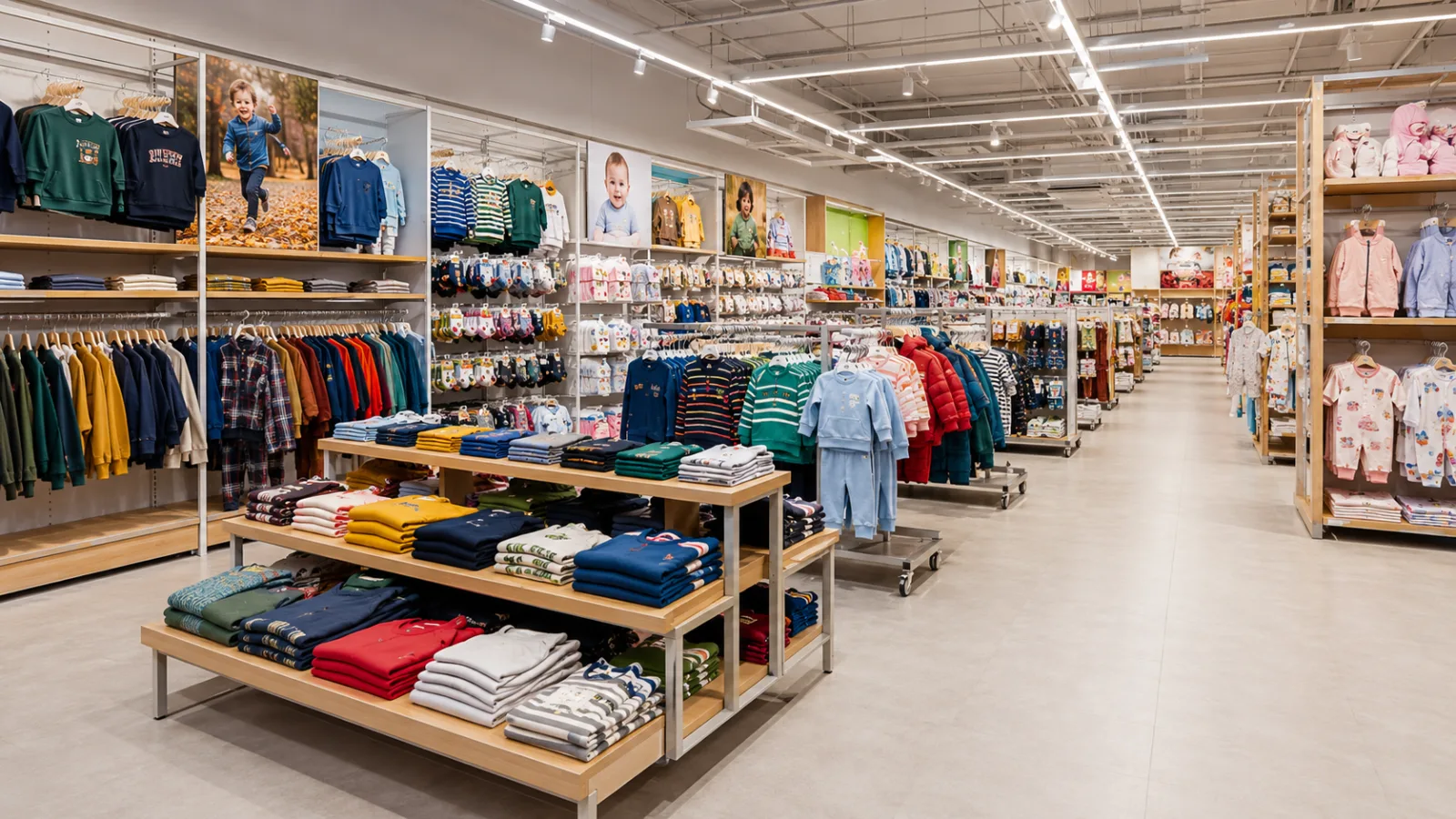
H&M Kids is a popular choice for parents who want affordable, modern, and easy-to-style clothing for babies, children, and older kids. H&M’s UK kids section includes everyday essentials, shoes, and accessories for babies and children. The brand is useful for parents who want simple basics as well as trend-aware pieces. You can usually find T-shirts, leggings, jeans, sweatshirts, dresses, skirts, shorts, coats, swimwear, underwear, socks, and accessories.
H&M Kids is especially strong for casual wardrobes. Many pieces are easy to mix and match, which helps parents build outfits without buying too many separate items. Neutral basics, playful prints, denim, tracksuits, summer clothing, and cosy winter pieces are often available.
The brand is also popular with older children who want clothes that feel more grown-up but still age-appropriate. H&M often follows broader fashion trends in a simplified way for kids, which can make it appealing to children who are beginning to care about personal style. For parents, H&M works well when building a flexible wardrobe at a reasonable price. It is good for basics, seasonal updates, and trend pieces that may not need to last for years.
Best for: Affordable trends, casual outfits, basics, denim, accessories, and older children’s everyday style.
6. Zara Kids: Best for Fashion-Forward Children’s Clothing
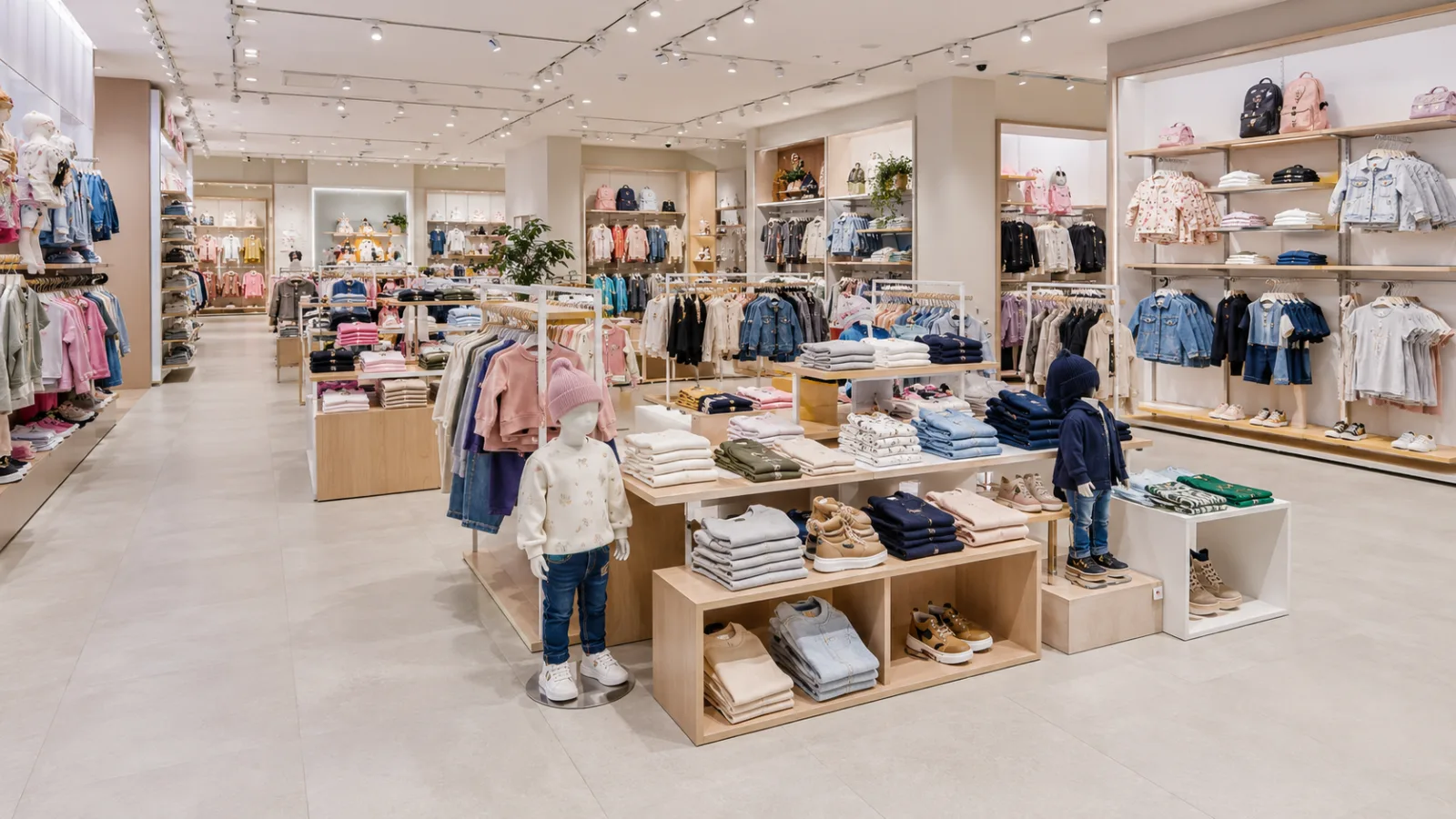
Zara Kids is a strong choice for parents who want stylish, fashion-forward clothing for children. Zara’s UK kids section features kids’ clothes, shoes, and accessories, and the site notes that its kids’ selection is updated weekly.
Zara Kids is known for modern designs, neutral palettes, stylish silhouettes, and trend-led collections. It often feels more fashion-focused than many traditional children’s clothing brands. Parents may choose Zara for smart casual outfits, coats, knitwear, dresses, shirts, trousers, occasionwear, and stylish everyday pieces.
The brand is particularly popular for older kids and parents who like a more polished or European-inspired look. It can be useful for family outings, holidays, birthdays, photoshoots, and occasions where parents want children’s clothing to look more elevated.
Zara Kids also offers baby and younger children’s pieces, but its strongest appeal is often style. The clothes can look premium and modern, although parents should still check fabric, sizing, and wash care carefully before buying. For everyday rough play, some Zara pieces may feel more style-led than heavy-duty. But for parents who want children’s outfits that look fashionable and refined, Zara Kids is one of the strongest high street options.
Best for: Fashion-forward kidswear, smart casual outfits, coats, knitwear, party looks, and stylish older children.
7. River Island Kids: Best for Trend-Led High Street Style
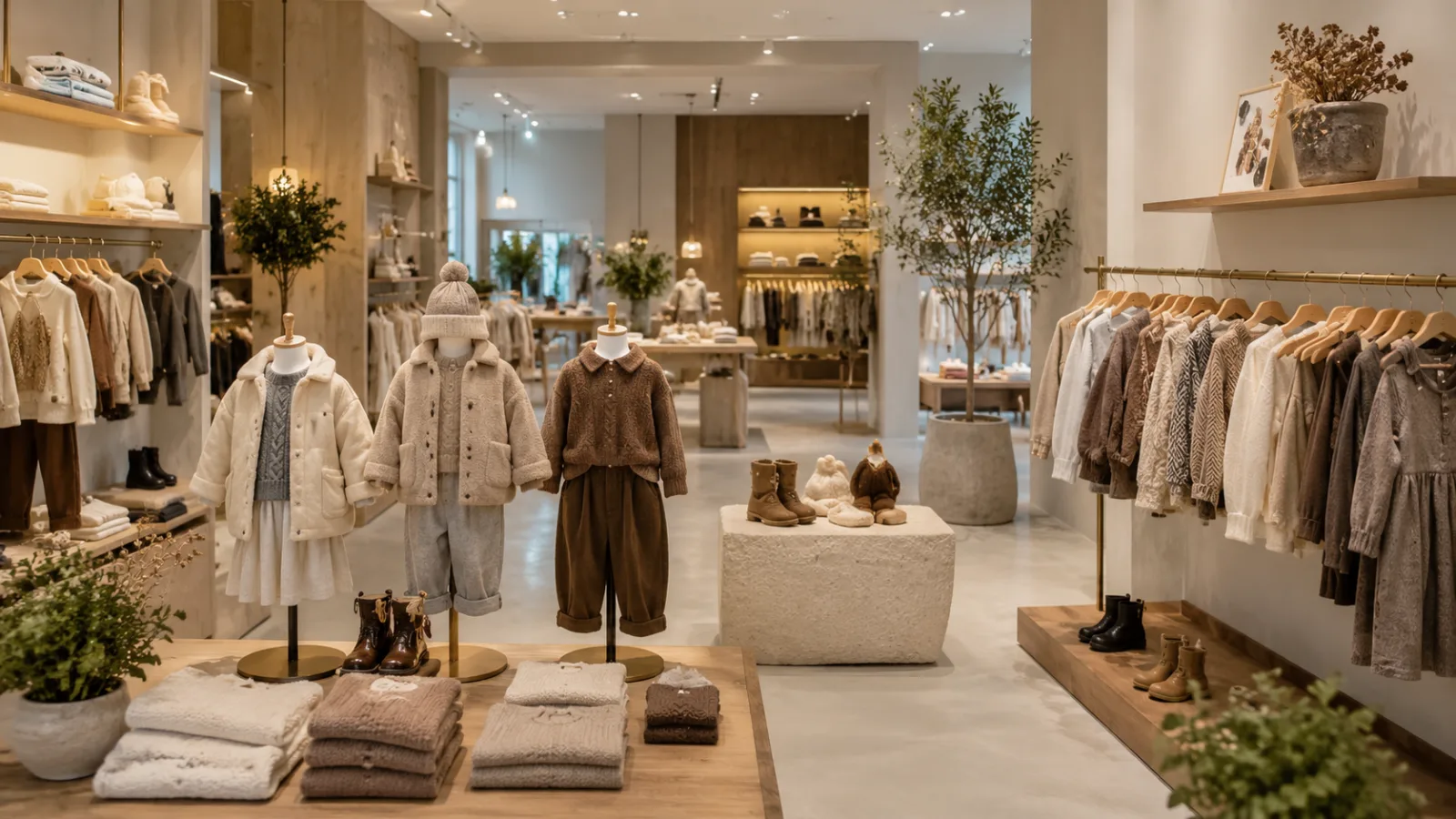
River Island Kids is a good choice for parents shopping for children who enjoy bold, trend-led clothing. The official River Island kids section includes baby, 0 to 2 years, 3 to 5 years, 5 to 8 years, 9 to 12 years, and 13 to 14 years categories, making it useful across several childhood stages.
River Island is often stronger in fashion pieces than plain basics. Parents may find partywear, statement dresses, co-ords, denim, graphic tops, jackets, shoes, sandals, and accessories. The brand is especially useful for children who want outfits with personality.
For older kids and pre-teens, River Island can be appealing because the clothing often feels closer to adult fashion trends, while still being designed for children’s sizing. This makes it useful for birthdays, holidays, family events, and weekend outfits.
Parents should consider when and where River Island makes the most sense. It may not always be the first choice for school basics or nursery clothes, but it works well for statement outfits and trend-focused wardrobes. If your child enjoys dressing up, choosing their own outfits, or wearing bold styles, River Island Kids can be a strong option.
Best for: Trend-led outfits, partywear, denim, statement pieces, shoes, and older kids’ fashion.
8. Mini Boden: Best for Colourful Premium Kidswear
Mini Boden is a well-loved UK childrenswear option for parents who like colourful, playful, and quality-focused clothing. Boden’s official site describes its women’s and childrenswear collections as joyful, colourful, timeless British fashion designed with love and made to last.
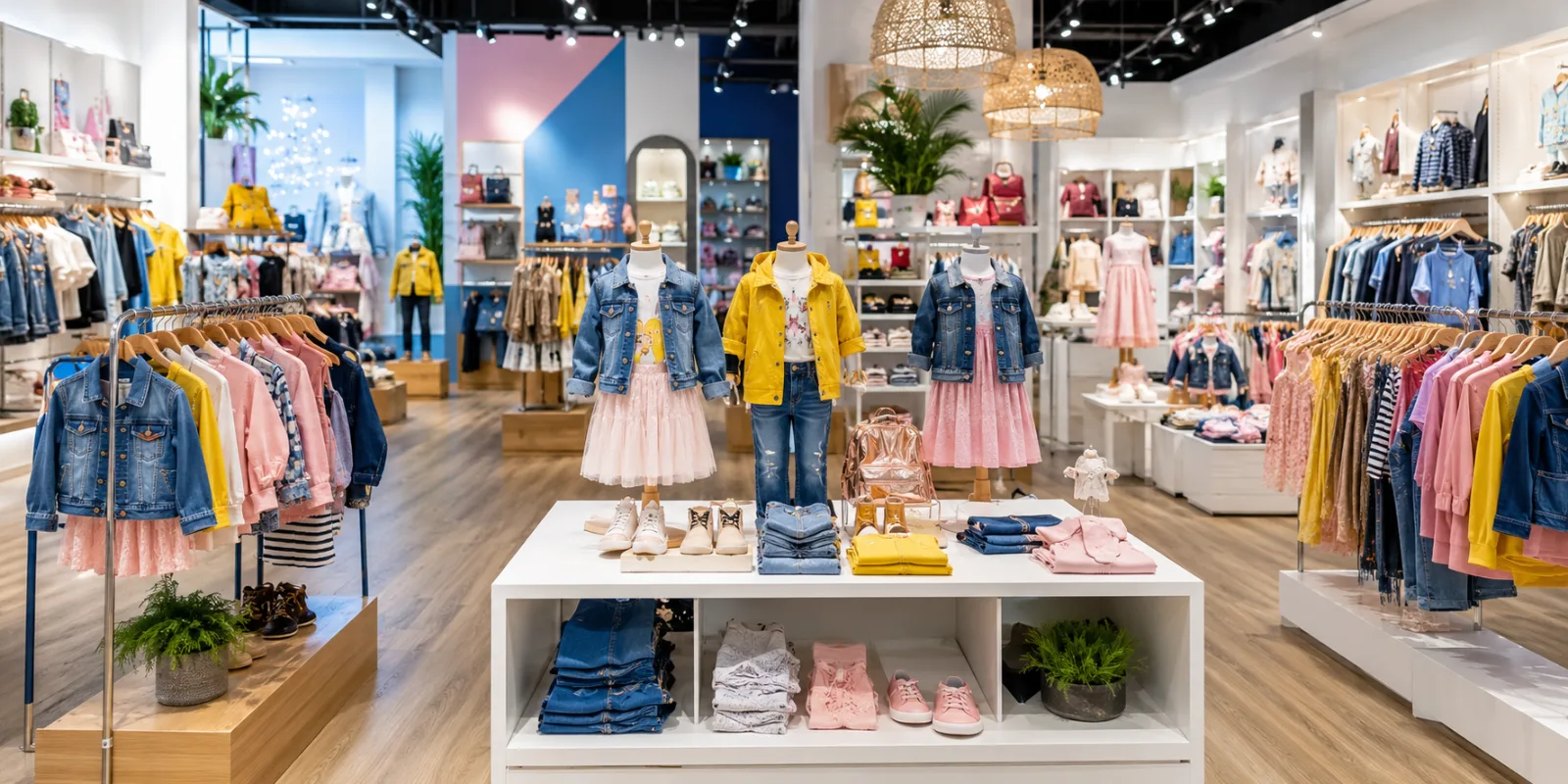
Mini Boden is especially known for bright prints, fun appliqués, stripes, characterful designs, soft fabrics, and durable everyday pieces. It often feels more premium than supermarket or basic high street kidswear, but still playful rather than overly formal.
Parents often choose Mini Boden for dresses, tops, leggings, shorts, knitwear, coats, swimwear, pyjamas, and babywear. The clothing is particularly popular for children who enjoy colour and personality in their wardrobe. One of the strengths of Mini Boden is that the designs feel child-friendly. The brand often avoids making kids look too grown-up, while still offering stylish and well-made clothing. This balance is one reason many parents like it.
Mini Boden is not the cheapest choice, but it can be a good investment for pieces that will be worn often, passed down to younger siblings, or used for holidays and special outings.
Best for: Colourful premium kidswear, playful prints, durable casualwear, holiday outfits, and quality everyday pieces.
9. JoJo Maman Bébé: Best for Babies, Toddlers, and Practical Early Years Clothing
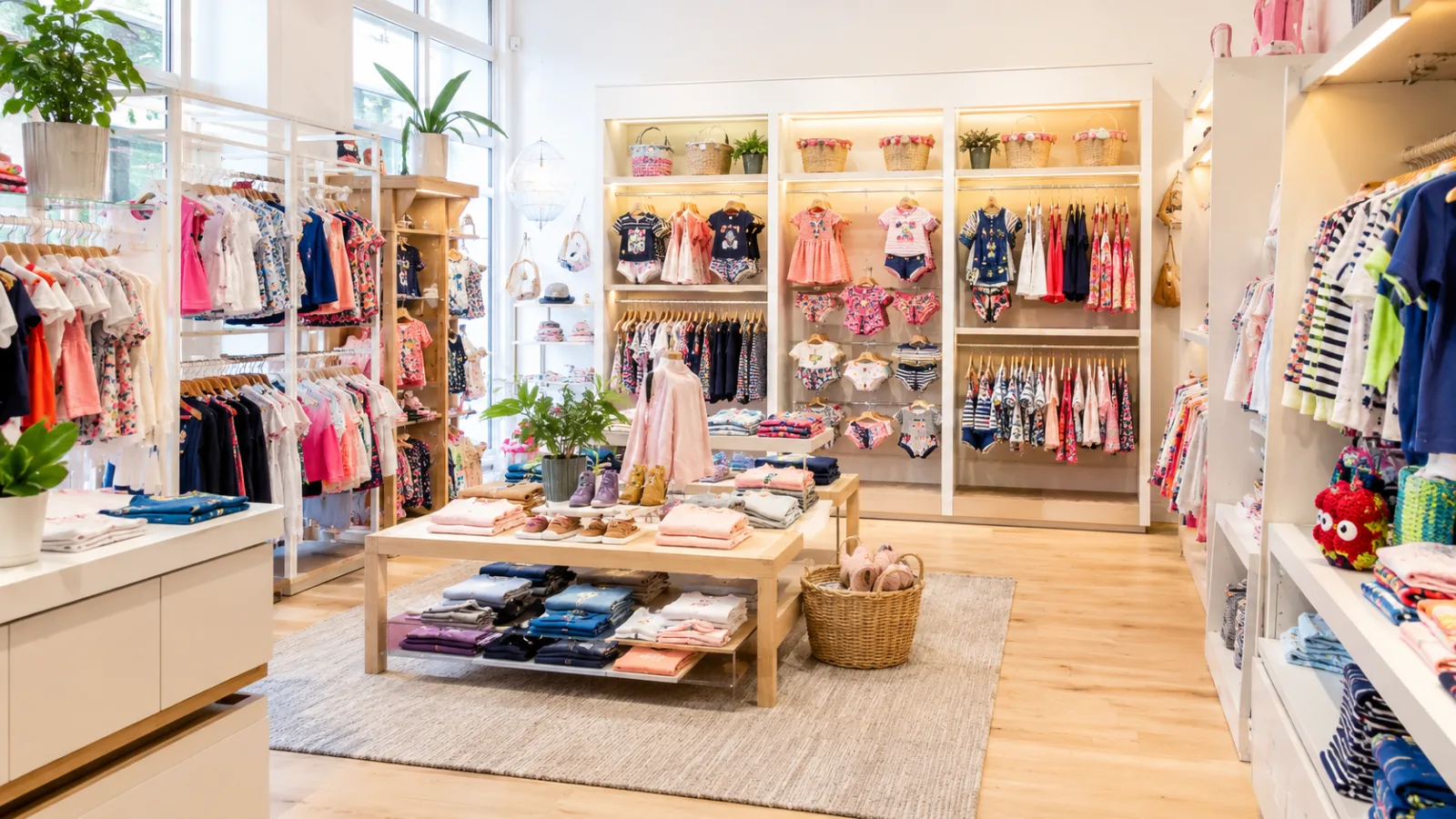
JoJo Maman Bébé is a strong choice for babies, toddlers, maternity, toys, gifts, and nursery-related shopping. Its official site describes it as a boutique mother and baby brand, and its kids clothes section includes clothing designed for days out, lounging, and sleeping.
For parents of younger children, JoJo Maman Bébé is especially useful because it understands practical early-years dressing. Babies and toddlers need soft fabrics, easy fastenings, comfortable fits, washable materials, and clothing that works for naps, play, nursery, and outings.
The brand often offers sleepsuits, dungarees, dresses, tops, leggings, knitwear, coats, swimwear, waterproofs, baby accessories, and gifting pieces. It is also a popular option for baby showers, newborn gifts, and first outfits.
JoJo Maman Bébé tends to feel more boutique than supermarket babywear. The designs are often sweet, classic, and parent-friendly, with a focus on comfort and practicality. For older children, the range may be more limited compared to brands like Next, H&M, or Zara. But for babies, toddlers, and preschool-age children, JoJo remains one of the most recognisable names in UK childrenswear.
Best for: Baby clothes, toddler outfits, nursery clothing, gifts, practical early-years pieces, and soft everyday wear.
10. Frugi: Best for Organic and Sustainable Kids Clothing
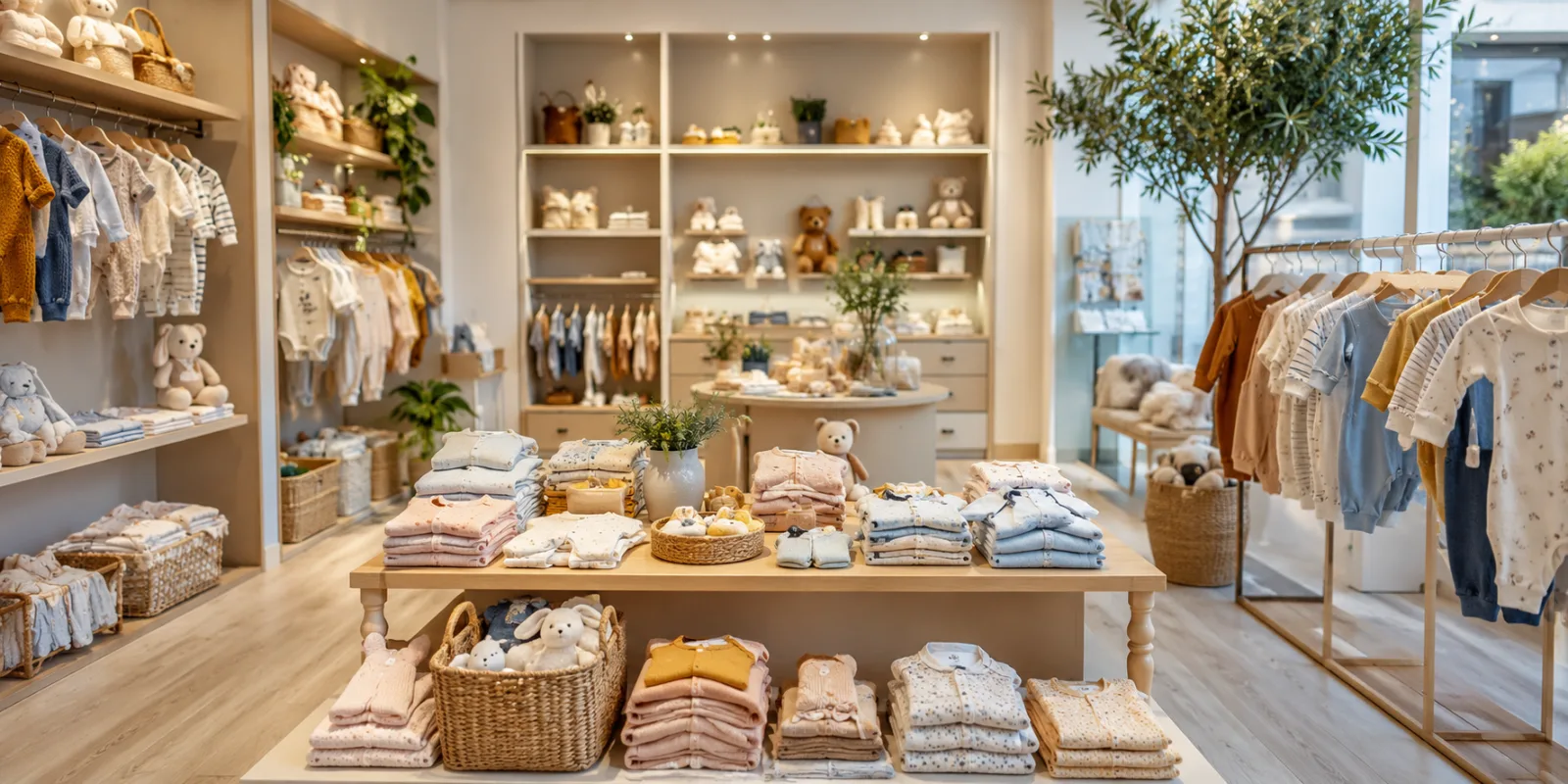
Frugi is a strong choice for parents looking for colourful, organic, and sustainability-focused kids clothing. The brand’s site uses the message “Love the planet you play on,” which reflects its positioning around playful children’s clothing with an environmental focus.
Frugi is especially popular among parents who care about organic cotton, bright designs, comfort, and ethical shopping values. The brand often features colourful prints, nature-inspired themes, soft fabrics, and child-friendly shapes.
For babies and younger children, Frugi is useful for sleepsuits, rompers, leggings, tops, dresses, dungarees, coats, pyjamas, and outdoor-friendly pieces. The designs are often cheerful and practical, making them suitable for active children.
Frugi can be more expensive than basic high street options, but many parents see value in the softness, design quality, and sustainability angle. It may be especially suitable for children with sensitive skin or parents who prefer organic cotton clothing. This brand is a good option for families who want clothing that feels playful, comfortable, and more conscious than standard fast fashion.
Best for: Organic cotton kidswear, colourful prints, baby clothes, sustainable choices, and soft everyday outfits.
Sustainable Choices for Conscious Parents
When selecting the best kids' clothing brands, many parents prioritize sustainability. Several of the mentioned brands, like Marks & Spencer and John Lewis, offer eco-friendly and ethically produced lines, ensuring you can shop with a clear conscience.
Tips for Choosing Kids Clothing
- Prioritize Comfort: Ensure that clothes are comfortable and breathable to allow for hours of active play.
- Consider Versatility: Look for pieces that can be dressed up or down, suitable for various occasions.
- Think Long-Term: Invest in clothing that will grow with your child, featuring adjustable waistbands or stretchable fabrics.
- Check Sizing Guides: Each brand has its sizing, so always refer to the specific brand’s guide before purchasing.
- Watch for Sales: Brands like Gap Kids often have seasonal sales, providing an opportunity to purchase quality clothing at reduced prices.
Sizing and Fit in UK Children's Clothing
UK children's clothing sizing follows its own conventions that can differ from both European and American sizing systems. Most UK brands size children's clothing by age, with ranges typically running from newborn through age 14 or 16 depending on the brand. However, as with all children's clothing systems globally, sizing by age is a rough guide at best — individual children vary enormously in their growth trajectories, and the same child may wear different age sizes from different brands simultaneously.
Many of the best UK kids' brands provide detailed measurement guides alongside their age-based sizing, allowing parents to size more accurately by measuring their child's height, chest, waist, and hips. Using actual measurements rather than age labels is always the more reliable approach, particularly when shopping online without the ability to try garments before purchasing.
British children's clothing tends to be cut with a somewhat generous fit compared to some European brands, reflecting a cultural preference for comfortable, practical clothing over fashion-forward silhouettes in children's wear. This is a genuine advantage for growing children who need room to move, but it's worth being aware of when buying for older children who may prefer a more fitted look.
Online vs In-Store Shopping for UK Kids' Clothing
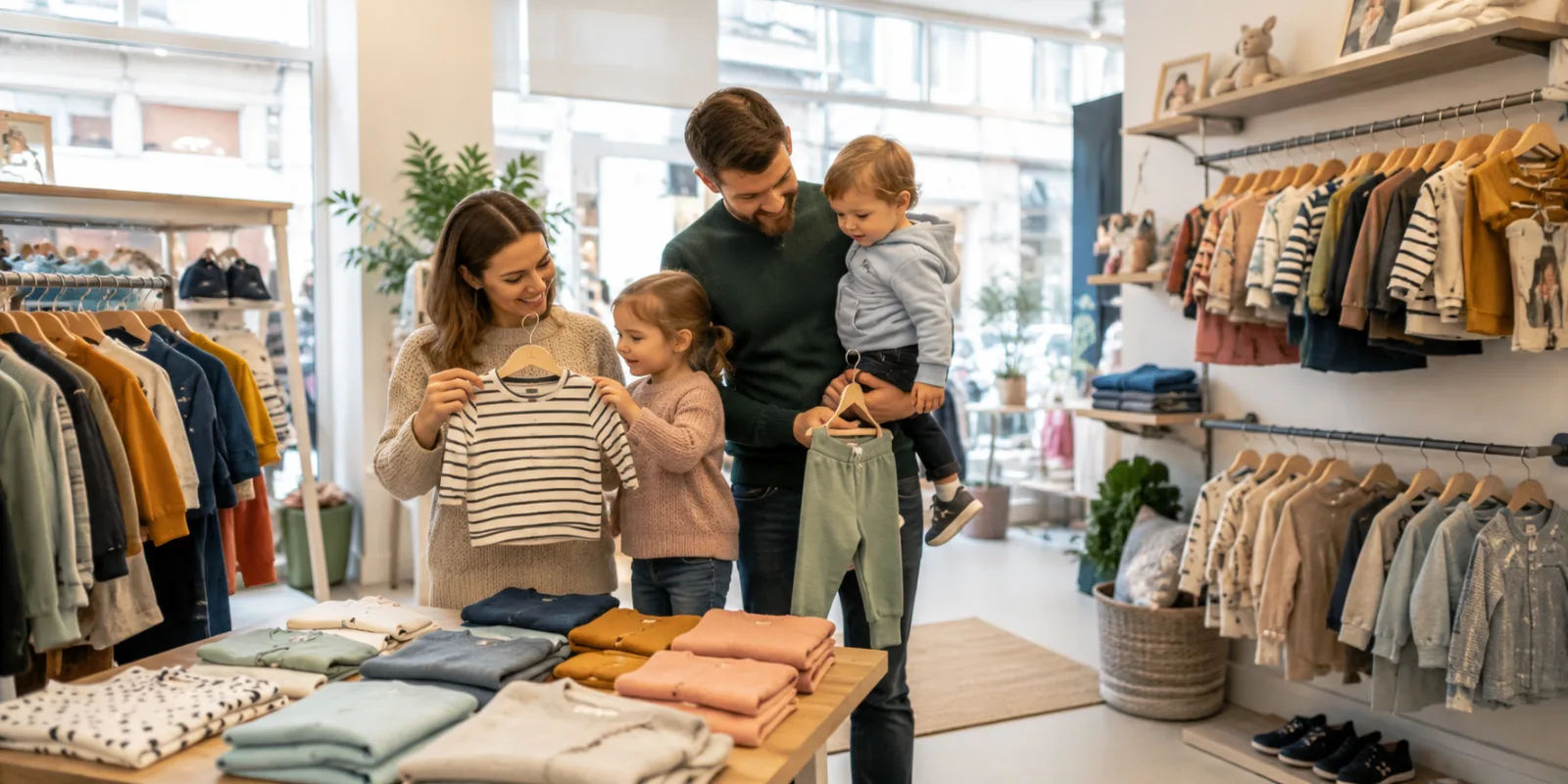
The choice between shopping online and in-store for UK children's clothing involves genuine trade-offs that vary by family situation. In-store shopping offers the ability to touch fabrics, check construction quality, and assess fit before purchasing — all significant advantages for children's clothing where fit and feel are primary quality indicators. Many UK parents also appreciate the immediacy of in-store shopping, particularly when a specific need arises that can't wait for delivery.
Online shopping has become increasingly sophisticated for UK children's clothing, with detailed size guides, customer photography programs showing garments on children of various sizes, and generous return policies that reduce the risk of purchasing without trying. The convenience advantage of online shopping is particularly significant for parents of young children, for whom a trip to the high street with small children in tow can be genuinely exhausting. Major UK children's clothing retailers have invested significantly in their online experiences, and for established brands whose sizing you know well, online shopping is often the most practical choice.
Subscription and styling services have emerged as a middle ground, with services like Stitch Fix Kids offering expert curation of items based on your child's measurements and style preferences, delivered to your door with a try-before-you-buy model. These services add some cost but remove the browsing and decision-making burden for busy parents who want quality clothing without the time investment of traditional shopping.
Best Occasions to Shop UK Kids' Clothing Sales
UK retail follows predictable sale cycles that savvy parents can use to access quality children's clothing at significantly reduced prices. The January sales are the UK's largest retail event, with many children's clothing brands reducing end-of-season stock by 40 to 70 percent. Shopping January sales for the following winter's needs — buying coats, boots, and warm layers in the next size up — is a strategy that experienced UK parents swear by.
Mid-season sales typically occur in late March and late September as brands clear remaining stock before transitioning to the next season's range. These sales are usually smaller than the January clearance but still offer meaningful discounts on quality items. Back to school promotions in late July and August often include discounts on school uniforms and everyday essentials, making this a good time to stock up on the basics that form the foundation of most children's wardrobes.
Black Friday has become an increasingly significant event in UK children's clothing retail, with many brands offering their largest discounts of the year. Unlike some retail sectors where Black Friday discounts are illusory, UK children's clothing brands typically offer genuine reductions on popular items. Planning your children's clothing needs in advance and building a wish list before Black Friday allows you to make targeted purchases rather than impulsive ones driven by the urgency of the sale period.
Quick Comparison: Which UK Kids Clothing Brand Is Best for What?
Choosing the best kids clothing brand depends on what parents need most.
- For everyday variety, Next is one of the most convenient choices. It covers a wide range of ages, categories, and occasions in one place.
- For schoolwear and dependable basics, Marks & Spencer is one of the strongest options. It works well for uniforms, underwear, socks, pyjamas, and practical clothing.
- For budget-friendly everyday clothing, George at ASDA and Tu Clothing are both strong choices. They are useful for playwear, nursery clothes, school basics, and quickly replacing outgrown items.
- For affordable fashion basics, H&M Kids is a good option. It works well for casual outfits, seasonal pieces, and simple mix-and-match wardrobes.
- For stylish fashion-forward clothing, Zara Kids is ideal. It suits parents looking for modern, polished, and trend-aware outfits.
- For bold high street style, River Island Kids is a strong option, especially for older children, party outfits, and statement pieces.
- For colourful premium childrenswear, Mini Boden is one of the best choices. It is playful, bright, and often more durable.
- For babies and toddlers, JoJo Maman Bébé is a trusted option, especially for practical early-years clothing and gifts.
- For sustainable and organic kidswear, Frugi is one of the best-known choices.
How to Choose the Right Kids Clothing Brand for Your Child
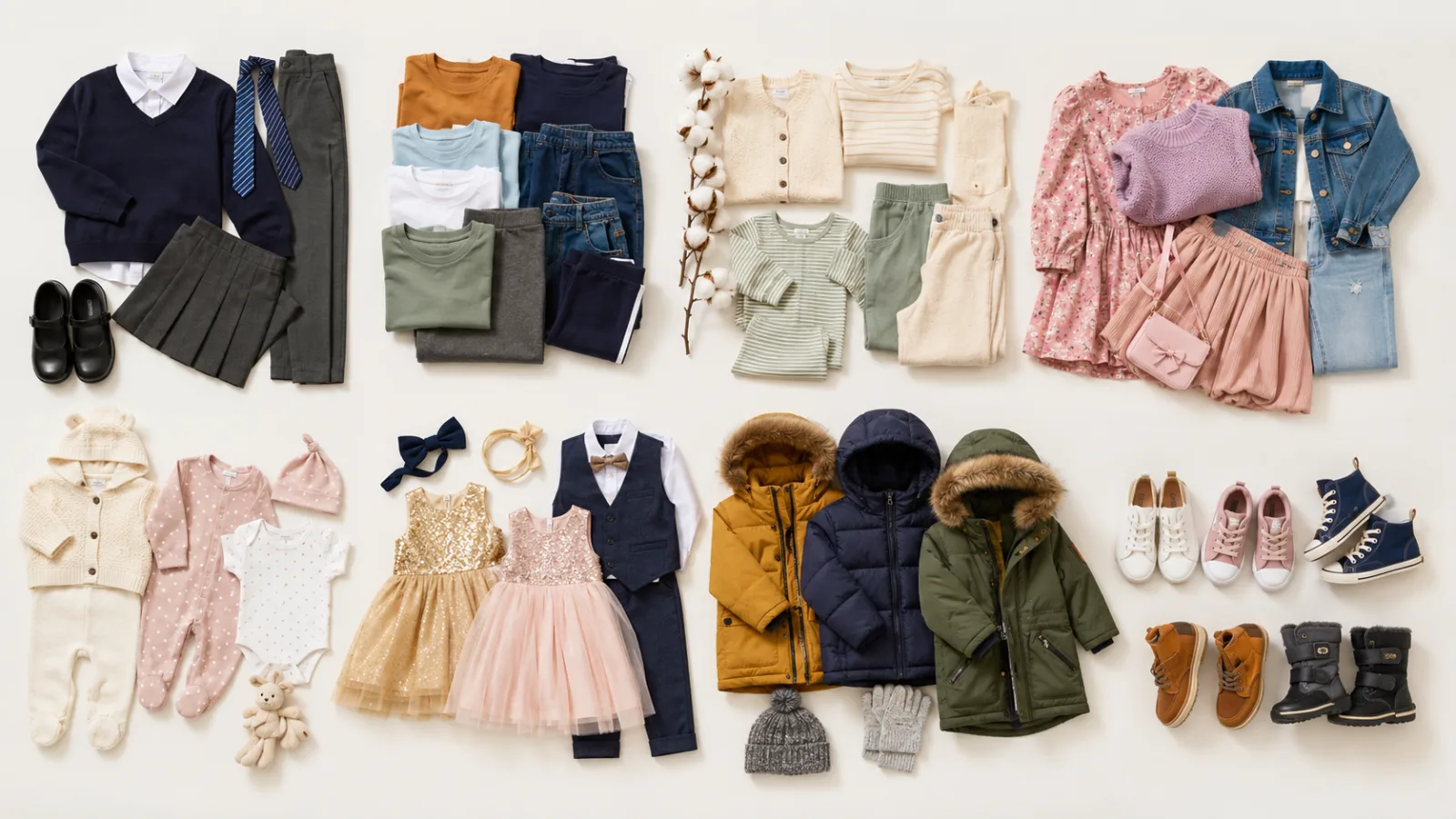
The best children’s clothing brand is not always the most popular one. It is the brand that fits your child’s age, personality, comfort needs, daily routine, and your family budget. For babies, focus on softness, easy fastenings, safe construction, and washable fabrics. Brands like JoJo Maman Bébé, Frugi, M&S, Next, Tu, and George can all be useful depending on budget and style.
For toddlers, comfort and movement matter most. Look for stretchy waistbands, easy layers, durable leggings, joggers, T-shirts, waterproof outerwear, and clothes that can handle nursery and playtime.
For school-age children, think about durability, washing performance, and fit. Schoolwear from M&S, Next, George, and Tu can be practical because these brands usually understand everyday uniform needs.
For older children and pre-teens, personal style becomes more important. H&M, Zara, River Island, and Next can offer more trend-aware options, while Mini Boden works well for children who still enjoy colour and playful design.
For special occasions, Zara, River Island, Monsoon, Next, M&S, and Mini Boden can be good places to look. For everyday rough use, supermarket brands and multipacks may make more sense. Parents should also build a balanced wardrobe. Not every item needs to be premium. Spend more on coats, shoes, winter layers, and special pieces if needed. Save money on basics, nursery clothes, spare outfits, and items children will quickly outgrow.
Tips for Buying Kids Clothes in the UK
Buying kids clothes becomes easier when parents shop with a clear plan. Start by checking what your child already owns before buying more. Children often have too many tops but not enough trousers, socks, coats, or school basics.
Buy by season, but do not overbuy too early. Children can grow quickly, and clothes bought months in advance may not fit when needed. For expensive items like coats and shoes, it is better to check sizing closer to the season.
Read wash care labels before buying. Kids clothes need frequent washing, so avoid overly delicate fabrics for everyday wear. Machine-washable clothing is usually more practical for school, nursery, and play.
Consider multipacks for basics. Socks, underwear, vests, school shirts, leggings, and T-shirts are often better bought in multipacks, especially from brands like M&S, Next, George, Tu, and H&M.
Check return policies when shopping online. Children’s sizing can vary between brands, so easy returns are important. This is especially useful when buying shoes, coats, school trousers, and occasionwear.
Think about layering. UK weather changes quickly, so cardigans, hoodies, gilets, raincoats, and light jackets can be more useful than one heavy item.
Finally, involve children when appropriate. Older kids are more likely to wear clothes they helped choose. Giving them a few parent-approved options can reduce wardrobe battles and make shopping easier.
Final Thoughts
The UK has a strong selection of kids clothing brands for every type of parent, child, budget, and occasion. The best brand depends on what matters most to your family. Some parents need affordable everyday clothes that can survive nursery, school, and outdoor play. Others want premium quality, organic cotton, stylish occasionwear, or trend-led outfits for older children.
Next is a strong all-rounder for variety and convenience. Marks & Spencer is excellent for basics and schoolwear. George at ASDA and Tu Clothing are practical for affordable everyday wardrobes. H&M Kids gives parents trend-aware basics at accessible prices. Zara Kids is ideal for stylish, fashion-forward outfits. River Island Kids works well for bold high street looks. Mini Boden is a favourite for colourful premium childrenswear. JoJo Maman Bébé is especially useful for babies and toddlers. Frugi is a standout for organic and sustainable kids clothing.
For most parents, the smartest approach is to mix brands. Use affordable retailers for everyday basics, choose reliable brands for schoolwear, invest in quality outerwear when needed, and save premium or fashion-led brands for special pieces. This gives children a wardrobe that is practical, comfortable, stylish, and suitable for real family life.
A good kidswear brand should make life easier for parents and more comfortable for children. When clothing fits well, washes well, lasts longer, and matches your child’s needs, it becomes more than just fashion. It becomes part of a smoother daily routine.
Frequently Asked Questions About UK Kids' Clothing Brands
Which UK kids' clothing brand offers the best value for everyday wear? For everyday basics — school-appropriate tops, comfortable trousers, and practical outerwear — mid-range brands offer the best balance of quality and price. Brands in the £15–£35 price range per piece typically deliver significantly better durability and construction than budget alternatives while remaining accessible to most UK families. Look for brands offering adjustable waistbands, reinforced knees, and colorfastness guarantees as indicators of everyday wear quality.
Are UK children's clothing brands available in extended or plus sizes? Size inclusivity has improved significantly in UK children's clothing in recent years. Most major brands now extend their ranges to include broader measurements at each age size, and many specifically offer "slim" and "plus" options alongside standard sizing. Several specialist brands have emerged focusing specifically on adaptive and inclusive sizing for children with physical disabilities or sensory sensitivities. The fit consultation tools on most major UK retailers' websites have also improved, helping parents identify the best size match for their child's specific measurements.
How do UK kids' clothing sizes compare to European and US sizes? UK children's clothing typically uses age-based sizing (2-3Y, 4-5Y, etc.) similar to US sizing, but the specific measurements that correspond to each age label differ between brands. European brands often use height in centimetres as the primary size indicator. When buying across systems, always refer to the brand-specific measurement chart rather than attempting direct age-size conversions. A child wearing age 5 in one brand may need age 4 or age 6 in another brand from a different country.
What certifications should I look for when buying organic or sustainable UK kids' clothing? The most meaningful certifications for sustainable UK children's clothing are GOTS (Global Organic Textile Standard), which covers the full supply chain from fiber to finished garment; OEKO-TEX Standard 100, which certifies that fabrics have been tested for harmful substances; and Fair Trade, which verifies ethical trading standards for producers. GRS (Global Recycled Standard) certification is relevant for brands using recycled fiber content. B Corp certification at the company level indicates broader commitment to social and environmental responsibility beyond just fabric standards.