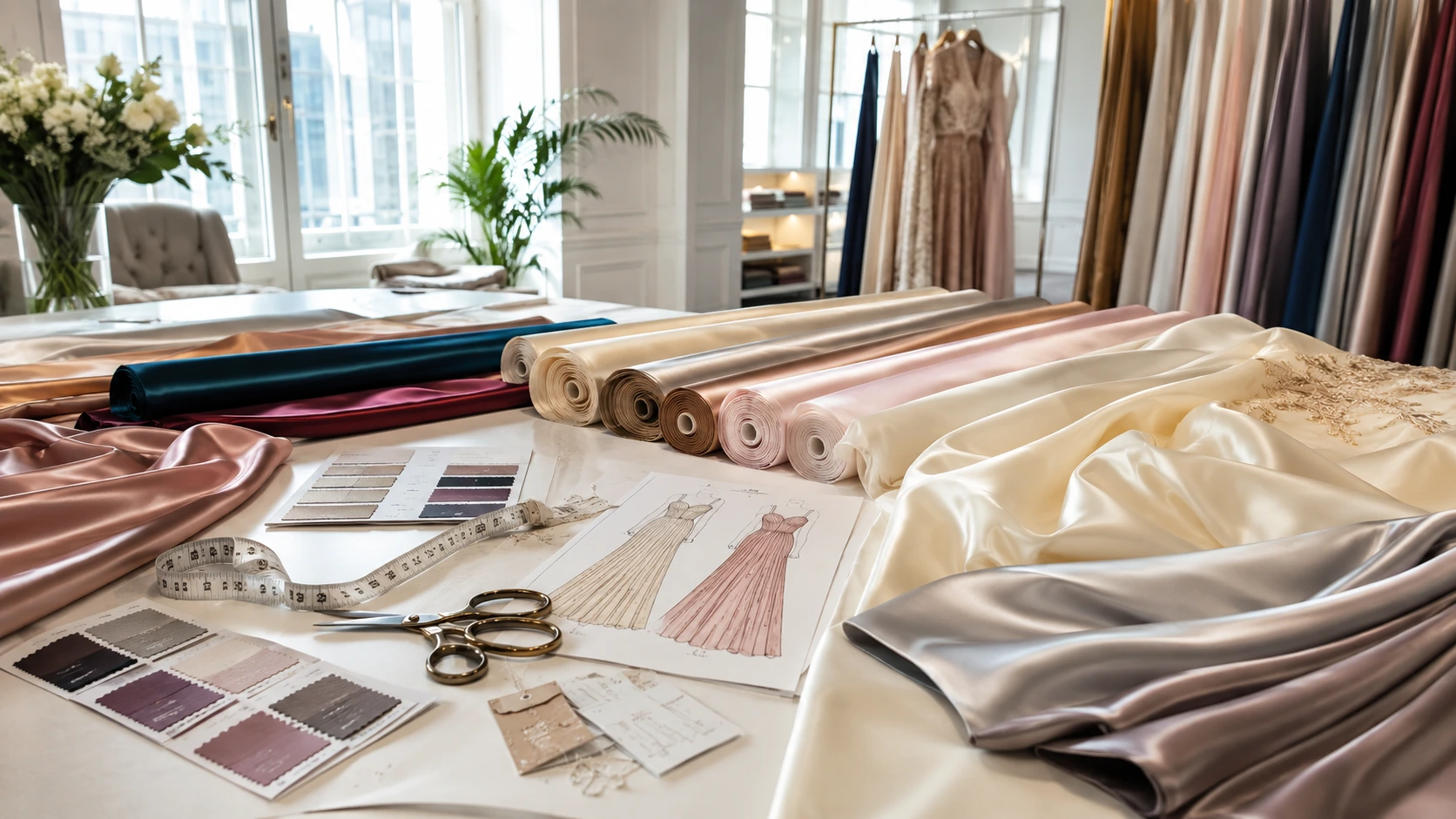
Satin fabric is loved for its smooth surface, elegant shine, soft drape, and luxurious appearance. It is used in dresses, blouses, lingerie, bridalwear, sleepwear, scarves, linings, bedding, accessories, and evening gowns. But many people misunderstand satin because it looks like silk and feels expensive, even when it is made from polyester, nylon, rayon, or acetate.
Satin is not one single fiber. It is mainly a weave structure that creates a glossy face and a duller back. That means satin can be made from silk, polyester, viscose, nylon, acetate, cotton blends, or other filament yarns. This guide answers the most common questions about satin fabric so buyers, designers, students, and fashion brands can choose it more confidently.
What Is Satin Fabric?
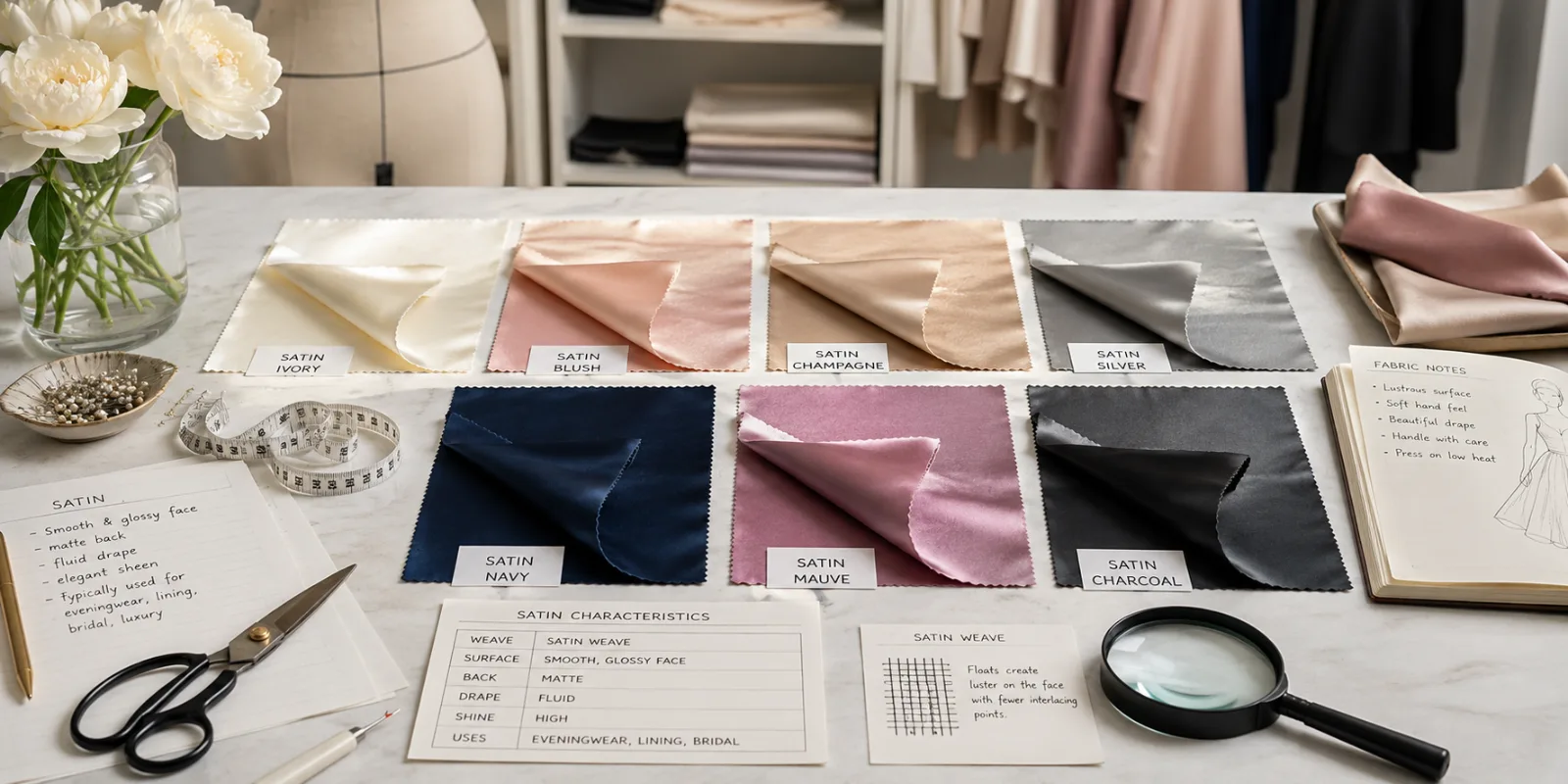
Satin fabric is a smooth, glossy textile made using a satin weave. In this weave, yarns float over several yarns before going under one, creating a surface that reflects light beautifully. This is why satin looks shiny on one side and usually duller on the other.
The word “satin” often makes people think of silk, but satin and silk are not the same thing. Silk is a fiber. Satin is a weave. Silk can be woven into satin, but satin can also be made from polyester, nylon, acetate, rayon, or blended fibers. This is one of the most important things to understand before buying satin fabric.
Satin is popular because it looks elegant without needing heavy embellishment. A simple satin slip dress, blouse, pillowcase, or evening skirt can look luxurious because the fabric itself catches light and creates movement. The smooth surface also gives satin a soft, fluid appearance that works beautifully in formalwear and intimate apparel.
However, satin is not always easy to work with. It can be slippery, prone to snagging, sensitive to heat, and difficult to sew neatly if the wrong tools are used. The performance of satin depends heavily on fiber content, weight, weave quality, finish, and intended use.
FAQ 1: Is Satin a Fabric or a Weave?
Satin is best understood as a weave, not a fiber. Many people call it a fabric because we buy it as fabric, but technically satin describes the weaving method that creates a smooth, shiny surface.
This matters because two satin fabrics can feel completely different. A silk satin may feel soft, breathable, and naturally luxurious. A polyester satin may feel smooth, glossy, and more affordable. A heavy bridal satin may feel structured, while charmeuse satin may feel light and fluid.
Why This Confusion Happens
People often name fabrics by how they look or feel. Since satin has a recognizable shine, shoppers may assume satin is one specific material. In reality, the satin weave can be made using different fibers, and each fiber changes the fabric’s performance.
Simple Explanation
Satin is the weave.
Silk, polyester, nylon, acetate, and rayon are fibers.
Satin fabric is created when those fibers are woven in a satin structure.
Why Fashion Brands Should Know This
If a supplier says “satin,” you should ask what kind. Is it silk satin, polyester satin, acetate satin, stretch satin, bridal satin, or charmeuse? Without this detail, you cannot accurately judge cost, quality, care, or suitability.
FAQ 2: What Is Satin Made From?
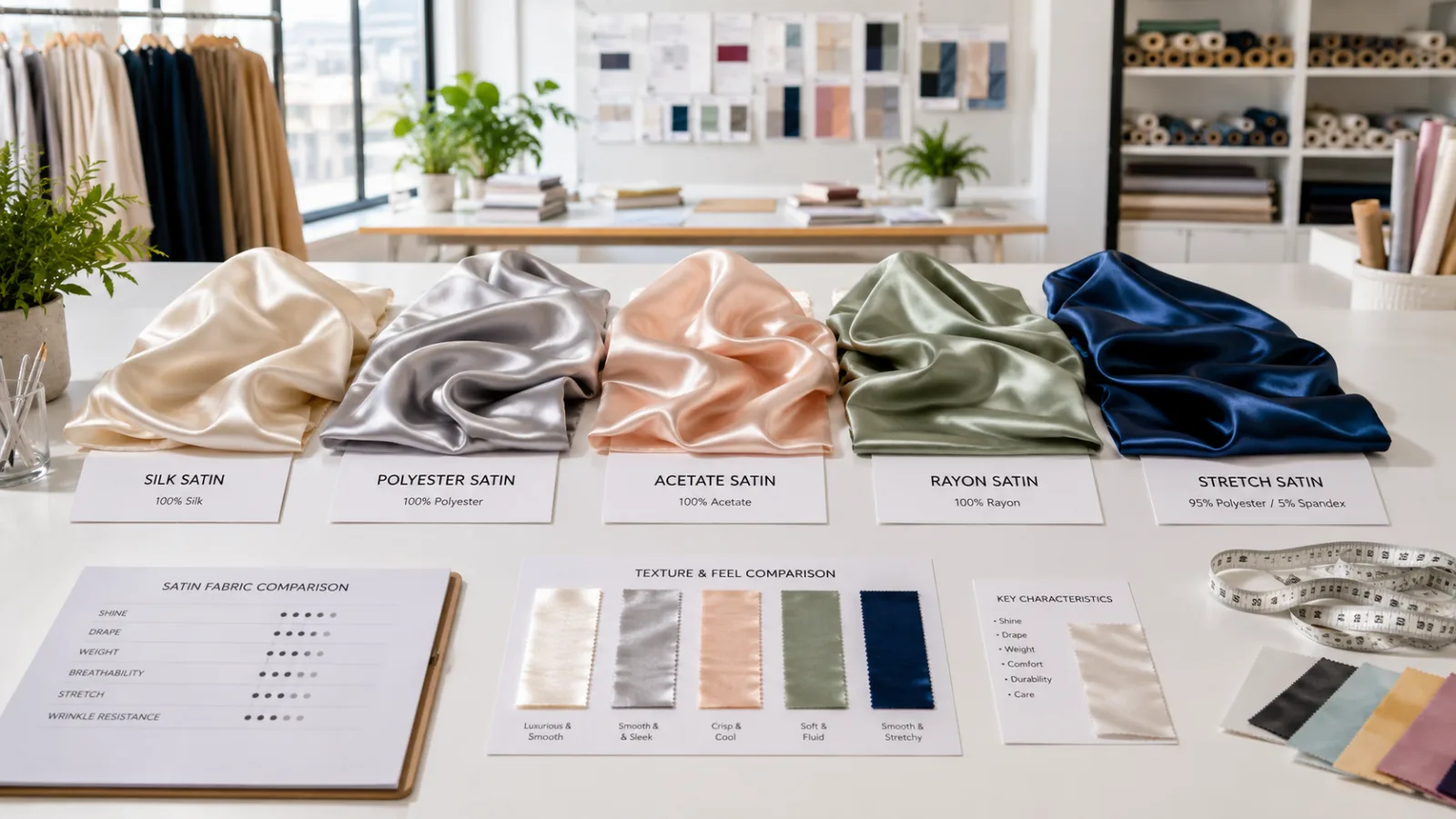
Satin can be made from several fibers. The most common options are silk, polyester, nylon, acetate, rayon, viscose, and blends. Each fiber gives satin a different feel, price, durability, and care requirement.
Silk Satin
Silk satin is the most luxurious type. It has a natural sheen, soft hand feel, breathable quality, and elegant drape. It is often used for premium eveningwear, bridal gowns, scarves, lingerie, and luxury sleepwear.
Polyester Satin
Polyester satin is more affordable and widely available. It is commonly used in dresses, costumes, linings, bedding, decorations, accessories, and budget-friendly fashion. It can be shiny and durable, but it may not breathe as well as silk.
Nylon Satin
Nylon satin can be strong, smooth, and lightweight. It may be used in linings, performance pieces, jackets, and accessories.
Acetate Satin
Acetate satin has a beautiful shine and smooth feel, often used in linings and occasionwear. However, it can be heat-sensitive and may require careful cleaning.
Rayon or Viscose Satin
Rayon satin and viscose satin can have a soft drape and elegant flow. They may feel more breathable than polyester but can be more delicate when wet.
Stretch Satin
Stretch satin contains elastane or spandex. It is useful for fitted dresses, dancewear, eveningwear, and garments that need movement.
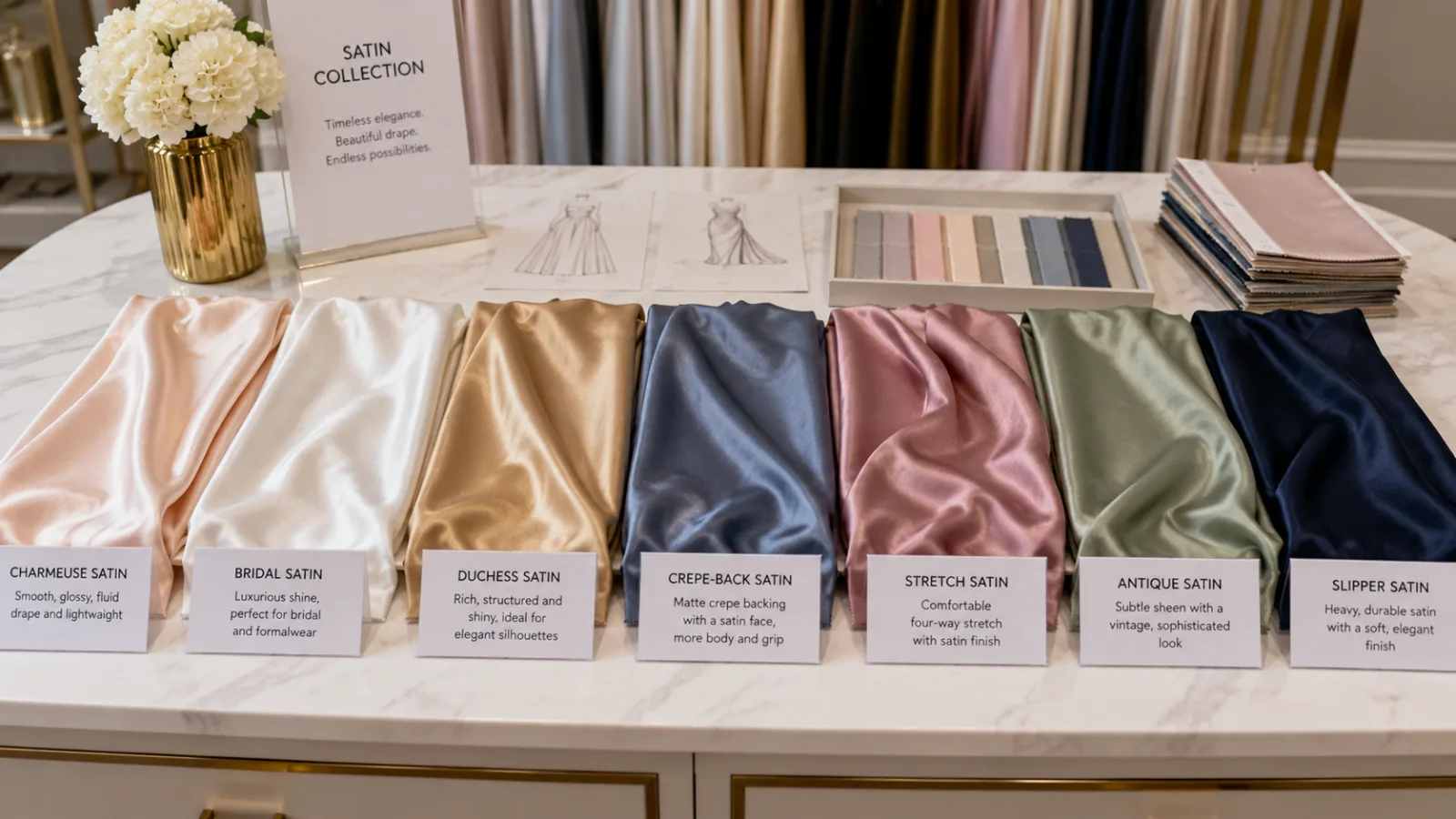
FAQ 3: What Are the Main Types of Satin Fabric?
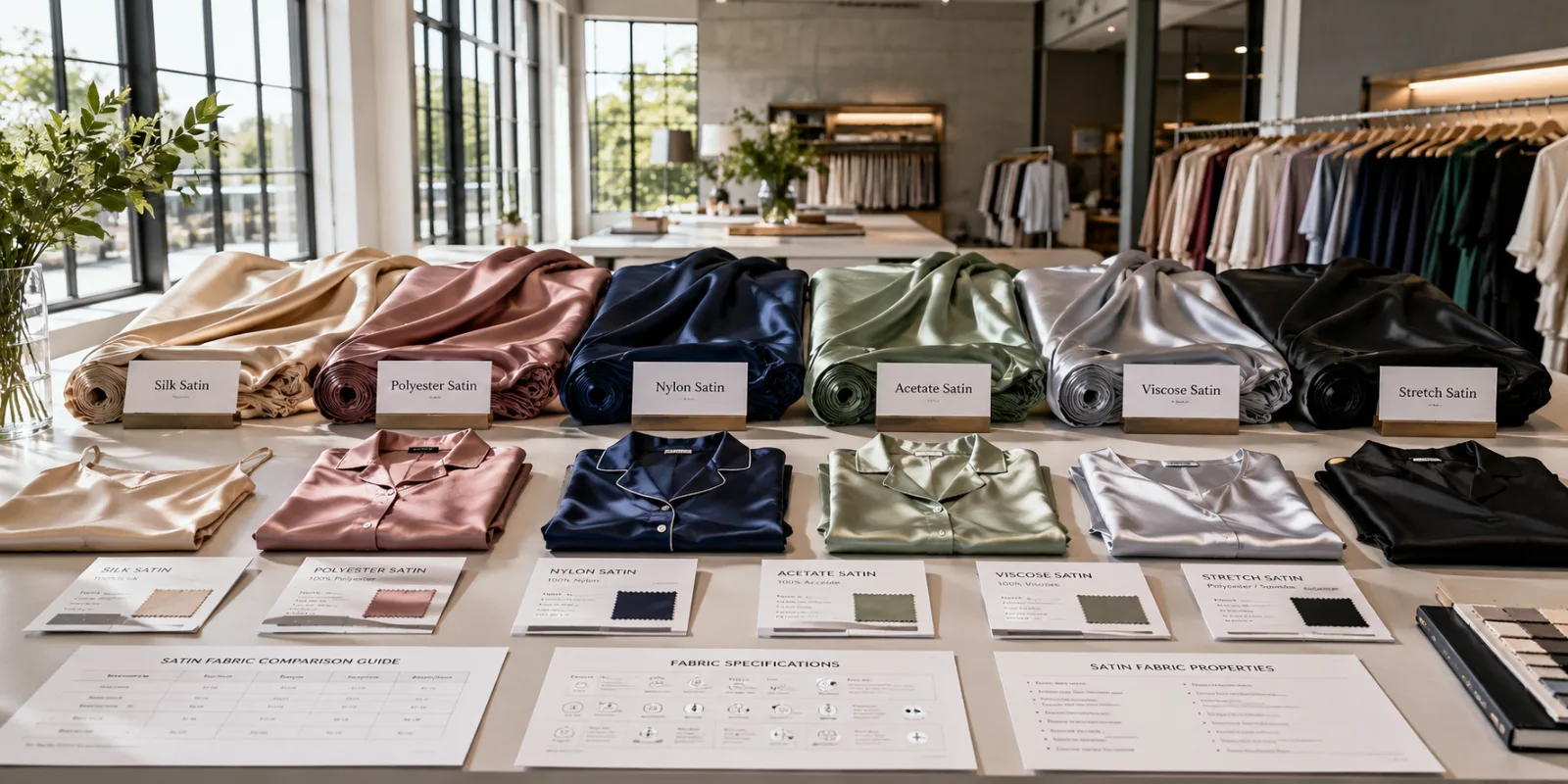
Satin comes in many types. Each type has a different weight, drape, surface finish, and best use.
Charmeuse Satin
Charmeuse is lightweight, fluid, and glossy on the front with a duller back. It is commonly used for slip dresses, blouses, lingerie, scarves, and elegant draped garments.
Bridal Satin
Bridal satin is heavier and more structured. It is popular for wedding dresses, formal gowns, structured skirts, corsets, and occasionwear.
Duchess Satin
Duchess satin is a high-quality, heavy satin with a refined finish. It is often used in luxury bridalwear and couture-style garments.
Crepe-Back Satin
Crepe-back satin has a satin face and a crepe-textured reverse side. Designers may use either side depending on the desired look.
Stretch Satin
Stretch satin includes elastane for flexibility. It is often used in body-hugging dresses, dance costumes, fitted tops, and performance-inspired occasionwear.
Antique Satin
Antique satin has a textured appearance and is often used in interiors, drapery, and decorative applications.
Slipper Satin
Slipper satin is dense and smooth, historically used for shoes and formal accessories. It can also be used for structured garments and accessories.
FAQ 4: What Is Satin Fabric Used For?
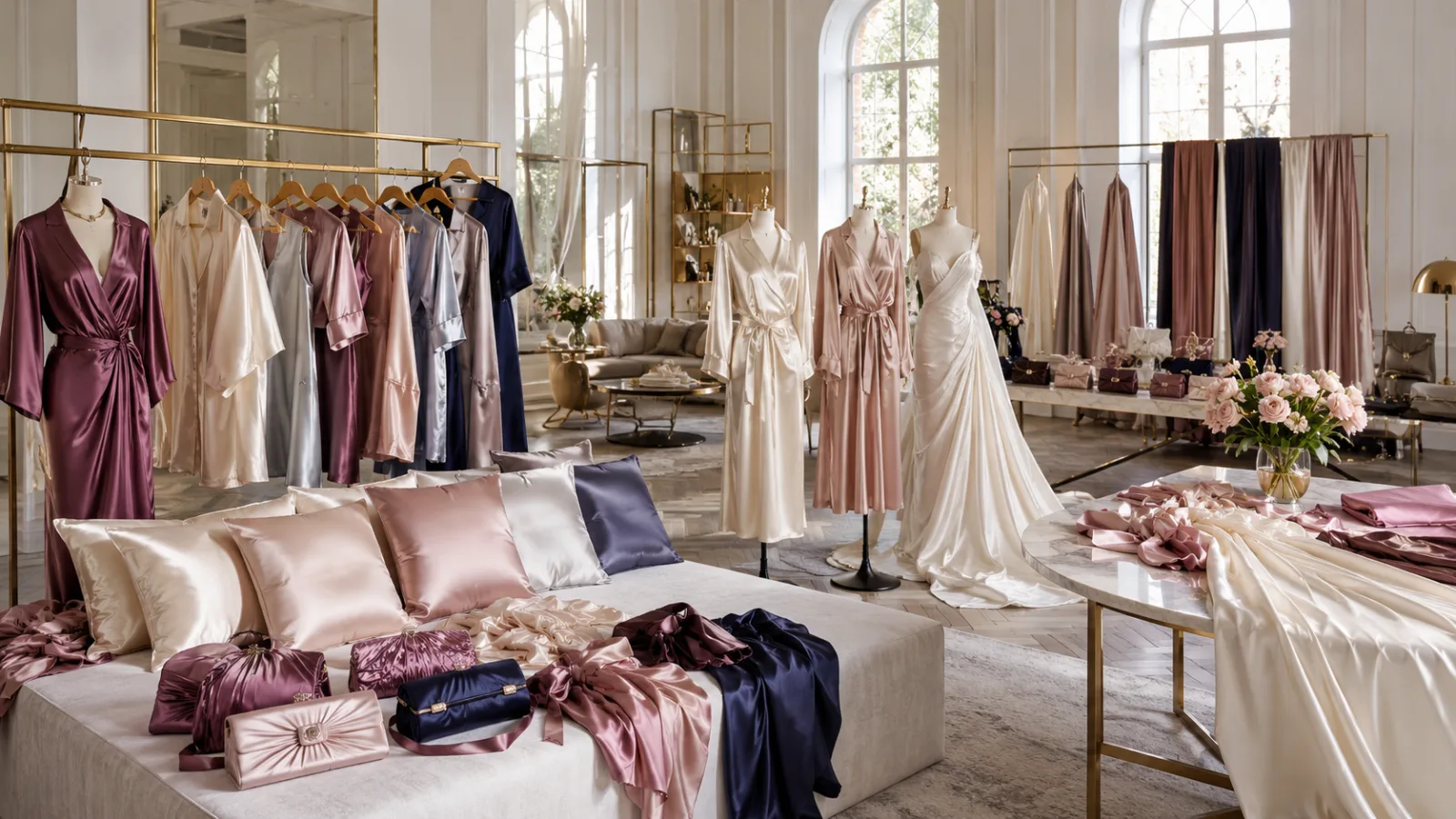
Satin is used in fashion, interiors, accessories, and luxury packaging because of its shine, smoothness, and elegant drape. Its use depends on weight and fiber content.
Fashion Uses
Satin is commonly used for:
- Evening dresses
- Slip dresses
- Blouses
- Skirts
- Bridal gowns
- Bridesmaid dresses
- Lingerie
- Robes
- Pajamas
- Corset tops
- Scarves
- Linings
- Dance costumes
- Formal shirts
- Luxury loungewear
Satin works especially well when a garment needs movement, shine, softness, or elegance. A satin blouse can make a simple outfit look polished. A satin skirt can move beautifully while walking. A satin dress can look sophisticated without heavy decoration.
Interior Uses
Satin can also be used in bedding, cushions, drapery, decorative trims, and luxury home textiles. Satin pillowcases and sheets are popular because of their smooth feel.
Accessory Uses
Satin is used for hair accessories, evening bags, shoes, ribbons, gift packaging, ties, pocket squares, and decorative bows.
FAQ 5: Is Satin the Same as Silk?
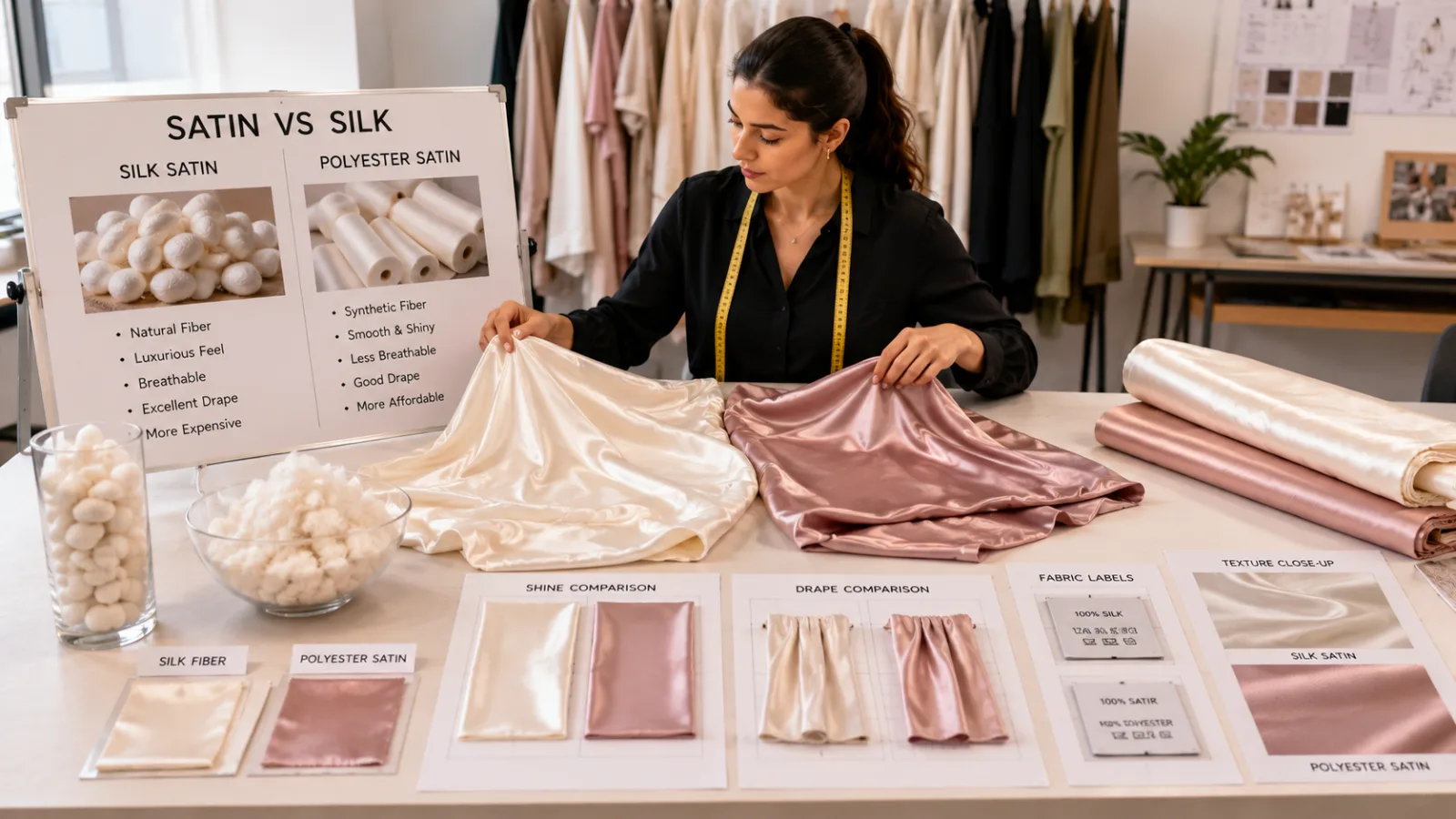
No, satin is not the same as silk. Silk is a natural fiber produced by silkworms. Satin is a weave structure. Silk can be woven into satin, but satin can also be made from synthetic or semi-synthetic fibers.
This is one of the most common satin myths. When someone says “satin,” they may be talking about the shiny look of the fabric, not the fiber. A satin pillowcase may be made from polyester. A luxury satin gown may be made from silk. Both can be satin, but they are not the same material.
Satin vs Silk in Simple Terms
Silk is a fiber.
Satin is a weave.
Silk satin is satin made from silk.
Polyester satin is satin made from polyester.
Which One Is Better?
It depends on the purpose. Silk satin is more breathable, luxurious, and naturally elegant, but it is expensive and delicate. Polyester satin is affordable, widely available, and easier to source, but it may feel warmer and less breathable.
For luxury fashion, silk satin may be preferred. For costumes, decorations, budget-friendly garments, and some linings, polyester satin may be practical.
FAQ 6: Is Satin Comfortable to Wear?
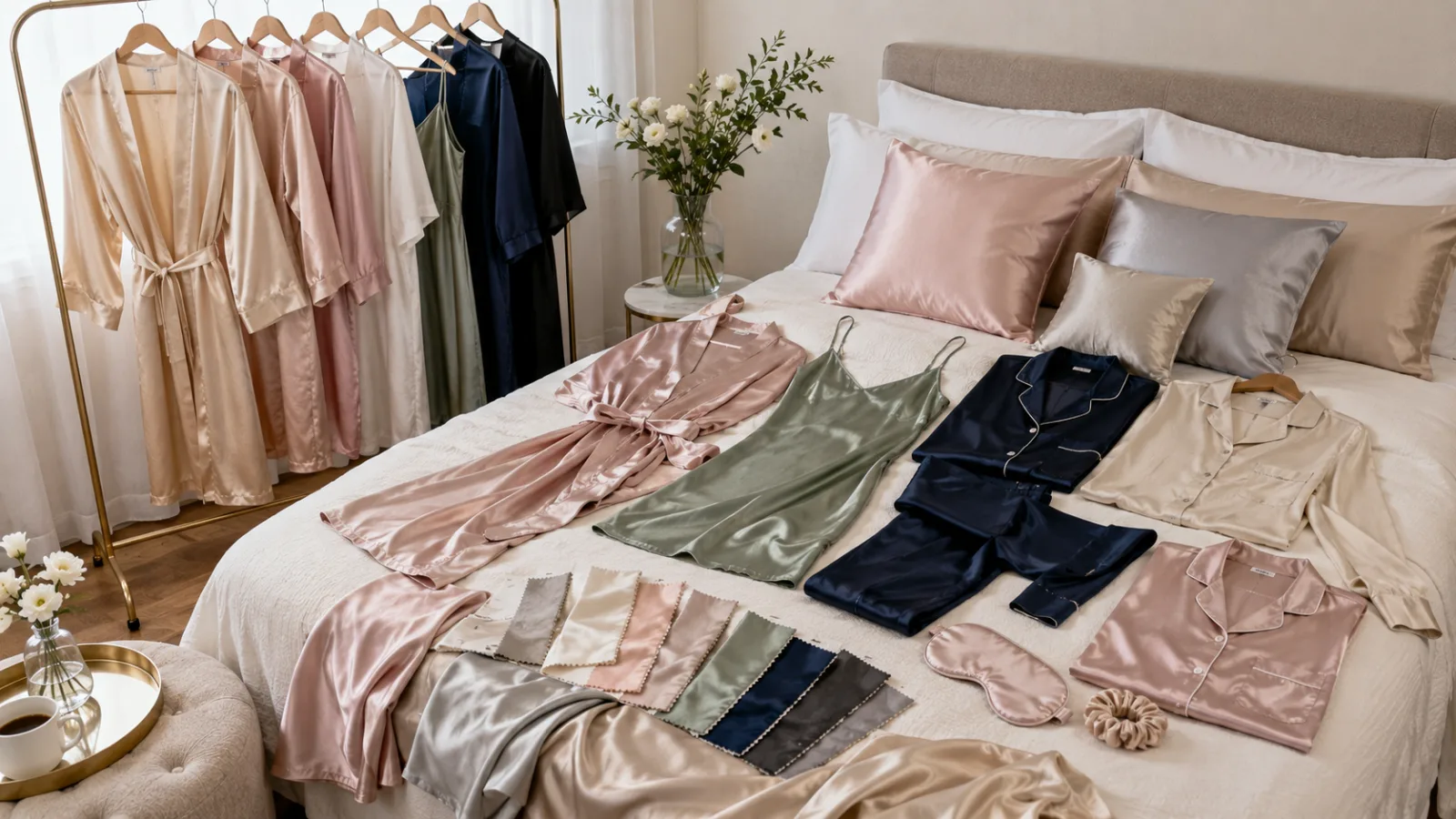
Satin can be very comfortable when the right type is chosen for the right garment. Its smooth surface feels soft against the skin, which makes it popular for sleepwear, lingerie, robes, blouses, and linings.
However, comfort depends on fiber content. Silk satin and viscose satin usually feel more breathable than polyester satin. Polyester satin can feel smooth but may trap heat, especially in warm weather or fitted garments. Stretch satin can be comfortable for fitted styles because it allows movement.
What Makes Satin Comfortable?
- Smooth surface
- Soft hand feel
- Lightweight drape
- Minimal texture against skin
- Elegant movement
- Optional stretch in stretch satin
When Satin May Feel Uncomfortable
Satin may feel uncomfortable if it is too tight, too heavy, poorly lined, static-prone, or not breathable enough. Some cheaper satins can feel plasticky or clingy. Heavy bridal satin may feel structured rather than soft.
Best Satin for Comfort
For comfort-focused garments, choose silk satin, viscose satin, charmeuse satin, or lightweight satin blends. For fitted garments, consider stretch satin. For structured formalwear, use heavier satin but plan the lining and fit carefully.
FAQ 7: Is Satin Good for Summer?
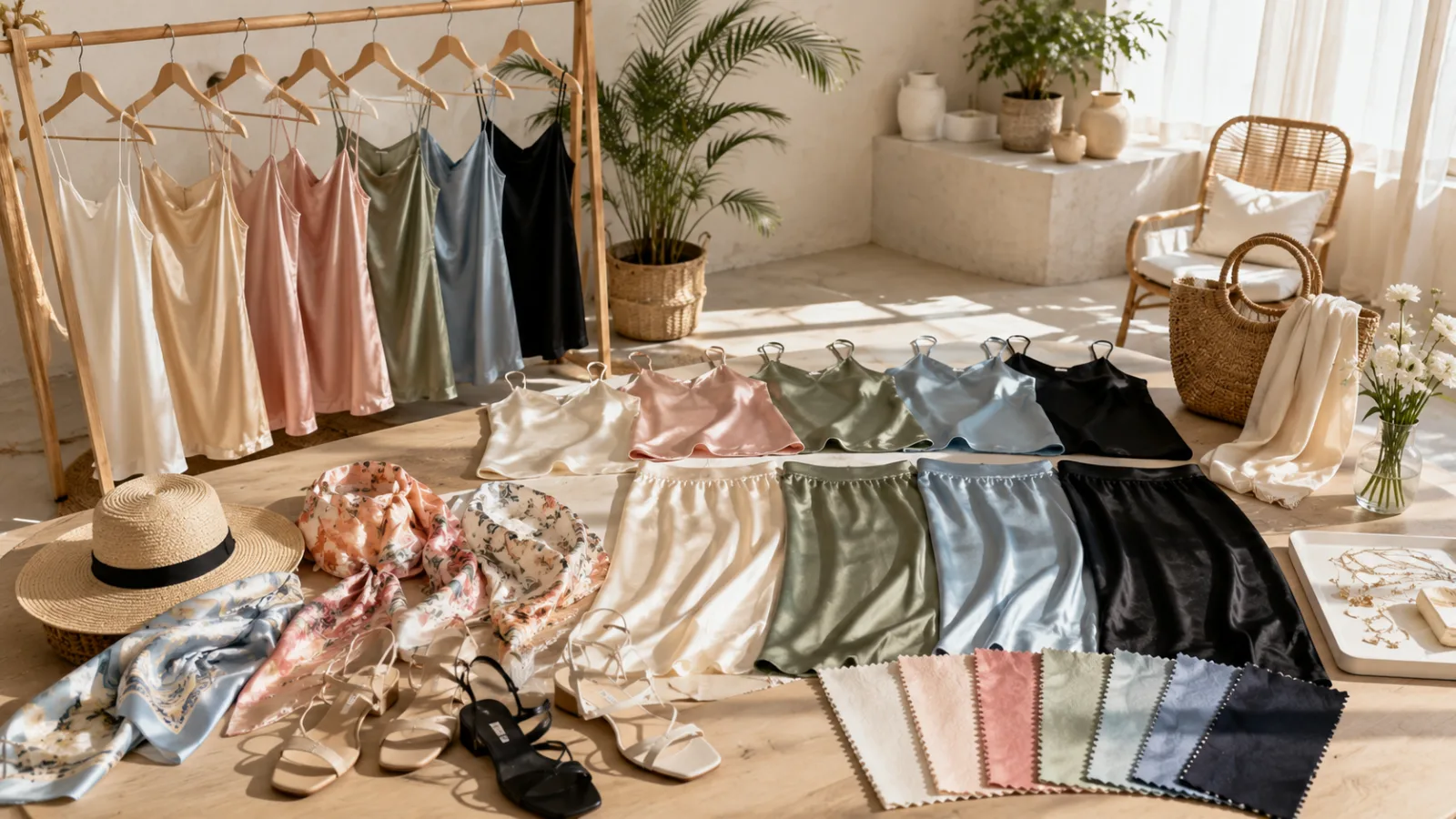
Satin can be good for summer if it is lightweight and made from breathable fibers. Silk satin, rayon satin, and viscose satin can feel more comfortable in warm weather than polyester satin. Lightweight charmeuse satin can also work well for summer dresses, camisoles, skirts, and scarves.
However, polyester satin may feel warm because it does not breathe as well as natural fibers. It can also cling if static builds up. For hot climates, fiber content matters more than shine.
Best Summer Satin Choices
- Silk satin
- Viscose satin
- Rayon satin
- Lightweight charmeuse
- Loose-fit satin garments
- Satin with breathable lining
Satin Styles for Summer
Slip dresses, camisoles, bias-cut skirts, relaxed blouses, scarves, and lightweight robes can work well in summer. Avoid heavy bridal satin or thick polyester satin for hot weather unless the garment is designed for short-term occasionwear.
FAQ 8: Is Satin Durable?
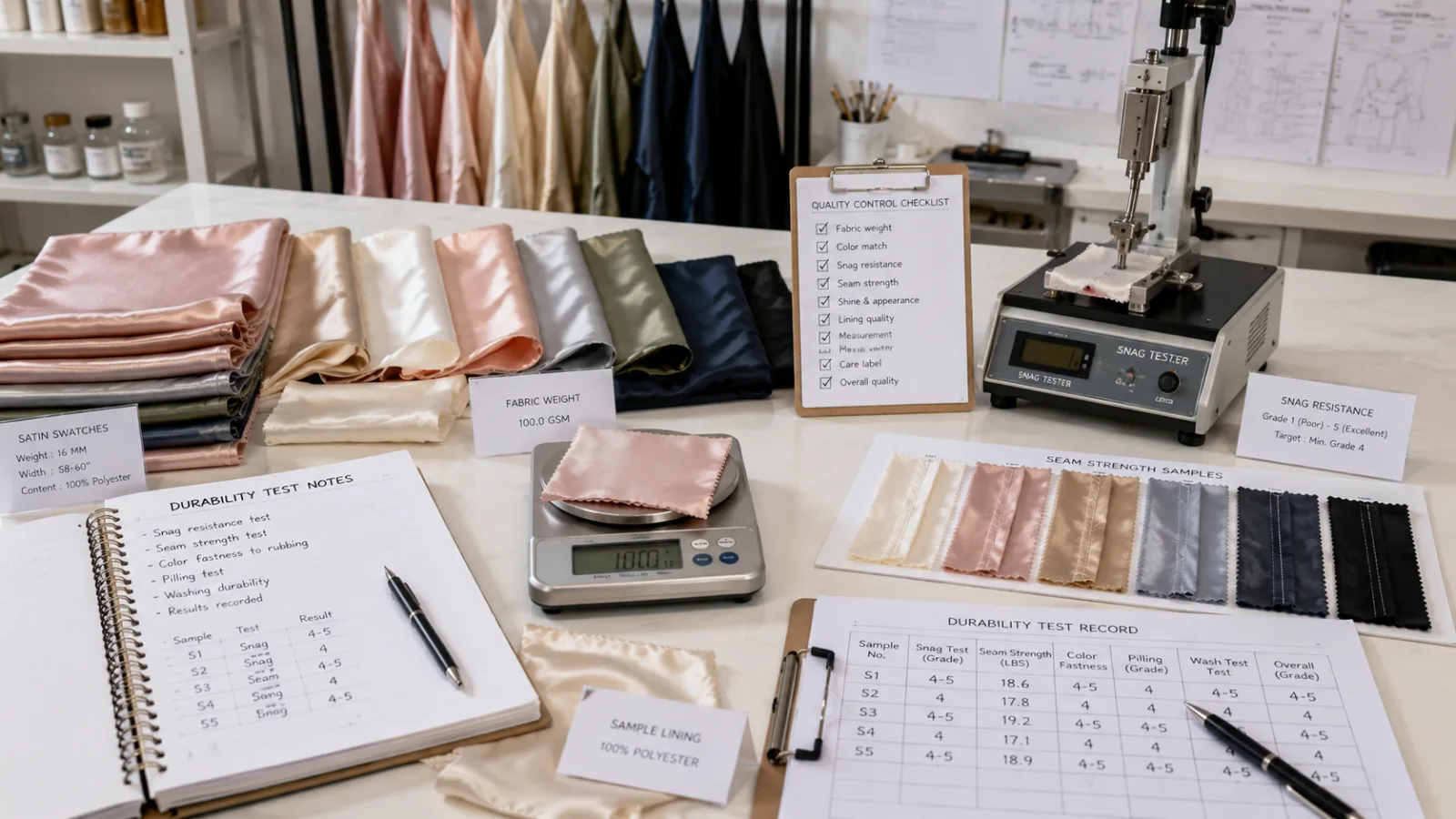
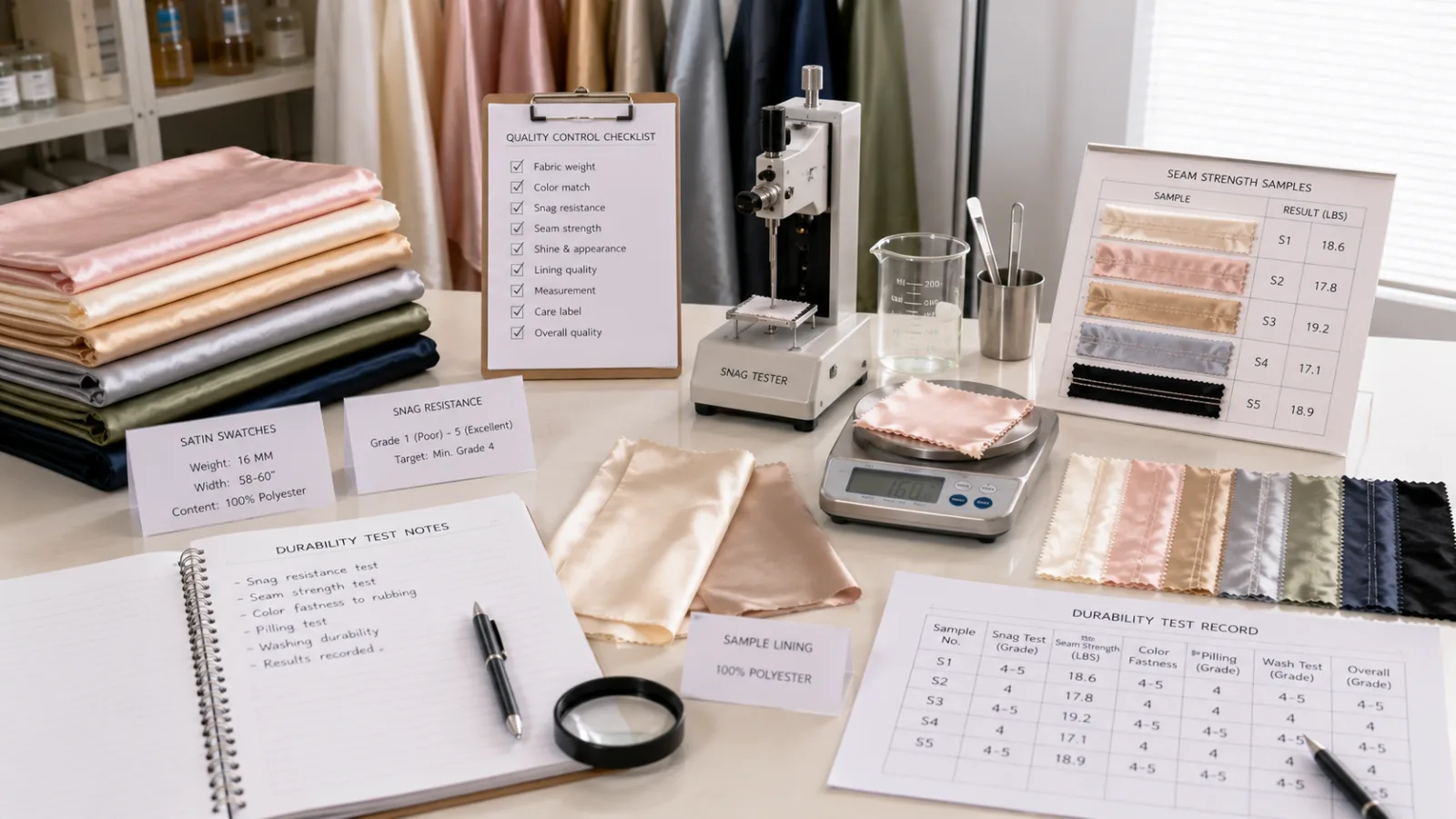
Satin durability depends on fiber content, weave quality, fabric weight, and usage. Polyester satin can be fairly durable for many uses, while silk satin is luxurious but more delicate. Heavy satin may hold structure well, while lightweight satin may snag or pull more easily.
Satin’s smooth surface can be vulnerable to snags, scratches, seam puckering, and water marks. Sharp jewelry, rough bags, and poor washing can damage the fabric.
Durable Satin Uses
Bridal satin can be durable enough for structured gowns. Polyester satin can work for costumes and linings. Heavy satin can work for formal wear and accessories. Satin linings can protect garments and make them easier to wear.
Less Durable Satin Uses
Lightweight satin may not be ideal for rough daily wear, workwear, activewear, or children’s play clothing. Satin is usually better for fashion, occasionwear, eveningwear, sleepwear, and decorative uses.
How to Improve Durability
- Choose the correct weight.
- Use lining where needed.
- Avoid tight seam stress.
- Finish seams properly.
- Use sharp sewing needles.
- Avoid rough surfaces.
- Follow care instructions.
- Store carefully.
FAQ 9: How Do You Wash Satin Fabric?
Satin care depends on fiber content. Always check the care label first. Silk satin may require dry cleaning or very gentle hand washing. Polyester satin may be washable, but it still needs care to avoid snags, heat damage, and wrinkles. Viscose satin can be delicate when wet, so gentle handling is important.
General Satin Washing Tips
- Use cold or lukewarm water.
- Use mild detergent.
- Avoid harsh scrubbing.
- Do not twist or wring.
- Wash inside out if possible.
- Use a mesh laundry bag for machine washing if allowed.
- Choose a delicate cycle if the care label permits machine washing.
- Air dry when possible.
- Avoid high heat.
Iron on low heat from the reverse side.
Can Satin Go in the Dryer?
It is usually safer to avoid tumble drying satin, especially silk, viscose, acetate, or delicate satin. Heat can damage fibers, create wrinkles, shrink fabric, or reduce shine. Polyester satin may tolerate low heat better, but air drying is still safer.
How to Remove Wrinkles From Satin
Use low heat and a pressing cloth. Steam gently if the fabric allows it. Avoid pressing directly on the shiny surface, especially with high heat. Always test on a hidden area first.
FAQ 10: Is Satin Difficult to Sew?
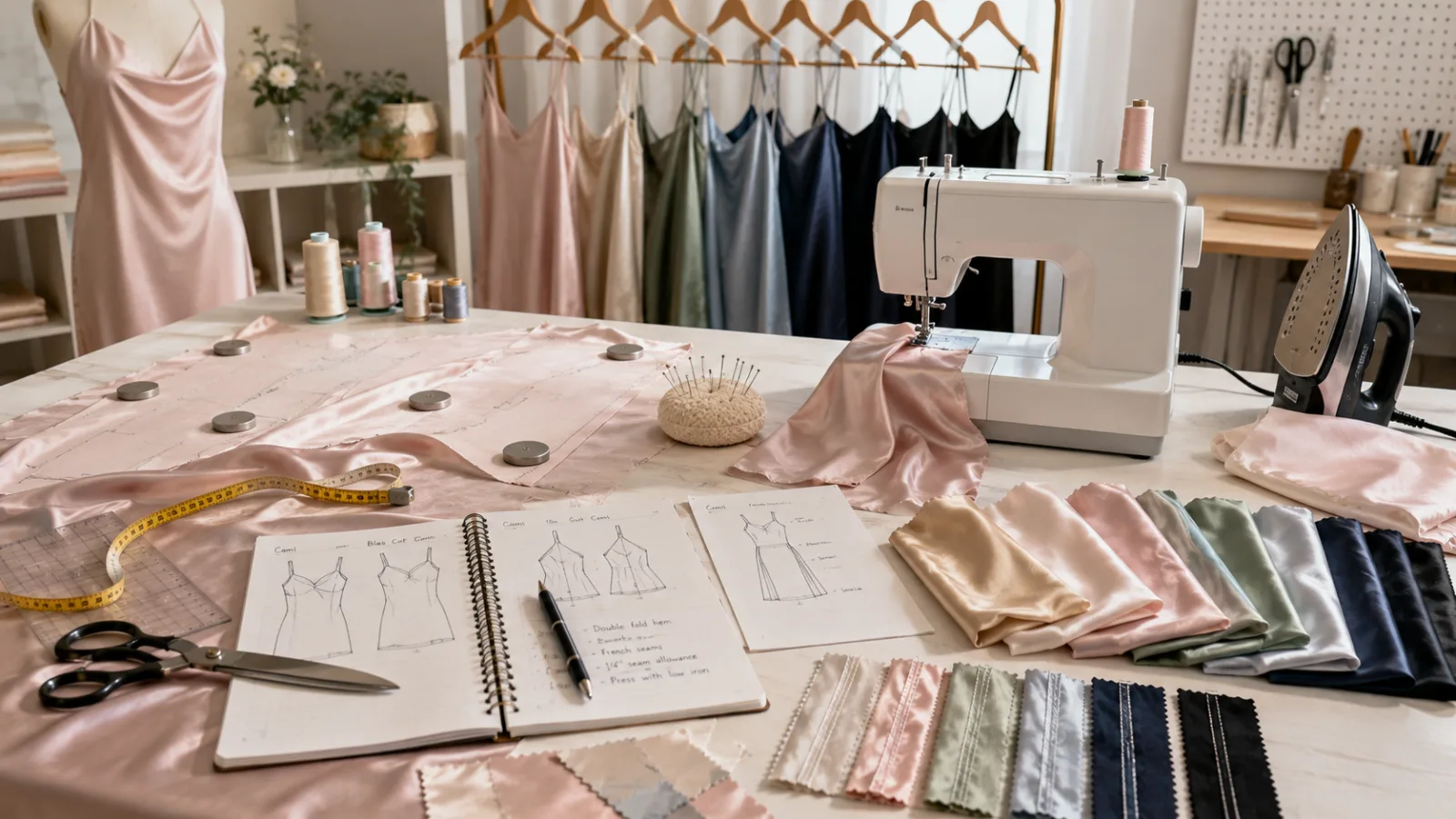
Satin can be difficult to sew because it is often slippery, shiny, and prone to showing mistakes. Lightweight satin can shift while cutting. Needle marks may show. Seams may pucker. The fabric may fray. The shiny surface can highlight uneven stitching. However, satin can be sewn successfully with the right tools and patience.
Tips for Sewing Satin
- Use sharp scissors or a rotary cutter.
- Cut on a flat surface.
- Use pattern weights instead of too many pins.
- Use fine sharp needles.
- Test stitches on scraps.
- Use a shorter stitch length if needed.
- Finish seams to prevent fraying.
- Press carefully with low heat.
- Use French seams for delicate satin.
- Avoid pulling the fabric while sewing.
Best Projects for Beginners
If you are new to satin, start with simple projects such as scarves, pillowcases, loose camisoles, simple skirts, or linings. Avoid complex fitted dresses until you are comfortable controlling the fabric.
Why Satin Shows Mistakes
Satin reflects light, so puckers, pulls, snags, and uneven seams become more visible. The smoother and shinier the fabric, the more careful sewing needs to be.
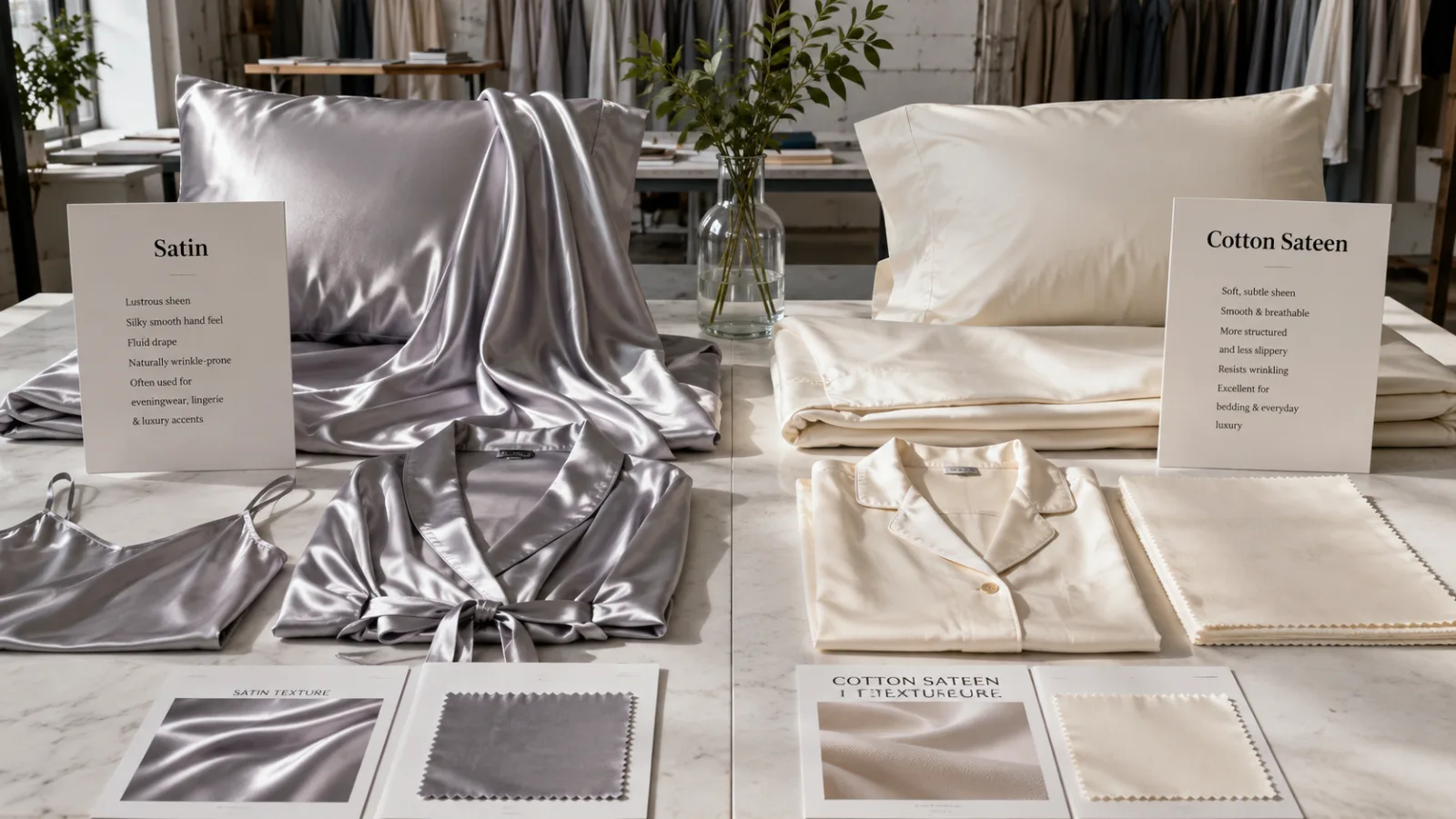
FAQ 11: What Is the Difference Between Satin and Sateen?
Satin and sateen are similar because both use a weave structure that creates a smooth surface. The main difference is usually the fiber and yarn structure. Satin is often made from filament fibers such as silk or polyester, which create a high-gloss surface. Sateen is commonly made from cotton or other staple fibers, giving it a softer, less glossy finish.
Sateen is often used in bedding, shirts, and home textiles. It feels smooth but usually does not have the same dramatic shine as satin. Cotton sateen is popular because it feels soft, breathable, and more matte than shiny satin.
Simple Comparison
Satin: glossy, smooth, often made with filament yarns.
Sateen: smooth, softer sheen, often made from cotton staple yarns.
Which One Should You Choose?
Choose satin for eveningwear, lingerie, bridalwear, shiny linings, and glamorous garments. Choose sateen for bedding, shirts, structured cotton garments, and smooth everyday textiles.
FAQ 12: Does Satin Wrinkle Easily?
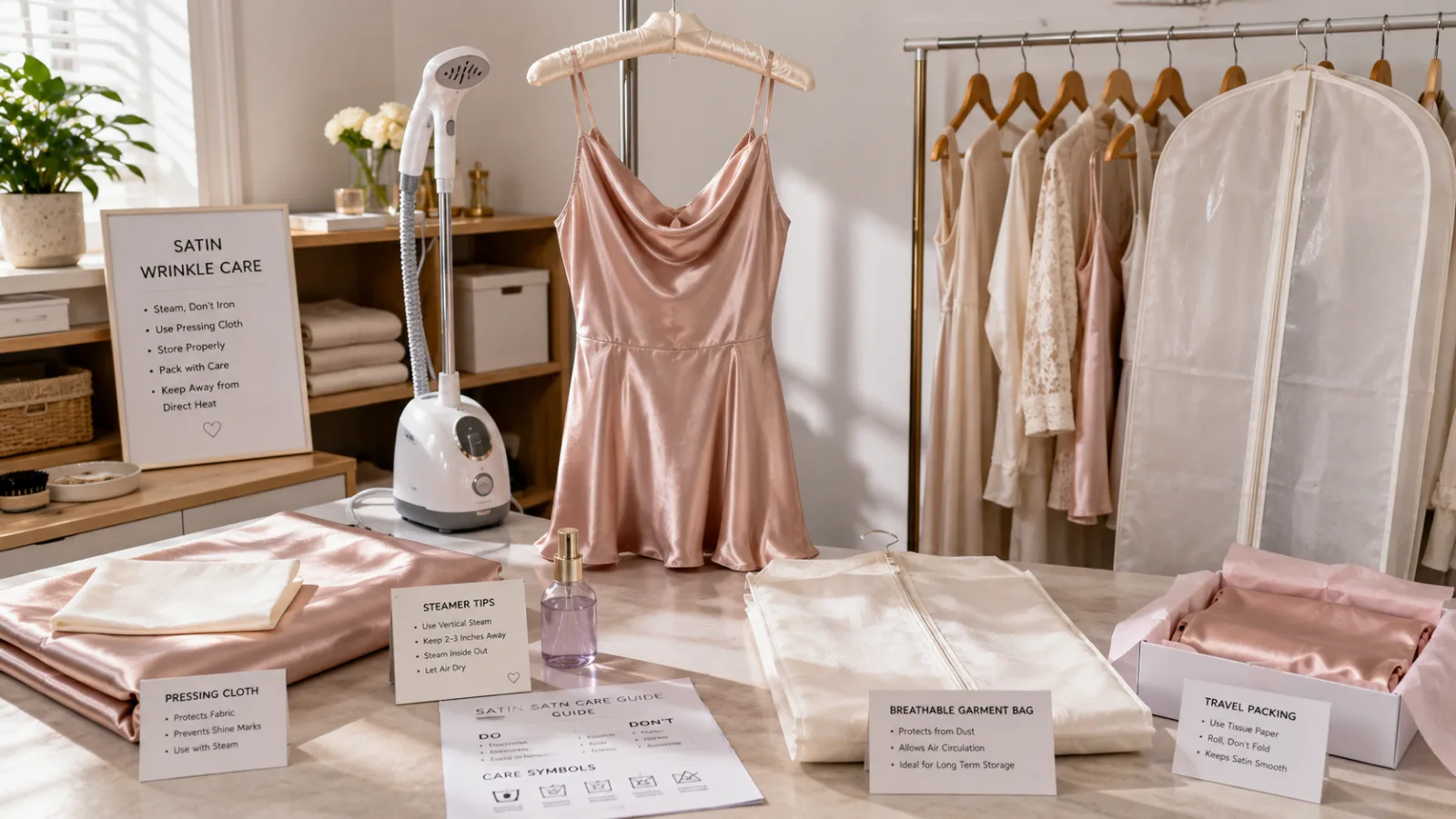
Some satin fabrics wrinkle more than others. Silk satin and viscose satin may wrinkle more easily than polyester satin. Heavy satin may hold shape better, while lightweight satin can crease if folded tightly.
Wrinkles are also more visible on satin because the surface reflects light. Even small creases can stand out.
How to Prevent Satin Wrinkles
- Hang garments properly.
- Use padded hangers.
- Avoid tight folding.
- Store in breathable garment bags.
- Steam gently before wearing.
- Pack satin garments with tissue paper when traveling.
- Avoid crushing satin under heavy items.
How to Fix Satin Wrinkles
Use gentle steam or low heat with a pressing cloth. Press from the reverse side when possible. Do not use high heat, especially on polyester, acetate, or delicate satin.
Common Myths About Satin Fabric
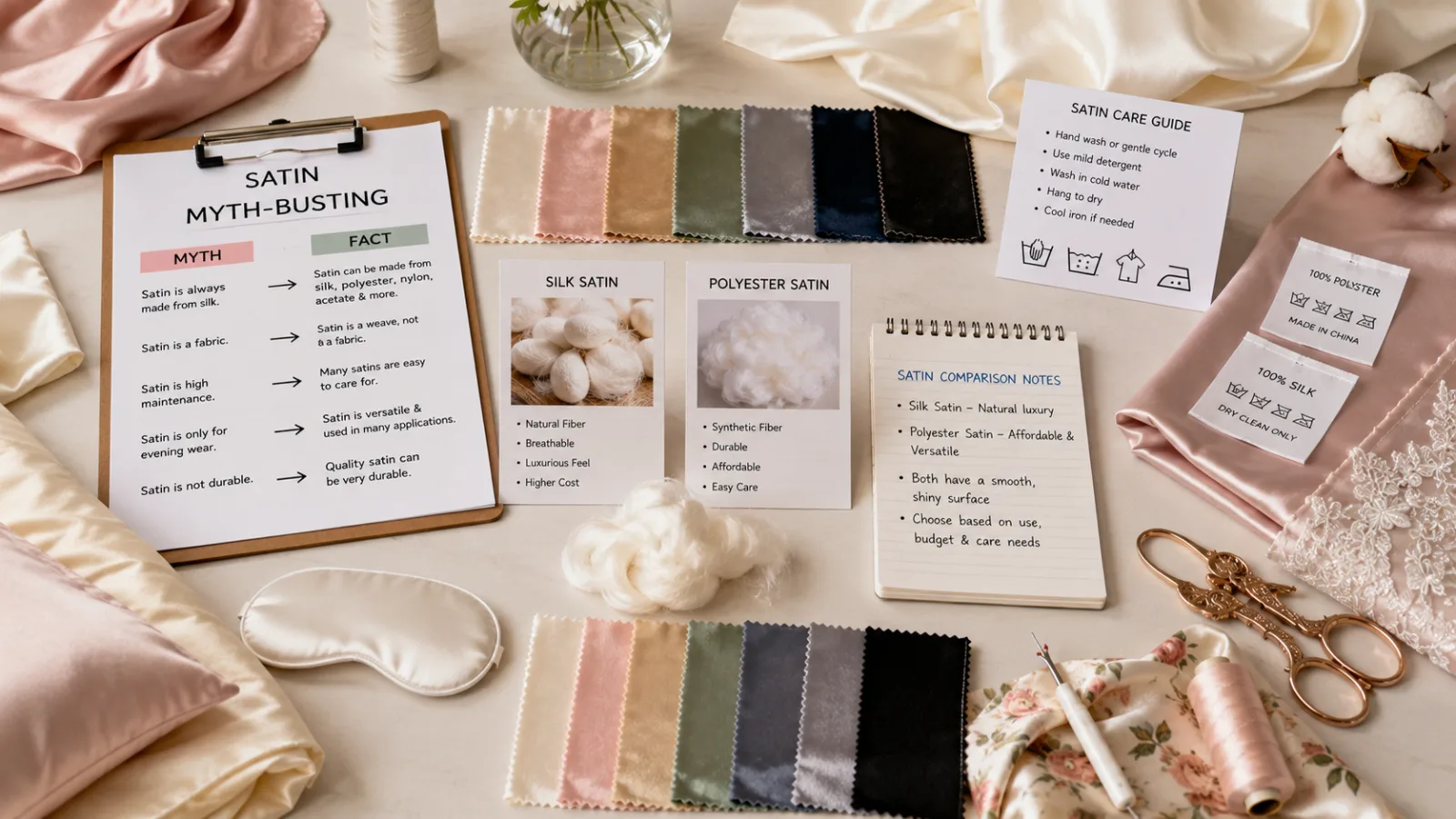
Satin is surrounded by many myths. Clearing them up helps buyers choose better fabric.
Myth 1: Satin Is Always Silk
False. Satin can be silk, polyester, nylon, acetate, rayon, viscose, or blends.
Myth 2: Satin Is Always Expensive
False. Silk satin is expensive, but polyester satin can be affordable.
Myth 3: Satin Is Only for Dresses
False. Satin is used for bedding, linings, scarves, accessories, lingerie, robes, decorations, and interiors.
Myth 4: Satin Is Always Comfortable
Not always. Comfort depends on fiber, weight, fit, and breathability.
Myth 5: Satin Is Impossible to Sew
False. Satin can be challenging, but proper tools and technique make it manageable.
Myth 6: Satin Is Too Delicate for Practical Use
Some satin is delicate, but heavier synthetic satin can be durable enough for costumes, linings, accessories, and formalwear.
ApparGlobal
For apparel brands, satin fabric is a strong reminder that fabric selection should never be based on appearance alone. Satin may look beautiful on a swatch, but the final garment depends on fiber content, fabric weight, drape, transparency, sewing behavior, lining needs, shrinkage, care requirements, MOQ, and quality control.
Many clothing brands face production issues when they choose shiny or delicate fabrics without understanding how those fabrics behave during sampling and bulk manufacturing. Satin, silk, charmeuse, crepe-back satin, bridal satin, chiffon, velvet, lace, and other specialty fabrics all require careful planning before production begins.
Companies such as ApparGlobal help clothing brands align fabric selection, sourcing decisions, tech packs, sample review, trim planning, MOQ requirements, quality control, and scalable manufacturing workflows. For brands developing dresses, bridalwear, sleepwear, blouses, kidswear, private label apparel, or custom collections, this kind of production-focused support can make fabric decisions more practical and reliable.
When brands work with a partner that understands fabric behavior, supplier coordination, sewing compatibility, care labeling, quality checkpoints, and production timelines, they can reduce costly mistakes and create garments that look beautiful while performing well in real use.
Satin Fabric Buying Checklist
Before buying satin fabric, use this checklist:
- Check the fiber content.
- Confirm whether it is silk, polyester, viscose, acetate, nylon, or blend.
- Choose the correct satin type for your project.
- Check fabric weight and drape.
- Inspect shine and surface quality.
- Check if the fabric is transparent.
- Ask whether lining is needed.
- Test for snags and static.
- Review care instructions.
- Check whether it can be washed or dry cleaned.
- Buy extra fabric for mistakes and pattern matching.
- Use the correct sewing tools.
- Test pressing before sewing.
- Request a swatch before bulk buying.
This checklist is useful for designers, home sewists, fabric buyers, and fashion brands.
Final Thoughts
Satin fabric is one of the most elegant and versatile textiles in fashion and interiors. Its smooth surface, glossy shine, and graceful drape make it a favorite for dresses, bridalwear, lingerie, blouses, linings, robes, bedding, scarves, and accessories. But satin is also one of the most misunderstood fabrics because many people confuse it with silk.
The most important thing to remember is that satin is a weave, not a fiber. It can be made from silk, polyester, nylon, viscose, acetate, or blends. This means satin can be luxurious, affordable, breathable, structured, delicate, stretchy, lightweight, or heavy depending on how it is made.
Choosing the right satin depends on your project. Charmeuse satin works well for soft, flowing garments. Bridal satin works well for structured gowns. Stretch satin works well for fitted designs. Polyester satin works well for affordable fashion, costumes, and linings. Silk satin works well for luxury garments and premium accessories.
Satin can look beautiful, but it needs thoughtful handling. Check fiber content, care instructions, drape, weight, transparency, and sewing behavior before buying. For apparel brands, sampling and testing are especially important because satin can show mistakes clearly.
When chosen carefully, satin can turn a simple design into something polished, romantic, and refined. Whether you are buying fabric for a dress, designing a bridal collection, creating luxury sleepwear, or sourcing materials for a fashion brand, understanding satin fabric will help you make better decisions from the first swatch to the finished product.