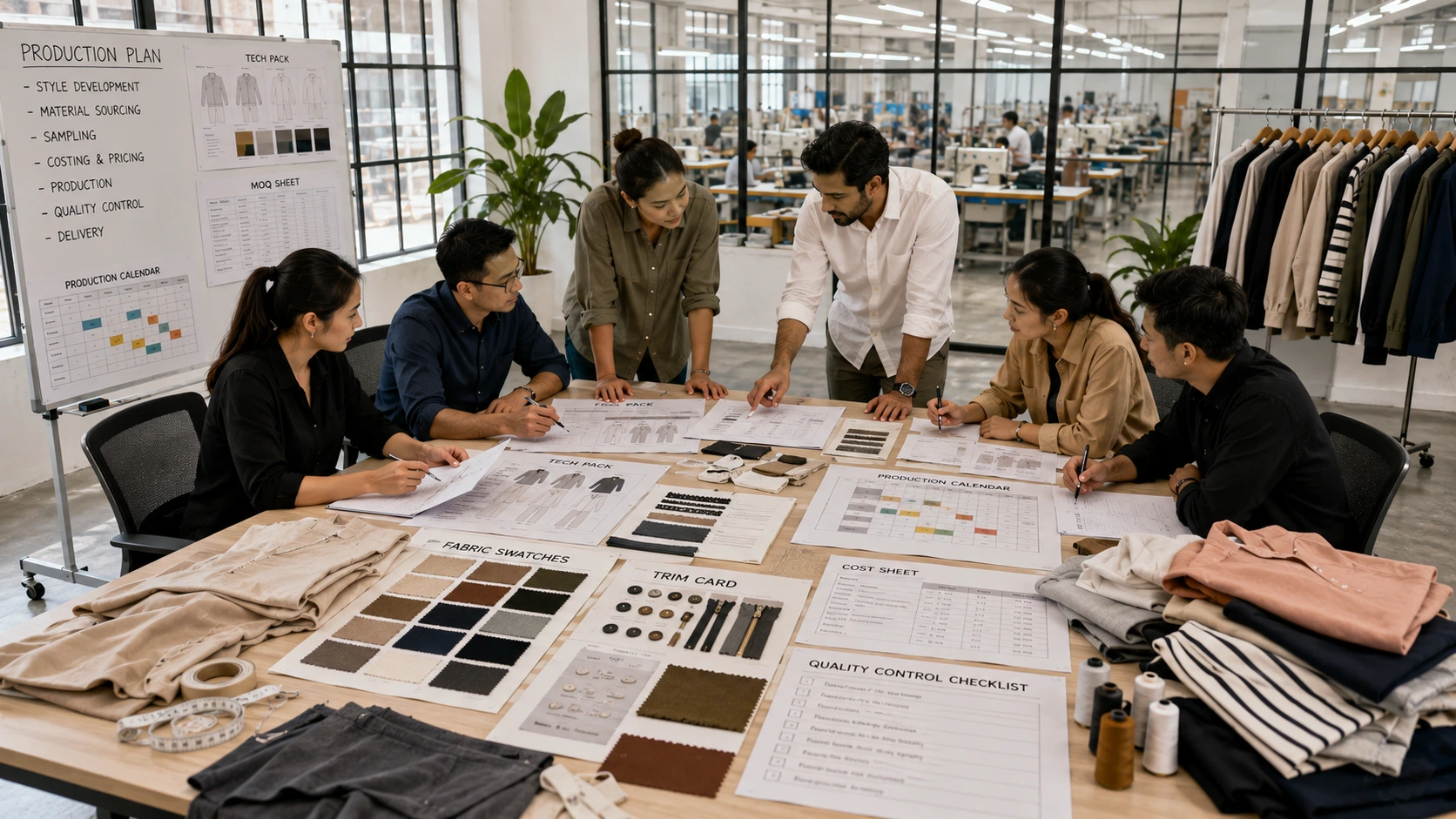
A merchandising plan in manufacturing helps turn product ideas into organized, cost-controlled, production-ready goods. While retail merchandising focuses on selling the right products to customers, manufacturing merchandising focuses on making the right products correctly, on time, within budget, and at the expected quality level.
This difference matters because many fashion brands confuse retail planning with production planning. A retail plan may decide what to sell, when to launch, how to price it, and how to display it. But a manufacturing merchandising plan goes deeper into technical execution. It connects design, sourcing, fabric planning, trims, samples, costing, MOQ, production timelines, quality control, and delivery.
For apparel brands, this planning stage is critical. A beautiful collection can fail if fabrics are delayed, samples are inaccurate, production costs are too high, trims are unavailable, size grading is wrong, or factories cannot meet the delivery date. A strong manufacturing merchandising plan reduces these risks by creating a clear roadmap before bulk production begins.
In this guide, we will explain the role of a merchandising plan in manufacturing, how it differs from retail merchandising, why it matters for clothing brands, what elements it should include, and how brands can use it to improve production efficiency, quality, cost control, and retail readiness.

What Is a Merchandising Plan in Manufacturing?
A merchandising plan in manufacturing is a structured document or planning system that guides how a product will move from design concept to finished production. It connects the creative idea with the practical steps needed to manufacture the product successfully.
In apparel manufacturing, the merchandising plan usually covers product details, fabric requirements, trim requirements, sampling stages, production quantities, cost targets, supplier responsibilities, production lead times, quality checkpoints, packaging instructions, and delivery schedules.
The manufacturing merchandiser often acts as the bridge between the buyer, brand, supplier, factory, fabric mill, trim vendor, sample team, production team, quality team, and logistics team. Their job is to make sure everyone understands the same product requirements and works toward the same deadline.
A manufacturing merchandising plan answers questions such as:
- What product is being made?
- What fabric will be used?
- What trims are required?
- What is the target cost?
- What is the MOQ?
- How many pieces will be produced?
- What sizes and colors are needed?
- When must the sample be approved?
- When does bulk production start?
- What quality standards must be followed?
- How will the goods be packed?
- When must the order be shipped?
Without a clear plan, production becomes reactive. Teams may wait for approvals, suppliers may misread requirements, fabric may arrive late, samples may need repeated revisions, and the final garment may not match expectations.
Why Manufacturing Merchandising Is Different
Manufacturing merchandising is not only about product selection. It is about product execution. It focuses on whether the selected product can actually be produced at the right price, quality, quantity, and timeline.
For example, a retail team may decide that a heavyweight oversized hoodie should launch in October. The manufacturing merchandising team must then determine whether the fabric is available, whether the rib matches, whether the factory can produce the silhouette, whether the print method is suitable, whether the MOQ fits the budget, and whether shipping can happen before the launch date.
What Is a Retail Merchandising Plan?
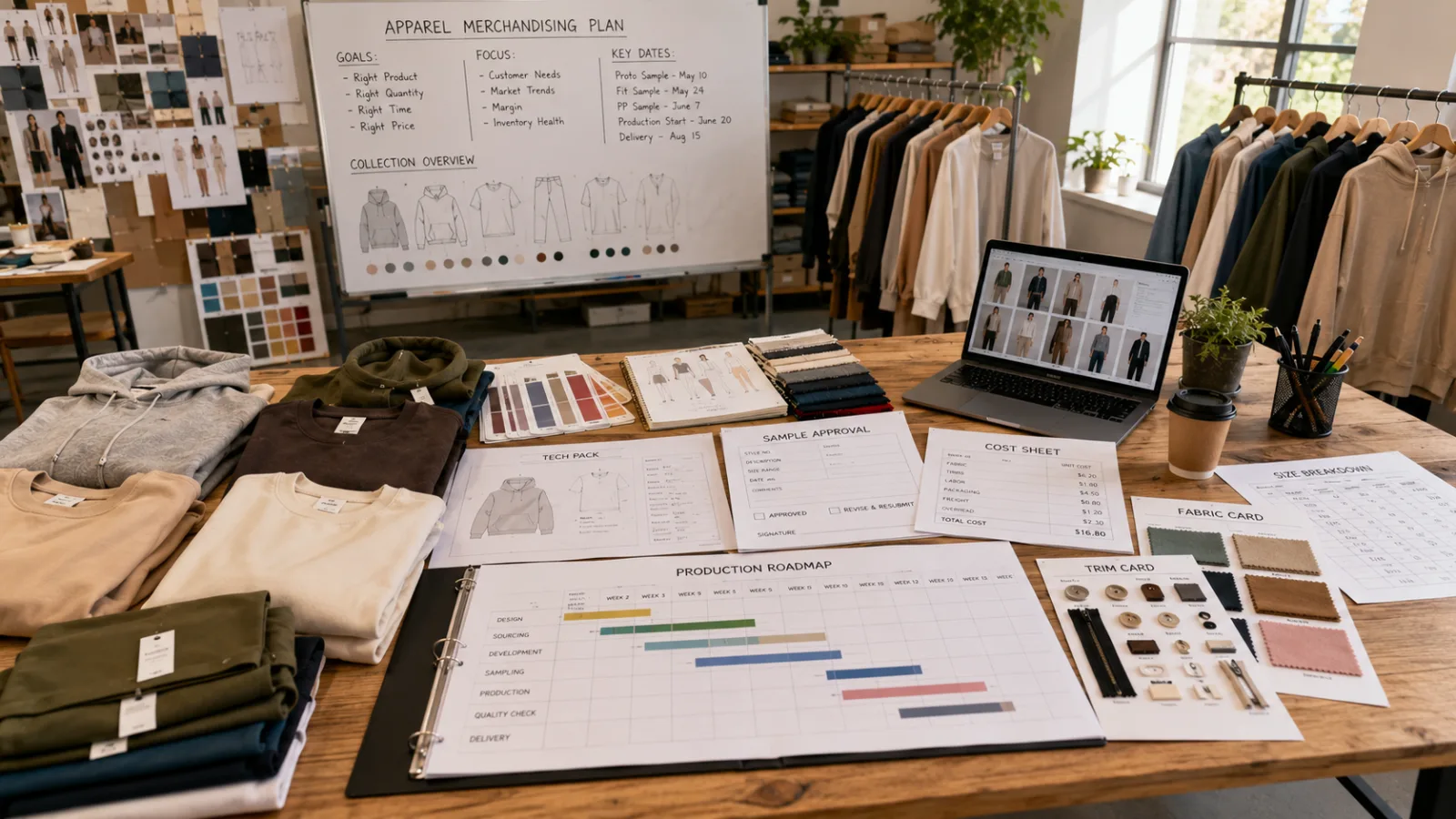
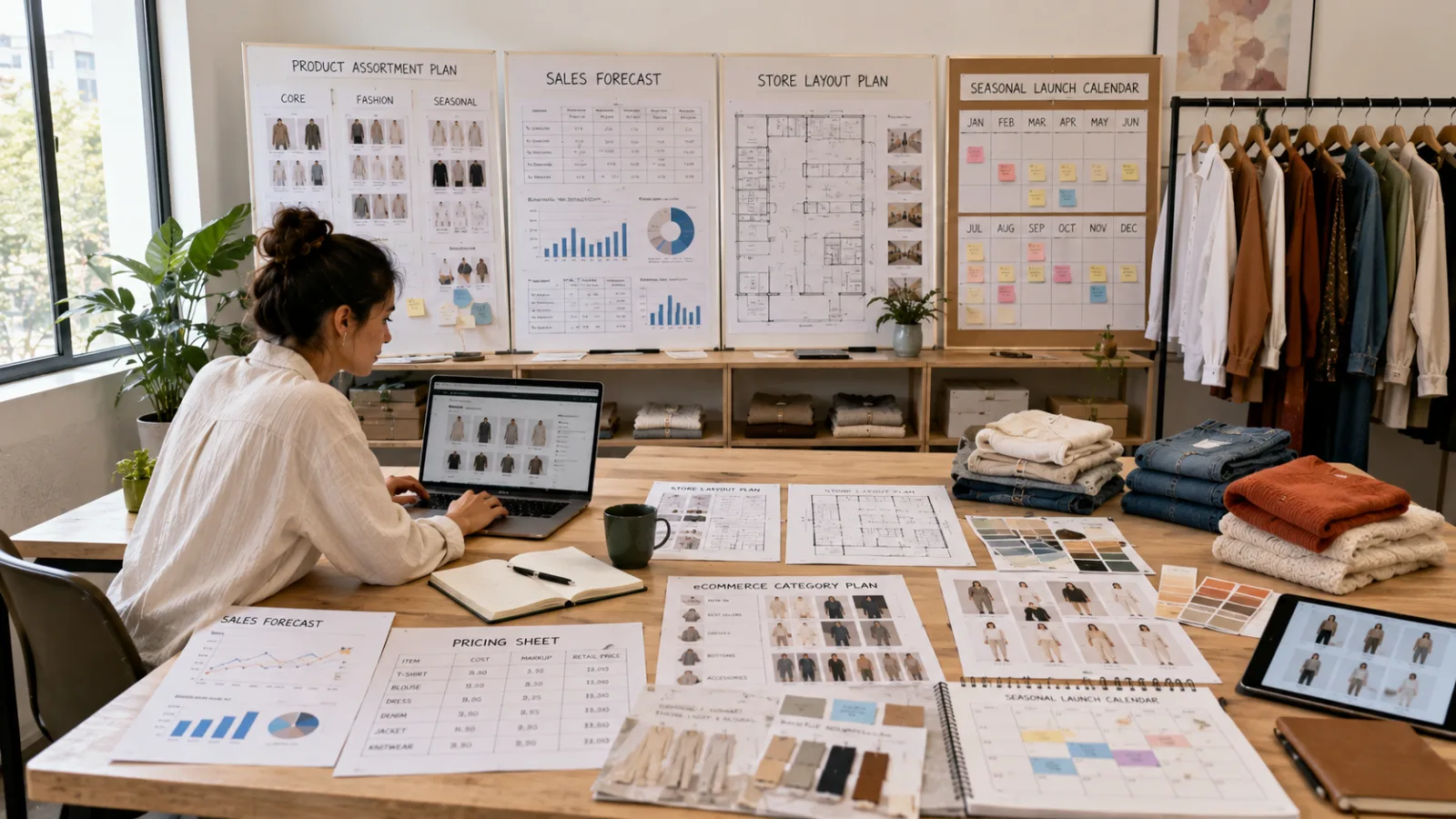
A retail merchandising plan focuses on selling products to customers. It helps retailers decide what products to offer, how much inventory to carry, how to price products, how to present them, and when to promote them.
Retail merchandising usually includes product assortment planning, sales forecasting, pricing strategy, inventory planning, visual merchandising, store allocation, eCommerce category planning, promotional calendars, markdown planning, and customer experience.
A retail merchandising plan answers questions such as:
- What products should we sell?
- Who is the target customer?
- What price points should we offer?
- How many units should we buy?
- Which stores or online channels should receive stock?
- How should products be displayed?
- When should promotions happen?
- How do we reduce markdowns?
- Which products should be reordered?
- Which products should be cleared?
Retail merchandising is customer-facing. It looks at demand, sales, trends, inventory turnover, customer behavior, pricing, and profitability. It tries to match products with shoppers in a way that increases sales and protects margins.
Retail Merchandising Example
A retailer may plan a summer collection with 20 styles, including T-shirts, shorts, dresses, swimwear, sandals, and accessories. The retail plan will decide which styles are core, which are trend-driven, which price points are needed, how much stock to allocate online, and when to run promotional campaigns.
The manufacturing plan comes before or alongside this. It makes sure those T-shirts, shorts, dresses, and swimwear can be developed, sourced, sampled, produced, packed, and shipped in time.
Manufacturing Merchandising vs Retail Merchandising: The Core Difference
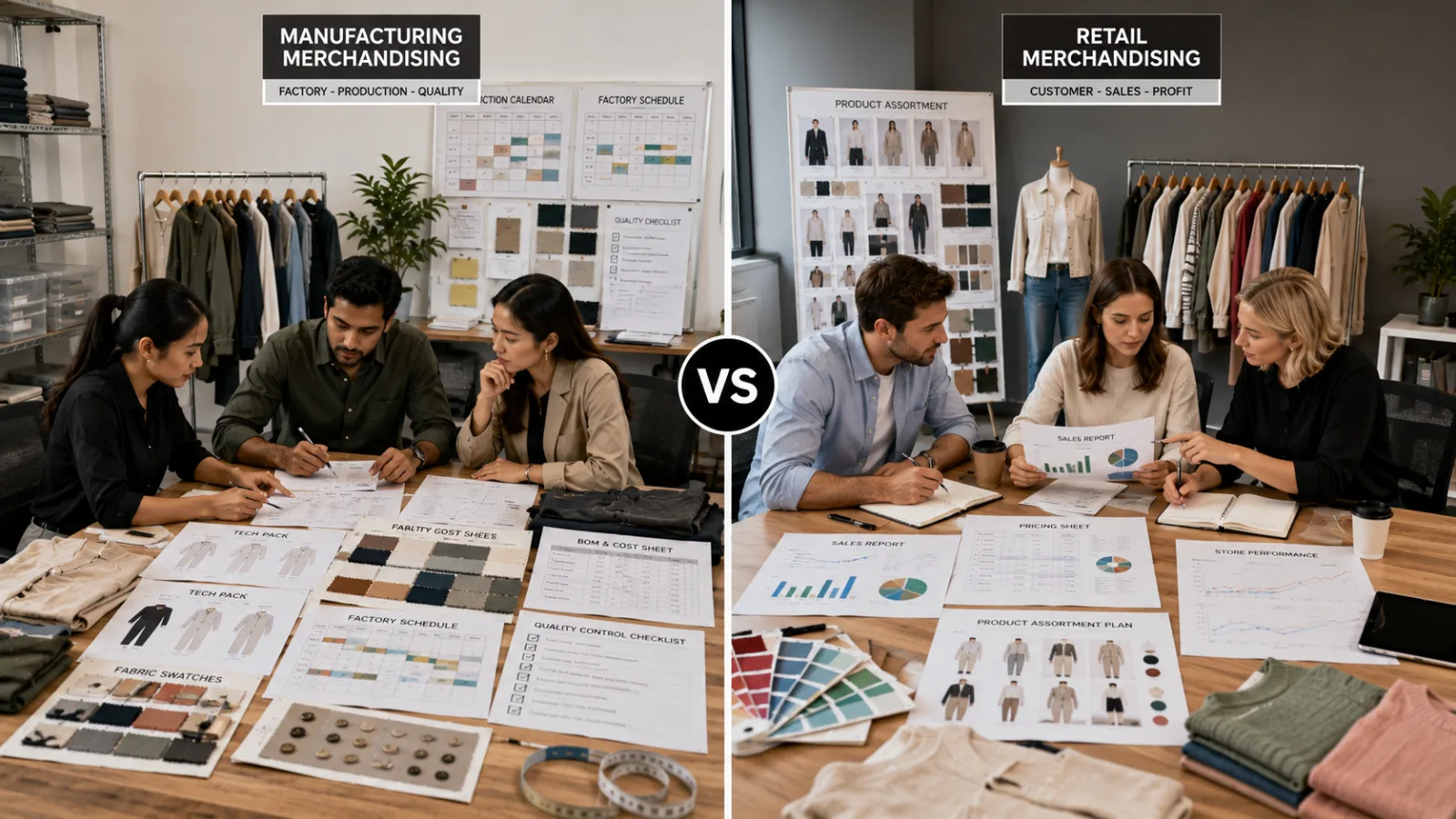
The simplest difference is this: manufacturing merchandising focuses on making the product, while retail merchandising focuses on selling the product. Both are connected, but they operate at different stages of the fashion business. Manufacturing merchandising happens before and during production. Retail merchandising happens before and during selling.
A manufacturing merchandising plan looks at feasibility. Can the product be made? Can it be made at the target cost? Can the factory deliver on time? Are the fabric and trims available? Is the sample approved? Are quality standards clear?
A retail merchandising plan looks at market performance. Will customers buy the product? What quantity should be stocked? What price should be charged? Where should the product be displayed? When should it be promoted? When should it be marked down?
Key Difference 1: Product Execution vs Product Selling
Manufacturing merchandising turns a design into a finished product. Retail merchandising turns finished products into sales.
Key Difference 2: Supplier Management vs Customer Demand
Manufacturing merchandising manages suppliers, factories, fabric mills, trim vendors, and production schedules. Retail merchandising studies customer demand, sales data, inventory levels, and shopping behavior.
Key Difference 3: Cost Control vs Margin Optimization
Manufacturing merchandising controls production cost, material cost, labor cost, MOQ, and wastage. Retail merchandising manages retail price, markdowns, sell-through, gross margin, and profitability.
Key Difference 4: Sample Approval vs Product Display
Manufacturing merchandising focuses on samples, fit, measurements, construction, and quality. Retail merchandising focuses on product presentation, store layout, website categories, product photography, and promotions.
Key Difference 5: Production Timeline vs Sales Calendar
Manufacturing merchandising builds the production calendar. Retail merchandising builds the selling calendar.
Why a Merchandising Plan Matters in Manufacturing
A manufacturing merchandising plan matters because apparel production is complex. Every garment depends on many small decisions. If those decisions are not organized, the final product can become expensive, delayed, inconsistent, or unsellable.
For fashion brands, manufacturing planning affects almost every business outcome: product quality, cost, delivery, launch timing, customer satisfaction, and profitability.
1. It Reduces Production Confusion
A merchandising plan gives all teams one clear reference point. Designers, suppliers, factories, quality teams, and logistics teams can follow the same product specifications, deadlines, and approval steps.
Without this plan, teams may rely on scattered messages, incomplete tech packs, or verbal instructions. This creates mistakes.
2. It Controls Cost Before Production
Production costs can rise quickly when fabric changes, trims are added late, samples need revisions, or MOQ requirements are misunderstood. A merchandising plan helps brands control costs from the beginning by defining target cost, material choices, supplier quotes, and production quantities.
3. It Keeps Timelines Realistic
A retail launch date is only possible if the manufacturing timeline supports it. A merchandising plan maps every step: development, sampling, fabric sourcing, trim approval, bulk production, inspection, packing, and shipping.
4. It Improves Quality Control
Quality cannot be checked only at the end. A strong manufacturing plan includes checkpoints throughout the process. Fabric quality, measurements, stitching, trims, labels, and packaging should all be checked before shipment.
5. It Helps Brands Scale
A brand may produce 100 pieces in its first run, but scaling to 1,000 or 10,000 pieces requires structure. A manufacturing merchandising plan creates repeatable systems so production does not depend on guesswork.
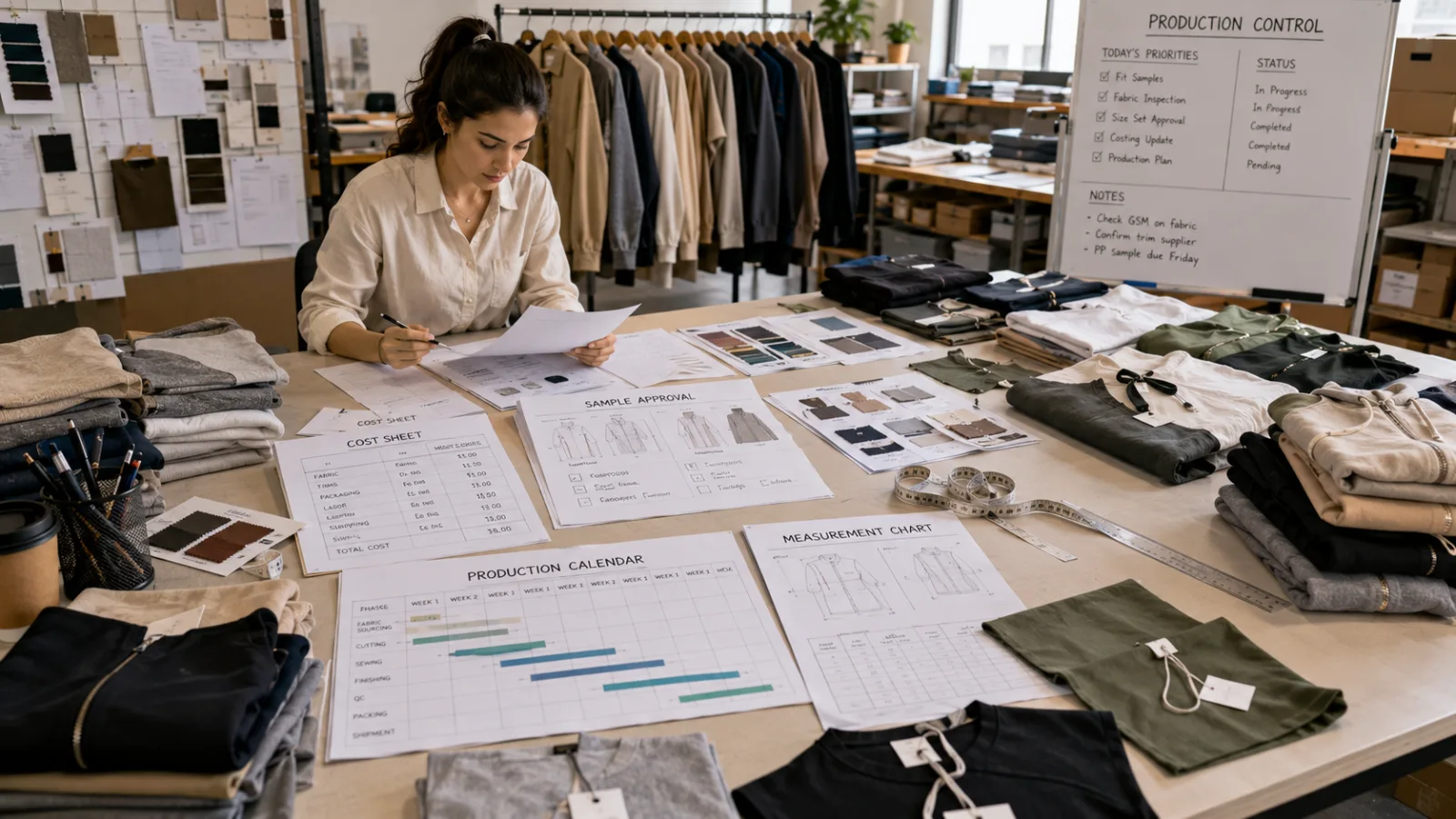
Key Elements of a Manufacturing Merchandising Plan
A strong manufacturing merchandising plan should include all the information needed to develop, source, produce, inspect, and deliver products correctly.
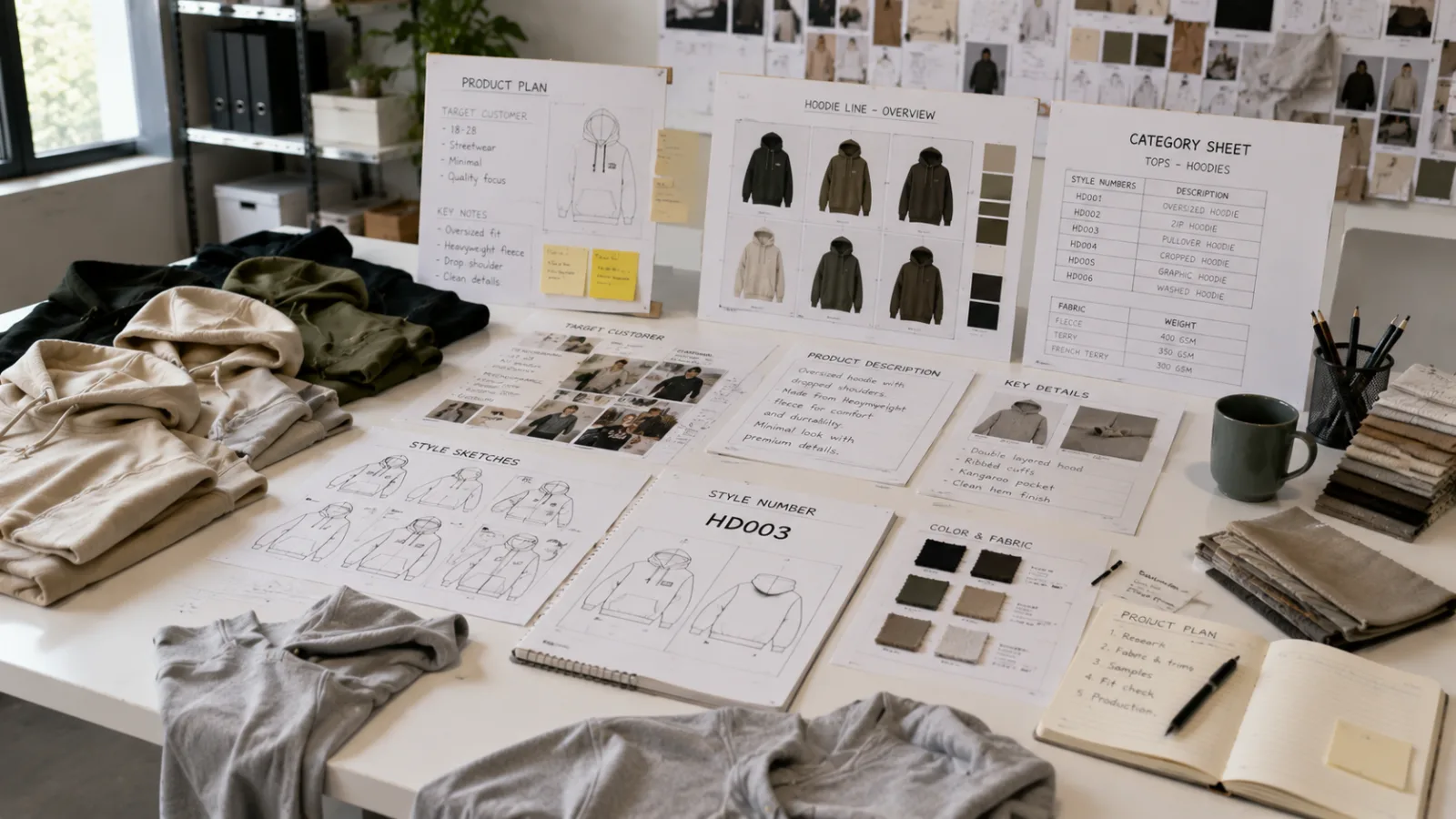
1. Product Details
This section includes the product name, style number, category, season, target customer, design description, and product purpose.
For example:
- Product name: Oversized fleece hoodie
- Category: Men’s streetwear
- Season: Fall/Winter
- Target customer: Young adult streetwear buyer
- Purpose: Core seasonal hoodie with premium fleece feel
Clear product details help the factory and sourcing team understand what kind of garment they are making.
2. Tech Pack and Specifications
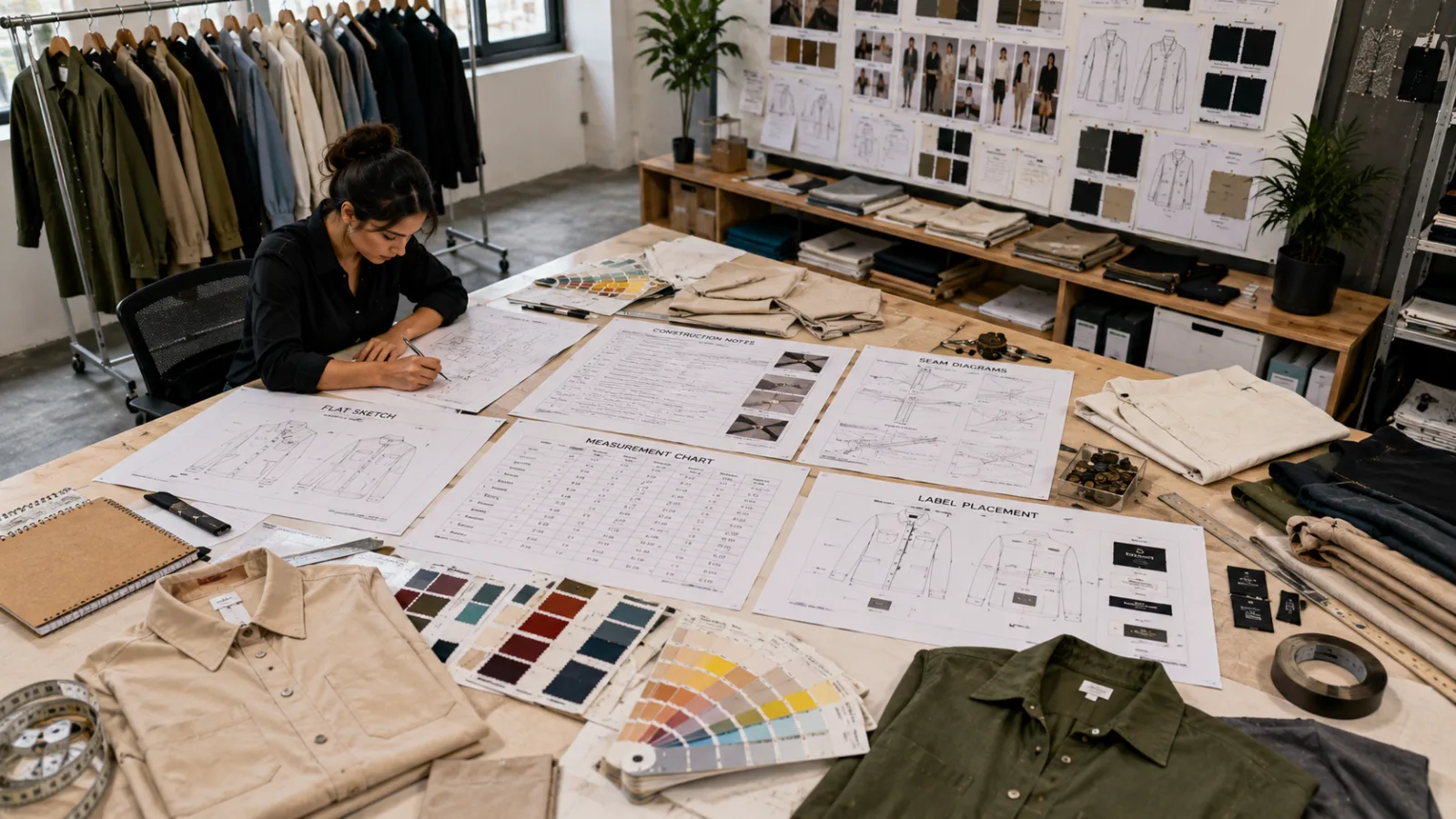
The tech pack is one of the most important parts of manufacturing merchandising. It should include flat sketches, measurements, size grading, construction details, stitch types, fabric specifications, trim details, label placement, print or embroidery artwork, packaging requirements, and tolerance levels.
A clear tech pack reduces sampling mistakes and helps suppliers quote accurately.
3. Fabric and Material Plan
The fabric plan includes composition, GSM, color, stretch, width, finish, shrinkage requirements, source, supplier, MOQ, price, and availability.
Fabric planning is critical because material delays can delay the entire order. Brands should confirm whether fabric is stock, custom dyed, custom knitted, imported, or locally sourced.

4. Trim and Branding Plan
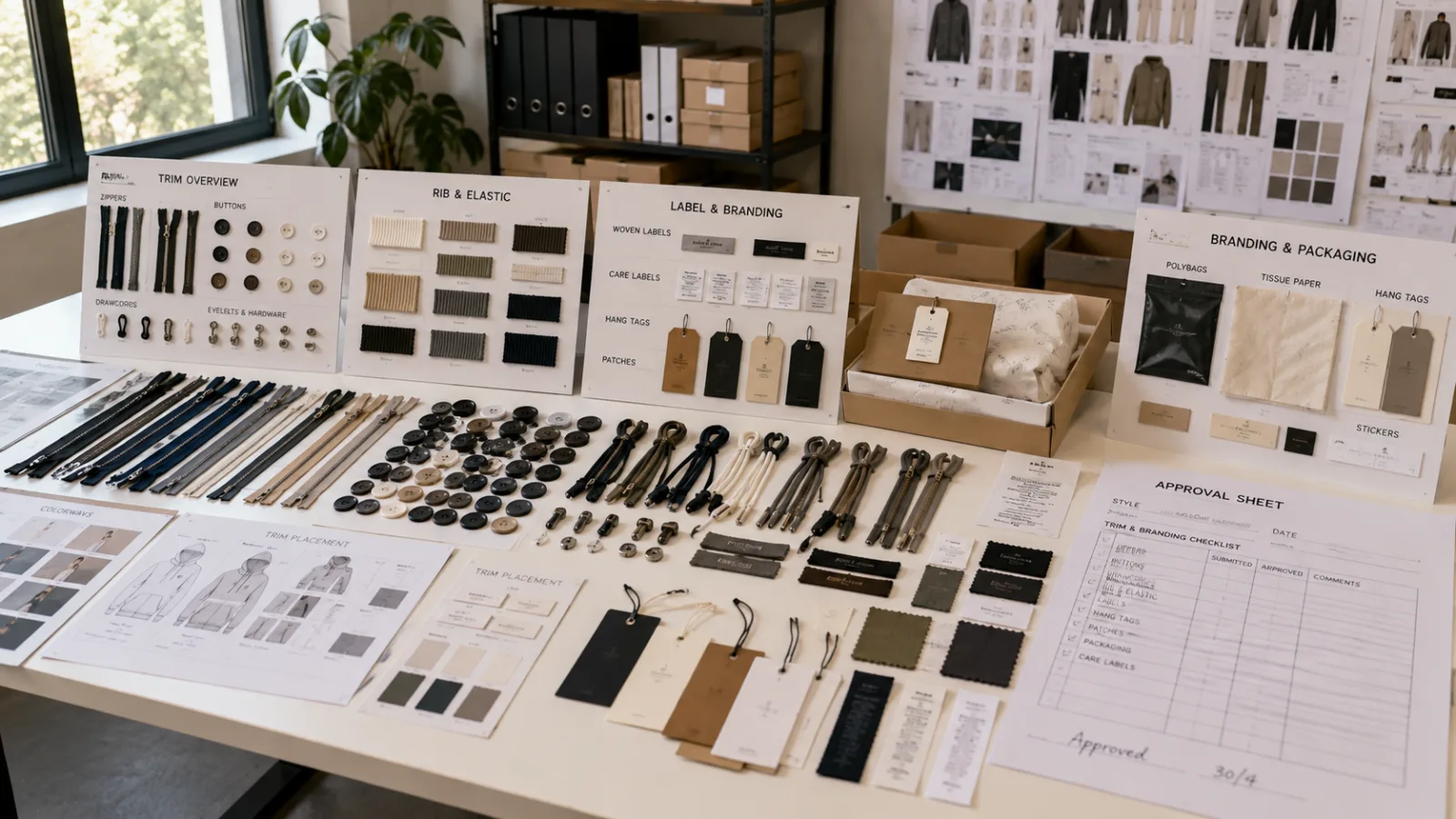
Trims include buttons, zippers, drawcords, elastic, rib, snaps, labels, hang tags, patches, packaging, size stickers, and care labels. These small details can delay production if they are not planned early.
A trim plan should include material, size, color, placement, MOQ, supplier, cost, and approval status.
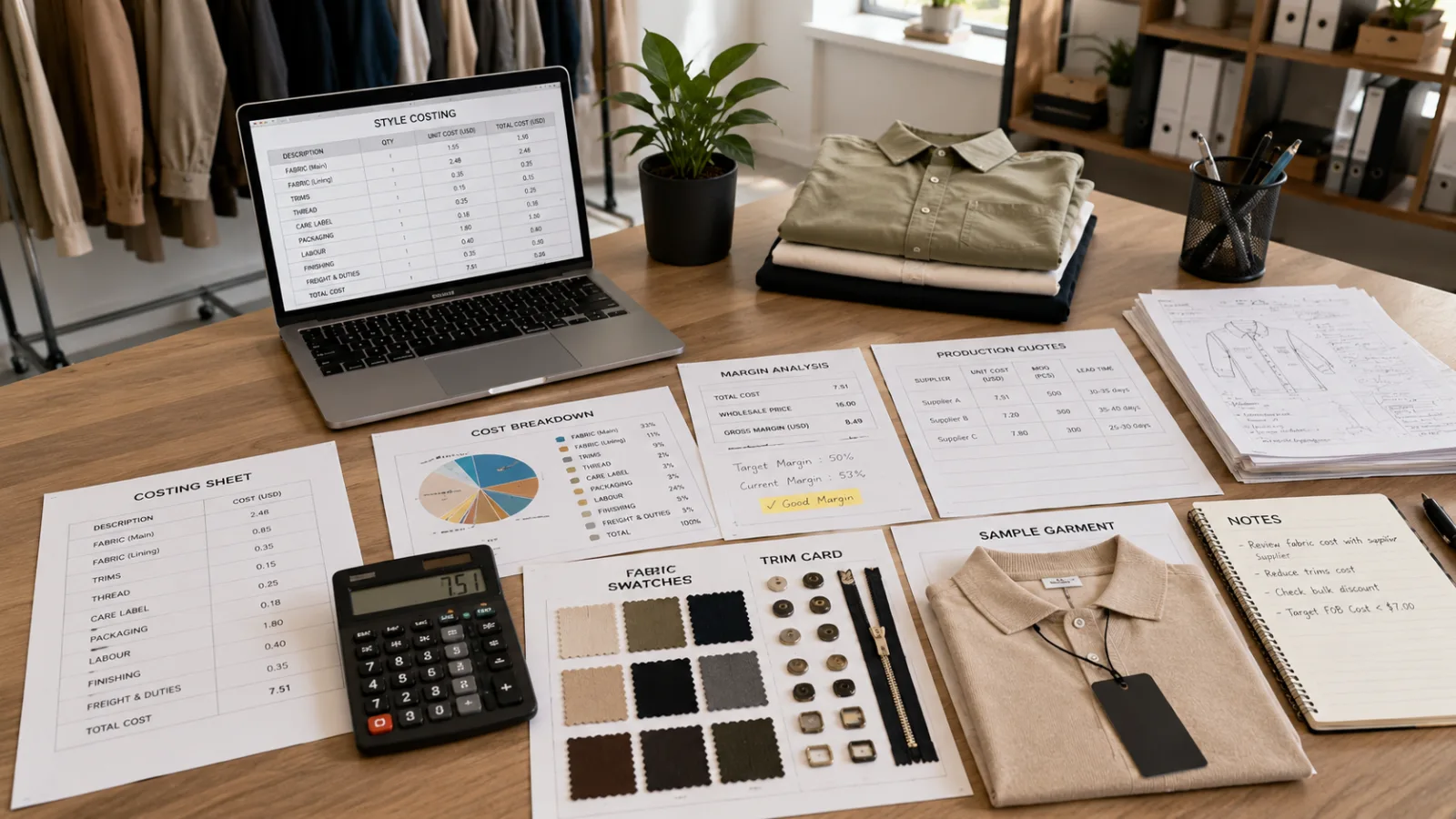
5. Costing and Target Margin
Manufacturing merchandising must connect product design with cost reality. A costing sheet should include fabric cost, trim cost, labor cost, printing or embroidery cost, washing cost, packaging cost, overhead, shipping, duties, and final landed cost. If the production cost is too high, the brand may need to adjust the fabric, design details, trims, MOQ, or retail price.
6. MOQ and Quantity Plan
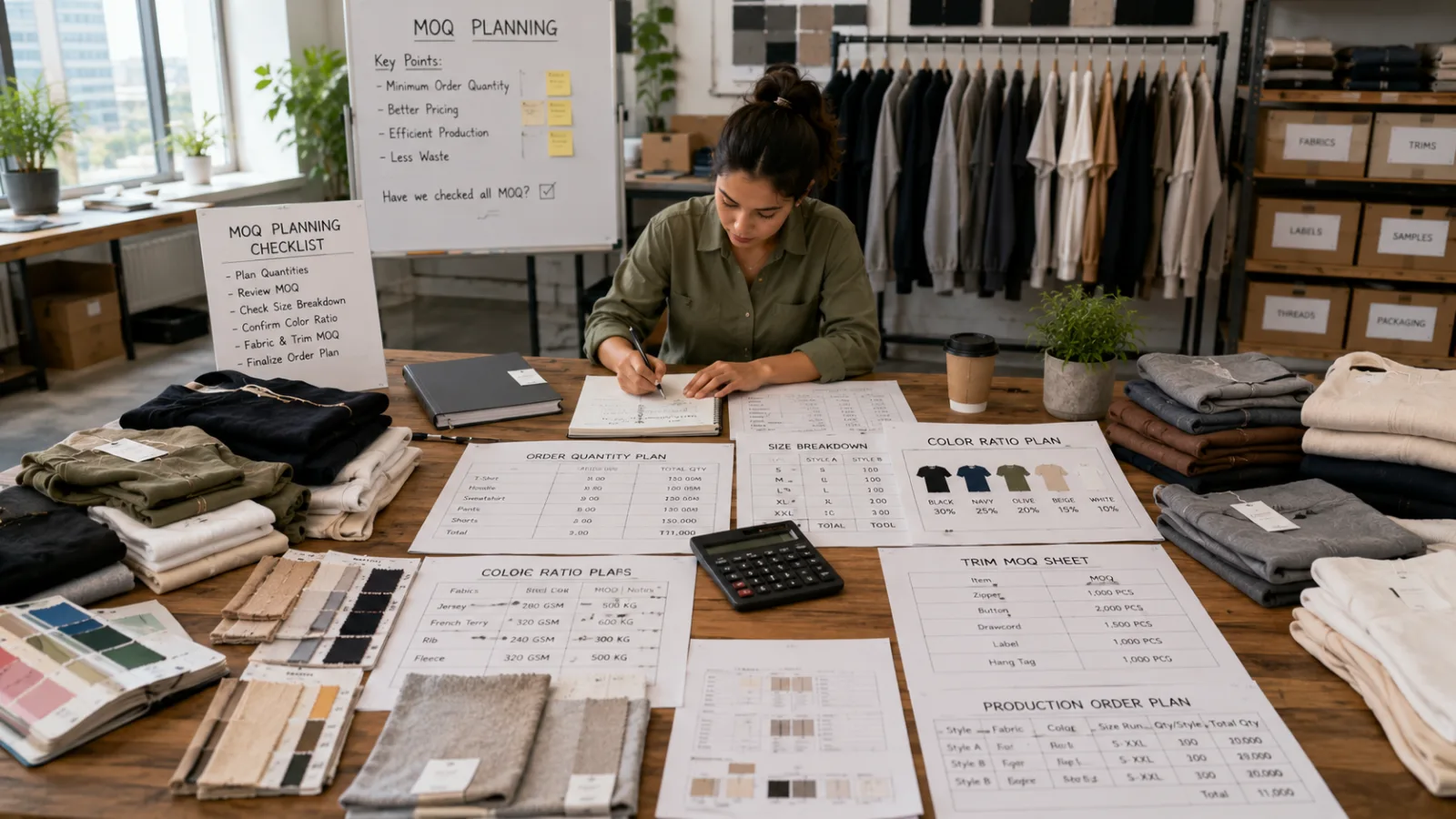
MOQ planning is critical in manufacturing. The plan should show order quantity by style, color, and size. It should also include fabric MOQ, trim MOQ, packaging MOQ, and factory MOQ.
Many brands fail to plan MOQ properly and end up producing too much inventory or paying higher unit costs.
7. Sampling Plan
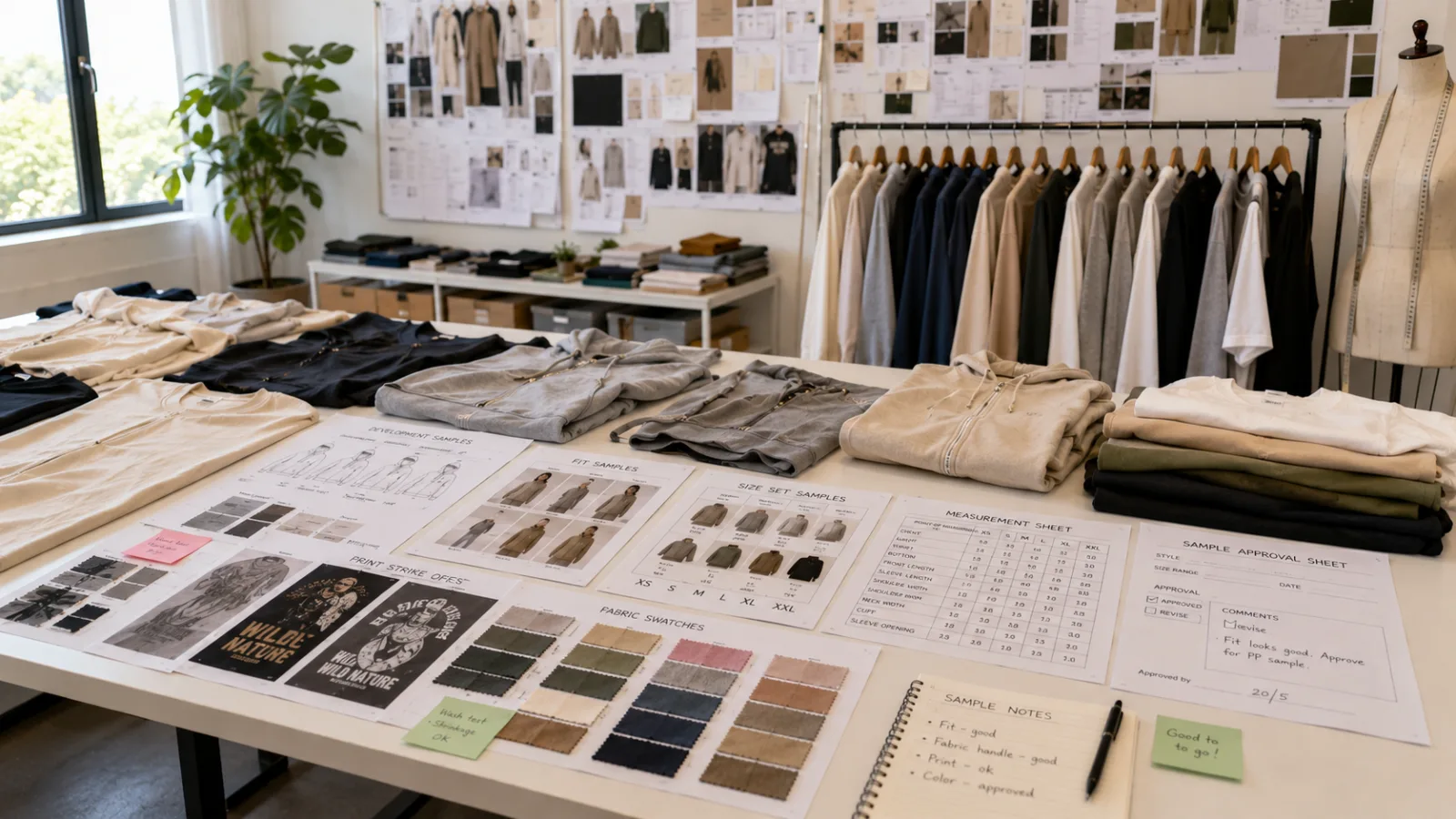
The sampling plan explains which samples are needed before bulk production. These may include development samples, fit samples, size set samples, color samples, print strike-offs, pre-production samples, and shipment samples.
Sampling prevents costly mistakes by giving the brand a chance to test fit, quality, construction, and fabric before mass production.
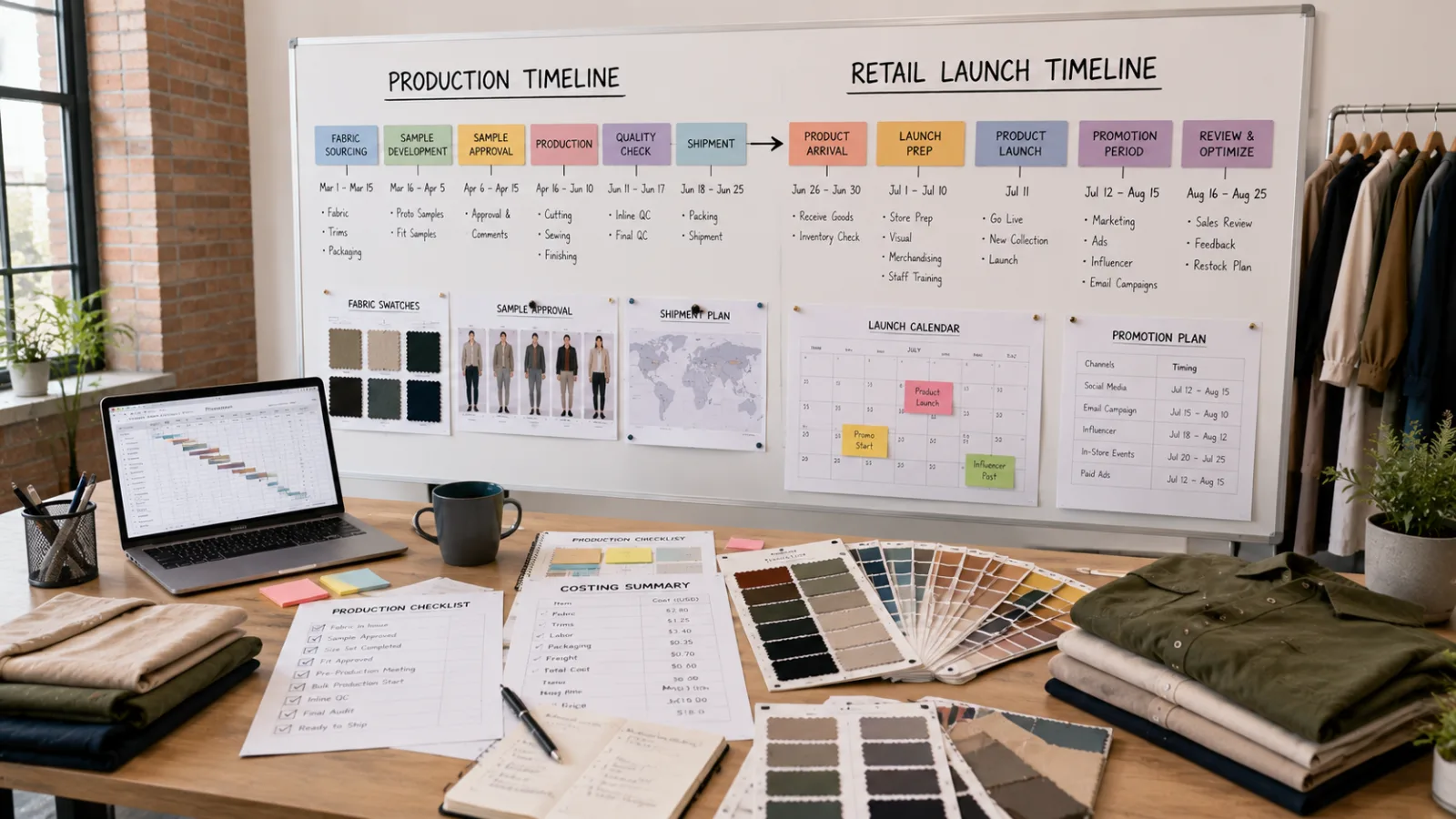
8. Production Timeline
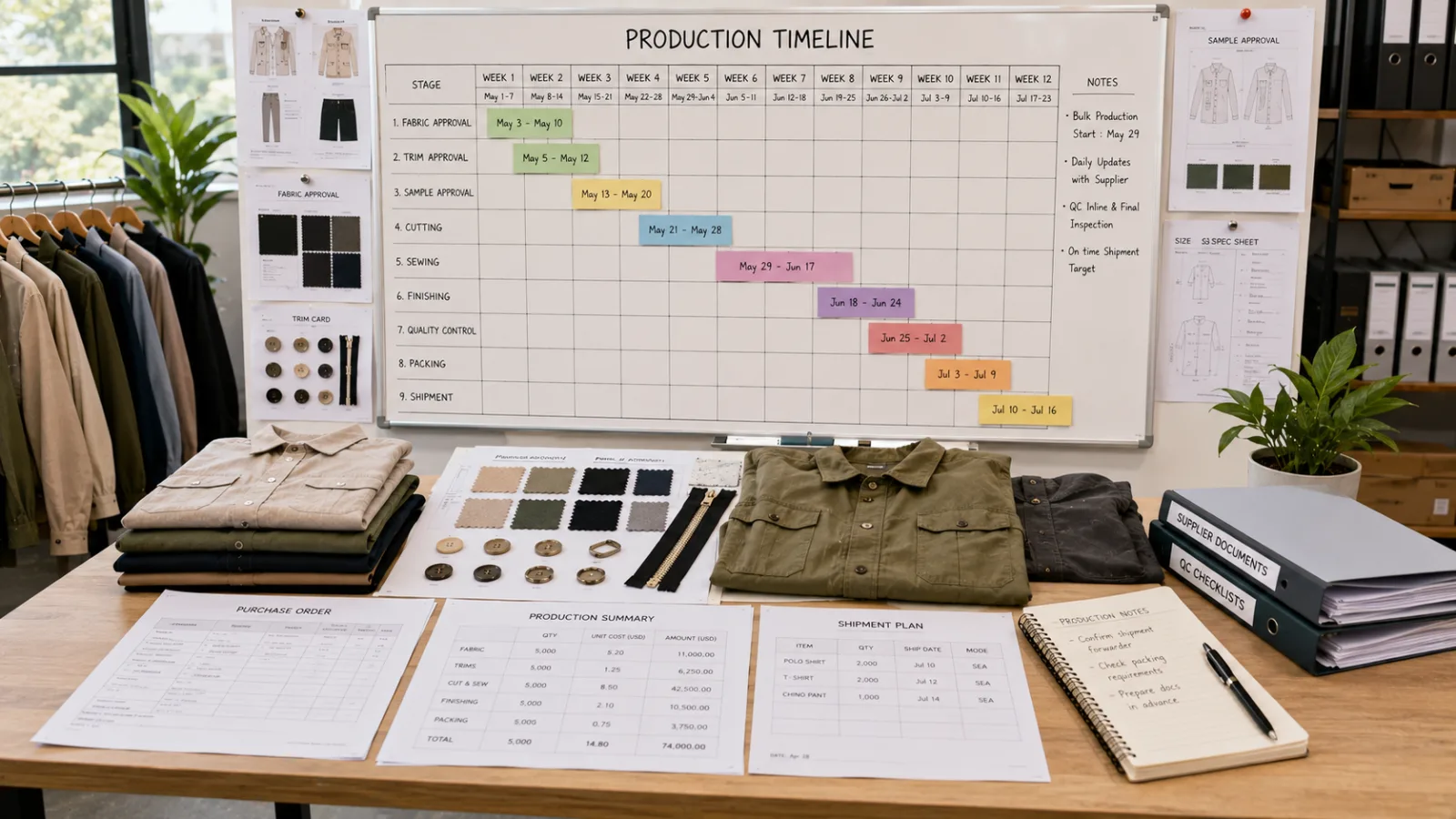
The production timeline maps every stage of manufacturing. It should include dates for tech pack handover, fabric approval, trim approval, sample approval, bulk cutting, sewing, finishing, quality inspection, packing, shipment, and delivery.
A timeline helps every team understand deadlines and dependencies.
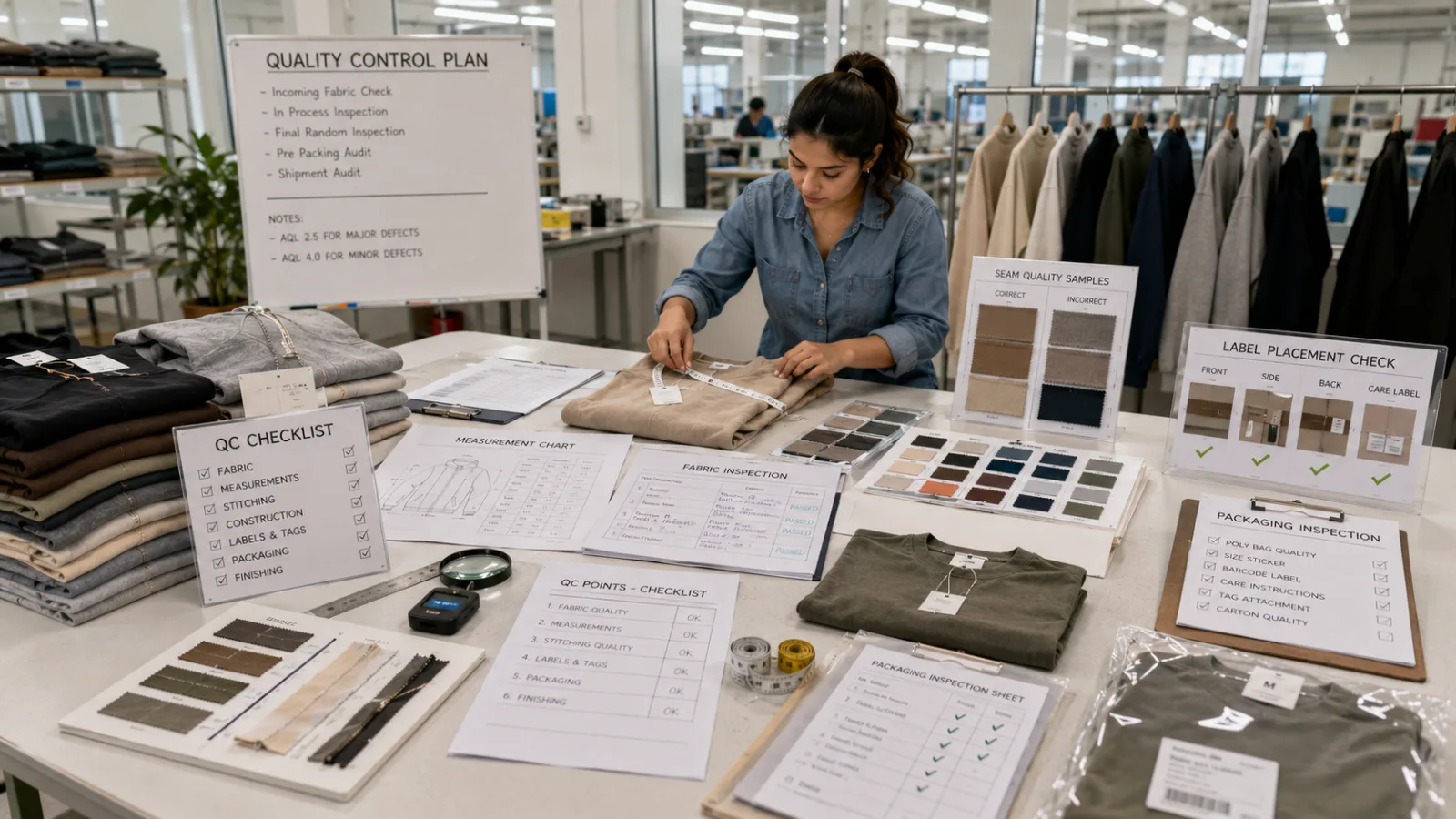
9. Quality Control Plan
The quality control plan defines inspection points and quality standards. It should include measurement tolerances, acceptable defect levels, fabric checks, seam checks, print checks, label checks, packaging checks, and final inspection procedures. A quality plan protects the brand from receiving defective goods.
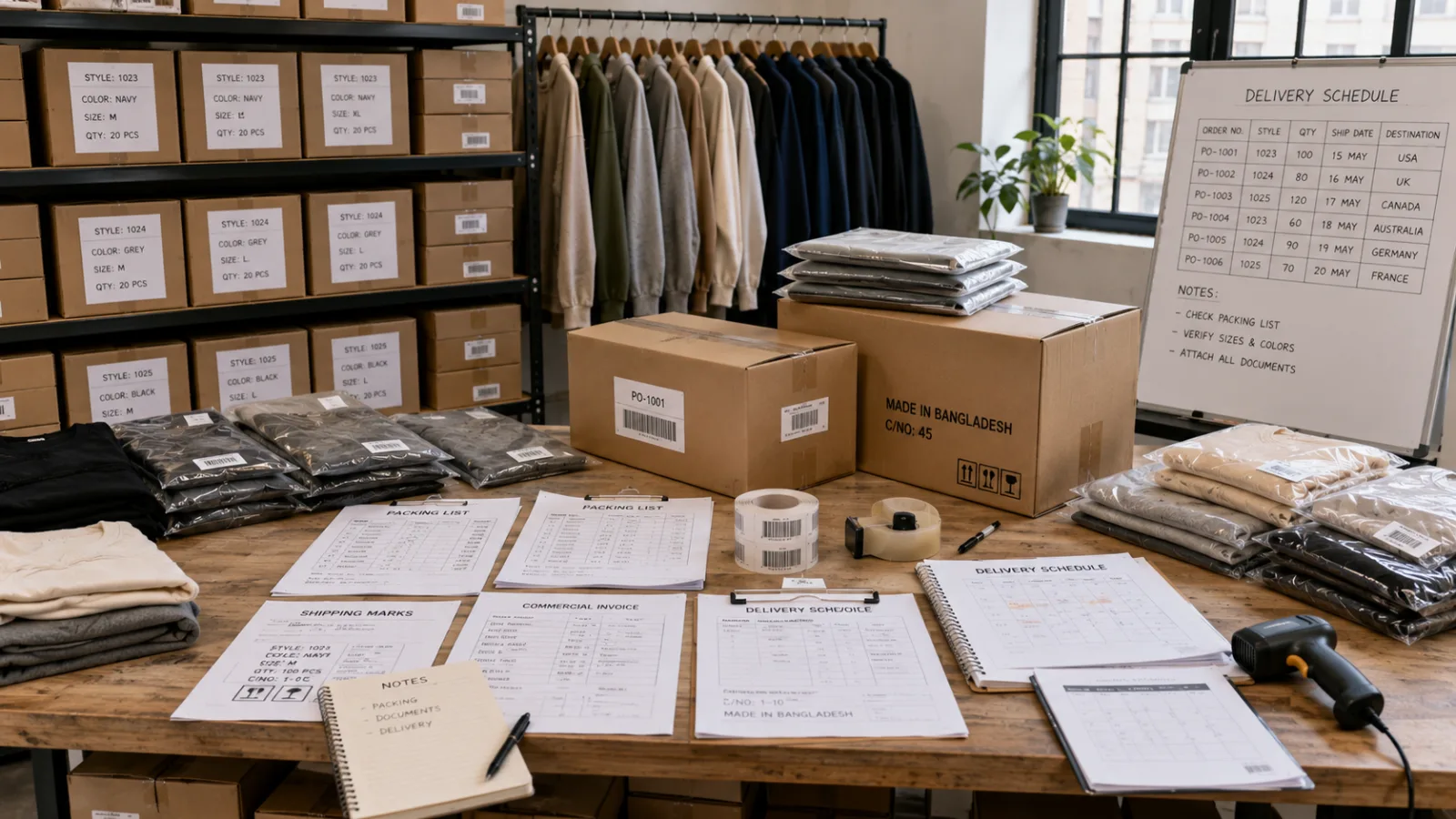
10. Packing and Delivery Plan
The packing plan includes folding method, polybag type, carton size, label placement, barcode stickers, size ratios, shipping marks, and delivery instructions. The delivery plan includes shipping method, freight forwarder, export documents, delivery date, and warehouse receiving process.
Poor packing can create retail problems even if the garments are well-made.
Key Differences Between Manufacturing and Retail Merchandising Plans
Although manufacturing and retail merchandising are connected, their planning priorities are different.
Difference 1: Starting Point
Manufacturing merchandising starts with product development and production feasibility. Retail merchandising starts with customer demand and sales opportunity.
A manufacturer asks, “Can we make this product correctly and profitably?”
A retailer asks, “Can we sell this product successfully and profitably?”
Difference 2: Main Stakeholders
Manufacturing merchandising works with designers, factories, fabric mills, trim suppliers, sample rooms, quality teams, and logistics teams. Retail merchandising works with buyers, planners, store teams, eCommerce teams, marketing teams, and customers.
Both require communication, but the communication chain is different.
Difference 3: Risk Type
Manufacturing risks include fabric delays, sample mistakes, production defects, cost increases, MOQ pressure, and late shipments. Retail risks include weak sales, wrong pricing, poor product placement, overstock, stockouts, and markdown pressure.
A strong fashion business plans for both.
Difference 4: Success Metrics
Manufacturing success is measured by on-time delivery, cost accuracy, sample approval rate, production quality, defect rate, supplier performance, and order accuracy.
Retail success is measured by sell-through rate, gross margin, inventory turnover, conversion rate, markdown rate, average order value, and customer satisfaction.
Difference 5: Timeline Focus
Manufacturing merchandising works backward from delivery date to production start, sampling, material sourcing, and approvals. Retail merchandising works forward from product launch to selling season, promotions, markdowns, and replenishment.
The two timelines must align. If manufacturing runs late, the retail plan suffers.
How Manufacturing Merchandising Supports Retail Success
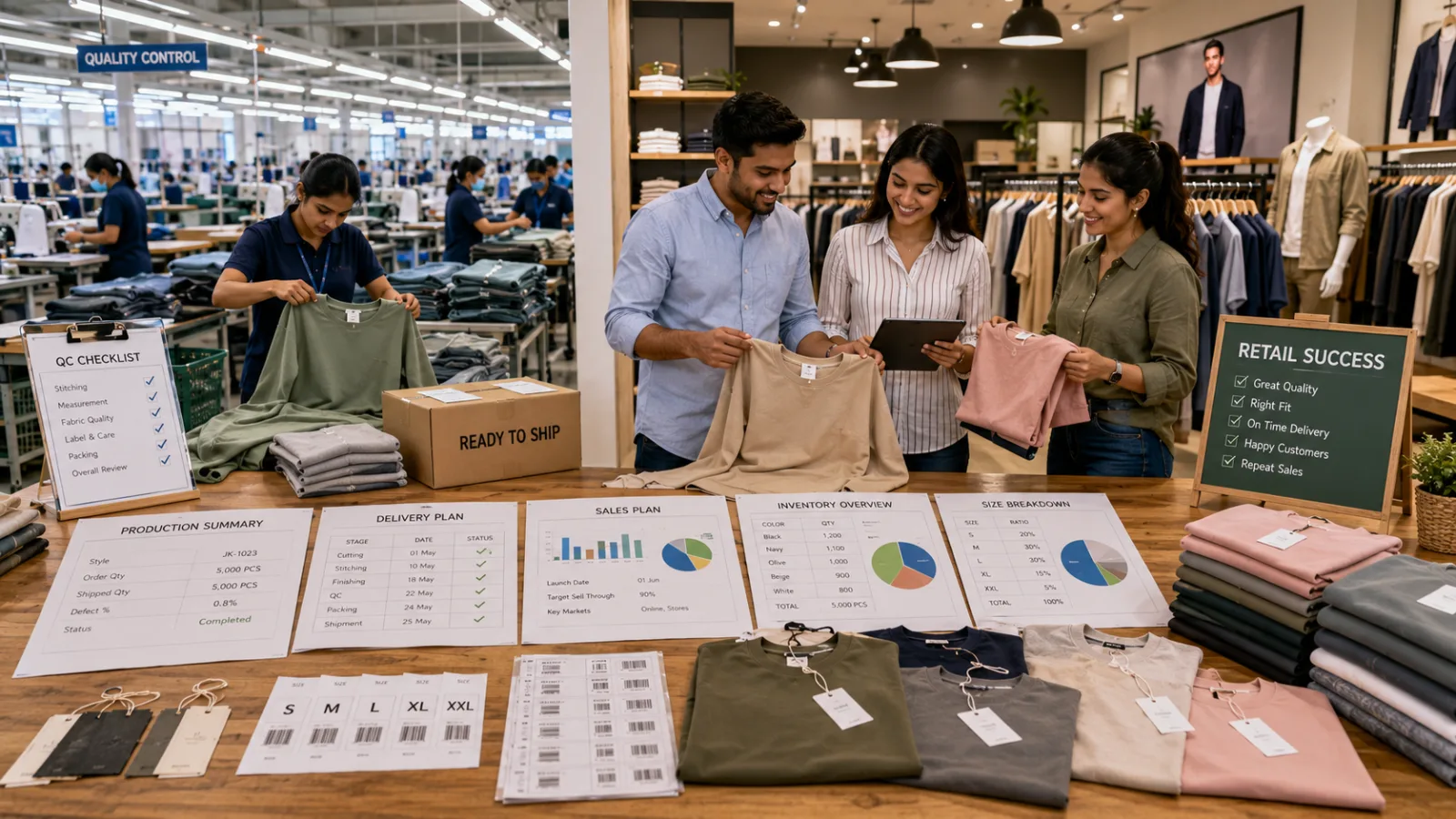
Retail success depends heavily on manufacturing execution. A retailer cannot sell what is not produced correctly. A brand cannot create a strong customer experience if products arrive late, fit poorly, or fail quality checks.
A strong manufacturing merchandising plan supports retail success in several ways.
It Improves Product Availability
Retail teams need products available at the right time. Manufacturing merchandising ensures production timelines support launch dates.
It Protects Product Quality
Retail customers judge the brand based on the final garment. A good manufacturing plan helps maintain fabric quality, fit consistency, stitching quality, and packaging standards.
It Supports Better Pricing
If production costs are controlled, retail pricing becomes more flexible. Brands can protect margin without overpricing products.
It Reduces Markdown Risk
Late delivery, poor quality, and wrong sizing often lead to markdowns. Strong production planning reduces these risks.
It Improves Customer Trust
Customers expect products to look, fit, and feel as promised. Manufacturing merchandising helps make that possible.
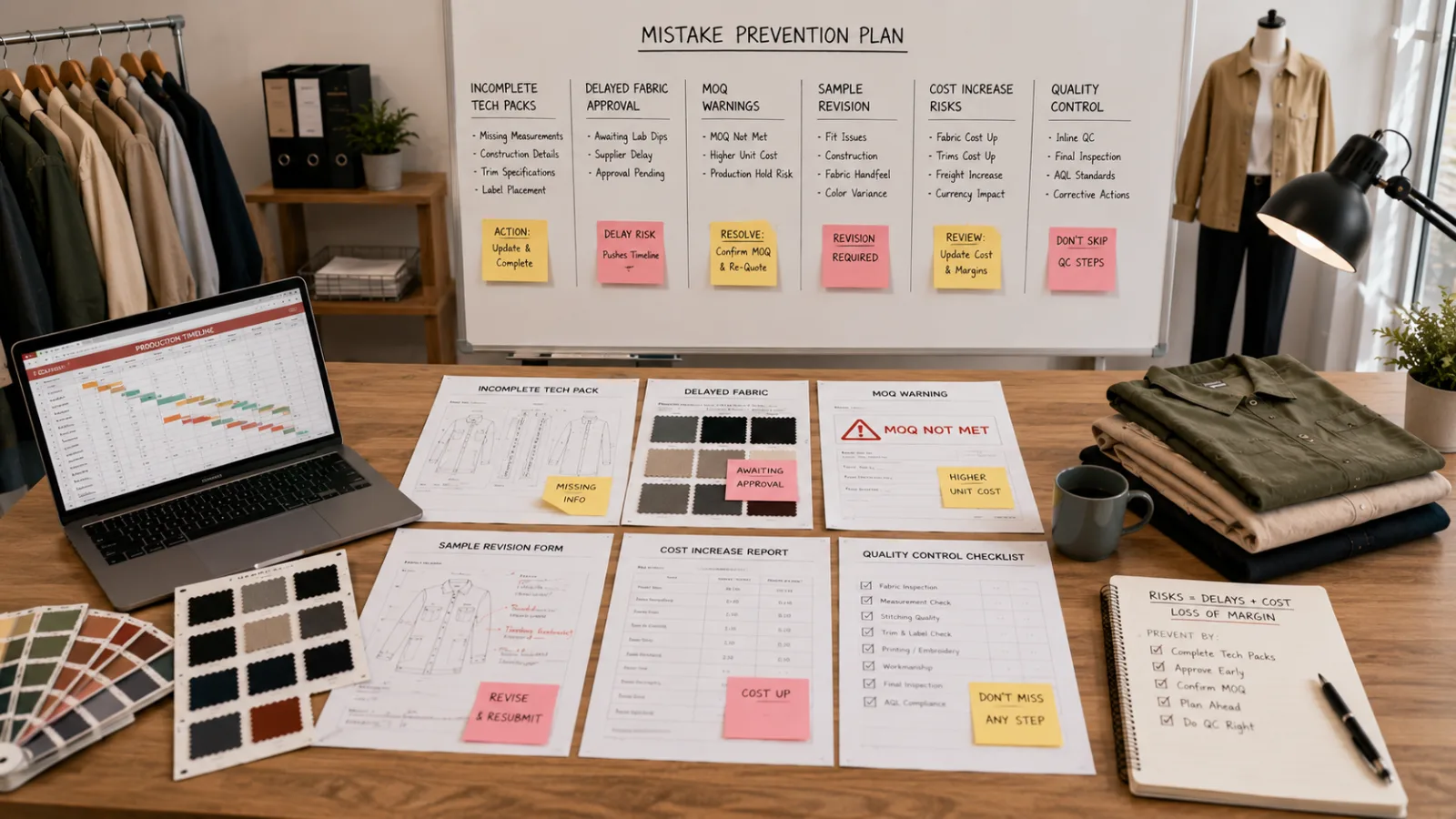
Common Mistakes in Manufacturing Merchandising
Even experienced brands can make mistakes when planning production. These mistakes can create delays, cost increases, and quality issues.
Mistake 1: Starting Production Without a Complete Tech Pack
Incomplete tech packs create confusion and increase sampling mistakes.
Mistake 2: Ignoring Fabric Lead Times
Fabric sourcing can take longer than expected, especially for custom colors, special finishes, or imported materials.
Mistake 3: Underestimating MOQ
MOQ affects cost, inventory risk, and collection planning. Brands should understand MOQ before finalizing styles.
Mistake 4: Approving Samples Too Quickly
A sample should be checked carefully for fit, measurements, fabric, stitching, trims, and wash performance.
Mistake 5: Not Confirming Costs Early
If costs are reviewed too late, the brand may need to change design details after development has already started.
Mistake 6: Weak Supplier Communication
Poor communication causes missed approvals, wrong details, delays, and production mistakes.
Mistake 7: Skipping Quality Inspections
Quality control should happen before shipment, not after goods arrive.
How to Build a Strong Merchandising Plan for Manufacturing
A strong manufacturing merchandising plan should be clear, realistic, and connected to both production and retail goals. Here is a practical process brands can follow.
Step 1: Define the Product Strategy
Start with the purpose of the product. Is it a core basic, seasonal trend piece, premium item, promotional product, or private label order? The role of the product affects fabric choice, cost target, MOQ, production timeline, and quality standard.
Step 2: Prepare Technical Documents
Create complete tech packs before requesting final supplier quotes. Include measurements, construction, trims, fabric, labels, packaging, and artwork.
Step 3: Confirm Supplier Capability
Choose suppliers based on product experience, quality level, communication, MOQ, lead time, and reliability. Do not choose only the lowest price.
Step 4: Build a Costing Sheet
Calculate cost before production begins. Include all materials, labor, trims, packaging, shipping, duties, and quality inspection.
Step 5: Plan Sampling and Approvals
Define each sample stage and who must approve it. Never move to bulk production without written approval of the final pre-production sample.
Step 6: Create a Production Calendar
Map every production stage with realistic deadlines. Include buffer time for delays.
Step 7: Set Quality Standards
Create clear quality requirements before production. Share measurement tolerance, defect standards, fabric approval, label placement, packaging instructions, and final inspection expectations.
Step 8: Align With Retail Launch Plans
Manufacturing and retail calendars should work together. The product must arrive early enough for photography, website upload, store allocation, marketing, and launch preparation.

Manufacturing Merchandising Checklist
Use this checklist before moving into bulk production:
- Is the tech pack complete?
- Are measurements and tolerances clear?
- Is the fabric confirmed and approved?
- Are trims confirmed and approved?
- Is the MOQ realistic?
- Is the costing sheet complete?
- Is the target margin achievable?
- Has the fit sample been approved?
- Has the pre-production sample been approved?
- Is the production timeline realistic?
- Are quality standards documented?
- Is packaging confirmed?
- Are shipping terms clear?
- Is the delivery date aligned with retail launch plans?
- Is every approval recorded in writing?
This checklist helps reduce confusion and keeps production organized.
ApparGlobal
For apparel brands, a merchandising plan in manufacturing becomes stronger when product development, sourcing, sampling, production planning, and quality control are connected from the beginning. A retail plan may decide what a brand wants to sell, but the manufacturing plan determines whether that product can be made correctly, profitably, and on time.
Many clothing brands face production issues when merchandising decisions are separated from factory reality. A collection may look strong on paper, but if fabric availability, MOQ, trims, size grading, sampling timelines, supplier capacity, and quality checkpoints are not planned properly, the final product can miss expectations.
Companies such as ApparGlobal help clothing brands align product development, fabric selection, vendor coordination, MOQ planning, sample review, production timelines, quality control, and scalable manufacturing workflows. For brands developing T-shirts, hoodies, activewear, kidswear, streetwear, uniforms, private label apparel, or custom collections, this kind of production-focused support can make merchandising plans more practical and execution-ready.
When brands work with a partner that understands tech packs, fabric behavior, trim standardization, supplier communication, quality checkpoints, and bulk production requirements, they can reduce production mistakes and move from retail idea to finished product with more confidence.

Final Thoughts
A merchandising plan in manufacturing plays a very different role from a retail merchandising plan. Retail merchandising focuses on selling products to customers. Manufacturing merchandising focuses on making those products correctly before they reach the customer.
Both are essential. A strong retail strategy cannot succeed if manufacturing is disorganized. A strong manufacturing plan has limited value if the final product does not match customer demand. The best apparel businesses connect both sides.
Manufacturing merchandising helps brands manage tech packs, fabric sourcing, trims, costing, MOQ, sampling, production timelines, quality control, packing, and delivery. It reduces confusion, improves supplier communication, controls costs, protects quality, and supports on-time launches.
Retail merchandising helps brands plan assortments, pricing, inventory, visual presentation, promotions, sell-through, markdowns, and customer experience. It turns finished products into revenue.
For fashion brands, the key is alignment. Product ideas should be designed with production reality in mind. Production timelines should support retail launch dates. Costs should support target margins. Quality standards should match customer expectations. Inventory decisions should reflect MOQ and demand planning.
A merchandising plan in manufacturing is not just a factory document. It is a business tool. It helps brands move from creative ideas to sellable products with more structure, less risk, and better control.
When manufacturing and retail merchandising work together, clothing brands can produce better collections, reduce costly mistakes, improve customer satisfaction, and build a stronger foundation for long-term growth.