
Learn how to choose the right fabric for your clothing line by considering brand identity, functionality, sustainability, cost, and material properties.
Starting a clothing line is an exciting process, but designing attractive garments is only one part of building a successful fashion brand. Every sketch, silhouette, seam, and fit decision depends on the material used to bring the design to life. Fabric affects how a garment looks, feels, moves, fits, washes, stretches, drapes, and performs over time. A design that appears beautiful on paper can fail if the selected textile is too stiff, too sheer, too heavy, difficult to sew, or unsuitable for the intended climate.
The right fabric can improve comfort, create a premium customer experience, strengthen your brand identity, and help a product maintain its quality after repeated wear. The wrong choice can lead to shrinkage, poor fit, weak seams, color loss, pilling, excessive returns, and costly production delays. Fabric selection also affects pricing, minimum order quantities, manufacturing methods, sustainability claims, packaging, and care instructions. For fashion startups, these decisions are especially important because one unsuitable fabric order can consume a significant part of the production budget.
This guide explains how to choose the right fabric for your clothing line. It covers fabric properties, product requirements, fiber types, sustainability, costing, dyeing, printing, testing, sourcing, sampling, and common mistakes. Whether you are developing T-shirts, activewear, dresses, outerwear, children’s clothing, or a private-label collection, these steps will help you make more informed textile decisions.
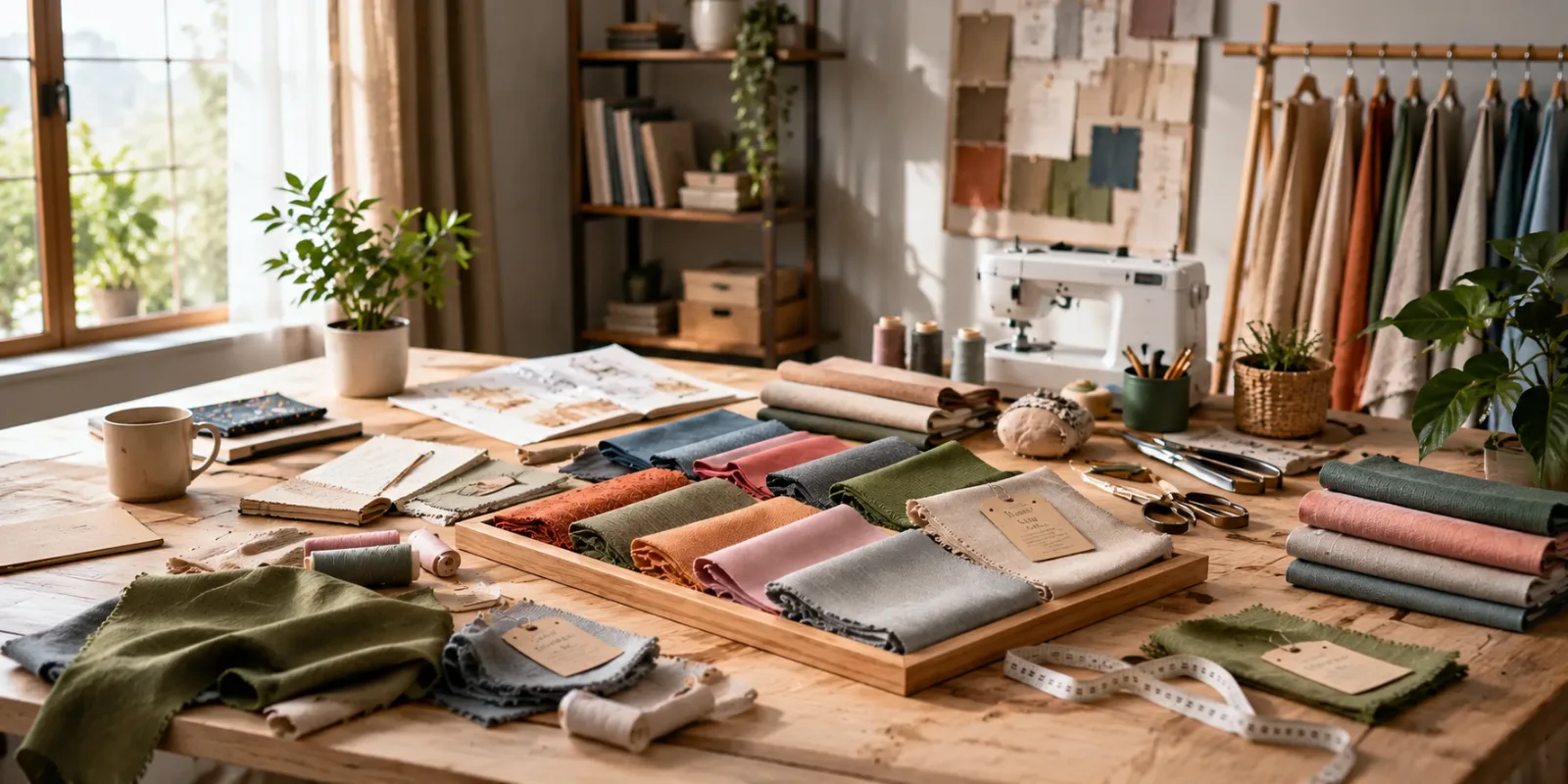
Why Fabric Selection Matters for a Clothing Brand
Fabric is one of the most influential elements of an apparel product. It shapes the appearance of the design and determines whether the garment performs as customers expect.
Fabric Communicates Brand Identity
Customers may associate certain textiles with particular brand qualities.
For example:
- Silk
- and fine wool may communicate luxury and refinement.
- Organic cotton
- can support a natural or responsible positioning.
- Heavyweight jersey may create a premium streetwear feel.
- Linen can suggest relaxed summer dressing.
- Recycled nylon may suit a technical outdoor collection.
- Soft ribbed knits can support a comfort-focused lifestyle brand.
The fabric must support the story your marketing communicates. A brand positioned as premium may lose credibility if its garments feel thin, rough, or poorly finished.
Fabric Controls Garment Function
Different products need different performance qualities.
An activewear legging may require:
- Four-way stretch.
- Strong recovery.
- Moisture management.
- Opacity.
- Abrasion resistance.
- Pilling resistance.
A summer shirt may require:
- Breathability.
- Lightweight construction.
- Softness.
- Wash stability.
- Colorfastness
- .
A rain jacket may require:
- Water resistance.
- Wind protection.
- Tear strength.
- Seam-sealing compatibility.
- Breathability.
Choosing fabric without considering the garment’s purpose creates avoidable product failures.
Fabric Influences Fit and Silhouette
The same pattern can look completely different when made in two fabrics. A fluid viscose may create a soft drape, while cotton poplin may produce a more structured shape.
Fabric affects:
- Drape.
- Volume.
- stretch.
- recovery.
- body.
- movement.
- seam appearance.
- garment balance.
Fabric Affects Cost and Pricing
Fabric is often one of the largest components of garment cost. The textile price, consumption per garment, minimum order quantity, dyeing, printing, waste, shipping, and testing all affect the final production cost.
Fabric Shapes Customer Satisfaction
Customers notice:
- How a garment feels.
- Whether it fits after washing.
- Whether it pills.
- Whether it fades.
- Whether it becomes transparent.
- Whether seams twist.
- Whether it feels too hot.
- Whether it maintains its shape.
A carefully selected and tested fabric can reduce complaints, returns, and negative reviews.
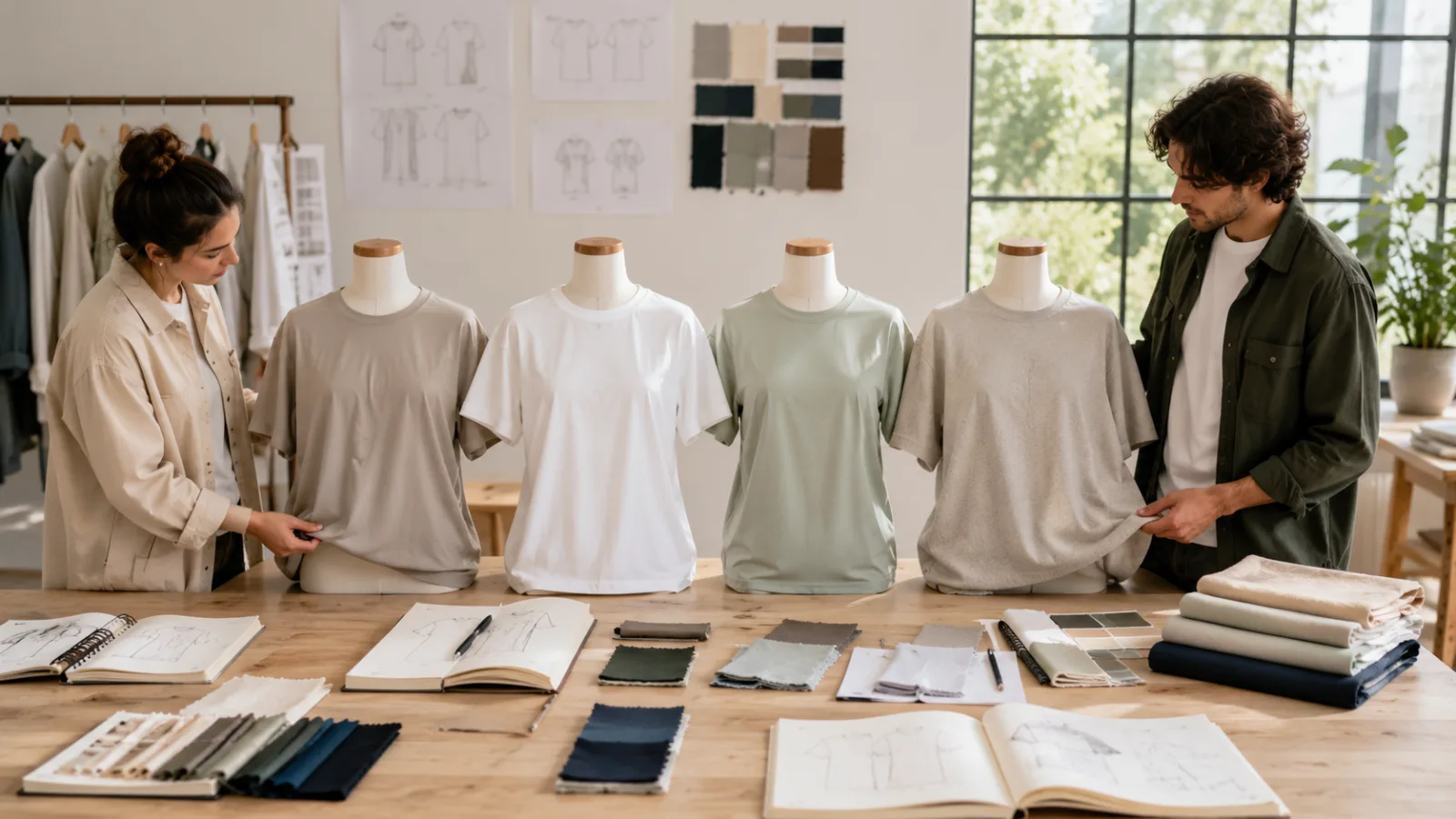
Start With the Product, Not the Fabric
A common mistake is choosing a fabric because it looks attractive before defining what the garment must do.
Begin with the product requirements.
Ask:
- What garment are you creating?
- Who will wear it?
- In what climate or environment?
- How often will it be washed?
- Does it need stretch?
- Does it need structure or drape?
- Should it feel warm or cool?
- Will it contact sweat, chlorine, saltwater, or rain?
- Does it need to resist abrasion?
- Will it be printed, dyed, embroidered, washed, or coated?
- What retail price must the product achieve?
- What care routine will customers accept?
A fabric should solve the product’s needs rather than force the design into an unsuitable material.
Create a Fabric Requirement Sheet
Before contacting suppliers, prepare a simple document containing:
- Product category.
- Target customer.
- Intended season.
- Target fabric weight.
- Desired fiber content.
- Stretch requirement.
- Drape or structure requirement.
- Color and print needs.
- Performance requirements.
- Target price.
- Estimated quantity.
- Testing requirements.
- Sustainability priorities.
- Expected care method.
This document gives suppliers clearer direction and makes fabric comparisons more useful.
Understanding the Importance of Fabric Choice
Before diving into fabric types and their properties, it’s important to understand why choosing the right fabric is critical for your clothing line:
- Brand Identity: Fabric can communicate a lot about your brand. Luxurious silks might suggest a high-end collection, while earthy cottons could align with a casual, eco-friendly brand.
- Functionality: Different garments require different functionalities. Activewear, for example, requires fabrics that are breathable and moisture-wicking.
- Sustainability: Today’s consumers are more conscious than ever about environmental impacts. Choosing sustainable fabrics can enhance your brand’s image and appeal to eco-conscious buyers.
- Cost: The cost of fabric can greatly influence the pricing of your clothing, which in turn affects your target market and competitiveness.
Key Factors to Consider When Choosing Fabric
1. Understand Fiber Content
Fiber content tells you what the textile is made from, but it does not describe the full fabric.
Natural fibers include:
- Cotton.
- Linen.
- Wool.
- Silk.
- Hemp.
Regenerated cellulosic fibers include:
- Viscose.
- Modal.
- Lyocell.
- Acetate.
Synthetic fibers include:
- Polyester.
- Nylon.
- Acrylic.
- Elastane.
Two fabrics with the same fiber content can perform very differently because of differences in yarn, construction, weight, finishing, and quality.
For example, 100% cotton may describe:
- Lightweight voile.
- Crisp poplin.
- Heavy canvas.
- Soft jersey.
- Brushed flannel.
- Stretch-free denim.
Always review the complete fabric specification rather than relying only on the fiber label.
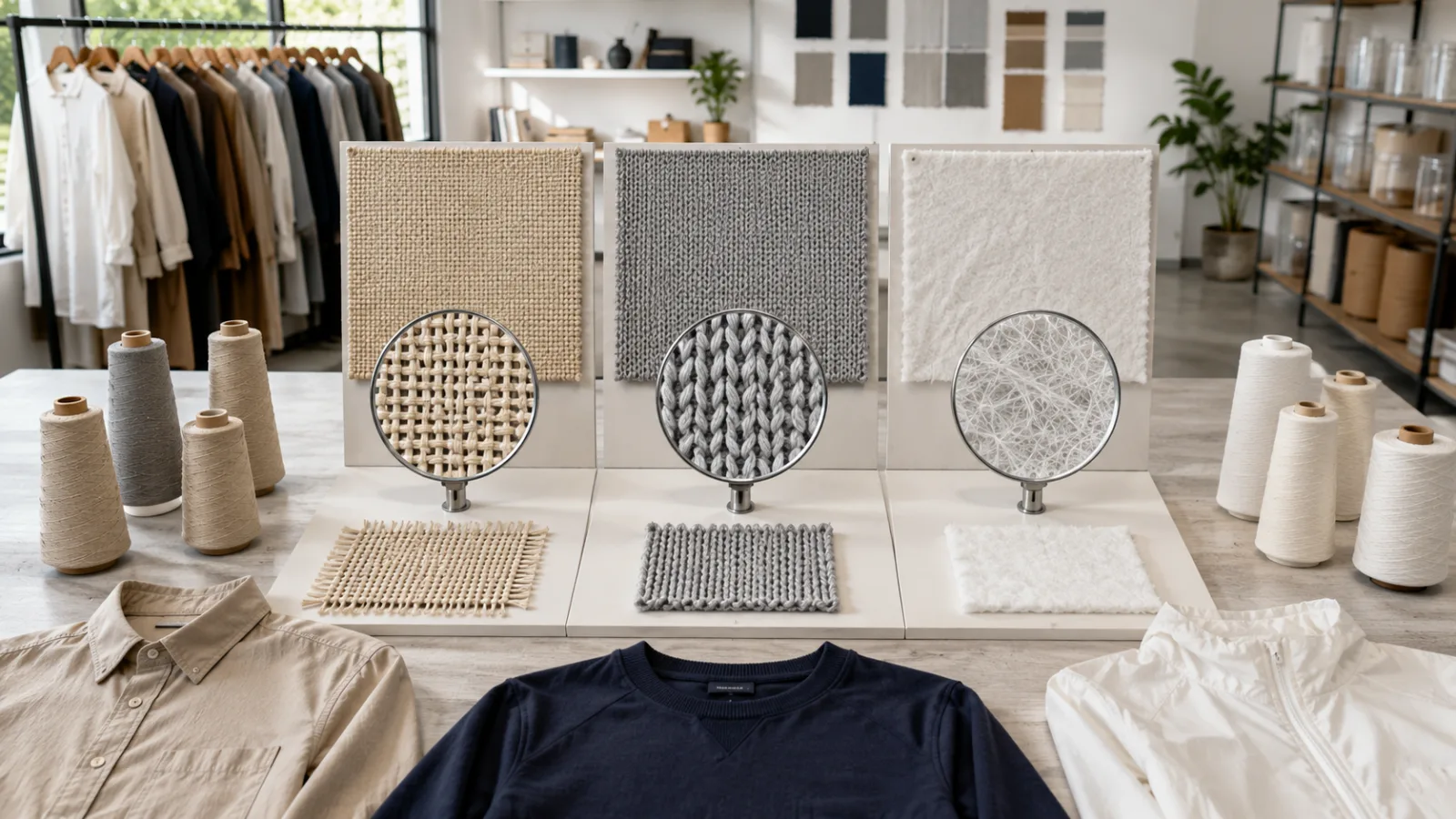
2. Examine Fabric Construction
Fabric construction explains how yarns are turned into textile material.
Woven Fabrics
Woven fabrics are made by crossing lengthwise and widthwise yarns.
They are commonly used for:
- Shirts.
- Trousers.
- Jackets.
- Dresses.
- Denim.
- Outerwear.
- Bags.
Woven fabrics usually provide more structure and less natural stretch than knits.
Knitted Fabrics
Knitted fabrics are made with interlocking yarn loops.
They are commonly used for:
- T-shirts.
- Leggings.
- Activewear.
- Underwear.
- Sweaters.
- Stretch dresses.
Knits often offer greater flexibility and comfort, but they may be more vulnerable to stretching, pilling, or distortion.
Nonwoven Materials
Nonwoven textiles are produced by bonding or compressing fibers rather than weaving or knitting them.
They are used in:
- Interlinings.
- Padding.
- Disposable products.
- Technical applications.
- Bag structures.
The construction must match the garment’s intended silhouette and performance.
3. Evaluate Fabric Weight
Fabric weight is often measured in grams per square meter, commonly called GSM. It influences opacity, warmth, drape, structure, durability, and product cost.
General categories may include:
- Lightweight fabrics for blouses, linings, summer dresses, and sheer layers.
- Midweight fabrics for T-shirts, shirts, casual dresses, and trousers.
- Heavyweight fabrics for hoodies, coats, workwear, denim, and structured garments.
The ideal weight depends on the product.
A lightweight jersey may work for a summer T-shirt but feel too transparent for premium streetwear. A heavy cotton may create a strong hoodie but feel uncomfortable in a warm climate.
Ask suppliers for the GSM and test whether it remains consistent between sample and bulk production.
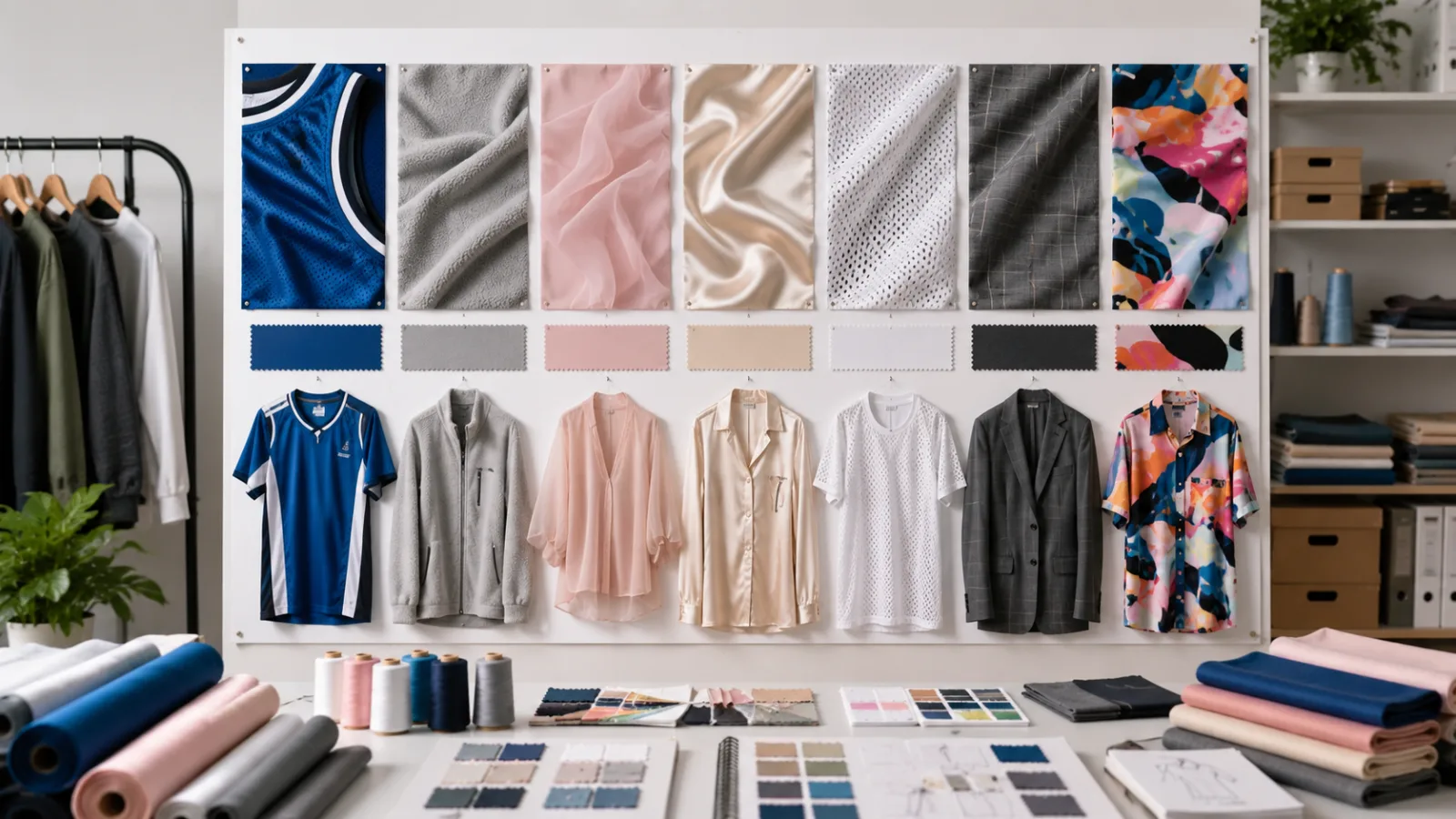
4. Consider Drape and Structure
Drape describes how fabric falls and moves around the body.
Fabrics with fluid drape may suit:
- Slip dresses.
- Blouses.
- Flowing skirts.
- Wide-leg trousers.
- Soft occasionwear.
Structured fabrics may suit:
- Tailored jackets.
- Uniforms.
- Utility clothing.
- Boxy shirts.
- Sculptural dresses.
- Bags.
A fabric that is too soft may collapse when the design needs shape. A fabric that is too stiff may make a flowing design look bulky.
Test drape by hanging a large swatch rather than judging a small sample. Small swatches do not always show the true behavior of the textile.
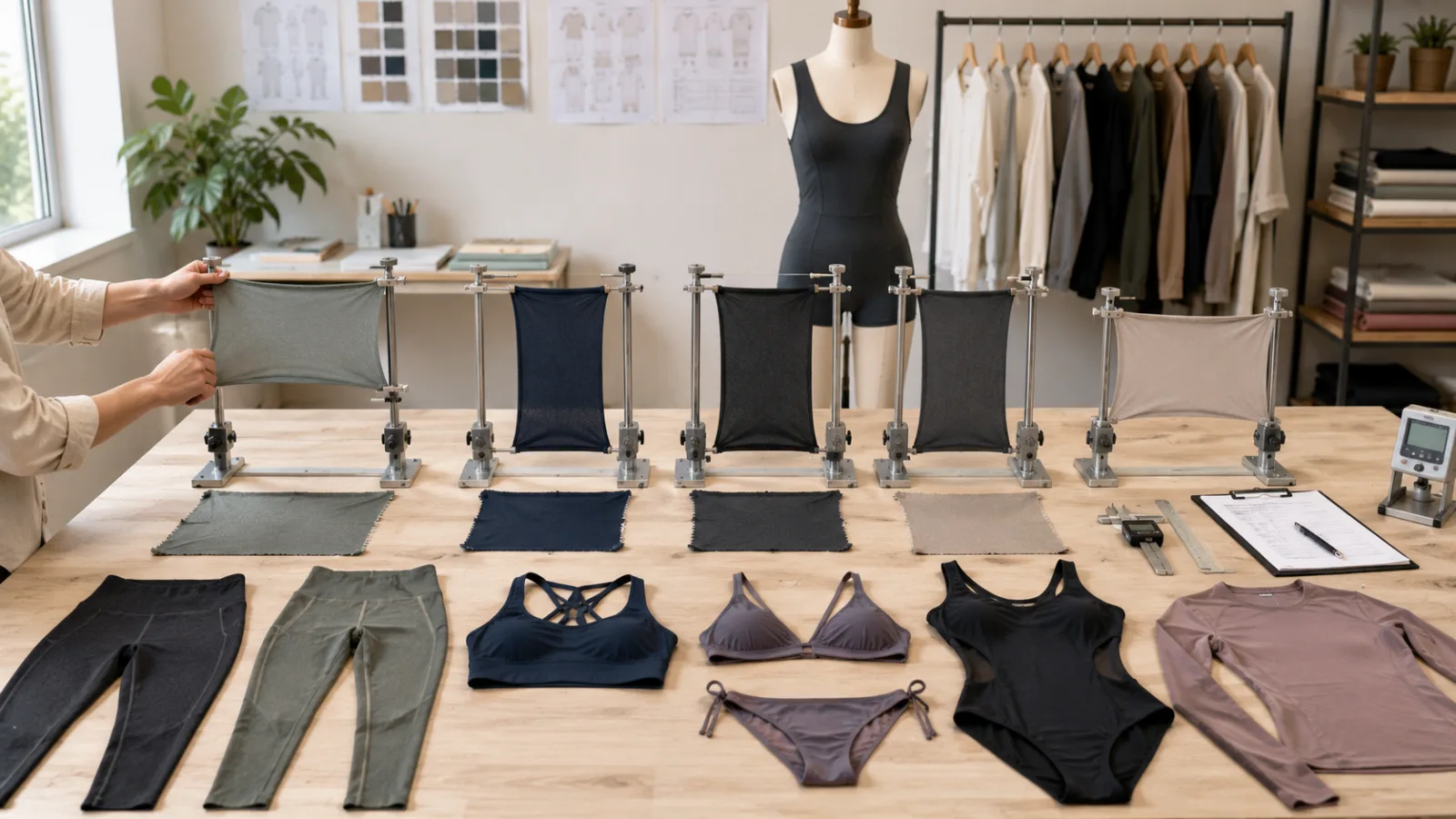
5. Check Stretch and Recovery
Stretch measures how far a fabric extends. Recovery measures how well it returns to its original shape.
Both are essential for:
- Activewear.
- Swimwear.
- Leggings.
- Bodywear.
- Lingerie.
- Fitted dresses.
- Stretch trousers.
- Children’s clothing.
A fabric may stretch well but recover poorly, causing knees, elbows, waistbands, or seats to become baggy.
Check:
- Horizontal stretch.
- Vertical stretch.
- Two-way or four-way stretch.
- Recovery after repeated extension.
- Opacity when stretched.
- Seam behavior.
- Elastane percentage.
- Performance after washing.
Do not assume that a higher elastane percentage always creates a better fabric. Yarn quality, knitting structure, heat setting, and garment pattern are equally important.
6. Assess Breathability and Moisture Management
Breathability refers to the movement of air and moisture vapor through a fabric. Moisture management describes how sweat is absorbed, spread, or moved away from the skin.
These qualities matter for:
- Summer clothing.
- Activewear.
- Base layers.
- Sleepwear.
- Workwear.
- Travel clothing.
- Children’s apparel.
Cotton and linen are often comfortable in warm weather, but fabric construction still matters. A heavy, tightly woven cotton may feel warmer than a lightweight synthetic mesh.
Some synthetic fabrics are engineered for quick drying and moisture movement. They may perform well during exercise even if the fiber itself is not highly absorbent.
Review:
- Air permeability.
- Fabric weight.
- Moisture absorption.
- Wicking.
- Drying speed.
- Garment ventilation.
- Fit.
- Surface finishes.
7. Review Durability and Abrasion Resistance
Durability affects how long a garment can remain useful.
Consider:
- Tensile strength
- .
- Tear strength.
- Abrasion resistance.
- Pilling.
- Snagging.
- Seam strength.
- Colorfastness.
- Wash durability.
- Stretch recovery.
- Surface wear.
Different products experience different types of stress.
A backpack needs strong abrasion and tear resistance. Leggings need pilling resistance and stretch recovery. Workwear needs strong seams and repeated wash performance.
A fabric that performs well in one product may fail in another.
8. Consider Texture and Skin Comfort
The surface feel of fabric can influence whether customers enjoy wearing the garment.
Review whether the fabric feels:
- Soft.
- Smooth.
- Brushed.
- Crisp.
- Rough.
- Dry.
- Cool.
- Warm.
- Slippery.
- Fuzzy.
Skin comfort is especially important for:
- Underwear.
- Babywear.
- Activewear.
- Sleepwear.
- T-shirts.
- Base layers.
- Fitted garments.
Also check seams, labels, coatings, finishes, and chemical treatments. A soft fabric can still feel uncomfortable if the garment construction is poor.
Test the textile against the skin and after washing. Finishes applied during production may change after laundering.
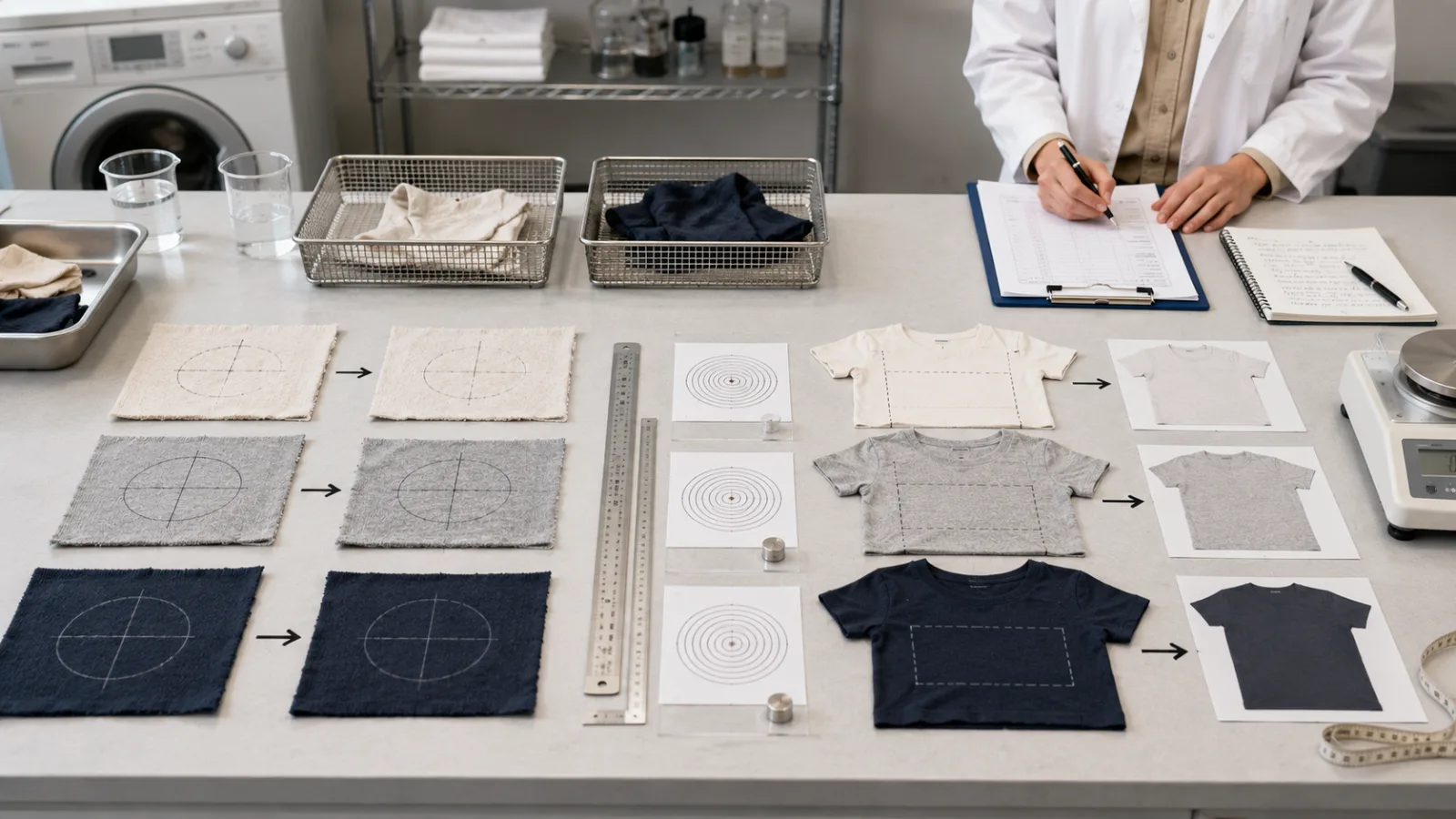
9. Check Shrinkage and Dimensional Stability
Shrinkage can change garment size, seam alignment, print placement, and fit.
Fabric may shrink because of:
- Fiber behavior.
- Knitting or weaving tension.
- Washing.
- Drying.
- Heat.
- Finishing.
- Lack of fabric relaxation.
Before production, test:
- Length shrinkage.
- Width shrinkage.
- Spirality.
- Skewing.
- Shape retention.
- Appearance after washing.
- Seam twisting.
- Fabric growth.
Patterns may need adjustment based on confirmed shrinkage results.
Never rely only on a supplier’s general claim that the fabric is pre-shrunk. Test the actual production lot whenever possible.
10. Evaluate Dyeing and Printing Compatibility
Different fibers require different dyes, inks, temperatures, and production processes.
Natural Fibers
Cotton and other cellulosic fibers can be dyed and printed through several systems. Results depend on pretreatment, dye type, fabric preparation, and finishing.
Polyester
Polyester commonly uses disperse dyes and works particularly well with sublimation printing on suitable light-colored fabrics.
Nylon
Nylon often uses acid dyes and can produce rich colors, but heat-sensitive print processes require careful testing.
Blended Fabrics
Blends may be more difficult because each fiber may react differently to dye. Poorly controlled dyeing can create uneven shade or heather effects.
Before bulk production, approve:
- Lab dips.
- Strike-offs.
- Print scale.
- Repeat pattern.
- Colorfastness.
- Wash durability.
- Rubbing resistance.
- Print alignment.
- Color under different lighting.
Common Fabric Types for Clothing Lines
Cotton
Cotton is one of the most widely used apparel fibers. It is soft, absorbent, versatile, and available in many fabric constructions.
Common cotton fabrics include:
- Jersey.
- Poplin.
- Twill.
- Canvas.
- Denim.
- Voile.
- Rib knit.
- Flannel.
- French terry.
Advantages:
- Comfortable against the skin.
- Breathable in suitable constructions.
- Easy to dye and print.
- Widely available.
- Suitable for many product categories.
Limitations:
- May shrink.
- Can wrinkle.
- Absorbs moisture and dries slowly.
- Quality varies significantly.
- Some cotton fabrics lose shape without proper construction.
Best for: T-shirts, shirts, dresses, denim, underwear, children’s clothing, basics, and casualwear.
Linen
Linen is made from flax fiber and is valued for breathability, strength, texture, and warm-weather comfort.
Advantages:
- Breathable.
- Strong.
- Natural texture.
- Suitable for hot climates.
- Often becomes softer with use.
Limitations:
- Wrinkles easily.
- Can feel stiff initially.
- May be more expensive than basic cotton.
- Requires careful shrinkage testing.
- Low elasticity can affect movement.
Silk
Silk is a natural protein fiber associated with smoothness, luster, drape, and luxury.
Advantages:
- Soft hand feel.
- Elegant drape.
- Natural sheen.
- Lightweight.
- Can be comfortable and breathable in suitable constructions.
Limitations:
- Expensive.
- Sensitive to abrasion, perspiration, and sunlight.
- Often requires delicate care.
- May show watermarks.
- Requires skilled cutting and sewing.
Best for: Luxury dresses, blouses, scarves, linings, lingerie, and occasionwear.
Wool
Wool is a natural animal fiber known for insulation, moisture management, resilience, and versatility.
Different wool fabrics can be used for:
- Coats.
- Suits.
- Knitwear.
- Base layers.
- Dresses.
- Accessories.
Advantages:
- Warm.
- Naturally resilient.
- Breathable.
- Can manage moisture.
- Available in fine and heavy constructions.
Limitations:
- May feel itchy depending on fiber quality.
- Can shrink or felt.
- May require special care.
- Moth protection may be needed.
- Premium varieties can be costly.
Best for: Winter clothing, tailoring, knitwear, coats, uniforms, and performance base layers.
Polyester
Polyester is a synthetic fiber used across fashion, sportswear, uniforms, outerwear, and home textiles.
Advantages:
- Durable.
- Wrinkle-resistant.
- Quick-drying.
- Strong color retention.
- Cost-efficient.
- Compatible with sublimation printing.
Limitations:
- May retain odors.
- Can feel less breathable in dense fabrics.
- Sensitive to high heat.
- Fossil-based in conventional production.
- May release synthetic microfibers.
Best for: Activewear, uniforms, outerwear, printed clothing, fleece, dresses, and blended fabrics.
Nylon
Nylon is a synthetic polyamide fiber known for strength, low weight, smoothness, and abrasion resistance.
Advantages:
- Strong for its weight.
- Smooth.
- Abrasion-resistant.
- Flexible.
- Suitable for stretch blends.
- Useful for technical finishes.
Limitations:
- Heat-sensitive.
- May be less breathable in dense constructions.
- Can be affected by prolonged UV exposure.
- Virgin nylon has sustainability concerns.
- May cost more than some polyester fabrics.
Best for: Activewear, swimwear, hosiery, lingerie, jackets, bags, luggage, and outdoor products.
Viscose, Modal, and Lyocell
These fibers are made from cellulose that has been chemically processed into textile fiber. They are sometimes grouped together, but their manufacturing systems and performance can differ.
Advantages:
- Soft.
- Fluid drape.
- Comfortable hand feel.
- Good color depth.
- Useful for lightweight fashion.
Limitations:
- Some varieties have low wet strength.
- Shrinkage and distortion can occur.
- Sustainability depends on raw material sourcing and processing.
- Quality varies between suppliers.
- Fabric may require careful care.
Best for: Dresses, blouses, skirts, shirts, loungewear, and soft trousers.
Bamboo
-Derived Fabric
Many fabrics marketed as bamboo are regenerated cellulosic textiles made by converting bamboo pulp into viscose, modal, or lyocell-type fiber.
The plant source does not automatically make the final textile low-impact. Processing method, chemical recovery, source management, and certification should be reviewed.
Advantages:
- Can feel soft.
- Often has fluid drape.
- Suitable for underwear, basics, and loungewear.
- Can provide good moisture absorption.
Limitations:
- Sustainability claims may be oversimplified.
- Quality varies.
- May shrink or pill.
- Traceability can be unclear.
- Requires accurate labeling.
Best for: Underwear, sleepwear, T-shirts, socks, loungewear, and soft basics.
Denim
Denim is usually a cotton twill fabric, although modern denim may include elastane, polyester, lyocell, or recycled fibers.
Advantages:
- Durable.
- Distinctive appearance.
- Suitable for washes and finishes.
- Strong consumer familiarity.
- Available in rigid and stretch versions.
Limitations:
- Can be heavy.
- Dye may transfer.
- Wash processes may require significant resources.
- Stretch denim can lose recovery.
- Shrinkage and twisting must be controlled.
Best for: Jeans, jackets, skirts, shirts, dresses, and accessories.
Blended Fabrics
Blended fabrics combine fibers to balance cost, comfort, durability, stretch, and care performance.
Common examples include:
- Cotton-polyester.
- Cotton-elastane.
- Nylon-elastane.
- Polyester-viscose.
- Wool-polyester.
- Linen-viscose.
- Cotton-linen.
A blend may improve one property while reducing another.
For example:
- Polyester can improve cotton’s wrinkle resistance.
- Elastane can add stretch.
- Viscose can improve drape.
- Wool can add warmth and natural character.
- Nylon can improve abrasion resistance.
Blends can be difficult to recycle, so material strategy should include both performance and end-of-life considerations.
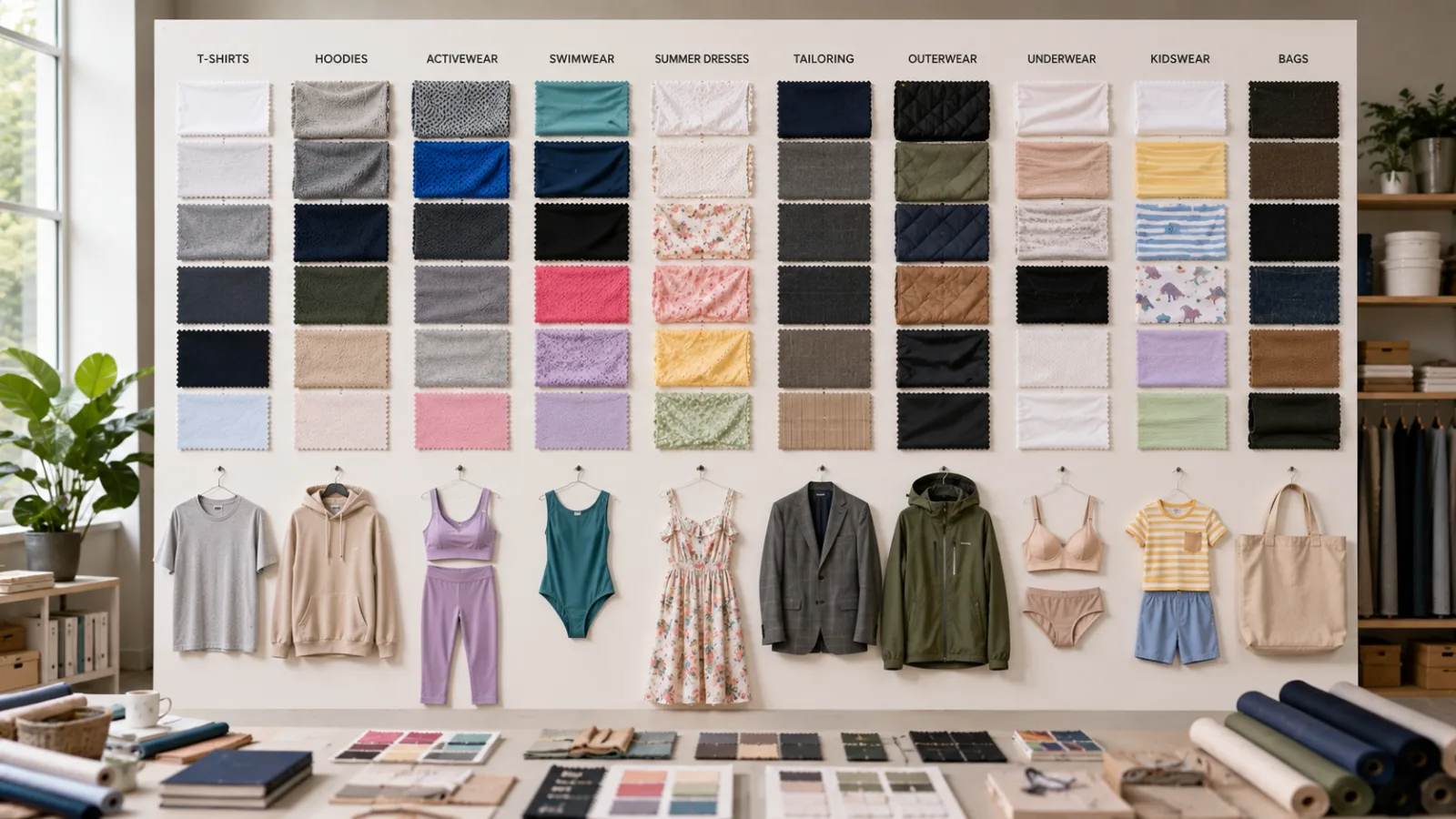
Fabric Selection by Product Category
Different garment categories require different priorities.
Sustainability and Ethical Fabric Selection
Sustainable fabric selection requires more than choosing a material with a natural or recycled label.
Review the full product lifecycle.
Raw Material Source
Ask:
- Is the fiber renewable?
- Is it recycled?
- Is the source traceable?
- Is land or water use documented?
- Are certifications available?
Manufacturing Process
Consider:
- Energy use.
- Water use.
- Chemical management.
- Dyeing.
- Wastewater treatment.
- Worker safety.
- Waste reduction.
Durability
A garment that lasts for years may create more value than one that quickly loses shape, even if the second garment uses a fiber marketed as sustainable.
Care Requirements
Garments that require frequent dry cleaning, high-temperature washing, or heavy tumble drying may have higher use-phase impacts.
End of Life
Consider whether the fabric is:
- Recyclable.
- Biodegradable
- under suitable conditions.
- Blended and difficult to separate.
- Repairable.
- Suitable for reuse.
Avoid Unsupported Claims
Do not describe a product as eco-friendly or sustainable without clear evidence. Use specific statements such as:
- Made with certified organic cotton.
- Contains verified recycled polyester.
- Dyed in a facility with documented wastewater controls.
- Designed as a mono-material product.
Specific claims are more credible than broad marketing language.
How to Source Fabric for a Clothing Line
Fabric sourcing can happen through several channels.
Textile Mills
Mills manufacture fabric directly. They may offer custom development, dyeing, finishing, and larger production capacity.
Fabric Wholesalers
Wholesalers stock fabric from multiple mills. They may offer lower minimums and faster access to existing materials.
Sourcing Agents
Agents can help brands identify mills, communicate specifications, negotiate quantities, and manage quality.
Trade Shows
Textile trade shows allow designers to compare many suppliers, examine materials, and discover innovations in one location.
Online Textile Platforms
Online directories and marketplaces can help with early research, but samples and supplier verification are still essential.
Deadstock Suppliers
Deadstock suppliers sell unused or remaining fabric from previous production. This can provide lower quantities and unique materials, but repeat availability may be limited.

Common Fabric Selection Mistakes
Choosing by Appearance Alone
A fabric may look attractive but fail in comfort, durability, sewing, or washing.
Ignoring the End Use
A textile suitable for a dress may be unsuitable for activewear or workwear.
Skipping Wash Testing
Many problems, including shrinkage, twisting, fading, and pilling, appear only after laundering.
Ordering Too Much Too Early
Large first orders increase financial risk before customer demand and product performance are confirmed.
Ignoring Fabric Width
A lower price may be misleading if the usable width is narrow and garment consumption is high.
Relying Only on Fiber Content
Composition does not explain construction, weight, finish, or quality.
Choosing Unsuitable Stretch
Too little stretch can restrict movement. Too much stretch or weak recovery can distort the garment.
Making Unsupported Sustainability Claims
Marketing claims should be supported with reliable information and documentation.
Failing to Confirm Reorder Availability
A fabric may work perfectly for the first collection but be unavailable for repeat production.
Approving Only a Small Swatch
A small swatch cannot fully show drape, cutting behavior, print placement, or finished-garment performance.
How ApparGlobal Supports Fabric Sourcing and Product Development
Choosing the right fabric requires coordination between design, sourcing, sampling, testing, costing, and manufacturing. A fabric that looks promising in a swatch book may still create problems during cutting, sewing, washing, printing, or bulk production. ApparGlobal helps apparel brands connect fabric selection with structured product development and manufacturing planning.
Brands can explore:
- Sampling Program to test fabric, fit, construction, shrinkage, color, trims, and finishing before bulk production.
- Private Label Program to develop customized products from established apparel foundations.
- Manufacturing Support to coordinate fabric sourcing, production planning, and quality expectations.
- Vendor Program to identify suitable textile and manufacturing suppliers.
- Manufacturer Catalog to review production capabilities for different apparel categories.
- Resources for further guidance on fabrics, sourcing, sampling, and clothing production.
A structured development process can help prevent problems such as poor fabric recovery, excessive shrinkage, weak colorfastness, pilling, unsuitable drape, inaccurate weight, and inconsistent bulk quality.
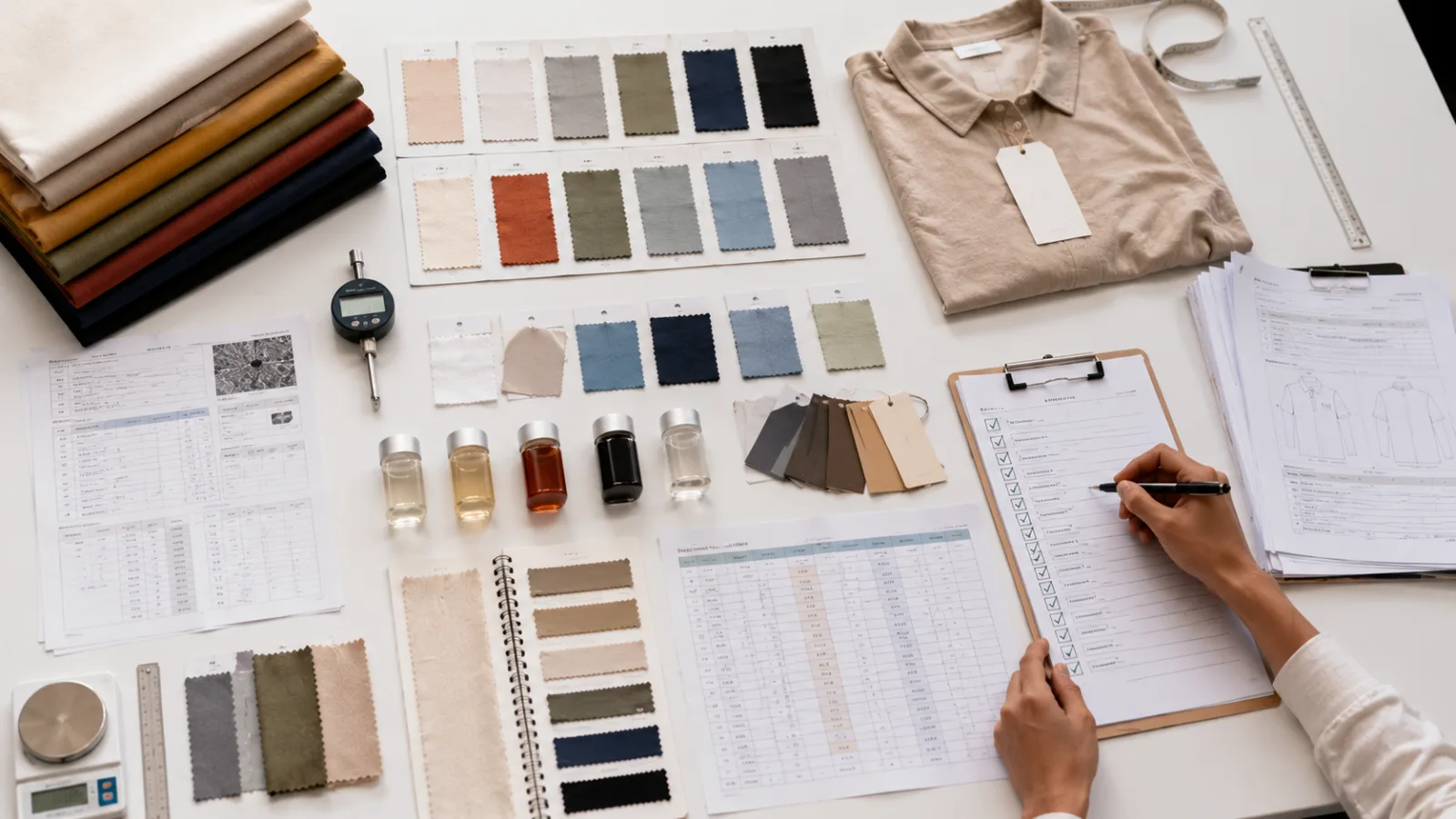
Clothing Line Fabric Selection Checklist
Use this checklist before approving fabric for bulk production.
Product Requirements
- Product category is defined.
- Target customer is clear.
- Climate and season are considered.
- Required drape or structure is documented.
- Stretch and recovery needs are confirmed.
- Performance requirements are listed.
Fabric Specification
- Fiber composition is confirmed.
- Construction is identified.
- GSM is approved.
- Width is confirmed.
- Color and finish are approved.
- Shrinkage is tested.
- Care method is suitable.
Quality and Testing
- Sample garment has been produced.
- Wash testing is complete.
- Colorfastness is acceptable.
- Pilling and abrasion are checked.
- Stretch and recovery are approved.
- Product-specific performance tests are complete.
- Bulk quality tolerance is defined.
Cost and Supply
- Fabric price fits the target costing.
- Consumption is calculated.
- Minimum order quantity is manageable.
- Lead time fits the launch schedule.
- Freight and duties are included.
- Reorder availability is confirmed.
- Supplier payment terms are understood.
Sustainability and Compliance
- Material claims are documented.
- Certifications are verified where relevant.
- Chemical and safety requirements are understood.
- Supplier transparency is acceptable.
- End-of-life considerations have been reviewed.
Bulk Approval
- Lab dip or print strike-off is approved.
- Bulk lot matches the approved sample.
- Incoming fabric inspection is complete.
- Shade groups are controlled.
- Defective rolls are separated.
- Fabric is approved before cutting.
Frequently Asked Questions About Choosing Fabric
1. What is the first step in choosing fabric for a clothing line?
Start by defining the product’s end use. Identify the garment category, customer, climate, fit, performance needs, target price, and care expectations before selecting a fiber or textile.
2. How do I know whether a fabric is suitable for my design?
Create a full sample garment and review its drape, fit, opacity, comfort, stretch, seams, pressing, and wash performance. A small swatch alone is not enough to confirm suitability.
3. What fabric is best for a new clothing brand?
There is no single best fabric. The right choice depends on the product. Cotton jersey may suit T-shirts, nylon-elastane may suit leggings, linen may suit summer clothing, and wool blends may suit tailoring.
4. Should I choose natural or synthetic fabric?
Choose based on function, customer expectations, cost, durability, care, and environmental strategy. Natural fibers are not automatically better, and synthetic fibers are not automatically unsuitable.
5. What does GSM mean in fabric?
GSM means grams per square meter. It is a measure of fabric weight. Higher GSM usually indicates a heavier fabric, but thickness and density also depend on yarn and construction.
6. Why is fabric shrinkage testing important?
Shrinkage can change garment measurements, fit, seam alignment, and print placement. Testing allows the pattern and care instructions to be adjusted before bulk production.
7. How much fabric should I order for sampling?
Order enough for at least one complete sample and additional testing. Complex products, prints, washes, and multiple revisions may require more sample meterage.
8. How can I reduce fabric sourcing risk?
Use clear specifications, request samples, test the material, verify the supplier, confirm minimums and lead times, create a sample garment, and inspect bulk fabric before cutting.
9. Are blended fabrics good for clothing brands?
Blends can combine useful properties such as comfort, stretch, wrinkle resistance, and durability. However, they may be harder to recycle and should still be tested carefully.
10. Is bamboo fabric sustainable?
Many bamboo fabrics are regenerated cellulosic fibers made through chemical processing. Their impact depends on the manufacturing method, sourcing, chemical recovery, and certifications. Bamboo origin alone does not guarantee sustainability.
Conclusion
Choosing the right fabric for your clothing line is both a creative and technical decision. The material determines how a garment looks, feels, moves, fits, performs, and survives repeated use.
Successful fabric selection begins with the product. Define the customer, climate, intended use, fit, price, performance, and care requirements before comparing materials. Then evaluate fiber content, construction, weight, drape, stretch, recovery, breathability, durability, shrinkage, printing, dyeing, and maintenance. Cost must also be reviewed carefully. The true expense includes more than the price per meter. Minimum quantities, consumption, shrinkage, waste, testing, printing, freight, duties, and defects all affect the final garment cost.
Sustainability requires the same level of detail. No fabric is responsible simply because it is described as natural, recycled, organic, or bamboo. Brands should examine sourcing, processing, durability, care, certifications, labor practices, and end-of-life options. Most importantly, never approve fabric without sampling and testing it in the intended product. A swatch may look perfect but behave very differently after cutting, sewing, stretching, printing, or washing. When fabric selection is connected with clear product planning, reliable suppliers, sample development, quality testing, and realistic costing, it becomes a powerful foundation for a successful clothing line. The right textile does more than complete the design. It helps your brand deliver the comfort, quality, identity, and customer experience it promises.