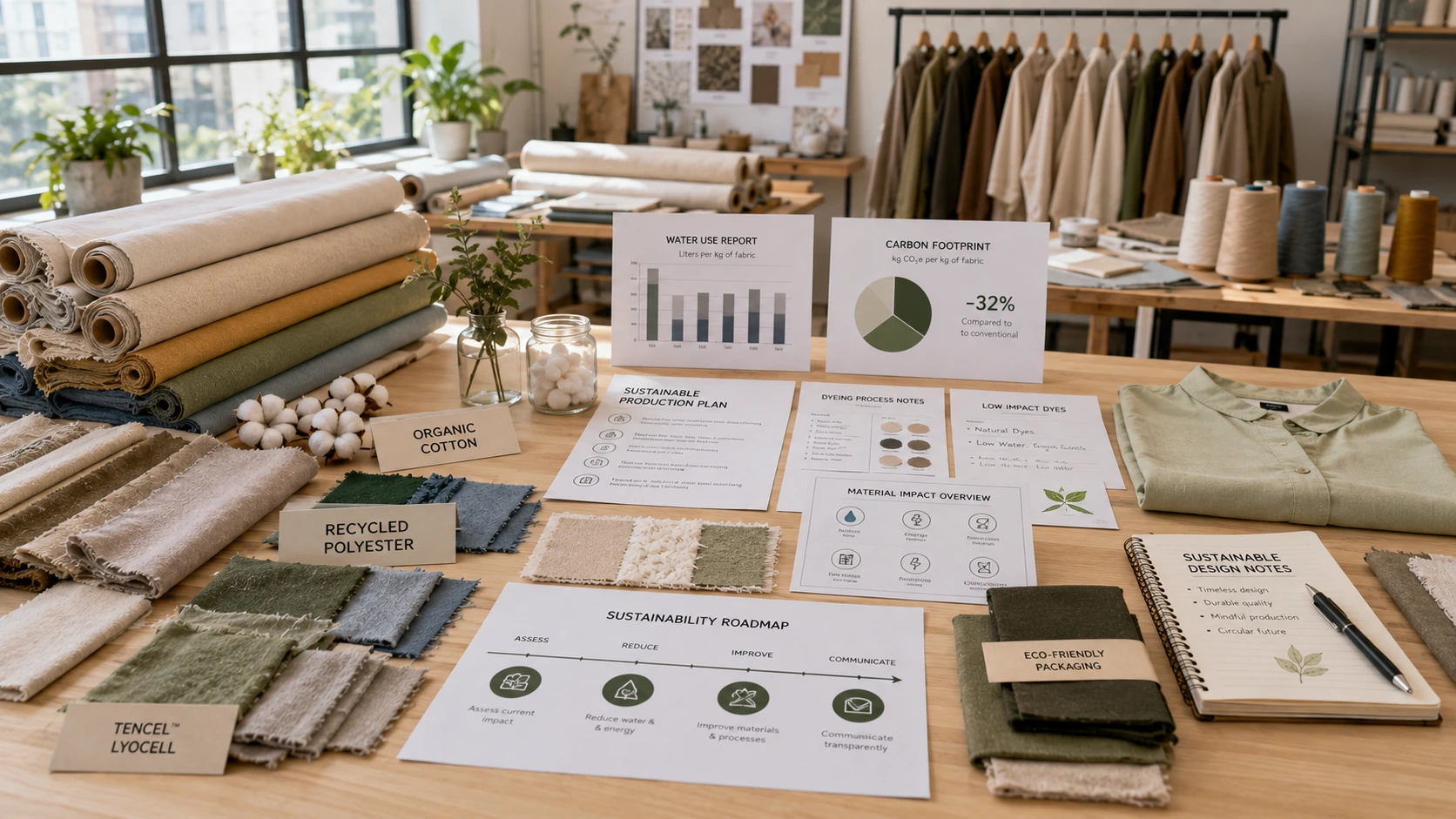
Textile production sits at the heart of the fashion industry, but it also carries a heavy environmental footprint. Every garment begins long before it reaches a store rack or online checkout page. Fibers must be grown, extracted, spun, dyed, finished, cut, sewn, packed, shipped, worn, washed, and eventually discarded or reused.
The environmental impact of textile production is not caused by one single problem. It comes from many connected stages: raw material sourcing, water use, energy consumption, chemical processing, dyeing, synthetic fiber production, microplastic shedding, overproduction, waste, and poor end-of-life systems.
For clothing brands, this topic is no longer optional. Customers are asking more questions. Regulations are increasing. Retailers are demanding better material transparency. And brands that ignore sustainability risk falling behind.
This guide explains the environmental impact of textile production in a clear, practical way. It also explores how fashion brands can make smarter material, sourcing, production, and inventory decisions to reduce harm and build a more responsible apparel business.
What Is Textile Production?
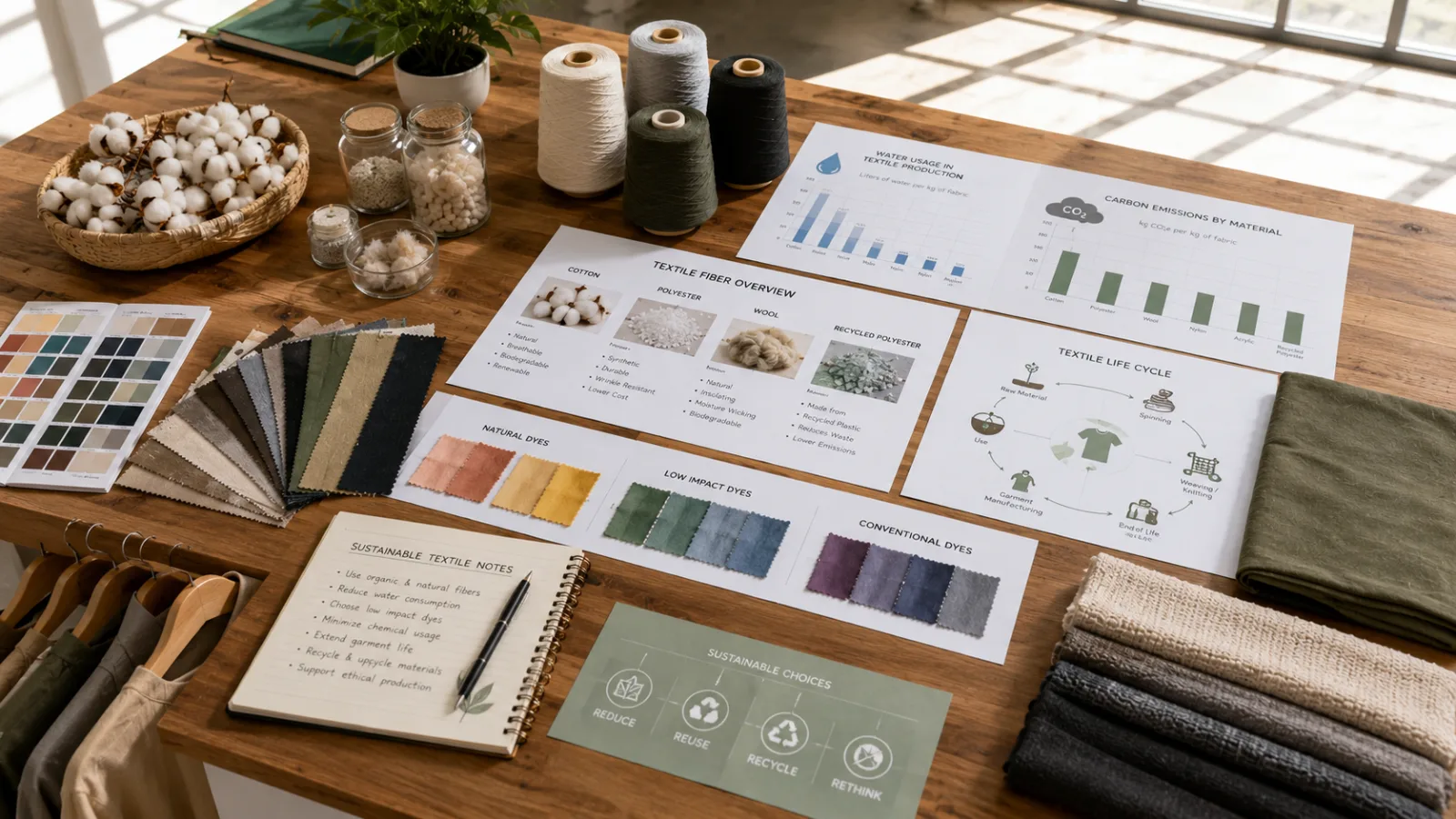
Textile production is the process of turning raw fibers into finished fabrics and textile products. It includes fiber cultivation or extraction, spinning, weaving or knitting, dyeing, printing, finishing, cutting, sewing, packaging, and distribution.
In fashion, textile production may involve natural fibers like cotton, linen, hemp, wool, and silk; synthetic fibers like polyester, nylon, acrylic, and elastane; regenerated fibers like viscose, modal, and lyocell; and newer materials such as recycled fibers, bio-based materials, and lab-grown textile innovations.
Each textile has its own impact profile. Cotton may involve water, land, and pesticide concerns depending on farming practices. Polyester is connected to fossil fuel use and microfiber shedding. Viscose can involve forest and chemical concerns if not responsibly sourced. Wool can involve land use, methane emissions, and animal welfare questions. Recycled fibers can reduce virgin material use but may still face quality, blending, and end-of-life challenges.
That is why sustainable textile production is not about choosing one perfect fabric. It is about understanding the full chain of impact and making better decisions at every stage.
The Main Stages of Textile Production
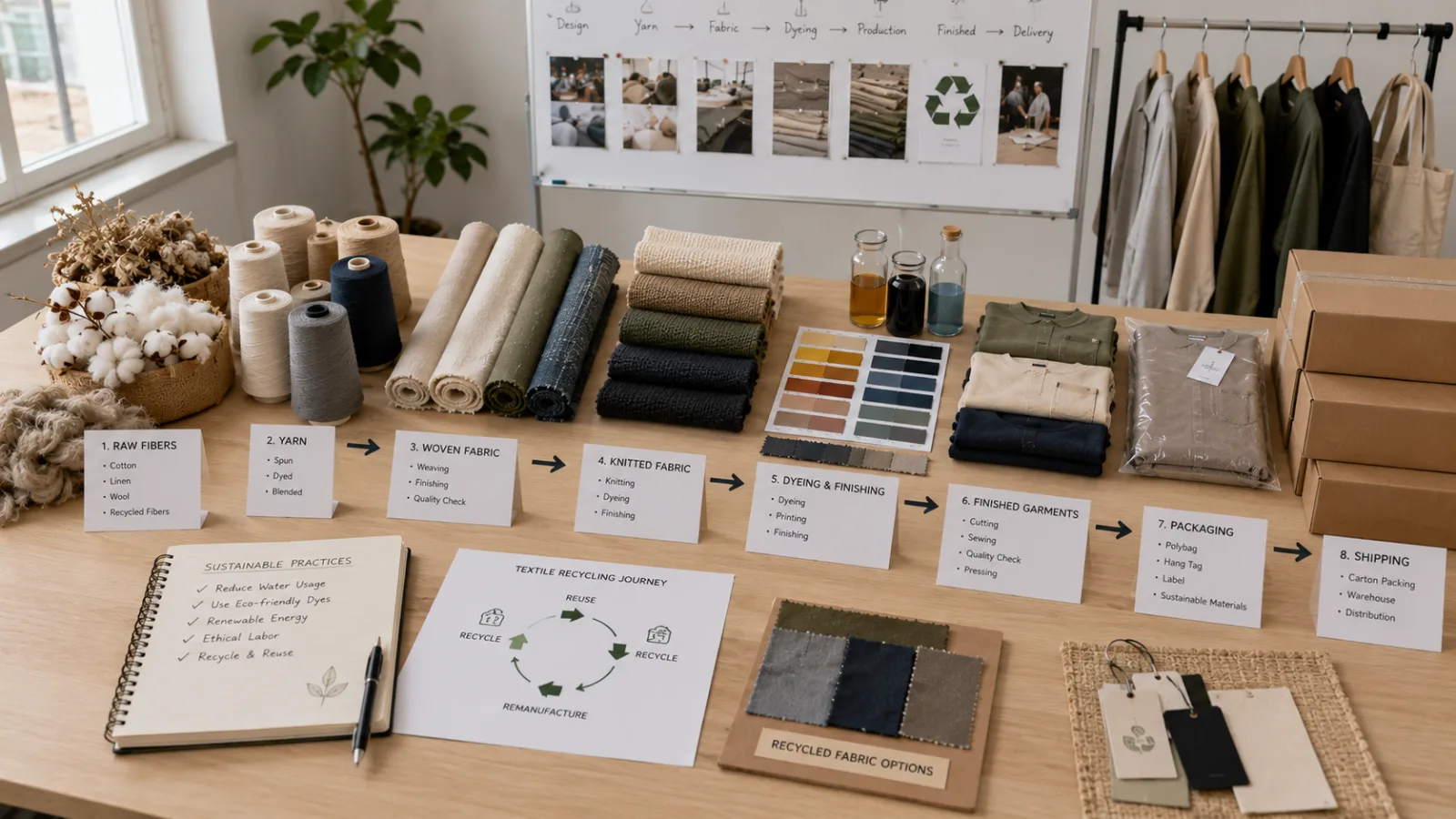
Textile production usually includes:
- Raw fiber sourcing
- Fiber processing
- Spinning into yarn
- Weaving or knitting into fabric
- Dyeing and printing
- Finishing treatments
- Cutting and sewing
- Packaging
- Transportation
- Consumer use and washing
- Reuse, resale, recycling, or disposal
Environmental impact can happen at every stage. A fabric may be made from a lower-impact fiber but dyed with harmful chemicals. A garment may use recycled material but be overproduced. A durable product may be made well but shipped inefficiently. Sustainability requires full-system thinking.
Why the Environmental Impact of Textile Production Matters
The environmental impact of textile production matters because textiles are produced and consumed at enormous scale. Clothing is not a small niche industry. It is a global system that touches farming, oil extraction, manufacturing, chemistry, logistics, retail, consumer behavior, and waste management.
UNEP
reported in 2025 that the fashion and textiles sector accounts for an estimated 2 to 8 percent of global greenhouse gas emissions, contributes about 9 percent of microplastic pollution reaching oceans annually, and consumes 215 trillion liters of water. These numbers show why textile sustainability has become a major global concern.
Textile consumption also places pressure on climate and natural resources. The European Environment Agency states that textile consumption in Europe causes the fourth highest pressure on the environment and climate after food, housing, and mobility.
For fashion brands, these impacts are not abstract. They influence production costs, customer trust, supplier selection, material sourcing, regulatory compliance, and long-term brand value. A brand that understands textile impact can make better decisions about fabrics, quantities, suppliers, production methods, durability, and waste reduction.
Why Brands Should Care
Sustainability is not only about image. It affects real business decisions. Brands that reduce waste can improve inventory efficiency. Brands that choose better materials can build trust. Brands that design durable garments can reduce returns and improve customer satisfaction. Brands that understand supply chains can avoid risky suppliers and weak sustainability claims.
The fashion industry is moving toward more transparency. Brands that prepare early will be better positioned than brands that wait until regulations or customer pressure force change.

1. Water Use in Textile Production
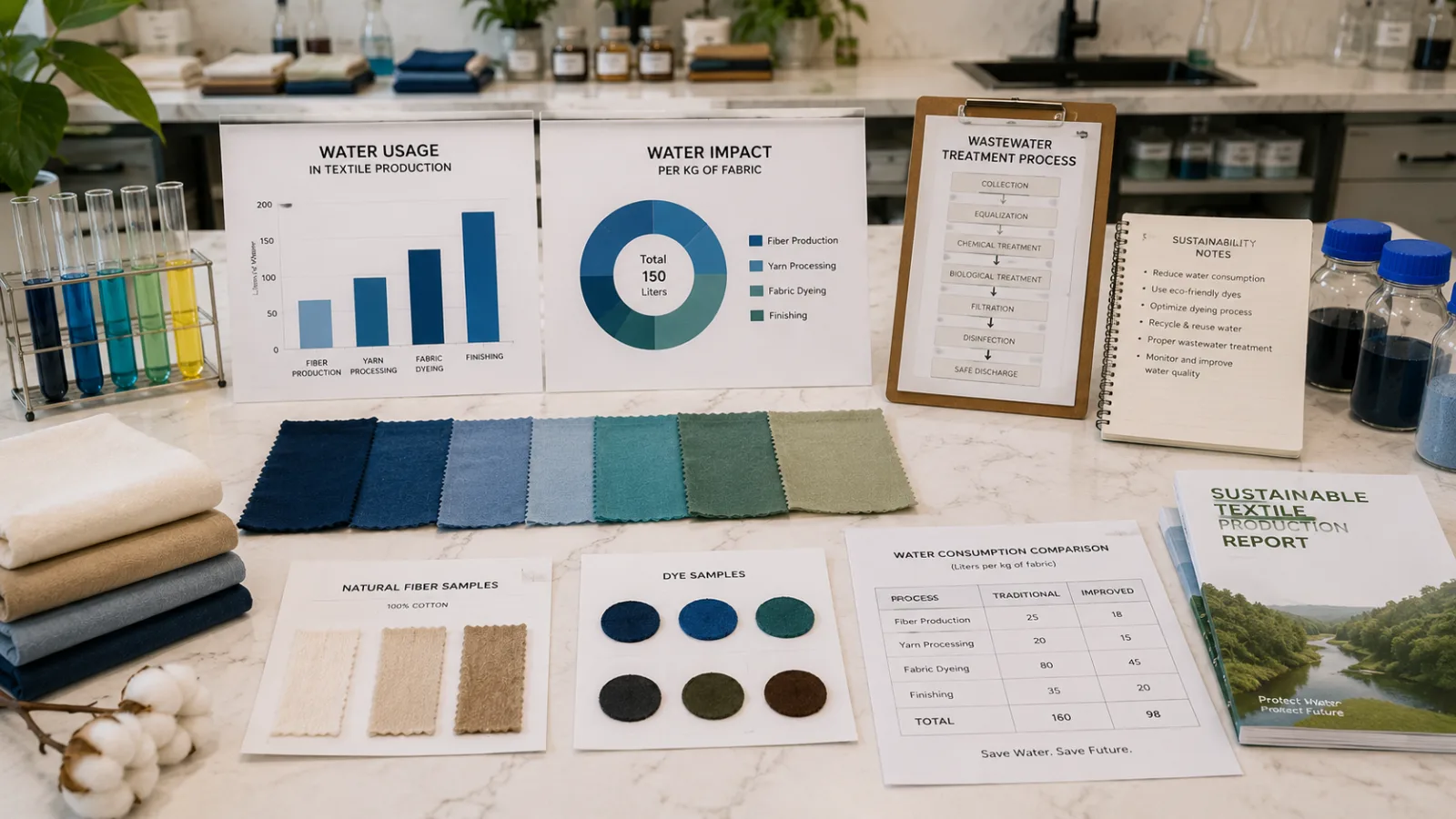
Water is one of the biggest environmental concerns in textile production. It is used in fiber farming, washing, dyeing, printing, finishing, and garment processing. Some fibers and processes require more water than others, but the issue is especially important in cotton farming and wet processing.
Cotton is a natural fiber, but that does not automatically make it low-impact. Conventional cotton can require irrigation, fertilizers, pesticides, and large areas of farmland depending on where and how it is grown. Water stress becomes more serious when cotton is grown in regions where water is already limited.
Dyeing and finishing are also water-intensive. Fabric may be washed, bleached, dyed, rinsed, softened, and treated before it becomes a finished product. If wastewater is not properly treated, it can carry dyes, salts, heavy metals, and chemical residues into rivers and local ecosystems.
Why Water Impact Is Complicated
Not all water use is equal. Rain-fed cotton has a different impact from heavily irrigated cotton. Closed-loop dyeing systems are different from factories that discharge untreated wastewater. A region with strong water treatment infrastructure creates different outcomes than a region with weak regulation.
This means brands should not only ask, “How much water does this fabric use?” They should also ask where the material comes from, how it is processed, and whether wastewater is treated properly.
How Brands Can Reduce Water Impact
Clothing brands can reduce water impact by choosing lower-water fibers where suitable, sourcing from responsible mills, using certified materials, supporting better dyeing technologies, avoiding unnecessary washing treatments, and planning production more accurately to reduce overproduction.
Brands can also ask suppliers about wastewater treatment, water recycling, dyeing methods, and chemical management. If a supplier cannot explain how wet processing is managed, the brand should be cautious.
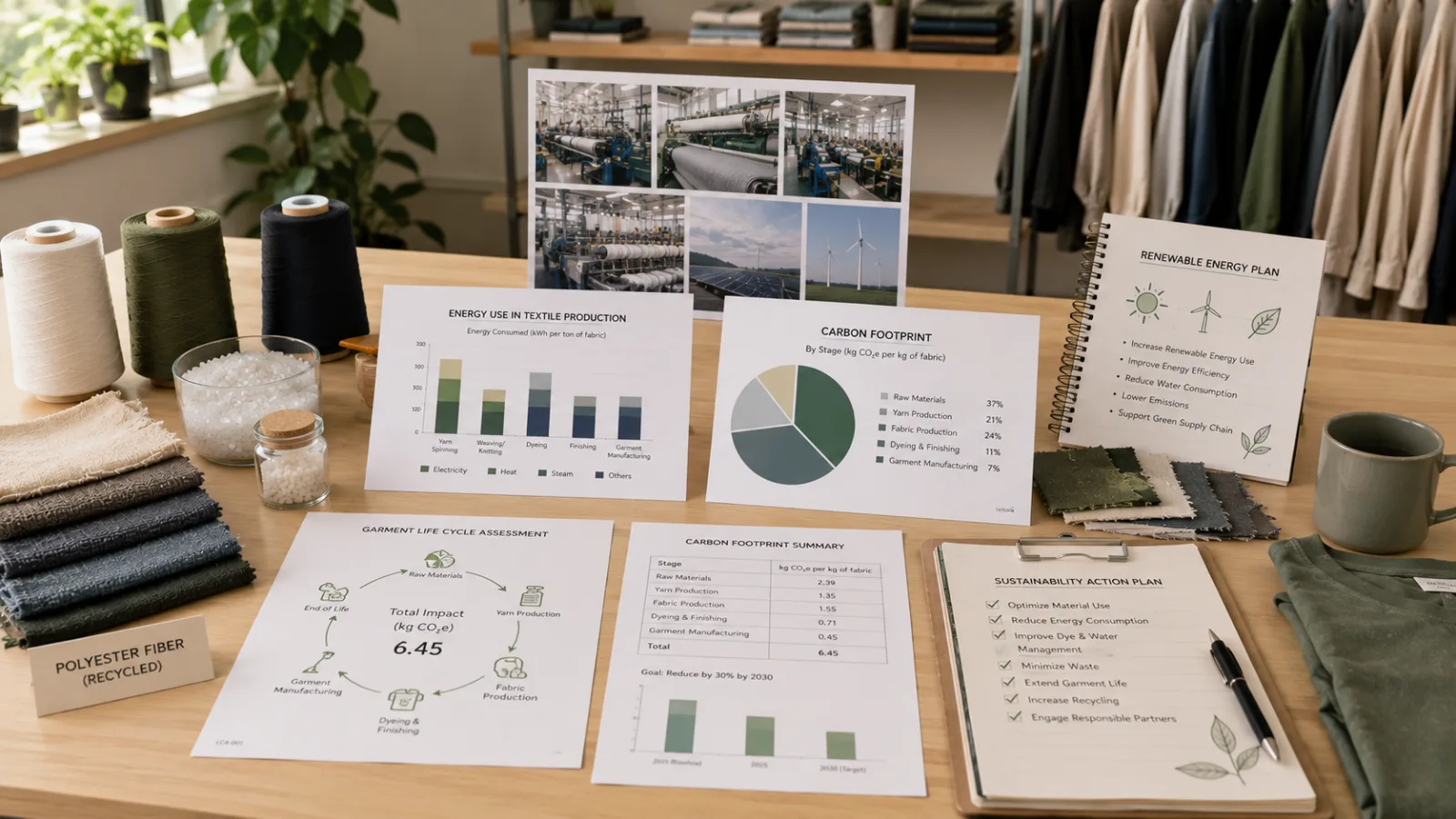
2. Carbon Emissions and Energy Use
Textile production uses energy at almost every stage. Energy is needed to produce synthetic fibers, run spinning machines, weave or knit fabric, heat dye baths, operate finishing equipment, cut and sew garments, transport materials, and distribute finished products.
The carbon footprint of textiles depends on fiber type, energy source, manufacturing location, processing method, shipping distance, and product lifecycle. Synthetic fibers such as polyester are connected to fossil fuel inputs. Energy-intensive dyeing and finishing can also contribute significantly to emissions, especially when factories rely on coal or other high-carbon energy sources.
Polyester is especially important because it dominates global fiber production. Textile Exchange reported that polyester accounted for 57 percent of global fiber production in 2023, with about 71 million tonnes produced. This matters because the textile industry’s heavy reliance on fossil-based synthetics affects climate goals and material sustainability.
Why Energy Source Matters
Two factories may produce similar fabric but have different carbon impacts if one uses renewable energy and the other relies on coal. This is why energy source matters as much as production location.
Brands should ask suppliers about energy efficiency, renewable energy use, boiler fuel, heat recovery, and carbon measurement. Many small brands may not have full access to lifecycle data, but asking better questions encourages better supplier transparency.
Reducing Carbon Emissions in Textile Production
Brands can reduce carbon impact by choosing durable materials, reducing overproduction, sourcing recycled or lower-impact fibers where appropriate, improving production planning, using regional suppliers when feasible, and working with mills that invest in cleaner energy.
Design also matters. A garment that lasts longer, washes well, and avoids quick disposal can reduce impact over time. The most sustainable garment is often not only about material choice, but also about durability and use.
3. Chemical Pollution From Dyeing and Finishing
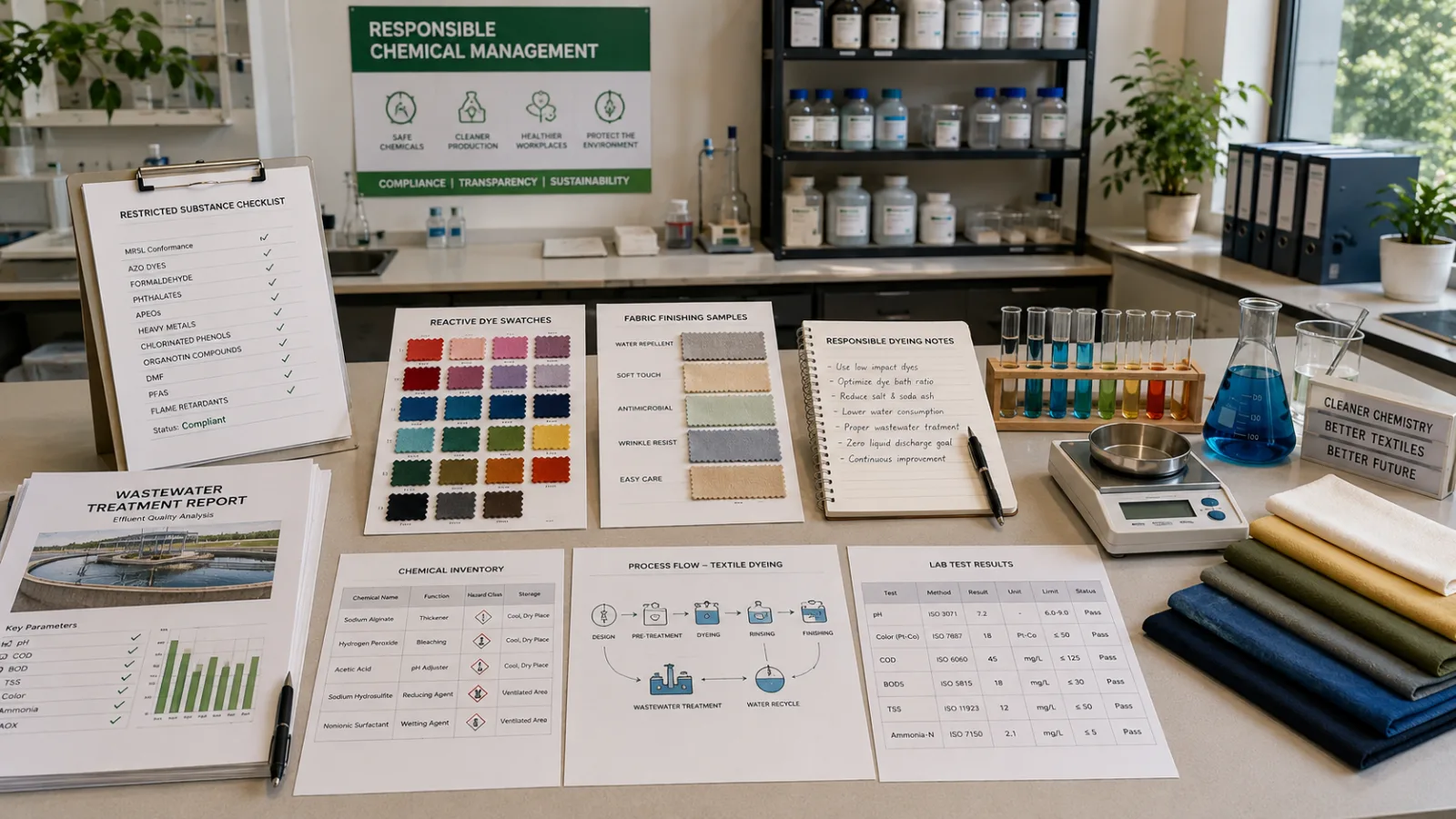
Dyeing and finishing make fabrics look, feel, and perform the way customers expect. These processes create color, softness, water resistance, wrinkle resistance, shine, texture, flame resistance, shrinkage control, and many other features. But they can also create environmental problems if chemicals are poorly managed.
Textile production can involve dyes, solvents, softeners, bleaches, resins, surfactants, salts, fixatives, and finishing agents. UNEP has noted that an estimated 15,000 chemicals are used in textile manufacturing, and some can persist in the environment for long periods.
Chemical pollution is especially concerning when wastewater is discharged without proper treatment. Polluted water can affect rivers, soil, aquatic life, and nearby communities. Workers may also face exposure risks if factories do not follow safe handling practices.
Why Chemical Management Matters
Not all chemicals are harmful, and not all dyeing is irresponsible. Responsible mills can use safer chemical systems, restricted substance lists, wastewater treatment, certifications, testing, and better process control. The problem is weak management and lack of transparency.
A bright color, soft finish, or special coating may look attractive to customers, but brands should understand what process created it.
What Brands Can Ask Suppliers
- Do you follow a restricted substance list?
- Do you test fabrics for harmful chemicals?
- Do you have wastewater treatment?
- Do you use certified dyes?
- Can you provide chemical compliance documents?
- Do you have OEKO-TEX, bluesign, GOTS, or similar certifications where relevant?
- Can you avoid certain finishes if they are not necessary?
Avoiding Unnecessary Finishes
Fashion brands should be careful with finishes that are added only for marketing. If a garment does not need a special coating, treatment, or wash, skipping it can reduce chemical impact and cost.
4. Microfiber and Microplastic Pollution
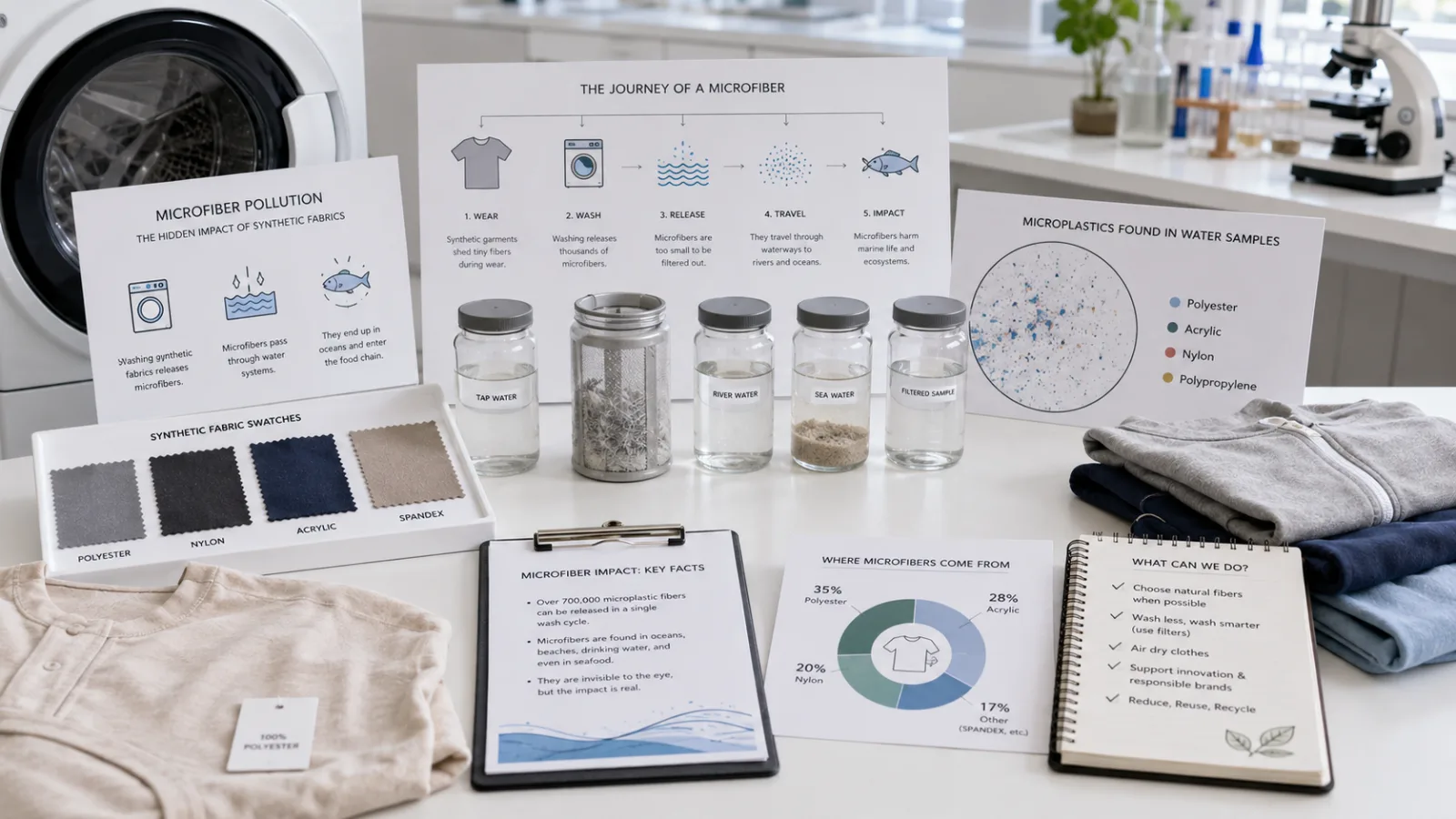
Microfiber pollution happens when tiny fibers shed from textiles during production, wearing, washing, and disposal. Synthetic textiles such as polyester, nylon, and acrylic can shed microplastic fibers. These particles can enter waterways, oceans, soil, and even the air.
Because synthetic fibers dominate global textile production, microfiber pollution is a serious concern. UNEP reported that the fashion and textiles sector contributes about 9 percent of annual microplastic pollution reaching oceans.
Microfiber shedding is not only a washing issue. It can happen during manufacturing, cutting, brushing, wearing, laundering, and waste handling. However, domestic washing is a major pathway because fibers can leave garments in wastewater.
Why Microfiber Pollution Is Hard to Solve
Microfiber pollution is difficult because synthetic fabrics are widely used for affordability, performance, durability, stretch, and easy care. Polyester is used in activewear, uniforms, fleece, outerwear, schoolwear, dresses, linings, and home textiles. Replacing all synthetics immediately is not realistic.
The better approach is to reduce unnecessary synthetic use, improve fabric construction, choose higher-quality materials, design for durability, use washing solutions, and support textile innovation.
How Brands Can Reduce Microfiber Impact
Brands can choose better-quality fabrics that shed less, avoid poorly made fleece, test shedding where possible, design durable garments, educate customers on washing, and explore natural or regenerated alternatives where suitable.
Consumers can also reduce shedding by washing less often, using cooler water, washing full loads, avoiding aggressive cycles, and using microfiber-catching filters or bags where available.
5. Textile Waste and Overproduction
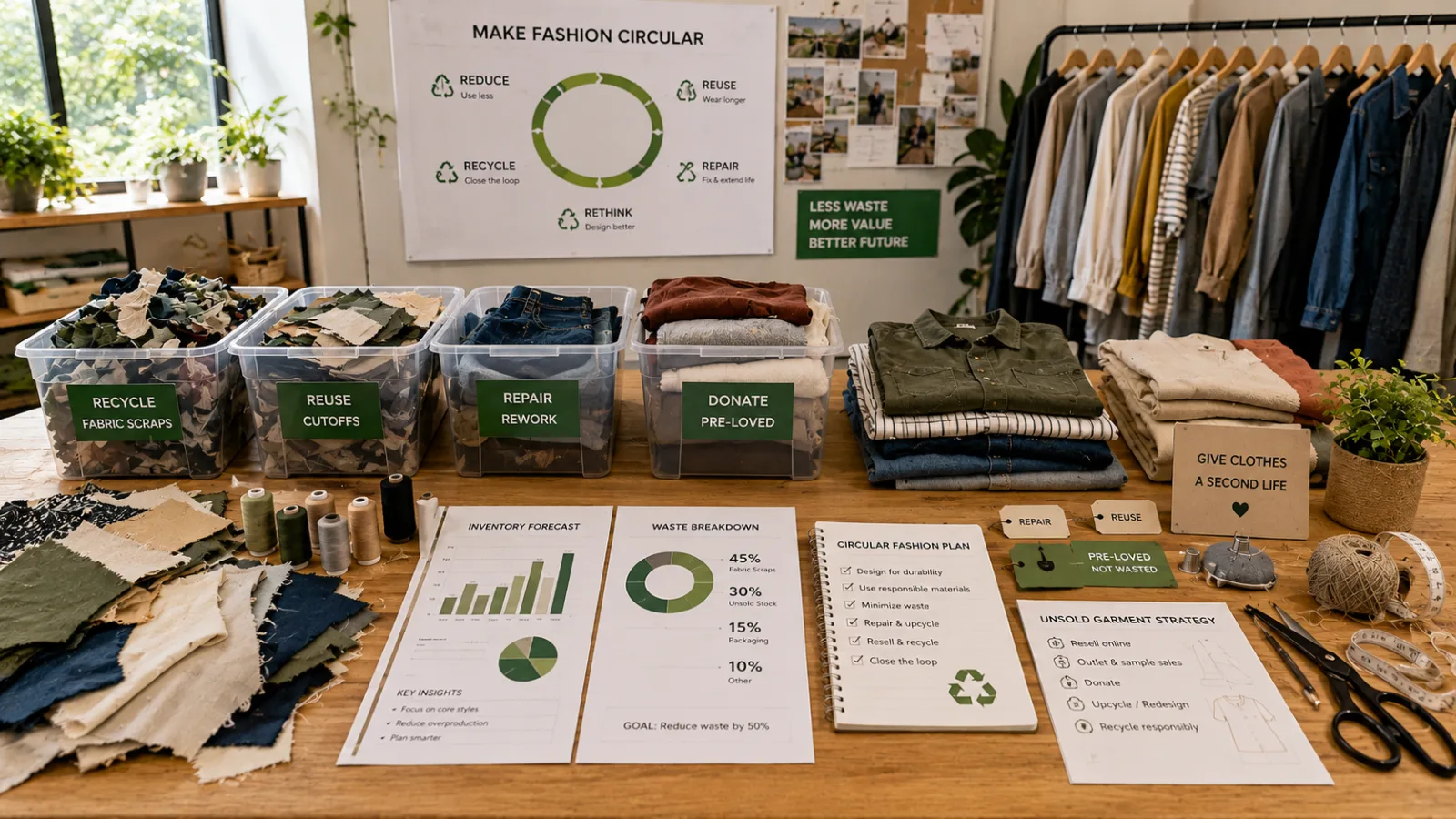
Textile waste is one of the clearest signs that fashion production needs change. Waste happens at many points: fabric cutting waste, unsold inventory, returned products, damaged goods, discarded garments, and post-consumer clothing waste.
Overproduction is a major cause. Brands often produce more than customers need because they chase lower unit costs, meet high MOQs, forecast incorrectly, or rely on discount-driven sales models. When garments do not sell, they may be marked down, liquidated, stored, destroyed, exported, or sent to landfill.
Textile waste is especially difficult because many garments are made from blended fibers, trims, zippers, elastane, coatings, prints, and mixed materials that are hard to recycle. Even when consumers donate clothing, not all items are resold or reused.
Why Waste Begins Before the Customer
Waste is often created before a garment is even sold. Poor pattern planning creates cutting waste. High MOQ creates extra inventory. Weak demand forecasting creates overstock. Trend-driven collections become outdated quickly. Low-quality garments have short lifespans. This means brands must address waste at the design and production stage, not only after products are discarded.
How Brands Can Reduce Textile Waste
- Use better demand forecasting.
- Start with smaller production runs.
- Improve pattern efficiency.
- Use deadstock fabric carefully.
- Design durable garments.
- Avoid unnecessary trims that block recycling.
- Create repair or resale programs.
- Use pre-orders carefully.
- Plan markdowns responsibly.
- Track returns and defects.
- Avoid producing too many styles too quickly.
Circular Fashion Thinking
Circular fashion means designing products so materials stay in use longer. This can include repair, resale, rental, recycling, upcycling, mono-material design, and take-back systems. Circularity is not simple, but waste reduction begins with better planning.
6. Land Use, Agriculture, and Biodiversity
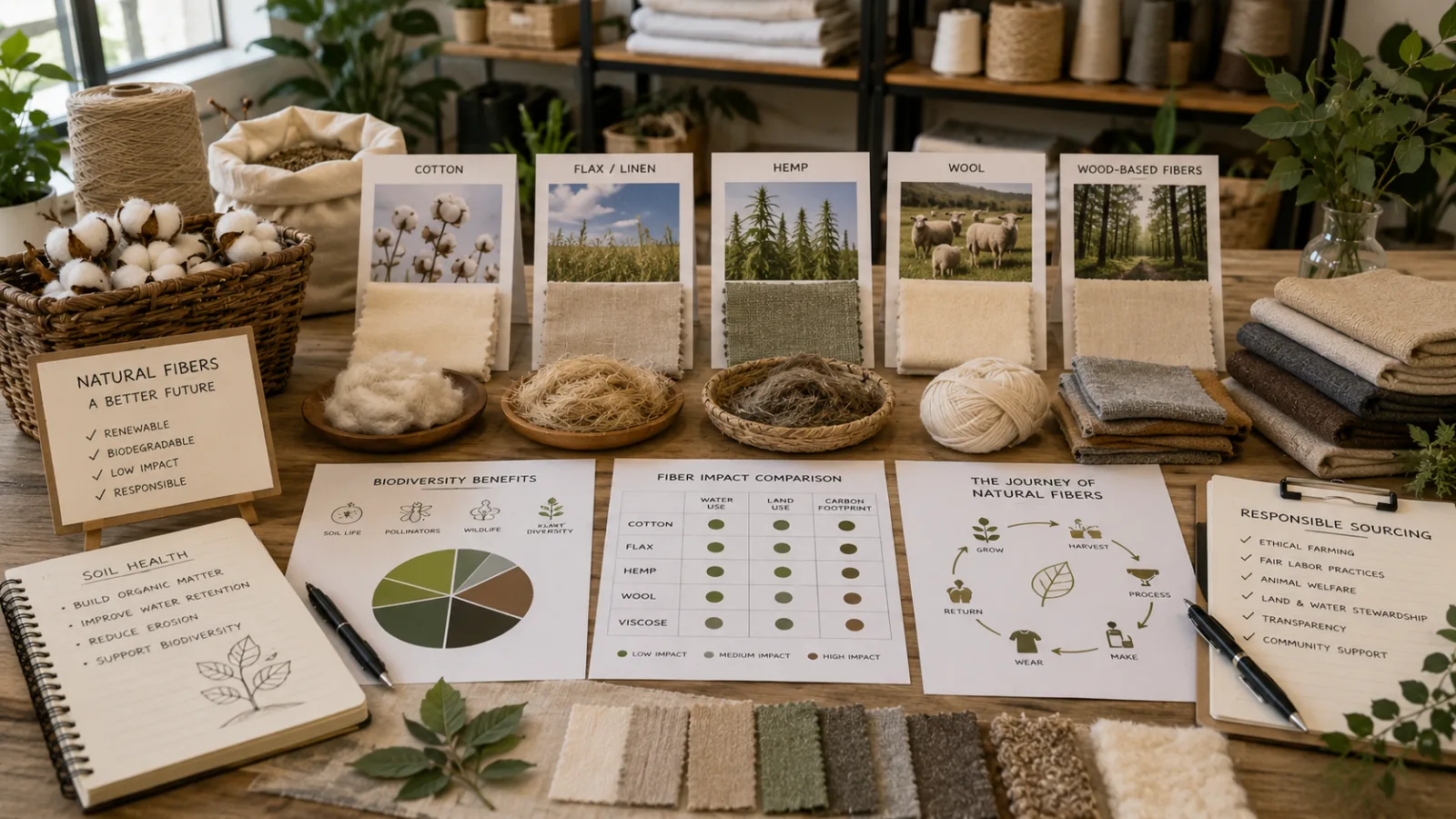
Textile production affects land use through fiber farming, grazing, forestry, and crop cultivation. Cotton, flax, hemp, wool, cashmere, viscose, and other materials all connect to land systems in different ways.
Cotton farming may affect soil health, water use, pesticide use, and biodiversity depending on farming practices. Wool and cashmere involve grazing land and animal management. Viscose and other wood-based fibers depend on forests and pulp supply chains. If these systems are poorly managed, they can contribute to habitat loss, soil degradation, deforestation, and biodiversity decline.
Natural Fibers Are Not Automatically Low Impact
Natural fibers can be renewable, breathable, and biodegradable under the right conditions, but they still require land, water, labor, and processing. A natural material can have high impact if it is grown or processed irresponsibly.
For example, cotton grown with heavy pesticide use can affect ecosystems. Wool from poorly managed grazing systems can affect land health. Viscose from ancient or endangered forests can create forest risk.
Better Land-Based Textile Choices
Brands can reduce land-related impacts by sourcing organic cotton, regenerative cotton where verified, hemp, linen, responsibly managed wool, FSC-certified viscose or lyocell, recycled fibers, and traceable materials. However, certification alone is not a complete solution. Brands should understand supplier practices and material origins.
Why Biodiversity Matters
Biodiversity supports healthy soil, water systems, pollinators, and climate resilience. Textile production that damages ecosystems can create long-term risks beyond fashion. Responsible material sourcing should consider nature, not only carbon.
7. The Impact of Consumer Use and Washing
The environmental impact of textiles does not end after production. How consumers use and care for garments also matters. Washing, drying, ironing, dry cleaning, and disposal can all contribute to water use, energy use, chemical exposure, microfiber shedding, and garment wear.
A garment that requires frequent washing, high-heat drying, or dry cleaning may have a higher use-phase impact. A garment that shrinks, fades, pills, or loses shape quickly may be discarded sooner. This is why design, fabric quality, and care labeling matter.
Why Care Labels Are Part of Sustainability
Care labels should help customers maintain garments properly. If a garment can be washed cold and air dried, that can reduce energy use. If a delicate fabric requires special care, customers should know before buying. Clear care instructions reduce damage, returns, and early disposal.
Designing for Easier Care
Fashion brands can improve sustainability by designing garments that wash well, resist shrinkage, maintain shape, and avoid unnecessary dry cleaning. Durable, easy-care clothing is often more sustainable than delicate garments that fail quickly.
Consumer Tips Brands Can Share
Wash garments less often when possible.
- Use cold water.
- Air dry when practical.
- Wash full loads.
- Repair small damage early.
- Use gentle cycles for delicate items.
- Avoid over-washing denim and outerwear.
- Store garments properly.
- Follow care labels.
Customer education can extend product life and improve brand trust.

8. Fast Fashion, Overconsumption, and Short Product Lifecycles
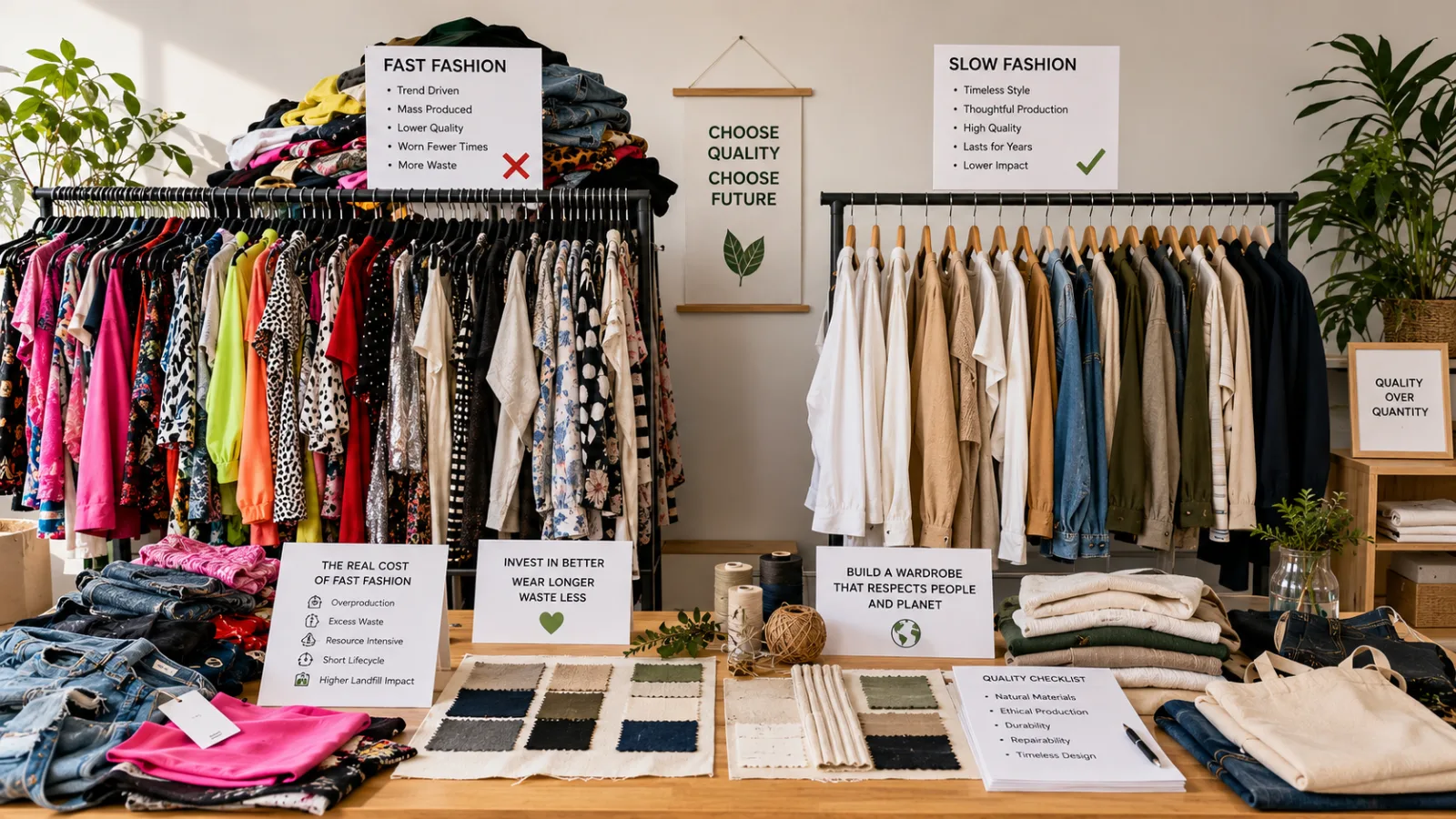
Fast fashion has changed how people buy clothing. New styles arrive quickly, prices stay low, and trends move fast. This can make clothing feel disposable. When garments are cheap and constantly replaced, production volumes increase and waste grows.
The environmental issue is not only the material of each garment. It is the speed and scale of consumption. Even a lower-impact fabric can become part of an unsustainable system if products are overproduced, worn only a few times, and discarded quickly.
Why Short Lifecycles Are a Problem
Every garment requires resources to make. If it is worn only once or twice, the environmental cost per wear becomes high. Durable garments that are worn many times usually offer better value and lower impact per use. Brands should think beyond launch excitement. A product should be designed to stay useful, wearable, and desirable.
How Brands Can Move Away From Disposable Fashion
- Create timeless core products.
- Improve garment quality.
- Use better fit testing.
- Avoid unnecessary trend chasing.
- Offer repair guidance.
- Build smaller collections.
- Produce based on demand.
- Use storytelling around longevity.
- Encourage responsible care.
- Track product returns and complaints.
Slow Fashion Does Not Mean Boring Fashion
Sustainable fashion can still be creative, stylish, and commercially strong. The difference is that products are designed with more intention. Instead of chasing constant newness, brands can focus on better materials, better fit, better production, and better customer value.
Sustainable Textile Materials: Are They Always Better?
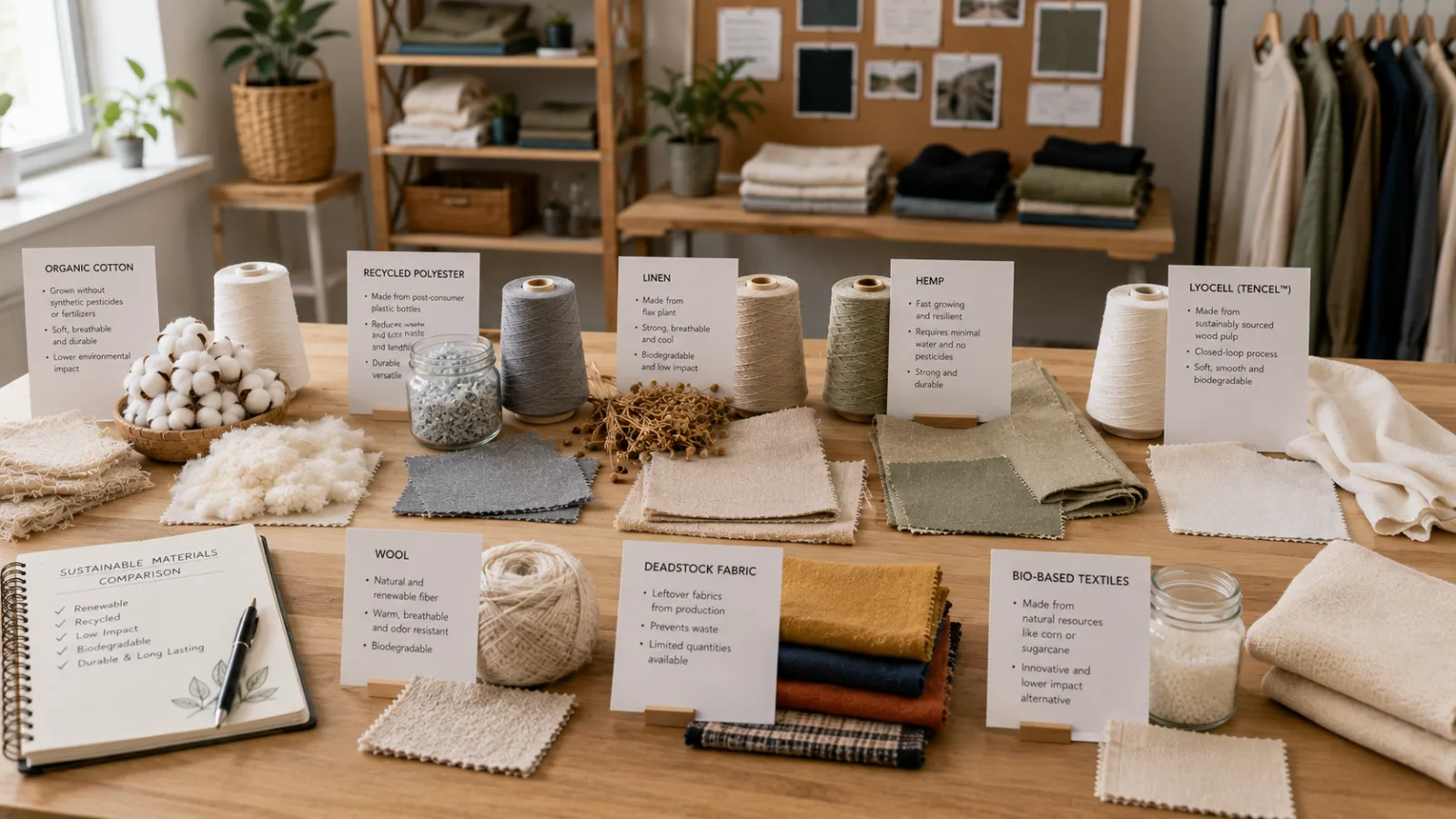
Sustainable textile materials can help reduce impact, but no fabric is perfect. Every material has trade-offs. The goal is to choose the best material for the product purpose, performance needs, and supply chain reality.
Organic Cotton
Organic cotton can reduce synthetic pesticide and fertilizer use compared with conventional systems, but it still requires land and water. It works well for T-shirts, babywear, basics, and soft everyday clothing.
Recycled Polyester
Recycled polyester can reduce demand for virgin fossil-based polyester, but it is still synthetic and can shed microfibers. It works well for performance clothing, outerwear, bags, and durable products when used responsibly.
Linen and Hemp
Linen and hemp can be durable, breathable, and lower-input in some farming systems. They work well for summer clothing, shirts, dresses, home textiles, and relaxed tailoring.
Lyocell
Lyocell is a regenerated cellulose fiber often valued for softness, drape, and closed-loop processing in responsible systems. It works well for dresses, blouses, shirts, sleepwear, and soft basics.
Wool
Wool can be durable, warm, and biodegradable in suitable conditions, but it raises land use, animal welfare, and methane concerns. Responsible sourcing matters.
Deadstock Fabric
Deadstock fabric uses existing surplus material, which can reduce waste. However, availability is inconsistent, and brands may struggle with repeat production.
Bio-Based and Bio-Fabricated Materials
New materials from algae, mycelium, plant proteins, or fermentation systems are promising, but they need testing for durability, scalability, coatings, and end-of-life impact.
How Clothing Brands Can Reduce Textile Production Impact
Fashion brands cannot fix every environmental problem alone, but they can make better choices across product development, sourcing, production, inventory, and customer education.
1. Design With Purpose
Every product should have a clear role. Avoid creating styles just to fill a collection. Design products customers will wear repeatedly.
2. Choose Materials Carefully
Select materials based on durability, comfort, performance, impact, and availability. Avoid choosing fabrics only because they sound sustainable.
3. Work With Better Suppliers
Choose suppliers that can explain fabric sourcing, chemical management, wastewater treatment, quality control, and production processes.
4. Reduce Overproduction
Start with realistic quantities. Use sales data, pre-orders, small batches, and smarter forecasting to avoid excess stock.
5. Improve Quality
A better-made garment usually lasts longer. Strong seams, stable fabric, good fit, and proper finishing reduce early disposal.
6. Create Clear Care Instructions
Help customers wash, dry, store, and repair garments properly.
7. Track Waste and Returns
Returns, defects, and unsold stock reveal where the brand needs improvement.
8. Build Circular Options
Explore repair, resale, donation, upcycling, recycling, and take-back partnerships where realistic.

Greenwashing: What Brands Should Avoid
Greenwashing happens when a brand makes sustainability claims that are vague, exaggerated, misleading, or unsupported. As customers become more aware of environmental issues, brands must communicate carefully.
Common Greenwashing Phrases
- “Eco-friendly” without explanation.
- “Sustainable” without evidence.
- “Conscious” without details.
- “Natural” as if it always means low-impact.
- “Recycled” without percentage.
- “Biodegradable” without conditions.
- “Chemical-free,” which is usually scientifically inaccurate.
“Zero impact,” which is unrealistic.
Better Communication
Instead of saying “This is sustainable,” explain what specifically is better.
For example:
- “Made with 70 percent recycled cotton.”
- “Dyed in a facility with wastewater treatment.”
- “Designed for cold washing and long-term wear.”
- “Made from deadstock fabric, so quantities are limited.”
- “Uses mono-material construction to support future recycling.”
- Clear claims build trust.

ApparGlobal
For apparel brands, reducing the environmental impact of textile production becomes more practical when sustainability is connected with product development, sourcing, MOQ planning, quality control, and scalable manufacturing systems. A brand may choose a better fabric, but the final impact also depends on how much it produces, how suppliers manage chemicals, how durable the garment is, and whether inventory is planned responsibly.
Many clothing brands struggle because sustainability decisions are made too late in the production process. Fabric selection, trim choices, dyeing methods, packaging, quality standards, and inventory quantities should be discussed before sampling and bulk production begin. This helps brands avoid waste, overproduction, poor material performance, and unsupported sustainability claims.
Companies such as ApparGlobal help clothing brands align material selection, vendor coordination, fabric sourcing, sample review, MOQ planning, production timelines, quality control, and scalable manufacturing workflows. For brands developing sustainable apparel, T-shirts, hoodies, activewear, kidswear, uniforms, private label collections, or custom garments, this kind of production-focused support can make responsible sourcing more structured and reliable.
When brands work with a partner that understands tech packs, fabric behavior, trim standardization, supplier communication, quality checkpoints, and bulk production requirements, they can make better decisions that support both product performance and environmental responsibility.
Sustainable Textile Production Checklist for Brands
Use this checklist before developing or producing a new clothing collection:
- Have we chosen materials based on product purpose?
- Do we know the fiber content and source?
- Have we checked fabric durability?
- Have we asked about dyeing and finishing processes?
- Does the supplier manage wastewater responsibly?
- Are chemical safety standards documented?
- Have we considered microfiber shedding?
- Are we producing only realistic quantities?
- Can the garment be washed and cared for easily?
- Will the product last through repeated wear?
- Can trims and fabric choices support repair or recycling?
- Are sustainability claims specific and supported?
- Have we reduced unnecessary packaging?
- Have we planned for returns and unsold inventory?
- Have we reviewed supplier transparency?
- Have we avoided vague greenwashing language?
This checklist helps brands make sustainability practical instead of treating it as a marketing slogan.

Final Thoughts
The environmental impact of textile production is complex. It includes water use, carbon emissions, chemical pollution, microfiber shedding, textile waste, land pressure, consumer care habits, and overconsumption. No single fabric, certification, or marketing claim can solve every problem.
But better decisions can make a real difference.
Fashion brands can reduce impact by choosing materials thoughtfully, working with responsible suppliers, improving quality, reducing overproduction, designing for longer use, avoiding unnecessary finishes, planning inventory carefully, and communicating honestly with customers.
Sustainable textile production is not about perfection. It is about progress, transparency, and responsibility. A brand does not need to solve the entire industry at once, but it should understand the impact behind its products and make better choices wherever possible.
The future of fashion will not be built only on new fabrics. It will be built on better systems: smarter sourcing, cleaner production, stronger quality control, circular thinking, and more realistic inventory planning. When clothing brands understand the environmental impact of textile production, they can create products that are not only beautiful and functional, but also more respectful of people, resources, and the planet.