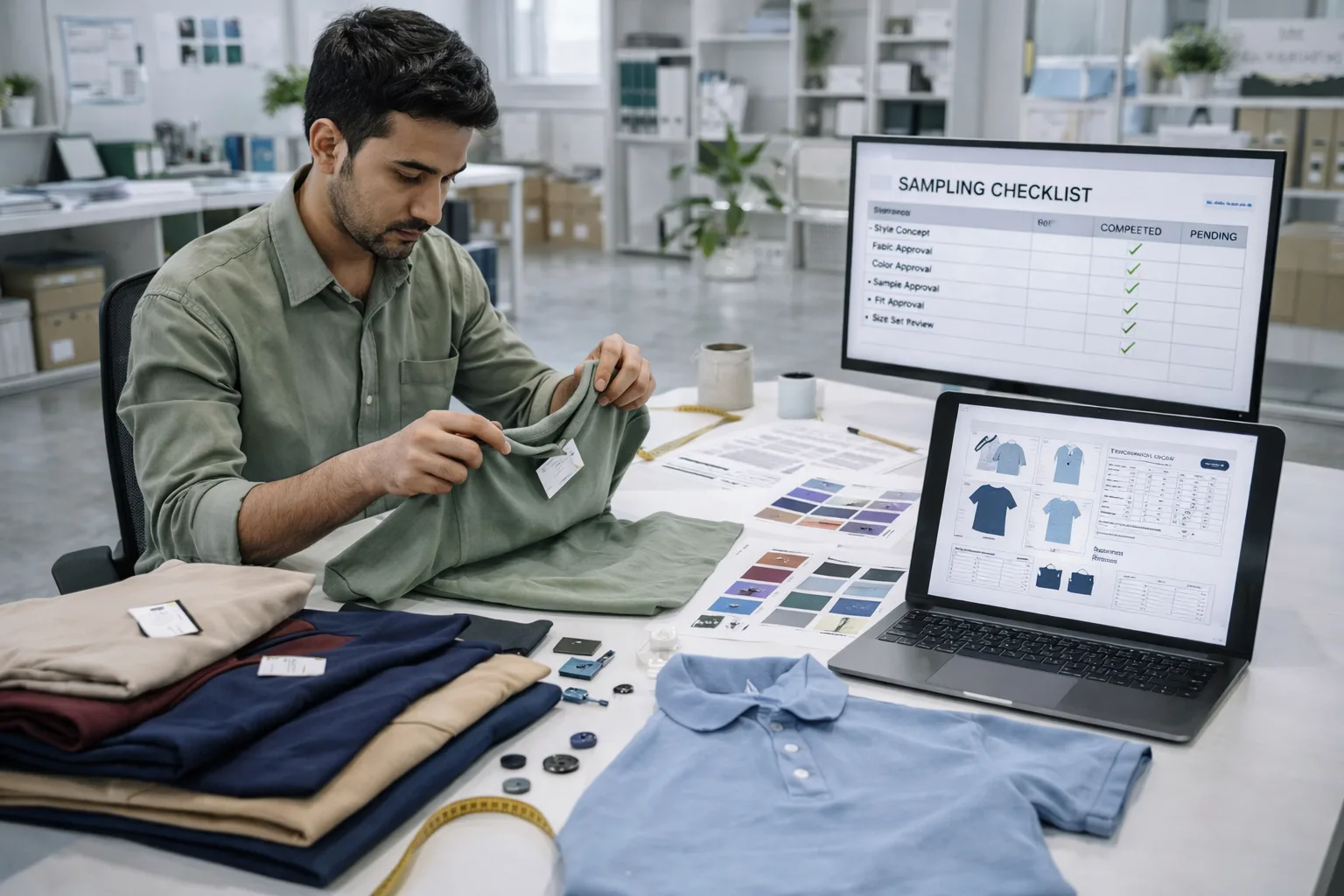
Sampling is the most critical stage in apparel product development. This guide explains the full garment sampling process for new brands, from tech packs and prototypes to fit samples and bulk production approval. Learn how to avoid costly mistakes, manage timelines, and ensure your final product matches your design vision.
Are you investing in fabric, patterns, and prototypes, but still feeling unsure whether your final bulk production will match your original design, fit, and quality expectations?
That uncertainty is exactly why garment sampling exists. For new apparel brands, sampling is the most important stage in product development because it turns your idea into a real garment, reveals hidden production issues early, and protects your budget from expensive bulk mistakes.
A strong sampling process helps you confirm fit, sizing, fabric behavior, construction quality, color accuracy, branding placement, and production feasibility before you commit to manufacturing at scale. When sampling is managed properly, you reduce delays, reduce rework, and build a repeatable system that makes future collections easier.
This guide explains the full garment sampling process for new brands in a clear, practical way. You’ll learn what happens in each stage, what to send to the factory, how many samples you really need, common mistakes to avoid, and how to move from first sample to bulk production confidently.

Global Apparel Sampling and Product Development
Product development and garment sampling play a critical role in the apparel manufacturing process. The global fashion industry produces over 100 billion garments every year, which means manufacturers must rely on structured product development systems to maintain consistent quality, efficiency, and scalability across large production volumes.
Garment sampling allows brands and manufacturers to test design concepts, evaluate fit accuracy, confirm fabric performance, and validate construction methods before production begins. Without a structured sampling process, even small issues in measurements, fabric choice, or sewing techniques can lead to costly mistakes when thousands of garments are produced.
For new apparel brands, investing time in garment sampling significantly reduces production risks. Early sampling rounds help identify design adjustments, improve pattern accuracy, and ensure that branding elements such as labels, prints, and trims are positioned correctly.
A well-managed sampling process also improves communication between brands and manufacturers. Clear documentation, structured feedback, and organized sample revisions help ensure that the final product aligns with the brand’s original design vision while meeting production requirements.
Because of these benefits, garment sampling is considered one of the most important stages in apparel product development, helping brands launch products with greater confidence and production accuracy.
What Is Garment Sampling in Apparel Manufacturing?
Garment sampling is the process of creating prototype garments before bulk production. It allows a brand and manufacturer to confirm all details of the product, including fabric choice, measurements, pattern accuracy, construction methods, trims, labeling, and finishing.
For new brands, sampling is not just “making a sample.” It is the quality control gate for your entire collection. Sampling identifies issues early when they are cheaper and faster to fix. Once you enter bulk production, small mistakes become large expenses.
Sampling also helps manufacturers plan production properly. It clarifies the best sewing methods, confirms the right trims, and reduces uncertainty on the production line.
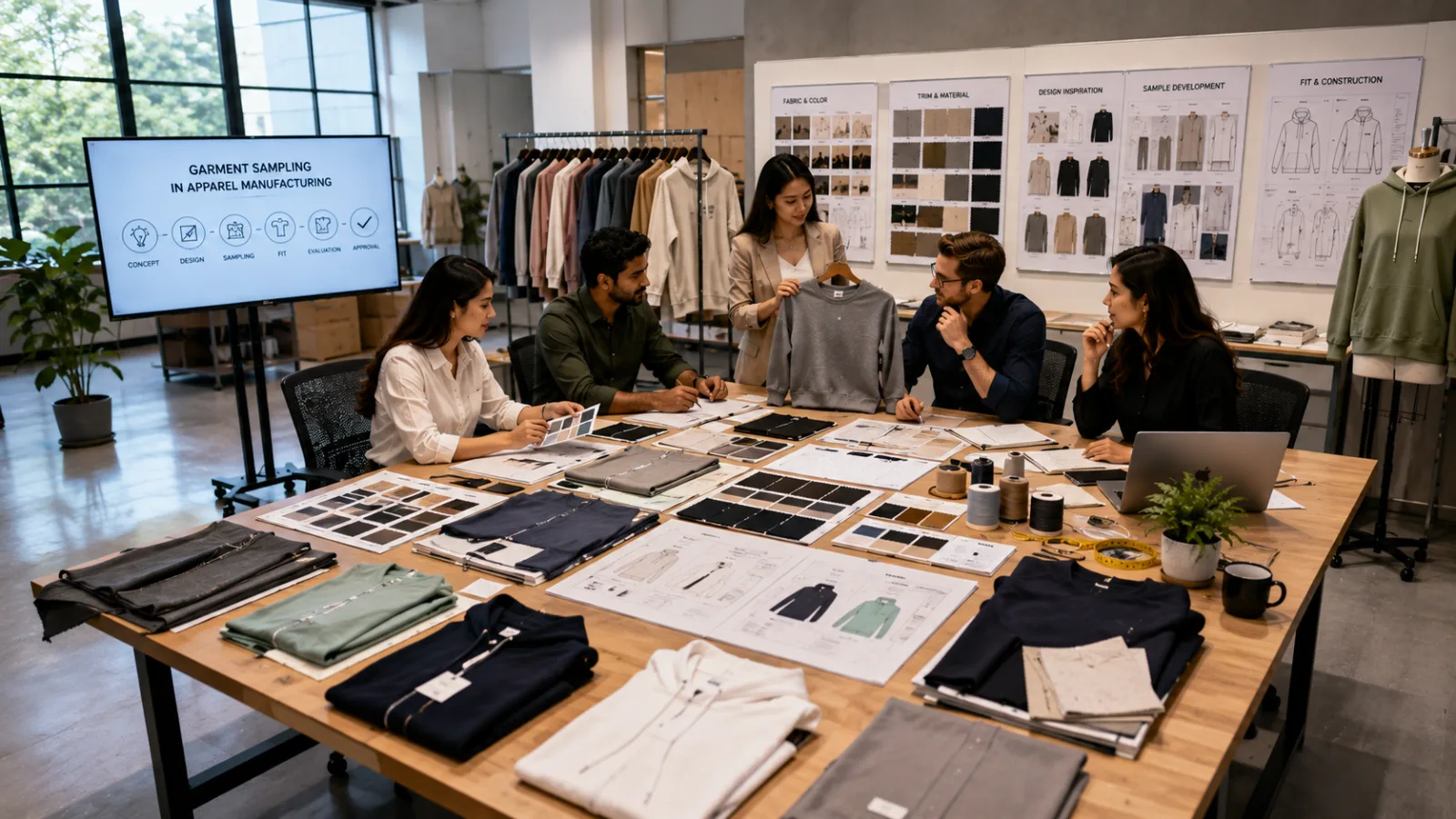
Why is the Garment Sampling Process Important?
The importance of garment sampling is clear when creating samples that allow teams to check to ensure the design and fit before mass production begins. A well-made sample and detailed tech packs to ensure specifications mean the sample is made to match the designer’s intent and match the approved prototype, helping to streamline production and reduce costly revisions.
During pre-production, fabric samples and test pieces are made to test color, hand, and construction; these samples are created so the factory can perform quality checks and confirm the final product meets design goals. The approved sample serves as the official reference for the entire production, ensuring consistency and quality throughout and that the final product meets quality standards.
When all checks pass and fit is validated across the full size range, bulk production begins, production and maintain production and maintain control; some samples are also used for marketing, while mass production begins with confidence.
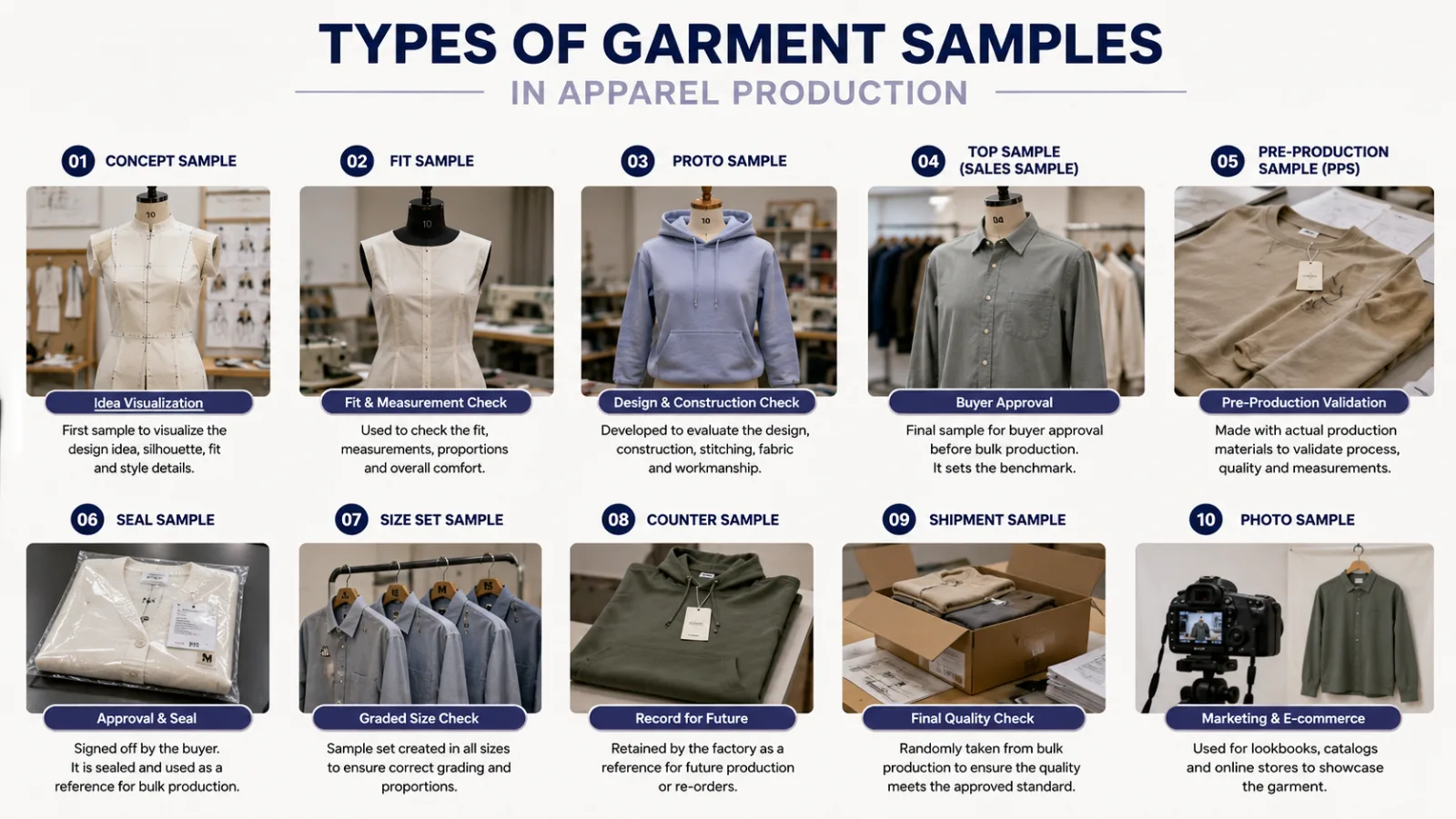
The Types of Garment Samples in Apparel Production
Sampling is a critical step in garment manufacturing, linking the initial tech pack and final production to ensure quality and meet design specifications. Sample makers create the 12 types of garment samples — from prototypes and fit samples to digital garment samples and the gold seal sample — so a buyer can perform sample approval before pre-production and full-scale production. These samples assess workmanship, garment performance and adherence to quality standards.
During the production process and actual production, a shipment sample or counter sample and regular quality control inspection help prevent production errors across all sizes. From textile choice to final fit, quality assurance ensures every garment reflects the intent of the initial tech pack and that every garment meets expectations before shipment.
Why Sampling Matters So Much for New Brands
New brands usually have limited budgets and smaller order quantities, which means there is less room for costly errors. Sampling protects your margin and your brand reputation.
A strong sampling process helps you avoid:
- Wrong fit and sizing that causes returns
- Incorrect fabric weight or hand-feel
- Poor stitching or seam finishing
- Wrong logo placement or printing errors
- Labeling mistakes and packaging issues
- Delays from missing trims or unclear instructions
Sampling also improves communication with your manufacturer, ensuring that the final product meets specifications. When you document changes clearly at each stage, production becomes smoother, and future orders become faster.
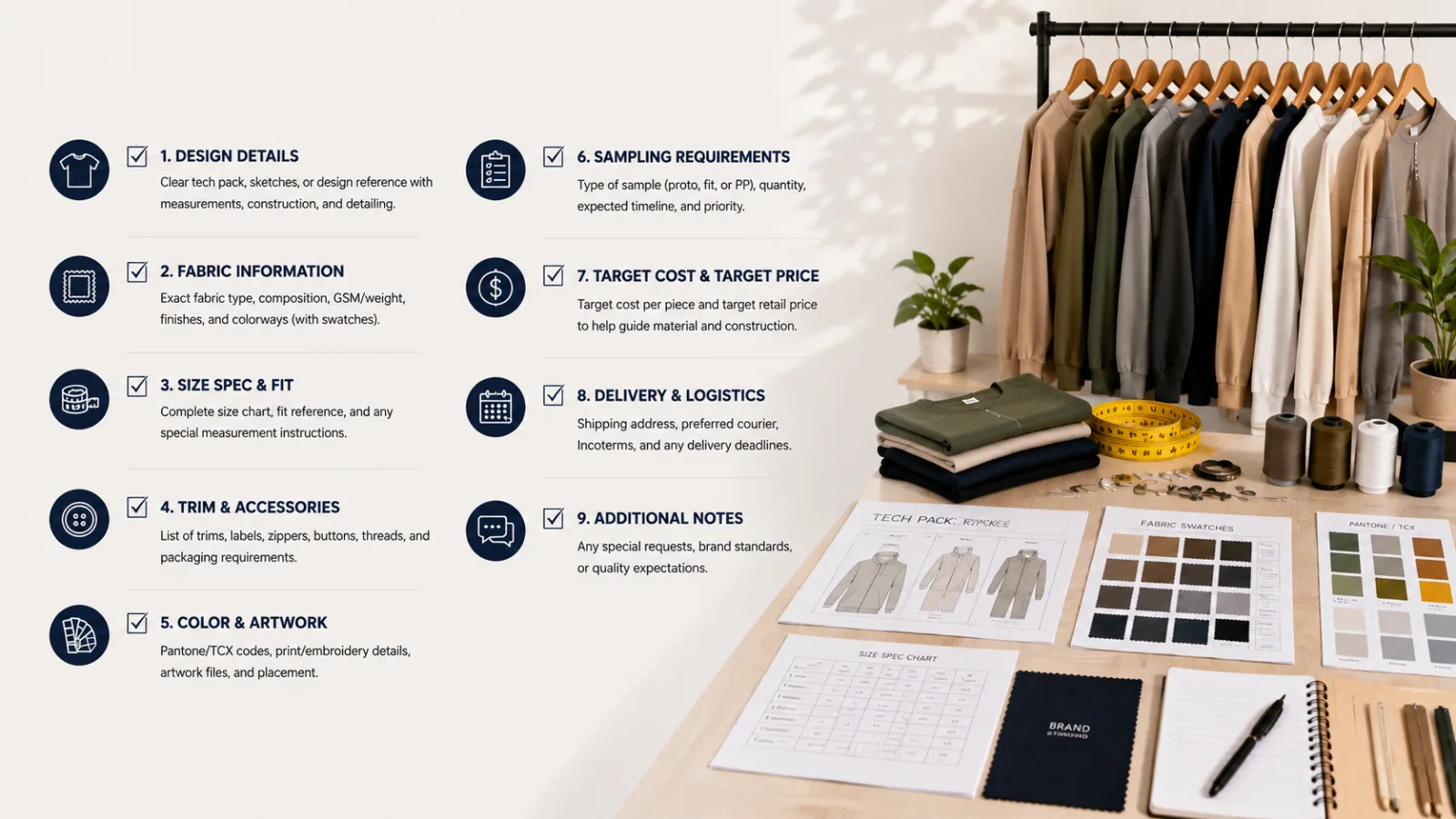
What You Need Before You Request Samples
The sampling process becomes faster and more accurate when you prepare the right information before contacting a manufacturer.
For most new brands, the essentials include:
- A clear product idea and reference photos
- Basic specifications for fit and sizing
- Fabric direction, GSM, and composition preferences
- Trim and branding requirements
- Colorways and size range
- Target MOQ and expected price point
- A simple tech pack or specification sheet
Even if you do not have a perfect tech pack, a clear specification sheet improves speed and reduces factory confusion. Factories need measurable instructions, not just concept descriptions.
Digital Sampling and 3D Garment Development
Many apparel manufacturers now use 3D garment design software to visualize products before physical sampling begins. Digital sampling allows brands to review garment fit, proportion, color options, and key design details using virtual prototypes, which can help reduce uncertainty early in product development.
For new apparel brands, digital sampling can be especially useful for spotting issues before a factory cuts fabric. Brands can test silhouette changes, adjust measurements, review branding placement, and compare fabric drape simulations without waiting for multiple physical sample rounds. This often helps reduce sample revisions, shorten development timelines, and lower material waste during the product development process.
Although physical samples are still required before bulk production, digital tools are increasingly helping brands and manufacturers streamline the early stages of garment development and move into sampling with clearer specifications and fewer corrections.
Key Types of Samples Used in Apparel Manufacturing
New brands often get confused because factories mention different sample types. Each sample has a purpose.
Development sample
Used to test the initial concept, pattern direction, and construction feasibility.
Fit sample
Used to validate measurements, fit, and silhouette on a model or fit form.
Size set sample
Used to verify grading and sizing across multiple sizes.
Pre-production sample
The final approved sample that becomes the standard for bulk production.
Top of production sample
A sample pulled from the first bulk production output to confirm bulk quality matches approved standard.
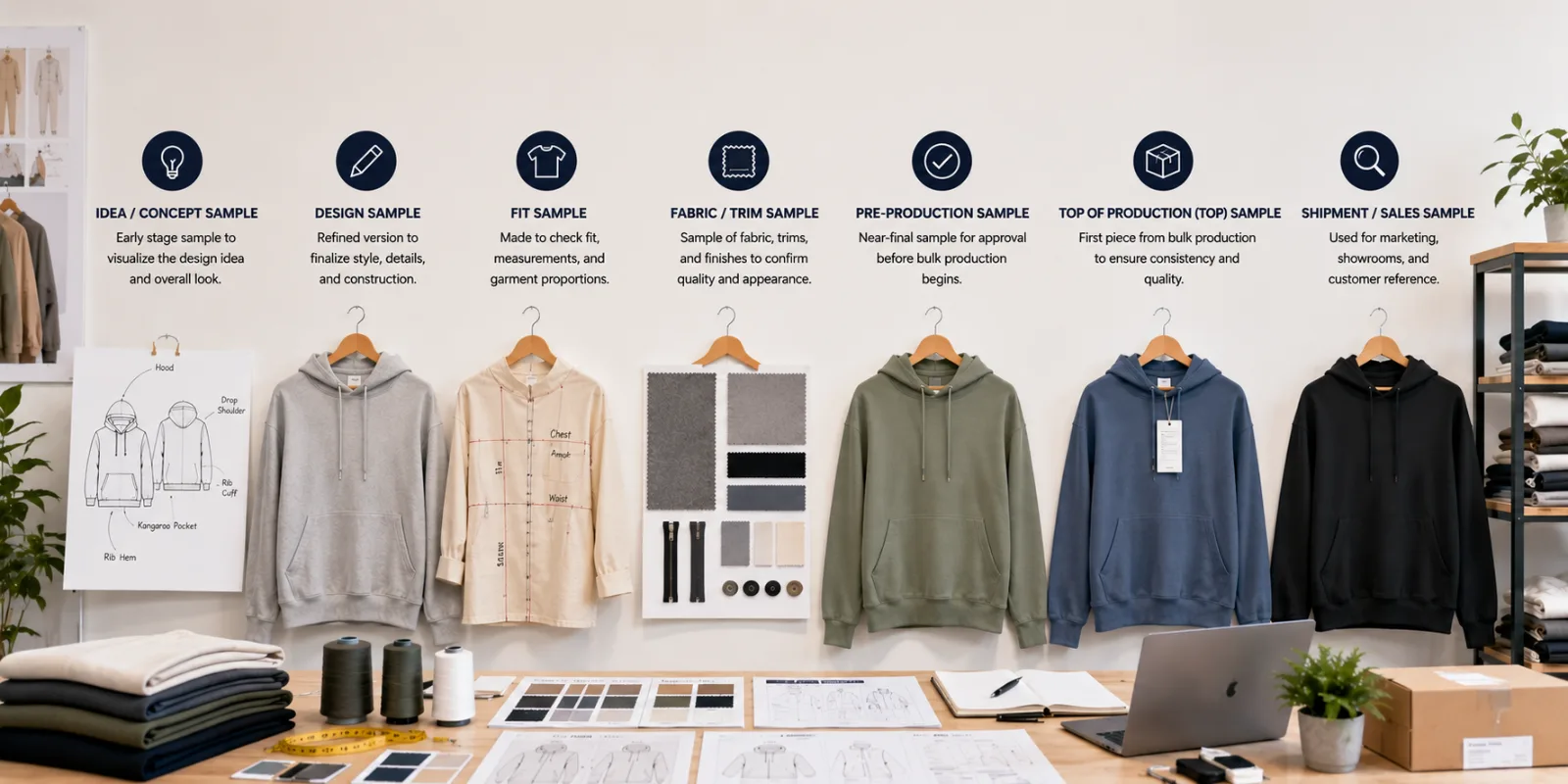
Garment Sampling Workflow for New Brands
Garment sampling for new brands begins with a clear tech pack and sourcing strategy: designers create detailed specs, choose fabrics and trimmings, and share them with potential suppliers. The initial prototype or first sample translates concept into a physical garment, revealing gaps in pattern, fit and material behavior. A focused fit session follows, where feedback is recorded, and the pattern is adjusted for silhouette and comfort.
Revisions move through pre-production samples and size grading, while labels, packaging and costings are finalized. Final production samples validate the process; then, quality control checks and lead-time confirmations prepare the order for manufacturing.
Define Your Sample Goal and Production Requirements
Before the first sample, define what success looks like. Is your goal to finalize fit, confirm fabric performance, validate print placement, or test construction durability?
This clarity helps you give better feedback and prevents endless sample rounds. It also helps the factory focus on the right outcome.
You should confirm:
- Target customer and fit style (slim, relaxed, oversized)
- Intended fabric type and weight should align with the garment fit requirements.
- Expected wash behavior and shrinkage tolerance
- Branding method (print, embroidery, patch)
- Use case (fashion, activewear, uniforms)
- Expected price point
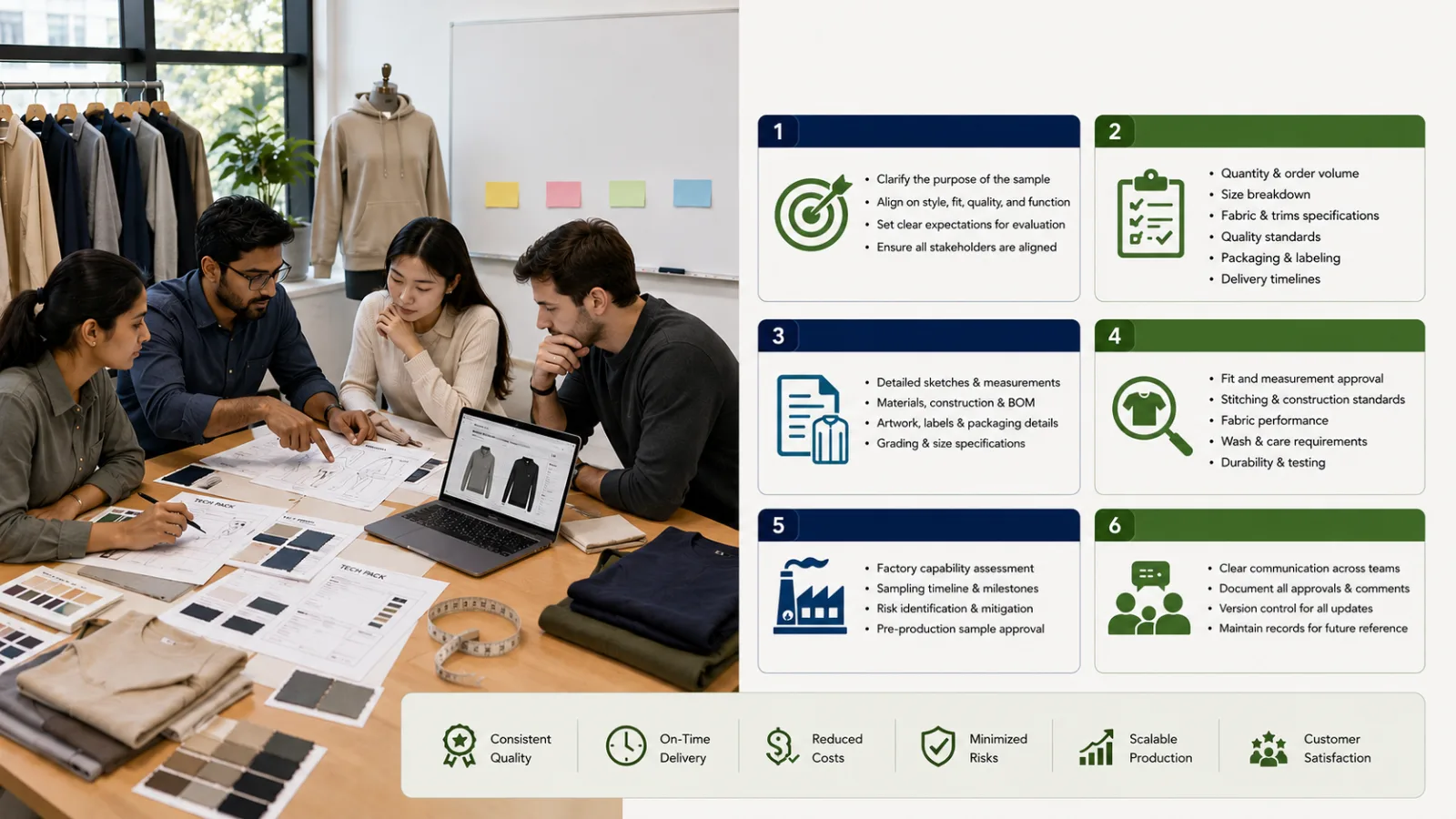
Create or Improve Your Tech Pack for Sampling
A tech pack is the single most powerful tool for sampling success. It reduces guesswork by documenting exactly how the garment should be made.
For sampling, your tech pack should include:
- Flat sketches front and back
- Points of measure and size spec
- Bill of materials listing fabrics and trims
- Construction notes and stitch requirements
- Print or embroidery placement details
- Label placement and packaging instructions
If you do not have a full tech pack yet, create a simplified spec sheet and refine it after each sample round. The goal is to turn feedback into clear documentation.
Request a Development Sample
The development sample is where your idea becomes a garment. This sample helps you confirm whether your design is feasible and whether your base pattern direction is correct.
For new brands, development samples often reveal issues like:
- Fabric not matching the expected drape
- Design details needing simplification
- Construction methods that affect cost
- Pattern shapes that do not align with fit expectations
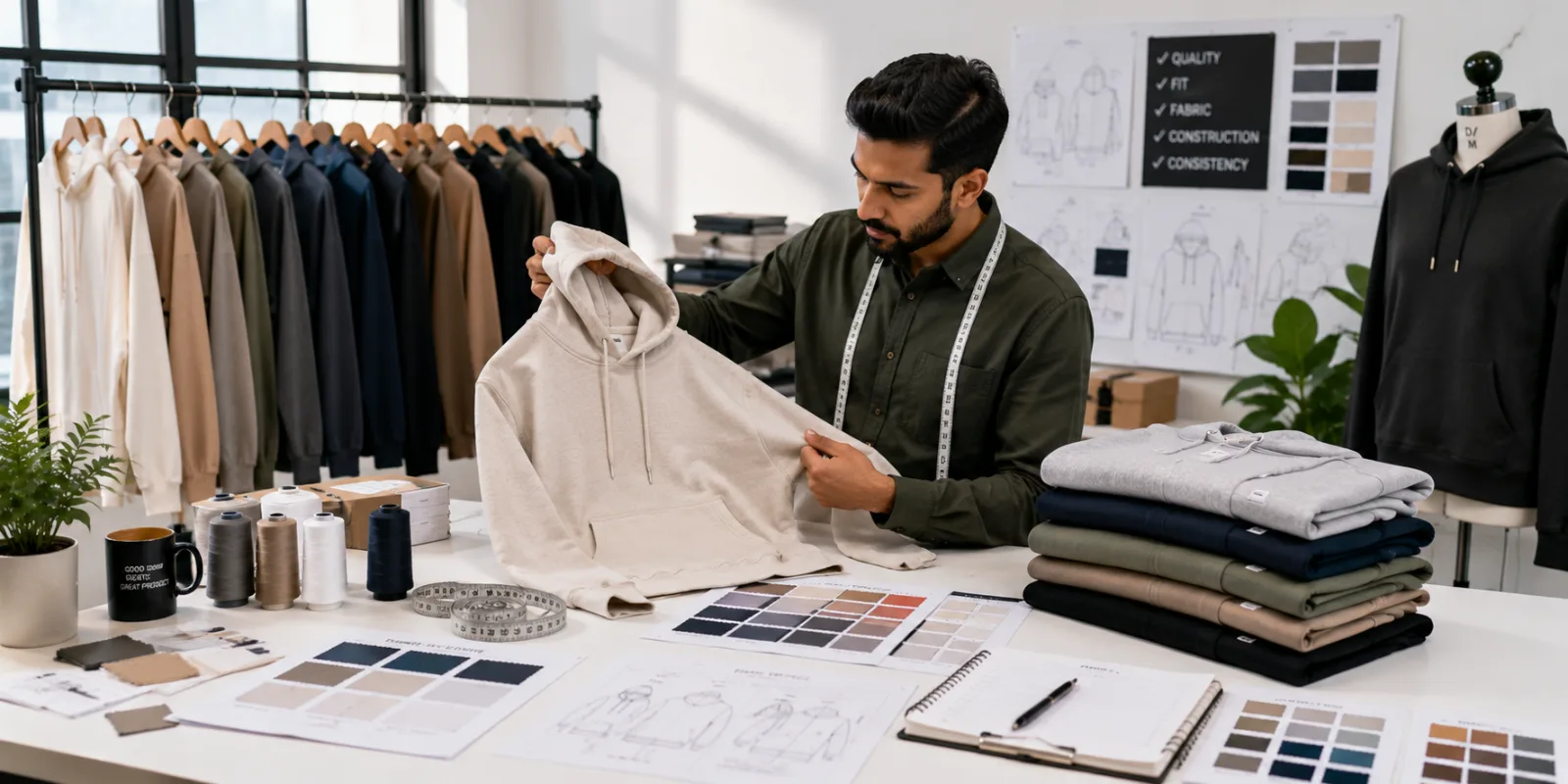
Review the Sample Like a Manufacturer, Not Just Like a Designer
Many new brands review samples emotionally, which can hinder the decision-making process for final samples. A better approach is to review samples using measurable checkpoints.
Use a structured checklist:
- Measure key points of measure and compare to spec
- Inspect seams, stitching, and finish consistency
- Check fabric hand-feel and recovery
- Confirm logo placement measurements
- Check label placement accuracy
- Review shrinkage expectations if applicable
Send Clear Feedback Using a Comment Sheet
Feedback quality controls sample speed. Vague feedback causes repeated sample rounds.
Instead of saying “make it better,” write specific instructions:
- Increase chest width by 2 cm in size M
- Reduce sleeve length by 1 cm
- Move the logo down by 1.5 cm
- Change hem finish to coverstitch
- Use a thicker rib at the neckline
Order a Fit Sample After Pattern Changes
Once the base pattern is improved, order a fit sample to ensure the final product meets customer expectations. This sample is focused on finalizing fit, comfort, and silhouette to ensure the garment fit is perfect.
Fit sampling should ideally be done on:
- A fit model matching your customer profile, or a salesman sample, can greatly influence the final outcome.
- A consistent fit form representing your target sizing
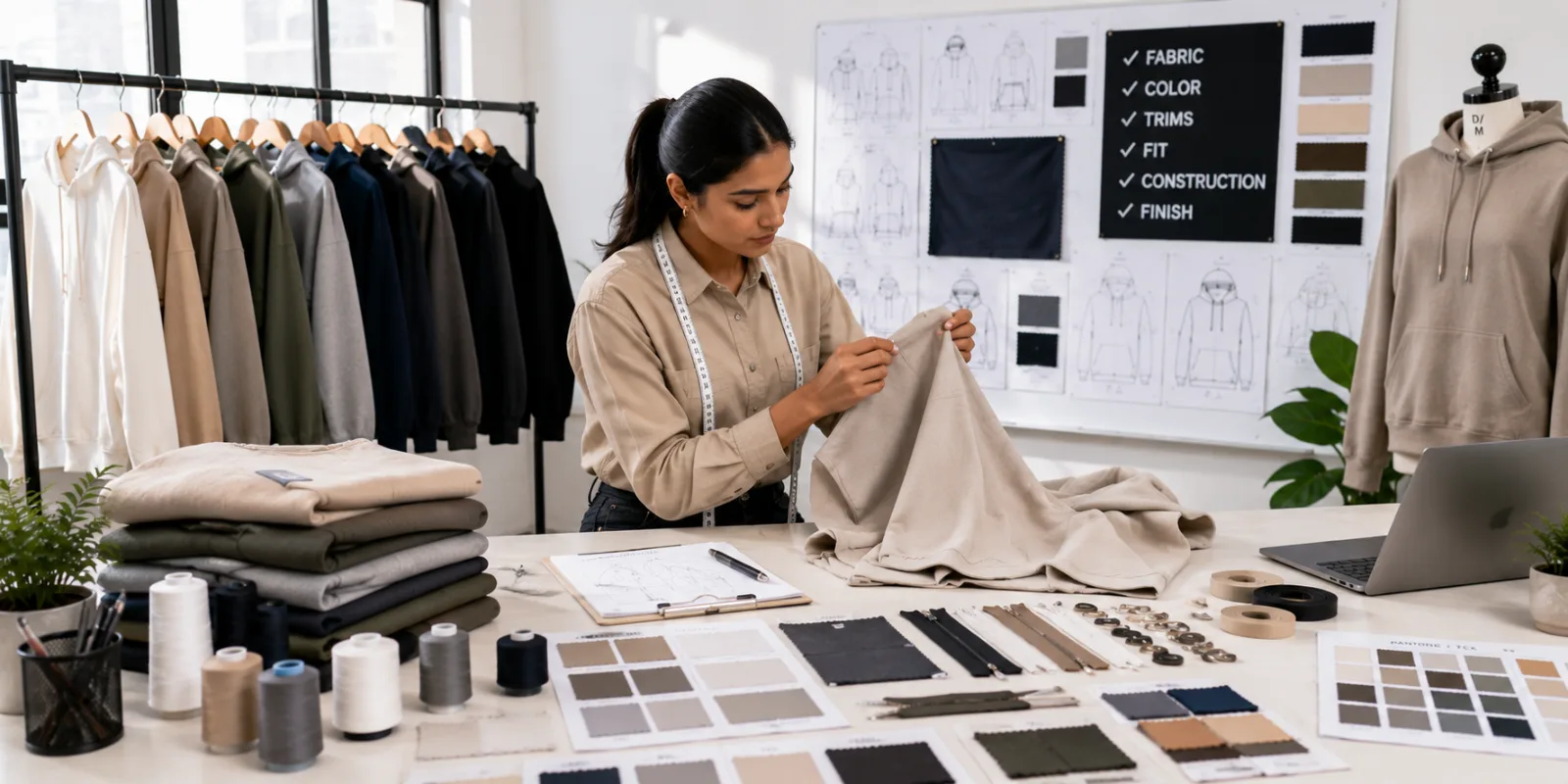
Confirm Fabric and Trim Finalization
Sampling often starts with substitute trims or test fabrics. Before moving forward, confirm final fabric and trims.
At this stage, you should confirm:
- Fabric composition, GSM, and width are important considerations when creating a proto sample.
- Color approval or lab dips
- Shrinkage and colorfastness expectations
- Trim quality, durability, and exact sizes
- Label material and placement standards
Request a Size Set Sample to Validate Grading
A size set sample includes multiple sizes, usually from smallest to largest, to confirm grading consistency.
New brands often assume grading is automatic. It is not. Grading errors can cause:
- Strange fit jumps between sizes
- Sleeves and body lengths are changing incorrectly
- Neck openings are scaling improperly
- Waist and hip proportions are becoming inconsistent
Approve a Pre-Production Sample Before Bulk
The pre-production sample is the final standard for bulk manufacturing. This sample should be made using a proto sample for better evaluation.
- Correct fabric and trims
- Final measurements and grading
- Final construction methods
- Final branding placement
- Final label and packaging requirements
Confirm Packaging and Labeling Details
Packaging affects retail readiness and fulfillment efficiency. New brands often delay packaging decisions, but packaging changes can delay shipment, affecting the timeline for mass production.
Confirm:
- Neck label and care label placement
- Hangtag attachment method
- Polybag size and warning label requirements are crucial for types of garment samples.
- Size sticker and barcode placement
- Carton packing ratio and carton markings
Plan Quality Control and Inspection During Sampling
Sampling is also the right time to define QC standards. If you wait until the bulk, it is too late.
Define:
- Measurement tolerances
- Stitch quality expectations
- Print alignment tolerance
- Acceptable defect limits
- Shade band and color tolerance
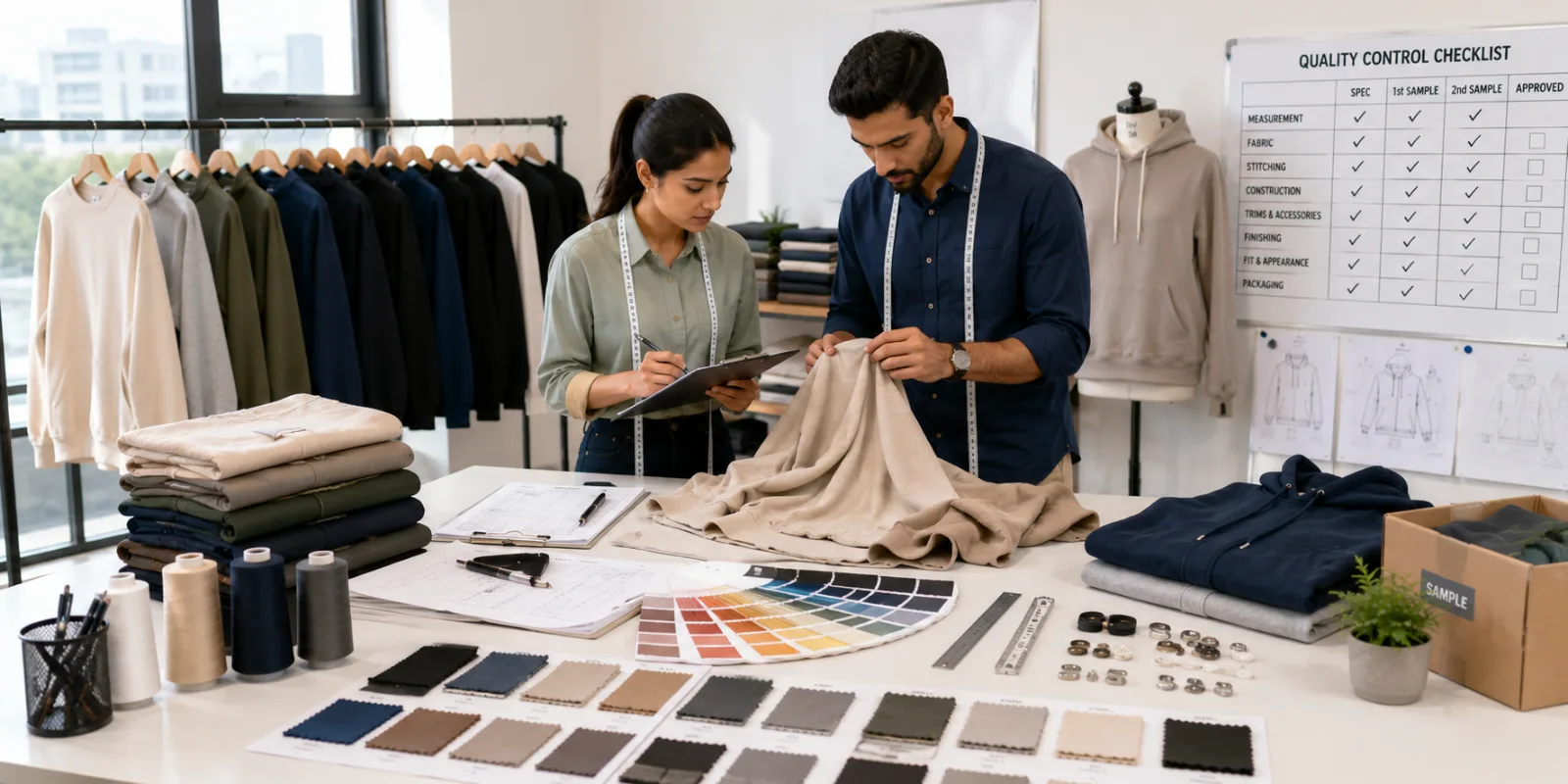
Approve Top of Production Sample to Confirm Bulk Consistency
A top-of-production sample is pulled from the first part of bulk production. It confirms bulk output matches the pre-production standard. This is important because sometimes bulk uses different operators, different machines, or different fabric lots. Checking early prevents mass defects.
Common Sampling Mistakes New Brands Should Avoid
Many sampling delays happen because brands repeat the same mistakes.
Common mistakes include:
- Starting sampling without stable specs
- Sending vague feedback that cannot be measured
- Approving fit on a different fabric than the bulk
- Skipping size set sampling
- Not documenting sample changes in the tech pack
- Ignoring packaging and labeling until the end
- Rushing into bulk before pre-production approval
How Many Sample Rounds Do New Brands Usually Need?
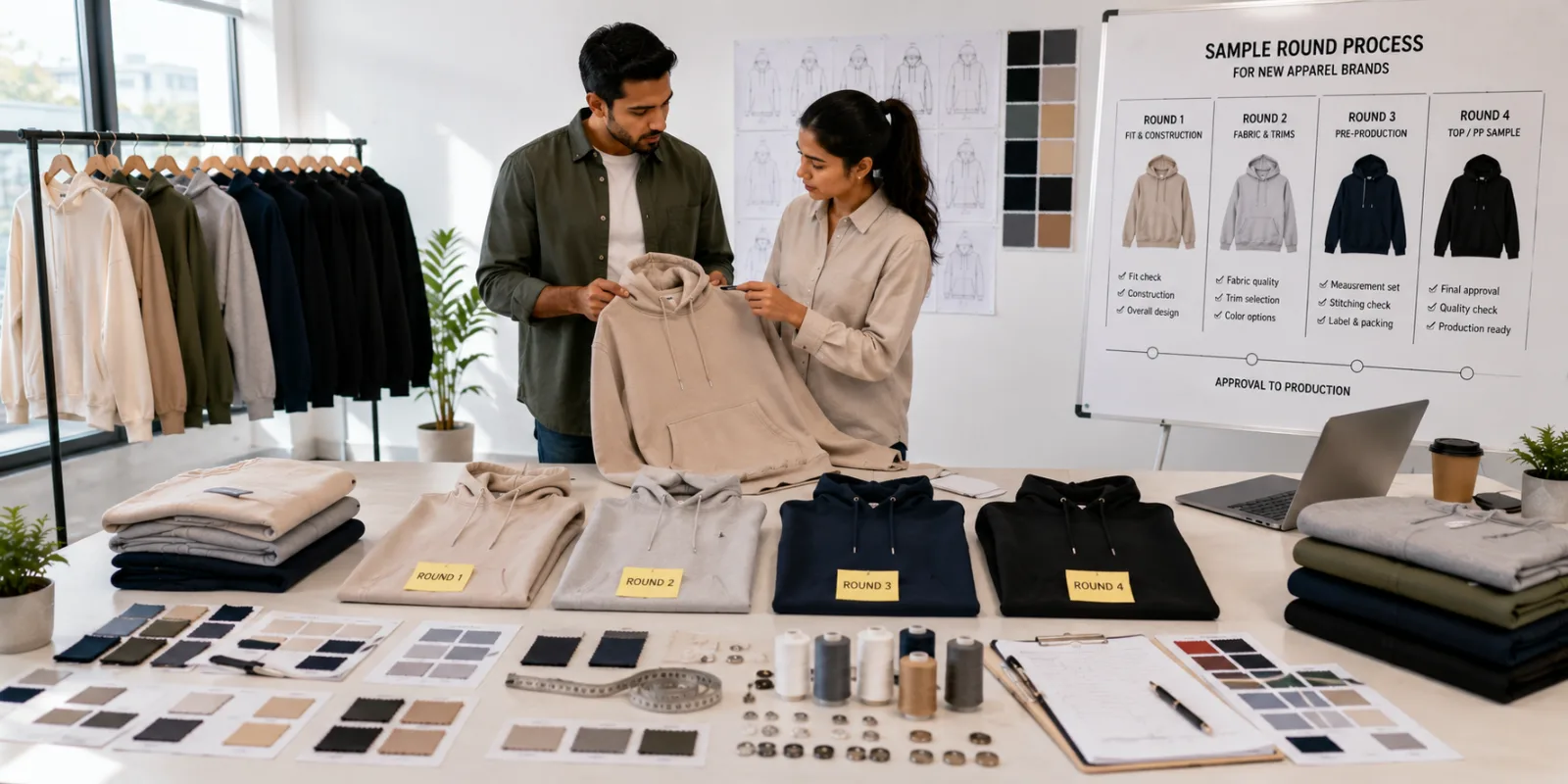
It depends on product complexity and preparedness. Most new brands typically go through:
- Development sample
- Fit sample
- Pre-production sample
- Optional size set and top of production sample
The fastest brands are not the ones who rush. They are the ones who give clear specs and clear feedback.
Typical Garment Sampling Timeline
The time required for garment sampling varies depending on garment complexity, factory workload, fabric sourcing speed, and the number of revisions needed. For new brands, having a realistic timeline helps you plan launches and marketing calendars.
Sampling Stage | Typical Time
Development Sample | 7–14 days
Sample Review and Feedback | 3–5 days
Fit Sample Revision | 7–10 days
Pre-Production Sample | 10–14 days
Bulk Production Start | After final approval
This timeline becomes faster when your specifications are clear and feedback is specific. It can take longer when fabrics or trims are custom-developed.
Sampling Costs and How to Budget Properly
Sampling cost depends on garment complexity, number of samples, custom trims, and pattern development needs. New brands should treat sampling as a necessary investment. Sampling protects the biggest cost, which is bulk production mistakes. A practical budget plan is to allocate a sampling budget per style and plan extra for complex products.
Sampling and Sustainable Apparel Manufacturing
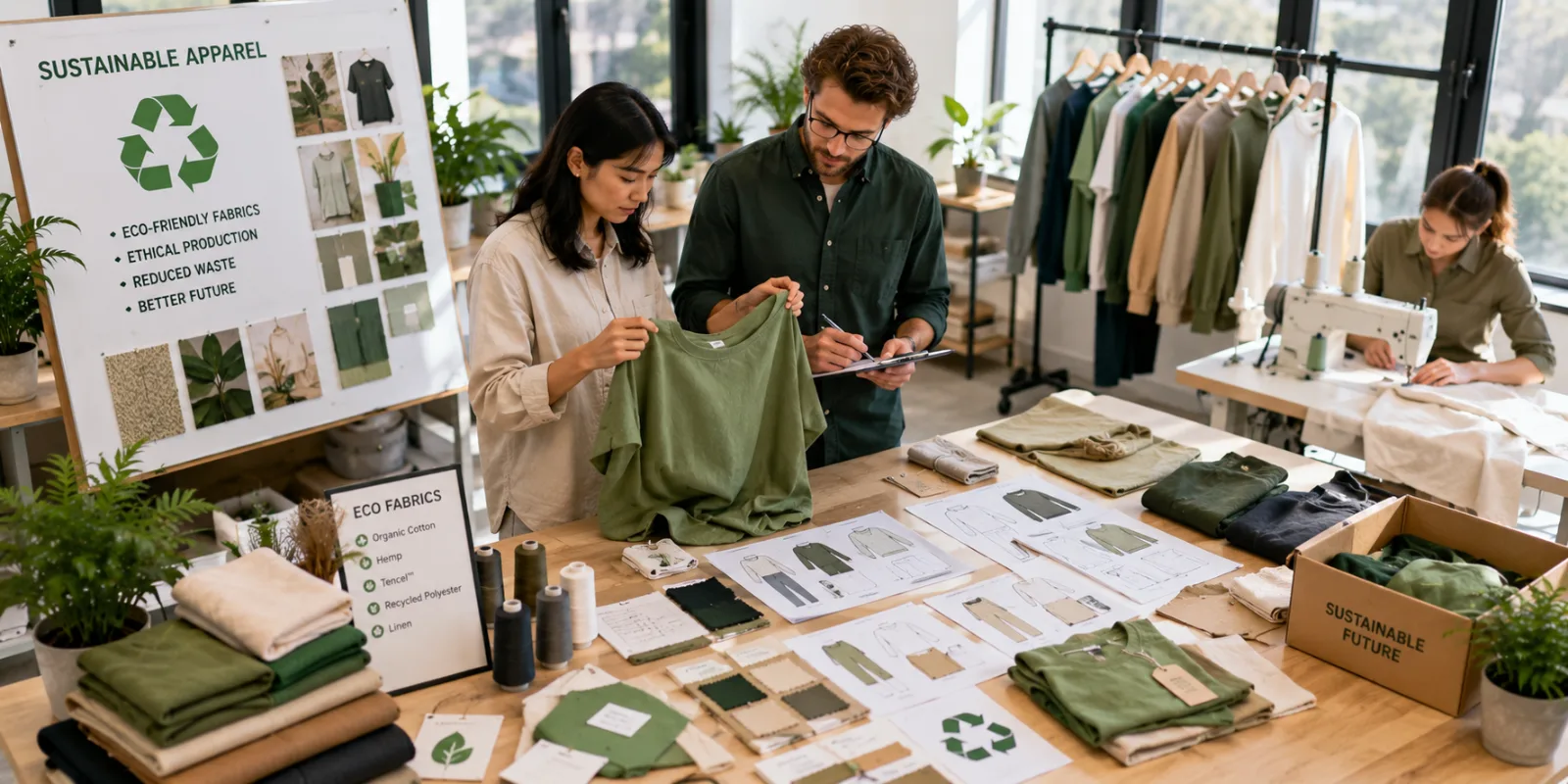
If your brand cares about sustainability, sampling still matters. Poor sampling leads to waste, rework, and discarded garments. Sustainable sampling best practices include reducing unnecessary sample rounds through clearer tech packs and using digital sampling or 3D previews when possible.
Choosing the Right Manufacturer for Garment Sampling
Selecting the right apparel manufacturer is an important part of the garment sampling process. A manufacturer with strong sampling capabilities can significantly improve product development accuracy and reduce delays during production.
Apparel Manufacturing Partners for Sampling Support
Many apparel brands work with manufacturing partners that support product development, sampling, and scalable production systems. Companies such as ApparGlobal support clothing brands through structured sampling workflows, fabric sourcing coordination, and production-ready development processes. Working with a manufacturer that values clear documentation helps new brands reduce costly production mistakes.
FAQ: Garment Sampling for New Brands
What is the first sample I should request?
Start with a development sample to confirm the design concept and base pattern direction before focusing on final fit.
Do I need a tech pack for sampling?
A tech pack helps sampling move faster and reduces mistakes. If you do not have a full tech pack, use a detailed specification sheet.
Should I do a size set sample?
Yes if you plan to sell multiple sizes. A size set sample reduces sizing mistakes and improves customer experience.
When should I approve bulk production?
Only after approving a pre-production sample made with final fabric, trims, measurements, and construction standards.
What should I include in sample feedback?
Give measurable feedback using exact changes to measurements, placement, stitch type, and finishing details.
Conclusion
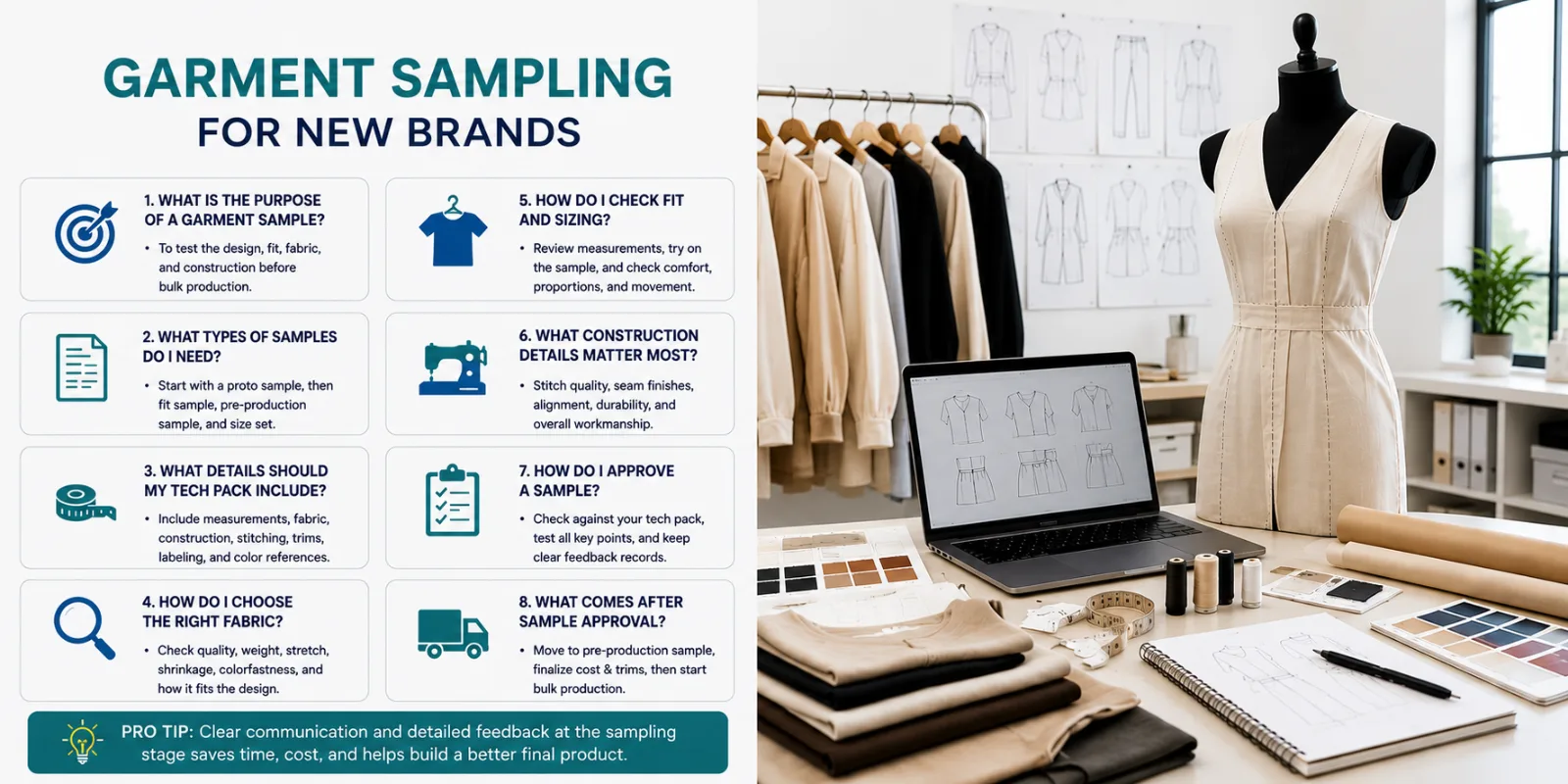
The garment sampling process is the foundation of successful apparel production for new brands. Sampling turns your design into a real garment, confirms fit and quality, and prevents costly bulk errors. The most successful brands treat sampling as a structured workflow: clear specs, clear tech packs, measurable feedback, fit validation, size set checks, pre-production approval, and top of production confirmation.
When you follow this system, you reduce delays, protect your budget, and build repeatable product standards that make future collections faster and more reliable.