
Launch a successful clothing brand in 2026 with this guide on niche selection, product development, manufacturing, and modern AI-driven discovery.
Starting a clothing brand still sounds glamorous from the outside, but the real work is much more operational. In 2026, fashion brands are launching into a market shaped by cautious consumer spending, intense competition, rising expectations for quality, and a major shift in how people discover products online. McKinsey’s State of Fashion 2026 says fashion is expected to stay in low single-digit growth, and it also highlights that AI-driven discovery and generative engine optimization are becoming more important as shoppers increasingly use AI tools during product research.
At the same time, digital commerce remains central to how brands grow. UNCTAD reports that business e-commerce sales across 43 economies were approaching $25 trillion in 2021 and were estimated to rise to almost $27 trillion in 2022, while the OECD’s 2025 e-commerce update specifically notes that AI-assisted transactions and structured social-media-based ordering are now part of the measurement conversation. That matters for new clothing brands because your store is no longer just a website. It is a whole discovery and conversion system across search, AI, social platforms, marketplaces, and email.
The good news is that it is still absolutely possible to start small and build smart. You do not need a giant budget, a huge team, or a 50-style first collection. What you do need is a clear niche, a sellable product angle, disciplined costing, a realistic production plan, and a launch strategy built for how people shop in 2026.
This guide breaks the process down from zero to launch. It covers niche selection, branding, product development, pricing, manufacturing, ecommerce, marketing, legal setup, and the most common mistakes that ruin new fashion businesses. The goal is not to help you look like a brand. The goal is to help you build one.
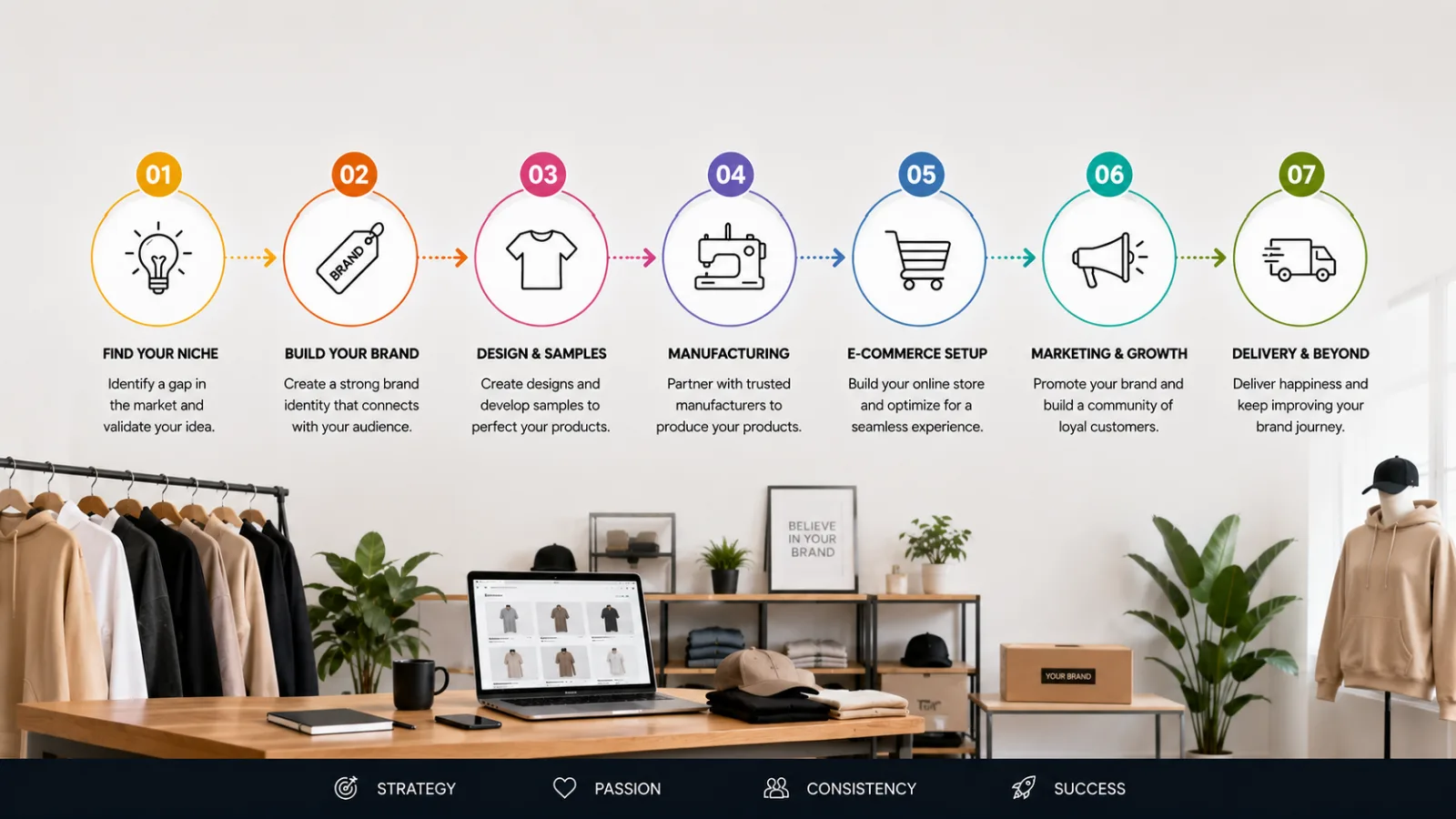
Global Clothing Industry Market Size
The global apparel industry is one of the largest consumer product sectors in the world. According to industry estimates, the fashion market generates over $1.7 trillion annually and employs hundreds of millions of people across design, manufacturing, logistics, and retail.
The industry also produces more than 100 billion garments each year, highlighting how competitive the market has become for new brands. This is why startups must focus on niche positioning, product differentiation, and strong brand storytelling to stand out.
How to Start A Clothing Business
Starting a clothing business means you must first start a clothing business plan: identify your clothing line, define the target market with thorough market research, and decide whether your clothing business in 2026 will be an online-only brand venture, a physical store or both. This step-by-step guide helps an entrepreneur learn how to start, register your business, and create a clothing business plan that covers inventory management, minimum order quantities and small runs for new products.
Next, focus on building brand awareness and recognition. Decide whether to start a clothing line, start selling via an online store, online marketplaces, or a retail store, and work on professional online presence. This guide covers marketing, shopping trends, buying habits, clothing designs, launching an online fashion line, and how to grow your brand.
Why Starting a Clothing Brand in 2026 Is Different
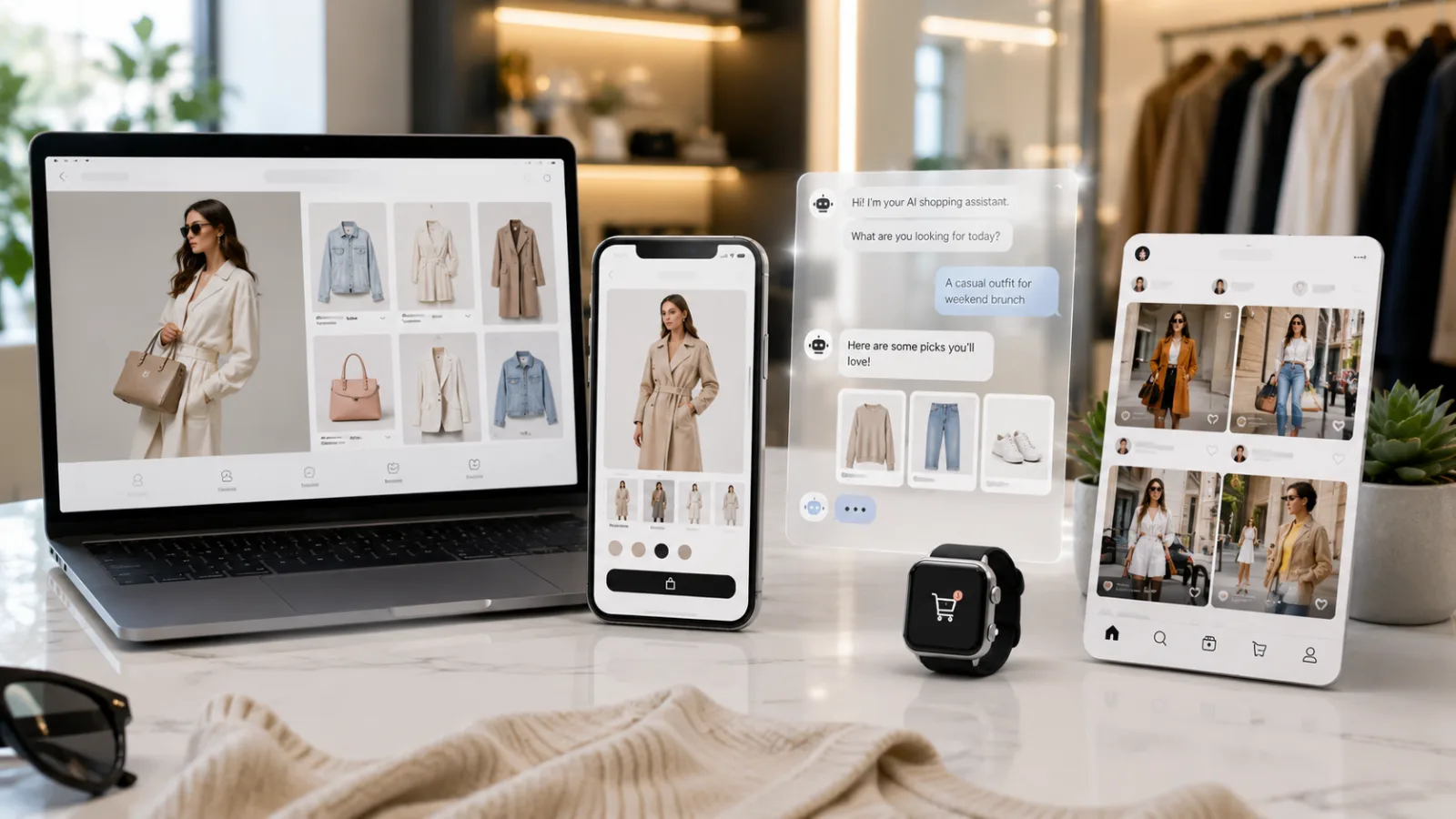
A few years ago, many new brands could rely on organic social reach, basic product photography, and a simple Shopify store. That approach is weaker now. In 2026, the market is more crowded, customer acquisition is harder, and product discovery is spreading across traditional search, AI assistants, and ecommerce ecosystems. McKinsey reports that shopping-related searches on generative AI platforms grew 4,700 percent between 2024 and 2025, and that generative engine optimization is becoming a necessary counterpart to traditional SEO.
Europe’s ecommerce landscape is also still growing, not shrinking. E-commerce Europe’s 2025 report says Europe continues to show steady growth, projecting a further 7 percent increase for 2025, while the EU-27 accounted for 81 percent of total European ecommerce turnover in 2024 and saw steady growth of 7 to 9 percent annually since 2022. That means demand is still there, but new brands need sharper positioning and better operations to win it.
So the real 2026 advantage is not “be everywhere.” It is “be clear.” Clear customer. Clear product promise. Clear visual identity. Clear pricing. Clear fulfillment. Clear content. Brands that look generic get ignored faster than ever.
Start With the Right Business Model
Before you choose colors, logos, or packaging, choose the model of brand you actually want to build. This decision affects your cost structure, speed, margins, inventory risk, and manufacturing options.
Private Label
vs. Cut-and-Sew
A private label brand usually works with a manufacturer to customize existing silhouettes with your own labels, colors, or minor changes. This is often the easiest route for first-time founders. A cut-and-sew brand creates original products from custom patterns, custom fabrics, or more detailed specifications. This gives you more control but raises development time and production risk.
Print-on-Demand and Dropshipping
A print-on-demand brand uses blank garments and adds graphics only after a sale is made. This can reduce inventory risk, but it usually lowers product uniqueness. A dropshipping apparel brand has the lowest startup friction, but also the weakest brand control.
For most founders in 2026, the strongest path is either private label with smart customization or a tightly focused cut-and-sew launch with very few SKUs.
How Long Will it Take to Start a Clothing Line?
Starting a clothing line begins when you start by researching the market and thinking about who shops your pieces. This business idea evolves as you think about your brand, define what sets your clothing apart and design clothing designs that fit your brand. Early steps include learning to create a clothing business plan and deciding whether to make small runs, sell via a physical store or be one of the online-only brands.
Timelines vary: a new business can move from concept to start selling in months if you learn how to start and execute a professional online presence for launching an online shop, while opening a retail store or opening a clothing boutique often takes longer.
Choose a Niche Before You Choose a Product
One of the biggest mistakes new founders make is trying to sell “clothes for everyone.” That is not a niche. It is a fast way to disappear.
A good niche sits at the intersection of customer identity, practical need, and buying behavior. That could mean modest fashion for professional women, oversized minimalist streetwear for Gen Z men, activewear for postpartum moms, golf apparel for beginners, premium blank essentials for creators, or resortwear for boutique retailers. The point is not just aesthetics. The point is clarity.
When evaluating a niche, ask four questions. First, who is the buyer? Second, what problem or desire makes them buy? Third, what are they already buying and where are they buying it? Fourth, how can your offer feel more specific, more useful, or more distinctive?
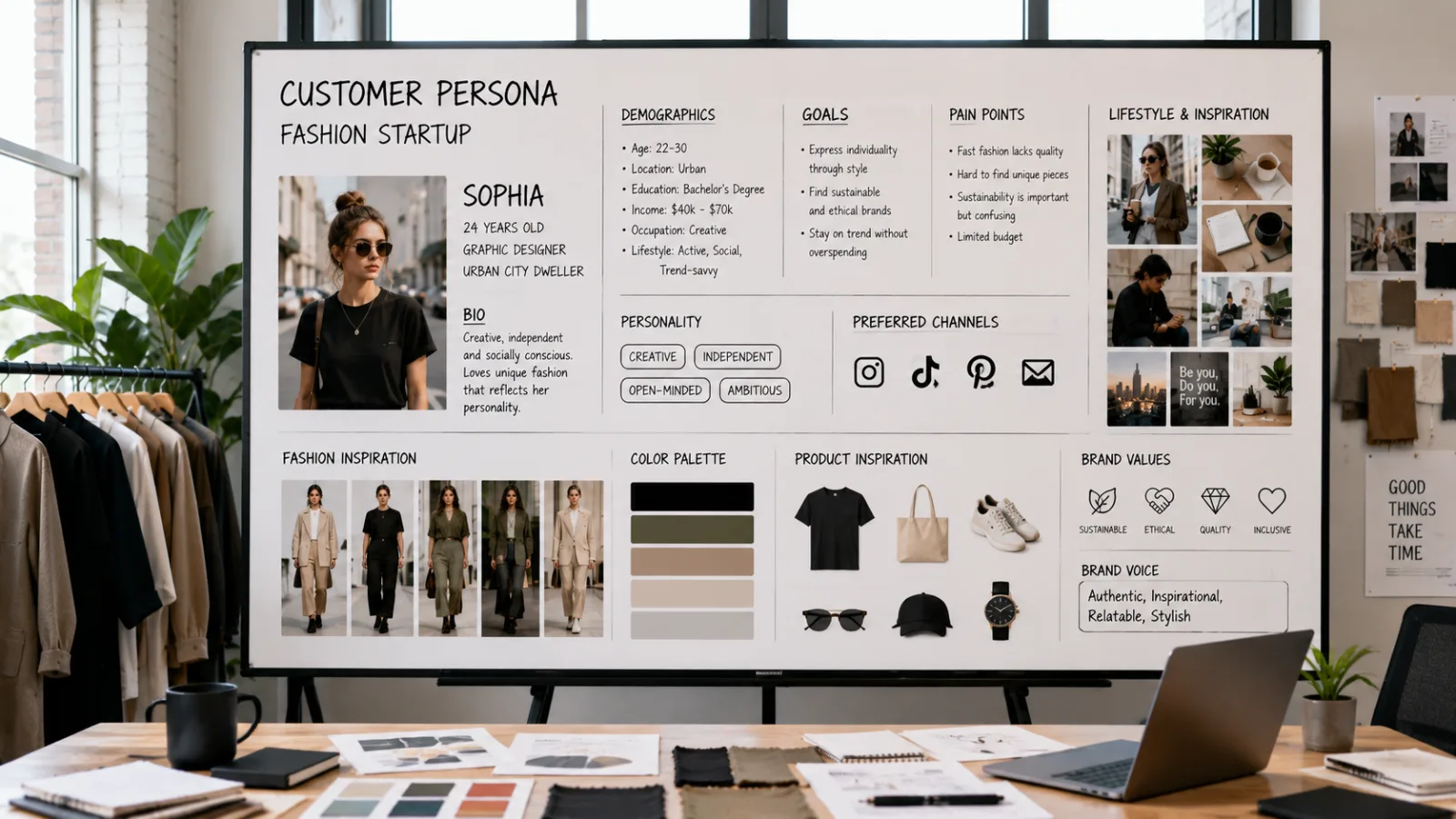
Validate Demand Before You Invest in Inventory
A clothing brand should not start with guesswork. Before you spend heavily on samples or bulk production, validate that real people actually want what you plan to sell.
You can do this in simple ways. Post product mood boards and observe saves and comments. Run low-budget test ads to landing pages. Build a waitlist. Offer sample previews to a small community. Use short-form video to test hooks. Show fabric close-ups, fit previews, and styling combinations. Ask potential buyers what they would choose, what price feels fair, and what they cannot currently find.
The goal at this stage is not perfect data. It is pattern recognition. If you keep hearing the same interest, the same objection, or the same price resistance, that is useful.
Build a Brand Identity That Actually Means Something
Branding is not only your logo. It is the full emotional and commercial system around the product. In fashion, your brand identity should answer one core question: why should this product come from you instead of someone else?
Start with the basics. Choose a brand name that is easy to remember, easy to spell, and visually usable across labels, domains, packaging, and social handles. Then build a brand foundation around mission, tone, customer identity, visual direction, and price position.
In 2026, brand consistency matters more because discovery is fragmented. A customer may find you through Instagram, TikTok, Google, ChatGPT, email, or a recommendation link. Your brand needs to feel consistent everywhere.
Create a Small, Smart First Collection
Your first collection should prove the brand, not exhaust your budget.
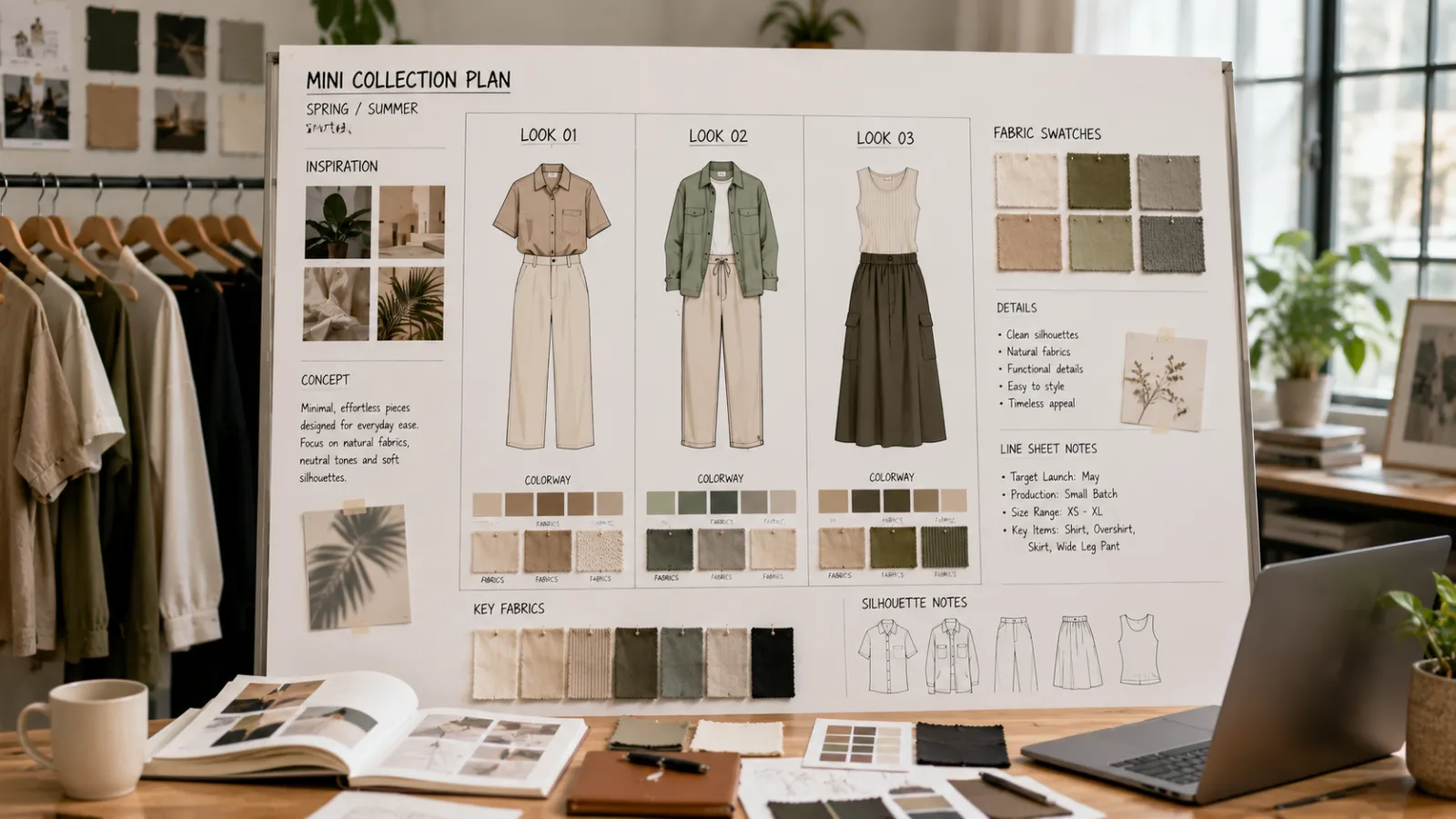
Many new founders launch too many styles, too many colors, and too many sizes at once. That creates high MOQs, messy inventory, slower sampling, more cash pressure, and confusing marketing. A better first collection usually has one hero product, one support product, and one or two complementary variants.
Costing, Pricing, and Margins
Costing, pricing, and margins are the backbone of any apparel business: understanding production expenses, overhead, and desired profit helps you set competitive retail prices without eroding brand value. When a supplier makes your clothing, transparent communication about material costs, minimum order quantities, and lead times reduces surprises and protects margins.
Learning the Numbers
You need to understand four numbers early: landed cost, selling price, gross margin, and break-even volume. Your landed cost should include product cost, labels, packaging, freight, duties if applicable, payment fees, sample costs spread across units, and a realistic buffer for defects or overruns.
Startup Cost Breakdown
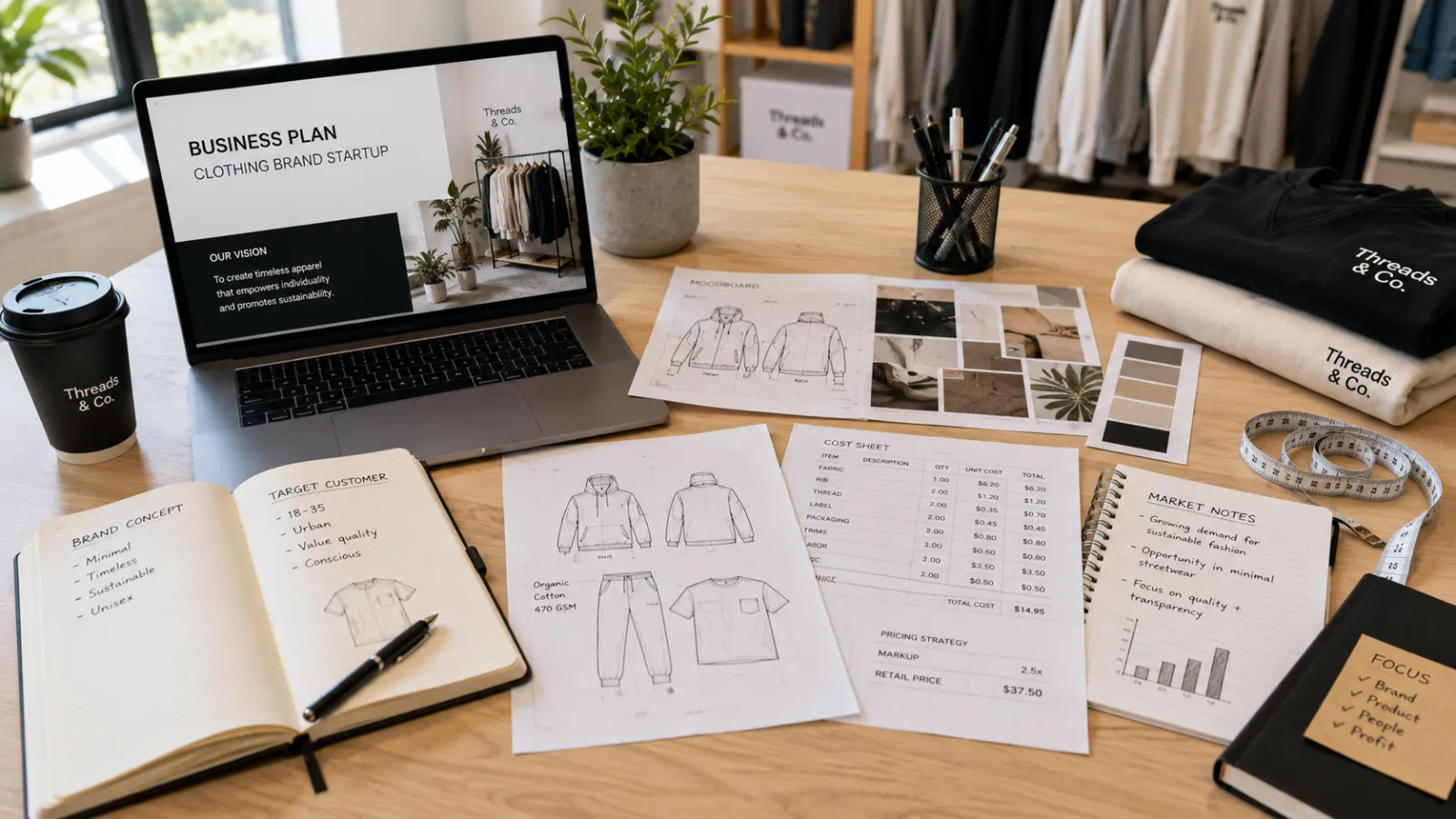
Write a Real Clothing Brand Business Plan
This does not need to be a 40-page investor deck. But it should exist.
Your business plan should cover your niche, target customer, product range, brand position, sales channels, pricing model, launch strategy, startup budget, sourcing plan, and first-year goals. It should also include an inventory plan, expected marketing spend, fulfillment setup, and return assumptions.
Decide How You Will Manufacture
Manufacturing is where many clothing brands become real, or break.
Manufacturing Paths
You generally have four paths: local small-batch production, overseas private label, overseas cut-and-sew, or print-on-demand. Each has tradeoffs. Local production can offer easier communication and smaller runs, but often at higher unit cost. Overseas manufacturing can improve margins and capacity, but requires stronger communication, QC systems, and lead time planning.
Tech Packs and Sampling
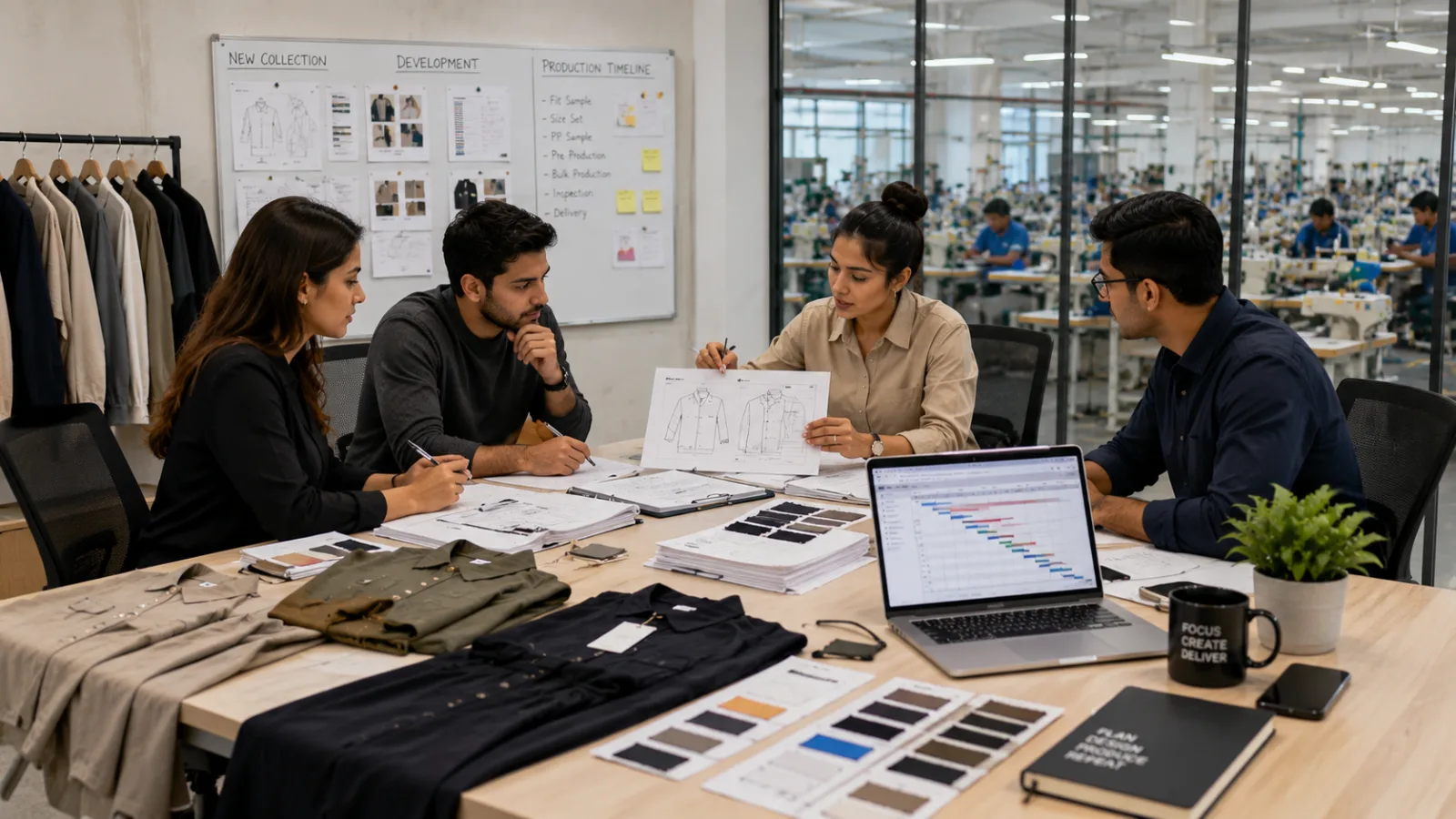
Factories cannot produce a strong product from vague instructions. If you want consistent quality, you need a tech pack. A basic clothing tech pack should include flat sketches, measurements, fabric details, colorways, construction notes, trims, label placement, artwork, packaging instructions, and reference photos.
Finding the Right Partner
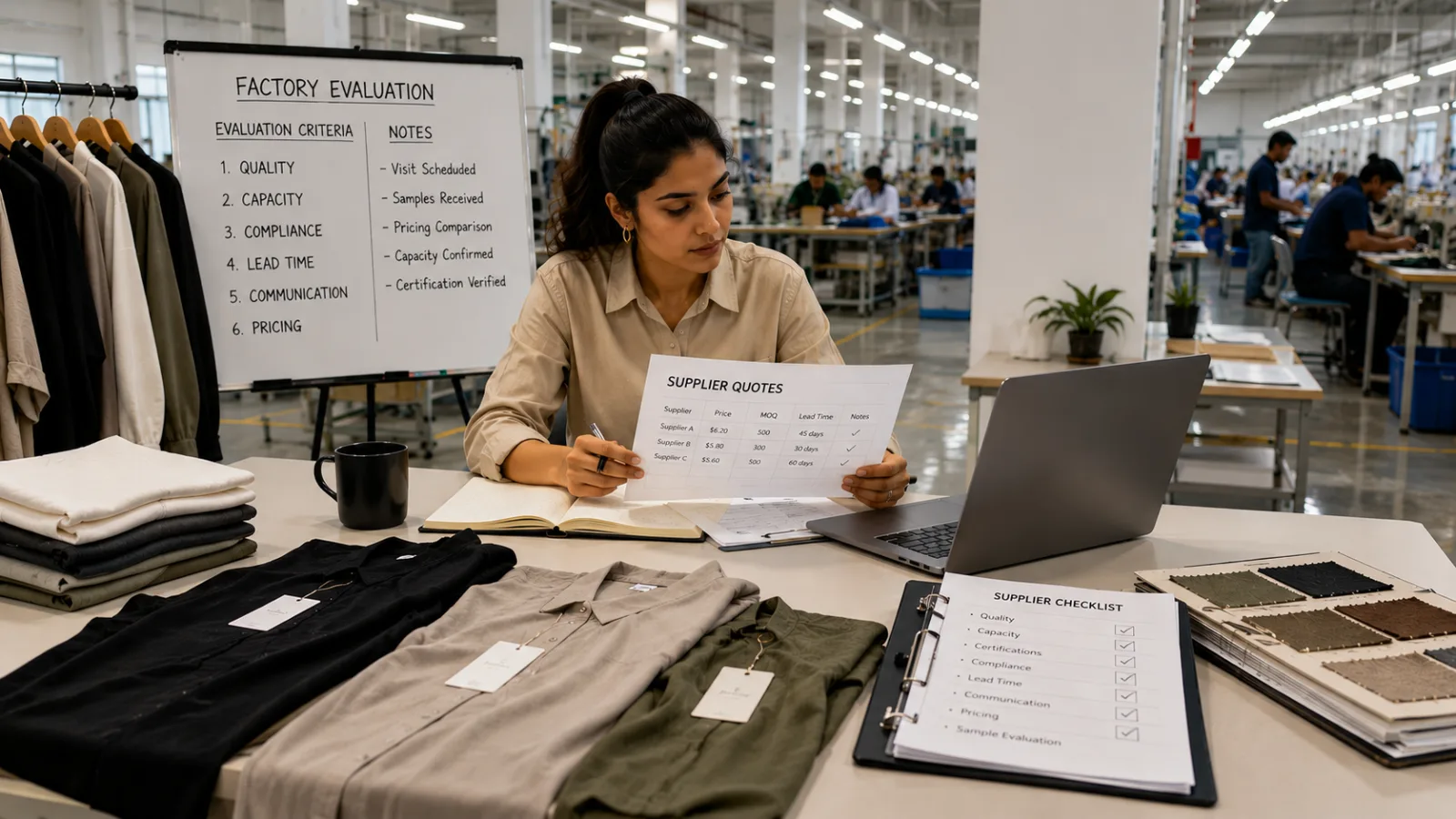
A low quote is not a strong factory strategy. When choosing a clothing manufacturer, evaluate product specialization, MOQ flexibility, communication speed, sample quality, compliance standards, timeline realism, and willingness to work with a startup.
Plan Lead Time Like a Business
Startups often set launch dates first and ask production questions later. That is backward. Your lead time includes design finalization, sampling, revisions, fabric sourcing, trim sourcing, line booking, production, finishing, quality control, freight, customs, and delivery.
Typical Timeline to Launch
Build Your E-commerce Store for 2026 Discovery
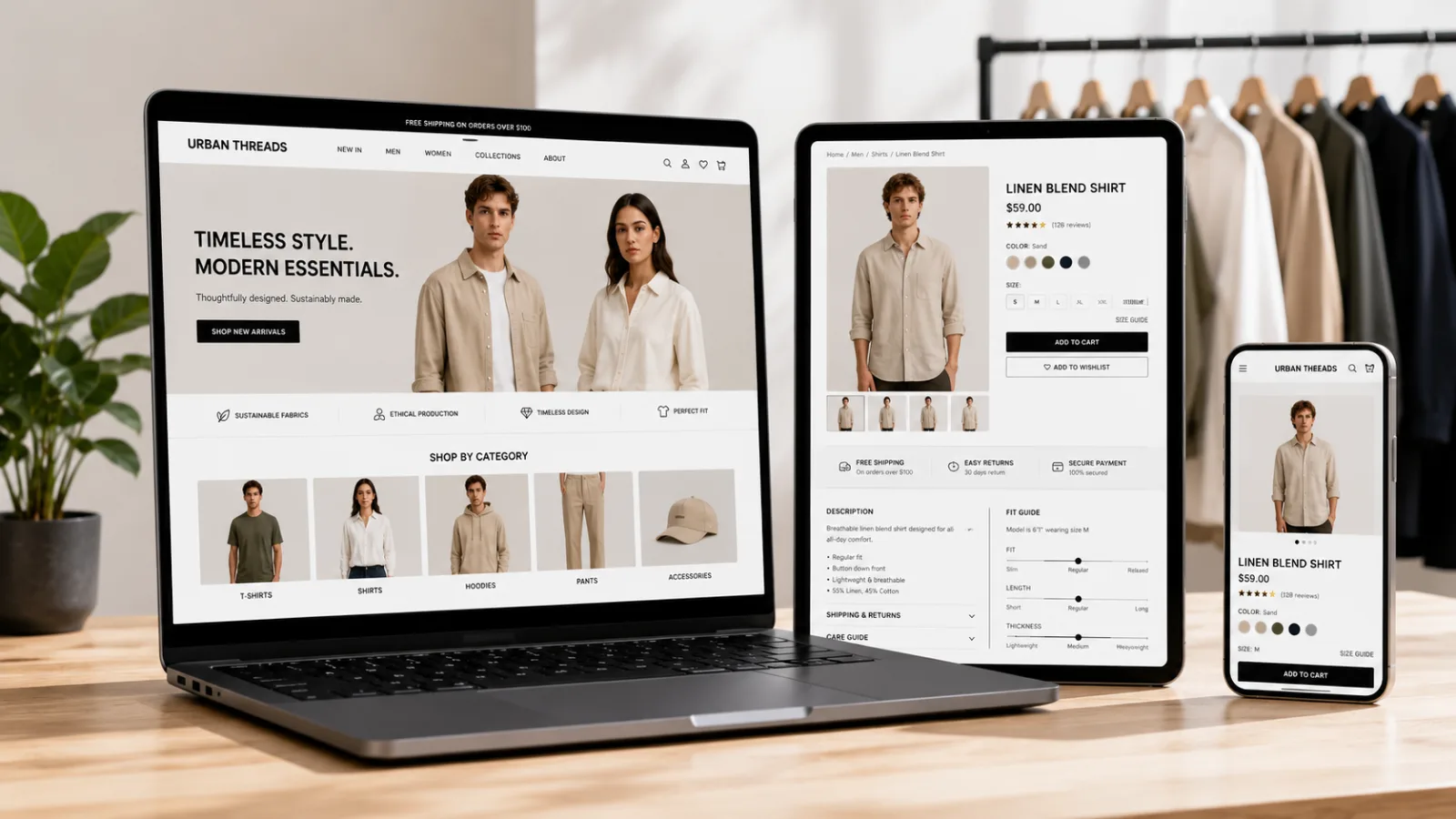
A 2026 clothing brand site needs to do more than look attractive. It needs to convert traffic from search, social, AI tools, and returning customers. For new brands, that means your product pages, collection pages, and brand story need to be clear enough for both people and machine-driven discovery systems to understand.
The Importance of a Professional Online Presence
Professional online presence is vital in the fashion industry, where visual storytelling and immediate access shape reputations. A cohesive website and curated social profiles function as a living portfolio, communicating design aesthetic, technical skill, and brand values to editors, buyers, and collaborators.
Use Content, SEO, and GEO From Day One
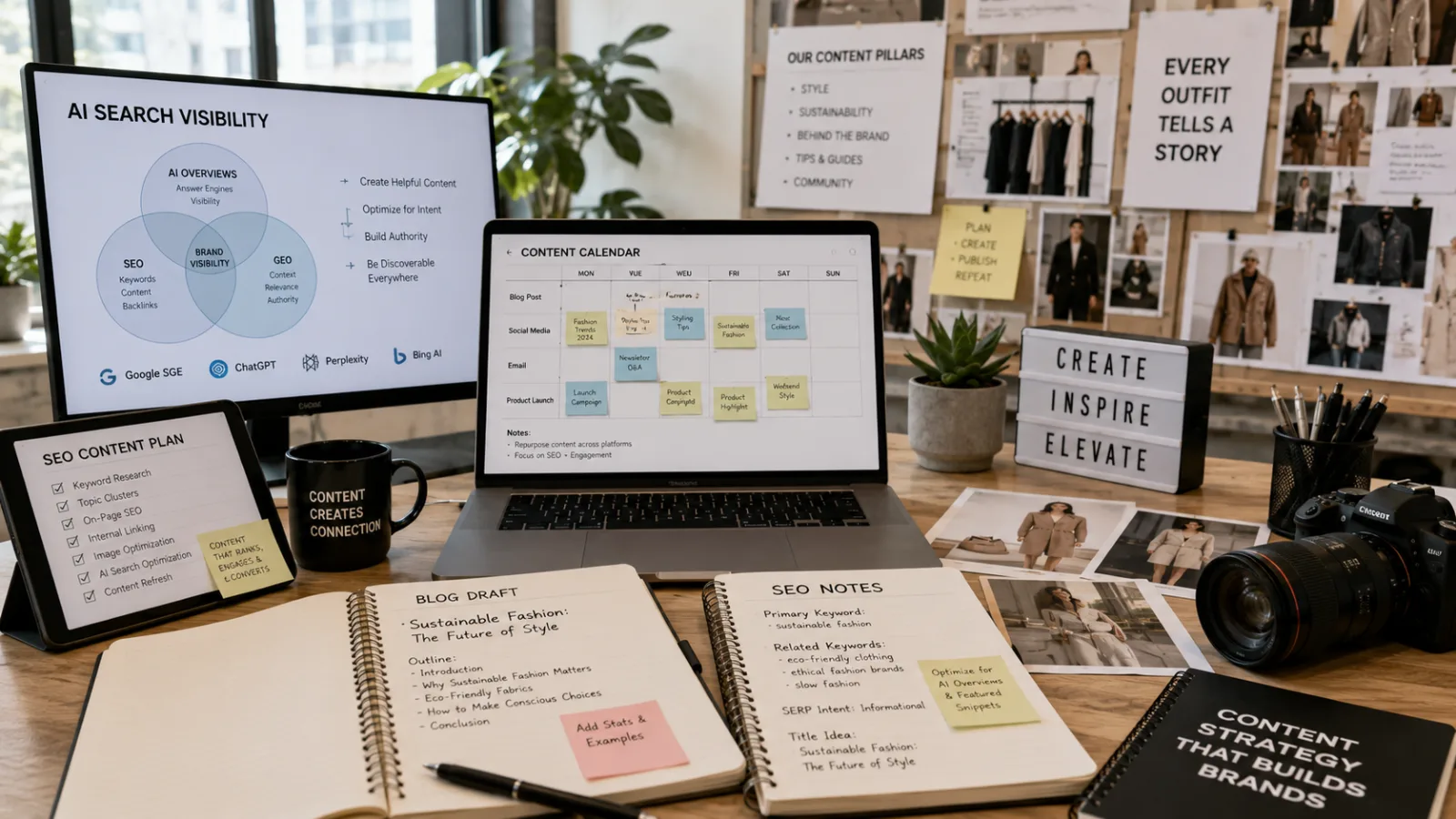
New clothing brands often wait too long to build discoverability. In 2026, that is a mistake. Clothing brands should think beyond keyword ranking and focus on creating structured, descriptive, helpful content that can be surfaced in both search engines and AI systems.
Market the Brand Like a Media Company
A new clothing brand usually does not have the budget to outspend established players, so it needs to out-communicate them. Think in content systems: founder content, product education, behind-the-scenes clips, fit videos, UGC, influencer seeding, email flows, and launch teasers.
Choose Sales Channels Carefully
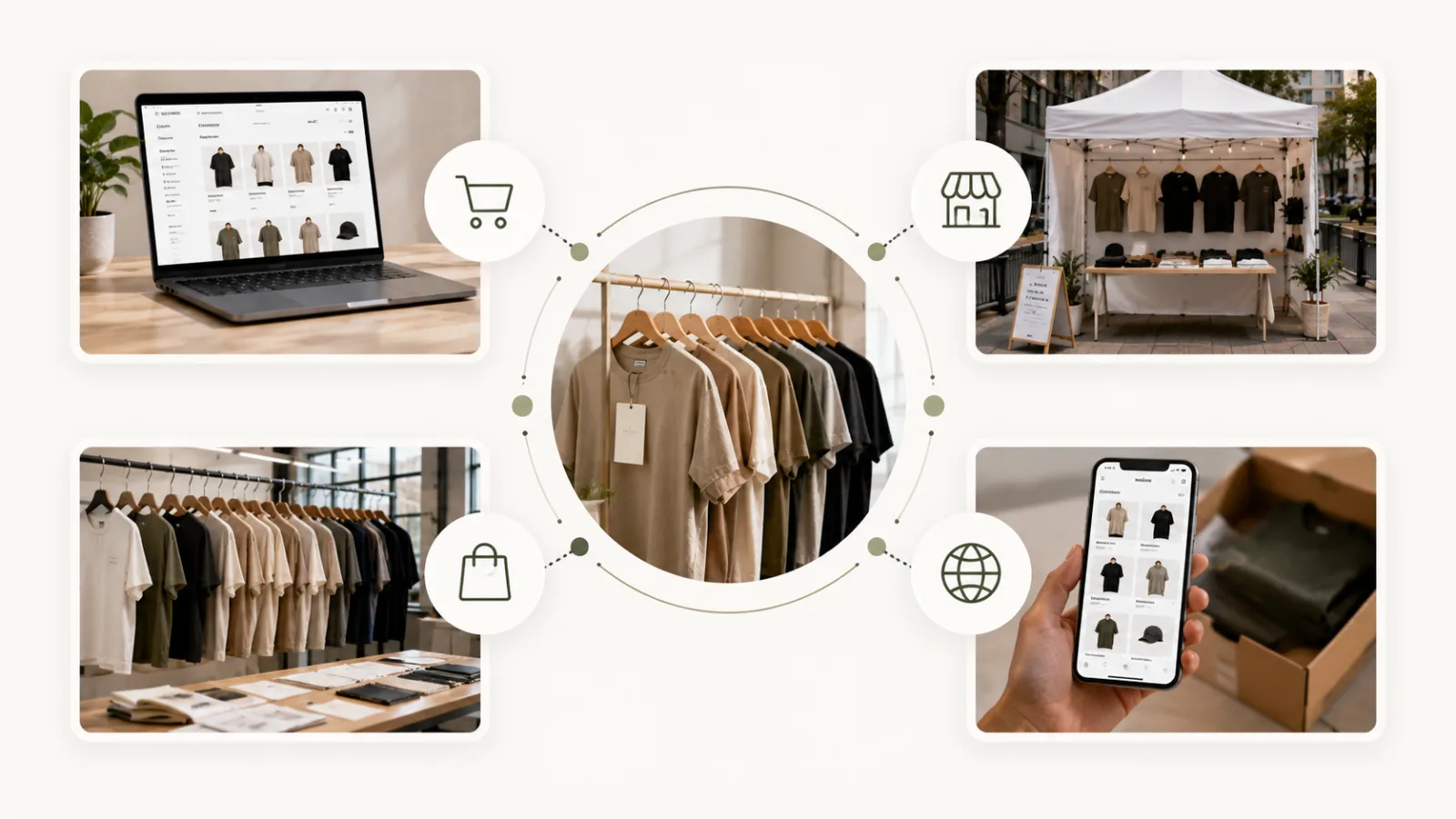
You do not need every channel at once. For most new brands, direct-to-consumer through your own site should be the core because it gives you control over margin, brand experience, customer data, and retention. But you may also test marketplaces, pop-ups, selective wholesale, or creator collaborations.
Set Up the Legal and Operational Basics
Before launch, set up your legal business entity, business banking, accounting process, payment gateway, tax setup, return policy, shipping policy, privacy policy, and product labeling requirements. Operationally, decide how you will store inventory, pack orders, handle exchanges, manage customer service, and process returns.
Launch With a Plan, Not a Hope
A launch should not begin on launch day. It should begin weeks before. Start with list building. Build anticipation through email, SMS, and social countdown content. Share product details gradually. Seed a small group of creators or early customers.
Avoid the Mistakes That Kill Most New Brands
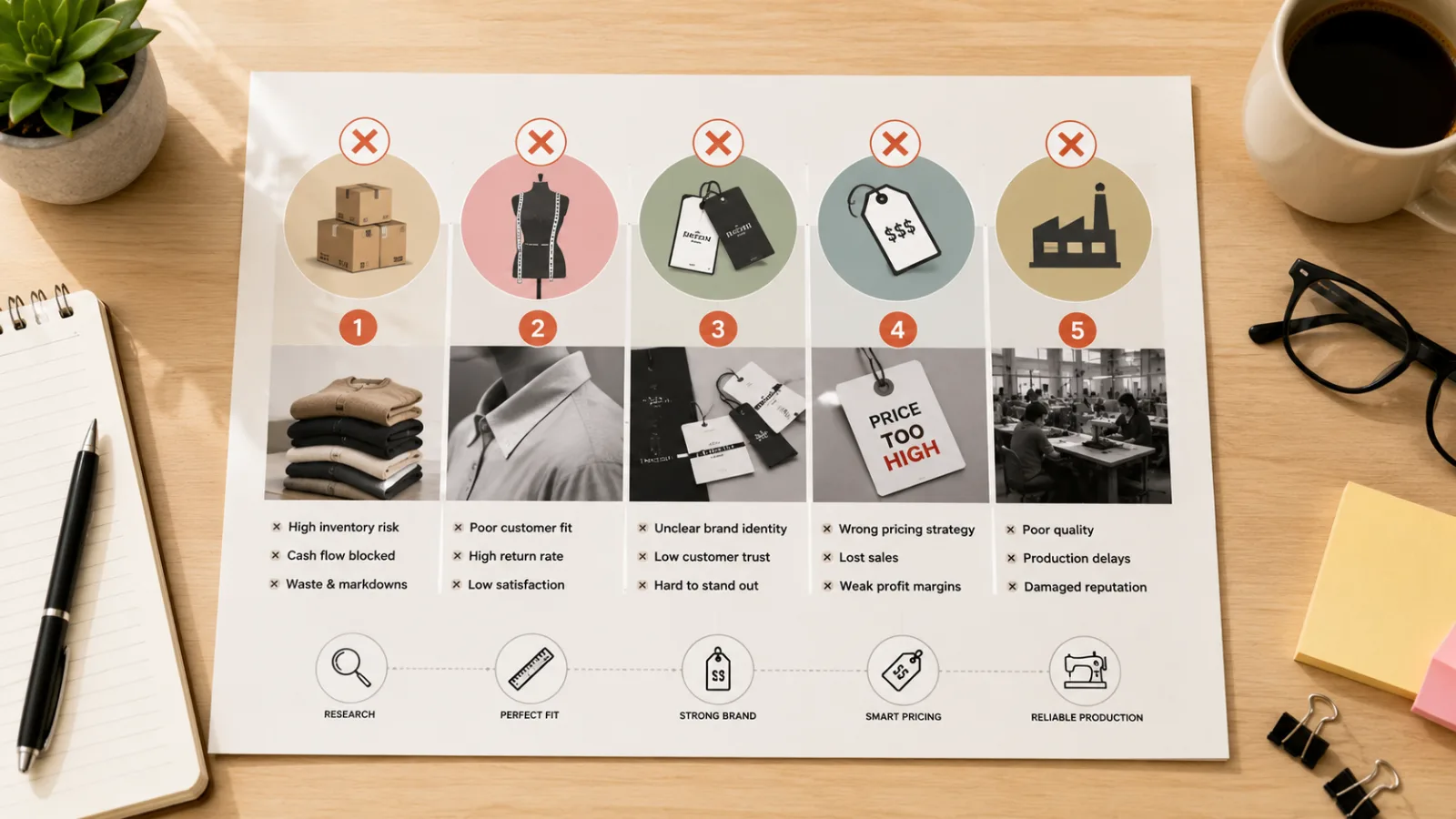
Most clothing brands do not fail because the founder lacked taste. They fail because they ignored business reality. Common mistakes include trying to serve everyone, launching too many SKUs, overproducing without demand validation, underpricing, rushing samples, and relying entirely on organic social.
A Practical First-Year Roadmap
If you are starting from scratch, your first year should be about proof, not scale. Focus on research, branding, product concept, and supplier conversations. Then move into tech packs, sampling, and store setup. Finally, launch a small first drop, gather reviews, and monitor performance.
ApparGlobal
Many new fashion founders move faster when they work with manufacturing partners that understand startup constraints. Companies such as ApparGlobal help clothing brands align tech packs, material sourcing, sampling, quality control, and manufacturing coordination.
FAQ: Starting a Clothing Brand
How much money do you need to start a clothing brand?
Many small clothing brands start with $3,000–$10,000, depending on production volume, branding costs, and marketing budget.
Do you need to know fashion design to start a clothing brand?
Not necessarily. Many founders focus on brand direction and outsource design, pattern making, and production to experienced professionals.
Is it better to manufacture locally or overseas?
Local production offers easier communication and smaller runs, while overseas manufacturing often provides lower costs and larger production capacity.
How many products should a new clothing brand launch with?
Many successful startups launch with 1–3 core products to reduce inventory risk and focus marketing on a strong hero item.
Key Takeaways
- Starting a clothing brand in 2026 requires strong niche positioning and product focus.
- Successful brands begin with small collections and validated demand.
- Manufacturing, costing, and production planning are critical to long-term success.
- E-commerce discovery now includes search engines, social media, and AI platforms.
- Building a brand community and content strategy is just as important as designing the product.
Conclusion
Starting a clothing brand from scratch in 2026 is still a real opportunity, but it rewards clarity more than hype. You need a focused niche, a product that solves a real style or use-case problem, a believable brand identity, disciplined costing, and an execution plan that covers sampling, manufacturing, ecommerce, content, and fulfillment.
The strongest new clothing brands are not built by doing everything at once. They are built by choosing a clear customer, launching a small but sharp first offer, learning quickly, and improving every step of the system. In 2026, discovery is changing, competition is heavy, and customer expectations are high, but that does not make success impossible. It simply means the brands that win are the ones that treat fashion like both a creative business and an operational business. If you build that way from the beginning, you give your clothing brand a much better chance not only to launch, but to last.