
Scaling clothing production is a business systems challenge. Learn how to maintain quality through better documentation, supplier control, and
Scaling clothing production is one of the most exciting stages in an apparel business. It usually means demand is growing, customers are responding well, and the brand has a real chance to move from small-batch uncertainty into a more established operation. But it is also one of the most dangerous stages in fashion. The same growth that creates opportunity can quickly create quality problems if the production system is not ready.
Many clothing brands assume scaling means simply ordering more units from the same factory. In reality, scaling changes almost everything. More units usually mean more fabric coordination, more line planning, more operators touching the product, more pressure on trims, more packaging complexity, more room for measurement variation, and more risk that approved standards start slipping in small ways that customers notice immediately. A t-shirt that felt perfect at 300 units may feel inconsistent at 10,000 units if the quality system does not grow with the production volume.
That is why learning how to scale clothing production without losing quality is not only a factory issue. It is a business systems issue. The strongest brands do not protect quality by luck. They protect it through better documentation, stronger supplier control, tighter approvals, clearer quality standards, more disciplined communication, and production planning that respects what the product actually needs.
This guide explains how clothing brands can scale manufacturing while maintaining consistency in fit, fabric, stitching, trims, finishing, and packaging. It covers the real reasons quality drops during growth, what brands should fix before increasing volume, how to manage suppliers and production lines, and what systems make scaling safer and more sustainable.
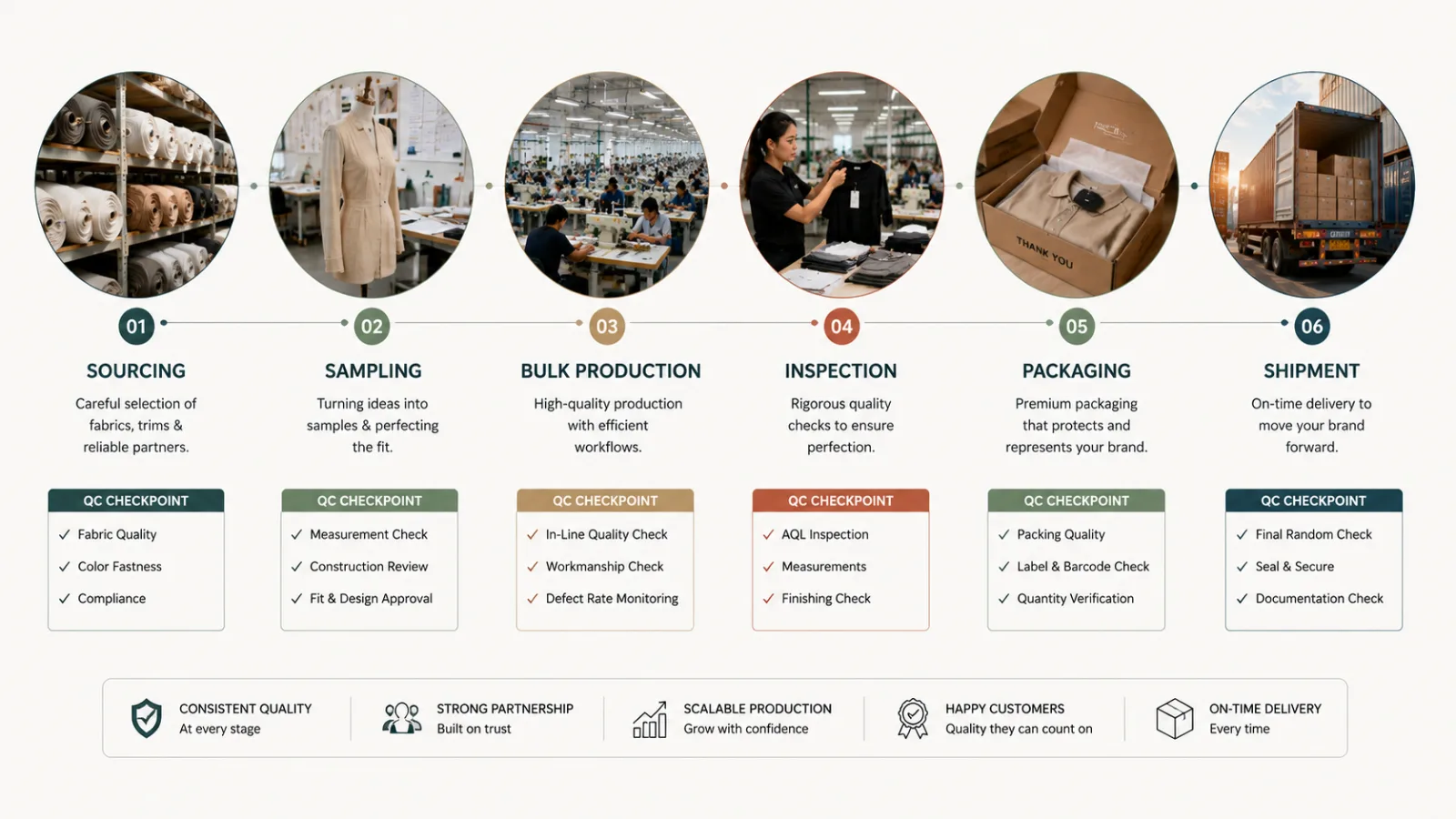
How To Scale Up Clothing Production?
Scaling up clothing production begins with refining your core designs and standardizing tech packs, so factories can reproduce garments consistently. Start small to test the waters with limited runs, gathering feedback on fit, fabric behavior, and cost implications before committing to larger volumes. This reduces risk and informs decisions.
Next, build relationships with reliable suppliers and consider multiple manufacturers to avoid bottlenecks. Invest in quality control checkpoints and data tracking to monitor yield, defects, and lead times. Streamlined workflows, clear communication, and realistic production timelines are essential for predictable scaling.
Finally, plan for financing, warehousing, and distribution as output grows. Leverage pre-orders, partnerships, or short-term financing to fund bulk orders, and phase expansion to maintain quality. With measured experimentation and operational discipline, you can scale efficiently while protecting brand reputation.
Why quality often drops when clothing production scales
Quality usually drops during scaling because the production system becomes more complex faster than the brand’s controls improve. At small volume, a founder or merchandiser may catch almost every issue manually. The sample may be checked closely. The factory may treat the order with extra attention because it is small and visible. Communication may be direct and informal. But once order size increases, the process becomes less personal and more dependent on systems.
Scaling can create quality risk through:
- more fabric lots and shade variation
- more sewing operators involved
- higher line speed pressure
- tighter shipment deadlines
- more trim sourcing complexity
- More handoffs between teams can complicate the supply chain.
- less founder visibility into daily production
- more chance of inconsistency between sample and bulk
This is why many brands do not lose quality because the factory suddenly becomes bad. They lose quality because the product is no longer being protected by the same level of control it had during early production runs.
A smart scaling strategy starts with accepting one important truth: higher volume does not automatically create stronger manufacturing. It only creates bigger consequences if the system is weak.
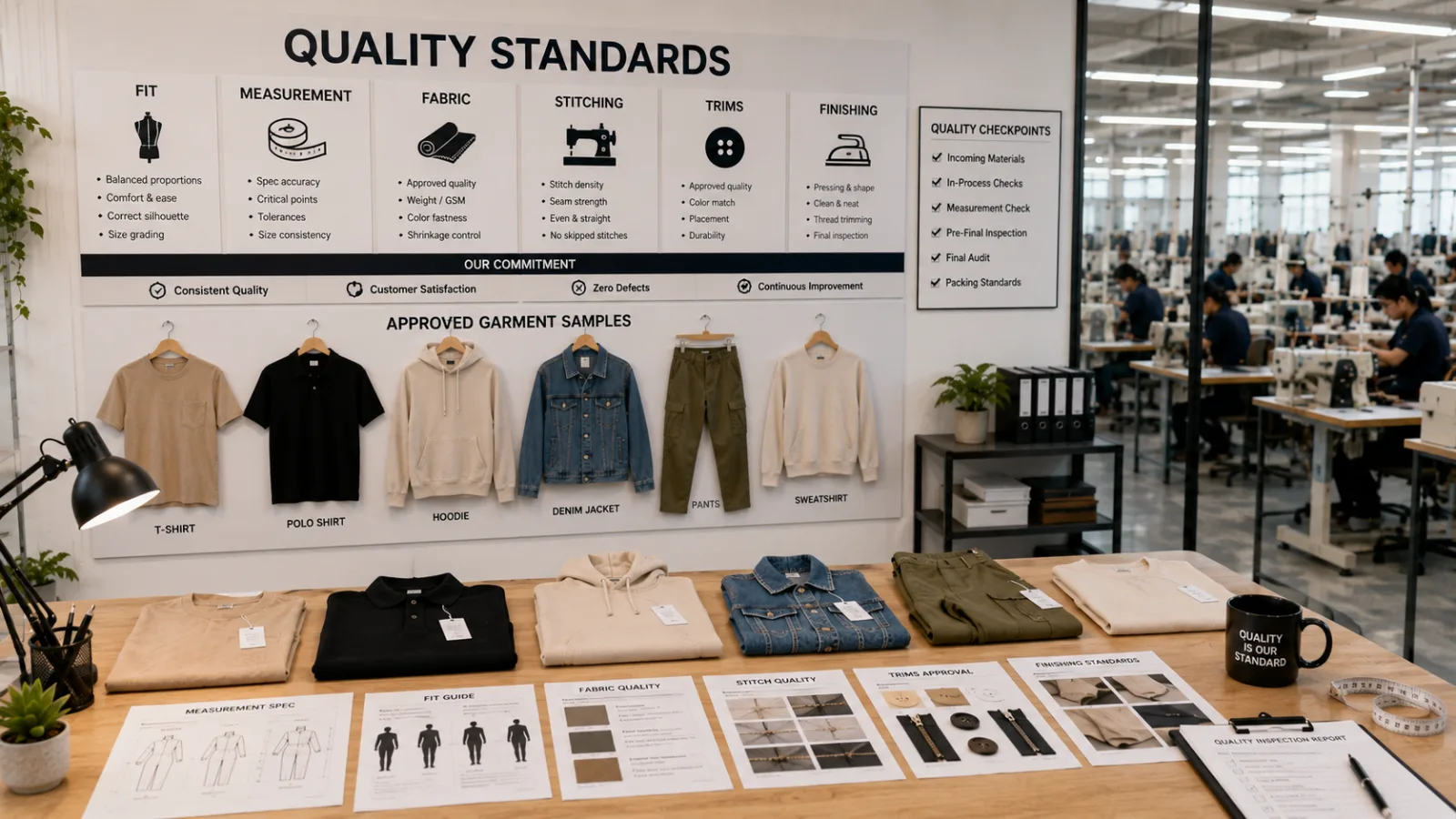
Understand what “quality” really means before you scale
A lot of brands say they want to maintain quality, but they do not define it clearly enough. That makes scaling much harder. If quality is only described as “good stitching” or “premium feel,” the factory and quality team are left interpreting what that means on their own.
Before scaling production, define quality in practical terms. In apparel, quality usually includes:
- correct measurements and fit
- consistent fabric weight and handfeel
- approved color and shade matching
- proper stitch type and seam construction
- trim accuracy and durability
- shrinkage and wash performance
- print or embroidery consistency
- clean finishing and thread trimming
- correct labeling and packaging
- low defect rate in bulk units
The clearer these standards are, the easier it becomes to protect them at volume. If your premium oversized t-shirt depends on dense fabric, stable neckline shape, exact sleeve length, and compact finishing, those details need to be treated as quality-critical, not optional preferences.
Scaling works best when quality moves from a vague brand feeling into a documented production standard.
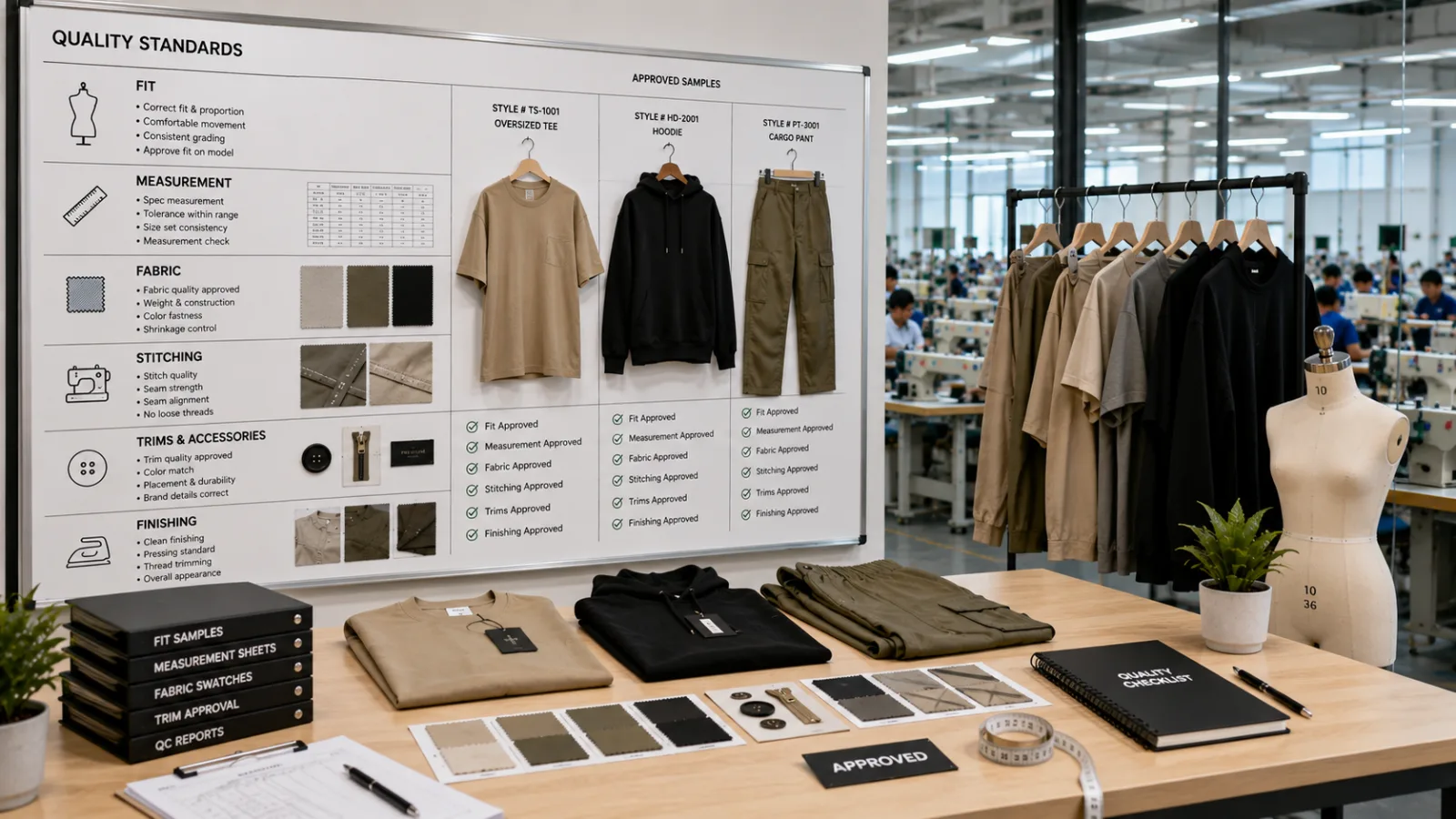
Do not scale before your product is stable
One of the biggest mistakes clothing brands make is scaling a product that is still not stable. If the brand is still changing fit, still unsure about fabric, still correcting wash behavior, or still seeing mixed customer feedback, increasing production volume usually multiplies the problem.
Before scaling, the product should already be strong in key areas:
- repeatable fit
- stable fabric performance
- reliable shrinkage results
- consistent trim sourcing
- clear packaging method
- approved cost structure
- A low defect rate in smaller runs is crucial for garment manufacturers focusing on sustainability.
- positive customer response with few recurring complaints
A product that still needs major correction is not ready for large-volume production. It is much safer to refine the product further at smaller scale than to push a flawed product into bigger orders and create larger financial damage later.
The best time to scale is when the product is already proven, not when the brand is hoping volume will somehow smooth out development issues. Volume does not fix product weakness. It magnifies it.

Strategies For Scaling Up Your Garment Manufacturing Business
Scaling up requires a clear plan to source raw material and partner with reliable suppliers or a clothing manufacturer or custom clothing manufacturer that can outsource parts of the manufacturing process and streamline the production process, from fabric sourcing and textile/textile manufacturing to dyeing, ensuring consistent quality and meeting quality standards with robust quality control and quality control processes. Use sampling and small batch or small batch runs before moving to production line and large-scale production to test size, fit and reduce defect rates while keeping lead times short.
Adopt sustainable and eco-friendly sustainable practices to minimize and reduce waste, minimizing waste across the supply chain, invest in investing in technology and real-time tracking to optimize output, invest in training the workforce, and build long-term partnerships with garment manufacturers and a manufacturing partner so your fashion brand or fashion startup can scale without compromising or without compromising production while maintaining consistent quality as the business grows in the evolving fashion industry and fashion landscape toward sustainable fashion and scalability.
Build strong tech packs before increasing volume
A product can often survive weak documentation at small scale because founders are checking everything closely. At larger scale, weak documentation becomes dangerous. That is why tech packs become even more important as volume grows in the context of the fashion industry.
A strong tech pack should clearly cover:
- front and back technical sketches
- points of measure and tolerances
- fabric details and GSM
- trim specifications
- construction details
- artwork placement
- label placement
- packaging requirements
- revision history
When production expands, more people rely on these documents. Merchandisers, sample rooms, line supervisors, QC teams, and finishing staff all need the same reference. If the tech pack is vague, old, or incomplete, quality starts drifting. Small mistakes become repeated mistakes.
Brands that scale safely usually treat the tech pack as the main product control document, not just a file used once during development. When the product changes, the document changes too. When bulk starts, everyone works from the latest approved version.
Strong documentation does not slow scale. It makes scale safer.

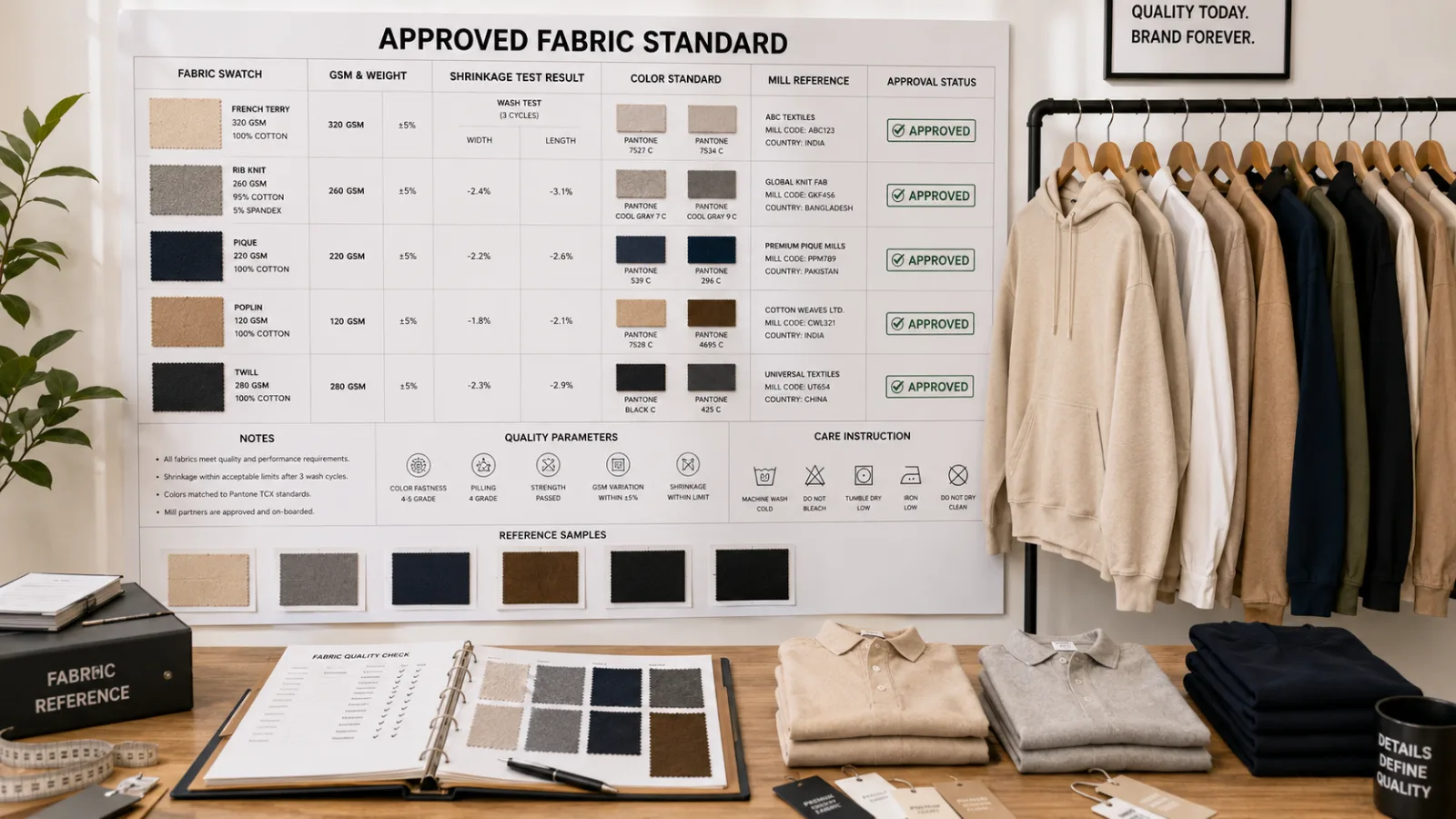
Lock fabric standards before you increase unit count
Fabric is one of the biggest quality risks in scaled apparel production. At low volume, fabric issues may seem manageable. At higher volume, differences in shade, handfeel, shrinkage, weight, or finish become much more visible and much more expensive.
Before scaling, lock key fabric standards such as:
- fiber composition
- GSM or weight
- width
- knit or woven structure
- handfeel and finish
- shrinkage tolerance
- Pilling performance is an important quality metric for garment manufacturers to monitor.
- color standard
- approved mill or source
If your product depends heavily on fabric feel, such as premium basics, loungewear, babywear, or activewear, this step becomes even more important. Customers often judge quality through the fabric before anything else.
A common scaling problem happens when the factory shifts fabric lots or mills without strong approval control. The product still looks similar, but the customer feels the difference immediately. That weakens trust, especially in repeat-purchase categories.
Protecting fabric consistency is one of the clearest ways to protect product identity as production grows.
Ensure Sustainability and Compliance
Ensuring sustainability and compliance begins with an adaptable approach to fabric sourcing and manufacturing process decisions so that fashion designers and clothing brands can meet evolving regulations in the textile industry. Partnering with the right manufacturing partner or a reliable custom clothing manufacturer helps an apparel brand balance ethical sustainable practices while maintaining quality during scale production and large-scale production shifts.
To support scaling efforts, strategies for scaling your garment manufacturing business must include flexible production schedules, robust textile manufacturing oversight, and clear benchmarks for production needs. When you scale clothing lines or consider scaling up your garment manufacturing, evaluate whether to outsource components or expand in-house to preserve scalability.
This proactive planning lets your manufacturing business navigate the changing fashion landscape while ensuring compliant, responsible growth.
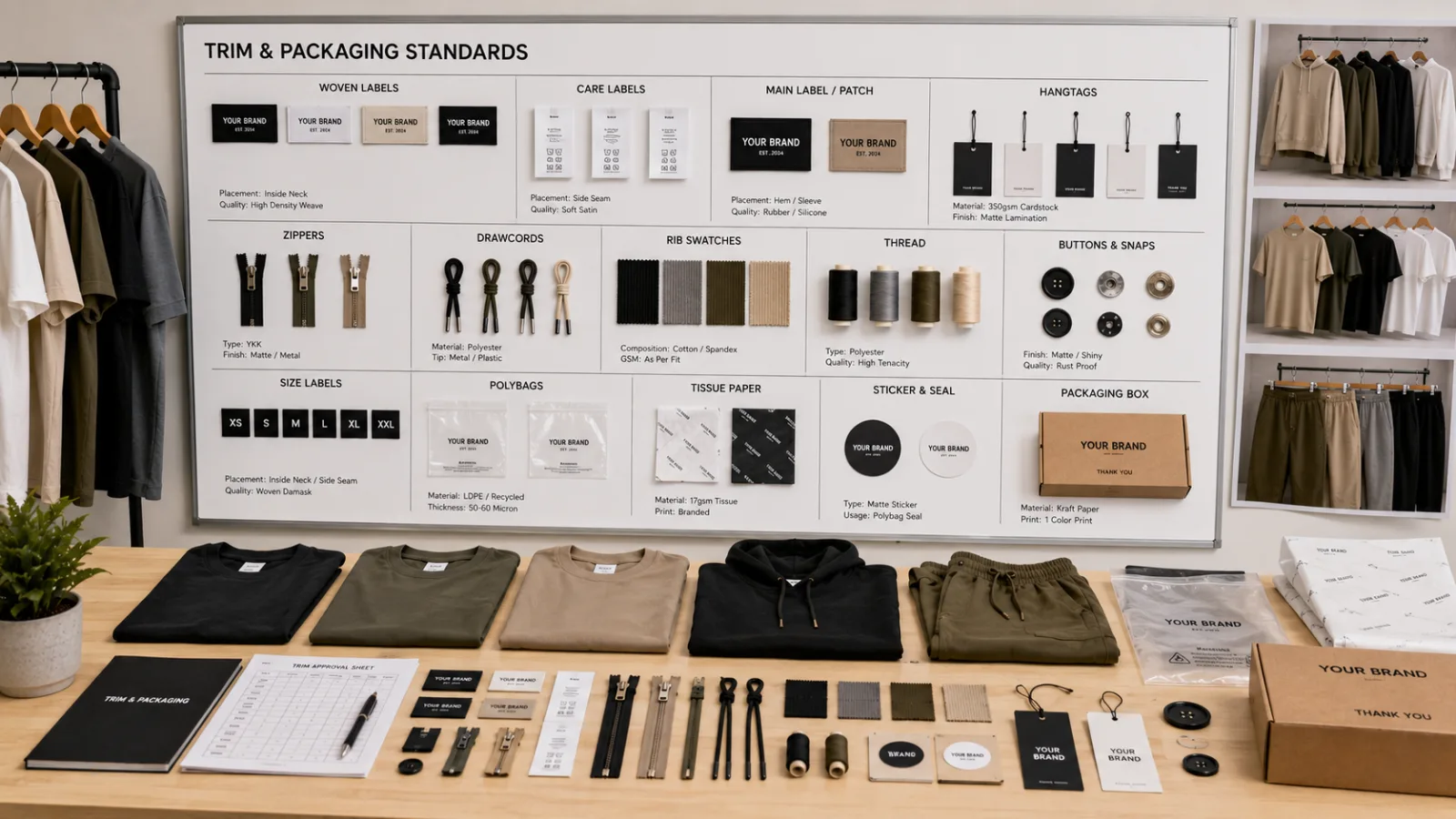
Standardize trims, labels, and packaging early
Many quality problems in scaled production come from supporting materials rather than the main garment body. Labels may change texture, drawcords may vary, rib colors may shift, zippers may feel weaker, and packaging may arrive inconsistent. These issues may look small, but they affect customer perception strongly.
Before scaling, standardize:
- main labels
- Size labels are essential for clothing manufacturers to ensure consistency across different batches.
- care labels
- hangtags
- zippers
- buttons or snaps
- elastic
- drawcords
- rib quality
- polybags
- folding methods
- stickers and carton markings
If a brand is still experimenting with multiple trim suppliers or changing packaging decisions frequently, production complexity rises. The more stable these supporting components become, the easier it is to protect consistency in bulk.
This is especially important for brands selling wholesale or internationally, where packaging accuracy and label consistency can affect retailer acceptance and compliance requirements.
Choose factories that can actually handle scale
Not every factory that can make a good sample can handle larger production reliably. Some factories are excellent for development and small runs but weaker at line control, sourcing stability, or production planning at scale. That is why scaling production often requires evaluating factory capability honestly.
Important questions include:
- Can the factory handle the target volume without rushing?
- Is the factory strong in your product category?
- Does it have reliable quality control systems?
- Can it maintain the same finish and fit at higher quantities?
- Does it have good line supervision and merchandising support?
- Can it source the same materials consistently?
- What happens if the order size doubles again?
A smaller but organized factory may sometimes protect quality better than a larger factory that treats the brand as a low-priority account. The right production partner is not always the biggest one. It is the one with the best match between your product, your volume, and your quality expectations. Scaling should start with supplier fit, not just supplier capacity.
Scale volume gradually, not emotionally
A lot of brands try to jump from small production runs to large orders too quickly. That usually happens because demand looks promising, a retailer places a bigger order, or the founder wants lower unit costs through larger MOQs. But aggressive jumps create risk if the systems have not been tested at the next volume stage.
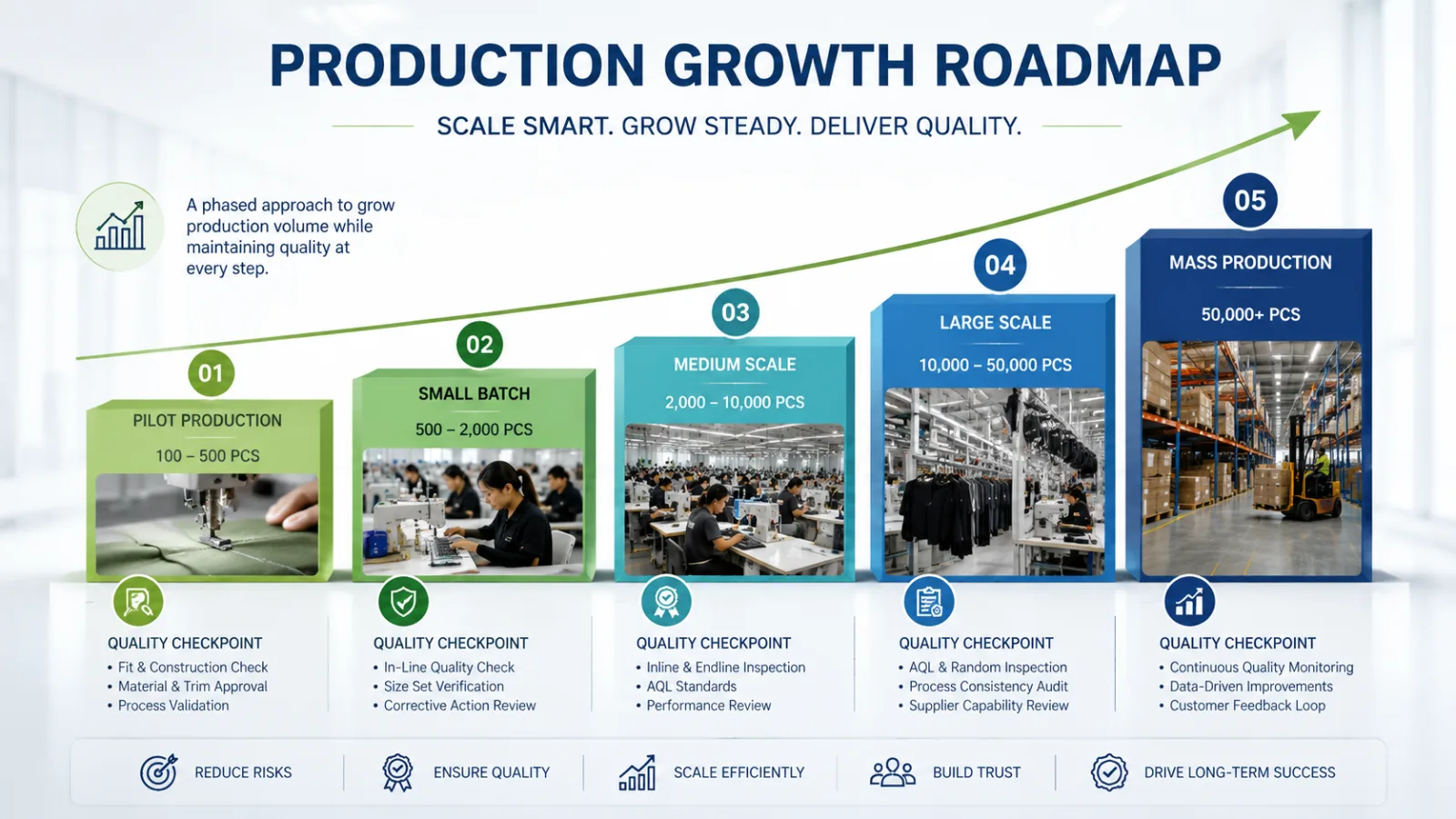
A safer approach is staged scaling. For example:
- small approved pilot run
- moderate expanded run
- larger controlled repeat run
- broader scale after consistent results
This step-by-step approach helps the brand observe where quality starts to drift. Maybe the first 500 units are strong, but 2,500 units reveal a trim issue. Maybe one factory line performs better than another. Maybe packaging errors rise when shipment speed increases. These are problems the brand wants to catch before volume gets even larger.
Scaling gradually does not mean scaling slowly forever. It means scaling intelligently enough that one mistake does not become thousands of units of damage.
Use approved samples as hard production references
When production scales, verbal descriptions are not enough. The factory needs clear physical references to optimize production efficiency. That is why approved samples are so important. They serve as the closest real-world benchmark for what the bulk product should match.
Useful approved references may include:
- fit sample
- pre-production sample
- fabric handfeel sample
- trim card
- print strike-off
- color standard
- packaging sample
These references help line supervisors, merchandisers, and QC teams compare bulk output against something tangible. Without them, small changes in neckline shape, cuff finish, print placement, or fold method can drift during production without anyone catching them early enough.
A sample should not be treated as a one-time development milestone only. It should become part of the production control system.
Create clear quality checkpoints during production
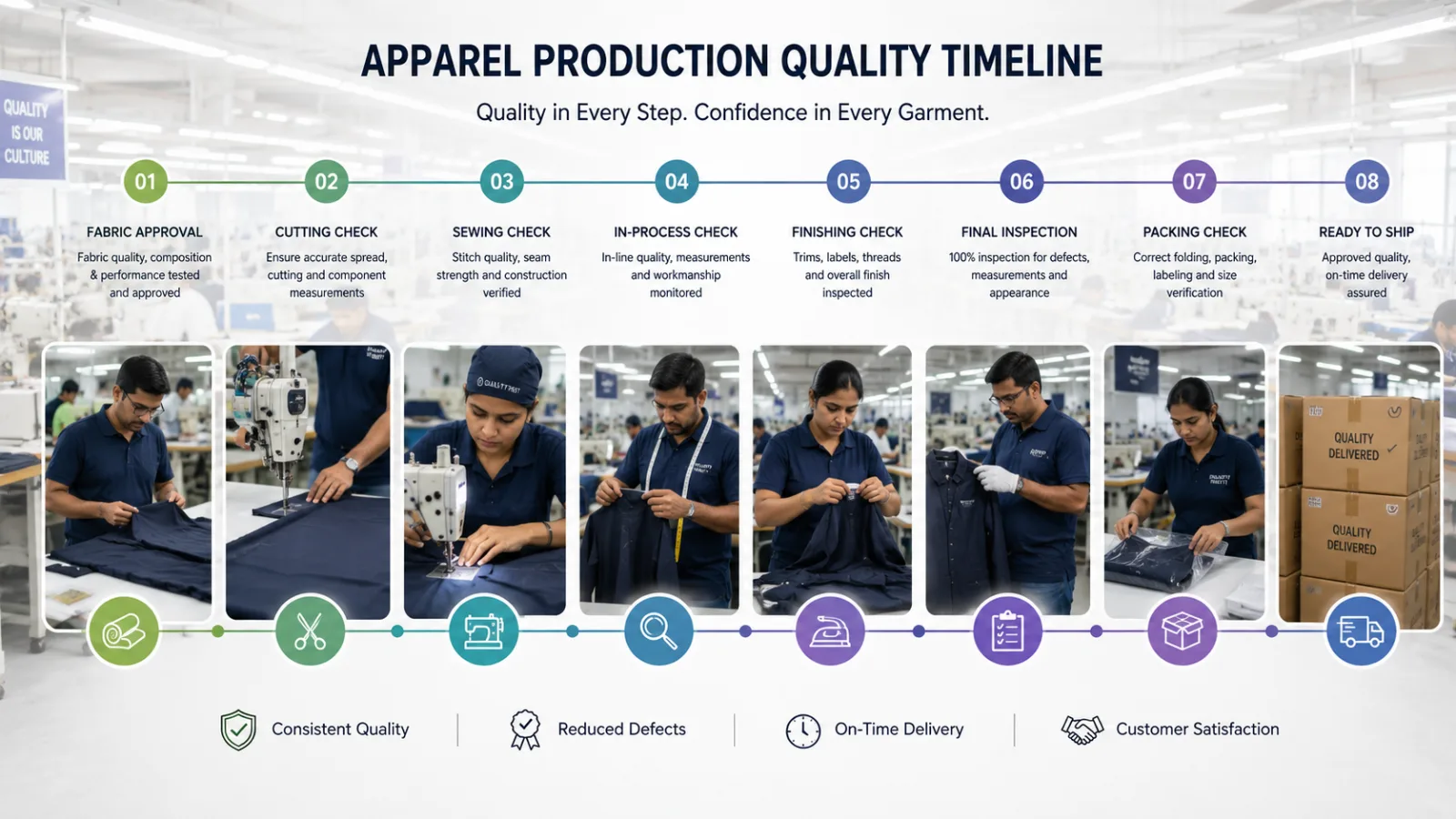
Brands that scale well usually do not wait until final inspection to discover problems. They create checkpoints throughout the production process so issues can be corrected before the full order is complete.
Important checkpoints may include:
- incoming fabric and trim approval
- first-cut panel check
- line-start sewing check
- inline quality checks during production
- measurement checks during bulk
- Finishing and pressing review is critical in maintaining quality standards for fashion brands.
- pre-pack inspection
- final random inspection
Each checkpoint reduces the chance that a consistent problem continues unnoticed. For example, if collar shape is wrong in the first 50 pieces, the line can correct it before 5,000 pieces are sewn the same way. If measurements begin drifting, the team can respond before the whole order moves out of tolerance, thus minimizing potential defects.
Quality checkpoints are one of the most practical differences between brands that scale successfully and brands that only inspect problems after it is too late.
Strengthen inline quality control, not only final inspection
Final inspection is useful, but it is not enough by itself. If a defect is found only at the end of production, the cost of correction is much higher. Inline quality control is more powerful because it identifies issues while the line is still running.
Inline QC should check:
- seam quality
- stitch consistency
- measurement stability
- trim attachment
- print placement
- puckering or distortion
- thread trimming
- alignment of panels
- shade consistency within bundles
This matters even more when production is spread across multiple operators or lines. A defect pattern may begin subtly and then expand quickly if nobody is checking it in real time.
The best scaling systems do not depend on final sorting alone. They catch problems earlier, when correction is still manageable.
Watch measurements closely when scaling
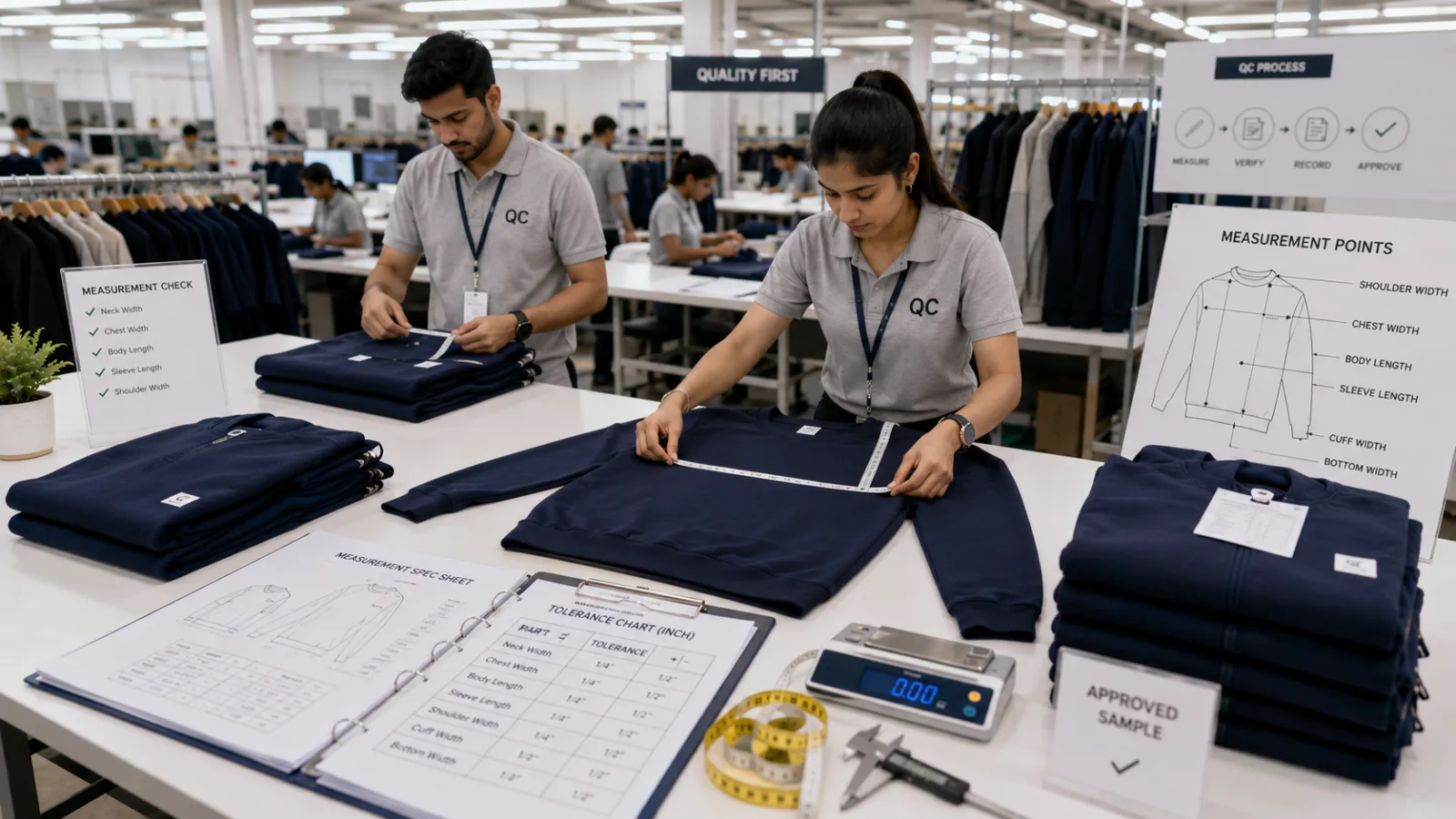
As production increases, measurement variation often becomes one of the first visible quality issues. The sample may be perfect, but bulk garments start drifting slightly in chest width, body length, sleeve length, waist, inseam, or neckline opening. Small deviations can become big customer complaints, especially in fit-sensitive categories.
To prevent this, the brand should:
- define clear tolerances in the spec sheet
- measure first-off pieces carefully
- check bulk measurements regularly
- separate out-of-tolerance pieces early
- train the factory on the most critical measurement points
This is especially important for:
- premium basics
- kidswear
- activewear
- dresses
- pants and denim
- close-to-body or size-sensitive items
A clothing brand can often survive a minor packaging inconsistency. It usually cannot survive repeated customer complaints that the fit changed between orders. Measurement discipline is one of the core systems behind repeat customer trust.
Control color and shade consistency across lots
As production grows, color consistency becomes harder to manage. Larger orders may use multiple dye lots or fabric lots, and slight shade differences can become visible across garments packed together. This is especially risky in matching sets, basics, and retailer-facing orders where visual consistency matters a lot.
Brands should control shade by:
- approving clear color standards
- reviewing lab dips or strike-offs properly
- checking lot-to-lot consistency
- avoiding mixed shades in one packed assortment
- keeping matching-set components from the same approved lot where possible
This matters for both solid colors and prints. If one batch of black hoodies looks slightly warmer or one run of beige trousers shifts more yellow, customers may notice immediately. Retailers notice too.
Shade inconsistency is often treated as a technical mill issue, but from the customer side it feels like a quality problem. That is why color control should be treated as a scaling discipline, not just a dye-house conversation.
Train the factory on what matters most to your brand
Not every product has the same critical quality points. One brand may care most about neckline recovery. Another may care about print placement accuracy. Another may depend on luxury handfeel, while another relies on exact fit balance in leggings. If the factory does not know which details matter most, it may protect the wrong things.
Before scaling, identify the product’s key quality drivers and communicate them clearly. For example:
- oversized tee: collar shape, fabric weight, shoulder drop, body length
- hoodie: fleece quality, rib recovery, print durability, hood shape
- activewear: stretch recovery, opacity, seam smoothness, size consistency
- woven dress: drape, sleeve shape, lining behavior, zipper smoothness
When the factory understands which points are brand-critical, line checks become more relevant and problem-solving becomes more precise. Scaling quality is not only about more inspection. It is about smarter inspection focused on what customers actually notice.

Keep communication tighter as production grows
As brands scale, communication usually becomes more layered. Instead of one direct conversation with a sample room, there may now be merchandisers, line supervisors, sourcing managers, QC staff, finishing teams, and logistics staff involved. That increases the chance of miscommunication.
To reduce this risk:
- centralize key approvals in updated documents
- avoid conflicting instructions across email and chat
- confirm changes in writing
- use revision-controlled tech packs
- align on approved samples and trim cards
- document packaging and labeling requirements clearly
A lot of scaled-production quality problems are not caused by technical inability. They happen because one team is working from old information while another is working from new information.
As order size grows, communication needs more structure, not less. Clear documentation and fewer assumptions usually protect quality better than constant reactive messaging.
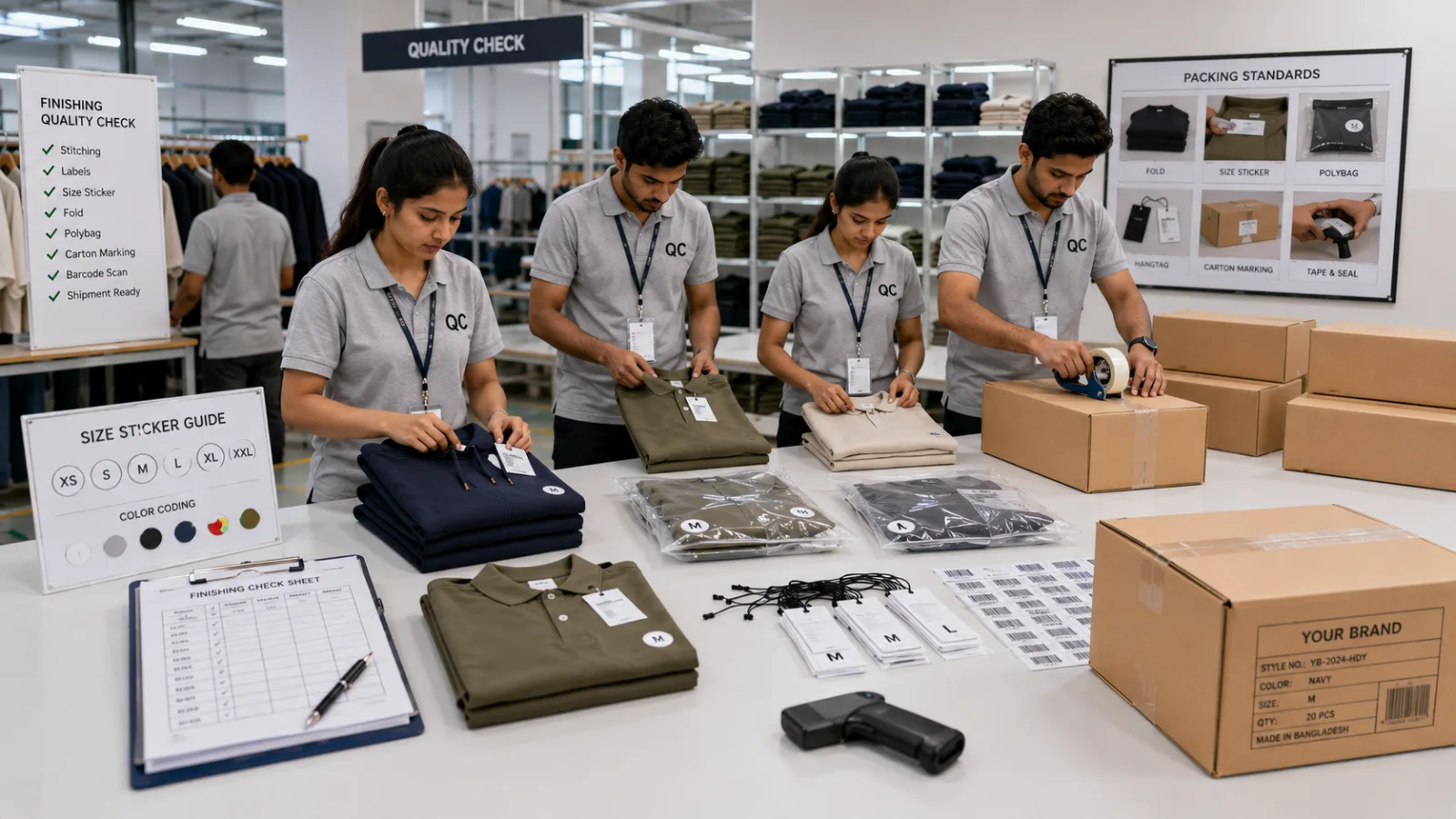
Audit packaging and finishing, not just sewing quality
Many brands focus heavily on sewing quality during scale and then overlook finishing and packaging. But customers experience the finished garment, not just the stitched panels. Poor pressing, inaccurate folding, wrong stickers, messy polybags, or weak hangtag attachment can make a good garment feel less professional.
As production scales, control:
- pressing and steaming consistency
- thread trimming
- stain and defect removal
- folding standard
- label accuracy
- polybag quality
- size sticker consistency
- carton assortment and markings
This is especially important for DTC brands and wholesale brands supplying retailers. The final presentation affects first impressions, operational accuracy, and even return or chargeback risk.
Scaling quality means protecting the whole shipped product, not only the sewn body.
Test wash performance before scaling repeat orders
A product can look great fresh off the line and still disappoint after customer use. That is why wash performance needs to be checked again before scaling repeat orders, especially if anything changed in fabric lot, mill, finish, or construction.
Test for:
- shrinkage
- pilling
- twisting
- colorfastness
- print cracking
- Seam distortion can significantly affect the quality of garments produced by clothing manufacturers.
- trim durability
- handfeel after wash
This is especially important when the first run was relatively small and the larger run involves new bulk lots or expanded sourcing. Repeat customer trust depends heavily on consistency, and wash behavior is one of the areas customers remember most clearly.
If your first customers loved the product because it kept its shape and feel after care, scaling should protect that experience, not put it at risk.
Use data from returns and complaints to improve bulk quality
When a brand starts scaling, customer feedback becomes even more valuable. Returns and complaints are not only service problems. They are production-quality data. If customers repeatedly mention collar stretching, fabric thinning, seam irritation, sizing inconsistency, or trim breakage, those issues should feed back into production control.
Track patterns such as:
- most common return reasons
- quality complaints by style
- repeat measurement-related complaints
- fabric-performance complaints after washing
- packaging or labeling confusion
- best-performing products with lowest issues
This helps the brand know where to strengthen controls before the next run. A product that scales well is not only one that sells. It is one that creates repeat satisfaction without increasing friction.
The strongest brands treat production scaling as a loop between customer response and factory improvement, not as a one-way shipment process.

Do not add too much product complexity while scaling
Another common mistake is scaling volume while also expanding the collection too aggressively. A brand may be increasing hoodie volume, adding new fabrics, launching pants, introducing embroidery, and entering wholesale all at the same time. That usually creates unnecessary pressure.
A safer approach is to scale proven products first. Let the systems strengthen around winning styles before adding too many new variables. This reduces stress on:
- sourcing
- QC
- fit management
- inventory planning
- production scheduling
- content and merchandising
Complexity is not the same as growth. In many cases, the most profitable scaling move is not launching five new categories but rather optimizing existing product lines to meet consumer demand. It is increasing production on the hero products that already convert and reorder well.
The business should earn complexity gradually. Quality usually stays stronger when expansion follows operational readiness.
Strategies to Optimize Small-Scale Production
To optimize small-scale manufacturing, focus on processes that make production more efficient and implement an ERP system alongside smart inventory management, while never compromising without sacrificing quality or the need to ensure that quality checks meet strict quality standards; skilling initiatives like upskilling in pattern-making can be the make or break element for bespoke lines and private label projects. Balancing risk by building a network of suppliers instead of relying on a single source avoids missed opportunities, and a smart growth strategy should include ways to test the waters—for example, conduct market research to gauge response to market shifts before full launches, because without quality offerings your brand cannot scale sustainably.
Build long-term supplier relationships if you want stable quality
Quality is easier to protect when the factory understands your standards deeply. That usually comes from stronger relationships over time, not constant switching between suppliers for tiny price differences, which can disrupt the supply chain.
Long-term supplier relationships can improve sustainability in the supply chain.
- better understanding of fit and finish expectations
- more consistent sourcing
- faster issue resolution
- stronger quality accountability
- easier repeat-order control
- better support during growth phases
This does not mean staying with a poor supplier out of loyalty. It means recognizing that stable quality often comes from stable collaboration. If a factory consistently meets your standards and grows with your volume well, that relationship can become a real competitive advantage.
A brand that changes factories too casually may save a little money short term, but often loses consistency in the process.

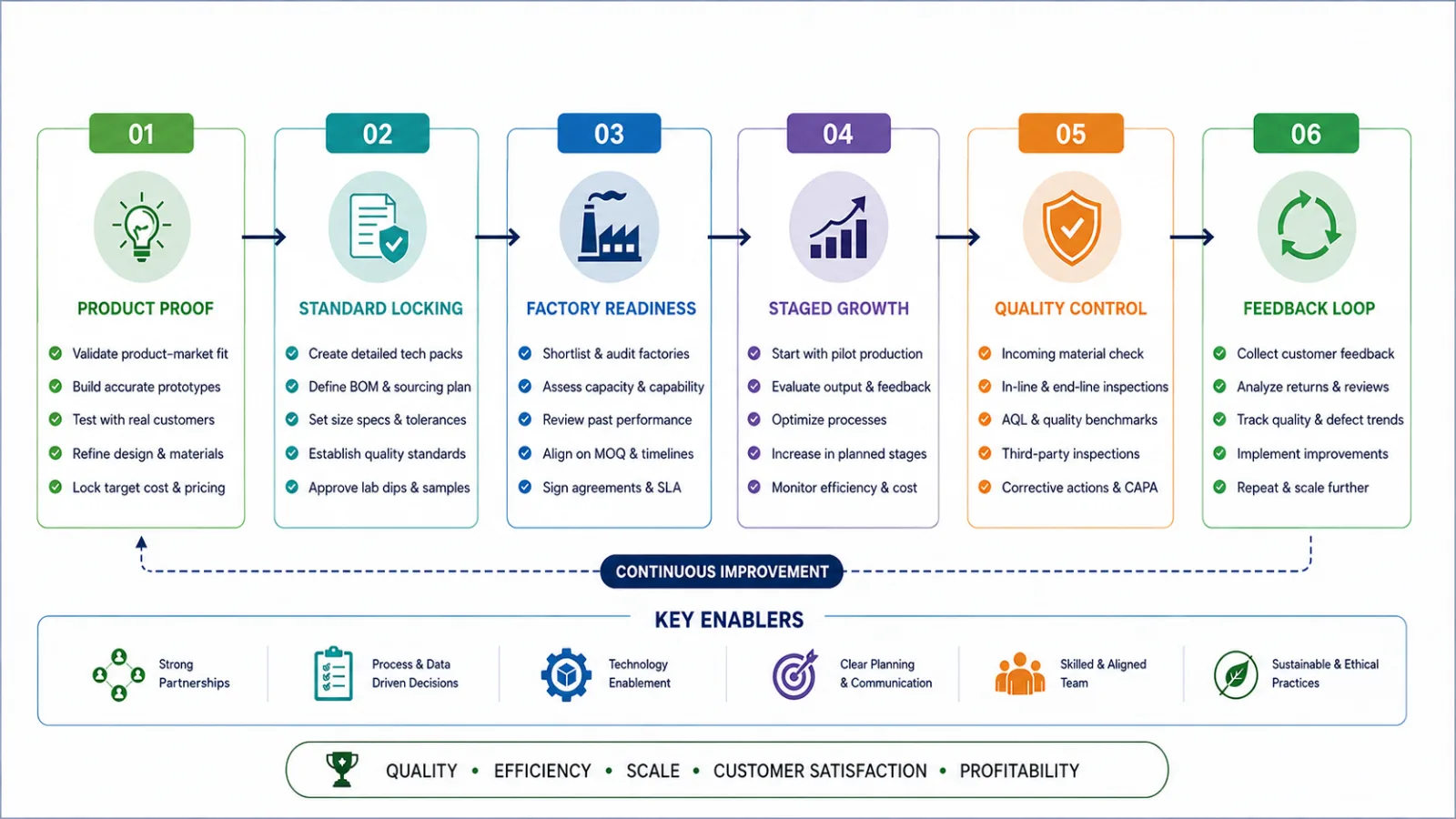
A simple quality-preserving scaling framework
If you want a practical framework, use this sequence before increasing production significantly:
First, prove the product
Make sure fit, fabric, wash performance, and customer response are stable.
Second, lock the standards
Finalize tech packs, trims, packaging, measurements, fabric quality, and approved samples.
Third, verify factory readiness
Confirm the supplier can handle the new volume without weakening execution.
Fourth, scale in stages
Move from pilot scale to larger production gradually, with quality reviews between each stage.
Fifth, strengthen QC checkpoints
Do not depend on final inspection alone. Build inline and pre-pack controls.
Sixth, review real-world results
Use returns, complaints, defect rates, and reorder feedback to improve the next run.
This process helps scaling feel more controlled and less like a gamble in the fashion industry.
Global Scale Without Quality Compromise: The Bangladesh Pillar
Global Scale ambitions can coexist with uncompromising standards when anchored by the Bangladesh Pillar, a model that combines rapid expansion with meticulous quality controls. By leveraging a robust manufacturing base, continuous innovation, and stringent inspection regimes, organizations scale operations internationally without diluting product integrity.
Practical drivers such as competitive labor costs and strategic logistics are matched by investments in training, technology, and certification, ensuring cost-effectiveness does not become synonymous with corner-cutting. A skilled workforce and proactive regulatory partnerships reinforce processes that deliver consistent outcomes across geographies.
Ultimately, the lesson of the Bangladesh pillar is that growth and excellence are mutually reinforcing: when purpose-built systems prioritize both capacity and compliance, companies achieve genuine scale without tolerating any quality compromise, creating a sustainable blueprint for global operations.
ApparGlobal
Many clothing brands scale more safely when they work with apparel partners that understand tech packs, fabric control, trim standardization, inline QC, production planning, and scalable manufacturing systems. Companies such as ApparGlobal Help clothing brands align garment specifications, sourcing decisions, quality checkpoints, and production workflows so growth in unit volume does not automatically lead to weaker product consistency in the fashion industry.

Conclusion
Learning how to scale clothing production without losing quality is really about building stronger systems before volume grows faster than control. Brands usually lose quality during scale because documentation is weak, product standards are vague, suppliers are not ready, or inspection happens too late. The good news is that these problems are usually preventable.
The strongest apparel brands scale with discipline. They make sure the product is stable before increasing volume. They lock fabric and trim standards. They use strong tech packs, approved samples, and quality checkpoints. They train factories on what matters most, monitor measurements and shade consistency, and use customer feedback to improve the next run. Most importantly, they understand that growth should not weaken the customer experience that created demand in the first place.
In fashion, scaling production successfully is not only about making more units. It is about making more units the same way, at the same standard, with the same trust built into every garment.