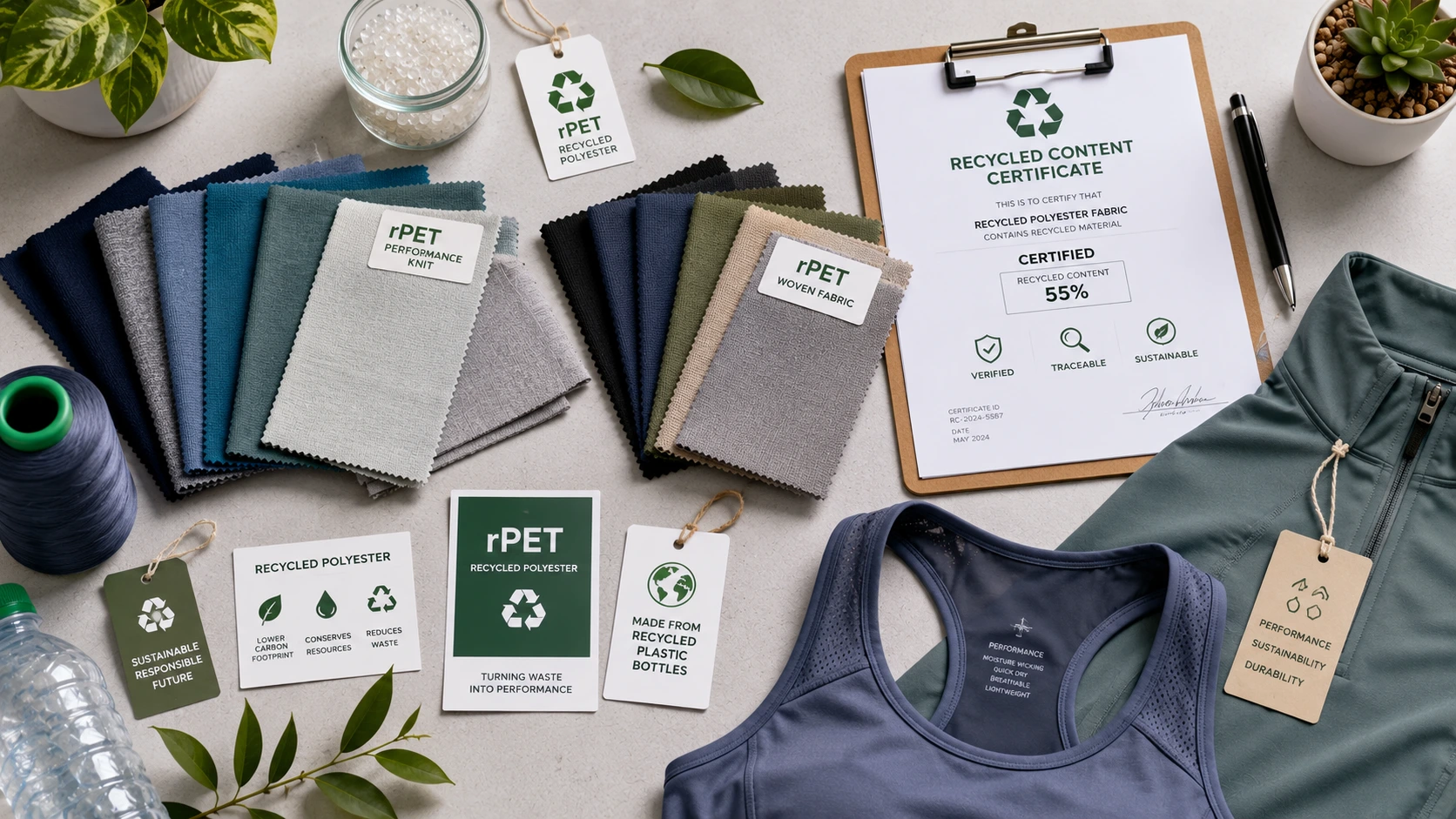
If polyester is “plastic,” how can recycled polyester be considered sustainable, and is it always the best choice for eco-conscious clothing brands? That question comes up in almost every serious sustainability conversation in fashion. Polyester is everywhere because it is durable, lightweight, quick-drying, wrinkle-resistant, and cost-efficient at scale. But traditional polyester is made from virgin fossil-based inputs, and it is tied to long-term environmental concerns like resource use and microfiber shedding.
Recycled polyester offers an alternative pathway. It aims to reduce reliance on virgin materials by using recycled feedstocks, often derived from post-consumer plastic waste or reclaimed industrial polyester. For many apparel brands, recycled polyester is one of the most accessible “sustainable fabric” options for performance wear, outerwear, sports uniforms, and everyday basics.
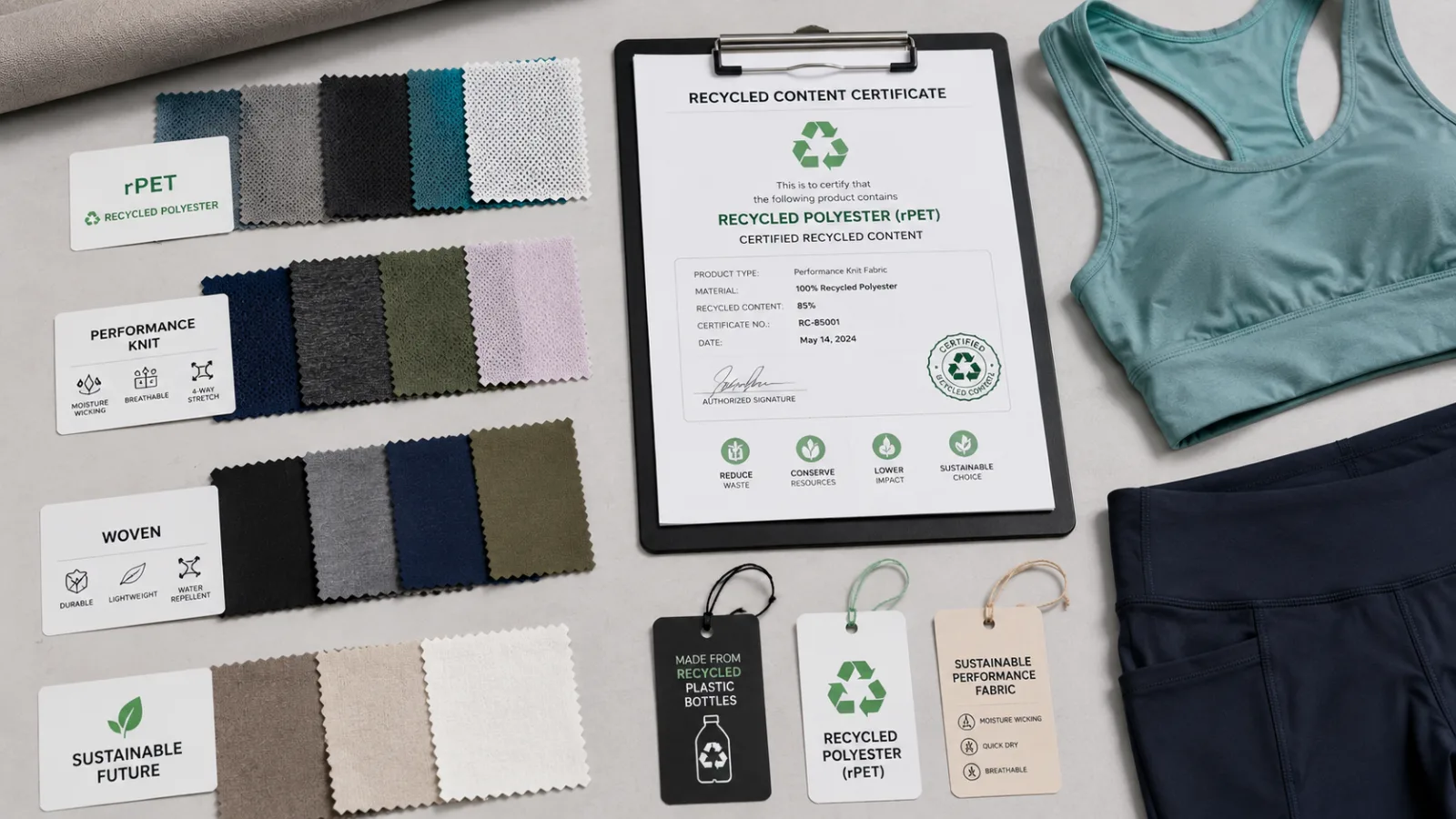
But recycled polyester is not a perfect solution. It comes with challenges that brands need to understand, such as traceability, quality consistency, microfibers, blends that reduce recyclability, and the risk of making claims that are too broad.
This guide explains recycled polyester in a practical way for apparel brands, including how it is made, why it is used, where it performs best, what its limitations are, what to ask suppliers, and how to use it responsibly in sustainable apparel manufacturing.
What Is Recycled Polyester in Apparel?
Recycled polyester is polyester fiber made from recycled inputs instead of virgin fossil-based raw materials, representing a significant material innovation. In apparel, it is commonly used to create yarns and fabrics for sportswear, athleisure, outerwear, and fashion basics.
Most recycled polyester used in clothing comes from:
- Post-consumer plastic bottles (often called rPET)
- Post-industrial polyester waste from manufacturing
- Pre-consumer textile waste that is reclaimed and reprocessed
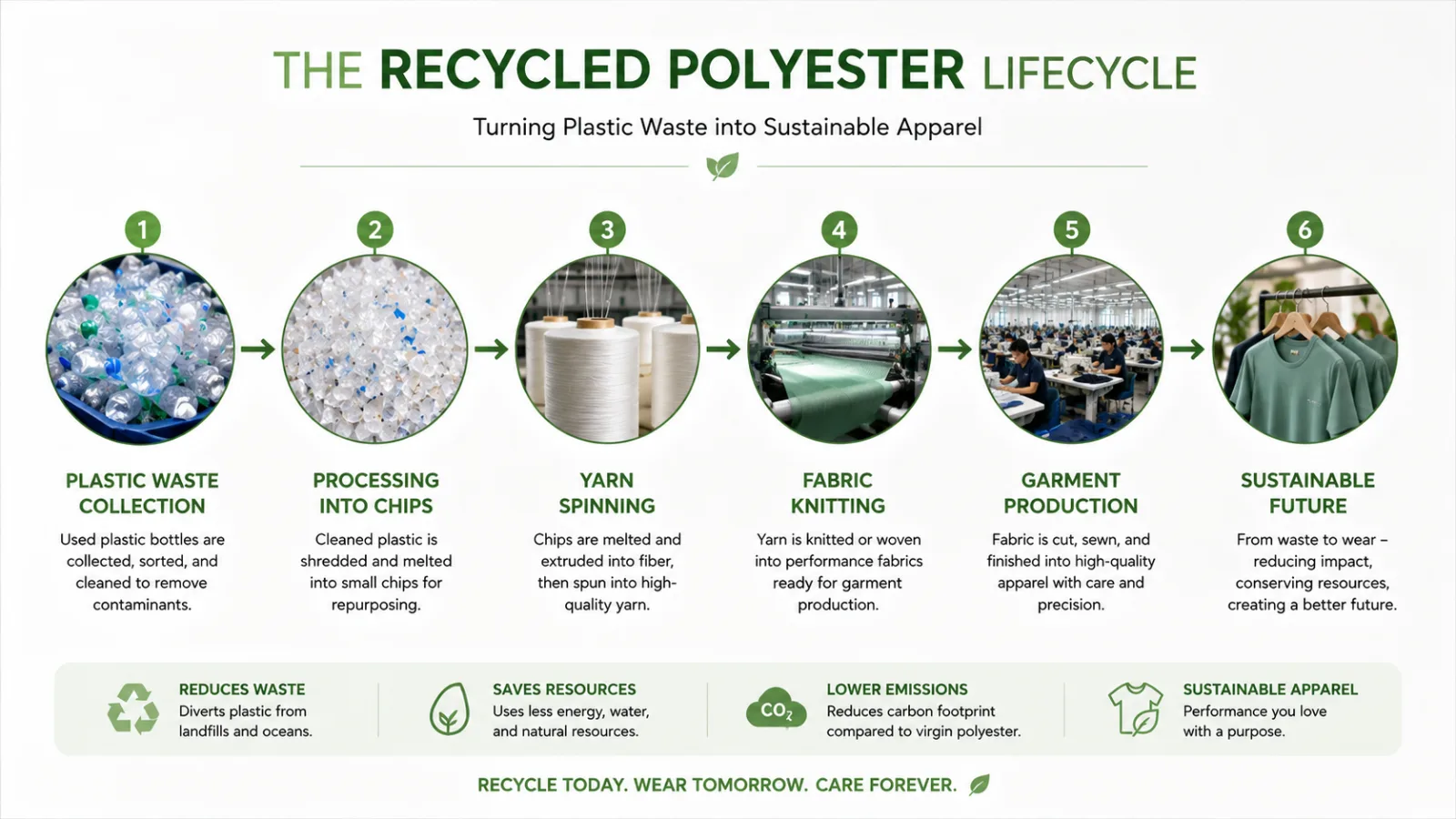
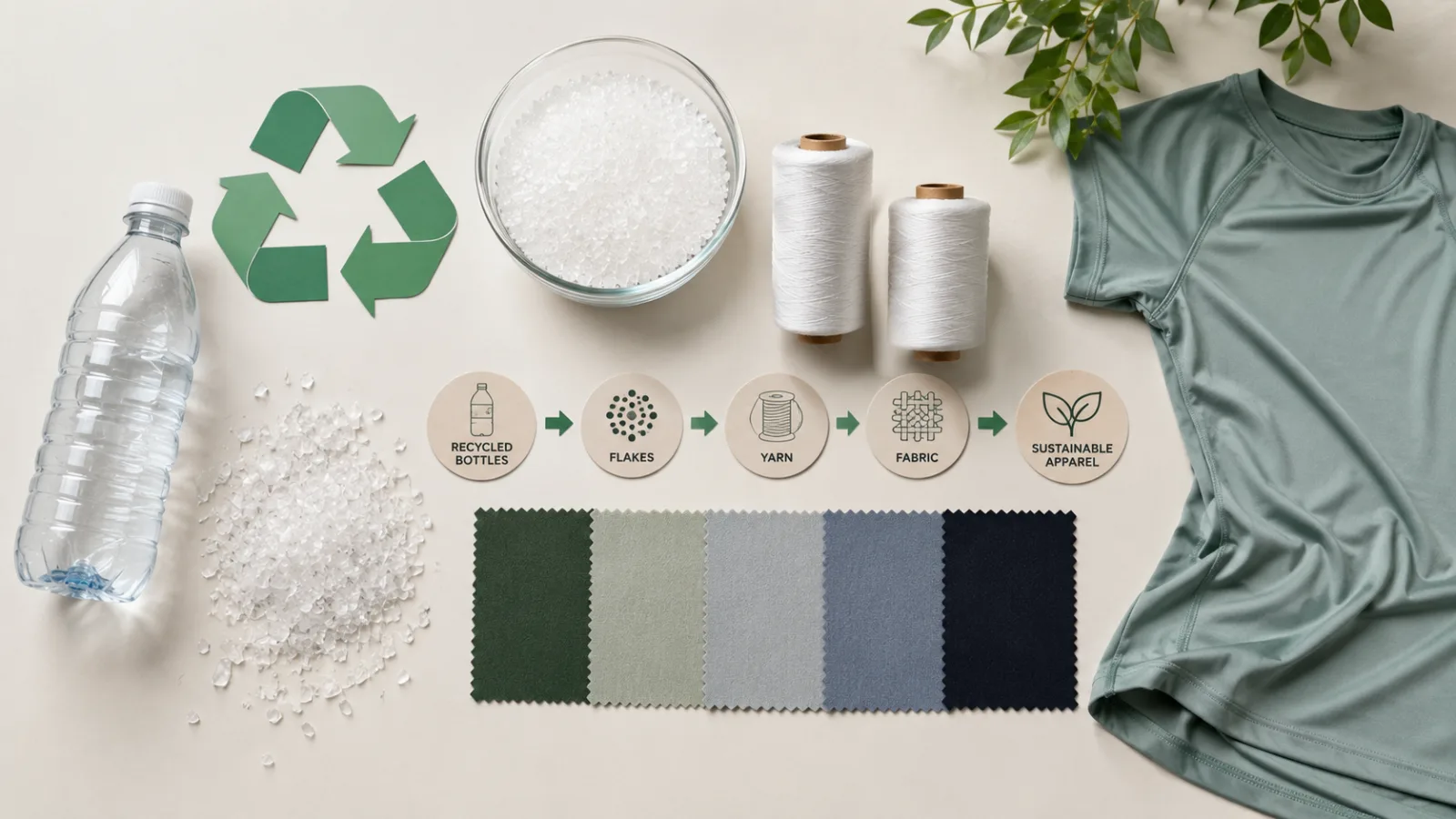
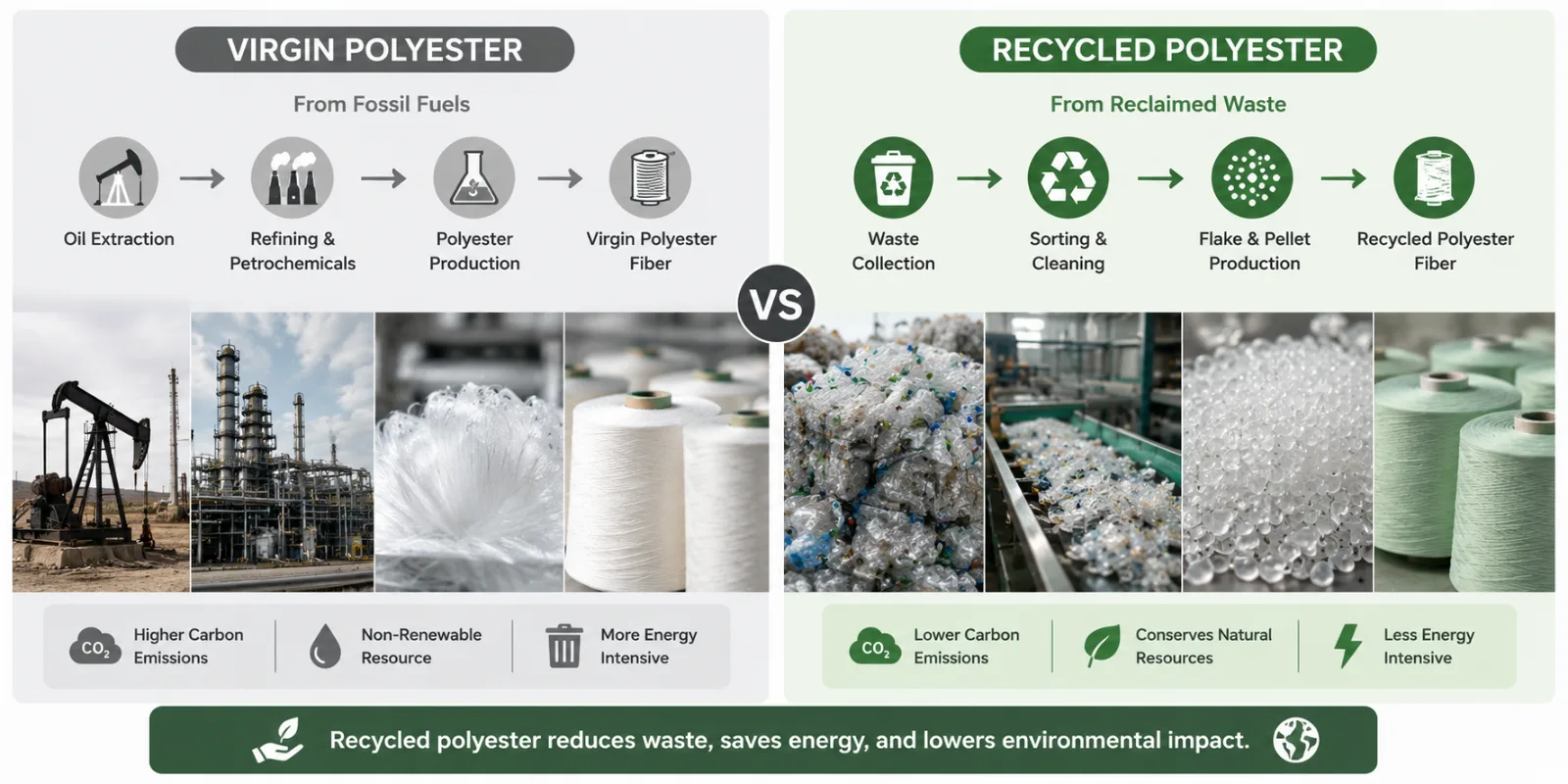
After recycling, the material is processed into polyester chips, then spun into yarn, then knitted or woven into fabric.
For brands, recycled polyester is attractive because it is widely available, supports performance needs, and aligns with consumer interest in recycled materials. However, sustainable outcomes depend on how the material is sourced, processed, and used in the garment system.
Why Recycled Polyester Matters in Sustainable Fashion
Sustainable fashion is about reducing negative impact while maintaining product functionality and business viability. Recycled polyester matters because it offers a pathway to reduce virgin polyester demand, which can lower dependence on fossil-based resources.
For many brands, especially those producing activewear, recycled polyester is one of the few sustainable options that still meets performance expectations like stretch, recovery, moisture management, and durability.
Recycled polyester also connects well with consumer understanding. Customers recognize “made from recycled plastic bottles” messaging. Retail buyers often include recycled content in their sustainability requirements, especially for performance and athleisure products.
But it is important to treat recycled polyester as one tool, not a universal solution. Brands need to pair it with smart design, durability focus, and responsible production practices to ensure long-term sustainability.
Image Prompt: Modern sustainable fashion scene showing activewear products with a recycled materials tag, emphasizing consumer awareness, minimal background, realistic studio photo, 4:3
Is Recycled Polyester Truly Sustainable?
Is recycled polyester clothing truly sustainable textile? The recycling process that turns PET bottles and other waste into polyethylene terephthalate helps reuse materials and supports a circular economy, reducing the environmental impact of the textile industry compared to virgin polyester.
Brands like H&M promote made from polyester lines as a more eco-friendly and environmentally friendly sustainable alternative to conventional polyester, yet challenges remain: downcycling, microplastic release, and the fact some blended garments still can’t be recycled.
Because manufacturers sometimes add virgin polyester to maintain quality, and because most synthetic fabrics are not biodegradable, the net benefit depends on lifecycle choices. A genuine shift toward long-lasting design, improved material innovation, and slowing fast fashion in the fashion business is needed to keep plastic out of nature and make recycled polyester an environmentally credible option.
Is Recycled Polyester Eco-friendly?
Recycled polyester is often presented as a step toward a sustainable future and a circular solution, because it reduces reliance on crude oil and virgin polymers by using waste PET bottles and textile offcuts. The mechanical recycling process can lower co2 emissions and greenhouse gas emissions compared with virgin polyester, yet outcomes depend on energy sources, transportation and the details of production and disposal.
Despite growing interest, challenges remain: recycled polyester may still shed microscopic plastic in the wash, complicating claims of being truly circular, and it competes with calls for plastic-free materials in some applications. Some chemical recycling routes use solvents like syre (or other reagents) that have their own impacts. Overall, recycled polyester can reduce the environmental footprint relative to virgin alternatives, but it is not a panacea and should be one tool among many for achieving a genuinely sustainable textile system.
Global Polyester Use in Apparel
Polyester is currently the most widely used fiber in the global apparel industry. According to industry reports, polyester accounts for more than 50% of global fiber production, making it the dominant material used in clothing, sportswear, and technical textiles. Its popularity comes from its durability, affordability, lightweight structure, and strong performance characteristics such as moisture resistance and shape retention.
At the same time, the rapid growth of polyester usage has raised environmental concerns. The global fashion industry generates millions of tons of plastic and textile waste every year, much of which ends up in landfills or the natural environment. Because traditional polyester is derived from fossil-based resources, the industry has been exploring alternative materials and recycling systems to reduce reliance on virgin raw materials.
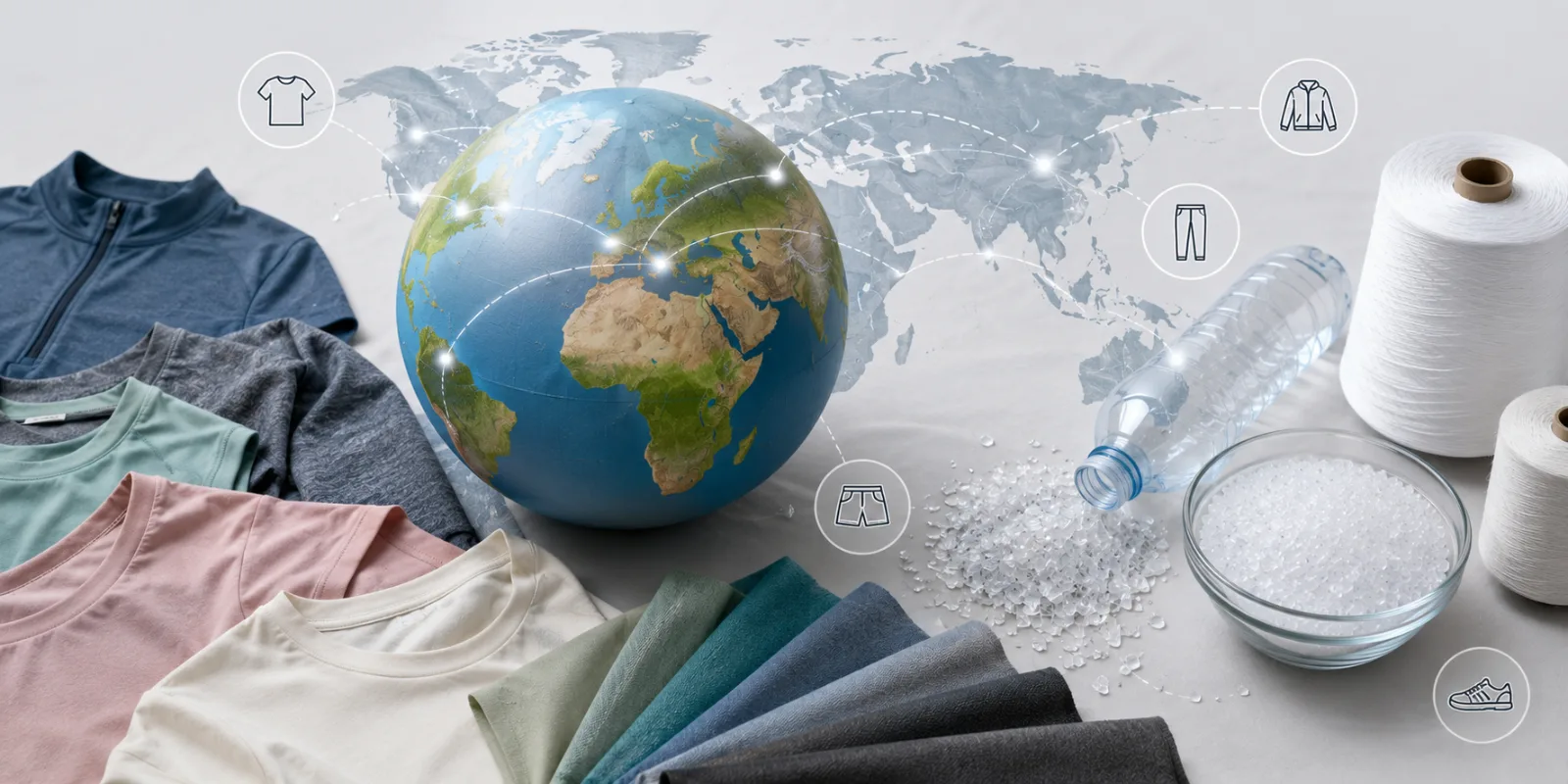
Recycled polyester has emerged as one of the most widely adopted solutions. By converting post-consumer plastic waste, particularly PET bottles, into textile fibers, recycled polyester helps divert plastic from waste streams while reducing the demand for virgin polyester production.
Today, many apparel brands incorporate recycled polyester into their product lines as part of broader sustainability strategies. From activewear and outdoor apparel to everyday fashion garments, recycled polyester has become an important material in the transition toward more responsible textile production.
Benefits of Recycled Polyester in Sustainable Apparel
The rise of recycled polyester clothing in the fashion business and textile industry reflects a clear shift toward more eco-friendly and environmentally Conscious choices: made from recycled polyester can significantly reduce the impact on the environment.
Polyethylene terephthalate recovered from bottles, this sustainable textile offers a sustainable alternative to conventional polyester and virgin polyester to maintain quality. By favoring reuse and the recycling process, brands like h&m promote a circular economy that keeps plastic out of landfills instead of producing new polyester from fossil resources.
However, consumers should know trade-offs: while recycled polyester can release microplastics during washing and some blends Some materials can’t be recycled, which raises concerns about the sustainability of fast fashion. further, it still reduces the overall environmental impact when compared compared to virgin polyester.
As the fashion business reduces reliance on synthetic fabrics and explores bio-based or biodegradable options, recycling PET remains an important step toward environmentally friendly apparel. Recycled polyester offers several practical benefits that make it popular with clothing brands.
Recycled Polyester vs Virgin Polyester
Reduced Reliance on Virgin Fossil-Based Inputs
Virgin polyester is made from petroleum-based resources. Recycled polyester reduces the need for virgin inputs by using existing plastic or polyester waste streams as raw material.
For apparel brands, this supports sustainability goals and can help meet retailer requirements for recycled content. It also supports circularity messaging, especially when brands communicate recycled content accurately and transparently.
Strong Performance for Activewear and Technical Products
Recycled polyester performs similarly to virgin polyester in many applications. That makes it ideal for:
- Moisture-wicking activewear
- Quick-dry sports jerseys
- Lightweight jackets and windbreakers
- Outdoor and hiking apparel
- Athleisure basics that need durability
Brands choose recycled polyester because it supports technical features like wrinkle resistance, strength, and stable shape retention.
High Durability That Can Extend Garment Lifespan
Durability is a sustainability advantage. A garment that lasts longer reduces the need for frequent replacement. Polyester’s strength, abrasion resistance, and shape retention can support long-term wear, especially for performance products.
When recycled polyester is used in well-constructed garments, it can help reduce waste by extending product lifespan and minimizing wear-related defects. However, durability depends on fabric construction, yarn quality, and finishing, not only fiber type.
Versatility Across Fashion and Functional Categories
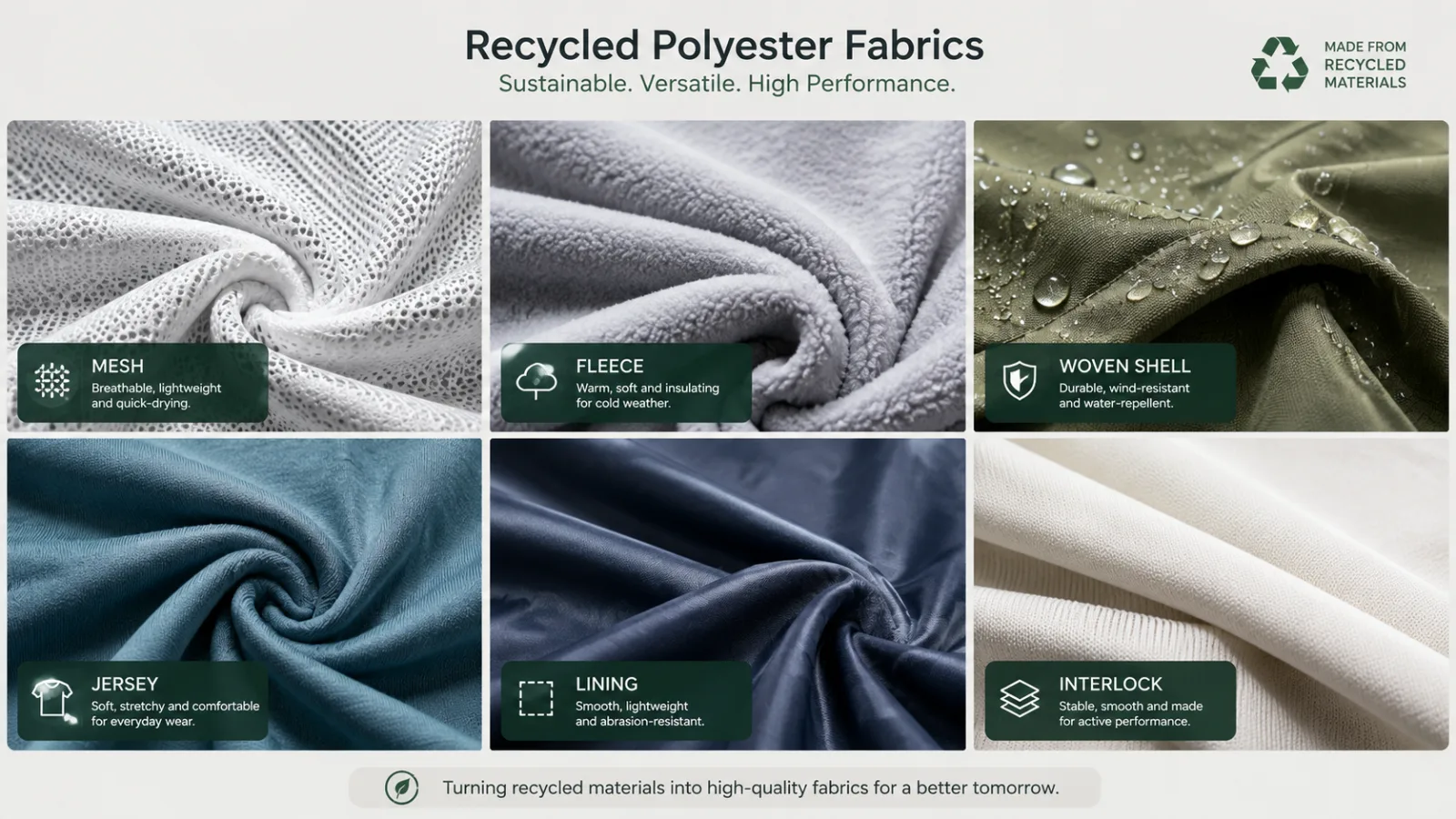
Recycled polyester can be blended with other fibers or used alone. It can be used in:
- Jerseys and interlock knits
- Mesh fabrics for ventilation
- Woven shells for outerwear
- Fleece fabrics
- Lining fabrics
- Fashion fabrics with prints and textures
This versatility makes it easier for brands to adopt recycled content without redesigning their entire product system.
Strong Availability and Supply Chain Scalability
Many sustainable fabrics face availability constraints. Recycled polyester is comparatively scalable. Many mills already produce recycled polyester yarns and fabrics, and many manufacturers can source them as part of their material innovation efforts.
For brands, this means:
- Easier supplier sourcing
- More stable reordering capability
- Better scalability as demand grows
This scalability is one reason recycled polyester is common in mass-market sustainable fashion programs.
Challenges of Recycled Polyester in Sustainable Apparel
Recycled polyester has real limitations. Brands that ignore these challenges risk greenwashing accusations, quality issues, and long-term sustainability trade-offs.
Microfiber Shedding and Microplastic Concerns
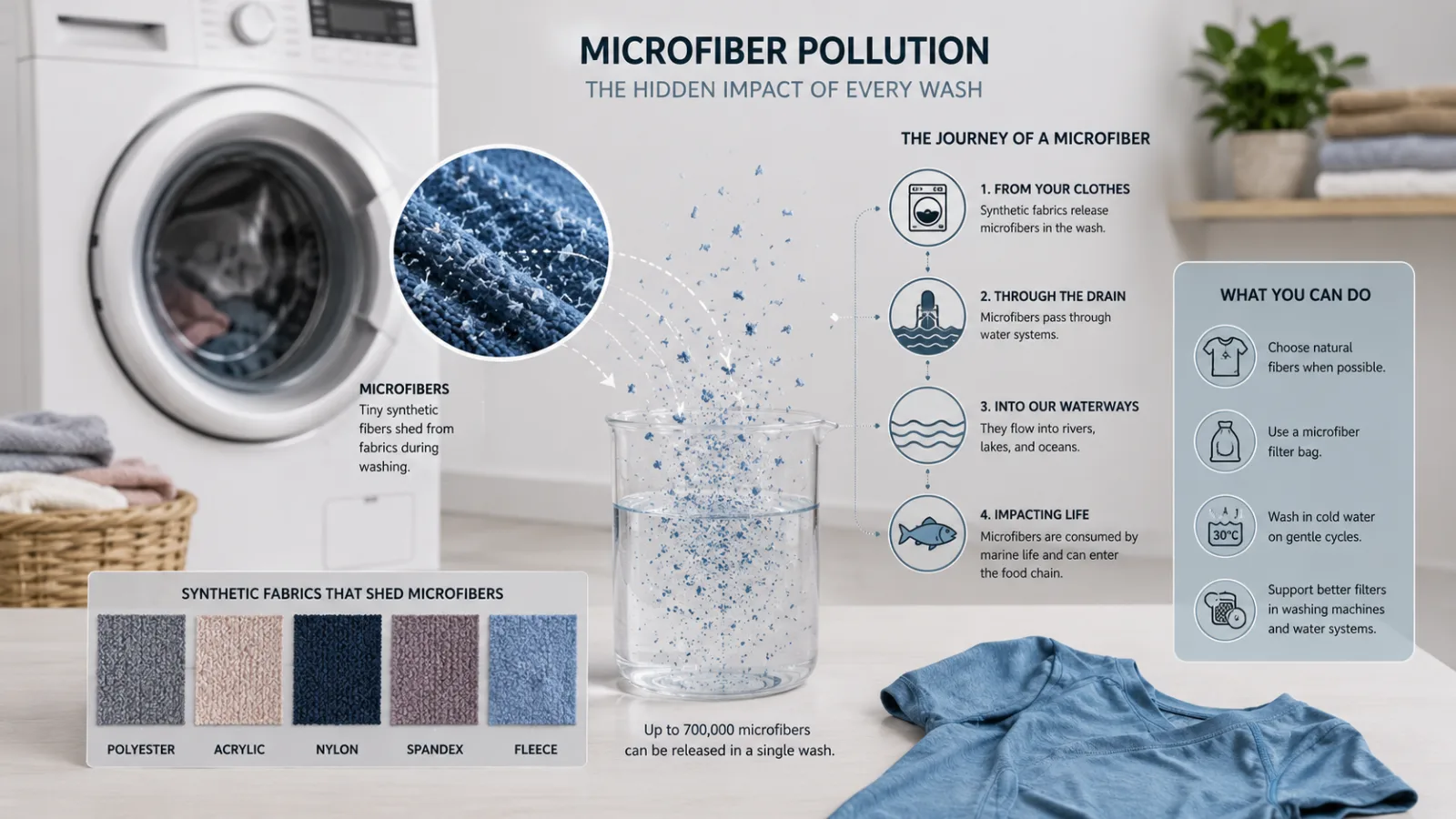
One of the biggest challenges with polyester, recycled or virgin, is microfiber shedding during washing. These microfibers can contribute to microplastic pollution.
For brands, this means recycled polyester is not automatically “clean.” It reduces virgin resource demand, but it does not eliminate microfiber concerns.
Brands can reduce microfiber impact by:
- Choosing tighter fabric constructions
- Avoiding overly brushed or loose fleece surfaces when possible
- Using durable yarns with lower shedding
- Designing garments that last longer and are washed less frequently
This is a product design and fabric engineering issue, not only a fiber sourcing issue.
Traceability and Recycled Content Verification
Not all recycled polyester is equal. Brands need to verify recycled content through documentation and supplier transparency.
Risks include the impact on the environment and consumer awareness regarding fast fashion.
- Unclear recycled content percentage
- Lack of proper chain-of-custody records
- Miscommunication between yarn supplier, mill, and garment factory
- Overstated sustainability claims
Brands should request documentation and work with suppliers that can provide verification for recycled content.
Quality Consistency Differences Between Suppliers
Recycled polyester quality depends on input material, processing method, and yarn spinning standards. Some recycled polyester yarns have excellent consistency. Others can have variation issues, especially in lower-grade recycled inputs.
Potential issues include:
- Variation in yarn strength
- Color consistency challenges
- Fabric hand-feel differences
- Increased pilling risk in some constructions
Brands should test fabrics in sampling and confirm performance requirements before bulk production.
Blends Reduce Recyclability and Circularity
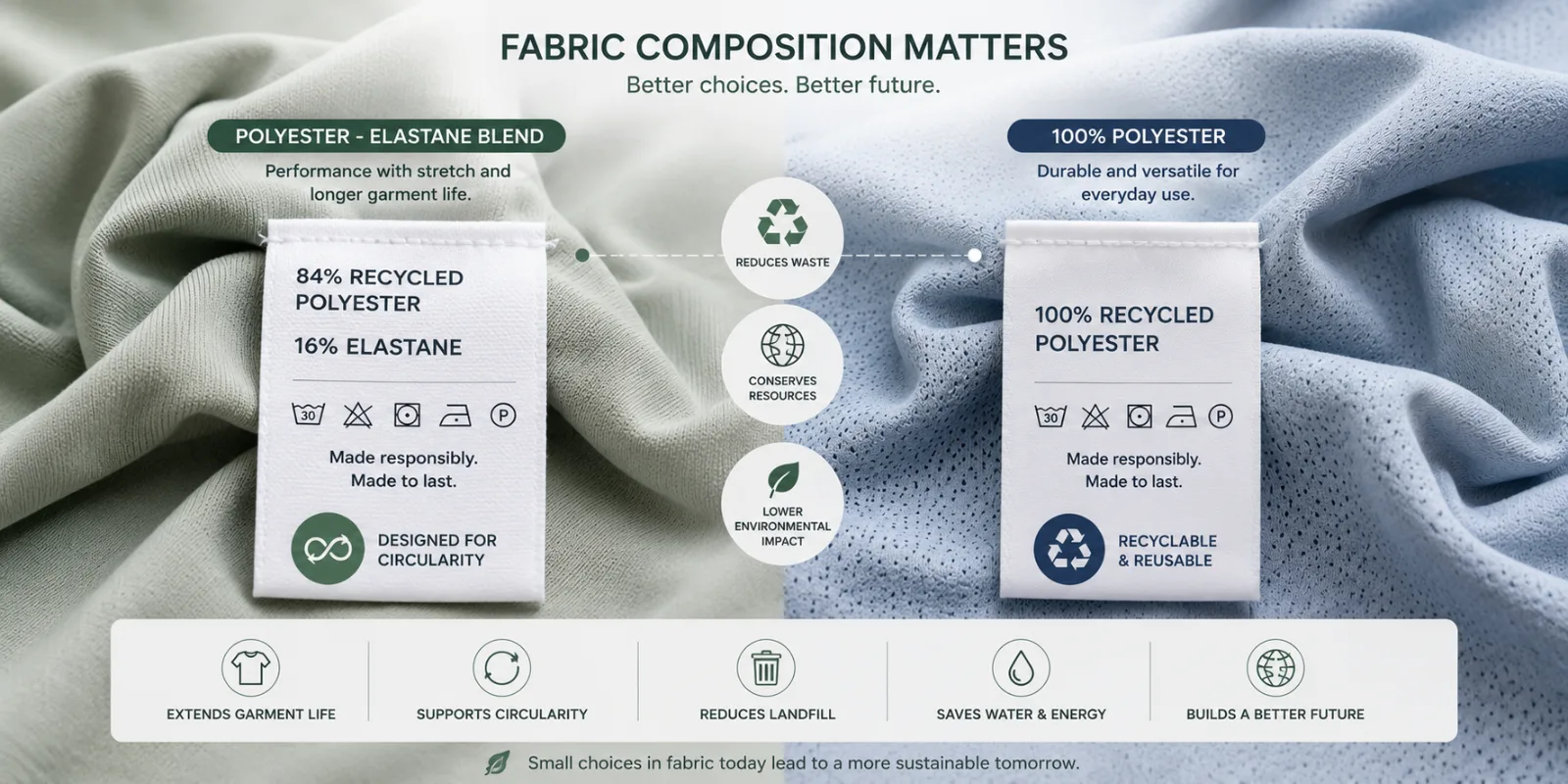
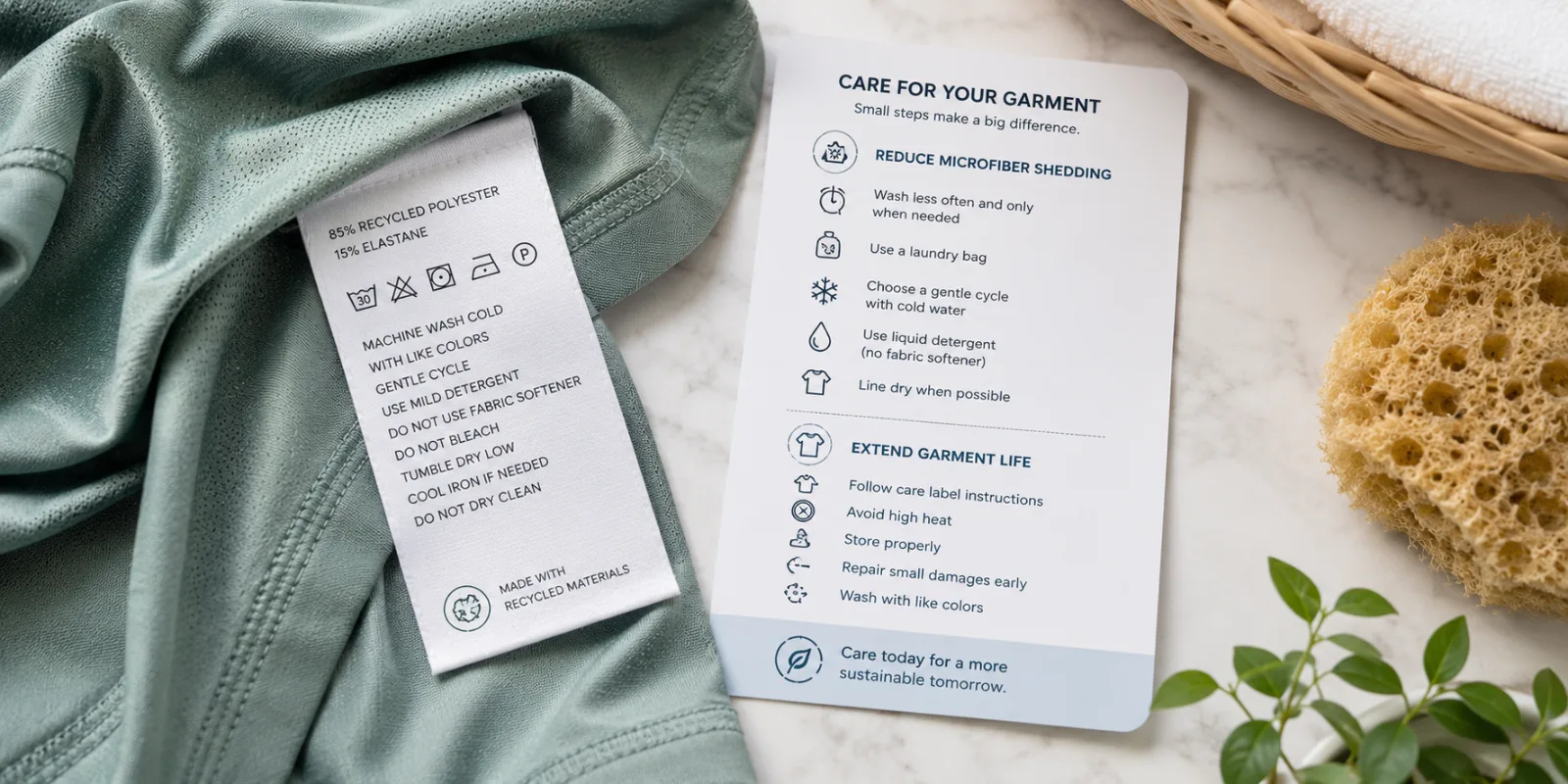
Many recycled polyester garments are blended with elastane for stretch. Some are blended with cotton or other fibers, which can affect their recyclability in a textile-to-textile process. These blends can improve comfort and performance, but they reduce recyclability at end-of-life because mixed fibers are harder to separate.
For sustainable brands, this is a key trade-off:
- Better performance now
- Harder recycling later
Brands should decide whether the product truly needs blends, and if so, use the minimum blend ratio needed for function.
“Recycled Bottle” Messaging Can Oversimplify Sustainability
Many brands market recycled polyester as “made from plastic bottles,” which consumers understand. But that messaging can become problematic if it implies the garment is recyclable like a bottle or that recycled polyester solves all sustainability issues.
Recycled polyester is often downcycled in practice. Once fiber becomes clothing, it may not easily become clothing again. Also, the use phase includes microfiber shedding, and end-of-life recycling options are limited.
Brands should use careful language:
- “Contains recycled polyester”
- “Made with recycled content”
- “Helps reduce reliance on virgin polyester”
Avoid claims that suggest complete circularity unless you have a verified circular program.
Recycling Methods: Mechanical vs Chemical Recycling
Recycled polyester can be created through different processes. Understanding this helps brands evaluate quality, cost, and sustainability claims.
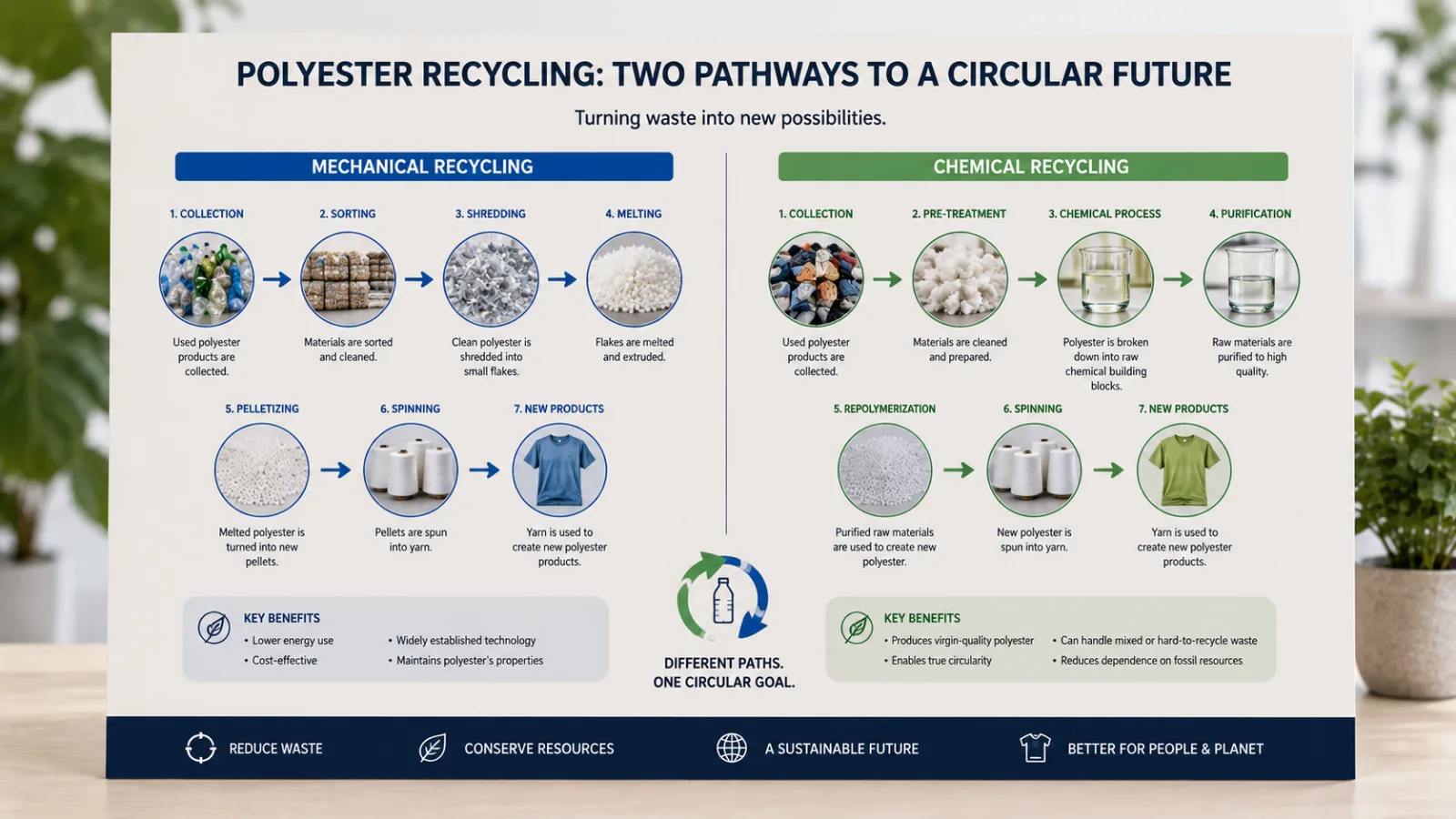
Mechanical recycling
This process involves cleaning, shredding, melting, and re-extruding plastic into polyester chips. It is widely used for rPET from bottles. Mechanical recycling can be efficient, but repeated mechanical recycling can reduce polymer quality over time.
Chemical recycling
This process breaks down polyester into chemical components and rebuilds it into new polymer. It can potentially handle more contaminated inputs and mixed waste streams, but it can involve higher cost and energy use depending on the system.
Brands do not need to become chemical engineers, but they should understand that recycled polyester can vary by recycling pathway. Ask suppliers about recycled input type and processing method if it matters for performance and documentation.
Best Uses of Recycled Polyester for Clothing Brands
Recycled polyester works best when its strengths match the product requirements.
Activewear and athleisure
Recycled polyester is widely used for moisture-wicking, quick-dry, and stretch performance fabrics.
Outerwear and shells
Woven recycled polyester is popular for windbreakers, jackets, and lightweight shells.
Sports uniforms and teamwear
Uniforms need durability and print stability. Recycled polyester performs well here.
Lining fabrics and accessories
Lining fabrics often use polyester. Recycled versions reduce virgin use and maintain performance.
Fleece and warm layers
Recycled polyester fleece is common, but brands should pay attention to microfiber shedding and finishing.
Recycled Polyester in Bangladesh Apparel Manufacturing
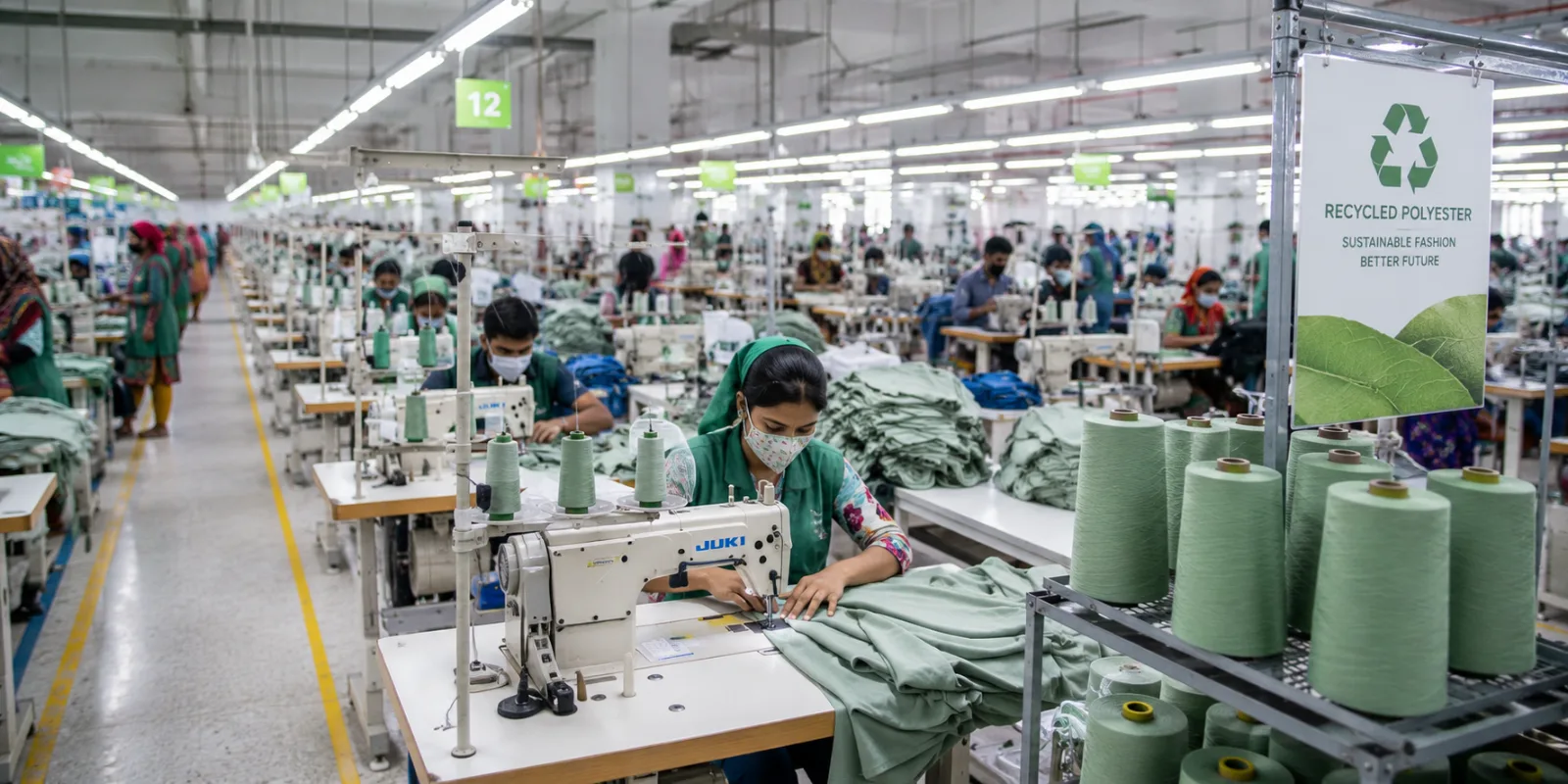
Bangladesh has become one of the world’s largest apparel manufacturing hubs, supplying garments to global fashion brands and retailers. The country exports more than recycled polyester products that contribute to sustainability in fashion. $45 billion worth of apparel annually, making it one of the most important players in the international clothing supply chain. Over the past decade, many manufacturers in Bangladesh have also begun adopting more sustainable materials and production practices to meet the evolving expectations of global brands.
One of the key materials gaining traction in the region is recycled polyester. As demand for sustainable apparel continues to grow, manufacturers are increasingly working with recycled polyester yarns and fabrics to produce sportswear, activewear, outerwear, and performance garments. By integrating recycled materials into production, apparel manufacturers can help brands reduce reliance on virgin polyester while supporting responsible sourcing strategies.
Bangladesh also hosts a large number of green garment factories, many of which follow internationally recognized environmental standards. These facilities are designed to reduce energy consumption, improve water management, and support more efficient production systems. As a result, global clothing brands are increasingly partnering with manufacturers in Bangladesh to produce garments that incorporate recycled materials and more responsible manufacturing practices.
For apparel brands looking to scale production with sustainable fabrics, Bangladesh offers strong manufacturing infrastructure, experienced garment workers, and access to textile supply chains that support materials like recycled polyester. This combination of expertise, capacity, and sustainability initiatives has positioned the country as an important destination for brands seeking reliable partners for sustainable clothing manufacturing.
How to Source Recycled Polyester Responsibly
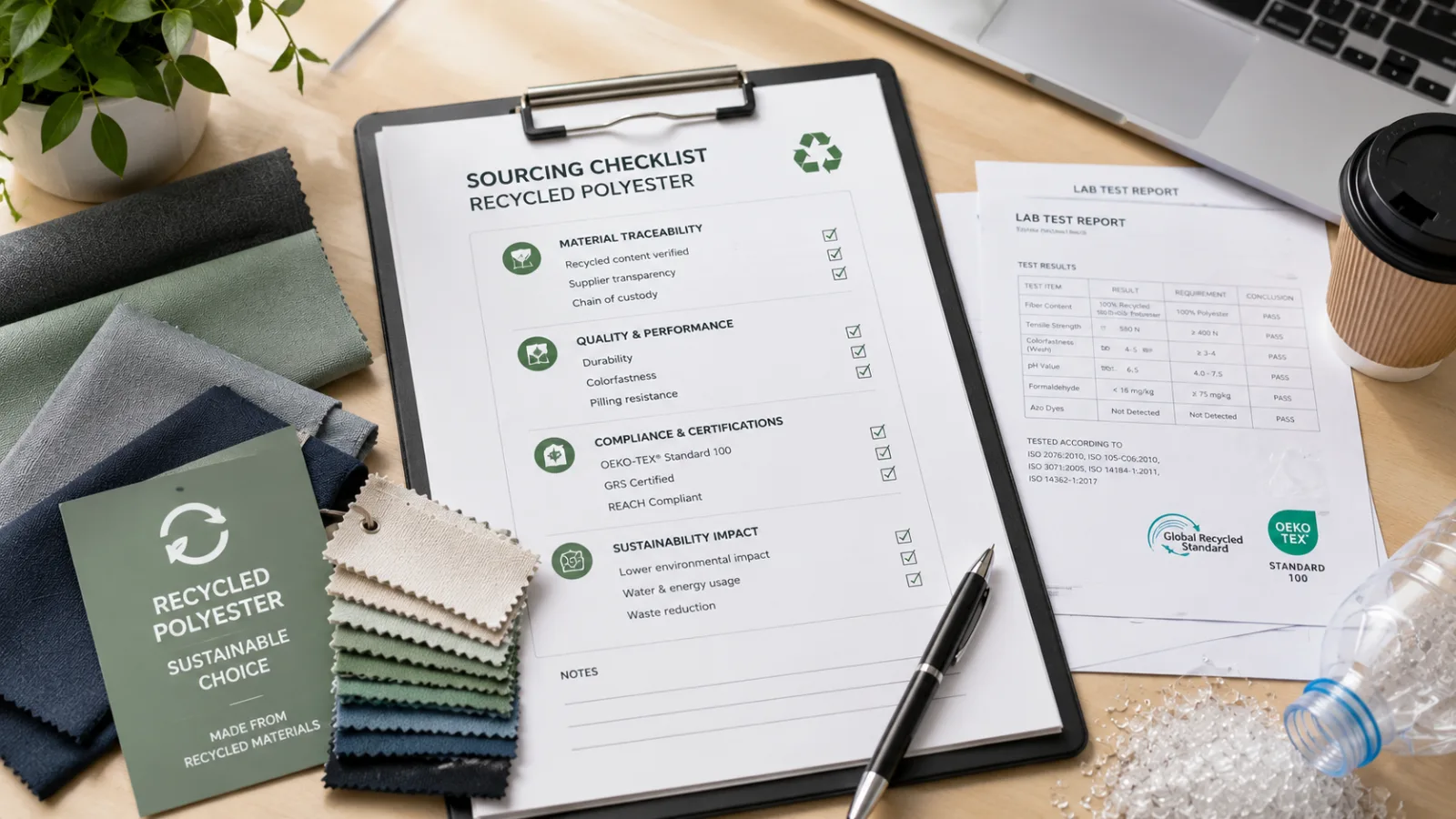
Brands often ask: how do we make sure recycled polyester is truly sustainable? The answer is responsible sourcing and testing.
Here is a practical sourcing approach.
Confirm recycled content details
Ask about the sustainability in fashion practices of brands when considering your purchases.
- What is the recycled content percentage?
- Is it post-consumer or post-industrial?
- Can you provide documentation for it?
Evaluate fabric performance
Test for:
- Pilling resistance is an important factor in the sustainability of clothing made from polyester.
- Stretch recovery if applicable
- Colorfastness
- Shrinkage stability
- Fabric hand-feel consistency
Understand fabric construction
Ask:
- Knit or woven structure
- Yarn type and denier
- Finishing method
- Brushed or non-brushed surfaces
Review claims and labeling language
Use clear and accurate language that matches what you can document.
Plan product design for durability
Choose construction methods and seam durability that support long-term wear.
Recycled Polyester and Sustainable Apparel Manufacturing
Using recycled polyester does not automatically make a garment sustainable. Brands must consider the full system, including:
- Production efficiency and defect reduction
- Factory compliance and chemical management
- Dyeing and finishing impact
- Packaging and logistics decisions
- Durability and customer use phase
A well-made recycled polyester garment that lasts years can support sustainability better than a poorly made product that fails quickly, highlighting the importance of long-lasting quality. That is why brands should combine recycled polyester with strong quality control, good tech packs, and consistent production systems to enhance sustainability in fashion.
Sustainable Apparel Manufacturing Partners
As sustainability becomes a priority for global fashion brands, many companies are seeking manufacturing partners that can support responsible material sourcing and structured production systems. Working with experienced apparel manufacturers helps brands integrate sustainable fabrics, maintain consistent product quality, and scale production efficiently as demand grows.
Manufacturing partners that understand sustainable material systems play an important role in this process. Companies such as ApparGlobal support apparel brands with product development, sampling, and garment manufacturing processes that incorporate recycled fabrics and responsible sourcing practices. By working with structured production documentation and organized supply chains, manufacturers can help brands produce garments that meet both performance expectations and sustainability goals.
For clothing brands developing products with recycled polyester and other sustainable materials, collaborating with experienced manufacturing partners helps ensure that fabric sourcing, production accuracy, and quality control standards are maintained throughout the supply chain. This approach allows brands to focus on product design and market growth while maintaining reliable production systems behind the scenes.
How Brands Can Reduce Recycled Polyester Sustainability Risks
To make recycled polyester a stronger sustainability choice, brands can take proactive steps.
Reduce microfiber shedding through design
Use tighter knits and avoid overly brushed surfaces unless necessary.
Focus on durable construction
Reinforce seams and stress points, use quality thread, and improve finishing.
Avoid unnecessary blends
Use elastane only when needed, and consider product categories that can be 100% polyester to minimize the impact on the environment.
Educate customers
Provide care instructions that support longer garment life and reduce shedding.
Improve transparency
Share recycled content percentage and sourcing approach honestly.
FAQs About Recycled Polyester in Sustainable Clothing
Is recycled polyester really sustainable?
Recycled polyester can reduce reliance on virgin materials, but sustainability depends on sourcing, processing, garment durability, and end-of-life options.
Does recycled polyester shed microplastics?
Yes, recycled polyester can shed microfibers during washing, similar to virgin polyester. Fabric construction and finishing affect shedding rate.
Is recycled polyester as good as virgin polyester?
In many cases, yes. Quality depends on recycling method and supplier standards. Brands should test fabrics before bulk production.
Is recycled polyester recyclable again?
Recyclability depends on garment construction, blends, and available recycling systems. Blends make recycling more difficult.
What products are best for recycled polyester?
Activewear, sports jerseys, outerwear shells, and linings are common and practical uses.
Final Thoughts: Recycled Polyester Is Useful, But Not a Perfect Solution
Recycled polyester plays a major role in sustainable apparel because it reduces virgin polyester demand and supports performance needs at scale. It is widely available, durable, and versatile, making it one of the easiest sustainable material upgrades for many clothing brands.
But it comes with real challenges, especially microfiber shedding, blended-fiber recyclability limits, and the need for honest documentation. Brands that use recycled polyester responsibly focus on transparency, fabric testing, durability-driven design, and careful product claims.
If you treat recycled polyester as part of a broader sustainability strategy, not as a one-line marketing claim, it can be a strong and practical material choice for modern clothing brands.