
Pricing is one of the most critical decisions you will make when building a clothing brand. It directly impacts your profitability, brand positioning, customer perception, and long-term growth. Yet many new and even growing fashion brands struggle to create a pricing model that is both competitive and sustainable.
Set your prices too low, and you risk shrinking your margins or devaluing your brand. Set them too high, and you may struggle to attract customers or compete in your market. The right pricing strategy is not just about covering costs. It is about aligning your brand value, target audience, and business goals into a clear and scalable system.
In today’s competitive fashion industry, successful brands rely on structured pricing models that consider everything from production costs and logistics to marketing expenses and perceived value. Whether you are launching a startup clothing line, running a private label business, or scaling an established brand, understanding how to build a pricing model is essential. In this comprehensive step-by-step guide, you will learn how to create a pricing strategy that supports both profitability and growth.

What Is a Pricing Model for a Clothing Brand?
A pricing model is the system your clothing brand uses to calculate and set product prices.
It helps you decide:
- How much each garment costs to produce.
- How much profit you need per item.
- How your price compares with similar brands.
- Whether your product can support wholesale.
- How much room you have for discounts.
- Whether your margins can support marketing and operations.
- How your price supports your brand positioning.
A pricing model is not just one formula. It is a complete structure that connects product cost, customer value, sales channel, brand strategy, and business goals.
For example, a premium streetwear brand may use heavyweight fabric, custom fit, embroidery, branded packaging, limited drops, and strong visual storytelling. Its pricing model will look different from a basics brand selling everyday T-shirts in larger volume.
A sustainable clothing brand may have higher production costs because of certified materials, ethical manufacturing, testing, and traceable sourcing. Its price must communicate why the product costs more and why the value is justified. A direct-to-consumer brand may keep more margin by selling through its own website, while a wholesale-focused brand must leave enough margin for retailers. That is why pricing must be planned from the beginning, not added after production is complete
Why Pricing Matters for Clothing Brands
Pricing affects almost every part of a fashion business.
Pricing Protects Profit
A clothing brand can generate sales and still fail if the margin is too weak. Profit is what allows you to reorder inventory, invest in marketing, improve product quality, pay your team, and grow the brand.
Pricing Shapes Brand Perception
Customers often use price as a quality signal. A very low price may make the product feel cheap. A higher price can suggest quality, exclusivity, design value, or better materials, but only if the product and branding support it.
Pricing Affects Wholesale Opportunities
If your retail price is too low, you may not have enough room to offer wholesale pricing later. Retailers need their own margin. Your pricing model should consider wholesale from the beginning, even if you start with direct sales.
Pricing Influences Cash Flow
Apparel businesses often need to pay for sampling, production, shipping, packaging, photography, and marketing before sales come in. Good pricing helps recover those costs and support future production.
Pricing Helps You Make Better Product Decisions
When you know your target price, you can make smarter decisions about fabric, trims, construction, packaging, and order quantity. If a design cannot meet the target price, you can adjust it before production becomes expensive.
What Is a Pricing Model in Fashion?
A pricing model is a structured method used to determine how much you charge for your products. It considers multiple factors including costs, margins, competition, and brand positioning.
In the clothing industry, pricing is influenced by:
- production costs
- fabric and material quality
- manufacturing location
- brand positioning
- target market
- distribution channels
A well-designed pricing model ensures that your business remains profitable while delivering value to your customers.
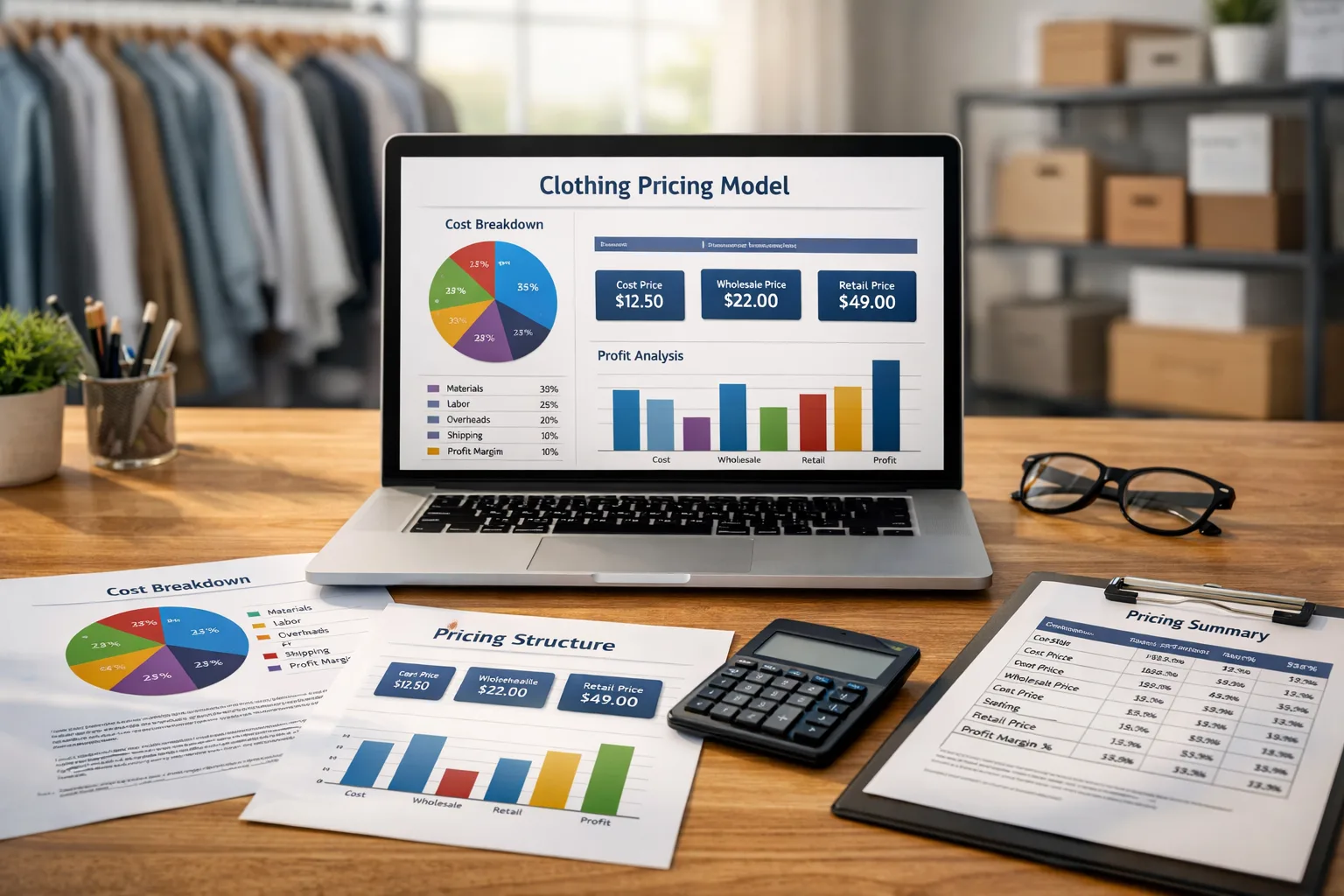
Step 1: Understand Your Total Cost Structure
Before setting any price, you need to understand how much it actually costs to produce your garments.
Key Cost Components
- fabric and materials
- manufacturing cost
- trims and accessories
- packaging
- shipping and logistics
- duties and taxes
Many brands underestimate hidden costs, which can lead to pricing mistakes.
Example
If your product costs $10 to produce but you ignore packaging and shipping, your real cost might be closer to $14 or $15.
Understanding your total cost is the foundation of your pricing model.
Step 2: Choose Your Pricing Strategy
Different pricing strategies serve different business goals.
Cost-Plus Pricing
Add a fixed margin on top of your production cost.
Value-Based Pricing
Set prices based on perceived value rather than cost.
Competitive Pricing
Align your prices with competitors in your market.
Premium Pricing
Position your brand as high-end with higher prices.
Each strategy has advantages depending on your brand positioning.
Step 3: Define Your Target Market
Your pricing must align with your target audience.
Ask yourself:
- Who are your customers?
- What is their spending capacity?
- What kind of brands do they usually buy?
For example:
- Budget-conscious customers expect lower prices
- Premium buyers expect higher quality and pricing
Understanding your audience helps you set realistic and effective price points.

Step 4: Analyze Your Competitors
Competitor analysis is essential in fashion pricing.
Research:
- similar brands in your niche
- their price ranges
- product quality
- brand positioning
This helps you understand where your brand fits in the market.
However, do not copy competitor pricing blindly. Use it as a reference point.
Step 5: Set Your Profit Margin
Profit margin determines how much you earn per product.
Common Margins in Fashion
- wholesale margin: 50%
- retail markup: 2x to 3x cost
Example
If your cost is $20:
- wholesale price: $40
- retail price: $80 to $100
Margins should cover:
- operating expenses
- marketing
- future growth
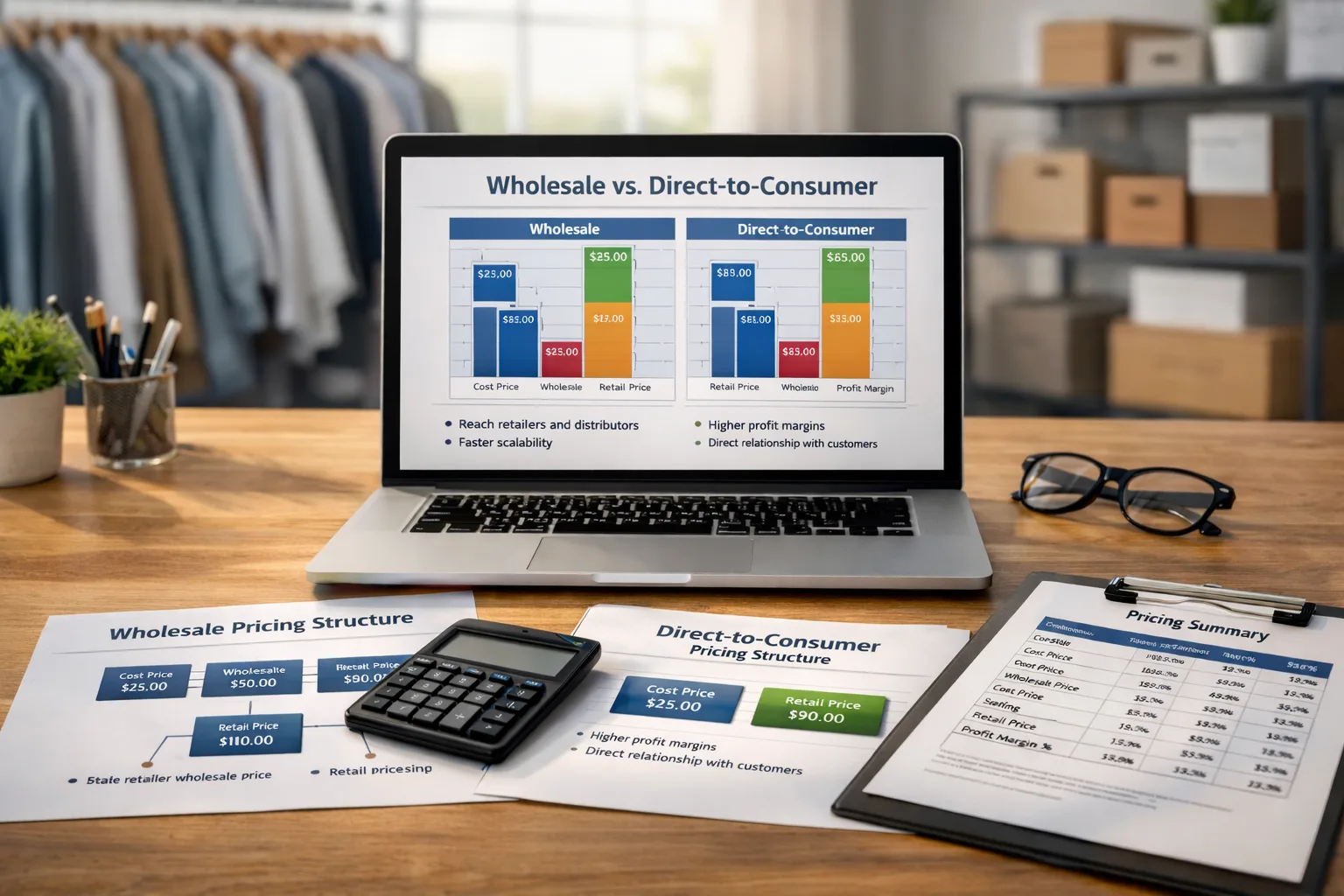
Step 6: Decide Between Wholesale and Direct-to-Consumer
Your pricing model depends on how you sell your products.
Direct-to-Consumer (DTC)
- higher profit margins
- direct customer relationship
Wholesale
- lower margins
- Higher volume sales
Many brands use a hybrid model combining both.
Step 7: Factor in Marketing and Branding Costs
Pricing should include marketing expenses such as:
- advertising
- social media campaigns
- influencer partnerships
- website maintenance
Ignoring these costs can reduce profitability.
Step 8: Consider Psychological Pricing
Pricing is not just mathematical. It is also psychological.
Common Techniques
- $49 instead of $50
- tiered pricing options
- bundle pricing
These strategies influence buying behavior.
Step 9: Test and Adjust Your Pricing
Your first pricing model is not final.
Monitor:
- sales performance
- customer feedback
- conversion rates
Adjust your pricing based on real data.
Step 10: Build a Scalable Pricing Model
As your brand grows, your pricing strategy should evolve.
Consider:
- bulk production cost reductions
- improved margins
- expanded product lines
A scalable pricing model supports long-term growth.
Common Pricing Mistakes Clothing Brands Make
Pricing Only From Factory Cost
Factory cost is not the full cost. You must include freight, duties, packaging, marketing, returns, and overhead.
Ignoring Wholesale
A retail price that works for direct sales may fail when retailers need margin.
Confusing Markup and Margin
A 100% markup creates a 50% margin, not a 100% margin.
Copying Competitors Blindly
Competitors may have different costs, order quantities, suppliers, and margins.
Pricing Too Low to Gain Customers
Low pricing can attract customers, but it can also weaken brand value and damage profitability.
Forgetting Discounts
If you plan to run promotions, your original price must include enough room for them.
Ignoring Returns
Returns create shipping, handling, restocking, and inventory risks.
Not Reviewing Prices
Costs change over time. Your pricing should be reviewed regularly.
Not Explaining Value
A higher price needs strong product presentation, clear benefits, and customer trust.
Example Pricing Model for a Clothing Brand
Let’s say you are launching a premium T-shirt.
Step 1: Calculate Direct Cost
Step 2: Add Landed Cost
Step 3: Add Overhead Allowance
Overhead per unit: $5
Total cost:
$22 + $5 = $27
Step 4: Set Retail Margin
Desired gross margin: 60%
Retail price:
$27 ÷ 0.40 = $67.50
Rounded retail price: $68 or $69
Step 5: Check Wholesale
If the retail price is $68, a retailer may want to buy it around $34.
But your total cost is $27. That leaves only $7 gross profit at wholesale.
This may be too low.
So you have three choices:
- Reduce cost.
- Increase retail price.
- Avoid wholesale for this product.
This example shows why wholesale planning must happen early.
How Pricing Affects Brand Perception
Pricing plays a major role in how customers perceive your brand.
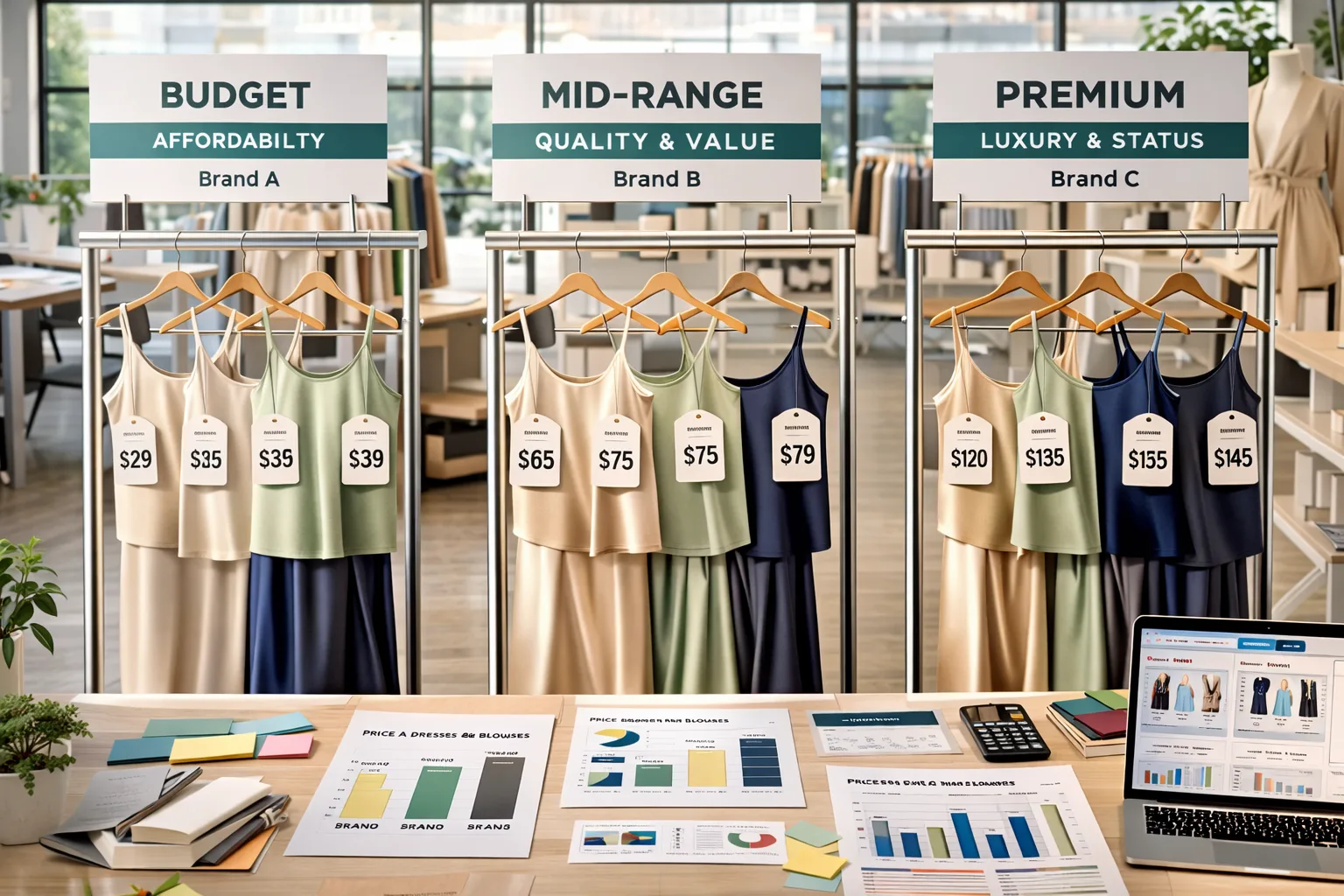
- low price = budget brand
- mid price = value brand
- high price = premium brand
Your pricing communicates your identity before customers even try your product.
The Role of Sustainability in Pricing
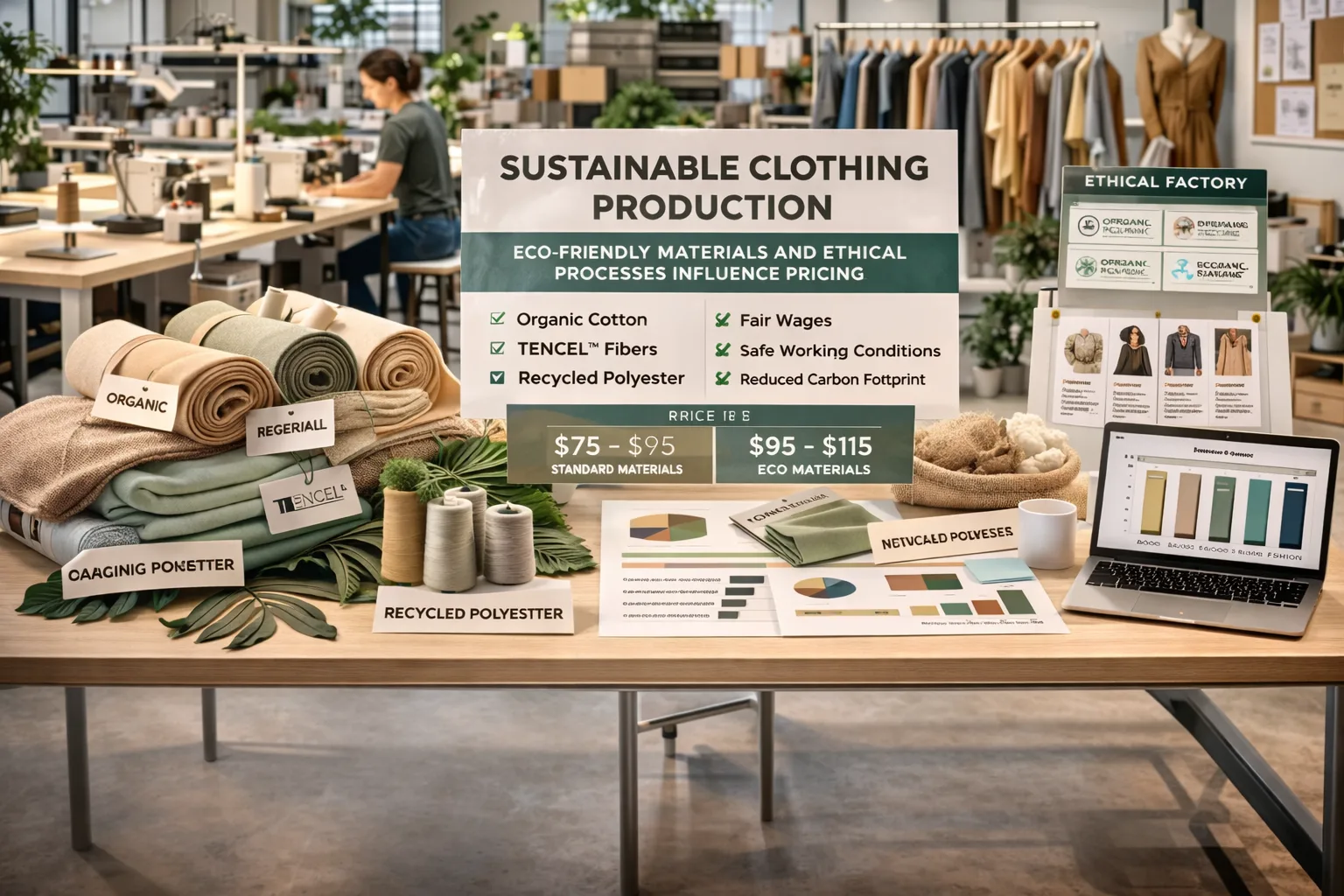
Sustainable fashion often comes with higher costs due to:
- ethical labor practices
- eco-friendly materials
- responsible production
Brands can justify higher prices by communicating these values.
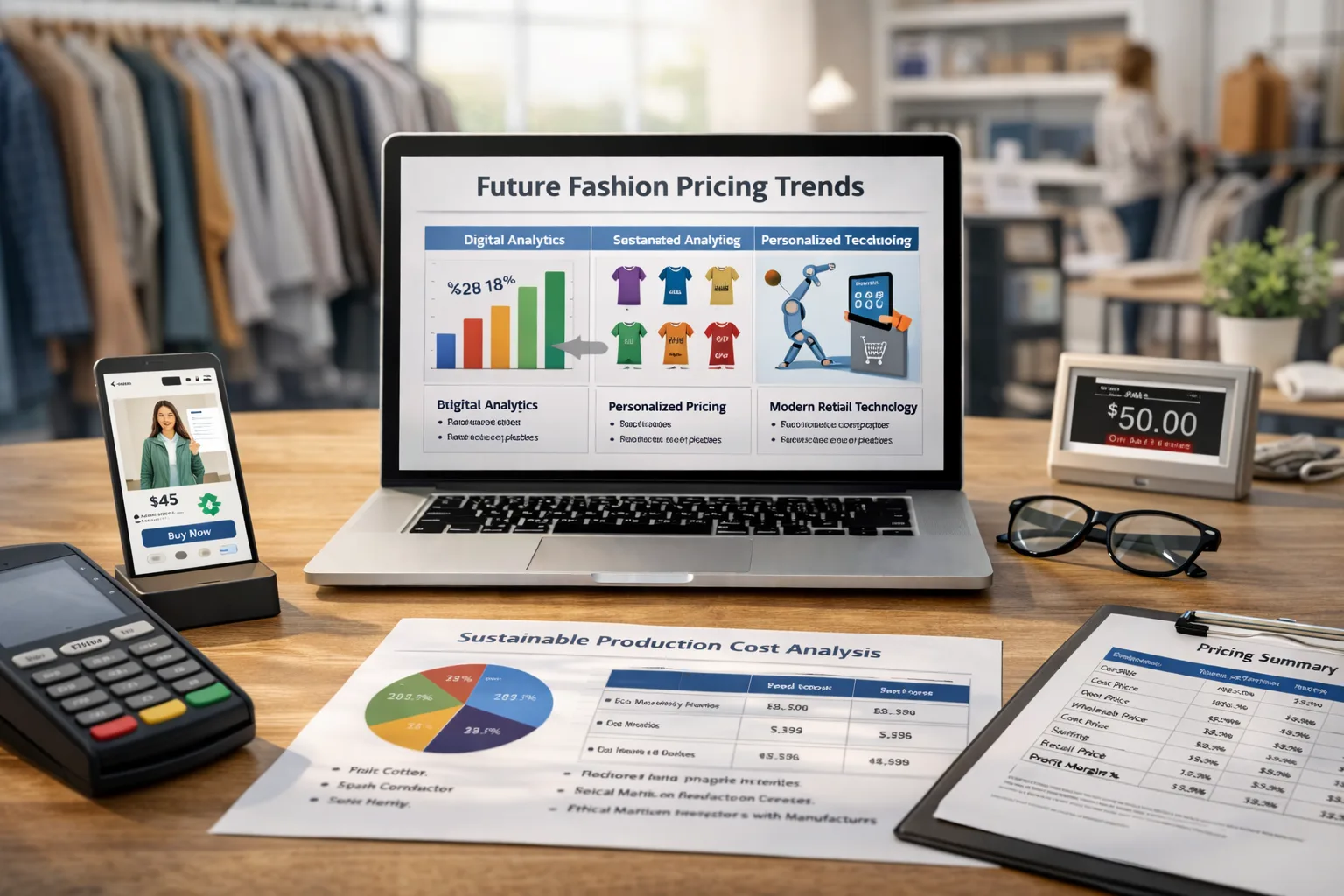
Future Trends in Fashion Pricing
The fashion industry is evolving, and pricing strategies are changing.
Key Trends
- dynamic pricing
- personalized pricing
- subscription models
- direct-to-consumer growth
Brands that adapt to these trends will stay competitive.
How ApparGlobal Supports Clothing Brand Pricing and Production Planning
A profitable pricing model starts before bulk production. Apparel brands need to understand material choices, garment construction, sampling costs, supplier capacity, production quantity, quality expectations, and hidden manufacturing expenses before setting final prices.
ApparGlobal helps fashion brands connect product development with realistic manufacturing planning. By reviewing fabrics, trims, tech packs, sample requirements, production methods, and supplier capabilities, brands can better understand how design decisions affect garment cost and final pricing.
Apparel businesses can explore:
- Sampling Program to test fit, construction, fabric performance, trims, and finishing before confirming bulk production.
- Private Label Program to develop customized apparel using established product and manufacturing foundations.
- Manufacturing Support to coordinate costing, sourcing, production planning, and factory execution.
- Vendor Program to compare suitable material and manufacturing suppliers.
- Manufacturer Catalog to review production capabilities for different garment categories.
- Resources for more guidance on apparel sourcing, costing, sampling, and manufacturing.
When product development and costing are aligned early, brands can avoid underpricing, reduce unexpected production expenses, and build pricing models that support both customer value and long-term profit.
Frequently Asked Questions About Clothing Brand Pricing Models
1. What is the best pricing model for a clothing brand?
The best pricing model combines cost-based pricing, market research, value-based pricing, and sales-channel planning. Your price should cover all costs, protect margin, match customer expectations, and support your brand positioning.
2. How do I calculate the price of a clothing product?
Start with the total product cost, including production, packaging, freight, duties, overhead, and marketing allowance. Then divide that cost by one minus your desired margin.
Formula:
Retail Price = Total Cost ÷ (1 - Desired Gross Margin)
3. What profit margin should a clothing brand aim for?
Profit margins vary by category and business model. Many direct-to-consumer apparel brands aim for strong gross margins because they must cover marketing, fulfillment, returns, and overhead. Wholesale margins are usually lower because retailers also need margin.
4. How do I price clothing for wholesale?
Calculate your product cost first, then set a wholesale price that gives your brand enough margin while allowing retailers to mark up the product for customers. Plan retail and wholesale pricing together from the beginning.
5. Should I price my clothing lower when launching?
Not always. Low pricing can weaken brand perception and hurt profit. Launch offers can work, but your regular pricing should still support your costs, margin, and long-term business goals.
6. How do I know if my clothing price is too high?
Your price may be too high if customers show interest but rarely purchase, especially when similar products offer stronger perceived value. Before lowering the price, improve product photography, descriptions, reviews, fit guidance, and brand storytelling.
7. How do I know if my clothing price is too low?
Your price may be too low if you sell products but cannot afford marketing, reorders, customer service, returns, or business growth. If every sale feels busy but not profitable, your pricing needs review.
8. What is the difference between retail price and wholesale price?
Retail price is what the final customer pays. Wholesale price is what retailers pay when buying from your brand in bulk. Wholesale is lower because retailers need to resell the product at a profit.
9. Should I include marketing costs in product pricing?
Yes. Marketing is part of the real cost of selling clothing. Paid ads, content, photography, influencer campaigns, email marketing, and PR should be considered when reviewing margins.
10. How often should I review my clothing prices?
Review prices before every new collection, repeat order, wholesale offer, or major promotion. You should also review pricing whenever fabric, labor, freight, duties, exchange rates, marketing costs, or return rates change.
Conclusion
Creating a pricing model for your clothing brand is not about guessing a number that looks good on a product page. It is about building a structure that supports your product, customer, sales channel, and business goals. A strong pricing model begins with clear brand positioning. Once you understand whether your brand is budget, mid-market, premium, luxury, sustainable, streetwear, activewear, or basics-focused, you can build a price that matches customer expectations.
From there, calculate the true cost of the garment. Include fabric, trims, cutting, sewing, printing, washing, packaging, sampling, freight, duties, overhead, marketing, returns, and quality control. The more accurate your costing, the stronger your pricing decisions will be. You also need to understand margin, markup, retail pricing, wholesale pricing, discounts, and perceived value. A product that looks profitable at first may become unprofitable after promotions, returns, shipping, or customer acquisition costs.
The best pricing model combines numbers with strategy. It protects your profit while making sense to your customer. It supports your brand story while staying realistic in the market. It gives you room to grow, reorder, invest, and build a stronger fashion business.
For clothing brands, pricing is not just a financial decision. It is a brand decision, production decision, marketing decision, and growth decision. When you treat pricing with that level of care, you create a stronger foundation for your clothing line from the very beginning.