
Explore the reality of organic and eco-friendly fabric dyes. Learn how to balance chemical safety, environmental impact, and performance in textile production.
Color is one of the most powerful parts of any textile product. It influences first impressions, brand identity, trend direction, and perceived quality. But behind every dyed fabric is a production decision that affects water use, chemical safety, waste handling, and overall sustainability. That is why more apparel brands, textile developers, and conscious consumers are paying closer attention to organic fabric dyes and other eco-friendly alternatives to conventional synthetic dyes.
The phrase organic fabric dyes is often used broadly, but it helps to be precise. In most practical textile discussions, it refers to dyes derived from natural or bio-based sources used on organic or sustainability-focused fabrics, or dye systems selected to reduce harmful inputs compared with conventional dye chemistry. Standards bodies such as GOTS do not simply allow anything labeled “natural.” Instead, they regulate which dyes, pigments, and auxiliaries may be used and prohibit certain sensitizing, carcinogenic, and heavy-metal-related substances in certified processing.
This matters because the environmental challenge of textile coloration is real. The U.S. EPA’s textile mills guidance shows that wastewater from textile processing remains a major regulatory and environmental issue, and the EPA is actively studying pollutant discharges, including PFAS in this category. At the same time, OEKO-TEX positions its certification systems around testing for harmful substances and safer textile chemistry, reflecting how central chemical safety has become in textile manufacturing.
So the real conversation is not just “natural dyes vs synthetic dyes.” It is about which dye systems create lower impact, safer processing, stronger compliance, and commercially viable results for modern textile production. In this guide, we will break down what organic fabric dyes are, why brands are moving away from conventional synthetic dye systems, which eco-friendly alternatives are gaining attention, what the limitations are, and how to evaluate dye choices more realistically.
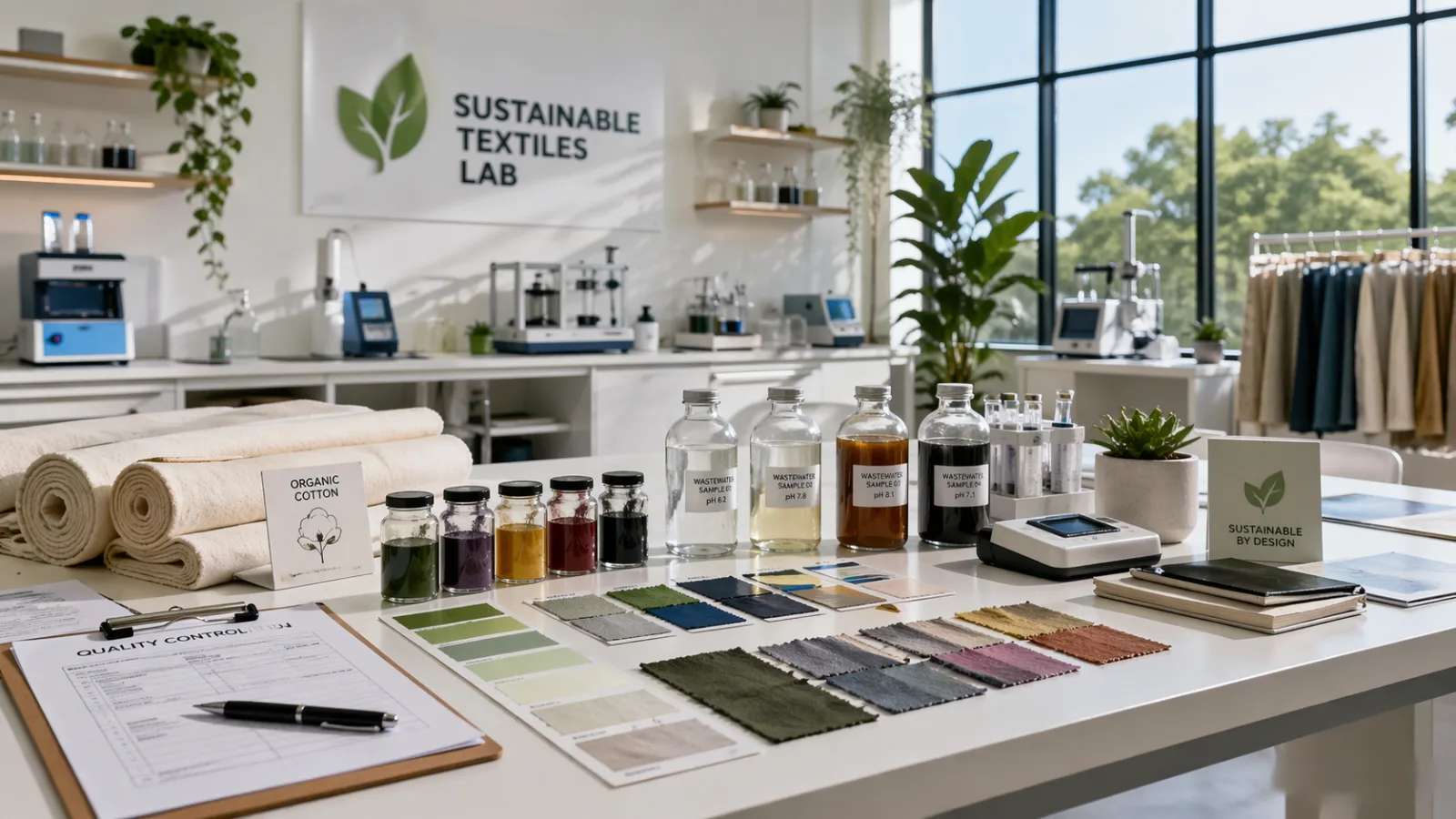
What Are Organic Fabric Dyes?
The phrase “organic fabric dyes” is commonly used to describe colorants associated with organic textiles, natural ingredients, bio-based sources, or environmentally focused textile production.
However, it is not always a formal technical category.
In practical fashion and textile discussions, the term may refer to:
- Dyes made from plants, roots, bark, flowers, fruits, leaves, or seeds.
- Colorants produced from agricultural byproducts.
- Mineral or earth-derived pigments.
- Microbial or fermentation-produced colorants.
- Dyes used on certified organic textiles.
- Low-impact dye systems selected to reduce hazardous inputs.
- Colorants that comply with recognized organic textile processing standards.
- Dyeing processes designed to reduce water, energy, salt, or wastewater pollution.
These categories should not be treated as interchangeable.
Natural Does Not Automatically Mean Organic
A dye may come from a plant without the plant having been grown or processed under a certified organic system.
For example, a botanical colorant may be natural but:
- Grown with synthetic pesticides.
- Harvested without traceability.
- Extracted using intensive chemical processes.
- Combined with hazardous mordants.
- Sourced from a threatened plant species.
- Produced without wastewater controls.
Organic Fabric Can Use Approved Synthetic Dyes
Certified organic textiles do not necessarily need to remain undyed or use only botanical colorants. Responsible organic textile standards may permit selected natural and synthetic dyes, pigments, and auxiliaries when they meet defined chemical restrictions.
This matters because industrial textile production needs color systems that can satisfy:
- Restricted-substance requirements.
- Shade consistency.
- Wash fastness.
- Rubbing fastness.
- Perspiration resistance.
- Production scalability.
- Buyer specifications.
- Product safety expectations.
A Better Working Definition
For this guide, organic fabric dyes refer broadly to responsible coloration approaches used with organic or sustainability-focused textiles, including natural, bio-based, lower-impact synthetic, and reduced-processing systems.
Why Dye Choice Matters in Sustainable Textile Production
When people talk about sustainable fashion, they often focus on fibers such as organic cotton, hemp, linen, bamboo-derived viscose, or recycled materials. Those choices matter, but dyeing can dramatically change the environmental profile of a fabric after the fiber stage.
Textile Exchange describes its mission as helping the fashion and textile industry move toward a more responsible raw materials model, highlighting how supply-chain decisions shape climate and resource outcomes. Dyeing sits right in the middle of that broader materials conversation because even a preferred fiber can lose some of its sustainability advantage if it is processed with poorly managed chemistry, high wastewater loads, or problematic finishing inputs.
Dye choice matters for several reasons:
Water and effluent impact
Textile wet processing uses large amounts of water, and untreated or poorly treated textile effluent can carry dyes, salts, auxiliaries, and other pollutants into the environment. EPA effluent guidance exists precisely because wastewater management in textile mills is a serious issue.
Chemical safety
Certain conventional dye classes and associated chemicals raise concerns related to allergenic response, carcinogenic potential, heavy metals, or broader restricted-substance issues. GOTS and OEKO-TEX both restrict or screen for many hazardous chemicals used in textile coloration and finishing.
Brand trust and product claims
Modern consumers increasingly expect textiles to be safer and more transparent. OEKO-TEX STANDARD 100 specifically positions itself as a label for textiles tested for harmful substances from yarn through finished product. That means brands cannot rely only on marketing language like “natural” or “eco” without considering certification, test evidence, and supply-chain documentation.
Performance and durability
A dye must do more than look sustainable in a brochure. It needs to deliver acceptable fastness, shade consistency, scalability, and compatibility with the fiber and end use. An underwear brand, babywear label, yoga apparel startup, or home textile supplier will each have different performance expectations.
That is why eco-friendly dye conversations need to balance environmental ideals with textile reality.
What Are Organic Fabric Dyes?
The term organic fabric dyes is not always a formal technical category. In market language, it is usually used to describe one or more of the following:
- dyes derived from plant, mineral, or biological sources
- colorants used on certified organic fabrics
- dye systems selected for lower toxicity or lower environmental impact
- natural or bio-based alternatives to petroleum-derived synthetic dyes
This is where confusion often starts. A dye can be natural but not automatically certified organic. A fabric can be organic but dyed with a permitted low-impact synthetic dye. And a product can claim “eco-friendly color” while still lacking strong evidence about wastewater, restricted substances, or traceability.
GOTS is helpful here because it shows that sustainable textile processing is not about simplistic labels. The standard allows natural dyes, synthetic dyes, pigments, and auxiliaries only when they comply with specific chemical input requirements, while restricting sensitizing dyes and various hazardous substances.
So in practice, when we talk about organic fabric dyes, we are often discussing a broader family of safer, lower-impact, more responsible dyeing approaches rather than one single dye type.
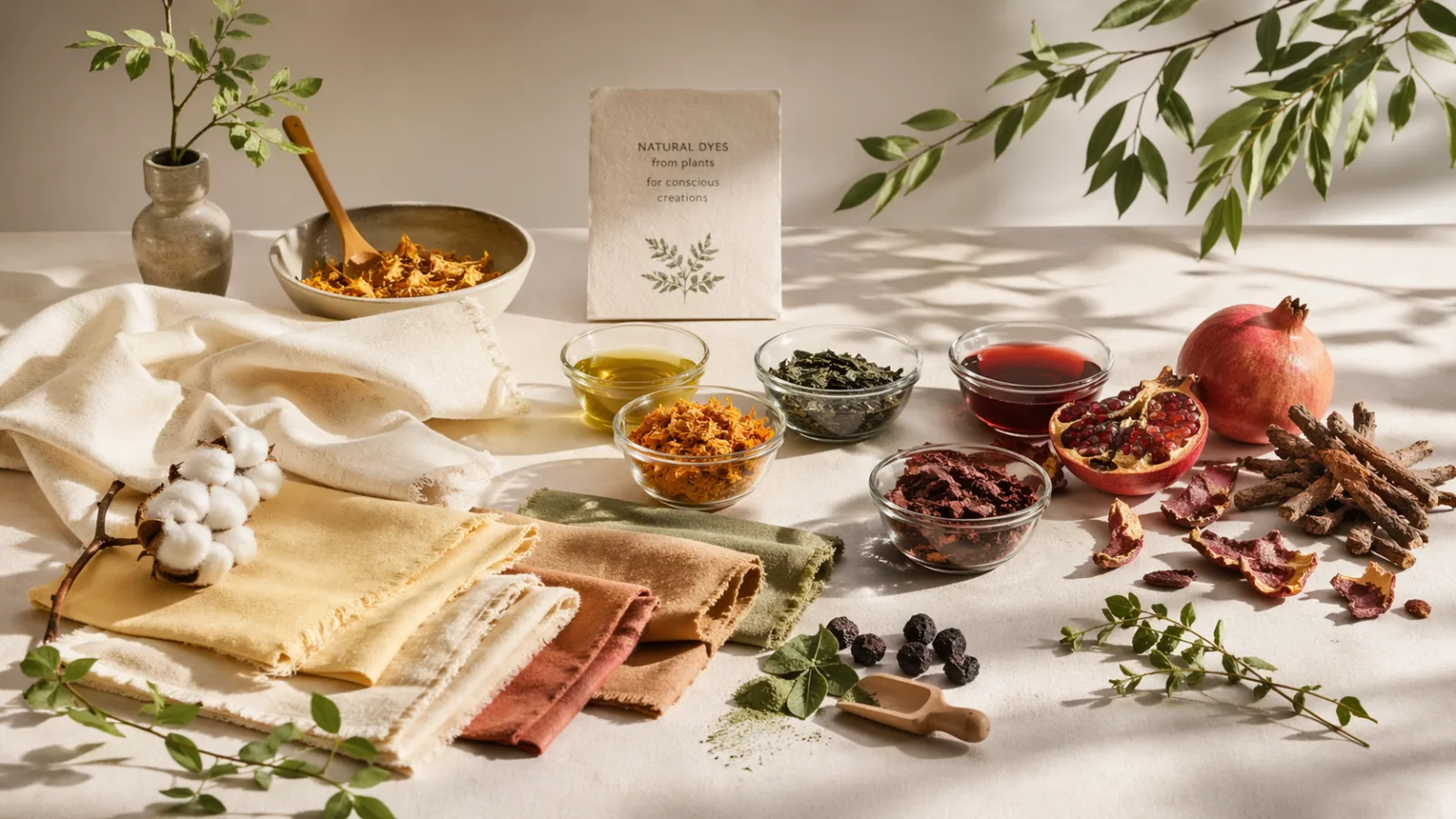
Organic, Natural, Bio-Based, and Low-Impact Dyes: What Is the Difference?
These terms are often used together, but they describe different ideas.
No label alone gives a complete sustainability answer. The entire processing system needs to be evaluated.
Why the Industry Is Looking Beyond Conventional Synthetic Dyes
Synthetic dyes transformed textile manufacturing because they offered bright shades, repeatability, scalability, and cost efficiency. That is why they became dominant across global apparel production. But conventional dye chemistry also created long-term sustainability pressure.
Here are the main reasons the industry is exploring alternatives:
Wastewater management pressure
Textile dyeing and finishing create complex effluent streams. EPA guidance for textile mills and ongoing PFAS-related study show that pollution control remains an active issue in textile regulation.
Restricted substances and compliance demands
Global brands increasingly work under restricted substance lists, customer compliance frameworks, and certification requirements. OEKO-TEX ECO PASSPORT and related standards exist because chemistry transparency and substance screening are now core parts of textile sourcing.
Consumer demand for safer textiles
Consumers are more aware of skin contact, textile safety, and environmental claims than before. This is especially important in babywear, underwear, sleepwear, home textiles, and wellness-oriented apparel.
Demand for lower-impact branding
Sustainability-focused brands want color stories that align with organic fibers, regenerative narratives, cleaner processing, and traceable inputs.
Innovation in bio-based materials
New interest in biotechnology, agricultural waste valorization, and microbial color platforms is expanding what eco-friendly dyes can look like in the future.
This does not mean synthetic dyes will disappear. It means the market is looking harder at which synthetic systems are safer, which natural systems are commercially usable, and which emerging alternatives can scale.
Main Eco-Friendly Alternatives to Synthetic Dyes
There is no single substitute for synthetic dyes. Instead, there are several categories of eco-friendlier alternatives, each with strengths and limitations.
Plant-Based Natural Dyes
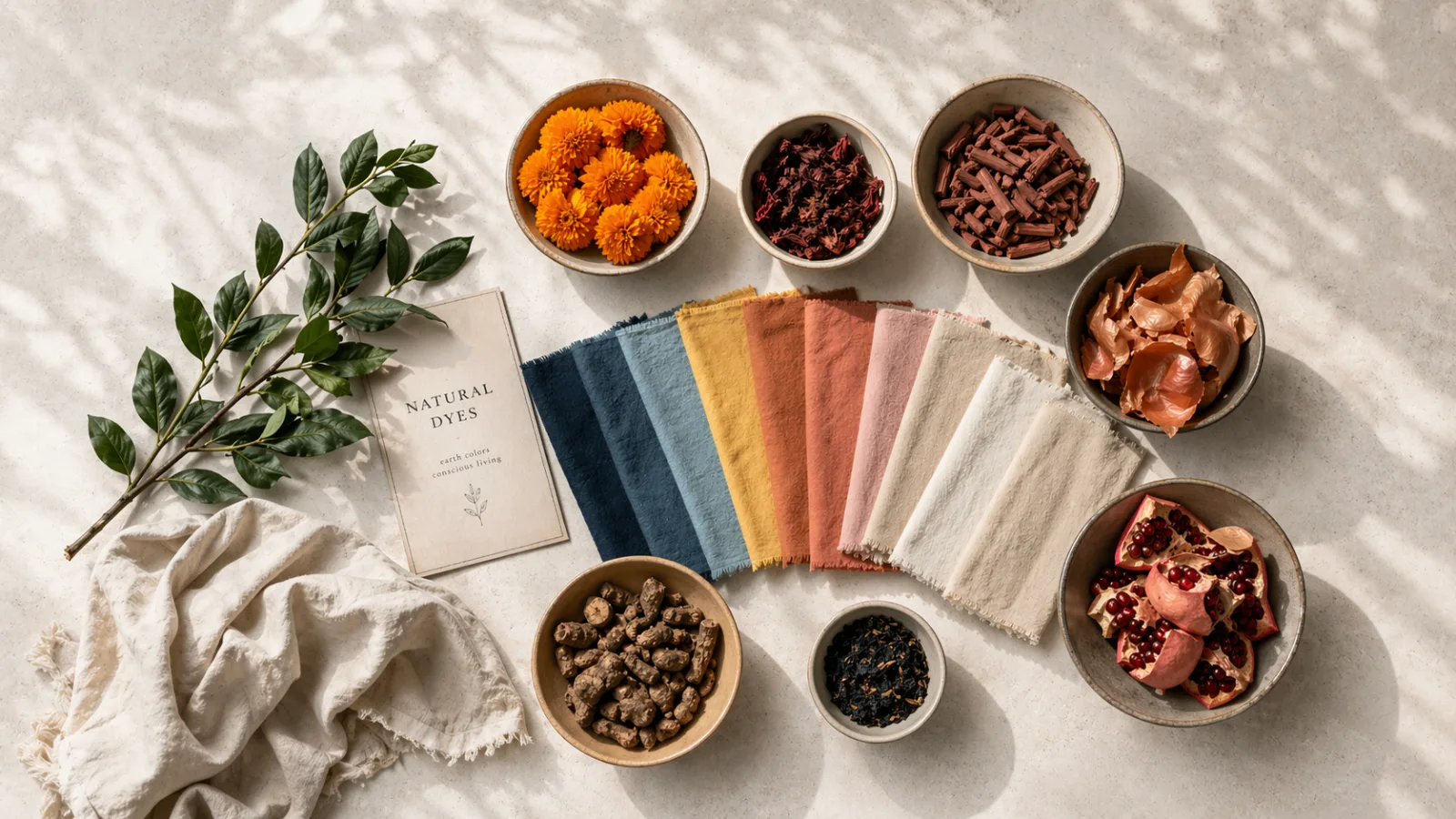
Plant-based dyes are the most recognizable alternative. These colorants come from leaves, bark, roots, seeds, flowers, fruit peels, or agricultural byproducts. Examples often discussed in textile history and modern natural dyeing include indigo, madder, turmeric, marigold, pomegranate rind, walnut husk, onion skin, and henna-like botanical sources.
These dyes appeal because they can connect color with renewable biological inputs and artisanal or heritage textile traditions. They are especially attractive to slow fashion brands, handloom producers, small-batch labels, and premium storytelling-led collections.
Benefits
Plant-based dyes can support a strong natural brand story and may help reduce dependence on petroleum-derived colorants. Some can also create beautiful, nuanced shades that are difficult to replicate with highly standardized synthetic systems.
Limitations
The challenge is consistency. Natural dye sources can vary by crop, season, extraction method, and plant chemistry. Shade reproducibility can be difficult. Some natural dye systems also require mordants or fixatives, and not all mordants are environmentally benign. So “plant dyed” is not automatically safe or low impact unless the full chemistry system is evaluated.
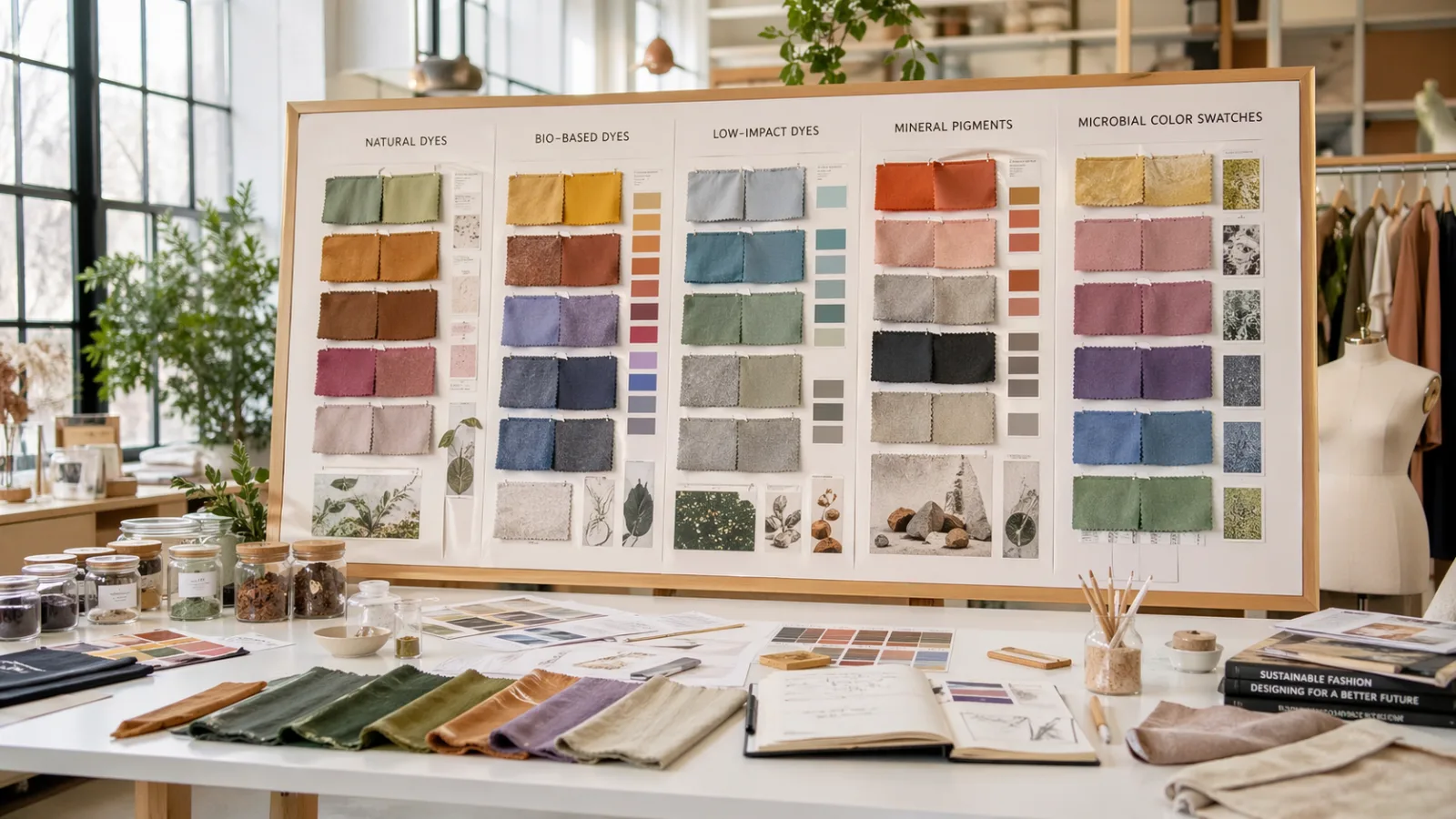
Mineral and Earth Pigment-Based Coloration
Some eco-oriented textiles use mineral-derived pigments or earth tones rather than conventional dye classes. These are more common in niche applications, craft production, or low-shade-complexity product lines.
Benefits
They can deliver a natural aesthetic, muted shades, and a strong earthy design language.
Limitations
They are not suitable for every fabric type, every color range, or every fastness requirement. Heavy metal content and chemical composition must also be carefully controlled depending on the pigment source and formulation.
Bio-Based and Microbial Dyes
This is one of the most interesting areas in sustainable color innovation. Instead of deriving dyes only from traditional plants, some companies and researchers are exploring pigments produced through microorganisms, fermentation pathways, or other biotech processes.
Benefits
Bio-based dyes may offer improved scalability over some traditional natural dyes and may reduce reliance on fossil-based chemistry if commercialized effectively.
Limitations
Many solutions are still emerging, expensive, or not yet widely available at industrial scale. Commercial adoption depends on cost, performance, shade range, and supply consistency.
Low-Impact Synthetic Dyes
This category is important because many real-world sustainable textile programs still rely on synthetic dyes, but with tighter control. Low-impact synthetic dyes typically refer to dye systems chosen for better fixation efficiency, lower toxicity, lower water burden, or improved compliance with standards.
GOTS makes clear that not all synthetic dyes are automatically excluded in responsible textile processing. Certain synthetic dyes are permitted if they comply with its chemical restrictions.
Benefits
These dyes are often more scalable, shade-consistent, and performance-reliable than purely natural alternatives.
Limitations
They are still synthetic, so brands seeking an all-natural story may see them as less appealing from a marketing standpoint, even if they perform better environmentally than poorly managed natural systems.
Dope Dyeing and Solution Dyeing
For some man-made fibers, color can be added during fiber production rather than in a later fabric dye bath. This approach is often discussed as solution dyeing or dope dyeing.
Benefits
It can significantly reduce water use and some wet processing steps compared with conventional post-production dyeing.
Limitations
It is not universally applicable across all fibers and product categories, and it can limit shade flexibility or small-run color responsiveness.
Undyed, Greige, or Naturally Colored Fibers
Sometimes, the most sustainable dye alternative is to dye less or not at all. Some brands use unbleached, undyed, or naturally pigmented fibers to reduce processing.
Benefits
This can reduce chemical inputs and simplify the product story.
Limitations
Color choice becomes limited, and market appeal may be narrower depending on the customer segment.
Are Natural Dyes Always Better Than Synthetic Dyes?
Not always. This is one of the most important points in the whole discussion.
A natural dye may sound more sustainable, but the true impact depends on:
- how the raw material is grown or sourced
- how much land and water it requires
- whether the dye extraction is efficient
- what mordants or auxiliaries are used
- how much dye is needed to achieve the shade
- whether wastewater is treated properly
- how colorfast the result is
- whether re-dyeing, overprocessing, or waste increases because of inconsistency
Likewise, a carefully selected low-impact synthetic dye used in a controlled, compliant facility may sometimes outperform a poorly managed natural dye system in real-world production efficiency and safety.
That is why standards matter. GOTS restricts many hazardous inputs while allowing both natural and certain synthetic dyes that meet its criteria. OEKO-TEX standards likewise focus on harmful-substance testing and safer chemical pathways rather than relying on vague “natural equals safe” assumptions. The better question is this: Which dye system delivers the best combination of safety, lower impact, compliance, and performance for the intended product?
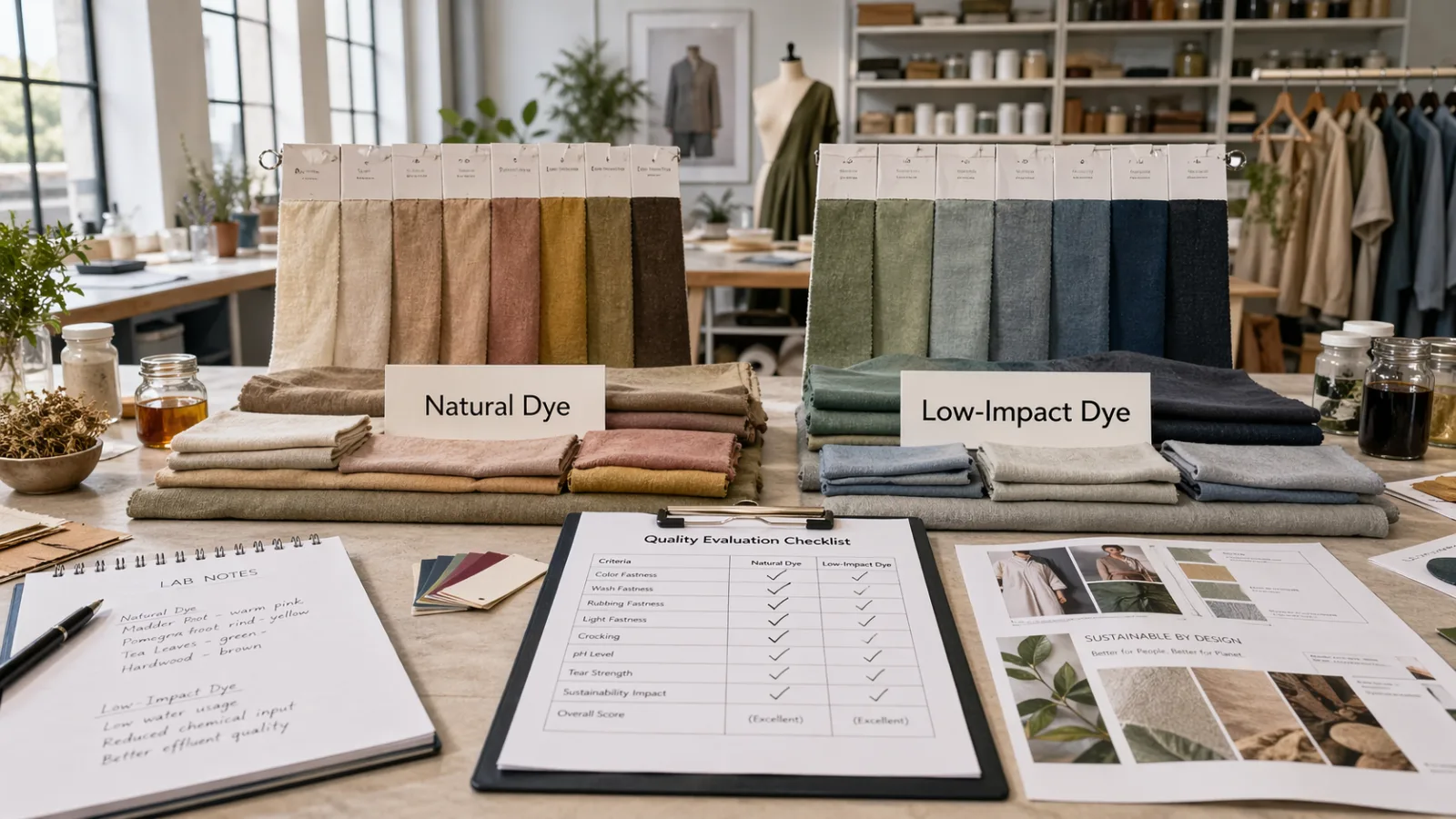
Best Natural Dye Sources Used in Eco-Friendly Textiles
Several natural sources are frequently used in sustainable textile storytelling and artisanal dyeing:
Indigo
One of the most iconic natural blues in textile history. Natural indigo has strong storytelling value and heritage appeal.
Madder root
Often associated with red, rust, and earthy tones. Popular in heritage and craft-based textile applications.
Turmeric
Known for warm yellow shades, though performance limitations can apply depending on use and finishing.
Pomegranate rind
Used for yellow to greenish tones and often discussed in natural dyeing practice.
Walnut husk
Associated with rich brown shades and earthy neutrals.
Marigold and flower-based dyes
Useful for yellow and golden tones in natural-dye design stories.
Onion skin and agricultural waste dyes
Interesting for circularity narratives because they can reuse food-processing or agricultural byproducts.
These sources can be powerful for niche collections, artisanal home textiles, small-batch accessories, resortwear, scarves, hand-crafted cotton products, and storytelling-led premium capsules. For large-scale basics, however, brands need to evaluate consistency and production economics very carefully.
Key Challenges of Organic and Natural Fabric Dyes
Natural and eco-friendly dye systems are promising, but they are not easy. The most common challenges include:
Shade consistency
Color variation is one of the biggest concerns, especially for repeat orders and multi-lot production.
Fastness performance
Brands need acceptable wash fastness, rubbing fastness, perspiration fastness, and light fastness. Some natural dyes struggle here compared with optimized synthetic systems.
Limited bright shade range
Soft earthy colors are easier than vivid neon, ultra-bright, or deep repeatable commercial shades.
Scalability
Small craft batches and industrial bulk production are very different realities.
Cost
Eco-friendly and specialty dyeing often costs more because of smaller scale, extra testing, and limited supply networks.
Certification complexity
A brand cannot assume a natural dye automatically qualifies for certification. Chemical inputs, auxiliaries, processing conditions, and documentation all matter.
Comparison of Eco-Friendly Textile Coloration Methods
The most suitable system is the one that meets the product’s environmental, technical, commercial, and design requirements together.
How to Evaluate Eco-Friendly Dyes for Apparel Production
If you are developing a product line, choosing the right dye system should be a structured decision.
Start with the fiber
Cotton, linen, hemp, silk, wool, and synthetics all behave differently in dyeing. The right eco-friendly dye for organic cotton may not be ideal for recycled polyester or stretch jersey.
Define the end use
Babywear, underwear, yoga wear, fashion tops, towels, bedding, and outerwear all have different fastness and skin-contact expectations.

Check certification requirements
If the goal is a GOTS-certified product, the chemistry package must comply with GOTS processing criteria. If the goal is harmful-substance assurance, OEKO-TEX-related screening may be relevant.
Review the full chemistry system
Do not focus only on the dye molecule. Review mordants, salts, fixing agents, auxiliaries, softeners, and finishing chemicals too.
Ask about effluent handling
A lower-impact dye is only part of the story. Wastewater treatment, process control, and facility practices matter just as much.
Test before scaling
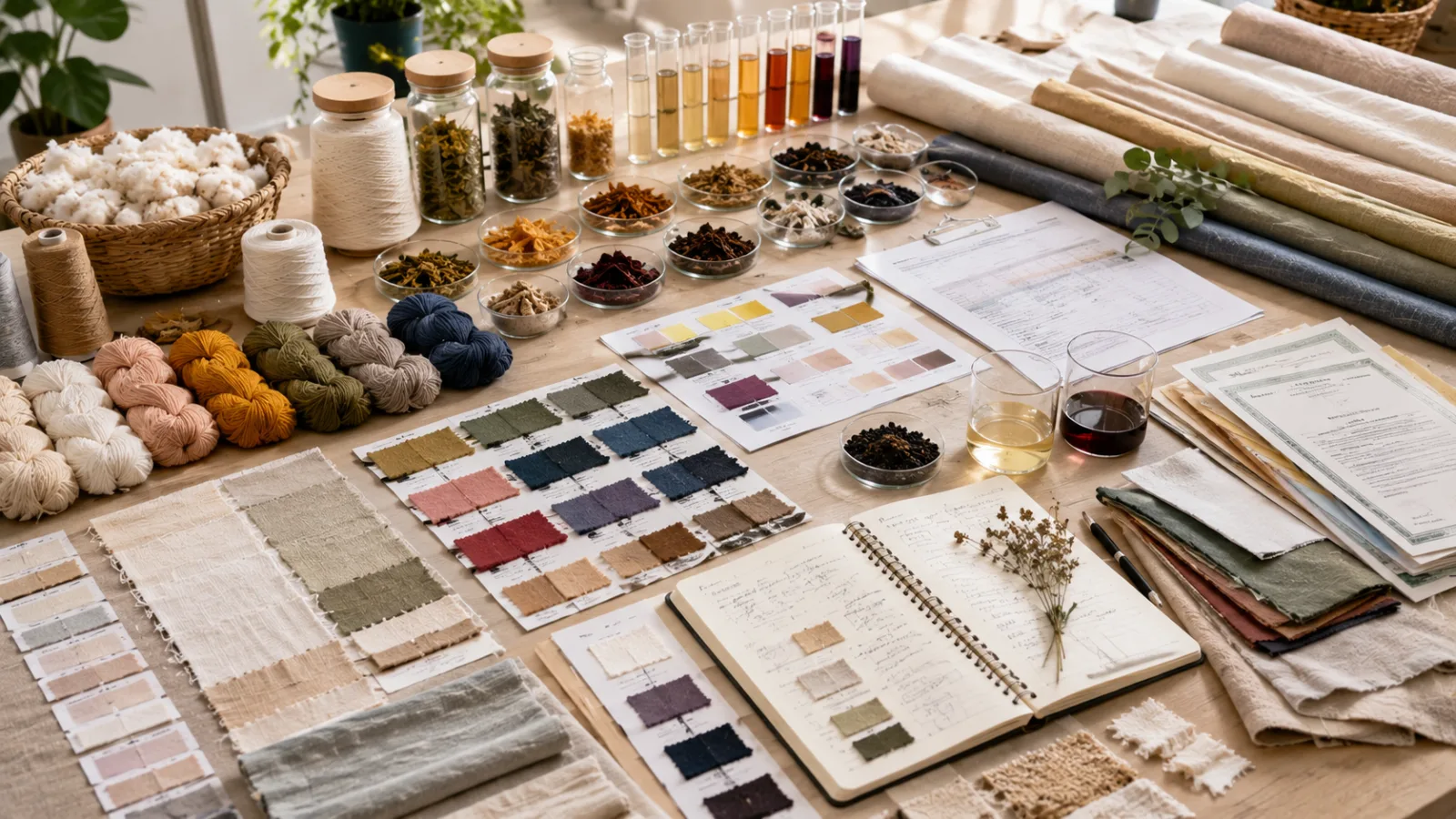
Run lab dips, wash tests, crocking tests, light exposure tests, and pilot production before committing to bulk.
Organic Fabric Dyes for Different Product Categories
Different product categories suit different dye strategies.
Baby clothing and skin-contact basics
Safety, compliance, and softness matter most. Brands usually prioritize chemical control and testing over experimental shade complexity.
Lifestyle fashion and premium storytelling brands
Natural dye capsules can work well here because uniqueness and artisanal character add value.
Home textiles
Cushion covers, throws, table linens, and decorative fabrics may allow more flexibility in natural-dye aesthetics.
Scarves and accessories
These are often excellent candidates for botanical dyeing because shade depth, artisanal finish, and smaller production runs can support the concept well.
Mass-market basics
For large-scale production, brands often rely on low-impact compliant dyes rather than fully natural systems because consistency is critical.
SEO and Consumer Trends Around Eco Dyed Fabrics
Search demand around sustainable textiles increasingly overlaps with terms like:
- organic dyed fabric
- natural dyed cotton
- plant dyed clothing
- non-toxic textile dyes
- sustainable dyeing methods
- low-impact dye process
- GOTS approved dyes
- OEKO-TEX certified textiles
- eco-friendly fabric color options
This tells us something important: consumers are not just searching for fibers anymore. They are searching for chemical safety, comfort, traceability, and proof.
That means brands should communicate dye stories carefully. Avoid oversimplified claims like “chemical-free” or “100% toxin-free” unless there is strong evidence. A better approach is to explain:
- the dye source or process
- the certifications involved
- the testing performed
- the environmental logic behind the decision
- any limitations in shade, variation, or artisanal finish
Clear communication builds more trust than vague green marketing.

Common Mistakes Brands Make With Eco-Friendly Dyes
Assuming Natural Means Safe
Natural colorants and mordants still need chemical and toxicological evaluation.
Reviewing Only the Dye
The full recipe includes auxiliaries, fixatives, softeners, salts, acids, and finishing agents.
Ignoring Wastewater
A better colorant does not solve poor effluent management.
Skipping Fastness Testing
Color failure creates returns, waste, reprocessing, and customer dissatisfaction.
Promising Perfect Shade Consistency
Botanical systems may have natural variation. Commercial expectations must be realistic.
Choosing a Dye Before Choosing the Fiber
Different fibers require different dye classes and processing conditions.
Making Unsupported Claims
Terms such as organic dye, toxin-free, and chemical-free should not be used without evidence.
Scaling Too Quickly
A small sample batch may not reflect bulk production behavior.
Ignoring Minimum Quantities
Special dye systems may require minimum dye-lot sizes that exceed startup needs.
Forgetting Care Instructions
Customers need accurate guidance to preserve color and product quality.
How ApparGlobal Supports Eco-Conscious Textile Development
Choosing an environmentally focused fabric and dye process requires coordination between material sourcing, chemistry, sampling, testing, certification, costing, and manufacturing.
A promising natural dye concept can fail commercially if:
- The fabric is incompatible.
- Shades cannot be repeated.
- Fastness is too weak.
- Minimum quantities are too high.
- The dye house lacks documentation.
- Wastewater controls are inadequate.
- Customer care expectations are unrealistic.
- Bulk production differs from the approved sample.
ApparGlobal helps apparel brands connect sustainability goals with practical product development and manufacturing planning.
Brands can explore:
- Sampling Program to test color, fabric behavior, shrinkage, fastness, construction, and garment performance.
- Private Label Program to create customized products using established manufacturing foundations.
- Manufacturing Support to coordinate textile sourcing, dyeing, quality control, and production planning.
- Vendor Program to identify suitable textile, dyeing, and apparel suppliers.
- Manufacturer Catalog to review manufacturing capabilities.
- Resources for further guidance on fabric sourcing, sustainability, sampling, and clothing production.
A structured development process helps brands determine whether a botanical, bio-based, low-impact synthetic, solution-dyed, digitally printed, or undyed approach is best suited to the product.

Eco-Friendly Textile Dye Selection Checklist
Use this checklist before approving a fabric color process for production.
Product Requirements
- Product category is defined.
- Fiber content is confirmed.
- Target shade is documented.
- Required fastness levels are known.
- Skin-contact requirements are considered.
- Care instructions are realistic.
- Order quantity and repeat-order needs are clear.
Dye and Chemical Inputs
- Dye or pigment type is identified.
- Source is documented.
- Mordants and auxiliaries are listed.
- Safety data sheets are available.
- Restricted-substance compliance is confirmed.
- Certification requirements are understood.
Environmental Performance
- Water use has been reviewed.
- Dye fixation efficiency is known.
- Energy requirements are considered.
- Wastewater treatment is verified.
- Sludge and waste handling are reviewed.
- Persistent chemical risks are considered.
Sampling and Testing
- Lab dip is approved.
- Sample meterage is produced.
- Garment sample is completed.
- Washing test is passed.
- Rubbing fastness is acceptable.
- Perspiration fastness is tested where relevant.
- Lightfastness is suitable.
- Product-specific tests are complete.
Commercial Feasibility
- Minimum dye quantity is manageable.
- Bulk lead time fits the launch.
- Price fits the target cost.
- Repeat shades are possible.
- Supplier capacity is verified.
- Bulk shade tolerance is defined.
Claims and Documentation
- Marketing language is accurate.
- Certificates are valid.
- Scope is confirmed.
- Traceability documents are retained.
- Natural shade variation is communicated.
- Care guidance is included.
Frequently Asked Questions About Organic Fabric Dyes
1. Are organic fabric dyes the same as natural dyes?
Not always. “Organic fabric dyes” is often used as a broad market term. Natural dyes more specifically refer to colorants derived from plants, minerals, animals, or biological sources. Organic fabric may also be colored with an approved synthetic dye.
2. Are natural dyes always safer than synthetic dyes?
No. Safety depends on the full process, including raw-material sourcing, mordants, auxiliaries, wastewater handling, residues, worker exposure, and finished-product testing.
3. Can certified organic textiles use synthetic dyes?
Yes. Organic textile certification systems may permit selected synthetic dyes, pigments, and auxiliaries when they meet the applicable processing and chemical-input requirements.
4. What is the biggest challenge with natural textile dyes?
Shade repeatability and fastness are among the biggest commercial challenges. Natural raw materials can vary, making it difficult to produce identical colors across multiple dye lots.
5. What fabrics work best with natural dyes?
Cotton, linen, hemp, wool, and silk are often used with natural dyes. The best result depends on the colorant, fiber chemistry, fabric preparation, mordant, and performance requirements.
6. What is a mordant?
A mordant is a substance used to help some dyes bond with the fiber or develop a particular shade. Mordants can affect color, fastness, safety, wastewater, and environmental performance.
7. Are plant-dyed clothes biodegradable?
Dye choice alone does not determine whether a garment is biodegradable. Fiber composition, thread, labels, elastane, prints, coatings, and finishes all affect end-of-life behavior.
8. What is solution-dyed fabric?
Solution-dyed fabric is made from manufactured fibers that receive pigment while the polymer is being formed. This can reduce later dye-bath processing and provide strong color durability.
9. Are low-impact synthetic dyes environmentally friendly?
They may offer improvements such as stronger fixation, restricted chemistry, lower salt use, or reduced processing. However, their performance should be supported by specific data rather than a general low-impact label.
10. What certifications matter for eco-dyed textiles?
Relevant systems may include GOTS for organic textile processing, OEKO-TEX STANDARD 100 for harmful-substance testing of textile products, and OEKO-TEX ECO PASSPORT for textile chemicals, colourants, and auxiliaries.
11. Can natural dyes produce bright colors?
Some natural dyes create strong colors, but reproducing bright, highly saturated commercial shades consistently can be difficult. Shade range depends on the source, fiber, mordant, extraction, and processing method.
12. Do eco-friendly dyes cost more?
They can. Higher costs may come from lower production scale, specialist raw materials, additional testing, certification, longer processing, or increased quality control.
13. How can a brand verify a natural dye claim?
Ask for the dye source, processing details, chemical recipe, supplier declaration, certifications, laboratory tests, and traceability documents. A marketing statement alone is not enough.
14. Is undyed fabric the most sustainable choice?
Undyed fabric can reduce coloration stages, but the full impact still depends on fiber production, bleaching, finishing, manufacturing, durability, transport, and end-of-life planning.
Conclusion
Organic fabric dyes and eco-friendly coloration alternatives are becoming increasingly important as fashion brands examine not only what their textiles are made from, but also how those textiles are processed. The key lesson is that sustainable color cannot be reduced to a simple natural-versus-synthetic debate.
Plant-based dyes can offer renewable inputs, heritage value, artisanal beauty, and meaningful storytelling. Agricultural waste dyes may create additional value from existing byproducts. Microbial pigments and fermentation systems could open new pathways for bio-based color. Solution dyeing can reduce conventional wet processing for synthetic fibers, while digital printing may reduce setup waste and support smaller production runs.
At the same time, carefully selected synthetic dyes may remain the most practical option for products requiring strict shade consistency, strong fastness, large-scale production, and repeat-order reliability. When used in a well-managed facility with approved chemistry and effective wastewater treatment, they may provide a more responsible outcome than a poorly controlled natural process.
The complete coloration system matters. Brands should evaluate:
- Dye origin.
- Fiber compatibility.
- Mordants and auxiliaries.
- Water and energy use.
- Wastewater treatment.
- Chemical restrictions.
- Worker safety.
- Shade consistency.
- Fastness.
- Product durability.
- Certification.
- Traceability.
- Commercial scalability.
Sampling and testing are essential. Every proposed dye system should be evaluated through lab dips, sample meterage, wash testing, rubbing tests, light exposure, product-specific performance checks, and pilot production before bulk approval. Brands should also communicate carefully. Claims such as natural, organic, low impact, and non-toxic need clear definitions and supporting evidence. Specific explanations about dye source, certification, processing, and expected shade variation are more credible than broad sustainability promises.