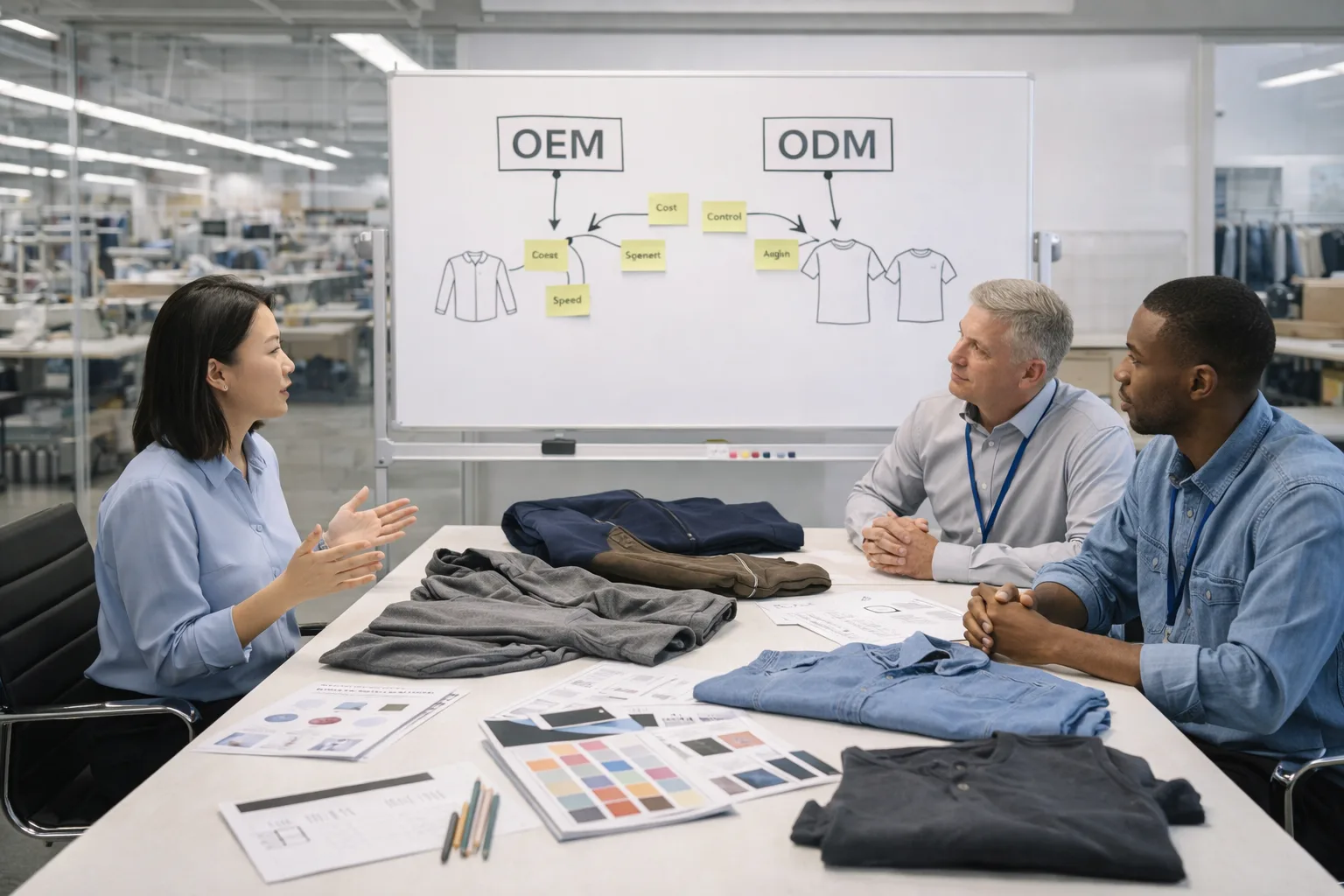
Learn the differences between OEM and ODM
If you are sourcing clothing for your brand, you will eventually see two terms that sound similar but lead to very different outcomes: OEM and ODM. Many apparel brands, especially startups, confuse them or assume they are the same. But the choice between OEM and ODM affects everything from product uniqueness and development speed to cost, ownership, quality control, and long-term brand value.
OEM apparel manufacturing is usually best when you have a clear product concept, specifications, and branding direction, and you want a manufacturer to produce your design accurately. ODM apparel manufacturing is usually best when you want a manufacturer to propose ready designs or proven templates that you can customize and bring to market faster.
This guide explains the difference between OEM and ODM in apparel manufacturing in a practical way. You’ll learn what each model means, how the production process works, when to choose each one, cost and MOQ differences, how sampling and tech packs change, sustainability considerations, and how to pick the right model for your brand’s growth stage.
Global Apparel Manufacturing Market
The global apparel manufacturing industry is one of the largest sectors in the consumer goods economy. Industry estimates suggest the global fashion and apparel market is valued at over $1.7 trillion, with thousands of clothing brands relying on international manufacturing partners to produce garments efficiently and at scale.
Within this ecosystem, OEM and ODM manufacturing models play a critical role in helping apparel brands develop and produce clothing collections. These manufacturing approaches allow brands to choose between custom product development or faster product launches using existing design templates provided by manufacturers.
Several countries dominate global garment production due to their strong manufacturing infrastructure and experienced workforce. Major apparel manufacturing hubs include Bangladesh, China, Vietnam, and India, which collectively supply garments to many of the world’s largest fashion brands and retailers.
Bangladesh in particular, has become a key player in global apparel manufacturing, exporting over $45 billion worth of garments annually. The country’s large production capacity, skilled garment workforce, and established supply chain make it an important destination for brands seeking both OEM and ODM apparel manufacturing services.
As the global apparel market continues to expand, more brands are partnering with manufacturers that can provide flexible production models, scalable manufacturing capacity, and efficient product development processes.
What Does OEM Mean in Apparel Manufacturing?
OEM stands for Original Equipment Manufacturer. In apparel manufacturing, OEM means a factory that produces garments based on the brand’s product specifications, designs, and requirements. The brand usually controls the product concept, style direction, measurements, materials, labeling, packaging, and final approvals.
In the OEM model, the manufacturer’s main role is to execute production accurately. They may provide input on feasibility, fabric sourcing, and construction improvements, but the brand owns the product direction. OEM is common for brands that want unique products or need consistent reorders built around their own specifications, maintaining their intellectual property.
A simple way to think about OEM in clothing is: your design, their production system.
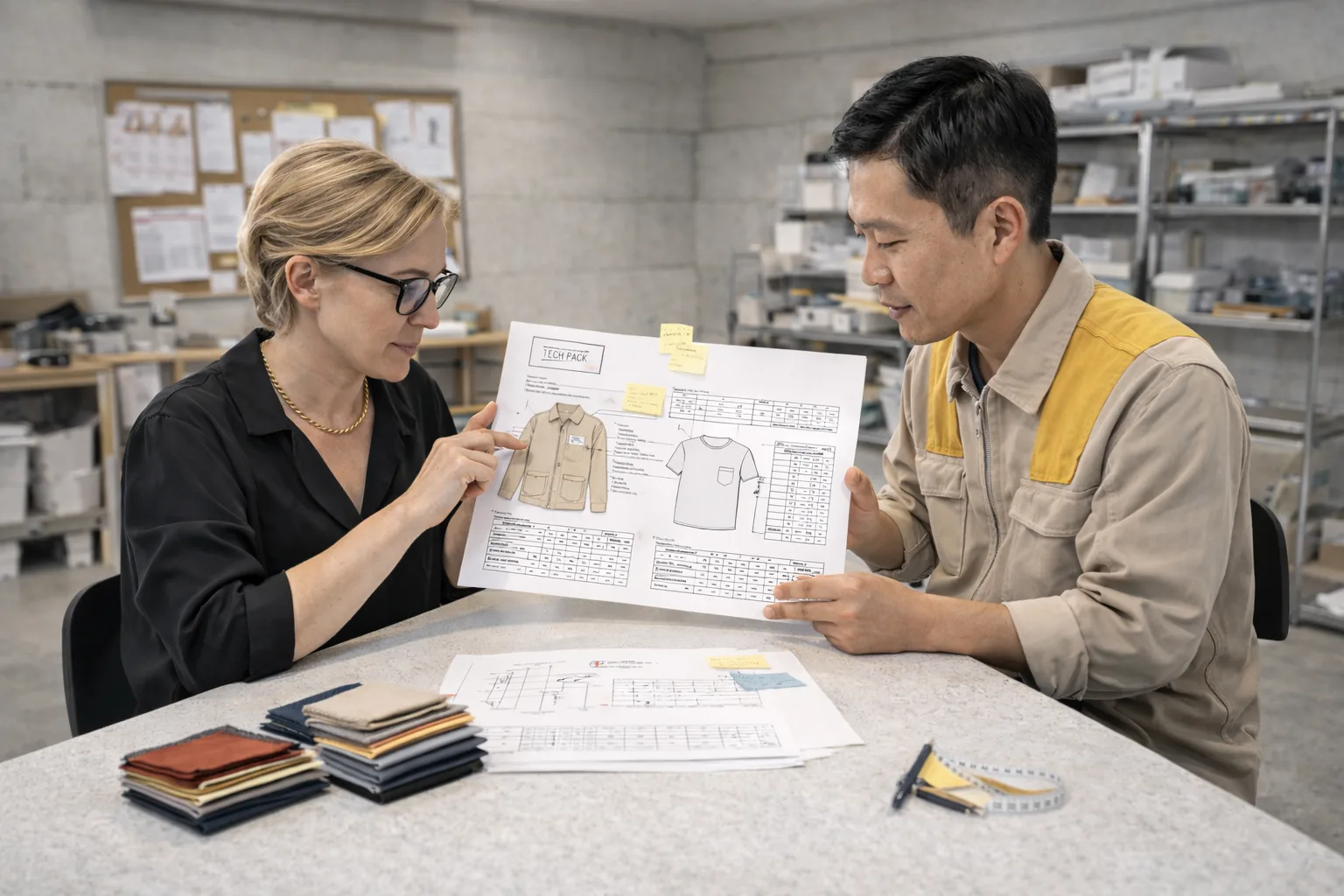
Understanding OEM Manufacturing
Understanding original equipment manufacturing requires businesses to discover the differences between oem and odm models and what’s the difference in design and manufacturing; while private-label arrangements let a brand name accelerate products to market, pre-designed options can limit creative control and control over the design.
A firm must weigh the cons of OEM, such as slimmer profit margins, reduced product differentiation and lower internal design input, against benefits like high-quality production, reliable equipment manufacturing, and strong technical support.
Smart companies invest in research and development / r&d to expand design capacity and shorten development time, deciding whether to offer both OEM and ODM or focus on in-house design and production. Understanding OEM manufacturing shapes brand identity, protects intellectual property, and clarifies required upfront investment based on evolving market trends.
What Does ODM Mean in Apparel Manufacturing?
ODM stands for Original Design Manufacturer. In apparel manufacturing, ODM means the manufacturer provides the product design or offers existing style templates that the brand can choose from and customize. The brand still sells the garment under its own label, but the product is based on designs developed by the manufacturer.
ODM is common when:
- A brand wants to launch faster
- A brand does not have in-house design or technical development resources
- A brand wants to start with proven products that already work in production
- A buyer wants a product line quickly for retail or e-commerce
ODM is often used for basic or trend-driven categories such as t-shirts, hoodies, activewear, uniforms, and fashion basics. A simple way to think about ODM in clothing is: their design, your branding, and customization.
The Core Difference Between OEM and ODM
The main difference is who owns the design and product development.
- In OEM, the brand provides the design and specs, and the factory manufactures it.
- In ODM, the factory provides designs or ready templates, and the brand selects and customizes them.
This affects product uniqueness, speed to market, cost, intellectual property, and long-term competitive advantage in the context of OEM and ODM clothing.
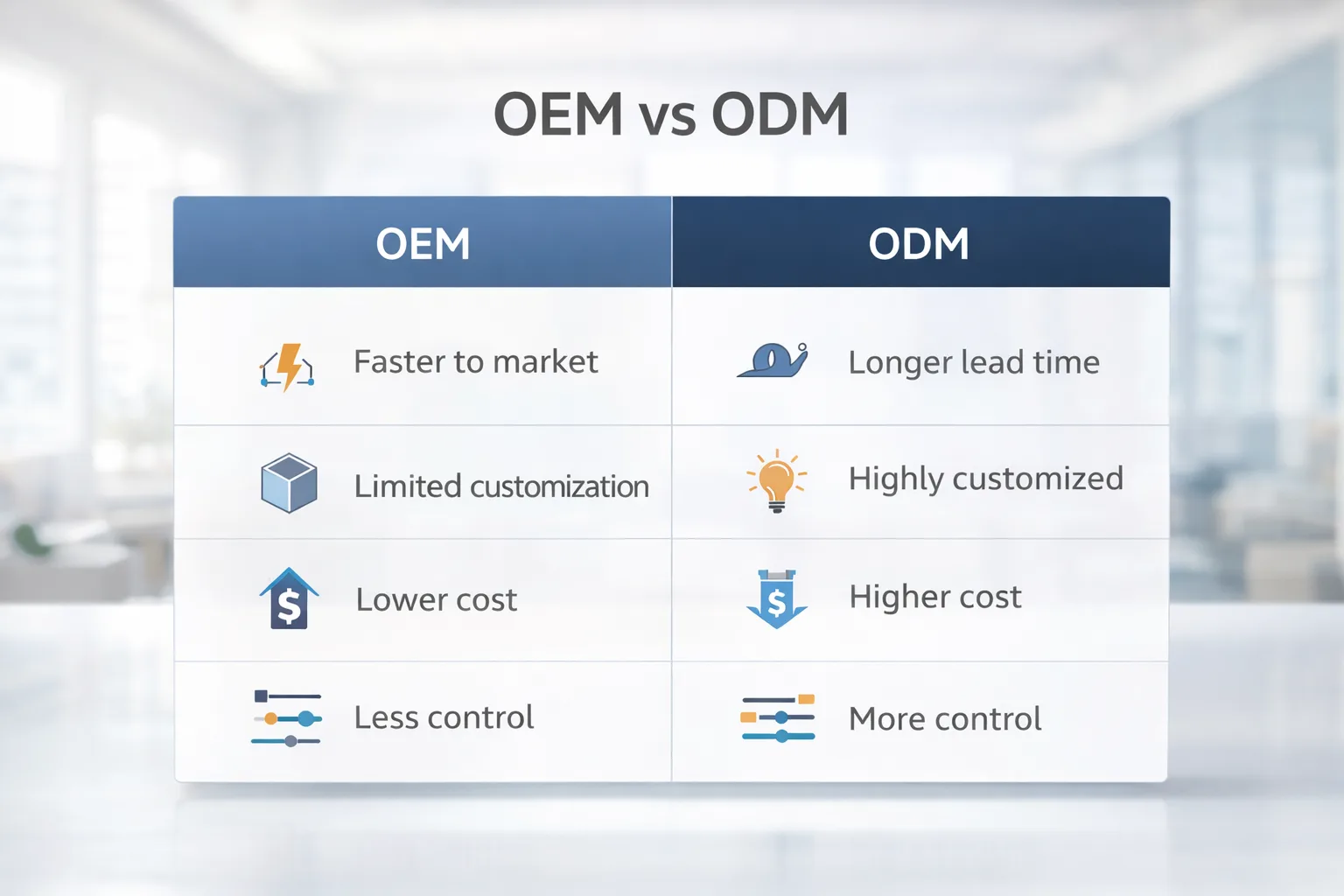
OEM vs ODM: Quick Comparison Table
This table helps buyers understand the difference instantly.
How OEM vs ODM Apparel Manufacturing Works
In apparel, OEM manufacturing (or original equipment manufacturing) and ODM clothing (original design manufacturing) differ mainly in who holds the design — a brand name often chooses OEM and ODM manufacturing depending on market trends and research and development resources. The key differences include control over the design, design capacity, and the length of the development cycle; OEM and ODM models let brands either supply specs to a factory or buy finished designs to bring products to market faster. Consider the cons of OEM, such as limited design input and possible reliance on external equipment manufacturing support.
Choosing the right manufacturing partner means evaluating design and manufacturing capabilities, whether vendors offer both OEM and ODM, and available technical support. From private-label startups to established labels, understanding how OEM and ODM manufacturing models affect speed, cost, and innovation helps companies discover the differences and pick the best path.
OEM vs ODM Product Development Timeline
The time required to develop a garment can vary significantly depending on whether a brand uses OEM or ODM apparel manufacturing. Understanding these timelines helps brands plan product launches, seasonal collections, and inventory strategies more effectively.
In OEM manufacturing, the product development process typically takes longer because the garment is created from the brand’s original design specifications. The process usually begins with concept development and tech pack preparation, followed by fabric sourcing, sample creation, fit revisions, and final approvals. Since each garment is developed according to the brand’s unique specifications, multiple sampling stages may be required before bulk production begins.
In contrast, ODM manufacturing generally moves faster because the manufacturer already has existing designs, patterns, and construction methods. Brands can select a base style from the manufacturer’s product catalog and then customize elements such as fabric, color, trims, branding, and packaging. Because the core pattern already exists, the sampling and development process is typically shorter, especially when utilizing original design manufacturing.
The simplified timeline below illustrates the general difference between the two models.
For apparel brands planning new collections, understanding these development timelines can help determine which manufacturing model best fits their product strategy, launch schedule, and production resources.
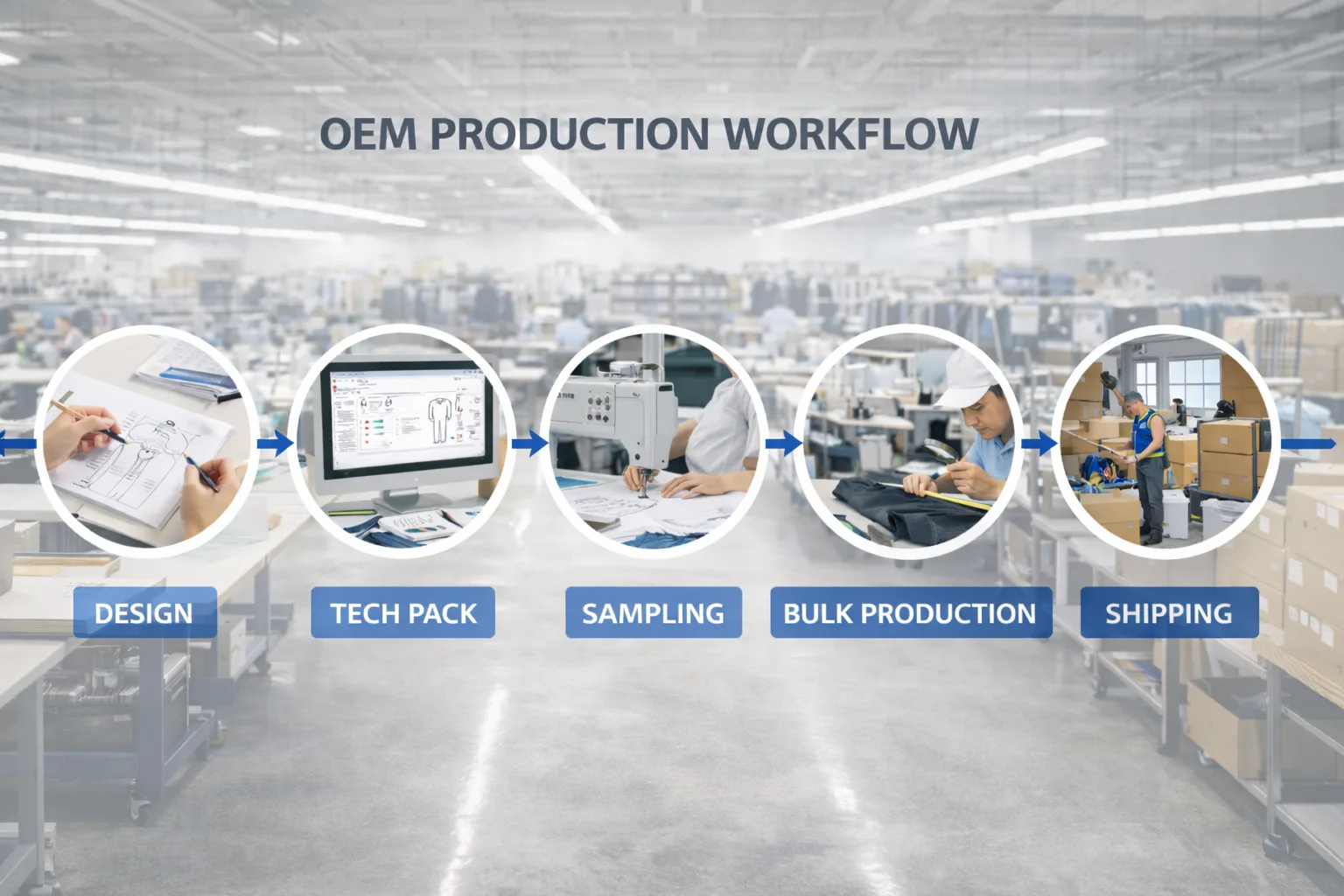
How OEM Apparel Manufacturing Works
OEM follows a structured product development and production flow. The more detailed your tech pack and specifications, the smoother the process becomes.
Product concept and design direction
The brand defines the garment style, target market, fit, material direction, and brand requirements.
Tech pack development
A strong tech pack includes measurement specs, points of measure, BOM, construction notes, colorways, labels, and packaging requirements. Tech packs reduce guesswork and improve production accuracy.
Sampling and revisions
The factory creates samples based on the tech pack. The brand reviews fit, fabric hand-feel, construction, and finishing.
Pre-production approval
A final approved sample sets the production standard for bulk manufacturing.
Bulk production and quality control
Production runs with in-line QC and final inspection to match the approved sample.
OEM works best when brands want repeatability and strong control over product outcome.
How ODM Apparel Manufacturing Works
ODM has a different starting point compared to OEM, influencing brand identity. Instead of beginning with a brand’s tech pack, it begins with the manufacturer’s product library.
Select a base style from the manufacturer
Factories may provide catalogs, sample racks, or seasonal collections that buyers can choose from.
Customize features and branding
The brand can modify fabric, colors, trims, labels, printing, embroidery, and packaging.
Sample approval
Samples are made based on the selected style and customizations. Because the base pattern already exists, sampling can be faster.
Bulk production
Once approved, production begins using the manufacturer’s proven pattern and construction system.
ODM is ideal for fast launches and brands that want production-ready products without building everything from zero.
Which Model Is Better for Your Apparel Brand?
Neither model is universally better. It depends on your brand stage and goals.
Choose OEM if you want unique products and strong control
OEM makes sense when you want:
- Unique signature products
- Proprietary fit or pattern
- Premium quality control standards
- Strong brand differentiation
- Consistent reorders built around your own specs
OEM is common for fashion brands, premium basics brands, and private label brands that want a strong identity.
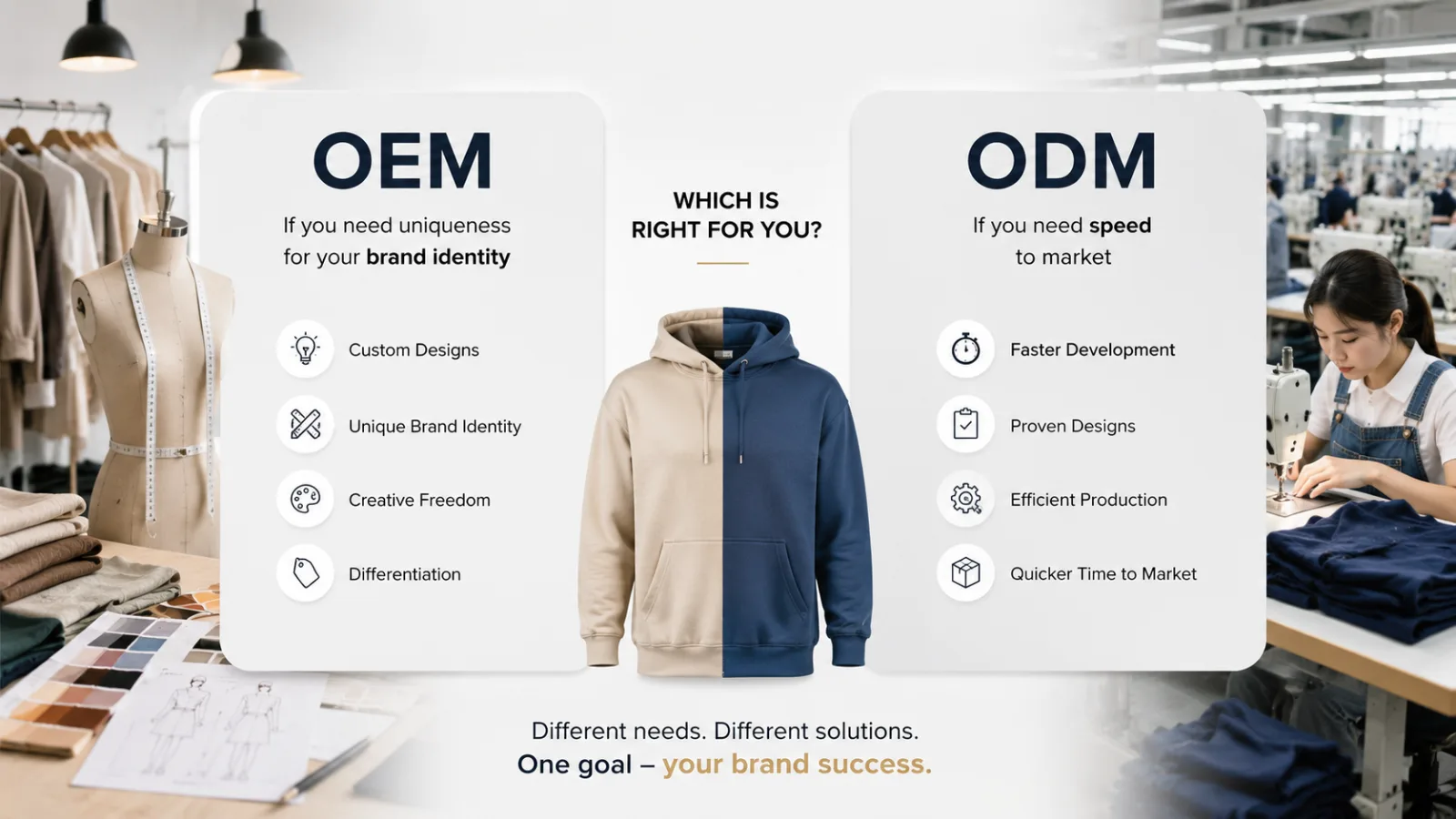
Choose ODM if you want speed and lower development complexity
ODM makes sense when you want:
- Faster product launch
- Low technical development resources
- Proven production-ready styles
- Fast sampling and quick approvals
- Market testing with lower risk
ODM is common for merch brands, uniform buyers, and brands testing categories quickly.
When Is OEM Manufacturing Suitable?
When choosing between partners, OEM manufacturing is suitable when you have pre-existing designs or require control over design to protect brand identity, making it attractive for well-established brands that prioritize a fast market entry without engaging in relentless price competition. OEMs like foxconn excel when companies need reliable, cost-efficient production of designs ready for scale, while still retaining the option to refine an advanced design in-house rather than handing over full creative direction.
Conversely, if your product targets a unique market or demands a complete creative vision from the start, an odm may be better because odm allows development from concept to manufacture, whereas OEM suits firms with established specs seeking speed, quality, and predictable margins.
How OEM and ODM Affect Cost and MOQ
Cost and MOQ depend on the product, fabric, and factory, but the model influences your cost structure.
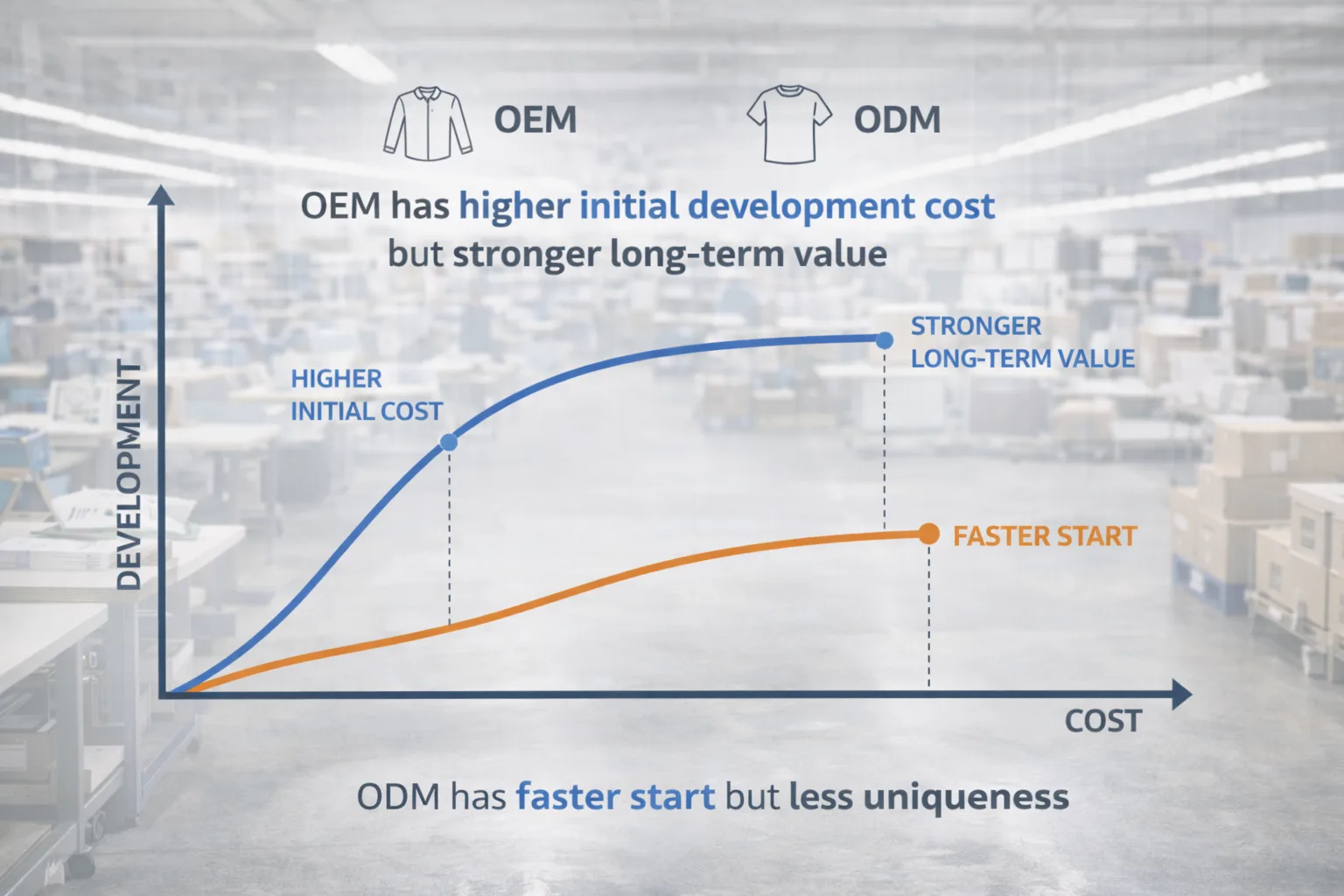
OEM cost reality
OEM may have higher initial development costs because it requires:
- Pattern development and grading if not available
- Multiple sampling rounds
- More engineering and technical work
However, OEM can reduce long-term cost once specs stabilize because reorders become repeatable and efficient.
ODM cost reality
ODM can be cheaper upfront because:
- Patterns already exist
- Construction methods are standardized
- Sampling is faster
- Development cost is lower
However, ODM products may have less pricing power if they feel similar to other brands using the same base design.
Product Ownership and Exclusivity: What Brands Must Ask
This is where many brands make mistakes. In ODM, the factory may offer the same design to multiple buyers. That does not mean your brand cannot succeed, but it does mean you must clarify exclusivity to protect your intellectual property.
Ask questions like:
- Is this design exclusive to my brand?
- Can you modify the pattern so it becomes unique?
- Are there restrictions on selling the same style to competitors?
- Can we secure exclusivity for certain markets or regions?
In OEM, exclusivity is usually stronger because the brand’s tech pack and specs drive development. Still, brands should clarify who owns patterns, grading files, and any custom trim designs.
Tech Packs in OEM vs ODM: What Changes?
Tech packs matter in both models, but the level differs.
OEM needs full tech packs
In OEM, the tech pack is essential. It defines the garment. Without a strong tech pack, OEM becomes risky and slow.
ODM can start with a lighter specification pack
In ODM, because the base style exists, you can start with a simpler specification document that covers:
- Fabric choice and GSM
- Colorways
- Branding placements
- Label and packaging requirements
- Minor fit changes if allowed
However, if you want consistent reorders or deeper customization in ODM, you should still build a formal tech pack version for the final approved product.
Sustainability in OEM vs ODM Manufacturing
Sustainability is not only about the model. It is about materials, process control, and transparency. Still, the model can influence sustainability outcomes.
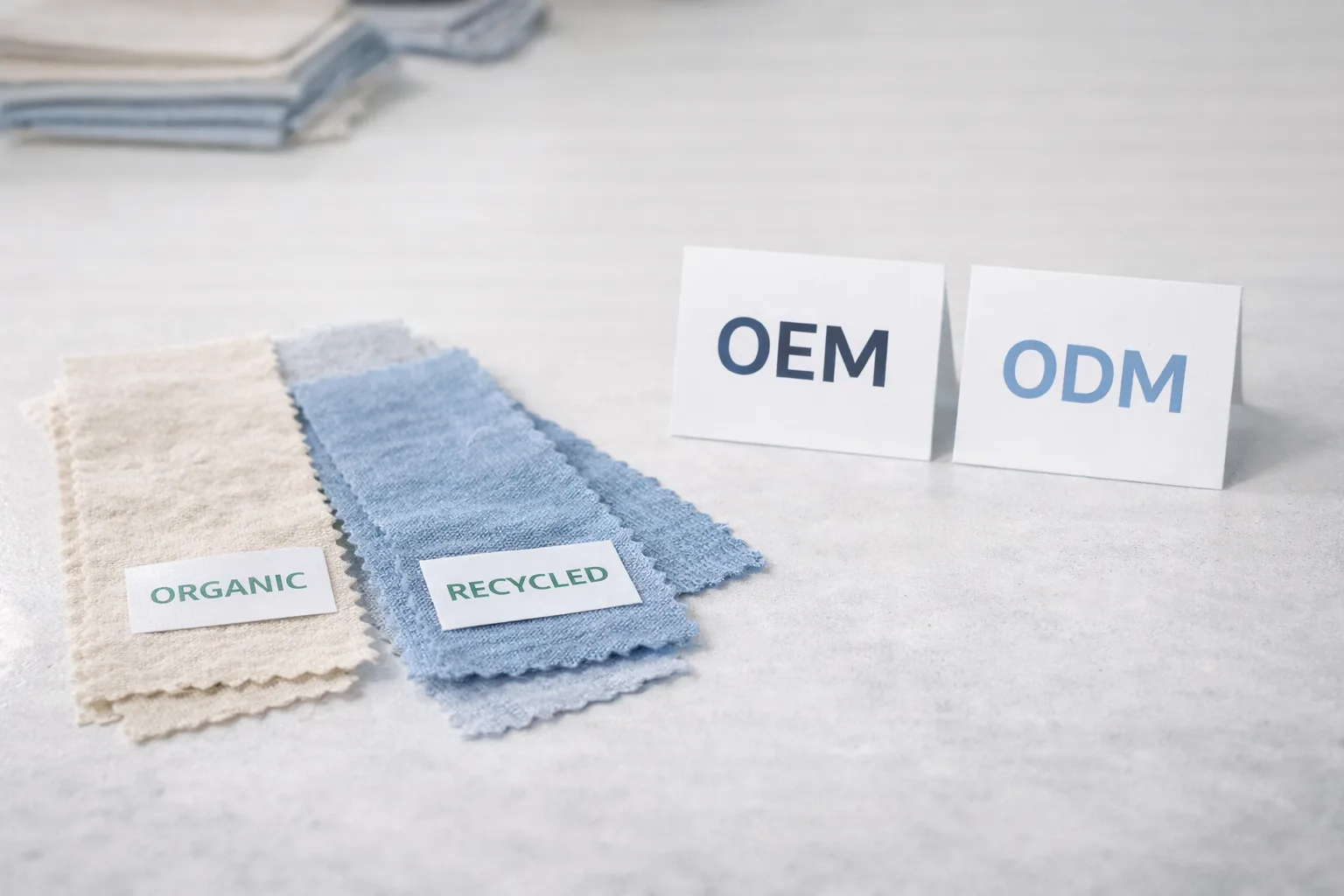
OEM sustainability advantage
OEM gives brands stronger control over:
- fabric selection, such as organic cotton or recycled polyester
- Finishing processes and dyeing choices are crucial in establishing high-quality standards in ODM clothing.
- quality control systems that reduce rejects,
- durable construction that extends garment lifespan
ODM sustainability challenge and opportunity
ODM can still be sustainable if the manufacturer offers:
- recycled or certified materials
- traceable sourcing
- responsible production systems
But ODM sometimes uses generic materials by default unless the brand specifies otherwise. Brands should request sustainable fabric options and confirm documentation.
Common Mistakes Brands Make When Choosing OEM or ODM
Many sourcing issues happen because brands choose the wrong model or do not clarify expectations.
Common mistakes include:
- Choosing ODM, expecting a fully unique product without paying for customization
- Choosing OEM without a clear tech pack or specification system
- Not confirming the MOQ for custom trims and labels can affect your intellectual property.
- Not discussing design ownership and exclusivity early
- Approving samples without documenting changes for bulk
- Selecting manufacturers that do not specialize in your product category
The best sourcing outcomes come from choosing the right model and managing it professionally.
Practical Scenarios: OEM or ODM Which One Fits?
Scenario 1: A startup launching basic t-shirts and hoodies
ODM often makes sense because it is faster, the patterns already exist, and the brand can focus on branding and marketing.
Scenario 2: A premium brand building signature fit denim or tailored garments
OEM is better because product uniqueness and fit control matter more than speed.
Scenario 3: A brand testing a new activewear category
ODM can help test quickly, but if the category succeeds, moving into OEM with deeper tech packs can create differentiation and enhance brand identity.
Scenario 4: A growing private label brand scaling best sellers
OEM provides consistent specs, repeatability, and better long-term production control for reorders.
Garment Manufacturing in Bangladesh: OEM and ODM Capabilities
Bangladesh is one of the world’s largest apparel manufacturing hubs, known for large-scale production capability and experienced garment teams. Many manufacturers in Bangladesh provide both OEM and ODM services depending on the product category.
Brands sourcing from Bangladesh often choose:
- ODM for fast-launch basics, uniforms, and proven patterns
- OEM for customized private label programs, scalable product development, and consistent reorders
Bangladesh also offers a strong manufacturing ecosystem, including fabric mills, trim suppliers, washing units, and export logistics networks, which support large-scale apparel production for global brands.
Apparel Manufacturing Partners for OEM and ODM Programs
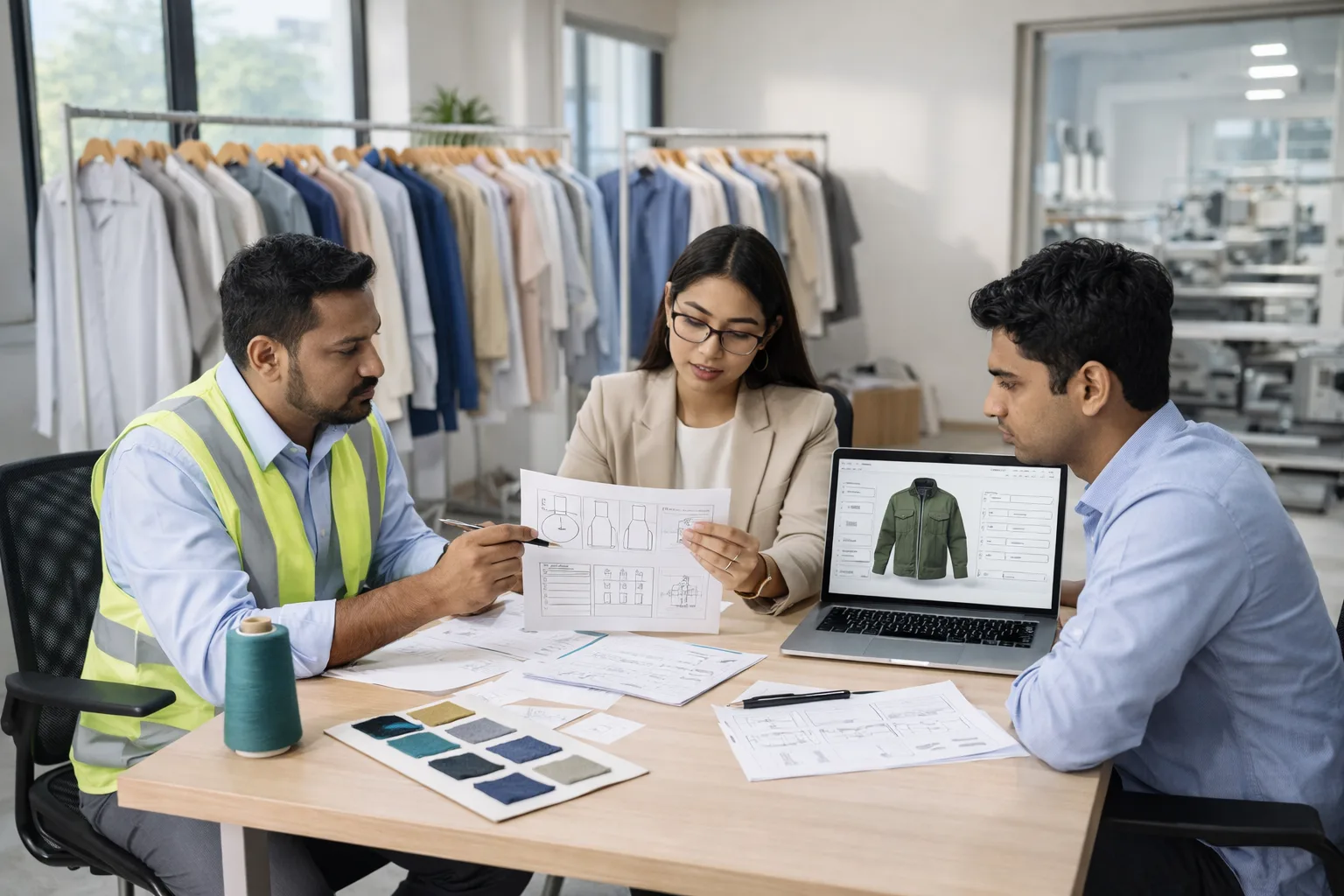
Many apparel brands work with manufacturing partners that can support either OEM or ODM, depending on the brand’s goals. Companies such as ApparGlobal support apparel brands with product development, sampling, and scalable garment manufacturing processes where OEM programs rely on structured tech packs and ODM programs rely on fast sampling and proven production templates.
When choosing a manufacturing partner, the most important factor is alignment. The factory should match your product category, quality expectations, communication style, and production capacity. Whether you choose OEM or ODM, consistent documentation and clear approvals help maintain quality and cost control.
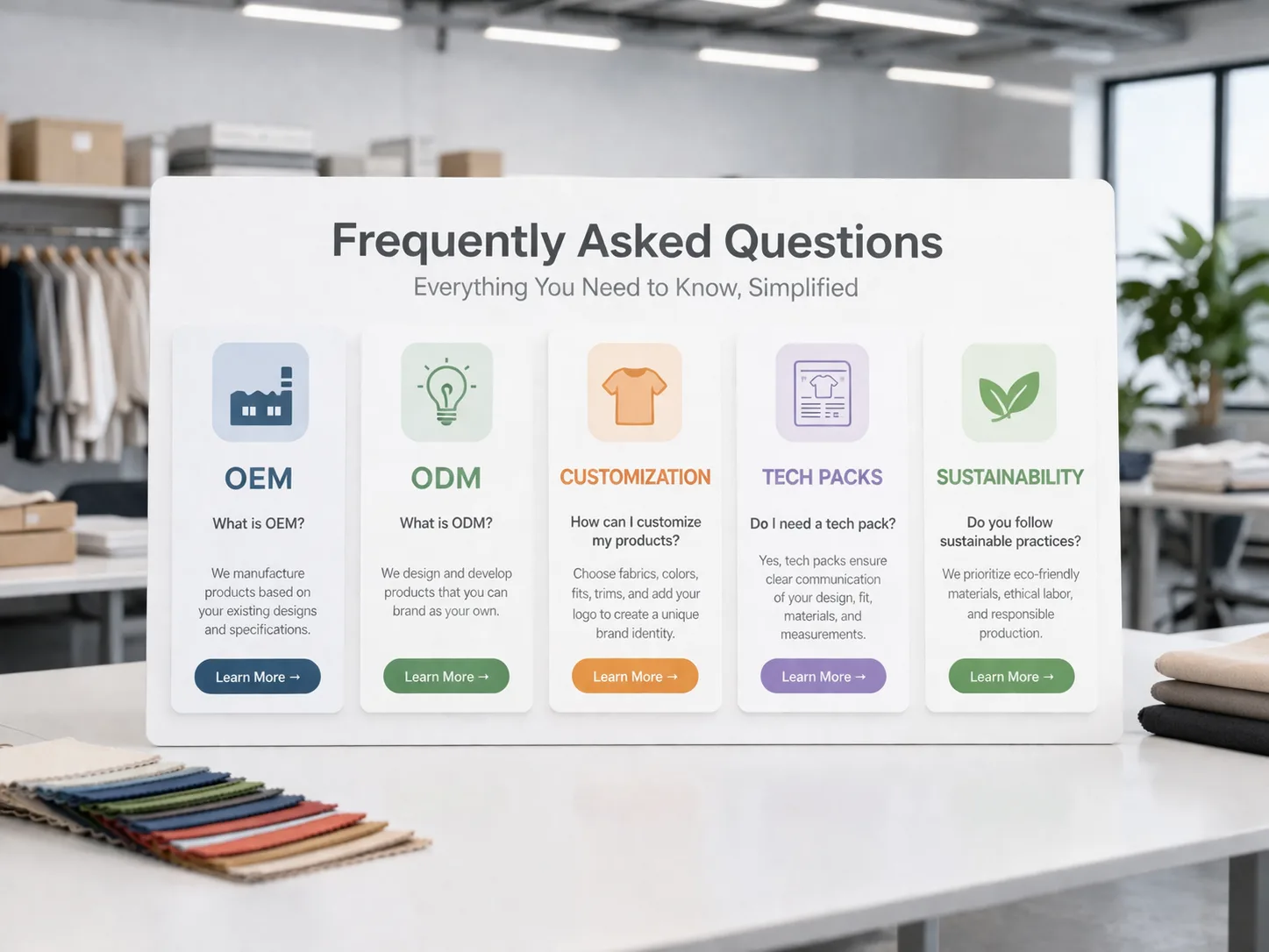
FAQ: OEM vs ODM in Apparel Manufacturing
Is OEM better than ODM for clothing brands?
OEM is better for brands that need unique products and long-term differentiation. ODM is better for faster launches and simpler production setups. The best choice depends on your brand stage and resources.
Can a brand start with ODM and later move to OEM?
Yes. Many brands start with ODM to test products quickly, then move to OEM once they understand demand and want stronger uniqueness.
Do ODM manufacturers offer customization?
Yes, but customization varies. Some factories allow only branding changes, while others allow fabric, trim, and fit modifications. Brands should confirm the level of customization available.
Does OEM require a tech pack?
OEM works best with a detailed tech pack because it defines product specifications clearly and prevents production errors.
Can sustainable fabrics be used in OEM and ODM?
Yes. Sustainability depends on fabric choice, process control, and supplier transparency, not only the manufacturing model. Brands should request documentation and traceability where needed.
Conclusion
OEM and ODM are two common manufacturing models in apparel sourcing, but they serve different brand needs. OEM gives brands more control, stronger differentiation, and better repeatability, but requires clearer technical documentation and product development work. ODM helps brands launch faster using proven designs and patterns, but may require deeper customization if the brand wants exclusivity and uniqueness.
The best sourcing decision comes from aligning your manufacturing model with your brand stage. If you want speed and low development complexity, ODM is often the fastest path. If you want long-term product identity and consistent reorders, OEM is often the stronger foundation for protecting your intellectual property. Many successful apparel brands use both models at different stages of growth, starting with ODM and transitioning into OEM as their product standards and demand become clearer.
Quick OEM vs ODM Decision Checklist
Before finalising your sourcing model, run through this checklist to confirm your direction:
- Do you have unique designs or proprietary patterns? → OEM
- Do you need to launch quickly with proven garments? → ODM
- Is brand exclusivity a core priority? → OEM
- Are you testing a new market with limited budget? → ODM
- Do you have detailed tech packs ready? → OEM is ready for you
- Do you prefer the factory to handle most development? → ODM
Use this as a starting framework, then refine your model as your brand scales and your production relationships mature.