Polyester fabric is one of the most widely used textiles in the world. It appears in T-shirts, activewear, dresses, jackets, uniforms, bags, linings, bedding, fleece, swimwear, workwear, and countless blended fabrics. Some people love it because it is durable, affordable, wrinkle-resistant, quick-drying, and easy to care for. Others criticize it because it is synthetic, fossil-based, less breathable than some natural fibers, and linked to microfiber pollution.
The truth is that polyester is neither a miracle fabric nor a useless material. It is a practical textile with clear strengths, real limitations, and important environmental concerns. The problem is that polyester is often discussed in extremes. Some buyers believe all polyester is cheap and uncomfortable. Others think recycled polyester solves every sustainability issue. Some brands use polyester because it is cost-effective but do not fully understand how it affects product quality, customer comfort, care, performance, and environmental impact.
For fashion brands, polyester fabric requires smart decision-making. It can be a strong material for activewear, outerwear, uniforms, linings, bags, swimwear, fleece, and performance clothing. But it may not be the best choice for every product. The key is understanding what polyester does well, where it falls short, and how to use it responsibly.
This guide breaks down the biggest myths and facts about polyester fabric so apparel brands, designers, fabric buyers, and everyday shoppers can make better choices.
What Is Polyester Fabric?
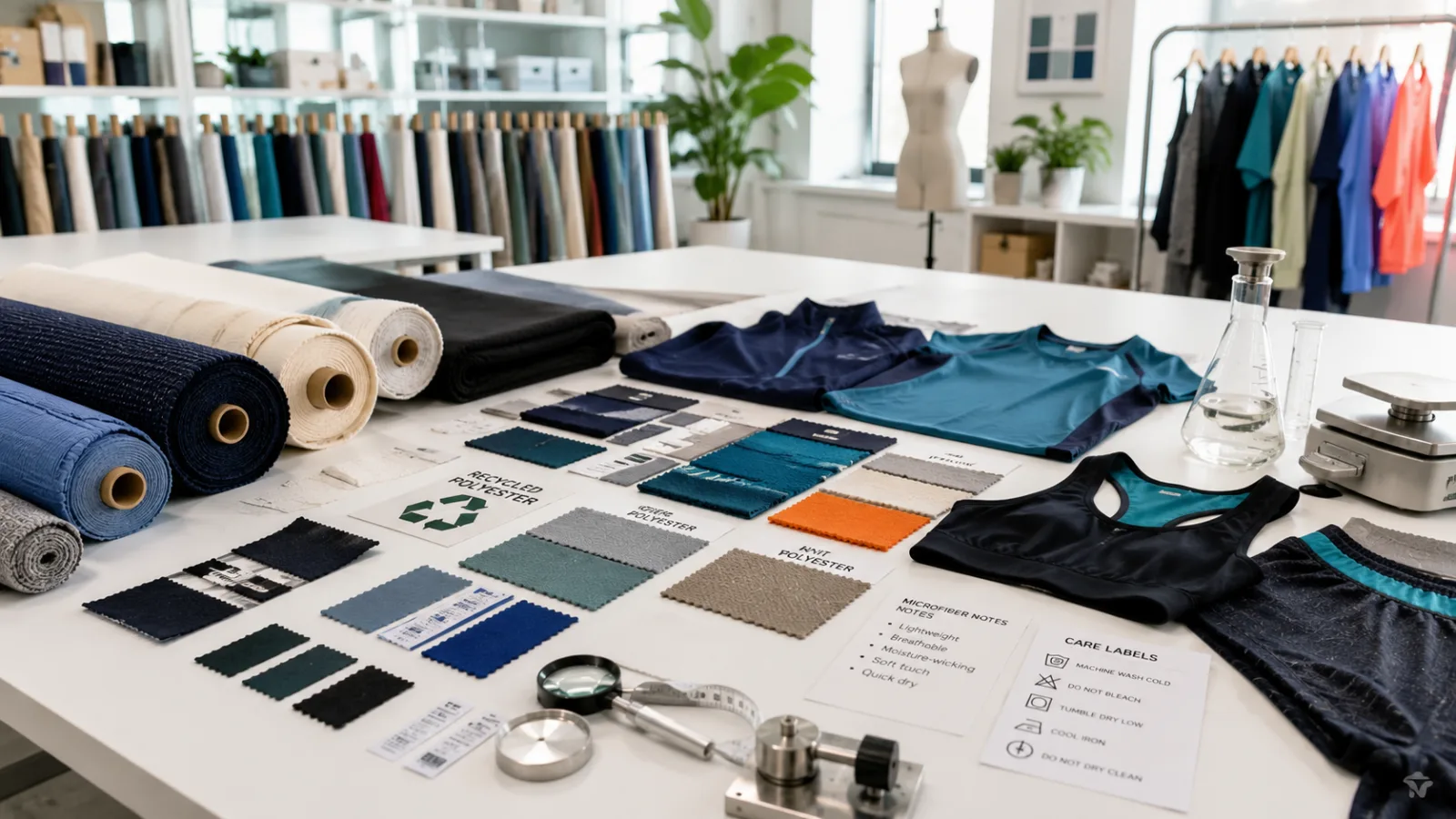
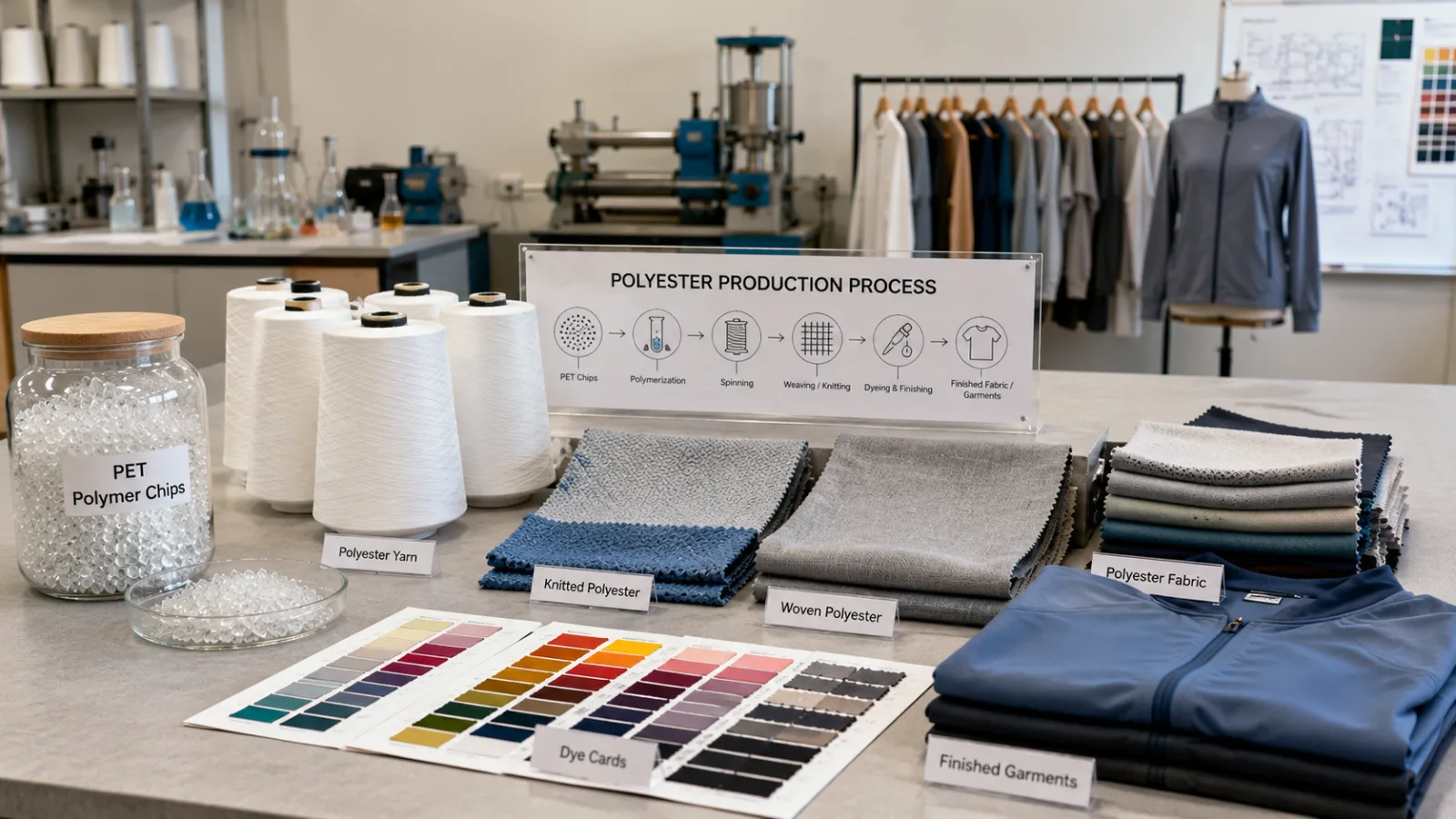
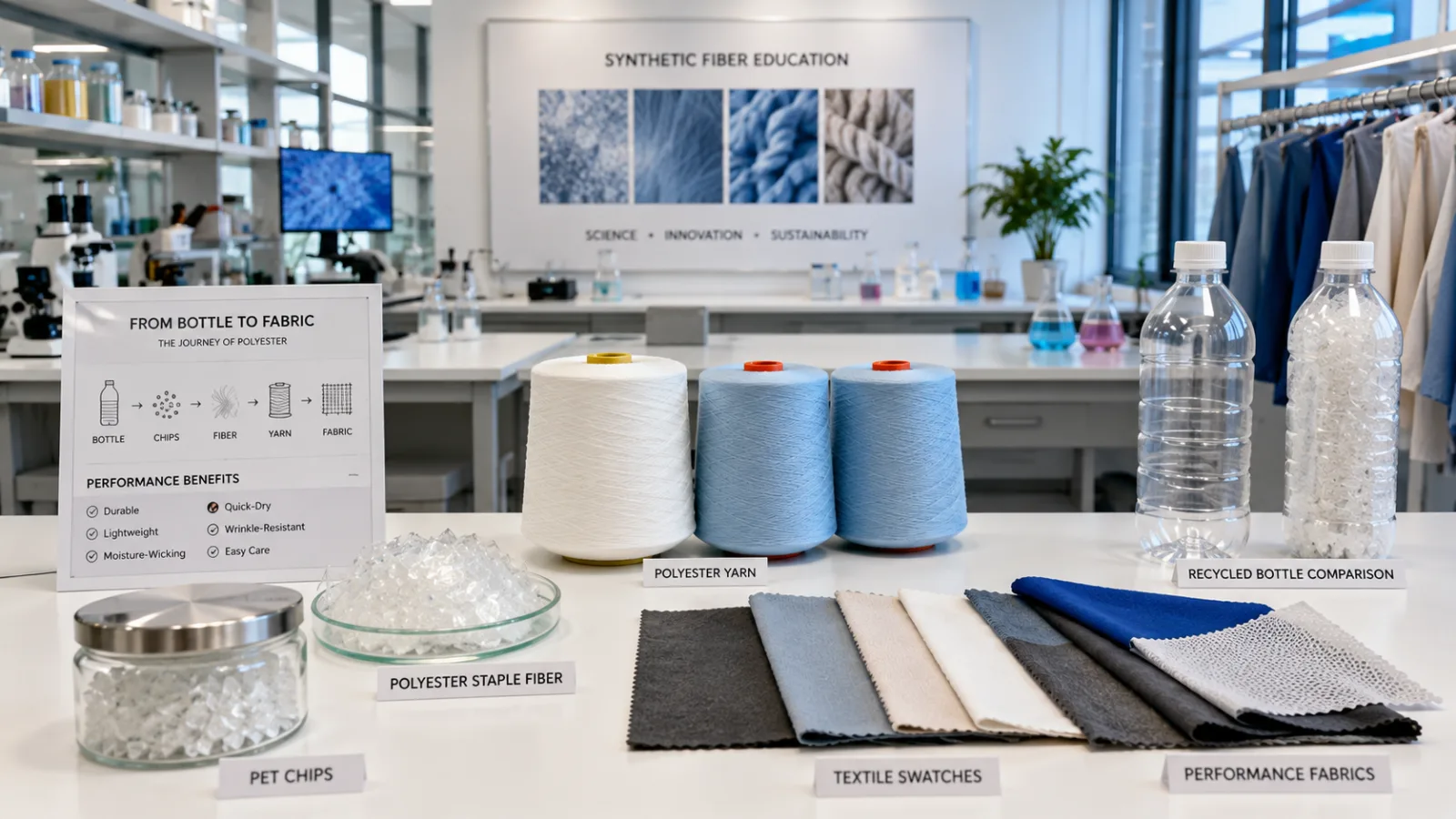
Polyester fabric is a synthetic textile made from polyester fibers. Most polyester used in clothing is made from polyethylene terephthalate, commonly known as PET. PET is the same polymer family used in many plastic bottles and packaging materials, although textile-grade polyester is processed into fibers and yarns for fabric production.
Polyester is created through a chemical process that turns raw materials into polymer chips, then melts and extrudes them into long filaments. These filaments can be spun, textured, woven, knitted, dyed, finished, and blended with other fibers.
One reason polyester became so popular is that it can be engineered for many uses. It can be lightweight or heavy, smooth or textured, shiny or matte, stretchy when blended with elastane, water-resistant with finishing, warm as fleece, or breathable when knitted in performance structures.
Polyester is not one single fabric type. It is a fiber that can be made into many fabrics, including:
- Polyester jersey
- Polyester fleece
- Polyester satin
- Polyester chiffon
- Polyester crepe
- Polyester taffeta
- Polyester mesh
- Polyester microfiber
- Polyester suiting fabric
- Polyester lining
- Polyester canvas
- Polyester blends
This variety is why polyester appears across many fashion categories. A cheap shiny blouse and a technical running shirt may both contain polyester, but they can feel and perform very differently.
Why Polyester Is So Common
Polyester is common because it is affordable, widely available, strong, easy to dye, quick-drying, wrinkle-resistant, and suitable for mass production. Textile Exchange reported that polyester remained the most produced fiber globally in 2023, accounting for 57 percent of total global fiber production.
In its 2025 materials report, Textile Exchange also reported that polyester represented 59 percent of global fiber output in 2024. This shows how dominant polyester has become in the global textile market.
For clothing brands, this dominance means polyester is easy to source in many weights, colors, finishes, and price points. But popularity does not automatically make it the best choice. It simply means brands need to understand it clearly.
Myth 1: Polyester Fabric Is Always Cheap and Low Quality
One of the most common myths about polyester fabric is that it is always cheap and low quality. This belief comes from low-cost polyester garments that feel rough, shiny, clingy, or uncomfortable. However, not all polyester is made the same way.
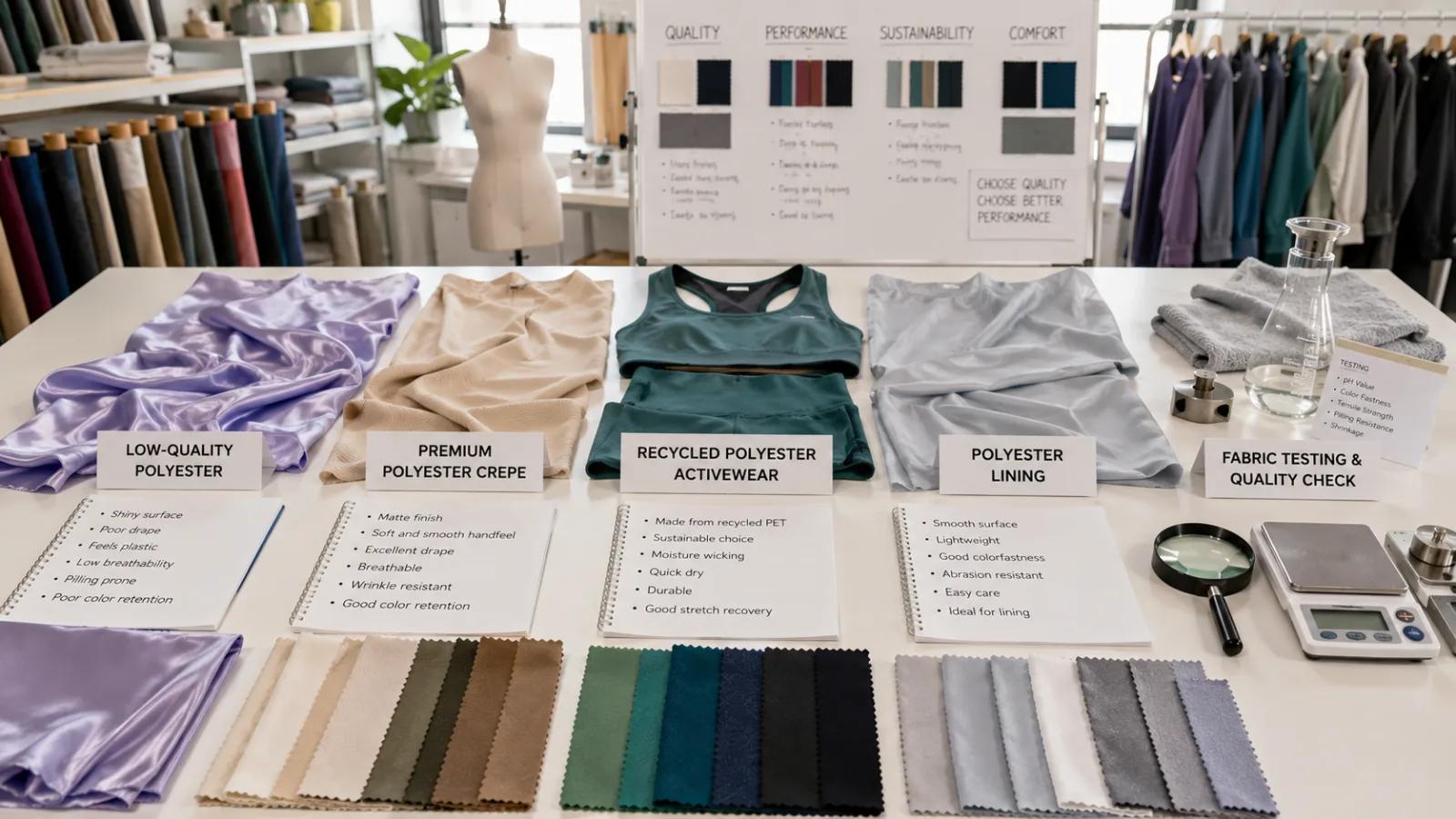
Polyester quality depends on fiber type, yarn structure, fabric construction, weight, finishing, dyeing, blending, and garment construction. A high-quality recycled polyester activewear fabric can feel smooth, supportive, and durable. A premium polyester crepe can drape beautifully. A well-made polyester lining can improve comfort and garment structure. A cheap polyester fabric, on the other hand, may feel plasticky, trap heat, pill quickly, or look overly shiny.
The Fact
Polyester can be low quality, mid-range, or high performance depending on how it is made.
It is better to judge polyester by fabric quality, not by fiber name alone. The same fiber can produce different results. A poor cotton fabric can also feel cheap, and a good polyester fabric can perform well.
What Makes Polyester Better Quality?
Better-quality polyester often has:
- A smoother hand feel
- Stronger yarns
- Better drape
- Less pilling
- More stable color
- Better moisture management
- Comfortable stretch when blended
- Higher durability
- Cleaner finishing
- Better fabric recovery
- More controlled shine
- Improved breathability through knit structure
For fashion brands, quality testing matters. Do not approve polyester fabric based only on a small swatch. Check stretch, recovery, pilling, shrinkage, colorfastness, breathability, and customer comfort.
Myth 2: Polyester Is Always Uncomfortable
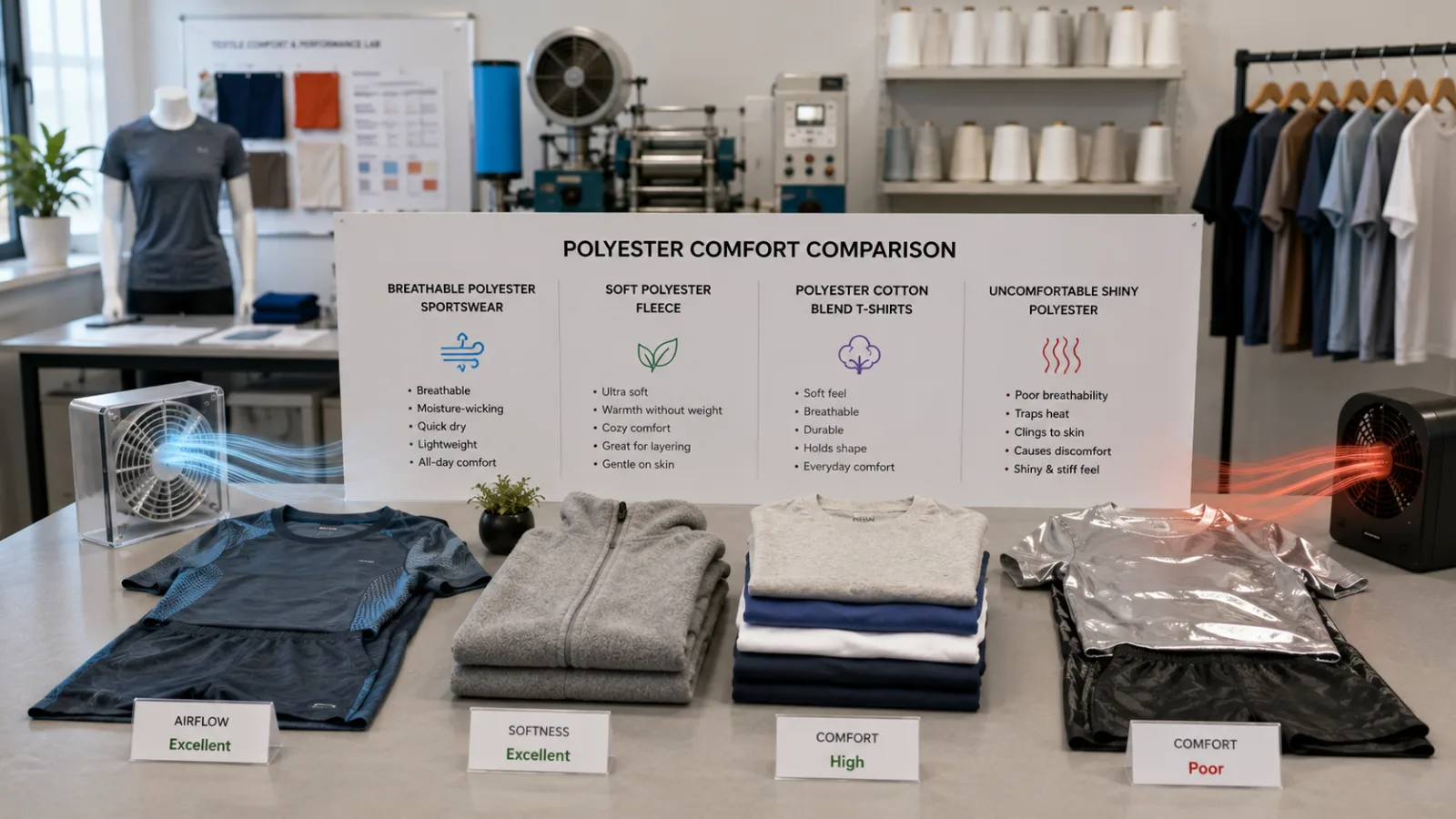
Many people think polyester is always hot, sweaty, and uncomfortable. This can be true for some polyester fabrics, especially cheap, tightly woven, non-breathable fabrics. But it is not true for all polyester.
Polyester comfort depends on fabric structure, garment fit, weight, finish, and intended use. A tightly woven polyester blouse may feel less breathable in summer. But a lightweight polyester mesh or moisture-wicking knit can be comfortable for sportswear. A polyester fleece can be warm and soft in cold weather. A polyester blend can improve durability while keeping some comfort from natural fibers.
The Fact
Polyester can be uncomfortable or comfortable depending on how it is engineered.
Polyester is hydrophobic, meaning it does not absorb much moisture. This is why it dries quickly. But it can also feel less breathable if the fabric does not allow air movement. In activewear, polyester is often engineered to move moisture away from the body, which can make it useful for performance clothing.
When Polyester Feels Comfortable
Polyester can feel comfortable when it is:
- Lightweight
- Knitted for airflow
- Blended with cotton, viscose, or elastane
- Used in moisture-wicking activewear
- Designed with proper fit
- Made with soft finishing
- Used in cooler weather as fleece
- Used as a smooth lining
When Polyester Feels Uncomfortable
Polyester may feel uncomfortable when it is:
- Too tightly woven
- Poorly finished
- Too heavy for the climate
- Low-quality and plasticky
- Static-prone
- Worn in hot, humid conditions
- Used in a garment with poor fit
- Not breathable enough for the activity
Myth 3: Polyester Is the Same as Plastic
People often say polyester is plastic. This statement is partly true, but it needs context. Polyester is a synthetic polymer, and most polyester used in textiles is PET, which belongs to the same polymer family as many plastic bottles. However, polyester fabric is not used in the same form as a bottle or hard plastic item. It is processed into fine fibers, yarns, and fabrics.
The Fact
Polyester is a plastic-based synthetic fiber, but textile polyester is engineered into fabric through fiber and yarn production. This matters because the material’s performance changes based on how it is made. Polyester can become smooth satin, soft fleece, strong canvas, lightweight mesh, or durable activewear. It can be blended with natural fibers or elastane to change feel and performance.
Why This Myth Matters
Calling polyester “just plastic” can oversimplify the issue. The real concern is not only that polyester is synthetic. The concerns include fossil fuel inputs, energy use, microfiber shedding, low biodegradability, overproduction, and end-of-life challenges.
At the same time, polyester’s durability, low water absorption, wrinkle resistance, and strength make it useful in many applications where natural fibers may not perform as well.
Smart Perspective
Polyester should be used where its performance benefits make sense. It should not be used carelessly just because it is cheap and widely available.
Myth 4: Polyester Is Always Bad for the Environment
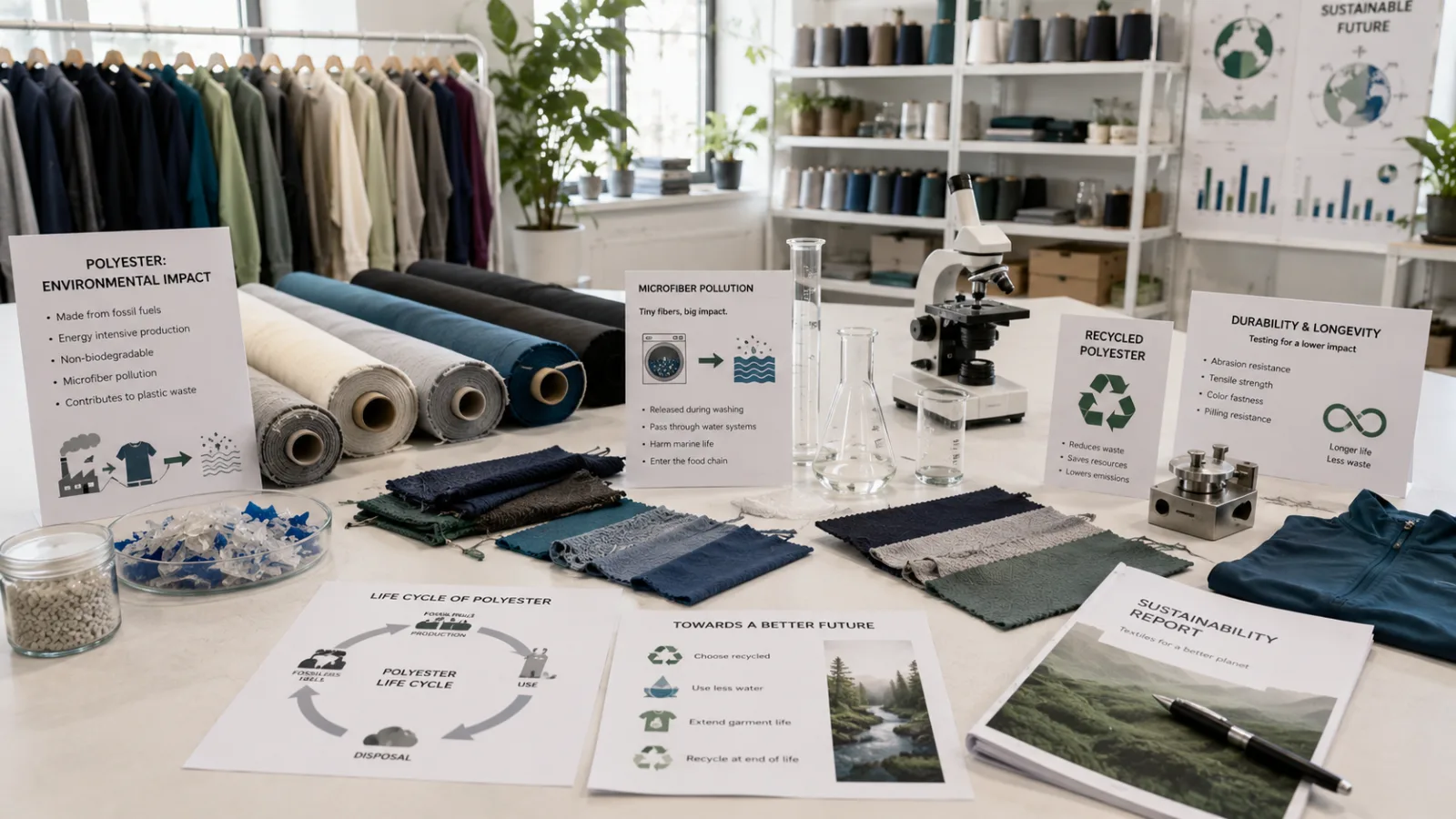
Polyester has serious environmental concerns, but saying it is always bad in every situation is too simple. Polyester is fossil-based when made from virgin petroleum resources. It contributes to synthetic textile growth and can shed microplastic fibers. It does not biodegrade like many natural fibers. It can also support overproduction because it is affordable and easy to produce at scale.
However, polyester can also be durable, long-lasting, lightweight, and suitable for products that need performance, weather resistance, or frequent washing. A durable polyester uniform worn for years may have a different impact than a low-quality fashion item discarded after a few uses.
The Fact
Polyester has real environmental problems, but impact depends on production, use, durability, care, and end-of-life. UNEP reported in 2025 that the fashion and textiles sector accounts for an estimated 2 to 8 percent of global greenhouse gas emissions and about 9 percent of annual microplastic pollution reaching oceans. Since polyester is the dominant global fiber, its use is strongly connected to broader sustainability discussions in fashion.
Key Environmental Concerns
- Virgin polyester depends on fossil resources.
- Synthetic textiles can shed microfibers.
- Polyester is difficult to biodegrade.
- Polyester blends can be hard to recycle.
- Low-cost polyester can support overproduction.
- Textile-to-textile recycling
- is still limited.
- Dyeing and finishing still carry chemical and energy impacts.
Where Polyester May Still Make Sense
Polyester may be practical for activewear, uniforms, outerwear, bags, swimwear, linings, workwear, and durable performance products. The key is designing products that last, perform well, and are not overproduced.
Myth 5: Recycled Polyester Solves Everything
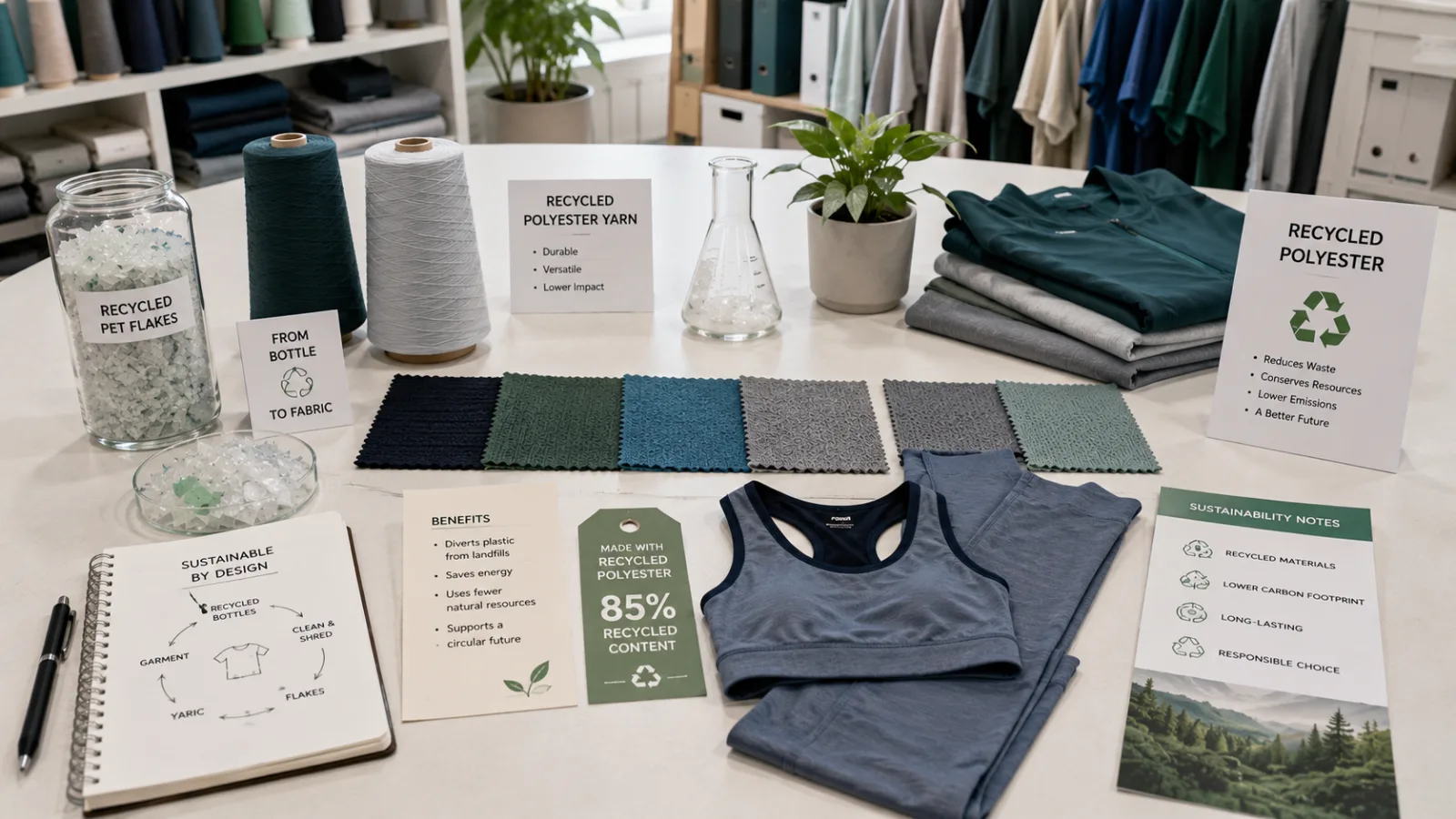
Recycled polyester is often promoted as a sustainable solution. It can reduce demand for virgin fossil-based polyester and give a second life to PET waste, especially plastic bottles. But recycled polyester does not solve every problem.
Most recycled polyester still behaves like polyester. It can still shed microfibers. It may still be difficult to recycle again if blended with other fibers or elastane. It may depend heavily on bottle-to-textile recycling rather than true textile-to-textile recycling.
Textile Exchange reported that recycled synthetics face scaling challenges and that virgin fossil-based synthetics increased from 67 million tonnes in 2022 to 75 million tonnes in 2023. Its 2023 report also noted that recycled polyester was largely made from plastic bottles and that scaling textile-to-textile recycling remains difficult.
The Fact
Recycled polyester can be better than virgin polyester in some ways, but it is not a complete sustainability solution.
Benefits of Recycled Polyester
- Reduces demand for virgin fossil-based polyester
- Uses existing PET waste
- Can lower some impacts compared with virgin polyester
- Works well in performance fabrics
- Can support durability and easy care
Limitations of Recycled Polyester
- Still synthetic
- Can still shed microfibers
- Often made from bottles, not old textiles
- May be difficult to recycle again
- Can be blended with elastane or other fibers
- Does not fix overproduction
- Does not automatically make a garment sustainable
How Brands Should Use Recycled Polyester
Use recycled polyester when polyester performance is needed, but avoid using it as a simple marketing label. Explain the recycled content clearly. Choose better fabric quality. Design for durability. Avoid unnecessary blends when possible. Be honest about limitations.
Myth 6: Polyester Does Not Breathe at All
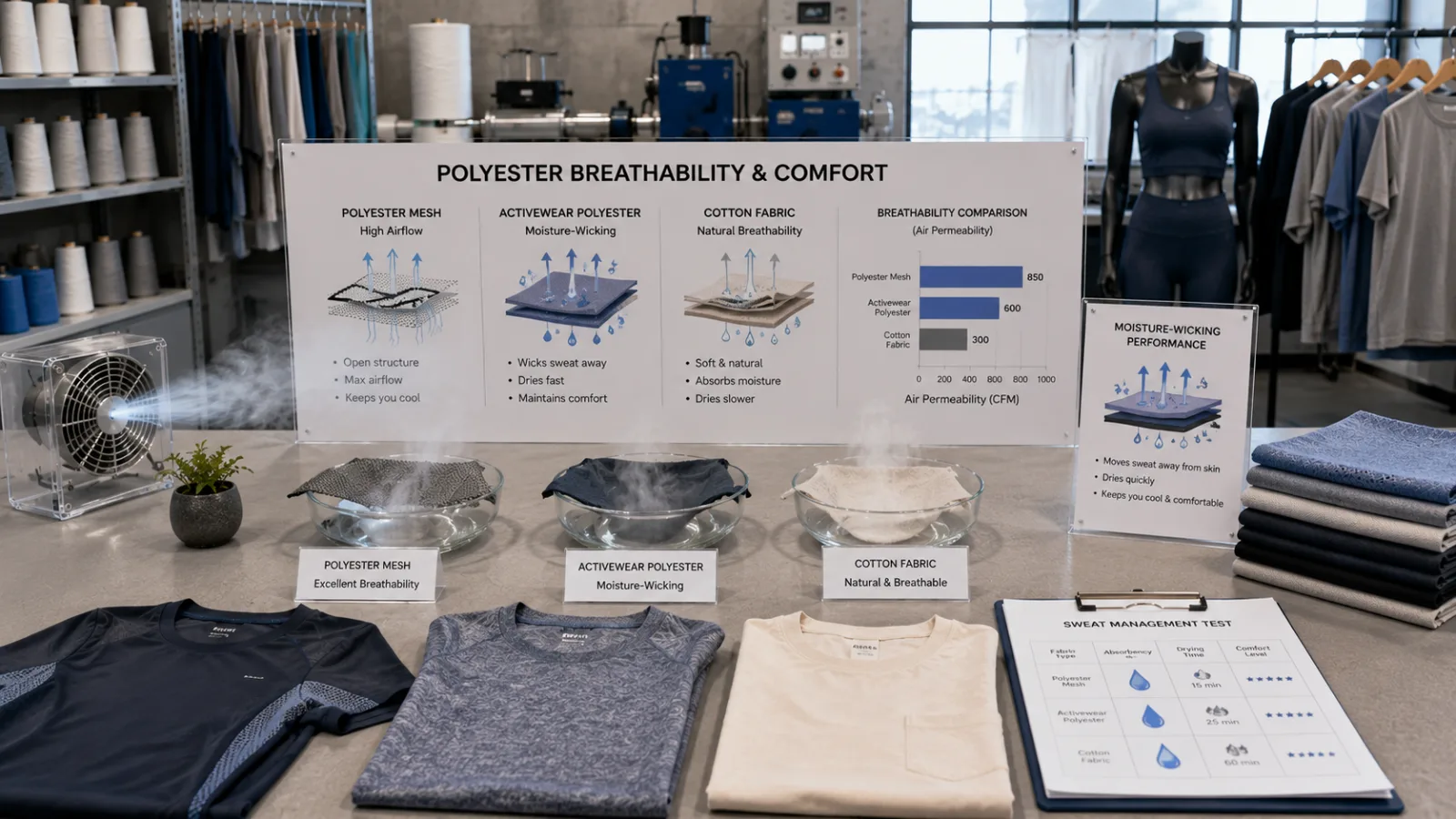
Polyester is often described as non-breathable. In some fabrics, this is true. But breathability depends on fabric construction as much as fiber content. A tightly woven polyester fabric may trap heat, while an open-knit polyester mesh can allow airflow.
Polyester does not absorb moisture the way cotton does. But performance polyester fabrics can be engineered to wick moisture away from the skin and dry quickly. This is why polyester is common in activewear and sports uniforms.
The Fact
Polyester is not naturally absorbent, but it can be engineered for breathability and moisture management.
Breathability Depends On
- Knit or weave structure
- Fabric weight
- Yarn type
- Finishing
- Moisture-wicking treatment
- Garment fit
- Layering
- Climate
- Activity level
Polyester vs Cotton Breathability
Cotton absorbs moisture and often feels breathable in casual wear. But once wet, cotton can stay damp longer. Polyester absorbs less water and dries faster, which can be useful during exercise. This is why the best fabric depends on use.
For everyday summer clothing, cotton, linen, hemp, or viscose may feel better for many people. For running, gymwear, swimwear, or quick-dry travel clothing, polyester may be more practical.
Myth 7: Polyester Is Only Used in Cheap Fashion
Polyester is common in low-cost fashion, but it is also used in premium, technical, and performance products. Luxury brands may use polyester in linings, blends, technical outerwear, pleated fabrics, eveningwear, or durable structured textiles. Sportswear brands use polyester because it can be engineered for performance. The issue is not whether polyester appears in a garment. The issue is whether it is used for the right reason.
The Fact
Polyester is used across budget, mid-market, premium, and technical fashion categories.
Common Premium Uses
- Performance activewear
- Technical jackets
- Luxury linings
- Pleated skirts
- Crepe dresses
- Structured suiting blends
- Durable bags
- Travel clothing
- Weather-resistant outerwear
- Swimwear blends
- Uniform fabrics
Why Designers Use Polyester
Designers may use polyester because it can hold pleats, resist wrinkles, dry quickly, offer strength, provide shine, reduce cost, improve durability, or support specific performance features.
A garment can contain polyester and still be well-designed. But brands should not use polyester only as a cost-cutting shortcut if it weakens comfort or quality.

Myth 8: Polyester Always Smells Bad
Polyester can hold odor more than some natural fibers, especially in activewear. This happens because polyester is hydrophobic and can attract oily substances from sweat. If odor-causing compounds remain in the fabric, the garment may smell even after washing.
But this does not mean all polyester always smells bad. Fabric quality, finishing, washing habits, body chemistry, garment use, and drying method all matter.
The Fact
Polyester can retain odor, especially in sportswear, but proper fabric design and care can reduce the problem.
Why Odor Happens
Sweat contains water, salts, oils, and organic compounds. Polyester does not absorb water deeply, but oily substances can cling to synthetic fibers. Bacteria can interact with these residues and create odor.
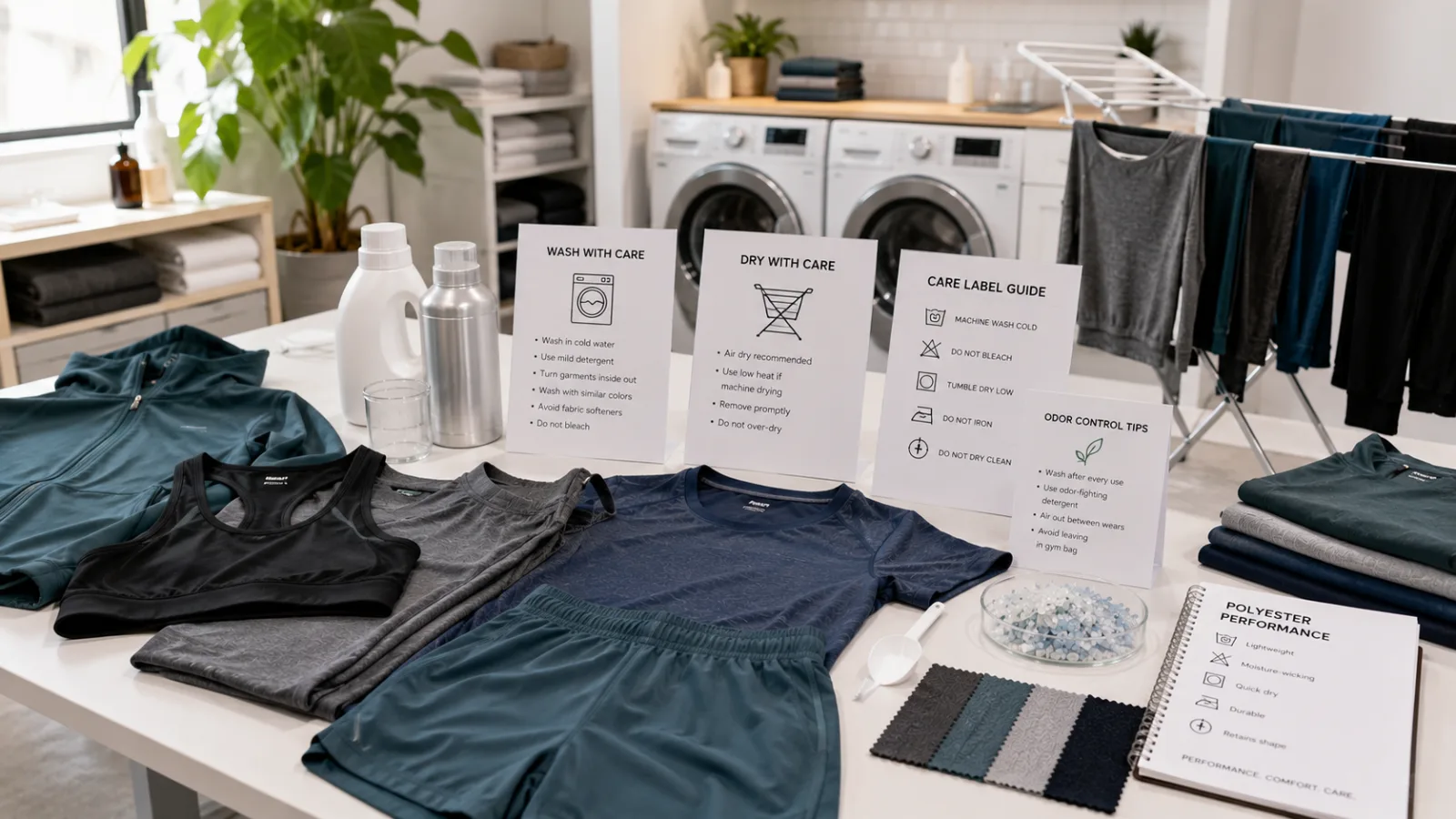
How to Reduce Odor in Polyester Clothing
- Wash soon after heavy sweating.
- Do not leave damp polyester in gym bags.
- Use the right amount of detergent.
- Avoid fabric softener on activewear.
- Air dry fully before storing.
- Wash inside out.
- Use sport-specific detergent if needed.
- Avoid overloading the washing machine.
Brand Tip
If producing activewear, test odor retention and wash performance. Customers notice these issues quickly. A garment that performs well during exercise but smells after a few wears can hurt repeat sales.
Myth 9: Polyester Never Shrinks or Changes Shape
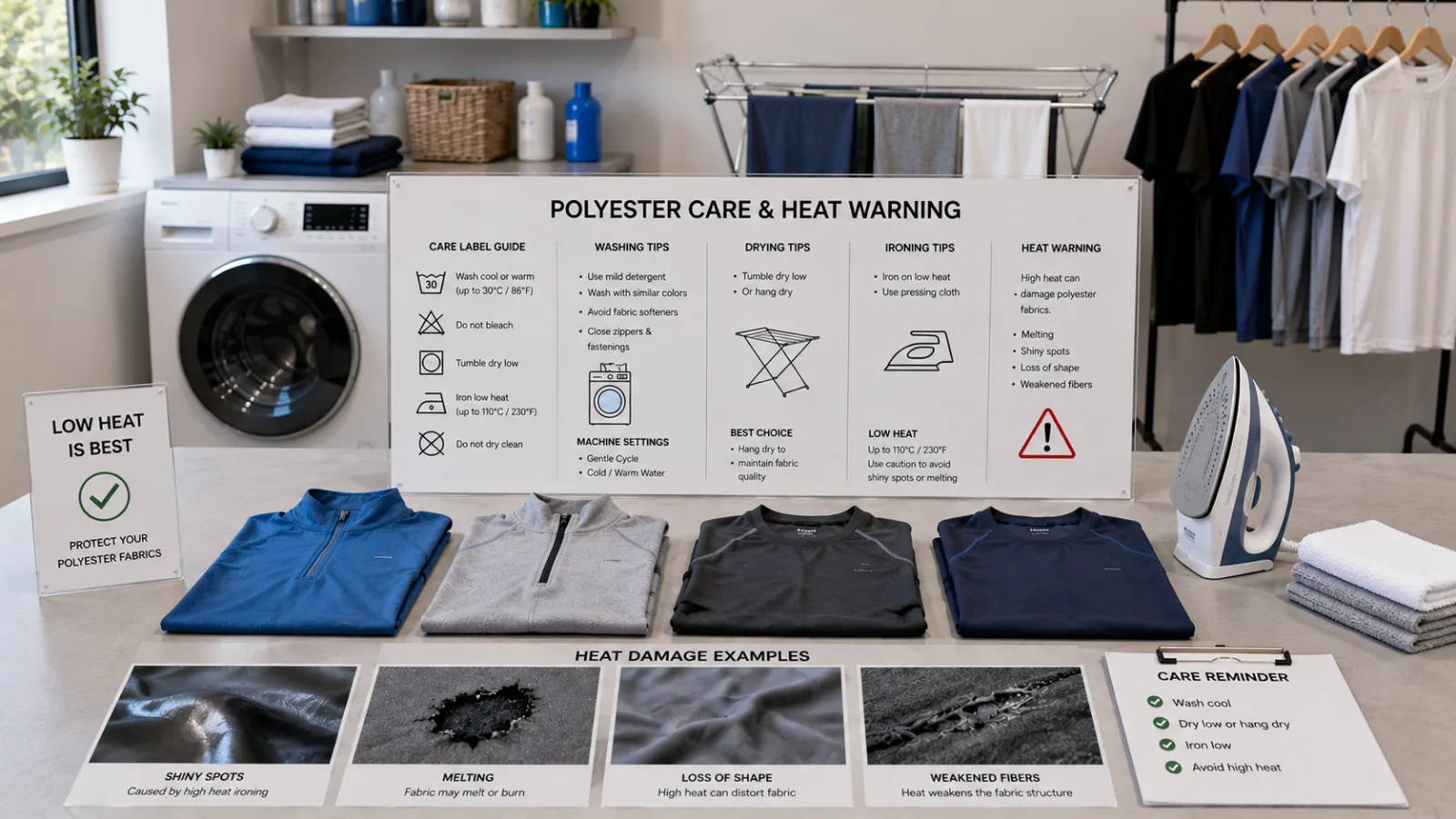
Polyester is more shrink-resistant than many natural fibers, but that does not mean it never changes. Heat can affect polyester. High dryer heat or hot ironing can damage fibers, create shine marks, distort fabric, or affect garment shape. Blended fabrics may also behave differently depending on the other fiber.
The Fact
Polyester is generally dimensionally stable, but it can still be damaged by heat, poor washing, or weak garment construction.
Polyester Care Risks
- High heat can damage fabric.
- Hot ironing can create shiny marks.
- Poor-quality fabric may pill.
- Elastic blends may lose recovery.
- Seams may twist if construction is poor.
- Pleats or finishes may change with care.
- Printed polyester can crack or fade if treated badly.
How to Care for Polyester
- Wash with cool or warm water.
- Use mild detergent.
- Avoid excessive heat.
- Air dry when possible.
- Tumble dry low if the care label allows.
- Iron low if needed.
- Use a pressing cloth.
- Do not use harsh bleach unless care label permits.
- Follow garment-specific instructions.
Myth 10: Polyester Cannot Be Sustainable
Polyester sustainability is complicated, but saying polyester cannot be part of a responsible product strategy is too absolute. In some cases, polyester can support durability, long life, repairability, performance, and lower washing impact compared with more delicate fabrics. However, it must be used carefully and honestly.
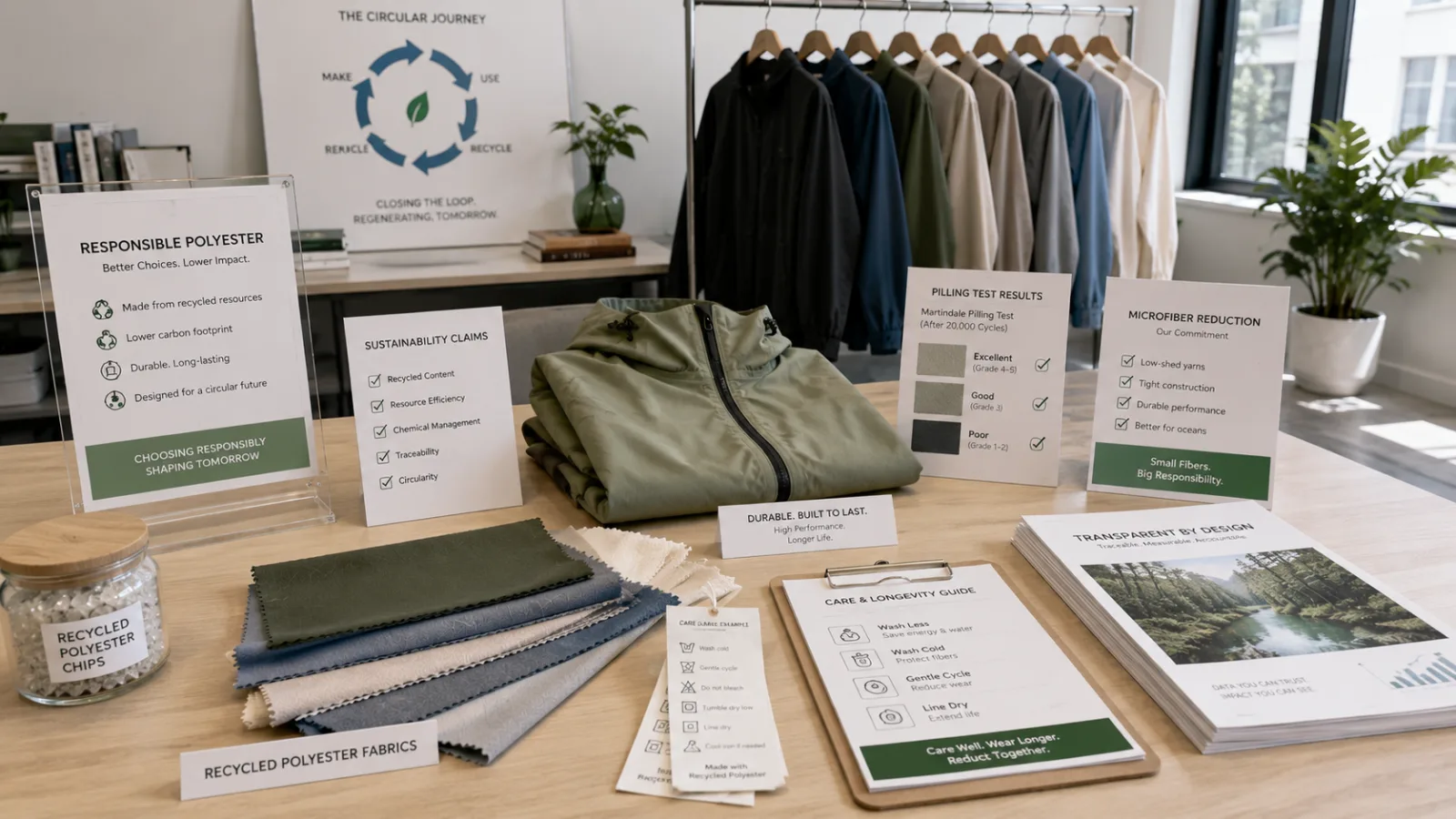
A sustainable polyester strategy is not just about switching to recycled polyester. It also includes reducing overproduction, improving product quality, designing for long use, avoiding unnecessary blends, managing microfiber shedding, using responsible dyeing and finishing, and planning end-of-life options.
The Fact
Polyester can be used more responsibly, but it requires better design, sourcing, production, care, and transparency.
Responsible Polyester Practices
- Use polyester only where performance benefits matter.
- Choose recycled polyester when suitable.
- Avoid low-quality throwaway garments.
- Improve fabric durability.
- Test pilling and wash performance.
- Reduce microfiber shedding where possible.
- Avoid unnecessary fiber blends.
- Design products for longer use.
- Communicate honestly about recycled content.
- Avoid greenwashing.
- Explore textile-to-textile recycling options where available.
What Brands Should Avoid
Do not label a garment “sustainable” only because it contains recycled polyester. Do not ignore shedding, overproduction, or poor durability. Do not use sustainability language without explaining the details.
Polyester Fabric Benefits
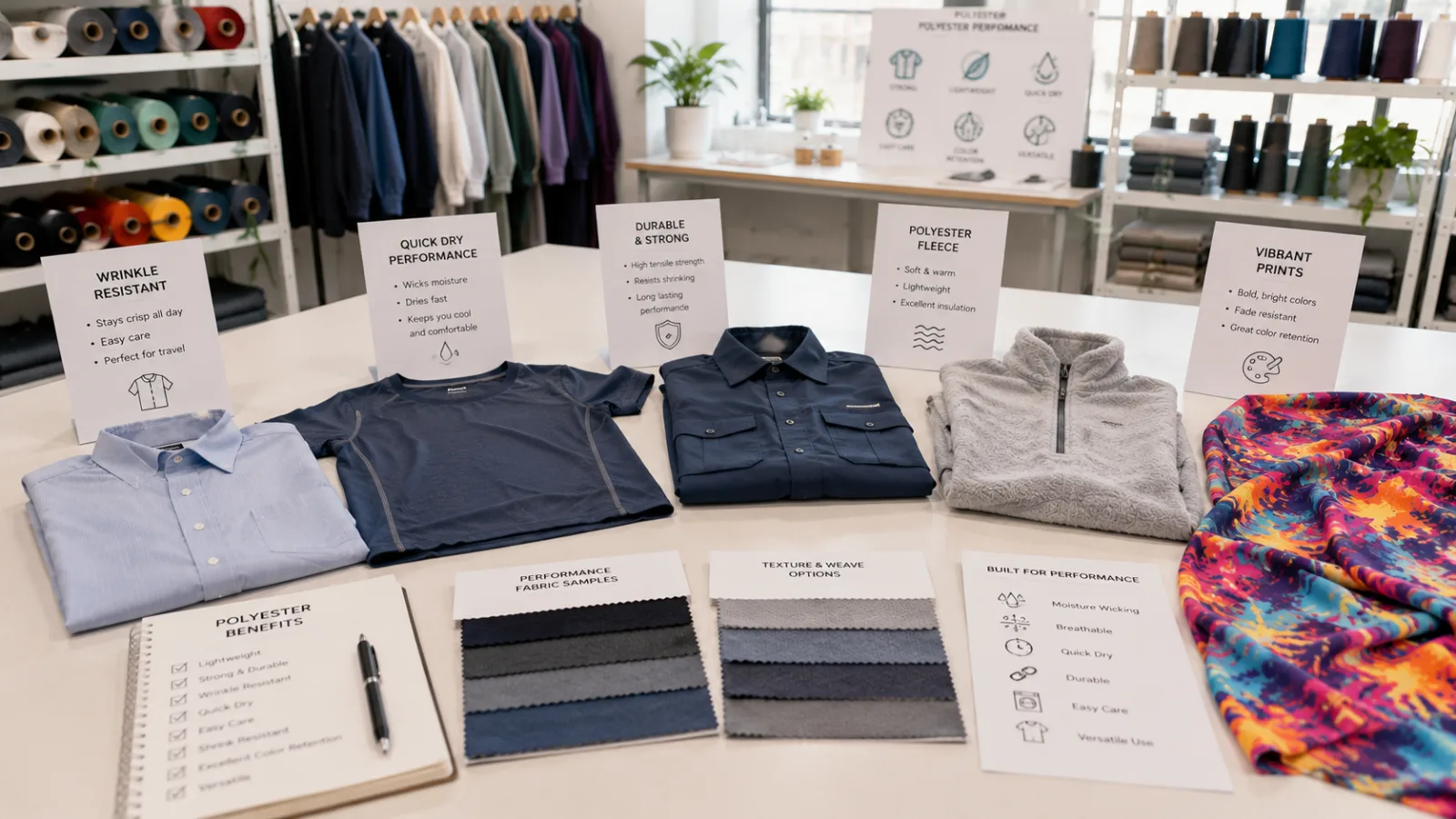
Polyester remains widely used because it offers real benefits. These advantages explain why many clothing brands continue to use it.
Durability
Polyester can be strong and resistant to wear. This makes it useful for uniforms, bags, activewear, outerwear, and everyday apparel.
Wrinkle Resistance
Polyester resists wrinkles better than many natural fibers. This makes it useful for travel clothing, workwear, dresses, and easy-care garments.
Quick Drying
Polyester absorbs little moisture, so it dries quickly. This is helpful for sportswear, swimwear, travel clothes, and outerwear.
Shape Retention
Polyester can help garments keep their shape, especially in blends.
Affordability
Polyester is usually more affordable than many natural and specialty fibers, making it accessible for mass-market clothing.
Versatility
Polyester can be made into many fabric types, from satin and chiffon to fleece and mesh.
Color Retention
Polyester can hold dye well when processed properly, making it useful for bright colors and prints.
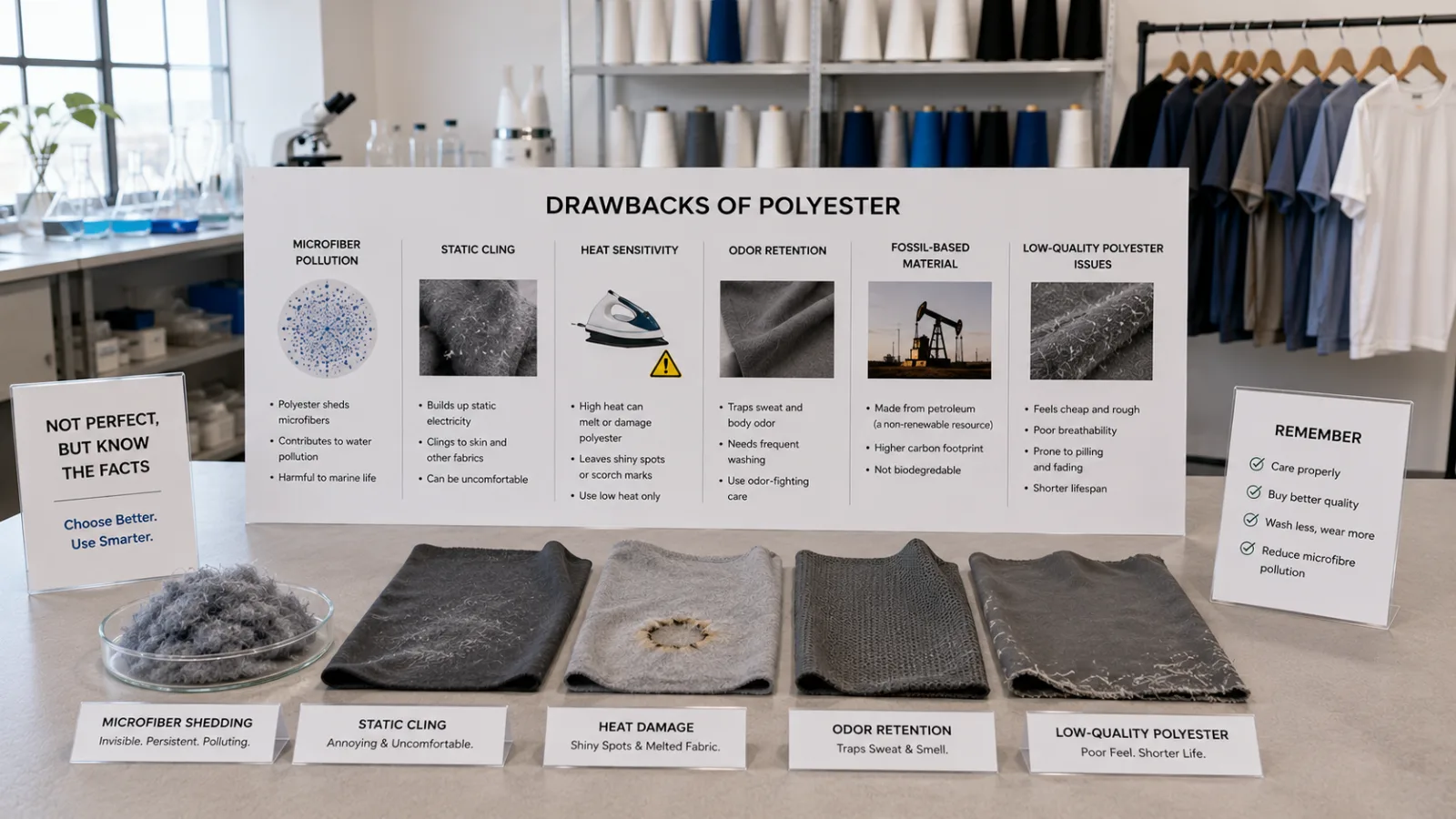
Polyester Fabric Drawbacks
Polyester also has drawbacks that brands and buyers should understand.
Breathability Issues
Some polyester fabrics feel warm or uncomfortable in hot weather.
Microfiber Shedding
Synthetic fibers can shed microplastics during wearing and washing. The European Environment Agency recognizes wearing and washing textiles made from synthetic fibers as one source of microplastics in the environment.
Odor Retention
Polyester activewear may retain odor if not washed properly.
Static
Polyester can build static, especially in dry conditions.
Heat Sensitivity
High heat can damage polyester or cause shine marks.
Environmental Concerns
Virgin polyester is fossil-based, and recycling systems are still limited.
Lower Luxury Feel in Cheap Versions
Low-quality polyester may feel plasticky, shiny, or uncomfortable.
Polyester vs Cotton: Which Is Better?
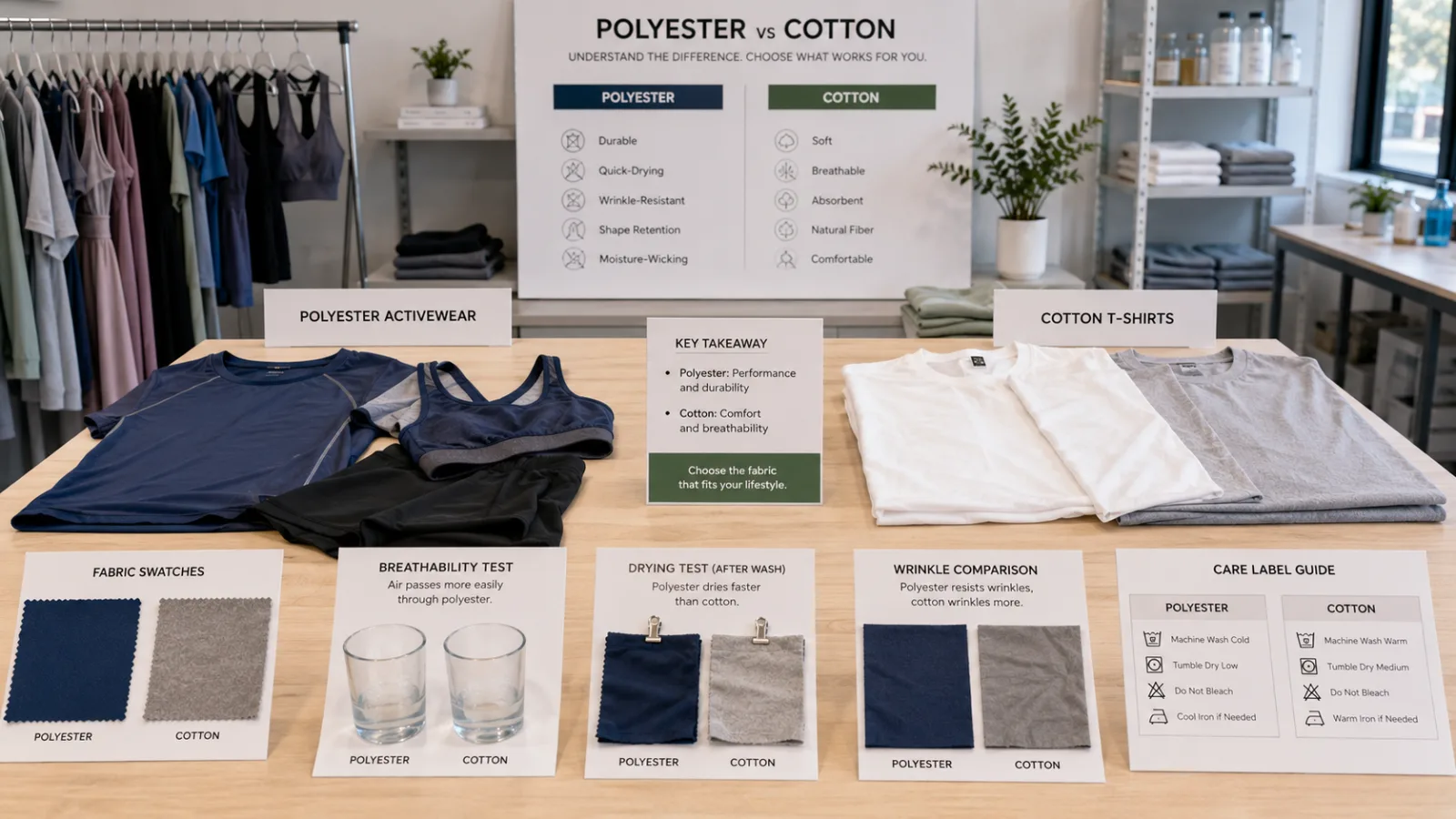
Polyester and cotton are often compared, but neither is automatically better. The right choice depends on the product.
Polyester Strengths
- Quick-drying
- Wrinkle-resistant
- Durable
- Lightweight
- Good for performance wear
- Less likely to shrink
- Often more affordable
Cotton Strengths
- Breathable
- Soft
- Natural fiber
- Absorbent
- Comfortable for casual wear
- Biodegradable under suitable conditions
- Good for T-shirts and basics
Polyester Weaknesses
- Less breathable in some fabrics
- Synthetic and fossil-based
- Microfiber concerns
- Can retain odor
- May feel less natural
Cotton Weaknesses
- Can shrink
- Can wrinkle
- Dries slowly
- May require significant water and land depending on farming
- Can wear out faster in some uses
Best Use Cases
Use polyester for activewear, outerwear, uniforms, linings, swimwear, bags, and quick-dry products. Use cotton for casual T-shirts, babywear, breathable basics, shirts, and comfort-first products. Use blends when you need the benefits of both.
Polyester Blends: Why Brands Use Them
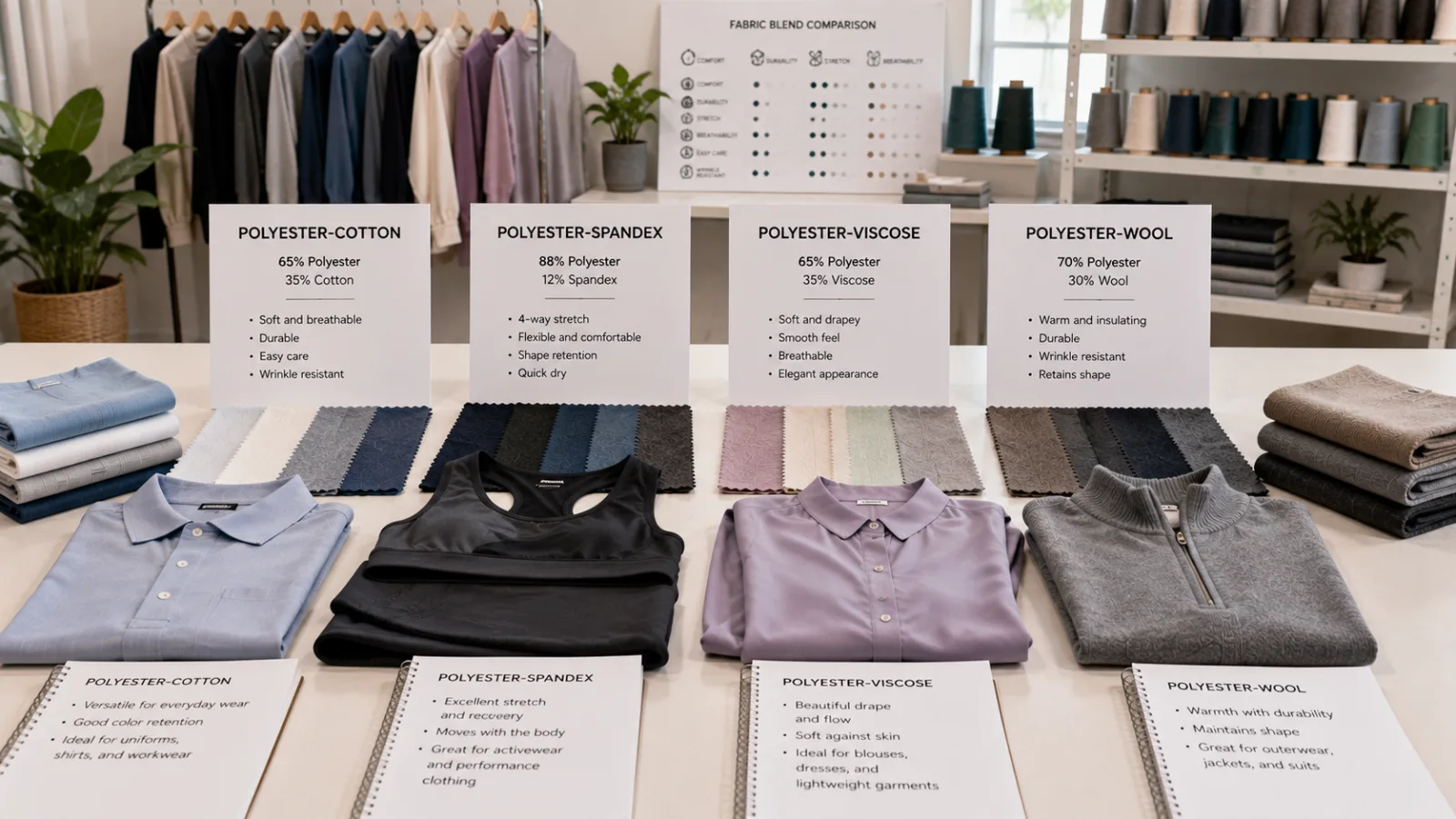
Polyester is often blended with cotton, viscose, wool, rayon, spandex, or other fibers. Blending changes fabric performance.
Common Polyester Blends
- Polyester-Cotton: Often used for T-shirts, uniforms, shirts, and casualwear. It can improve wrinkle resistance and durability while keeping some cotton comfort.
- Polyester-Spandex: Used in activewear, leggings, swimwear, and fitted garments. It adds stretch and recovery.
- Polyester-Viscose: Used in dresses, suiting, blouses, and draped garments. It can improve softness and drape.
- Polyester-Wool: Used in suiting and uniforms. It can reduce wrinkles and cost while keeping some wool character.
Benefits of Blends
- Improved durability
- Better stretch
- Lower cost
- Reduced wrinkles
- Improved drape
- Better shape retention
- More flexible performance
Drawbacks of Blends
Blends can be harder to recycle. They may also complicate care instructions. A polyester-cotton blend behaves differently from pure cotton or pure polyester.
How to Choose Good Polyester Fabric
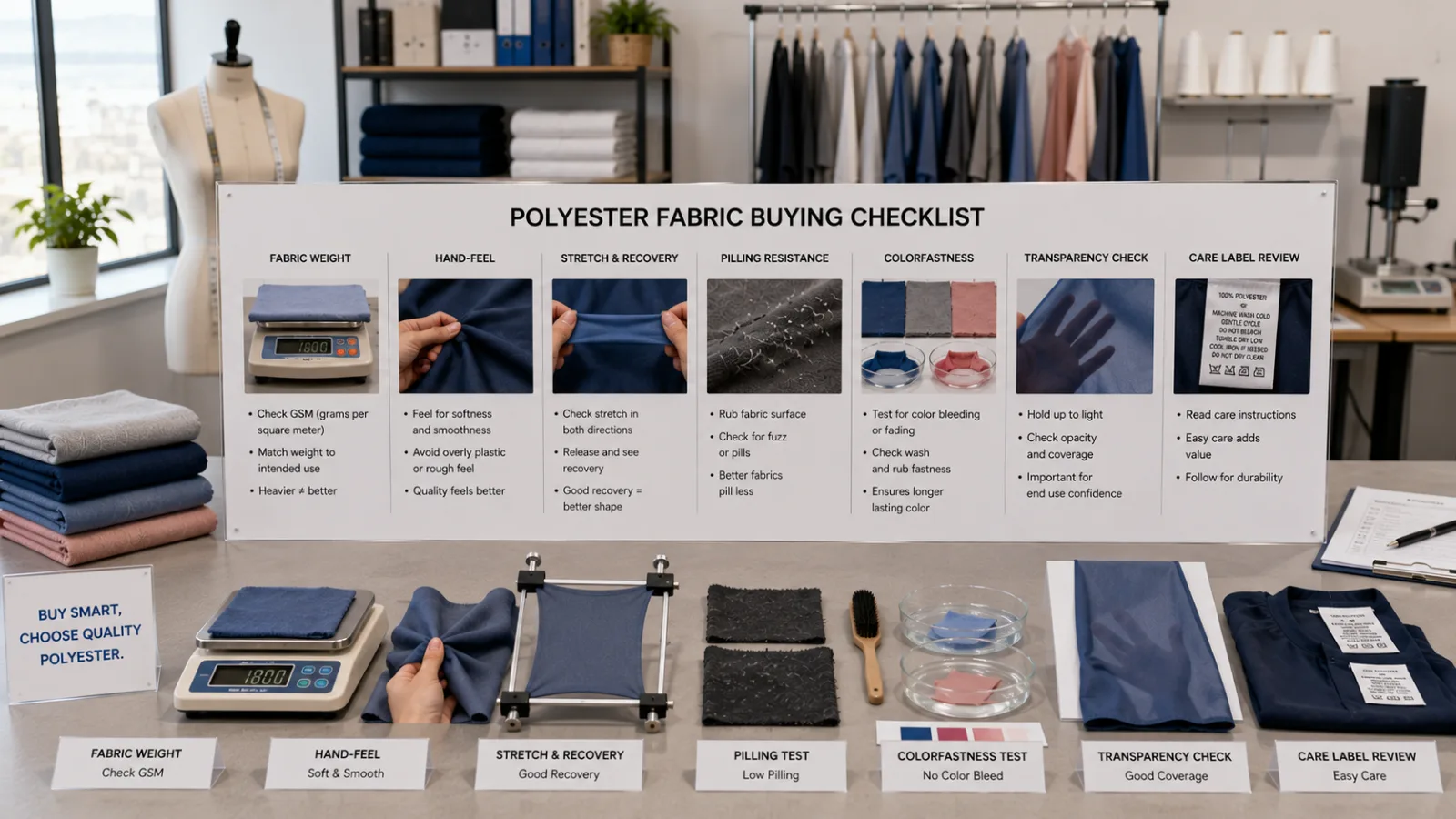
Choosing polyester fabric requires more than checking the fiber content. Brands should evaluate performance, comfort, construction, and care.
Check Fabric Weight
Lightweight polyester may work for blouses, linings, and dresses. Heavier polyester may work for outerwear, uniforms, and bags.
Check Hand Feel
The fabric should feel suitable for the garment. Avoid overly plasticky or rough polyester if comfort matters.
Test Stretch and Recovery
For activewear or fitted products, check how well the fabric stretches and returns to shape.
Check Pilling
Poor-quality polyester can pill quickly. Pilling tests are important for customer satisfaction.
Check Colorfastness
Bright polyester fabrics should be tested for color bleeding, fading, and washing performance.
Check Breathability
For warm-weather clothing or activewear, fabric structure matters. Mesh or moisture-wicking knits may be better.
Check Transparency
Some lightweight polyester can be sheer. Lining may be required.
Check Care Requirements
Make sure the care label matches how customers will actually use the garment.
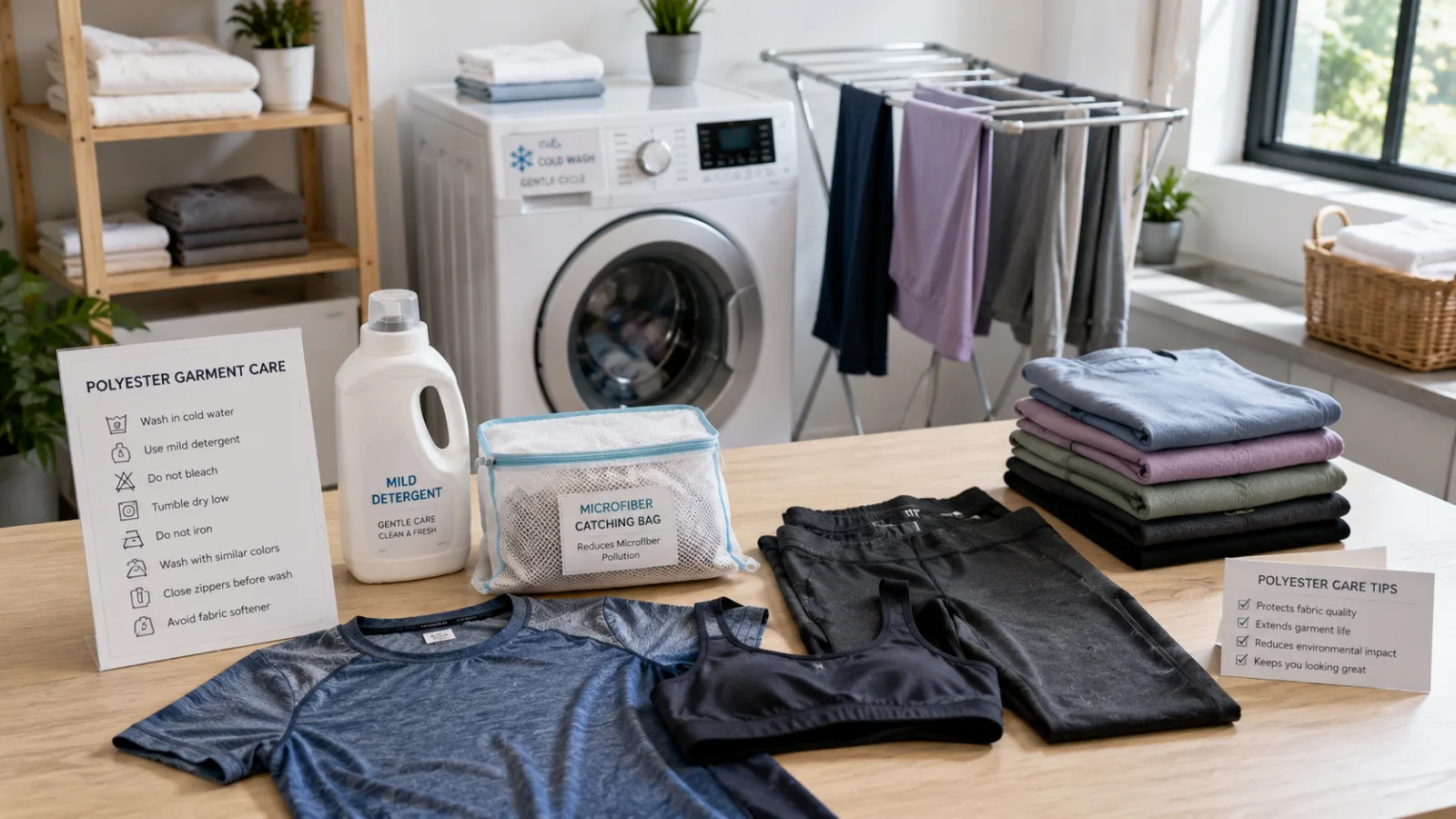
How to Care for Polyester Clothing
Polyester is generally easy to care for, but proper washing helps garments last longer.
Polyester Care Tips
- Wash inside out when possible.
- Use cool or warm water.
- Avoid excessive heat.
- Use mild detergent.
- Do not overload the washing machine.
- Air dry when practical.
- Use low dryer heat if needed.
- Avoid fabric softener on activewear.
- Do not iron on high heat.
- Store fully dry to avoid odor.
- Wash sweaty garments soon after use.
- Follow the care label.
Reducing Microfiber Shedding During Washing
- Wash less often when possible.
- Wash full loads.
- Use cold water.
- Use gentle cycles.
- Avoid long aggressive washing cycles.
- Use microfiber-catching laundry tools where available.
- Choose higher-quality garments that shed less.
- Care is part of sustainability. A garment that lasts longer and performs better creates more value for the customer.
ApparGlobal
For apparel brands, polyester fabric is a strong example of why material selection should be connected with product purpose, sourcing, MOQ planning, sampling, quality control, and customer expectations. Polyester can be useful for activewear, uniforms, outerwear, linings, fleece, bags, and performance products, but it should never be chosen only because it is affordable or easy to source.
Many clothing brands face problems when they select polyester without testing comfort, breathability, pilling, stretch recovery, colorfastness, odor retention, microfiber concerns, and long-term wear. A fabric that looks acceptable in a swatch can perform very differently after washing, wearing, cutting, sewing, printing, or finishing.
Companies such as ApparGlobal help clothing brands align fabric selection, vendor coordination, tech packs, sample review, MOQ planning, production timelines, quality control, and scalable manufacturing workflows. For brands developing activewear, uniforms, T-shirts, hoodies, outerwear, kidswear, private label apparel, or custom collections, this kind of production-focused support can make polyester fabric decisions more practical and reliable.
When brands work with a partner that understands fabric behavior, supplier communication, trim standardization, cost breakdowns, quality checkpoints, and bulk production requirements, they can choose polyester more responsibly and create garments that perform well in real use.
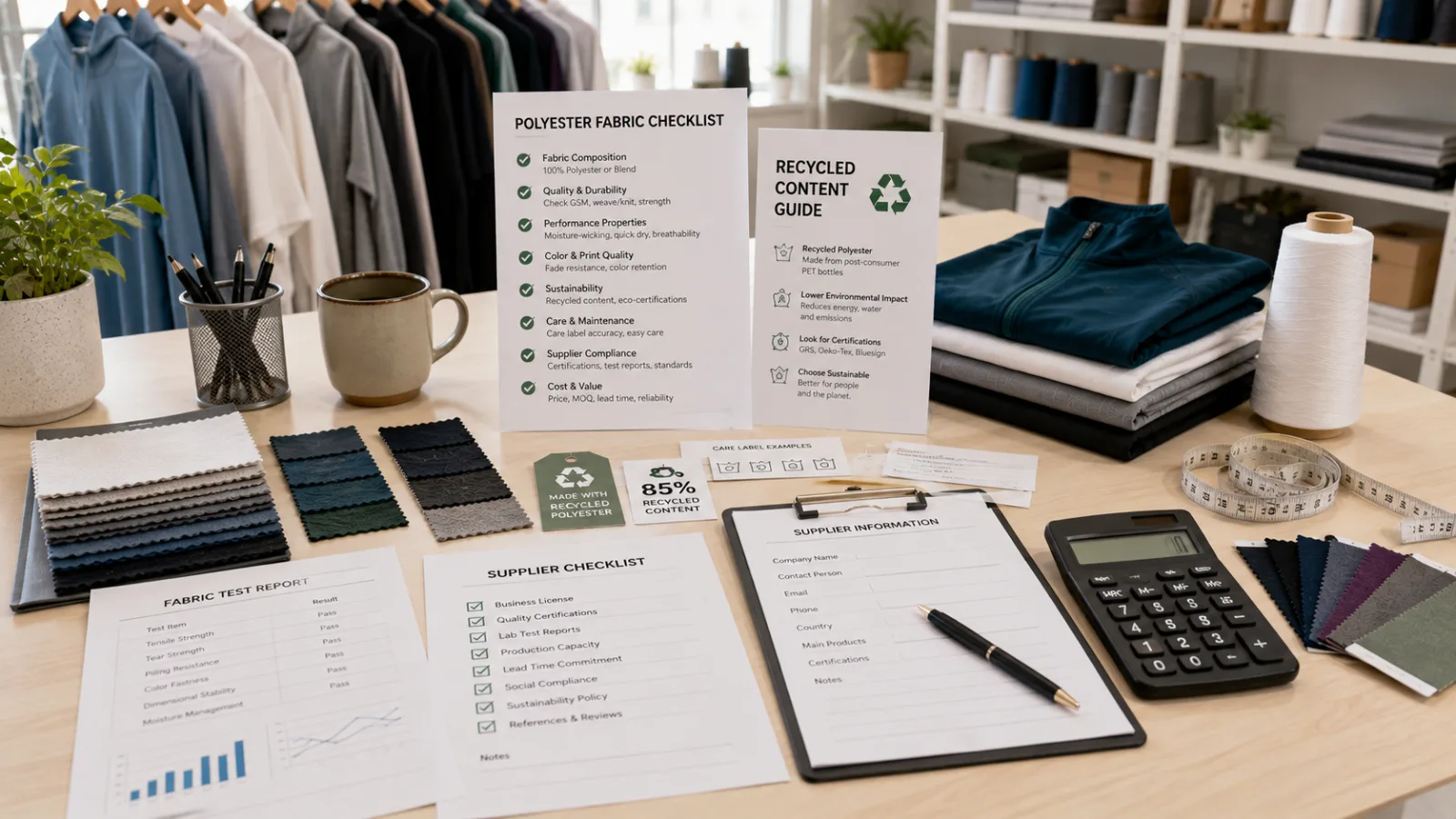
Polyester Fabric Checklist for Clothing Brands
Before choosing polyester fabric, use this checklist:
- Is polyester the right fiber for this product?
- Does the fabric match the garment purpose?
- Is the fabric breathable enough?
- Does it need stretch or recovery?
- Has pilling been tested?
- Has shrinkage been checked?
- Has colorfastness been tested?
- Does the fabric retain odor?
- Is the fabric too shiny or plasticky?
- Is recycled polyester available?
- What percentage is recycled?
- Can the supplier provide fabric specifications?
- Is the fabric blended with other fibers?
- Will the blend affect recycling?
- Does the product need special care instructions?
- Can customers wash it easily?
- Will the garment last through repeated use?
- Are sustainability claims specific and honest?
This checklist helps brands avoid weak fabric choices and create better products.
Final Thoughts
Polyester fabric is often misunderstood. Some people see it as cheap, uncomfortable, and harmful. Others see it as practical, durable, and easy to use. The truth sits between these extremes. Polyester is a synthetic, plastic-based fiber with real environmental concerns, especially around fossil fuel inputs, microfiber shedding, overproduction, and recycling limitations. But it also offers important performance benefits, including durability, wrinkle resistance, quick drying, shape retention, affordability, and versatility.
The key is not to treat polyester as automatically good or bad. The key is to use it intelligently.
For fashion brands, polyester should be chosen because it fits the product purpose, not because it is simply cheaper. It should be tested for comfort, pilling, breathability, stretch, odor, care, and durability. Recycled polyester can be useful, but it should not be used as a greenwashing shortcut. Sustainability depends on the full product system, including quality, quantity, production methods, customer use, and end-of-life planning.
For shoppers, polyester can be a good choice for activewear, outerwear, uniforms, travel clothing, fleece, bags, swimwear, and easy-care garments. But quality matters. A well-made polyester garment that lasts for years is very different from a cheap disposable garment that loses shape after a few washes.
Polyester is not just one fabric. It is a family of textile possibilities. Understanding the myths and facts behind it helps brands and buyers make better decisions, reduce waste, improve product performance, and create clothing that works in real life.