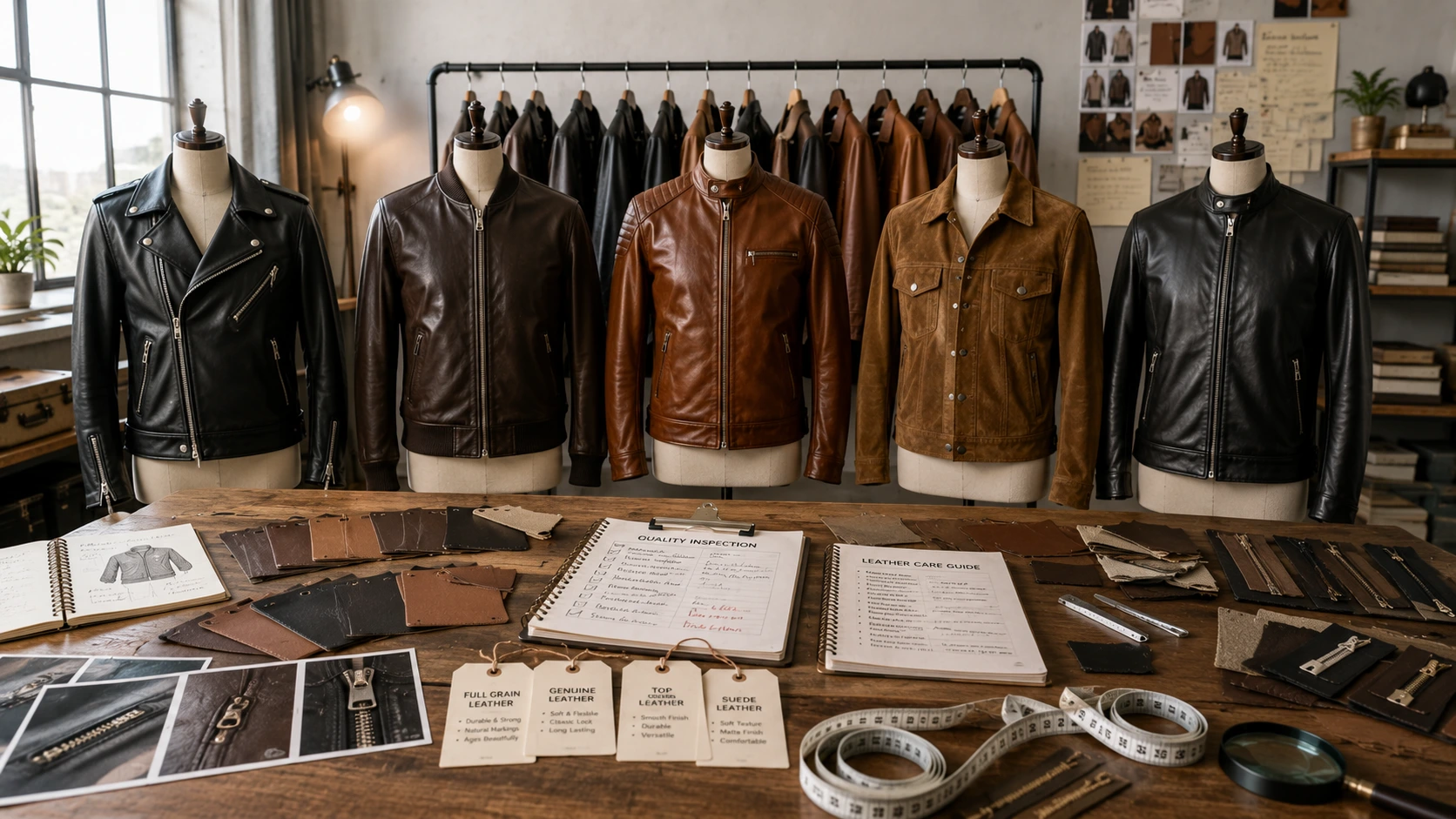
A leather jacket is one of the most iconic pieces in fashion. It is stylish, durable, versatile, and often seen as a long-term wardrobe investment. But leather jackets are also surrounded by many myths. Some people think all leather jackets are the same. Others believe real leather is always better, faux leather is always bad, expensive leather is always high quality, or a leather jacket needs almost no care.
The truth is more practical. A good leather jacket depends on leather type, hide quality, tanning method, construction, lining, stitching, hardware, fit, finish, and care. This guide breaks down the most common myths and facts about leather jackets so buyers, fashion lovers, and clothing brands can make smarter decisions.
What Is a Leather Jacket?
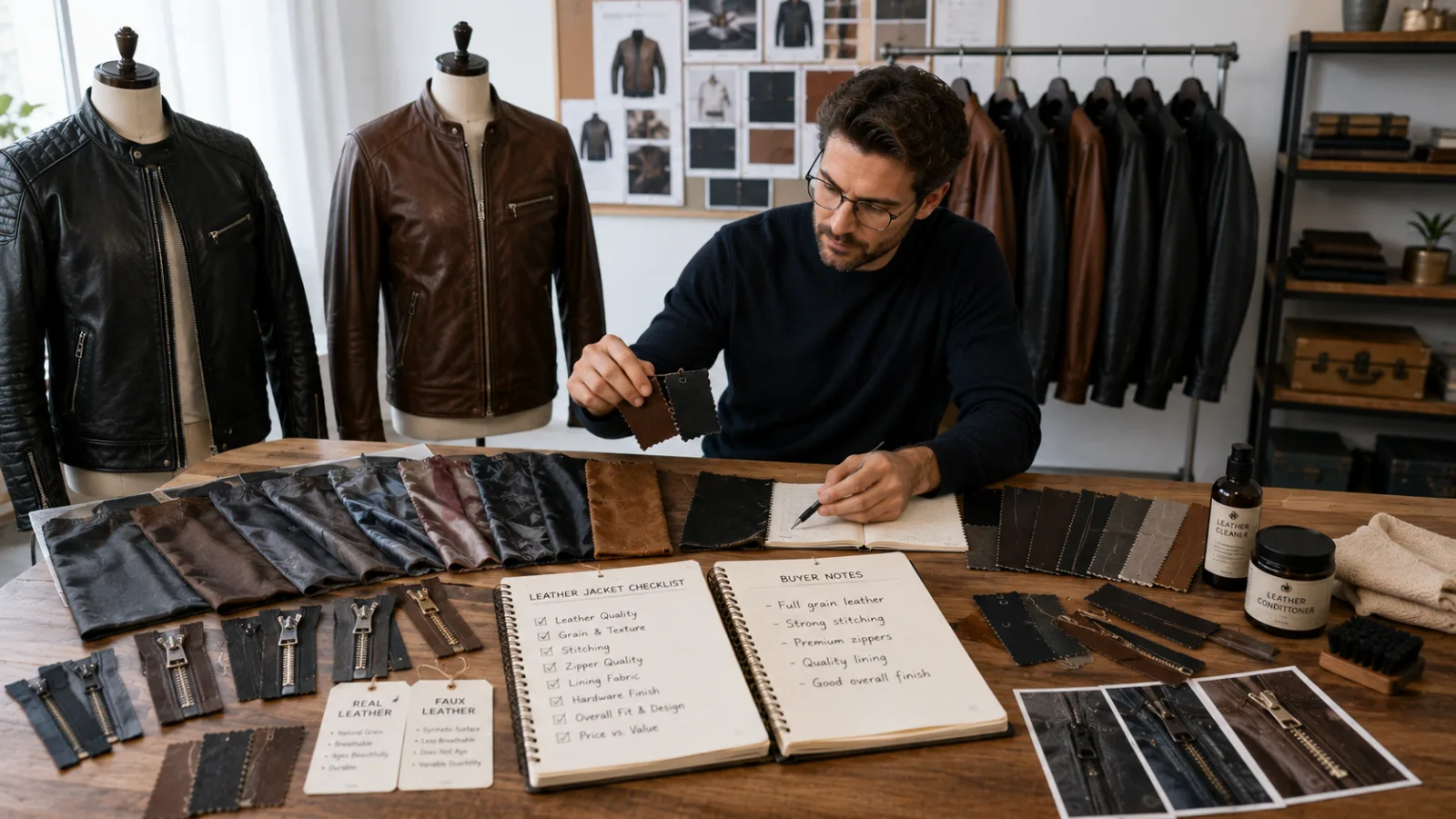
A leather jacket is an outerwear garment made from leather, which is animal hide or skin treated through tanning to preserve it and make it suitable for use. Leather can come from cattle, sheep, goats, buffalo, pigs, and other animals, depending on the product and market. For jackets, common options include cowhide, lambskin, goatskin, sheepskin, buffalo leather, suede, and nubuck.
Leather jackets became popular because they offer a strong mix of durability, protection, warmth, and style. They are used in casual fashion, motorcycle-inspired clothing, luxury outerwear, streetwear, vintage fashion, and seasonal wardrobes. Different leather jacket styles serve different purposes. A biker jacket often has a bold, structured look. A bomber jacket feels more relaxed. A café racer jacket is cleaner and minimal. A suede jacket has a softer, more textured finish.
Leather is not simply a fabric. It is a natural material with grain, pores, texture, marks, and variation. These qualities make every leather jacket slightly different. A leather jacket can look more beautiful with age if it is made well and cared for properly, but it can also crack, dry, stain, or lose shape if neglected.
Why Leather Jackets Are So Popular
Leather jackets are popular because they combine function and personality. A simple outfit can look stronger with a leather jacket. It can work with denim, dresses, boots, sneakers, hoodies, shirts, and knitwear. It also adapts across style categories, from classic and rugged to luxury and modern.
But popularity creates confusion. Because leather jackets exist at many price points, buyers often struggle to understand what they are actually paying for. That is where myths begin.
Myth 1: All Leather Jackets Are the Same
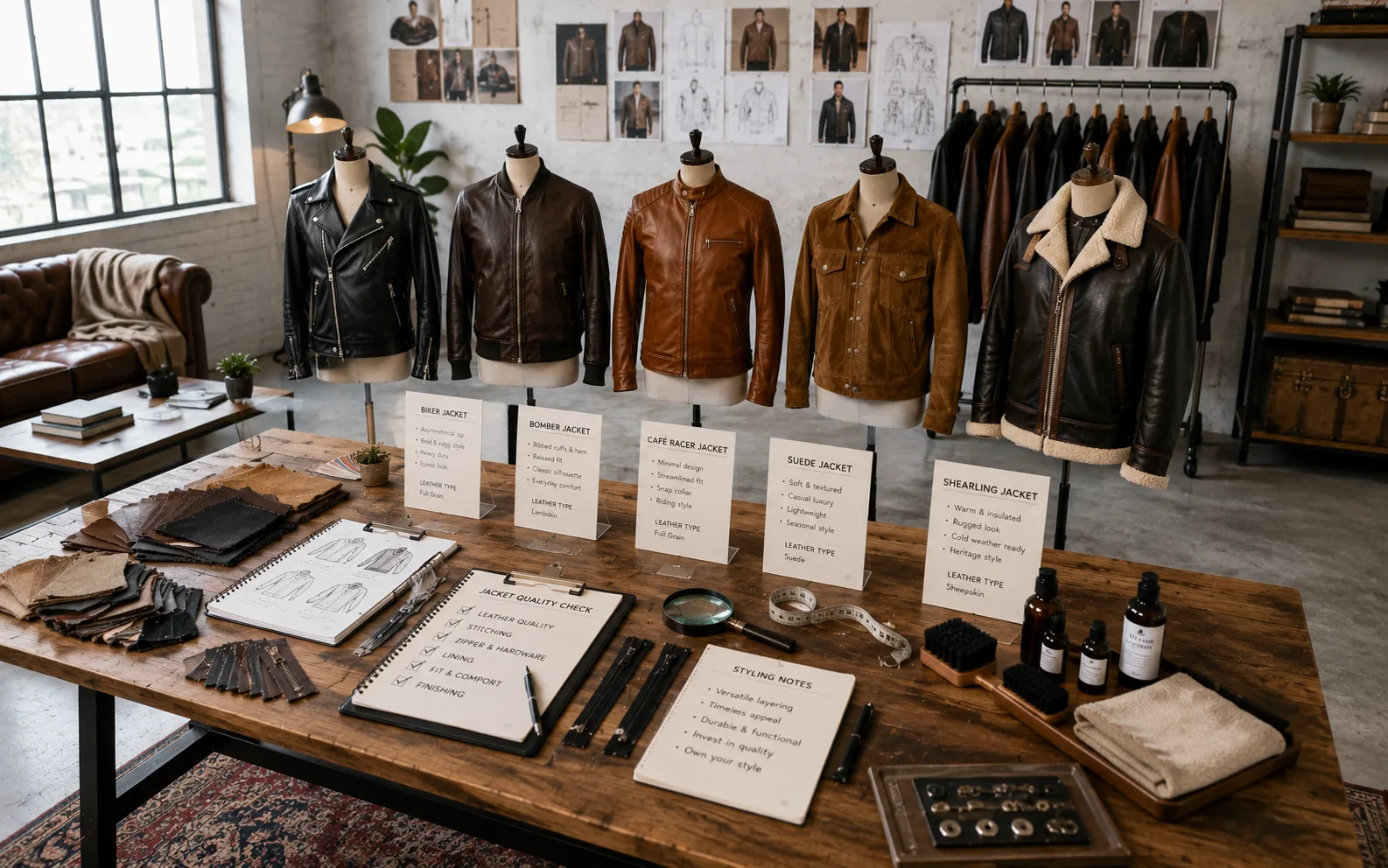
One of the biggest myths about leather jackets is that they are all the same if they are made from leather. This is not true. Leather jackets can vary widely in quality, texture, thickness, softness, durability, price, and purpose.
A lambskin jacket feels soft, lightweight, and luxurious. A cowhide jacket is usually stronger and more structured. A goatskin jacket often balances durability with flexibility. A suede jacket has a soft, brushed surface but can be more sensitive to water and stains. A corrected-grain leather jacket may look uniform but may not age like full-grain leather.
The Fact
Leather jackets are different because leather type, hide grade, tanning, finishing, construction, lining, and hardware all affect the final product.
A high-quality jacket is not only about the word “leather.” It is about how the leather was sourced, processed, cut, sewn, finished, and cared for.
What Buyers Should Look At
When comparing leather jackets, check:
- Leather type
- Leather thickness
- Grain quality
- Surface finish
- Stitching
- Lining
- Zippers and hardware
- Fit
- Weight
- Smell
- Flexibility
- Care instructions
Two jackets may both be “real leather,” but one may last for years while the other may peel, crack, stretch, or lose shape quickly.
Myth 2: Genuine Leather Always Means High Quality
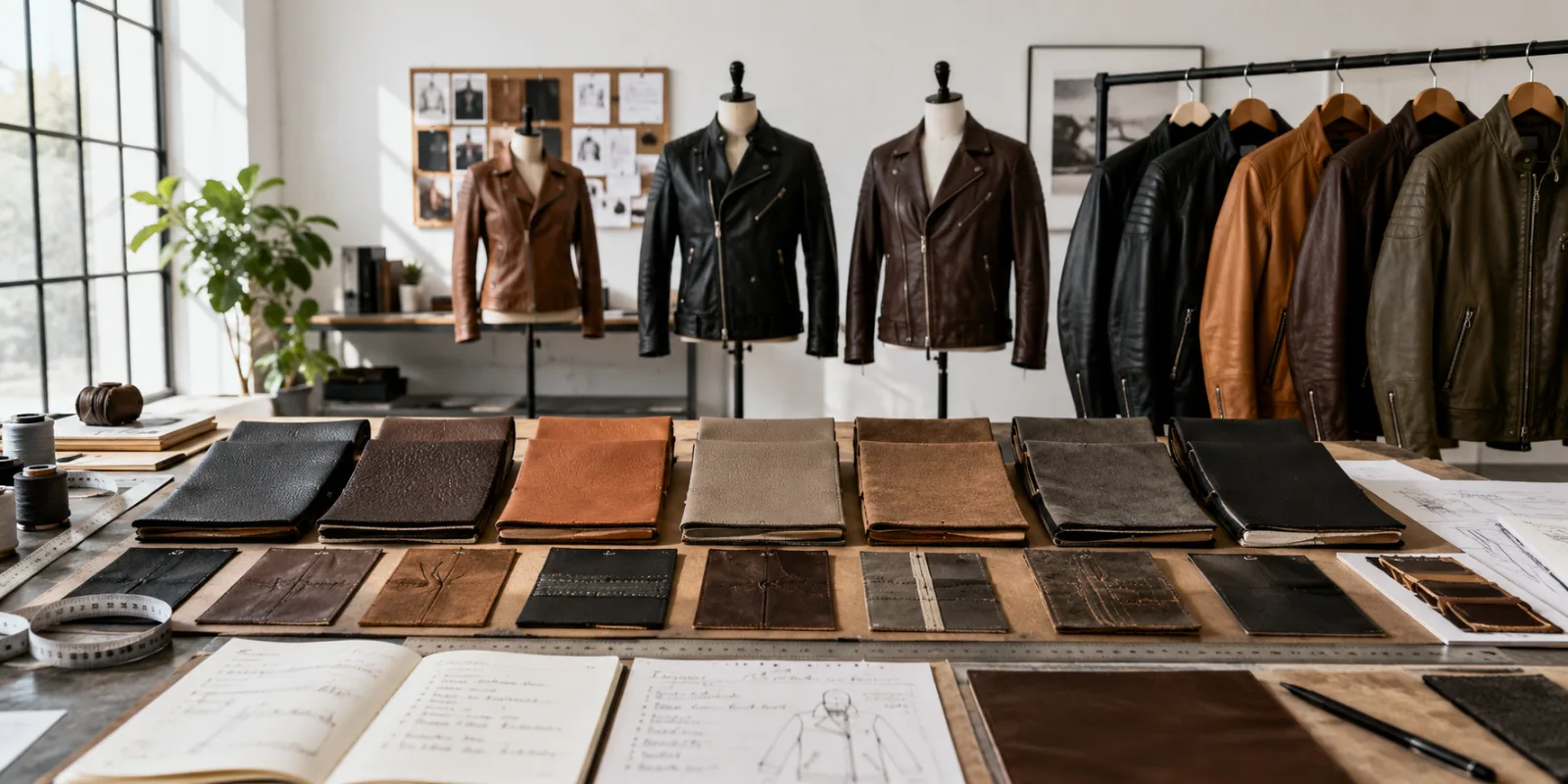
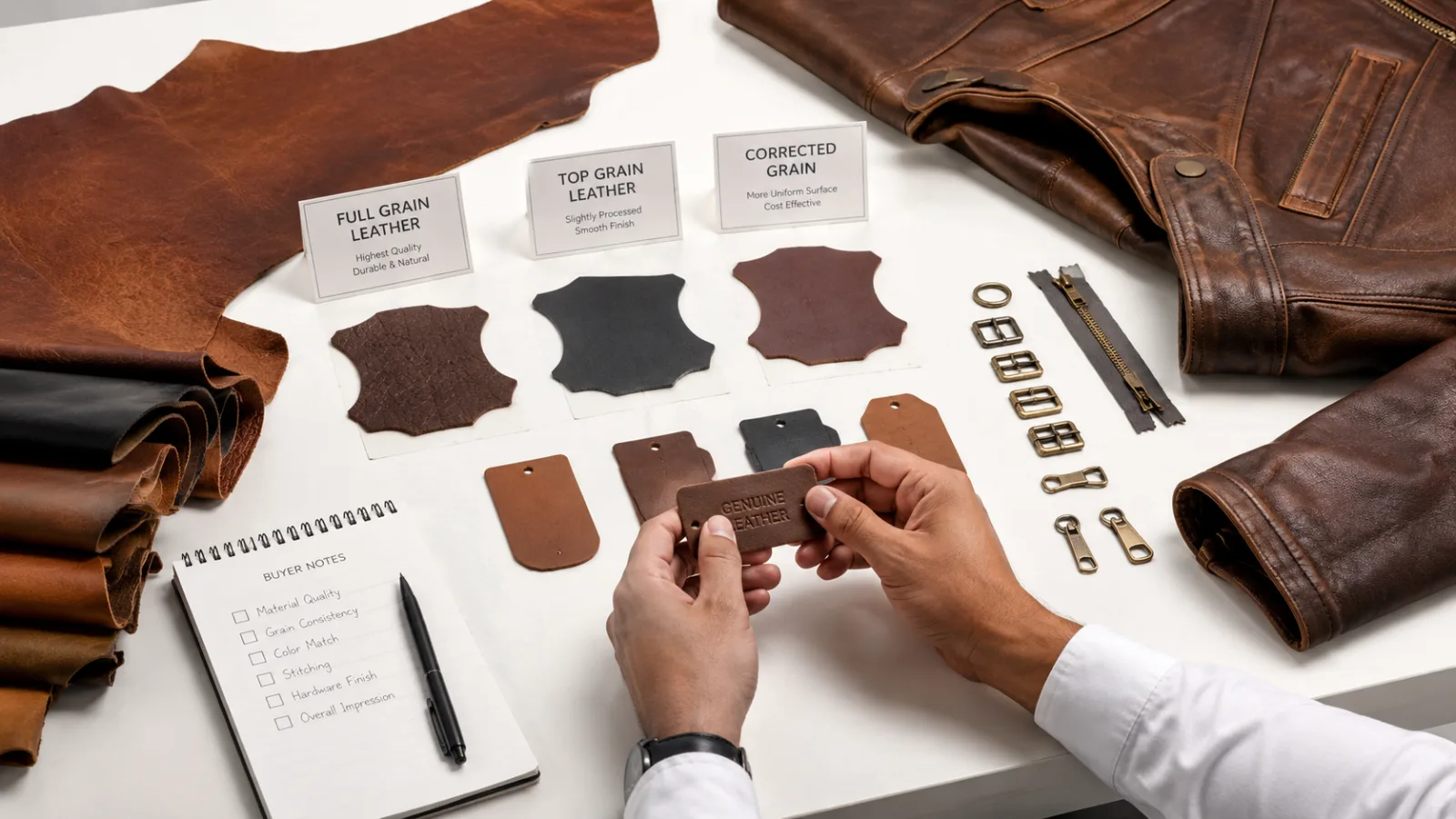
The term “genuine leather” often sounds premium, but it does not automatically mean the jacket is high quality. In many markets, genuine leather simply means the product contains real leather. It does not always tell you the grade, durability, finish, or construction quality.
A genuine leather jacket may be made from split leather, corrected leather, bonded sections, or lower-grade hides. It may still be real leather, but it may not have the same strength, grain, or aging quality as full-grain or top-grain leather.
The Fact
Genuine leather means real leather, but it is not always the highest quality category. Higher-quality leather jackets often use full-grain, top-grain, high-quality lambskin, durable cowhide, or well-finished goatskin depending on the jacket style. However, even these terms should be checked carefully because brands may use them differently.
Why This Myth Matters
Many buyers see “genuine leather” and assume the jacket will last forever. But if the leather is thin, heavily coated, poorly stitched, or paired with weak hardware, the jacket may not perform well.
Leather quality should be judged by the whole product, not one label.
How to Judge Quality Better
Feel the leather. Is it too plasticky? Does it feel overly stiff or overly thin? Check the stitching. Are seams clean and even? Check the lining. Is it strong and properly attached? Check the zipper. Does it run smoothly? Check the finish. Does the surface look natural or heavily artificial?
A good leather jacket should feel substantial, balanced, and well constructed.
Myth 3: Expensive Leather Jackets Are Always Better
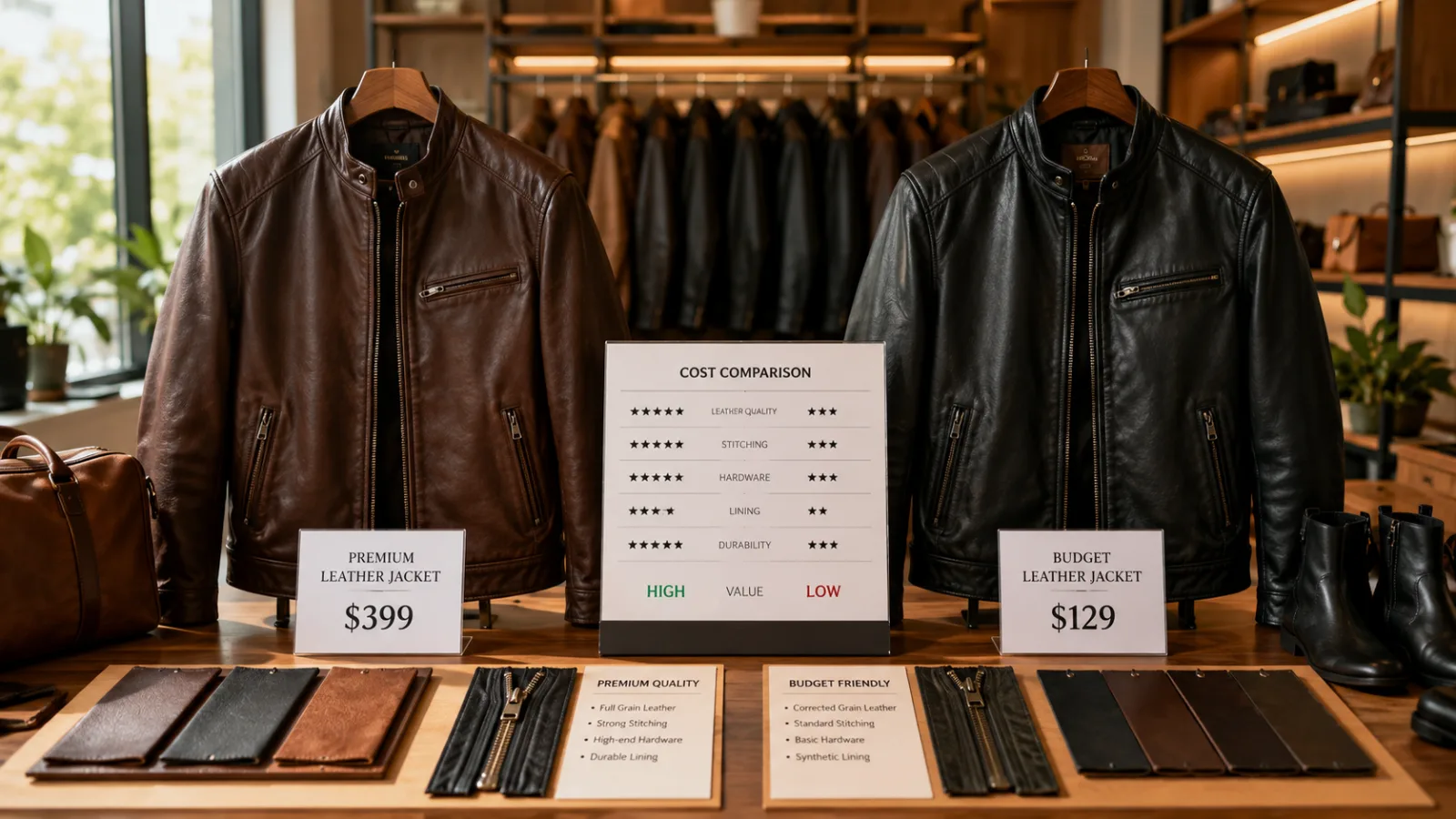
Price can be a sign of quality, but it is not a guarantee. Some expensive leather jackets are worth the investment because they use high-quality hides, skilled construction, strong lining, better hardware, and careful finishing. But some jackets are expensive mainly because of branding, marketing, retail markup, or fashion positioning.
A lower-priced leather jacket is not always bad either. It may use simpler construction, more affordable leather, or a less famous brand name while still being wearable. The key is to understand what you are paying for.
The Fact
An expensive leather jacket can be excellent, but price alone does not prove quality.
A smart buyer should compare leather type, construction, stitching, hardware, lining, fit, and care requirements. A jacket with premium leather but weak stitching may still fail. A jacket with a famous label but poor fit may not be worth the money.
What Adds Real Value
Real value often comes from:
- High-quality leather
- Strong stitching
- Durable lining
- Quality zippers
- Good pattern cutting
- Comfortable fit
- Proper tanning and finishing
- Timeless design
- Repairability
- Long-term wearability
A jacket that you wear for many years may offer better value than a cheaper one that cracks or loses shape after one season.
What Can Inflate Price
Price may also be affected by:
- Brand name
- Retail location
- Marketing costs
- Limited edition positioning
- Trend demand
- Import duties
- Luxury markup
- Celebrity association
That does not mean high-priced jackets are bad. It means buyers should evaluate quality, not just price.
Myth 4: A Leather Jacket Should Fit Like a Regular Coat
Many people buy leather jackets too large because they think outerwear should always have extra room. Others buy them too tight because they expect leather to stretch dramatically. Both approaches can create fit problems.
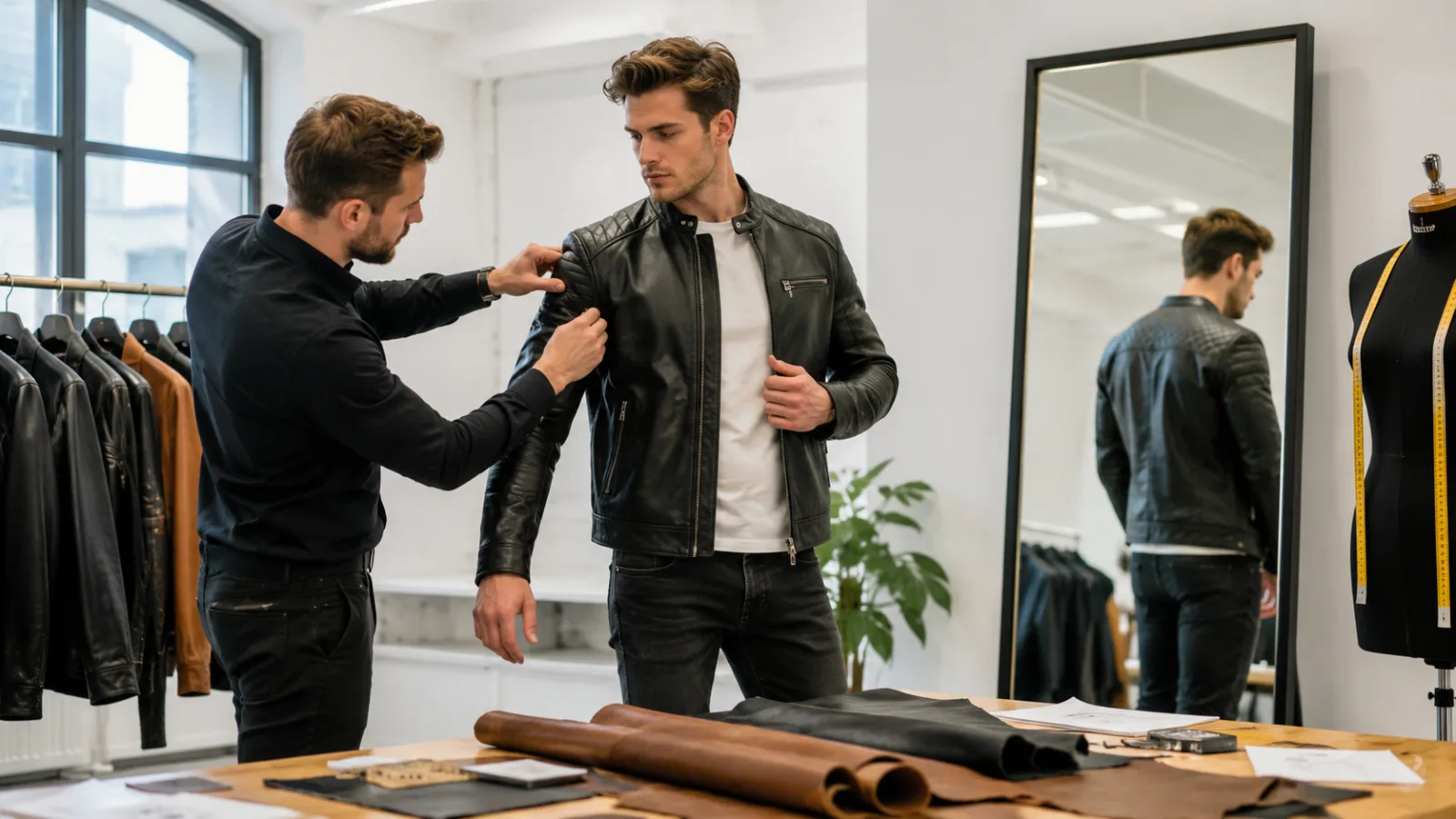
A leather jacket should fit close enough to look structured but not so tight that movement feels restricted. Unlike a puffer coat or oversized wool coat, a leather jacket usually looks best when it follows the shape of the shoulders and body. But it should still allow you to move your arms, zip it comfortably, and wear a light layer underneath.
The Fact
A leather jacket should fit differently from a regular coat. It needs structure, comfort, and movement.
The shoulder seam should sit near your natural shoulder. The sleeves should not be too long or too short. The body should close without pulling. The armholes should allow movement. The length should match the jacket style.
Fit by Jacket Style
- Biker jacket: Usually fitted and structured with a bold silhouette.
- Bomber jacket: Slightly relaxed with room around the body.
- Café racer jacket: Clean, slim, and minimal.
- Suede jacket: Often softer and more relaxed.
- Leather blazer: More tailored and polished.
- Shearling-style jacket: Usually roomier due to lining thickness.
Will Leather Stretch?
Leather may soften and mold slightly with wear, but it should not be expected to grow a full size. If a jacket is painfully tight when new, it is probably too small. If it looks baggy and collapses at the shoulders, it is too large.
Myth 5: Leather Jackets Are Only for Cold Weather
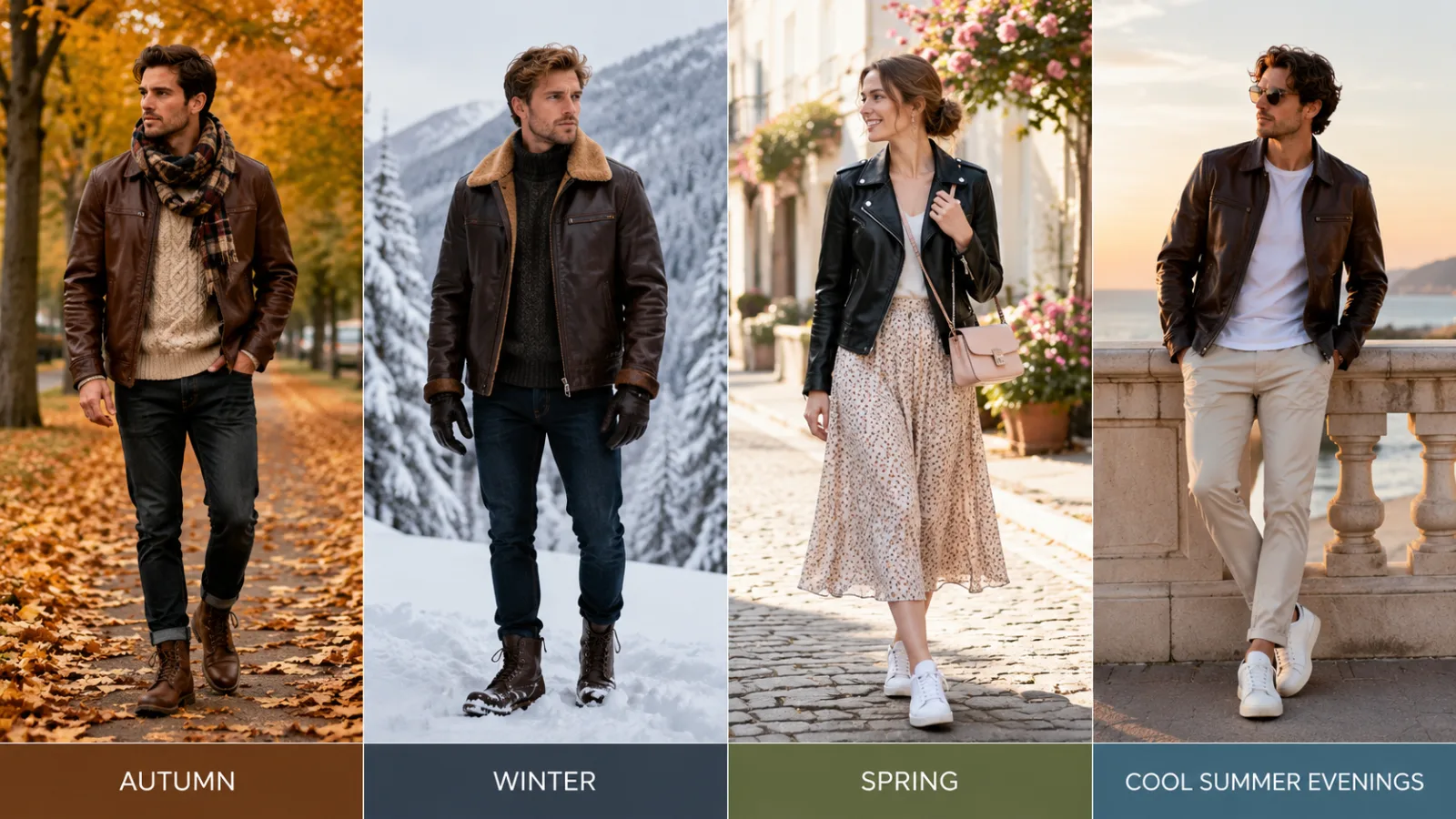
Leather jackets are often associated with fall and winter, but they are not only cold-weather garments. A leather jacket can work across multiple seasons depending on leather type, lining, weight, and styling.
A heavy cowhide or shearling-lined jacket is better for cold weather. A lightweight lambskin or unlined leather jacket can work in spring or cool evenings. A suede jacket can be useful during mild weather. However, leather is usually not ideal for very hot or humid conditions because it can feel warm and less breathable than lightweight woven fabrics.
The Fact
Leather jackets can be worn in multiple seasons, but the right jacket depends on climate and construction.
Seasonal Styling Tips
For cooler weather, wear a leather jacket with knitwear, denim, boots, scarves, or heavier layers. For transitional weather, pair it with T-shirts, shirts, lightweight trousers, dresses, or sneakers. For mild evenings, a lightweight leather jacket can replace a blazer or denim jacket.
What to Avoid
Avoid wearing delicate leather in heavy rain. Avoid storing leather in damp spaces. Avoid wearing heavy leather in extreme heat. Sweat and moisture can affect lining, odor, and leather condition over time.
Myth 6: Leather Jackets Do Not Need Care
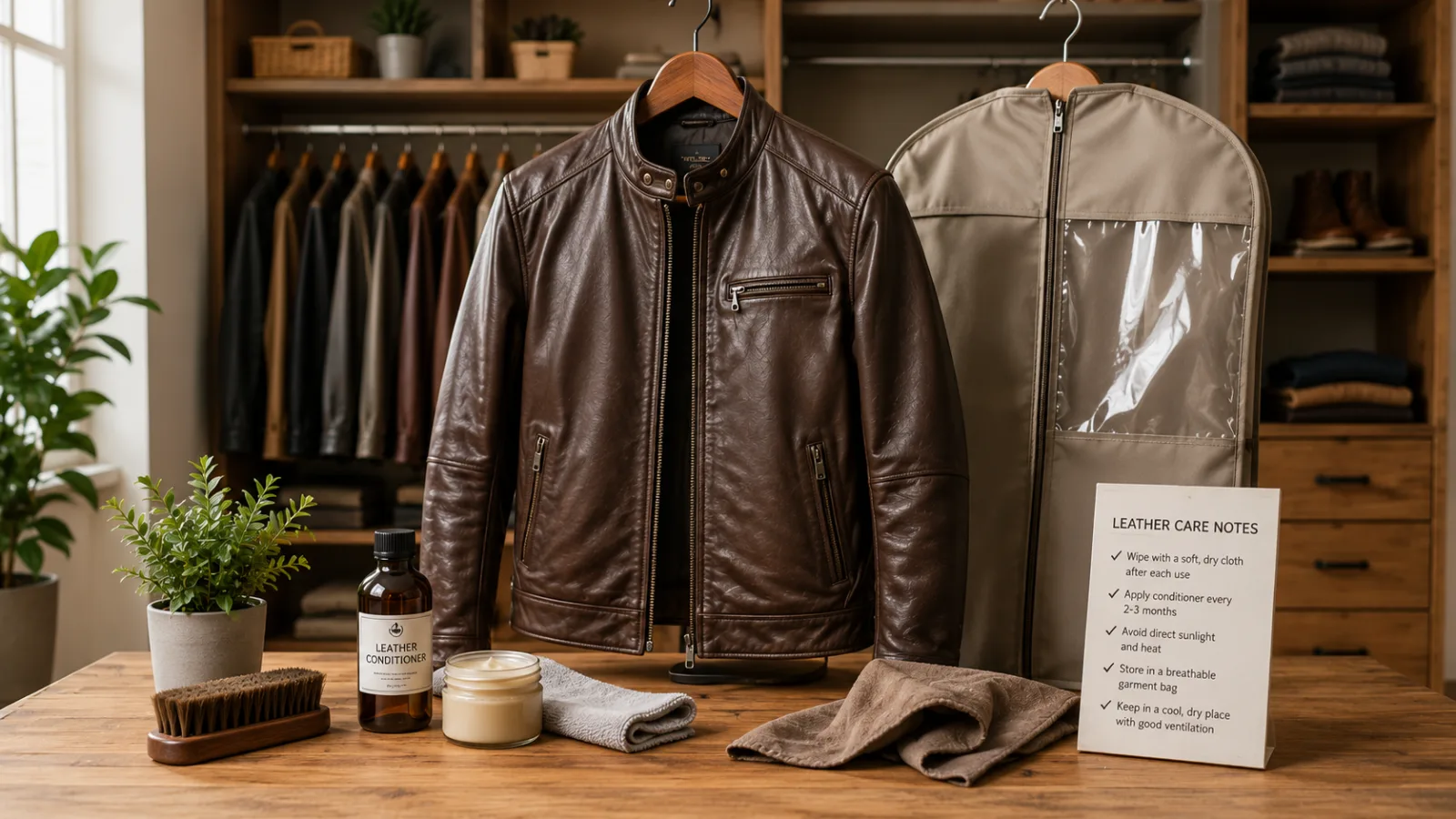
Some people think leather jackets are tough enough to survive anything. While leather is durable, it is still a natural material that needs proper care. Without care, leather can dry out, crack, stain, fade, stiffen, or lose its shape.
A leather jacket does not need constant maintenance, but it does need the right kind of maintenance. Cleaning it incorrectly can cause damage. Machine washing, soaking, harsh chemicals, direct heat, and improper storage can all harm leather.
The Fact
Leather jackets need gentle cleaning, conditioning, and proper storage to stay in good condition.
Basic Leather Jacket Care Tips
- Wipe surface dust with a soft cloth.
- Use a slightly damp cloth for light cleaning.
- Do not soak leather.
- Do not machine wash leather.
- Avoid harsh household cleaners.
- Condition leather when it feels dry.
- Air dry away from direct heat.
- Store on a wide padded hanger.
- Keep away from damp storage spaces.
- Use a garment bag that allows breathability.
- Follow the care label.
Why Conditioning Matters
Leather can lose moisture over time. Conditioning helps keep it flexible and reduces the risk of cracking. However, too much conditioner can make leather greasy or darken the surface. Always test products on a hidden area first.
Professional Cleaning
For valuable leather jackets, suede, nubuck, major stains, or water damage, professional leather cleaning is safer than home experiments.
Myth 7: Real Leather Is Always More Sustainable Than Faux Leather
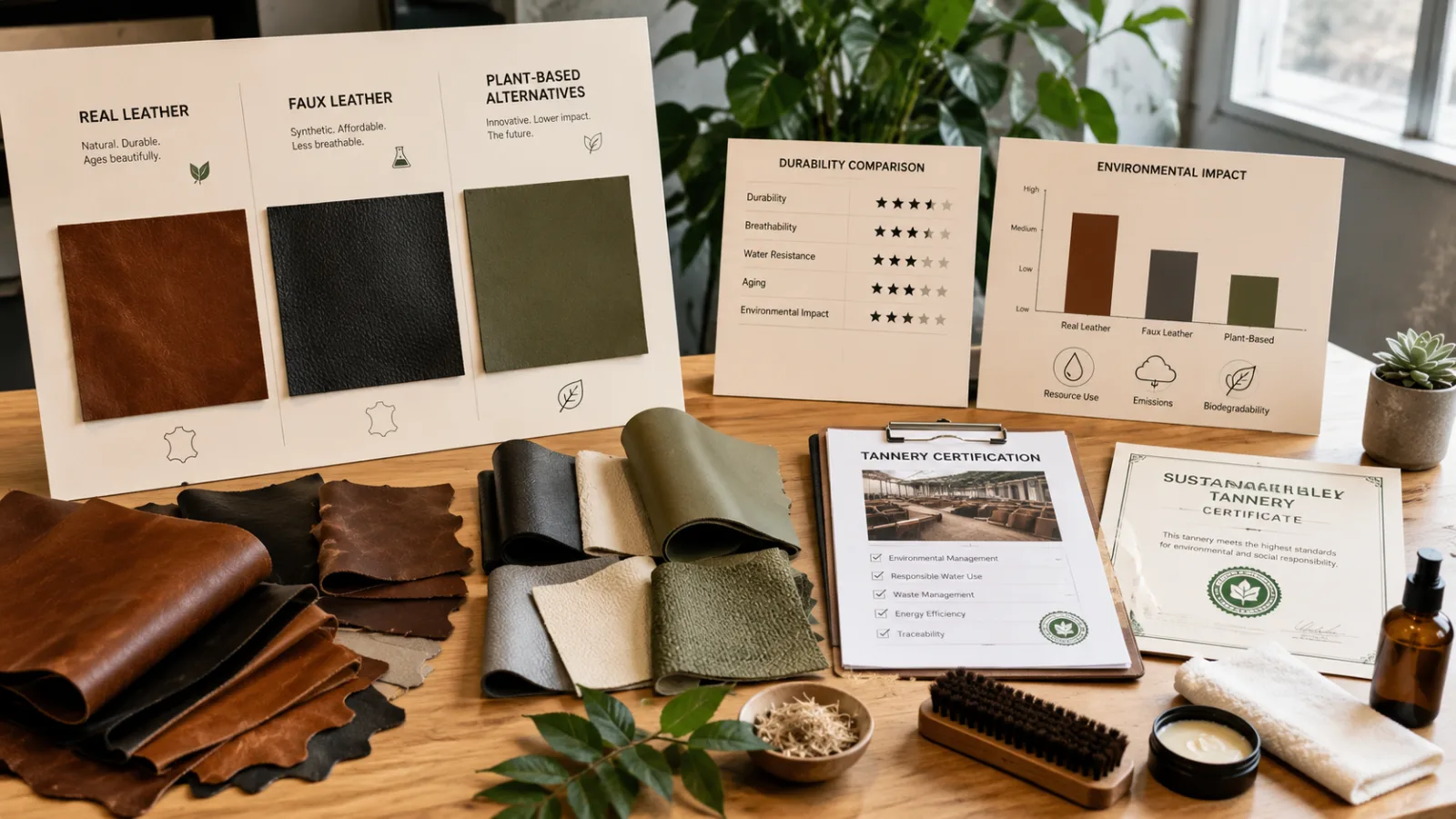
The sustainability debate around real leather and faux leather is complicated. Real leather can be durable and long-lasting, and it is often connected to hides from animals raised for meat. However, leather tanning can involve chemicals, water use, wastewater concerns, and traceability challenges. Faux leather avoids animal hides, but many common faux leathers are made from plastic-based materials such as polyurethane or PVC, which come with fossil fuel and end-of-life issues.
The Fact
Neither real leather nor faux leather is automatically sustainable. The impact depends on sourcing, production, durability, chemistry, use, and disposal.
A real leather jacket that lasts 20 years and is properly cared for may have a different impact than a cheap plastic-based jacket that peels after one season. On the other hand, leather from poorly managed supply chains can raise serious environmental and animal welfare concerns. Some newer leather alternatives use plant-based or bio-based inputs, but they may still need synthetic coatings or backing materials.
What Responsible Buyers Should Ask
- Where does the leather come from?
- Is the tannery certified or audited?
- Is the leather traceable?
- What tanning method is used?
- How durable is the jacket?
- Can it be repaired?
- What is the care requirement?
- Is the faux leather plastic-based?
- Does the alternative material peel easily?
- What happens at end of life?
Better Approach
Instead of asking only “real or faux?” ask which product will last longer, perform better, create less waste, and come from a more responsible supply chain.
Myth 8: Faux Leather Jackets Always Look Cheap
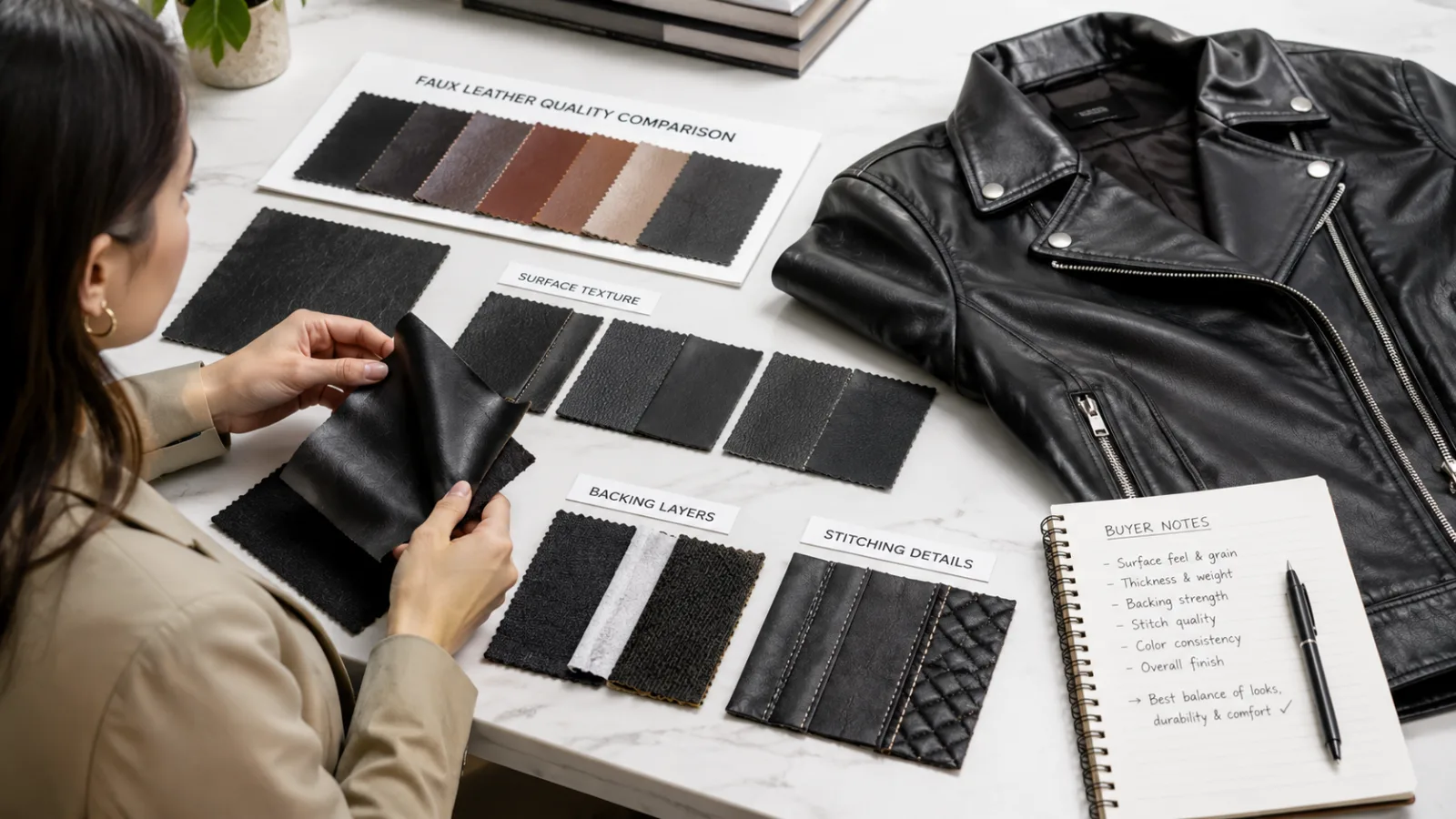
Faux leather has improved a lot over time. Some faux leather jackets can look stylish, modern, and well-made. However, quality varies widely. Cheap faux leather may peel, crack, feel plasticky, or lose shape quickly. Better faux leather may offer smoother finishing, better flexibility, and stronger backing.
The Fact
Faux leather is not always cheap-looking, but quality depends on material, finish, construction, and durability.
Faux leather can be a practical option for buyers who avoid animal-derived materials or want a lower price point. It is also common in trend-led fashion where shoppers may not want to invest in real leather.
What to Check in Faux Leather
- Surface texture
- Flexibility
- Backing material
- Stitching
- Seam strength
- Peeling risk
- Odor
- Lining quality
- Heat sensitivity
- Care instructions
A faux leather jacket should not feel like a thin plastic sheet. It should have enough structure, softness, and flexibility to wear comfortably.
Limitation of Faux Leather
Many faux leather jackets do not age like real leather. Real leather can develop patina, while faux leather may peel or crack when the coating breaks down. This does not mean faux leather is always bad, but buyers should understand the trade-off.
Myth 9: Leather Jackets Are Only for One Style
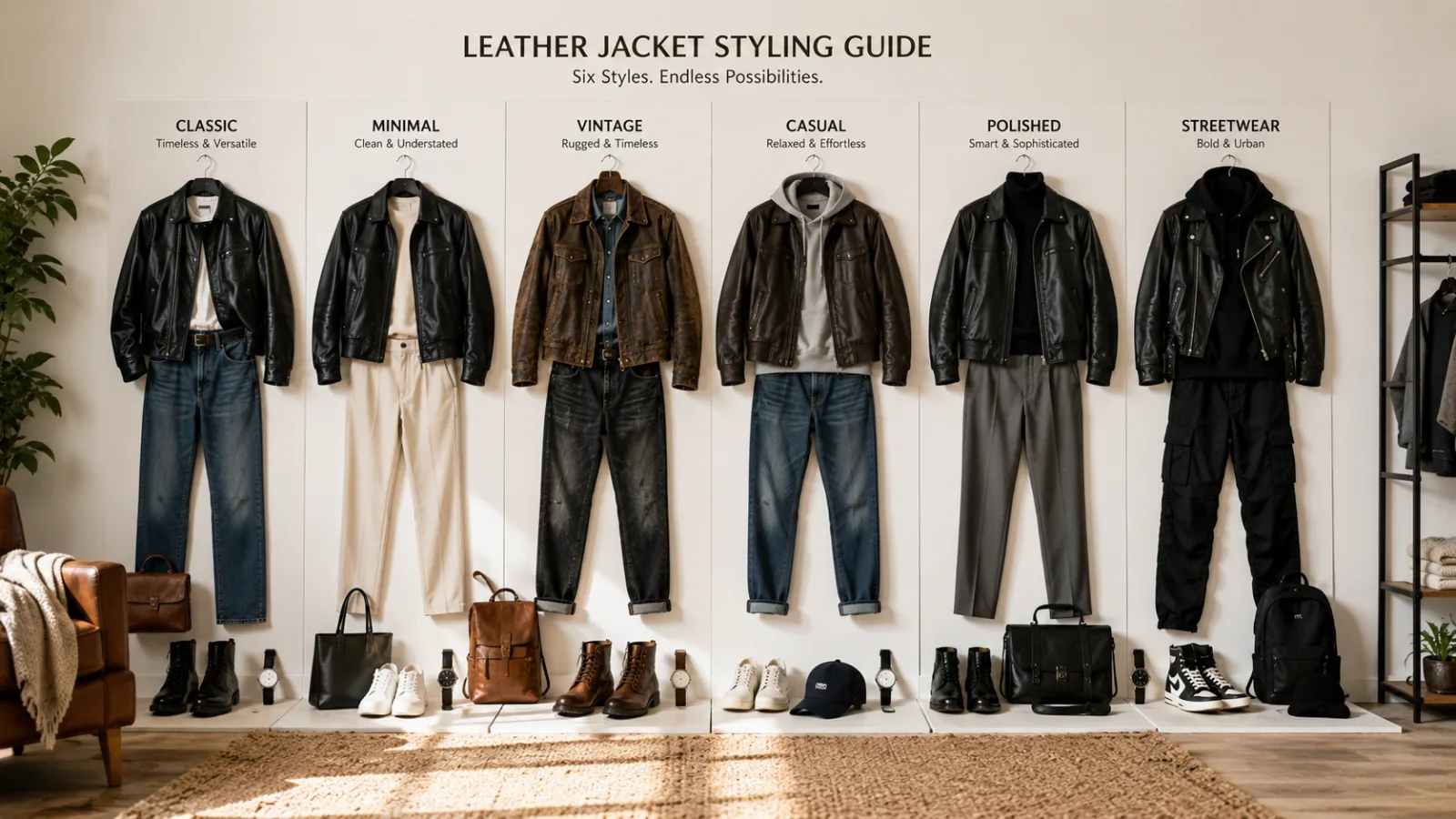
Leather jackets are often linked with motorcycle style, rock fashion, or edgy outfits. But leather jackets are more versatile than that. They can be classic, minimal, elegant, casual, vintage, luxury, sporty, or modern depending on cut, color, finish, and styling.
A black biker jacket feels bold. A brown bomber feels relaxed. A tan suede jacket feels soft and western-inspired. A leather blazer feels polished. A cropped leather jacket can feel modern and feminine. A café racer jacket feels clean and understated.
The Fact
A leather jacket can work across many personal styles.
Styling Ideas
Pair a black leather jacket with denim and boots for a classic look. Wear a café racer jacket with tailored trousers for a clean modern outfit. Style a brown leather bomber with chinos and knitwear for a relaxed wardrobe. Pair a cropped leather jacket with a dress for contrast. Use a suede jacket with earth tones for a softer feel.
Choosing the Right Style
If you want timeless versatility, choose a clean black or brown jacket with minimal hardware. If you want a statement piece, choose a biker style, unique color, or textured leather. If you want something softer, try suede or lambskin.
Myth 10: A Leather Jacket Should Look Perfect Forever
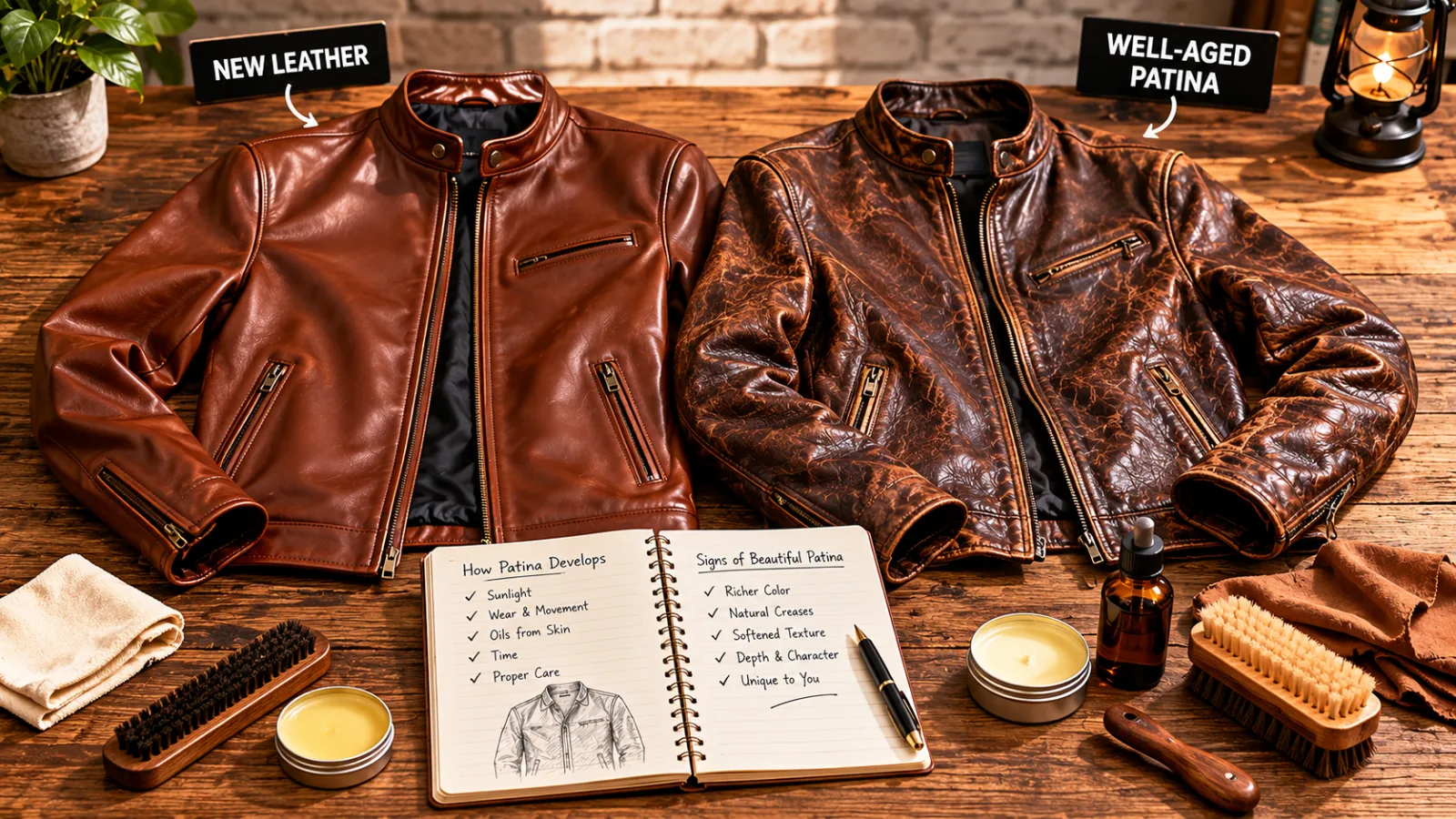
Many buyers expect a leather jacket to stay flawless forever. But real leather changes with time. It can develop creases, marks, color variation, softness, and patina. For many people, this is part of leather’s beauty.
Patina is the natural aging effect that develops as leather is worn and handled. It can make the jacket look richer and more personal. However, not every mark is good. Deep scratches, water stains, cracking, mold, and peeling are signs of damage, not healthy aging.
The Fact
A quality leather jacket should age well, but it will not stay perfectly new forever.
Healthy Aging vs Damage
Healthy aging may include soft creases, slight color depth, natural grain character, and gentle shaping to the body. Damage may include cracking, peeling, severe dryness, heavy stains, mold, broken seams, or damaged lining.
How to Encourage Good Aging
Wear the jacket regularly. Store it properly. Keep it clean. Condition when needed. Avoid harsh weather. Repair small issues early. Use professional care for major problems.
Why This Matters for Brands
If a brand sells leather jackets, it should educate customers about natural variation and aging. Real leather may have small marks or grain differences. These should not always be treated as defects. Clear product descriptions reduce misunderstandings.
Myth 11: Leather Jackets Cannot Be Repaired
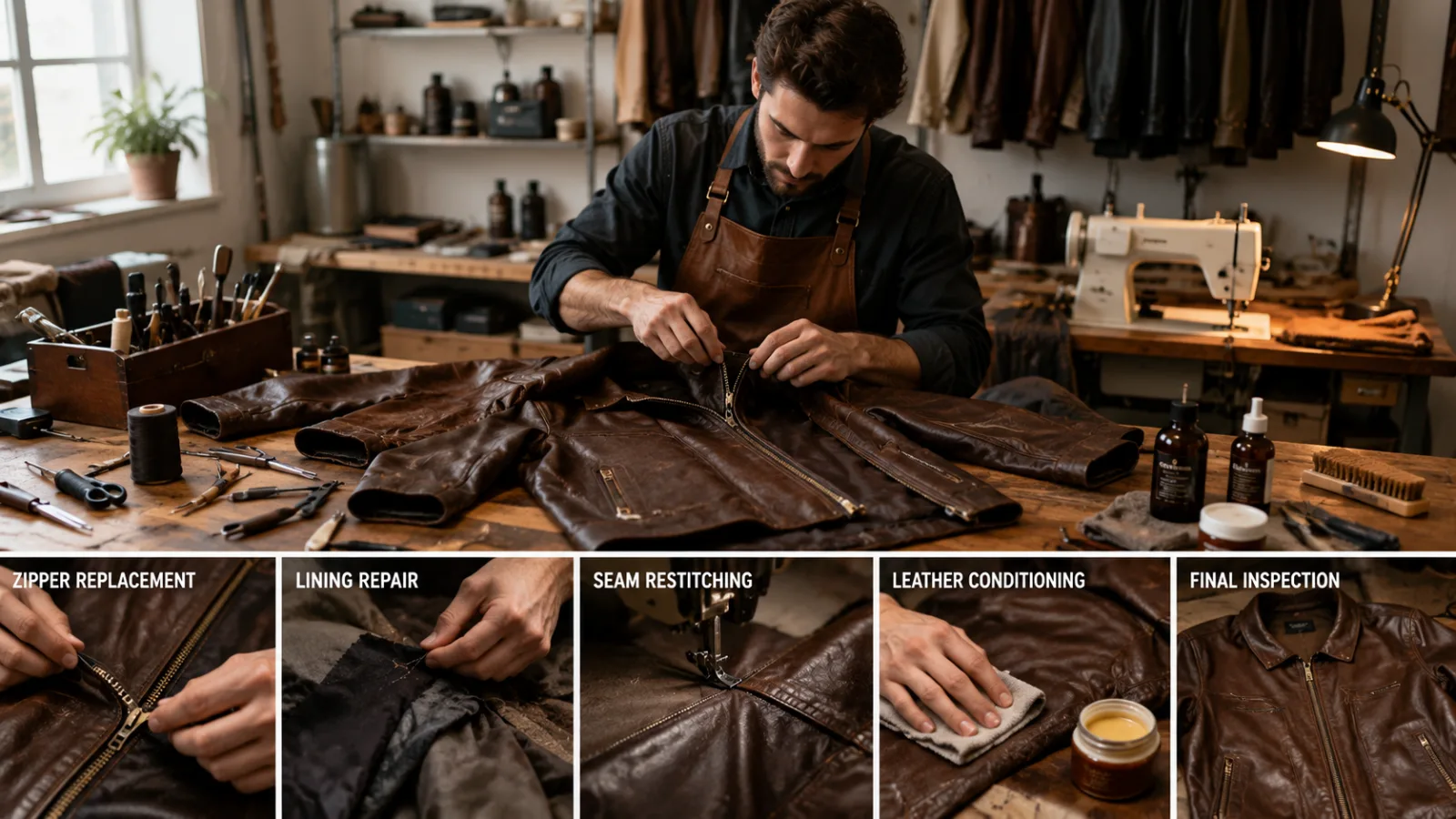
Many leather jackets can be repaired, especially if they are made from good materials and constructed well. Zippers can be replaced. Linings can be repaired. Seams can be restitched. Small tears can sometimes be patched. Hardware can be replaced. Dry leather can often be conditioned.
This is one reason a high-quality leather jacket can be a long-term investment. Repairability extends its life and reduces waste.
The Fact
Leather jackets can often be repaired, but the success depends on the damage, leather type, and construction.
Common Leather Jacket Repairs
- Zipper replacement
- Lining repair
- Seam restitching
- Button or snap replacement
- Small tear patching
- Hardware replacement
- Conditioning dry leather
- Sleeve shortening
- Minor alteration
- Professional stain treatment
When Repair May Be Difficult
Repair can be harder if the leather is peeling, heavily cracked, badly water-damaged, moldy, extremely thin, or made from low-quality bonded material. Faux leather peeling is often difficult to repair permanently because the surface coating is breaking down.
Repair Is Part of Sustainable Fashion
Repairing a jacket is usually better than discarding it. A durable, repairable jacket can stay in use for years, which improves its value and reduces waste.
Myth 12: Leather Jackets Are Too Hard for Clothing Brands to Produce
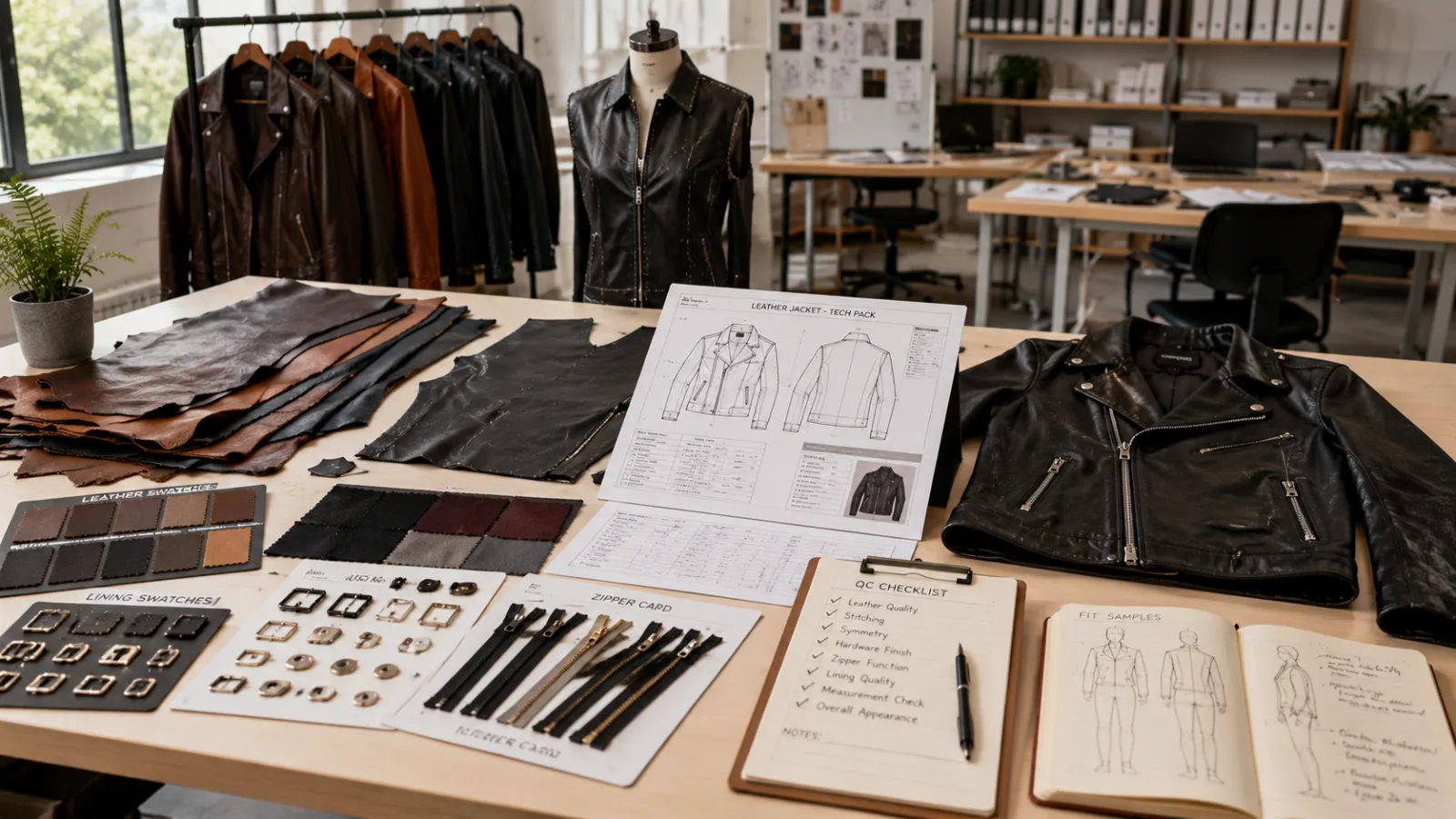
Leather jackets are more complex than basic T-shirts or hoodies, but they are not impossible for clothing brands to produce. They simply require better planning, skilled manufacturing, correct materials, detailed tech packs, strong quality control, and realistic costing.
Leather outerwear involves specialized cutting, sewing machines, seam control, lining, hardware, leather grading, pattern accuracy, and skilled labor. Mistakes are more expensive because leather cannot be unstitched and resewn as easily as some fabrics. Needle holes remain visible, and leather panels can vary.
The Fact
Leather jackets are production-heavy, but brands can produce them successfully with the right supplier and development process.
What Brands Need Before Production
- A clear design concept
- Accurate tech pack
- Leather type selection
- Pattern development
- Fit sample
- Hardware plan
- Lining plan
- Size grading
- Costing sheet
- Quality checklist
- Supplier expertise
- Pre-production sample
- Clear packaging instructions
Why Sampling Is Critical
Sampling is essential for leather jackets. Brands should check fit, shoulder structure, sleeve movement, zipper quality, lining, pocket placement, seam strength, leather thickness, and overall comfort before approving bulk production.
How to Choose a Good Leather Jacket
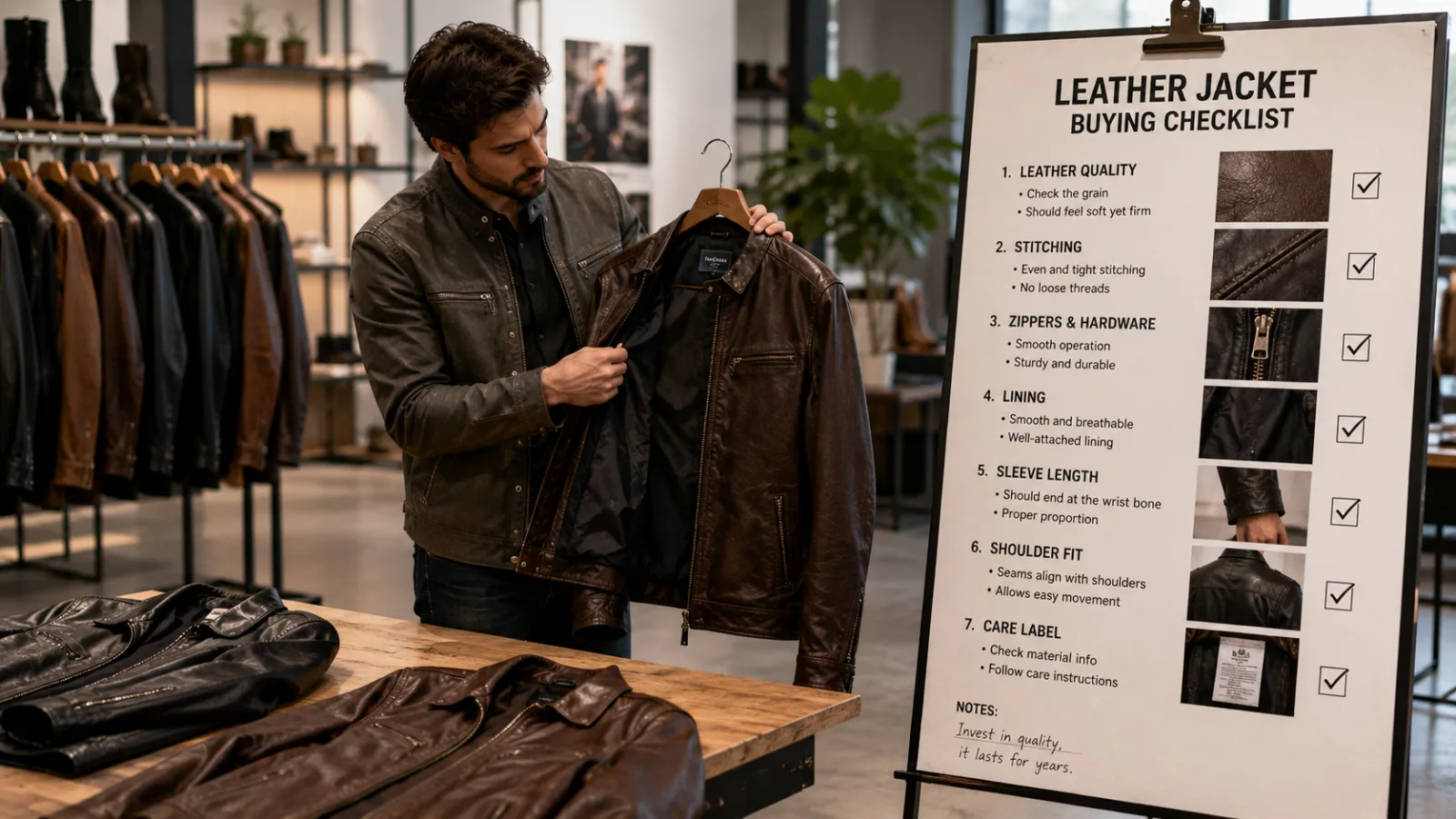
Choosing a good leather jacket requires more than liking the style. You need to check material, fit, construction, comfort, and care.
Check the Leather Type
Cowhide is strong and structured. Lambskin is soft and luxurious. Goatskin is flexible and durable. Suede is textured and soft but needs more care. Nubuck has a velvet-like surface but can stain more easily.
Check the Stitching
Stitching should be neat, even, and secure. Loose threads, uneven seams, and weak stress points are warning signs.
Check the Hardware
Zippers, snaps, buckles, and buttons should feel strong. A good leather jacket can be ruined by cheap hardware.
Check the Lining
The lining affects comfort and durability. It should be smooth, properly attached, and strong enough for regular wear.
Check the Fit
Move your arms, zip the jacket, sit down, and check shoulder comfort. A jacket that looks good standing still may not feel good in daily use.
Check the Finish
The surface should match the product type. A natural leather may show grain variation. A heavily coated leather may look uniform but may not age the same way.
Leather Jacket Care Checklist
Use this simple checklist to keep a leather jacket in good condition:
- Read the care label first.
- Wipe dust with a soft cloth.
- Avoid soaking the leather.
- Never machine wash leather.
- Keep away from direct heat.
- Condition only when needed.
- Test care products on a hidden area.
- Store on a wide hanger.
- Avoid plastic storage bags.
- Let wet leather air dry naturally.
- Brush suede with a proper suede brush.
- Get professional help for major stains.
- Repair small issues early.
- Keep away from damp storage areas.
Good care protects the jacket’s structure, softness, and long-term appearance.
ApparGlobal
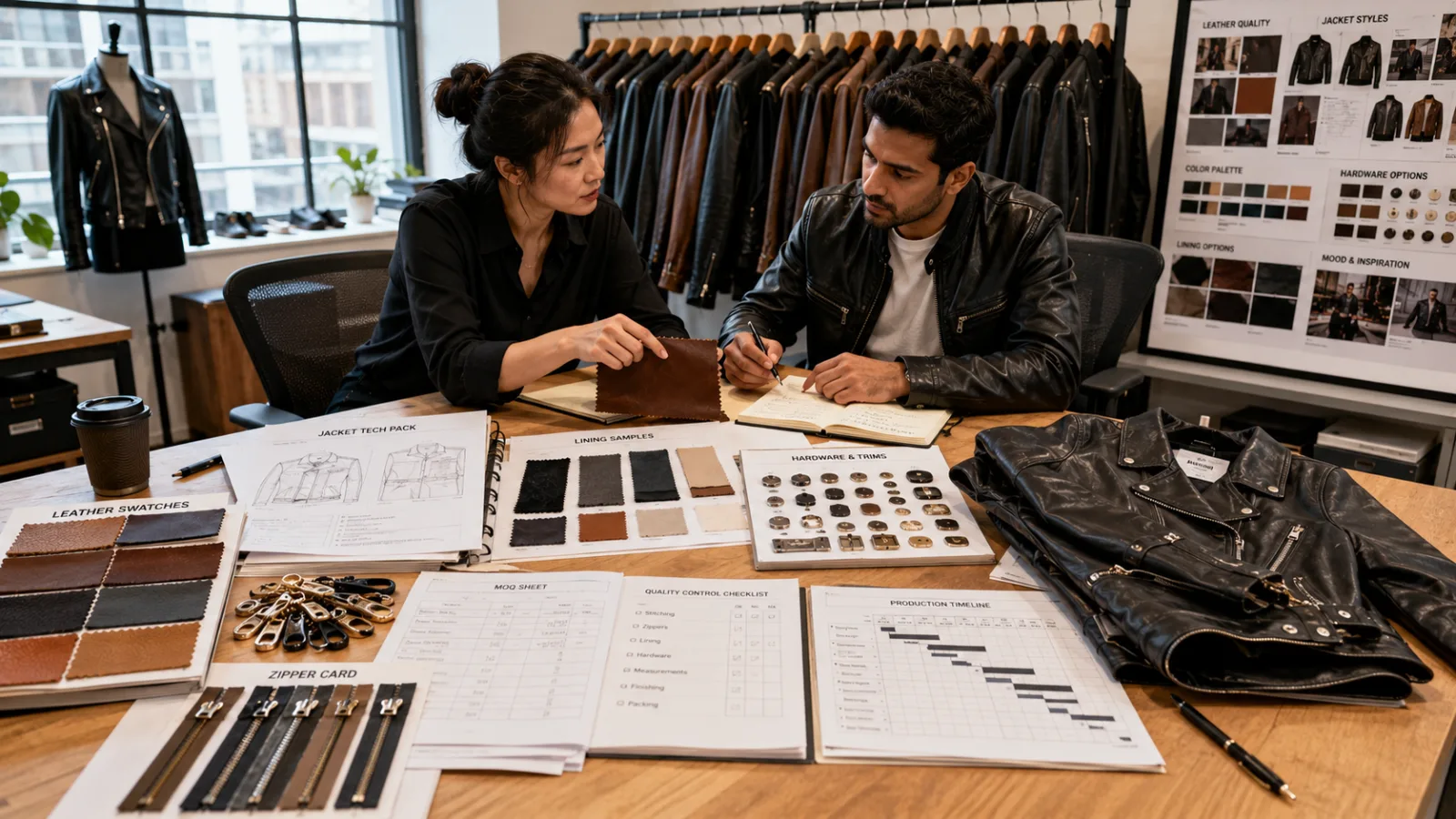
For apparel brands, leather jackets are a strong example of why product development, material selection, supplier expertise, costing, sampling, and quality control must work together from the beginning. A leather jacket may look simple on a product sketch, but the final garment depends on leather type, hide quality, panel cutting, lining, hardware, fit, stitching, finishing, MOQ, and production skill.
Many clothing brands struggle when they choose leather or leather-like materials without understanding how those materials behave during sampling and bulk production. Leather jackets, faux leather jackets, suede outerwear, biker jackets, bomber jackets, and premium outerwear all require careful planning before manufacturing begins.
Companies such as ApparGlobal help clothing brands align product development, material sourcing, vendor coordination, tech packs, sample review, MOQ planning, production timelines, quality control, and scalable manufacturing workflows. For brands developing leather jackets, outerwear, streetwear, activewear, kidswear, uniforms, private label apparel, or custom collections, this kind of production-focused support can make the manufacturing process more structured and reliable.
When brands work with a partner that understands material behavior, supplier communication, trim standardization, hardware sourcing, fit development, quality checkpoints, and bulk production requirements, they can reduce costly mistakes and create products that meet customer expectations.
Final Thoughts
A leather jacket is more than a fashion statement. It is a product shaped by material quality, construction skill, fit, care, and long-term use. The myths around leather jackets often come from simple assumptions: real leather is always better, expensive always means quality, genuine leather is always premium, faux leather always looks cheap, and leather needs no care.
The facts are more balanced. Leather jackets can be durable, stylish, repairable, and long-lasting, but only when made well and cared for properly. Real leather has strengths, but it also raises sourcing, tanning, and care questions. Faux leather has improved, but it varies widely in durability and environmental impact. A good leather jacket is not defined by one label. It is defined by the full product.
For buyers, the best approach is to check leather type, fit, stitching, hardware, lining, care requirements, and long-term value. For clothing brands, the best approach is to plan carefully before production, work with experienced suppliers, approve samples properly, and communicate clearly with customers.
A well-chosen leather jacket can become one of the most useful and personal pieces in a wardrobe. It can age beautifully, adapt to different styles, and last for years. But like every quality garment, it deserves informed buying, responsible production, and proper care.