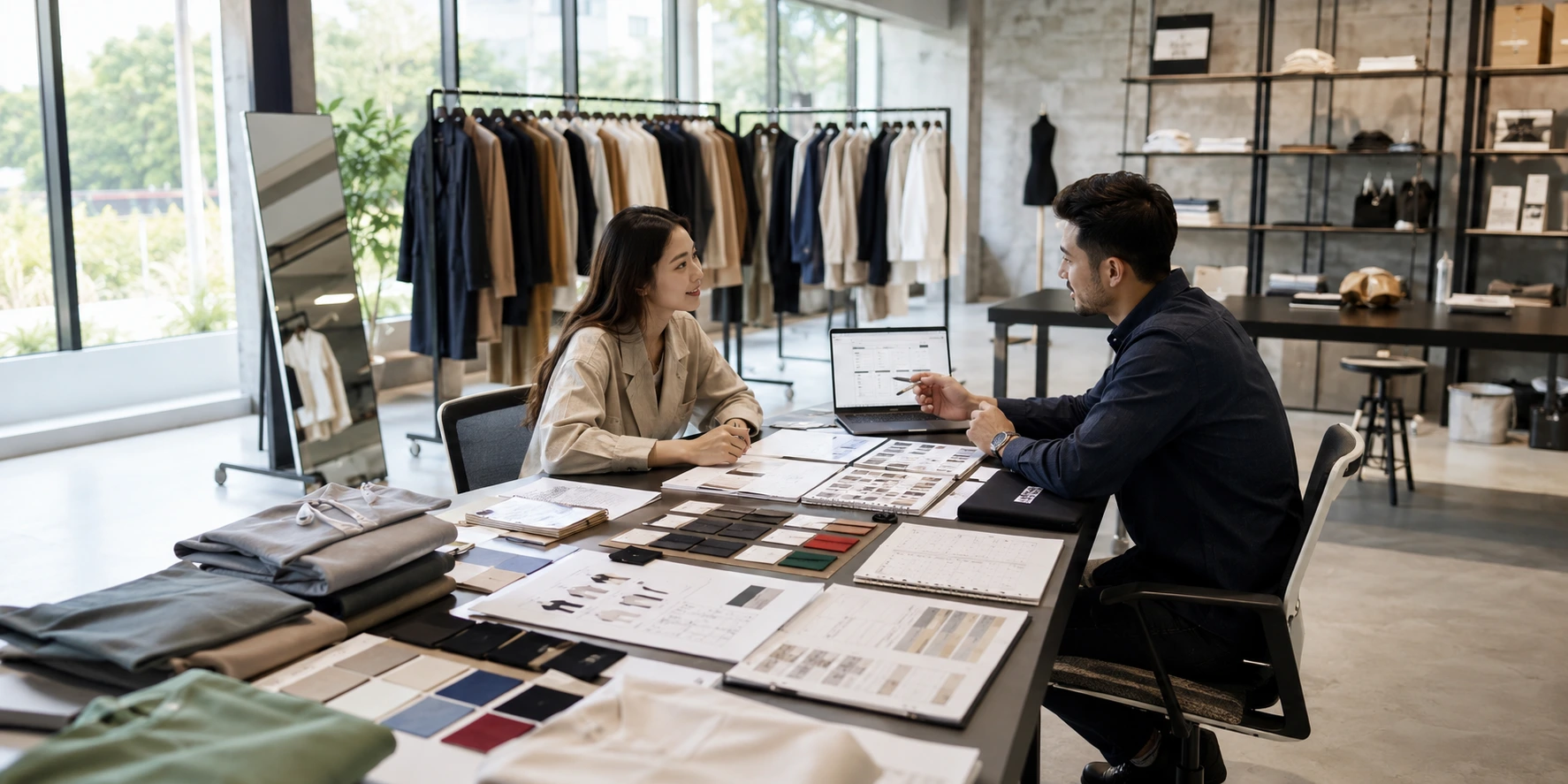
Finding the right clothing manufacturer is one of the most important steps in starting or scaling a fashion brand. A good manufacturer can help you turn ideas into quality garments, while the wrong one can cause delays, poor fit, hidden costs, quality problems, and inventory losses.
Many new clothing brands begin with designs, logos, mood boards, and social media plans, but they struggle when it is time to produce real products. Manufacturing is where creativity meets production reality. Your fabric, trims, sizing, stitching, labels, packaging, MOQ, cost, and delivery timeline all depend on the manufacturer you choose.
This comprehensive guide explains how to find clothing manufacturers, where to search, how to compare options, what questions to ask, what red flags to avoid, and how to prepare before contacting suppliers. Whether you are launching T-shirts, hoodies, activewear, kidswear, streetwear, uniforms, dresses, denim, private label apparel, or custom garments, this guide will help you source more confidently.
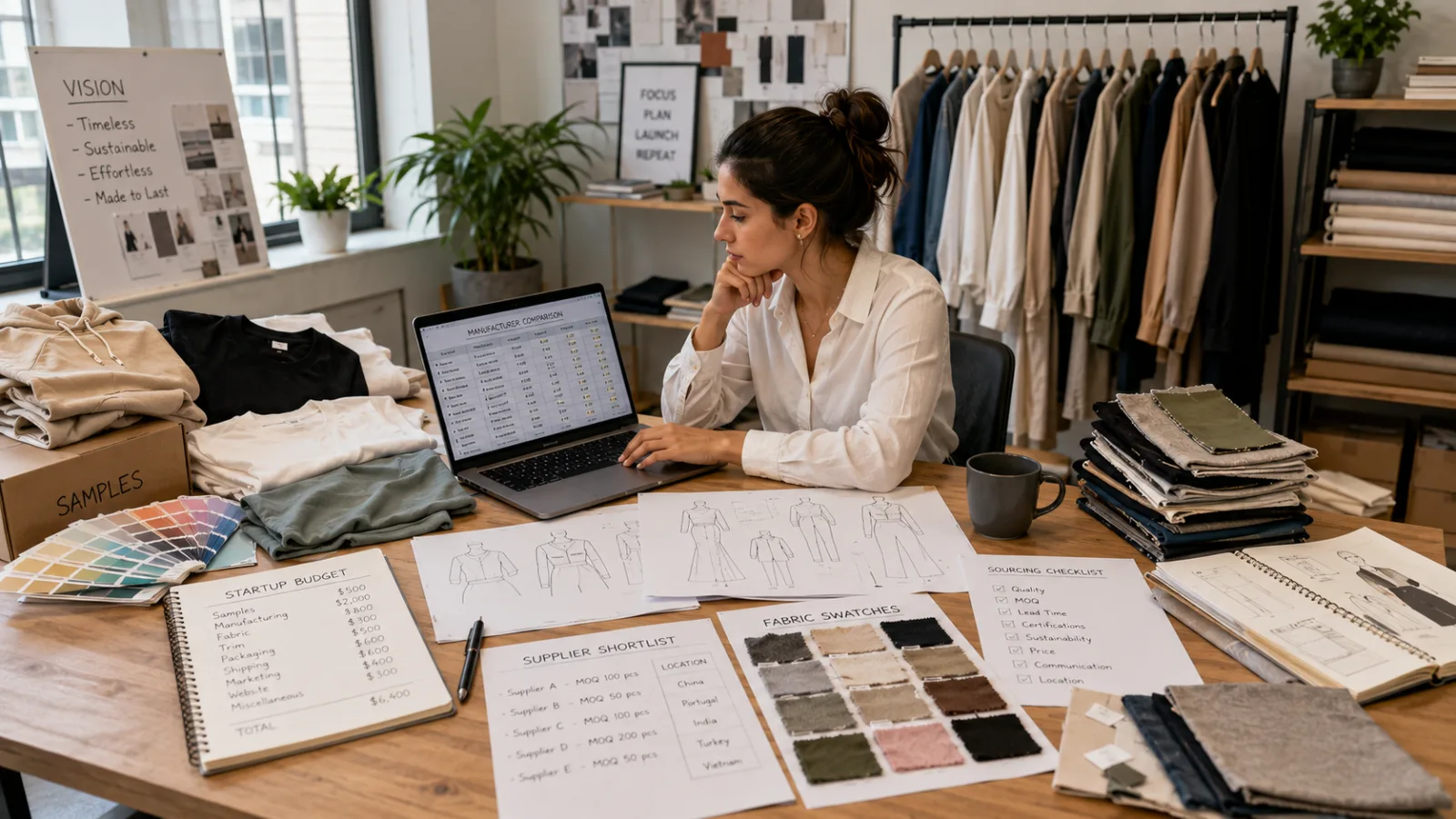
Why Finding the Right Clothing Manufacturer Matters
A clothing manufacturer is not just someone who sews garments. They are part of your product quality, customer experience, cost structure, launch timeline, and long-term brand reputation. If your manufacturer understands your product, communicates clearly, follows tech packs, manages quality control, and delivers on time, your business becomes much easier to manage.
If they do not, problems appear quickly. Samples may not match your design. Bulk production may differ from the approved sample. Sizing may be inconsistent. Fabric may shrink. Stitching may be weak. Labels may be placed incorrectly. Delivery may arrive late. Costs may increase after you have already committed.
For a new fashion brand, these problems can be expensive. You may not have enough cash to redo production, replace damaged products, or recover from a delayed launch. That is why manufacturer selection should never be rushed.
The best manufacturer for your brand is not always the cheapest one. It is the one that can produce your product at the right quality, in the right quantity, within your budget, and on a timeline your business can handle.
Step 1: Know What Type of Clothing Manufacturer You Need
Before searching for clothing manufacturers, you need to understand what type of manufacturer fits your product. Not all manufacturers produce the same garments. A factory that makes basic T-shirts may not be suitable for structured jackets. A manufacturer that specializes in activewear may not be the best choice for silk dresses. A kidswear manufacturer may need different safety and sizing knowledge than a streetwear factory.
Start by defining your product category clearly.
- Are you producing basic T-shirts?
- Are you making premium hoodies?
- Are you launching activewear?
- Are you developing kidswear?
- Are you creating uniforms?
- Are you making denim?
- Are you producing dresses or occasionwear?
- Are you creating private label basics?
- Are you making custom cut-and-sew garments?
The more specific you are, the easier it becomes to find the right manufacturer.
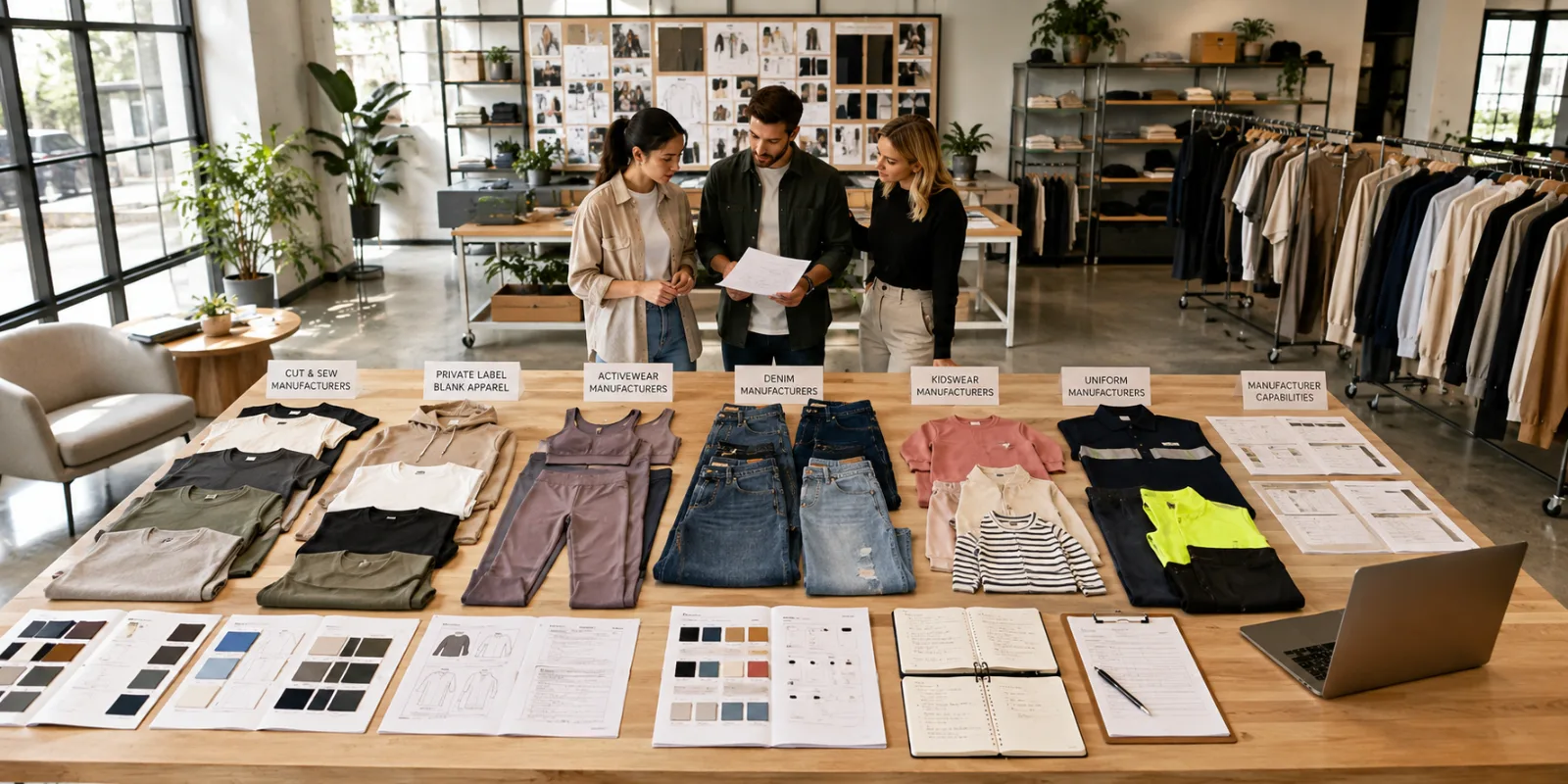
Main Types of Clothing Manufacturers
Cut-and-Sew Manufacturers: These manufacturers create garments from fabric based on your design, pattern, and tech pack. They are best for custom fashion brands that want original products.
Private Label Manufacturers: These suppliers offer ready-made or semi-custom products that can be branded with your label. They are useful for brands that want faster production and lower development complexity.
White Label Suppliers: These suppliers sell standard products that multiple brands can rebrand. This is usually the fastest option but offers the least uniqueness.
Full-Package Manufacturers: These manufacturers can help with fabric sourcing, trims, sampling, production, finishing, packing, and sometimes shipping. They are useful for brands that need more support.
CMT Manufacturers: CMT means cut, make, and trim. In this model, you usually provide fabric, trims, and specifications, while the factory handles production.
Specialized Manufacturers: These focus on specific categories such as denim, outerwear, swimwear, activewear, lingerie, knitwear, kidswear, uniforms, or leather goods.
Choosing the wrong type of manufacturer can create frustration from the beginning. If you need full development support, a simple CMT factory may not be enough. If you already have fabric and tech packs ready, a full-package supplier may not be necessary.
Step 2: Prepare Your Product Details Before Contacting Manufacturers
Many new brands contact manufacturers too early. They send a simple image and ask, “How much does this cost?” But manufacturers need details before they can give accurate pricing. If your request is vague, the quote may be inaccurate or the manufacturer may not take your brand seriously.
Before contacting manufacturers, prepare your product information as clearly as possible. You do not need everything perfect at the first stage, but the more organized you are, the better response you will receive.
What You Should Prepare
Product Category: Explain whether the product is a T-shirt, hoodie, jacket, dress, trouser, leggings, uniform, or other garment.
Reference Images: Use references to show style, fit, construction, or fabric feel, but do not rely on images alone.
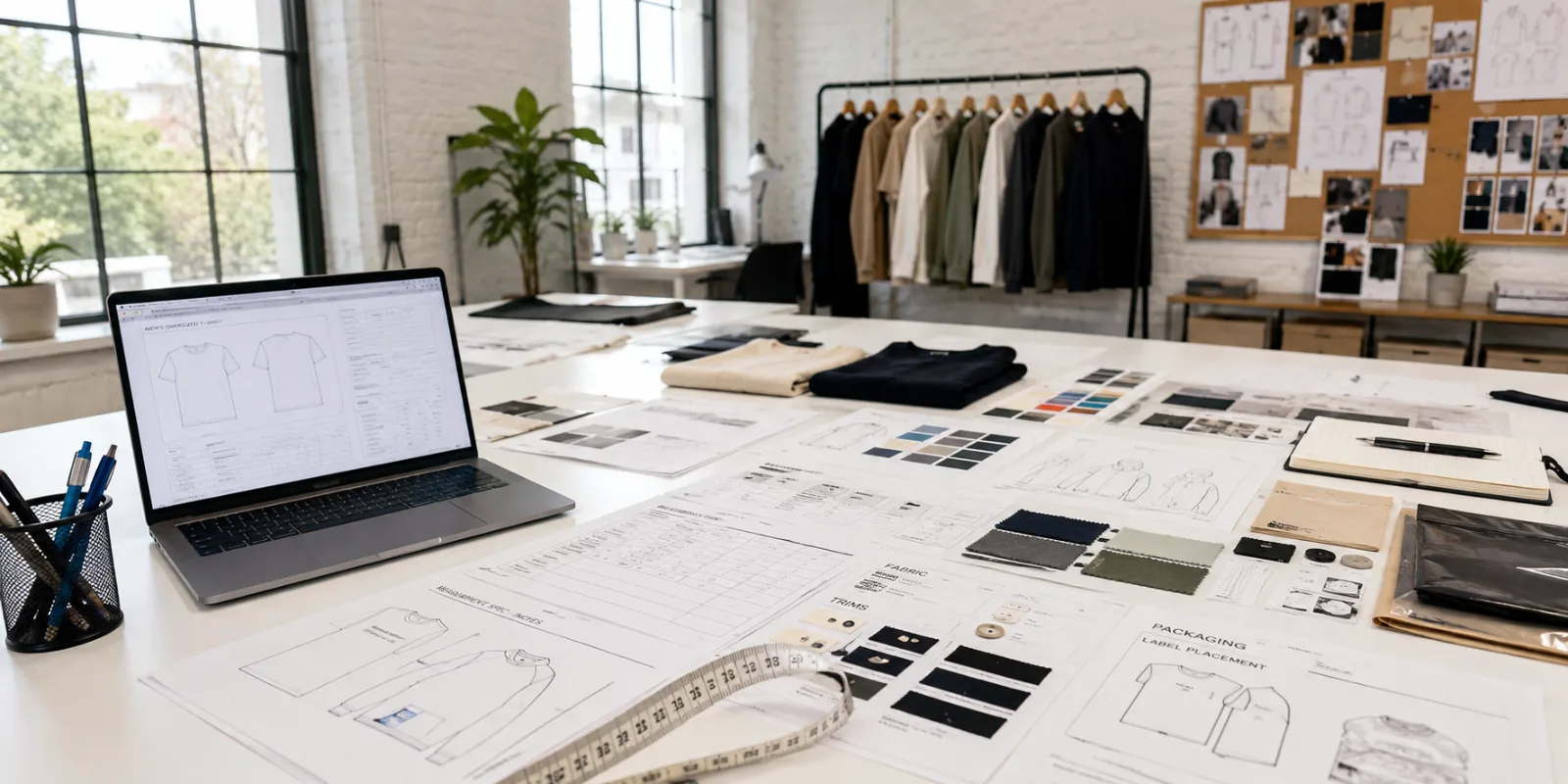
Tech Pack: A tech pack is a technical document that includes sketches, measurements, fabric details, trims, labels, construction notes, artwork placement, packaging, and size chart.
Target Fabric: Include fabric type, composition, GSM, stretch, finish, and color if possible.
Quantity: Mention your expected order quantity by style, color, and size.
Size Range: Explain whether you need XS to XL, kids sizes, plus sizes, or custom sizing.
Branding Needs: Include labels, hang tags, care labels, packaging, embroidery, printing, patches, or other branding details.
Target Price: If you have a cost target, share it. This helps the manufacturer recommend realistic options.
Launch Timeline: Mention when you need samples and when you expect bulk production.
Why Preparation Matters
A clear request helps manufacturers understand your seriousness. It also reduces back-and-forth communication. If you ask for a quote without fabric details, quantity, and construction requirements, the supplier may give a rough estimate that changes later.
Preparation also helps you compare manufacturers fairly. If every supplier receives the same clear information, you can compare their pricing, MOQ, lead time, and capabilities more accurately.
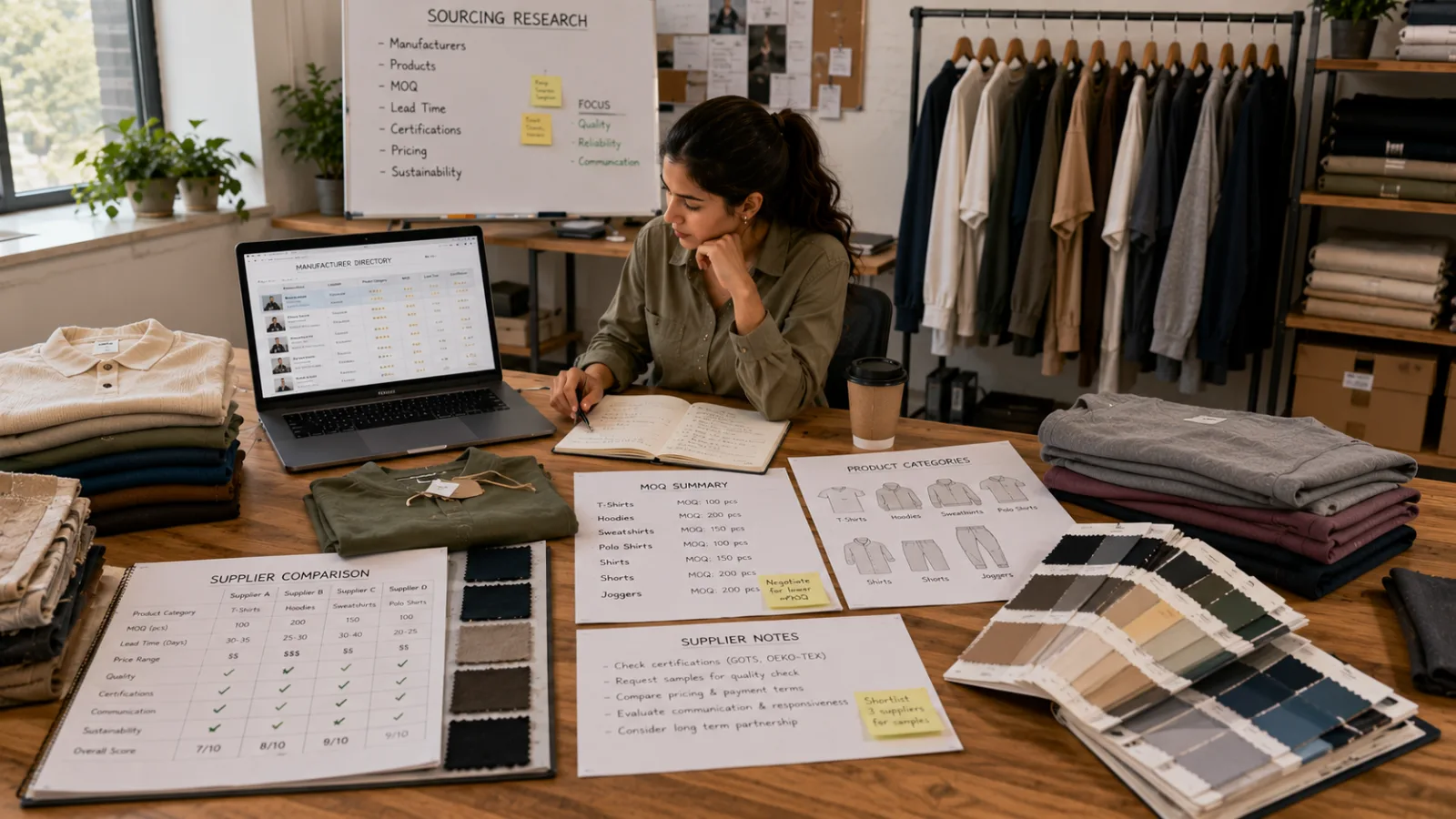
Step 3: Search Online Manufacturer Directories
Online directories are one of the easiest ways to start finding clothing manufacturers. These platforms can help you discover suppliers by country, product category, MOQ, certification, production capability, and manufacturing type.
Some directories include large international suppliers, while others focus on local or regional manufacturers. You may find factories, sourcing companies, wholesalers, private label suppliers, and full-package manufacturers.
How to Use Directories Effectively
Do not simply search “clothing manufacturer” and contact the first few results. Use specific keywords based on your product.
For example:
- Custom hoodie manufacturer
- Private label activewear manufacturer
- Kidswear manufacturer low MOQ
- Organic cotton T-shirt manufacturer
- Streetwear cut and sew manufacturer
- Uniform manufacturer
- Denim manufacturer
- Sustainable clothing manufacturer
- Small batch clothing manufacturer
Specific searches help you find suppliers that match your product category.
What to Check in a Directory Listing
Look for:
- Product specialization
- Factory location
- MOQ
- Years of experience
- Certifications
- Photos of past products
- Fabric options
- Private label support
- Custom manufacturing support
- Export experience
- Communication details
- Customer reviews or ratings
- Website and company profile
A directory can help you build a shortlist, but it should not be your final decision tool. Always verify suppliers before placing an order.
Step 4: Use Google Search With Specific Keywords
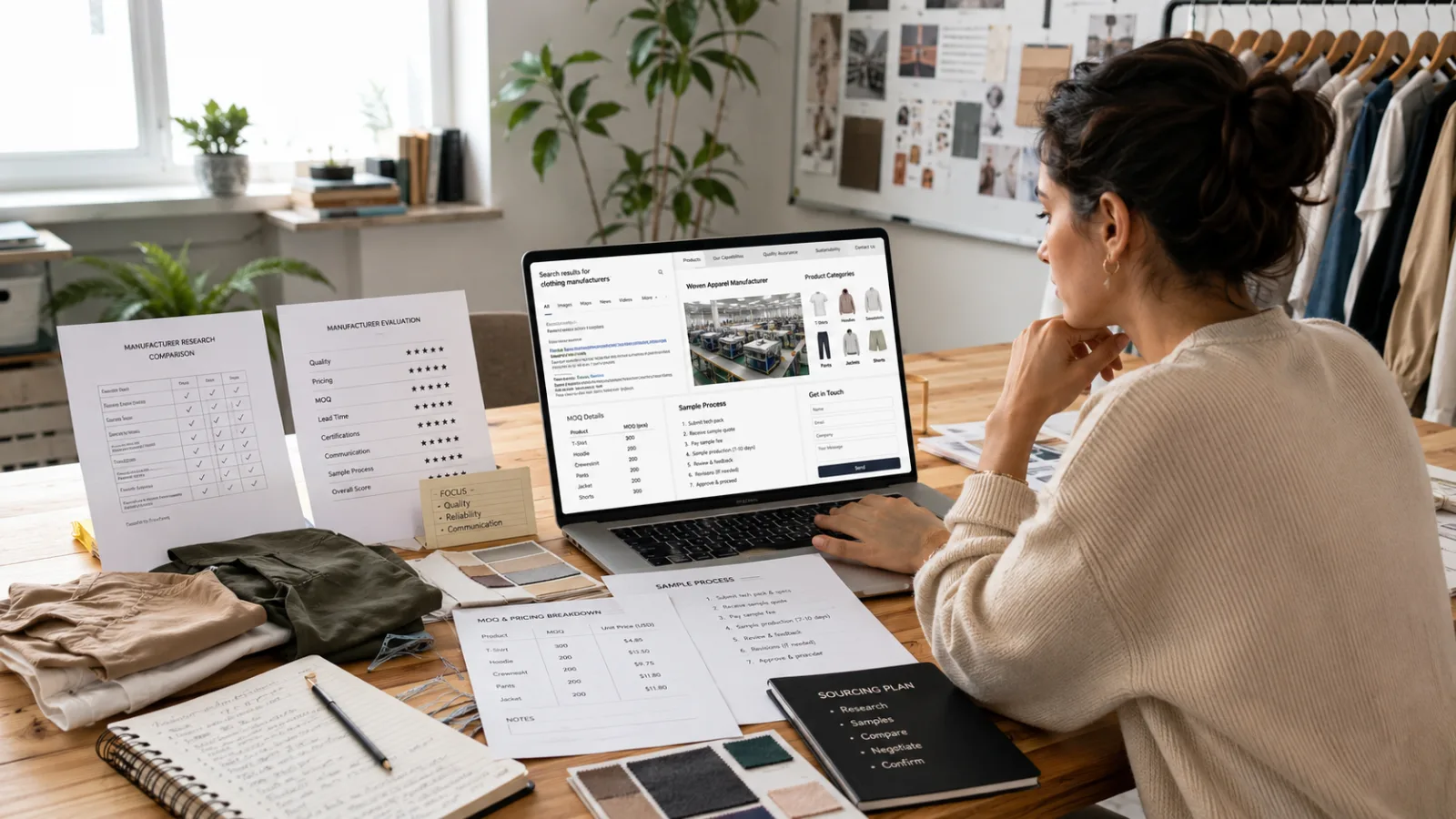
Google can be a powerful tool for finding clothing manufacturers, but only if you search strategically. Generic searches often bring up large marketplaces or unrelated results. Specific search terms work better.
Instead of searching only “clothing manufacturers,” try combinations such as:
- Clothing manufacturer for startups
- Low MOQ clothing manufacturer
- Custom apparel manufacturer USA
- Garment manufacturer India
- Private label clothing manufacturer
- Sustainable clothing manufacturer
- Streetwear manufacturer
- Cut and sew manufacturer
- Activewear manufacturer
- Kids clothing manufacturer
- Apparel factory for small brands
- Full package clothing manufacturer
You can also include your target country or region. Local manufacturing may be easier for communication and sampling, while overseas manufacturing may offer better unit pricing at higher quantities.
How to Evaluate Manufacturer Websites
When you visit a manufacturer’s website, look beyond the design. A beautiful website does not always mean the supplier is reliable, and a simple website does not always mean the factory is weak.
Check whether the website clearly explains:
- What products they manufacture
- Their MOQ
- Their production process
- Their sample process
- Their location
- Their experience
- Their certifications
- Their past work
- Their contact details
- Their private label or custom services
- Their quality control process
If the website is vague, you can still contact them, but ask detailed questions before moving forward.
Step 5: Explore Trade Shows and Apparel Sourcing Events
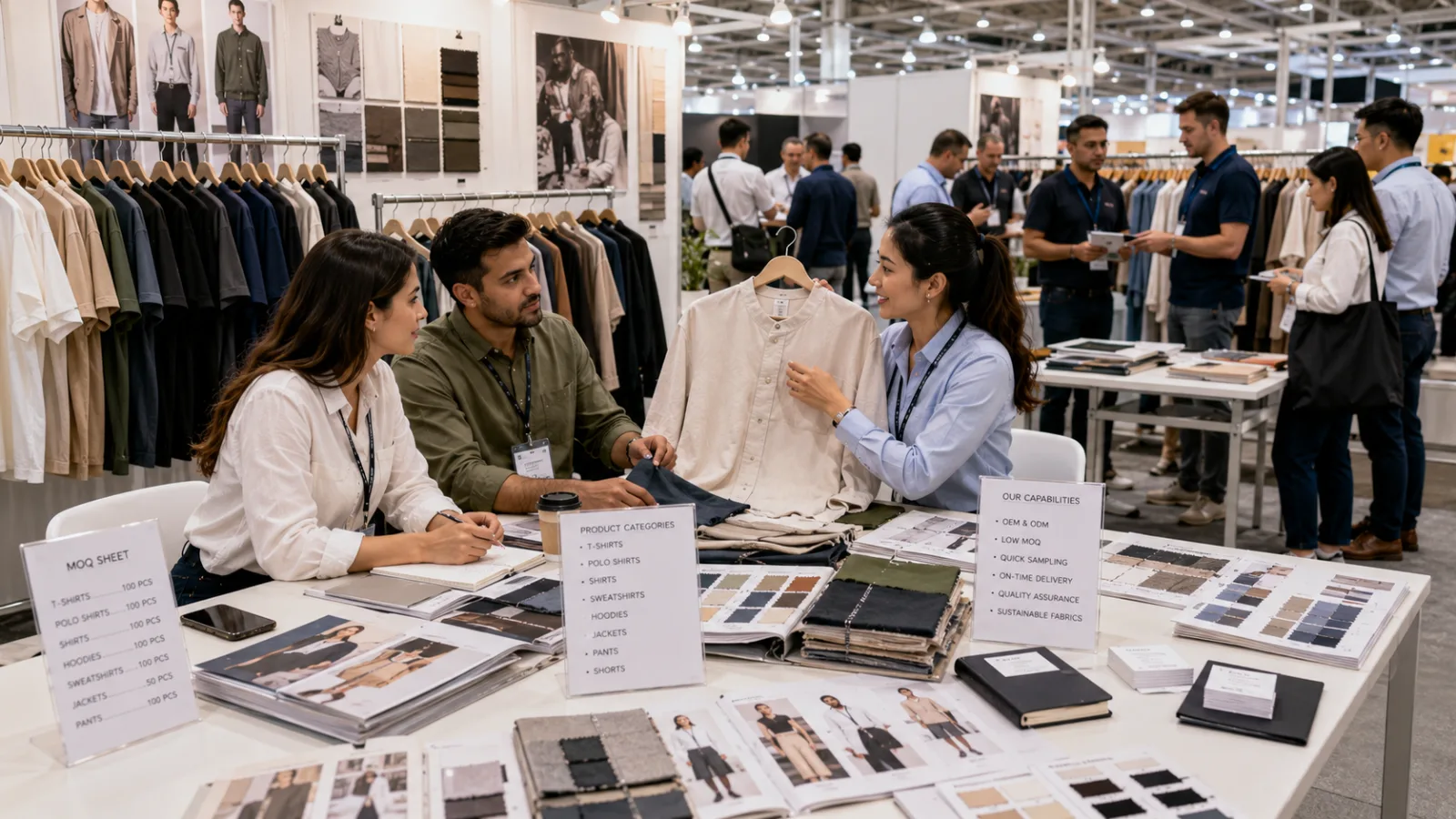
Trade shows are excellent places to find clothing manufacturers because you can meet suppliers face-to-face, touch samples, compare quality, ask questions, and build relationships. Apparel sourcing events often bring together fabric mills, trim suppliers, manufacturers, technology providers, and logistics companies.
Trade shows can be especially useful if you are serious about scaling. You can see many suppliers in a short time and understand what is available in the market.
What to Bring to a Trade Show
Bring business cards, product sketches, a short brand introduction, target product categories, estimated quantity, fabric ideas, and clear questions. If you already have tech packs or samples, bring them.
Questions to Ask at Trade Shows
- What product categories do you specialize in?
- What is your MOQ?
- Do you work with startups?
- Do you offer private label or custom manufacturing?
- Can you source fabric and trims?
- What is your sample lead time?
- What is your bulk production lead time?
- Do you have certifications?
- Do you export internationally?
- Can I visit your factory?
Take notes after every conversation. Trade shows can become overwhelming, and it is easy to forget which supplier offered what.
Step 6: Ask for Referrals From Other Fashion Professionals
Referrals can be one of the best ways to find reliable clothing manufacturers. If another brand, designer, consultant, pattern maker, fabric supplier, or sourcing agent recommends a manufacturer, that supplier may already have a proven track record.
You can ask for referrals from:
- Fashion designers
- Pattern makers
- Product developers
- Fabric suppliers
- Trim suppliers
- Sourcing consultants
- Boutique owners
- Fashion incubators
- Industry mentors
- Apparel brand founders
- Local manufacturing networks
However, remember that a manufacturer who works well for one brand may not be right for yours. Always check product specialization, MOQ, pricing, quality level, and communication style.
Why Referrals Are Helpful
Referrals can save time because someone else has already had direct experience with the supplier. They may know whether the manufacturer communicates well, delivers on time, follows specifications, or handles quality problems fairly.
A referral can also make the manufacturer more willing to respond. Suppliers often take warm introductions more seriously than cold messages.
What to Ask the Person Giving the Referral
Ask:
- What product did they make for you?
- How was the sample quality?
- Did bulk production match the approved sample?
- Were there delays?
- Was communication clear?
- Were there hidden costs?
- How did they handle mistakes?
- Would you work with them again?
These answers can help you judge whether the manufacturer is worth contacting.

Step 7: Consider Sourcing Agents or Manufacturing Partners
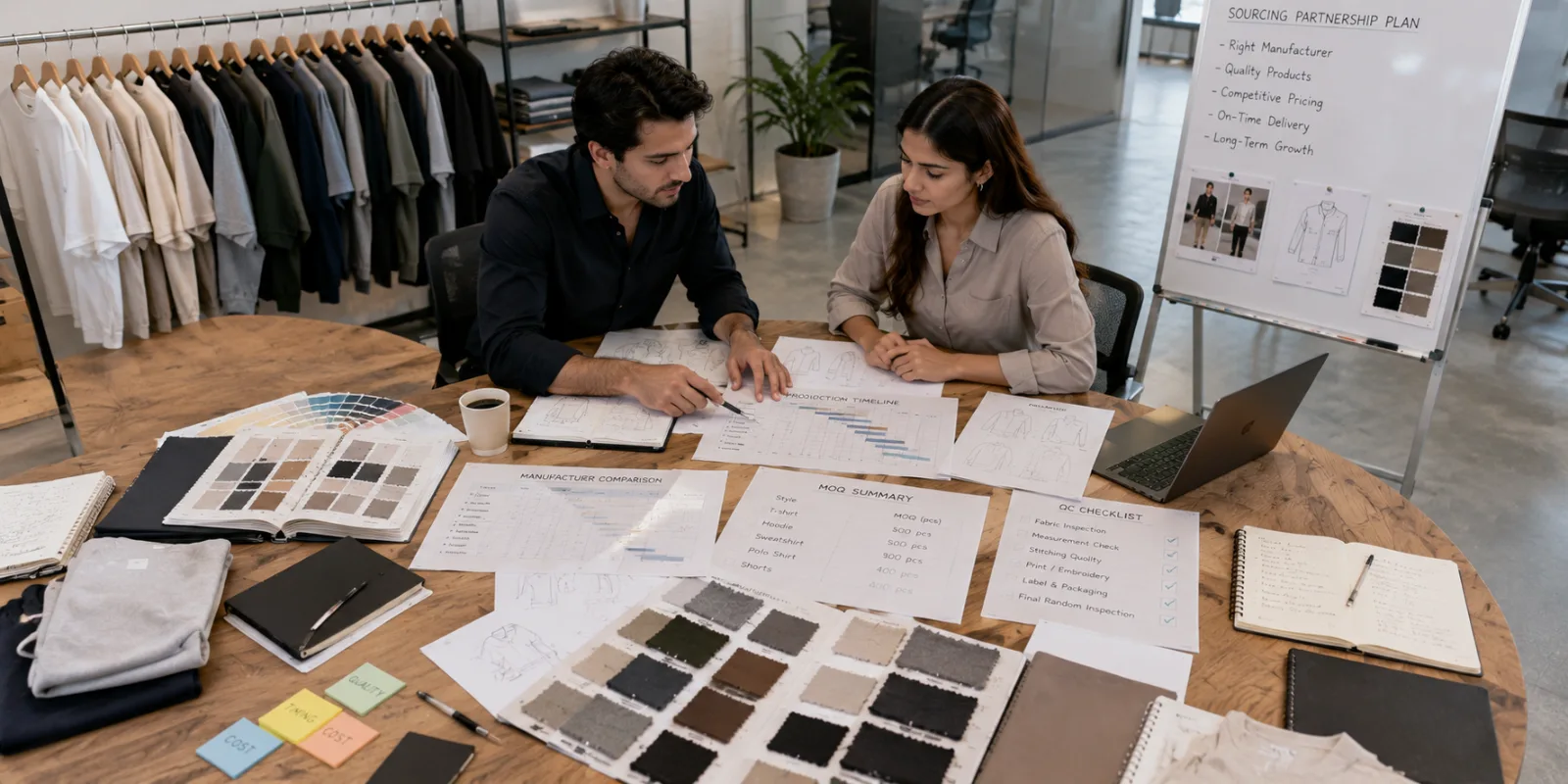
If you are new to fashion production, finding a manufacturer alone can feel overwhelming. A sourcing agent, production consultant, or manufacturing partner can help connect you with suitable factories, manage communication, review samples, negotiate pricing, and monitor production.
This can be helpful if you do not know how to evaluate suppliers or if you are sourcing from another country. A good sourcing partner understands manufacturing, fabric, trims, MOQ, sampling, quality control, and logistics.
When a Sourcing Partner Makes Sense
A sourcing partner may be useful if:
- You are launching your first fashion brand.
- You do not have technical apparel experience.
- You need help creating tech packs.
- You want to source overseas.
- You need fabric and trim support.
- You are producing custom garments.
- You want quality control support.
- You need help managing supplier communication.
- You do not have time to handle production details.
What to Be Careful About
Not all sourcing agents are equal. Some are very professional, while others may add hidden margins, recommend weak factories, or fail to communicate clearly. Ask how they work, how they charge, what services are included, and whether they can provide references or examples.
A good partner should make production clearer, not more confusing.
Step 8: Compare Local vs Overseas Clothing Manufacturers
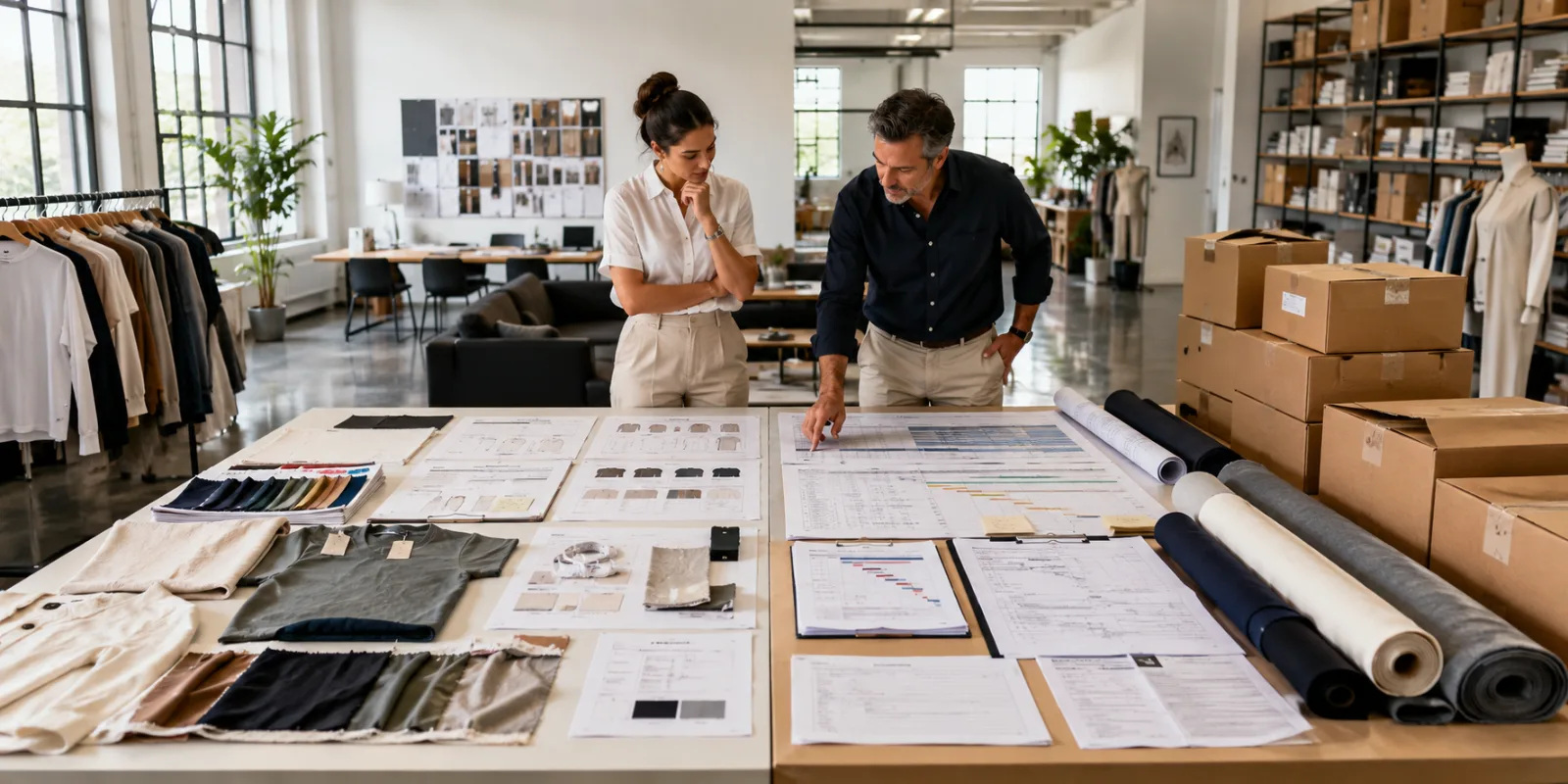
One of the biggest decisions is whether to manufacture locally or overseas. Both options have advantages and disadvantages.
Local Clothing Manufacturers
Local manufacturers may offer easier communication, faster sampling, simpler logistics, lower shipping risk, and better production visibility. You may be able to visit the factory, inspect samples, and solve problems more quickly.
Local manufacturing is often a good choice for small batches, premium products, quick turnaround, and brands that want more control. However, local production usually has higher labor costs, which can increase unit price.
Overseas Clothing Manufacturers
Overseas manufacturers may offer lower unit costs, larger production capacity, more fabric options, and specialized production capabilities. Many apparel brands use overseas manufacturing for larger orders, private label products, and cost-efficient production.
However, overseas production can involve higher MOQ, longer lead times, shipping complexity, customs duties, language barriers, time zone differences, and more difficult quality control.
Which Option Is Better?
There is no universal answer. If you are testing a new brand with small quantities, local or low-MOQ production may be safer. If you have proven demand and need better unit pricing, overseas manufacturing may make more sense.
Some brands use both. They create samples locally, test products in small batches, then move larger production overseas once the product is validated.
Step 9: Contact Manufacturers Professionally
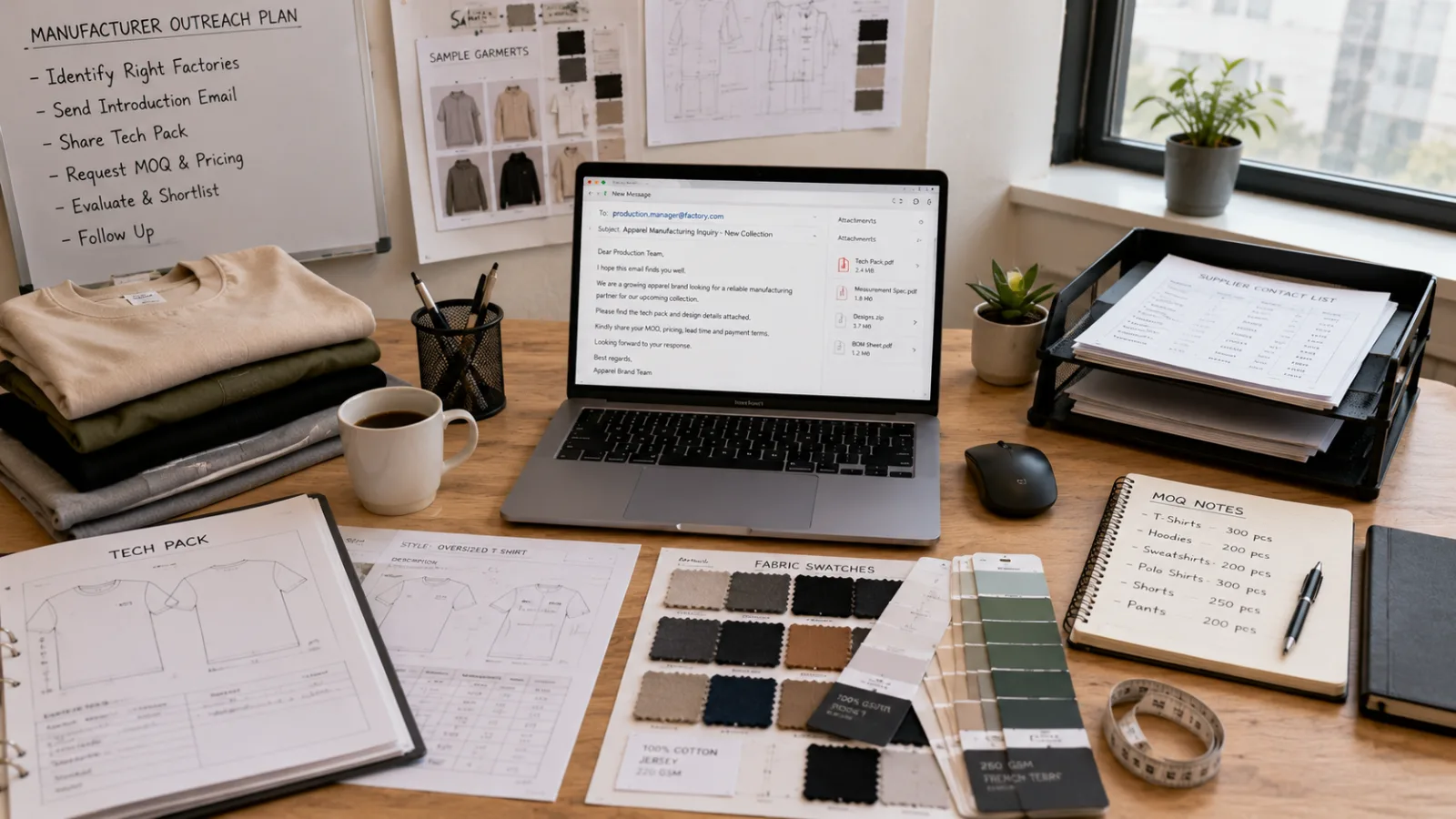
Your first message to a manufacturer matters. A clear and professional message increases your chance of getting a serious response.
Avoid sending a vague message like:
“Hi, I want to start a clothing brand. What are your prices?”
Instead, provide useful details.
What to Include in Your First Message
- Introduce your brand briefly.
- Mention the product category.
- Share your estimated quantity.
- Mention whether you need custom or private label.
- Ask about MOQ.
- Ask about sample process.
- Ask about production lead time.
- Mention fabric or design requirements.
- Attach a tech pack if available.
- Ask if they have experience with similar products.
Example Manufacturer Outreach Message
Hello,
I am developing a clothing brand and looking for a manufacturer for custom cut-and-sew hoodies and joggers. The first order may be around 200 to 300 pieces per style, depending on MOQ and pricing.
We are looking for heavyweight fleece, custom labels, size grading from S to XL, and possible embroidery or screen printing. I can share tech packs and reference details for review.
Could you please let me know your MOQ, sample cost, sample lead time, bulk production lead time, and whether you have experience with similar streetwear products?
Thank you.
Why This Works
This message gives enough detail for the manufacturer to understand your request. It also signals that you are serious and organized.
Step 10: Ask the Right Questions Before Choosing a Manufacturer
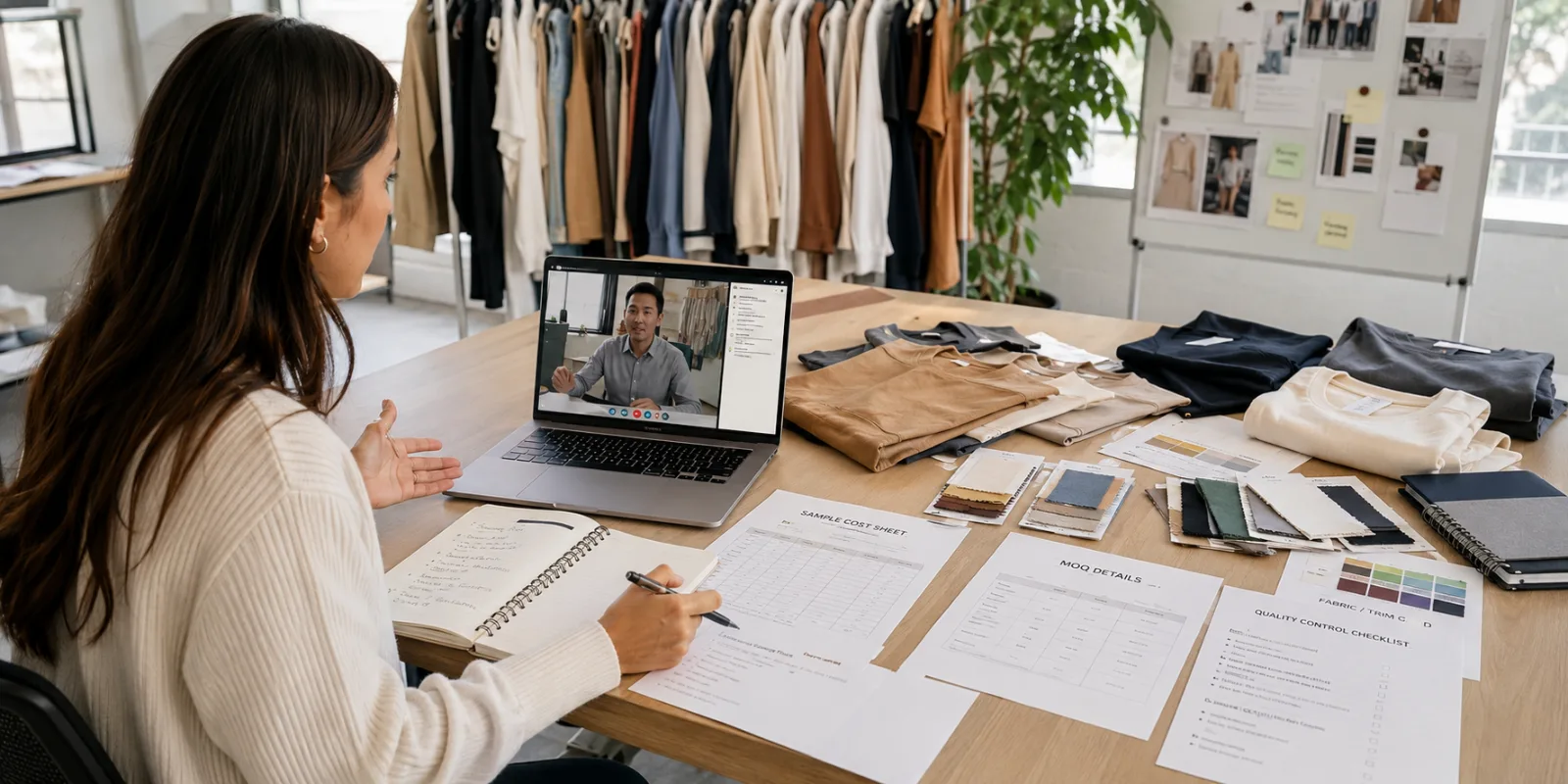
Once a manufacturer responds, ask detailed questions before sending money or starting samples. The answers will help you understand whether they are suitable.
Important Questions to Ask
- What product categories do you specialize in?
- Do you offer custom cut-and-sew production?
- Do you offer private label production?
- What is your MOQ per style, color, and size?
- Can you source fabric and trims?
- Can you work with my tech pack?
- What is your sample cost?
- How long does sampling take?
- How many revisions are included?
- What is your bulk production lead time?
- What quality control process do you follow?
- Can you provide photos of similar work?
- What payment terms do you require?
- Do you provide packaging support?
- Can you handle shipping?
- Do you allow third-party inspection?
- Where is production completed?
- Do you subcontract production?
These questions help you compare suppliers beyond price.
How to Judge Their Answers
Good manufacturers answer clearly, ask follow-up questions, and explain limitations. Weak manufacturers give vague promises, avoid details, or pressure you to order quickly.
A serious manufacturer should want to understand your product before giving a final quote. If they provide a price without asking about fabric, quantity, construction, and details, the quote may not be reliable.
Step 11: Request Samples Before Bulk Production
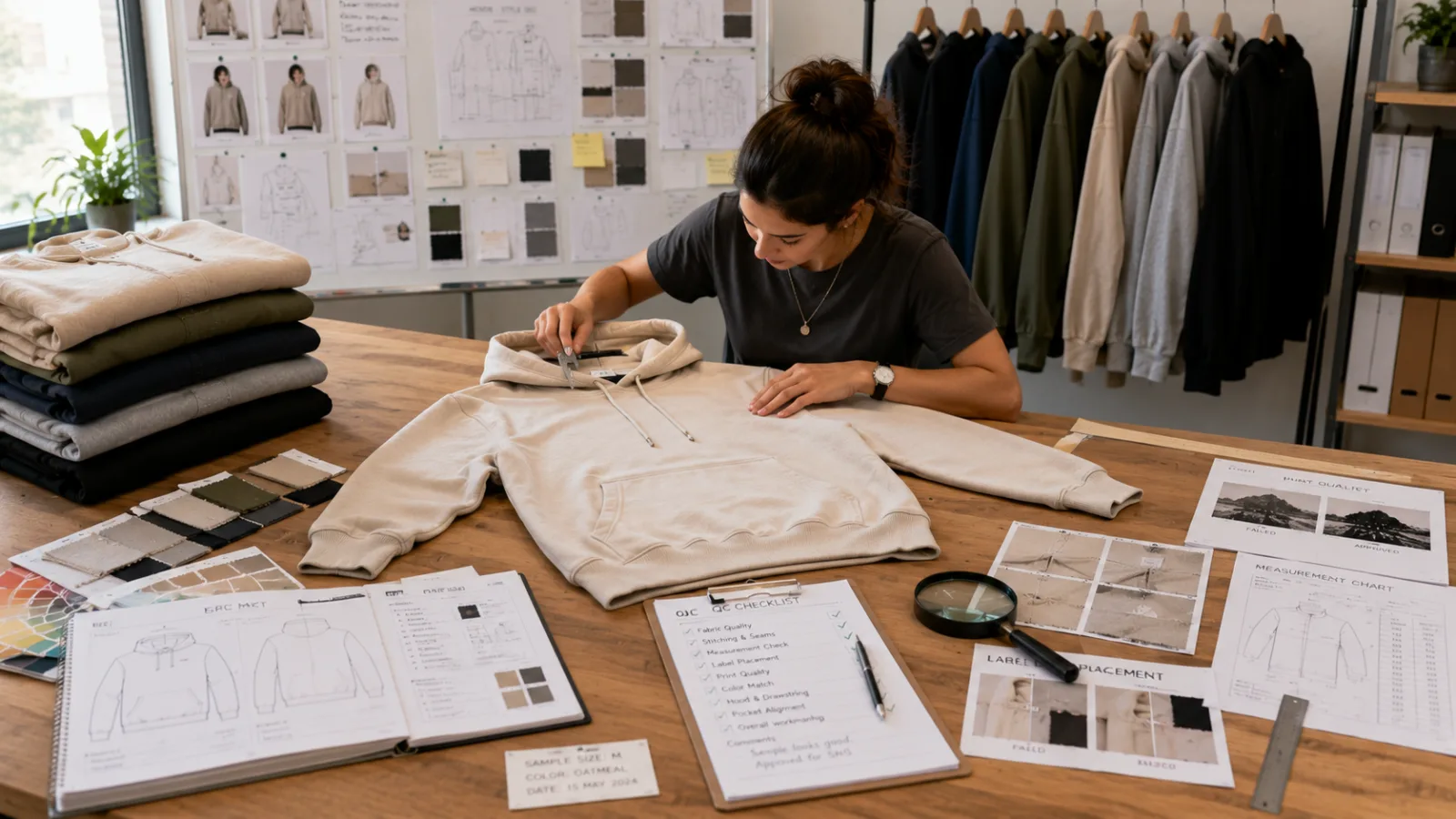
Never place a bulk order without checking samples. A sample helps you evaluate whether the manufacturer can follow your design, produce the right fit, use suitable fabric, sew properly, and finish the garment to your expectations. Sampling may feel expensive, but it is much cheaper than receiving hundreds of defective garments.
Types of Samples
Development Sample: The first version of your design.
Fit Sample: Used to check measurements, shape, and fit.
Size Set Sample: Samples made in multiple sizes to check grading.
Pre-Production Sample: The final approved version before bulk production.
Production Sample: A sample pulled from actual bulk production.
Each sample has a purpose. For custom apparel, the pre-production sample is especially important because it becomes the standard for bulk production.
What to Check in a Sample
Check fabric feel, GSM, color, measurements, shrinkage, stitching, seam strength, print quality, embroidery, label placement, trim quality, fit, finishing, and packaging. Wash the sample if needed. Wear-test it if possible.
If the sample is not right, give clear feedback. Use photos, measurements, and written notes. Avoid vague comments like “make it better.” Be specific.
Step 12: Compare Quotes Carefully
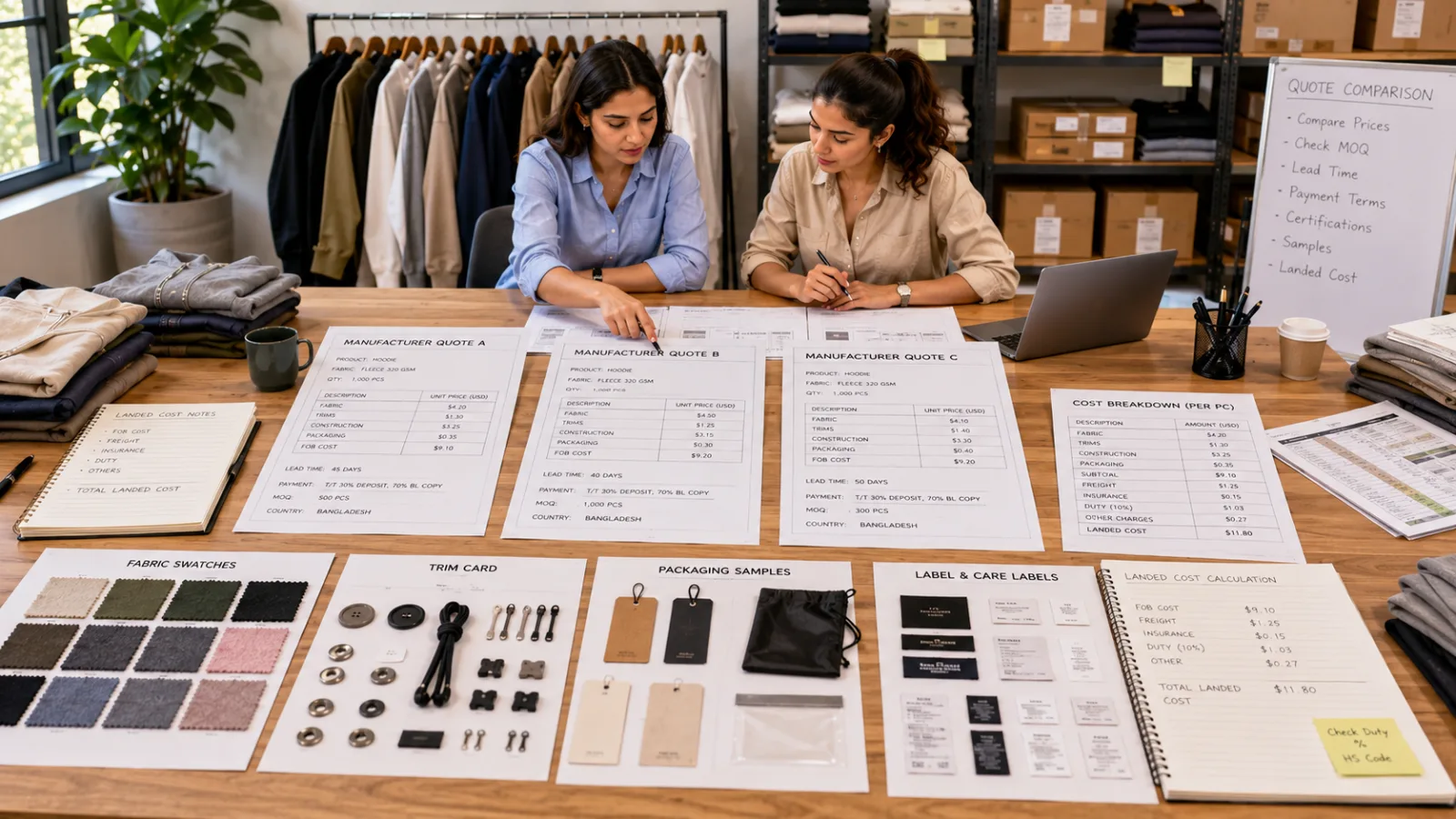
Manufacturer quotes can be confusing because not every supplier includes the same things. One factory may include fabric, trims, labels, and packing. Another may quote only sewing. One may include basic packaging but not custom polybags. One may include printing but not embroidery setup.
Do not compare only the unit price. Compare the full value.
What to Check in a Quote
- Fabric included or not
- Trim included or not
- Labels included or not
- Packaging included or not
- Printing or embroidery included or not
- Sample fee
- Pattern fee
- Grading fee
- MOQ
- Production lead time
- Payment terms
- Shipping terms
- Quality control process
- Hidden charges
- Currency
- Validity period of quote
Factory Price vs Landed Cost
Factory price is not your final cost. Landed cost includes product cost, packaging, shipping, duties, taxes, inspection, and delivery to your warehouse or fulfillment center. A low factory price may become expensive after hidden costs. Always calculate landed cost before deciding.
Red Flags When Choosing Clothing Manufacturers
Not every manufacturer is reliable. Watch for warning signs before committing.
Common Red Flags
- They refuse to provide samples.
- They pressure you to pay quickly.
- They give vague answers.
- They cannot explain MOQ clearly.
- They avoid written quotes.
- They do not ask about product details.
- They promise unrealistic timelines.
- They change prices repeatedly.
- They do not provide invoices.
- They refuse quality inspection.
- They cannot show similar work.
- They avoid factory location questions.
- They communicate poorly before payment.
- They say yes to everything without checking feasibility.
One red flag may not always mean the supplier is bad, but multiple red flags should make you pause.
Trust Your Process, Not Just Your Feeling
A supplier may sound friendly and confident, but you still need proof. Samples, written agreements, clear quotes, quality checks, and communication records are more reliable than promises.
How to Choose the Best Manufacturer for Your Brand
After researching, contacting, sampling, and comparing suppliers, choose the manufacturer that best fits your brand’s current stage.
The best manufacturer should match your product category, quality expectation, budget, MOQ, communication style, timeline, and growth plan.
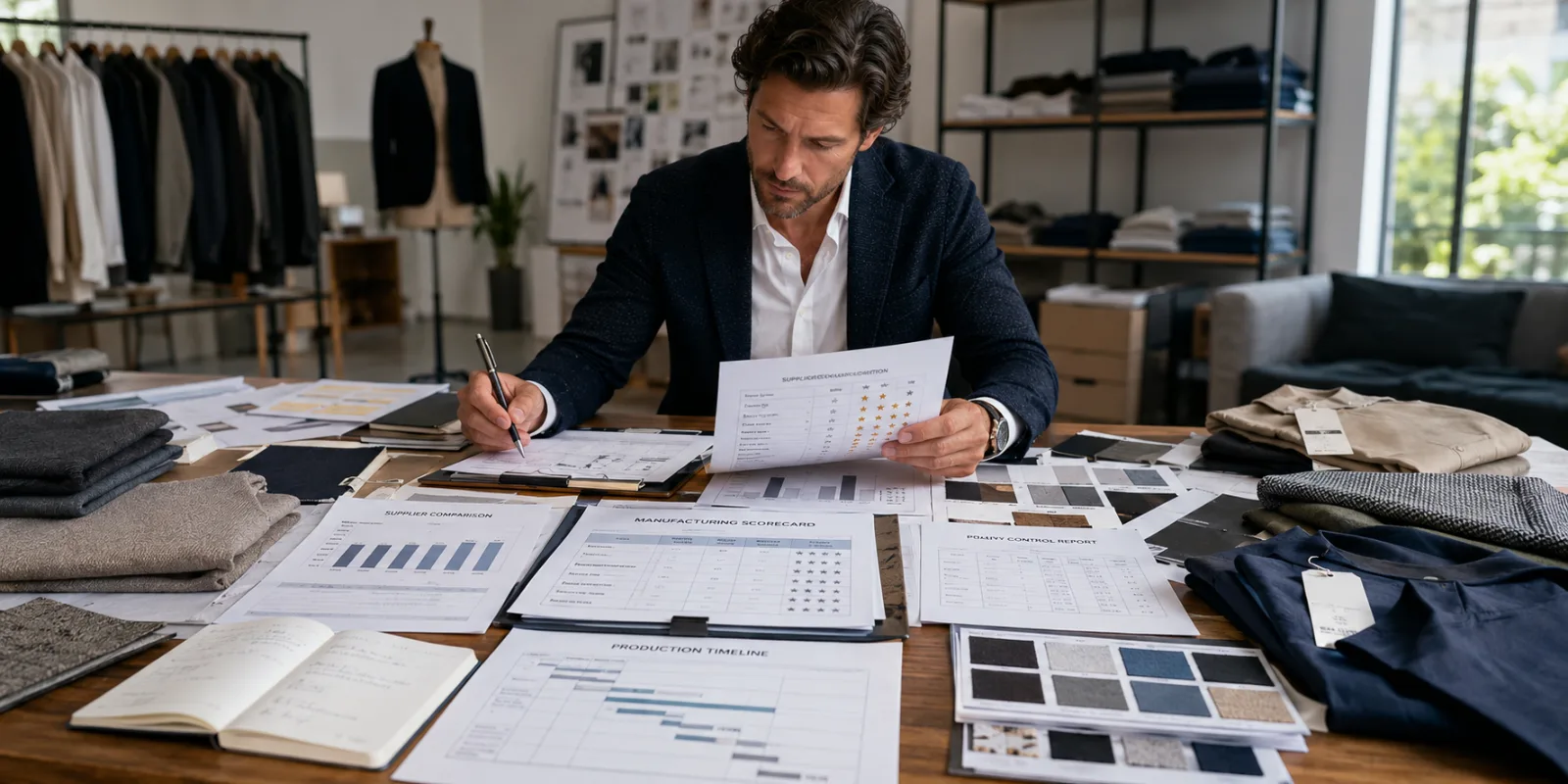
Use a Manufacturer Scorecard
Rate each manufacturer on:
- Product specialization
- MOQ flexibility
- Sample quality
- Communication
- Cost transparency
- Lead time
- Fabric sourcing ability
- Trim sourcing ability
- Quality control
- Private label support
- Shipping support
- Compliance transparency
- Past work
- Scalability
This helps you compare options logically.
Do Not Choose Only by Price
The cheapest supplier may become the most expensive if they create defects, delays, or poor customer reviews. A slightly higher unit cost may be worth it if quality is stronger, communication is clearer, and production risk is lower.
Start Small Before Scaling
If possible, begin with a small order or trial production. Test the manufacturer’s real performance before placing large orders. If they handle the first order well, you can build a stronger relationship and negotiate better terms over time.
Common Mistakes New Brands Make When Finding Manufacturers
Many new fashion brands make avoidable mistakes during the sourcing process. Knowing these mistakes can help you avoid them.
Mistake 1: Contacting Manufacturers Without Product Details
If you do not know your fabric, quantity, size range, or product type, you cannot get accurate quotes.
Mistake 2: Choosing the Cheapest Supplier
Low price can hide poor quality, weak fabric, bad communication, or hidden costs.
Mistake 3: Skipping Samples
Samples protect you from expensive bulk production mistakes.
Mistake 4: Ignoring MOQ
MOQ affects cash flow, inventory risk, and pricing. Always confirm MOQ by style, color, and size.
Mistake 5: Not Checking Product Specialization
A factory that makes T-shirts may not be able to make structured jackets or activewear correctly.
Mistake 6: Not Confirming What the Quote Includes
Always ask what is included and what costs extra.
Mistake 7: Rushing Into Bulk Production
Take time to approve samples, test fit, review quality, and confirm timelines.
ApparGlobal
For new fashion brands, finding clothing manufacturers becomes much easier when product development, sourcing, sampling, MOQ planning, and quality control are organized from the beginning. A manufacturer may be able to sew garments, but successful production depends on whether the brand has clear tech packs, realistic quantities, approved fabrics, trim details, cost targets, and production timelines.
Many clothing brands struggle because they start supplier conversations before their product is production-ready. This often leads to confusing quotes, inaccurate samples, hidden costs, and delays. Better planning helps brands communicate with manufacturers more professionally and compare suppliers more clearly.
Companies such as ApparGlobal help clothing brands align product development, vendor coordination, fabric sourcing, sample review, MOQ planning, production timelines, quality control, and scalable manufacturing workflows. For brands developing T-shirts, hoodies, activewear, kidswear, streetwear, uniforms, private label apparel, or custom collections, this kind of support can make the manufacturer selection process more structured and reliable.
When brands work with a partner that understands tech packs, fabric behavior, trim standardization, supplier communication, quality checkpoints, and bulk production requirements, they can reduce sourcing mistakes and move from idea to finished product with more confidence.
Clothing Manufacturer Search Checklist
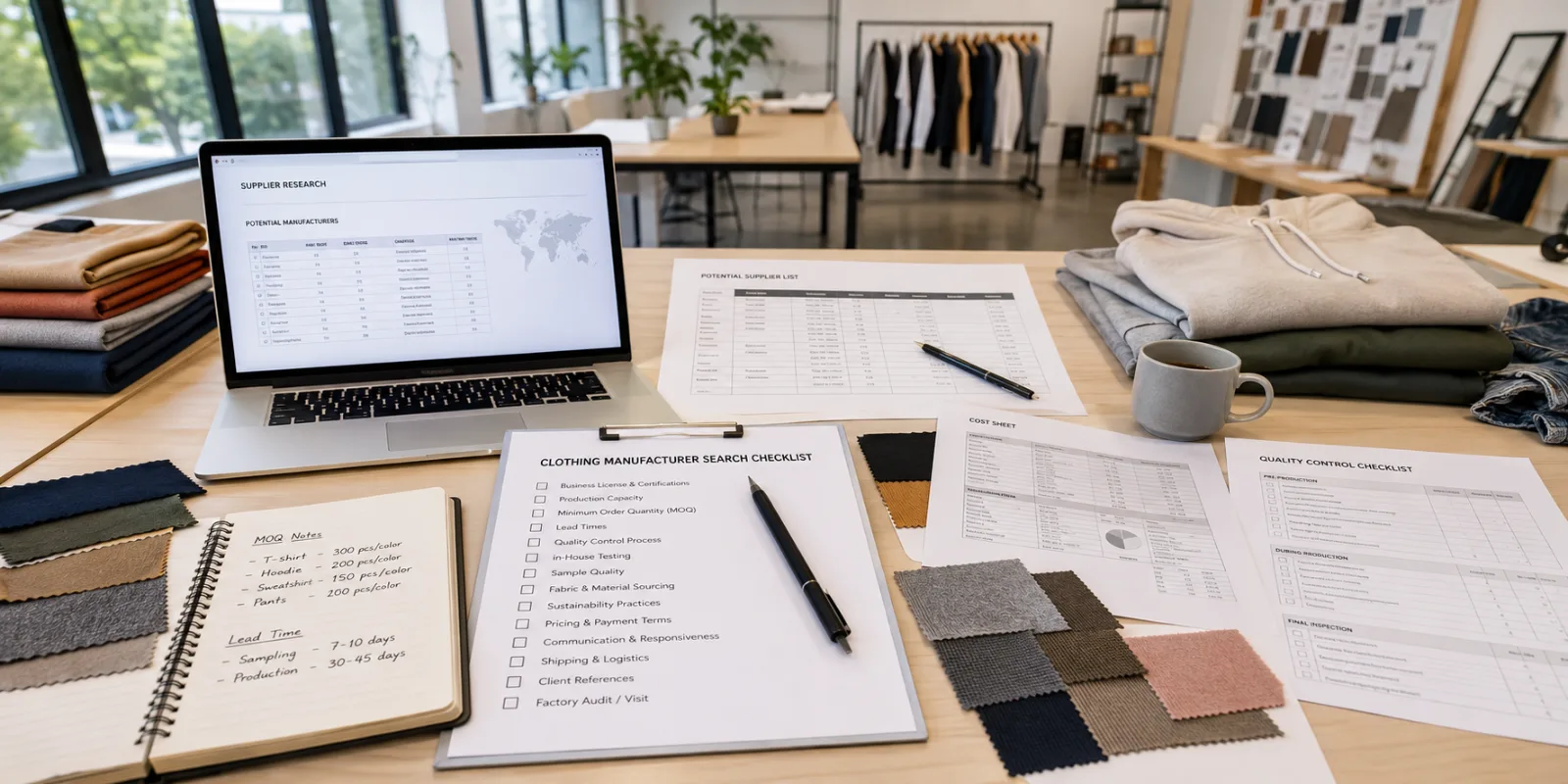
Use this checklist before choosing a manufacturer:
- Define your product category.
- Decide whether you need custom, private label, or white label production.
- Prepare reference images and product details.
- Create a tech pack if possible.
- Know your target quantity.
- Know your target price range.
- Research manufacturers by specialization.
- Compare local and overseas options.
- Ask about MOQ.
- Ask about samples.
- Ask about production lead time.
- Ask about fabric and trim sourcing.
- Request a detailed quote.
- Check what is included in the price.
- Review sample quality carefully.
- Ask about quality control.
- Confirm payment terms.
- Confirm shipping terms.
- Start with a small order if possible.
- Keep all approvals in writing.
This checklist can help you stay organized and avoid common sourcing mistakes.
Final Thoughts
Finding clothing manufacturers is one of the most important steps in building a successful fashion brand. The right manufacturer can help you create quality products, manage costs, meet timelines, and scale production. The wrong manufacturer can create delays, defects, hidden costs, and customer complaints.
Start by understanding what type of manufacturer you need. Prepare your product details before reaching out. Use directories, Google search, trade shows, referrals, and sourcing partners to build a strong manufacturer shortlist. Compare local and overseas options based on your budget, quantity, timeline, and quality needs.
Do not rush the process. Ask detailed questions, request samples, compare quotes carefully, check red flags, and start small when possible. A good manufacturer relationship is built on clarity, communication, trust, and documented expectations.
Remember, manufacturing is not just about making clothes. It is about building a production system that can support your brand. Your manufacturer affects the feel, fit, quality, price, delivery, and reputation of every product you sell.
If you take the time to find the right clothing manufacturer, you give your fashion brand a stronger foundation. You will be better prepared to launch products customers love, avoid expensive production mistakes, and grow with more confidence.