
A strong merchandising plan is one of the most important foundations of a successful retail brand. It connects product selection, customer demand, pricing, inventory, sales goals, store presentation, online merchandising, and seasonal buying decisions into one organized strategy. Without a clear merchandising plan, a retail brand can easily buy too much of the wrong product, miss key selling seasons, confuse customers with weak assortments, or lose profit because stock is not aligned with demand.
In simple terms, a merchandising plan helps a retail brand decide what to sell, how much to buy, when to launch, where to place products, how to price them, and how to measure performance. It is not just a spreadsheet or buying calendar. It is a business roadmap that guides product decisions from concept to customer purchase.
For fashion brands, lifestyle retailers, home decor stores, beauty brands, grocery chains, and eCommerce businesses, merchandising planning is the bridge between creativity and profitability. A buyer may have a strong eye for trends. A designer may create beautiful products. A marketing team may build strong campaigns. But if the merchandising plan is weak, the brand may still struggle with low sell-through, stockouts, overstock, poor cash flow, and missed revenue targets.

A well-built retail merchandising plan gives every department a shared direction. Product teams understand the assortment strategy. Buyers know what categories need investment. Marketing teams know which products to promote. Store teams understand display priorities. Finance teams can forecast margins and cash flow more accurately. Leadership can see how product decisions support business goals.
This guide explains how to create a merchandising plan for a retail brand step by step. It covers customer research, sales forecasting, assortment planning, inventory strategy, pricing, buying calendars, visual merchandising, performance tracking, and common mistakes to avoid.
What Is a Merchandising Plan?
A merchandising plan is a structured strategy that explains how a retail brand will select, buy, price, present, promote, and manage products to meet customer demand and achieve sales goals. It combines product planning, financial planning, inventory planning, and customer experience planning into one clear framework.
- A good merchandising plan answers important questions such as:
- What products should the brand sell?
- Which categories should receive more investment?
- How much inventory should the brand buy?
- What price points will attract customers and protect margin?
- When should products launch?
- Which products should be featured in stores, online, and campaigns?
- How will the brand measure product success?
- How will slow-moving stock be handled?
Retail merchandising is not only about making products look attractive. It is also about making the right products available at the right time, in the right quantity, at the right price, and in the right sales channel. That is why merchandising planning is deeply connected to sales forecasting, buying, stock management, trend analysis, and customer behavior.
For example, a clothing retailer planning for spring might need to decide how much inventory to allocate to dresses, lightweight jackets, shirts, linen trousers, accessories, and footwear. The merchandiser must consider last year’s sales, current fashion trends, customer preferences, price sensitivity, supplier lead times, and expected marketing campaigns. A merchandising plan organizes all of these factors so the brand can make smarter product decisions.

Why a Merchandising Plan Is Important for Retail Brands
A merchandising plan is important because retail success depends on product accuracy. Customers may love a brand’s identity, but they will only buy if the product mix matches their needs, lifestyle, budget, and timing. A brand that fails to plan merchandise properly can quickly face lost sales, high markdowns, and poor inventory turnover.
One of the biggest benefits of merchandising planning is better inventory control. Retail brands often lose money when they overbuy products that do not sell or underbuy products that customers want. Overstock ties up cash and usually leads to discounts. Understock creates missed revenue and customer frustration. A merchandising plan helps balance supply and demand before buying decisions are made.
Another major benefit is improved profitability. When a brand plans categories, price points, margins, and promotions in advance, it can protect profit instead of reacting too late. For example, if a retailer knows that core basics sell steadily at full price while seasonal trend items need faster movement, it can build a pricing and markdown plan that supports both revenue and margin.
A merchandising plan also improves customer experience. Shoppers want a clear, easy, and attractive product journey. If a store has random products with no category logic, weak size availability, missing basics, or poor visual presentation, customers may leave without buying. A strong merchandising strategy creates a product flow that feels intentional, relevant, and easy to shop.
For growing retail brands, merchandising planning also supports scalability. Small brands may rely on instinct at the beginning, but as product lines expand, guesswork becomes risky. A documented plan helps the brand make repeatable decisions, train teams, manage suppliers, and prepare for seasonal growth.
Step 1: Define Your Retail Brand Goals
Before building a merchandising plan, you need to define the brand’s business goals. Merchandise decisions should not happen separately from the wider retail strategy. Every product choice should support a clear commercial objective. Start by identifying what the brand wants to achieve during the planning period. A planning period could be a month, quarter, season, or full year. Common retail goals include increasing sales revenue, improving gross margin, launching a new category, reducing markdowns, attracting a new customer segment, improving sell-through, expanding online sales, or increasing average order value.
For example, a retail fashion brand may set a goal to grow women’s casualwear sales by 25 percent during the spring season. A beauty retailer may want to increase repeat purchases by expanding skincare bundles. A home decor brand may want to improve profitability by reducing low-margin seasonal products and investing more in bestselling core items.
Once the main goals are clear, break them into measurable merchandising objectives. Instead of saying “sell more products,” define specific targets such as:
- Increase full-price sell-through by 15 percent.
- Reduce end-of-season markdown inventory by 20 percent.
- Launch 30 percent newness in the seasonal assortment.
- Improve gross margin from 52 percent to 58 percent.
- Increase online conversion through better product grouping.
- Grow accessories as an add-on category.
Clear goals give the merchandising team a strong decision-making filter. If a product does not support the brand’s target customer, category strategy, price architecture, or margin goal, it should not be added just because it looks attractive.

Step 2: Understand Your Target Customer
A merchandising plan should always begin with the customer. Retail products only succeed when they match the real needs, tastes, habits, and buying behavior of the people the brand serves. If a brand does not understand its customer clearly, it may build an assortment that looks good internally but fails in the market.
Customer understanding should include both demographic and behavioral insights. Demographics include age, location, income level, lifestyle, gender focus, family status, and occupation. Behavioral insights include shopping frequency, preferred price points, product needs, style preferences, brand expectations, channel preferences, and purchase motivations.
For example, a retail brand targeting young professionals may need versatile products that work for office, weekend, and social settings. A children’s clothing retailer may need durable, affordable, easy-care products that parents trust. A premium home decor brand may need curated collections that feel aspirational, timeless, and design-led.
Use multiple sources to understand your retail customer. These can include customer surveys, sales reports, website analytics, customer reviews, social media comments, store staff feedback, return reasons, loyalty program data, and competitor research. The goal is to understand not only what customers buy, but also why they buy it.
A strong customer profile should influence every part of the merchandising plan. It should guide product categories, color choices, size ranges, materials, price points, packaging, store layout, online filters, and promotional messages. When merchandising is customer-led, the brand becomes easier to shop and more relevant to its audience.

Step 3: Analyze Past Sales Performance
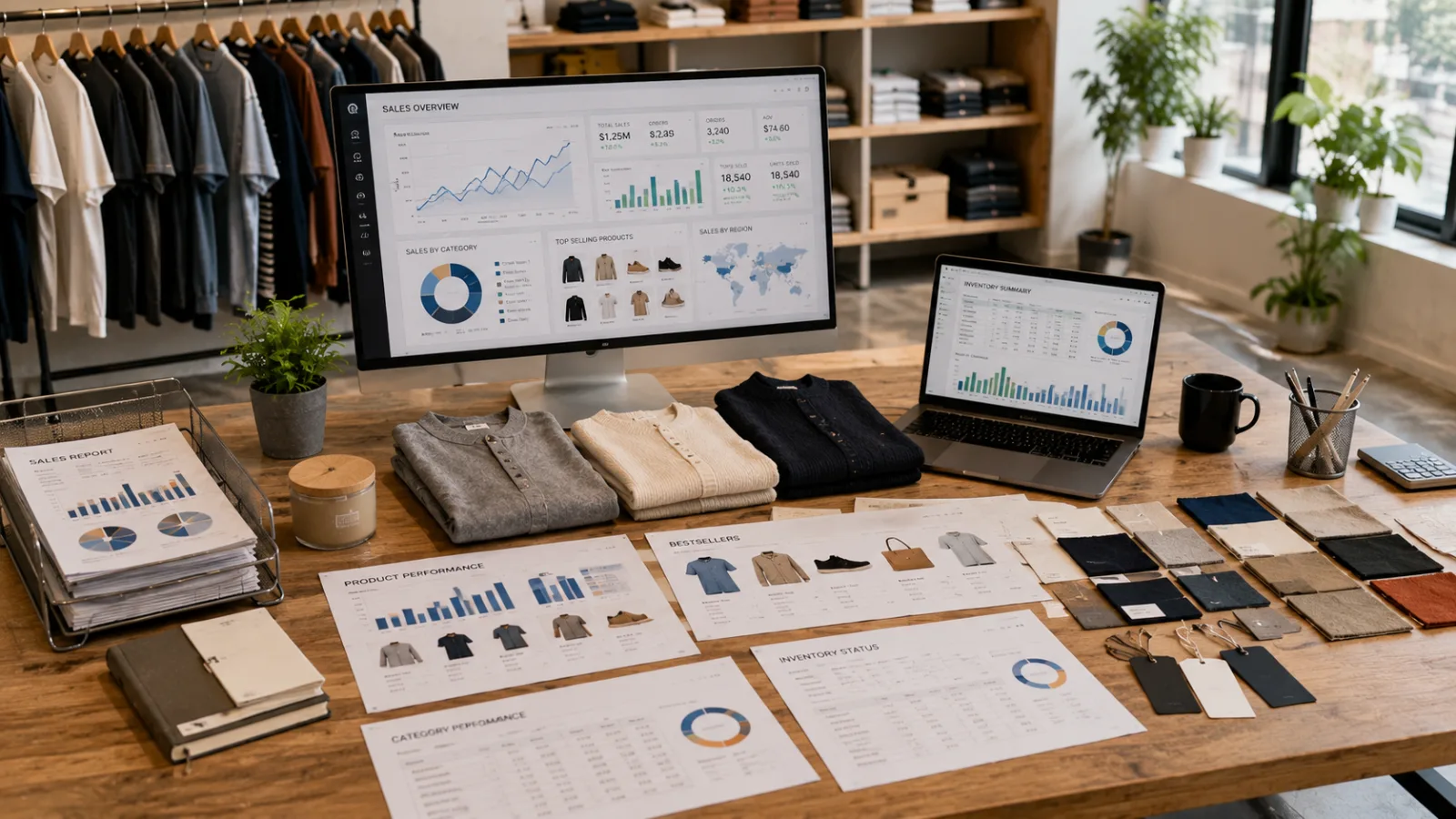
Past sales data is one of the most valuable tools in retail merchandising planning. It helps you understand what worked, what failed, and where future opportunities exist. A merchandising plan should not be built only on trends or personal taste. It should be supported by real performance data.
Start by reviewing sales by category, product type, price point, color, size, location, channel, and season. Look at total sales, gross margin, sell-through rate, return rate, markdown rate, stock turnover, and average order value. These metrics reveal the health of each product and category.
For example, a product may generate high revenue but low margin because it sells mainly during promotions. Another product may have lower total sales but strong full-price sell-through and high customer satisfaction. A category may look weak overall, but one subcategory may be growing quickly. These details help the merchandising team make better buying and planning decisions.
It is also important to identify bestsellers and slow movers. Bestsellers show what customers already trust and want from the brand. Slow movers show where the brand may have overestimated demand, priced incorrectly, chosen poor colors, or bought too much inventory. Reviewing both helps improve future assortment planning.
Seasonal comparison is especially useful. Compare this year’s performance with the same period last year. Look at what changed. Did customer demand shift? Did price increases affect sales? Did a marketing campaign improve product performance? Did stock arrive too late? Did a competitor influence demand?
The goal of sales analysis is not only to report numbers. It is to turn data into merchandising decisions. If a product performed well, should it be repeated, expanded, or updated? If a category underperformed, should it be reduced, repositioned, or removed? If a size sold out quickly, should future buying ratios be adjusted?
Step 4: Study Market Trends and Competitors
A strong merchandising plan must balance internal sales data with external market awareness. Past performance tells you what customers bought before. Trend and competitor research helps you understand what customers may want next.
Market trends can include changes in fashion, lifestyle, technology, sustainability, materials, colors, product features, shopping behavior, and economic conditions. For example, a fashion retailer may notice growing demand for relaxed tailoring, sustainable fabrics, or gender-neutral basics. A home retailer may see increased interest in organic textures, multifunctional furniture, or warm minimalist interiors. A beauty retailer may track trends in clean ingredients, refillable packaging, or skin barrier products.
Competitor research helps you understand how other brands position their products, pricing, promotions, collections, and visual presentation. This does not mean copying competitors. Instead, it helps you identify market gaps and opportunities. You may find that competitors are strong in premium products but weak in affordable essentials. Or you may see that most brands offer similar seasonal products, giving you an opportunity to differentiate through quality, bundling, service, or storytelling.
When studying competitors, review their product categories, pricing architecture, new arrivals, bestsellers, promotional calendar, product photography, online navigation, store displays, and customer reviews. Customer reviews are especially useful because they reveal what shoppers like, dislike, and wish brands offered.
Trend research should be filtered through your brand identity and target customer. Not every trend deserves a place in your assortment. A trend may be popular, but if it does not fit your customer, price point, or brand positioning, it can create confusion. The best merchandising plans combine commercial data with carefully selected trend relevance.

Step 5: Build a Product Assortment Strategy
Assortment planning is the heart of a merchandising plan. It defines which products the brand will offer, how many options will be available, and how the product mix will support customer demand and business goals. A strong assortment strategy should include product categories, subcategories, price points, styles, colors, sizes, materials, and depth of inventory. It should also define the role of each product in the range. Not every product has the same purpose. Some products drive traffic. Some protect margin. Some build brand image. Some increase basket size. Some serve as seasonal trend pieces.
A retail assortment usually includes several product types:
Core products are consistent items that customers expect from the brand. These may include basic T-shirts, denim, skincare essentials, kitchenware staples, or bestselling home decor pieces.
Seasonal products are designed around a specific time of year, trend, climate, or event. These can include summer dresses, holiday gift sets, winter coats, spring outdoor furniture, or back-to-school items.
Statement products create excitement and brand differentiation. They may not sell in the highest volume, but they help shape the brand image. Entry-level products attract new customers with accessible pricing. Premium products increase perceived value and improve average order value.
Add-on products encourage customers to buy more. These may include accessories, care products, small decor items, socks, belts, candles, or travel-size products.
The merchandising team should decide how much space, budget, and inventory each product type deserves. A common mistake is creating too many similar products without clear roles. This can confuse customers and split sales across too many options. A better approach is to create a focused assortment where every product has a clear reason to exist.
For example, instead of offering 25 similar white shirts, a fashion retailer might offer a slim fit shirt, oversized shirt, linen shirt, premium cotton shirt, cropped shirt, and office-ready shirt. Each one serves a different customer need.

Step 6: Create a Sales Forecast
Sales forecasting is the process of estimating how much revenue and product demand the brand expects during a specific period. It helps the merchandising team decide how much stock to buy and how to allocate inventory across categories and channels. A sales forecast should be based on past sales data, current business goals, customer demand, market trends, marketing plans, pricing strategy, and stock availability. It should also consider seasonal peaks, holidays, events, economic conditions, and promotional periods.
Start by forecasting sales at a total business level. Then break the forecast down by category, subcategory, product type, channel, and month. For example, a fashion retailer may forecast total spring revenue, then divide it across dresses, tops, bottoms, outerwear, accessories, and footwear. An eCommerce brand may forecast revenue by product collection, traffic source, and conversion rate.
A useful forecast should include both sales value and unit demand. Sales value tells you expected revenue. Unit demand tells you how many products need to be available. This is important because two products may generate similar revenue but require very different inventory quantities depending on price.
Forecasting should also include margin expectations. A brand may forecast strong revenue, but if too much revenue depends on discounting, profitability may suffer. This is why merchandising forecasts should include gross margin, markdown expectations, and full-price sell-through targets.
No forecast will be perfect. The purpose is not to predict the future exactly. The purpose is to make informed decisions and adjust quickly as real sales data comes in.

Step 7: Plan Inventory and Buying Quantities
Inventory planning decides how much product the brand should buy to meet forecasted demand without creating unnecessary overstock. It is one of the most important parts of retail merchandising because inventory directly affects cash flow, profitability, customer satisfaction, and operational efficiency.
To plan inventory properly, consider expected sales, supplier lead times, minimum order quantities, replenishment options, storage capacity, product lifespan, and risk level. A core product with steady demand may justify deeper inventory. A trend product with uncertain demand may need a smaller test quantity.
Retailers often use the terms “width” and “depth” in assortment planning. Width refers to the number of different product options. Depth refers to the quantity bought for each option. A wide assortment gives customers more choice, but it can spread inventory too thin. A deep assortment supports higher sales volume for fewer products, but it can create risk if demand is misjudged. For example, a brand may choose a narrow but deep assortment for bestselling basics because demand is predictable. It may choose a wider but shallower assortment for seasonal fashion pieces to test customer response.
Buying quantities should also reflect size and color demand. If medium and large sizes sell faster than extra small or extra large, the buying ratio should reflect that. If black, white, navy, and beige sell better than bright colors, inventory depth should match real demand. Poor size and color planning can create stockouts in key options while leaving slow-moving sizes unsold.
A good inventory plan should include opening stock, planned purchases, expected sales, closing stock, replenishment needs, and markdown strategy. The goal is to keep inventory productive, balanced, and aligned with demand.

Step 8: Develop a Pricing and Margin Strategy
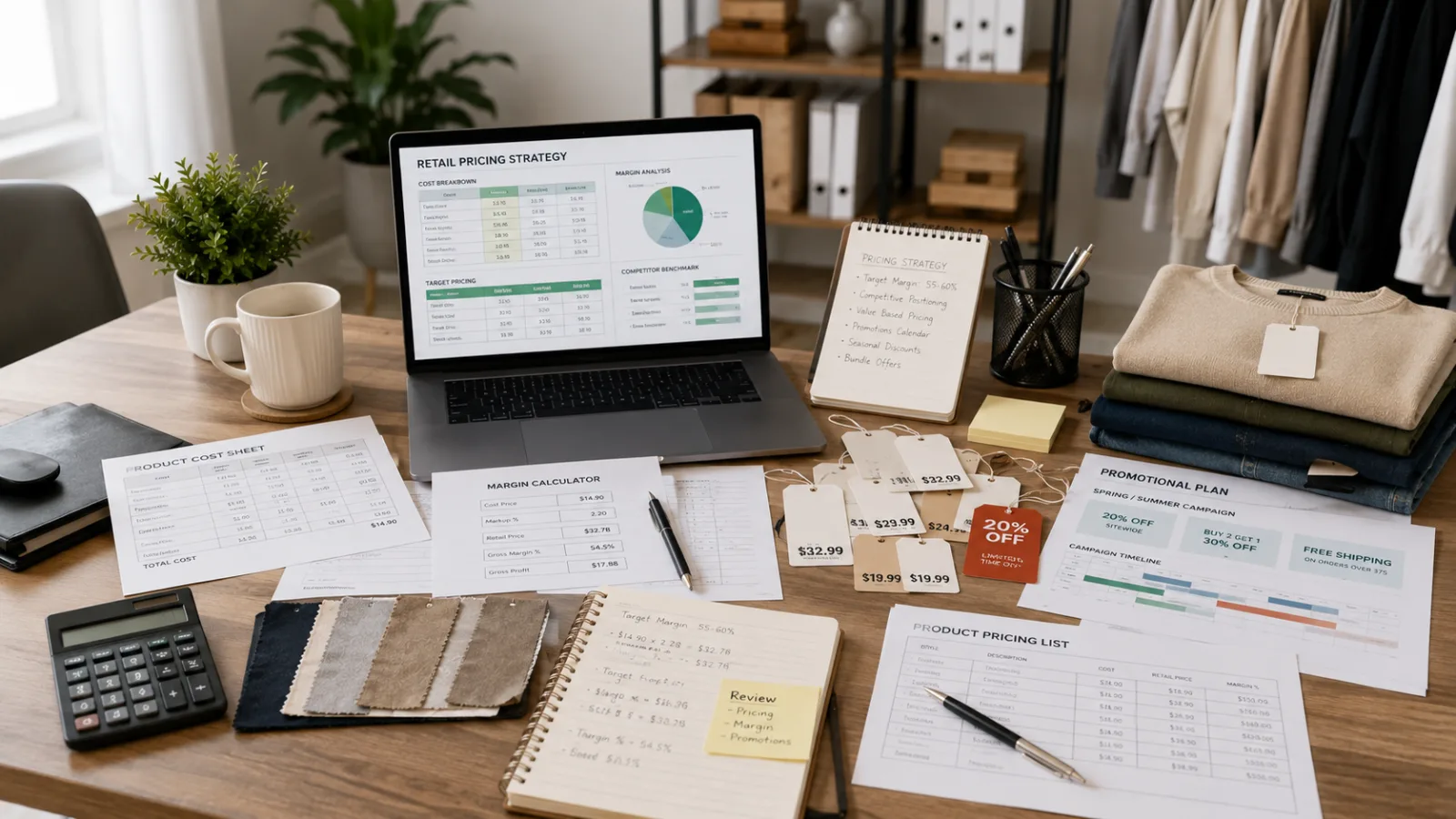
Pricing is not just about covering costs. It shapes customer perception, brand positioning, competitiveness, and profitability. A merchandising plan should include a clear pricing strategy for each product category and price tier.
Start by understanding your cost structure. This includes product cost, shipping, duties, packaging, storage, platform fees, marketing costs, labor, and expected markdowns. Once costs are clear, set retail prices that protect margin while remaining attractive to your target customer. A strong pricing architecture usually includes different price levels. Entry-level products help attract new customers. Mid-range products drive volume. Premium products increase brand value and average order value. Promotional products create urgency during campaigns.
For example, a fashion retailer may offer basic T-shirts at an accessible price, premium shirts at a higher price, and limited seasonal jackets at a premium tier. A home decor brand may offer small accessories at lower prices, mid-range lighting products, and high-margin statement furniture. Your merchandising plan should also define markdown rules. Not every product should be discounted at the same time or by the same percentage. Slow-moving seasonal products may need earlier markdowns. Core products may be protected from discounts. Premium products may require careful promotion to avoid weakening brand value.
Margin planning should happen before products are purchased, not after they fail to sell. If a product has a weak margin from the beginning, the brand has little room for promotion, returns, or operational costs. Good pricing planning protects the business from hidden profit loss.
Step 9: Create a Retail Buying Calendar
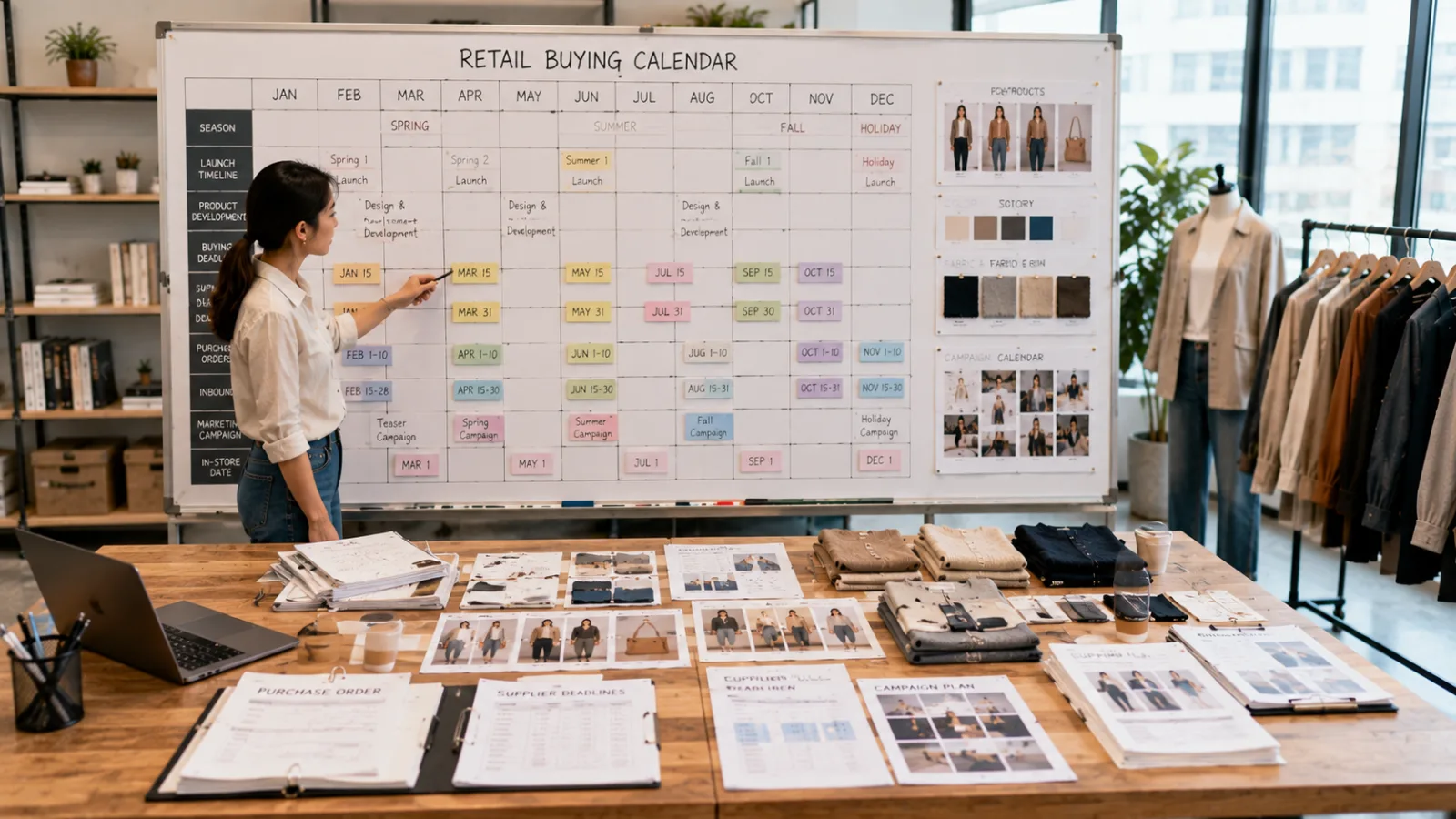
A buying calendar helps a retail brand organize when products need to be designed, sourced, ordered, delivered, launched, promoted, and reviewed. Without a buying calendar, brands often face late deliveries, rushed product launches, missed seasonal opportunities, and weak campaign coordination.
The buying calendar should include key retail dates such as product development deadlines, supplier order deadlines, production timelines, shipping dates, warehouse arrival dates, photoshoot dates, website upload dates, store launch dates, promotional campaigns, seasonal events, and markdown periods.
For example, if a brand wants to launch a summer collection in May, product development and buying may need to begin several months earlier. The team must account for sampling, approvals, production, quality checks, freight, photography, website preparation, and campaign planning. A product that arrives late in the season may sell poorly even if it is well designed.
A buying calendar also helps align teams. The merchandising team knows when products are expected. Marketing knows when to prepare campaigns. Visual merchandising knows when to plan displays. Store teams know when new stock will arrive. Finance knows when payments and inventory investment are required.
For retail brands working with international suppliers, the buying calendar is especially important. Production lead times, shipping delays, holidays, customs clearance, and quality checks can all affect launch timing. Planning early reduces risk and improves execution.
Step 10: Plan Product Presentation and Visual Merchandising
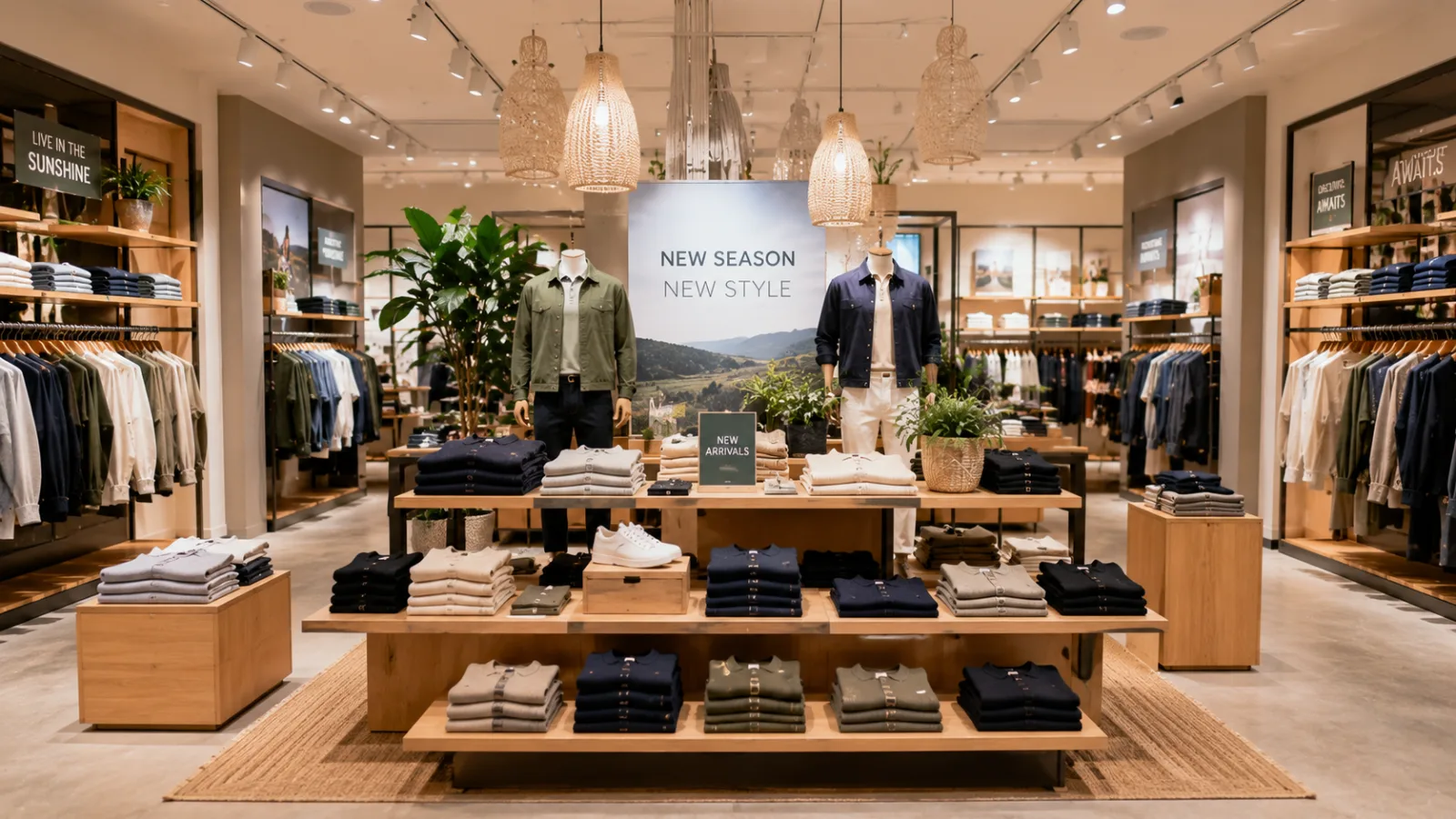
Merchandising is not complete until products are presented in a way that helps customers understand, desire, and buy them. Visual merchandising connects product strategy with customer experience. It includes store layout, product displays, window displays, signage, fixtures, styling, lighting, product grouping, and online presentation.
In physical retail stores, visual merchandising should guide the customer journey. Bestsellers, new arrivals, seasonal stories, and high-margin products should be placed strategically. Products should be grouped by category, lifestyle, color, outfit, room, occasion, or use case depending on the brand.
For example, a fashion store may display a complete outfit with shirts, trousers, shoes, and accessories. A home decor store may create a styled living room setup with furniture, lighting, rugs, cushions, and wall art. A beauty retailer may group products by routine, such as cleanse, treat, moisturize, and protect.
Online visual merchandising is equally important. eCommerce brands need clear navigation, strong product photography, helpful filters, collection pages, product recommendations, size guides, product descriptions, and cross-selling sections. A customer should be able to find products quickly and understand why they are relevant.
Product presentation should support the merchandising plan. If the brand wants to increase accessories sales, accessories must be visible near related products. If a new category is being launched, it needs strong placement and storytelling. If a product has high margin, it should receive enough visibility to drive sales.
Step 11: Align Marketing With the Merchandising Plan
A merchandising plan works best when it is connected to marketing. Products need visibility, storytelling, and promotion to reach the right customer. If marketing and merchandising teams work separately, campaigns may promote the wrong products, launch too late, or fail to support inventory priorities.
Start by identifying key product stories for each planning period. These could include new arrivals, seasonal collections, bestselling products, gift guides, category launches, limited drops, sustainability stories, or problem-solving products. Each story should connect to both customer interest and inventory goals.
For example, if the merchandising team has invested heavily in a spring dress collection, marketing should support that category with email campaigns, social content, homepage placement, influencer content, paid ads, and in-store displays. If inventory is deep in a specific color or style, marketing can help create demand before markdowns become necessary.
Marketing should also understand product margins and stock levels. Promoting a low-stock product too heavily can lead to missed sales and customer disappointment. Promoting a low-margin product too aggressively may increase revenue but reduce profit. Better alignment helps campaigns support profitable growth.
A strong merchandising and marketing partnership should include a shared launch calendar, campaign priorities, product storytelling, promotion rules, and performance reviews. This creates a smoother customer journey from discovery to purchase.

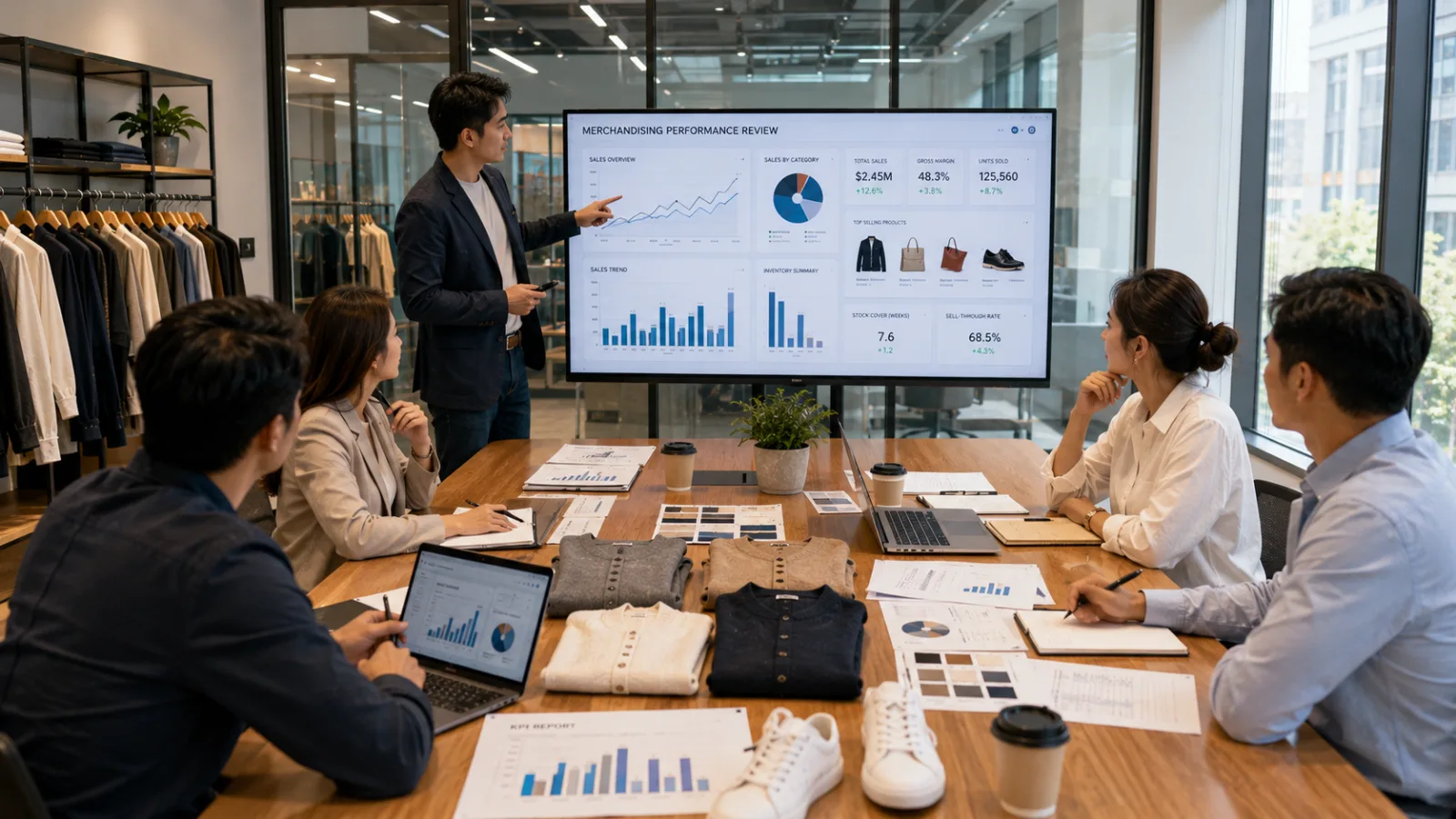
Step 12: Track Key Merchandising Metrics
Once the merchandising plan is active, performance tracking becomes essential. Retail planning is not a one-time task. It requires regular review and adjustment based on real customer behavior. Important merchandising metrics include sales revenue, gross margin, sell-through rate, stock turnover, average order value, markdown rate, return rate, conversion rate, units per transaction, category contribution, stockout rate, and inventory aging.
Sell-through rate is especially useful because it shows how quickly inventory is selling. A high sell-through rate may indicate strong demand or underbuying. A low sell-through rate may indicate weak demand, poor pricing, poor presentation, or overbuying.
Gross margin shows how much profit remains after product costs. A product may sell well but still damage profitability if it requires heavy discounts. Markdown rate shows how much discounting is needed to move stock. High markdowns may suggest poor planning, late launches, weak demand, or excess inventory.
Return rate is also important, especially for fashion and eCommerce brands. High returns may indicate sizing issues, quality problems, misleading product photos, weak descriptions, or poor fit. Merchandising teams should use return data to improve future product decisions. Performance should be reviewed weekly, monthly, seasonally, and annually. Quick reviews help the team react to current sales trends. Seasonal reviews help improve future planning. Annual reviews help shape long-term category strategy.
Common Mistakes to Avoid in Retail Merchandising Planning
Even experienced retail brands can make merchandising mistakes. One common mistake is buying based on personal preference instead of customer data. A product may look beautiful to the internal team, but if it does not match customer demand, price expectations, or shopping behavior, it may not sell.
Another mistake is overexpanding the assortment too quickly. More products do not always mean more sales. Too many choices can confuse customers, increase inventory risk, and weaken brand identity. A focused product range often performs better than a crowded one. Poor inventory timing is another major issue. Products that arrive too late may miss peak demand. Products that arrive too early may sit in storage and reduce cash flow. This is why the buying calendar and supplier coordination are so important.
Ignoring markdown planning is also risky. Some brands wait too long to discount slow-moving products, then end up with heavy clearance sales that damage margin. A smarter approach is to monitor sell-through early and take controlled action before inventory becomes outdated.Many brands also fail to connect merchandising with marketing. If products are bought but not promoted properly, customers may never notice them. If marketing promotes products without checking stock and margin, campaigns may create operational problems.
Another mistake is not reviewing performance after each season. Every merchandising cycle should produce lessons. What sold quickly? What failed? Which price points worked? Which colors performed best? Which campaigns improved sell-through? These insights should shape the next plan.

Example of a Simple Merchandising Plan Structure
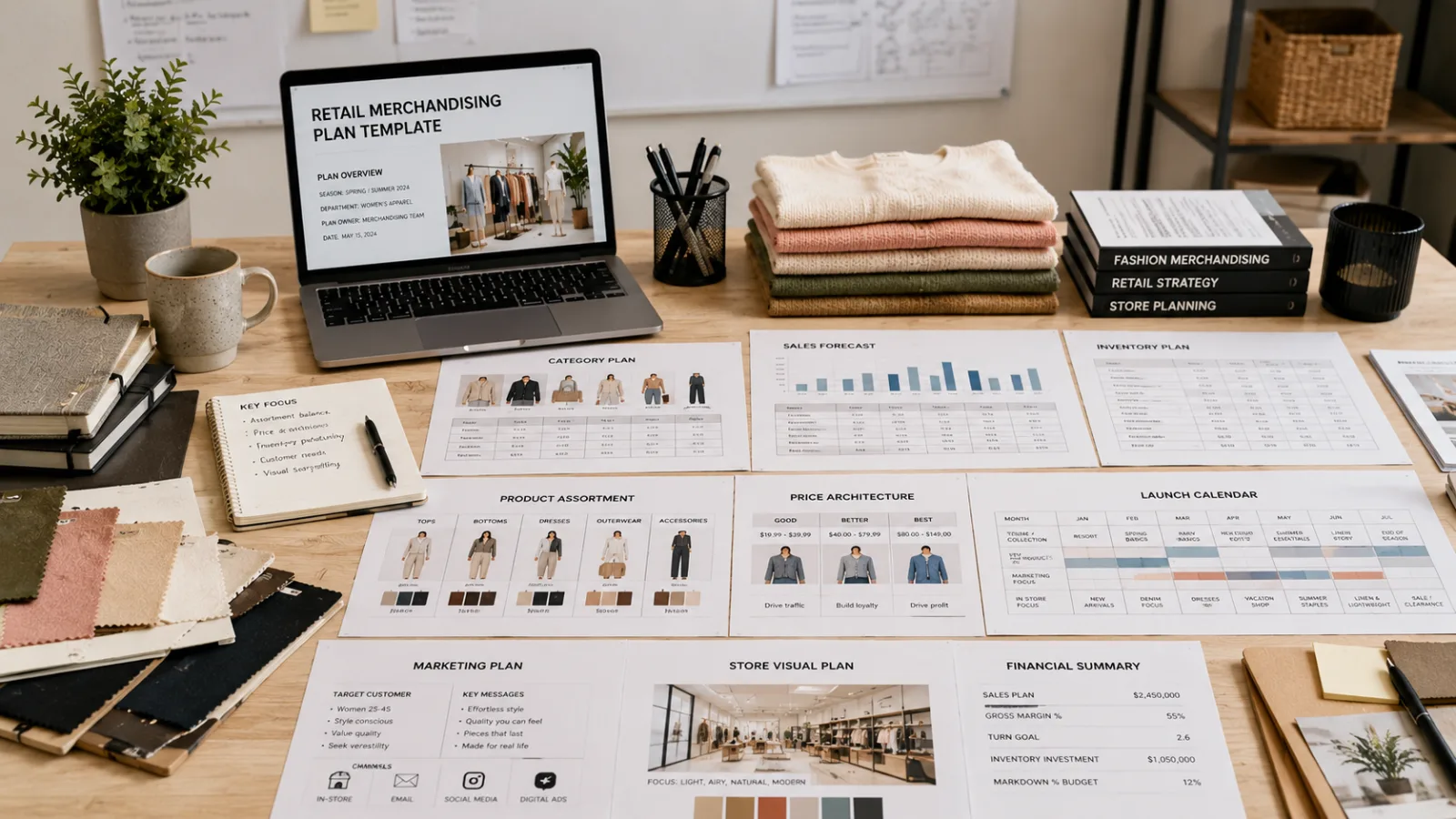
A retail merchandising plan can be detailed, but the basic structure should be easy to understand. Here is a practical framework a retail brand can use:
First, define the planning period. This could be Spring 2026, Q3, Holiday Season, or a monthly campaign period.
Second, define the business goal. For example, increase seasonal sales by 20 percent, improve margin by 5 percent, or launch a new product category.
Third, define the target customer. Include their needs, shopping behavior, preferred styles, price expectations, and buying motivations.
Fourth, review past performance. Identify bestsellers, slow movers, margin performance, return issues, stockouts, and markdown problems.
Fifth, build the assortment plan. Decide categories, product roles, price points, color ranges, size ranges, and inventory depth.
Sixth, create the sales forecast. Estimate revenue, units, margins, and category contribution.
Seventh, create the inventory plan. Define buying quantities, replenishment needs, supplier timelines, and safety stock.
Eighth, create the pricing plan. Set retail prices, margin targets, promotional rules, and markdown timing.
Ninth, create the launch and buying calendar. Include order deadlines, delivery dates, campaign dates, photoshoots, store setup, and review points.
Tenth, define visual and online merchandising. Plan store displays, homepage features, category pages, product grouping, signage, and cross-selling.
Finally, track performance and adjust. Review KPIs regularly and use results to improve future merchandising decisions.
This structure gives retail teams a practical, repeatable process. As the brand grows, the plan can become more advanced with deeper forecasting, automated inventory systems, customer segmentation, and channel-specific merchandising.
How Merchandising Planning Supports Long-Term Retail Growth
A merchandising plan does more than guide one season. Over time, it helps a retail brand become more disciplined, customer-focused, and profitable. Each planning cycle creates better data, stronger product decisions, and clearer brand positioning. When merchandising planning is consistent, the brand learns which categories deserve investment, which products should be repeated, which suppliers perform well, which price points convert best, and which campaigns support sell-through. This knowledge becomes a competitive advantage.
Long-term merchandising planning also helps build customer trust. Customers return to brands that consistently offer the right products at the right time. If shoppers know they can rely on a brand for quality basics, fresh seasonal items, accurate sizing, useful bundles, or stylish collections, they are more likely to buy again.
For retail brands that want to scale, merchandising planning also improves financial control. Inventory is often one of the biggest investments in retail. Better planning helps protect cash flow, reduce waste, improve margins, and make growth more predictable.
It also supports brand identity. A clear merchandising strategy prevents random product decisions and keeps the assortment aligned with the brand’s story. Whether the brand is affordable, premium, trend-led, sustainable, minimalist, family-focused, or luxury-driven, merchandising should make that positioning visible through the product range.

Final Checklist for Creating a Merchandising Plan
Before finalizing your merchandising plan, review these key questions:
- Does the plan support the brand’s sales and profit goals?
- Is the product assortment clearly aligned with the target customer?
- Have past sales, margin, returns, and stock data been reviewed?
- Are product categories, subcategories, and product roles clearly defined?
- Are buying quantities based on forecasted demand?
- Is the pricing strategy realistic and profitable?
- Are supplier lead times and launch dates included?
- Is there a clear marketing and visual merchandising plan?
- Are markdown rules planned before the season starts?
- Are performance metrics defined and reviewed regularly?
If the answer to these questions is yes, the retail brand has a strong foundation for better product decisions and more profitable growth.
Conclusion
Creating a merchandising plan for a retail brand requires a balance of data, customer understanding, product strategy, financial planning, and creative presentation. It is not only about choosing attractive products. It is about building a structured system that helps the brand sell the right products, in the right quantities, at the right time, through the right channels.
A successful merchandising plan starts with clear business goals and a deep understanding of the target customer. It uses past sales performance to make smarter decisions, studies market trends to stay relevant, and builds a focused product assortment that supports both customer demand and brand positioning. It also includes sales forecasting, inventory planning, pricing strategy, buying timelines, visual merchandising, marketing alignment, and performance tracking.
For retail brands, strong merchandising planning can reduce overstock, improve sell-through, protect margins, strengthen customer experience, and support long-term growth. It gives the business more control over product decisions and helps every team work toward the same commercial goal.
The best merchandising plans are not static. They are reviewed, adjusted, and improved over time. Customer demand changes. Trends shift. Suppliers evolve. Sales channels grow. A retail brand that continuously learns from its merchandising performance will be better prepared to compete, scale, and build lasting customer loyalty.