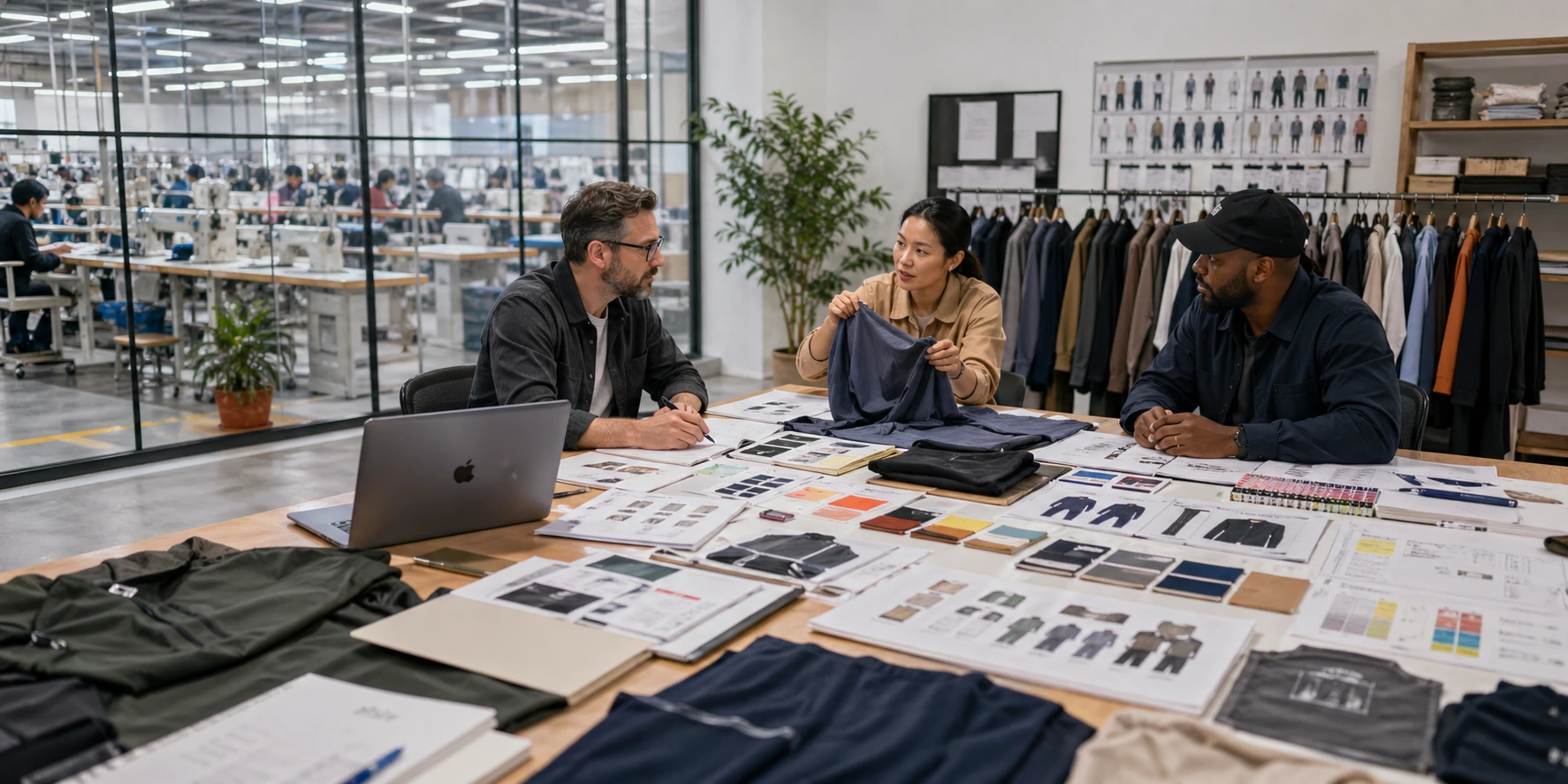
Choosing the right clothing vendor can shape the success or failure of an apparel business. A strong vendor can help you maintain quality, meet delivery deadlines, scale production, and protect your brand reputation. The wrong vendor can create delays, inconsistent products, compliance risks, and costly communication problems.
That is why vendor selection should never be based on price alone. In the garment and footwear sector, due diligence is expected to be ongoing, proactive, and flexible rather than a simple box-checking exercise. The OECD’s guidance for garment and footwear supply chains makes this clear, and it also stresses that businesses should understand risks in both their own operations and their supply chains.
For clothing brands, boutiques, startups, and private-label businesses, the right vendor is not just a factory that says yes. It is a production partner that matches your product category, quality standards, lead times, compliance expectations, and growth plans. This guide breaks down how to evaluate clothing vendors in a more practical way so you can make a smarter, lower-risk decision.
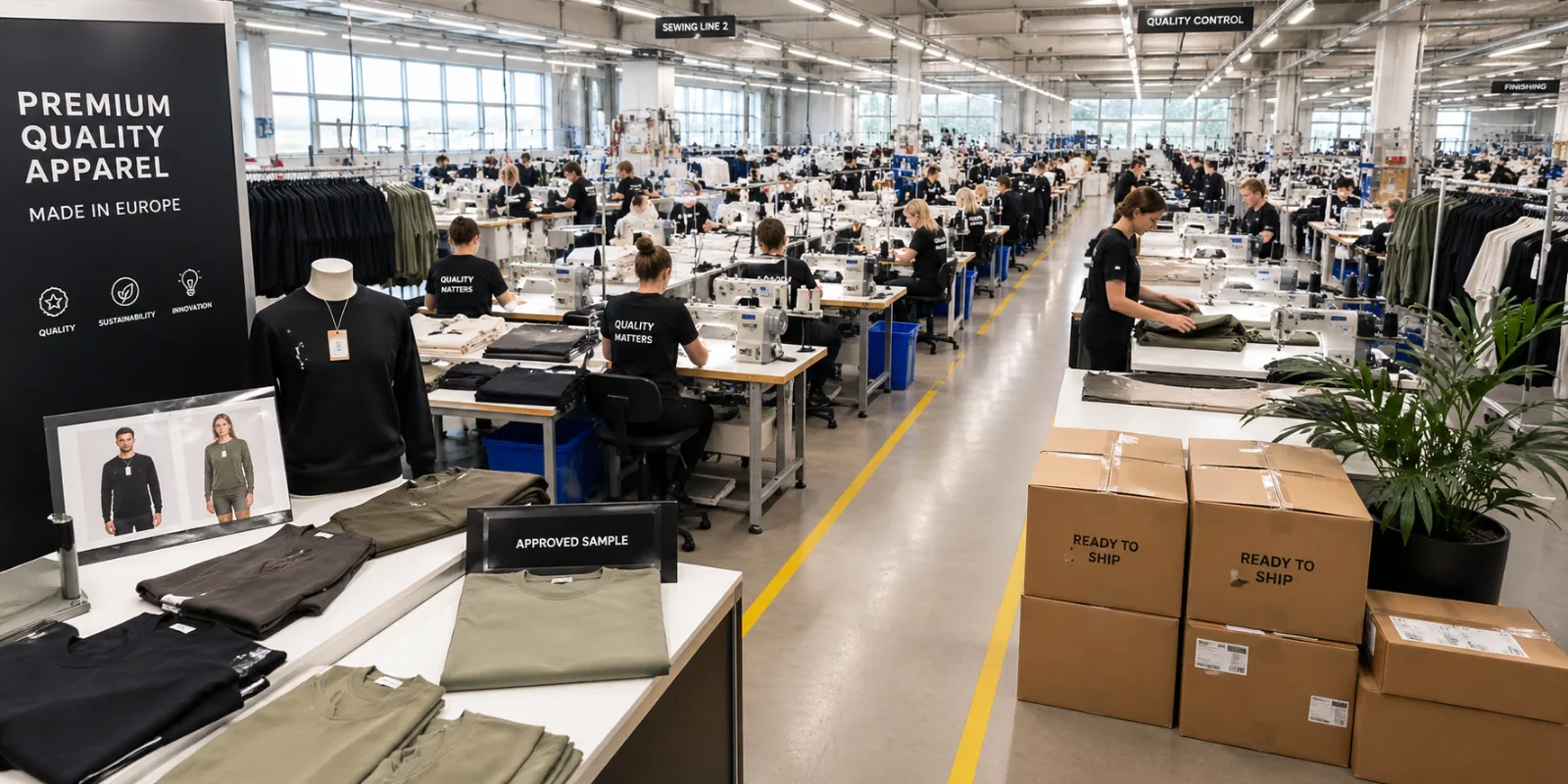
Why choosing the right clothing vendor matters
A clothing vendor affects nearly every part of your business. They influence product quality, production speed, consistency, communication, and even customer satisfaction after the sale. If a vendor misses delivery windows, cuts corners on stitching, swaps materials, or struggles with scaling, the impact reaches your brand directly.
Vendor choice also matters from a risk and responsibility perspective. The OECD guidance for garment and footwear supply chains emphasizes responsible due diligence, visibility into risks, and supply chain decision-making that goes beyond cost alone. That means brands should think about labor conditions, environmental risk, and operational reliability when choosing manufacturing partners.
In simple terms, a clothing vendor is not only a producer. They are part of your brand system.
Step 1: Define exactly what kind of vendor you need
Before contacting vendors, you need a clear picture of your own needs. Many sourcing problems begin because brands search for a factory too early, before they understand their product.
Start by defining:
Your product category
Are you producing t-shirts, denim, activewear, knitwear, uniforms, babywear, streetwear, modestwear, outerwear, or luxury fashion? A vendor that is excellent in knit basics may be weak in tailored jackets or washed denim.
Your quality level
Decide whether you need entry-level mass-market quality, mid-range private-label quality, or premium construction. Different factories are set up for different quality expectations.
Your order volume
Some vendors focus on large production runs, while others are more suitable for small batch or startup orders.
Your target price
You should know your target cost range before contacting a vendor. If your budget and your quality expectations do not match, the relationship will fail early.
Your production timeline
If you need quick repeat orders, frequent drops, or seasonal launches, your vendor must be able to support that speed.
The clearer you are about your own needs, the easier it becomes to filter vendors effectively.
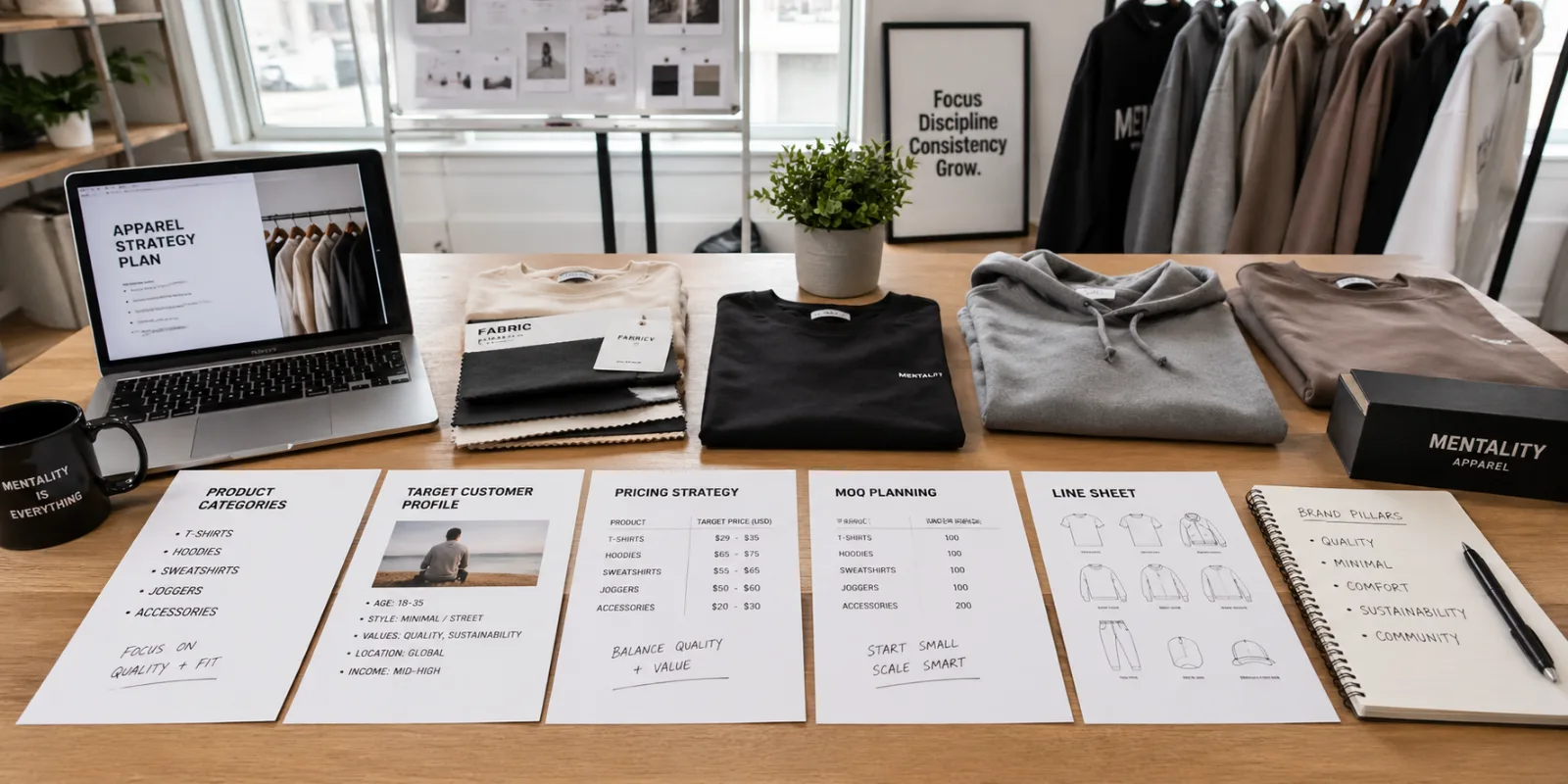
Step 2: Check whether the vendor matches your product specialization
Not every clothing vendor is good at every type of garment. This is one of the most common sourcing mistakes. A factory that produces excellent polo shirts may not be the right choice for technical activewear or structured coats.
Ask specific questions such as:
- What product categories do you produce most often?
- What are your strongest garment types?
- Which fabrics do you work with regularly?
- Can you share examples of similar products?
- Do you handle complex trims, prints, or embroidery?
You are not just looking for a factory that can make clothing. You are looking for one that can make your clothing well.
A good sign is when the vendor can speak clearly about fabric behavior, sewing challenges, fit issues, and finishing details for your category. A weak sign is when they say yes to everything without giving category-specific answers.
Step 3: Ask for samples before making any production commitment
Samples are one of the best ways to test a vendor’s real capability. You should never choose a clothing vendor based only on promises, catalog photos, or messaging.
A sample allows you to evaluate:
- stitching quality
- fit accuracy
- fabric feel
- trim attachment
- finishing standard
- print or embroidery quality
- packaging attention
- overall consistency
Practical supplier-selection guidance often recommends ordering samples as part of the evaluation process, because sample review reveals whether a supplier can match your expectations in real life rather than only in conversation.
When reviewing a sample, do not only ask, “Does it look good?” Ask:
- Does it match the spec?
- Is the measurement accurate?
- Are the seams clean?
- Is the fabric right for the intended use?
- Would I confidently sell this under my brand?
If the sample process is careless, bulk production is unlikely to improve.
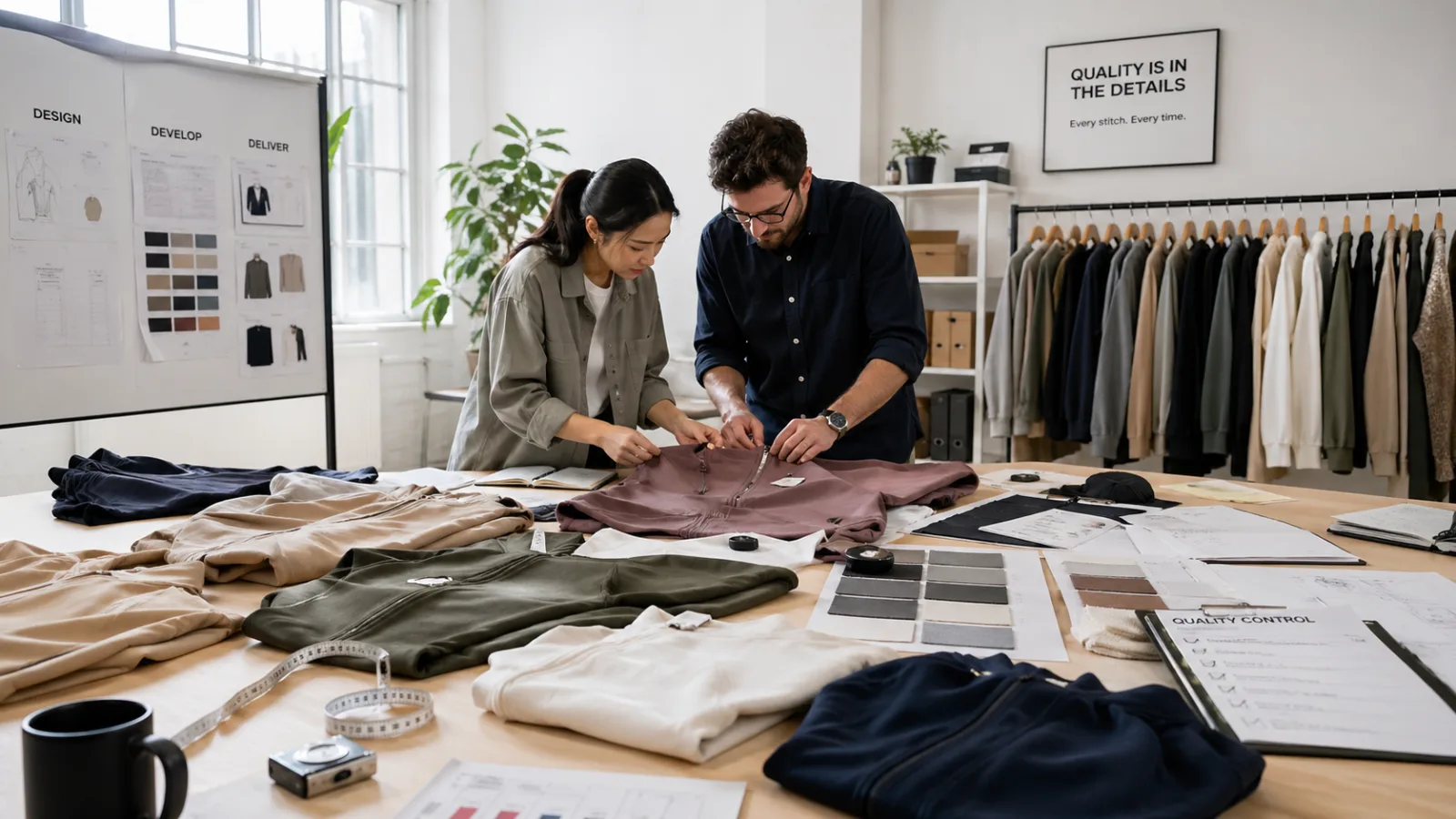
Step 4: Evaluate communication quality early
Communication is one of the most underestimated parts of vendor selection. A vendor may offer a good price, but if they communicate poorly, small issues can quickly become expensive problems.
Pay attention to:
Speed of response
Do they answer questions promptly and clearly?
Clarity
Do they understand your request, or do they send vague replies?
Detail level
Can they explain construction, lead times, MOQ, and revisions in a practical way?
Problem-solving attitude
Do they ask smart questions when something is unclear?
Honesty
Do they admit limitations, or do they say yes to everything?
The best vendors are usually not just quick. They are precise. They understand that communication is part of production control. A factory that struggles with communication during inquiry and sampling often becomes even harder to manage during bulk production.
Step 5: Understand the vendor’s MOQ and production flexibility
MOQ, or minimum order quantity, is one of the first practical filters when choosing a clothing vendor. Some vendors are built for large-volume production and are not suitable for startups or small brands. Others can handle lower MOQs but may charge more per unit.
You should ask:
- What is your MOQ per style?
- What is your MOQ per color?
- What is your MOQ per size range?
- Can you support test orders or pilot runs?
- Can MOQ change depending on fabric type or trim complexity?
The right vendor is not always the one with the lowest MOQ. It is the one whose MOQ fits your business stage and production strategy.
A startup brand may need flexibility more than the lowest cost. An established brand may need volume capacity more than low minimums. Matching MOQ to your business model is more important than treating MOQ as a simple yes-or-no issue.
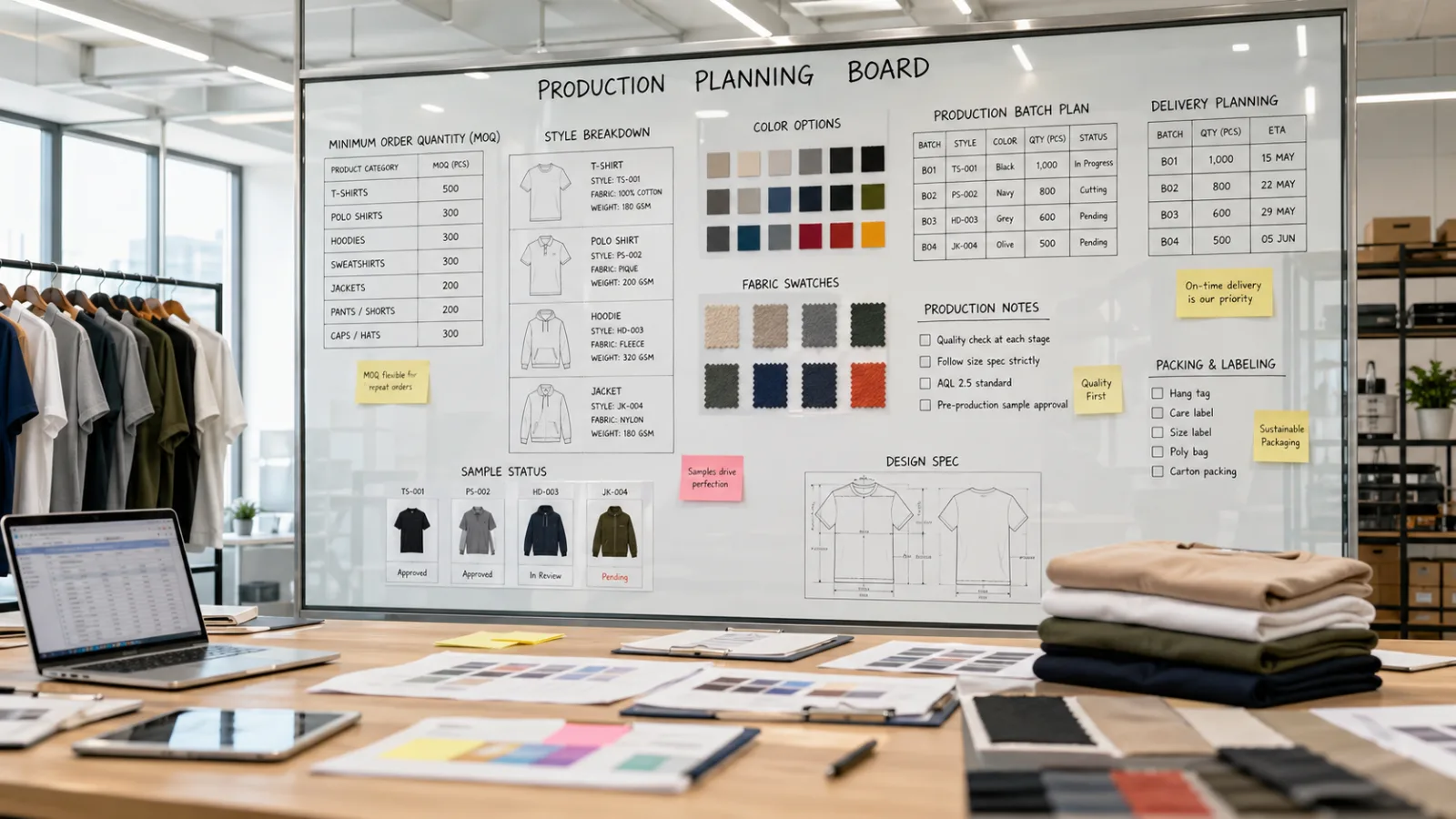
Step 6: Compare total value, not just quoted price
A cheap vendor can become very expensive once delays, defects, or rework start happening. That is why you should compare total value, not only unit cost.
A vendor quote should be considered alongside:
- sample quality
- lead time reliability
- defect risk
- fabric consistency
- communication quality
- revision policy
- payment terms
- shipping coordination
- packaging standards
- compliance readiness
General supplier-selection frameworks consistently recommend looking at cost alongside factors like quality, reliability, communication, and service.
If Vendor A is cheaper by a small margin but has poor communication and unstable quality, Vendor B may be the better long-term choice even at a slightly higher price.
The smartest sourcing decision is usually the one with the best balance of price, quality, service, and risk control.
Step 7: Check compliance, labor standards, and ethical manufacturing signals
Compliance matters more than many brands realize, especially in apparel. If a vendor has labor or workplace issues, those risks can eventually affect your brand too.
The OECD’s garment and footwear guidance makes supply-chain due diligence a central issue and encourages businesses to understand and address harmful risks in their operations and supply chains.
One commonly referenced framework in apparel and sewn-products manufacturing is WRAP, whose certification principles cover areas such as compliance with laws, prohibition of forced labor, prohibition of child labor, health and safety, compensation and benefits, working hours, and environmental practices.
You can ask vendors:
- Do you have any social compliance certifications or audit history?
- Have you worked with export buyers that require audits?
- What workplace policies do you follow?
- How do you handle working hours and worker safety?
- What is your environmental and waste management approach?
Even if you are a small brand, asking these questions shows that you take responsible sourcing seriously.
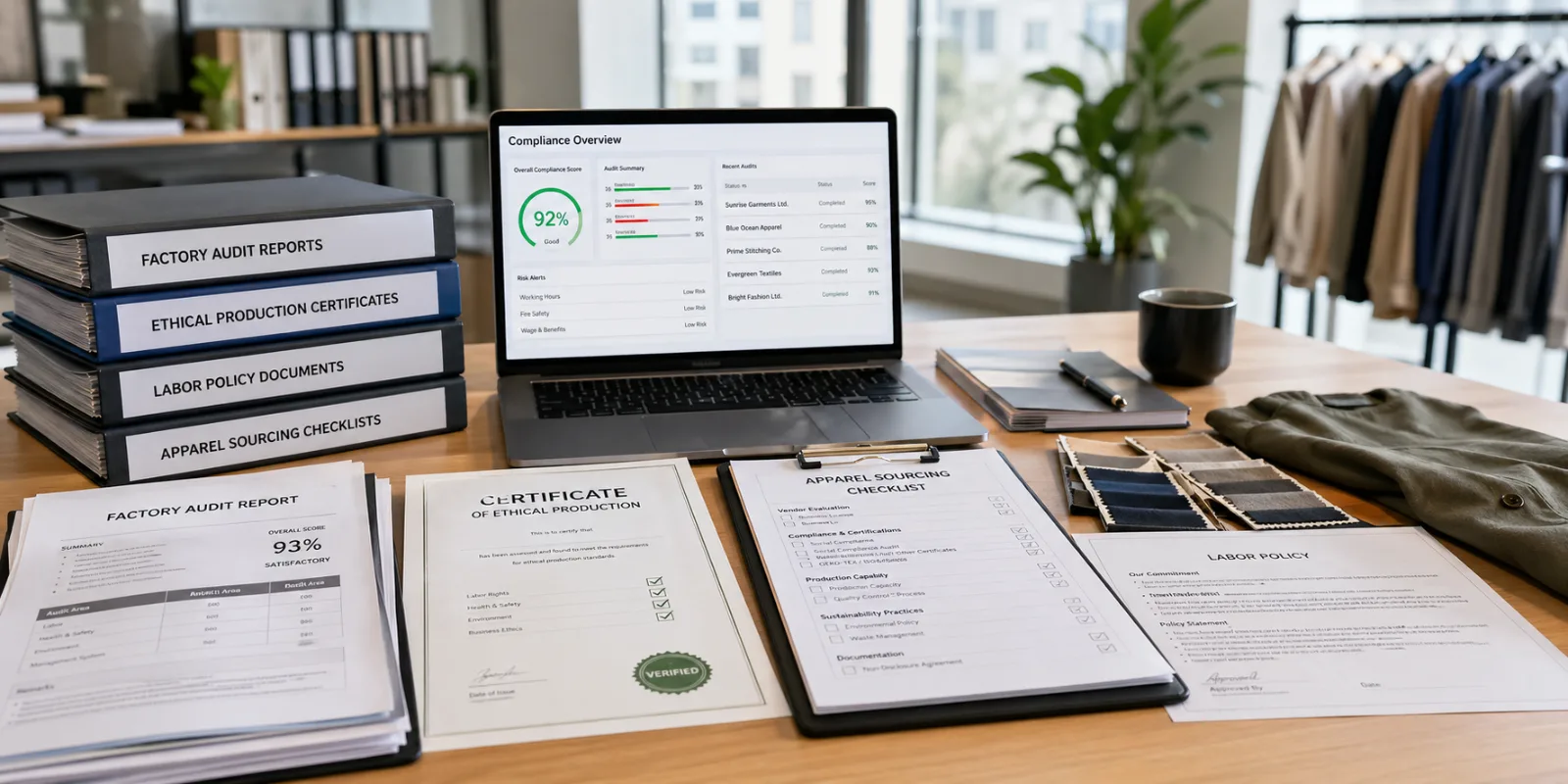
Step 8: Review lead times and production planning honestly
A vendor may quote a great price and strong sample, but if they cannot deliver on time, the partnership may still fail.
Lead time should be discussed in detail:
- sample lead time
- fabric sourcing time
- trim development time
- bulk production time
- quality check time
- packing time
- shipping handover time
Do not only ask, “How long does production take?” Ask:
- What can delay this timeline?
- What happens if the fabric arrives late?
- How do you handle urgent orders?
- What is your busiest season?
- How much buffer should I plan?
Reliable lead time matters because apparel businesses often depend on launch timing, seasonal drops, and restock speed. A realistic vendor is usually better than one who promises impossible speed.
Step 9: Ask about quality control systems
A good clothing vendor should have a clear quality control process. You do not need a perfect technical presentation, but you should hear a structured answer.
Ask questions like:
- How do you check incoming fabric and trims?
- Do you inspect during sewing?
- How do you control measurements?
- How do you handle defective garments?
- Do you have a final inspection process before packing?
- Can you follow buyer quality standards or AQL requirements?
The more clearly a vendor explains its process, the more confidence you can have in its operation. A vague answer like “We always check quality” is not enough. A stronger vendor can explain when quality is checked, who checks it, and how problems are corrected.
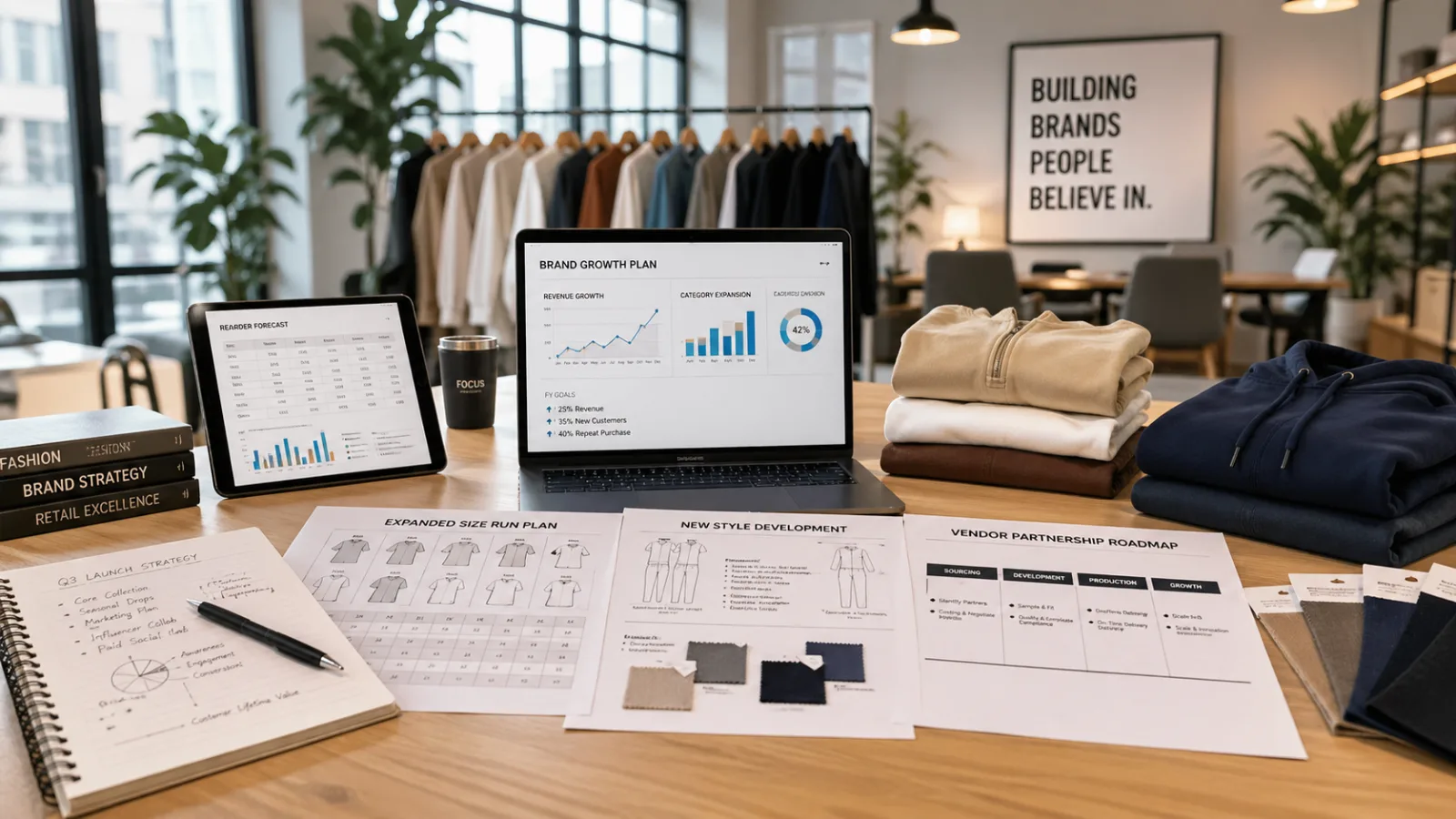
Step 10: Choose a vendor you can grow with
A clothing vendor should not only fit your current order. They should also fit your likely next stage.
Think about:
- Can they handle bigger orders later?
- Can they support new product categories?
- Can they improve packaging as your brand grows?
- Can they handle repeat styles consistently?
- Can they support fabric development or custom trims in the future?
A vendor that is slightly smaller but flexible may be a great early-stage partner. A more structured factory may be better for a scaling brand. The key is to think beyond the first PO and consider whether the relationship can develop over time. Choosing a vendor is not only a sourcing decision. It is a growth decision.
Red flags to watch when choosing a clothing vendor
Image Prompt:
Warning-style sourcing board showing red flags like poor samples, vague replies, unrealistic pricing, missing compliance documents, and delayed responses, realistic educational setup, 16:9
Some vendor warning signs appear early. Common red flags include:
- extremely low prices with no clear explanation
- poor communication
- no willingness to sample properly
- unclear MOQ and lead time
- refusal to answer quality questions
- no visible understanding of your category
- inconsistent answers from different team members
- no compliance visibility at all
- pushing for payment before basics are confirmed
- saying yes to everything without technical detail
A reliable vendor does not need to be perfect, but they should be clear, organized, and honest.
A simple checklist for comparing clothing vendors
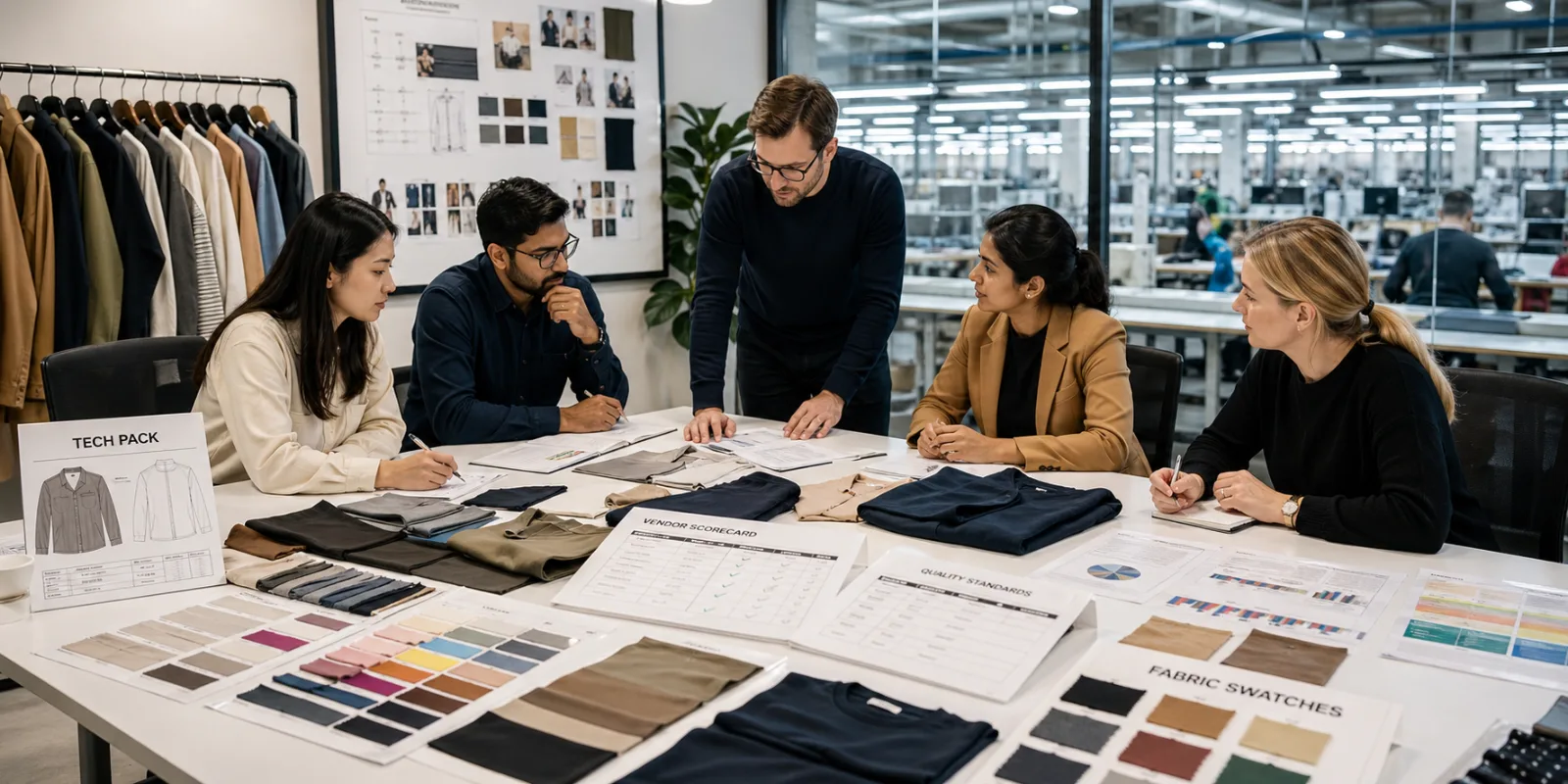
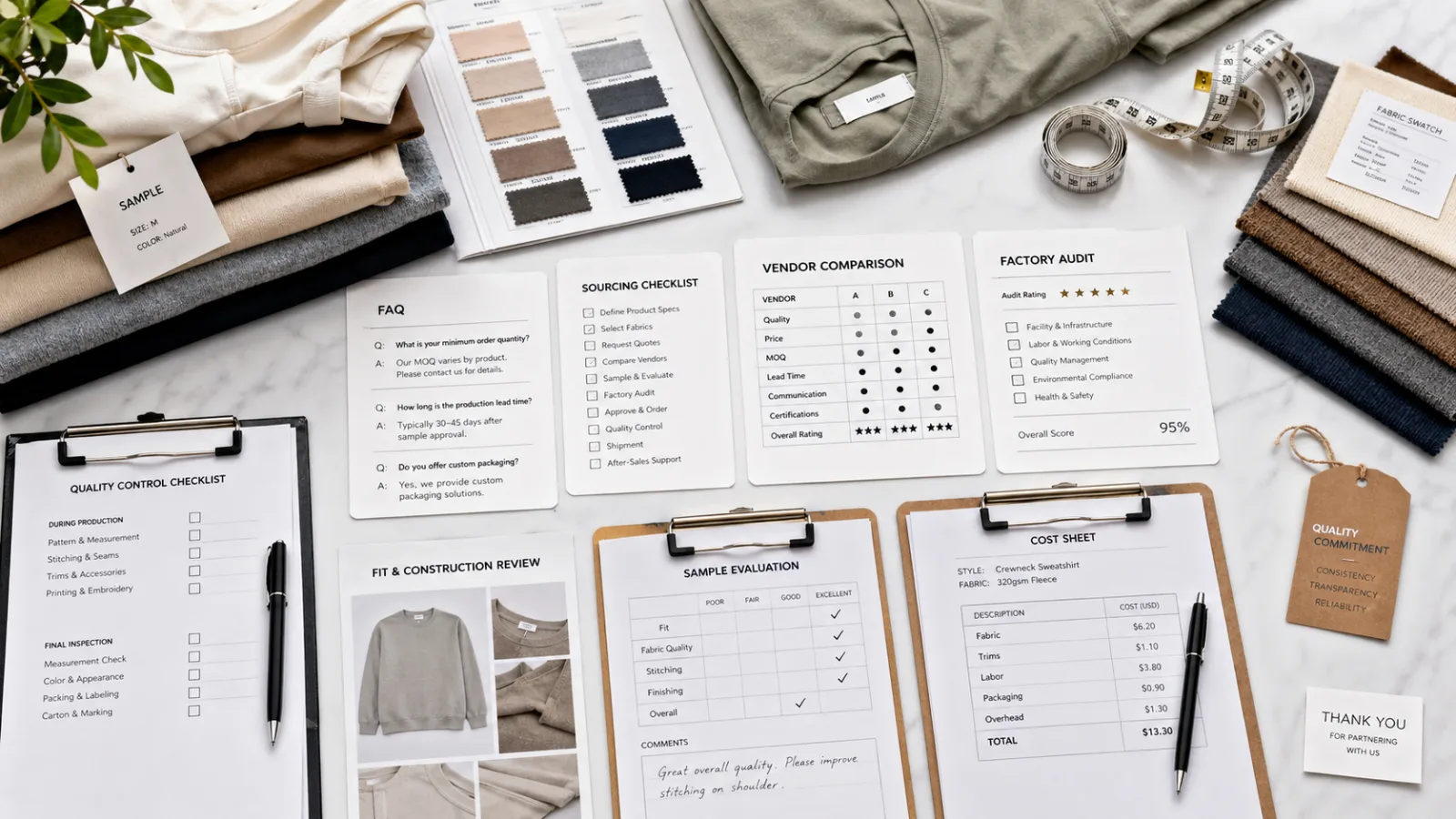
A practical comparison checklist can help you avoid emotional decisions. Score each vendor on:
- category specialization
- sample quality
- communication
- MOQ fit
- pricing logic
- lead time realism
- compliance signals
- quality control process
- scalability
- overall confidence level
This helps turn vendor choice into a structured decision instead of a guess.
ApparGlobal
Many clothing brands choose vendors more successfully when they work with manufacturing partners that understand fabric behavior, fit development, trim control, sampling systems, quality checkpoints, and scalable production planning. Companies such as ApparGlobal help apparel brands align product development, sourcing choices, factory quality expectations, and bulk production systems so vendor relationships become more structured, more consistent, and more reliable as the business grows.
Conclusion
Choosing the right clothing vendor is one of the most important decisions an apparel business can make. The best vendor is not simply the cheapest one or the one that responds the fastest. It is the one that matches your product category, understands your quality expectations, communicates clearly, supports your order size, and can deliver with consistency.
Strong vendor selection also means thinking beyond price. It means reviewing samples carefully, asking the right compliance and quality questions, understanding lead times honestly, and choosing a partner you can grow with. The OECD’s guidance on garment and footwear supply chains and established compliance frameworks like WRAP both reinforce a bigger truth: sourcing decisions should be informed, responsible, and long-term in mindset.
If you choose carefully at the beginning, you can avoid many of the most expensive sourcing mistakes later. And in apparel, that can make all the difference between a stressful production cycle and a strong, scalable brand foundation.
Frequently Asked Questions
What is the most important factor when choosing a clothing vendor?
The most important factor is overall fit with your product, quality level, order size, and communication needs, not just price.
Should I always order samples before choosing a vendor?
Yes. Samples are one of the best ways to evaluate real quality, construction, and communication before bulk production.
How do I know if a vendor is reliable?
Look at sample quality, communication, lead time realism, quality control systems, and whether they give clear answers about capability and compliance.
Why is compliance important when choosing a clothing vendor?
Because labor, workplace, and environmental risks in the garment supply chain can affect your brand directly. OECD due diligence guidance and WRAP principles both support evaluating these areas seriously.
Is the cheapest vendor usually the best option?
Not necessarily. A lower price can quickly become expensive if the vendor creates delays, defects, or poor communication.
What should I ask a vendor before placing an order?
Ask about specialization, MOQ, sample process, lead times, quality control, compliance, pricing structure, and production capacity.