
Launch a successful high-end clothing line by combining creative vision with a structured business plan, premium sourcing, and consistent brand identity.
Starting a high-end clothing line is not the same as starting a basic apparel brand. A premium label depends on clear positioning, disciplined product development, strong margins, and a brand world that feels consistent across design, materials, pricing, packaging, and customer experience. If the product looks premium but the fit, website, or photography feels weak, the whole brand suffers. If the design is strong but the pricing model is unstable, growth becomes difficult.
That is why launching a high-end fashion brand requires both creativity and structure. The U.S. Small Business Administration says businesses should start with market research, competitive analysis, startup cost planning, and a business plan, because those pieces help define who the company is, where it is going, and how it will compete. The U.S. Patent and Trademark Office also notes that brand names and logos can be protected through trademark registration, which matters even more for premium fashion because brand identity is one of the business’s most valuable assets.
In luxury and premium fashion, the product is only one part of the offer. Shopify’s luxury marketing guidance describes luxury strategy as being less focused on discounts and more focused on product quality, exclusivity, storytelling, and experience. That is a useful way to think about a high-end clothing line from the beginning.
1. Define what “high-end” means for your brand
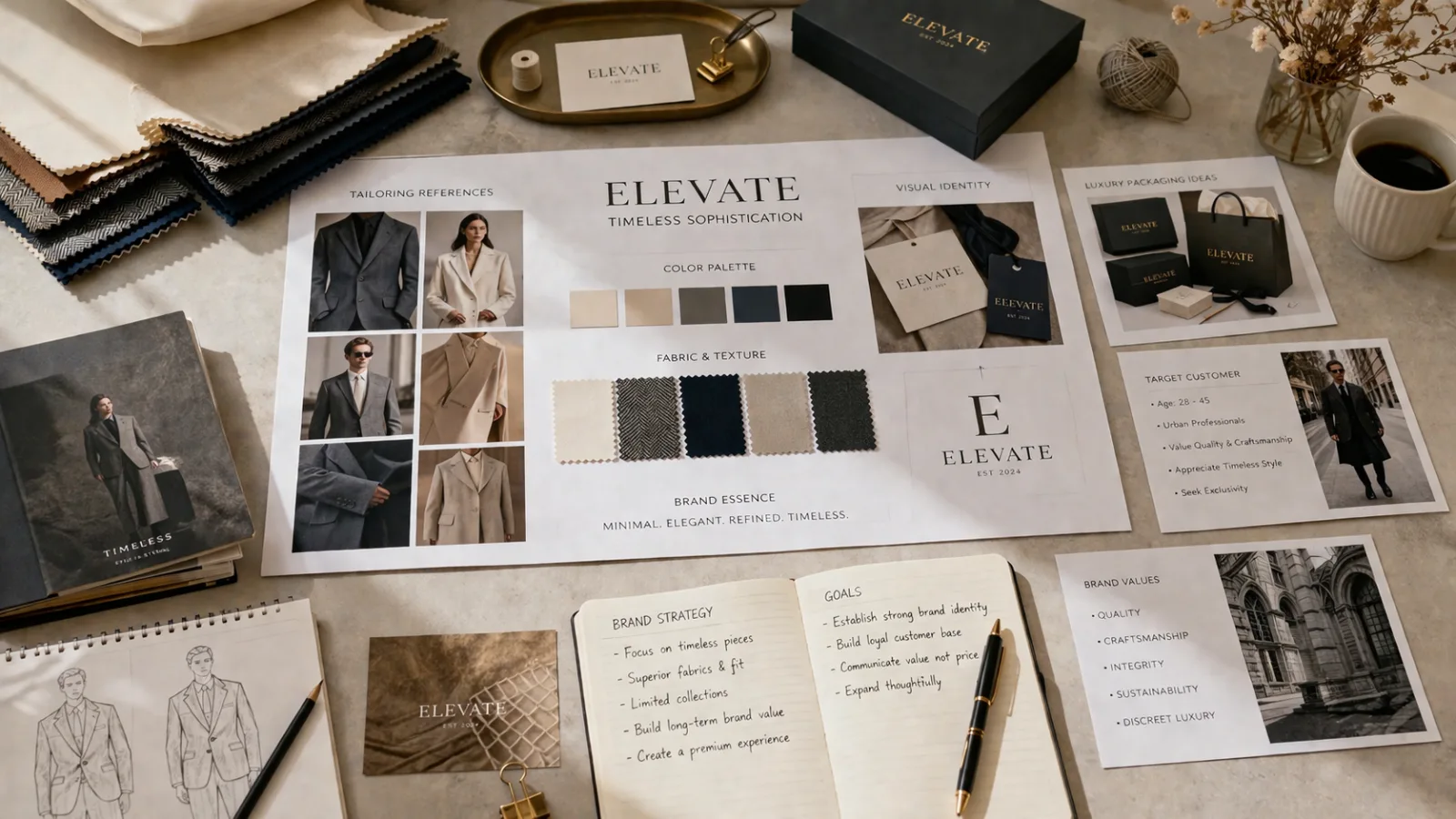
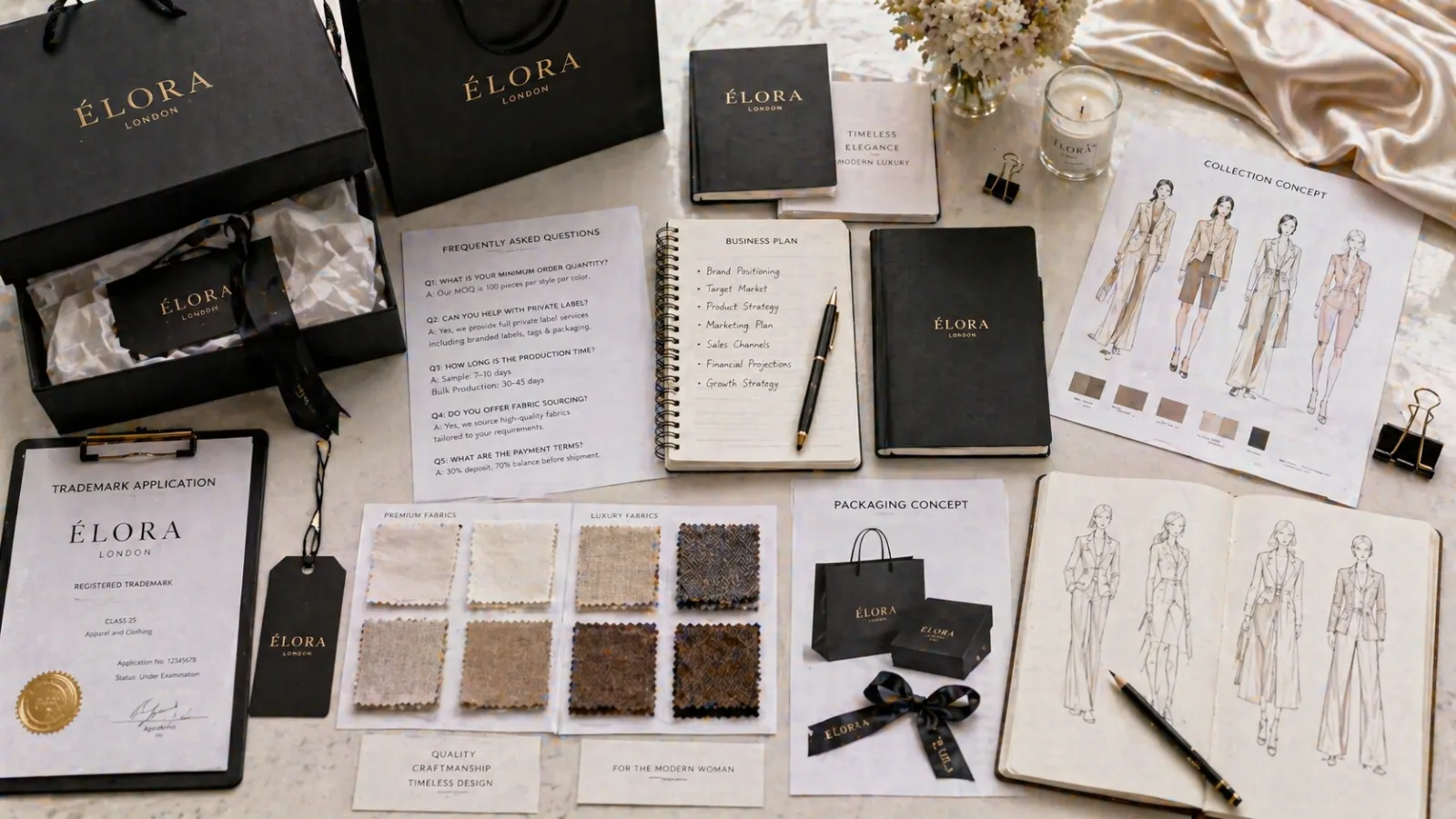
The first step is to decide what kind of high-end brand you are building. “High-end” can mean modern minimalist tailoring, luxury streetwear, occasionwear, artisanal womenswear, premium essentials, or slow-fashion knitwear. If you do not define this clearly, your collection will feel scattered.
Start with four questions:
- Who is the customer?
- What price range will feel realistic and credible?
- What emotional world does the brand belong to?
- What makes the line feel premium beyond the logo?
Your answer should be specific. “Luxury for everyone” is too vague. A stronger direction is something like: “a premium womenswear label built around clean tailoring, silk-blend separates, and elegant neutral evening pieces for urban professionals.”
2. Research the market before designing the collection
A high-end brand needs sharper market research than a casual startup because the customer is paying for more than function. The SBA recommends market research and competitive analysis early in the planning process.
Study:
- direct competitors at your intended price point
- what categories they lead with
- how many styles they launch
- how they describe quality and materials
- what their product photography and packaging look like
- what they charge for core items
Do not copy them. Use them to understand the space you are entering. A premium blazer line, for example, needs to know what the market already offers in fabric, fit, and price before building its first drop.
3. Build a real business plan, not just a creative vision
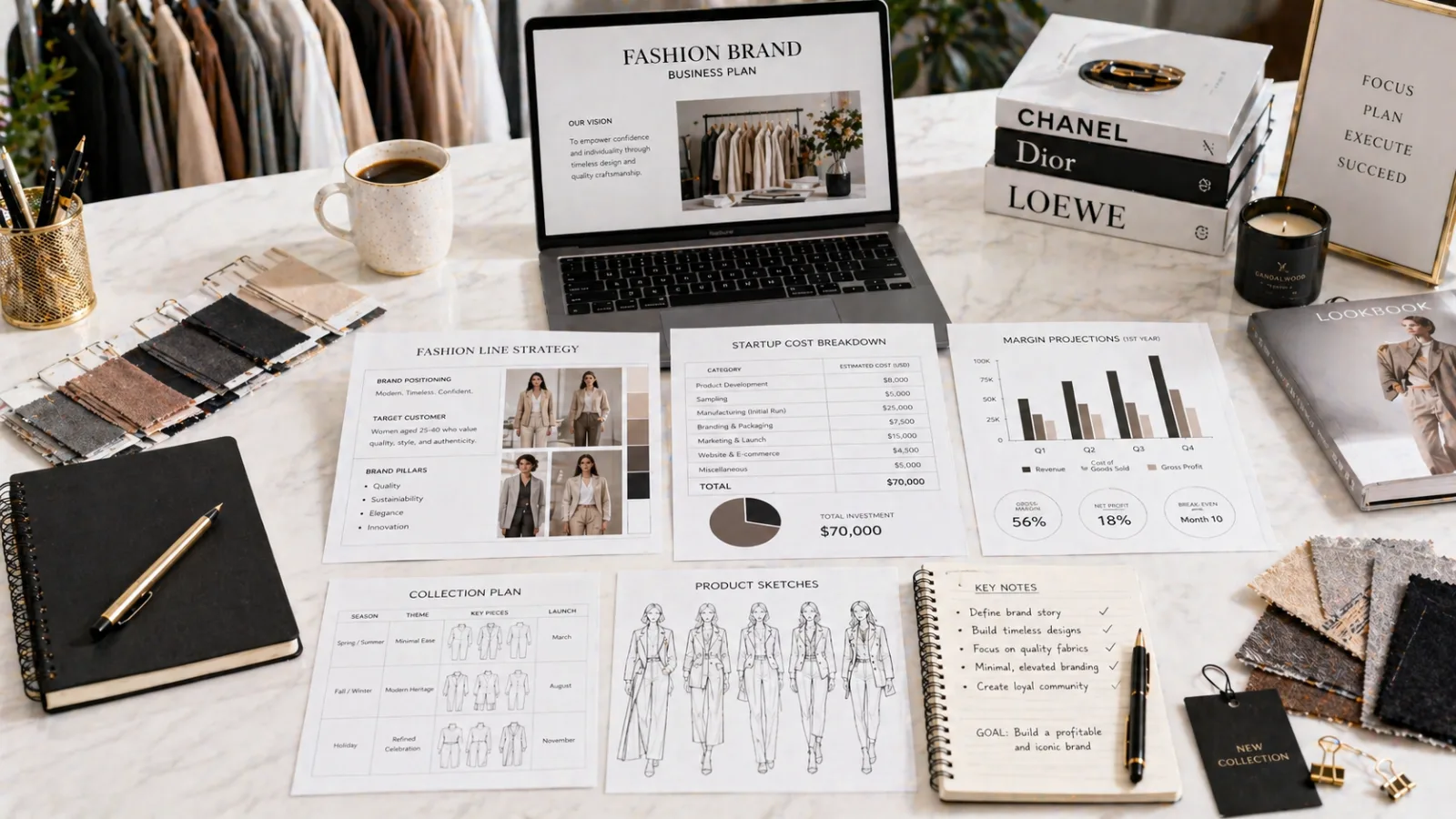
A lot of fashion startups begin with aesthetics and postpone the numbers. That usually creates problems later. The SBA describes the business plan as a foundational document that explains who you are, where you are headed, and why the business makes sense.
For a high-end clothing line, your plan should cover:
- brand concept
- target customer
- price architecture
- first collection size
- sourcing and manufacturing strategy
- startup costs
- marketing and launch plan
- projected margins
- sales channels
Premium brands often fail when founders underestimate startup costs or overestimate how quickly expensive products will sell. Your business plan should be grounded, not aspirational only
4. Protect the brand name early
If you want to build long-term value, protect the name and visual identity early. The USPTO explains that trademarks protect brand names, slogans, logos, and other source identifiers, and that federal registration is part of protecting a mark.
Before finalizing a brand name:
- check if similar names already exist
- review whether matching categories are already covered
- think about website and social handle availability
- decide whether you will use only a word mark or a word mark plus logo
For fashion brands, especially premium ones, the name becomes part of the customer’s trust in the product. It should be legally usable, visually strong, and easy to remember.
If you want to build long-term value in the competitive apparel market, you must protect your brand’s name and visual identity from the outset. The USPTO explains that trademarks protect brand names, slogans, logos, and other source identifiers, and that federal registration is a vital step in securing your intellectual property against infringement.
Conducting Due Diligence Before You Launch
Before finalizing your brand name, you must perform a comprehensive search to ensure your chosen identity is not already occupied. A failure to do so can lead to costly rebranding efforts or legal disputes later in your growth cycle. Consider the following steps during your vetting process:
- Perform a clearance search: Check the USPTO database and state-level registries to see if similar names already exist in the apparel or textile sectors.
- Review classification categories: Ensure that the specific "classes" of goods you intend to sell—such as footwear, headwear, or luxury accessories—are not already covered by an existing mark.
- Secure digital assets: Verify that your desired website domain and social media handles are available. In the high-end market, a consistent, professional digital presence is essential for brand authority.
- Determine your mark type: Decide whether you will register a standard character mark (the name itself) or a stylized mark (the name combined with a specific logo design).
Building Brand Equity Through Identity
For fashion labels, particularly those positioning themselves in the premium or luxury segments, the name serves as the primary vessel for customer trust. A high-end brand is not just selling a garment; it is selling a reputation for quality, exclusivity, and design intent. Consequently, your name must be legally defensible, visually distinct, and memorable enough to foster long-term loyalty.
Think of your brand identity as a long-term asset. While it may be tempting to rush to market with a catchy name, taking the time to ensure it is legally clear and strategically sound will prevent significant operational headaches as your line scales.
5. Start with a tight, premium collection
Do not launch with too many styles. A high-end line usually benefits from a tighter collection where every piece supports the brand identity. Fewer styles make it easier to control fit, fabric quality, development cost, and presentation.
A strong first collection often includes:
- one hero category
- one or two supporting categories
- a clear color story
- a consistent silhouette language
- enough variation to show brand depth without overextending
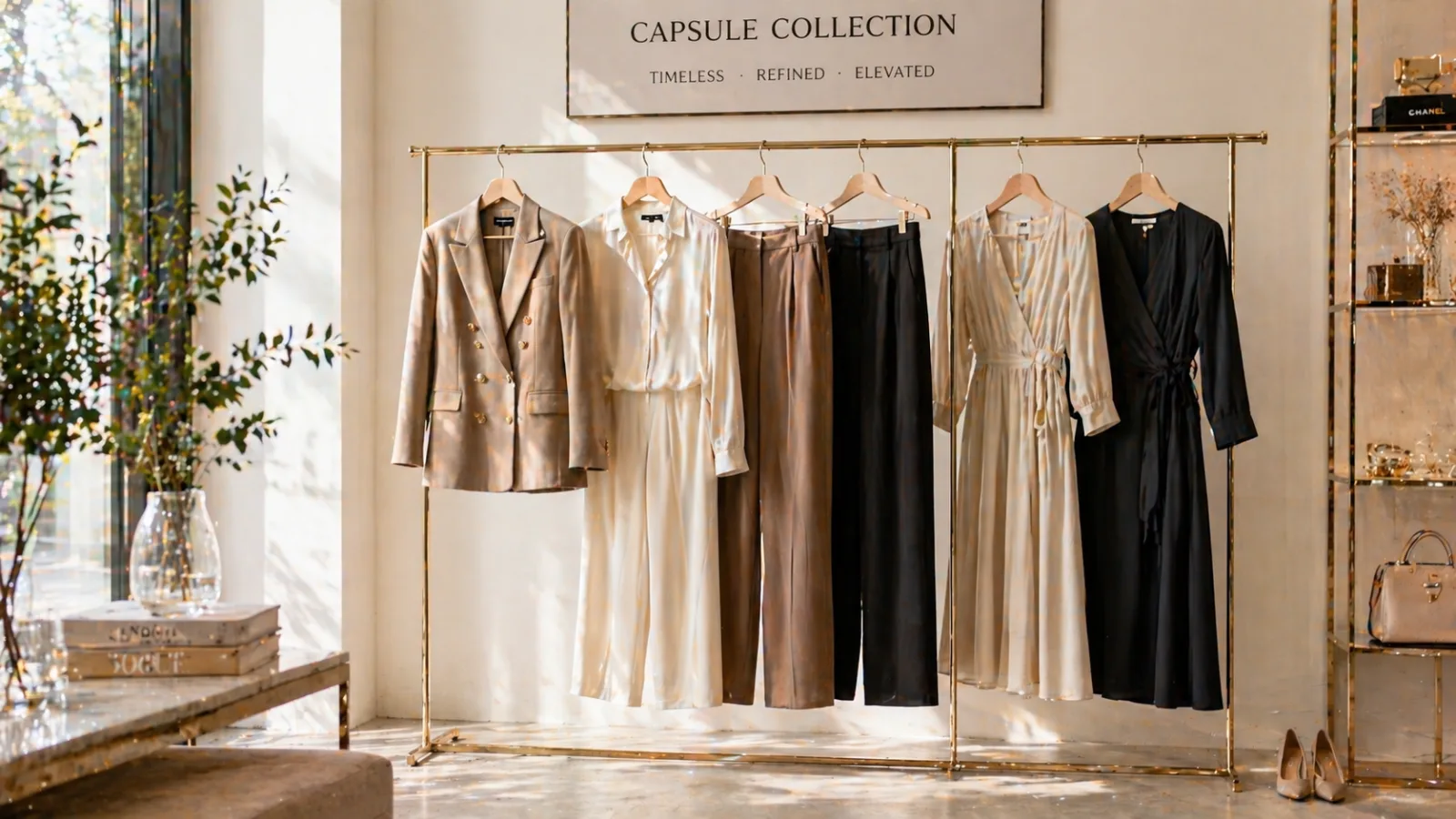
For example, if your brand is built around elevated tailoring, start with a blazer, trouser, waistcoat, dress, and one knit or blouse that supports the look. A focused launch often feels more premium than a large but uneven assortment.
6. Source materials that justify the price
In high-end fashion, fabric matters immediately. Customers may not know technical textile language, but they can often feel when a product does or does not justify its price. Premium materials help shape:
- drape
- softness
- durability
- visual richness
- garment structure
- perceived value
This does not always mean the most expensive fabric available. It means the fabric must support the brand promise. If you are building a premium line, avoid materials that feel obviously thin, unstable, or generic unless the category specifically calls for lightness.
Also think beyond shell fabric:
- lining quality
- zipper and button quality
- label finish
- hangtag and packaging materials
A high-end line is usually judged through the full product experience.
7. Find manufacturing partners that match your quality level
A premium brand should not work with a factory chosen only for low price. You need a vendor that understands your category, your finishing expectations, and your tolerance for defects. The CFDA’s resources page includes an open-access production directory and materials hub designed to help connect fashion businesses with production and sourcing resources.
When evaluating factories, ask:
- what premium categories they already produce
- what their MOQ is
- how they manage fit corrections
- how they handle quality control
- what trims and fabrics they work with best
- whether they can support small but growing luxury brands
Request samples before committing. Premium brands live or die on product execution.

8. Price for margin, not just image
Many founders think premium pricing alone creates a premium brand. It does not. High prices without strong product and strong margin logic create risk. Your price must cover:
- development cost
- production cost
- shipping and duties
- packaging
- ecommerce fees
- photography and content
- marketing
- returns and exchanges
- desired profit margin
A premium line also needs room for:
- selective promotions
- wholesale markup if relevant
- future growth
- potential rework or slow-moving inventory
A garment that looks expensive but leaves too little margin is not a strong luxury business product.
9. Build a luxury brand world, not only garments
Luxury branding depends on consistency. Shopify’s luxury marketing guidance says luxury brands compete through quality, exclusivity, storytelling, and experience rather than price promotions.
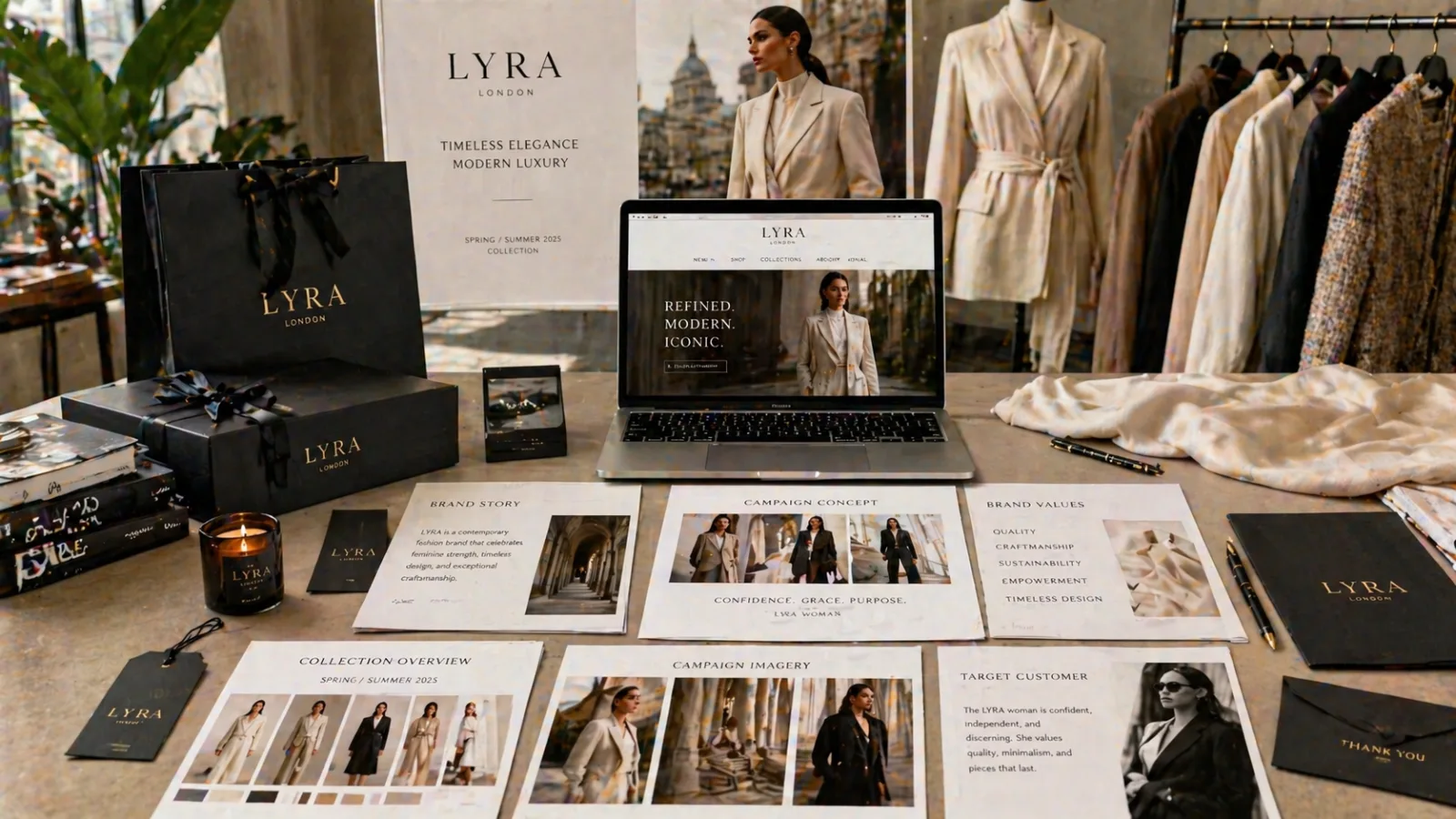
Your high-end clothing line should feel cohesive across:
- logo and typography
- website design
- campaign photography
- product descriptions
- packaging
- unboxing experience
- customer service tone
- social media presentation
If the garments feel premium but the website feels rushed, customers notice. If the photography is strong but the packaging looks cheap, customers notice. High-end brands are built through alignment.
10. Choose the right launch channel
Think carefully about where your first customers will discover you. For many new premium brands, direct-to-consumer launch through a polished ecommerce site is the cleanest starting point. Others may prefer a limited pop-up strategy, appointment-based trunk shows, or selective boutique wholesale.
Your launch channel should match:
- your price point
- customer habits
- collection size
- production capacity
- marketing budget
If your brand is highly visual and editorial, online storytelling may be the most effective first move. If your line is built around touch, drape, and personal styling, in-person appointments or selective retail partnerships may matter more.
11. Plan visibility like a fashion business, not just a social account
A high-end line needs visibility, but visibility should feel curated. The CFDA Fashion Calendar supports official scheduling and visibility for designers in the fashion ecosystem, and that reflects a broader truth: premium fashion is partly built through strategic presentation.
You do not need a runway show to start, but you do need a launch plan:
- campaign shoot
- brand story
- founder or label narrative
- lookbook or editorial content
- controlled influencer or stylist seeding
- PR outreach if relevant
- email capture and follow-up
Premium brands usually benefit from slower, more considered exposure rather than constant discount-driven noise.

12. Think beyond the first season
A strong high-end clothing line is not just a launch. It is a system that can grow. Before launch, ask:
- which products could become repeatable bestsellers
- which fabrics can be reordered
- which categories can expand naturally
- how customer feedback will be collected
- how cash flow will support the next drop
The first season should teach you something. The best premium brands use launch one to refine fit, pricing, messaging, and customer response for launch two.
ApparGlobal
Many fashion brands build stronger premium collections when they work with manufacturing partners that understand fabric behavior, fit development, trim control, sample refinement, quality checkpoints, and scalable production planning. Companies such as ApparGlobal help clothing brands align concept development, sourcing choices, garment engineering, and bulk production expectations so high-end fashion ideas can move from sketch to manufacturing with better structure, stronger consistency, and more reliable market readiness.
Conclusion
Starting a high-end clothing line takes more than taste. It takes market clarity, product discipline, legal protection, strong sourcing, real margins, and a brand experience that feels premium at every touchpoint. The SBA’s guidance on market research, startup cost planning, and business plans supports that structured approach, while the USPTO makes clear that brand protection matters from the beginning.
The strongest premium brands do not try to look luxurious only on the surface. They build that quality into the product, the pricing, the sourcing, the storytelling, and the customer experience. If you can do that with consistency, you are not just launching clothes. You are building a fashion brand with long-term value.
Frequently Asked Questions
Do I need a business plan to start a high-end clothing line?
Yes. The SBA recommends a business plan because it helps define your goals, strategy, and funding logic.
Should I trademark my clothing brand name early?
Yes. The USPTO explains that trademarks help protect brand names and logos used on goods and services.
What makes a clothing line feel high-end?
Usually a mix of strong positioning, better materials, sharper fit, consistent branding, thoughtful packaging, and a premium customer experience.
Is it better to start with many products or a small collection?
A smaller, more focused collection is usually stronger for a premium launch because it allows better control over quality and message.
How do I find the right factory for a high-end line?
Look for manufacturers with relevant category experience, strong samples, clear communication, and the ability to meet premium quality expectations. CFDA’s production resources can help with discovery.