
Have you ever approved a sample that looked perfect, only to receive bulk production where sizing feels off, stitching looks inconsistent, and delivery is late? That gap between a great sample and a successful bulk run usually happens because the apparel production process is not fully understood or controlled.
Many brands treat manufacturing like one big task, but real production is a sequence of tightly connected steps. When even one step is rushed or unclear, it creates problems downstream like fabric shortages, incorrect trims, quality defects, failed wash tests, and missed launch dates.
This guide explains the complete apparel production process in a clear, real-world way, so startups and established apparel brands can plan production professionally, reduce mistakes, and build a supply chain that scales.
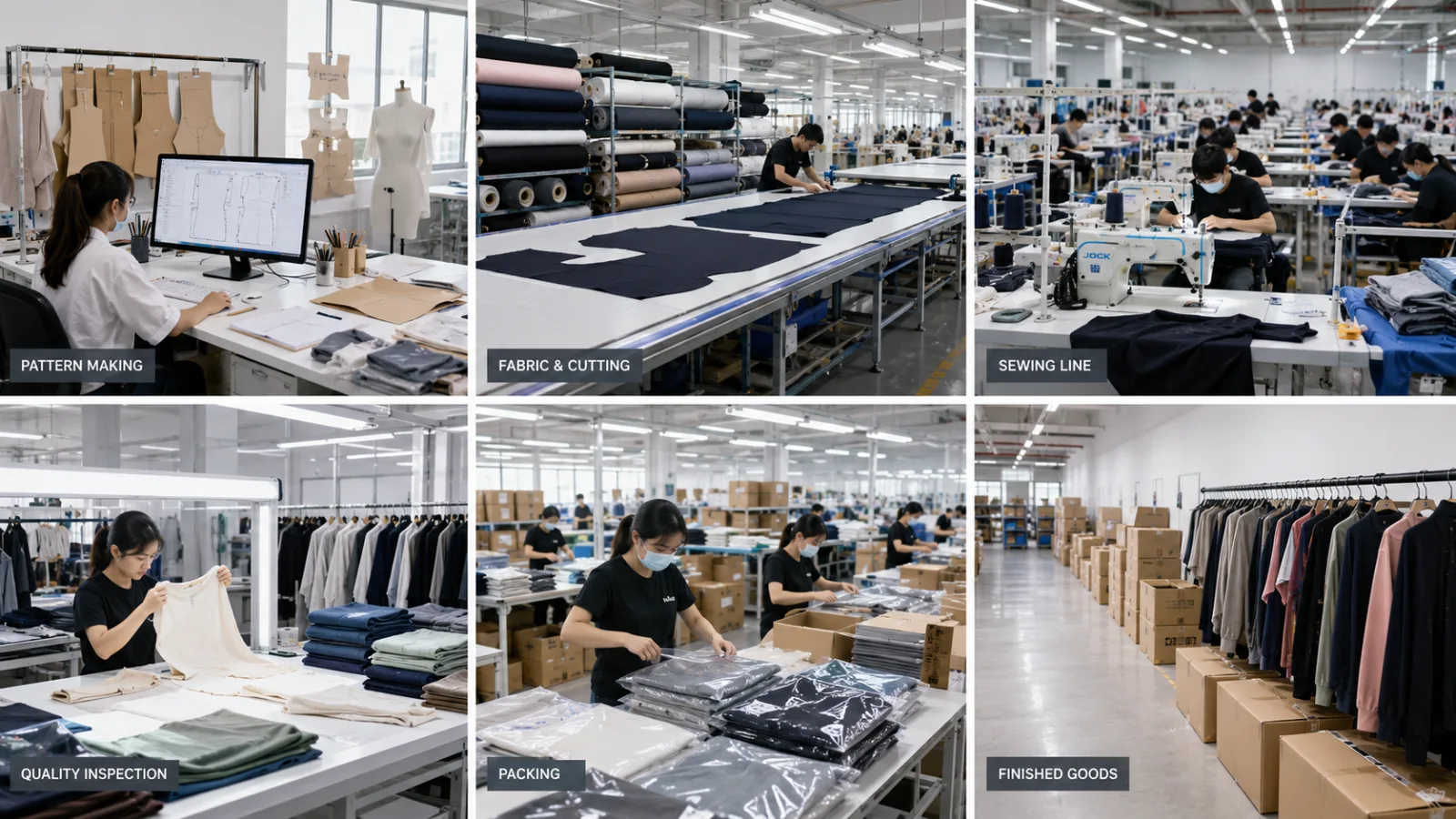
What Is the Apparel Production Process?
The apparel production process is the full workflow that turns an idea into finished garments ready for customers, involving various garment manufacturers. It includes product development, material sourcing, sampling, bulk production planning, cutting and sewing, quality control, finishing, packaging, and shipping preparation.
Brands often think production starts when the factory begins sewing. In reality, production starts much earlier, at the stage where you define the product clearly with accurate specifications and stable materials.
A well-managed production process delivers:
- Consistent sizing and fit are critical factors that clothing manufacturers must prioritize to meet customer expectations.
- Reliable fabric and trim quality
- Stable lead times and launch planning
- Lower defect rates and fewer returns
- Better margins through reduced rework
- Clear documentation and repeatability for reorders
This is why brands that master production usually scale faster than brands that rely on guesswork.
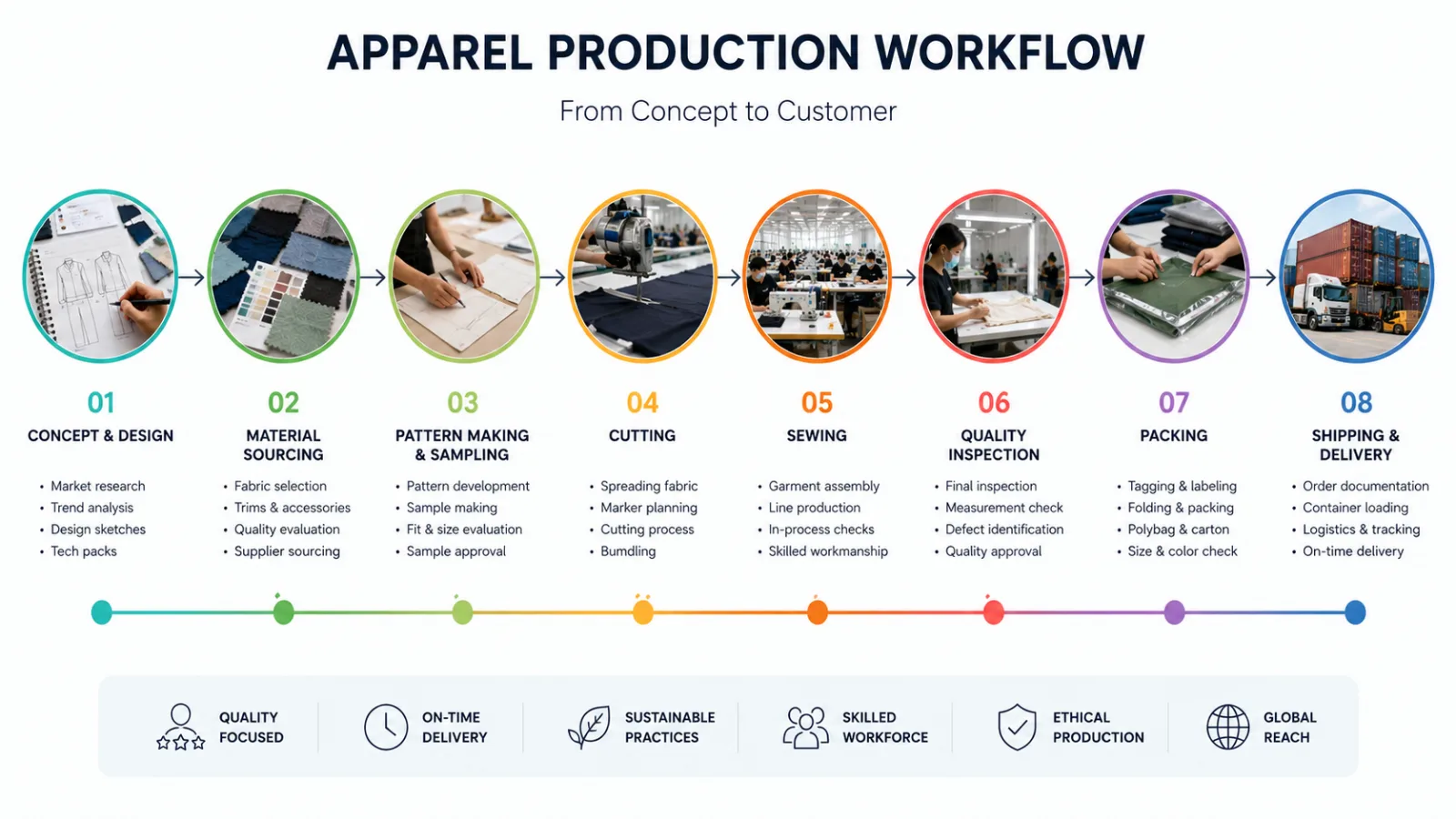
Which Apparel Production Process Is Best
Deciding which apparel production process is best depends on priorities: if cost and speed matter most, mass production or fast fashion models deliver economies of scale and rapid turnaround, though often at environmental and quality trade-offs.
For higher quality and fit, made-to-measure or bespoke tailoring prioritizes craftsmanship and customer satisfaction, but raises per-item cost and lead time.
If sustainability and flexibility are key, approaches like small-batch production, on-demand manufacturing, and lean manufacturing minimize waste and inventory risk while enabling ethical sourcing; they best balance environmental impact, responsiveness, and brand reputation, making them the optimal choice for conscious and agile apparel businesses.
Different Types of Garment Manufacturing Processes
The textile and apparel manufacturing landscape encompasses many different types of garment manufacturing processes, starting with initial sketches and computer-aided design to define design requirements and the product-to-product variations manufacturers must meet quality standards for. In sourcing materials, the choice of raw material and fabric selection — sometimes requiring bleach or other treatments — drives whether items will be produced in small-batch or mass-production production networks.
The entire process includes the cutting process that produces cut pieces and cut parts, then the garment sewing and garment assembly stages where workers are involved in the manufacturing process to create the finished product. A practical step guide often lists the steps involved with tolerances like 1.5 cm for seams; final touches include labeling and hang tags. Across the apparel industry and broader apparel sector producing clothing and textile goods requires compliance with safety, environmental rules and labor laws to responsibly produce apparel and ensure high-quality outcomes at the top of production.
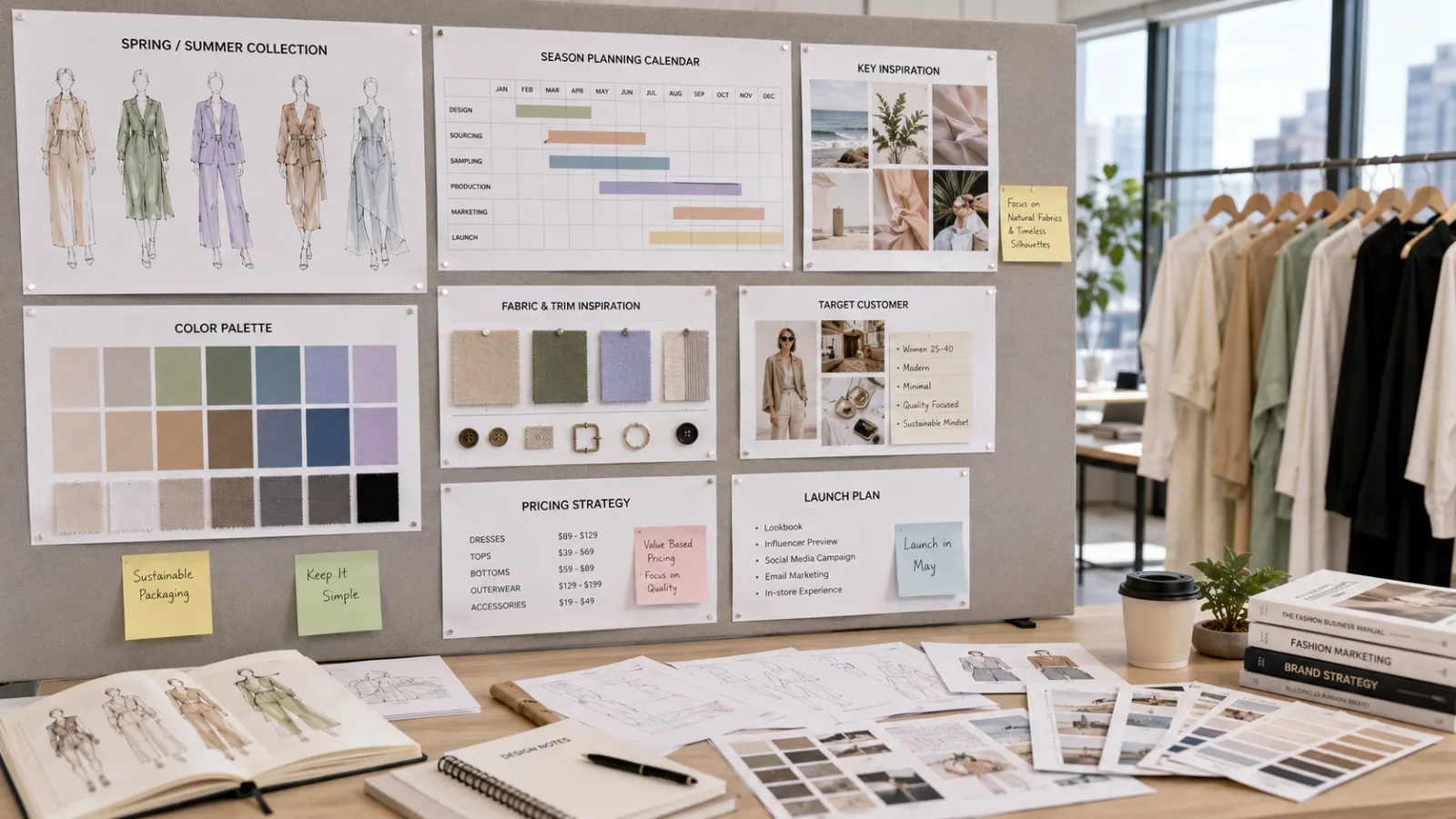
Product Concept and Collection Planning
Every apparel collection begins with a product idea. For startups, this may be a single hero product like a t-shirt, hoodie, or dress. For established brands, it may be a seasonal collection with multiple styles and colorways.
At this stage, strong brands plan around:
- Target customer and use case
- Price point and margin goals
- Product category and fit expectations
- Material story, such as organic cotton or recycled fabrics
- Timeline based on launch date or season
Collection planning is where you avoid overproduction. Brands that start with a focused capsule collection can move faster and make fewer mistakes.
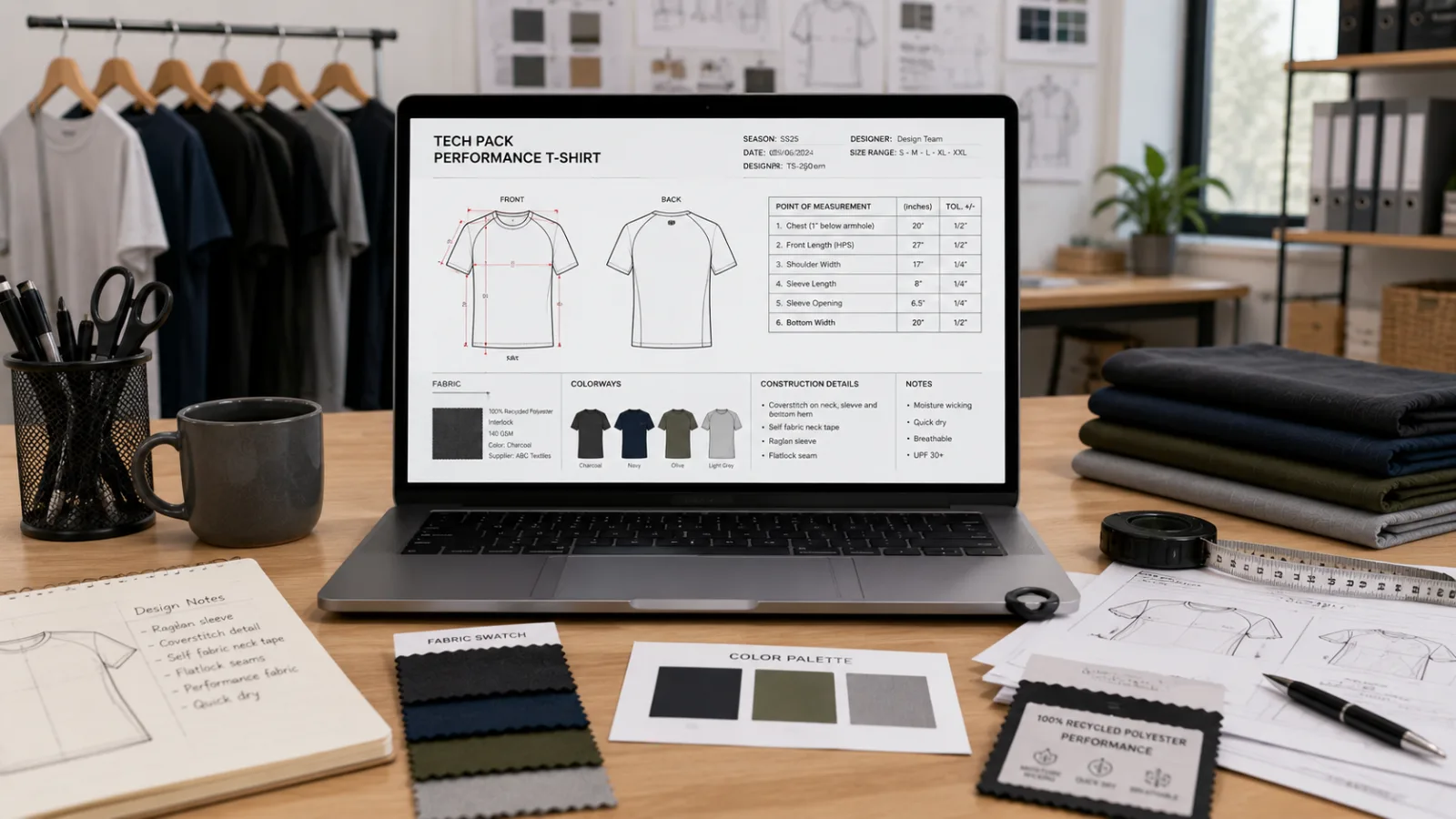
Tech Pack Creation and Product Specifications
A tech pack is the blueprint for your garment, detailing the manufacturing process and specifications for the apparel manufacturer. Without it, a factory must guess details, and guessing always creates mistakes.
A complete tech pack includes:
- Flat sketch and construction details
- Measurement chart with tolerances
- Fabric composition, GSM, and finish
- Trim details such as labels, threads, buttons, and zippers
- Stitch types and seam construction notes are vital for garment manufacturers to ensure quality in the sewing process.
- Print or embroidery placement details
- Packaging and labeling instructions
- Color references and size range information
Tech packs reduce sampling rounds, lower production errors, and improve factory communication. For sustainable brands, tech packs also help document material requirements for traceability.
Pattern Making and Grading
Once specs are clear, pattern making begins. The pattern is the template used to cut fabric pieces. Good patterns ensure:
- Fit consistency
- Balanced proportions
- Efficient fabric use
- Predictable sewing construction
After the base pattern is approved, grading creates patterns for each size. Grading is not simply scaling up and down. It requires fit logic. Poor grading can make sizes inconsistent and lead to high returns. For startups, it is common to focus on a few core sizes first, then expand once fit is validated.
Cutting, Sewing, and Garment Assembly
A clear step guide is essential in the apparel industry, linking textile and apparel manufacturing with retail expectations; from initial sketches and pattern creation using computer-aided design to the cutting process where cut pieces and cut parts are prepared to match design requirements. The process of garment creation continues through precise garment sewing and coordinated garment assembly, with each operation involved in the manufacturing process recorded to manage production networks across the apparel sector that produce clothing and textile goods.
When creating garment samples to meet quality standards, factories consider labor laws and timelines such as 1.5 days per unit on small orders; the entire process from sourcing materials to the top of production stage includes finishing tasks like attaching hang tags. Understanding the steps involved enables manufacturers to produce apparel efficiently while ensuring the finished product satisfies buyers and consumers.
Fabric Sourcing and Material Development
Fabric sourcing is one of the most critical production stages because fabric affects:
- Garment quality and hand-feel
- Shrinkage and shape retention
- Color outcome and shade consistency are essential for maintaining quality checks throughout the textile production.
- Durability and pilling behavior
- Cost and MOQ structure are vital considerations for garment manufacturers during the clothing manufacturing process.
Brands can source fabric in two main ways:
- Factory sources fabric through mills and suppliers
- Brand sources fabric directly and sends to the factory
For startups, factory sourcing is often easier. But you still need to verify fabric specs, testing, and lead times.
If you are using sustainable materials like organic cotton or recycled polyester, you may need certificates and traceability documents. That should be planned early, not after production begins.
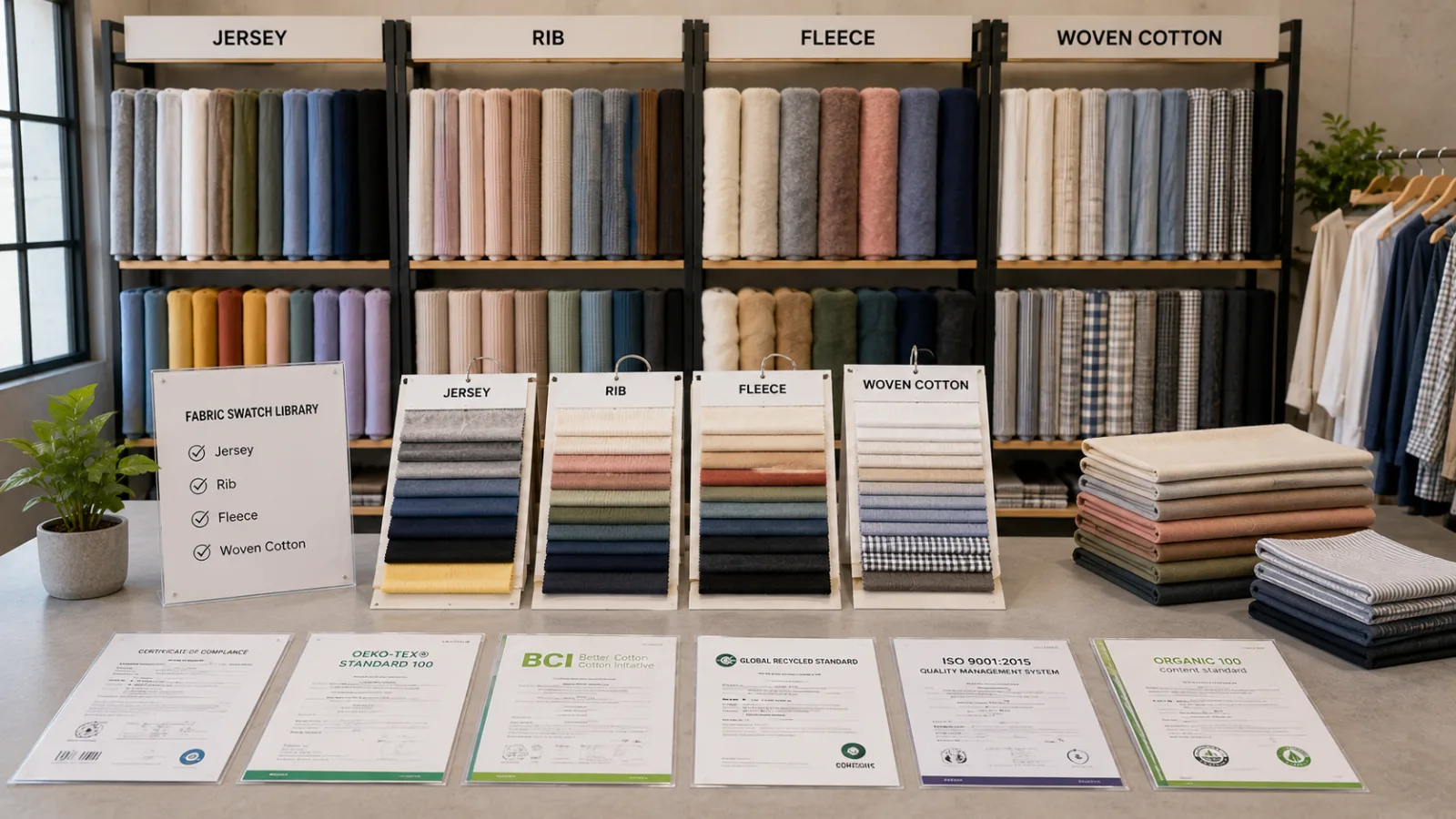
Trim Sourcing and Branding Components
Trims include everything besides fabric:
- Neck labels and care labels
- Hangtags
- Buttons, zippers, snaps
- Drawcords and elastics
- Packaging materials like polybags and cartons
Trims often create delays because they have minimum quantities and longer lead times. Startups commonly underestimate trim planning and assume labels are easy. In reality, custom labels and packaging can take time. A smart approach is to standardize trims across multiple styles so you can reduce MOQ pressure and simplify inventory.
Sampling Process and Product Development Samples
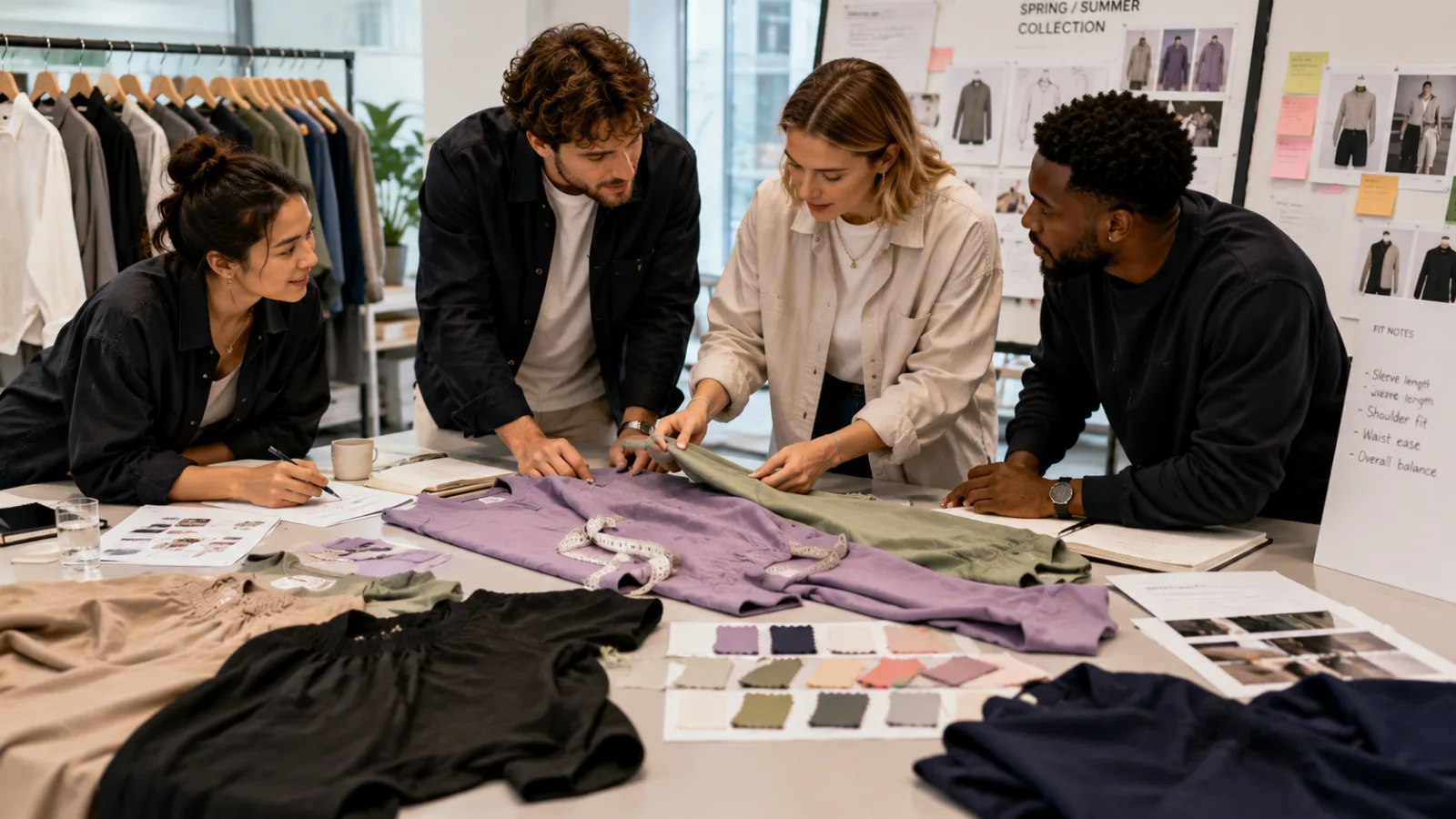
Sampling is where your design becomes a real garment. Many production problems come from rushing sampling or skipping key approvals.
A typical sampling workflow includes:
- Prototype sample: first physical version of the product
- Fit sample: used to correct sizing and proportions
- Salesman sample: used for marketing or wholesale presentations
- Pre-production sample: final sample that matches bulk materials and construction, crucial for quality checks before mass production.
Every sample round should be reviewed with:
- Measurement checks
- Fit evaluation
- Fabric behavior testing
- Construction and finishing inspection
Sustainable brands should also confirm materials and documents during sampling so bulk does not get delayed.
Sample Testing and Approval Checks
Before bulk production, testing reduces risk.
Important tests include:
- Shrinkage testing after washing
- Colorfastness testing for dyed fabric
- Pilling resistance for knits
- Seam strength and stitch durability
- Print and embroidery wash durability
Not every brand needs lab testing for every style, but wash testing is non-negotiable for most cotton garments. It prevents the classic mistake where bulk arrives, customers wash it, and sizing becomes inconsistent. Approval should be documented clearly. Changes must be updated in the tech pack.
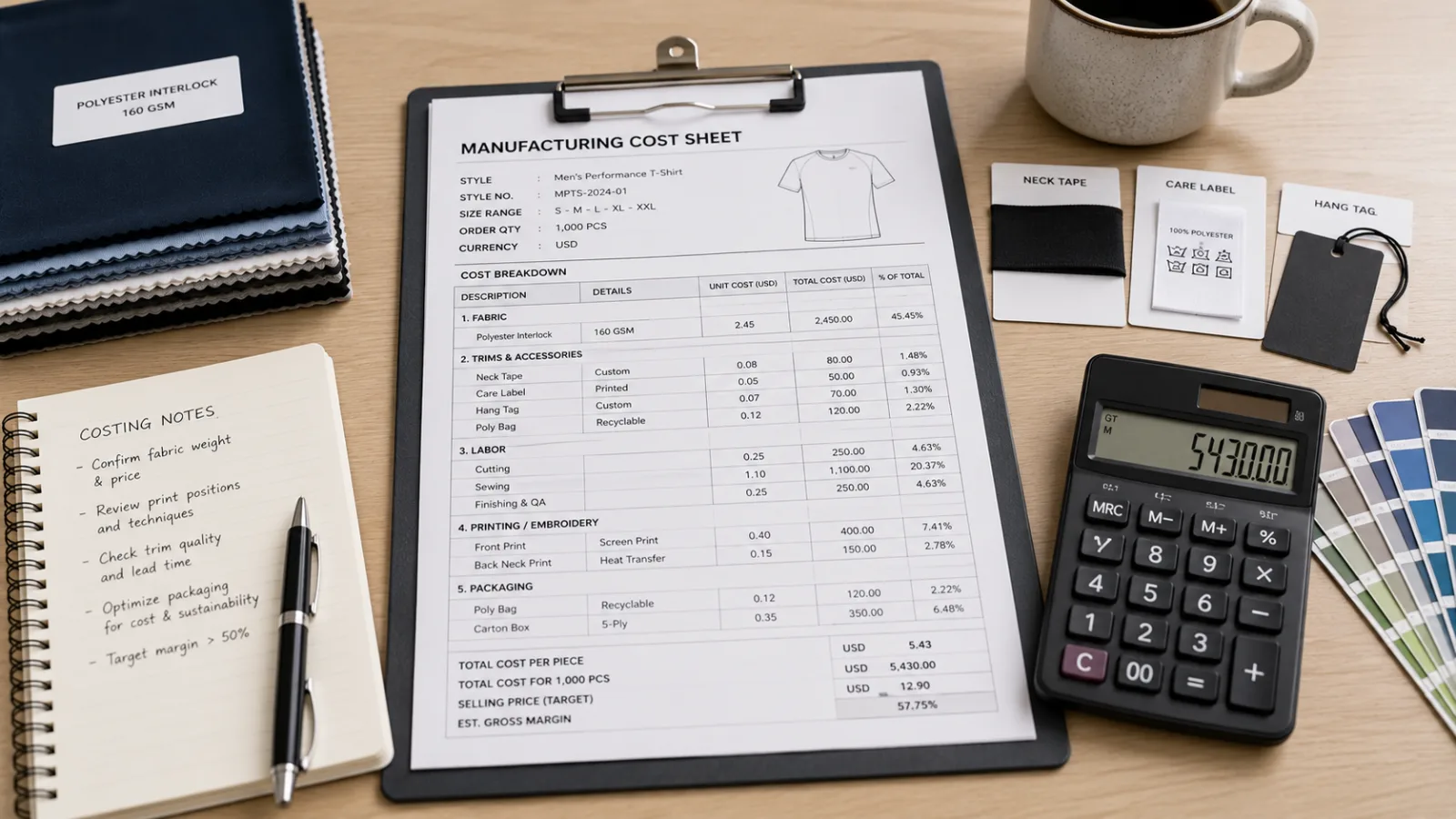
Costing and Production Quotation
Once materials and construction are defined, factories provide costing. A professional quotation includes details about the manufacturing process and the costs associated with garment manufacturing.
- Fabric cost
- Trim cost
- Cutting and sewing labor
- Printing or embroidery cost
- Washing or special finishing cost
- Packaging and carton cost
- Testing costs if applicable
Brands should compare quotes based on what is included. Low pricing can hide missing QC or cheaper materials. You want stable cost and stable quality. For startups, it is smart to test a small run before committing to high volume.
Two Main Methods of Garment Production
The two main methods of garment production—made-to-measure and mass production—differ chiefly in the number of processes they require and the resulting efficiency and quality. Made-to-measure focuses on bespoke service with intensive multiple steps, greater attention to the final pattern, and tailored fabric development to suit individual clients.
Mass production, driven by fast-fashion demands, prioritizes speed and cost, producing large volumes including clothing lines in standardized runs using optimized workflows. Each approach manages sizing differently: bespoke systems create one-off fits while factories use a predefined size set to streamline cutting and assembly. Both methods balance time, cost, and consumer expectations, shaping how garments move from concept to finished product.
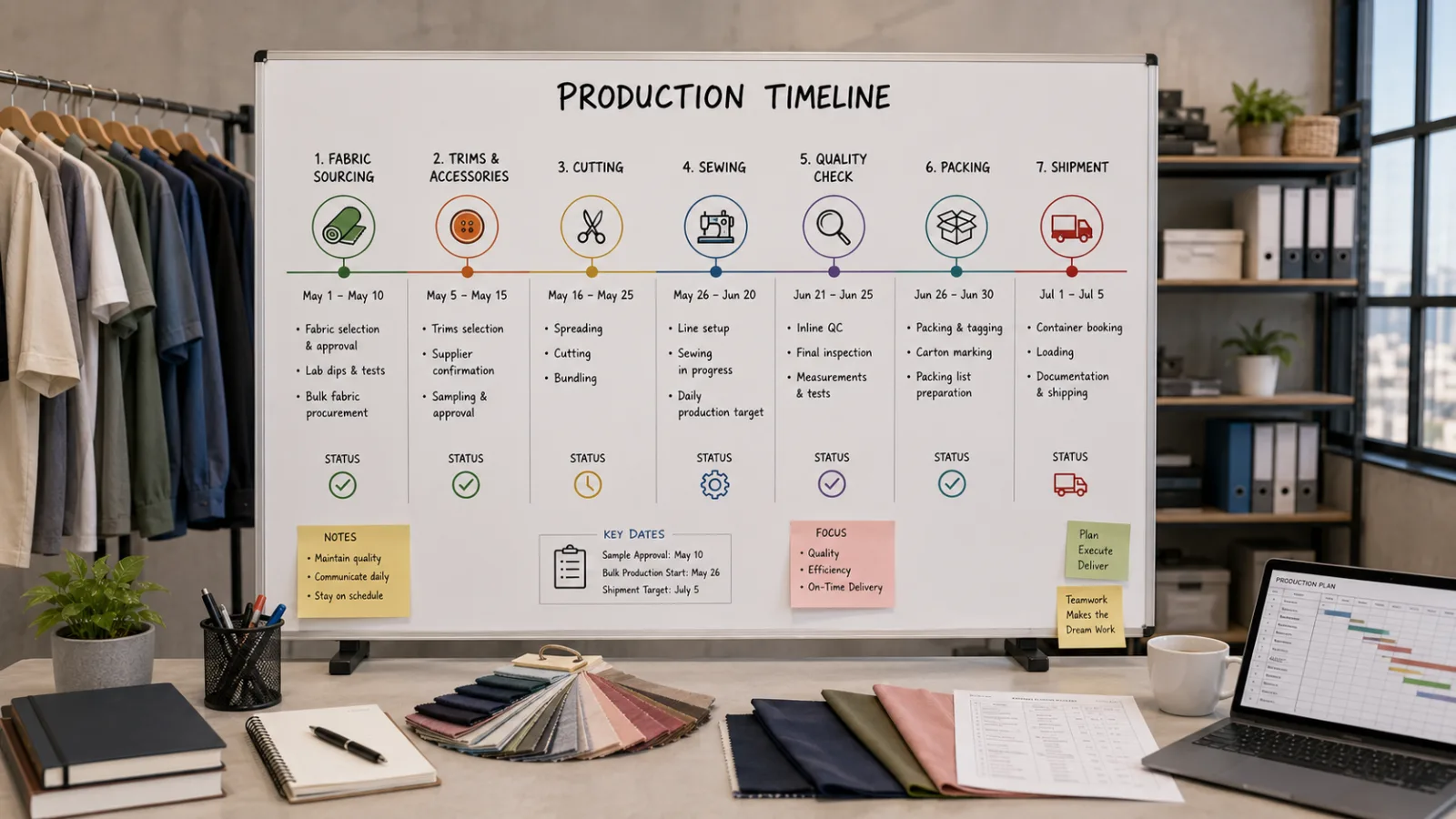
Production Planning and Critical Path Timeline
After approvals, production planning begins, ensuring that the apparel manufacturer is prepared for the garment manufacturing phase. This is where the factory schedules your order and confirms timelines.
A realistic production timeline includes:
- Fabric booking and delivery to factory
- Trim arrival and checking
- Pattern finalization and marker making
- Cutting and sewing line scheduling
- In-line inspections and repairs
- Washing and finishing schedule
- Final QC and packing are essential steps in the garment manufacturing process to guarantee product quality before delivery.
- Shipment readiness date
Brands should use a critical path document to track these deadlines. Delays are easier to prevent than to fix.
Fabric Inspection and Pre-Production Checks
Before cutting fabric, factories inspect fabric rolls for:
- Defects and contamination
- Shade variation
- Fabric width and GSM consistency are crucial for ensuring quality in the clothing manufacturing process.
- Shrinkage stability if pre-tested
- Fabric stretch behavior
This stage protects bulk quality. Cutting a defective fabric roll can create hundreds of defective garments. Brands should also confirm pre-production approvals, sometimes called a PP meeting. This ensures everyone is aligned before bulk begins.
Marker Making and Cutting
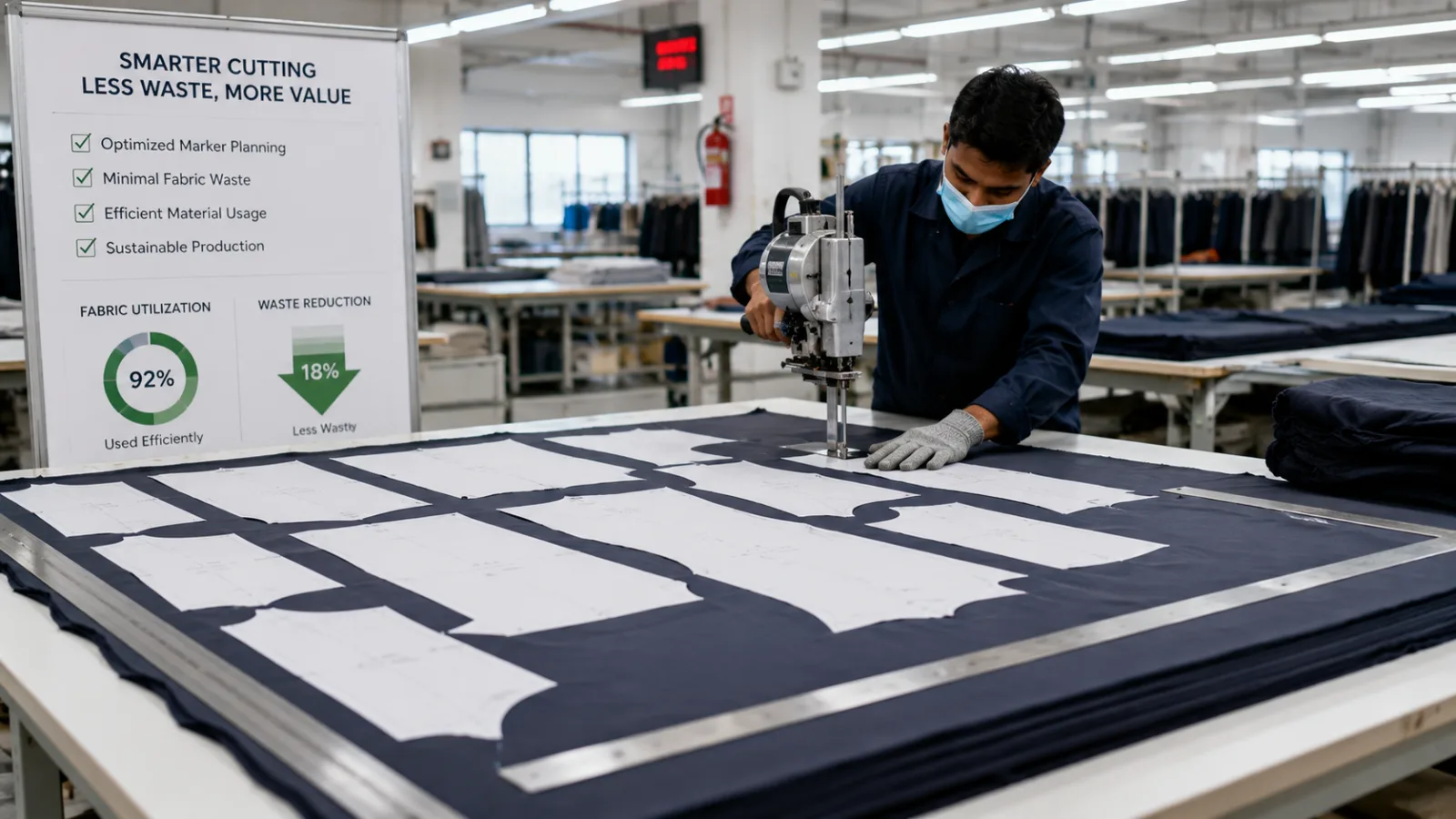
Marker making is the process of arranging pattern pieces efficiently to minimize fabric waste. Good marker efficiency can reduce cost and waste.
Cutting includes:
- Spreading fabric layers
- Aligning grain direction
- Cutting with manual or automatic cutting systems
- Bundle preparation for sewing lines
Cutting accuracy affects garment sizing and seam alignment. Even small cutting errors can cause fit issues. Sustainable brands often focus on cutting waste reduction by improving marker efficiency and reusing cutting scraps where possible.
Sewing Line Production and Assembly
Sewing is the core stage of apparel production. At this point, fabric pieces become garments. Quality depends on:
- Skilled operators
- Standard operating procedures
- Correct thread and needle selection
- Stitch type accuracy
- Seam reinforcement at stress points
- Consistent line supervision
Factories typically run garments through multiple operations. A simple t-shirt still requires several sewing steps like shoulder seams, neck rib attachment, sleeve setting, hemming, and label attachment, all performed using advanced sewing machines. Line efficiency matters, but quality matters more. Fast sewing without QC creates defects that are expensive to fix later.
In-Line Quality Control During Production
In-line quality control catches issues early. It includes:
- Measurement checks during sewing
- Stitch and seam inspection
- Print placement verification
- Label and trim attachment checks are necessary quality checks in the apparel manufacturing process to ensure all components are correctly applied.
- Defect identification and correction
A factory with strong QC will not wait until final inspection to check quality. They inspect during production to prevent large batches from being defective. Brands can request in-line inspection reports to stay informed.
Washing, Dyeing, and Special Finishing Processes
Not all garments require washing or special finishing, but many do.
Common finishing processes include:
- Garment wash for softness
- Enzyme wash for a worn-in feel
- Silicone softener finishes
- Anti-pilling finishes
- Brushing for fleece softness
- Heat setting for shape stability
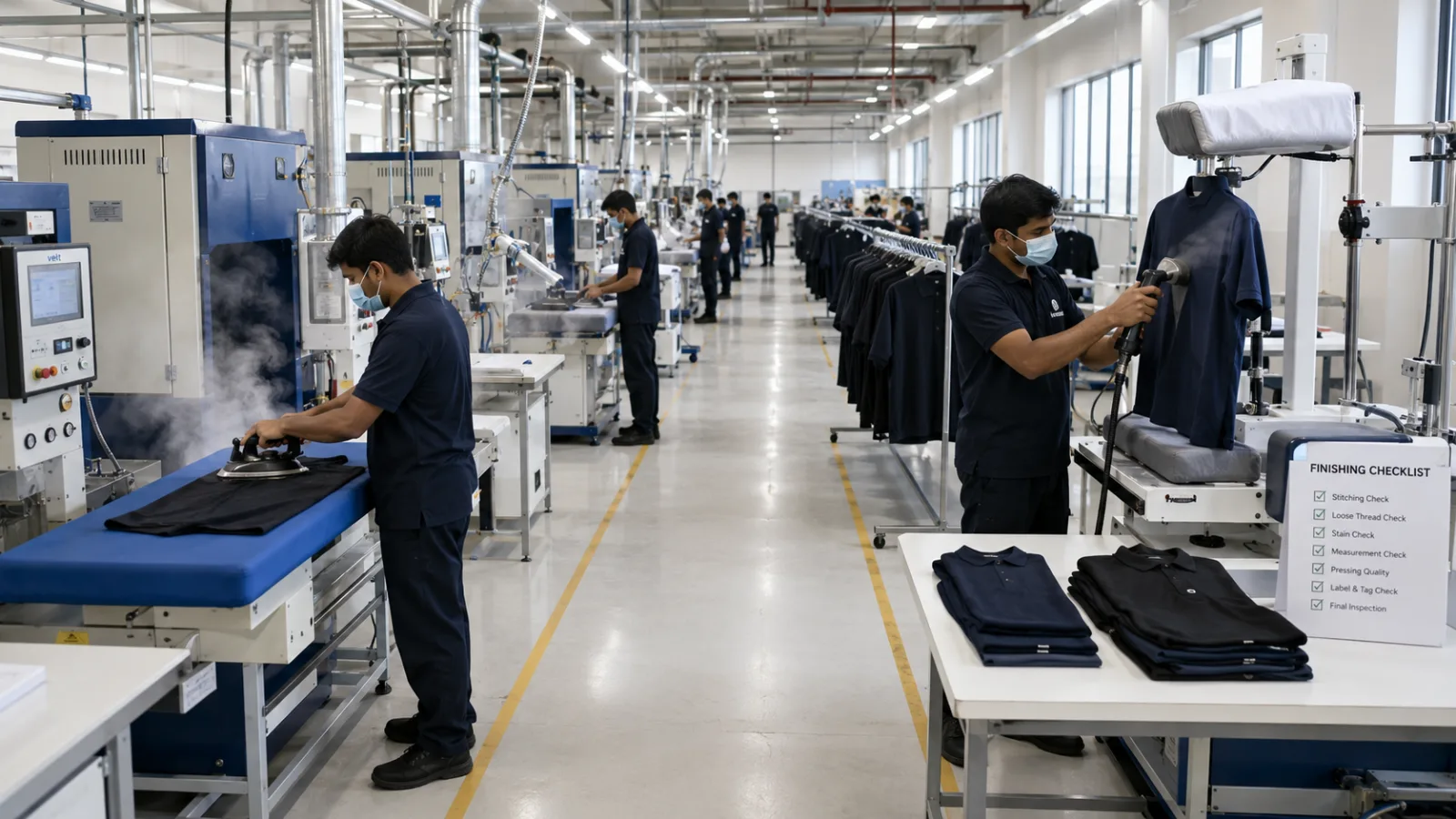
If your garments are dyed, printing or embroidery may need additional setting and testing. Washing and finishing can affect shrinkage and measurement accuracy, so brands should confirm measurement changes after finishing.
This stage is also where sustainability issues can appear. Brands should ensure finishing partners manage chemicals responsibly and treat wastewater properly.
Final Quality Control and AQL Inspection
Final QC is the last protection before shipping. Many factories use AQL inspection standards, checking a statistically representative sample from the bulk order.
Final QC checks include:
- Measurements and tolerances
- Visual appearance and finishing quality
- Stitch consistency and seam defects
- Print accuracy and color consistency
- Label correctness and packaging format
Brands should decide whether they will accept factory QC only or use third-party inspection to ensure quality in the clothing manufacturing process. Startups often benefit from independent inspections because they provide unbiased reports.
Pressing, Folding, and Packaging
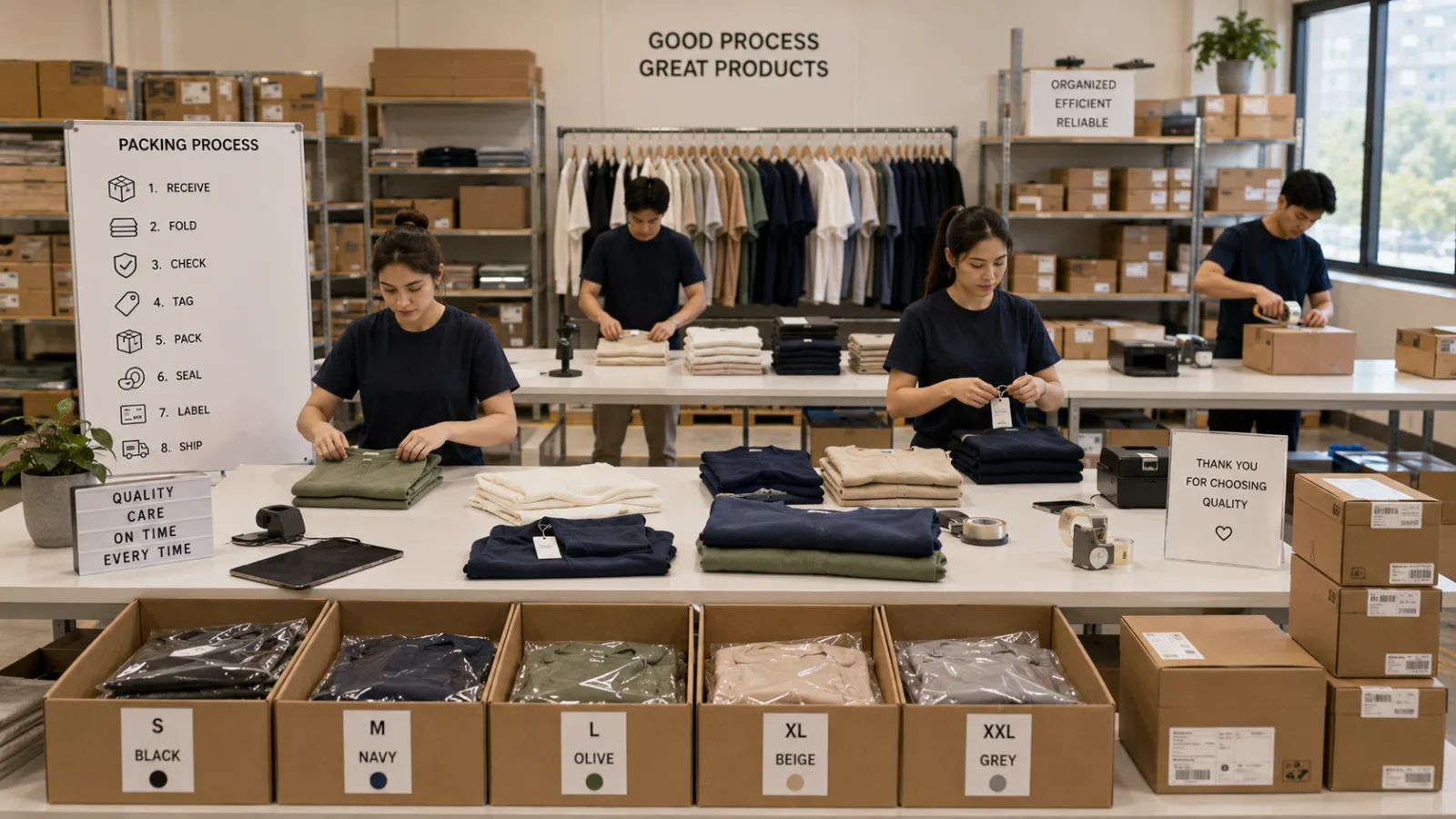
After QC approval, garments move to finishing operations like:
- Thread trimming is an important aspect of the garment manufacturing process.
- Pressing and steaming
- Folding to brand standards
- Adding hangtags and barcodes
- Packing into polybags and cartons
Packaging should match your sales channel. E-commerce packaging needs size stickers and consistent folding. Wholesale packaging often requires ratio packing and carton labeling. Packaging errors can create fulfillment problems even if the garments are perfect.
Shipping Preparation and Logistics
Production is not complete until goods are shipped correctly. Brands should confirm:
- Packing list and invoice details
- Carton dimensions and weights
- Shipping method: sea freight, air freight, or courier
- Estimated delivery schedule
- Customs documentation requirements
Poor planning often results in expensive air shipments. Brands that plan production early can ship by sea, reducing cost and carbon footprint. If your brand sells internationally, make sure HS codes and documents are correct.
Post-Production Review and Continuous Improvement
Once the shipment is delivered, smart brands review performance:
- Did sizing match expectations after customer washing?
- Were there common defects or return reasons?
- Did the factory meet timeline commitments?
- Were fabric and trims consistent across the order?
- What should be improved in the next tech pack?
This is how brands build manufacturing stability. The best apparel brands treat production as a cycle of continuous improvement, not a one-time event.
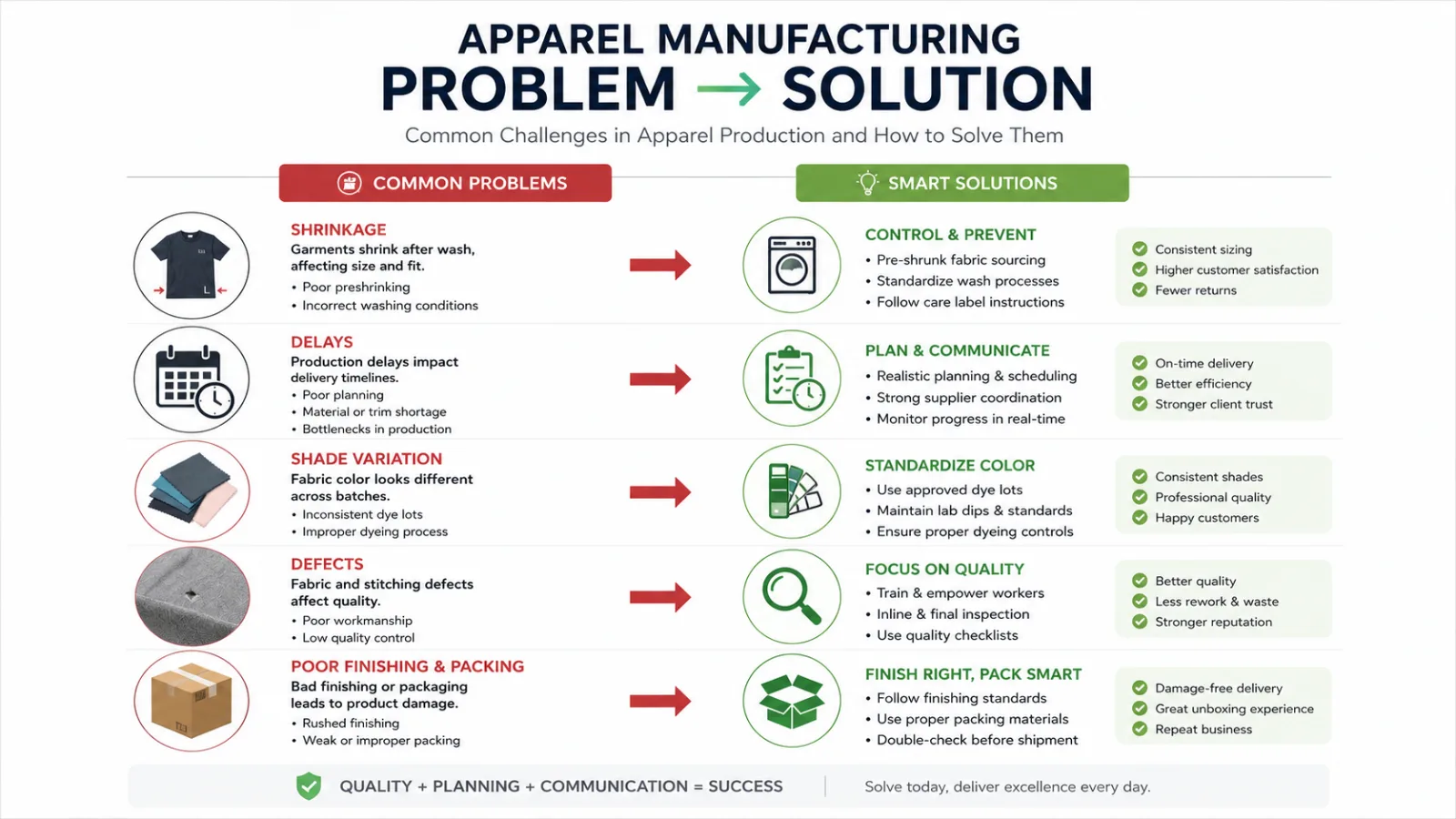
Common Apparel Production Problems and How to Avoid Them
Here are issues brands face most often:
Problem: Samples look great but bulk quality drops
Solution: Approve a true pre-production sample using bulk fabric and trims, and require in-line QC checks.
Problem: Shrinkage issues after customer washing
Solution: Wash test samples and define shrinkage tolerance in the tech pack.
Problem: Late delivery
Solution: Use a critical path plan and confirm fabric and trims early.
Problem: Shade variation in bulk
Solution: Use shade bands and batch tracking for fabric lots.
Problem: High defect rate
Solution: Strengthen in-line QC, define defect standards, and use final inspection reports.
FAQs About the Apparel Production Process
How long does apparel production take?
Timeline depends on product complexity, fabric availability, and order volume. A complete cycle including sampling and bulk often requires structured planning across multiple stages.
What is a pre-production sample and why is it important?
A pre-production sample is the final approved sample made with bulk materials and exact construction. It acts as the standard for bulk production.
What is AQL in garment quality control?
AQL is a quality inspection standard that determines how many defects are acceptable within an order based on sample inspection.
Why do delays happen in apparel manufacturing?
Most delays happen because fabric or trims arrive late, approvals are slow, or production schedules change due to factory capacity issues.
Final Thoughts: Master the Production Process to Build a Scalable Brand
The apparel production process is a chain. Every step affects the next. When brands understand and control each stage, they protect quality, reduce defects, avoid delays, and build supplier relationships that support long-term growth.
If you are a startup, focus on clarity, documentation, and testing. If you are scaling, focus on consistency, timelines, and quality control systems. Production success is not luck. It is process control.