
Every fashion entrepreneur makes decisions with limited time, money, energy, and resources. Opportunity cost helps you understand what you give up when you choose one option over another. In fashion, that could mean choosing between more inventory or better marketing, a cheaper vendor or better quality, fast growth or safer cash flow. Understanding opportunity cost can help clothing brand owners make smarter, calmer, and more profitable business decisions.

What Is Opportunity Cost?
Opportunity cost is the value of the next best option you give up when you make a decision. In simple words, every choice costs more than money. It also costs the other opportunity you did not choose.
For example, if you spend $5,000 producing extra hoodies, you cannot use that same $5,000 for paid ads, product photography, influencer gifting, website improvements, packaging, or a new sample collection. The opportunity cost is the value of what that money could have done elsewhere.
This idea is very important for fashion entrepreneurs because clothing brands usually operate with limited resources. Most new brands do not have unlimited production budgets, unlimited time, or unlimited staff. Every decision matters.
A fashion founder may ask:
- Should I launch five styles or focus on two strong products?
- Should I choose a low-cost vendor or a higher-quality manufacturer?
- Should I spend more on fabric or more on marketing?
- Should I order more inventory for lower unit cost or keep stock lean?
- Should I make custom packaging now or invest in product photography?
- Should I attend a trade show or improve my eCommerce store?
- Should I discount old inventory or hold it longer?
- Each choice has a trade-off. Opportunity cost helps you see that trade-off clearly.
Why Opportunity Cost Matters in Fashion
Fashion businesses are full of attractive options. There is always another collection idea, another supplier, another marketing channel, another influencer, another fabric, another packaging upgrade, or another sales opportunity. But not every opportunity deserves your resources.
Opportunity cost helps you avoid emotional decisions. Instead of asking, “Can I afford this?” you also ask, “What am I giving up if I choose this?” That second question is often where smarter business decisions begin.
Why Fashion Entrepreneurs Must Think in Trade-Offs
A fashion entrepreneur is not only a designer. They are also a buyer, planner, marketer, negotiator, inventory manager, cash flow manager, and decision-maker. Every business choice affects another area.
If you produce too much inventory, you may not have enough budget left for marketing. If you choose the cheapest vendor, you may save money upfront but lose customers because of poor quality. If you spend too much time perfecting packaging, you may delay product launch. If you chase every trend, you may weaken your brand identity.
Trade-offs
are not always negative. They are part of business. The problem happens when entrepreneurs do not see them clearly.
Common Trade-Offs in Fashion Business
A clothing brand may face trade-offs such as:
- More styles vs deeper inventory in fewer styles
- Lower unit cost vs higher MOQ risk
- Premium fabric vs lower retail price
- Fast production vs better quality control
- Custom design vs faster private label launch
- Influencer marketing vs paid advertising
- Wholesale growth vs direct-to-consumer margin
- Discounting inventory vs protecting brand value
- Local manufacturing vs overseas manufacturing
- Trend-based products vs timeless core products
Opportunity cost gives structure to these decisions. It helps you understand which option supports your bigger goal.
Example
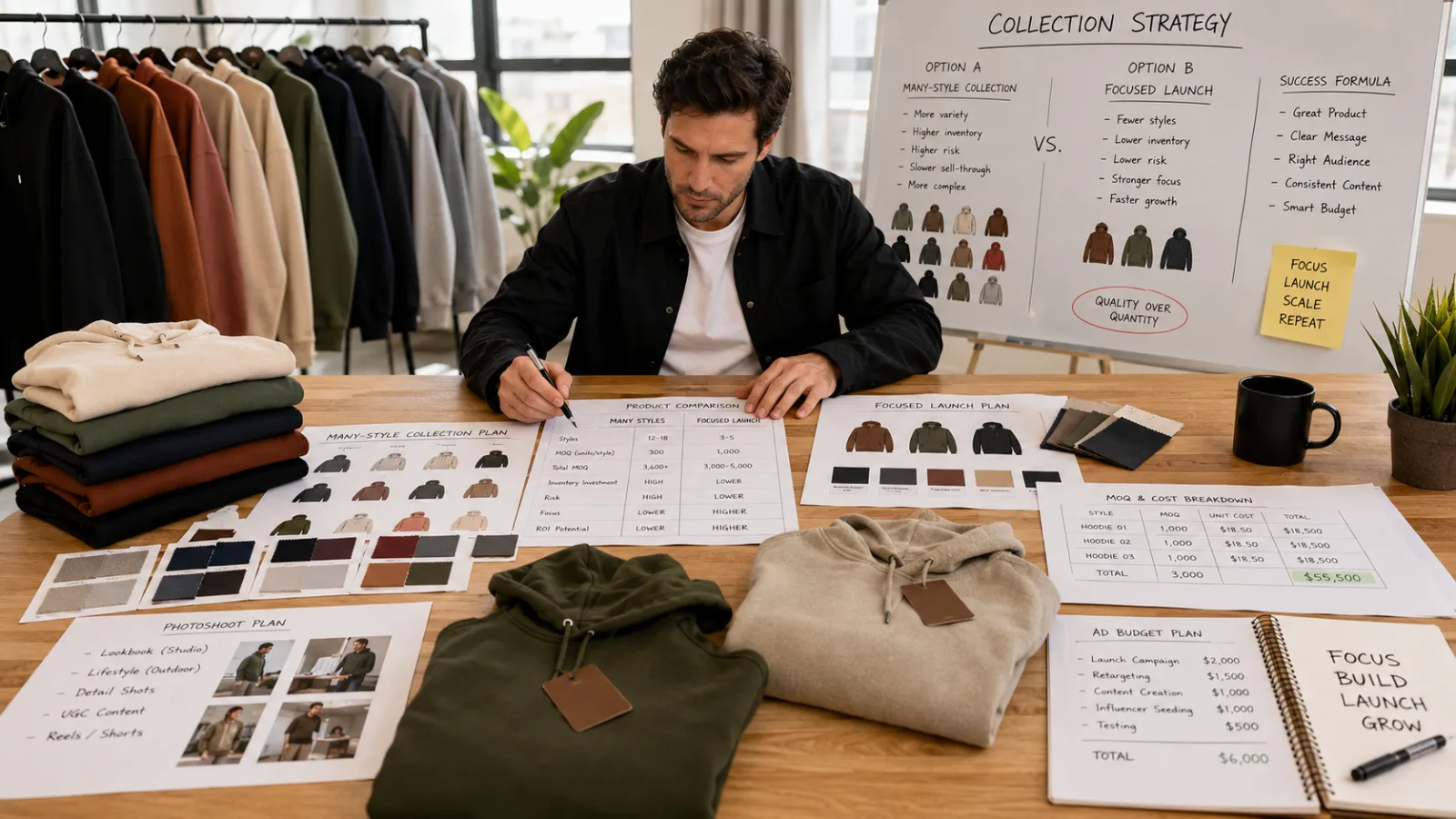
A new streetwear brand has $10,000 to launch. The founder wants to produce six hoodie designs in three colors each. That sounds exciting, but the budget may become too thin. The brand may end up with shallow inventory, weak photography, limited marketing, and no reorder budget.
A better decision may be to produce two strong hoodie designs in two proven colors, invest in better photography, run a focused launch campaign, and keep cash available for reorder. The opportunity cost of producing too many styles is losing the ability to market and sell them properly.

Opportunity Cost in Product Development
Product development is one of the first areas where opportunity cost appears. A fashion entrepreneur may have many design ideas, but developing every idea costs time and money. Tech packs, samples, fabric sourcing, pattern making, fit revisions, and testing all require resources. When you choose to develop one product, you delay or reduce investment in another.
Choosing Which Products to Develop
A new clothing brand may want to launch T-shirts, hoodies, joggers, jackets, caps, bags, and accessories all at once. But each product category requires different development work. A hoodie needs fleece, rib, drawcord, fit testing, shrinkage control, and construction planning.
A jacket may need lining, hardware, zippers, outer fabric, and more complex sampling. Activewear may need stretch testing, seam performance, and fabric recovery. Trying to develop too many products at once can create weak results across the collection.
The Opportunity Cost of Too Many Samples
Sampling is necessary, but too much sampling without clear direction can drain your budget. If you keep changing designs without learning from customer demand, you may spend hundreds or thousands of dollars before launching anything.
The opportunity cost of endless sampling is delayed sales, lost market timing, and reduced cash for production or marketing.
Smart Product Development Decisions
Fashion entrepreneurs should ask:
- Which product has the clearest customer demand?
- Which product fits our brand identity best?
- Which product can we produce at the right quality?
- Which product has a realistic MOQ?
- Which product gives us the best margin?
- Which product is easiest to market?
- Which product can become a repeat seller?
The best product to develop is not always the most creative one. It is the product that best balances customer demand, brand positioning, production feasibility, and profit potential.

Opportunity Cost in Supplier Selection
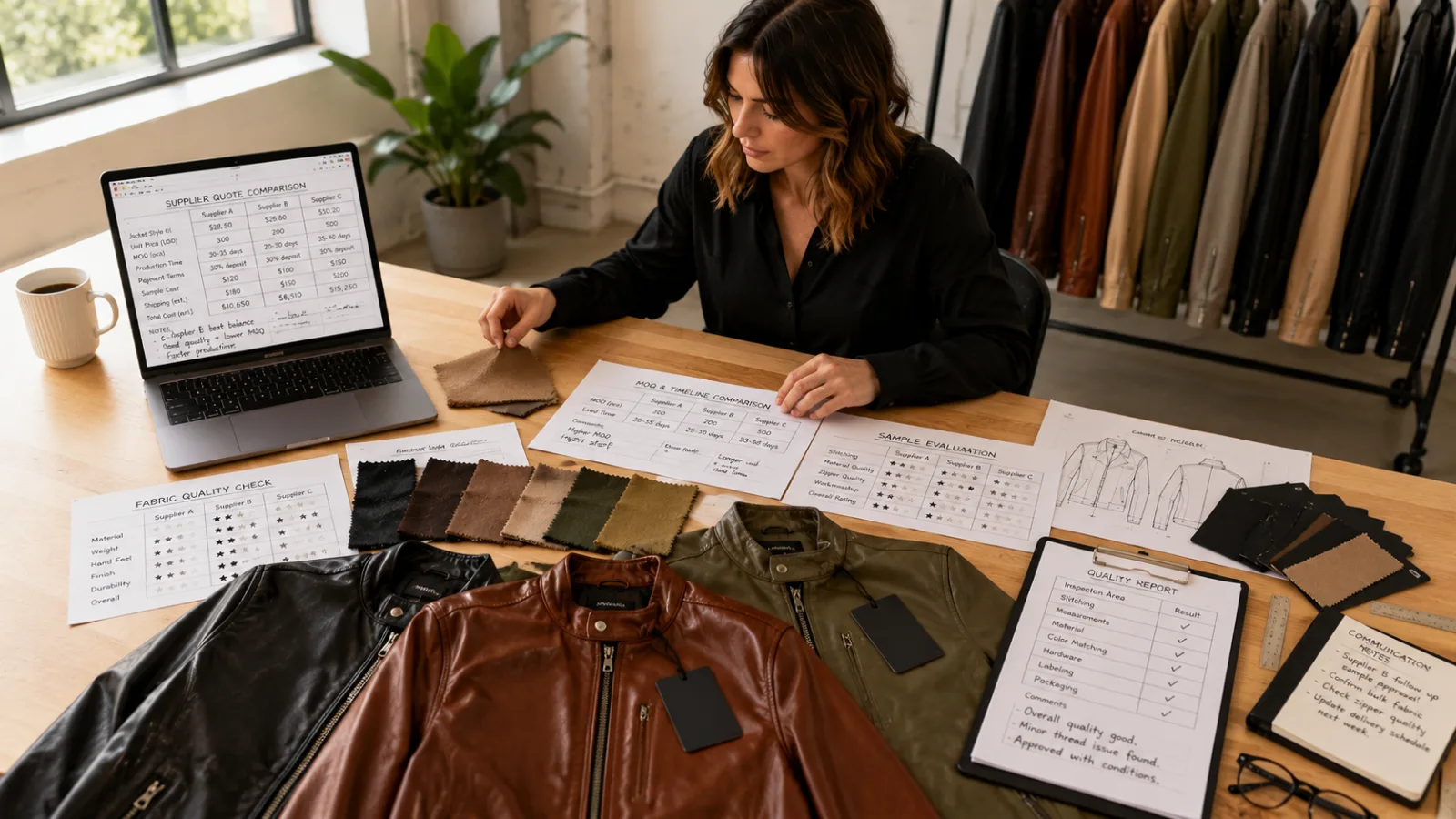
Choosing a clothing supplier is one of the most important decisions for a fashion entrepreneur. The supplier affects quality, cost, MOQ, delivery time, communication, and customer satisfaction. The cheapest supplier may not always be the best choice, and the most expensive supplier may not always be worth it. portunity cost helps you compare suppliers beyond price.
Cheap Supplier vs Reliable Supplier
A low-cost supplier may save you money upfront, but what do you give up? You may give up quality consistency, better stitching, clear communication, faster delivery, lower defect rates, or professional packaging.
A reliable supplier may cost more per unit, but they may reduce production mistakes, returns, customer complaints, and launch delays. The opportunity cost of choosing the cheapest vendor could be damaged brand trust.
Fast Supplier vs Better Supplier
Sometimes a supplier can produce quickly, but quality may be weaker. Another supplier may take longer but produce better garments. The right choice depends on your business priority.
If you are launching a short-term trend product, speed may matter more. If you are building a premium brand, quality may matter more.
Local Supplier vs Overseas Supplier
Local suppliers may offer easier communication, faster sampling, and lower shipping complexity. Overseas suppliers may offer lower unit costs and larger production capacity. Neither option is automatically better.
The opportunity cost of local production may be higher unit cost. The opportunity cost of overseas production may be longer lead time, higher MOQ, and more logistics risk.
Supplier Decision Framework
Before choosing a supplier, compare:
- Unit cost
- MOQ
- Sample quality
- Lead time
- Communication
- Product category expertise
- Quality control
- Payment terms
- Shipping terms
- Reorder flexibility
- Defect risk
- Long-term scalability
A good supplier decision is not based only on today’s quote. It is based on the long-term cost and value of the relationship.
Opportunity Cost in MOQ and Inventory Decisions
MOQ, or minimum order quantity, creates one of the biggest opportunity cost challenges in fashion. A supplier may offer a lower unit cost if you order more pieces, but that larger order ties up more cash and increases inventory risk.
A lower unit cost is not always a better business decision.
High MOQ vs Low MOQ
A high MOQ can reduce unit cost, but it requires more upfront investment. It also creates more inventory to sell. If the product performs well, high MOQ can improve profit. If the product performs poorly, high MOQ can create overstock, markdowns, and cash flow problems. A low MOQ may cost more per unit, but it allows you to test demand, reduce risk, and learn from customers before scaling.
Example
A manufacturer offers two options:
500 T-shirts at $6 each
150 T-shirts at $9 each
The first option has a lower unit cost, but the total production cost is $3,000. The second option costs $1,350. If the brand has not tested demand, the smaller order may be safer.
The opportunity cost of choosing the high MOQ is the cash that could have been used for marketing, photography, packaging, or another product test.
Inventory as Locked Cash
Inventory is money sitting on shelves. Until products sell, that money cannot be used elsewhere. Excess inventory can block growth because it reduces cash flow.
A fashion entrepreneur should ask:
- Can I sell this quantity?
- How long will it take?
- What happens if it does not sell?
- Will this stock limit my next launch?
- Will I have money left for marketing?
- Can I reorder instead of overproducing?

Opportunity Cost in Fabric and Material Choices
Fabric is one of the biggest cost drivers in clothing production. Choosing one fabric over another affects quality, comfort, price, sustainability, durability, and customer perception. Opportunity cost helps you understand what you gain and what you give up with each material choice.
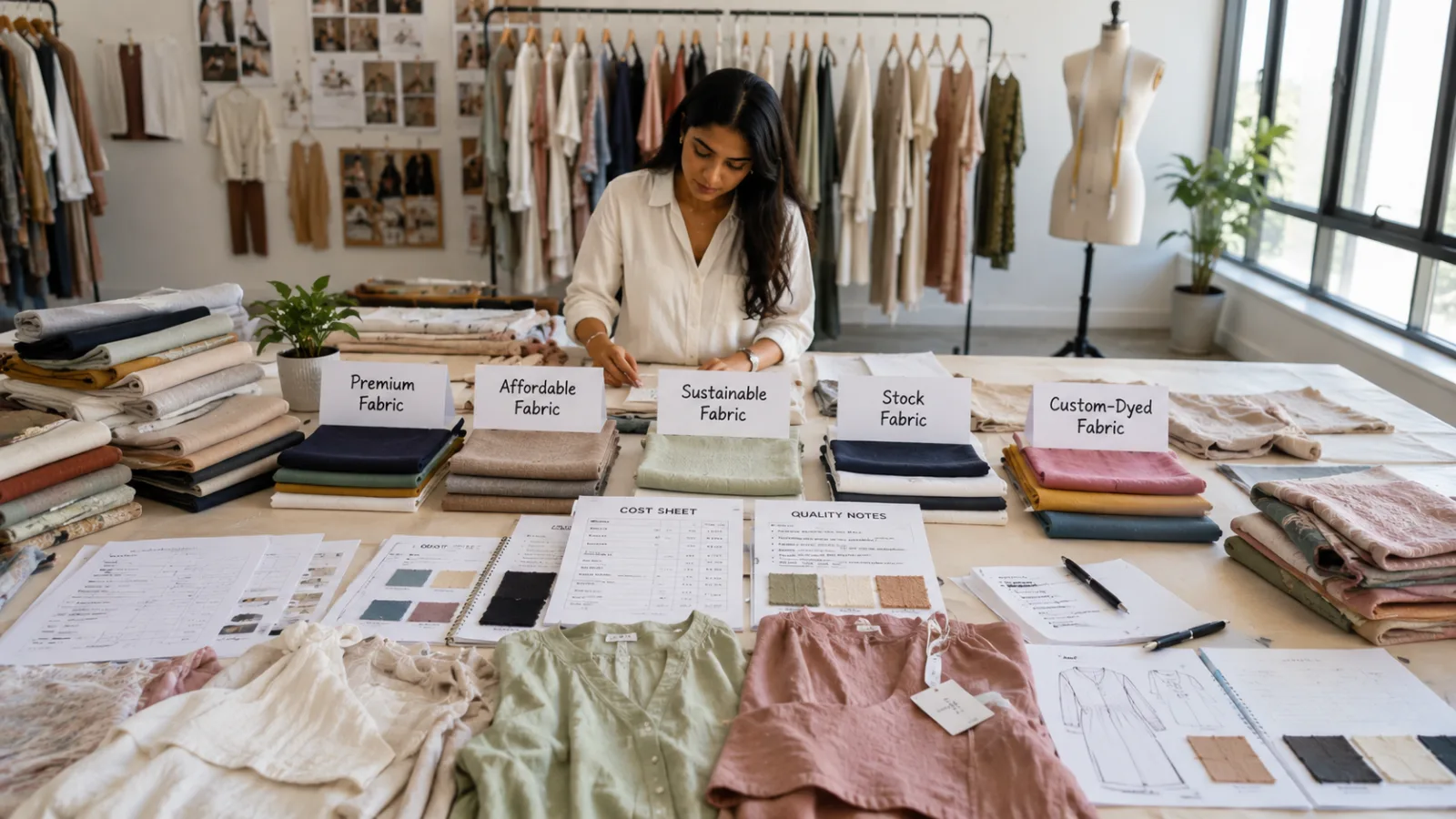
Premium Fabric vs Affordable Fabric
Premium fabric can improve product feel, brand value, and customer satisfaction. But it increases production cost and may require a higher retail price. Affordable fabric can reduce cost and make pricing more competitive, but it may weaken product quality if chosen poorly.
The opportunity cost of premium fabric may be reduced marketing budget or higher retail price. The opportunity cost of cheap fabric may be lower customer satisfaction and higher return risk.
Sustainable Fabric vs Conventional Fabric
Sustainable or certified materials may support brand values and customer trust, but they often cost more and may have higher MOQ or longer lead times. Conventional materials may be easier to source and more affordable, but they may not support your brand’s sustainability positioning.
The right choice depends on your customer, price point, and brand promise.
Custom Fabric vs Stock Fabric
Custom fabric gives more control over color, weight, texture, and exclusivity. But it usually comes with higher MOQ, longer lead time, and greater risk. Stock fabric is faster and easier to source, but it may be less unique and may run out.
Fabric Decision Questions
Before choosing fabric, ask:
- Does this fabric match our brand promise?
- Can our customer afford the final price?
- Is the MOQ realistic?
- Will the fabric be available for reorders?
- Does it wash well?
- Does it shrink?
- Does it support the garment design?
- Does it improve or weaken our margin?
Opportunity Cost in Pricing Strategy
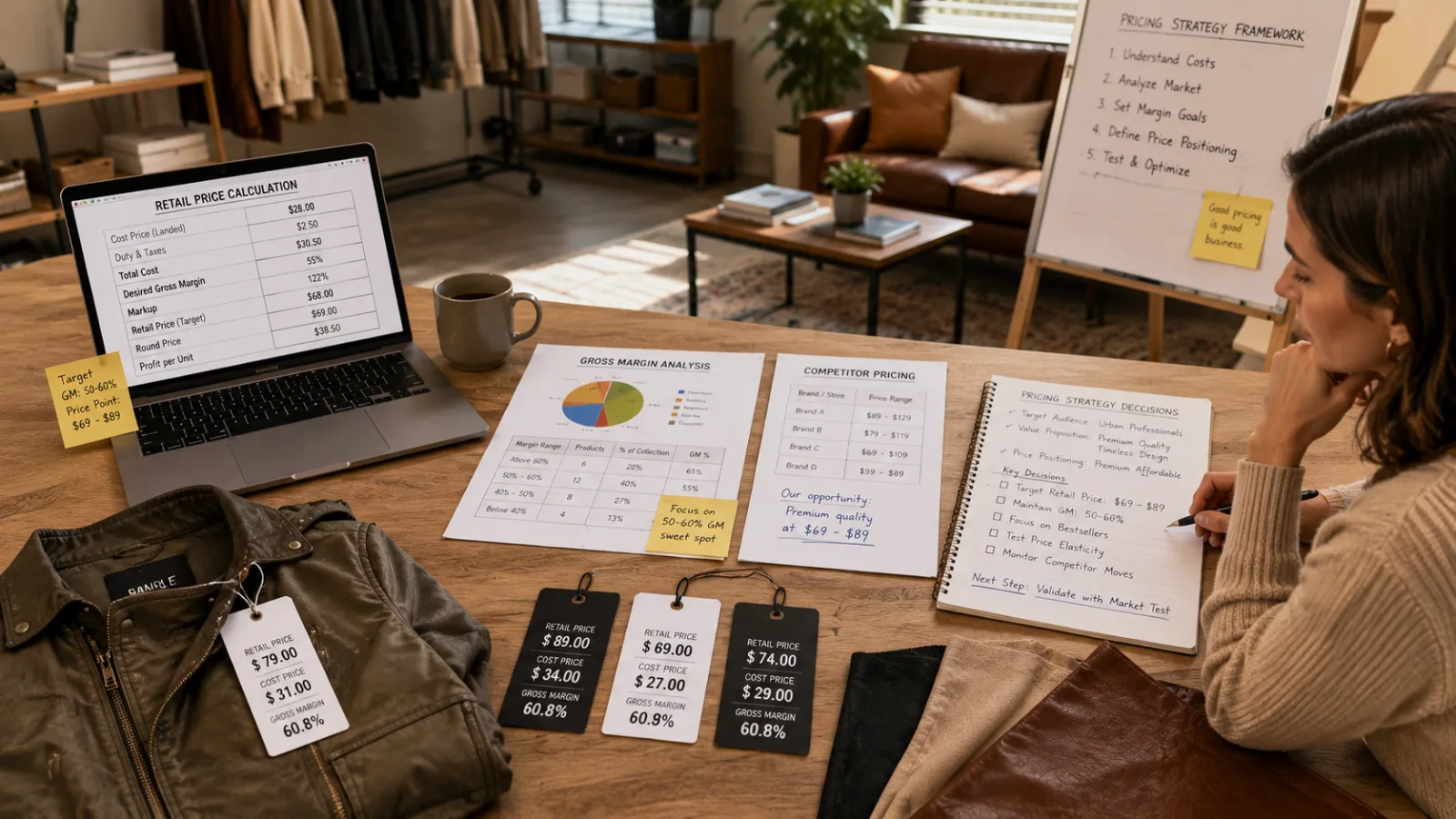
Pricing is not only about covering cost. It shapes brand perception, profit margin, sales volume, customer expectations, and future growth. Every pricing decision has opportunity cost.
If you price too low, you may sell more units but lose margin. If you price too high, you may protect margin but reduce conversion. If you discount too often, you may train customers to wait for sales. If you never discount, you may struggle to clear slow-moving stock.
Low Price vs Healthy Margin
A low price can attract customers, but it can also limit your ability to pay for better materials, marketing, customer service, and future product development.
A higher price can create healthier margins, but it must be supported by product quality, brand trust, styling, photography, and customer experience.
The Opportunity Cost of Underpricing
Underpricing is common among new fashion entrepreneurs. They fear that customers will not buy unless prices are low. But if prices do not cover real costs, the brand cannot grow sustainably.
The opportunity cost of underpricing may include:
- No budget for marketing
- No cash for reorders
- No room for wholesale
- No margin for discounts
- No ability to improve quality
- No profit for the founder
The Opportunity Cost of Overpricing
Overpricing can also hurt. If customers do not see enough value, products may not sell. Inventory can sit too long, forcing markdowns later.
Smart Pricing Questions
- What is our landed cost?
- What gross margin do we need?
- What price does our customer expect?
- What do competitors charge?
- Can we support this price with quality and branding?
- Can this price survive discounts or wholesale?
- Does the price leave room for growth?
Opportunity Cost in Marketing Spend
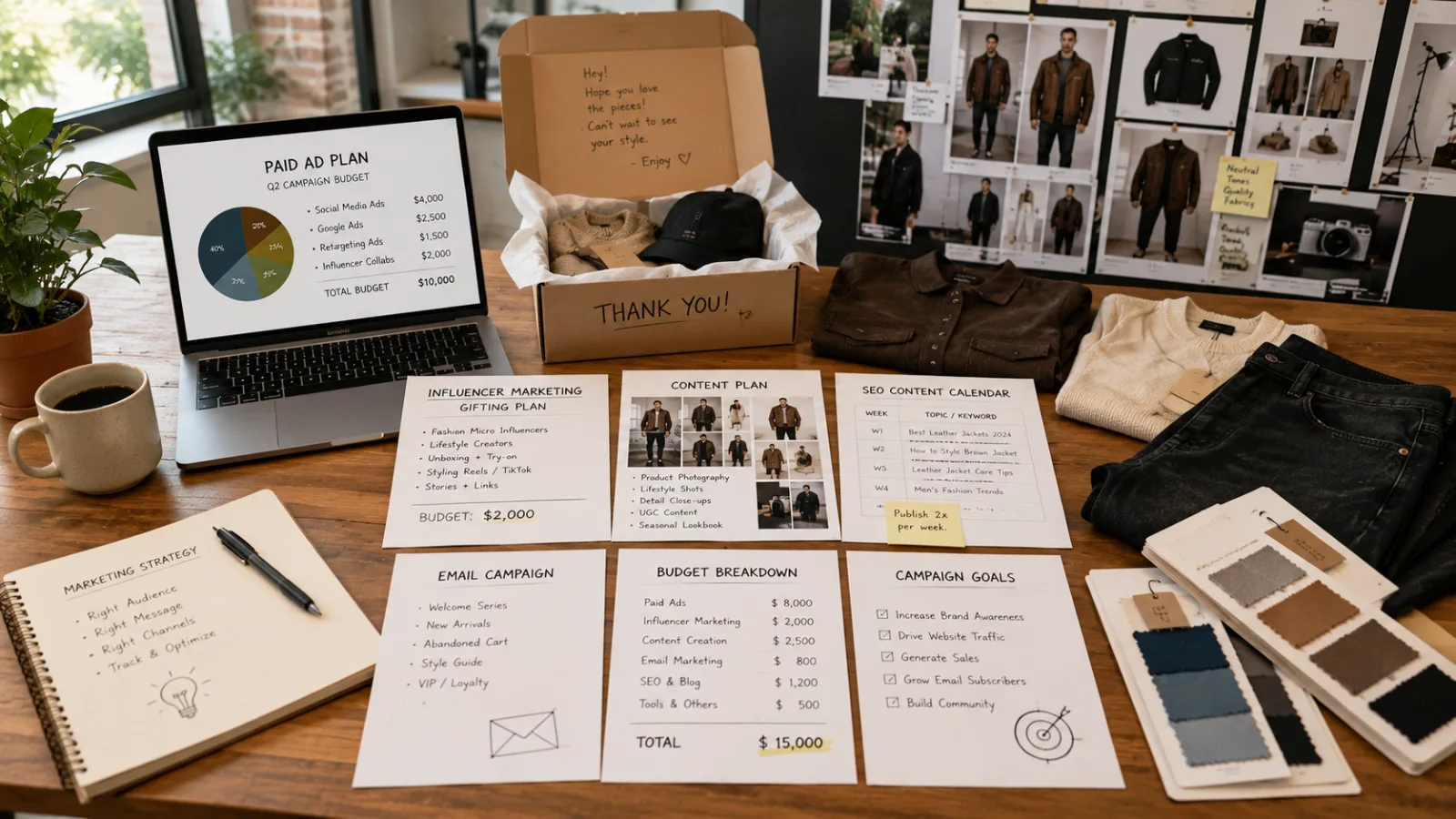
Marketing is another area where opportunity cost matters. A fashion entrepreneur may have many marketing options: paid ads, influencer gifting, content creation, SEO, email marketing, pop-up events, collaborations, photoshoots, social media campaigns, and PR outreach.
But every marketing channel requires money, time, or both.
Paid Ads vs Organic Content
Paid ads can create faster visibility, but they require budget and testing. Organic content costs less in direct spending but takes time, consistency, and creativity.
The opportunity cost of paid ads may be reduced budget for product development. The opportunity cost of organic-only marketing may be slower growth.
Influencer Gifting vs Product Photography
Influencer gifting can build awareness, but product photography improves website conversion. If your website images are weak, influencer traffic may not convert. If you spend everything on photography but do not promote the product, customers may never see it.
Launch Campaign vs Long-Term Brand Building
A launch campaign can drive immediate sales. Long-term brand building creates trust over time. Fashion entrepreneurs need both, but the budget split depends on the stage of the business.
How to Choose Marketing Priorities
Ask:
- Where does our customer spend time?
- What marketing channel has already shown results?
- Do we need awareness or conversion?
- Is our website ready for traffic?
- Do we have strong product photos?
- Do we have enough inventory to support paid ads?
- Can we measure results?
- What is the cost of testing this channel?
The best marketing decision is not always the most popular one. It is the one that matches your stage, budget, and customer behavior.
Opportunity Cost in Time Management
Fashion entrepreneurs often focus on money, but time is also a limited resource. Time spent on one task cannot be spent on another. This makes time one of the most important opportunity costs in a fashion business.
A founder may spend hours adjusting logo placement, searching for packaging inspiration, replying to low-value inquiries, editing social posts, or comparing tiny cost differences. Meanwhile, more important tasks like supplier negotiation, product testing, customer research, or sales planning may be delayed.
Busy Work vs Growth Work
Not all work has the same value. Some tasks feel productive but do not move the business forward. Growth work usually includes activities that improve product quality, sales, customer trust, production reliability, or cash flow.
Examples of high-value tasks:
- Reviewing supplier performance
- Improving product fit
- Planning inventory
- Building email lists
- Creating strong product pages
- Analyzing sales data
- Improving customer experience
- Negotiating better terms
- Testing marketing channels
- Building wholesale relationships
- Examples of lower-value tasks:
- Changing packaging colors repeatedly
- Overthinking small design details
- Checking competitors all day
- Posting without strategy
- Sampling too many untested ideas
- Manually doing tasks that can be systemized
The Founder’s Time Is Expensive
Even if you are not paying yourself yet, your time has value. If you spend 10 hours on a task that saves $20 but delays a sales activity, the opportunity cost may be high. Fashion entrepreneurs should regularly ask, “Is this the best use of my time right now?”

Opportunity Cost in Wholesale vs Direct-to-Consumer
Many fashion brands eventually ask whether they should sell wholesale, direct-to-consumer, or both. Each model has trade-offs.
Direct-to-consumer usually gives higher margins because you sell directly to customers. But it requires marketing, customer service, fulfillment, returns management, website maintenance, and brand-building.
Wholesale can bring larger orders and retail exposure, but margins are lower and buyers may require delivery deadlines, packaging standards, payment terms, and seasonal planning.
Direct-to-Consumer Opportunity Cost
If you focus only on DTC, you may keep more margin per product, but you may grow slower if your marketing is weak. You also carry the full burden of traffic, conversion, and fulfillment.
Wholesale Opportunity Cost
If you sell wholesale, you may get volume and credibility, but you give up part of your margin. You may also lose some control over how your products are displayed, discounted, or presented.
How to Decide
Ask:
- Do we have enough margin for wholesale?
- Can we meet retailer deadlines?
- Can we produce enough inventory?
- Do we have strong packaging and barcodes?
- Can our DTC channel support growth alone?
- Will wholesale improve brand credibility?
- Will wholesale reduce cash flow pressure or increase it?
- Can we manage both channels without confusion?
The right model depends on product type, margin, production capacity, and brand goals.

Opportunity Cost in Inventory Liquidation
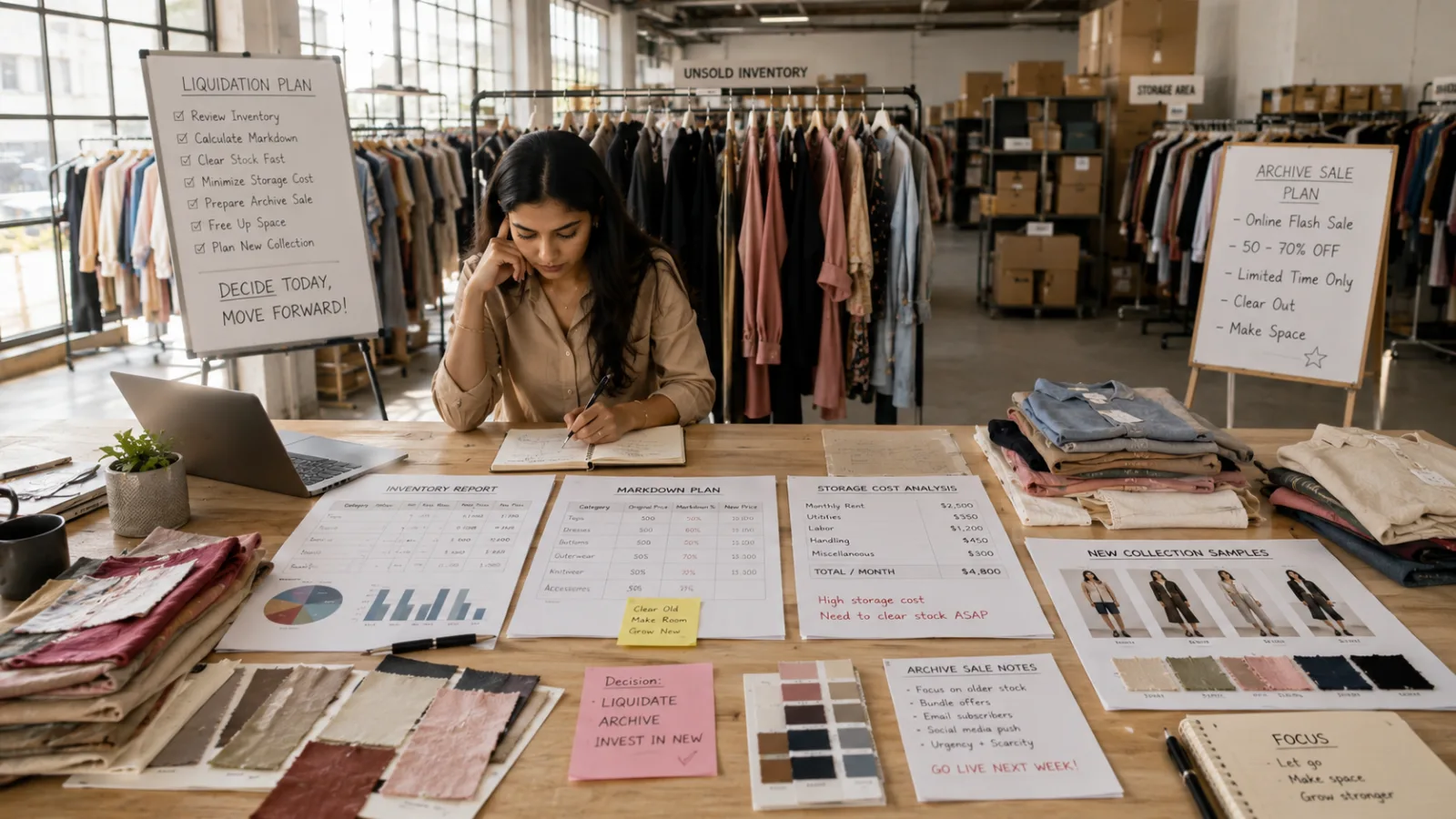
Inventory liquidation means selling slow-moving or excess stock through discounts, outlet channels, bundles, wholesale lots, sample sales, or other clearance methods. Many fashion entrepreneurs delay liquidation because they hope products will eventually sell at full price.
Sometimes patience is wise. But sometimes holding old inventory creates bigger opportunity cost.
Holding Inventory vs Liquidating
If inventory sits too long, it occupies warehouse space, ties up cash, and distracts the brand from new products. Liquidating it may reduce margin, but it frees cash and space for better opportunities.
The opportunity cost of holding old stock may include:
- No cash for new production
- Storage fees
- Outdated product pages
- Reduced brand freshness
- Delayed new collection
- Higher markdown later
- Inventory management confusion
When Liquidation Makes Sense
Liquidation may be smart when:
- The season has passed.
- The product no longer fits the brand.
- Sell-through is very slow.
- Sizes are broken.
- Storage cost is increasing.
- Cash is needed for new production.
- A better product version is ready to launch.
Protecting Brand Value
Liquidation should be planned carefully. Use archive sales, private sales, outlet sections, bundles, or controlled wholesale channels. Avoid training customers to wait for discounts.
Opportunity Cost in Brand Positioning
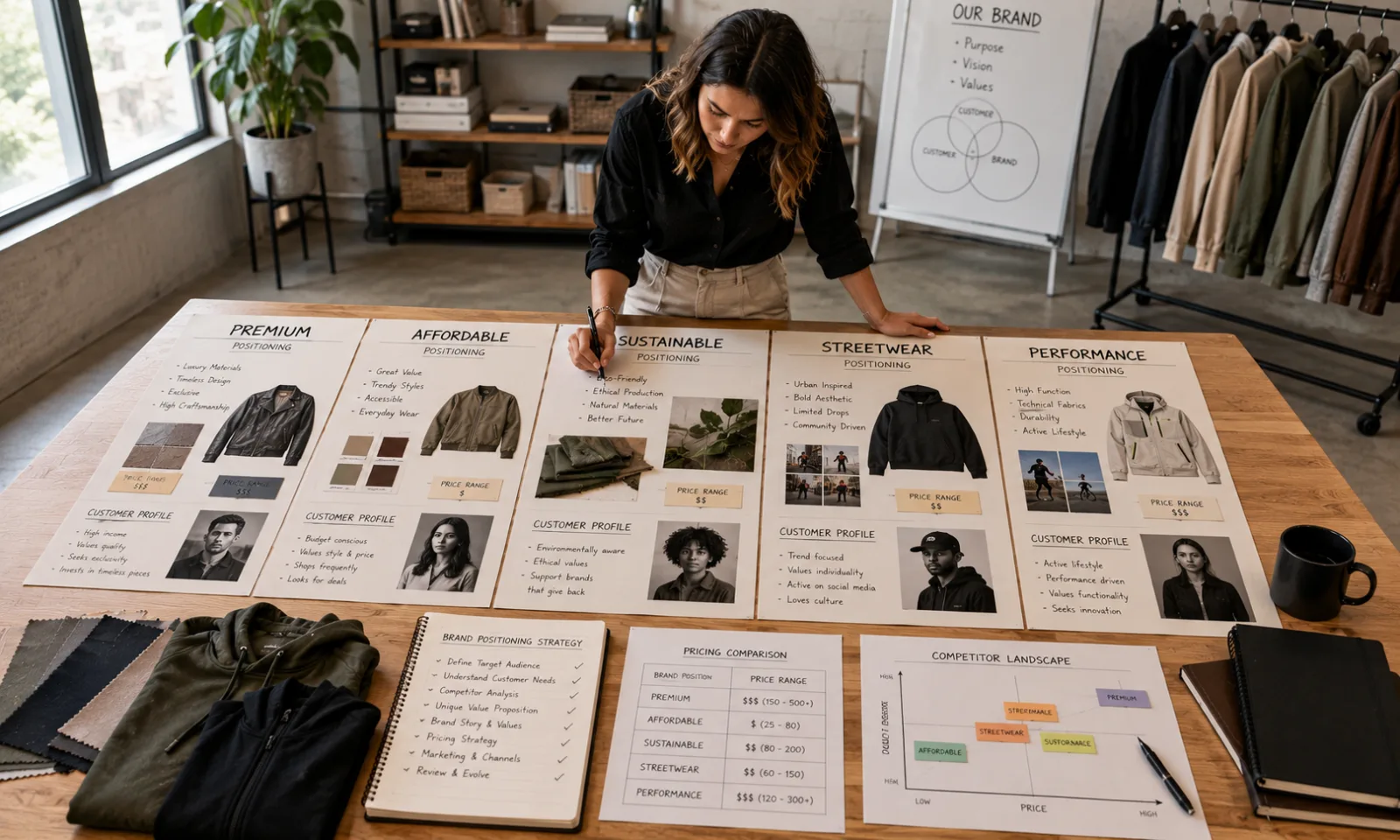
Brand positioning is the space your brand occupies in the customer’s mind. Are you premium, affordable, sustainable, streetwear-focused, minimalist, luxury, performance-driven, family-friendly, or trend-led?
Every positioning decision has opportunity cost. If you choose premium positioning, you may give up some budget-conscious customers. If you choose low-price positioning, you may give up premium margins. If you choose sustainable positioning, you may need more transparency and higher production standards. If you choose trend-led positioning, you may give up timelessness and increase inventory risk.
Trying to Serve Everyone Is Costly
Many new fashion entrepreneurs want to appeal to everyone. They want premium quality, low prices, sustainable materials, trendy designs, fast production, broad sizing, luxury packaging, and high margins all at once. In reality, every brand must prioritize. Trying to serve everyone can confuse customers and weaken decision-making.
Clear Positioning Helps Opportunity Cost Decisions
If your brand is premium, you may choose better fabric over cheaper production. If your brand is affordable, you may choose simpler designs and efficient manufacturing. If your brand is sustainable, you may produce smaller quantities and explain material choices clearly. If your brand is performance-focused, you may invest more in technical fabric and testing.
Opportunity cost becomes easier when your brand identity is clear.
How to Use Opportunity Cost Before Making a Fashion Business Decision
Opportunity cost does not need to be complicated. Fashion entrepreneurs can use a simple decision framework before spending money, time, or energy.
Step 1: Define the Decision
Be clear about what you are choosing. For example, “Should we produce 500 units or 150 units?” or “Should we invest in paid ads or product photography?”
Step 2: List the Options
Write down your realistic choices. Do not compare fantasy options. Compare what you can actually do with your budget and timeline.
Step 3: Identify What You Give Up
For each option, ask what you lose. If you choose more inventory, do you lose marketing budget? If you choose cheaper fabric, do you lose product quality? If you choose custom packaging, do you lose cash for ads?
Step 4: Estimate the Business Impact
Think about sales, margin, cash flow, customer experience, brand value, and long-term growth.
Step 5: Choose Based on Your Current Priority
A startup testing demand should make different decisions from a brand scaling proven products. Choose the option that fits your current stage.
Step 6: Review the Result
After the decision, measure what happened. Did the choice support your goals? What would you do differently next time?
Simple Opportunity Cost Question
Before any major decision, ask:
“If I choose this, what important opportunity am I giving up?”
That question can save a fashion brand from many costly mistakes.

Common Opportunity Cost Mistakes Fashion Entrepreneurs Make
Opportunity cost is simple in theory, but easy to ignore in daily business. Here are common mistakes.
Mistake 1: Choosing Lower Unit Cost Without Considering Total Risk
A lower unit cost can lead to overproduction if MOQ is too high.
Mistake 2: Spending Too Much on Product Before Marketing
A great product still needs visibility. Production and marketing must work together.
Mistake 3: Launching Too Many Products Too Early
Too many products can spread budget, attention, and inventory too thin.
Mistake 4: Ignoring Time Cost
A founder’s time should be used on high-value work, not endless small tasks.
Mistake 5: Choosing Suppliers Only by Price
Poor supplier choices can create defects, delays, and lost trust.
Mistake 6: Holding Deadstock Too Long
Old inventory ties up cash and blocks new opportunities.
Mistake 7: Copying Competitors Without Understanding Their Resources
A larger brand may make decisions that are not realistic for a startup.
Mistake 8: Confusing Activity With Progress
Posting, sampling, researching, and planning are useful only when they move the business closer to sales, quality, or growth.

Opportunity Cost Checklist for Fashion Entrepreneurs
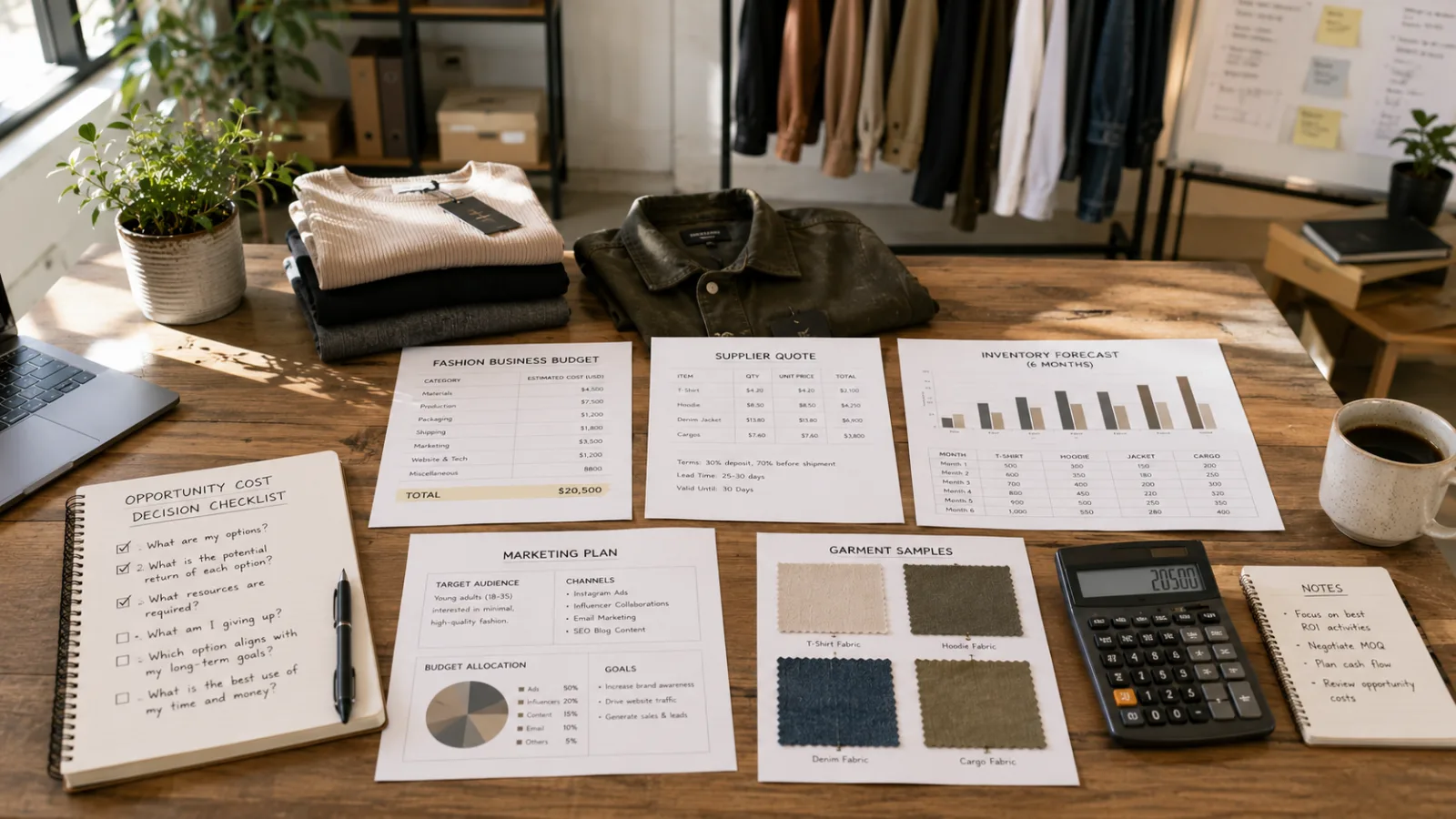
Use this checklist before making major business decisions:
- What is the decision I need to make?
- What are my realistic options?
- What is the direct cost of each option?
- What is the hidden cost?
- What opportunity do I give up?
- Will this improve product quality?
- Will this improve sales?
- Will this protect cash flow?
- Will this strengthen brand positioning?
- Will this reduce or increase inventory risk?
- Will this support customer trust?
- Will this delay another important task?
- Is this decision right for my current business stage?
- Can I measure the result?
- What happens if this choice fails?
- What is the smarter long-term move?
This checklist helps fashion entrepreneurs make decisions with more clarity and less emotion.
ApparGlobal
For apparel brands, opportunity cost becomes especially important when product development, sourcing, MOQ planning, supplier selection, inventory decisions, and quality control all compete for the same budget. A founder may want better fabric, more styles, premium packaging, lower pricing, faster delivery, and stronger marketing, but every choice affects another part of the business.
Many clothing brands struggle because they make production decisions without seeing the full trade-off. Choosing a high MOQ may lower unit cost but increase inventory risk. Choosing a cheaper supplier may protect the budget but create quality problems. Choosing too many styles may make the collection look bigger but weaken cash flow and marketing focus.
Companies such as ApparGlobal help clothing brands align product development, fabric sourcing, vendor coordination, sample review, MOQ planning, production timelines, quality control, and scalable manufacturing workflows. For brands developing T-shirts, hoodies, activewear, kidswear, streetwear, uniforms, private label apparel, or custom collections, this kind of production-focused support can make business decisions more structured and realistic.
When brands work with a partner that understands tech packs, fabric behavior, trim standardization, supplier communication, cost breakdowns, quality checkpoints, and bulk production requirements, they can see the real cost of each decision before committing. This helps reduce expensive mistakes and supports smarter growth.
Final Thoughts
Opportunity cost is one of the most useful concepts a fashion entrepreneur can understand. It reminds you that every business decision has a trade-off. When you choose one path, you give up another.
In fashion, those trade-offs appear everywhere: product development, supplier selection, MOQ, inventory, fabric choice, pricing, marketing, time management, wholesale, liquidation, and brand positioning. A founder who understands opportunity cost can make clearer decisions and avoid wasting resources on choices that do not support the bigger goal.
The smartest decision is not always the cheapest, fastest, biggest, or most exciting option. Sometimes the smart decision is producing fewer styles, choosing a better supplier, keeping inventory lean, investing in photography, delaying a non-essential packaging upgrade, or liquidating old stock to free cash.
Fashion businesses grow when creative ideas are supported by practical decisions. Opportunity cost helps connect creativity with business discipline. It helps you ask better questions before spending money or time.
Before your next major fashion business decision, pause and ask: “What am I giving up by choosing this?” The answer may reveal the real cost of the decision and help you choose the path that gives your brand the best chance to grow.