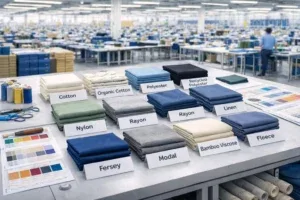
Master apparel manufacturing with our guide to fabric types. Learn how to choose the right natural, synthetic, and blended materials for your brand.
Fabric is one of the most important decisions in apparel manufacturing. It shapes how a garment feels, fits, stretches, drapes, breathes, performs, washes, and sells. Two garments can look similar on a hanger but perform completely differently once worn, simply because the fabric choice was different. That is why fabric selection is not just a technical step in production. It is a product strategy decision.
In modern apparel manufacturing, brands and manufacturers choose from a wide range of fabric types depending on product category, price point, target customer, performance needs, and brand positioning. A premium oversized t-shirt may need heavyweight cotton jersey. A sports bra may require nylon-spandex or polyester-spandex. A resortwear dress may work better in linen blend or rayon challis. A winter hoodie may depend on brushed fleece. The “best” fabric always depends on the garment’s purpose.
This guide explains the types of fabric used in modern apparel manufacturing in a practical and SEO-friendly way. It covers natural fabrics, synthetic fabrics, regenerated cellulosic fabrics, blended fabrics, knit and woven fabric structures, and specialized modern materials used in today’s clothing industry. It also explains where each fabric works best, what advantages and limitations it has, and how fashion brands should think about fabric selection during product development.
What Are the Main Types of Fabric Used in Apparel Manufacturing?
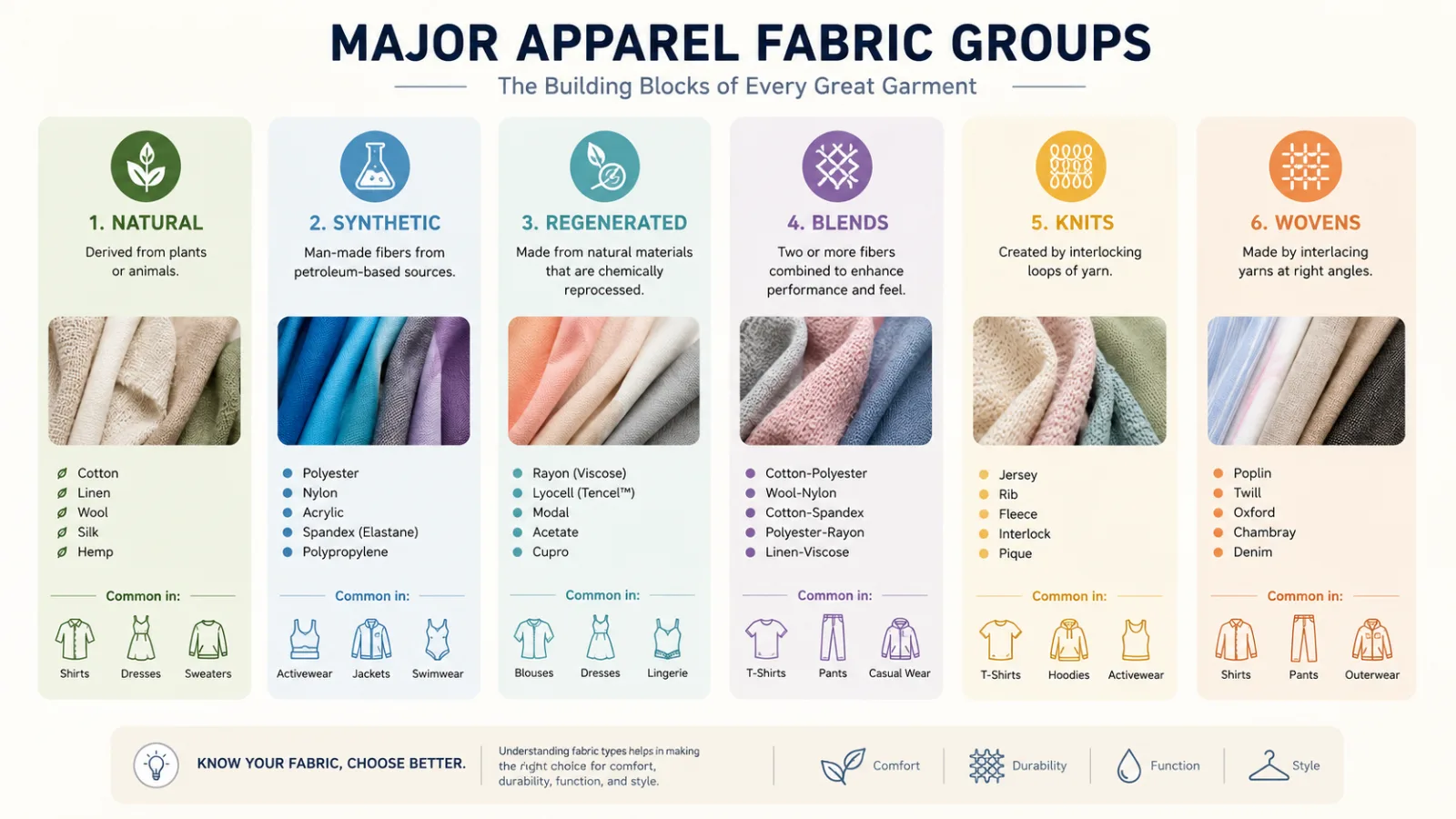
Modern apparel manufacturing typically uses three primary fabric groups:
- Natural fabrics – cotton, linen, wool, silk
- Synthetic fabrics – polyester, nylon, acrylic, spandex
- Regenerated fabrics – viscose, modal, lyocell
Most modern garments also use blended fabrics that combine multiple fibers to improve durability, stretch, comfort, and cost efficiency.
Why Fabric Choice Matters So Much in Apparel Manufacturing
Many startup brands focus heavily on silhouette, color, and branding, but fabric is often what determines whether customers reorder or return. Fabric affects comfort, durability, shrinkage, pilling resistance, stretch recovery, print performance, and wash behavior. It also directly affects production cost, MOQ planning, and manufacturing complexity.
In apparel manufacturing, the same design can behave in dramatically different ways depending on fabric. A t-shirt pattern developed for soft cotton jersey may not work the same in a slippery polyester knit. A tailored shirt cut for crisp poplin will not behave like one made in brushed flannel. A pair of leggings made in weak stretch fabric will not deliver the compression or recovery customers expect.
Fabric also influences the brand’s market position. Premium brands often use fabrics with better handfeel, more stable finishing, stronger durability, or more responsible sourcing claims. Value-focused brands may prioritize efficiency, bulk availability, and lower price points. Both approaches can work, but the fabric must still support the product promise.
Understanding the Main Fabric Categories in Modern Apparel Production
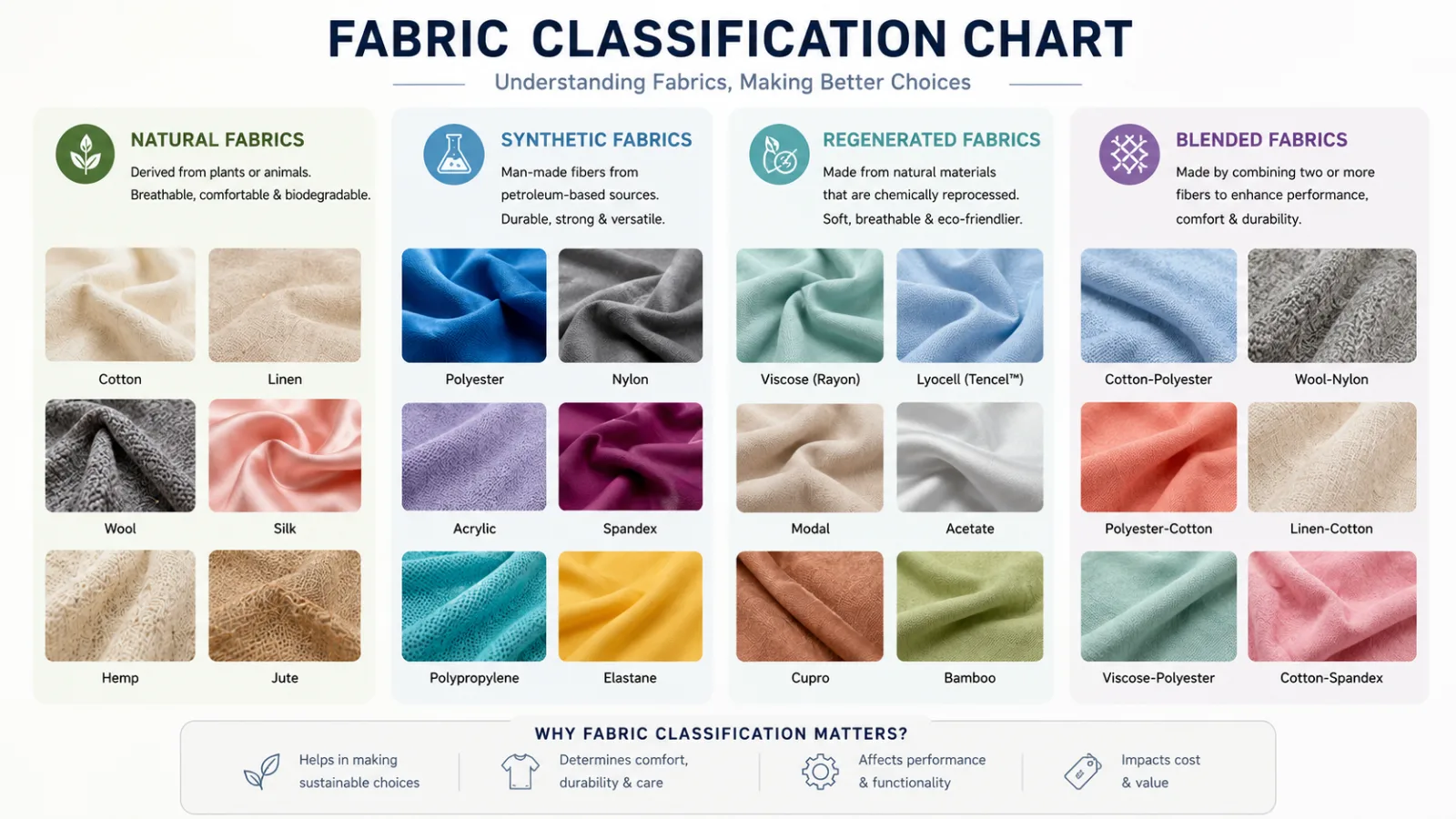
Before looking at specific fabric names, it helps to understand the major categories used in apparel manufacturing. Most fabrics used in clothing production fall into one of these groups:
Natural fabrics
These are derived from natural fibers such as cotton, linen, wool, and silk.
Synthetic fabrics
These are synthetic fabrics like polyester, nylon, acrylic, and spandex, typically engineered for strength, elasticity, or performance in clothing items.
Regenerated cellulosic fabrics
These are made from plant-based cellulose that has been chemically processed into fibers, such as rayon, viscose, modal, and lyocell.
Blended fabrics
These combine two or more fibers to improve performance, cost efficiency, comfort, or durability.
Knit and woven structures
This is not a fiber category but a fabric construction category. The same fiber, such as cotton, can become a knit jersey or a woven poplin depending on how it is constructed. Understanding these fabric types and their applications makes fabric sourcing easier because it helps brands evaluate both fiber content and fabric behavior at the same time.
Different Types of Fabric And How To Use Them
When exploring different types of fabric, a guide to fabric helps explain how fabric is made and which fabric material suits your project; for example fabric made from fibers like fabric made from cotton or polyester fabric determine whether the fabric is usually durable fabric or a delicate fabric. In the fashion industry, popular fabric choices include linen fabric, canvas fabric for outdoor clothing, and plain woven fabric for basics.
Fabrics like fabrics like cotton and soft woven fabric are common in summer clothing, while twill fabric and satin fabric add texture; crêpe fabric or semi-synthetic fabric such as a Lyocell is one of the types of rayon fabric that is gaining popularity in sustainable fashion. offer a luxurious fabric feel. Consider whether the fabric that’s breathable or whether the fabric isn’t suitable for heavy wear.
Knowing types of fabric material and fabric material types helps pick the right fabric for your project, from decorative fabric to durable fabric for clothing worn outdoors; recycled fabrics are eco-friendly. Overall, fabrics and materials show that fabric is a material central to fabrics for clothing and types of clothing, so choose clothing like pieces intentionally—another fabric option might be better.
Cotton: The Most Widely Used Fabric in Apparel Manufacturing
Cotton remains one of the most common and versatile fibers in the global apparel industry. It is widely used in t-shirts, shirts, dresses, denim, babywear, underwear, sleepwear, fleece products, and many casual basics.
Cotton is popular because it is soft, breathable, skin-friendly, and familiar to consumers. It accepts dye well, prints well, and can be developed into many fabric structures, including jersey, rib, interlock, poplin, twill, canvas, and denim. This flexibility makes it one of the most useful fabrics in modern garment production, ideal for summer clothing.
However, cotton is not one single fabric type. Cotton can feel very different depending on yarn quality, GSM, weave or knit structure, finishing process, and whether it is combed, carded, ring-spun, or compact-spun. A low-cost cotton jersey and a premium compact cotton jersey are both “cotton,” but they can perform very differently in terms of shrinkage, smoothness, and durability.
Cotton works especially well for:
- t-shirts
- and tops
- woven shirts
- casual dresses
- denim products
- children’s clothing
- loungewear and basics
Its main limitations include wrinkling, moisture retention compared with some synthetics, and potential shrinkage if finishing is not managed properly.
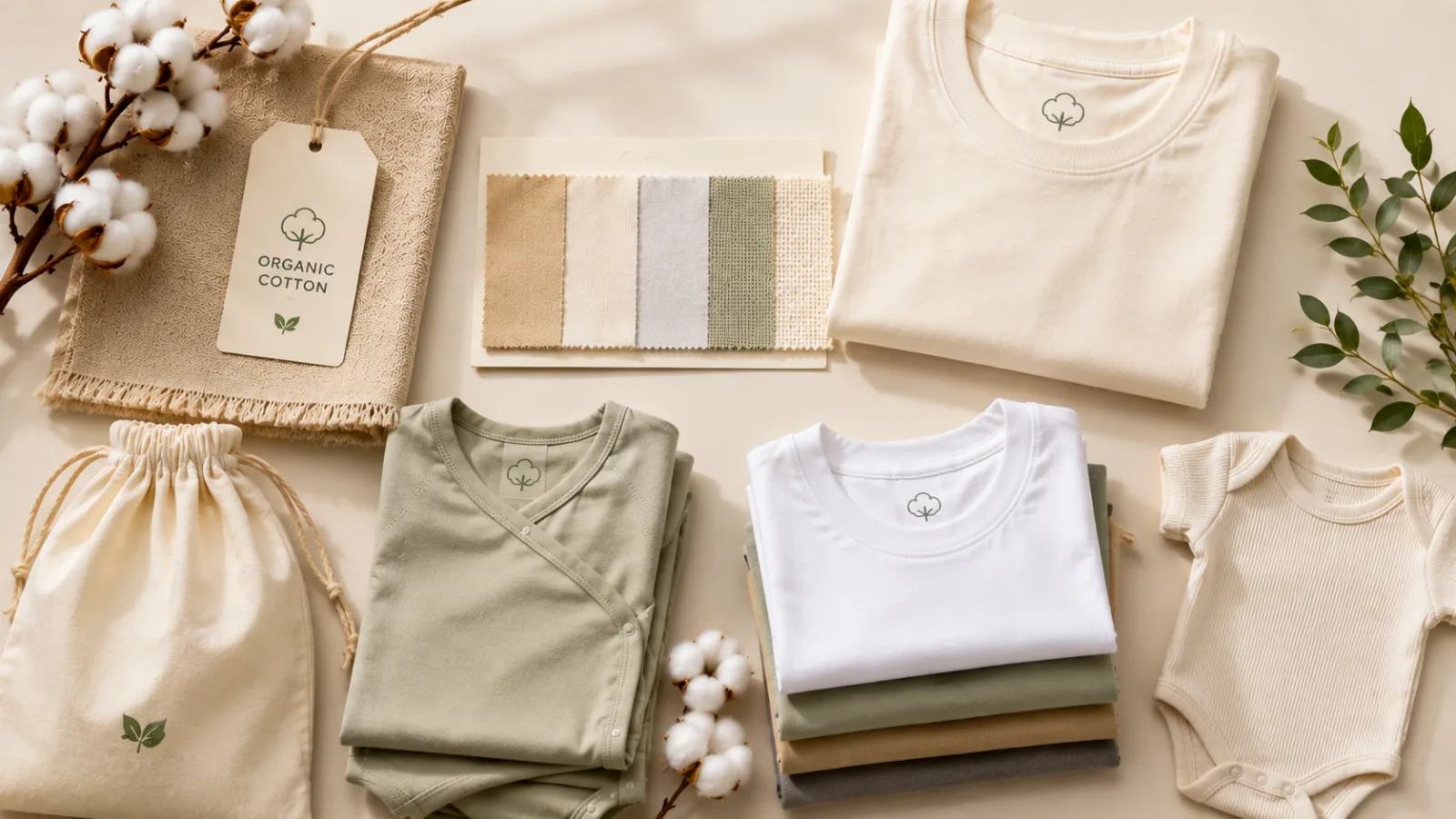
Organic Cotton: A Key Fabric for Sustainable Apparel Brands
Organic cotton is increasingly used by modern clothing brands that want to support more sustainability-focused product positioning. It is still cotton in terms of feel and usage, but it is grown according to organic agricultural standards rather than conventional cotton farming methods.
In apparel manufacturing, organic cotton is commonly used in:
- premium basics
- baby clothing
- sustainable fashion collections
- casual knitwear
- private label eco-focused apparel
For the customer, organic cotton often feels similar to conventional cotton if the yarn and fabric construction are comparable. The main difference is in sourcing story, certification, and environmental positioning rather than basic garment behavior alone.
Brands often choose organic cotton to strengthen their sustainability messaging, but they still need to pay close attention to fabric quality, weight, finishing, and shrinkage control. Being organic does not automatically make a fabric premium. Product quality still depends on yarn, knit or weave quality, and processing.
Synthetic fabrics: Versatile picks that work hard for your business
Lightweight fabric options such as polyester fabric and blends are versatile picks for businesses needing durability and easy care; a practical guide to fabric helps you decide between a plain woven fabric and a soft woven fabric like satin fabric or crêpe fabric, while also considering different fabric types including cotton. fabric material types and fabric is a material you can source sustainably.
For garments, include cotton and fabric made from cotton in your line-up because fabric is usually breathable and comfortable; remember that fabric isn’t one-size-fits-all, so choose the right fabric for your project and learn about fabric and how to use it effectively in production.
Explore recycled fabrics, fabrics and materials for decor, and decorative fabric for retail displays; whether fabric that’s durable for uniforms, fabric that is made for eveningwear, or another fabric like a type of rayon fabric, knowing how the fabric woven structure affects clothing worn and fabrics for clothing choices will boost your brand.
Polyester: The Workhorse of Modern Performance and Mass Apparel
Polyester is one of the most widely used synthetic fibers in apparel manufacturing. It appears in sportswear, uniforms, outerwear, fashion dresses, blouses, linings, fleece, and blended basics. It is popular because it is durable, relatively affordable, wrinkle-resistant, colorfast, and suitable for many performance applications.
Polyester can be engineered into many different fabric types. It can be lightweight and silky, brushed and soft, mesh-like and breathable, or dense and technical. This makes it a highly adaptable fiber for both fashion and functional clothing.
In modern manufacturing, polyester is often used for:
- activewear and sportswear
- performance t-shirts
- linings
- outerwear shells
- dresses and blouses
- uniforms and workwear
- fleece and athleisure products
Its strengths include durability, quick drying, shape retention, and easy care. Its weaknesses can include lower breathability compared with natural fibers in some constructions and a less natural handfeel unless carefully engineered or blended. Polyester is especially common in products where durability, speed of drying, and production scalability matter.
Recycled Polyester: A Modern Choice for Performance and Sustainability
Recycled polyester has become increasingly important in modern apparel manufacturing, especially for brands combining performance with sustainability positioning. It is often made from recycled plastic inputs or post-consumer material streams, then processed into polyester fiber again.
From a garment function perspective, recycled polyester can perform similarly to conventional polyester when sourced and processed well. It is frequently used in:
- activewear
- outerwear
- swimwear
- fashion basics
- performance uniforms
- sustainable athleisure
The main value of recycled polyester is not that it changes the basic behavior of polyester dramatically, but that it supports a stronger environmental story when used responsibly and transparently. Brands choosing recycled polyester still need to evaluate fabric feel, recovery, pilling, and moisture management just as they would with standard polyester.
Nylon: Strong, Smooth, and Performance-Oriented
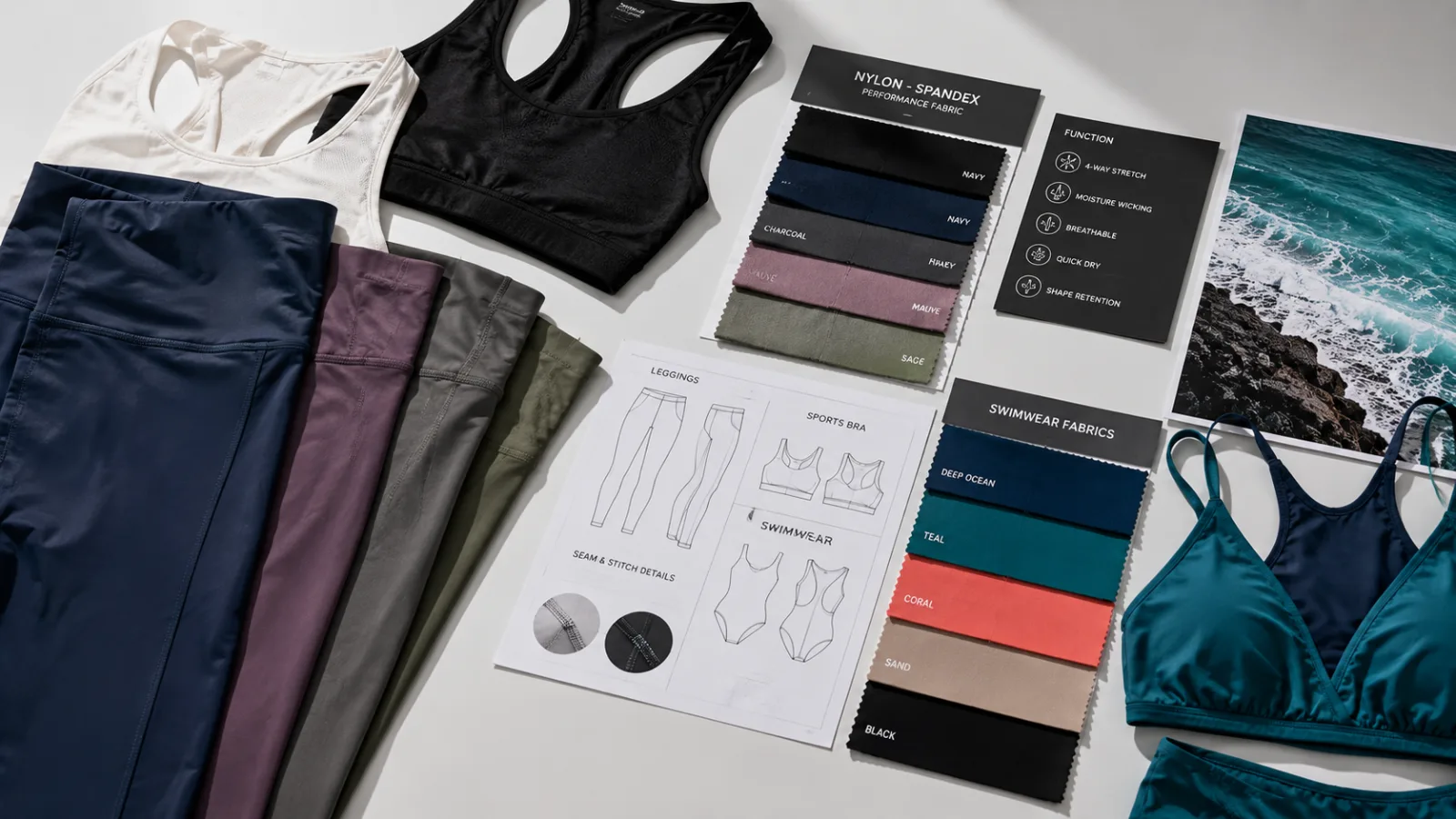
Nylon is another major synthetic fiber used in modern apparel manufacturing, particularly in activewear, outerwear, hosiery, lingerie, swimwear, and technical garments. Compared with polyester, nylon often has a smoother handfeel and strong abrasion resistance.
Nylon is common in:
- leggings and performance wear
- sports bras
- swimwear
- windbreakers and shell jackets
- lingerie and seamless garments
- technical outdoor products
When blended with spandex, nylon becomes especially useful for stretch garments requiring recovery, smoothness, and body contouring. Many premium activewear products use nylon-spandex blends because they offer a softer and more luxurious feel than some polyester blends.
Its limitations can include cost being higher than polyester in many cases and potential sensitivity to certain heat and finishing conditions. But for premium performance categories, nylon remains a top-choice fiber.
Spandex and Elastane: Essential for Stretch and Recovery
Spandex, also called elastane in many markets, is not usually used alone as a main fabric for garments. Instead, it is blended with other fibers such as cotton, polyester, or nylon to add stretch, shape retention, and comfort.
Modern apparel manufacturing uses spandex heavily in:
- leggings
- activewear
- fitted tops
- bodycon dresses
- stretch denim
- underwear
- swimwear
Even a small percentage of spandex can change how a garment fits and performs. A cotton-spandex jersey feels more flexible and body-friendly than 100% cotton jersey. A denim with stretch is easier to wear than rigid denim. A nylon-spandex activewear fabric offers compression and recovery that pure nylon cannot provide alone.
Spandex is one of the most important components in modern fit-driven apparel categories. However, the correct blend ratio matters. Too little may not provide enough recovery. Too much can affect handfeel, cost, and fabric stability.
Rayon and Viscose: Soft Drape for Fashion Apparel
Rayon, often referred to in commercial apparel as viscose rayon or simply viscose, is a regenerated cellulosic fiber known for softness, fluidity, and drape. It is widely used in blouses, dresses, wide-leg pants, resortwear, skirts, and lightweight woven fashion garments.
Rayon is popular because it can mimic some of the softness and visual flow associated with more premium fibers while remaining commercially practical for many brands. It is especially useful when the design needs movement and softness rather than stiffness or structure.
Rayon and viscose are commonly used in:
- flowy dresses
- women’s blouses
- skirts
- lightweight tops
- fashion sets
- printed woven apparel
The main strengths are softness, drape, and visual elegance. Common challenges include wrinkling, shrinkage risk, and the need for controlled washing and finishing. Product development teams should pay careful attention to care instructions and dimensional stability when using these fabrics.
Modal: Softness and Premium Handfeel in Everyday Apparel
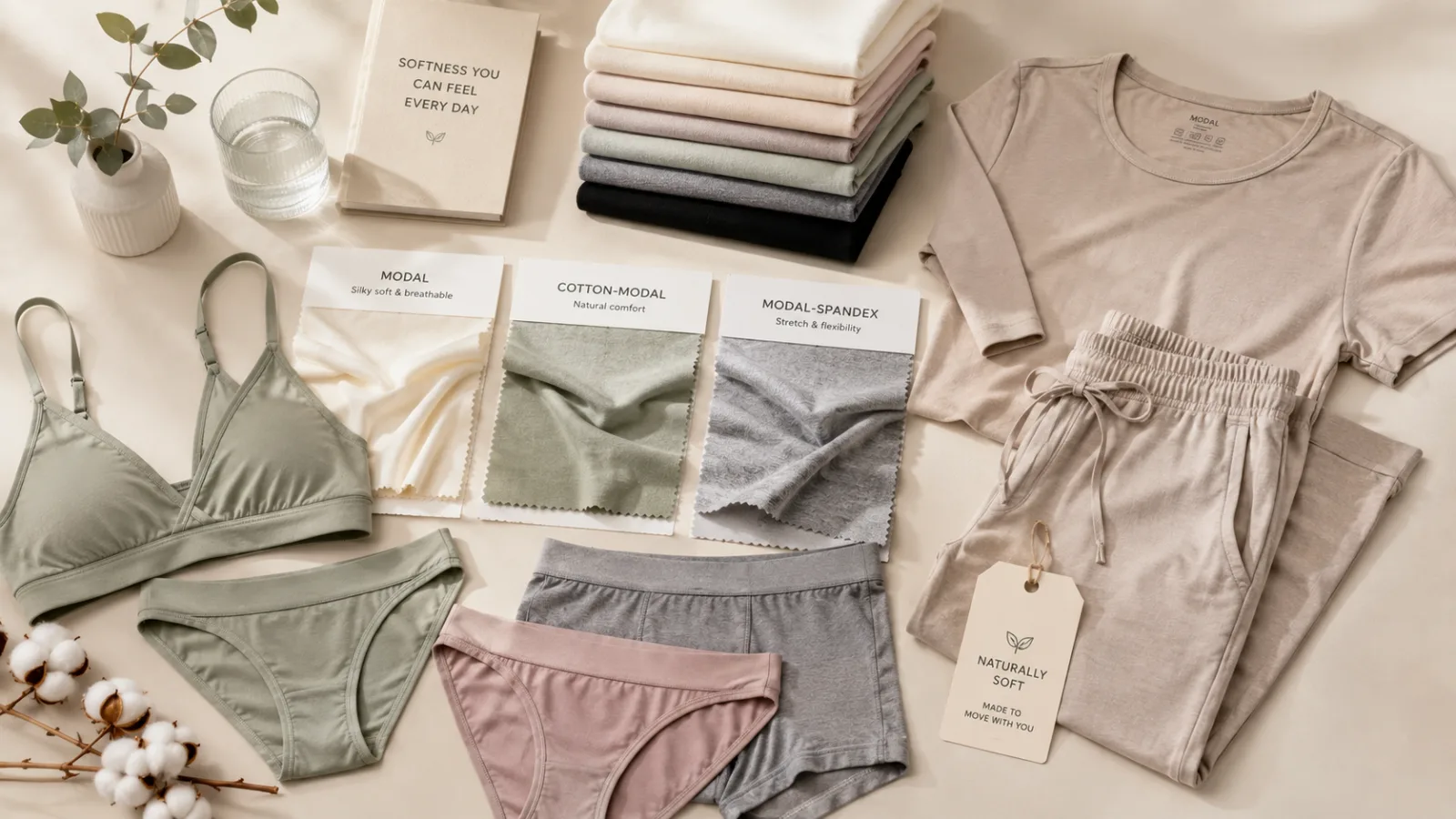
Modal is another regenerated cellulosic fiber, often used when brands want a smooth, soft, and more premium handfeel. It is common in underwear, loungewear, premium t-shirts, sleepwear, and body-friendly basics.
Compared with basic viscose, modal is often positioned as smoother, softer, and more stable in certain applications, especially when blended well. It is popular in:
- premium basics
- Intimatewear often utilizes fabrics like silk for their softness and luxurious feel.
- pajamas and sleep sets
- soft t-shirts
- loungewear
Modal is especially valued in garments that sit close to the skin. It gives a soft and elevated feel that many brands use to position basics as more luxurious. It is often blended with cotton or spandex to balance softness with stability.
Lyocell and Tencel-Type Fabrics: Modern Softness With Cleaner Positioning
Lyocell is a regenerated cellulosic fiber often associated with softness, drape, and a more modern sustainability-oriented story. Many brands know it through branded market terms such as Tencel-type lyocell fabrics. It is used in dresses, shirts, soft denim alternatives, relaxed bottoms, and elevated casualwear.
Lyocell fabrics are often appreciated for their sustainability and versatility, making them popular fabric types in modern fashion.
- smooth handfeel
- drape and fluidity
- contemporary eco-conscious brand appeal
- comfort in premium everyday garments
It works well in:
- soft shirting
- relaxed dresses
- premium casual bottoms
- lightweight woven sets
- soft denim-inspired apparel
In modern apparel manufacturing, lyocell is often chosen by brands that want a more refined and contemporary alternative to basic synthetics or conventional woven casual fabrics.
Linen: Lightweight, Breathable, and Seasonal
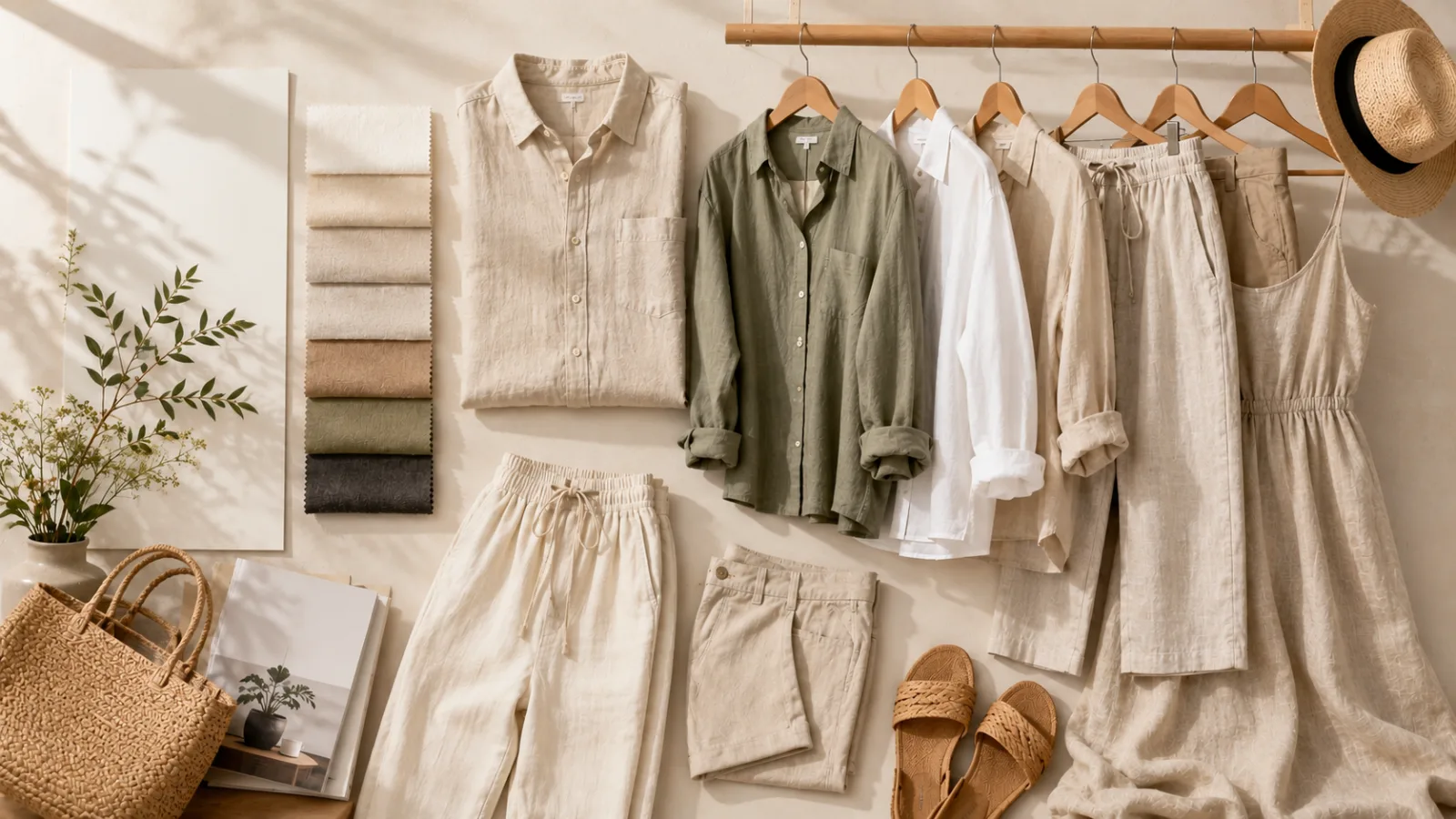
Linen is a natural fiber known for breathability, texture, and a distinct premium summer appeal. It is commonly used in resortwear, shirts, dresses, trousers, relaxed suiting, and warm-weather collections.
Linen performs especially well when the garment needs airflow, texture, and an effortless seasonal look. It is widely used in:
- summer shirts
- resort dresses
- wide-leg pants
- light sets and co-ords
- breathable tailoring
Its greatest strengths are natural texture, cool handfeel, and breathable comfort. Its most obvious limitation is wrinkling, though for many customers that wrinkled texture is part of linen’s visual charm.
Linen is often blended with cotton or viscose to reduce stiffness or cost while preserving some of its character.
Wool: Warmth, Structure, and Performance in Cold-Weather Apparel
Wool remains important in modern apparel manufacturing, especially for outerwear, knitwear, suiting, scarves, and cold-weather layering products. It is valued for warmth, insulation, resilience, and in some cases natural odor resistance.
Different types of wool serve different purposes. Fine wool may be used in premium knitwear or suiting. Heavier wool blends may be used in coats and winter jackets. Wool is common in:
- sweaters and cardigans
- coats and jackets
- tailoring
- scarves and winter accessories
Wool brings a premium impression to many categories, but product development needs to consider softness, itch factor, care requirements, and price. Many modern garments use wool blends instead of 100% wool to balance comfort, cost, and durability.
Silk: Luxury Fabric for Premium Apparel
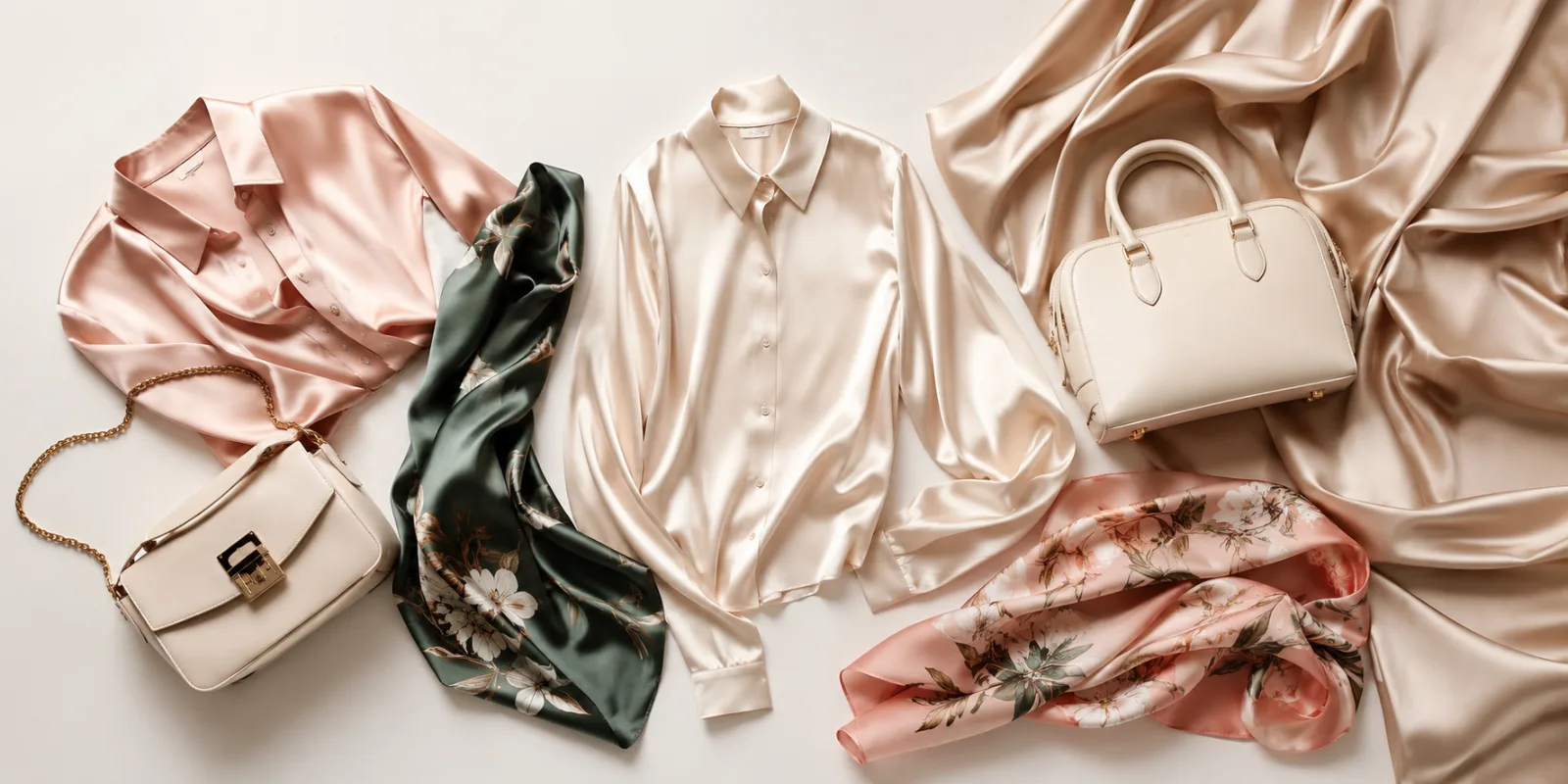
Silk is one of the most recognized luxury fabrics in the fashion industry, often used in premium clothing items. Silk is used in dresses, blouses, scarves, occasionwear, lingerie, and premium fashion pieces where drape, sheen, and softness matter, showcasing its versatility among popular fabric types.
Silk is not a mass-market fiber for most modern manufacturing programs because it is relatively expensive and requires careful handling. But in premium or luxury product categories, it remains highly relevant.
Silk is chosen for:
- premium blouses
- occasion dresses
- bridal and special-event garments
- scarves and accessories
- luxury sleepwear
Its visual elegance is one of its strongest selling points. However, silk also requires careful sourcing, handling, and care instruction planning.
Denim: More Than Just Jeans Fabric
Denim is one of the most iconic fabrics in apparel manufacturing, but it is more flexible than many people assume. It is commonly used in jeans, jackets, skirts, shirts, overalls, and even dresses.
Denim is usually a woven cotton-based fabric, often in twill construction, and may be rigid or stretch depending on whether elastane is added. Modern denim programs vary greatly in weight, wash treatment, softness, and stretch performance.
Denim is used in:
- jeans
- jackets
- skirts
- denim shirts
- fashion utilitywear
The key fabric decisions in denim development usually involve weight, stretch level, wash process, color consistency, and recovery performance. Stretch denim is especially common in women’s and fitted products, while rigid denim is often used for more vintage-inspired silhouettes.
Jersey: The Core Fabric of Modern Knit Apparel
Jersey is one of the most important knit fabric structures in modern apparel manufacturing. It is widely used in t-shirts, dresses, activewear tops, leggings, and many casual basics. Jersey can be made from cotton, polyester, viscose, modal, bamboo viscose, or blends with spandex.
Jersey is popular because it is soft, flexible, and comfortable. It can be lightweight for summer tees or heavier for premium streetwear products. It can also be smooth, slubbed, brushed, or compact depending on finishing and yarn type.
Jersey is especially common in:
- t-shirts
- relaxed dresses
- tops and tunics
- loungewear
- base-layer products
Because jersey is such a central fabric in modern apparel, product developers need to pay close attention to GSM, recovery, shrinkage, spirality, and print compatibility.
Rib Fabric: Stretch, Recovery, and Structured Fit
Rib is a knit construction known for elasticity and body-hugging recovery. It is commonly used for neckbands, cuffs, waistbands, fitted tops, tanks, dresses, and stretch basics.
Rib fabric can be made in cotton, cotton-spandex, modal blends, polyester blends, and more. Its vertical textured surface and stretch make it highly useful in:
- fitted tops
- tanks and camis
- cuffs and hem trims
- bodycon dresses
- babywear and basics
Rib creates a more fitted and contoured look than standard jersey. It is especially useful in garments that need close-to-body comfort without losing shape too quickly.
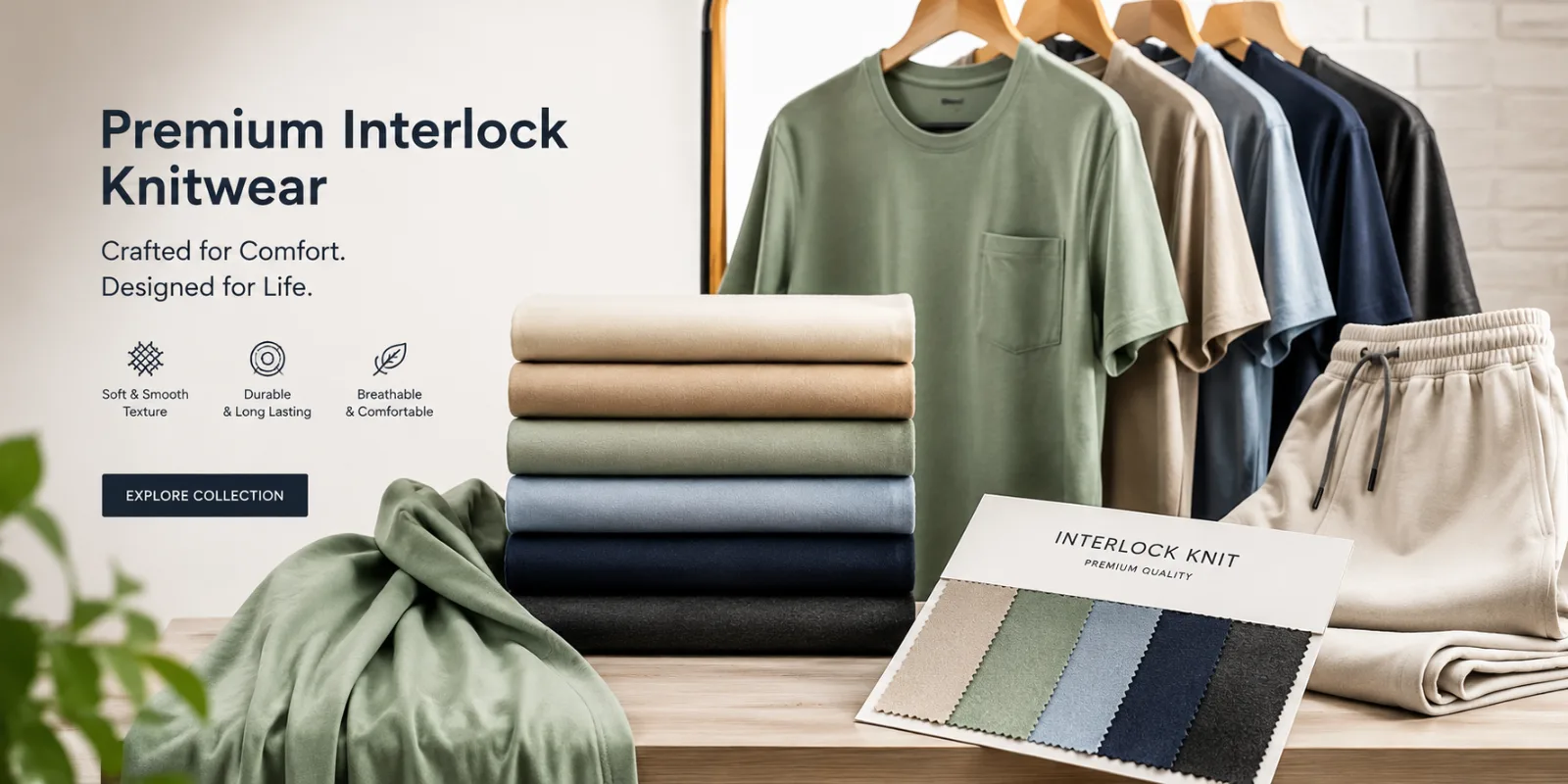
Interlock Fabric: Smooth, Stable, and Premium-Looking Knit
Interlock is a knit fabric structure often used when brands want a thicker, smoother, and more stable alternative to standard single jersey. It is common in premium t-shirts, children’s wear, loungewear, and elevated basics.
Interlock usually feels smoother and more substantial than basic jersey. It is often chosen for:
- premium basics
- babywear
- soft lounge sets
- layering garments
- structured knit tops
Because of its stability and clean surface, interlock can give casual apparel a more polished appearance while still remaining comfortable and wearable.
Fleece Fabric: Warmth for Hoodies and Casual Winterwear
Fleece is a major fabric category in modern casualwear and streetwear manufacturing. It is commonly used in hoodies, sweatshirts, joggers, and winter basics. Fleece may be cotton-based, polyester-based, or blended depending on product goal and price point.
Common fleece structures include:
- brushed fleece
- loopback fleece
- French terry variants
- performance fleece blends
Fleece is used for:
- hoodies
- sweatpants
- casual loungewear
- winter basics
- varsity and athleisure products
The key development decisions in fleece often involve GSM, softness, pilling performance, interior brushing quality, and shrinkage behavior after washing.
French Terry: Transitional Comfort Fabric
French terry is a knit fabric often used in sweatshirts, shorts, joggers, and transitional casualwear. Unlike brushed fleece, French terry usually has loops on the inside and a smoother face on the outside.
It is useful when the brand wants a product that feels substantial but not too warm. French terry is commonly used in:
- lightweight sweatshirts
- shorts
- casual sets
- spring and autumn loungewear
- premium streetwear basics
French terry is especially popular in modern basics collections because it gives a clean casual look while staying lighter than full fleece.
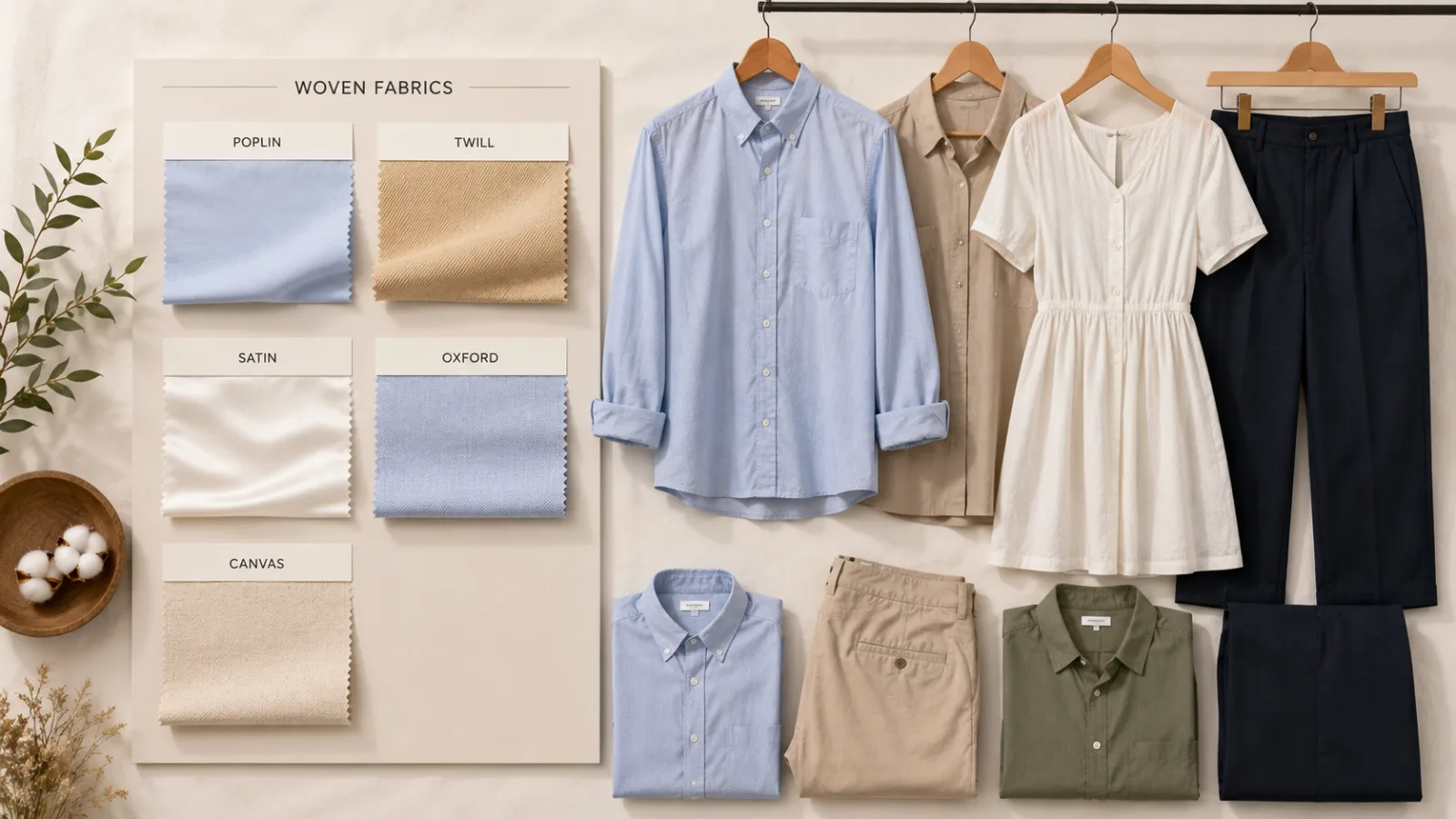
Twill, Poplin, and Other Important Woven Fabrics
Modern apparel manufacturing also depends heavily on woven fabrics beyond denim and linen. Some of the most important woven constructions include twill, poplin, satin, canvas, oxford, and dobby.
Poplin
Poplin is common in woven shirts, dresses, uniforms, and lightweight structured garments. It usually offers a crisp and clean surface.
Twill
Twill is recognizable for its diagonal weave and is widely used in chinos, workwear, jackets, skirts, and uniforms.
Oxford
Oxford is often used in shirts and casual woven basics, especially where a slightly textured look is desired among various fabric types including cotton.
Satin
Satin constructions are used in fashion blouses, dresses, occasionwear, and sleepwear where surface sheen matters.
Canvas
Canvas is heavier and more structured, commonly used in utilitywear, workwear, bags, and jackets.
These woven fabrics allow brands to create very different product moods even when the fiber content is similar.
Knit vs Woven Fabrics in Apparel Manufacturing
Bamboo Viscose and Other Soft-Handle Modern Fabrics
In modern apparel branding, certain fabrics gain popularity not only because of technical properties but because of comfort and market appeal. Bamboo viscose is one example often used in soft basics, babywear, underwear, and loungewear.
Brands choose these fabrics for:
- softness against skin
- drape
- premium-feel storytelling
- comfort-led marketing
However, it is important in manufacturing to evaluate these fabrics practically, not just emotionally. Softness alone is not enough. Brands still need to assess durability, shrinkage, pilling, colorfastness, and supply consistency.
Blended Fabrics: Why Modern Apparel Rarely Uses Only One Fiber
One of the biggest realities in modern apparel manufacturing is that many successful garments are not made from one fiber alone. They are blends. Blending fibers allows manufacturers to combine the benefits of different materials into one fabric.
Common blends include:
- cotton-polyester
- cotton-spandex
- polyester-spandex
- nylon-spandex
- cotton-modal
- linen-viscose
- wool-polyester
Blends are used to improve the performance of various fabric types, particularly in clothing items.
- stretch and recovery
- softness
- cost efficiency
- wrinkle resistance
- durability
- drape
- moisture behavior
For example, cotton-spandex makes fitted tops more wearable. Polyester-spandex makes leggings functional. Linen-viscose gives better drape to summer products. Cotton-polyester can reduce cost and improve stability in some casualwear. Modern fabric development is often less about choosing one fiber and more about building the right combination.
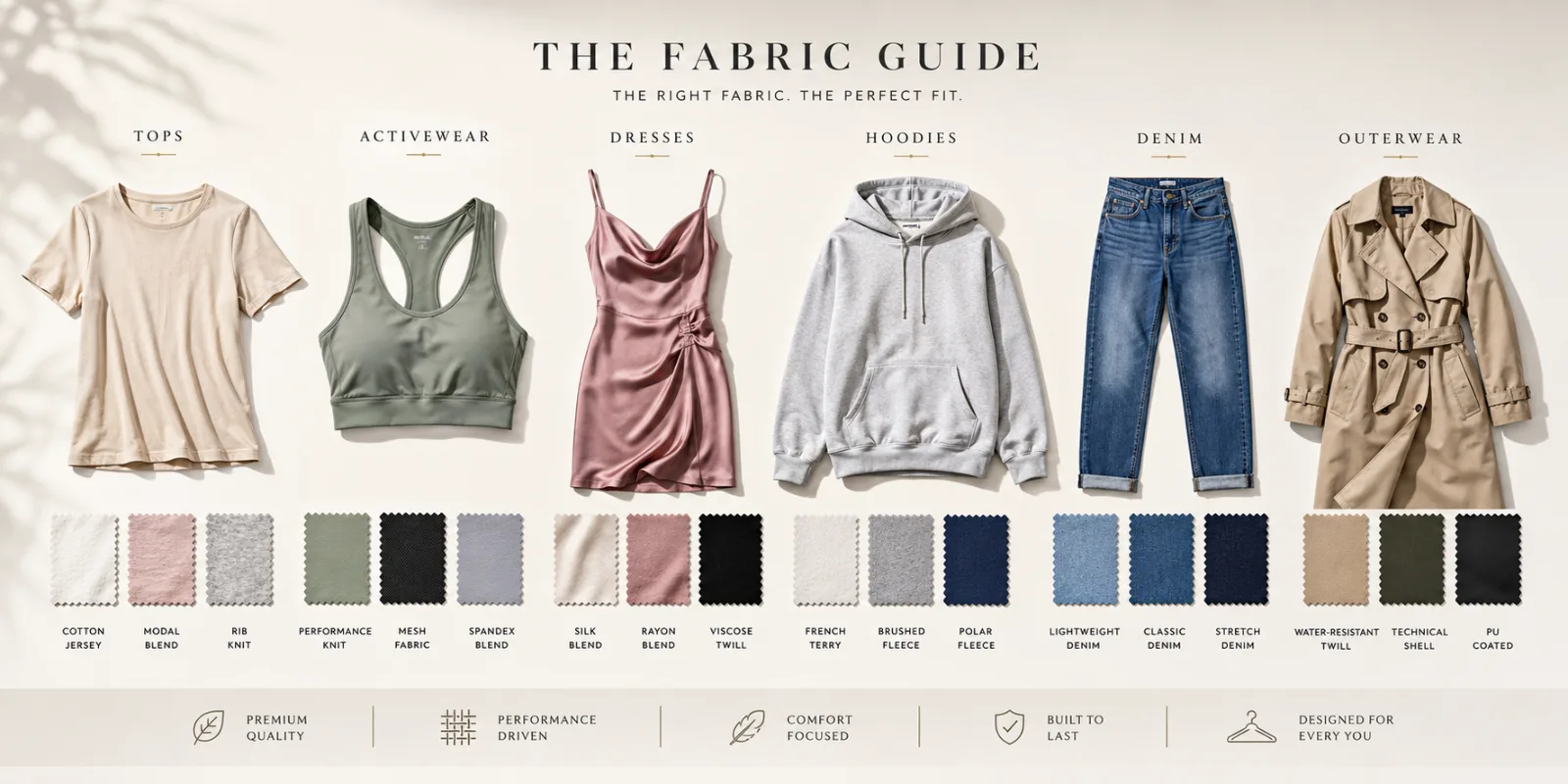
Choosing the Right Fabric for Different Apparel Categories
Fabric choice should always connect directly to garment category and end use.
For t-shirts and basics
Cotton jersey, cotton-spandex jersey, modal blends, and interlock are common choices.
For activewear
Nylon-spandex, polyester-spandex, and moisture-managed technical knits are widely used.
For dresses and fashion tops
Rayon, viscose, modal, satin, poplin, linen blends, and soft polyester wovens are common.
For hoodies and sweatwear
Fleece, French terry, heavyweight jersey, and cotton-poly fleece are major choices.
For denim products
Rigid denim, stretch denim, and lighter chambray or denim-inspired fabrics are common.
For outerwear
Nylon shells, polyester shells, wool blends, technical fabrics, and lining materials are often combined.
The right fabric is always the one that supports both design intent and garment function.
Fabric Comparison in Apparel Manufacturing
What Brands Should Check Before Approving a Fabric
Approving a fabric should never be based only on color or softness. During product development, brands should review fabric from both a design and production perspective.
Important checks include:
- handfeel and comfort
- GSM or weight
- stretch and recovery
- shrinkage behavior
- pilling tendency
- drape and silhouette behavior
- colorfastness
- print or embroidery compatibility
- wash performance
- supply consistency
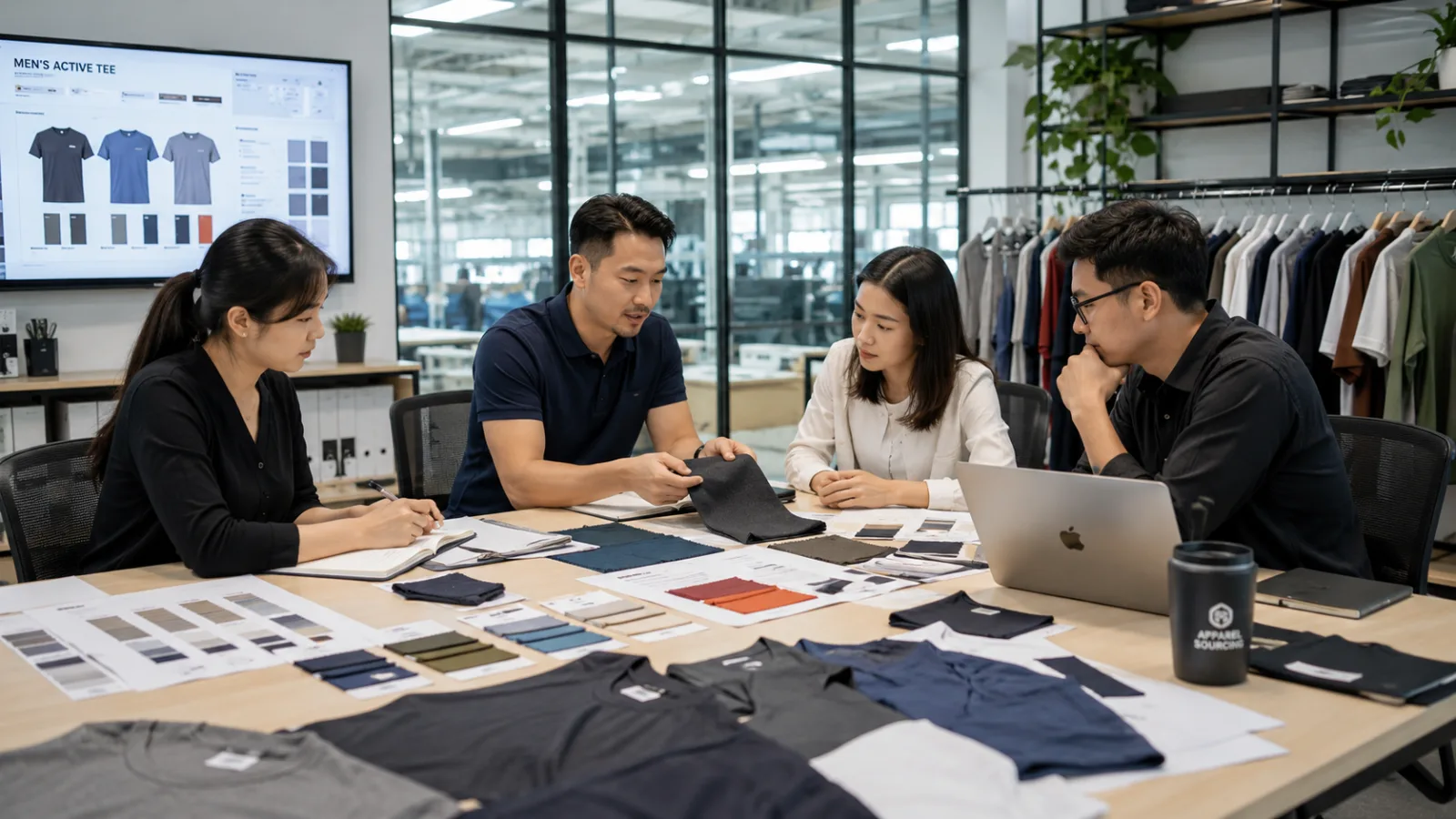
A fabric may look beautiful on a swatch card and still perform poorly in a finished garment. That is why sample testing matters so much in apparel manufacturing.
Common Fabric Mistakes in Apparel Product Development
Many apparel problems begin with fabric mistakes, not sewing mistakes. Common errors include choosing a fabric that does not suit the silhouette, ignoring shrinkage, underestimating stretch needs, using unstable blends for fitted garments, or approving fabric based on price alone.
Other frequent issues include:
- selecting too many different fabrics in one first collection
- using heavy fabric where drape is needed
- using light fabric where structure is needed
- failing to test wash performance
- overlooking pilling or transparency risk
- choosing trendy fabric names without checking real garment behavior
The best fabric strategy is not about choosing what sounds impressive. It is about choosing what makes the garment work.
ApparGlobal
Many apparel brands make better sourcing and product decisions when they work with manufacturing partners that understand fabric selection, sampling, quality control, and scalable production planning. Companies such as ApparGlobal help clothing brands align fabric choices with product category, fit requirements, cost targets, and manufacturing workflows so development becomes more practical, more consistent, and more market-ready.
Fabric Selection Checklist for Apparel Brands
Before approving a fabric for production, apparel brands should evaluate:
- Fabric weight (GSM)
- Stretch and recovery
- Breathability and comfort
- Shrinkage behavior after washing
- Pilling resistance
- Colorfastness and dye stability
- Suitability for printing or embroidery
- Durability and long-term wear performance
Using this checklist helps reduce product defects and improve customer satisfaction.
Conclusion
The types of fabric used in modern apparel manufacturing are far more diverse than a simple list of cotton and polyester. Today’s apparel industry uses natural fibers, synthetic fibers, regenerated cellulosic fibers, engineered blends, knit structures, woven constructions, and performance materials to create garments for different customers, climates, categories, and price points.
The right fabric depends on what the garment needs to do. It may need softness, drape, breathability, stretch, warmth, durability, or technical performance. That is why fabric selection should never be treated as a secondary detail. It is one of the core product decisions in apparel manufacturing.
The strongest brands usually do not choose fabrics based on trend alone. They choose them based on product function, target customer, price logic, and long-term brand consistency. When that happens, the fabric does more than support the garment. It helps define the brand itself.