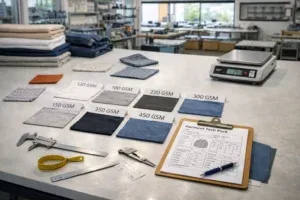
GSM: If you are new to apparel manufacturing, fabric sourcing, or clothing product development, you will hear this term again and again. It appears on fabric spec sheets, supplier quotations, sample comments, and sourcing discussions because it helps describe one of the most important characteristics of fabric: weight.
GSM affects how a garment feels in the hand, how it drapes on the body, how warm or breathable it is, how premium it seems to customers, and even how suitable it is for certain product categories. A lightweight summer tee, a heavyweight oversized streetwear t-shirt, a soft hoodie fleece, and a crisp woven shirt may all be made from different fibers and constructions, but GSM still plays a major role in how each one performs.
For beginners, GSM can sound technical at first. But once you understand it, fabric sourcing becomes much easier. You can communicate more clearly with suppliers, compare fabrics more intelligently, and make better product decisions for your brand.
This guide explains what GSM in fabric means, how it is measured, why it matters in apparel manufacturing, how GSM affects different garments, and what beginners should know when comparing lightweight, midweight, and heavyweight fabrics.
Global Textile Industry and Fabric Weight Usage
The global textile industry produces over 100 million tons of fibers annually, with polyester accounting for more than 50% of total fiber production.
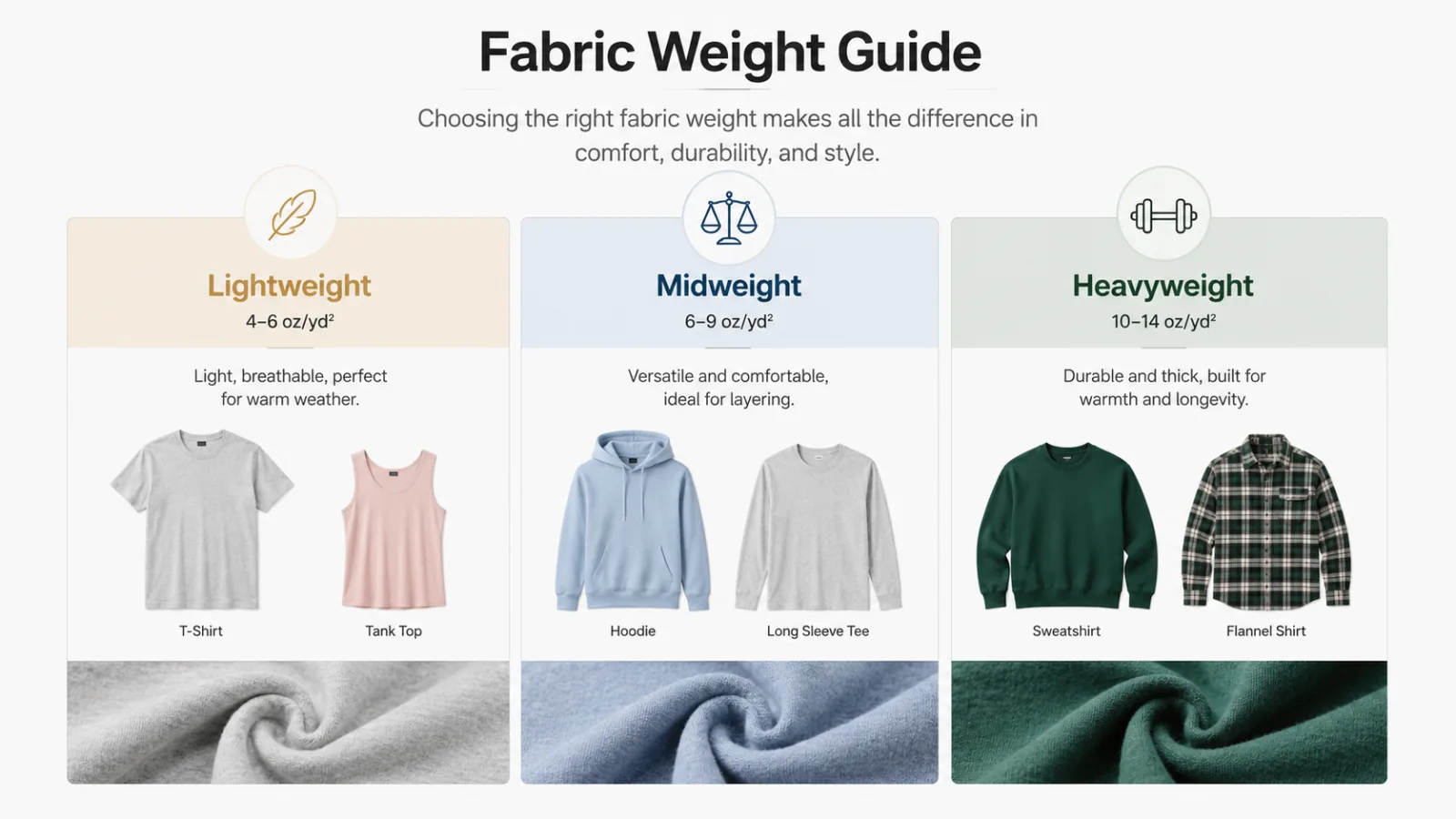
In apparel manufacturing, fabric weights vary widely depending on garment category:
- Lightweight fabrics are commonly used for summer apparel and activewear
- Midweight fabrics dominate casualwear categories like t-shirts and polos
- Heavyweight fabrics are common in hoodies, outerwear, and winter garments
These variations show how important GSM is in determining fabric suitability for different clothing products.
Quick Definition: What Is GSM in Fabric?
GSM (grams per square meter) is a measurement used to describe the weight of fabric. It tells how many grams a square meter of fabric weighs.
- Lower GSM = lighter fabric
- Higher GSM = heavier fabric
Fabric GSM helps manufacturers and clothing brands determine the thickness, durability, drape, and seasonal suitability of a textile.
What Does GSM Mean in Fabric?
GSM stands for grams per square meter. It is a measurement used to describe the weight of fabric. In simple terms, GSM tells you how many grams one square meter of a fabric weighs.
That means if you cut a piece of fabric that measures exactly one square meter and place it on a scale, the number you get in grams is the GSM.
For example:
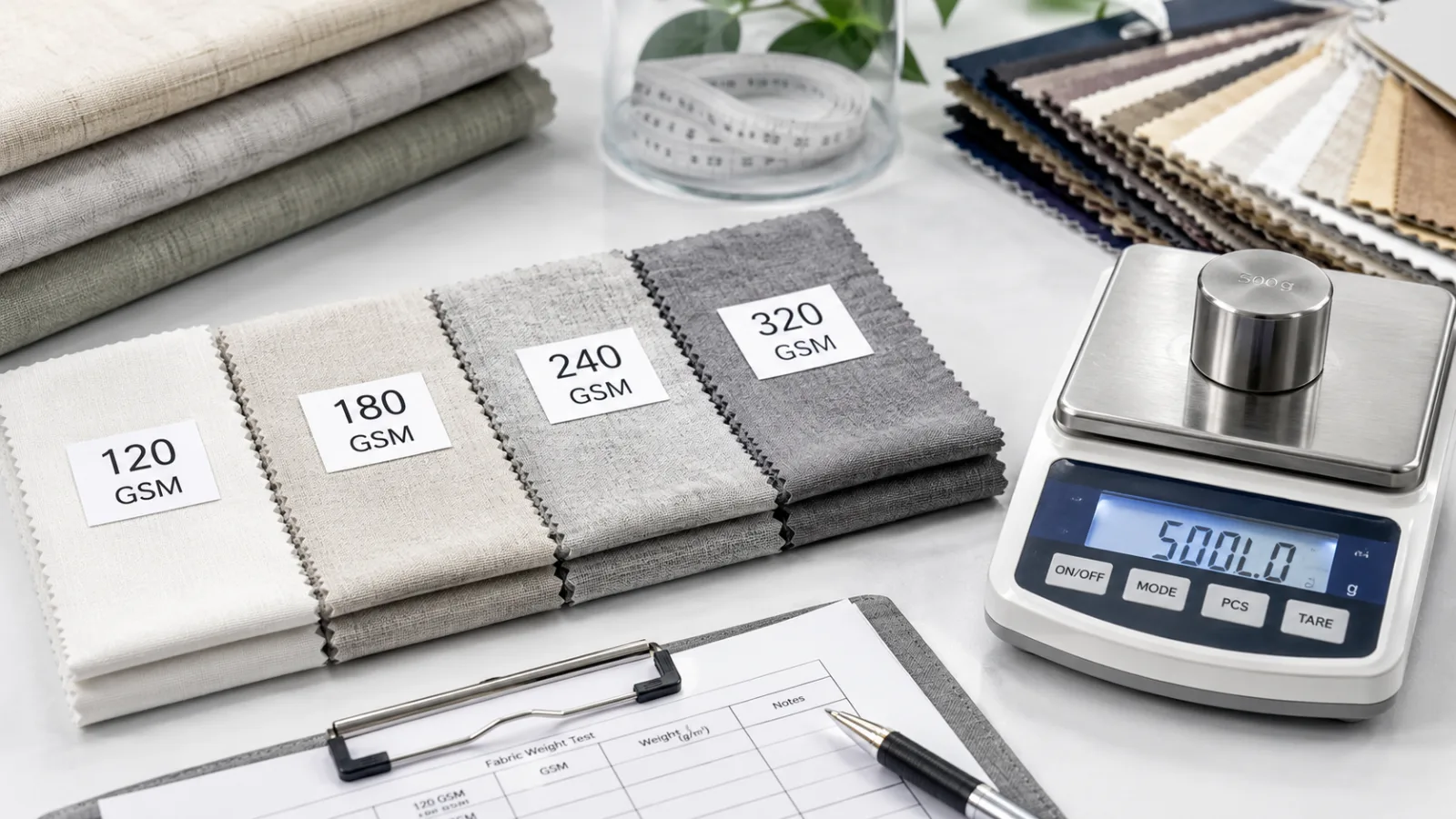
- A fabric with a GSM of 120 weighs 120 grams per square meter
- A fabric with a GSM of 180 weighs 180 grams per square meter
- A fabric with a GSM of 300 weighs 300 grams per square meter
The higher the GSM, the heavier the fabric usually feels. The lower the GSM, the lighter the fabric usually feels.
This is why GSM is such an important number in clothing development. It gives brands and manufacturers a simple way to compare fabric weight before they even touch the final garment.
What Does GSM Stand For?
GSM stands for grams per square meter and gsm indicates the weight in grams of a fabric, helping to determine the quality and how it performs; for example, 200 gsm often suggests a midweight option. The gsm of a fabric directly determines fabric density and therefore the density and weight you feel; manufacturers use gsm values to compare different fabric options. A fabric’s weight and weight of the fabric matter when choosing materials for garments like cotton t-shirts or organic cotton staples.
A low-gsm fabric or fabric with a low gsm is lighter and cooler, which requires a low gsm when making summer tees, while fabrics with a higher gsm are warmer and offer more quality and durability for colder climates. Since gsm affects fabric performance, consider gsm material, weight and density, and how gsm better matches your needs to choose the right fabric weight.
Why GSM Matters in Apparel Manufacturing
GSM matters because fabric weight changes how the final garment behaves. It influences both the practical performance of the product and the way customers perceive quality.
A lower-GSM fabric often feels lighter, cooler, and more breathable. That can be ideal for summer clothing, base layers, or airy fashion pieces. A higher-GSM fabric often feels thicker, more structured, warmer, and sometimes more premium. That may be better for sweatshirts, hoodies, outerwear, or heavyweight streetwear.
In apparel manufacturing, GSM helps with:
- fabric selection during product development
- matching fabric to season and use case
- controlling product consistency across production lots
- comparing sample fabric against approved specs
- costing and consumption planning
- defining garment handfeel and market position
For example, if a brand wants a premium oversized t-shirt, the supplier may suggest a heavier cotton jersey. If the brand wants a soft, breathable women’s summer top, a lighter GSM may be more appropriate. Without understanding GSM, it becomes harder to specify the right fabric.
Are High GSM Fabrics Always of Good Quality?
When deciding if a fabric is truly high-quality, fabric weight matter but it isn’t the only factor to consider; the density of a fabric and how it is woven matter too. Many people assume a heavier cloth is better because a square yard of fabric weighs more, yet that can simply reflect thickness rather than durability or finish. Even fabrics like denim vary widely in feel and resilience depending on construction and treatment.
Understanding where gsm comes into evaluations helps: gsm plays a role in warmth and structure, but the right garment depends on choosing clothes that achieve a perfect balance of comfort with intended use, drape, and longevity rather than relying on weight alone.
How to Choose the Right GSM in Fabric?
Choosing how to choose the right fabric weight means understanding how gsm indicates a fabric’s density and weight — the gsm of a fabric and the weight of the fabric tell you much about weight and density, which determines fabric density and helps determine the quality and quality of the fabric. For a summer dress you generally want a fabric with a low gsm or a low-gsm fabric because lower gsm values reduce insulation and feel lighter on the skin; conversely, fabrics with a higher gsm give more insulation and resist wear and tear for durability.
When choosing between gsm material options, consider the intended use: winter clothes and colder climates benefit from heavier weights like 200 gsm and above, while garments that require a low gsm prioritize breathability. Knowing the gsm affects fabric how it drapes and performs lets you choose the right GSM in fabric to achieve a perfect balance between quality and durability and the desired fabric’s weight or weight in grams for each different fabric.
GSM Does Not Mean Quality by Itself
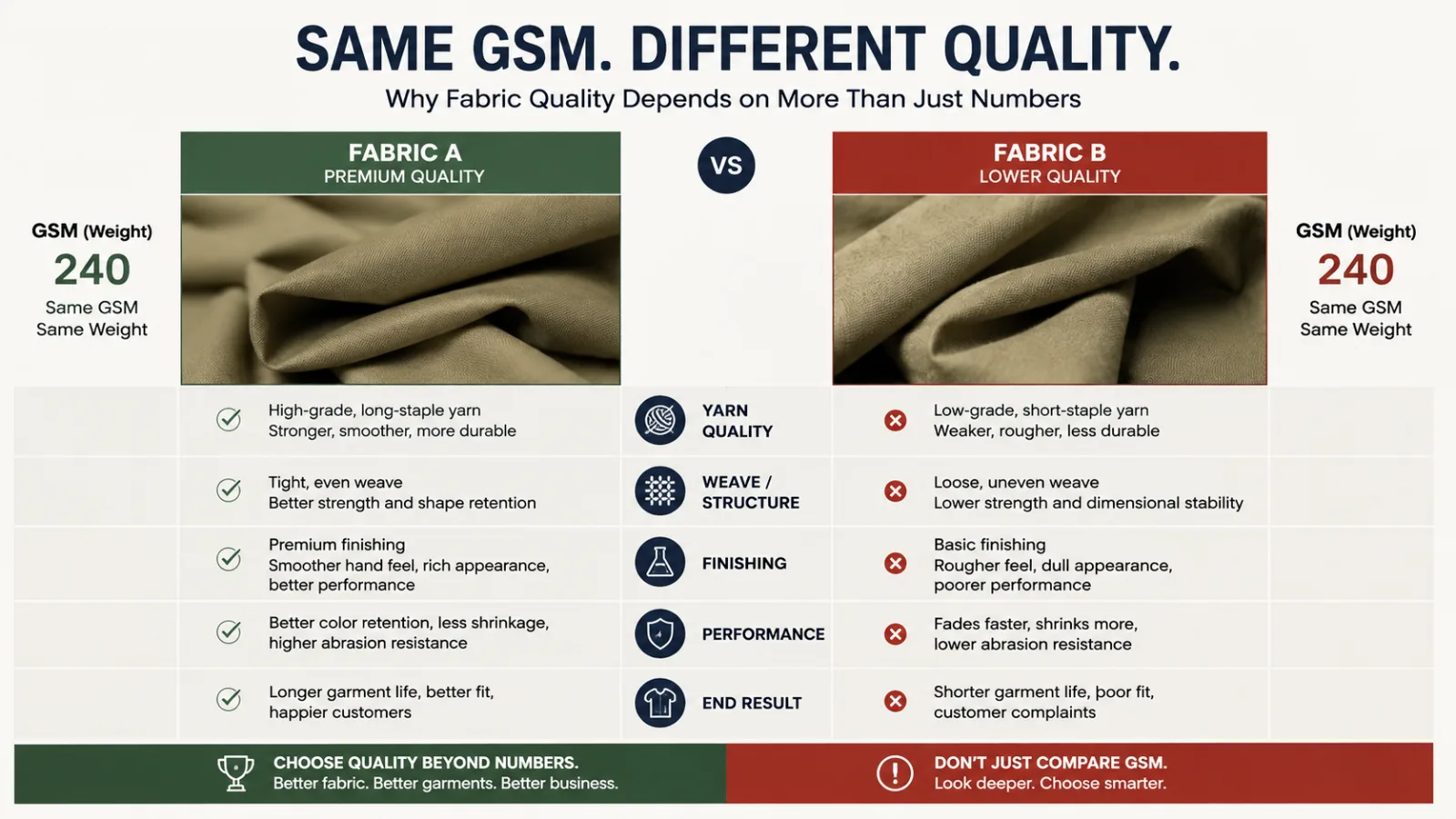
One of the biggest beginner mistakes is assuming that a higher GSM automatically means better quality. That is not always true.
A heavier fabric may feel more substantial, but quality depends on much more than weight alone. Fabric quality also depends on:
- fiber type
- yarn quality
- knit or weave structure
- finishing process
- shrinkage control
- pilling resistance
- recovery and stability
- dye quality and colorfastness
A 240 GSM t-shirt made from poor yarn and weak finishing can perform worse than a 180 GSM t-shirt made from better cotton and cleaner construction. Similarly, a lightweight summer fabric is not “inferior” just because it weighs less. It may be the correct choice for the product.
So GSM should be treated as a specification, not a quality ranking. It tells you about weight, not total value. That is why professional brands never approve a fabric based on GSM alone. They evaluate weight together with feel, performance, appearance, and end use.
How GSM Is Measured
In professional textile environments, GSM is measured using fabric testing methods that calculate weight over a known area. A sample is cut to a specific size, weighed carefully, and converted into grams per square meter.
In simpler terms, the process works like this:
- a measured piece of fabric is taken
- it is weighed using a precise scale
- the result is converted into the equivalent weight of one square meter
Textile mills, testing labs, and quality teams use standardized tools for this process. Suppliers may also provide GSM data as part of a fabric specification sheet.
In manufacturing, GSM should not be treated as a casual guess. If the product specification says 220 GSM cotton jersey, the factory should be working against that target, often with an acceptable tolerance range. This is especially important when consistency matters across bulk production.
For brands, the practical takeaway is simple: always ask the supplier for GSM details during fabric approval and confirm whether the number refers to finished fabric after washing and finishing, or greige fabric before processing.
What GSM Indicates Quality?
GSM (grams per square meter) is a direct measure of fabric weight and a useful indicator of quality: a higher GSM usually means a denser, more substantial textile that can offer greater durability and better resistance to wear, while a lower GSM often signals a lighter, more breathable material suited to warm weather or layering.
Beyond raw weight, GSM interacts with fiber type, weave, and finish—cotton with high GSM can feel different from wool or synthetic fabrics at the same number—so quality assessment should consider fabric construction and intended use.
In practice, look for the right GSM for purpose: towels and outerwear benefit from high GSM for absorbency and longevity, while shirts and linings favor moderate to low GSM for comfort and drape, making GSM a practical guide rather than a sole determinant of textile quality.
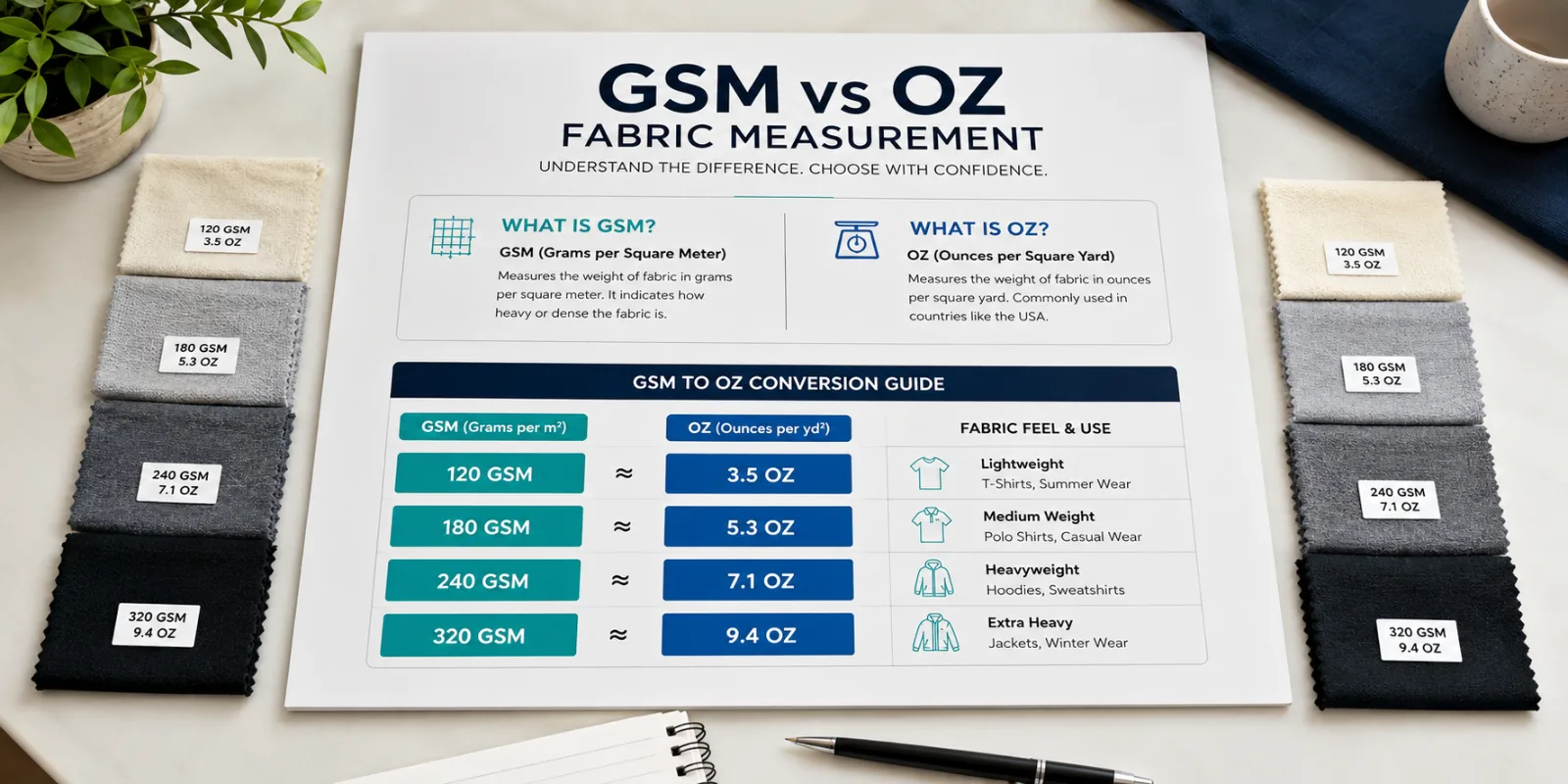
GSM vs OZ: What Is the Difference?
If you work with international suppliers, especially across different markets, you may see both GSM and oz used in fabric discussions.
GSM means grams per square meter.
OZ usually refers to ounces per square yard.
Both measure fabric weight, but GSM is more common in many modern apparel manufacturing conversations, especially in technical sheets and global sourcing documentation.
For beginners, GSM is often easier to understand because it feels more direct and standardized. Many suppliers can convert between GSM and oz when needed, but it is best to confirm which system is being used to avoid confusion.
A fabric described as heavyweight in ounces might still need to be translated into GSM if your product development team uses GSM as the main reference.
The important point is not memorizing every conversation immediately. The important point is knowing that both terms describe weight and that you should compare fabrics in the same measurement system when reviewing quotations or sample comments.
Lightweight, Midweight, and Heavyweight Fabrics
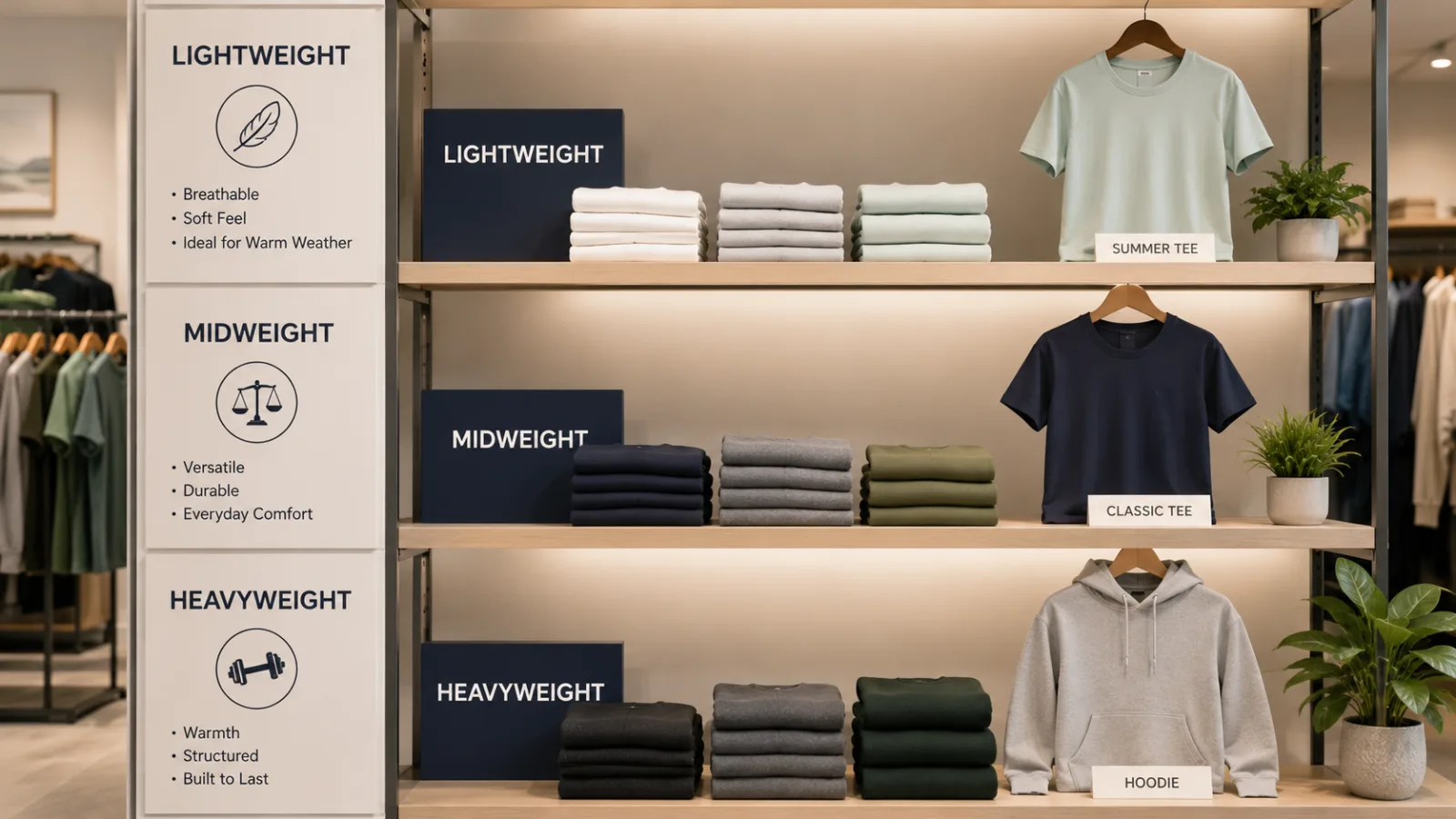
One of the easiest ways to understand GSM is to group fabrics into general categories. Exact ranges can vary by fabric type and product category, but beginners can use these broad guidelines.
Lightweight Fabrics
Lightweight fabrics are often soft, breathable, and better suited for warm weather or delicate product categories. These may include:
- lightweight jersey for summer tees
- soft blouses
- linings
- lightweight dresses
- base layers
A lightweight fabric may feel airy, soft, and less structured. It usually works well when drape and breathability matter more than body and thickness.
Midweight Fabrics
Midweight fabrics sit in the middle. They are often the most versatile range for many everyday garments. These may include:
- regular t-shirts
- polo shirts
- casual dresses
- shirts
- moderate knitwear
Midweight fabrics often balance comfort, durability, and everyday usability.
Heavyweight Fabrics
Heavyweight fabrics usually feel more substantial, dense, and structured. They are often used in:
- hoodies
- sweatshirts
- heavyweight tees
- outerwear
- winter basics
- workwear
A heavyweight fabric can create a premium, protective, or fashion-forward feel depending on the category.
These categories are useful, but they are still broad. A heavyweight woven fabric and a heavyweight knit fabric can behave very differently, even if both feel substantial.
Common Fabric GSM Ranges in Apparel
Fabric CategoryTypical GSM RangeExample GarmentsLightweight fabric80–150 GSMSummer shirts, base layersMidweight fabric150–250 GSMT-shirts, polosMedium-heavy fabric250–350 GSMsweatshirts, dressesHeavyweight fabric350–500+ GSMhoodies, jackets
What Is Considered Good GSM for T-Shirts?
This is one of the most common beginner questions in apparel development.
There is no single “best” GSM for a t-shirt because it depends on the product goal. But in practical terms:
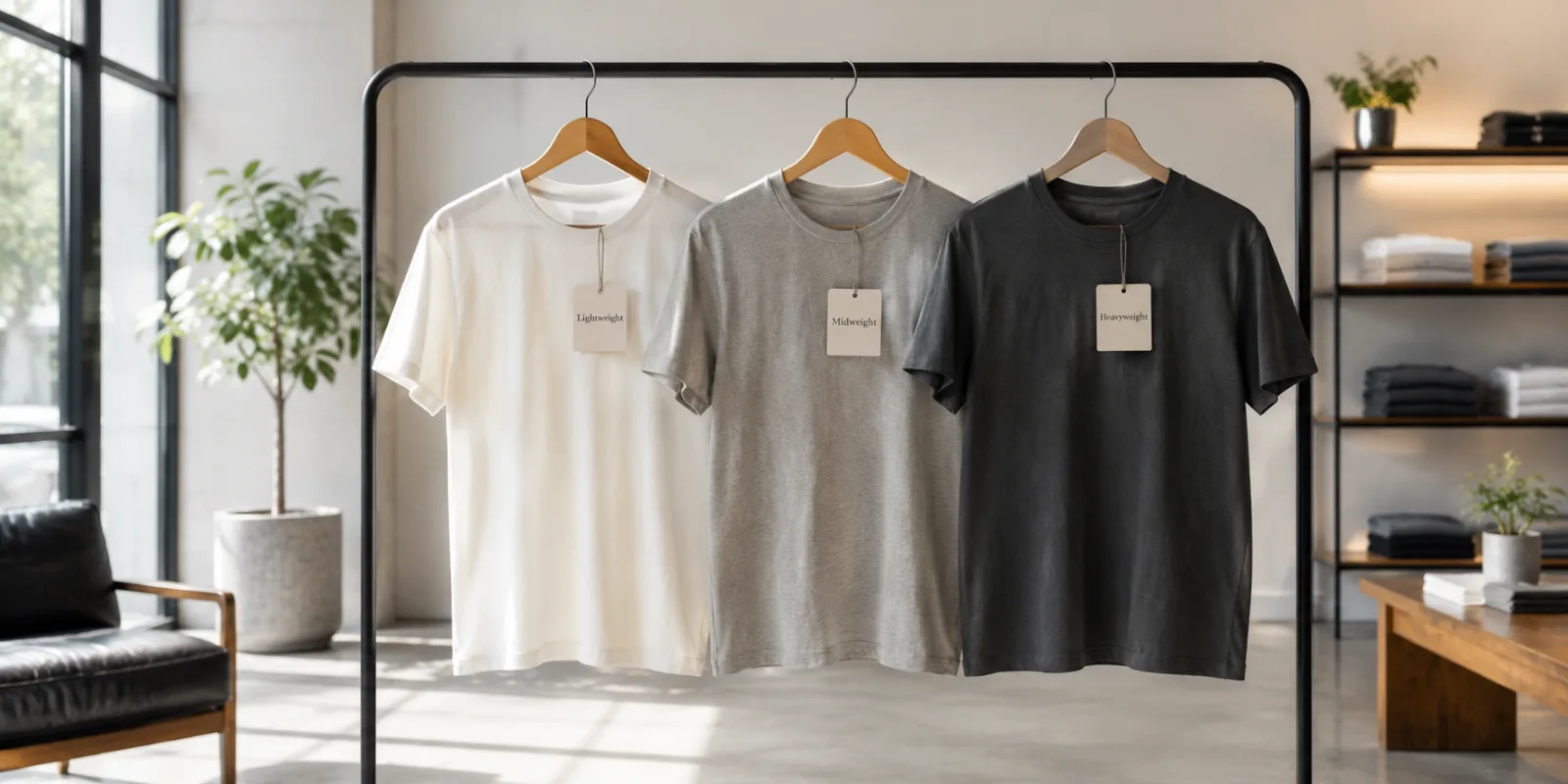
Lightweight T-Shirts
These often feel soft, cool, and breathable. They are often used for:
- summer basics
- budget-friendly casualwear
- slim layering tees
- fashion tops with drape
Midweight T-Shirts
These are often considered the most versatile and mainstream. They can work well for:
- everyday basic tees
- branded merchandise
- private label casualwear
- balanced comfort and durability
Heavyweight T-Shirts
These are commonly used for:
- oversized streetwear
- premium basics
- structured fashion tees
- cooler-weather layering
A heavyweight t-shirt often feels thicker and more premium to many customers, but it may also feel warmer and less fluid. A lightweight t-shirt can feel more breathable and wearable in hot climates.
So the correct question is not only “What GSM is best for t-shirts?” The better question is “What GSM fits the t-shirt experience I want to create?”
What Is Good GSM for Hoodies and Sweatshirts?
Hoodies and sweatshirts usually require higher GSM than t-shirts because they are expected to feel warmer, thicker, and more durable.
Fabric choice here often includes fleece, brushed fleece, or French terry. In these categories, a higher GSM usually creates:
- more warmth
- more body
- a fuller silhouette
- a more substantial premium feel
A lightweight hoodie may work for spring or layering, while a heavier hoodie may be better for winter, streetwear, or premium casualwear.
For beginners, the most important thing to understand is that hoodie GSM should match the brand positioning and use case. A minimalist premium hoodie brand might intentionally use dense heavyweight fleece. A lifestyle lounge brand might choose something softer and slightly lighter.
The inside finish also matters. A brushed fleece and a loopback French terry can have very different comfort and seasonality even if their GSMs are relatively close.
GSM in Knit Fabrics vs Woven Fabrics
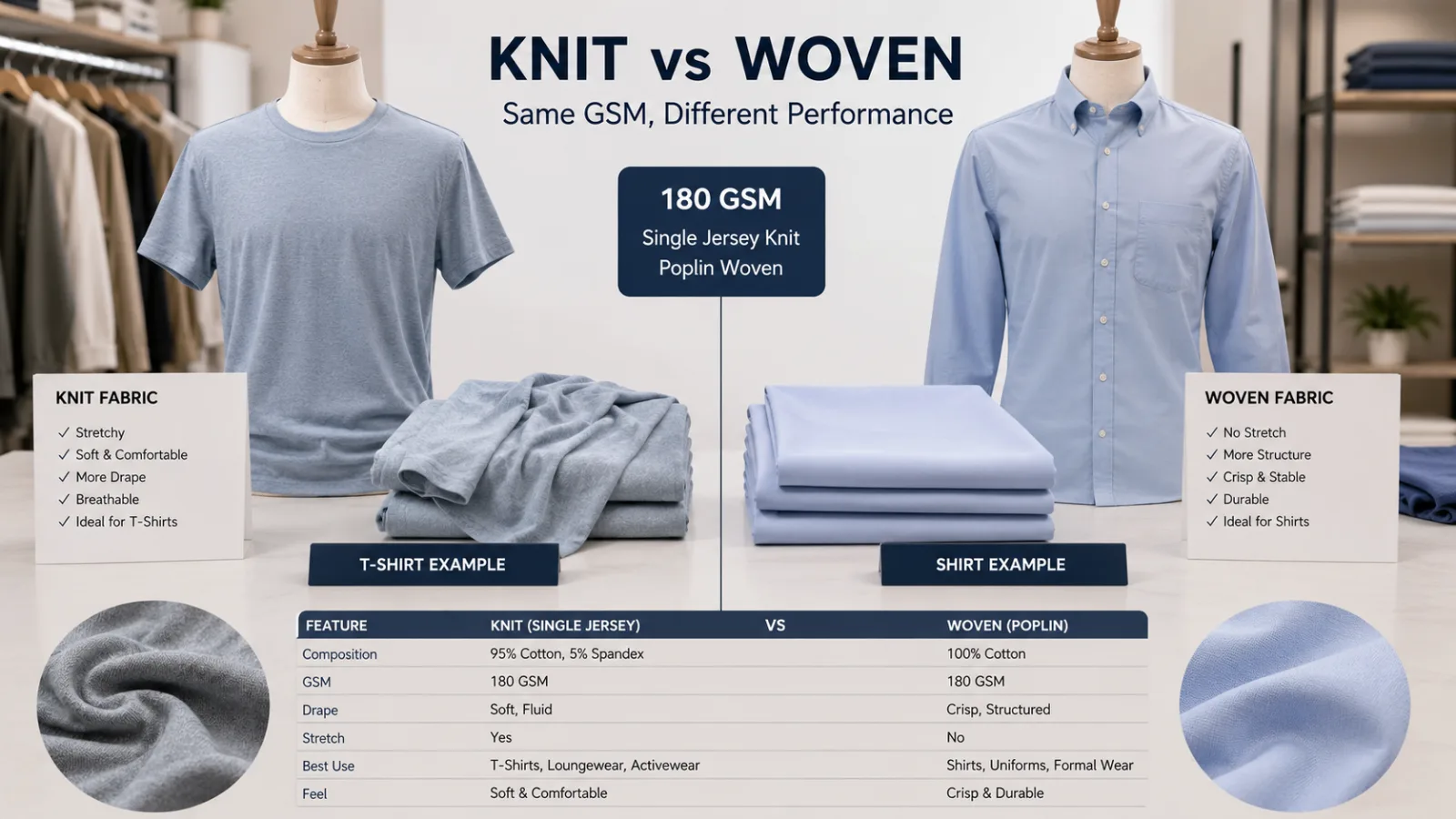
GSM applies to both knit and woven fabrics, but the way those fabrics behave can be very different.
Knit Fabrics
Knits are typically used in:
- t-shirts
- leggings
- activewear
- loungewear
- sweatshirts
- underwear
Knits usually have more stretch and flexibility. A knit fabric’s GSM influences how soft, dense, or body-hugging it feels.
Woven Fabrics
Wovens are commonly used in:
- shirts
- trousers
- dresses
- jackets
- uniforms
- outerwear
Wovens are generally more structured and less stretchy unless elastane is blended in. In woven fabrics, GSM affects drape, crispness, opacity, and overall structure.
For example, a 150 GSM knit jersey and a 150 GSM woven poplin may have the same weight measurement but totally different end uses and garment behavior. This is why beginners should never compare GSM across fabrics without also considering the construction type.
Typical GSM Used for Different Garments
How GSM Affects Drape, Structure, and Fit
GSM does more than change weight. It also influences how the fabric moves and how the garment sits on the body.
A lower GSM fabric often creates:
- softer drape
- lighter movement
- more fluid silhouettes
- greater breathability
A higher GSM fabric often creates:
- more structure
- stronger shape retention
- less cling in some garments
- a thicker handfeel
This is very important in fashion design. A relaxed wide-leg pant in a soft low-to-midweight woven may move beautifully. The same silhouette in a heavier stiff fabric may look bulky. An oversized t-shirt in a heavier jersey may hold its shape better and create a stronger streetwear silhouette. A lighter jersey may collapse more softly on the body.
That means GSM should be chosen not just for comfort or warmth, but for visual effect too.
How GSM Affects Breathability and Seasonality
Beginners often associate GSM directly with season. That is partly true, but it needs context.
Lighter fabrics often feel cooler and more breathable, so they are commonly used for summer products. Heavier fabrics often feel warmer and more protective, so they are commonly used for cold-weather garments.
However, seasonality is affected by more than weight alone. Fiber content, knit or weave structure, brushing, finishing, and moisture management all matter too.
For example:
- a lightweight polyester fabric may still trap heat differently than a lightweight cotton fabric
- a loosely knit midweight fabric may breathe better than a denser lower-GSM fabric
- a brushed fleece with high GSM will usually feel much warmer than a crisp woven of similar weight
So GSM is a useful seasonality guide, but it should never be used alone. Think of it as one of several signals that help determine whether a fabric suits hot weather, transitional weather, or cold weather.
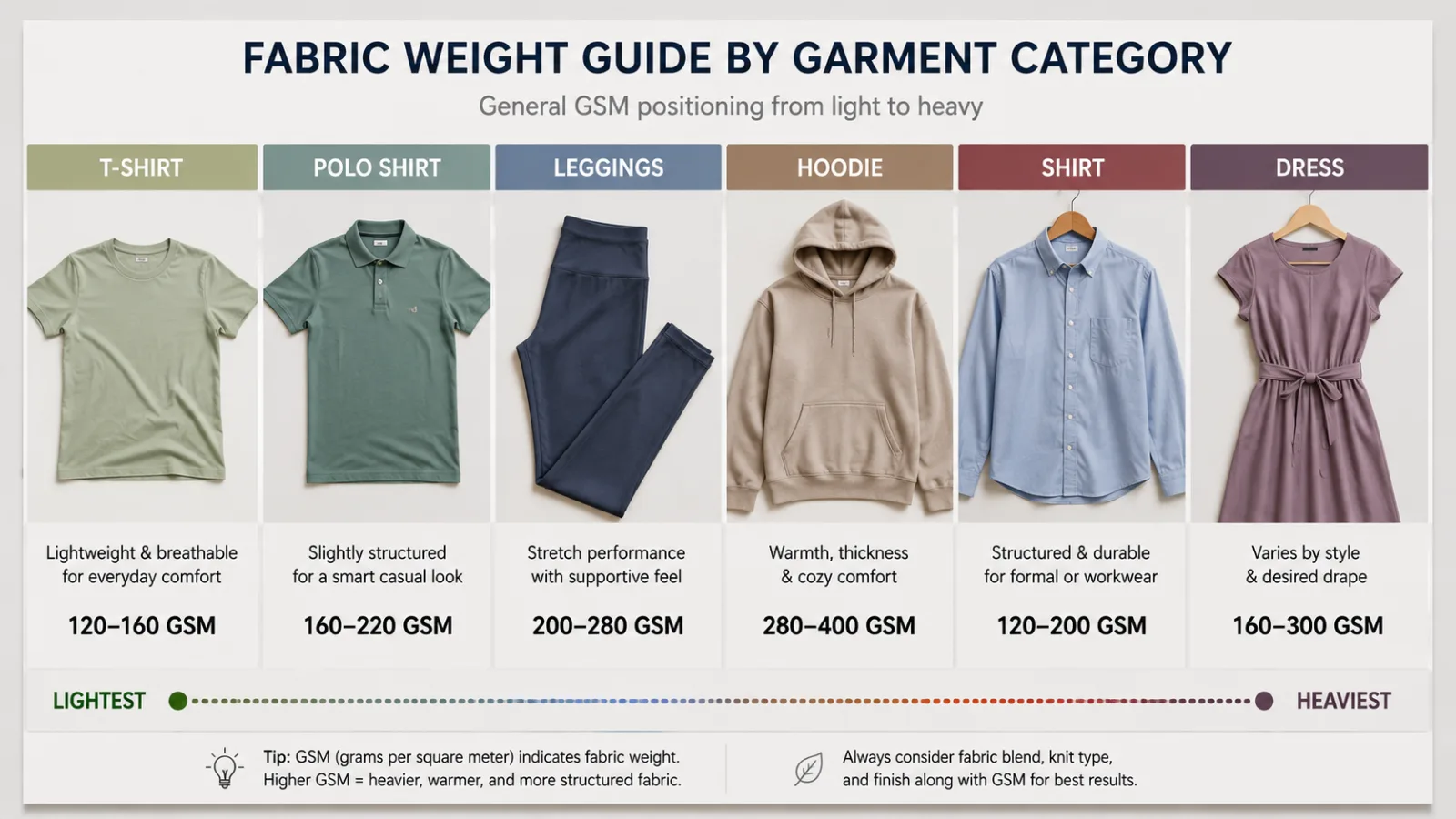
How GSM Affects Garment Cost
Fabric is often one of the biggest cost drivers in apparel manufacturing, so GSM can influence pricing too.
In simple terms, a higher GSM often means more material mass per square meter. That can increase fabric cost, especially when the fiber quality is also good. But cost is never determined by GSM alone. It also depends on:
- fiber type
- yarn count and quality
- fabric construction
- finishing
- dyeing process
- certifications
- sourcing region
- order quantity
Still, in many cases, a heavier premium jersey will cost more than a lighter budget jersey, all else being equal. This is one reason why startup brands should understand GSM early. It helps explain why some garments cost more to produce and why certain price points are harder to hit.
A beginner-friendly rule is this: when you raise GSM, you may also be increasing cost, garment weight, and sometimes shipping burden, so make sure the product positioning supports that choice.
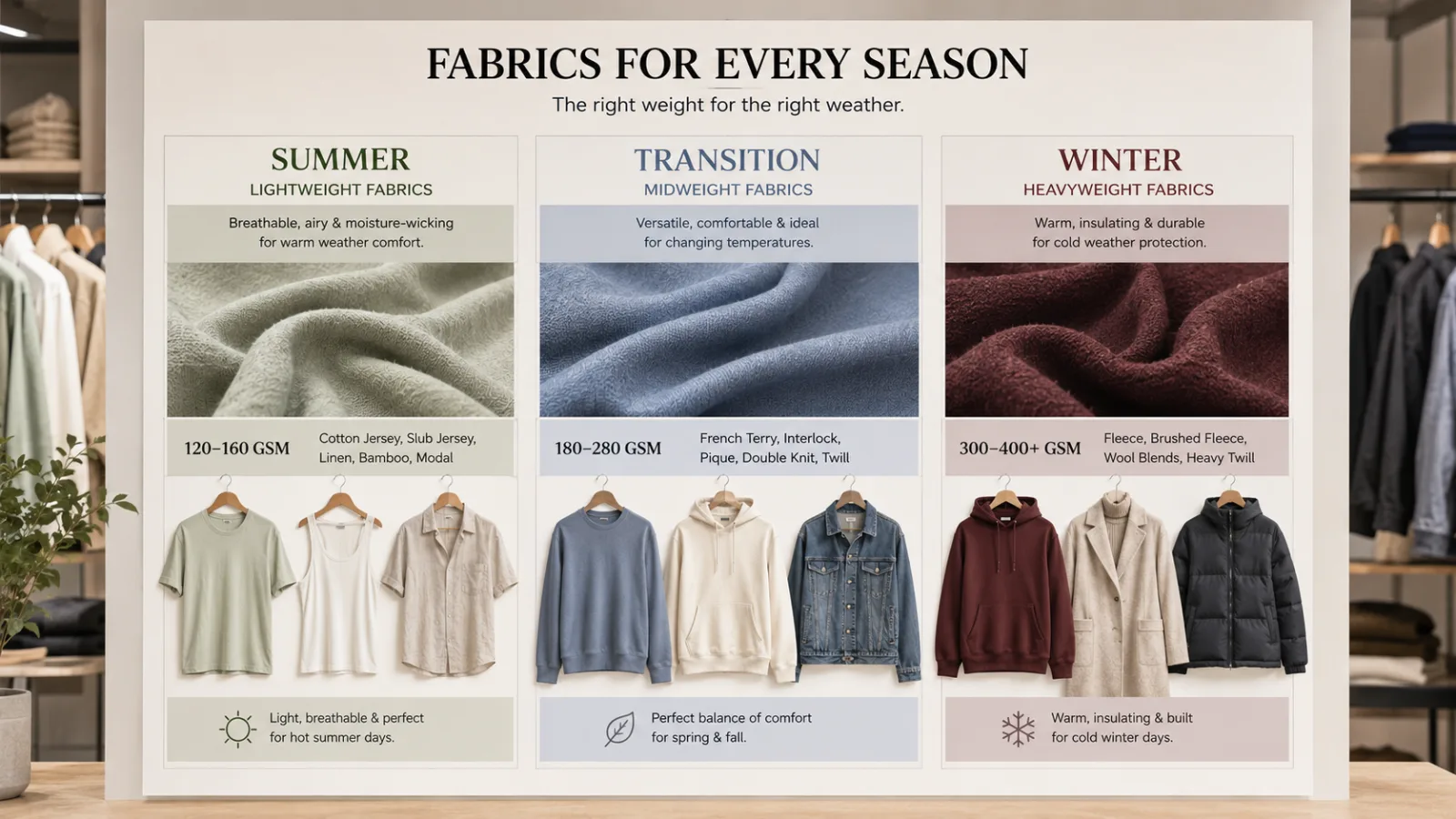
Common GSM Ranges for Different Garment Types
Exact GSM targets vary by brand and market, but beginners can use general category thinking.
T-Shirts
Often range from lightweight to heavyweight depending on the brand concept.
Polos
Usually sit in a midweight range because they need some body but still need comfort.
Leggings and Activewear
May use moderate to dense weights depending on compression, opacity, and stretch performance.
Hoodies and Sweatshirts
Usually use mid-to-heavy fleece or French terry to create warmth and substance.
Shirts and Blouses
Woven shirt fabrics may be lighter or midweight depending on whether the look is crisp, drapey, or structured.
Dresses
Can vary widely depending on silhouette, fiber, and season. The important beginner lesson is that every category has a practical weight zone, but that zone changes based on style direction. There is no one GSM chart that solves every product type.
Why Fabric Finish Can Matter as Much as GSM
Two fabrics with the same GSM can still feel very different because of finishing.
Finishing includes treatments and processes that affect the handfeel, appearance, stability, and function of fabric. These may include:
- brushing
- compacting
- enzyme washing
- peaching
- mercerizing
- silicone softening
- anti-pilling finishes
For example, two 220 GSM cotton jerseys may have very different outcomes if one is compact and smooth while the other is loosely finished and rough. A 300 GSM fleece can feel premium and soft, or cheap and harsh, depending on how it is processed.
This is why fabric approval should always include both the GSM specification and a physical handfeel evaluation. Numbers help. Touch and performance matter too.
What Beginners Should Ask Suppliers About GSM
When discussing fabric with suppliers or manufacturers, beginners should ask specific questions so they understand what the GSM number really means.
Helpful questions include:
- What is the GSM of this fabric?
- Is that GSM before or after finishing?
- What tolerance is acceptable in bulk production?
- What is the fiber content?
- Is this knit or woven?
- How does it behave after washing?
- Is the fabric compacted or pre-shrunk?
- Does the sample fabric match the bulk fabric spec?
These questions make sourcing conversations more professional and reduce confusion later. A beginner does not need to sound like a textile engineer. They just need to know enough to ask clearly and compare properly. Good suppliers usually appreciate specific questions because they show that the buyer is trying to approve the right fabric, not just the cheapest one.
Common GSM Mistakes Beginners Make
When learning about GSM, beginners often fall into a few predictable mistakes.
Assuming Heavier Means Better
As explained earlier, higher GSM is not automatically higher quality.
Ignoring Fabric Type
A knit and a woven with similar GSM can behave very differently.
Choosing Weight Based Only on Trend
A heavyweight tee trend may not suit your climate, customer, or brand concept.
Forgetting About Shrinkage and Finish
A fabric may start at one GSM and behave differently after wash and finishing.
Overlooking Product Use
A fabric that works for a premium hoodie may be completely wrong for a summer top.
Comparing Numbers Without Touching Samples
GSM is useful, but swatch feel, drape, and wash behavior still matter.
The best way to avoid these mistakes is to treat GSM as part of a bigger fabric evaluation process rather than a shortcut.
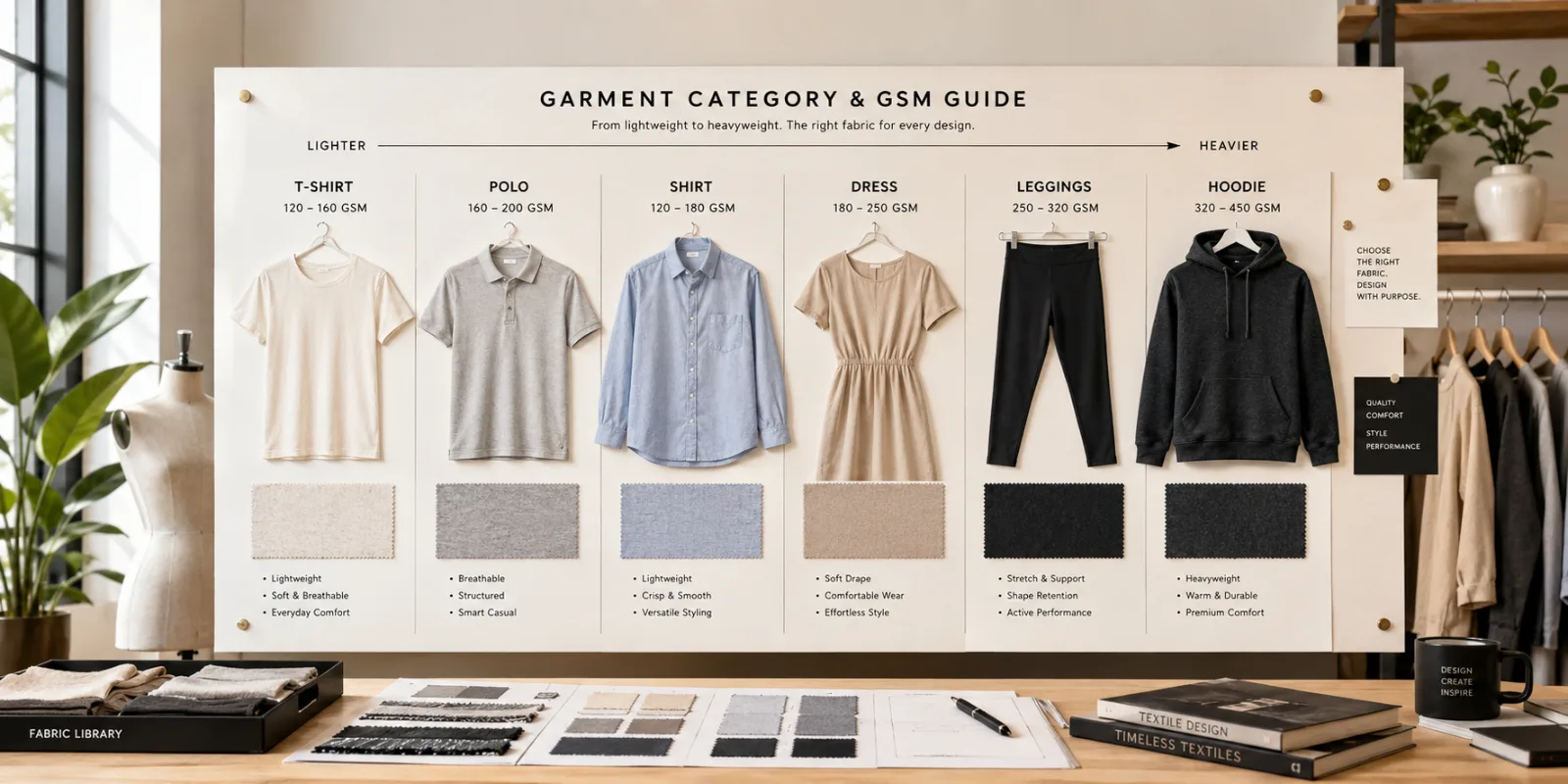
How to Use GSM Correctly in Product Development
The best way to use GSM is as a decision-support tool during product development.
A good process often looks like this:
- define the garment category
- define the target feel and silhouette
- identify suitable fiber and construction types
- compare swatches with the appropriate GSM ranges
- evaluate handfeel, drape, stretch, and finish
- test sample garments
- confirm whether bulk fabric matches the approved target
This approach helps brands avoid random fabric choices. It also improves communication between design, sourcing, merchandising, and manufacturing teams.
For beginners, the smartest habit is simple: whenever you approve a fabric, do not just ask “Do I like this?” Also ask “What is the GSM, and does it support the garment I am trying to build?”
That question alone can improve product decisions dramatically.
GSM and Brand Positioning
GSM can also support branding. Many customers may not understand textile details deeply, but they can feel the result.
A dense, heavyweight t-shirt may help communicate premium streetwear.
A breathable lightweight top may support a relaxed summer lifestyle brand.
A stable midweight interlock may suit a polished basics brand.
A heavy fleece can strengthen a premium hoodie identity.
This is why GSM is not just a technical manufacturing term. It can shape the brand experience too. The way a garment feels in the hand often influences whether the customer thinks it feels cheap, balanced, luxurious, airy, or protective.
The strongest apparel brands usually make fabric weight decisions intentionally. They do not choose them by accident.
A Simple Beginner’s Rule for Understanding GSM
If you are completely new to fabric sourcing, remember this simple rule:
Lower GSM usually means lighter fabric. Higher GSM usually means heavier fabric. But the right GSM depends on the garment, the season, the customer, and the fabric type.
That is the core idea.
Once you understand that, you can start learning category by category. You do not need to memorize every textile detail on day one. Just begin by asking better questions and comparing fabrics more thoughtfully.
Fabric knowledge builds over time. GSM is one of the easiest and most useful starting points.
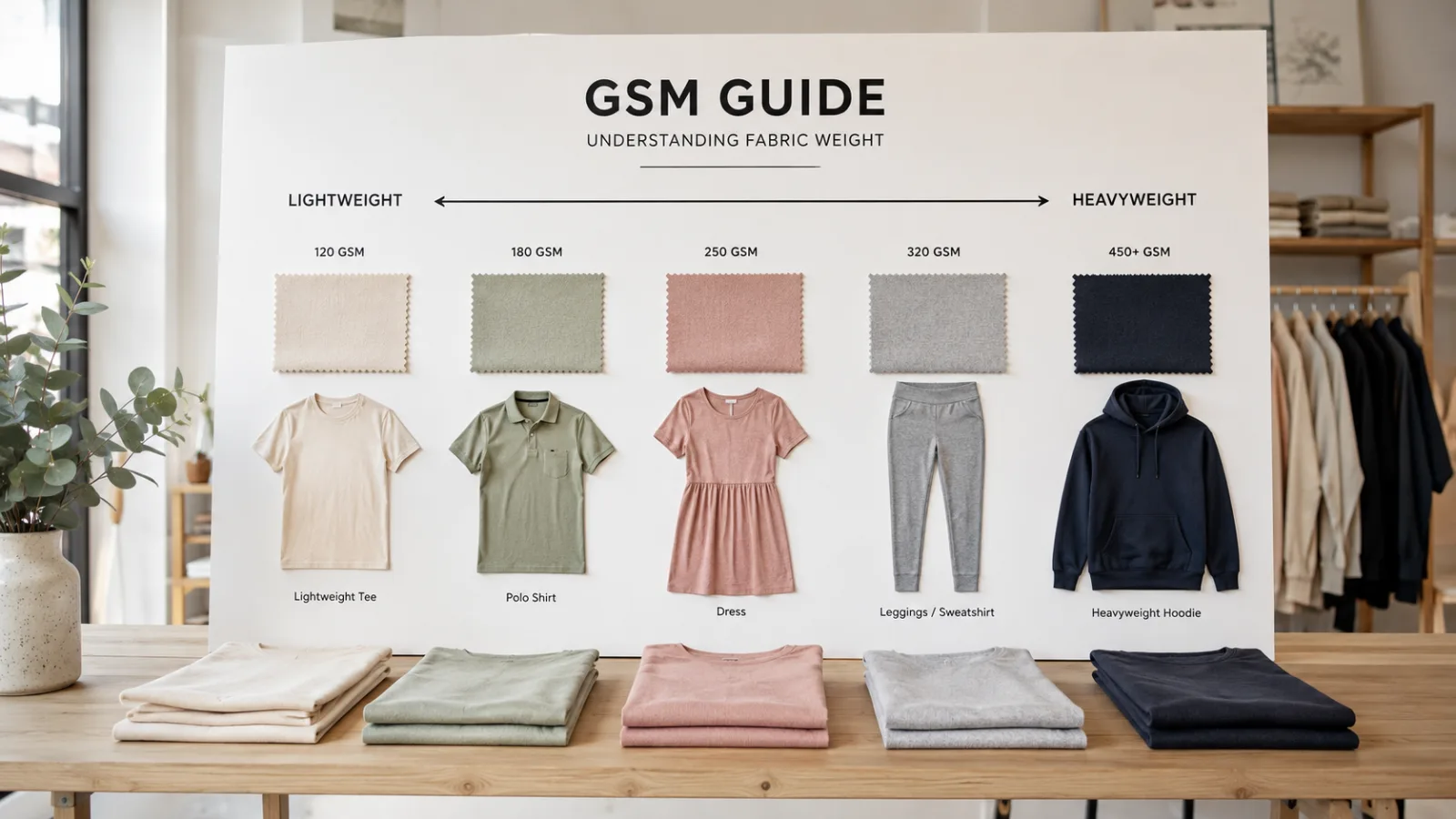
ApparGlobal
Many clothing brands make better product decisions when they work with manufacturing partners that understand fabric sourcing, sample development, GSM targets, and apparel quality control. Companies such as ApparGlobal help brands align fabric specifications with garment category, fit goals, cost targets, and production requirements so development becomes more practical, more consistent, and more market-ready.
Conclusion
So, what is GSM in fabric? It is a simple but highly important measurement that tells you the weight of fabric in grams per square meter. For beginners, understanding GSM is one of the fastest ways to improve fabric sourcing knowledge because it helps explain why garments feel light, medium, or heavy and why some products are better suited to certain categories than others.
But GSM should never be viewed in isolation. It works best when considered together with fiber content, knit or woven structure, finishing, handfeel, stretch, drape, and end use. A high GSM fabric is not automatically better, and a low GSM fabric is not automatically worse. The right GSM is simply the one that supports the product you are trying to create.
When brands understand GSM properly, they make better decisions about t-shirts, hoodies, activewear, dresses, shirts, and many other categories. And in apparel manufacturing, better fabric decisions usually lead to better products.
Read more about: Fabric Guide: Different Types of Fabric How to Use Each Type