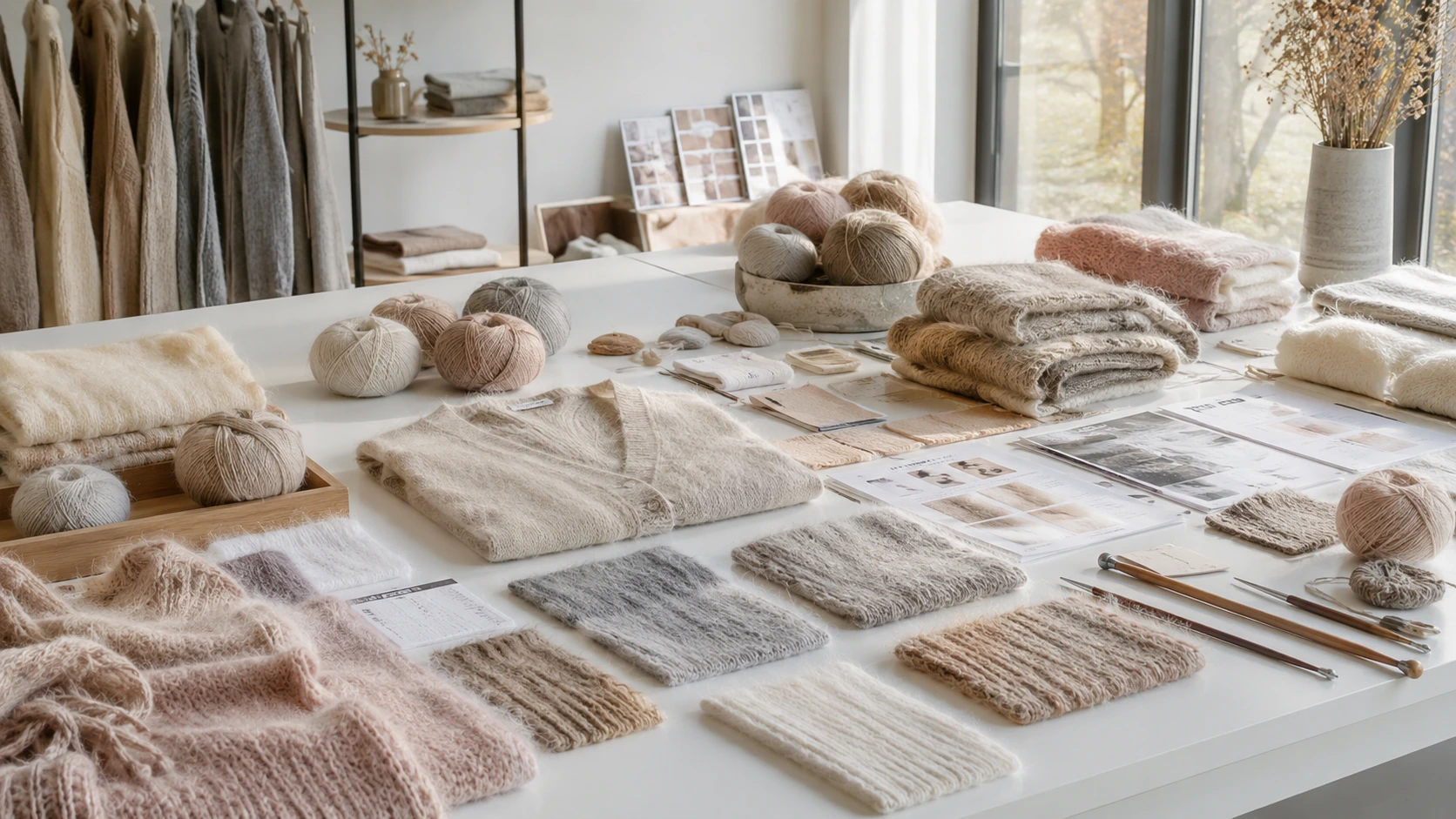
Angora yarn fabric is one of the softest and most luxurious natural textile materials used in fashion, knitwear, accessories, and specialty garments. Known for its fluffy surface, lightweight warmth, delicate texture, and cloud-like feel, angora has been admired by knitters, designers, textile buyers, and luxury fashion consumers for many years. It is often used in sweaters, scarves, cardigans, gloves, hats, shawls, socks, and blended yarns where softness and warmth are important.
But angora is also one of the most misunderstood fibers in the apparel world. Some people confuse it with mohair, which comes from the Angora goat. Others assume angora is always made from goats because of the name. In textile usage, angora yarn usually refers to fiber obtained from the Angora rabbit, while mohair comes from the Angora goat. Britannica describes rabbit hair as an animal fiber obtained from Angora rabbits and common rabbits, and notes that Angora rabbit fiber is valued for its fineness, soft texture, and lustre.
Angora yarn fabric is loved because it feels incredibly soft against the skin, provides impressive warmth without heavy weight, and creates a beautiful fuzzy surface often called a “halo.” At the same time, angora has practical challenges. It can shed, felt, stretch, pill, and require careful washing. It also raises serious ethical sourcing questions because animal welfare concerns have been widely reported in parts of the angora supply chain. PETA has documented concerns around live plucking and poor rabbit welfare in some angora production systems, which has led many consumers and brands to reconsider how they source or use angora.
This detailed FAQ guide explains everything you need to know about angora yarn fabric in a clear, practical, and human-written way. Whether you are a fashion brand owner, apparel buyer, knitwear designer, textile student, craft maker, or conscious shopper, this guide will help you understand what angora is, how it behaves, where it is used, how to care for it, and what to consider before buying or producing angora garments.
What Is Angora Yarn Fabric?
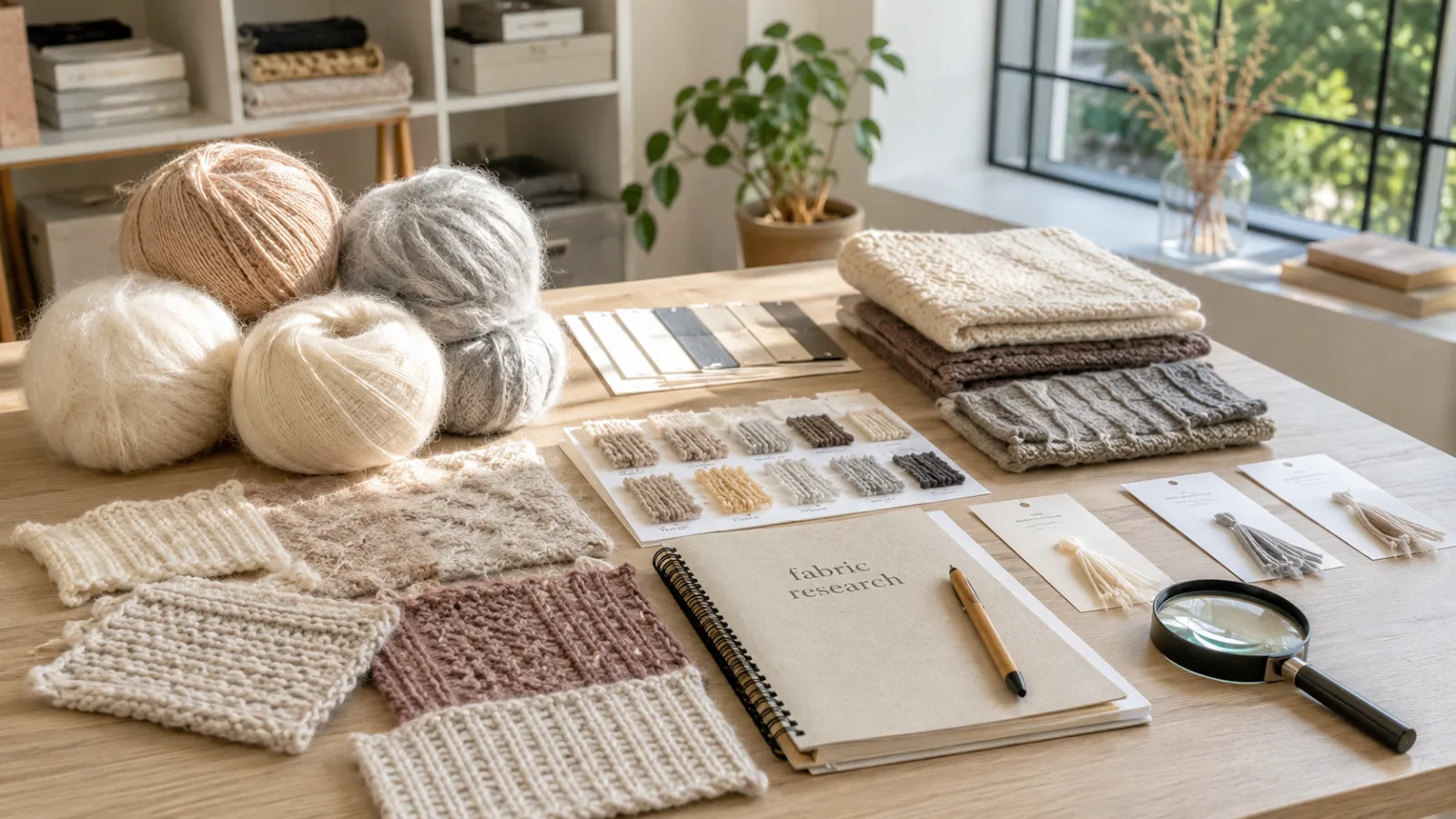
Angora yarn fabric is a textile material made from angora fiber, usually sourced from the soft coat of the Angora rabbit. The fiber is spun into yarn and then knitted or woven into fabric. In fashion, angora is most commonly seen in knitted garments because its soft, fluffy, insulating character works especially well in sweaters, scarves, cardigans, hats, gloves, and warm accessories.
The term “angora” can be confusing because it is connected with different animals in general language. Britannica’s dictionary notes that angora can refer to soft yarn or wool made from the hair of an Angora goat or Angora rabbit, but in modern textile discussions, angora wool most commonly refers to Angora rabbit fiber, while the fiber from the Angora goat is called mohair.
Angora rabbit fiber is known for being very fine, silky, lightweight, and warm. It has a delicate surface that gives knitted fabric a fuzzy appearance. This fuzzy surface is one of the reasons angora garments look soft even before touching them. Unlike smooth cotton jersey or structured wool suiting, angora fabric often has a floating, airy texture.
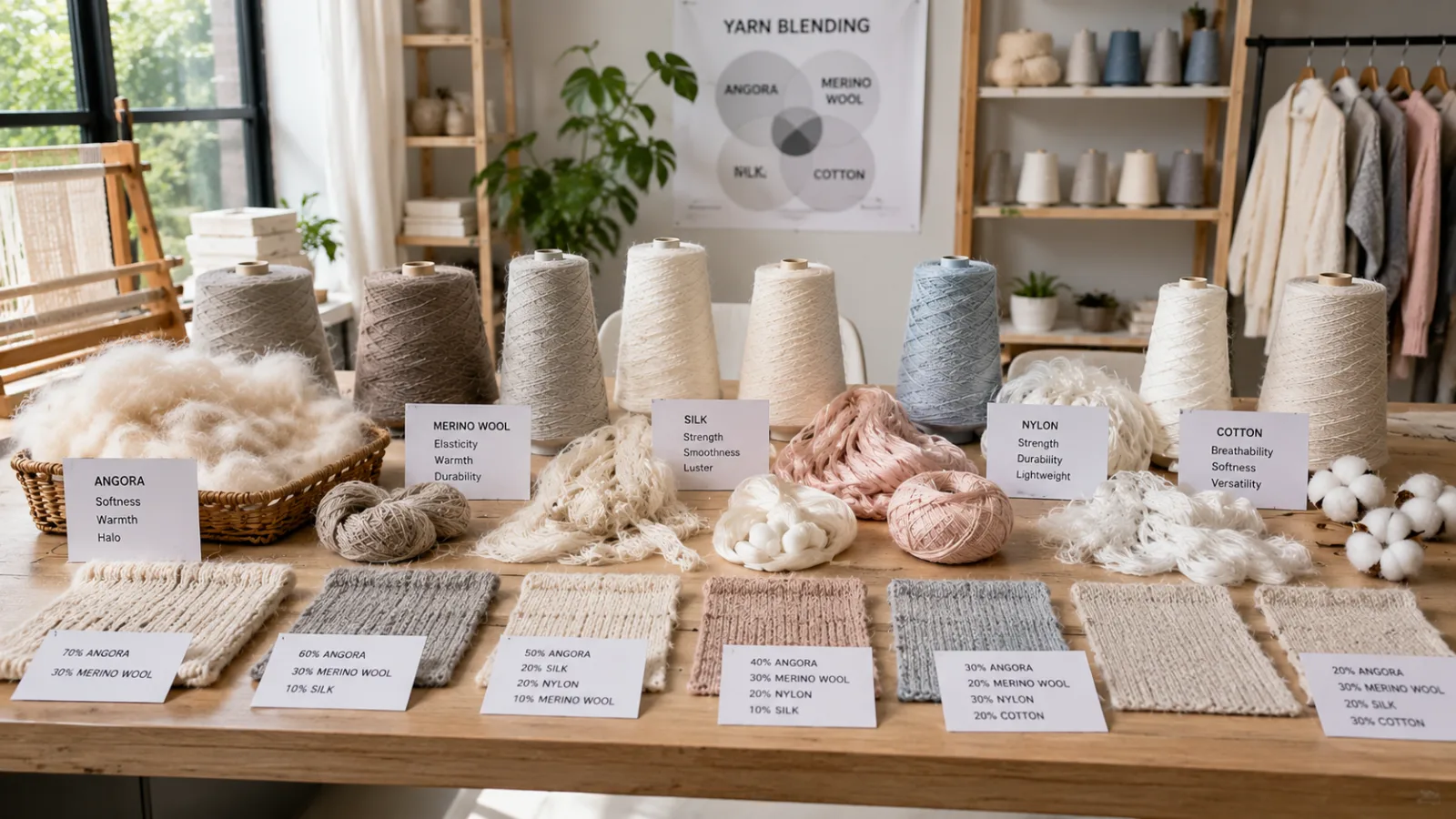
In commercial fashion, angora is often blended with other fibers. Pure angora can be extremely soft and warm, but it may lack elasticity and durability on its own. Blending angora with wool, nylon, viscose, silk, or synthetic fibers can improve strength, shape retention, price, and wearability. This is why many angora sweaters or scarves contain only a percentage of angora rather than 100 percent angora.
Why Angora Feels So Special
Angora feels different from many other fibers because it combines softness, warmth, and lightness. A garment can feel warm without being bulky. The fiber’s fine structure creates a soft hand feel, while the halo effect gives the surface a luxurious visual texture.
This makes angora especially appealing for winter fashion, luxury knitwear, premium accessories, and soft-touch garments. However, the same features that make it beautiful also make it delicate. Angora requires careful handling, thoughtful design, and responsible sourcing.
FAQ 1: Where Does Angora Yarn Come From?
Angora yarn usually comes from the soft coat of Angora rabbits. These rabbits are domesticated animals known for their long, fluffy coats. Britannica states that Angora rabbit fiber is commonly obtained by shearing, clipping, or plucking several times per year, allowing each growth of fiber to reach around 8 to 9 centimeters, or about 3 to 3.5 inches. It also notes that each animal may yield about 200 to 400 grams, or 7 to 14 ounces, of fiber annually.
The fiber is collected, sorted, cleaned, and spun into yarn. After spinning, it can be knitted or woven into fabric. In many cases, angora is blended with other fibers before spinning. Blending helps improve stability, reduce cost, and make the yarn easier to use in apparel production.
Angora rabbits come in several breeds, including English Angora, French Angora, Satin Angora, Giant Angora, and German Angora. Different breeds can produce fiber with different characteristics, such as length, fineness, shine, and volume. Some breeds require more grooming than others, and some are more commonly used in fiber production.
How Angora Fiber Is Collected
Angora fiber may be collected by shearing, clipping, combing, or plucking loose fiber. In small-scale or careful production, fiber collection may be part of regular grooming and coat maintenance. However, not all angora production is humane. This is one of the biggest concerns surrounding the fiber.
Animal welfare organizations have reported cases where rabbits were kept in poor conditions or had hair removed in painful ways. PETA has publicly criticized the angora industry due to concerns about live plucking and harsh treatment in some farms. Because of this, buyers and brands should ask detailed questions about sourcing, animal welfare, traceability, and production methods before using angora.

FAQ 2: Is Angora the Same as Mohair?
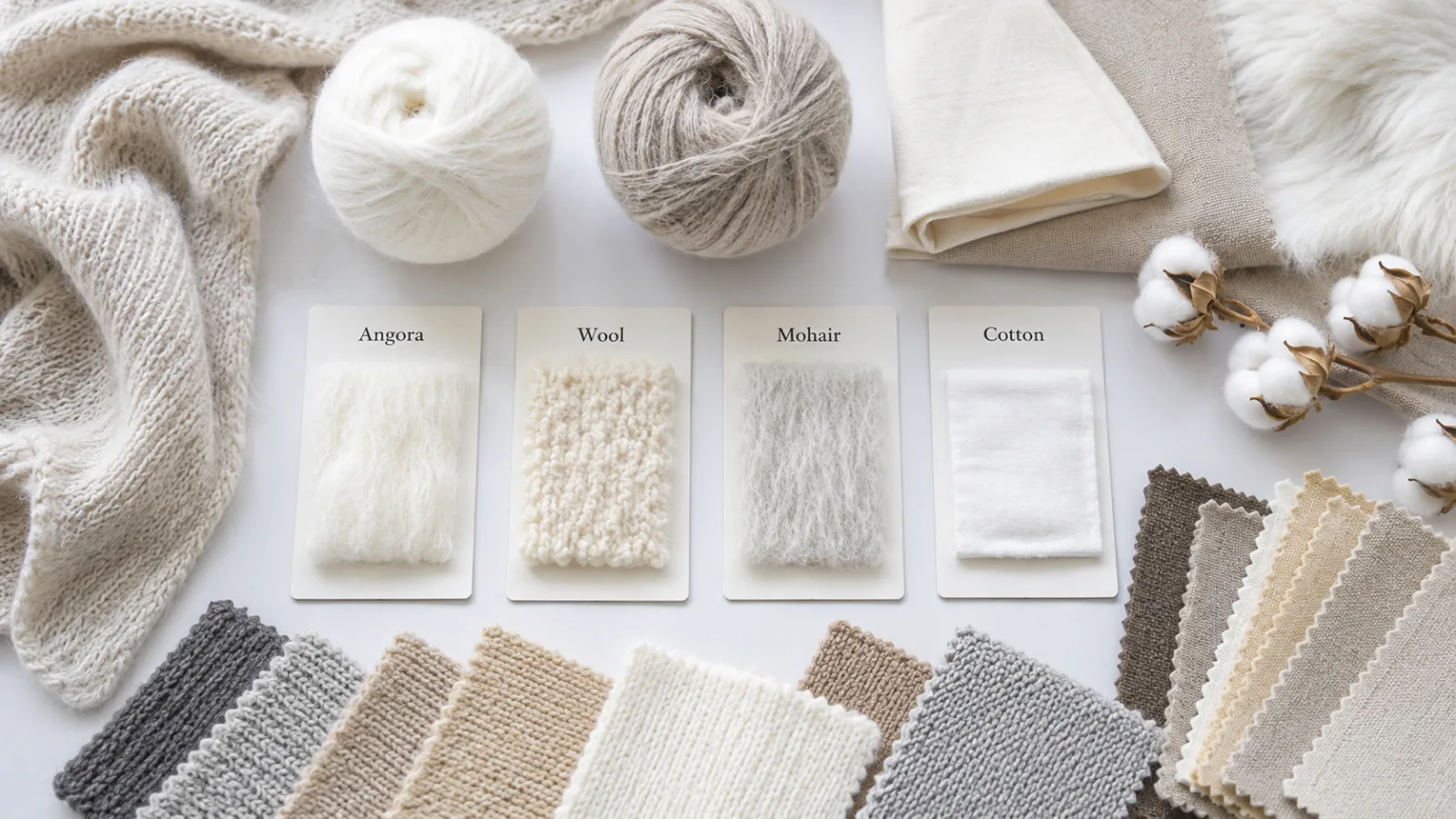
No, angora and mohair are not the same. Angora usually refers to fiber from the Angora rabbit, while mohair comes from the Angora goat. The names are similar because both animals share the “Angora” name, but the fibers are different in source, texture, performance, and common uses.
Angora rabbit fiber is famous for softness, fluffiness, and lightweight warmth. Mohair, from Angora goats, is known for shine, strength, resilience, and a slightly hairier texture depending on the grade. Angora is usually softer and fluffier, while mohair is often stronger and more lustrous.
This distinction matters for product development, labeling, sourcing, and customer communication. A sweater labeled angora should not be assumed to contain mohair, and a mohair cardigan should not be described as angora. For fashion brands, incorrect fiber labeling can create customer confusion and may cause compliance issues.
Angora vs Mohair in Simple Terms
Angora comes from Angora rabbits and is known for softness, warmth, lightness, and a fuzzy halo. Mohair comes from Angora goats and is known for shine, durability, elasticity, and a more structured hair-like appearance.
Both are luxury animal fibers, but they are not interchangeable. If a brand wants a soft, fluffy, cloud-like winter sweater, angora may create that effect. If a brand wants a shiny, stronger, more dramatic yarn with a brushed texture, mohair may be more suitable.
Why Consumers Get Confused
The confusion often starts with the word “Angora.” People hear Angora goat and assume angora fabric comes from goats. But in apparel language, the fiber from Angora goats is generally known as mohair, while angora is associated with Angora rabbits. Britannica separately describes rabbit hair from the Angora rabbit and wool or animal fibers from other mammals, which reinforces that fiber source matters when identifying textile materials.
FAQ 3: What Does Angora Yarn Fabric Feel Like?
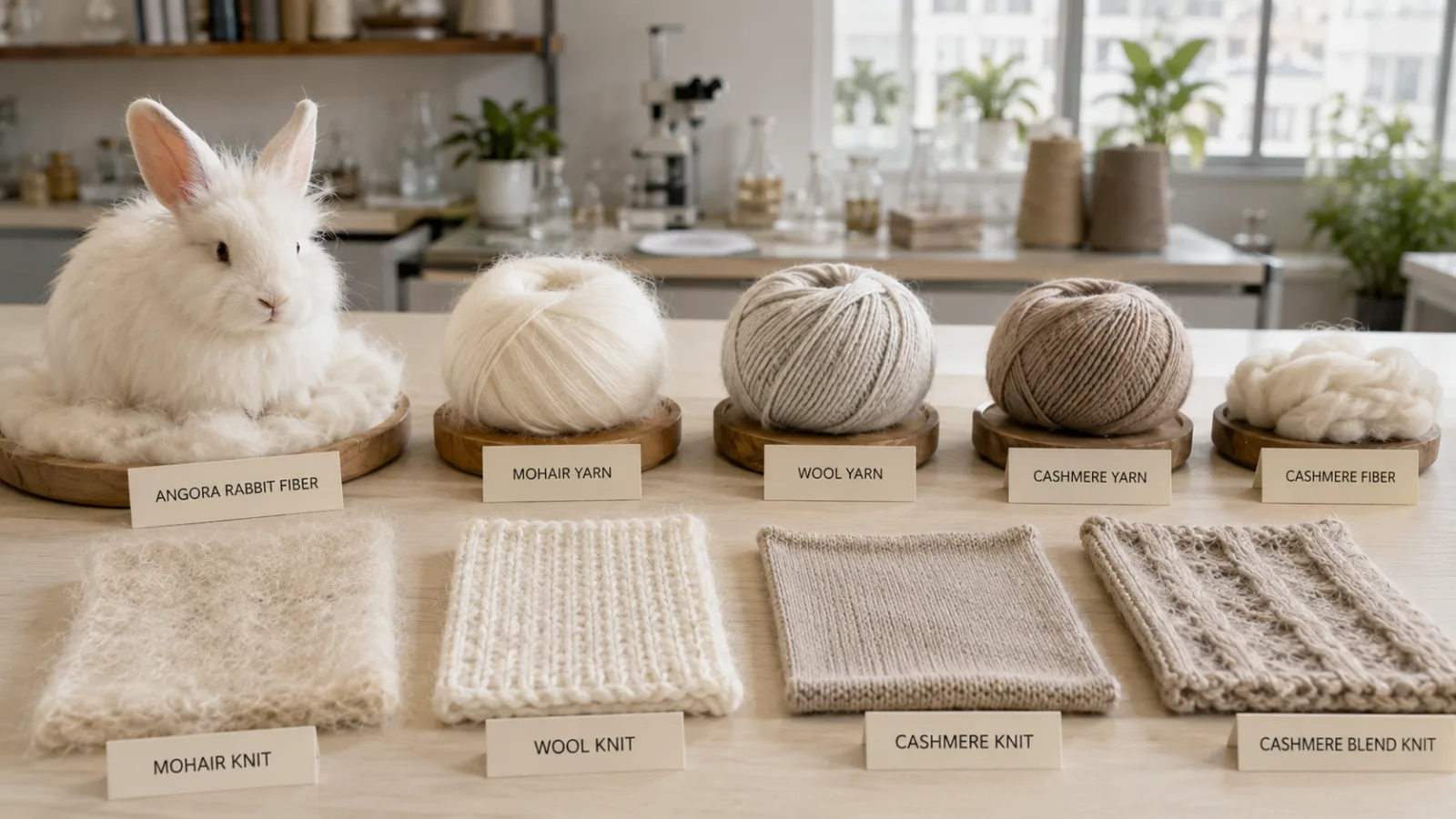
Angora yarn fabric feels extremely soft, warm, fluffy, and lightweight. Many people describe it as cloud-like or feather-soft. It does not usually feel dense or heavy like thick wool. Instead, it has a gentle, airy surface that feels warm without too much weight.
The most recognizable feature of angora fabric is its halo. Halo means the soft fibers that rise from the surface of the yarn or fabric, creating a fuzzy glow around the garment. This gives angora sweaters and scarves their luxurious, cozy appearance.
Because angora is so soft, it is often used in products that sit close to the body, such as scarves, sweaters, hats, gloves, and shawls. However, some people may still find the fuzzy surface ticklish or irritating, especially around the neck or face. Comfort depends on fiber quality, yarn blend, garment construction, and personal skin sensitivity.
Is Angora Itchy?
High-quality angora is usually softer than many traditional wool fibers. However, itchiness is personal. Some people are sensitive to animal fibers, loose fibers, or fuzzy textures. A person who finds wool itchy may still enjoy angora, but this is not guaranteed.
The yarn blend also matters. If angora is blended with coarse wool or synthetic fibers, the final fabric may feel less soft than expected. If it is blended with fine merino, silk, or soft nylon, the garment may feel smoother and more comfortable.
Is Angora Good for Sensitive Skin?
Angora can feel very soft, but it is not automatically the best choice for every sensitive skin type. Some people dislike shedding fibers near the face or neck. For babywear or children’s clothing, brands should be especially careful because delicate skin may react to fuzzy fibers, loose fiber shedding, or warmth buildup.
If sensitivity is a concern, test the fabric before buying or producing a garment. For fashion brands, wear testing is important before launching angora products.
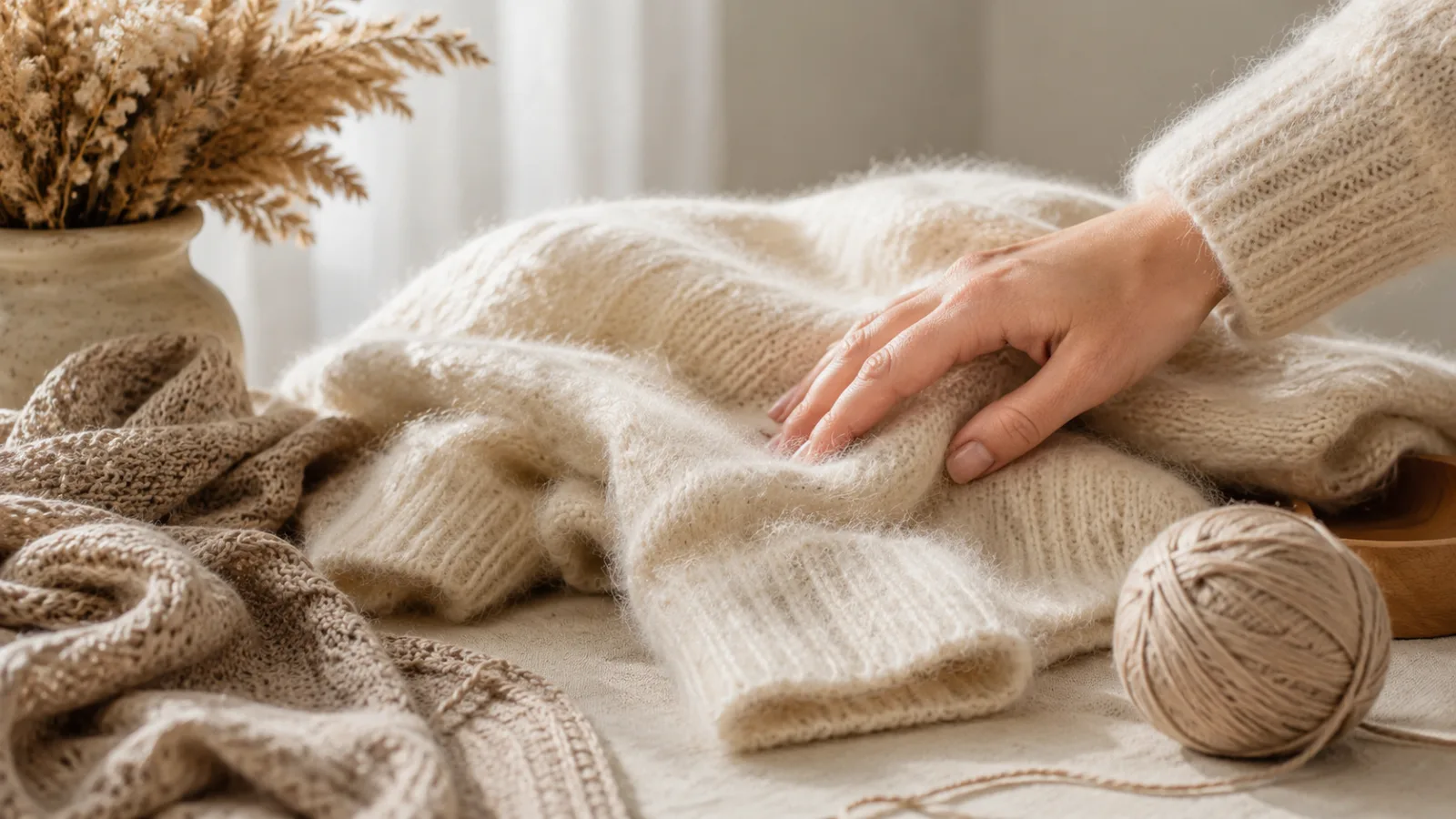
FAQ 4: Why Is Angora Yarn Fabric So Warm?
Angora yarn fabric is warm because the fiber is fine, fluffy, and highly insulating. The fuzzy halo helps trap air around the body, creating warmth without heavy fabric weight. This is why angora can feel warmer than expected even when the garment is lightweight.
Britannica notes that rabbit hair includes a fine insulating undercoat, and Angora rabbit fiber is prized for fineness and softness. In clothing, insulation often comes from trapped air. Fibers that create loft, fluff, or air pockets can help reduce heat loss. Angora’s fluffy structure makes it especially effective for cozy winter garments and accessories.
This warmth is one of angora’s biggest advantages. A thin angora-blend sweater may feel warmer than a heavier cotton knit. A scarf with angora content may feel soft and protective in cold weather. Gloves, socks, and hats can feel especially cozy when angora is blended with stronger fibers.
Is Angora Too Warm?
Sometimes, yes. Pure or high-percentage angora can be very warm. For indoor wear, a thick angora sweater may feel too hot. This is one reason many commercial yarns use angora blends rather than 100 percent angora. Blending can reduce overheating, improve durability, and make the garment easier to wear in daily life.
For fashion brands, the right angora percentage depends on the product. A winter scarf may benefit from more angora. A lightweight cardigan may need less. Socks may need a blend with nylon or wool for strength. A baby item may need extra caution because warmth, shedding, and care requirements all matter.
Best Seasons for Angora
Angora is best suited for cold weather, winter fashion, autumn layering, and cozy accessories. It is not usually ideal for hot climates, activewear, or garments that need frequent washing. It works best when softness and warmth are more important than heavy-duty durability.
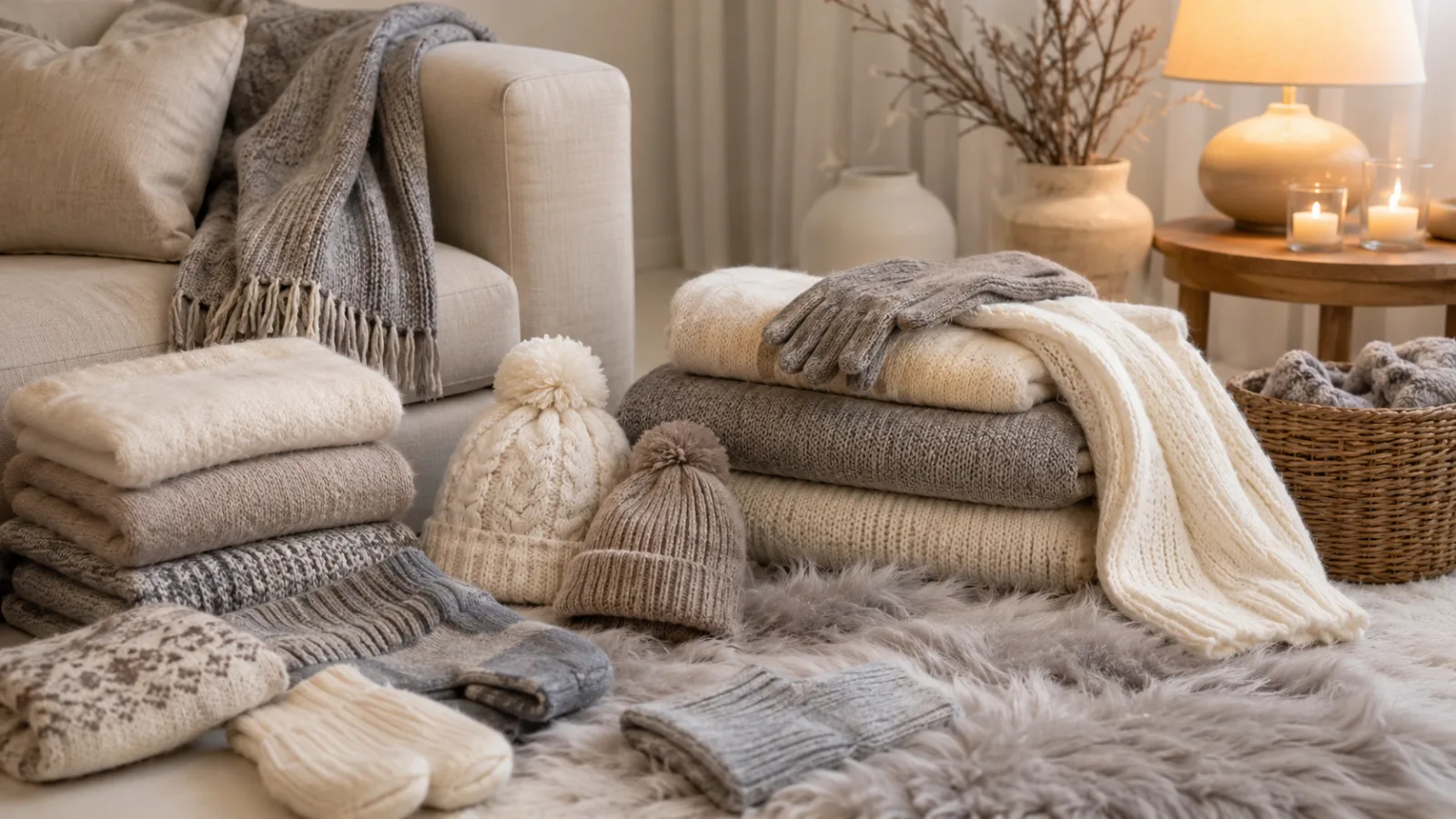
FAQ 5: What Are the Main Uses of Angora Yarn Fabric?
Angora yarn fabric is mainly used in luxury knitwear, winter accessories, soft-touch garments, and specialty textile products. Britannica notes that Angora rabbit fiber is used mainly for high-quality woven fabrics, knitted goods, and knitting yarns. In modern fashion, knitted goods are especially common because angora’s softness and halo work beautifully in knit structures.
Common uses include sweaters, cardigans, scarves, shawls, hats, gloves, socks, pullovers, knit dresses, luxury loungewear, and decorative trims. Angora can also be used in yarn blends for hand knitting and crochet projects.
Angora Sweaters and Cardigans
Sweaters are one of the most popular uses of angora. The fiber gives knitwear a soft, premium look that feels cozy and elegant. Angora sweaters are often chosen for winter collections, luxury fashion lines, and feminine knitwear styles.
However, designers must account for shedding, stretch, and care. A sweater with too much angora may lose shape or shed heavily. A carefully blended yarn can improve performance.
Angora Scarves and Shawls
Scarves and shawls are ideal for angora because they highlight softness and warmth. A small amount of angora in a scarf can create a luxurious hand feel. However, because scarves sit near the face, shedding and sensitivity should be considered.
Angora Hats, Gloves, and Socks
Angora is useful in hats and gloves because warmth is important in cold weather. In socks, angora is usually blended with stronger fibers because socks face friction and need durability. Pure angora would usually be too delicate for high-abrasion areas.
Angora in Luxury and Designer Fashion
Angora is often associated with softness, elegance, and winter luxury. Designers may use it to create a romantic, fuzzy, delicate surface. It can give simple silhouettes a premium look without needing complicated construction.
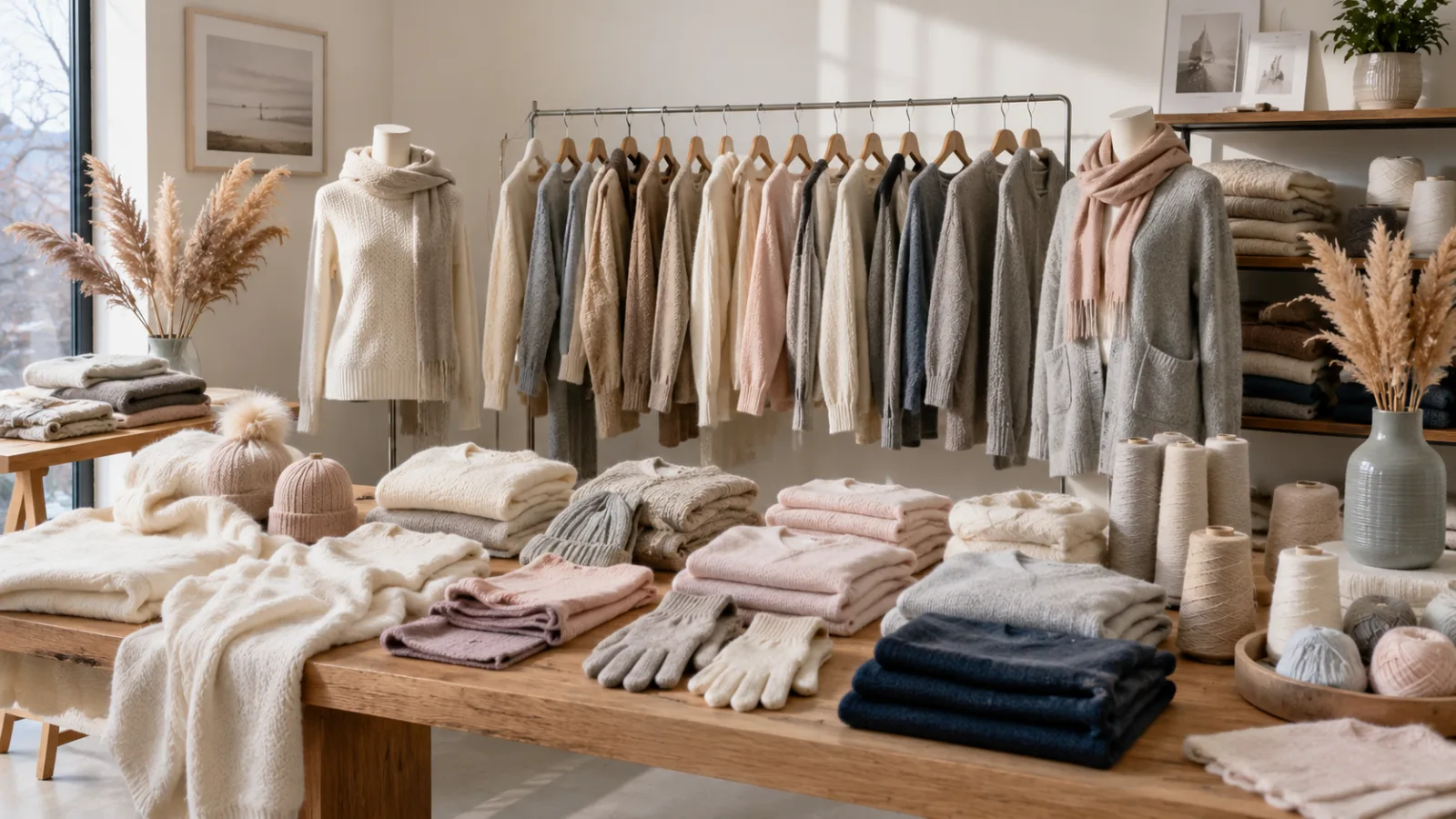
FAQ 6: What Are the Benefits of Angora Yarn Fabric?
Angora yarn fabric has several benefits that make it valuable in fashion and textile design. Its biggest strengths are softness, warmth, lightness, visual texture, and luxury appeal.
1. Exceptional Softness
Angora is known for its soft hand feel. It can feel smoother and lighter than many traditional wool fabrics. This makes it appealing for garments designed for comfort and warmth.
2. Lightweight Warmth
Angora can provide excellent warmth without bulky weight. This makes it useful for winter accessories and premium knitwear where comfort and elegance both matter.
3. Beautiful Halo Effect
The fuzzy halo of angora gives fabric a soft visual glow. This makes garments look cozy, delicate, and luxurious. The halo can make even a simple sweater design look more premium.
4. Luxury Brand Appeal
Because angora is delicate and specialty-driven, it is often associated with premium fashion. A small percentage of angora in a yarn blend can improve perceived value.
5. Blending Flexibility
Angora can be blended with wool, merino, nylon, silk, viscose, or synthetic fibers to create different performance effects. Blends can improve durability, elasticity, price, and care performance.
6. Good for Cold-Weather Accessories
Scarves, hats, gloves, and soft winter knits can benefit from angora’s warmth and comfort. This makes it attractive for seasonal collections.
Why Brands Use Angora Carefully
Even with these benefits, angora should be used thoughtfully. It is not suitable for every product. It works best when the design purpose matches the fiber’s strengths. A delicate luxury cardigan makes more sense than a rugged everyday workwear garment. A soft scarf may make more sense than children’s activewear.
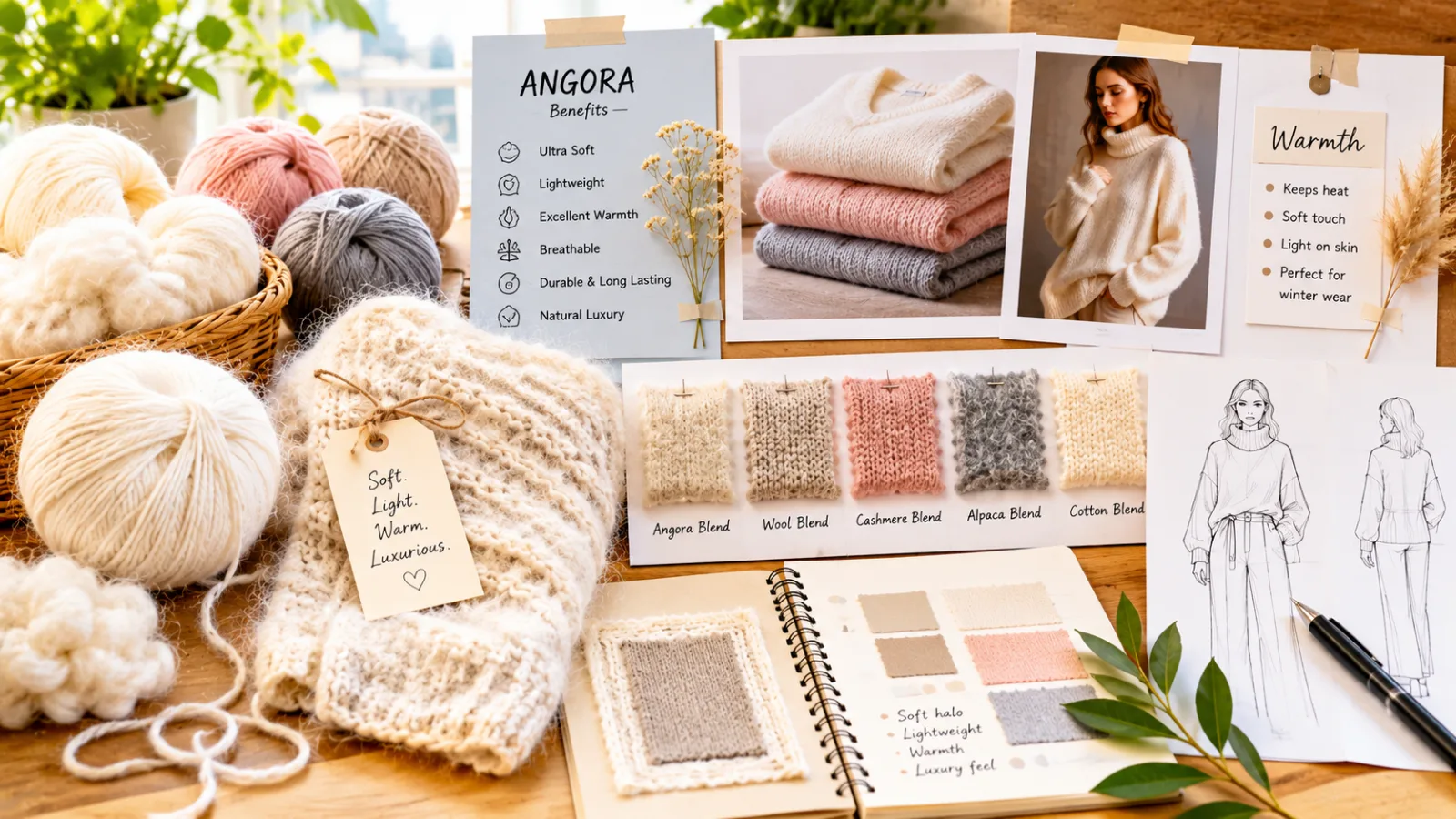
FAQ 7: What Are the Disadvantages of Angora Yarn Fabric?
Angora is beautiful, but it is not a perfect fiber. Its disadvantages include shedding, delicate care, felting risk, limited durability, ethical concerns, higher cost, and possible sensitivity for some wearers.
1. Angora Can Shed
Shedding is one of the most common complaints about angora garments. The fine fibers can loosen from the yarn and transfer onto other clothing. This is especially noticeable with dark garments worn under or near light-colored angora items.
Blended angora yarns may shed less than pure angora, but shedding can still happen.
2. Angora Can Felt
Angora can felt when exposed to heat, moisture, friction, or rough washing. Felting causes fibers to mat together, shrink, and lose their original texture. This is why angora garments should be washed gently.
3. Angora May Stretch or Lose Shape
Pure angora lacks the natural elasticity needed for some garment types. Blending it with wool or synthetic fibers helps improve shape retention.
4. Angora Requires Careful Washing
Angora is not a low-maintenance fabric. It usually needs hand washing or very careful cleaning. Machine washing can damage the fiber unless the care label specifically allows it.
5. Angora Raises Ethical Questions
Animal welfare is one of the biggest concerns. Reports of painful live plucking and poor conditions have made angora controversial. PETA has stated that many brands stopped selling angora after welfare concerns became public.
6. Angora Can Be Expensive
Because angora is a specialty animal fiber with limited production and careful processing needs, it can cost more than common fibers like cotton, acrylic, or standard wool blends.
Should You Avoid Angora Completely?
That depends on your values, sourcing standards, and product goals. Some consumers avoid angora because of animal welfare concerns. Others only consider angora if it is traceable, carefully sourced, and produced under strong welfare standards. Brands should be transparent and cautious when using it.
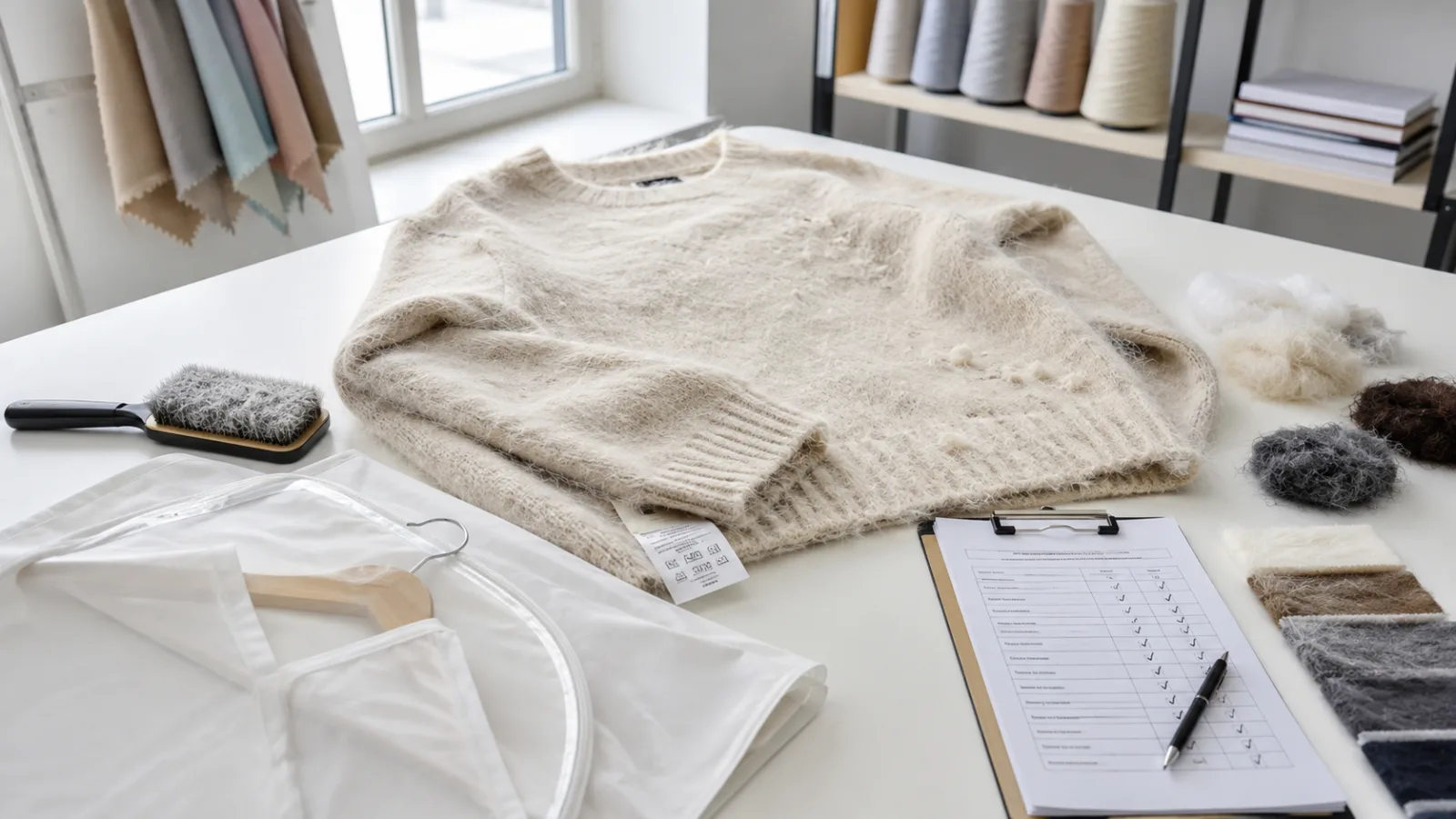
FAQ 8: Is Angora Yarn Fabric Ethical?
Angora can be ethically complicated. The fiber itself comes from rabbits, and the welfare of those animals depends heavily on how they are raised, handled, groomed, and how the fiber is collected. Some small producers collect loose fiber through grooming or careful shearing. However, serious welfare concerns have been documented in parts of the commercial angora industry.
PETA has reported concerns around live plucking, confinement, and poor treatment of rabbits in some angora supply chains. These concerns have led many shoppers, fashion brands, and retailers to avoid angora or demand stronger sourcing proof.
The ethical question is not only “Is angora natural?” Natural does not automatically mean ethical. A natural fiber can still involve poor animal welfare if sourcing is not controlled. Ethical evaluation should include animal handling, housing, grooming, fiber collection method, traceability, farm audits, supplier transparency, and certification where available.
What Ethical Buyers Should Ask
If you are buying angora yarn or producing angora garments, ask:
- Where does the angora come from?
- Is the fiber traceable to the farm or region?
- How is the fiber collected?
- Is live plucking prohibited?
- Are rabbits sheared, clipped, or groomed safely?
- Are animal welfare standards documented?
- Are third-party audits available?
- Can the supplier provide written sourcing policies?
- Is the angora blended, recycled, or deadstock?
- Are there cruelty-free alternatives that meet the same design goal?
Are There Certifications for Angora?
Unlike some animal fibers, angora does not have one universally recognized global certification that solves every ethical concern. Textile Exchange has standards for responsible animal fibers and is moving toward its Materials Matter Standard, which is designed to address impacts such as animal welfare, land, water, energy, chemicals, waste, and working conditions across raw material production and processing. However, buyers still need supplier-level traceability and documentation for angora specifically.
Best Practice for Brands
For apparel brands, using angora without transparency can create reputation risk. If a brand chooses to use angora, it should be prepared to explain sourcing, welfare standards, and supplier verification clearly. If that is not possible, it may be better to use alternatives such as alpaca, responsible wool blends, recycled fibers, organic cotton blends, or soft synthetic alternatives depending on the product.

FAQ 9: How Do You Wash and Care for Angora Yarn Fabric?
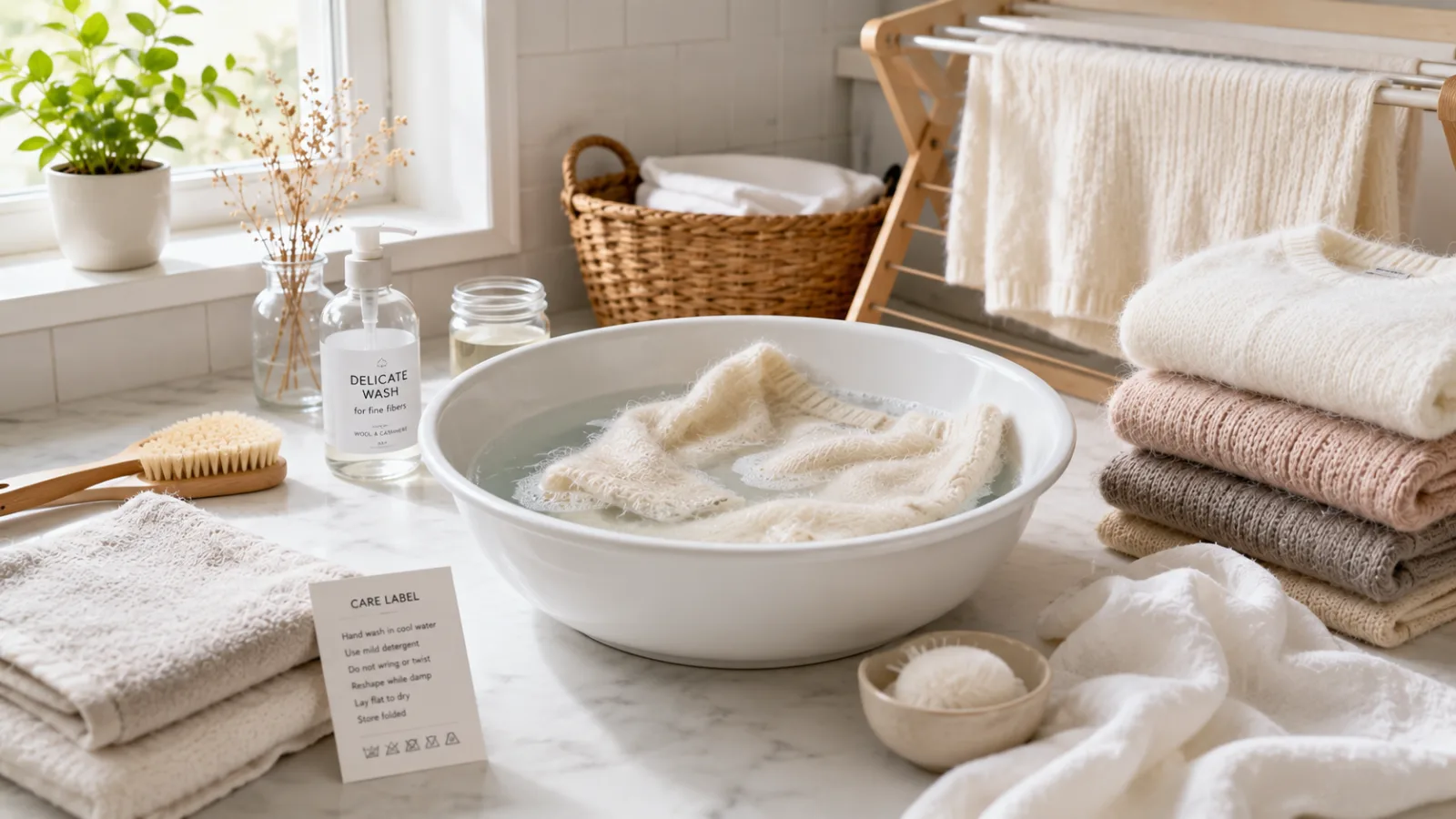
Angora yarn fabric needs gentle care. Always start with the garment’s care label because blends and finishes vary. In general, angora should be washed carefully, dried flat, and stored properly to avoid shrinkage, felting, stretching, and shedding.
Basic Angora Care Steps
- Use cool water, not hot water.
- Use a gentle wool-safe detergent.
- Avoid harsh rubbing or twisting.
- Wash by hand if the care label recommends it.
- Rinse gently without aggressive agitation.
- Press out water using a towel.
- Dry flat on a clean towel.
- Keep away from direct heat.
- Do not hang heavy wet angora garments.
- Store folded rather than hung.
The goal is to reduce heat, moisture stress, and friction. Angora fibers can mat together if handled roughly. Once felted, the fabric may not return to its original soft texture.
Can Angora Be Machine Washed?
Usually, it is safer to avoid machine washing unless the care label clearly allows it. Some modern blends may be treated or constructed to handle delicate machine cycles, but many angora garments are too delicate for regular washing machines.
If the label allows machine washing, use a mesh laundry bag, cold water, a delicate cycle, and gentle detergent. Still, hand washing is often safer for high-value garments.
Can Angora Be Dry Cleaned?
Some angora garments may recommend dry cleaning, especially structured or luxury pieces. Follow the care label. For expensive garments, professional cleaning may reduce risk, but not all dry cleaners handle delicate fibers equally. Choose a cleaner experienced with luxury knitwear.
How to Reduce Shedding
Shedding can sometimes be reduced by gentle brushing, careful storage, and avoiding friction. Do not wear angora under rough coats or bags that rub heavily against the fabric. Store garments folded in breathable bags and avoid overcrowding.
Some people place angora garments in a sealed bag in the freezer briefly to reduce loose fibers, but this is a home remedy and not a guaranteed professional textile solution. For valuable garments, follow brand care guidance.
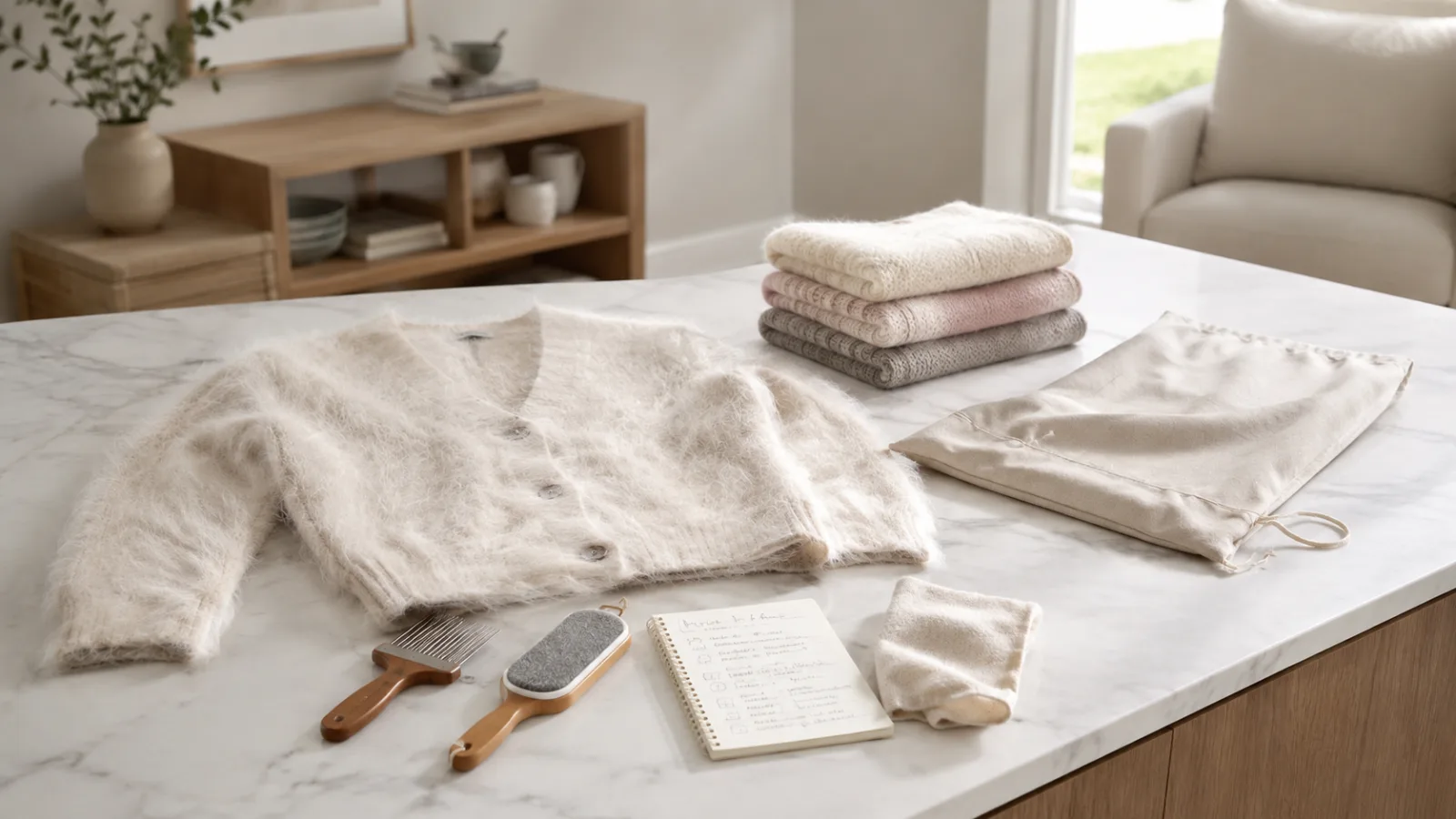
FAQ 10: Does Angora Yarn Fabric Pill or Shed?
Yes, angora yarn fabric can shed and may pill depending on the yarn blend, garment construction, wear habits, and care method. Shedding happens because fine fibers loosen from the yarn and come away from the garment surface. Pilling happens when fibers rub together and form small balls on the surface.
Angora’s soft halo makes it more likely to release fibers than smoother yarns. This is part of its character, but excessive shedding can be frustrating. Low-quality yarn, loose spinning, poor blending, and rough handling can make shedding worse.
How to Manage Shedding
- Wear angora with smooth fabrics to reduce friction.
- Avoid carrying rough bags against angora garments.
- Wash gently and infrequently.
- Store folded in a breathable garment bag.
- Avoid brushing aggressively.
- Choose blended yarns for better stability.
- Check reviews before buying angora garments.
How to Manage Pilling
Use a gentle fabric comb or knitwear shaver carefully. Do not press too hard because angora is delicate. Remove pills slowly and avoid pulling them with your fingers, as this can damage the yarn.
Is Shedding a Sign of Poor Quality?
Not always. Some shedding is normal with angora. However, heavy shedding, bald patches, uneven fuzz, or rapid fabric breakdown may indicate poor yarn quality or unsuitable garment construction.
For brands, testing matters. Before launching angora knitwear, test wear, wash performance, pilling, shedding, and shape recovery. This helps avoid customer complaints.
FAQ 11: Is Angora Yarn Fabric Durable?
Angora is not known as a high-durability fiber by itself. It is valued more for softness, warmth, and luxury feel than rugged strength. Pure angora can be delicate, which is why it is often blended with other fibers to improve wearability.
Durability depends on the blend. Angora blended with wool can gain elasticity and structure. Angora blended with nylon can become stronger and more suitable for socks or accessories. Angora blended with silk may feel luxurious but still delicate. Angora blended with acrylic may become more affordable and easier to care for, though it may feel less premium.
Best Uses for Durability
Angora works better in low to moderate abrasion garments. Sweaters, scarves, hats, and shawls are more suitable than pants, heavy-use outerwear, uniforms, or activewear. Areas that rub frequently, such as elbows, cuffs, underarms, and bag contact points, may show wear faster.
How Brands Can Improve Durability
Brands can improve angora garment performance by using thoughtful blends, tighter spinning, suitable knit structures, reinforced seams, proper garment testing, and clear care labels. They should avoid using angora in products that require frequent machine washing or heavy abrasion.
Should Children Wear Angora?
For children’s clothing, angora is usually less practical than cotton, fleece, merino blends, or washable knits. Kids are active, garments need frequent washing, and loose fibers may be uncomfortable. Angora may work better for occasional accessories or special pieces than everyday children’s clothing.
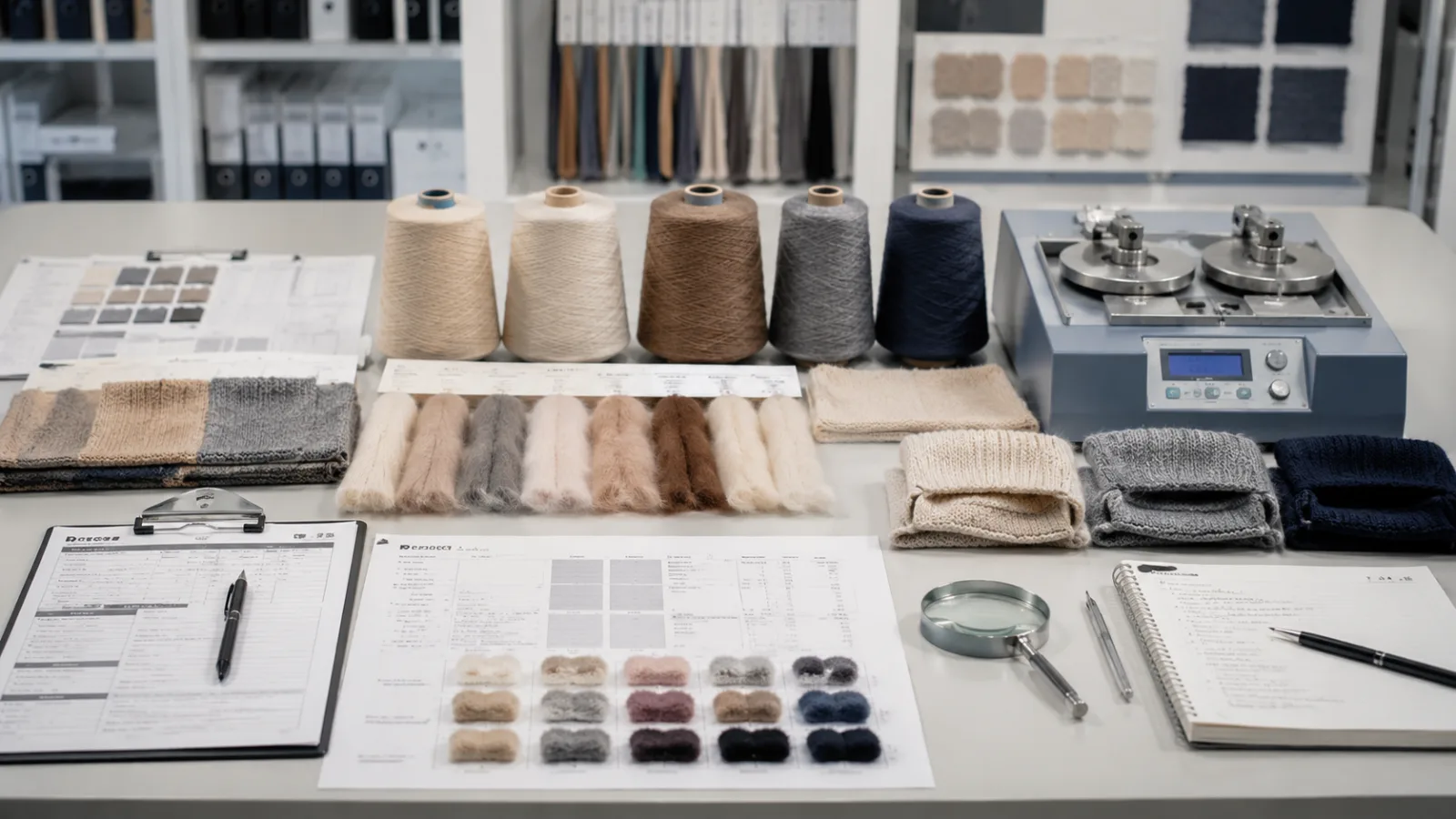
FAQ 12: Why Is Angora Often Blended With Other Fibers?
Angora is often blended because pure angora can be too delicate, too warm, too expensive, and less elastic than many garments require. Blending allows designers and yarn makers to balance softness with performance. A blend can make the yarn easier to spin, knit, wash, wear, and sell. It can also reduce shedding, improve structure, and lower cost.
Common Angora Blends
- Angora and wool: adds warmth, elasticity, and structure.
- Angora and merino: creates soft, warm, premium knitwear.
- Angora and nylon: improves durability, especially for socks and accessories.
- Angora and silk: creates a soft, luxurious, elegant fabric.
- Angora and viscose: can improve drape and softness.
- Angora and acrylic: lowers price and may improve easy-care properties.
What Is a Good Angora Percentage?
There is no single perfect percentage. A small percentage, such as 5 to 20 percent, can add softness and halo to a blend. Higher percentages can create more warmth and fluff but may increase shedding and care difficulty. Some luxury yarns use more angora, but everyday garments often perform better with balanced blends.
For brands, the right percentage depends on the product goal. A luxury scarf may use a higher percentage. A sweater intended for regular wear may use a lower percentage blended with wool or nylon.
How to Read an Angora Label
Look at the fiber content label. A product may say “angora blend” but contain only a small amount of angora. This is not automatically bad, but customers should understand what they are buying. The higher the angora content, the more softness and warmth you may feel, but also the more careful the garment may need to be.
FAQ 13: How Can You Identify Good Quality Angora Yarn Fabric?
Good quality angora yarn fabric should feel soft, light, warm, and even. The surface should have a pleasant halo, but it should not look messy, weak, or uneven. The yarn should be well spun, the knit should be stable, and the garment should recover reasonably well after gentle stretching.
Quality Signs to Look For
- Soft and even hand feel.
- Balanced halo without excessive loose fibers.
- No strong chemical smell.
- Clear fiber content label.
- Smooth seams and clean finishing.
- Even knitting tension.
- No bald patches or thin areas.
- Good recovery after gentle stretching.
- Clear care instructions.
- Traceable sourcing information where possible.
Warning Signs
- Excessive shedding before wear.
- Uneven fuzz or patchy texture.
- Loose seams or weak stitching.
- No fiber content label.
- No care instructions.
- Unclear sourcing claims.
- Very low price with no explanation.
- Harsh or scratchy feel.
- Heavy pilling after minimal handling.
For Fashion Brands and Buyers
If you are sourcing angora yarn fabric for production, request yarn specifications, fiber content, sample swatches, test reports if available, supplier details, and care recommendations. Always test the fabric before bulk production. A beautiful swatch may behave differently after knitting, washing, steaming, and wearing.

FAQ 14: Is Angora Yarn Fabric Sustainable?
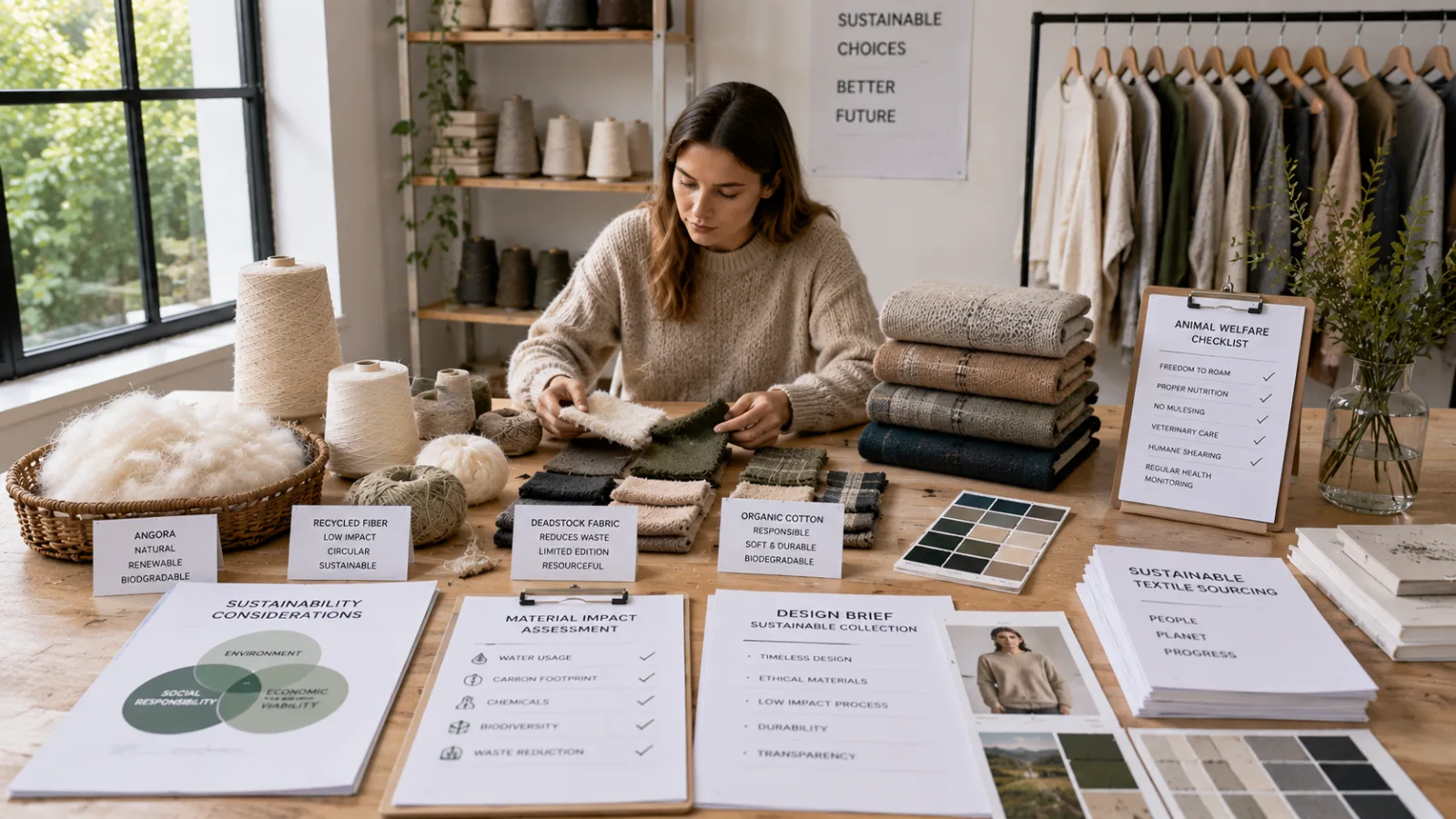
Angora’s sustainability depends on how the rabbits are raised, how the fiber is collected, how the yarn is processed, how long the garment lasts, and whether the product is responsibly used and cared for. Because it is an animal fiber, angora is renewable in the sense that rabbits regrow their coats. However, renewability alone does not make a fiber sustainable.
A sustainable material should consider animal welfare, water use, chemical use, worker conditions, durability, traceability, and end-of-life impact. Angora can perform poorly from an ethical standpoint if animal welfare is weak. It can also become wasteful if garments shed heavily, felt quickly, or are discarded after limited use.
Natural Does Not Always Mean Sustainable
Many consumers assume natural fibers are automatically better. The reality is more complex. Cotton, wool, silk, cashmere, angora, and synthetic fibers all have different environmental and ethical issues. A responsible material decision depends on the full supply chain.
Angora may be a poor choice for fast fashion because fast fashion often depends on low prices, high volumes, and limited traceability. It may be more appropriate in slow fashion or small-batch products where sourcing and animal welfare can be more carefully controlled.
More Responsible Options
Brands can consider traceable angora, recycled angora, deadstock angora yarn, lower-impact blends, certified responsible animal fibers, or non-animal alternatives. Textile Exchange’s Materials Matter approach reflects a broader industry move toward evaluating raw materials through animal welfare, climate, nature, people, chemicals, and waste factors.
FAQ 15: Should Fashion Brands Use Angora Yarn Fabric?
Fashion brands should use angora only if they can justify the material from a design, quality, sourcing, and ethics perspective. Angora is not a basic commodity fabric. It is a sensitive specialty fiber that requires careful sourcing and customer education.
If a brand wants to create luxury winter knitwear, angora may offer softness and warmth that few fibers can match. But the brand must also consider shedding, care requirements, animal welfare concerns, customer perception, and supplier transparency.
When Angora Makes Sense
Angora may make sense for:
- Luxury winter sweaters.
- Premium scarves and shawls.
- Soft hats and gloves.
- Limited-edition knitwear.
- Slow fashion collections.
- Heritage-inspired textile products.
- Small-batch artisan yarns.
When Angora May Not Make Sense
Angora may not be ideal for:
- Fast fashion products.
- Children’s everyday wear.
- Activewear.
- Machine-wash basics.
- High-abrasion garments.
- Low-cost mass production.
Brands without sourcing transparency.
Questions Brands Should Ask Suppliers
- Where is the angora sourced from?
- How is the fiber collected?
- Can you provide traceability documents?
- Can you confirm no live plucking?
- What animal welfare standards are followed?
- What is the exact fiber composition?
- What is the expected shedding level?
- How does the fabric perform after washing?
- Can you provide pilling and abrasion test data?
- What care label do you recommend?
Brand Communication Matters
If a brand uses angora, it should clearly explain the fiber content, care instructions, sourcing position, and why the material was chosen. Silence can create distrust, especially because angora is a known ethical concern for many consumers.

ApparGlobal
For apparel brands, angora yarn fabric is a strong reminder that material choice affects far more than the appearance of a garment. A soft luxury knit may look beautiful on a sample table, but the final product also depends on sourcing transparency, fiber blending, yarn stability, care labeling, supplier communication, quality checkpoints, and production planning.
Many fashion brands struggle when they choose specialty fibers without understanding the technical and sourcing requirements behind them. Angora, cashmere, wool, mohair, silk, alpaca, organic cotton, recycled fibers, and blended yarns all require clear decisions around cost, performance, availability, MOQ, testing, compliance, and customer expectations. Without proper planning, a premium material can lead to quality problems, high returns, unclear labeling, or supplier risk.
Companies such as ApparGlobal help clothing brands align material selection, product development, sourcing decisions, sample review, quality control, and scalable manufacturing workflows. For brands developing knitwear, luxury basics, winter garments, kidswear, private label apparel, or custom clothing collections, this kind of production support can make the process more structured and reliable.
When brands work with a partner that understands fabric behavior, trim standardization, tech packs, MOQ planning, supplier coordination, and quality expectations, they can make better material decisions before moving into bulk production. This helps reduce costly mistakes and supports a smoother path from design concept to finished garment.
Quick Angora Yarn Fabric Buying Checklist
Before buying angora yarn, angora fabric, or angora garments, use this simple checklist:
- Check the fiber content percentage.
- Confirm whether it is angora rabbit fiber or another fiber.
- Ask about sourcing and animal welfare.
- Look for traceability documentation where possible.
- Feel the fabric for softness and comfort.
- Check for excessive shedding.
- Read the care label carefully.
- Choose blends for better durability.
- Avoid rough washing or high heat.
- Store folded and protected.
- Consider alternatives if ethics are unclear.
- Buy from transparent suppliers or brands.
- This checklist is useful for consumers, designers, buyers, and apparel brands. Angora can be beautiful, but it should be purchased with knowledge, not just emotion.

Final Thoughts
Angora yarn fabric is soft, warm, lightweight, elegant, and visually luxurious. It has a unique halo effect that makes knitwear look cozy and premium. For sweaters, scarves, shawls, hats, gloves, and luxury winter accessories, angora can create a special texture that many other fibers cannot easily match.
At the same time, angora is not a simple fabric. It can shed, felt, pill, stretch, and require delicate care. It also carries serious ethical sourcing concerns because of reported animal welfare issues in parts of the angora industry. For this reason, consumers and brands should not treat angora like a basic winter fiber. It deserves more careful research.
The most important thing to remember is balance. Angora can be beautiful when it is responsibly sourced, thoughtfully blended, well-constructed, and properly cared for. It can be problematic when it is used cheaply, sourced without transparency, or added to products without considering customer expectations.
For shoppers, the best approach is to read labels, ask questions, check care instructions, and buy from transparent brands. For apparel businesses, the best approach is to test the material carefully, confirm supplier practices, document sourcing, and design products that match the fiber’s strengths. Angora yarn fabric is not for every garment or every brand. But when used responsibly and intelligently, it can bring softness, warmth, and quiet luxury to knitwear in a way few fibers can.