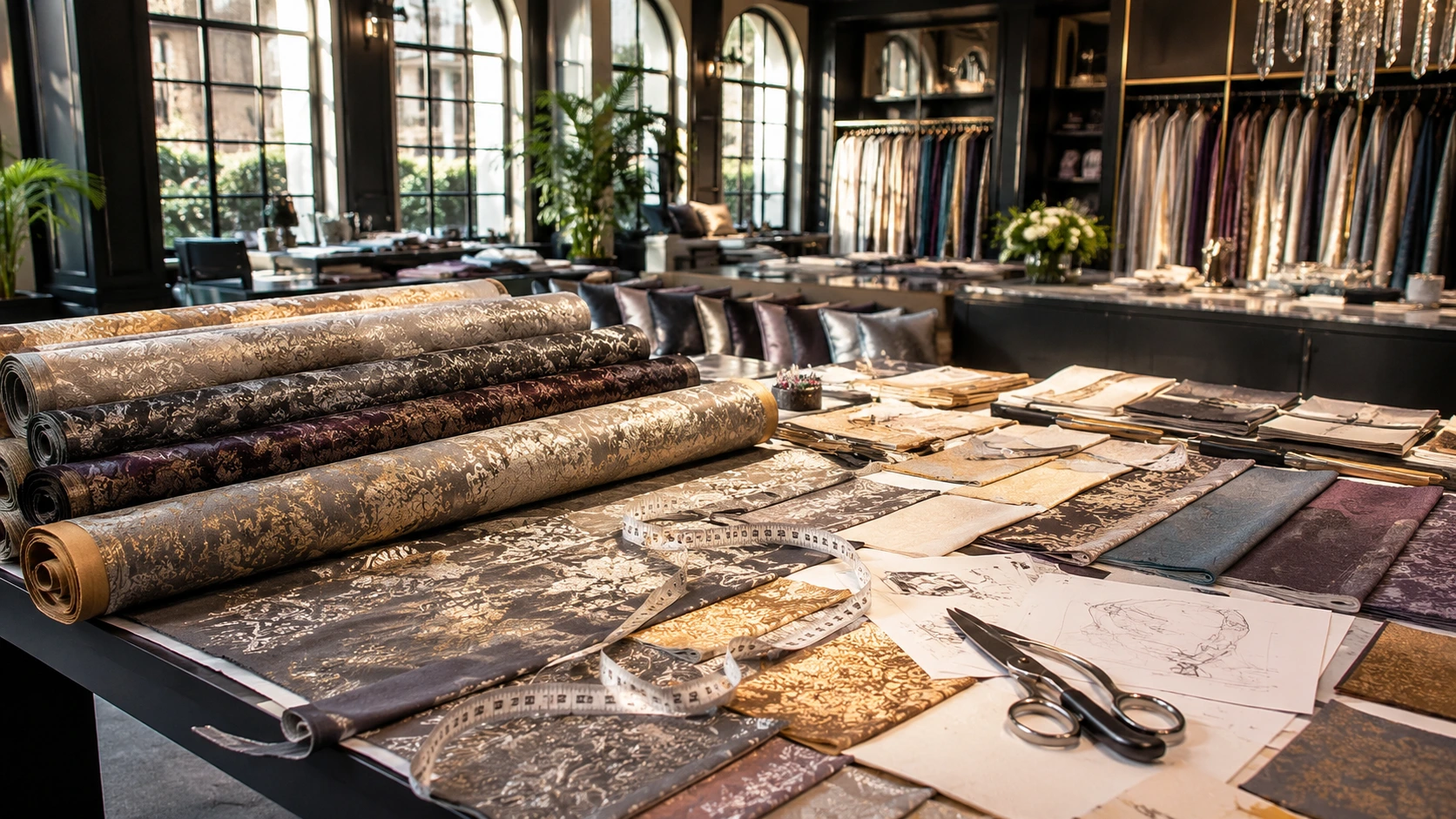
Brocade is one of the most beautiful and misunderstood fabrics in the textile world. It is rich, decorative, structured, and instantly recognizable because of its raised patterns and luxurious surface. For centuries, brocade has been associated with royalty, ceremonial clothing, bridalwear, evening gowns, traditional garments, upholstery, drapery, and high-end fashion. Yet despite its long history and premium appearance, many people still misunderstand what brocade really is.
Some people think brocade is always made from silk. Some believe it is too heavy for clothing. Others assume brocade is simply embroidered fabric, printed fabric, jacquard fabric, or any shiny material with a fancy design. These assumptions are common, but they are not always correct.
Brocade is not defined only by how it looks. It is defined by how it is made. Britannica describes brocade as a woven fabric with a raised floral or figured design introduced during the weaving process, often using a Jacquard attachment, with the design usually appearing on the face of the fabric. It also notes that the background may be twill, satin, or plain weave, and that brocade is often used for evening dresses, draperies, and upholstery.
That definition is important because it separates true brocade from many lookalike fabrics. A printed satin with a floral design is not the same as brocade. An embroidered fabric may look dimensional, but it is not brocade if the design is stitched on after weaving. A jacquard fabric may be related to brocade, but not every jacquard is brocade.
This detailed guide debunks the most popular myths about brocade fabric so designers, buyers, boutique owners, apparel brands, students, and fabric lovers can understand it more clearly. We will explore what brocade is, how it is made, what it is used for, how to care for it, how to identify quality, and how to choose the right type for your project.
What Is Brocade Fabric?
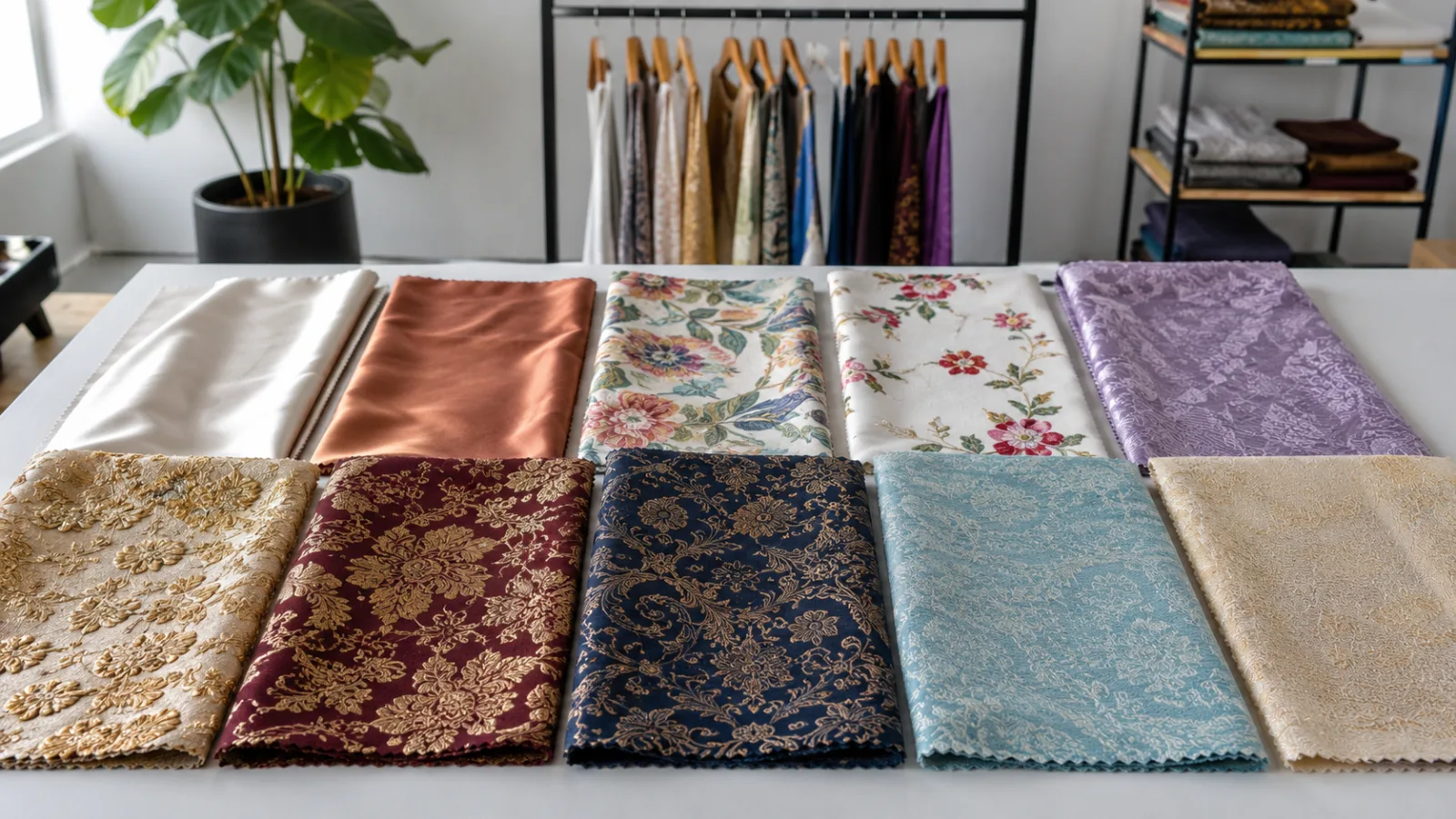
Brocade fabric is a decorative woven textile known for raised or figured patterns that are created during the weaving process. These patterns are not simply printed on the surface. They are formed with additional yarns woven into the fabric structure to create motifs that appear slightly raised, rich, and dimensional.
Brocade can be made with silk, cotton, rayon, polyester, metallic yarns, synthetic blends, or mixed fibers. Historically, silk brocade was highly valued because silk offered natural shine, smoothness, and luxury. Today, many brocades are made with synthetic fibers or blends, making the fabric more affordable, widely available, and easier to use in different markets.
The fabric is often associated with floral, paisley, damask-like, geometric, medallion, baroque, traditional, or ceremonial motifs. It may be glossy, matte, metallic, soft, crisp, medium-weight, or very heavy depending on the yarns and construction.
Brocade is commonly used in eveningwear, wedding dresses, formal jackets, traditional garments, sarees, lehengas, sherwanis, waistcoats, handbags, shoes, upholstery, cushions, curtains, and decorative home textiles. It is a fabric that can instantly add richness to a product.
Britannica’s textile entry explains that brocaded fabric has colored or metallic threads set in low relief against the ground weave, and the ground weave may be any basic weave because the brocaded pattern is inserted between ground wefts and bound by ground warps. This means brocade is more than surface decoration. Its pattern is part of the woven structure.
Why Brocade Looks So Luxurious
Brocade looks luxurious because of three main features: texture, pattern, and light reflection. The raised motifs create depth. The woven structure gives the design permanence. Shiny yarns, metallic threads, silk-like fibers, or satin grounds can reflect light beautifully. Together, these details create a fabric that feels rich even when used in a simple silhouette.
A plain dress made from brocade can look elegant because the fabric itself carries the design. A cushion made from brocade can feel decorative without extra trims. A formal jacket in brocade can look powerful because of the structure and pattern.
Myth 1: Brocade Is Always Made From Silk
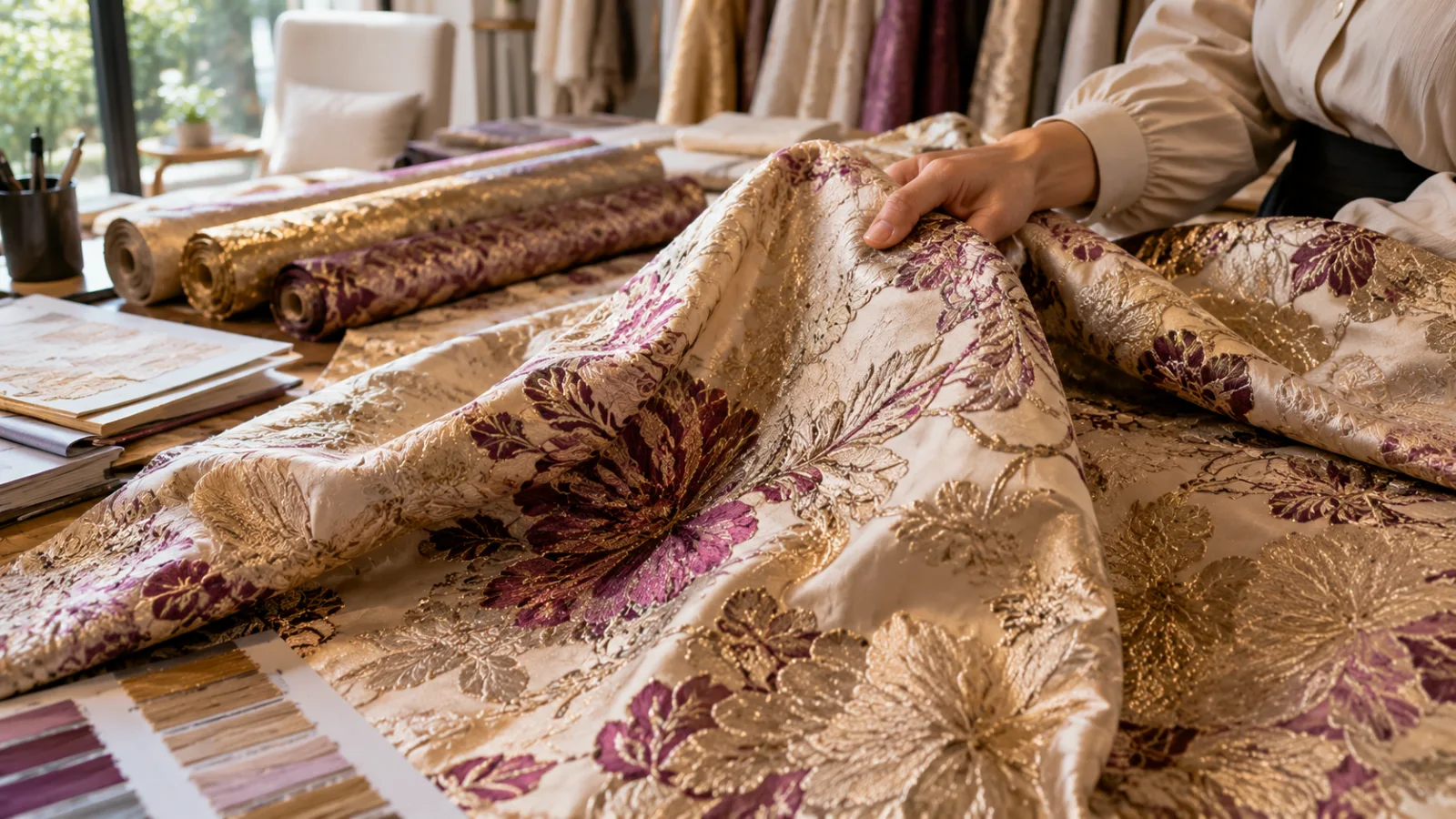
One of the most common myths about brocade fabric is that it is always made from silk. This belief comes from brocade’s history. For centuries, many luxurious brocades were woven from silk and often decorated with gold or silver-colored threads. Silk brocade was used for royal clothing, religious garments, ceremonial textiles, and high-status interiors.
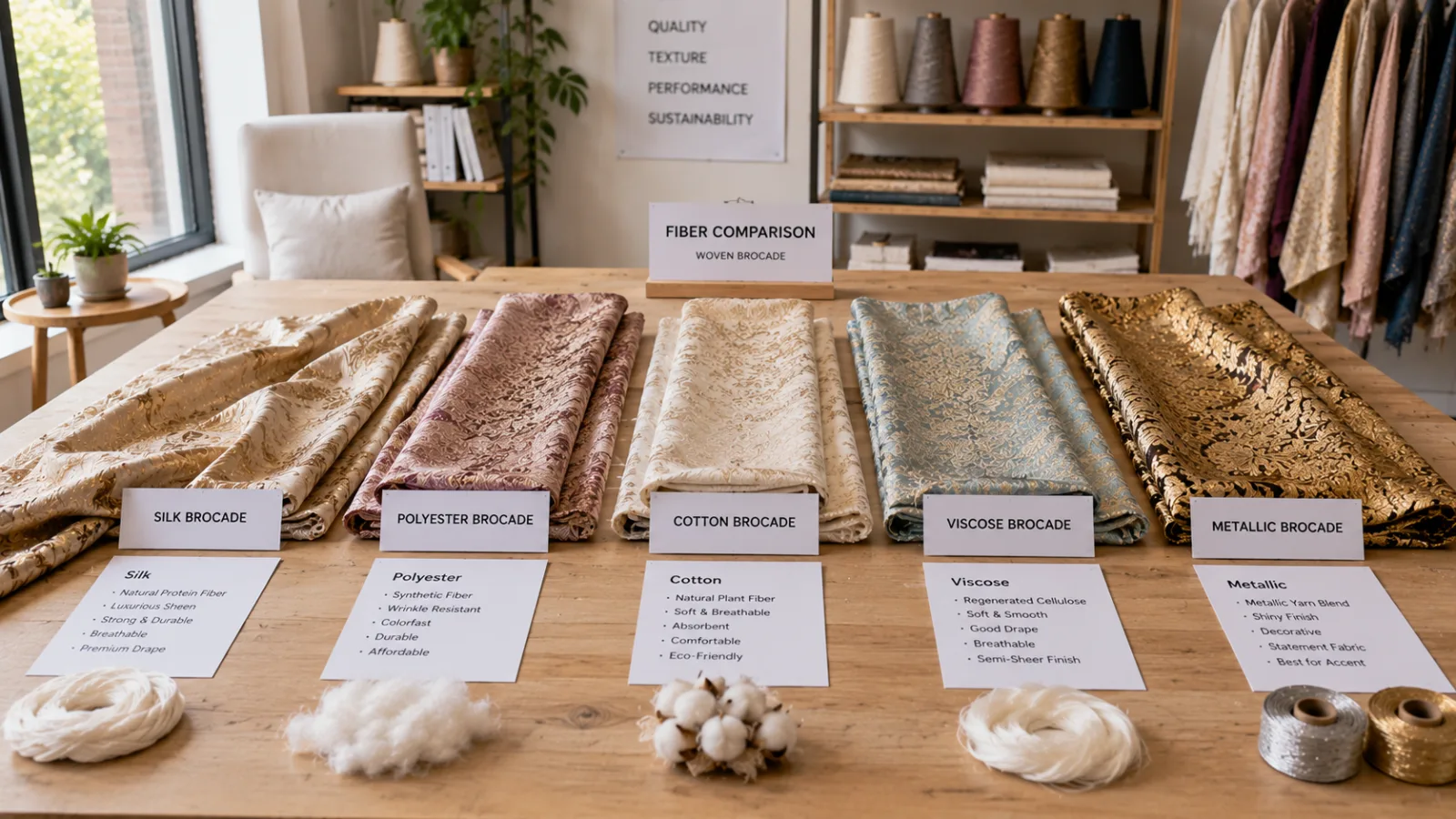
However, modern brocade is not limited to silk. Today, brocade can be made from polyester, rayon, viscose, cotton, acetate, nylon, metallic yarns, silk blends, or mixed fiber compositions. Fabric Atlas identifies brocade as a woven jacquard fabric commonly made from silk, polyester, or acetate. This shows that brocade is a construction and design category, not a single-fiber fabric.
Silk brocade is still considered premium because silk has a natural glow, smooth feel, and elegant drape. But synthetic brocades have made the fabric more accessible. Polyester brocade can be more affordable, durable, wrinkle-resistant, and available in many colors and designs. Rayon or viscose brocade can offer softness and drape. Cotton brocade can feel more breathable and less shiny.
The Truth
Brocade can be made from many fibers. What makes brocade “brocade” is not the fiber alone, but the woven raised pattern created during fabric construction.
Why This Myth Matters
If you assume brocade is always silk, you may misunderstand price, quality, care, and performance. A low-cost brocade is not necessarily fake just because it is polyester. A silk brocade is not automatically better for every project. The best choice depends on your use case.
For example, silk brocade may be beautiful for a luxury bridal blouse, but polyester brocade may be more practical for stage costumes, upholstery, event decor, or budget-friendly occasionwear. Cotton brocade may be more suitable for breathable traditional garments. Blended brocade may balance cost, structure, and shine.
What to Check Before Buying
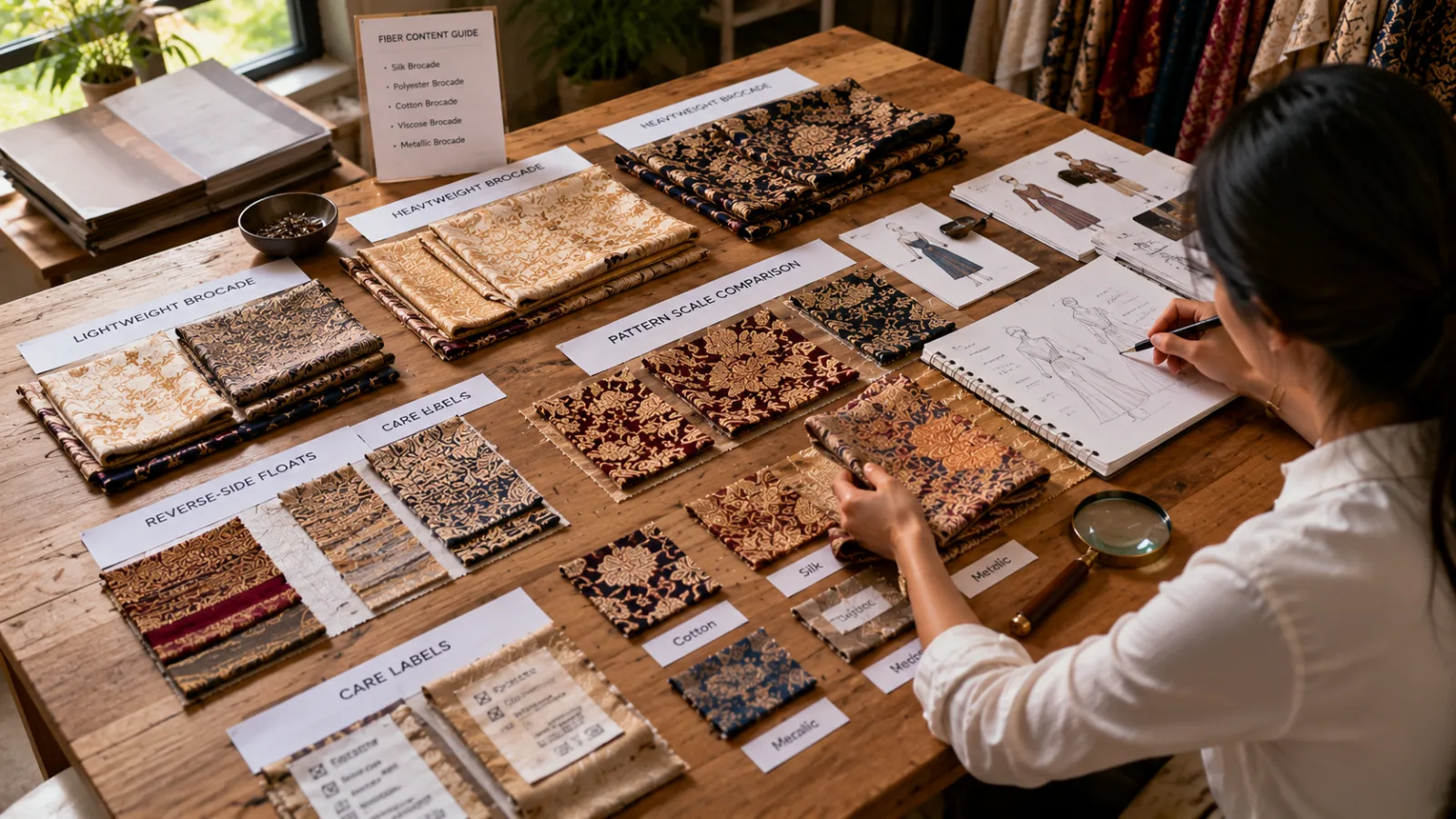
Always read the fiber content. Ask whether the brocade is silk, polyester, viscose, cotton, acetate, metallic blend, or mixed composition. Fiber content affects price, drape, comfort, durability, breathability, washing method, and final product quality.
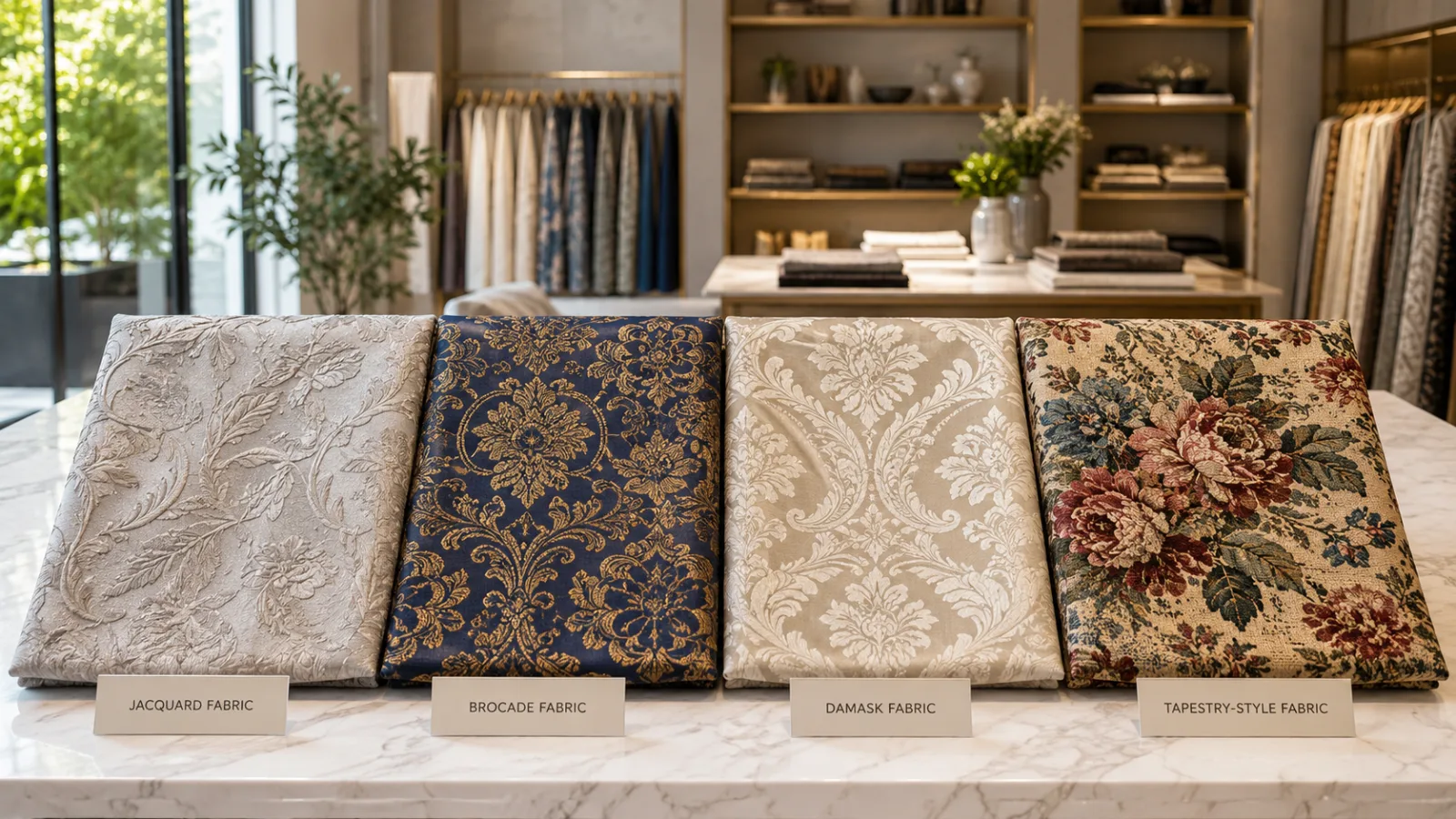
Myth 2: Brocade and Jacquard Are Exactly the Same
Many people use the words brocade and jacquard interchangeably, but they are not exactly the same. Jacquard refers to a weaving method or mechanism used to create complex woven patterns. Brocade refers to a specific type of decorative woven fabric with raised or figured designs.
A simple way to understand the difference is this: brocade is often made using jacquard weaving, but not every jacquard fabric is brocade. Britannica notes that brocade designs are often introduced during weaving by means of a Jacquard attachment. Britannica’s weaving entry also explains that fancy weaves such as Jacquard require more complicated looms or special loom attachments.
Jacquard technology allows weavers to create highly detailed patterns, but those patterns can appear in many fabric types, including damask, matelassé, tapestry-like fabrics, brocade, and other decorative textiles. Brocade usually has a raised pattern effect, often formed with supplementary yarns. Jacquard fabrics may be flat, reversible, tonal, textured, or raised depending on the weave.
The Truth
Jacquard is a weaving method or patterned fabric category. Brocade is a type of decorative woven fabric that may be produced using jacquard weaving.
Why This Myth Matters
If you are sourcing fabric for fashion production, costume design, interiors, or accessories, using the wrong term can create confusion. If you ask a supplier for jacquard, they may show you damask, brocade, matelassé, tapestry, or other patterned fabrics. If you specifically need brocade, you should describe the surface, weight, fiber, pattern relief, reverse side, and intended use.
For example, a flat jacquard may work well for a lightweight dress, while a heavier brocade may be better for a structured jacket. A reversible damask may be useful for table linens, while a metallic brocade may be better for ceremonial clothing.
How to Explain What You Need
Instead of saying only “jacquard brocade,” give more details:
“I need a medium-weight brocade with raised floral motifs, slight metallic shine, good body for a formal jacket, and a clean enough reverse side for lining.”
This kind of description helps suppliers understand the exact fabric requirement.
Myth 3: Brocade Is Just Embroidered Fabric
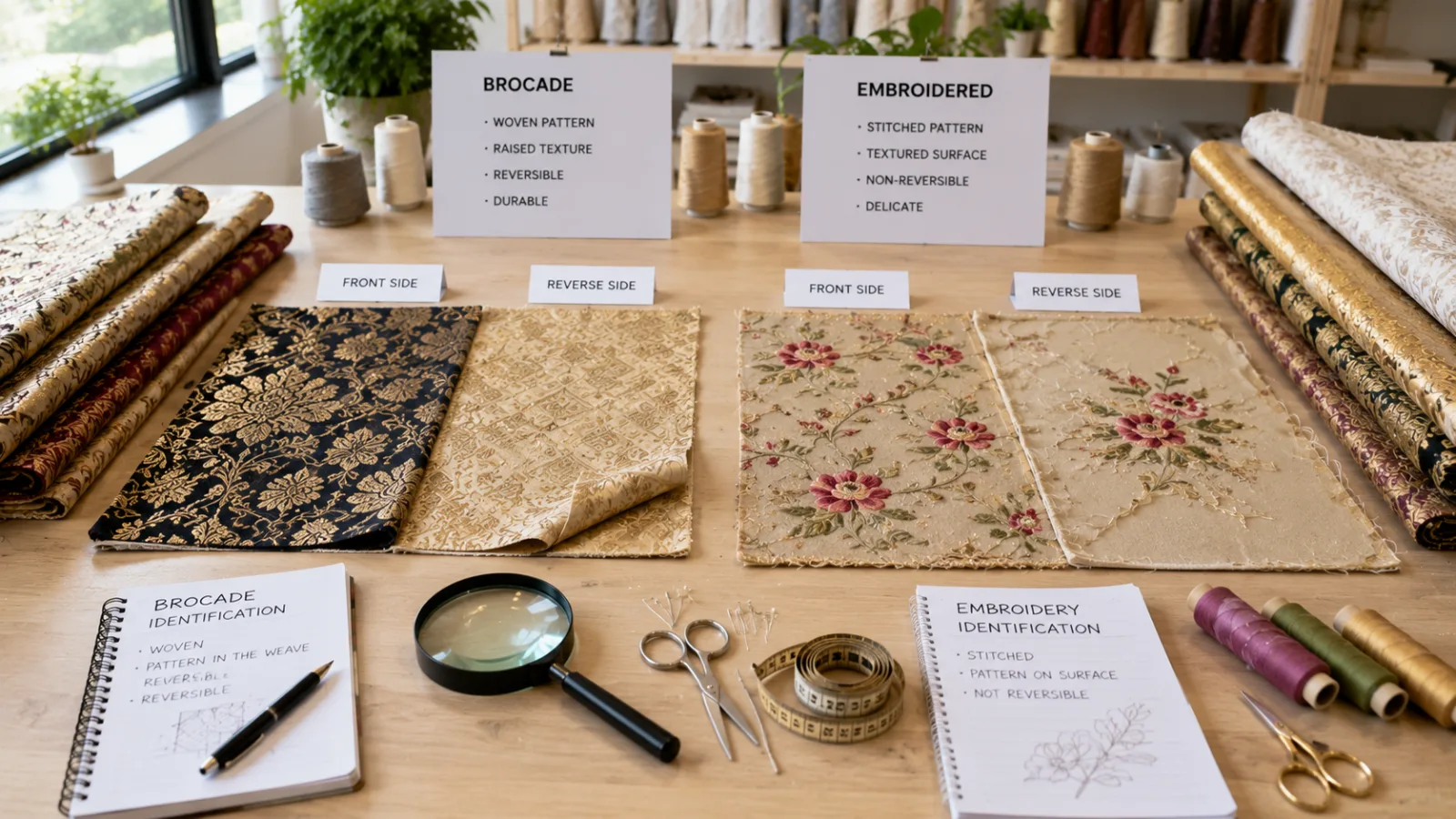
Brocade is often mistaken for embroidered fabric because both can have decorative patterns that appear raised. However, the techniques are different. Embroidery is stitched onto fabric after the base fabric is made. Brocade patterns are woven into the fabric during the weaving process.
This difference affects appearance, durability, cost, construction, and cutting behavior. In embroidery, the decorative thread sits on top of the fabric surface. In brocade, the pattern is part of the woven structure. Britannica’s definition clearly describes brocade as a fabric where the raised design is introduced during weaving.
That does not mean one is better than the other. Embroidery can be beautiful, artistic, and highly detailed. Brocade can be rich, durable, and structurally decorative. They simply are not the same.
The Truth
Brocade is woven decoration. Embroidery is stitched decoration.
Why This Myth Matters
If you buy embroidered fabric thinking it is brocade, the fabric may behave differently. Embroidered motifs may have backing, loose threads, stabilizer, or stitch density that affects comfort and sewing. Brocade may have floats on the reverse side and a more structured body.
For apparel production, the difference matters during cutting and sewing. Embroidery can be placed strategically after garment construction. Brocade patterns are already in the fabric, so pattern placement must be planned before cutting. If you want a motif centered on a bodice, sleeve, pocket, or neckline, you need careful marker planning.
How to Identify the Difference
Look closely at the fabric. If the design is stitched on top of a finished base cloth, it is embroidery. If the design is woven into the fabric structure and visible as part of the fabric itself, it may be brocade. Turn the fabric over. Brocade often has visible pattern floats or a less neat reverse side, while embroidery may show backing or thread knots.
Myth 4: Brocade Is Too Heavy for Clothing
Brocade is often associated with heavy formal gowns, traditional bridal outfits, upholstery, and ceremonial garments. Because of this, many people assume brocade is always too heavy for clothing. This is not true.
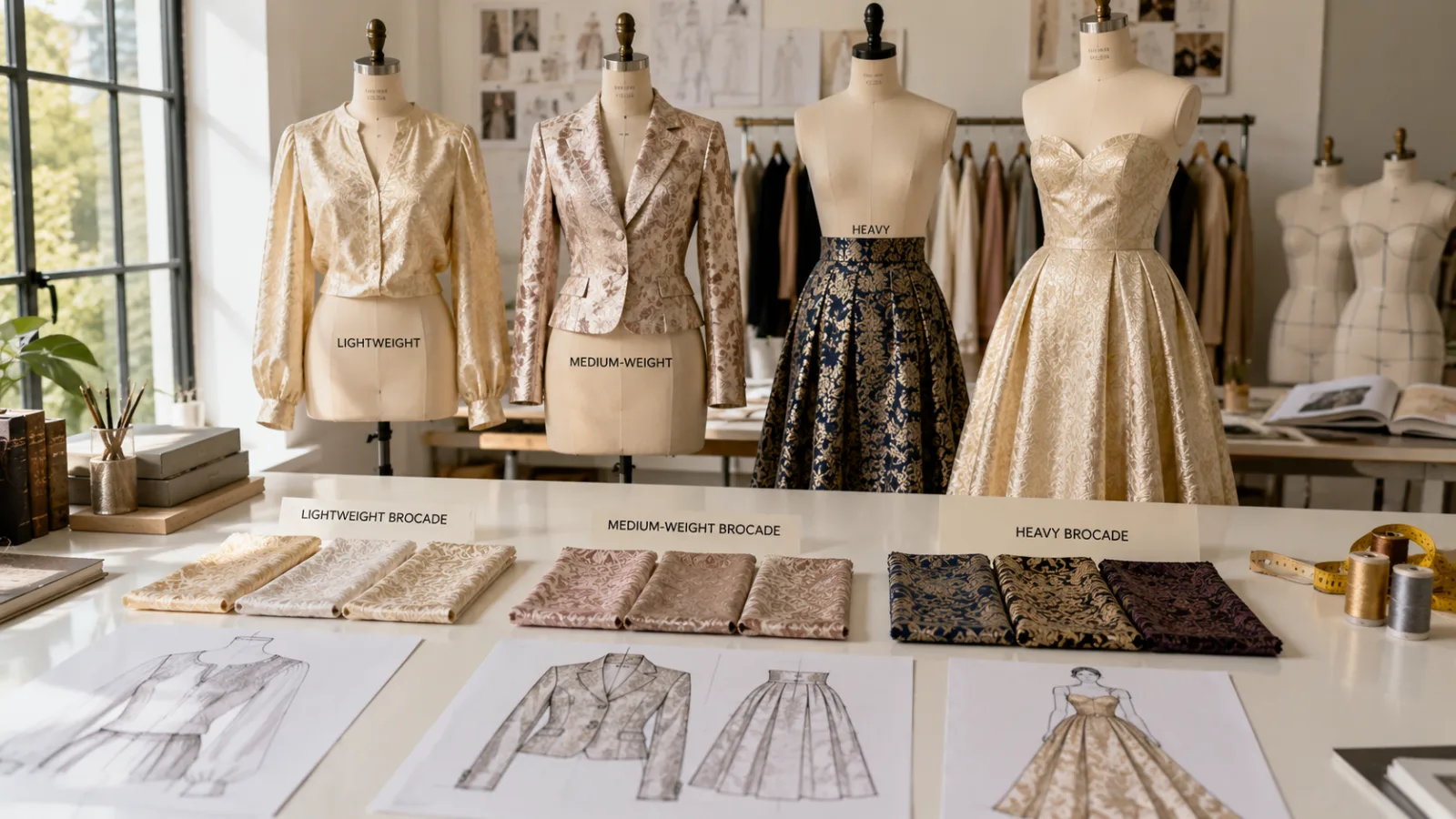
Brocade can be light, medium, or heavy depending on the yarn, weave density, fiber content, pattern complexity, and finishing. Some brocades are stiff and weighty, making them ideal for structured jackets, corset-style bodices, lehengas, sherwanis, upholstery, and decorative home textiles. Other brocades are lighter and more flexible, suitable for blouses, skirts, dresses, evening tops, scarves, and occasionwear.
Fabric Atlas lists brocade’s typical weight range at 200 to 600 gsm, which shows that brocade can vary significantly in weight and structure. A 200 gsm brocade may behave very differently from a 600 gsm brocade.
The Truth
Some brocades are heavy, but not all brocades are too heavy for clothing. The right brocade depends on the garment design.
Matching Brocade Weight to Garment Type
Lightweight brocade can work for blouses, soft dresses, scarves, and overlays. Medium-weight brocade can work for skirts, structured dresses, waistcoats, cropped jackets, and formal tops. Heavy brocade can work for coats, bridal skirts, corset bodices, sherwanis, upholstery, cushions, and ceremonial garments.
The key is to match fabric weight with the silhouette. A stiff heavy brocade may not work for a flowy gathered dress. A lightweight brocade may not support a structured jacket. Fabric behavior matters as much as appearance.
What Designers Should Check
Before using brocade for clothing, test drape, thickness, comfort, breathability, seam bulk, lining needs, pressing behavior, and movement. A beautiful fabric on a roll may feel too stiff once sewn into a garment. Sampling is essential.
Myth 5: Brocade Is Only for Traditional or Bridal Wear
Brocade is widely used in traditional clothing, bridalwear, religious garments, and ceremonial fashion. It appears in sarees, lehengas, sherwanis, gowns, jackets, robes, and festive garments across many cultures. But it is not limited to traditional or bridal use.
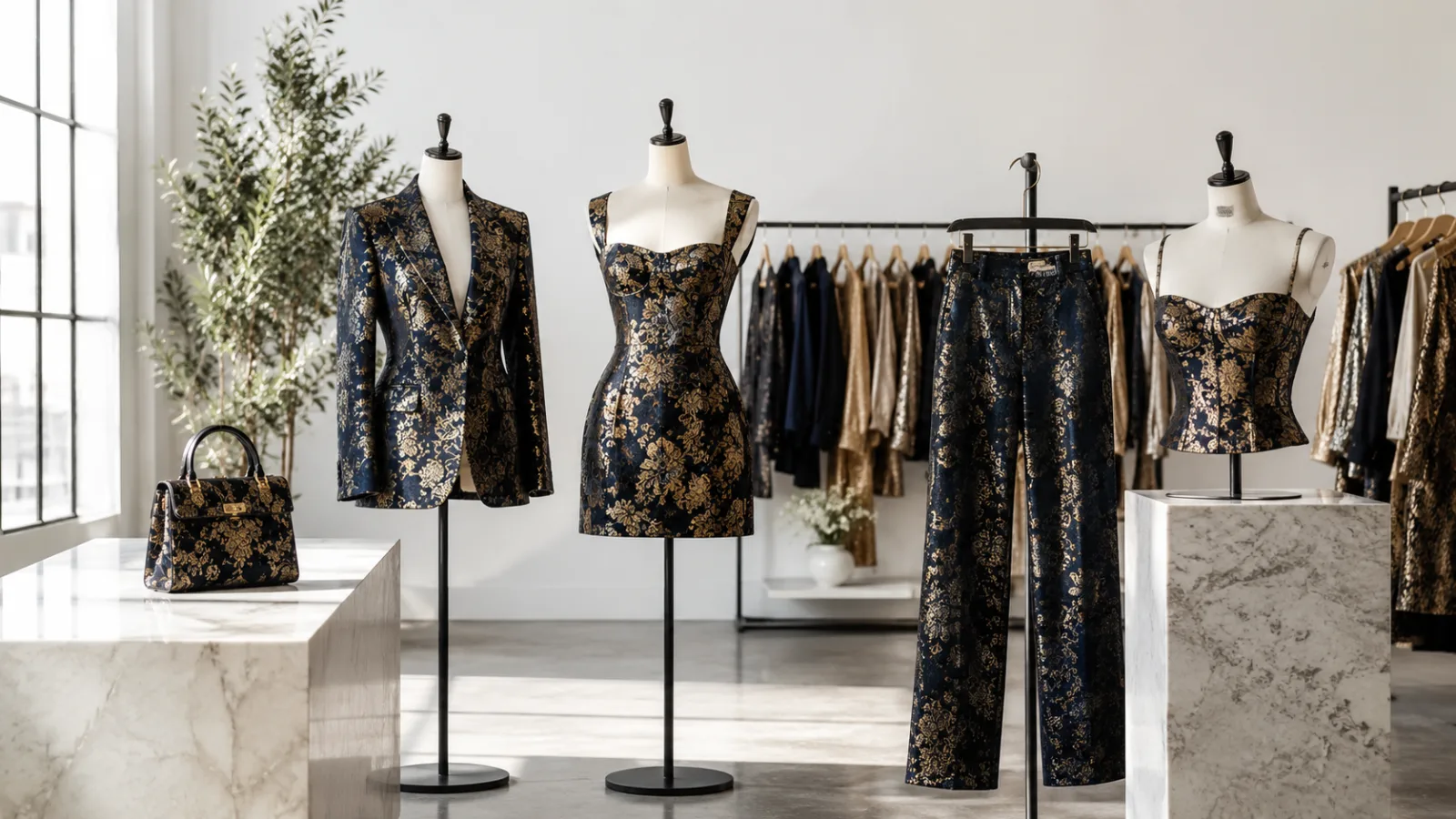
Modern designers use brocade in contemporary jackets, mini dresses, trousers, structured tops, handbags, sneakers, belts, evening separates, streetwear-inspired pieces, and interior accessories. Brocade can be dramatic, but it can also be minimal when used in small quantities or modern silhouettes.
A brocade bomber jacket can feel contemporary. A brocade mini skirt can feel youthful. A brocade clutch can add texture to a simple outfit. A brocade panel on a plain garment can create visual interest without making the entire piece look formal.
The Truth
Brocade has strong traditional and bridal associations, but it can also be modern, casual-luxury, artistic, and experimental.
Why This Myth Limits Design
If designers think brocade is only for bridalwear, they may miss many creative possibilities. The fabric can add richness to simple shapes. It can turn a plain silhouette into a statement piece. It can also be used as contrast fabric for collars, cuffs, pockets, trims, waistbands, and accessories.
For modern fashion brands, brocade can work well when balanced with clean cuts. Instead of using a heavily embellished pattern with a complicated silhouette, designers can choose a simple garment shape and let the fabric stand out.
Practical Modern Uses
Brocade can be used for:
- Structured blazers
- Cropped jackets
- Evening trousers
- Cocktail dresses
- Corset tops
- Waistcoats
- Handbags
- Decorative shoes
- Hair accessories
- Home cushions
- Statement collars
- Luxury packaging accents
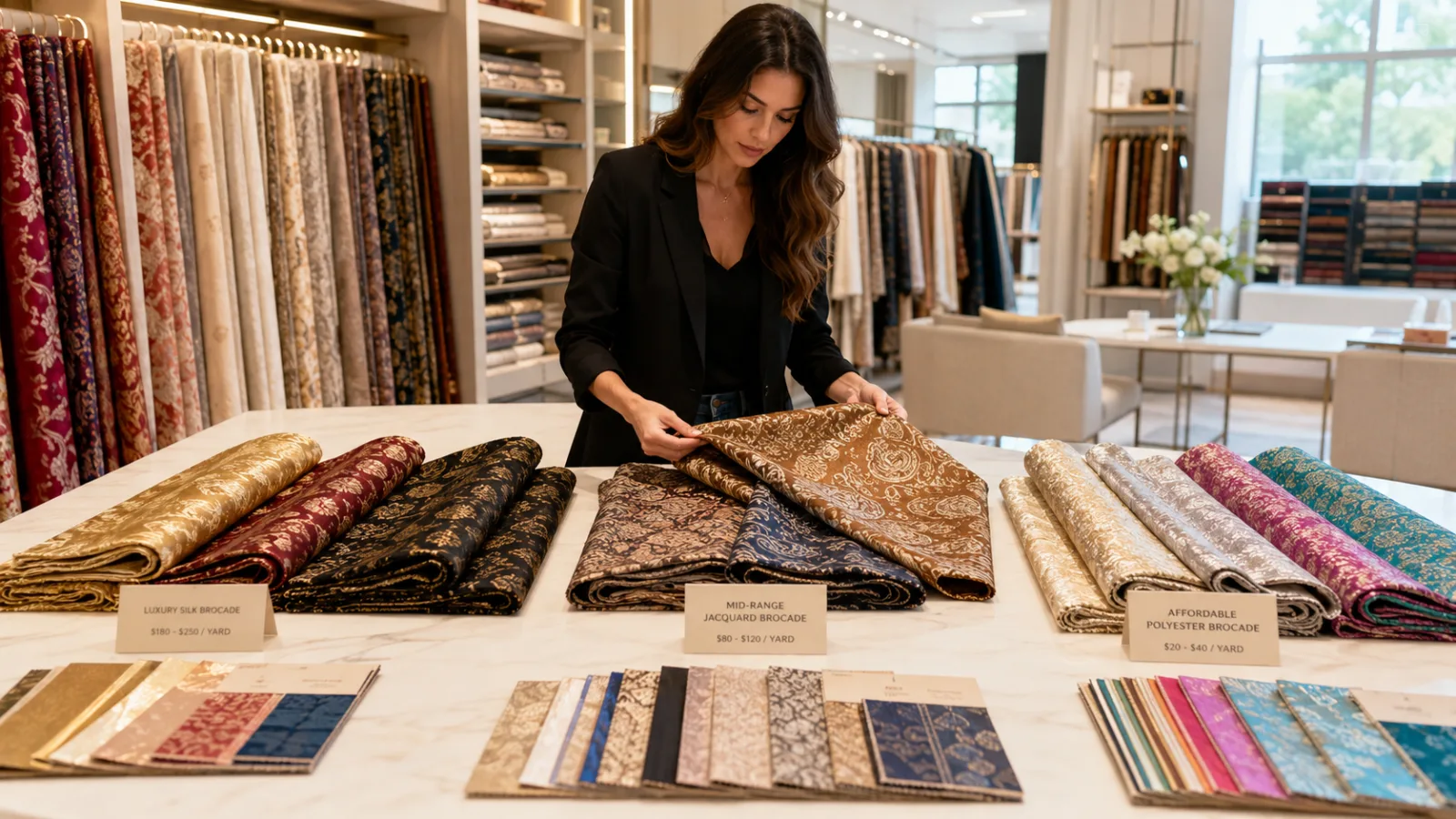
Myth 6: Brocade Is Always Expensive
Brocade can be expensive, especially when made from silk, metallic yarns, fine craftsmanship, handloom techniques, or complex heritage patterns. However, not all brocade is expensive. Modern machine-woven brocade made from polyester or synthetic blends can be affordable and widely available.
The cost of brocade depends on fiber content, weaving complexity, pattern scale, yarn quality, finishing, production method, country of origin, brand positioning, and order quantity. A pure silk brocade woven with metallic thread may cost much more than a polyester brocade used for costume or decorative applications.
The Truth
Brocade exists at many price points. It can be luxury, mid-range, or budget-friendly depending on material and production.
Why Prices Vary So Much
Fiber content plays a major role. Silk usually costs more than polyester. Metallic threads can increase price. Complex patterns may require more time and technical control. Small-batch or handwoven brocades may cost more than mass-produced machine brocades. Imported specialty brocades may also include shipping, duties, and distributor margins.
Brocade width and weight also matter. A heavier fabric uses more yarn. A wider fabric may cost more per meter but offer better cutting efficiency. A fabric with a large repeat may create more cutting waste if pattern placement matters.
Budget Buying Tips
If you are buying brocade for a project, decide your purpose first. For a luxury bridal blouse, silk brocade may be worth the cost. For stage costumes, polyester brocade may look impressive while controlling budget. For upholstery, durability may matter more than fiber prestige. For a fashion sample, a mid-range brocade may help test the design before investing in premium fabric.
Myth 7: Brocade Is Too Delicate for Regular Use
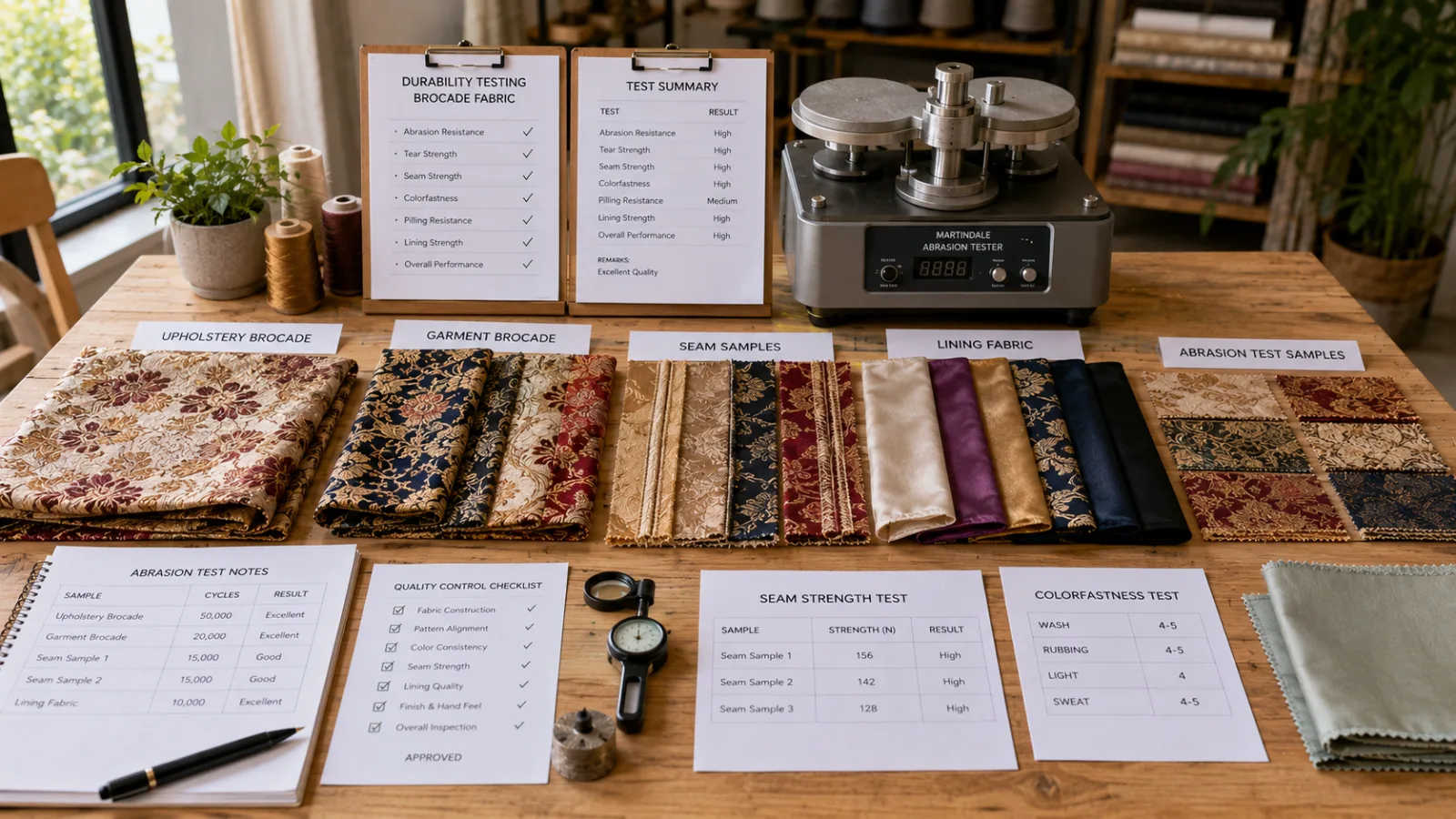
Brocade looks luxurious, so many people assume it is always fragile. Some brocades are delicate, especially fine silk brocades or fabrics with metallic threads. But many brocades are strong and structured because they are woven fabrics with dense construction.
Britannica describes brocade as a rich, fairly heavy fabric often used for evening dresses, draperies, and upholstery. Upholstery and drapery use would not be practical if every brocade were too fragile. The real question is not whether brocade is durable in general, but whether a specific brocade is suitable for a specific use.
The Truth
Some brocades are delicate, but many are durable enough for garments, accessories, and interiors when chosen correctly.
Durability Depends on Construction
A tightly woven polyester brocade may hold up well for cushions, costumes, and structured apparel. A fine silk brocade with delicate metallic yarns may need careful handling. A loosely woven brocade with long floats may snag more easily. A brocade with heavy pattern floats on the reverse may need lining to protect the threads.
For clothing, areas of friction matter. Underarms, seat areas, cuffs, and bag contact points may wear faster. For upholstery, abrasion resistance is important. For bags and shoes, backing, bonding, or reinforcement may be needed.
How to Use Brocade More Safely
Line garments to protect the reverse side. Use seam finishes to prevent fraying. Avoid placing delicate brocade in high-stress areas without reinforcement. Test fabric before bulk production. Use stronger brocade for upholstery and accessories. Avoid rough washing and aggressive ironing.
Myth 8: Brocade Is Difficult to Sew for Every Project
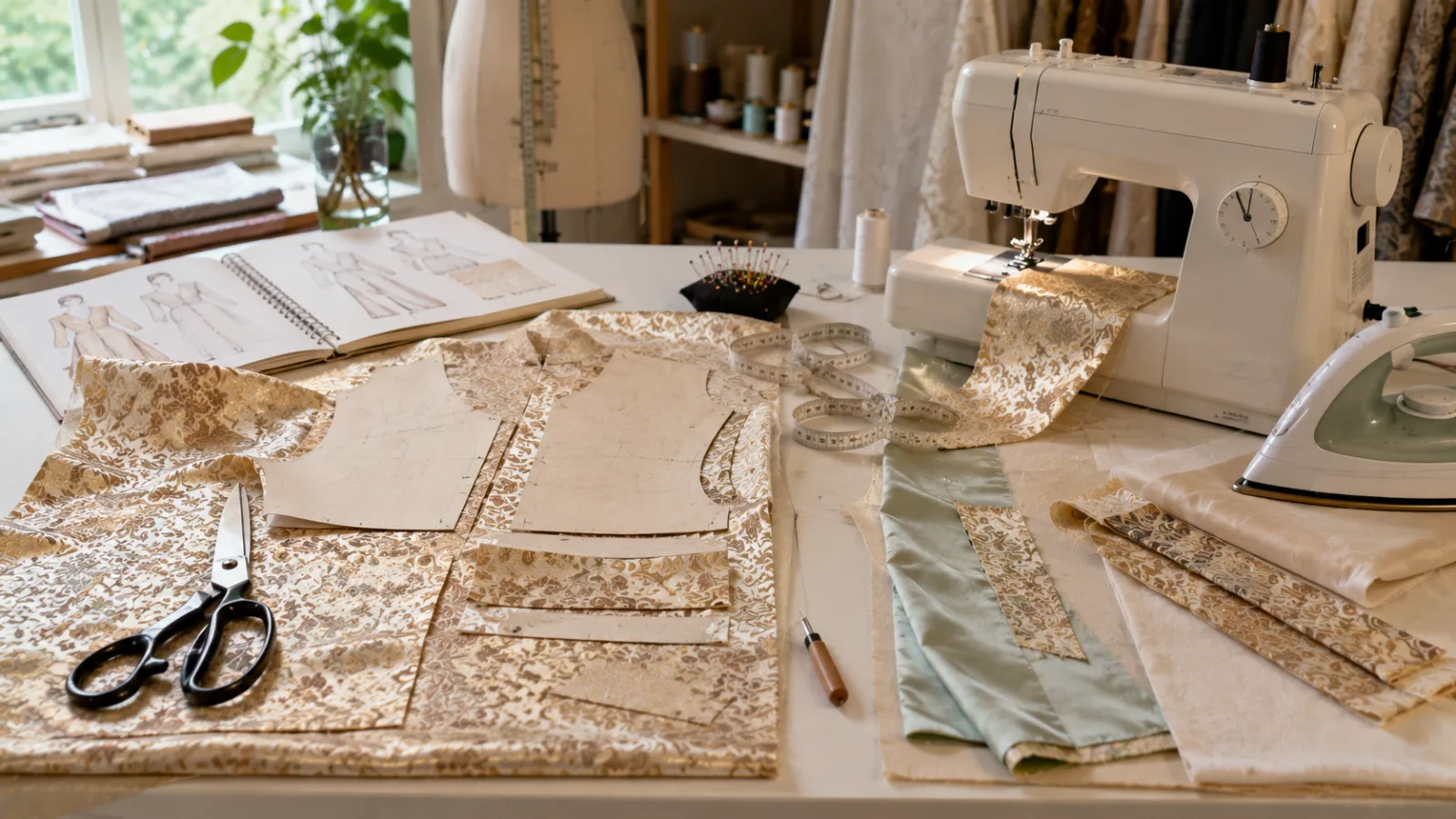
Brocade can be more challenging than plain cotton, but it is not impossible to sew. Many designers, tailors, and home sewists work successfully with brocade. The difficulty depends on the fabric’s thickness, fraying tendency, metallic content, pattern repeat, slipperiness, and seam bulk.
Some brocades are crisp and stable, making them easier to cut. Others are slippery, thick, or prone to fraying. A metallic brocade may require sharper needles and careful pressing. A heavy brocade may create bulky seams. A large-pattern brocade may require careful pattern matching.
The Truth
Brocade requires planning and proper technique, but it can be sewn successfully.
Sewing Tips for Brocade
- Use sharp fabric scissors or a rotary cutter.
- Stabilize slippery brocade before cutting.
- Pay attention to pattern placement.
- Use fine pins or clips to avoid visible marks.
- Choose the right needle for the fabric weight.
- Finish seams to control fraying.
- Line garments when needed.
- Test pressing on a scrap first.
- Avoid high heat on metallic or synthetic brocade.
- Reduce seam bulk by grading seam allowances.
For structured garments, brocade can be beautiful because it often holds shape well. Jackets, bodices, skirts, and formalwear can benefit from the fabric’s body. For soft draped garments, choose a lighter brocade with better movement.
Pattern Placement Matters
Because brocade patterns are woven into the fabric, motif placement is important. A large floral or medallion motif can look awkward if cut randomly across a bodice or center front. Plan pattern layout before cutting. This is especially important for bridalwear, formal jackets, saree blouses, and luxury accessories.
Myth 9: Brocade Cannot Be Comfortable
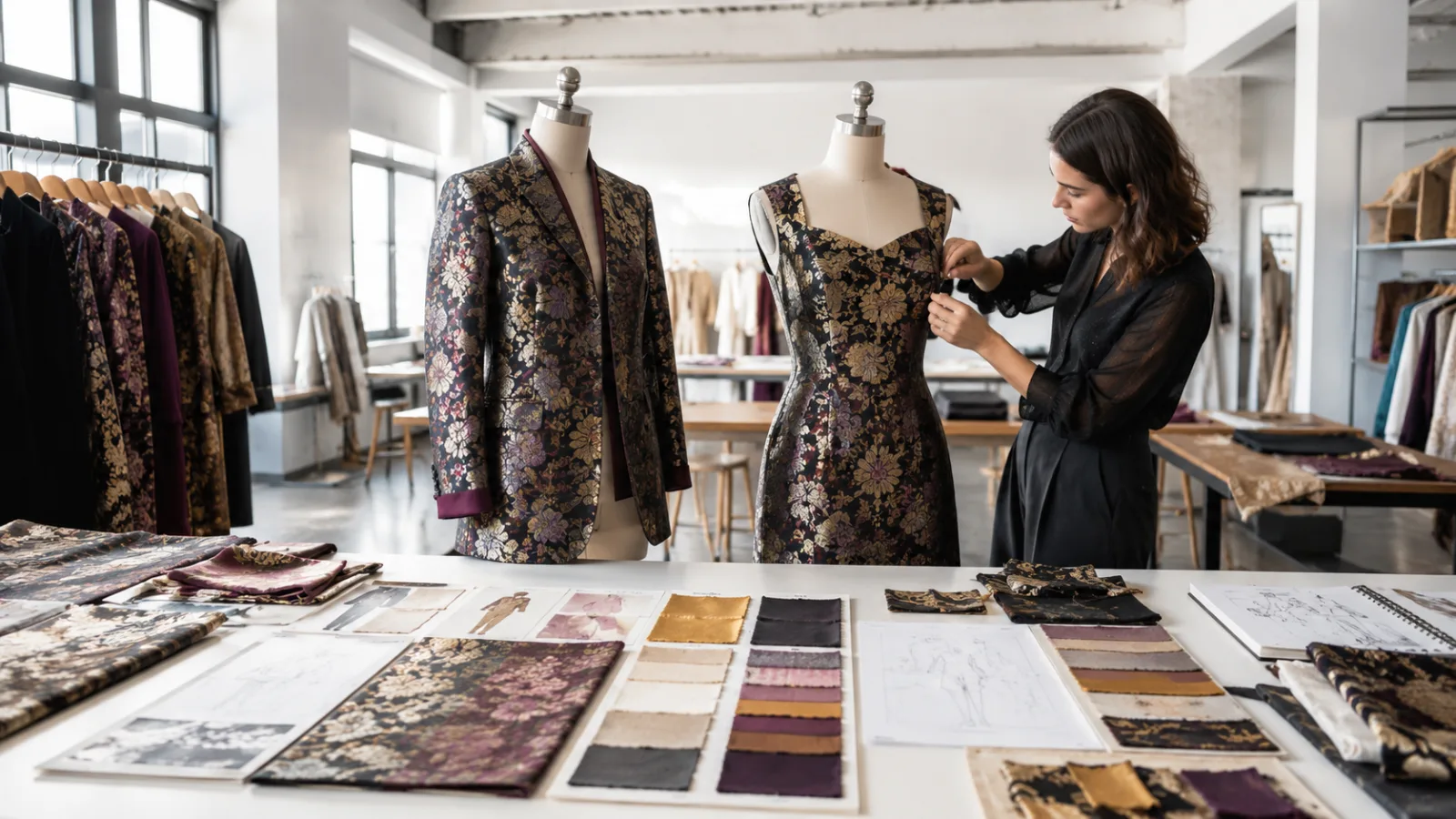
Because brocade is often structured and decorative, some people assume it is uncomfortable. This can be true if the wrong brocade is used for the wrong garment. A stiff, heavy, scratchy, or unlined brocade can feel uncomfortable against the skin. But brocade can also be comfortable when selected and constructed properly.
Comfort depends on fiber, weight, lining, garment shape, seam finish, breathability, and fit. A soft silk-blend brocade blouse can feel comfortable. A lined brocade jacket can be easy to wear. A cotton-blend brocade skirt can feel structured but not harsh. A heavy metallic brocade worn directly against the skin may feel irritating.
The Truth
Brocade can be comfortable if the fabric, lining, pattern, and construction are chosen correctly.
How to Make Brocade More Comfortable
Use lining for garments that touch the skin. Choose softer brocade for fitted garments. Avoid rough metallic yarns near sensitive areas. Select breathable fibers when comfort matters. Use a garment shape that allows movement. Finish seams neatly. Avoid overly tight fits in stiff brocade.
For children’s clothing, brocade should be used carefully. It may be suitable for occasional festive garments, jackets, or decorative details, but not always for everyday playwear. Children need soft, flexible, washable fabrics for daily use. If brocade is used for kidswear, lining and comfort testing are essential.
Comfort vs Structure
Brocade’s structure can be an advantage. It can create elegant shapes without heavy interfacing. But structure should not restrict movement. Designers should test sitting, walking, arm movement, and heat comfort before finalizing a brocade garment.
Myth 10: Brocade Is Hard to Care For No Matter What
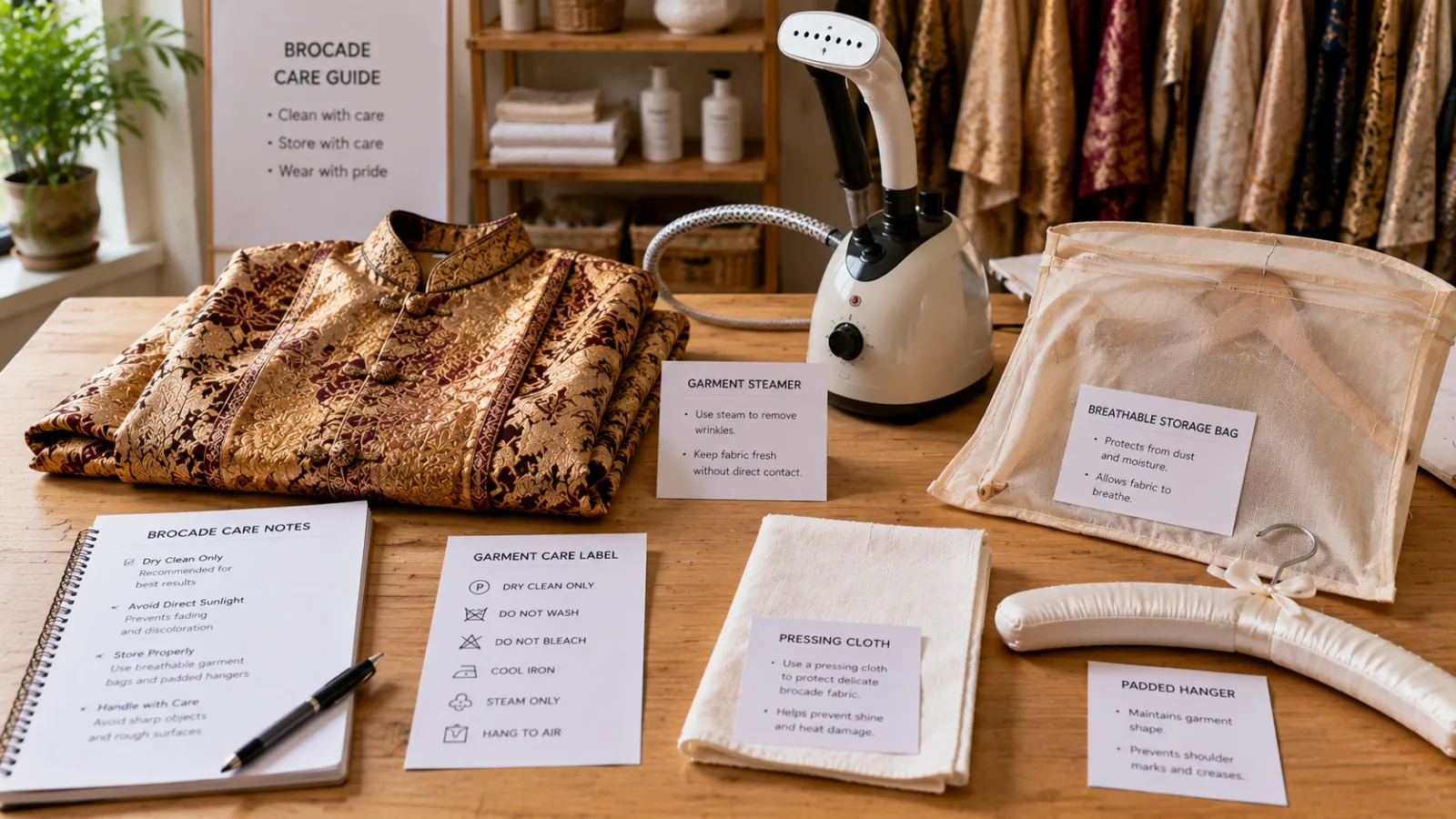
Brocade does need proper care, but not every brocade is extremely difficult to maintain. Care depends on fiber content and finishing. Silk brocade may require dry cleaning or very careful handling. Polyester brocade may be easier to maintain. Metallic brocade may need protection from heat and abrasion.
Upholstery brocade may need vacuuming, spot cleaning, or professional cleaning. The mistake is treating all brocade the same. A silk-metallic brocade wedding garment and a polyester brocade cushion cover should not be cared for in exactly the same way.
The Truth
Brocade care depends on fiber content, construction, and product use. Always follow the care label.
General Brocade Care Tips
- Read the care label first.
- Avoid harsh machine washing unless the fabric allows it.
- Use professional cleaning for delicate silk or metallic brocade.
- Do not use high heat on synthetic or metallic yarns.
- Press from the wrong side with a pressing cloth.
- Avoid crushing raised motifs.
- Store garments folded or padded properly.
- Keep brocade away from rough surfaces that may snag.
- Use breathable garment bags for special pieces.
- Spot test cleaning methods before use.
Can Brocade Be Washed?
Some brocades can be gently washed, especially synthetic blends, but many formal brocades should be dry cleaned. Washing can cause shrinkage, color bleeding, loss of finish, fraying, or distortion of motifs. If you are unsure, test a swatch first.
Pressing Brocade
Pressing brocade requires care because raised motifs can flatten under heat and pressure. Use a pressing cloth and press from the reverse side when possible. For metallic brocade, avoid high heat. For textured brocade, use a padded pressing surface.
Myth 11: Brocade Is Only for Women’s Fashion
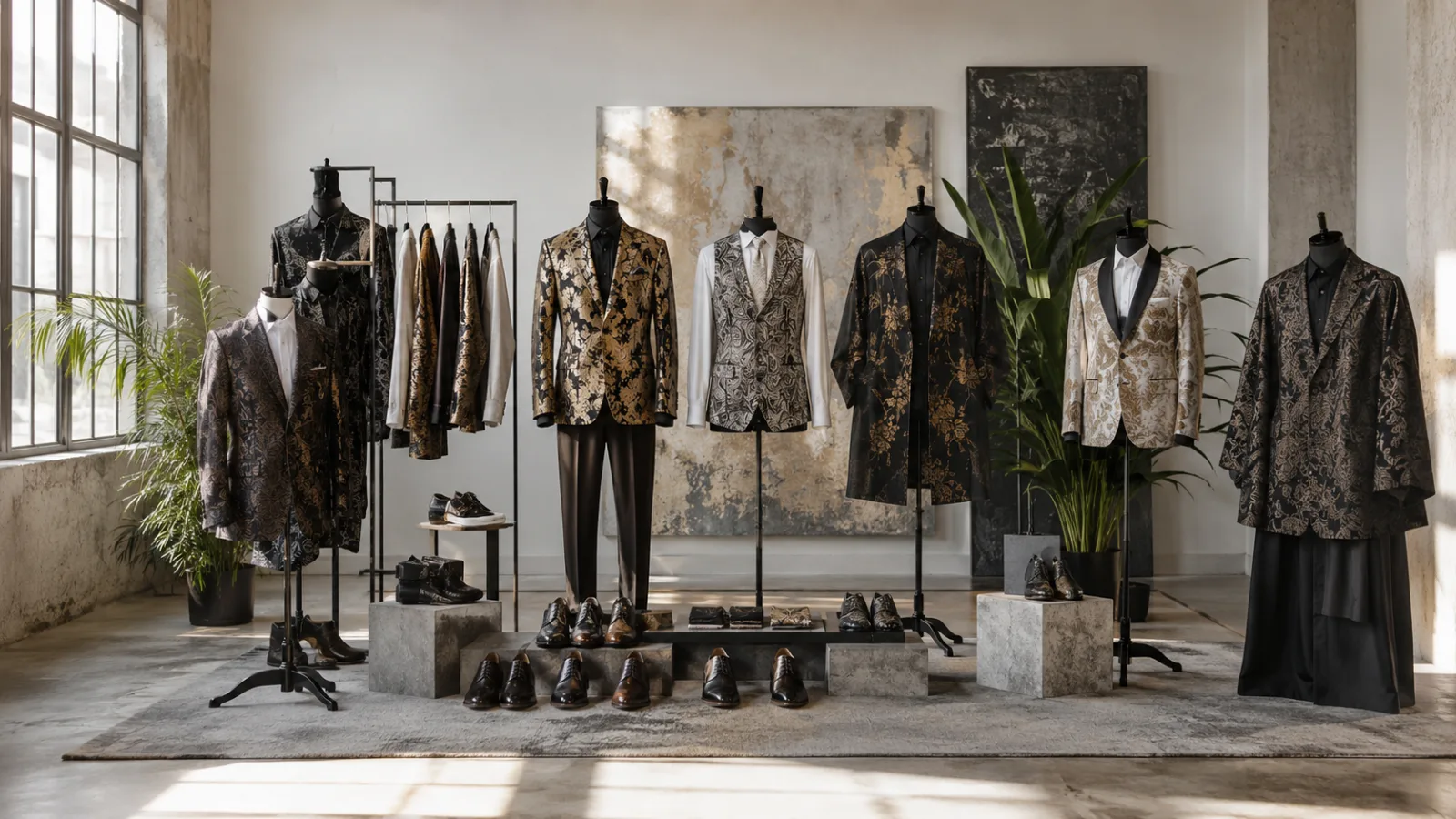
Brocade is often used in women’s gowns, dresses, lehengas, sarees, blouses, and eveningwear, so some people assume it belongs only in women’s fashion. This is not true. Brocade has a long history in men’s ceremonial clothing, royal dress, waistcoats, jackets, robes, sherwanis, and formal accessories.
Modern menswear also uses brocade in tuxedo jackets, statement blazers, dinner jackets, waistcoats, ties, pocket squares, shoes, and fashion-forward streetwear. Brocade can add richness to men’s clothing without needing excessive embellishment.
The Truth
Brocade works in women’s fashion, men’s fashion, gender-neutral fashion, accessories, and interiors.
Why Brocade Works for Menswear
Menswear often relies on structure. Brocade can provide body, visual texture, and statement value. A brocade blazer with a simple cut can look formal and powerful. A brocade waistcoat can elevate a suit. A brocade sherwani can feel ceremonial and refined. Even small accessories such as ties or pocket squares can add a luxury touch.
Modern Gender-Neutral Uses
Brocade can also work in gender-neutral jackets, oversized coats, boxy shirts, accessories, and art-led fashion. The key is silhouette. Clean cuts, neutral grounds, and controlled pattern placement can make brocade feel modern rather than overly decorative.
Myth 12: Printed Fabric With a Brocade Design Is the Same as Brocade
Some fabrics are printed to look like brocade. They may have floral motifs, metallic-looking colors, or ornate patterns, but if the design is printed rather than woven, the fabric is not true brocade. It may be a brocade-inspired print, but it does not have the same structure or surface relief.
This distinction matters because printed fabric behaves differently. Printed satin may be lighter, smoother, and cheaper. It may work well for certain designs, but it will not have the same woven depth, raised texture, or premium hand feel as true brocade.
The Truth
A brocade-style print is not the same as woven brocade.
How to Identify Printed Brocade Lookalikes
Check the surface. If the design feels flat and the back side is plain or shows only print bleed, it is likely printed. True brocade has woven pattern structure. Check the reverse side. Brocade often shows floats, yarn changes, or a more complex back. Printed fabric usually looks much simpler on the reverse.
Look at the edges. In true brocade, different yarns are part of the weave. In printed fabric, the design is applied to a finished surface.
Are Printed Lookalikes Bad?
Not necessarily. Printed brocade-inspired fabrics can be useful when you want the visual style without the weight, cost, or sewing complexity. They may be suitable for costumes, lightweight dresses, scarves, or budget decor. But they should not be sold or described as true brocade if they are only printed.
How to Identify High-Quality Brocade Fabric
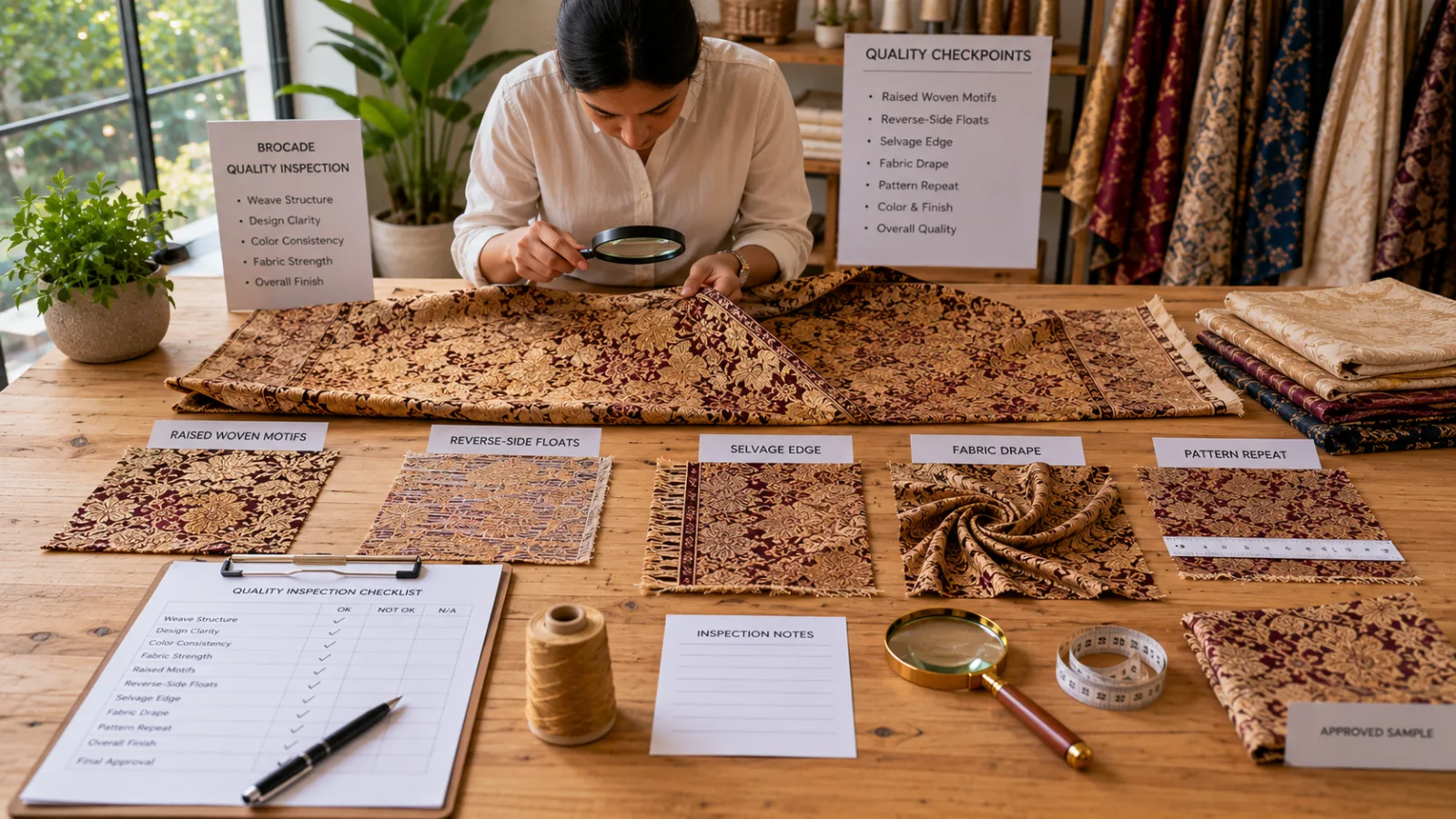
High-quality brocade should look rich, feel stable, and show clear woven patterns. The motifs should appear intentional, not messy or poorly aligned. The fabric should have a balanced structure, suitable weight, and good finishing for its intended use.
Quality Signs to Look For
- Clear raised pattern definition
- Even weaving tension
- Good color clarity
- Stable ground fabric
- Minimal loose threads
- Strong enough reverse side
- Smooth surface without damage
- Suitable weight for the project
- Neat selvage
- Consistent pattern repeat
- No strong chemical odor
- Appropriate drape and body
Check the Reverse Side
The reverse side tells you a lot about brocade. Because brocade often uses supplementary yarns, the back may show floats or extra threads. This is normal. But the floats should not be extremely loose, messy, or easy to snag unless the fabric will be fully lined and handled carefully.
Test the Drape
Hold the fabric up and see how it falls. Does it stand away from the body? Does it fold softly? Does it feel stiff? Drape matters for garment design. A fabric that looks beautiful flat may not suit a soft dress.
Check for Snagging
Run your fingers gently over the surface. If threads catch easily, the fabric may be difficult to use in high-friction garments. For upholstery or accessories, choose a sturdier construction.
Best Uses of Brocade Fabric in Fashion
Brocade is a strong choice when a design needs structure, richness, texture, and visual impact. It is especially effective in garments where the fabric itself can act as the main design feature.
Evening Dresses
Brocade can create elegant evening dresses with minimal embellishment. A simple fitted dress, A-line dress, or structured cocktail dress can look premium because of the fabric’s woven pattern.
Jackets and Blazers
Brocade works beautifully for structured jackets and blazers. The fabric’s body helps create shape, while the pattern adds personality. This can work for womenswear, menswear, and gender-neutral fashion.
Bridalwear and Occasionwear
Brocade is common in wedding garments, formal skirts, blouses, gowns, lehengas, sherwanis, and ceremonial clothing. Its richness makes it ideal for special events.
Waistcoats and Corset Tops
Brocade is suitable for waistcoats, corset-style tops, and structured bodices because it often has enough body to support shape.
Accessories
Brocade can be used for handbags, clutches, belts, headbands, shoes, and decorative trims. Small brocade accessories can add luxury without overwhelming an outfit.
Best Uses of Brocade Fabric in Interiors
Brocade is not only for fashion. It is also widely used in interiors because of its decorative richness and structured texture.
Upholstery
Heavy brocade can work for accent chairs, benches, ottomans, and decorative seating. For upholstery, durability and abrasion resistance are important. Not all brocade is suitable for heavy-use furniture, so choose upholstery-grade fabric.
Cushions and Pillows
Brocade cushions can add luxury to living rooms, bedrooms, lounges, and event spaces. They are a good way to use ornate fabric in smaller amounts.
Curtains and Drapery
Brocade drapes can feel formal, dramatic, and elegant. Heavier brocade may create a rich hanging effect, while lighter brocade can be used for decorative panels.
Wall Panels and Decor
In luxury interiors, brocade can be used for wall coverings, framed textile art, table runners, ceremonial decor, and event styling.
How to Choose the Right Brocade for Your Project
Choosing brocade requires more than liking the pattern. You need to match the fabric to the final product. A brocade that works for upholstery may be too heavy for a dress. A brocade that works for a blouse may be too delicate for a bag.
Consider the Fiber
Silk offers luxury and natural sheen. Polyester offers affordability and durability. Cotton may improve breathability. Viscose may improve drape. Metallic yarns add shine but may require careful handling.
Consider the Weight
Lightweight brocade is better for softer garments. Medium-weight brocade is useful for dresses, skirts, and jackets. Heavy brocade is better for structured garments, upholstery, and decor.
Consider the Pattern Scale
Large motifs can look beautiful but require careful cutting. Small motifs are easier to use across different garment sizes. For children’s clothing or small accessories, smaller patterns may work better.
Consider the Reverse Side
If the reverse side has long floats, lining may be necessary. For upholstery, loose floats can snag. For garments, lining can protect the wearer and the fabric.
Consider Care Requirements
Before buying, ask whether the fabric is washable, dry clean only, heat-sensitive, or prone to color bleeding. Care affects customer satisfaction and product returns.
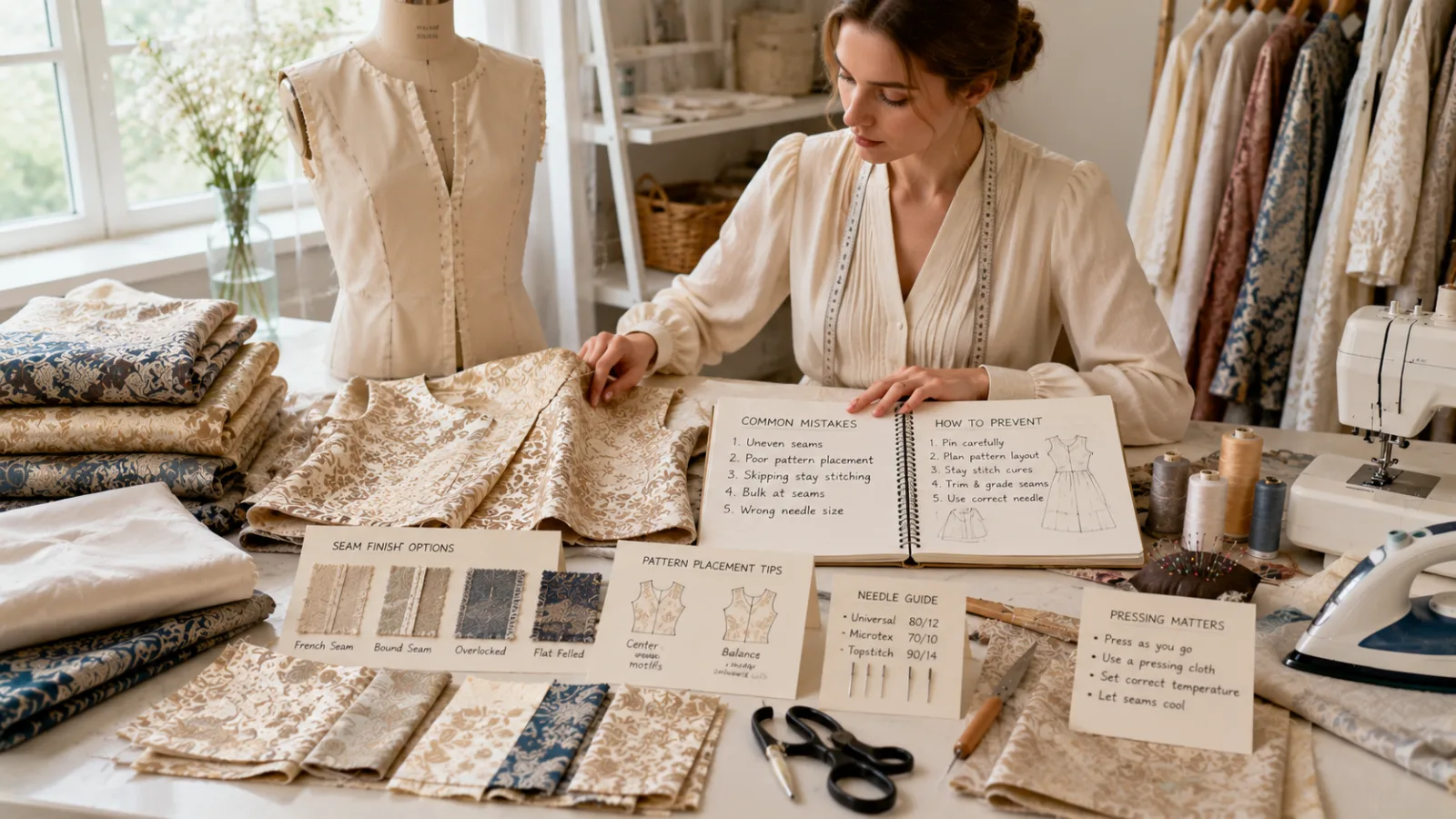
Common Mistakes to Avoid When Working With Brocade
Brocade can produce beautiful results, but mistakes can happen when the fabric is treated like a basic woven fabric.
Ignoring Pattern Placement
Large motifs need planning. Poor placement can make a garment look unbalanced.
Skipping Lining
Many brocades need lining for comfort, structure, and protection.
Using the Wrong Needle
A dull or incorrect needle can damage delicate brocade or snag metallic threads.
Pressing Too Hard
High heat or heavy pressure can flatten raised motifs or damage synthetic fibers.
Forgetting Seam Finishing
Brocade can fray. Proper seam finishing is important.
Choosing the Wrong Weight
Heavy brocade can overwhelm a soft design. Light brocade may not support a structured silhouette.
Not Testing Before Production
Sampling helps identify drape, shrinkage, pressing issues, seam bulk, and comfort.

Brocade Care Guide: How to Keep It Looking Beautiful
Brocade care depends on fiber content, but the goal is always to protect the woven pattern, surface texture, and fabric structure.
For garments, check the care label first. Many formal brocades require dry cleaning, especially silk, metallic, or structured pieces. Some synthetic brocades may be gently hand washed, but testing is important.
Store brocade garments carefully. Avoid crushing raised motifs under heavy items. Use padded hangers for structured jackets or fold heavy garments with tissue support. Keep brocade away from rough surfaces that may snag.
For upholstery or cushions, vacuum gently using a soft brush attachment. Spot clean carefully and avoid rubbing. Professional cleaning may be needed for valuable pieces.
When ironing brocade, use low to moderate heat depending on fiber content, a pressing cloth, and reverse-side pressing when possible. Avoid pressing directly onto metallic threads or raised motifs.
ApparGlobal
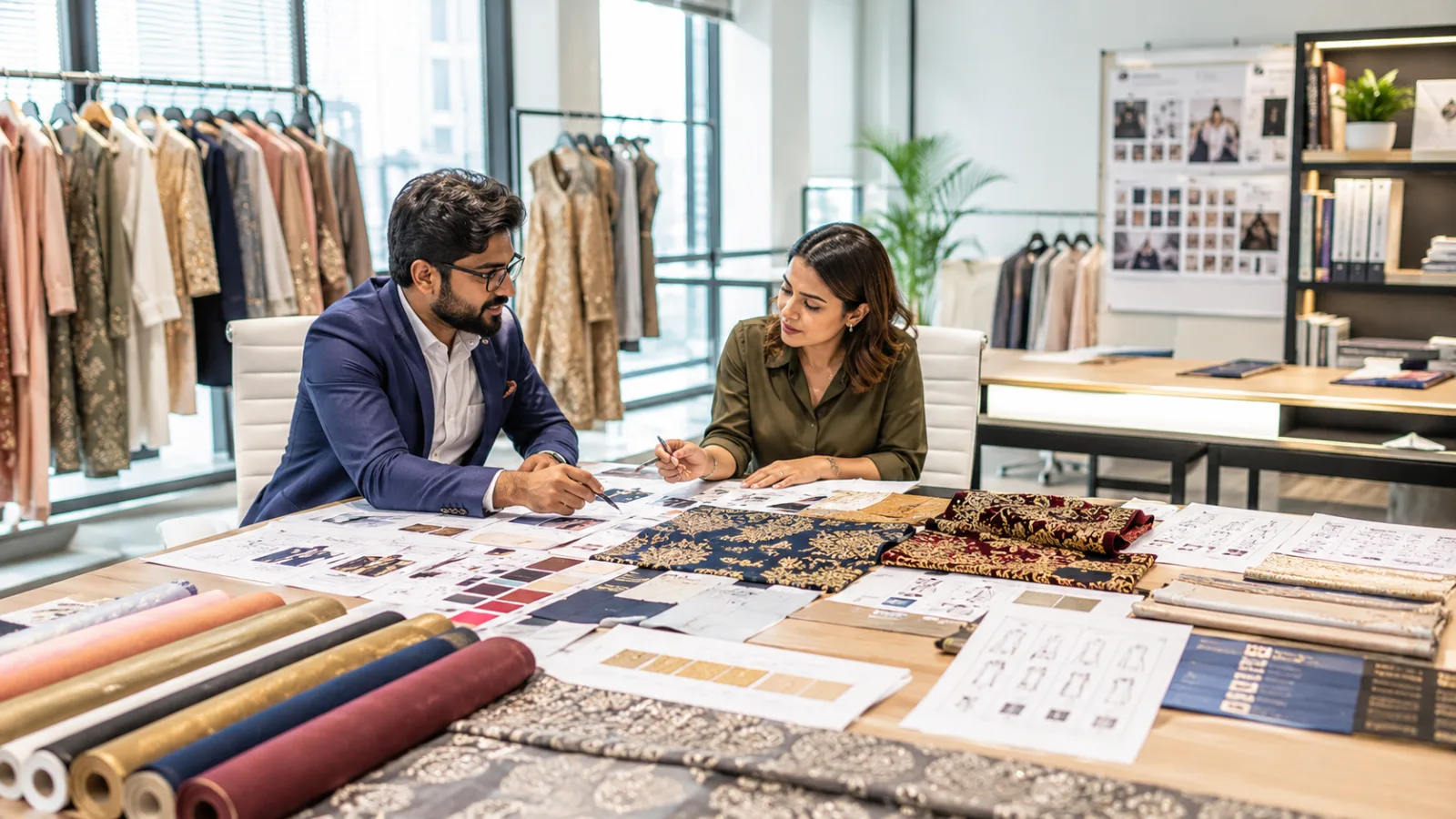
For apparel brands, brocade fabric is a strong example of why material selection should never be based on appearance alone. A brocade swatch may look rich and beautiful, but the final garment depends on fabric weight, pattern placement, fiber content, reverse-side floats, lining decisions, seam finishing, MOQ planning, supplier communication, and quality control.
Many fashion brands face production issues when they select decorative fabrics without understanding their technical behavior. Brocade, jacquard, lace, velvet, satin, organza, chiffon, wool blends, and specialty textiles all require careful planning before bulk production. If the wrong fabric weight is chosen, a garment may feel stiff, uncomfortable, too heavy, or difficult to sew. If pattern placement is ignored, the final product may look unbalanced. If care requirements are unclear, customers may damage the garment after purchase.
Companies such as ApparGlobal help clothing brands align fabric selection, product development, sourcing decisions, sample review, quality expectations, and scalable production workflows. For brands developing occasionwear, formalwear, kidswear, private label apparel, traditional garments, or custom collections, this kind of support can make the manufacturing process more structured and reliable.
When brands work with a production partner that understands tech packs, fabric behavior, trim standardization, MOQ planning, supplier coordination, quality checkpoints, and garment construction, they can make better decisions before moving into bulk manufacturing. This helps reduce costly mistakes and supports a smoother path from design concept to finished product.
Final Thoughts
Brocade fabric has a reputation for luxury, but it is often misunderstood. It is not always silk. It is not the same as every jacquard. It is not embroidery. It is not always heavy, expensive, delicate, or difficult to use. Brocade is a richly decorative woven fabric with raised patterns created during weaving, and it can be adapted for many types of fashion and interior projects.
The key to using brocade well is understanding its structure. Look beyond the surface pattern. Check the fiber content, weight, drape, reverse side, pattern scale, care needs, and intended use. A brocade chosen for a bridal skirt may not work for a blouse. A brocade suitable for upholstery may not be comfortable as a dress. A printed brocade-style fabric may look similar but behave very differently from true woven brocade.
For designers, brocade offers powerful creative possibilities. It can transform simple silhouettes into statement pieces. It can bring richness to jackets, dresses, waistcoats, accessories, cushions, curtains, and ceremonial garments. For buyers, brocade can be a smart choice when quality, texture, and visual impact matter.
The myths around brocade usually come from judging it only by appearance. Once you understand how brocade is made and how different types behave, it becomes much easier to choose the right fabric for the right purpose.
Used thoughtfully, brocade is not old-fashioned or difficult. It is timeless, expressive, versatile, and deeply connected to textile craftsmanship. Whether you are designing a luxury garment, sourcing fabric for a fashion brand, choosing upholstery, or learning about textiles, brocade deserves to be understood for what it truly is: a woven fabric where pattern, texture, and structure come together beautifully.