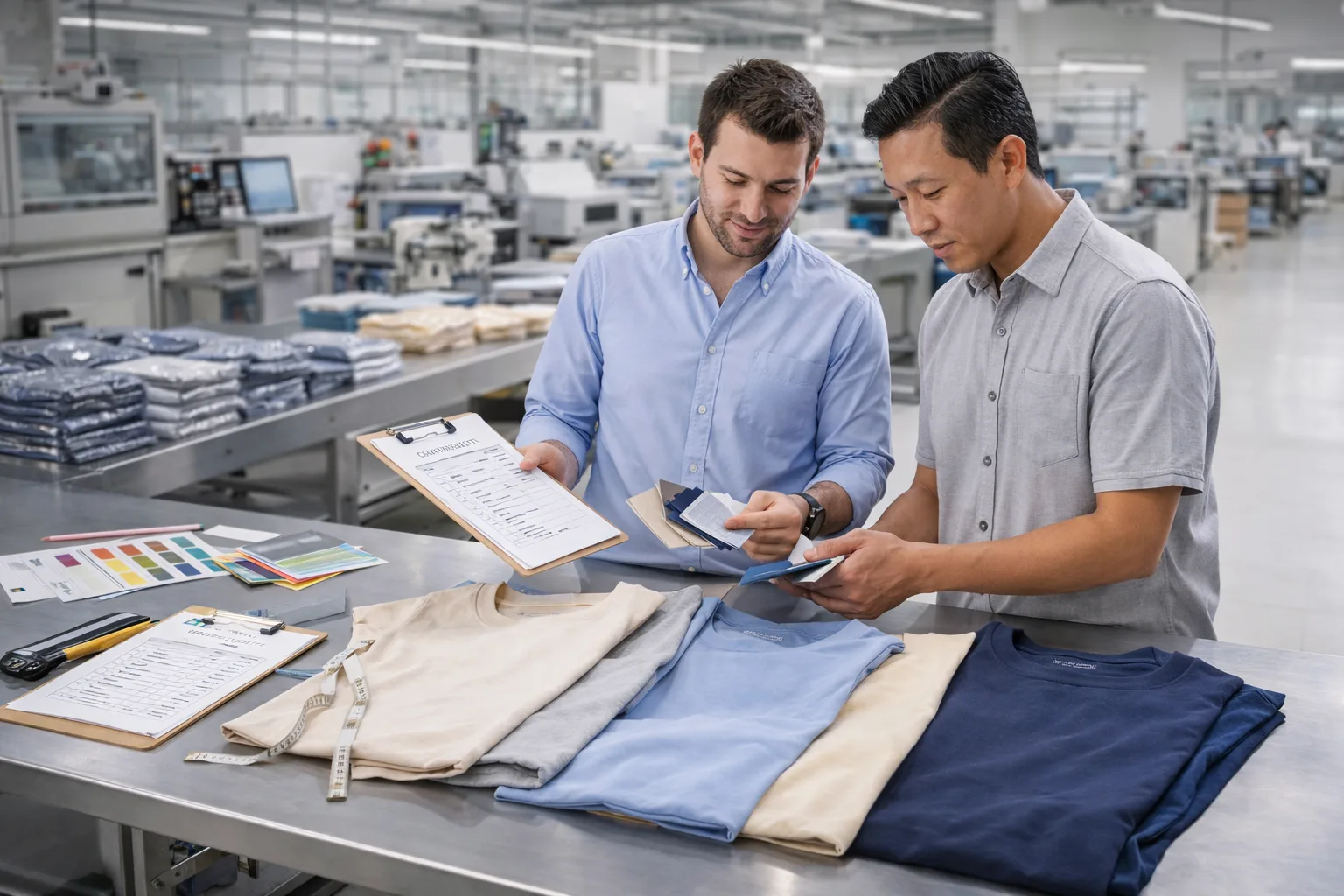
Are you about to place your first bulk order for a custom garment, but worried that one wrong manufacturer choice could cost you money, time, and your brand reputation? That fear is valid. Your clothing manufacturer is not just a supplier. They are the team that turns your designs into real products that customers will judge your brand by. If the stitching is weak, sizing is inconsistent, fabrics feel cheap, or delivery is late, your customers won’t blame the factory. They will blame you.
Choosing the right clothing manufacturer is one of the most important decisions an apparel brand will ever make, whether you are launching a startup collection, expanding your private label line, or scaling a successful fashion brand. This complete guide will help you evaluate manufacturers properly, avoid common mistakes, and build a long-term production partnership that supports quality, consistency, and growth.
Why Choosing the Right Clothing Manufacturer Matters So Much
Many brands treat manufacturing like a quick outsourcing step. But production is not an isolated phase. It affects everything:
- Product quality and customer reviews
- Brand reputation and repeat purchase rates
- Profit margins and return rates
- Inventory planning and cash flow
- Speed to market and seasonal collections
- Scalability as your demand grows
A reliable clothing manufacturer gives you stability. A poor manufacturer creates chaos: late shipments, defects, wrong fabrics, inconsistent sizing, and expensive rework. For sustainable and ethical brands, the risks are even bigger because supplier compliance and traceability matter to buyers. Choosing the right clothing manufacturer is really about choosing a long-term partner.
Apparel Industry Insights
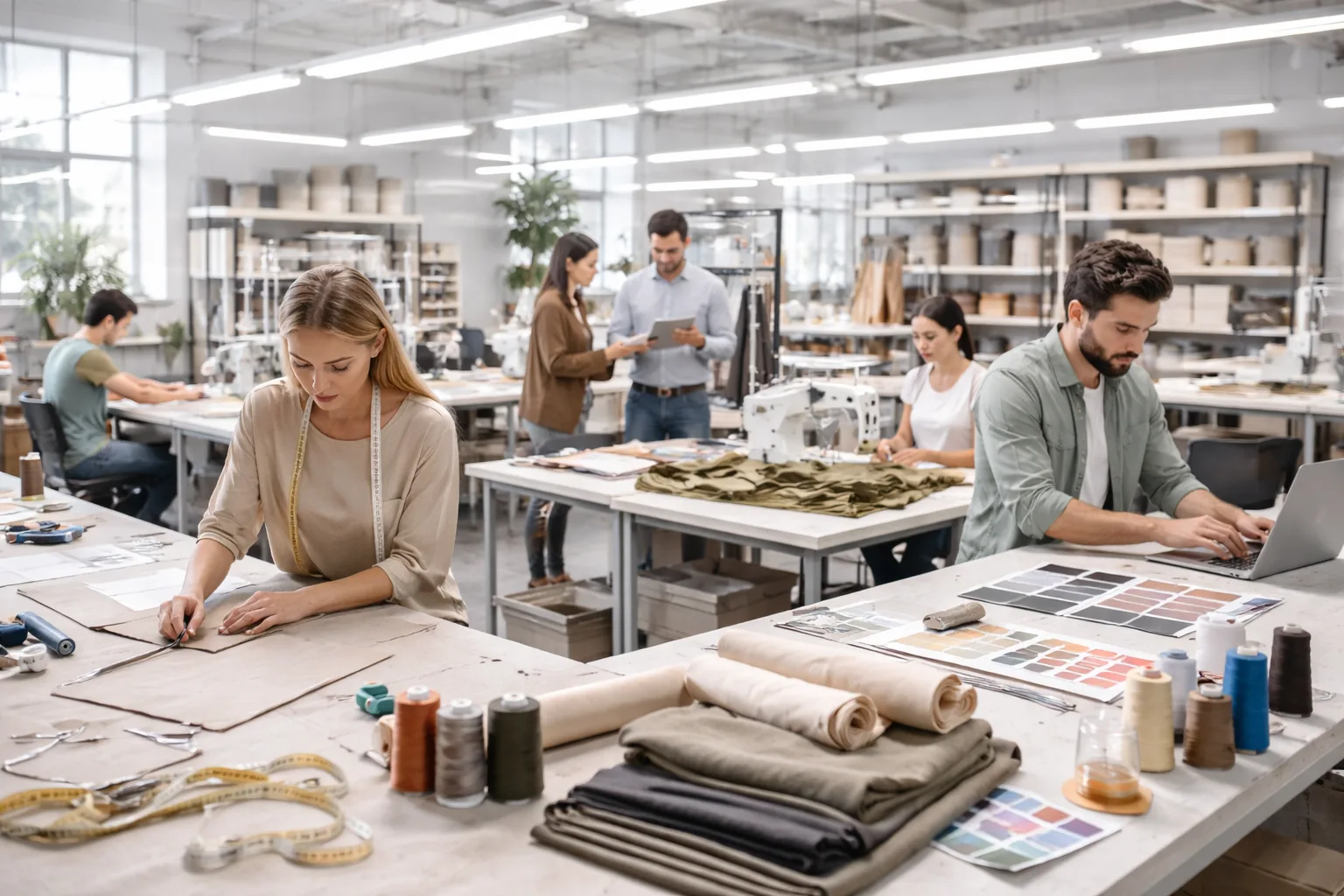
In contemporary apparel industry insights, a clothing brand moves from designs to life through a collaborative design team and skilled fashion designers' work, balancing fashion design and craftsmanship to create a cohesive clothing collection or single tee or sweatshirt. The product development and design process involve pattern making, sampling with a seamstress, and decisions on premium materials like fleece and knitwear produced by a clothing factory.
Efficient apparel manufacturing and clothing production require a production process that can sew and knit precisely, with precision and the option for modification to achieve the right fit. A custom or custom garment route via a custom clothing manufacturer or leading clothing manufacturer supports custom apparel and wholesale channels while keeping minimum and minimum order requirements clear. To simplify and streamline the shift from development to delivery, brands seek an established apparel manufacturer partner or production partner offering factory partnerships, one-stop services, customer service, free consultation, and smarter logistics for import and distribution.
Can I Buy Clothes Directly From The Manufacturer?
Yes — you can often buy directly from a making clothing clothing factory or a custom clothing manufacturer that offers custom apparel and full apparel production services. A leading clothing manufacturer acting as an apparel manufacturer partner will guide you from fashion design through clothing collection development, offering customer service, a free consultation, and options for private label or wholesale orders.
Whether you want a simple tee, a branded sweatshirt, or a refined cut-and-sew piece, they can simplify clothing production with precision, factory partnerships, and an eye for fashion designer intent. From designs to life and development to delivery, established teams — including seamstress skills and textile sourcing — manage modification and the right fit. For import needs or a one-stop production partner, check credentials and samples before committing.
Where Can I Find A Manufacturer For My Clothing Line
Finding a reliable clothing manufacturing partner starts with defining your needs: small-batch vs. large runs, minimum order quantities, and whether you require custom pattern-making or simple grading. Research directories, trade shows, and online B2B platforms to compare factories that specialize in your niche and look for reviews from other designers to gauge experience with established fashion brands.
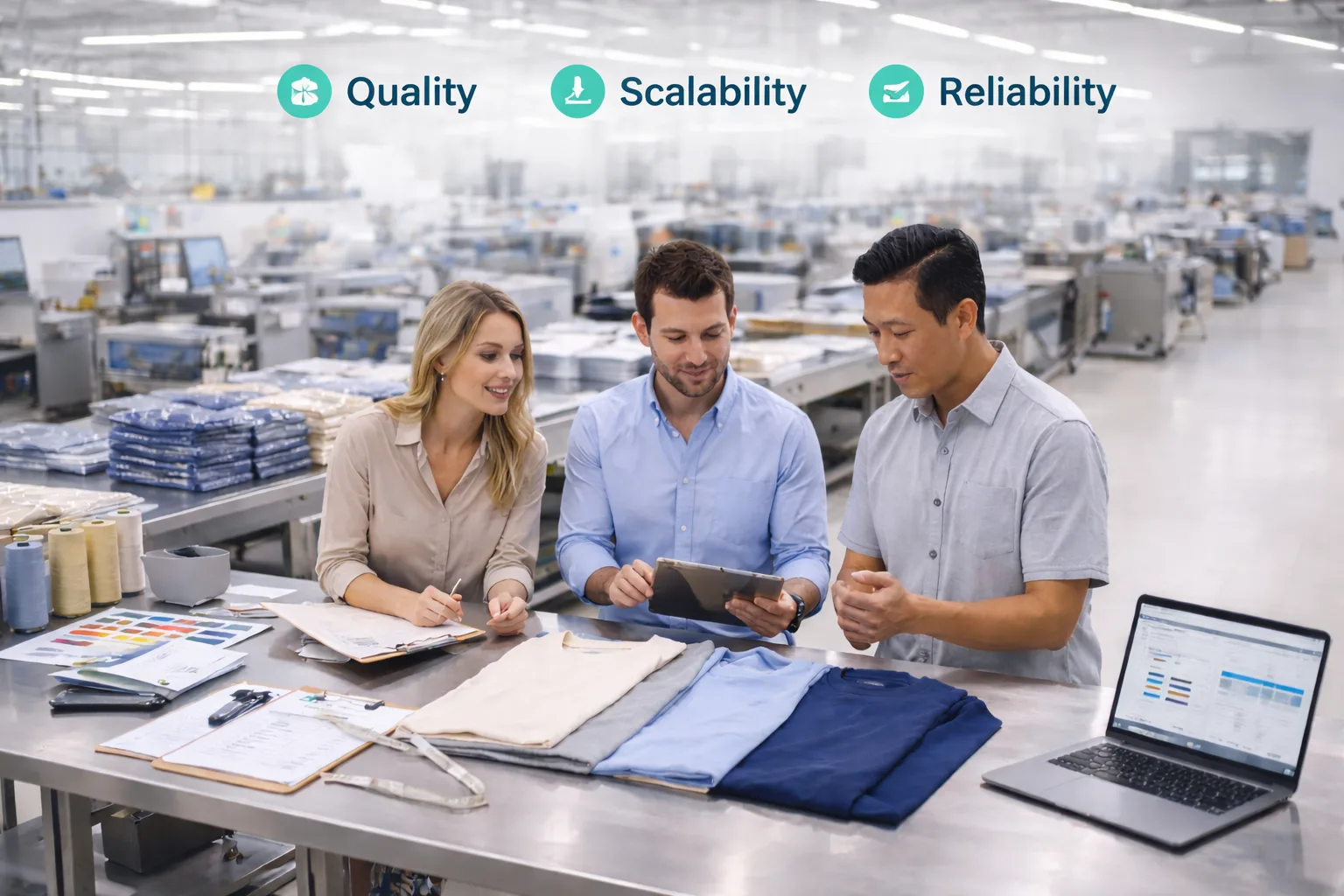
If you want production in the u.s, search regional apparel clusters and contact local sewing contractors who often offer lower lead times and easier communication — but be prepared for higher costs. Ask potential manufacturers about pricing models, including how they charge per color when dyes, sample runs, and set-up fees vary by shade. Request samples, visit facilities if possible, and get clear contracts covering timelines, quality standards, and intellectual property to protect your line.
Define Your Brand’s Manufacturing Needs Clearly
Before you start searching, you need clarity on what you are making and what your supply chain requires. Most brands waste time because they contact factories without clear requirements.
Start with these fundamentals:
What product category are you producing?
A factory that specializes in knit t-shirts may not be good at tailored blazers. A factory strong in sportswear may struggle with delicate woven dresses.
Common categories include:
- Basic knitwear (t-shirts, hoodies, sweatpants)
- Woven tops and shirts
- Denim and heavy twill
- Activewear and performance garments
- Outerwear (jackets, coats)
- Lingerie and underwear
- Kidswear and babywear are essential segments in the clothing brand market.
What is your target quality level?
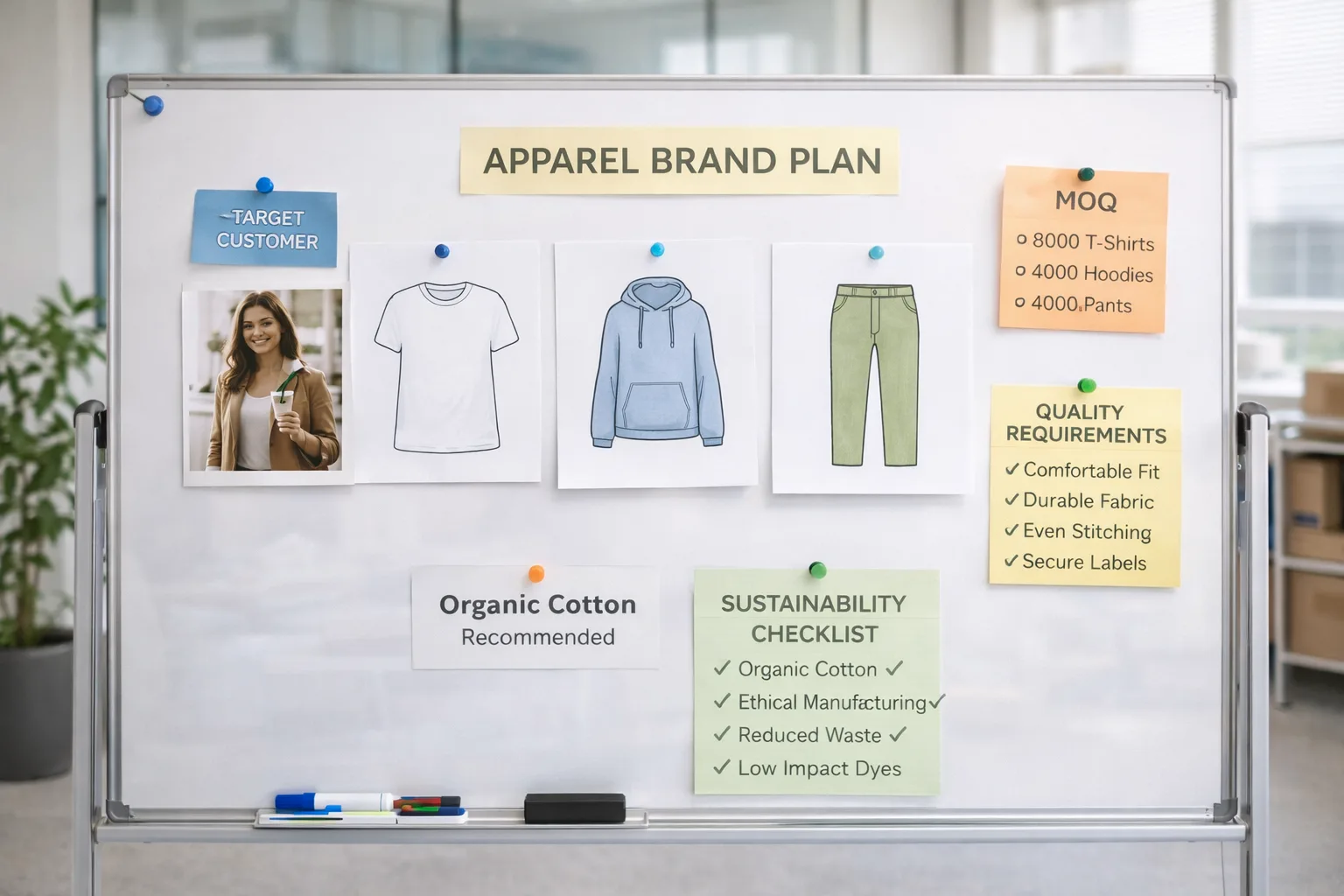
Are you making premium garments or budget-friendly basics? Your quality target affects fabric selection, construction, QC standards, and cost.
What is your order volume and MOQ range?
If you are a startup, you may need low MOQ clothing manufacturers. If you are scaling, you need factories that can produce consistently at higher volumes.
What are your sustainability and compliance requirements?
If sustainability matters to your brand, define your expectations such as organic cotton sourcing, recycled fabrics, ethical labor standards, and documentation.
A manufacturer is “right” only if they match your requirements for custom clothing and high-quality production.
Understand the Types of Clothing Manufacturers
Not all manufacturers operate the same way. Knowing the differences helps you choose a partner that fits your model.
Cut and sew manufacturers
They produce garments from fabric you source or from fabric they can source. These are common for private label brands and fashion brands needing production flexibility.
Full package manufacturers
They handle everything: sourcing fabric, pattern making, sampling, bulk production, labels, packaging, and shipping preparation. Many brands prefer full package to reduce complexity.
CMT manufacturers (Cut, Make, Trim)
They only cut and sew. You provide fabrics and trims. CMT can be cost-effective but requires more involvement from the brand.
Private label manufacturers
They often offer ready styles you can customize with your branding. This can speed up launching but may reduce product uniqueness. Your choice of a clothing brand manufacturer depends on how much control you want and how much operational work you can handle in the production process.
Where to Find Clothing Manufacturers
Once your requirements are clear, you can start building a list of potential manufacturers.
Reliable sources include:
- Industry trade shows and sourcing expos
- Professional sourcing networks
- Referrals from other apparel founders
- Online B2B manufacturing platforms
- Textile mills that recommend partner factories
- Local manufacturing directories if you want domestic production
The key is not finding the most factories. The key is finding the right few factories to evaluate deeply for making high-quality clothing.
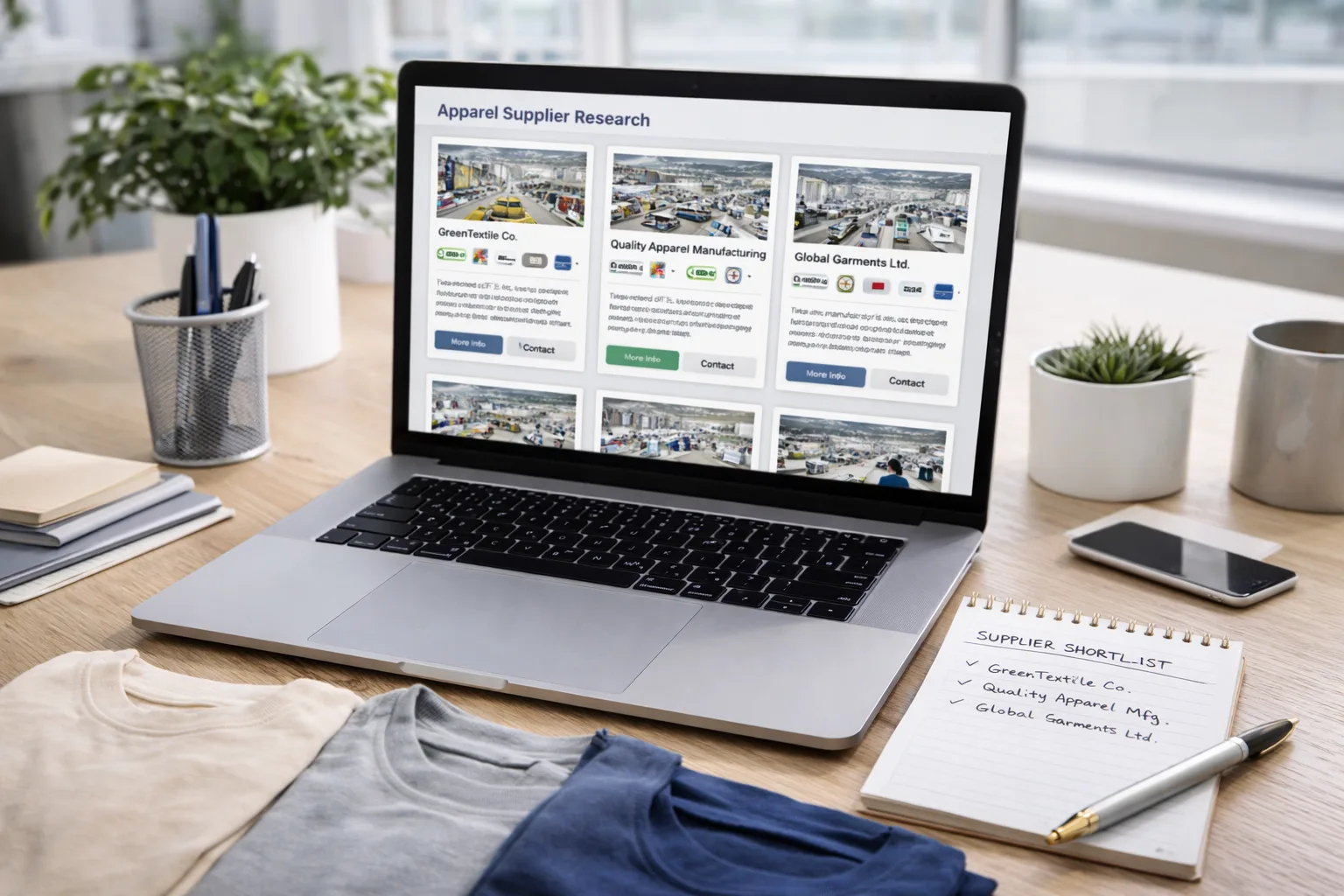
Shortlist Manufacturers Using a Simple Qualification Filter
Before requesting samples, filter manufacturers quickly to avoid wasting time.
Use this shortlist filter:
Do they make your product category?
Ask for photos of similar products, not general factory images.
Do they work with your MOQ level?
Be honest about your starting order volume.
Do they provide the services you need?
Sampling, pattern making, grading, fabric sourcing, packaging, labeling.
Can they meet your lead time expectations?
If you have seasonal launches, timing matters.
Can they support your quality target?
Ask about their QC process and defect management to ensure craftsmanship standards are met. If they pass these basics, move to deeper evaluation.
Ask the Right Questions Before You Commit
Most brands ask only about price and MOQ. That is a mistake in the logistics of your production process. Here are smart questions that reveal whether a manufacturer is reliable.
Production capability and capacity
- What is your monthly production capacity for this product type?
- Do you have experience producing for export markets?
- How do you manage production scheduling?
Sampling and development
- How long does sampling take?
- How many sample rounds are included?
- Do you provide pattern making and grading?
Fabric and trim sourcing
- Can you source organic cotton or recycled fabrics?
- Do you provide fabric certification documents?
- Which mills do you work with?
Quality control systems
- What inspection points do you follow during production?
- Do you use AQL standards for bulk inspection?
- How do you handle defects and rework?
Compliance and ethical manufacturing
- Do you have social compliance audits available?
- What safety practices do you follow?
- How do you ensure legal wage and working hour compliance?
Communication and project management
- Who will manage my order and updates?
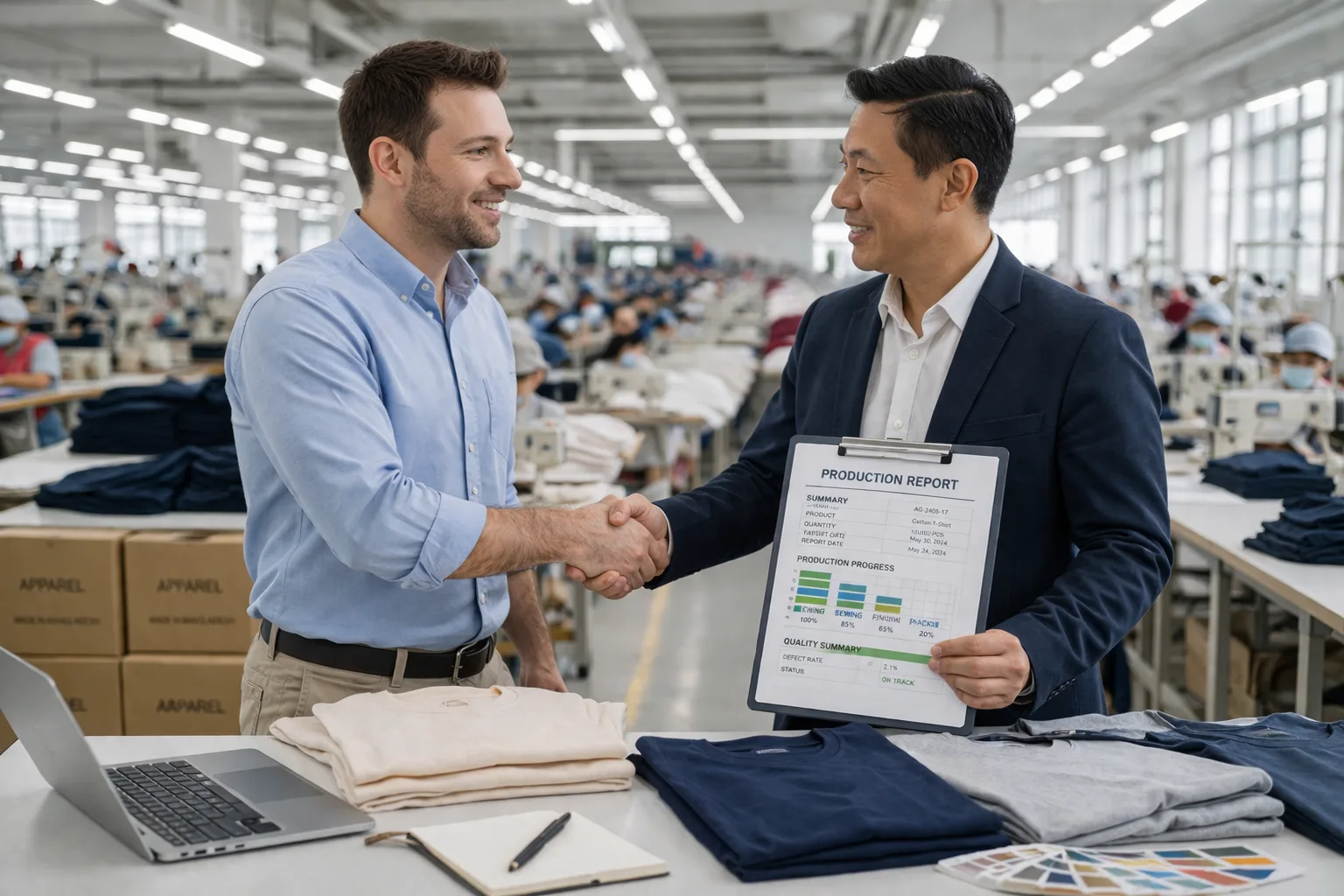
- How often will I receive production progress reports?
- What is your process for approval and sign-off?
A serious factory will answer clearly and provide proof.
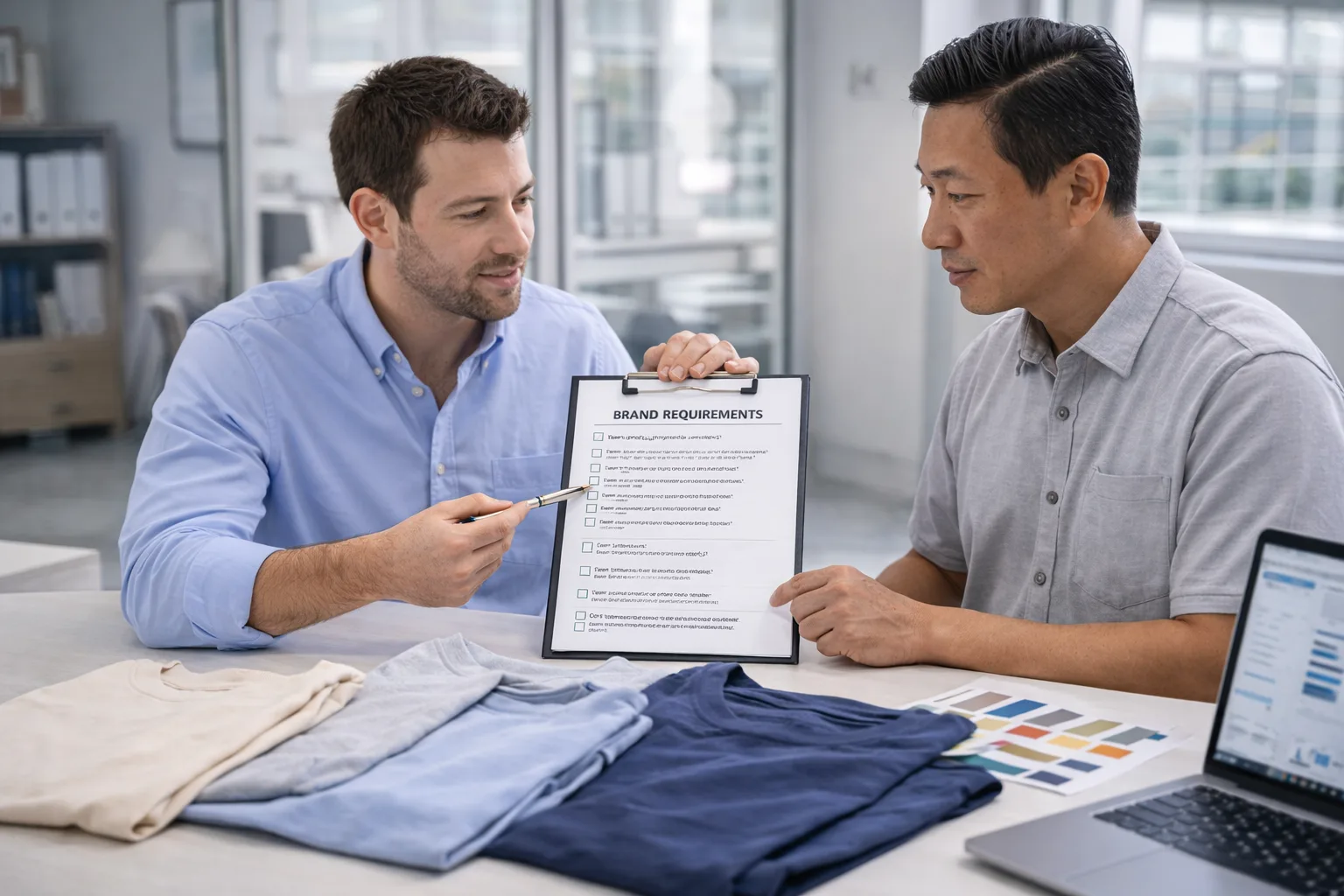
Evaluate Their Product Samples Properly
Sampling is where you see the factory’s real capabilities. Do not judge by appearance only. Evaluate with a structured approach.
Fit and sizing accuracy
Compare measurements to your tech pack. Even small measurement issues can cause high return rates.
Stitch quality and construction
Check seam strength, stitch consistency, and reinforcement points. A garment that looks good but falls apart after washing will damage your brand.
Fabric hand-feel and performance
Check shrinkage, colorfastness, and fabric recovery. For activewear, test stretch and moisture behavior.
Finishing details
Look at thread trimming, pressing quality, label placement, packaging, and overall cleanliness to ensure high-quality craftsmanship.
Wash test results
Always wash test samples to check shrinkage, pilling, twisting, and color changes. Many brands skip this and pay for it later. If a factory delivers strong samples of custom garments, it is a good sign, but still not a guarantee of quality. Bulk production consistency matters too.
Understand Pricing Without Falling Into the Cheapest Trap
Low price is attractive, but it often hides risk. A factory can quote low by using lower quality fabric, cutting corners on stitching, reducing QC, or overloading production capacity.
Instead of focusing on the cheapest, compare based on:
- Fabric quality and GSM
- Construction methods and finishing standards
- Implementing effective QC systems and defect prevention is crucial for maintaining high-quality standards.
- Compliance level and audit readiness
- Communication and timeline reliability
You want the best balance of quality, cost, and reliability. A strong manufacturer helps you reduce hidden costs like returns, late shipping, and rework.
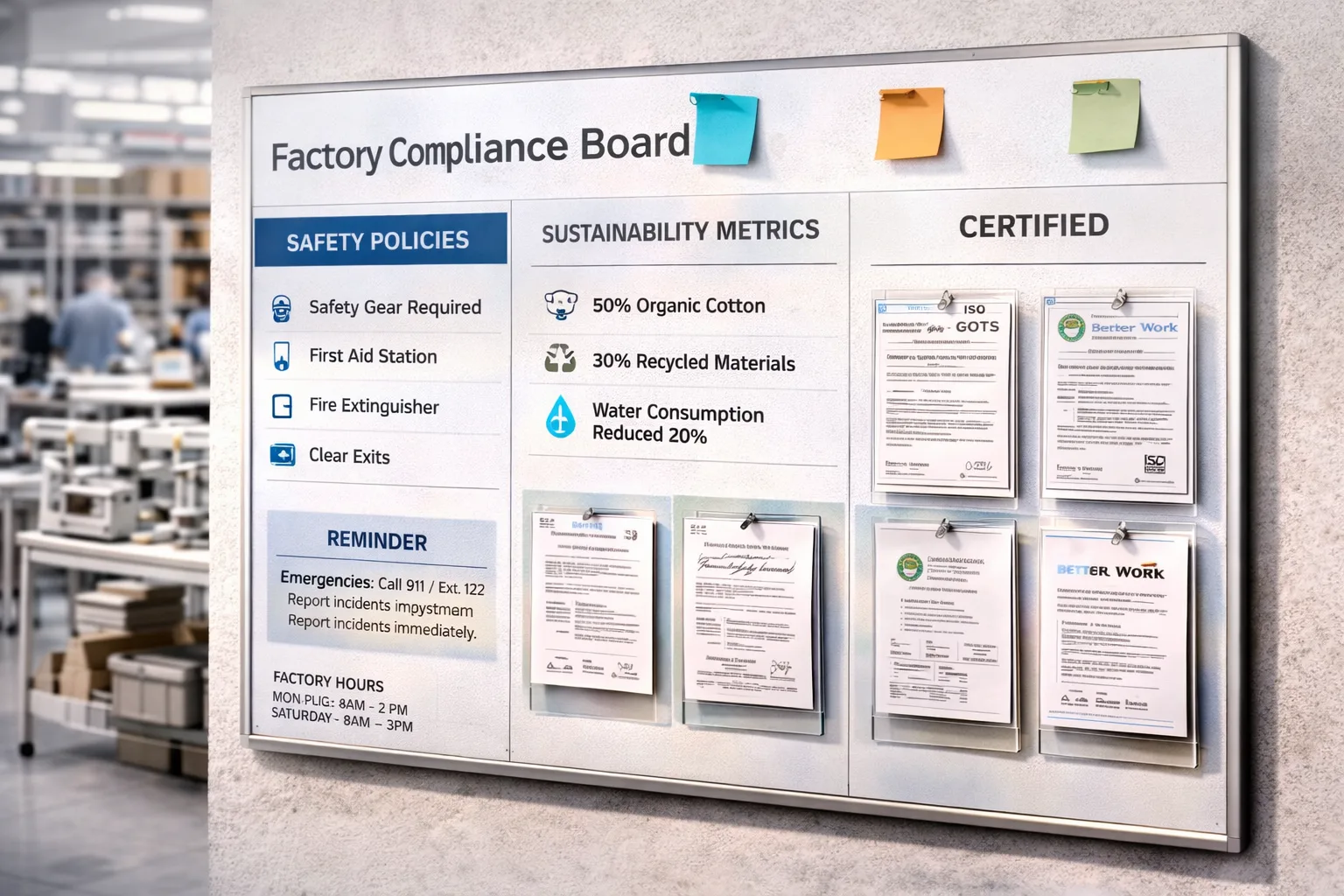
Check Their Sustainability and Ethical Manufacturing Standards
If your brand is sustainable, your supplier must align with it. Even if your brand is not fully sustainable yet, choosing responsible suppliers reduces long-term risk.
Ask for evidence of:
- Certified organic or recycled material sourcing
- Chemical safety and restricted substances controls
- Wastewater treatment for dyeing partners
- Waste segregation and recycling practices
- Worker safety training and proper PPE
- Audit documentation where available
Sustainability is a system, not a marketing phrase. Suppliers should prove their standards with documentation.
Confirm Lead Times and Production Planning
A common failure point is unrealistic timing.
Manufacturers should provide a timeline that includes:
- Pattern and sampling stage
- Fabric sourcing lead time
- Pre-production approval process
- Bulk production timeline
- Final inspection and packing
- Shipping preparation
Always confirm:
- What causes delays most often?
- How do they handle urgent orders?
- Do they offer production updates weekly?
If you plan properly, you can avoid expensive air shipping and last-minute stress in the logistics of your clothing brand.
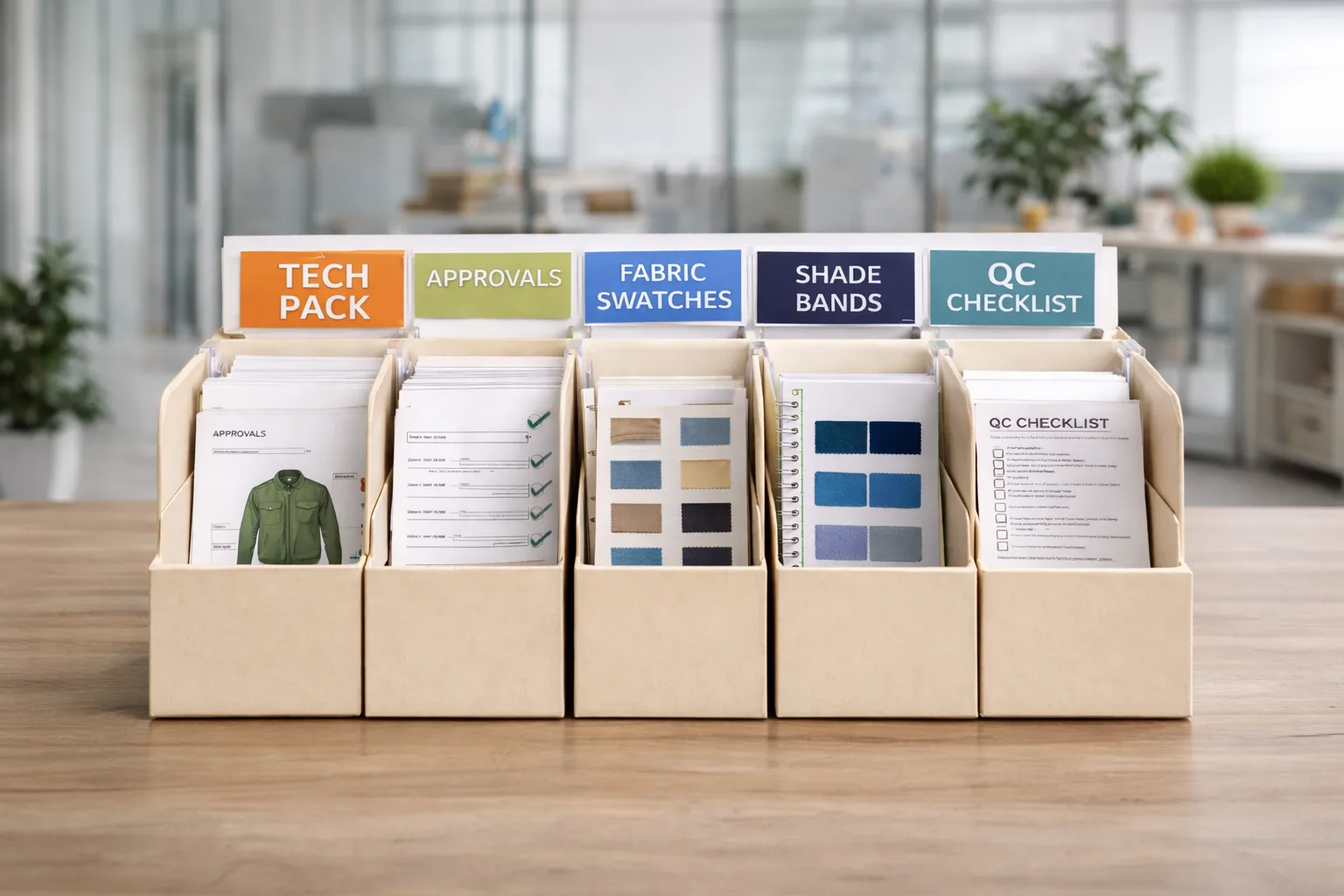
Protect Yourself With Clear Documentation
Many problems happen because approvals are not documented.
Make sure you have:
- Approved tech pack and measurement chart
- Approved fabric and trim references
- Approved shade bands for colors
- Approved print and embroidery placements
- Pre-production sample sign-off
- Packaging and labeling instructions
Document everything. A good factory will also prefer this because it reduces confusion and mistakes.
Start Small and Scale With Performance
Even if a manufacturer looks perfect, begin with a controlled first order.
A smart approach:
- Start with a small MOQ run to test the craftsmanship of your custom garments.
- Use fewer SKUs initially
- Track defect rate and delivery performance
- Review communication quality
- Improve tech packs based on learning
Then scale gradually once consistency is proven. Long-term manufacturing success comes from stable processes, not quick decisions.
Common Red Flags When Choosing a Clothing Manufacturer
Watch out for these warning signs:
- Very low pricing compared to the market
- Refusal to share documentation or certifications
- Poor communication or slow replies
- Overpromising unrealistic lead times
- Lack of sample accuracy and repeated mistakes
- No clear QC process
- Unwillingness to discuss compliance or audits
- Inconsistent answers between team members
If you see multiple red flags early, do not ignore them. The problems will multiply during bulk production.
How to Build a Long-Term Partnership With Your Manufacturer
Once you choose the right manufacturer, treat them like a partner.
Here is how to build a strong relationship:
Plan your production calendar in advance
Factories prioritize brands that plan ahead. This helps you get better timelines and consistent quality.
Communicate clearly and professionally
Provide structured feedback with photos, measurement notes, and clear approval steps.
Pay on time
Reliable payment builds trust and smooth production scheduling.
Improve your tech packs
Better specs reduce sampling rounds and production errors. This also reduces waste, which supports sustainability.
Aim for continuous improvement
Review each order’s QC report, returns, and customer feedback. Use those insights to improve the next production run.
The best brands grow with their manufacturers, not by switching every season.
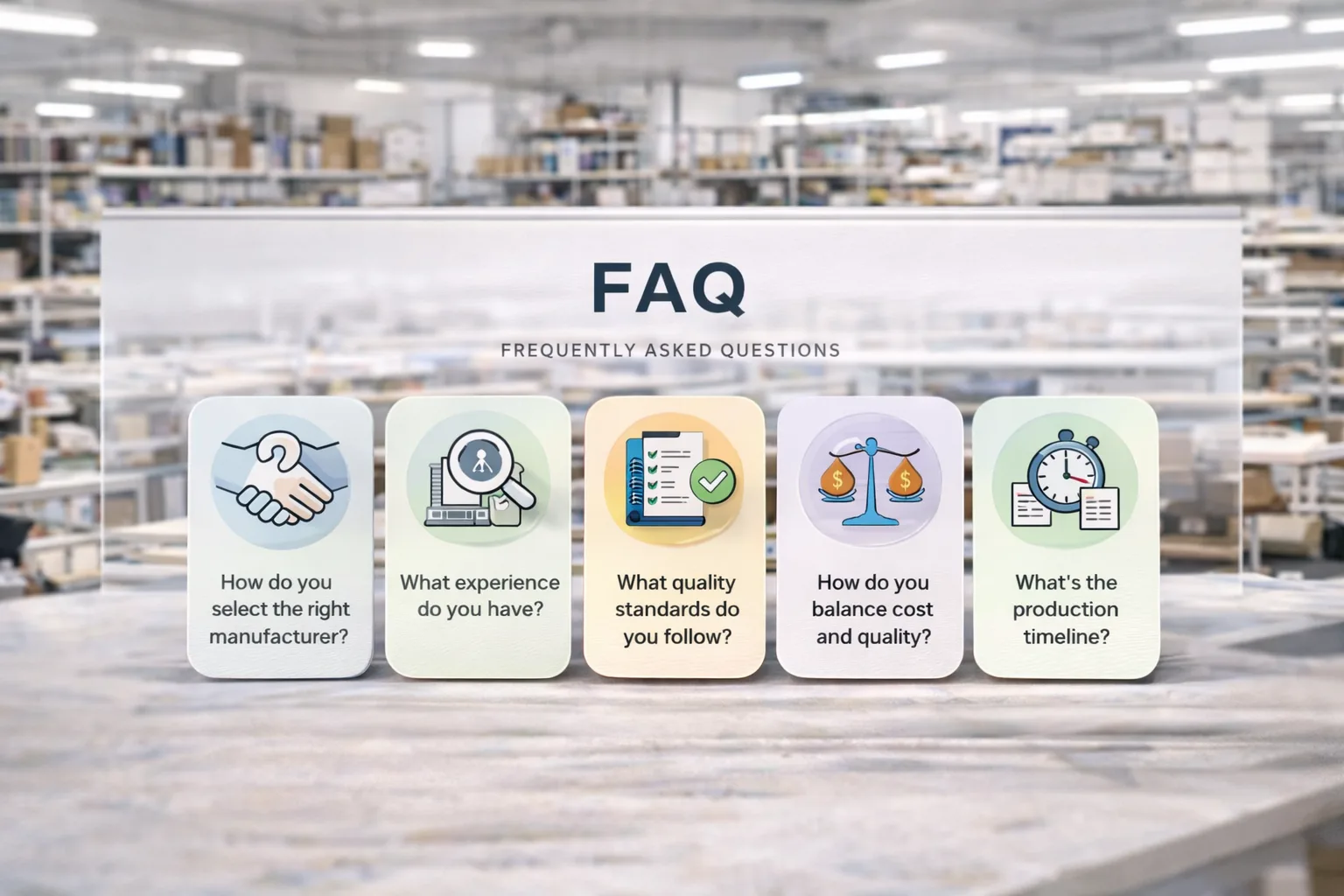
FAQs About Choosing a Clothing Manufacturer
How do I find a clothing manufacturer for my brand?
Start by defining your product category, MOQ, quality level, and sustainability needs, then shortlist factories through verified directories, trade shows, or professional sourcing networks.
What is a good MOQ for startups?
For startups, a good MOQ often ranges from small batch runs to low MOQ production depending on the factory’s setup and fabric availability. Many brands start small to validate market demand before scaling.
Should I choose domestic or overseas manufacturing?
Domestic manufacturing offers faster communication and easier quality control, while overseas manufacturing can provide stronger scalability and cost efficiency. The best choice depends on your target market, budget, and timeline.
How do I know if a factory is ethical?
Ask for audit documentation, safety policies, and transparency about working hours and wage compliance. Ethical factories will be comfortable discussing these topics and providing evidence.
Why do clothing manufacturers reject orders?
Factories may reject orders if MOQs are too low, fabric sourcing is difficult, lead time is unrealistic, or the product complexity does not match their capability.
Final Thoughts: Choose the Manufacturer That Helps You Scale With Confidence
Choosing the right clothing manufacturer is the foundation of a strong apparel brand. The best manufacturers deliver consistent quality, clear communication, reliable lead times, and compliance support. They reduce your risk, improve your product, and help you grow sustainably. Start with clarity. Shortlist carefully. Ask smart questions. Test with samples. Document approvals. Begin small, then scale with performance. When you choose the right partner, manufacturing becomes a growth engine instead of a constant problem.
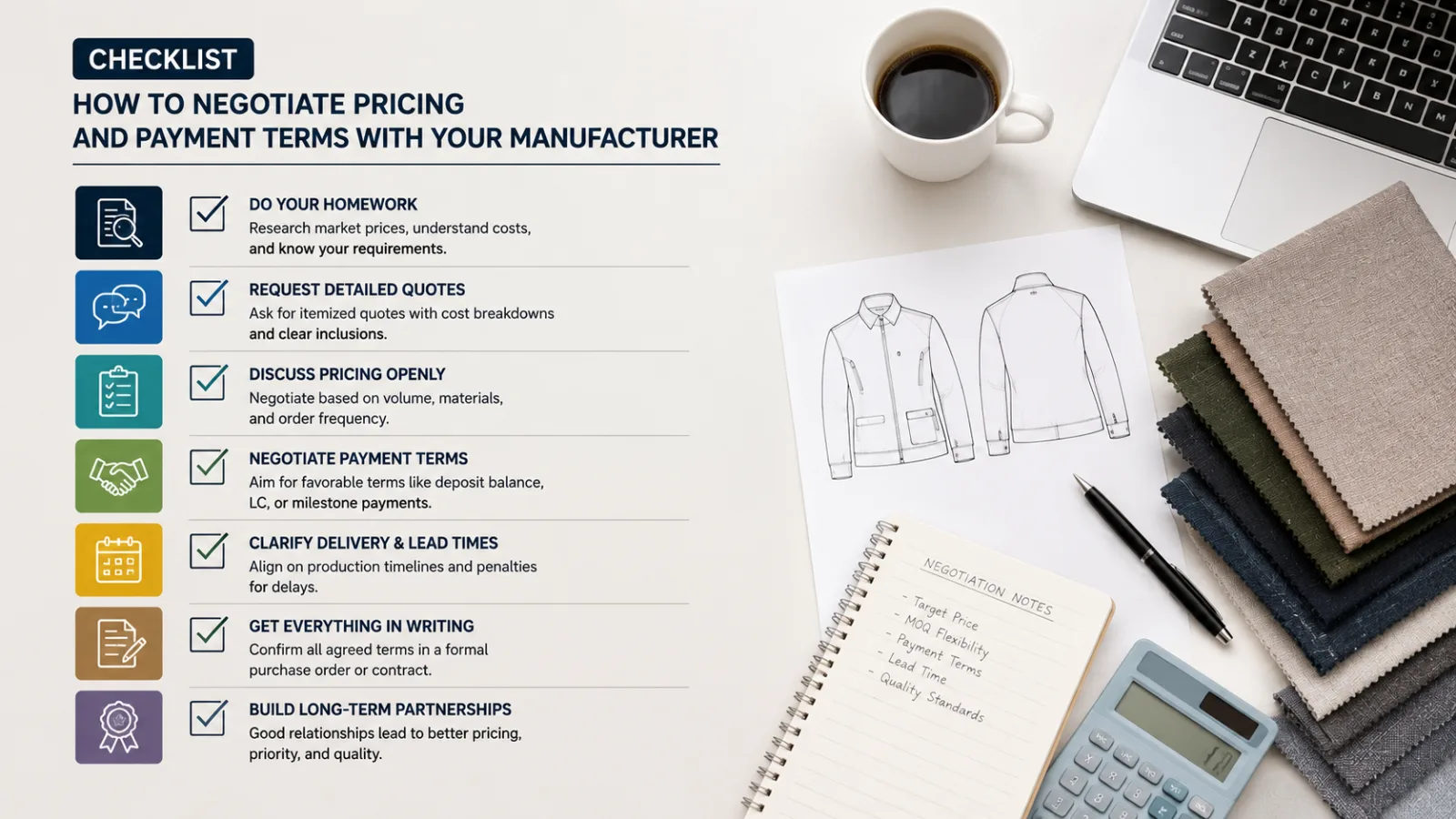
How to Negotiate Pricing and Payment Terms With Your Manufacturer
Cost is always a factor in manufacturing decisions, but negotiating purely on price is one of the most common mistakes brands make. The goal is to secure fair value, not the cheapest quote. A factory that cuts its price drastically often cuts corners too — on fabric quality, finishing standards, or worker conditions.
Understand what drives the cost
Your unit cost is shaped by several variables: fabric price, complexity of construction, number of operations, order volume, trims and embellishments, lead time, and packaging requirements. Before negotiating, understand how each factor affects the total. This knowledge prevents you from pressing for savings that are structurally impossible.
Request an itemised cost breakdown
Ask the factory to break down the cost into fabric, labour, overheads, and profit margin. A transparent factory will provide this. The breakdown helps you identify where savings might genuinely be possible — for example, simplifying a design detail that increases operations without improving the product.
Volume leverage and commitment
Factories offer better rates to brands that commit to consistent volume. If you are a startup, be honest about your current order size but share a realistic growth plan. Many factories will accept a lower margin on the first order in exchange for a longer-term commitment, especially if you demonstrate professionalism and clear communication.
Payment term standards
Most manufacturers work on a 30–50% deposit at order confirmation, with the balance due before or on shipment. For new relationships, factories often require 50% upfront. As trust builds and order volumes grow, better terms — such as net 30 or letter of credit arrangements — may become possible. Never agree to 100% upfront payment for a first order with an unverified factory.
Factor in total cost of production
The unit price is only one part of the total cost. Sampling fees, shipping costs, import duties, quality inspection fees, and rework charges can significantly raise your effective cost per unit. A slightly higher unit price from a reliable partner often delivers a lower total cost than a cheaper quote with hidden risks attached.
Key Questions to Ask Before Signing a Contract
Before committing to a production run, confirm the following contractual points in writing:
- IP protection: Will the factory sign a non-disclosure agreement covering your designs, patterns, and branding?
- Rejection and defect policy: What percentage defect rate is acceptable, and what happens if the batch exceeds that threshold?
- Cancellation clause: Under what conditions can either party exit the agreement, and what are the financial implications?
- Ownership of patterns and tools: If you pay for pattern development, who retains ownership?
- Exclusivity: Will the factory agree not to produce your specific designs for competitors?
Written agreements prevent disputes and protect both parties. A professional factory will not only accept these terms — they will often already have them as standard practice.
Why Bangladesh Is a Leading Destination for Custom Apparel Manufacturing
Bangladesh has established itself as one of the world's most important garment-producing nations, and for good reason. Beyond competitive pricing, Bangladeshi manufacturers offer a sophisticated supply chain — from yarn to finished garment — backed by decades of export experience and a deep pool of skilled workers. The country's factories increasingly invest in compliance certifications, sustainability audits, and modern production technology to meet the demands of European and North American brands.
For brands seeking a reliable custom apparel factory, Bangladesh offers a combination of full-package production capabilities, experienced export teams, and improving infrastructure for ethical sourcing. Working with a Bangladesh-based manufacturer that holds strong compliance credentials gives brands access to quality production at scale, with transparent practices. Whether you need cut-and-sew basics, embroidered premiums, or full collection development, the region's manufacturing ecosystem supports a wide range of product categories and order sizes.