
Merchandising planning is one of the most important parts of building a successful retail business. Whether a company sells fashion, kidswear, home goods, accessories, beauty products, footwear, sportswear, or lifestyle items, merchandising planning helps decide what products to sell, how much inventory to buy, when to launch collections, how to price products, where to place them, and how to maximize sales without overstocking.
At its simplest, merchandising planning connects customer demand with product availability. But in real retail, it is much deeper than that. A strong merchandising plan brings together sales data, customer behavior, market trends, inventory levels, pricing strategy, supplier timelines, seasonal demand, store layout, eCommerce performance, and profitability goals. It helps retailers make better decisions before money is spent on stock.
Many retail businesses fail not because their products are bad, but because their planning is weak. They buy too much of the wrong product, too little of the best-selling product, launch collections too late, price items incorrectly, ignore seasonal demand, miss size and color balance, or fail to manage stock across channels. These problems can quickly reduce profit, create cash flow pressure, and weaken customer trust.
This is why comparing merchandising planning methods is so valuable. Different retailers use different planning approaches depending on their size, category, budget, sales channels, and customer base. A small boutique does not plan exactly like a national retail chain. A fashion brand does not plan exactly like a grocery retailer. An online store does not manage merchandise the same way as a department store. However, every successful retailer needs a clear merchandising planning system.
In this comprehensive guide, we will explore what merchandising planning means, why it matters, how different planning approaches compare, what steps retailers should follow, which metrics matter most, and how merchandising planning can support long-term retail success.

What Is Merchandising Planning?
Merchandising planning is the process of deciding which products a retailer should sell, how much stock to buy, how products should be priced, when they should be launched, how they should be displayed, and how inventory should be managed to meet sales and profit goals.
It is the bridge between product strategy and business performance. A merchandising plan helps retailers answer important questions before they invest in inventory.
- What products should we sell?
- Who are we selling to?
- How many units should we buy?
- Which sizes, colors, and styles should we stock?
- What should the price points be?
- When should products arrive?
- How long should they stay in-store or online?
- What sales targets should each category achieve?
- How much markdown risk can we accept?
- How do we avoid overstock and stockouts?
For fashion retailers, merchandising planning may include seasonal collections, trend analysis, range planning, color planning, size curves, fabric choices, product drops, category budgets, open-to-buy planning, and markdown strategy. For general retail, it may include category planning, replenishment, vendor planning, promotional calendars, product lifecycle planning, and inventory forecasting.
The goal is simple: have the right product, in the right quantity, at the right price, in the right place, at the right time. However, achieving that goal is not simple. Retail demand changes quickly. Customers may respond differently than expected. Trends can rise and fall. Suppliers may delay production. Weather can affect seasonal sales. Promotions may perform better or worse than planned. That is why merchandising planning must be both strategic and flexible.
Why Merchandising Planning Matters
Good merchandising planning helps retailers increase sales, protect margins, improve inventory turnover, reduce waste, avoid unnecessary markdowns, and give customers a better shopping experience. Poor merchandising planning creates the opposite result. It leads to dead stock, missed sales, poor cash flow, confusing assortments, weak product availability, and lower profitability.
Retail success depends on planning before the product reaches the shelf. A beautiful product can fail if it arrives late, comes in the wrong sizes, lacks demand, or is priced incorrectly. A simple product can perform well if it is bought in the right quantity, placed in the right channel, and supported with the right pricing and promotion strategy.

Merchandising Planning vs Merchandise Buying
One common confusion in retail is the difference between merchandising planning and merchandise buying. The two are closely connected, but they are not the same.
Merchandise buying focuses on selecting and purchasing products. Buyers work with suppliers, review samples, negotiate prices, select styles, and place orders. Their job is to find products that match the brand, customer, season, and budget.
Merchandising planning focuses on the financial and strategic structure behind those buying decisions. Planners determine how much inventory the business needs, what sales targets must be achieved, how much budget is available, what margins are required, and how inventory should be managed across the season.
In strong retail businesses, buyers and planners work together. Buyers understand the product, trend, supplier, and customer appeal. Planners understand the numbers, stock risk, sales targets, profitability, and inventory flow. When these two roles align, retail decisions become much stronger.
Example
A buyer may believe a floral dress will be a strong summer product because it fits current trends. A merchandiser or planner will ask: How many units should we buy? Which sizes should we stock? What price point protects margin? When should it arrive? How much sales volume do we expect? What is the markdown plan if it does not sell? Which stores or online channels should receive more stock?
This comparison shows why buying alone is not enough. A retailer can choose good products and still lose money if the quantity, timing, price, or allocation is wrong.
Comparing Different Types of Merchandising Planning
Merchandising planning can be approached in several ways. The right method depends on business size, product type, sales channels, and data availability. Below are the most common types retailers compare when building a planning system.
1. Strategic Merchandising Planning
Strategic merchandising planning focuses on long-term direction. It looks at the bigger picture of what the retailer wants to become, what customers it wants to serve, which categories it should grow, and how the merchandise mix should support brand positioning.
This type of planning usually happens annually or seasonally. It includes category strategy, customer segmentation, pricing architecture, brand identity, product hierarchy, margin targets, and growth priorities.
For example, a fashion retailer may decide to shift from trend-heavy fast fashion toward premium basics and sustainable capsule collections. This decision affects product development, supplier selection, pricing, inventory depth, and marketing.
Best For
Strategic merchandising planning is best for brands that want long-term growth, clearer product direction, better category balance, and stronger market positioning.
Key Benefit
It prevents retailers from buying randomly. Every product decision supports a larger business goal.

2. Financial Merchandising Planning
Financial merchandising planning focuses on numbers. It connects product decisions with sales, margin, inventory, and profit targets. This is where retailers plan how much money they expect to make and how much stock they can afford to buy.
Financial planning usually includes sales forecast, gross margin target, stock level, markdown budget, open-to-buy, inventory turnover, sell-through rate, and profit expectations.
For example, if a retailer expects to sell $500,000 worth of women’s outerwear in winter, the merchandising plan must decide how much inventory to buy, what average margin is needed, what price levels are realistic, and how much markdown can be allowed if sales are slower than expected.
Best For
Financial merchandising planning is essential for all retailers, especially those managing cash flow, seasonal stock, and profit targets.
Key Benefit
It helps retailers avoid emotional buying and keeps product investment connected to business performance.

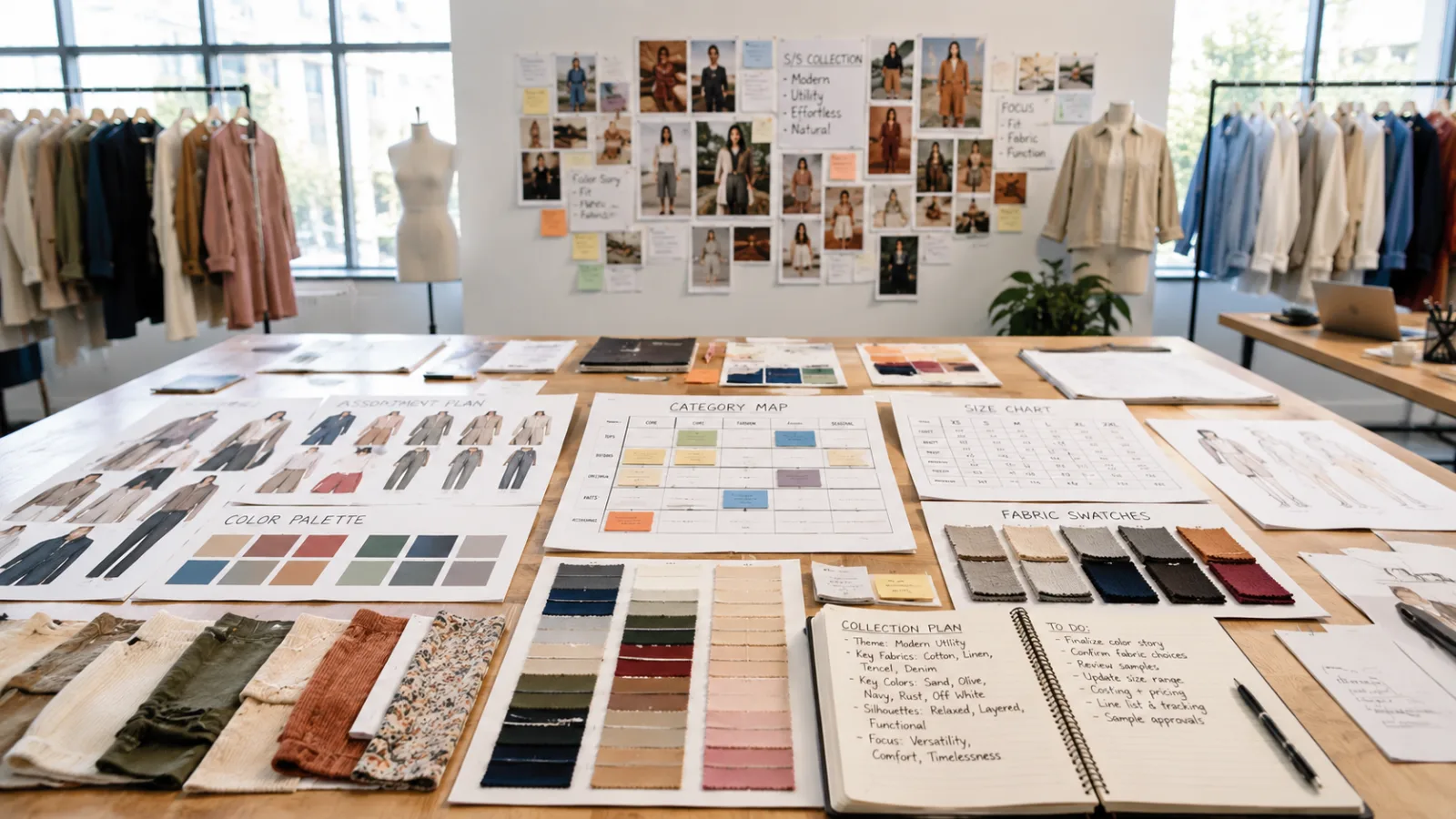
3. Assortment Planning
Assortment planning focuses on the product mix. It determines which styles, categories, colors, sizes, materials, price points, and product variations should be offered to customers. A good assortment plan balances variety and depth. Variety means offering enough choice. Depth means buying enough units of the products most likely to sell. Too much variety can create confusion and shallow stock. Too much depth in a few items can create overstock risk if demand is wrong.
For fashion retailers, assortment planning is especially important because customers expect choice across sizes, colors, fits, and styles. A clothing brand may need to plan how many T-shirts, shirts, dresses, trousers, jackets, and accessories will be included in a collection. It also needs to decide which colors are core, which are seasonal, and which are limited edition.
Best For
Assortment planning is best for retailers that manage multiple categories, styles, sizes, colors, and customer segments.
Key Benefit
It helps retailers create a product range that feels complete without becoming messy or overstocked.
4. Inventory Planning
Inventory planning focuses on stock levels. It helps retailers decide how much inventory to hold, when to reorder, where to allocate stock, and how to avoid both stockouts and overstock. Too little inventory means lost sales. Too much inventory means cash is trapped in unsold stock. The right inventory plan supports sales while protecting cash flow.
Inventory planning becomes more complex when a retailer sells across multiple stores, marketplaces, wholesale accounts, and eCommerce channels. Stock must be placed where demand is strongest. A product may sell quickly online but slowly in one store. Another product may perform well in a specific region but not nationally.
Best For
Inventory planning is essential for retailers with multiple sales channels, seasonal products, replenishment items, or limited cash flow.
Key Benefit
It improves availability while reducing dead stock and unnecessary markdowns.

5. Visual Merchandising Planning
Visual merchandising planning focuses on how products are presented to customers. This includes store layout, window displays, product grouping, mannequin styling, shelf placement, color stories, signage, and online product presentation.
Visual merchandising is not only about making a store look attractive. It directly affects customer behavior. Good visual merchandising helps shoppers understand the product range, discover new items, compare choices, and feel encouraged to buy.
For eCommerce, visual merchandising includes product photography, category pages, landing pages, product recommendations, filters, homepage banners, and collection storytelling.
Best For
Visual merchandising planning is best for retailers that want to improve customer experience, product discovery, and conversion rates.
Key Benefit
It turns the merchandising plan into a customer-facing shopping experience.

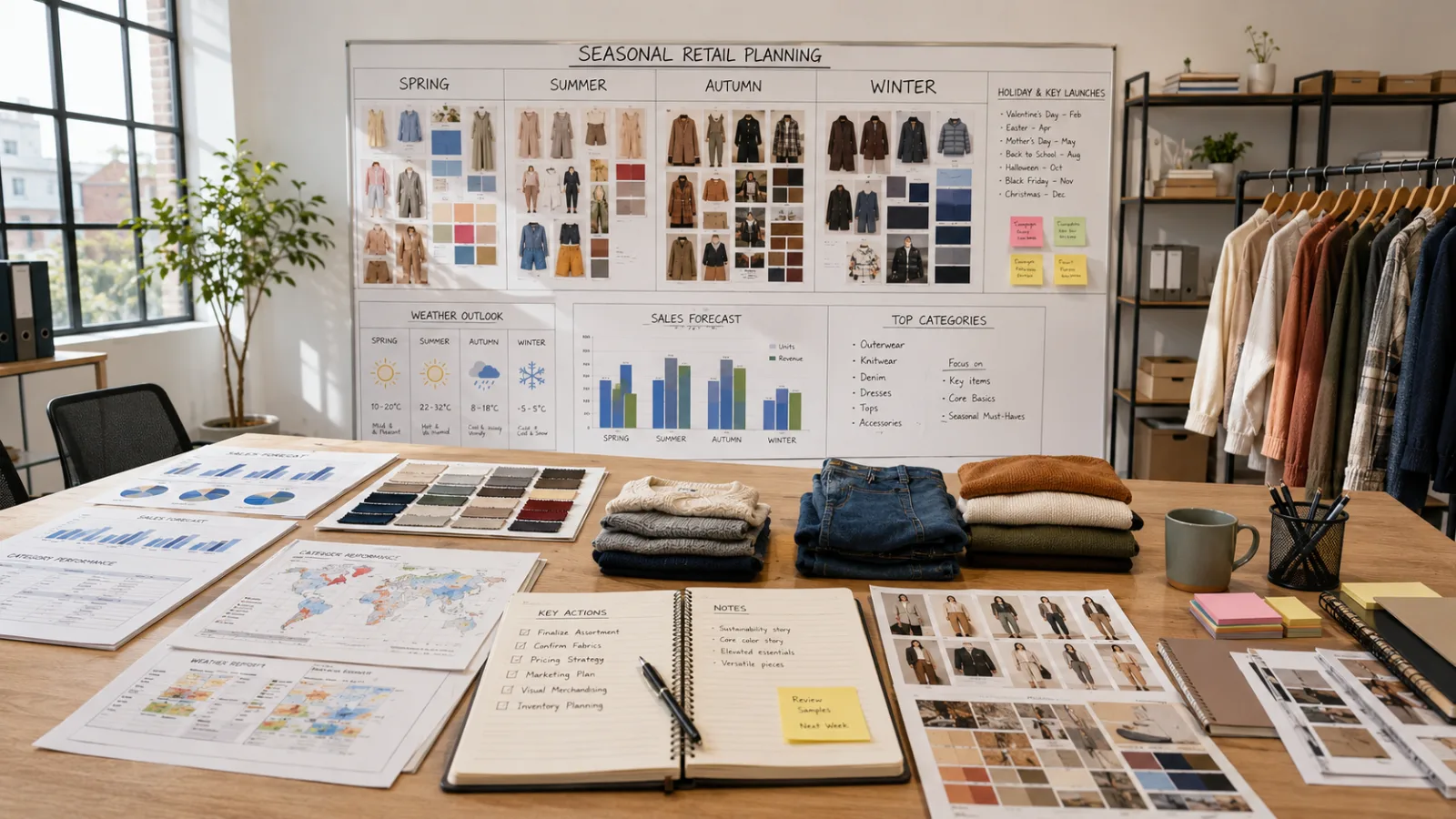
6. Seasonal Merchandising Planning
Seasonal merchandising planning focuses on timing. It helps retailers prepare for seasonal demand, holidays, weather changes, school seasons, festivals, travel periods, and promotional events. In fashion, seasonality is especially important. Winter coats must arrive before cold weather. Swimwear must launch before summer demand peaks. Back-to-school clothing must be ready before families start shopping. Holiday gift items must be stocked before the buying rush begins.
Poor seasonal planning leads to missed opportunities. A retailer that receives winter stock too late may be forced to discount it quickly. A retailer that buys too much summer stock may face heavy markdowns when the season ends.
Best For
Seasonal merchandising planning is best for fashion, kidswear, home goods, giftware, outdoor products, and any category affected by calendar-based demand.
Key Benefit
It helps retailers launch the right product at the right time.
Comparing Traditional Merchandising Planning and Data-Driven Merchandising Planning
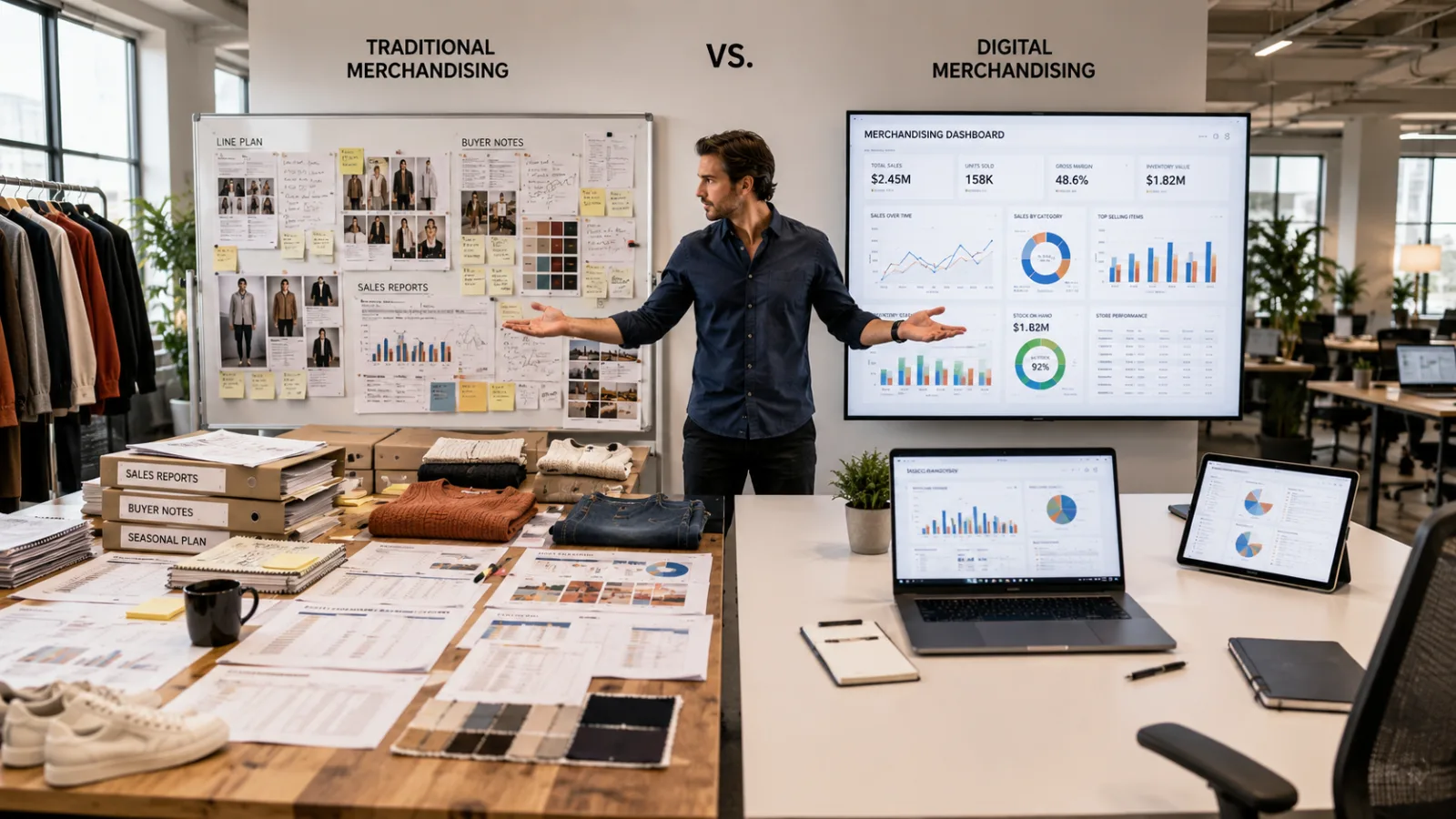
Retail planning has changed significantly. In the past, many merchandising decisions were based on buyer experience, previous sales, supplier relationships, and intuition. These are still valuable, but modern retail increasingly depends on data.
Traditional merchandising planning often relies on historical performance, experienced judgment, seasonal knowledge, and manual spreadsheets. Data-driven merchandising planning uses sales analytics, customer behavior, inventory systems, demand forecasting, website data, sell-through rates, and real-time performance tracking.
Both approaches have strengths. Traditional planning can understand customer emotion, brand identity, fashion instinct, and local knowledge. Data-driven planning can reveal patterns that human judgment may miss. The strongest retailers combine both.
Traditional Planning Strengths
Traditional planning is useful when product taste, trend interpretation, and customer understanding matter. Experienced buyers may recognize a product’s potential before the data exists. This is especially important for new collections, emerging trends, and fashion-led categories.
Traditional Planning Weaknesses
Traditional planning can become biased. A buyer may over-order a product they personally like. A team may repeat last year’s plan even though customer behavior has changed. Manual planning can also be slow and error-prone.
Data-Driven Planning Strengths
Data-driven planning improves accuracy. Retailers can see which products sell fastest, which sizes sell out, which colors underperform, which stores need more inventory, and which products create better margins. Data helps reduce guesswork.
Data-Driven Planning Weaknesses
Data cannot explain everything. It may show what happened, but not always why it happened. If retailers rely only on past data, they may miss new trends or creative opportunities.
Best Approach
The best merchandising planning combines data and judgment. Use data to guide decisions, but use merchandising expertise to interpret the numbers and build a product range that feels right for the customer.
The Merchandising Planning Process Step by Step
A strong merchandising planning process gives retailers a clear roadmap from strategy to execution. While every business may adjust the process, most successful plans follow these core steps.
Step 1: Review Business Goals
Start by understanding the business objective. Is the retailer trying to grow sales, improve profit margin, reduce markdowns, enter a new category, attract a new customer segment, improve inventory turnover, or increase online conversion?
Without clear goals, merchandising decisions become random. A retailer focused on profit may plan differently from one focused on market share. A brand launching a new category may accept lower short-term profit to test demand. A retailer struggling with overstock may prioritize tighter buying and faster inventory turnover.

Step 2: Analyze Past Sales Performance
Historical sales data helps retailers understand what worked and what did not. Look at category sales, product sell-through, margin, markdowns, returns, stockouts, best sellers, slow movers, color performance, size performance, and channel performance.
Past data should not control every decision, but it gives a valuable starting point. If black leggings sold out repeatedly, they may need deeper stock. If a specific dress style required heavy markdowns, the next buy should be more cautious.

Step 3: Understand the Customer
Merchandising planning should always begin with the customer. Retailers need to know who they are buying for, what that customer values, how they shop, what price points they accept, which styles they prefer, and what problems they want products to solve.
Customer understanding may come from surveys, reviews, sales data, store feedback, customer service conversations, website behavior, social media insights, and competitor analysis.
For example, a kidswear customer may care about comfort, washability, durability, and price. A luxury fashion customer may care about design, material, exclusivity, and brand story. A workwear customer may care about function, fit, and long-term performance.

Step 4: Build the Product Architecture
Product architecture means organizing the product range into categories, subcategories, price levels, and roles. A fashion retailer may divide products into tops, bottoms, dresses, outerwear, knitwear, accessories, and footwear. Each category may then be divided into core basics, seasonal styles, trend pieces, premium items, and promotional products.
This structure helps the retailer understand how each product contributes to the total range. Not every item has the same role. Some products drive volume. Some build brand image. Some increase basket size. Some attract new customers. Some support seasonal campaigns.

Step 5: Create the Assortment Plan
The assortment plan defines exactly what products will be offered. It includes style count, color count, size range, price points, fabric choices, category mix, and product depth. This is where comparison becomes important. Should the retailer offer more styles with fewer units per style, or fewer styles with deeper stock? Should the range focus on core products or trend items? Should the store carry premium products, value products, or a mix?
The answer depends on brand position and customer behavior. A boutique may need a curated assortment with limited quantities. A basics brand may need deeper stock in core colors and sizes. A trend-led retailer may need frequent newness and shorter product cycles.

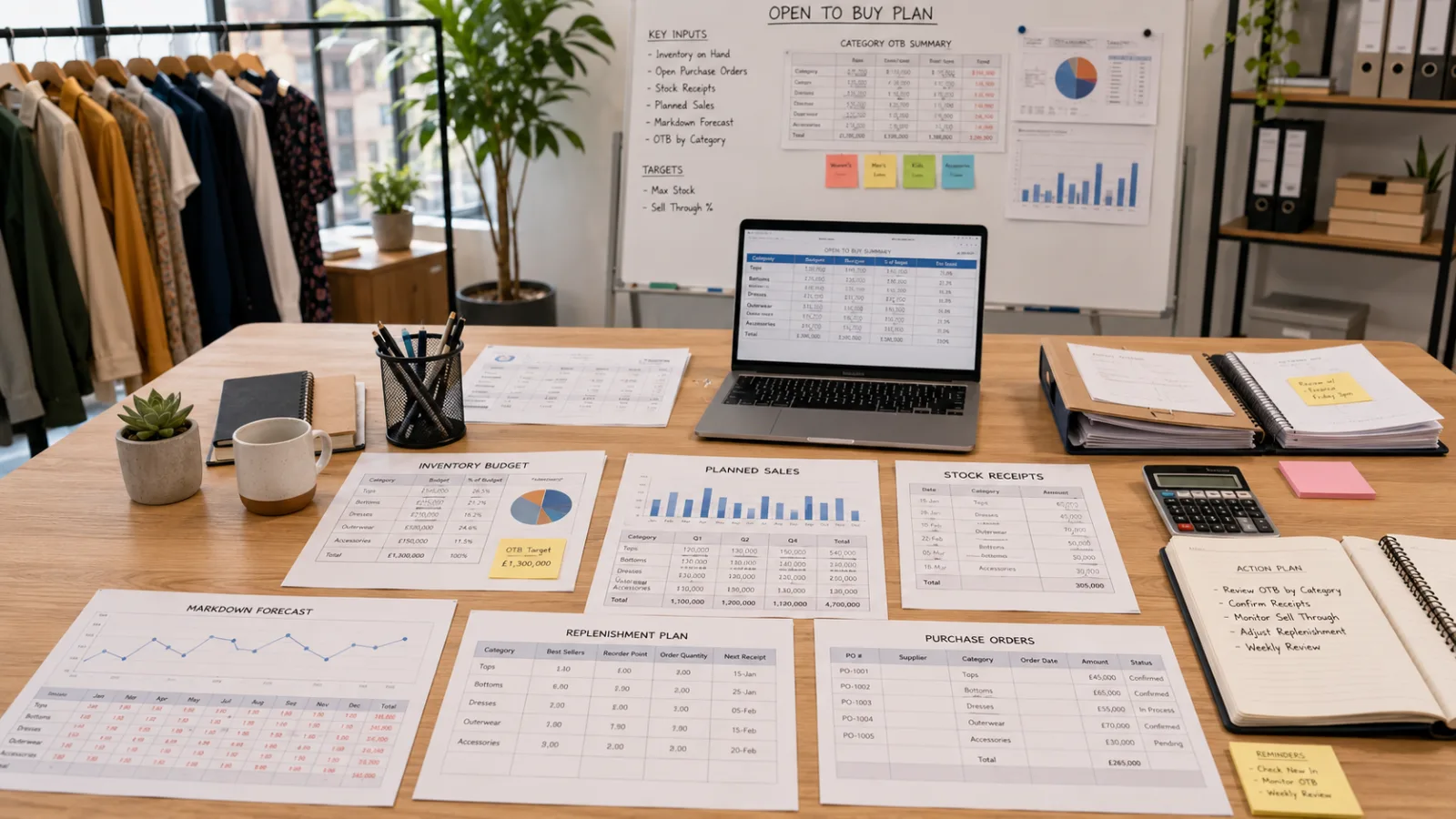
Step 6: Plan Inventory and Open-to-Buy
Open-to-buy is the budget available for purchasing inventory during a specific period. It helps retailers control buying so they do not overspend or understock. Inventory planning should account for beginning inventory, planned sales, planned markdowns, planned receipts, and ending inventory. The goal is to keep enough stock to support sales without creating excess.
Retailers should also plan replenishment for best-selling basics. Some products should be bought once for a season, while others need repeat orders. For example, a fashion dress may be a one-time seasonal item, while a black T-shirt may need continuous replenishment.
Step 7: Set Pricing and Margin Strategy
Pricing is a major part of merchandising planning. Retailers must set prices that customers accept while still protecting profit margins. Pricing should consider product cost, competitor prices, perceived value, customer willingness to pay, brand positioning, and markdown risk.
A weak pricing strategy can damage both profit and brand image. If prices are too low, margins suffer. If prices are too high, products may not sell. If discounts happen too often, customers may wait for sales instead of buying at full price. A strong merchandising plan includes opening price points, mid-tier products, premium items, promotional products, and planned markdown strategy

Step 8: Plan Launch Timing and Product Flow
Product flow means when products arrive, launch, sell, and exit. Timing is critical in retail. Products should arrive early enough to capture demand but not so early that they sit too long. A retailer may plan phased drops instead of launching everything at once. This keeps customers engaged and helps manage inventory risk. For fashion brands, product drops can be planned around seasons, campaigns, holidays, paydays, weather patterns, and marketing events.
Product flow also affects cash flow. Buying too much inventory upfront can create pressure. Spreading receipts across the season can help retailers respond to real demand.

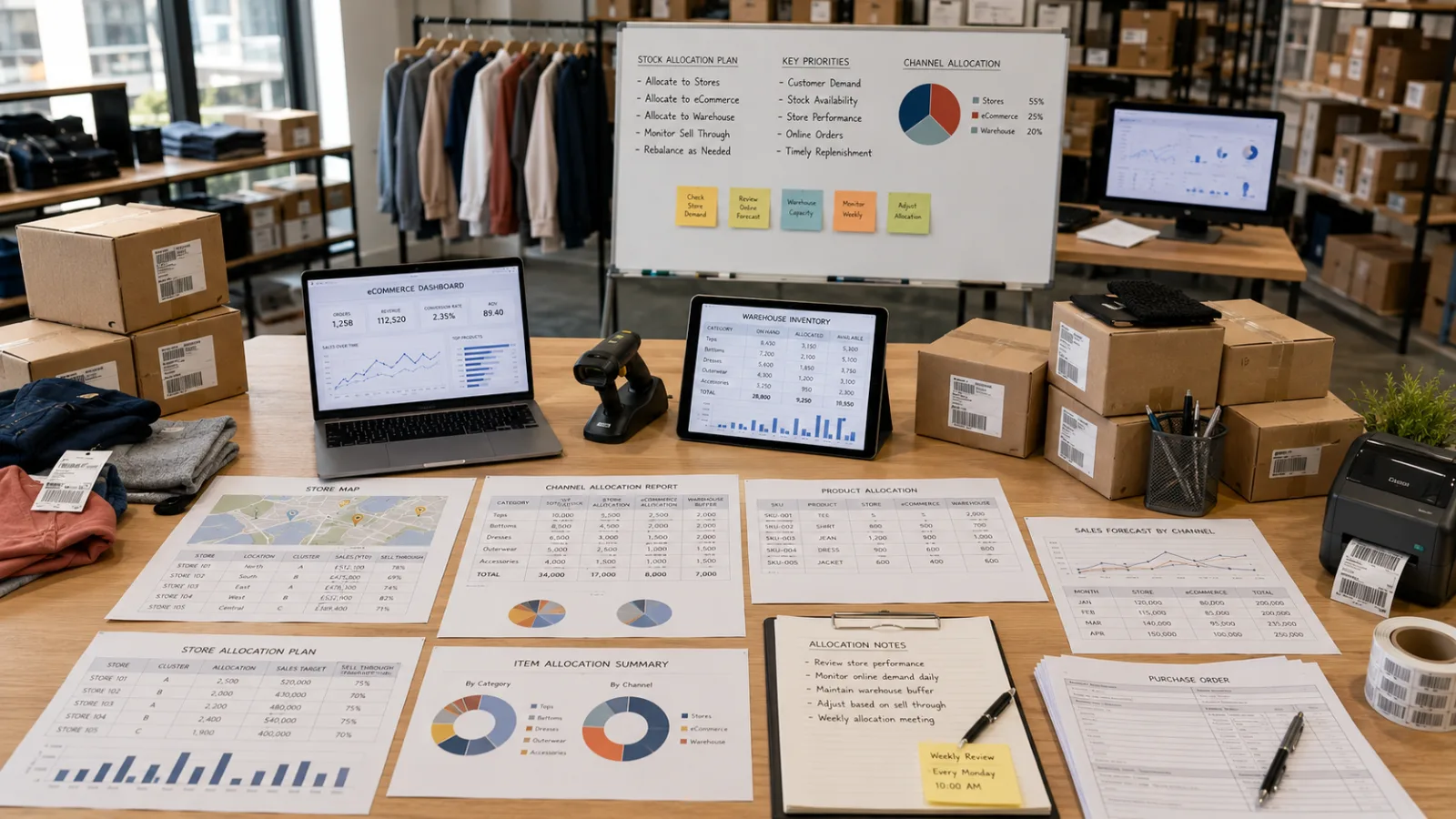
Step 9: Allocate Stock Across Channels
Retailers now sell through stores, websites, marketplaces, wholesale, pop-ups, and social commerce. Merchandising planning must decide how inventory should be allocated across these channels.
A product may sell best online because customers search for it directly. Another item may perform better in-store because customers need to touch the fabric or try it on. Regional differences also matter. Winter outerwear may sell earlier in colder areas. Beachwear may perform better in warmer regions or vacation markets. Good allocation improves sell-through and reduces unnecessary transfers or markdowns.
Step 10: Monitor Performance and Adjust
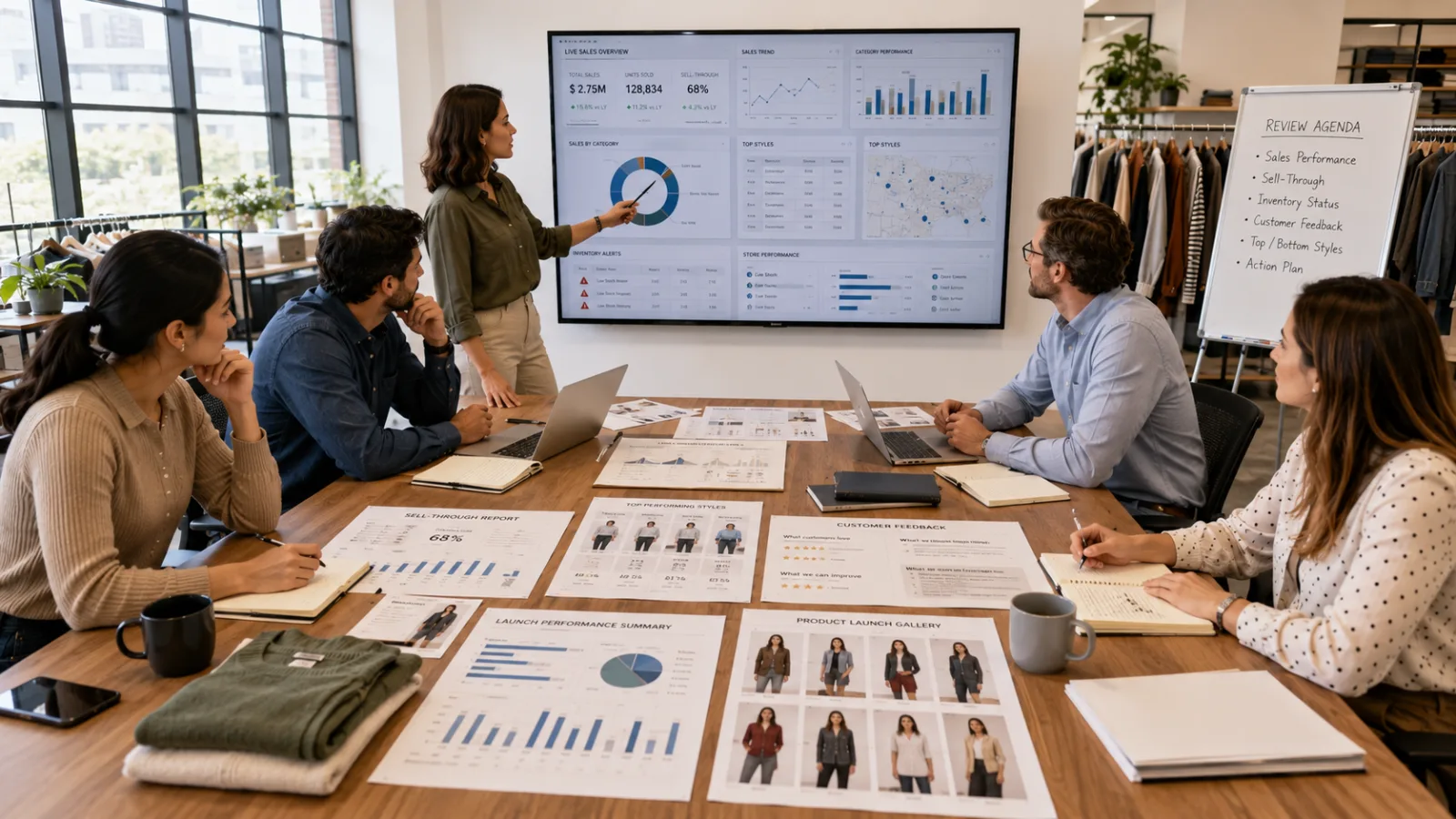
Merchandising planning does not end after products launch. Retailers must track performance and adjust quickly. Monitor sales, stock levels, sell-through, returns, conversion rates, margin, customer reviews, and store feedback.
If a product sells faster than expected, reorder if possible. If a product is slow, improve display, adjust pricing, create bundles, move inventory to better-performing channels, or plan markdowns. If a specific size sells out, adjust future size curves. If one color underperforms, reduce similar colors in the next range.
The best merchandising teams learn constantly. Each season becomes data for the next season.
Key Metrics in Merchandising Planning
To compare merchandising planning performance, retailers need clear metrics. These numbers help teams understand whether the plan is working.
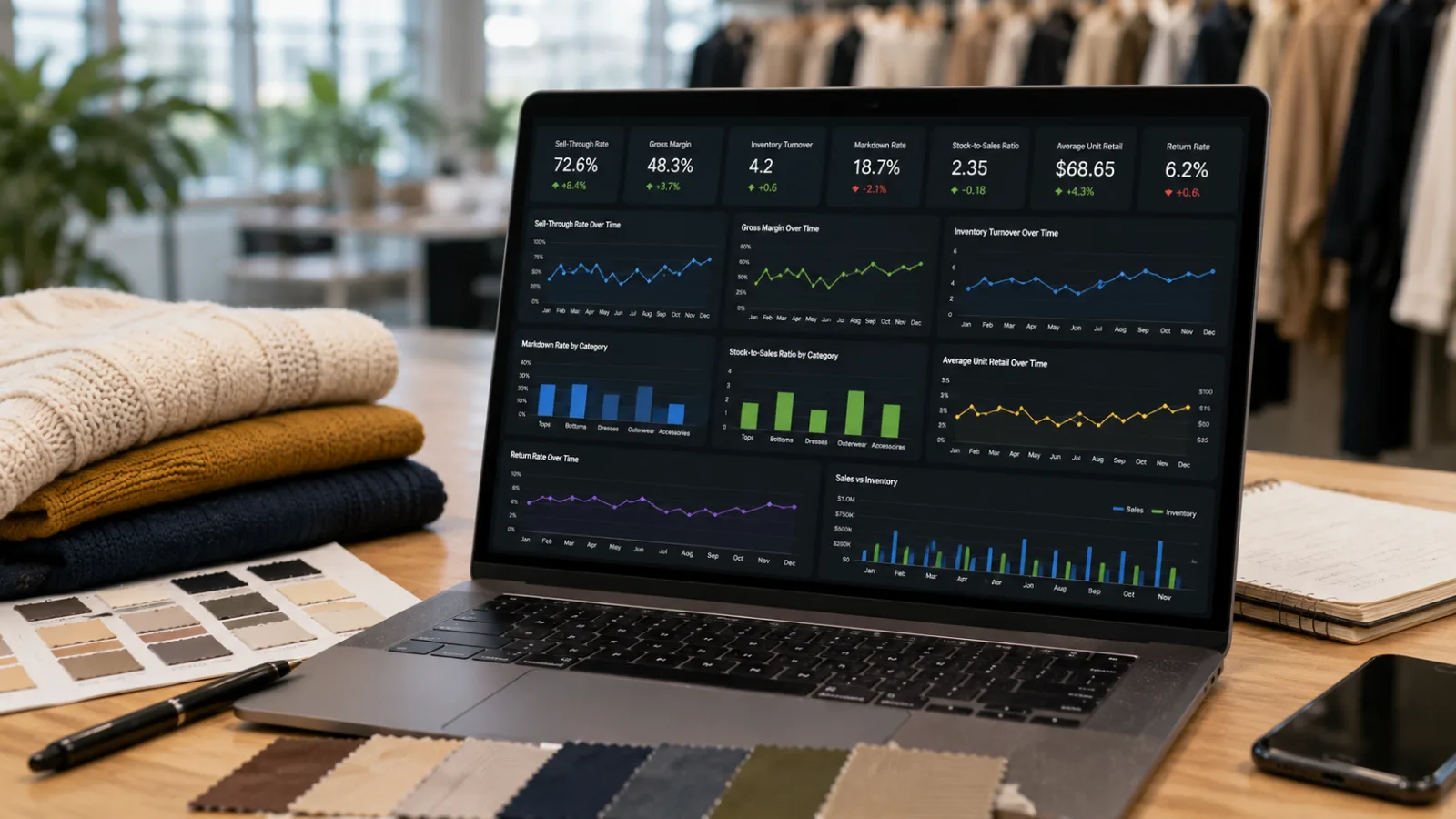
Sell-Through Rate
Sell-through rate measures how much inventory has sold compared to how much was received. A high sell-through rate means the product is moving well. A low sell-through rate may mean weak demand, poor placement, wrong pricing, or overbuying.
Gross Margin
Gross margin measures profit after product cost. It shows whether products are priced and sourced correctly. A product with strong sales but weak margin may not be profitable enough.
Inventory Turnover
Inventory turnover shows how quickly inventory sells and is replaced. Higher turnover usually means stock is being used efficiently. Low turnover may indicate slow-moving products or overstock.
Markdown Rate
Markdown rate shows how much discounting was needed to sell products. High markdowns may mean poor planning, overbuying, wrong pricing, or late delivery.
Stock-to-Sales Ratio
This metric compares inventory level to sales volume. It helps retailers understand whether they are holding too much or too little stock.
Average Unit Retail
Average unit retail shows the average selling price per item. It helps retailers understand pricing performance and customer purchase behavior.
Return Rate
Return rate is especially important for fashion and eCommerce. High returns may indicate fit issues, quality problems, inaccurate product descriptions, poor sizing, or customer dissatisfaction.
Comparing Merchandising Planning for Physical Stores and eCommerce
Physical retail and eCommerce require different merchandising planning approaches.
In physical stores, space is limited. Store layout, fixture capacity, visual presentation, local demand, staff feedback, and regional buying patterns matter. Products must be placed where customers can see and touch them. Visual merchandising plays a major role.
In eCommerce, digital visibility matters. Search filters, product titles, descriptions, images, size guides, recommendations, reviews, and page ranking affect sales. Online retailers may offer wider assortments because shelf space is not physical, but they still need inventory discipline.
Store Merchandising Planning
Store planning focuses on floor space, fixture capacity, regional assortment, local customer behavior, visual displays, stockroom capacity, and store replenishment.
eCommerce Merchandising Planning
Online planning focuses on product discoverability, category structure, search behavior, conversion rate, image quality, product descriptions, inventory availability, shipping promises, and return management.
Omnichannel Planning
Modern retailers need both. A customer may discover a product online and buy in-store, or view a product in-store and order online later. Merchandising planning should connect inventory, pricing, promotions, and customer experience across all channels.
Common Merchandising Planning Mistakes
Even experienced retailers can make planning mistakes. The most common problems usually come from weak data, poor communication, unclear strategy, or emotional buying.
Buying Too Much Inventory
Overbuying creates cash flow problems and markdown pressure. It often happens when retailers are overly optimistic or fail to account for real demand.
Buying Too Little Inventory
Underbuying creates missed sales and customer frustration. If best-selling products sell out too early, the retailer loses revenue and may disappoint loyal customers.
Ignoring Customer Data
Retailers may choose products based on personal taste rather than customer behavior. This can lead to beautiful assortments that do not sell.
Poor Size and Color Planning
A product may perform poorly if the wrong sizes or colors are bought. Size curves and color demand should be reviewed carefully.
Late Product Delivery
Late deliveries can destroy seasonal sales. Planning must include supplier lead times, production delays, shipping timelines, and buffer time.
Weak Markdown Planning
Markdowns should be planned strategically, not used only as a panic response. Poor markdown timing can reduce profit unnecessarily.
Poor Communication Between Teams
Merchandising, buying, marketing, stores, suppliers, and operations must work together. If marketing promotes a product that is understocked, sales opportunities are lost. If buying orders products without inventory planning, overstock risk increases.

How Merchandising Planning Improves Retail Profitability
Merchandising planning directly affects profit because it controls product investment, pricing, inventory flow, markdowns, and sales performance. When planning is strong, retailers buy smarter, sell faster, and protect margins. A better assortment increases conversion because customers find products they want. Better inventory planning reduces stockouts and overstock. Better pricing improves margin. Better seasonal planning captures demand when customers are ready to buy. Better markdown planning clears slow stock without damaging brand value too early.
Profitability is not only about selling more. It is about selling the right products at the right margin with the right inventory level. For example, two retailers may both sell $1 million in products. One may make strong profit because it planned inventory well and avoided heavy markdowns. The other may make weak profit because it overbought, discounted heavily, and carried too much dead stock. Sales alone do not tell the full story. Merchandising planning helps protect the profit behind the sales.
Merchandising Planning for Fashion and Apparel Brands
Fashion merchandising planning has unique challenges because apparel includes size, color, fit, fabric, season, trend, and production lead time. A fashion product is not just one item. A shirt may have five sizes, four colors, and multiple fabric options. That creates complexity.
Fashion brands must plan collections carefully. They need to decide how many styles to launch, how deep to buy each style, which colors to support, what sizes to stock, which fabrics to use, and how to manage seasonal drops.
Production planning is also critical. Apparel has long lead times, especially when fabrics, trims, labels, dyeing, printing, washing, or custom manufacturing are involved. A weak merchandising plan can affect manufacturing decisions. If the assortment changes too late, production may be delayed. If MOQ is misunderstood, inventory risk increases. If size ratios are wrong, customers may face stockouts in popular sizes.
Key Apparel Merchandising Considerations
- Category mix
- Size curve
- Color planning
- Fabric selection
- MOQ planning
- Supplier lead time
- Sampling timeline
- Production calendar
- Fit testing
- Quality control
- Collection storytelling
- Markdown strategy
- Return rate management
Fashion brands need merchandising plans that connect creative design with commercial reality. A beautiful collection should also be profitable, producible, and aligned with customer demand.

ApparGlobal
For apparel and retail brands, merchandising planning becomes stronger when product development, sourcing, manufacturing, inventory planning, and quality control are connected from the beginning. A merchandising plan may look strong on paper, but the final result depends on whether suppliers can deliver the right products, in the right quantities, at the right quality, and within the required timeline.
Many apparel brands struggle when merchandising decisions are separated from production reality. A brand may plan a strong collection, but if MOQ requirements are too high, fabric availability is limited, trims are delayed, size grading is inaccurate, or quality checkpoints are weak, the retail plan can quickly break down. This is why merchandising planning should work closely with sourcing and manufacturing planning.
Companies such as ApparGlobal help clothing brands align product development, fabric selection, vendor coordination, MOQ planning, sampling, production timelines, quality control, and scalable manufacturing workflows. For brands developing fashion collections, kidswear, basics, private label apparel, seasonal products, or custom garments, this kind of production-focused support can make merchandising plans more realistic and execution-ready.
When brands work with a partner that understands tech packs, fabric behavior, trim standardization, supplier timelines, quality checkpoints, and bulk production planning, they can reduce production mistakes and improve retail readiness. This helps brands move from collection planning to finished products with more structure, clarity, and confidence.
Future of Merchandising Planning
The future of merchandising planning is more connected, data-driven, flexible, and customer-focused. Retailers can no longer rely only on long seasonal planning cycles and fixed buying decisions. Customer behavior changes quickly, and retailers need planning systems that respond faster.
Data analytics, AI-assisted forecasting, real-time inventory visibility, customer segmentation, and omnichannel planning are becoming more important. Retailers can use technology to identify demand signals, forecast stock needs, personalize assortments, and improve allocation.
However, technology will not replace merchandising judgment. Retail is still emotional. Customers buy products because they solve needs, express identity, fit lifestyles, and feel valuable. The best merchandising teams will combine data with human understanding.
Sustainability
will also influence merchandising planning. Retailers must plan more carefully to avoid waste, overproduction, and unnecessary markdown cycles. Better planning can reduce excess inventory and support more responsible retail models.
Merchandising Planning Checklist for Retail Success
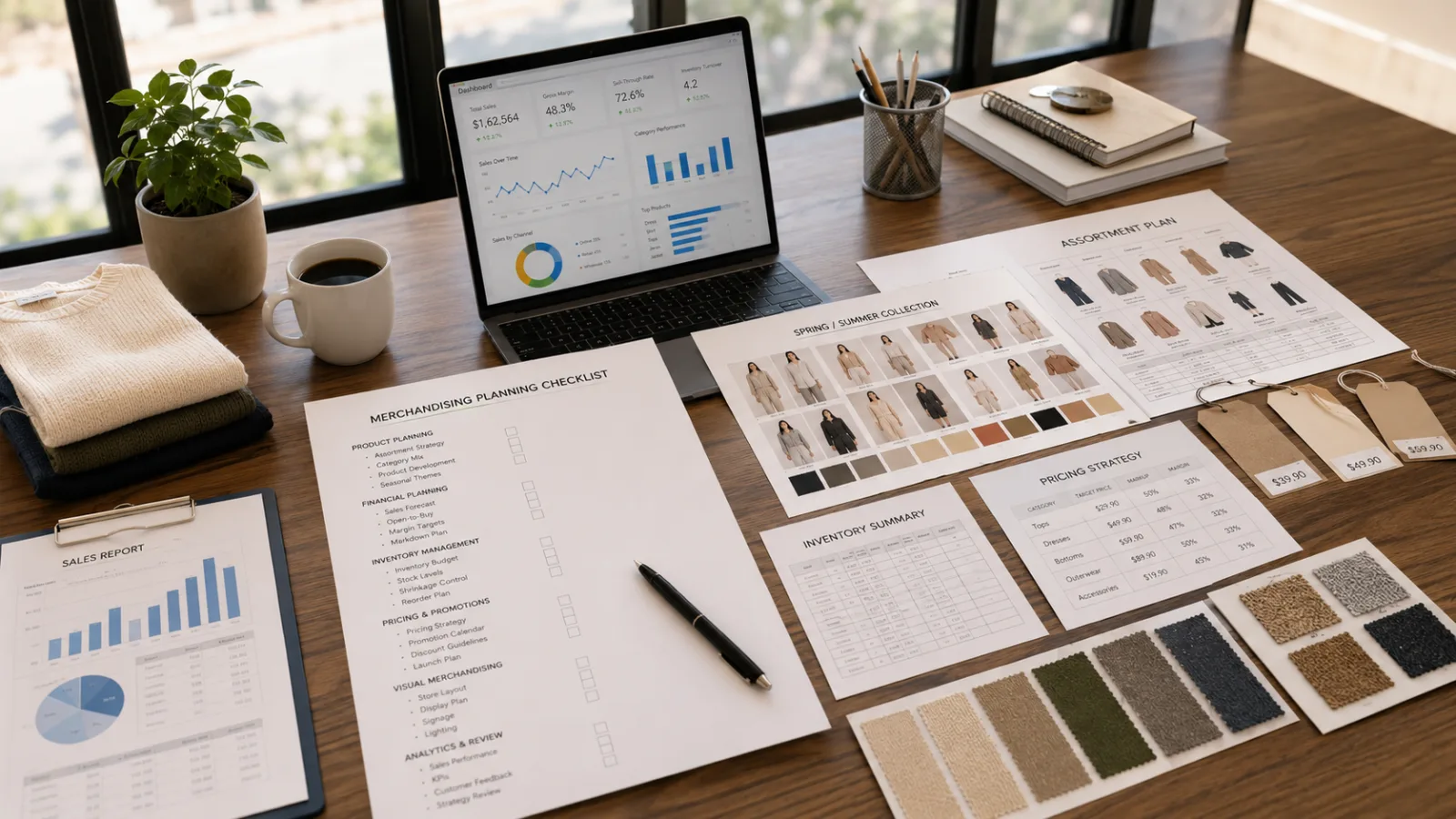
Use this checklist before finalizing a merchandising plan:
- Have we defined clear sales and margin goals?
- Do we understand our target customer?
- Have we reviewed past sales data?
- Have we analyzed best sellers and slow movers?
- Have we planned category mix clearly?
- Do we know how many styles we need?
- Have we planned size and color balance?
- Have we checked supplier lead times?
- Have we confirmed product costs and margins?
- Have we planned inventory depth?
- Have we created an open-to-buy plan?
- Have we planned markdown risk?
- Have we aligned marketing and product launches?
- Have we planned store and online allocation?
- Have we set performance metrics?
- Have we created a review process after launch?
This checklist helps retailers stay focused, practical, and commercially disciplined.
Final Thoughts
Merchandising planning is the foundation of retail success. It helps retailers decide what to sell, how much to buy, when to launch, where to place products, how to price them, and how to manage inventory for profitable growth. Without a clear merchandising plan, retail decisions become reactive, emotional, and risky.
Comparing merchandising planning approaches helps retailers choose the right system for their business. Strategic planning gives long-term direction. Financial planning protects profit. Assortment planning shapes the product range. Inventory planning controls stock. Visual merchandising improves presentation. Seasonal planning ensures products arrive at the right time. Data-driven planning improves accuracy, while human judgment keeps the range creative and customer-focused.
The best retailers do not treat merchandising planning as a one-time document. They treat it as an ongoing process. They plan, launch, measure, adjust, and learn. They connect product decisions with customer demand, inventory reality, supplier timelines, and financial goals.
For fashion and apparel brands, merchandising planning is especially important because every decision affects production, sizing, color, fabric, MOQ, quality, and seasonal timing. A strong plan helps prevent overstock, missed sales, poor margins, and production delays.
Retail success does not happen by accident. It is built through clear planning, smart buying, disciplined inventory control, customer understanding, and consistent performance review. When merchandising planning is done well, retailers can create better assortments, improve profitability, reduce waste, and deliver products customers actually want to buy.