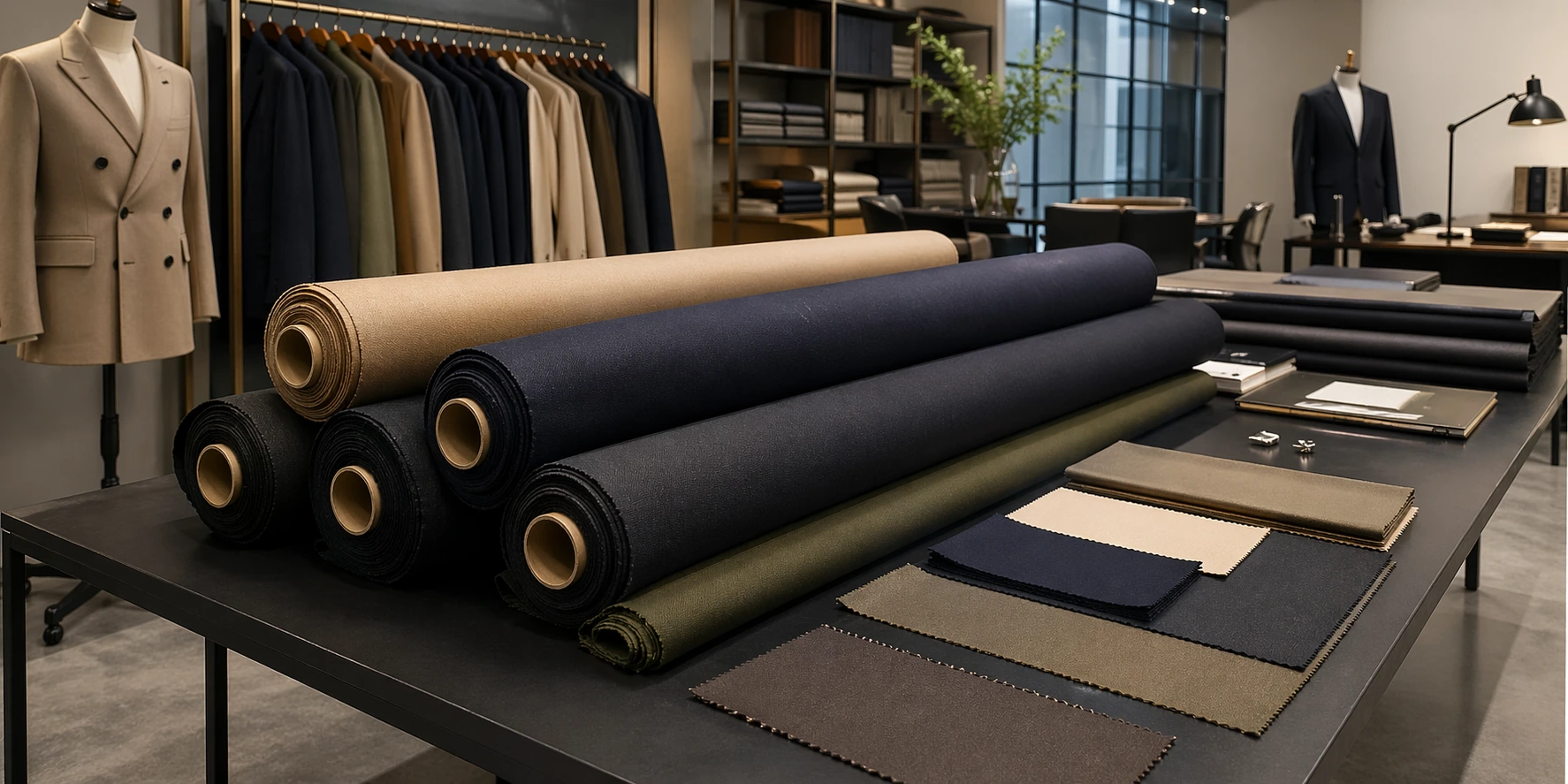
Explore the versatility of gabardine fabric. Learn how this durable, tightly woven twill is used for tailored clothing, uniforms, and structured garments.
Gabardine fabric is widely known for its clean appearance, durable structure, and classic use in tailored clothing. It is commonly used in trousers, blazers, trench coats, uniforms, skirts, and other garments that need a polished look with reliable performance. Even though gabardine is a familiar name in fashion and apparel, many people still ask what it is made of, how it feels, whether it is breathable, and how it compares with other woven fabrics.
This guide answers the most commonly asked questions on gabardine fabric in a simple and practical way. Whether you are a fashion brand, student, sourcing team, designer, or buyer, this article will help you understand where gabardine fits best and why it remains such an important fabric in apparel production.
What Is Gabardine Fabric?
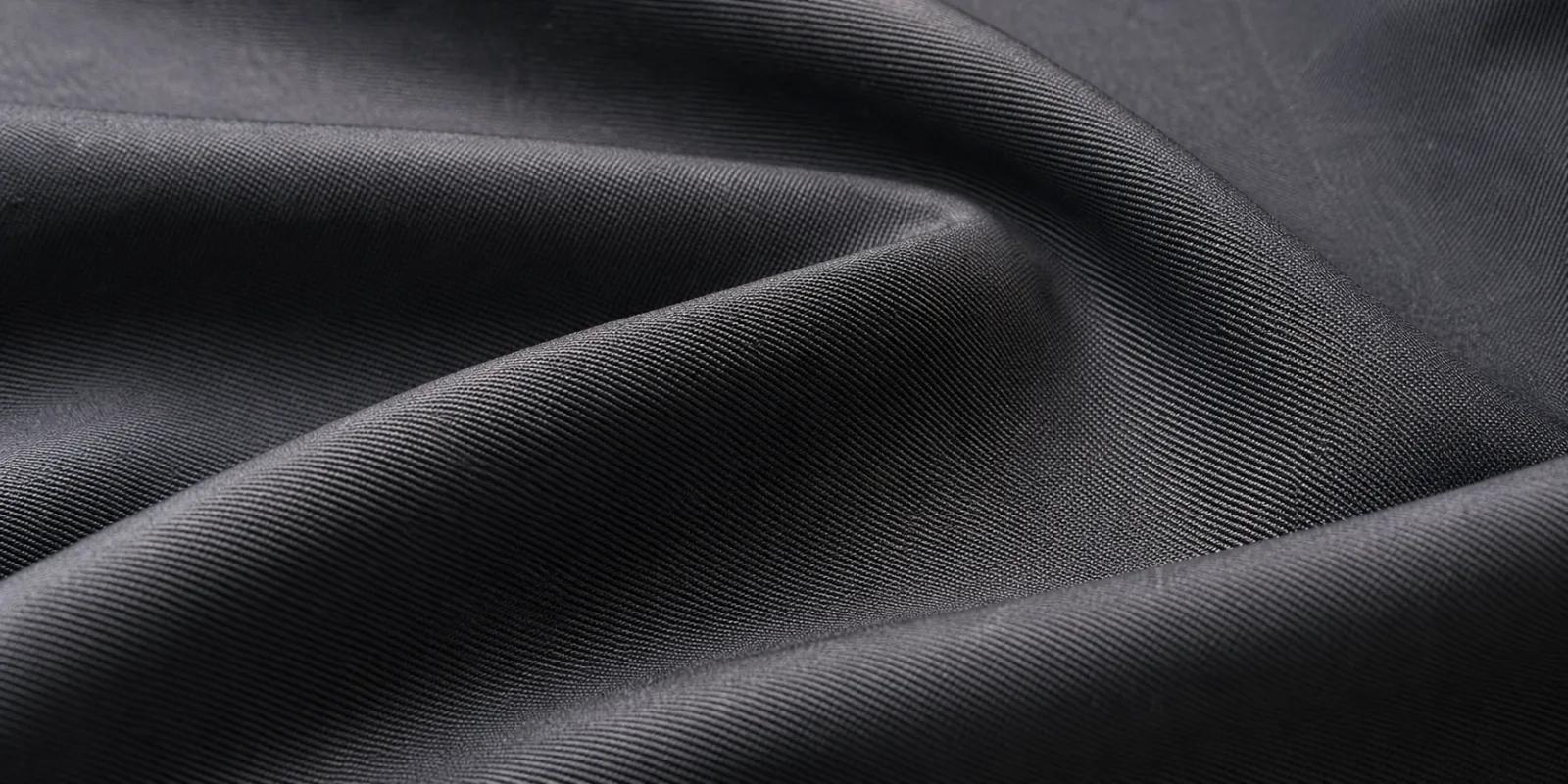
Gabardine is a tightly woven twill fabric with a visible diagonal rib and a smooth, refined finish. It is known for being durable, structured, and suitable for garments that need a neat, tailored appearance.
Gabardine is not limited to one fiber. It can be made from:
- wool
- cotton
- polyester
- rayon
- blended fibers
What makes gabardine distinct is not just the fiber content, but the way it is woven. Its compact construction gives it a crisp, stable feel and makes it useful in both fashion and uniform categories.
What Is Gabardine Fabric Made Of?
Gabardine can be made from different fibers depending on the end use.
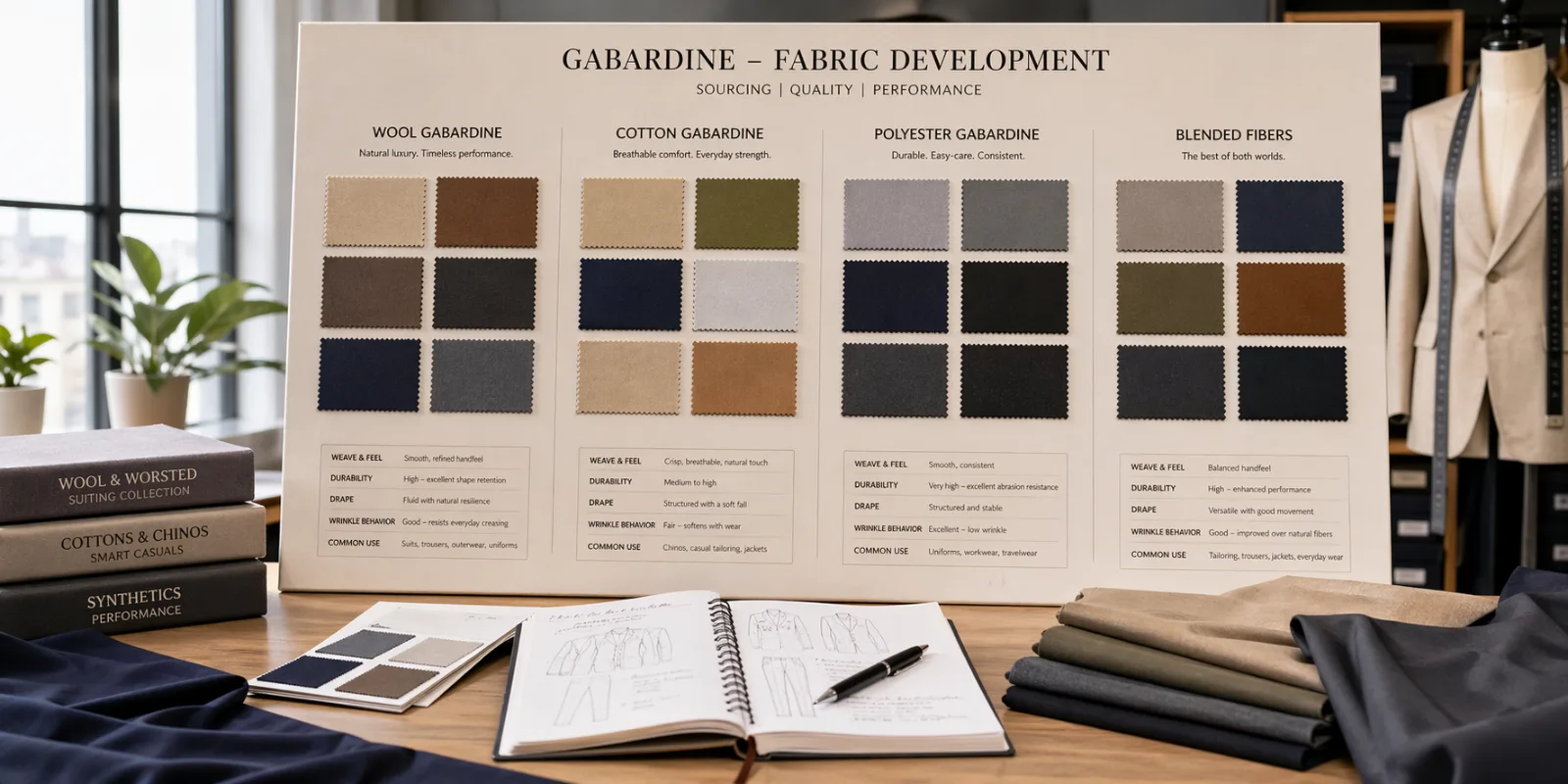
Wool gabardine
This is one of the most traditional versions and is often used in suits, trousers, and premium outerwear. It usually feels more elegant and refined.
Cotton gabardine
Cotton gabardine is popular in trench coats, uniforms, and casual tailoring. It offers a natural feel with good structure.
Polyester gabardine
This version is often used in uniforms and budget-friendly garments because it is durable, wrinkle resistant, and easier to maintain.
Blended gabardine
Blends are often used to balance cost, comfort, durability, and appearance.
The fiber content affects breathability, care, price, and feel, but the gabardine look usually remains consistent through its tight twill construction.
How Is Gabardine Fabric Made?
Gabardine is made through a weaving process that creates a strong, compact twill fabric.
1. Fiber selection
The right fiber is chosen based on the product goal.
2. Yarn preparation
The yarn is prepared for a dense and stable weave.
3. Twill weaving
Gabardine is woven in a steep twill pattern, which creates the diagonal lines on the surface.
4. Finishing
The fabric is dyed and finished to improve smoothness, appearance, and performance.
This process gives gabardine its tailored look and dependable durability.
What Does Gabardine Fabric Feel Like?
Gabardine usually feels:
- smooth
- firm
- compact
- slightly crisp
- structured
The exact feel depends on the fiber content.
Wool gabardine
Usually feels more refined and premium.
Cotton gabardine
Often feels more natural and dry with a sharper structure.
Polyester gabardine
May feel smoother and more practical, though sometimes slightly more synthetic.
In general, gabardine feels more polished than soft or drapey fabrics.
What Is Gabardine Fabric Used For?
Gabardine is used in many structured apparel categories.
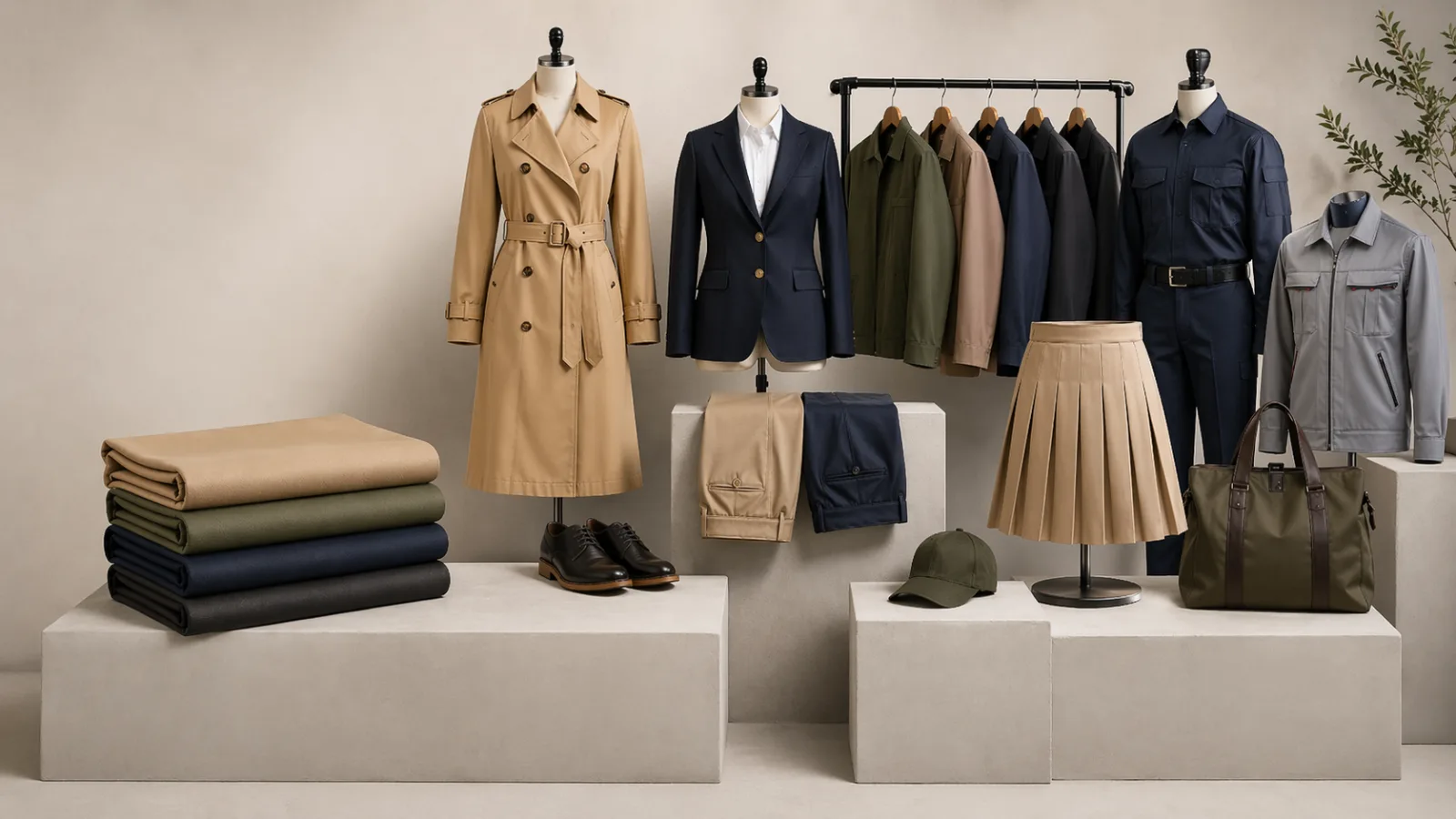
Trench coats
One of the most iconic uses of gabardine. Its dense weave and structured surface make it ideal for outerwear.
Tailored trousers
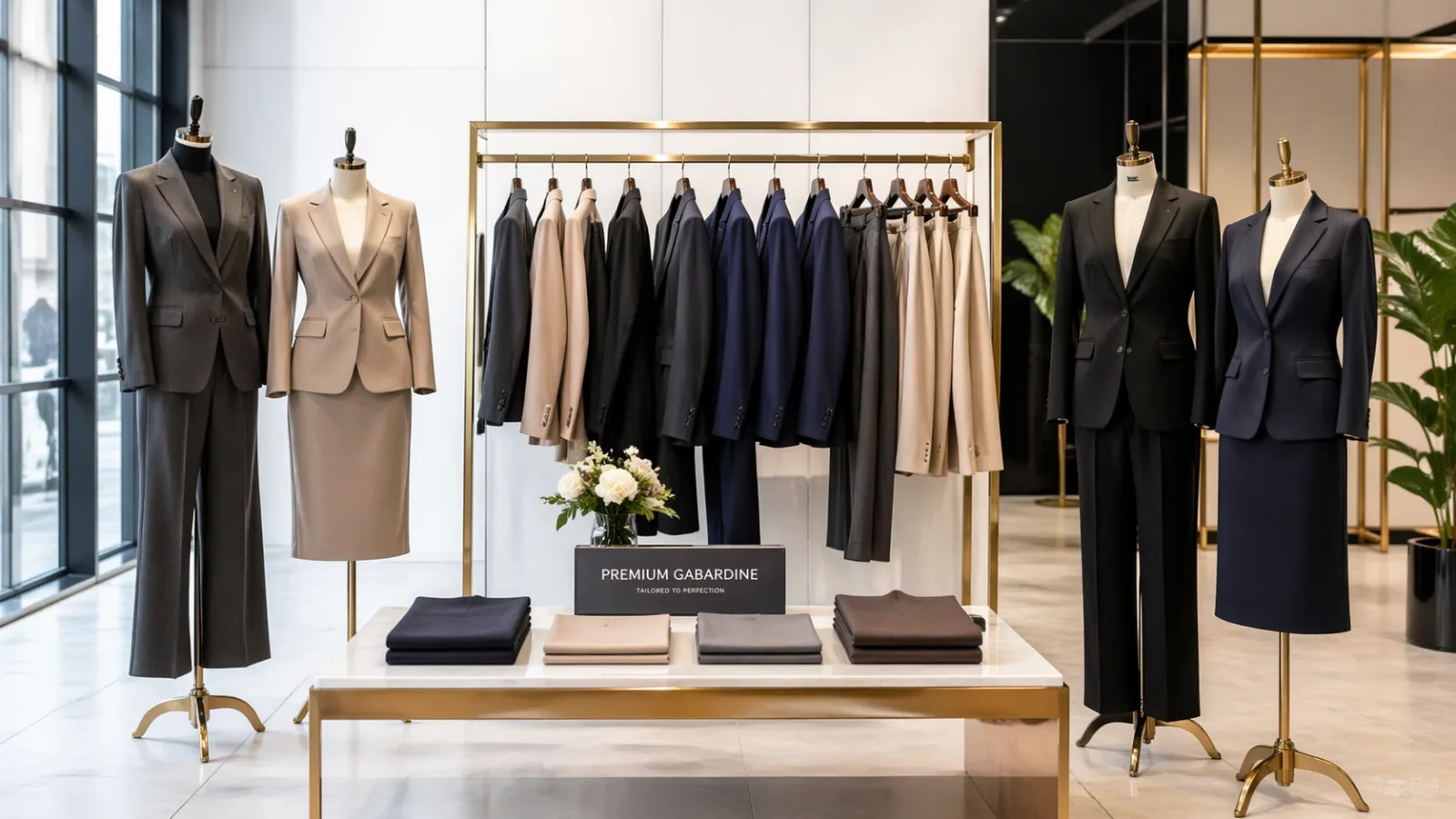
Gabardine is often used in office wear and dress trousers because it keeps a neat look.
Suits and blazers
Wool gabardine works especially well in formalwear and tailored garments.
Uniforms
Polyester and blended gabardine are common in schoolwear, hospitality wear, and service uniforms.
Skirts and dresses
Gabardine can be used in structured dresses and skirts that need shape.
Jackets and separates
It also works well in utility-inspired fashion and smart casual pieces.
Is Gabardine a Good Fabric?
Yes, gabardine is generally considered a very good fabric for garments that need structure, durability, and a polished finish.
Its main strengths include:
- durable construction
- clean surface
- good shape retention
- smart appearance
- wide use across formal and practical garments
It is especially good for tailoring, uniforms, and outerwear. It is less ideal for very soft or flowing garments.
Is Gabardine Fabric Breathable?
Breathability depends on the fiber content.
Wool gabardine
Can be comfortable and breathable in many tailored garments.
Cotton gabardine
Usually more breathable than polyester versions.
Polyester gabardine
Often less breathable, though still useful in uniforms and structured apparel.
Because gabardine is tightly woven, it is generally less airy than loose summer fabrics, but that is also part of what gives it durability and shape.
Is Gabardine Good for Summer and Winter?
Summer suitability
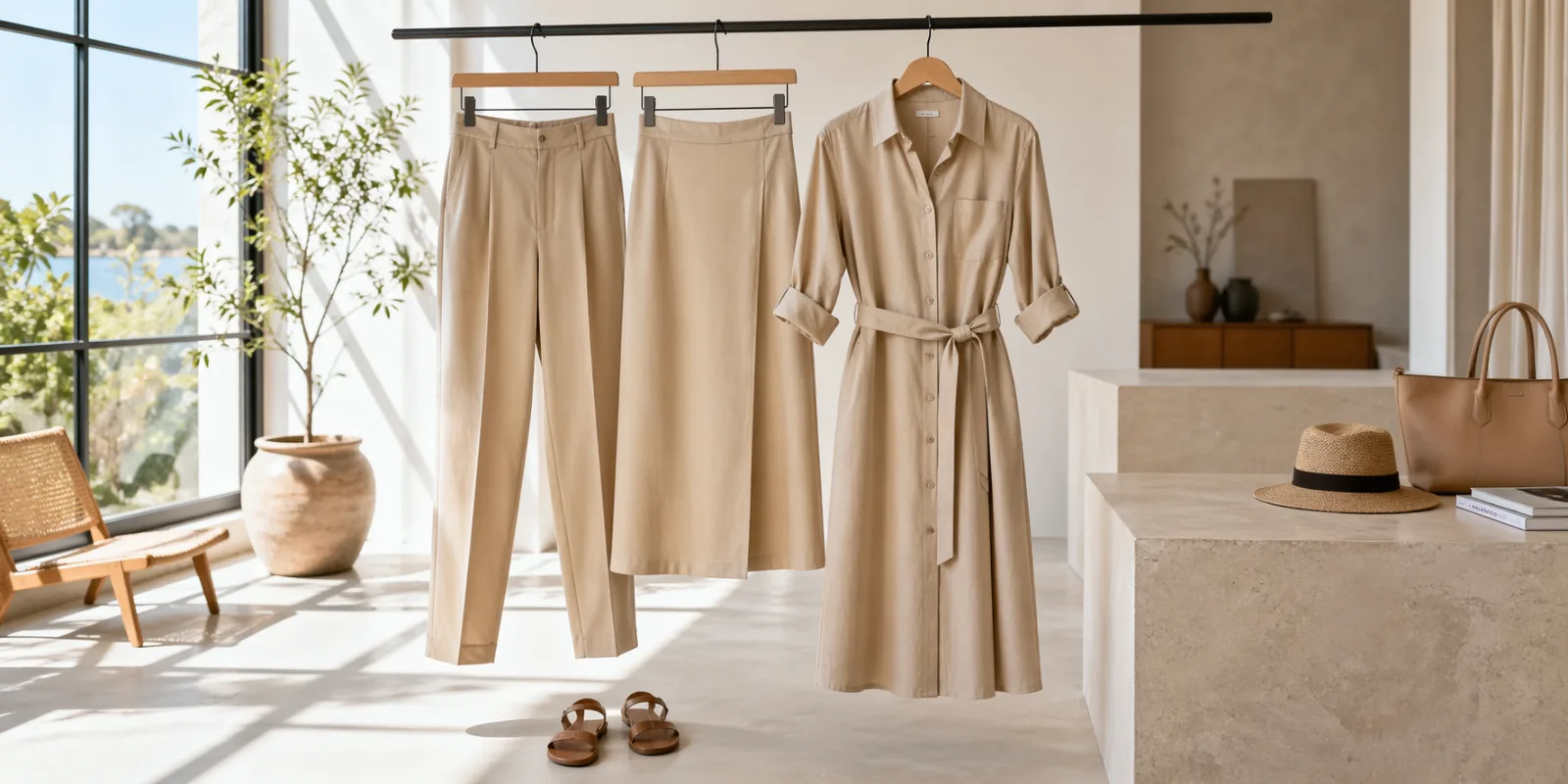
Some gabardine fabrics are suitable for summer, especially lightweight wool or cotton versions. Heavier versions, especially dense polyester gabardine, may feel warm in hot weather.
Winter suitability
Yes, gabardine is useful in winter, especially in trench coats, trousers, blazers, and uniforms. Its dense construction helps block wind better than lighter woven fabrics.
Does Gabardine Wrinkle Easily?
Gabardine is generally known for good wrinkle resistance.
- Wool gabardine often recovers well.
- Polyester gabardine is usually easy care.
- Cotton gabardine may wrinkle more, but often less than lighter cotton fabrics.
This is one reason gabardine is popular in uniforms and formal clothing.
Technical Properties: Waterproofing, Stretch, and Durability
Is it waterproof?
Gabardine is not automatically waterproof, but its tight weave can provide some resistance to light moisture and wind. Treated gabardine is often used in outerwear.
Is it stretchy?
Traditional gabardine is not very stretchy because it is tightly woven. However, modern stretch gabardine blends with elastane are widely available.
Is it durable?
Yes, gabardine is a durable fabric. Its tight twill weave and compact structure help it handle repeated wear well.
Comparing Gabardine to Other Fabrics
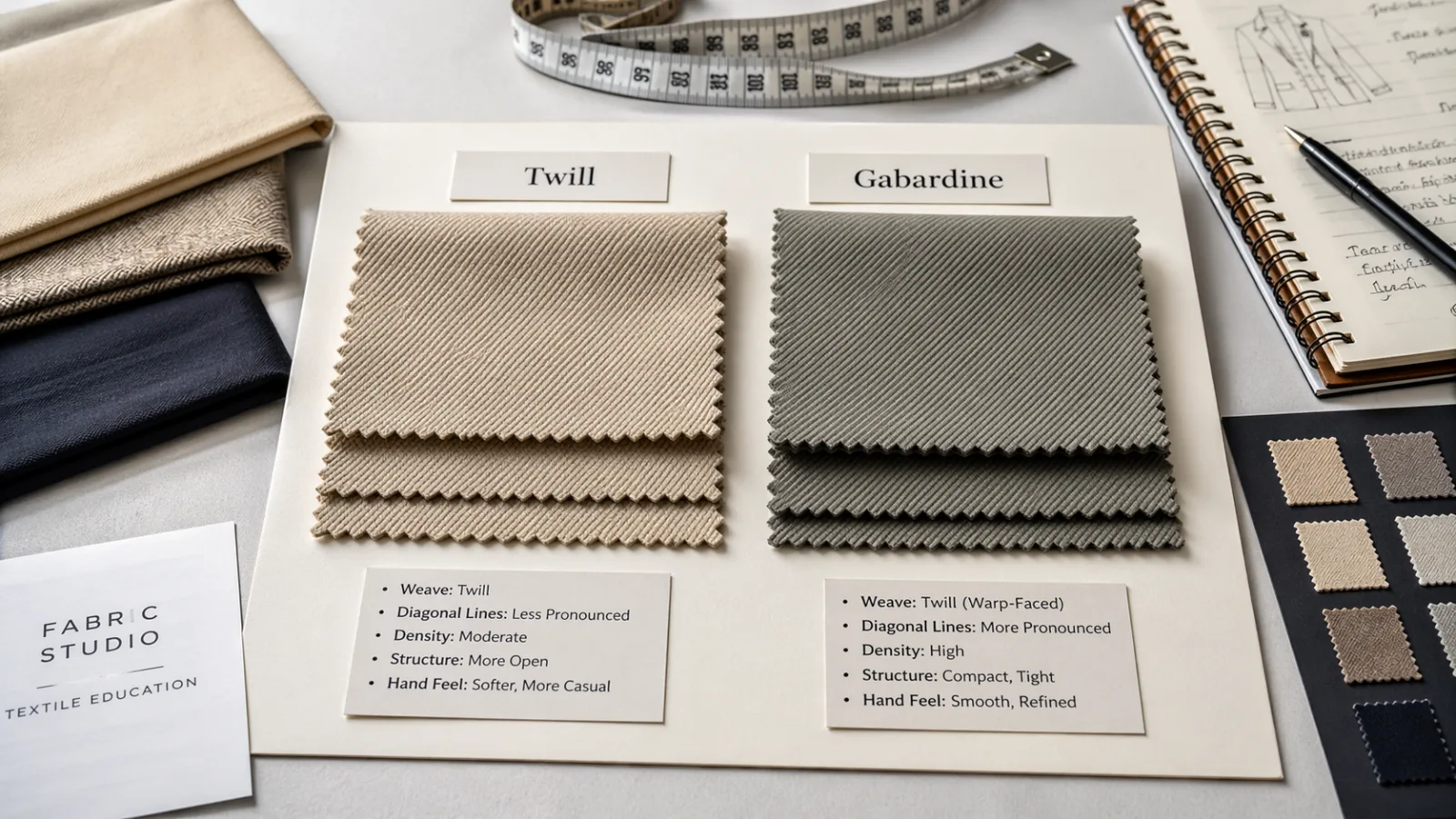
Gabardine vs. Twill
Twill is a broad fabric category known for diagonal lines. Gabardine is a specific type of tightly woven twill with a denser construction and a more refined, tailored look.
Gabardine vs. Cotton
Gabardine is often chosen when more structure is needed compared to regular cotton, which is often softer and more casual.
Care and Quality Assessment
Is it expensive?
Gabardine ranges from affordable (polyester) to premium (wool) depending on the fiber and quality.
How to care for it
Check the care label. Wool often requires dry cleaning, while polyester and some cotton blends may be machine washable. Avoid excessive heat and hang garments to maintain shape.
Identifying quality
Good quality gabardine has clear, even twill lines, dense construction, and a smooth surface.
Manufacturing and Professional Use
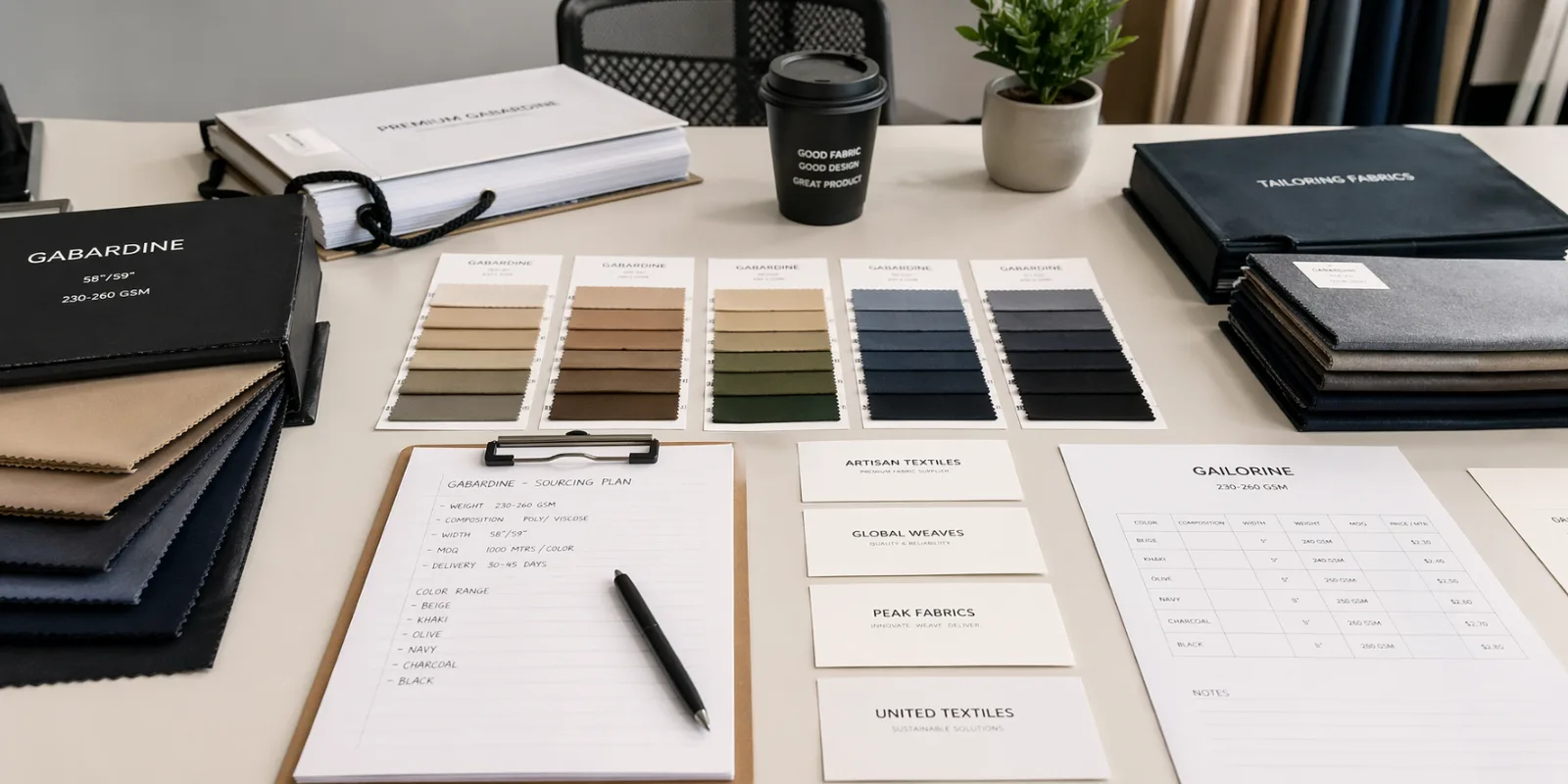
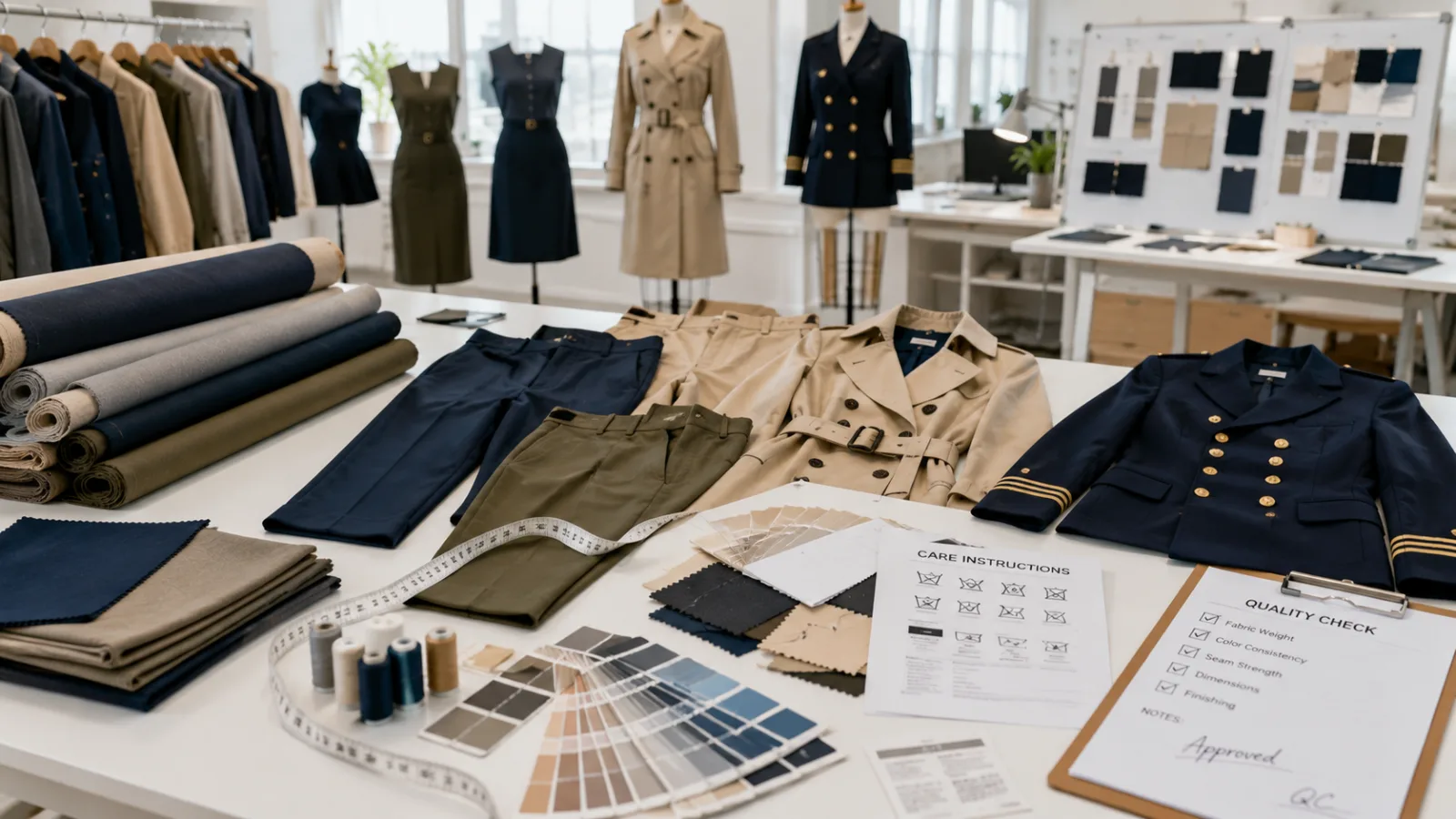
Many clothing brands develop gabardine garments more successfully when they work with manufacturing partners that understand fabric weight, tailoring behavior, fit consistency, production planning, and quality control standards. Companies such as ApparGlobal help apparel brands align textile selection, sample development, sourcing decisions, and bulk production systems so gabardine-based products like trousers, uniforms, trench coats, and structured separates can move from concept to manufacturing with better consistency and more reliable scaling.
ApparGlobal
For apparel brands, gabardine fabric is a strong example of why fabric selection should be connected with product purpose, construction, fit, MOQ planning, and quality control from the beginning. Gabardine may look simple at first, but its final performance depends on fiber content, twill structure, fabric weight, finishing, colorfastness, shrinkage control, sewing compatibility, and how well it supports the intended garment.
Many clothing brands use gabardine for trousers, coats, uniforms, jackets, skirts, workwear, and tailored fashion pieces because it offers a clean appearance and dependable structure. However, choosing the wrong gabardine weight, supplier, or finish can lead to issues such as stiff garments, poor drape, seam puckering, color variation, shrinkage, or products that do not meet customer expectations.
Companies such as ApparGlobal help clothing brands align fabric sourcing, vendor coordination, tech packs, sample review, MOQ planning, production timelines, quality control, and scalable manufacturing workflows. For brands developing uniforms, trousers, outerwear, tailored apparel, private label collections, or custom garments, this type of production-focused support can make gabardine fabric decisions more practical and reliable.
When brands work with a partner that understands fabric behavior, supplier communication, trim standardization, fit development, cost breakdowns, and bulk production requirements, they can reduce production mistakes and create garments that look polished, perform well, and hold their value over time.

Final Thoughts
Gabardine fabric remains one of the most dependable woven textiles in apparel because it combines structure, durability, comfort, and a polished appearance. Its tightly woven twill construction gives it a smooth surface, strong body, and refined finish, making it suitable for garments that need to look neat while handling regular wear.
This fabric works especially well in tailored clothing, outerwear, uniforms, trousers, skirts, jackets, trench coats, workwear, and smart fashion pieces. Unlike lightweight fabrics that may lose shape quickly, gabardine offers a more stable form. It can hold clean lines, support structured silhouettes, and maintain a professional appearance over time.
One of the biggest strengths of gabardine is its versatility. Wool gabardine can feel premium and elegant for formalwear and tailoring. Cotton gabardine can feel breathable and practical for everyday trousers, uniforms, and casual outerwear. Polyester or blended gabardine can offer wrinkle resistance, durability, and easier care for workwear or commercial apparel. This makes gabardine useful across many fashion categories, from classic wardrobe staples to functional uniforms.
However, not all gabardine fabrics are the same. Fiber content, fabric weight, finishing, dye quality, shrinkage control, and supplier reliability all affect the final garment. A lightweight gabardine may be suitable for trousers or skirts, while a heavier gabardine may work better for coats, jackets, or uniforms. For fashion brands, testing fabric before bulk production is important. A swatch may look good, but the fabric still needs to be checked for drape, hand feel, sewing behavior, washing performance, colorfastness, and long-term durability.
For buyers, gabardine is a smart choice when they want clothing that feels polished but practical. For brands, it is a valuable fabric when the goal is to create garments with structure, reliability, and lasting wear. Whether used in classic trench coats, tailored trousers, office uniforms, or modern outerwear, gabardine continues to prove why it has remained relevant in apparel for so many years.
In the end, gabardine fabric is not just about durability. It is about balance. It offers a clean look without being overly delicate, structure without feeling too rigid, and versatility without losing its timeless character. When chosen carefully and produced with the right manufacturing standards, gabardine can help clothing brands create garments that are professional, functional, stylish, and built to last.
Frequently Asked Questions About Gabardine Fabric
What is gabardine fabric mainly used for?
Gabardine is mainly used for trench coats, trousers, suits, uniforms, jackets, and structured skirts or dresses.
Is gabardine a natural fabric?
Not always. It can be made from wool, cotton, polyester, rayon, or blended fibers.
Is gabardine the same as twill?
No. Gabardine is a specific, tightly woven twill fabric.
Is gabardine good for summer?
Some lightweight gabardine fabrics are suitable for summer, but heavier versions may feel warm.
Does gabardine wrinkle easily?
Gabardine is generally known for good wrinkle resistance.
Is gabardine stretchy?
Traditional gabardine is not very stretchy, but stretch gabardine blends are available.
Is gabardine good for uniforms?
Yes. It is widely used in uniforms because it is durable and neat-looking.
How do you clean gabardine?
Cleaning depends on the fiber. Wool gabardine often needs dry cleaning, while some cotton and polyester versions may be washable.