Are you ready to launch your clothing brand, but stuck because every manufacturer keeps asking for huge minimum order quantities that you cannot afford yet?
That’s one of the most common problems new apparel founders face. You may already have your designs, your brand identity, and even some early customer interest. But when you start contacting factories, you hear the same thing again and again: “Our MOQ is 1000 pieces per style” or “We only produce full container orders.”
For a startup, that is unrealistic. You need flexibility. You need to test demand. You need to protect cash flow. And you need a manufacturer that takes small runs seriously without sacrificing quality.
This complete guide explains everything startups need to know about low MOQ clothing manufacturers, including how MOQs work, what affects them, how to find factories that support small batches, what trade-offs to expect, and how to build a scalable manufacturing plan that grows with your brand.
What Does MOQ Mean in Clothing Manufacturing?
MOQ stands for Minimum Order Quantity. It is the minimum number of units a manufacturer requires to produce a garment style, color, or fabric type. MOQs exist because factories have setup costs, which can be mitigated by working with the best clothing manufacturers for startups. Every style needs pattern prep, cutting markers, line setup, trimming, quality checks, and packing systems. Every fabric order may require minimum yardage or a mill production run. Every print or embroidery needs setup and testing.
For startups, understanding MOQ is critical because you cannot negotiate properly without knowing what is driving it, especially when working with apparel manufacturers.
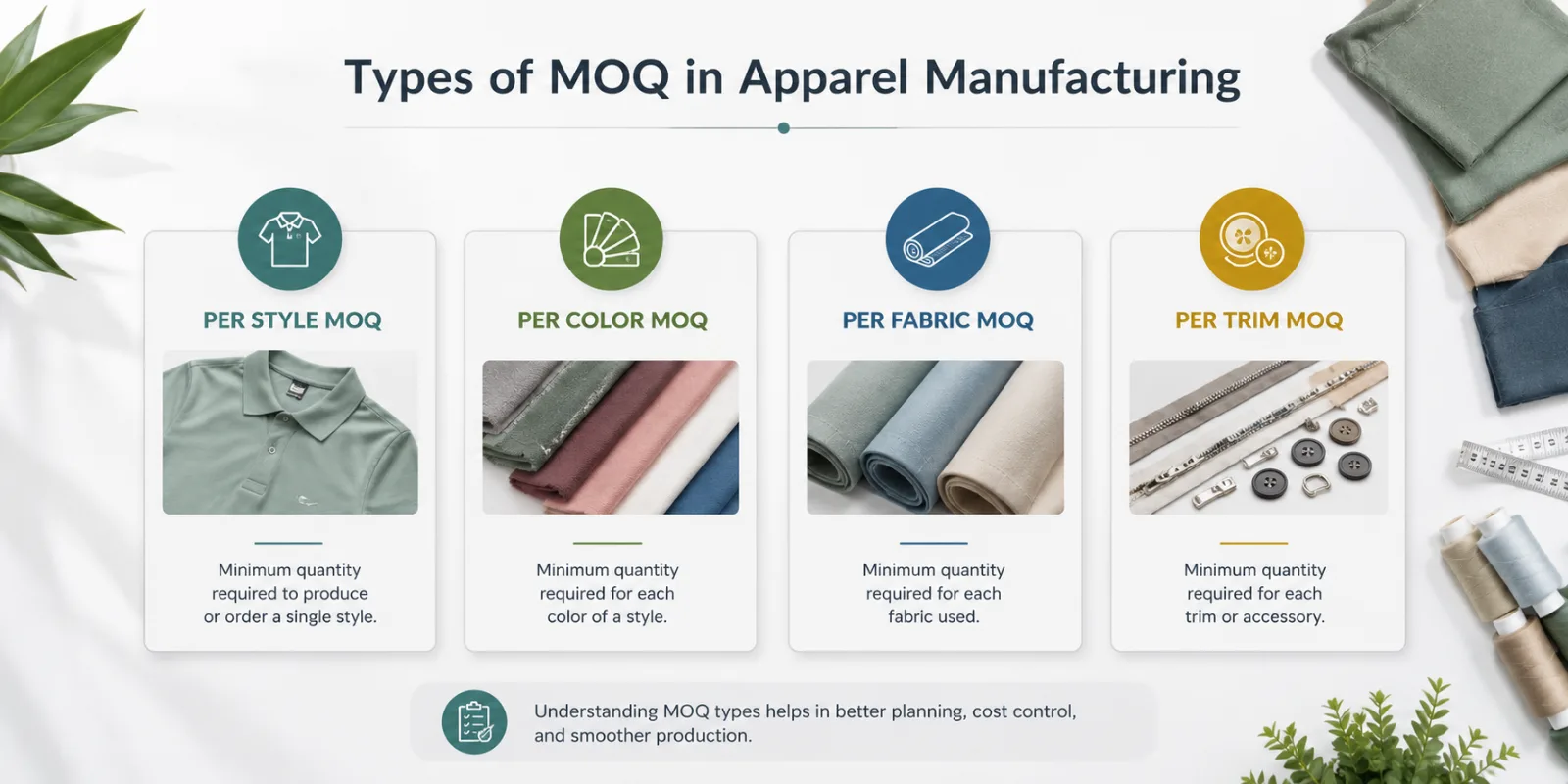
In apparel manufacturing, MOQ can be defined in different ways:
- MOQ per style (example: 300 hoodies)
- MOQ per color (example: 150 pieces per color)
- MOQ per size ratio (some factories require balanced size runs)
- MOQ per fabric (mills often have minimum fabric yardage) can be a challenge for startups seeking low MOQ apparel.
- MOQ per trim (labels, zippers, buttons may require minimum quantities)
A low MOQ manufacturer is one that can support smaller orders while still delivering consistent quality, stable lead times, and professional communication.
What Is A Private Label Low MOQ Apparel Manufacturer?
A private label low MOQ apparel manufacturer is a garment manufacturer that helps brands to test ideas by offering small-batch clothing manufacturing and small quantity or limited runs. These partners bring pattern makers, experienced textile manufacturing, and refined production processes so designers can launch collections and test the market without large commitments; moqs start low to offer low barriers for a first collection.
They stitch pieces to superior quality, combining quality and attention to detail with flexible production options. Whether you need custom apparel, premium clothing, or professional clothing, these manufacturers with low moq let brands test new styles and use reliable manufacturing for garment production in the apparel industry and fashion industry. If you want to continue to work with a trusted partner, contact them to request a quote and compare timelines, costs, and capabilities for your next limited runs.
Why Startups Need Low MOQ Clothing Manufacturers?
Startups do not fail because they have bad ideas. Many fashion brands fail because they invest too much in inventory before proving demand for their custom clothing. Low MOQ manufacturing reduces that risk.
Here are the biggest reasons startups need small-batch production:
Cash flow protection
Inventory ties up cash. If you order 1000 units and sell slowly, your money is locked in storage. Low MOQs allow you to buy smaller batches and reinvest faster.
Demand testing
You need real data before scaling. Low MOQ orders let you test sizing, fabric performance, pricing, and customer feedback before expanding.
Reduced inventory risk
Fashion is risky. Trends shift, prompting the need for new designs that align with current market demands. Sizes behave differently. Your first production run may require adjustments. Smaller orders prevent massive losses.
Product iteration
Startups often improve designs after early customer feedback, refining their vision to life. Low MOQ production of activewear lets you iterate without wasting thousands of pieces, allowing for better attention to detail.
Better quality control
With smaller runs, it is easier to manage quality, inspect batches, and fix problems before scaling.
Low MOQ manufacturing is not only for small brands. Many established brands use low MOQ factories for new product testing, seasonal capsules, and premium limited collections.
How To Be a Partner With a Reliable Low MOQ Clothing Manufacturer?
Working with a label clothing partner means finding manufacturers with low moq who are experienced garment manufacturer specialists in small-batch clothing manufacturing and custom apparel. Choose teams that handle everything from design through garment production, including skilled pattern makers and transparent production processes, so your professional clothing and premium clothing maintain superior quality and quality and attention to detail.
Look for partners whose moqs start low to support small quantity and limited runs, ideal to test the market or test new designs. These brands to test a first collection or to launch collections benefit from reliable reliable manufacturing in the apparel industry and fashion industry, from textile manufacturing to final finishes. Always request a quote and confirm timelines before committing to small-batch clothing manufacturing or larger scale garment production.
What Is Considered a “Low MOQ” in Apparel Manufacturing?
There is no universal number, because different categories have different production realities.
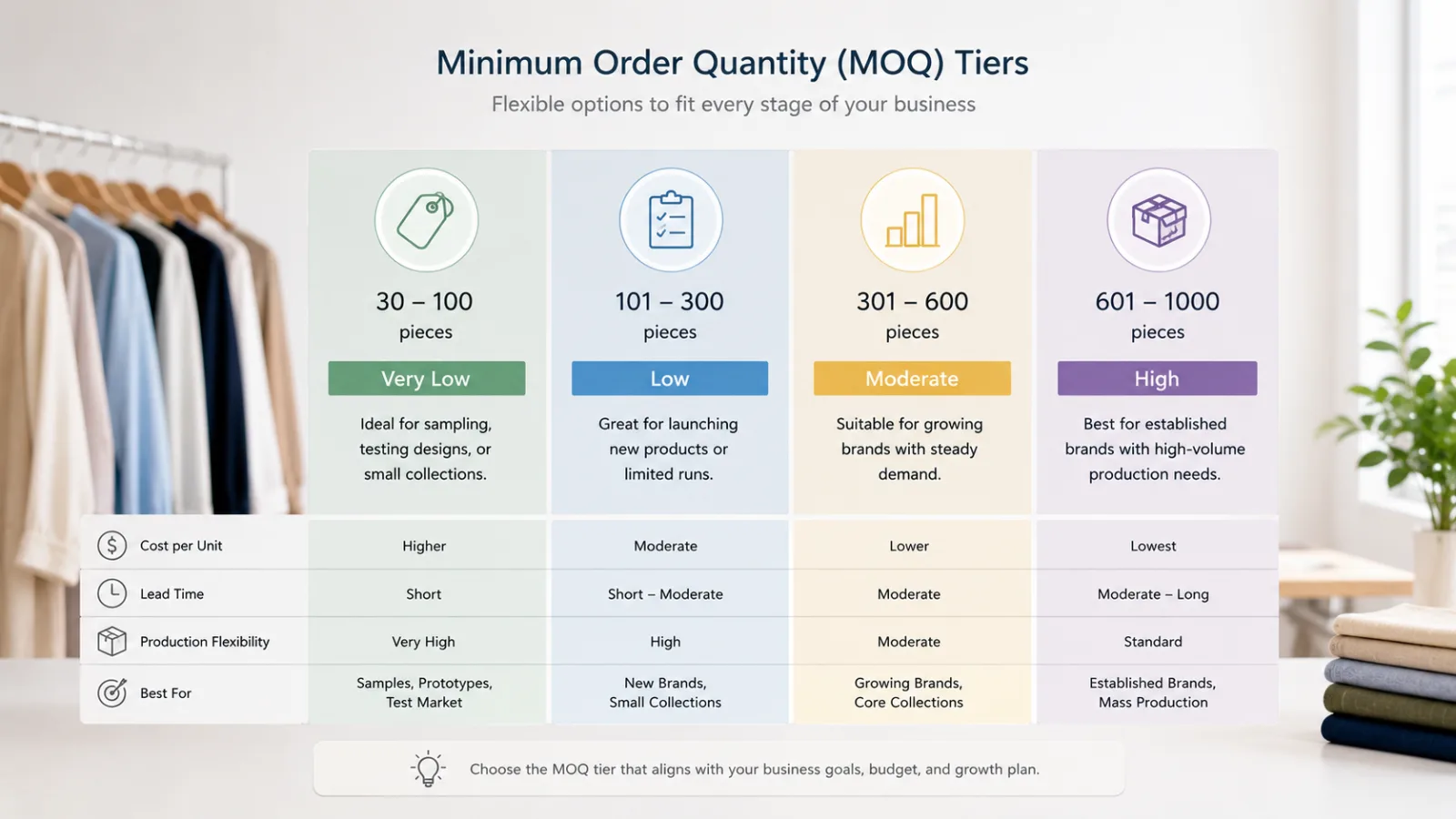
However, in startup terms, low MOQ usually falls into these ranges:
- 30 to 100 pieces per style: very low MOQ, common in small domestic factories or sampling studios
- 100 to 300 pieces per style: low MOQ, common for startups working with flexible overseas partners
- 300 to 500 pieces per style: moderate MOQ, achievable when fabrics and trims are standardized
- 500+ pieces per style: more typical for large-scale factories focused on volume and meeting quality standards.
The true definition also depends on complexity. A simple blank t-shirt might have a lower MOQ than a complex jacket with lining, zippers, and custom hardware.
It is also important to separate sampling MOQ from bulk MOQ. Many manufacturers can produce samples or proto units even if their bulk MOQ is high. What you need is a factory that supports low MOQ bulk production, not only sampling.
Which Low MOQ Clothing Manufacturers Are Best?
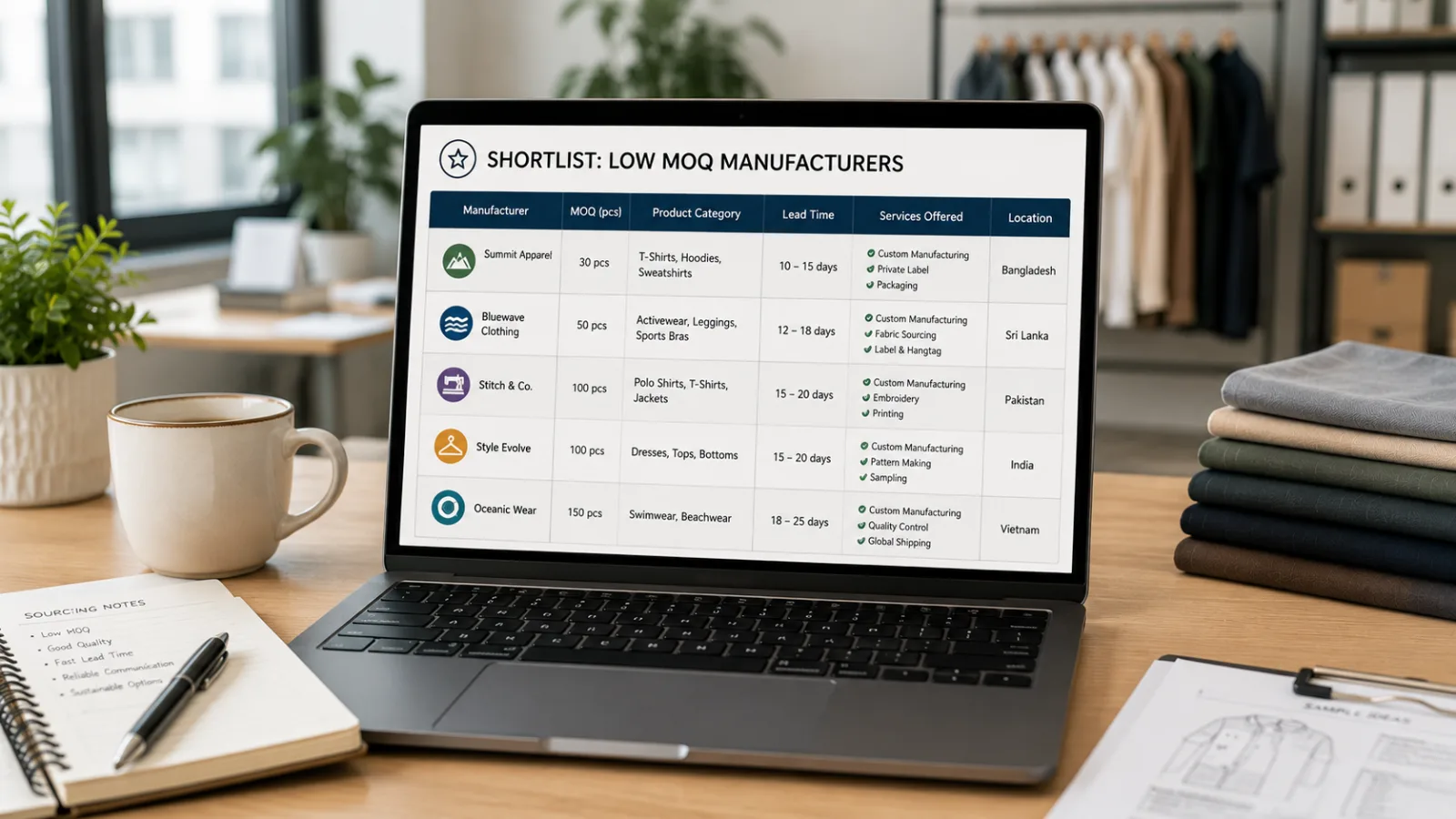
When choosing the best low MOQ clothing manufacturers, look for partners that maintains high standards in fabric sourcing, stitching and quality control while still accepting small orders. The best suppliers offer transparent communication, reliable lead times and clear sampling processes so designers can test styles without large upfront investment.
Prioritize factories that document certifications and inspections to ensure consistent results as your brand refines its offerings. Top options combine small-batch flexibility with scalable solutions that let you increase quantities as demand grows, often through staged pricing or reserved production slots.
Equally important is ethical production, where labor practices and environmental compliance are visible and verifiable. Choosing these manufacturers is a cost-effective way to launch a collection, minimize waste and build a trustworthy supply chain that will support long-term growth.
What Drives MOQs Higher or Lower?
If you understand what drives MOQs, you can make smarter decisions and negotiate more effectively.
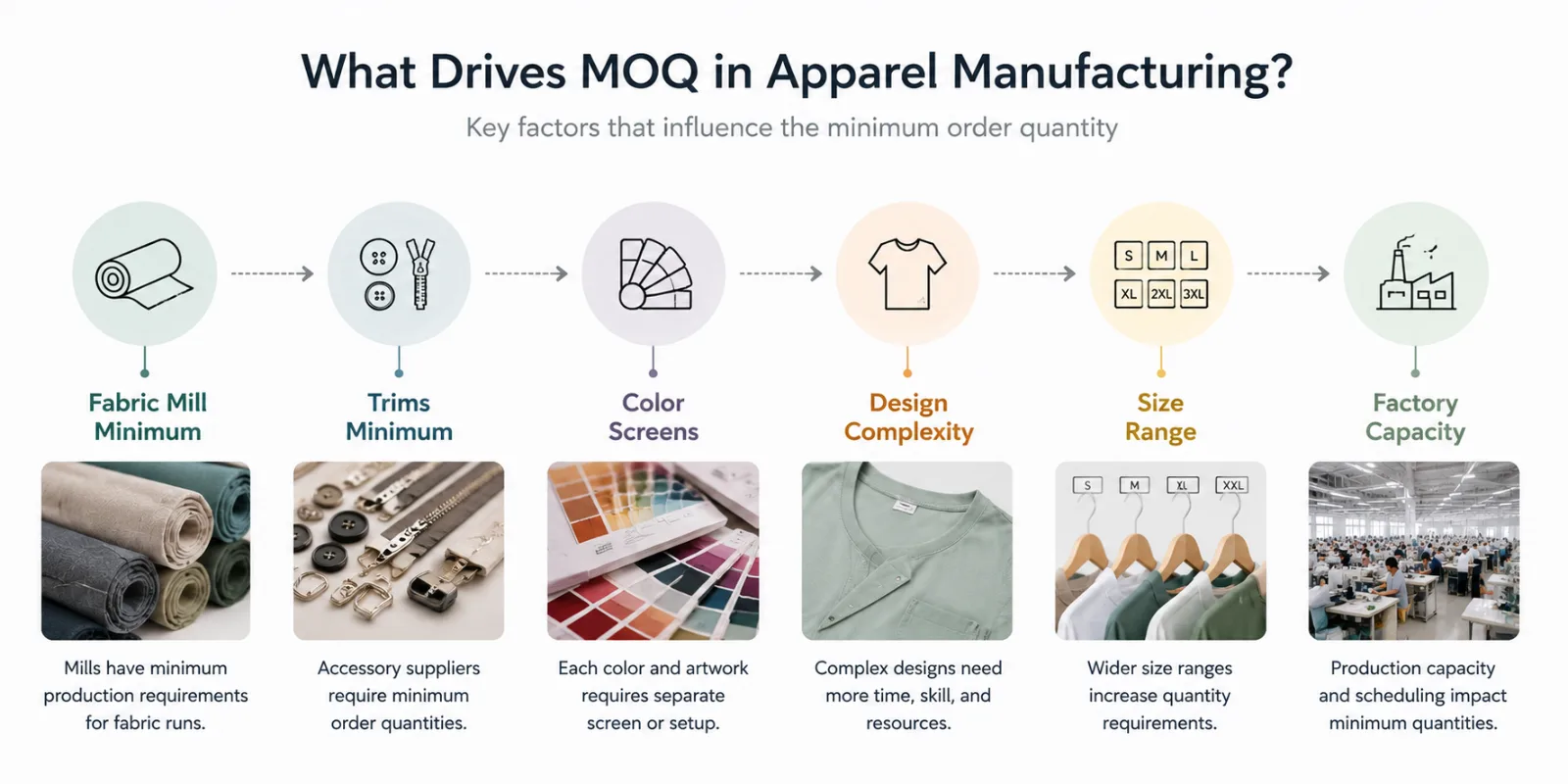
Fabric MOQ from mills
A garment factory may accept 100 pieces, but the fabric mill might require a minimum fabric order. This is one of the biggest reasons MOQs rise. Custom-dyed fabrics, special finishes, or unique compositions often have higher minimums, which can impact your low MOQ apparel strategy.
Trims and accessories MOQ
Custom labels, hangtags, buttons, zippers, and packaging can have minimum quantities. Startups often underestimate trim MOQs.
Color and print requirements
Each color can require separate dye lots. Each print color can require separate screens. More colors usually increases MOQ or increases cost.
Complexity of the garment
More complicated construction means more line setup and more skilled labor. Factories may require higher MOQ to justify the setup.
Pattern grading and sizing
If you want full-size ranges, some factories require a minimum per size. Small runs across many sizes can create inefficiency, impacting your ability to meet quality standards.
Factory capacity and business model
Large factories prefer big orders because it keeps lines running, which can be a challenge for startups focusing on custom clothing. Smaller factories can be more flexible for small-batch clothing but may have higher per-unit costs.
Understanding these factors lets you reduce MOQ pressure by simplifying fabrics, standardizing trims, and planning your collection strategically.
The Best Low MOQ Manufacturing Options for Startups
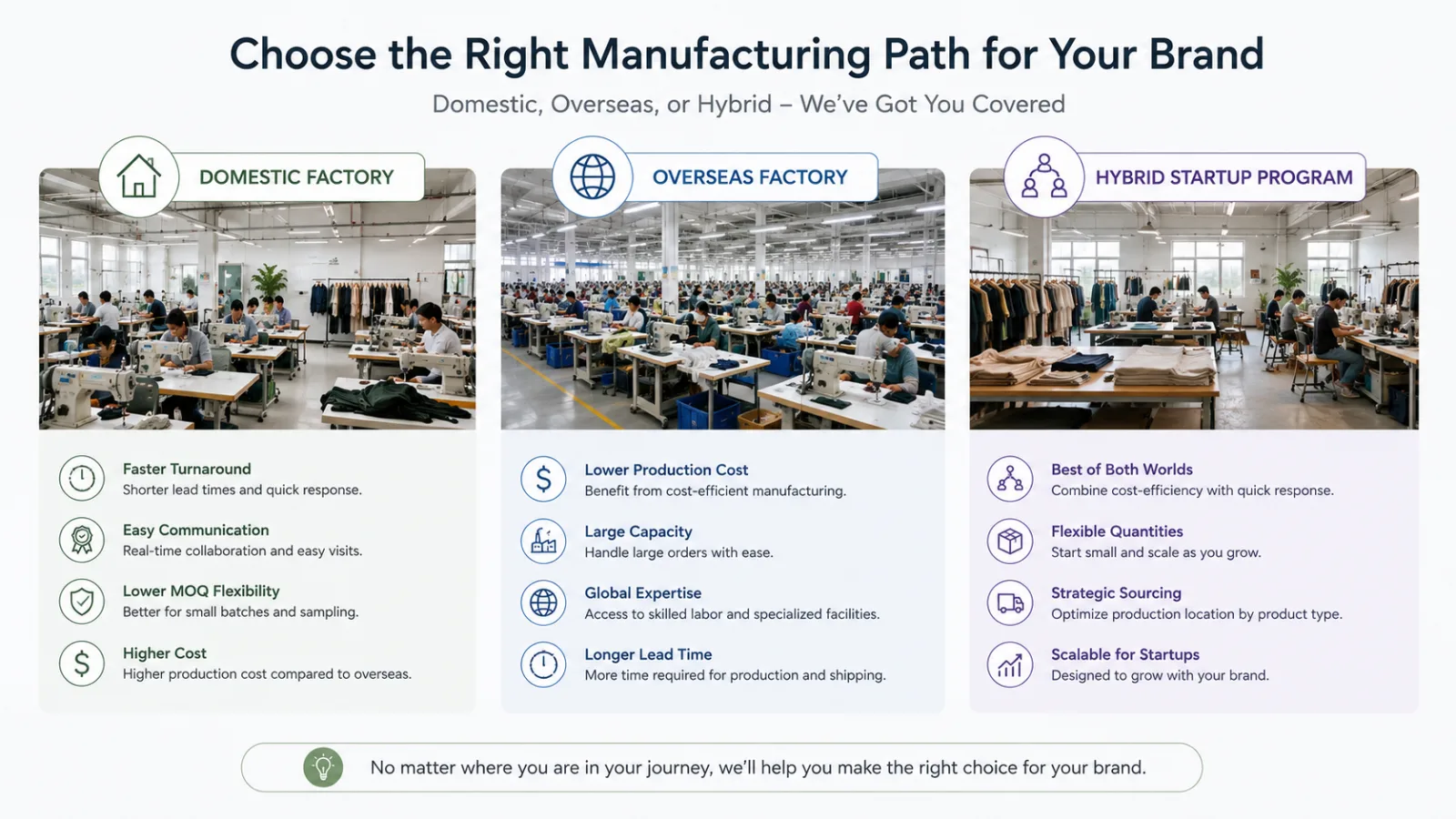
Startups usually have three practical paths. Each has pros and cons.
Small domestic manufacturers
These are often local cut-and-sew facilities that support small runs and close communication. They allow faster sampling and easier quality control, which is vital for maintaining craftsmanship. However, domestic production may have higher per-unit costs, which can affect the overall budget for ethical manufacturing.
Best for:
- Premium basics
- Limited collections
- Brands prioritizing local production and transparency
Flexible overseas manufacturers
Many overseas factories can support low MOQs if they have systems built for it, especially if they offer fabric sourcing networks and work with startups regularly.
Best for:
- Startups aiming for cost efficiency should consider working with small batch clothing manufacturers.
- Brands planning to scale gradually
- Private label and custom cut-and-sew collections
Small-batch production programs within larger factories
Some large factories have startup-friendly programs or separate low MOQ lines. These can combine flexibility with scalability, but availability depends on the factory’s scheduling and their ability to meet quality standards.
Best for:
- Brands that want to scale fast once demand is proven
- Startups with strong tech packs and clear planning
The right path depends on budget, lead time expectations, product complexity, and target market.
How to Find Low MOQ Clothing Manufacturers
Finding a low MOQ manufacturer is not about searching for “cheap factory.” It is about finding a factory with the right structure and mindset.
Here are reliable ways to find them:
Use startup-focused apparel manufacturing directories
Many platforms list factories that support small runs, sampling, and emerging brands. Focus on profiles that show clear MOQ ranges and product categories.
Use referrals from other founders
A manufacturer that performs well for another startup in your category is often a safer option than a random online listing.
Attend trade shows and sourcing expos
Even if you cannot attend internationally, you can attend local or regional apparel events. Many factories attend to find new clients.
Work with textile mills
Some mills can recommend garment factories that regularly use their fabrics and can support low MOQ runs.
Search by category specialization
Look for factories specialized in your exact product category. A low MOQ t-shirt factory may not be ideal for denim or outerwear. When you contact trusted clothing manufacturers, lead with clarity: product type, approximate order size, target quality standards, and whether you need full package or cut-and-sew service.
Questions Startups Should Ask Low MOQ Manufacturers
Startups often ask only MOQ and price, but they should also consider craftsmanship and quality. That is not enough. You need to evaluate reliability.
Ask these questions:
Product and production
- Do you specialize in my product category?
- What is your minimum order per style and per color?
- What is your monthly production capacity?
Fabric and trims
- Can you source fabric for custom clothing, or do I need to provide it?
- What are your fabric mill minimums?
- Can we use stock fabrics to reduce MOQ?
Sampling
- How long does sampling take?
- How many revisions are included?
- Do you provide pattern making and grading?
Quality control
- Do you perform in-line inspections?
- What is your defect handling process?
- Can you provide QC reports?
Communication and timelines
- Who manages my production updates?
- How often will I receive progress updates?
- What is your typical lead time for small runs?
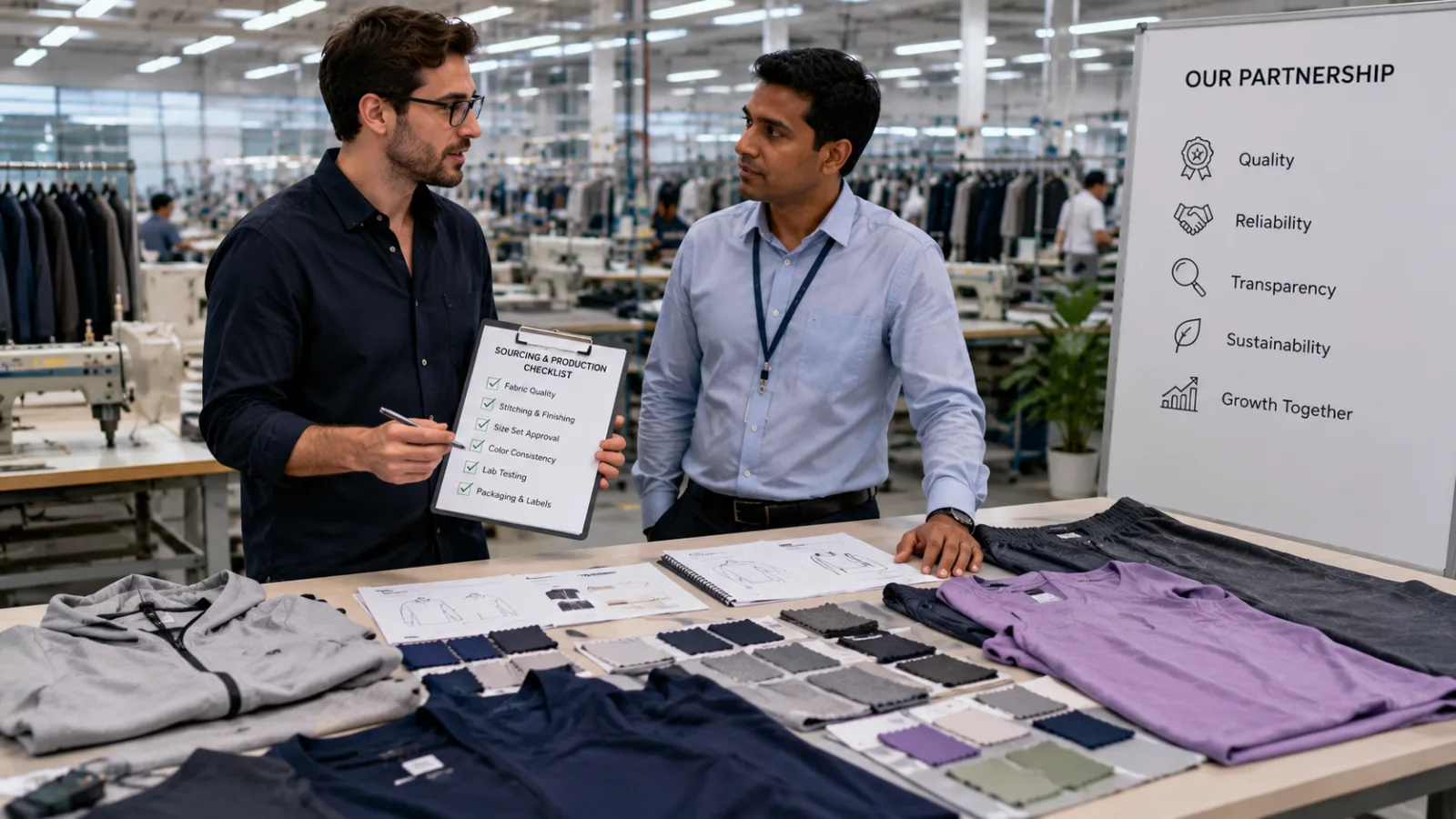
The way they answer matters as much as the answers. Clear communication is a strong indicator of long-term success.
How to Reduce MOQ Without Sacrificing Quality
If a factory’s MOQ feels too high, there are smart ways to lower it without forcing unrealistic demands.
Use stock fabrics
Stock fabrics reduce mill minimums and allow smaller runs. Many factories keep stock jersey, fleece, rib, and common woven fabrics.
Limit colors in the first drop
Instead of five colors, launch with two or three. This reduces dye lot complexity and helps meet MOQ per color in custom clothing production, which is crucial for new designs.
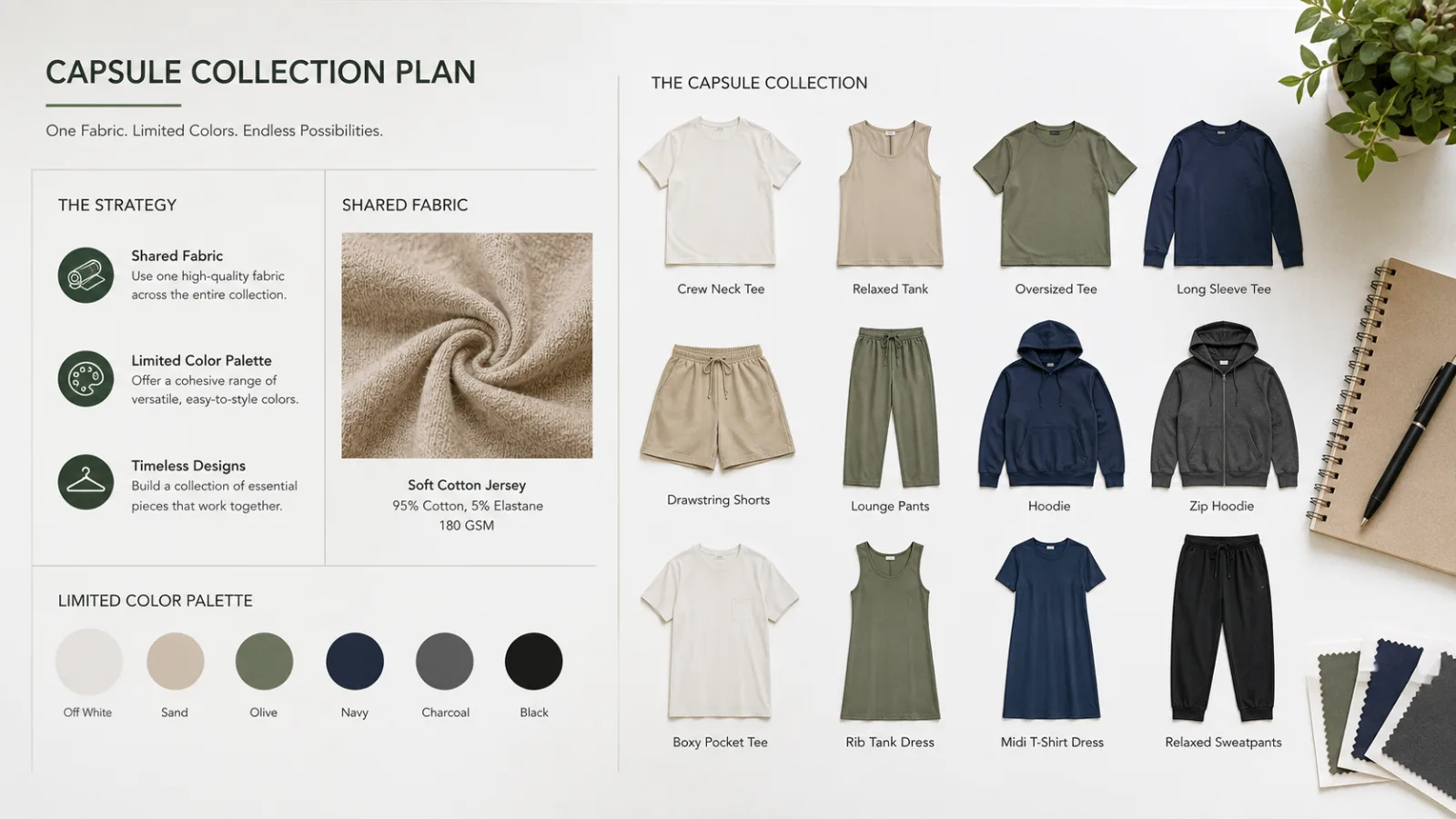
Use the same fabric across multiple styles
If your hoodie and sweatpants use the same fleece, you can often combine fabric requirements.
Standardize trims
Use one label style, one hangtag format, and shared packaging across the collection to avoid trim minimums.
Combine styles in one production schedule
Some factories allow combined production if construction is similar. For example, two t-shirt styles with the same fabric can run on one line.
Keep size ranges realistic
Offer the most common size range first, then expand later as you collect demand data.
Reducing MOQ is often more about smart collection planning than negotiation.
What Trade-Offs Should Startups Expect With Low MOQ Production?
Low MOQ manufacturing is flexible, but there are trade-offs. Startups should plan for them instead of being surprised.
Higher per-unit cost
Smaller runs usually cost more per piece. You are paying for setup, labor, and overhead across fewer units.
Limited customization
Some low MOQ factories may limit custom fabrics or complicated trims because of mill minimums.
Longer sampling time
Small factories can be busy. Sampling may take longer if they manage many startups at once.
Capacity limitations
If your product suddenly goes viral, a small factory may struggle to scale quickly. That is why planning scalability early matters.
The best solution is to build a scalable production roadmap. Start with low MOQ to prove demand, then transition to a larger factory when volume justifies it, or stay with a flexible partner that can grow with you.
The Low MOQ Manufacturing Process for Startups
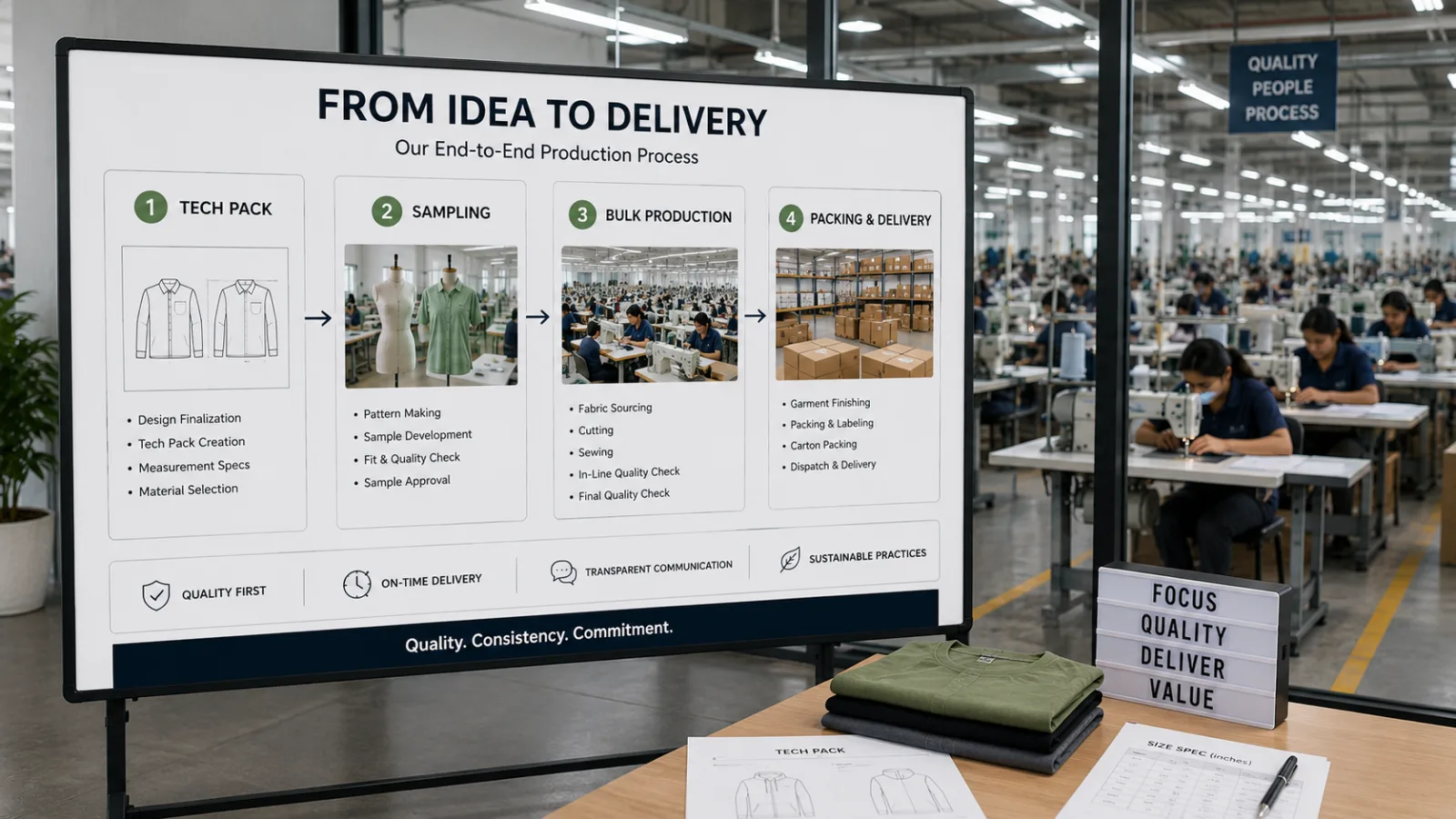
A professional low MOQ manufacturer should still follow a structured process. Startups should understand this workflow so they can manage production professionally.
Product development and tech pack
Your tech pack should include measurements, construction details, fabric specs, quality standards, and packaging instructions. Better tech packs reduce sampling waste and miscommunication.
Sampling and fit approval
Start with a prototype, then a fit sample, then a pre-production sample. Approve only when measurements, fabric, and finish meet your expectations.
Material booking and planning
Confirm fabric, trims, labels, and packaging with your trusted clothing manufacturer before bulk production begins. This is where delays often happen.
Bulk production
During bulk, expect in-line checks, progress updates, and a final QC process.
Packing and shipment preparation
Make sure carton labeling, size ratios, and packaging format match your brand needs, especially for e-commerce fulfillment.
Low MOQ production should still feel professional and controlled.
Common Mistakes Startups Make When Choosing Low MOQ Manufacturers
Avoid these mistakes and you will save money and stress.
- Choosing the lowest price supplier without checking quality systems
- Ordering too many styles at once instead of starting with a focused capsule
- Skipping tech packs and relying on photos only
- Not testing fabric shrinkage and wash performance
- Ignoring trim and packaging minimums
- Not documenting approvals and changes
- Working with factories that do not specialize in your product category
- Assuming a sample quality guarantees bulk quality without QC checkpoints
Startups win when they simplify and execute consistently.
How to Know If a Low MOQ Manufacturer Is Right for You
A low MOQ manufacturer is a good fit when they provide:
- Clear MOQ rules per style and color
- Strong sampling support and pattern accuracy are essential for bringing design ideas to life.
- Transparent pricing and timelines
- Reliable quality control systems
- Good communication and production updates
- The ability to scale gradually as your brand grows is crucial for fashion brands focused on sustainable practices.
- Fabric sourcing support or clear guidance on fabric requirements
- Professional documentation for approvals and QC
If you want long-term stability, choose the manufacturer that feels organized, honest, and consistent, not the one that promises the fastest or cheapest deal.
A Practical Low MOQ Strategy for Startup Apparel Brands
If you want a proven strategy, follow this approach:
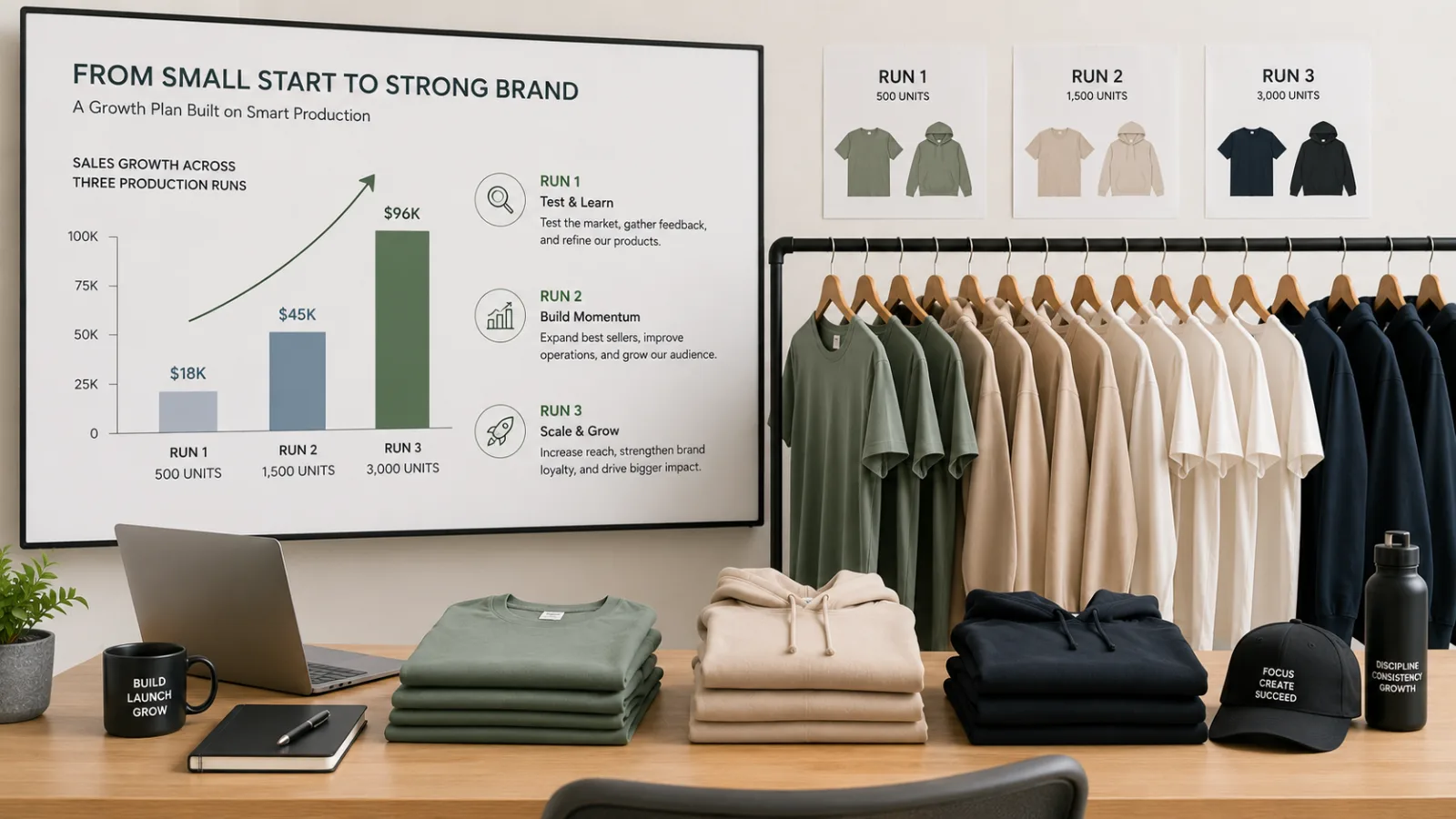
Launch with a capsule collection
Start with 2 to 5 styles maximum. Use shared fabrics and standardized trims.
Validate demand
Track which products sell best, which sizes move fastest, and what customer feedback says about fit and feel.
Improve product specs
Update your tech pack based on feedback and wash test results.
Place a second run with small improvements
Increase volume on best sellers. Drop slow sellers to focus on high-demand items in your small-batch clothing line.
Scale responsibly
When demand stabilizes, you can either negotiate better pricing with your current manufacturer or move to a higher-capacity factory for larger runs. This strategy reduces risk while building a brand that is production-ready for growth.
FAQs About Low MOQ Clothing Manufacturing
What is a low MOQ clothing manufacturer?
A low MOQ clothing manufacturer is a factory that supports small batch production, often between 30 and 300 pieces per style depending on the garment type and fabric requirements.
Can I start a clothing brand with 50 pieces per style?
Yes, many startups launch with very low quantities by using stock fabrics, simple designs, and factories that specialize in small batch production.
Why are MOQs higher for custom fabrics?
Fabric mills often require minimum yardage for custom colors or compositions, which pushes garment MOQ higher even if the factory is flexible.
Is low MOQ manufacturing more expensive?
It often costs more per unit because setup costs are spread across fewer units, but it reduces inventory risk and protects cash flow.
How do I make low MOQ production scalable?
Use shared fabrics, standard trims, focused collections, and a manufacturer that can increase capacity over time or help you transition smoothly to larger production of small-batch clothing.
Final Thoughts: Low MOQ Manufacturing Helps Startups Grow Smarter
Low MOQ clothing manufacturers give startups the ability to launch with less risk, test real demand, and improve products before scaling. Instead of spending all your budget on massive inventory, you can build a smarter production strategy that protects cash flow and creates long-term manufacturing stability.
Focus on clarity, product specialization, and professional documentation. Choose a manufacturer that values communication and quality, not just volume. When you treat low MOQ production as a strategic launch plan, your brand becomes stronger, more flexible, and ready to scale.