
Strong apparel vendor relationships are especially important in the apparel industry because clothing production is detail-sensitive. It is the strength of the relationship behind the supply chain. For growing fashion brands, one of the smartest long-term strategies is learning how to build strong, reliable relationships with apparel suppliers to foster mutual growth.
Many brands focus heavily on price, minimum order quantity, or lead time when choosing a supplier. Those factors matter, but they are only part of the picture. In real apparel manufacturing, long-term success depends on trust, communication, consistency, problem-solving, and mutual understanding. A supplier who knows your brand, understands your standards, and believes in a long-term partnership can help you avoid costly mistakes, improve product quality, plan production more efficiently, and support your growth over time.
This is especially important in the apparel industry because clothing production is detail-sensitive. Fabric consistency, trim availability, dyeing results, size accuracy, construction quality, and shipping timelines all depend on coordinated work across multiple stages. If the relationship between brand and supplier is weak, even a good product idea can become difficult to execute. On the other hand, when the partnership is strong, both sides usually work with more clarity, more flexibility, and more commitment to solving problems before they grow.
Long-term supplier relationships do not happen automatically. They are built deliberately. Brands need to choose the right partners, communicate clearly, pay responsibly, forecast honestly, and treat suppliers as strategic collaborators rather than disposable vendors to build a strong foundation for mutual growth. Suppliers also need to deliver quality, maintain transparency, and support the brand through growth stages. The strongest relationships are built on mutual value.
In this guide, you will learn how to build long-term relationships with apparel suppliers, why supplier relationships matter so much in clothing manufacturing, what mistakes damage supplier trust, and what practical steps can help fashion brands create stronger sourcing partnerships over time. Whether you are a startup clothing label, a private label business, a sustainable fashion brand, or an established apparel company looking to scale, these principles can help you build a healthier and more dependable supply chain.

How To Build Strong Relationships with Suppliers
Building trusted clothing partnerships starts with clear communication and open communication that sets the tone for a step-by-step process where set expectations are documented in an sop; this plays a critical role in aligning quality standards, fabric sourcing, and project management so both a strong manufacturer and a new manufacturer understand delivery timelines for high-demand lines. Use tools like whatsapp for rapid responsiveness, and formal reports for effective communication to support continuous improvement and improving existing ones.
Focusing on cost efficiency, favorable terms, and a shared vision for mutual success helps brands compete in the competitive fashion and global fashion arenas; the fashion supply chain therefore must be treated as serious business because dependable partners and consistent processes ultimately drive business success in the world of fashion.
Why Long-Term Supplier Relationships Matter in Apparel Manufacturing
In apparel manufacturing, suppliers do much more than provide products or materials. They influence quality, consistency, delivery performance, flexibility, cost stability, and brand reputation. A supplier may be a clothing manufacturer, fabric mill, trim vendor, washing facility, print partner, embroidery unit, or packaging provider. Each one plays a role in how the final garment turns out.
When brands work with suppliers only transaction by transaction, the relationship often stays shallow. The supplier may fulfill the order, but there is little deeper alignment. In contrast, long-term supplier relationships create familiarity and operational confidence. The supplier learns your fit expectations, fabric standards, finishing preferences, labeling details, packaging rules, and communication style. That knowledge helps reduce mistakes and improve efficiency.
Long-term relationships also improve problem-solving. In apparel production, challenges happen. Fabric delays, shade variation, machine issues, trim shortages, shipment changes, and technical questions are all common realities. When the relationship is strong, suppliers are more likely to communicate early, prioritize your concerns, and work with you to find practical solutions. When the relationship is weak, problems may be hidden, delayed, or handled with minimal urgency.
There is also a strategic benefit to fostering strong vendor relationships in the fashion industry. Suppliers often support their strongest relationships more actively. They may reserve better capacity, offer faster updates, help source alternatives, provide development feedback, or prioritize urgent reorders. These advantages can be difficult to access when the relationship is purely transactional.
For fashion brands that want stable growth, supplier relationships are not a soft issue. They are a core part of operational strength.
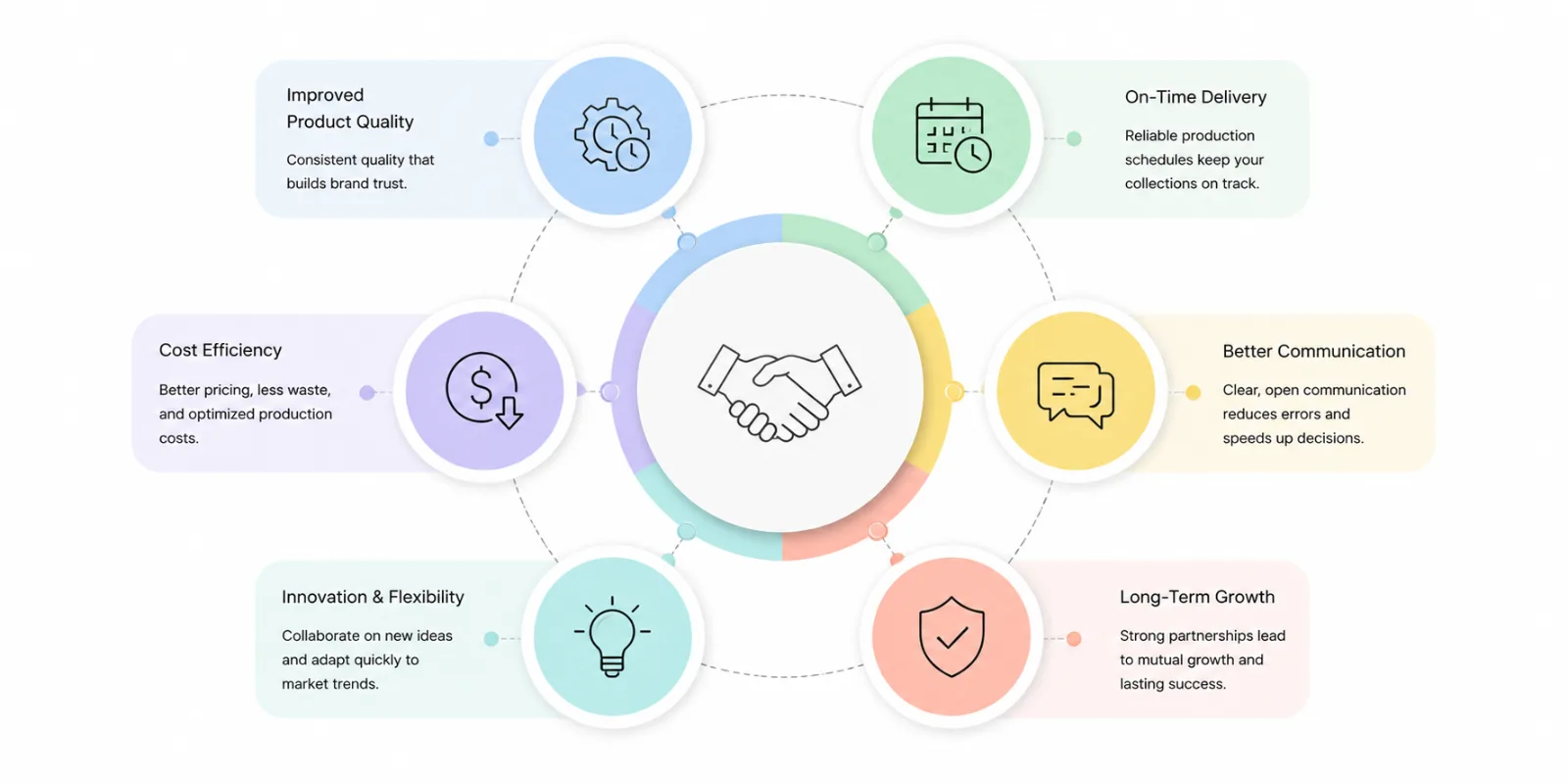
Key Benefits of a Strong Manufacturer Relationship for Clothing Brands
A strong manufacturer relationship sets the tone for business success in the world of fashion, because effective communication and clear communication create a foundation for mutual success. From fabric sourcing and quality standards to project management and a documented sop, a reliable partner plays a critical role in scaling operations, improving existing ones and onboarding a new manufacturer through a transparent step-by-step process.
In a global fashion marketplace where competitive fashion and high-demand releases matter, cost efficiency, favorable terms and responsiveness — even via WhatsApp for quick queries — allow you to evaluate priorities, set expectations and pursue continuous improvement. Trusted clothing partners deliver consistency, protect brand reputation and prove that serious business planning within the fashion supply chain unlocks long-term growth.
How to Communicate Effectively with Your Garment Manufacturer
Begin by providing clear specifications and detailed tech packs that include measurements, materials, color codes, and construction notes so your manufacturer knows exactly what to produce. Establish realistic lead times and milestone dates up front, and confirm them in writing to avoid misunderstandings. Maintain open lines of communication through a preferred channel (email, messaging app, or calls) and schedule regular check-ins for status updates.
Share high-quality samples or photos and be prompt with feedback on prototypes; specific, actionable comments help the team iterate faster. Implement simple quality control checkpoints and request documentation like photos or inspection reports before shipment. Build a relationship based on mutual respect by being transparent about volumes, budgets, and potential issues. Finally, document all agreements and changes to prevent disputes and ensure consistency across production runs.
How To Handle Issues And Resolve Conflicts with Clothing Manufacturers
Section 1: When problems arise with a garment partner, begin by documenting issues and clarifying how they affect manufacturing costs; clear records let you use email for formal communications while quick messages like WeChat handle daily updates. Timely, written logs helps prevent misunderstandings and create a trail that helps both parties evaluate root causes and corrective actions.
Section 2: Assign a point person to oversee the entire resolution process from sampling through full-scale production, so responsibilities are clear and accountability reduces delays. Standardized checklists and shared templates reduce errors, and a calm, solutions-focused tone will foster an environment where suppliers and brands collaborate to improve quality and timelines. Regular review meetings, combined with the documented correspondence, ensure fixes stick and protect the relationship.
Start by Choosing Suppliers for Fit, Not Just Price
A strong long-term relationship begins with choosing the right supplier in the first place. One of the biggest sourcing mistakes fashion brands make is selecting suppliers based almost entirely on price. Low cost may look attractive at the beginning, but if the supplier is a poor operational fit, the relationship often becomes stressful and expensive in other ways.
The right apparel supplier should match your product category, order size, quality expectations, communication style, and future growth direction. A supplier that is excellent for basic cotton T-shirts may not be the right partner for tailored fashion pieces, activewear, premium knitwear, or sustainable clothing collections. Likewise, a supplier designed for very high-volume production may not give proper attention to a growing brand with smaller but technically demanding orders.
Cultural and communication fit also matter. Apparel production involves many moving parts and many decisions. If the supplier communicates slowly, avoids clarity, or struggles to understand your standards, the relationship will become difficult over time. A supplier with slightly higher pricing but better communication, better quality systems, and better long-term alignment often brings more value to the brand.
Brands should also think beyond current needs. Can this supplier support you if your order volume doubles? Can they manage more styles, more colors, or more complex garments? Can they maintain quality as production scales? Long-term supplier relationships work best when both sides can grow together.
Choosing the right supplier is not about finding the cheapest quote; it's about establishing strong vendor relationships that can withstand challenges in the fashion industry. It is about finding a partner who can support your business with consistency and professionalism.
Negotiate Pricing, MOQs, and Payment Terms
When you Negotiate Pricing, begin by researching market rates and supplier cost structures so you can present a reasonable counteroffer; emphasize long-term order potential, ask for volume discounts, and be prepared to justify the value you bring. Establish clear targets and walk-away points before discussions, and always confirm quoted prices in writing to avoid surprises.
Address MOQs by exploring alternatives like consolidated orders, phased deliveries, or working with the supplier on a trial batch to lower initial commitments; consider sharing inventory risk, co-marketing, or paying a slight premium for smaller lots until volume increases.
Clarify Payment Terms early — negotiate deposits, net terms, milestones, and penalties for late payment, and look for options such as letters of credit, escrow, or trade financing to protect cash flow; document agreed terms in contracts and include contingencies for currency fluctuations and unexpected delays.
What to Evaluate Before Starting a Supplier Relationship
Product Category Experience
Suppliers should understand the garment types, fabrics, and construction methods your brand depends on.
Communication Quality
Early communication often predicts the long-term working relationship. Clear, timely replies matter.
Quality Systems
A supplier should have visible control over sourcing, production, inspection, and issue resolution to build a strong relationship with your manufacturer.
Growth Compatibility
The best long-term partners can support your brand not only now, but also as your business expands.

Be Clear About Your Brand Expectations from the Beginning
Long-term supplier relationships become stronger when expectations are clear from the start. Many problems in apparel sourcing happen because the brand assumes the supplier understands the desired standards, while the supplier assumes the brand is flexible about details. That gap creates frustration later.
At the beginning of the relationship, brands should communicate clearly about product quality, construction expectations, fit priorities, fabric requirements, testing needs, packaging standards, labeling details, order timelines, and approval processes. A supplier cannot consistently meet standards that were never defined properly.
This is where technical documentation becomes extremely important. Tech packs, approved samples, measurement charts, trim references, artwork files, packaging instructions, and quality checkpoints all help translate expectations into workable production information. Clear documentation removes guesswork and makes the supplier more confident in execution.
Brands should also explain business expectations. Do you need regular updates? Do you expect pre-production samples before bulk? Are there specific compliance requirements? Are shipping timelines critical because of a retail launch or seasonal calendar? The more open both sides are at the beginning, the fewer avoidable misunderstandings will appear later.
Clarity does not make the relationship rigid. It actually makes it easier to collaborate because both sides understand the target. In apparel manufacturing, long-term trust grows when standards are clear and consistent.
Communicate Regularly, Not Only When Problems Happen
One of the best ways to build long-term relationships with apparel suppliers is to communicate consistently, not only when there is an issue. Some brands contact suppliers heavily during an order and then disappear until the next urgent need. That kind of interaction keeps the relationship purely reactive.
Stronger relationships are built through regular, professional communication. This includes confirming forecasts, discussing upcoming collections, reviewing previous order performance, sharing feedback on quality and delivery, and aligning on future planning. When suppliers feel informed, they can prepare better and support the brand more effectively.
Regular communication also reduces surprises. A supplier who knows that your brand is preparing a larger launch or a new category can begin thinking about material lead times, machine needs, or capacity planning earlier. That helps avoid the rush and confusion that often damage production quality.
It is also important to make communication balanced. Contact suppliers when things go well, not just when something goes wrong. If they handled a difficult order properly, solved a quality issue transparently, or met a tight deadline successfully, let them know. Professional appreciation builds goodwill and reinforces good performance.
In the apparel industry, silence often creates distance. Consistent communication helps turn a vendor relationship into a working partnership.

Pay on Time and Handle Financial Commitments Responsibly
Trust in supplier relationships is not built only through conversation. It is built through actions, and one of the most important actions is financial reliability. In apparel sourcing, suppliers remember which brands are organized, transparent, and dependable with payments.
When a brand pays late, changes agreed payment terms casually, or creates uncertainty around deposits and balances, it damages trust quickly. Suppliers must manage cash flow too. They need to buy fabric, pay workers, book trims, reserve production space, and handle logistics. If the buyer side is financially inconsistent, the supplier may become more cautious, less flexible, or less willing to prioritize future orders.
Paying on time does more than protect goodwill. It also strengthens your credibility when negotiating lead times, asking for urgent support, or requesting flexibility during challenging periods. Suppliers are usually more willing to help brands they trust financially.
This does not mean every brand must be large or rich. Many smaller brands build excellent supplier relationships by being honest and dependable. If there is a real issue, communicate early rather than waiting until the due date passes. Transparency matters. Suppliers prefer honest planning over silence and surprise.
In long-term apparel partnerships, financial professionalism is one of the clearest signs of respect.
Give Suppliers Forecast Visibility When Possible
Suppliers work more effectively when they have visibility into future demand. Even if forecasts are not perfect, giving apparel suppliers some sense of what is coming helps them plan capacity, source materials earlier, and allocate resources more efficiently.
Many fashion brands wait until they are ready to place an order before contacting the supplier. That approach limits planning and often increases pressure on both sides. By sharing upcoming product plans, seasonal expectations, estimated reorder potential, or likely volume ranges, brands help suppliers prepare proactively.
Forecast visibility is especially important for fabric booking, custom trims, dyeing schedules, and production line planning. If a supplier knows that a brand is likely to repeat a successful style or launch a larger collection next quarter, they can organize more intelligently. That often improves lead times and reduces sourcing stress.
Of course, forecasts in fashion are never guaranteed. Trends shift, sales change, and launches evolve. What matters is not perfect accuracy. What matters is communicating honestly. Share projections with context to foster mutual growth. Let the supplier know what is confirmed, what is estimated, and what is still under review.
When suppliers feel included in future planning, the relationship becomes more strategic and less transactional.
Treat Suppliers as Partners, Not Just Vendors
One of the biggest mindset shifts a growing apparel brand can make is moving from vendor thinking to partnership thinking to build a strong relationship with your manufacturer. Vendors are often treated as interchangeable. Partners are treated as valuable contributors to shared success.
This does not mean giving up standards or becoming overly dependent. It means recognizing that strong suppliers often have useful expertise. They understand material behavior, production efficiency, trim sourcing, wash risks, lead time realities, and technical limitations. Brands that listen to supplier insight often make better sourcing and development decisions.
For example, a supplier may recommend a more stable fabric construction, a better stitching method, a more realistic launch schedule, or a cost-saving trim alternative that does not hurt quality. When the brand sees the supplier only as an order taker, those insights may be lost. When the supplier feels respected, they are more likely to contribute actively.
Partnership thinking also improves behavior during challenges. Instead of turning every issue into blame, both sides focus more on solving the problem and preventing recurrence. This creates a healthier operating environment and often leads to better performance over time.
In the apparel industry, the strongest supply relationships are rarely built on price alone. They are built on mutual respect and shared problem-solving.

Be Fair and Realistic With Lead Times and Change Requests
Suppliers want to support their clients, but long-term trust weakens when brands create repeated operational pressure through unrealistic timelines or late-stage changes. In apparel manufacturing, every shift in design, material, labeling, packaging, or delivery schedule affects multiple steps downstream.
When brands consistently ask for urgent timelines without enough planning, suppliers may still try to say yes, but the relationship becomes strained. Quality may suffer, communication may become defensive, and production stress increases on both sides. The same applies to frequent last-minute changes after approvals have already been given.
To build a stronger supplier relationship, brands should respect the production calendar. Allow reasonable time for sampling, material booking, bulk production, finishing, packing, and shipping. If a change is necessary, communicate it early and clearly. Also understand the operational impact. A change that seems small on paper may require pattern adjustment, fabric rebooking, trim replacement, or packaging updates.
Fairness matters here. The supplier should also be honest about what is truly possible. But brands that show planning discipline are usually easier and more attractive clients to work with. That makes suppliers more willing to go the extra mile when a real urgent situation happens, strengthening the good relationship between both parties.
Reliable relationships grow when both sides respect operational reality.
Resolve Problems Professionally and Focus on Root Causes
No apparel supply chain is completely problem-free. Delays, defects, fabric issues, trim shortages, dye inconsistency, measurement deviations, and packing mistakes can all happen, but strong vendor relationships can help mitigate these risks. What matters most for the long-term relationship is how these problems are handled.
Brands that damage supplier relationships often react emotionally, focus only on blame, or escalate every issue without trying to understand the root cause. Stronger relationships are built when problems are handled firmly but professionally. The goal should be clarity, correction, and prevention.
When an issue appears, define it clearly. Use photos, measurements, approved references, and specific observations. Ask what happened, how it will be corrected, and what will be done to stop it from repeating. This creates a more productive conversation than broad frustration. Suppliers are more likely to respond seriously when the issue is discussed in a structured way.
It is also important to recognize the difference between one-off issues and recurring system failures. A supplier who makes a mistake but handles it transparently, corrects it quickly, and improves the process may still be a strong partner. A supplier who hides issues, delays communication, or repeats the same problems after feedback is more concerning.
Professional problem resolution builds credibility on both sides. It shows that the relationship is strong enough to handle pressure without collapsing into conflict, which is a cornerstone of successful manufacturer relationships.
Best Practices for Handling Supplier Issues
Define the Problem Clearly
Use actual examples, approved standards, and measurable details to explain the issue.
Ask for Corrective and Preventive Action
Do not stop at fixing the immediate problem. Ask how recurrence will be prevented.
Keep the Tone Professional
Firm communication works better than emotional reaction in long-term business relationships.
Track Repeated Patterns
A history of recurring issues helps determine whether the problem is isolated or structural.

Reward Consistency and Good Performance
Long-term supplier relationships grow stronger when good performance is recognized. In many sourcing relationships, feedback happens only when something goes wrong. That creates a negative pattern where suppliers mostly hear from the brand during moments of criticism or urgency.
When a supplier delivers strong quality, communicates well, solves a difficult production issue, or supports a brand during a tight schedule, that should be acknowledged. Professional appreciation reinforces positive behavior and builds goodwill. It also signals that the brand notices effort, not just mistakes.
Recognition does not need to be overly formal. It can be as simple as direct positive feedback after a successful order, greater forecasting visibility, repeat business, or increased trust on future projects. Reliable orders are often one of the strongest forms of recognition in the apparel industry.
Brands can also reward performance through better planning and more stable collaboration. Suppliers value clients who are organized, respectful, and consistent. When both sides feel the relationship is worth investing in, performance often improves naturally over time.
In supply chain relationships, trust grows not only through criticism handled well, but also through success acknowledged clearly.
Share Feedback That Helps Suppliers Improve
A long-term relationship becomes more valuable when both sides learn from each order. Brands that provide useful feedback help suppliers perform better in future production. Suppliers that listen and apply that feedback become more aligned with the brand.
The best feedback is specific and constructive. Instead of saying the quality was disappointing, explain which areas caused concern. Was it topstitch inconsistency, fabric shrinkage, label placement, packaging accuracy, or lead time communication? The more precise the feedback, the more actionable it becomes.
It is also helpful to share customer-side observations where relevant. If end customers consistently mention fit, comfort, finishing, or durability issues, that information may help the supplier understand the real-world impact of production decisions. This is especially valuable for repeat styles and long-term development.
Feedback should not happen only when there is a serious complaint. Even after smooth orders, a short performance review can strengthen future results. Discuss what worked well, what could be improved, and what the next order may require. These conversations turn experience into operational improvement.
In apparel sourcing, the strongest partnerships are built through feedback loops, not silence.
Support Transparency Instead of Creating Fear
Some brands unintentionally create supplier relationships where problems are hidden because the clothing supplier fears the reaction. This is dangerous. In apparel production, problems that are hidden early usually become bigger and more expensive later.
To build a healthier long-term partnership, brands should encourage transparency. Suppliers should feel able to raise concerns about fabric issues, timeline risks, trim delays, wash inconsistencies, or technical confusion before those problems spread. That only happens when communication is serious but not hostile.
This does not mean tolerating poor performance. Standards still matter. But there is a difference between accountability and fear. Accountability focuses on facts, solutions, and prevention. Fear leads to delayed disclosure, partial truth, and defensive behavior. Those patterns damage the entire supply chain.
When suppliers know they can speak honestly about risks, the brand gains earlier visibility and better control. Early visibility often makes the difference between a manageable adjustment and a major production failure.
Transparency is one of the strongest foundations of a durable supplier relationship.

Visit, Audit, or Review Supplier Operations When Possible
Long-term trust becomes stronger when brands understand how their suppliers actually operate. Whenever possible, visiting the supplier, reviewing their process, or conducting structured evaluations can significantly improve the relationship with your manufacturer.
A visit helps the brand see production conditions, line organization, quality checkpoints, material handling, communication flow, and overall professionalism. It also helps the supplier see that the brand is serious about the partnership. Face-to-face interaction often builds stronger understanding than email alone.
If an in-person visit is not possible, brands can still review operations through video calls, sample reviews, process documents, inspection reports, and regular production updates. The goal is not to police every detail. The goal is to build informed confidence.
Operational review also helps brands understand supplier strengths and limitations more realistically. That makes expectations more practical and helps future planning. A supplier relationship becomes healthier when both sides know what is possible, what needs improvement, and where future growth can happen.
In apparel sourcing, visibility often leads to stronger trust and better decisions.
Grow Together Through Gradual Trust and Better Systems
Long-term supplier relationships are rarely built overnight. They usually develop through repeated orders, clearer communication, better technical alignment, and growing trust. The best partnerships improve over time because both sides learn how to work together more effectively.
As the relationship grows, systems should improve too. Brands may create clearer tech packs, more structured approval flows, better forecasting methods, and stronger order review processes. Suppliers may improve reporting, sample discipline, quality control, and planning. These system improvements make the relationship more stable and scalable.
Gradual trust is important. Brands do not need to place all business with one supplier immediately. They can begin with smaller orders, assess communication and quality, and grow the partnership as confidence increases. This protects the brand while giving the supplier a fair chance to demonstrate capability.
Suppliers also invest more in relationships that show seriousness over time. Consistent business, professional communication, and realistic planning all encourage suppliers to prioritize the partnership more deeply. Strong apparel sourcing relationships are built through experience, not assumptions.
Common Mistakes That Damage Apparel Supplier Relationships
Even brands with good intentions can weaken supplier relationships through certain habits. One common mistake is switching suppliers too quickly over minor issues without trying to solve the problem first. While some situations do justify a change, constant switching makes it harder to build trust and process familiarity.
Another mistake is poor documentation. If the brand communicates expectations inconsistently or updates details informally, the supplier is more likely to make errors, undermining strong vendor relationships. This leads to frustration on both sides. Unrealistic deadlines are another major problem that can jeopardize good relationships with your suppliers. When brands repeatedly push urgent timelines without enough planning, suppliers may become less confident and less responsive.
Late payment, vague forecasting, and communication only during crisis moments also damage trust. Some brands focus so heavily on negotiation that the supplier feels constantly pressured on cost without any recognition of quality or service. Over time, that kind of relationship becomes fragile.
The strongest supplier partnerships are not built through perfection. They are built through professionalism, fairness, and consistency. Avoiding these common mistakes already puts a brand in a much stronger position.

Strengthening Supplier Relationships with the Right Manufacturing Partner
Building strong relationships with apparel suppliers becomes much easier when brands work with manufacturers who value long-term collaboration. A reliable clothing manufacturer does more than simply produce garments. The right partner supports clear communication, consistent quality standards, transparent production planning, and scalable manufacturing processes that grow alongside the brand.
For fashion brands that want dependable sourcing, working with an experienced apparel manufacturing partner can make a major difference. Companies like ApparGlobal.com focus on helping brands develop stable production partnerships through organized sampling, structured bulk production systems, and consistent quality control practices. When manufacturers prioritize communication, technical clarity, and long-term cooperation, brands can avoid many of the common sourcing challenges that occur in apparel production.
Conclusion
Building long-term relationships with apparel suppliers is one of the smartest investments a fashion brand can make. Strong supplier partnerships improve more than production. They support better quality, better communication, better planning, and better growth. In an industry where small details can create big outcomes, a dependable supplier relationship becomes a real competitive advantage.
The brands that build these relationships successfully are usually the ones that think beyond the next order. They choose suppliers for fit, communicate clearly, pay responsibly, share forecasts honestly, handle problems professionally, and treat suppliers as partners in progress. Over time, that approach creates trust, and trust creates stability.
For startup brands, private label businesses, and established apparel companies alike, the goal should not be to chase the lowest price at every stage. The goal should be to build a supply chain that can support quality, consistency, and long-term brand success. When your suppliers understand your business and believe in the relationship, your production process becomes stronger and your growth becomes more sustainable.
Frequently Asked Questions About Building Long-Term Relationships with Apparel Suppliers
Why are long-term relationships with apparel suppliers important?
Long-term relationships help improve quality consistency, communication, delivery reliability, sourcing efficiency, and overall supply chain stability. Suppliers who know your brand well can usually support your business more effectively.
How can a clothing brand build trust with suppliers?
A clothing brand can build trust by communicating clearly, paying on time, sharing realistic forecasts, providing complete technical documentation, and handling problems professionally.
Should brands choose suppliers only based on price?
No. Price matters, but long-term supplier success depends on broader fit, including product capability, communication quality, quality control, and future scalability.
What damages supplier relationships the most?
Late payments, unclear expectations, unrealistic deadlines, frequent last-minute changes, poor communication, and unfair blame are some of the biggest relationship problems in apparel sourcing.
Is it helpful to share future production plans with suppliers?
Yes. Even estimated forecasts help suppliers plan materials, capacity, and timelines more effectively, which can improve service and reduce production stress.
Can small fashion brands build strong supplier relationships, too?
Yes. Smaller brands can build excellent supplier relationships by being organized, honest, respectful, and consistent. Strong relationships are not only for large brands. They are built through professional behavior over time.