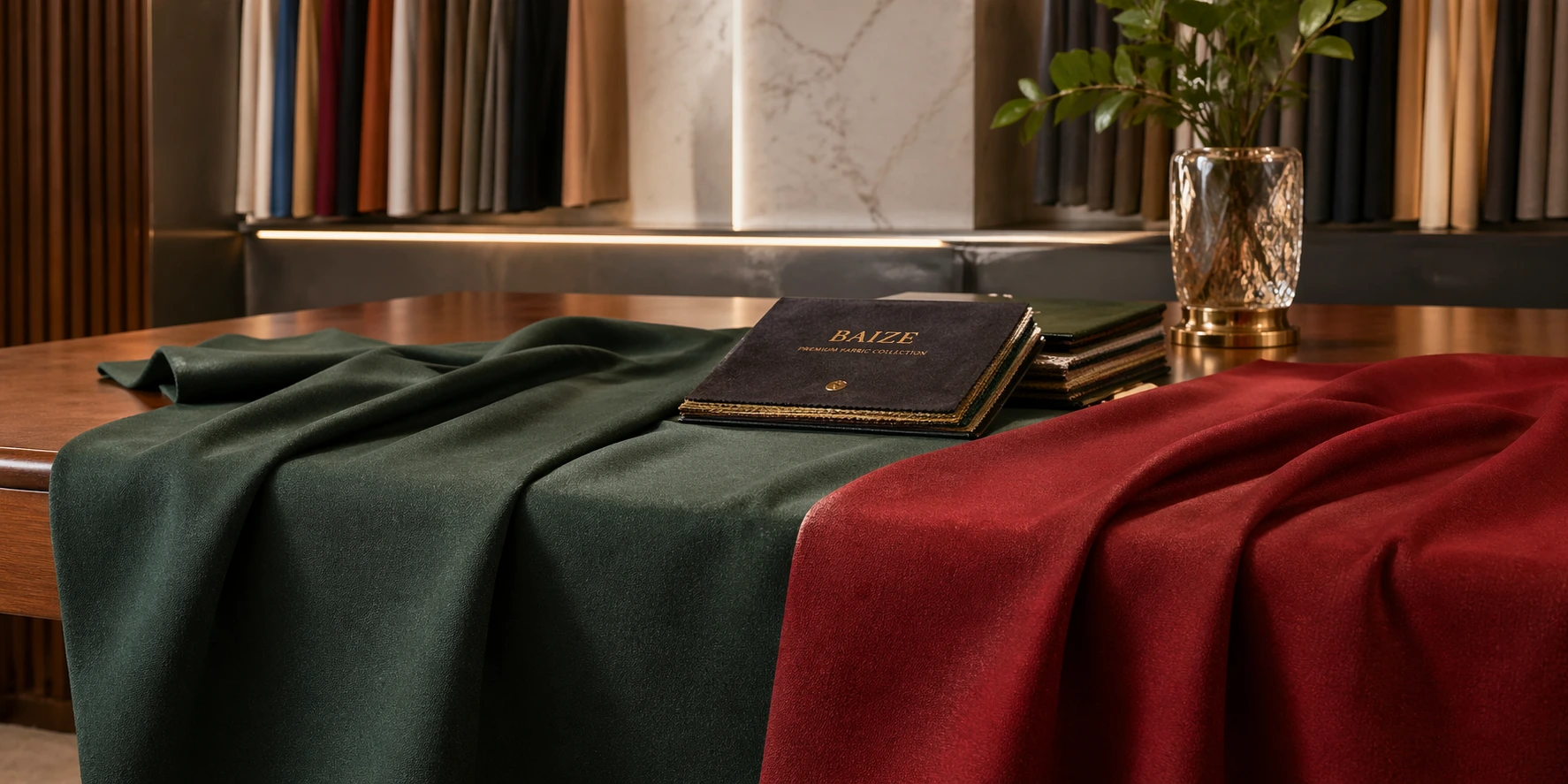
Discover the versatility of baize fabric. Learn how this durable, woven textile differs from felt and why it is perfect for gaming tables and protective linings.
Baize fabric is a distinctive textile known for its soft, slightly fuzzy surface and durable woven structure. Although it is closely associated with card tables, billiard rooms, writing desks, and traditional interiors, its practical applications extend far beyond gaming surfaces. This fabric is also used for drawer linings, instrument cases, display trays, protective furniture coverings, craft projects, decorative panels, costumes, and selected fashion accessories. Its appeal comes from an unusual combination: baize has the soft, muted appearance of felt but retains the strength and stability of woven cloth.
Traditional baize is commonly associated with wool, while modern versions may contain cotton, synthetic fibers, or blended materials. These variations allow manufacturers and designers to select baize based on texture, durability, price, color, and intended use. This guide explains what baize fabric is, how it is manufactured, its history, characteristics, fiber types, common uses, care requirements, sustainability considerations, and what buyers should check before ordering it.
What Is Baize Fabric?
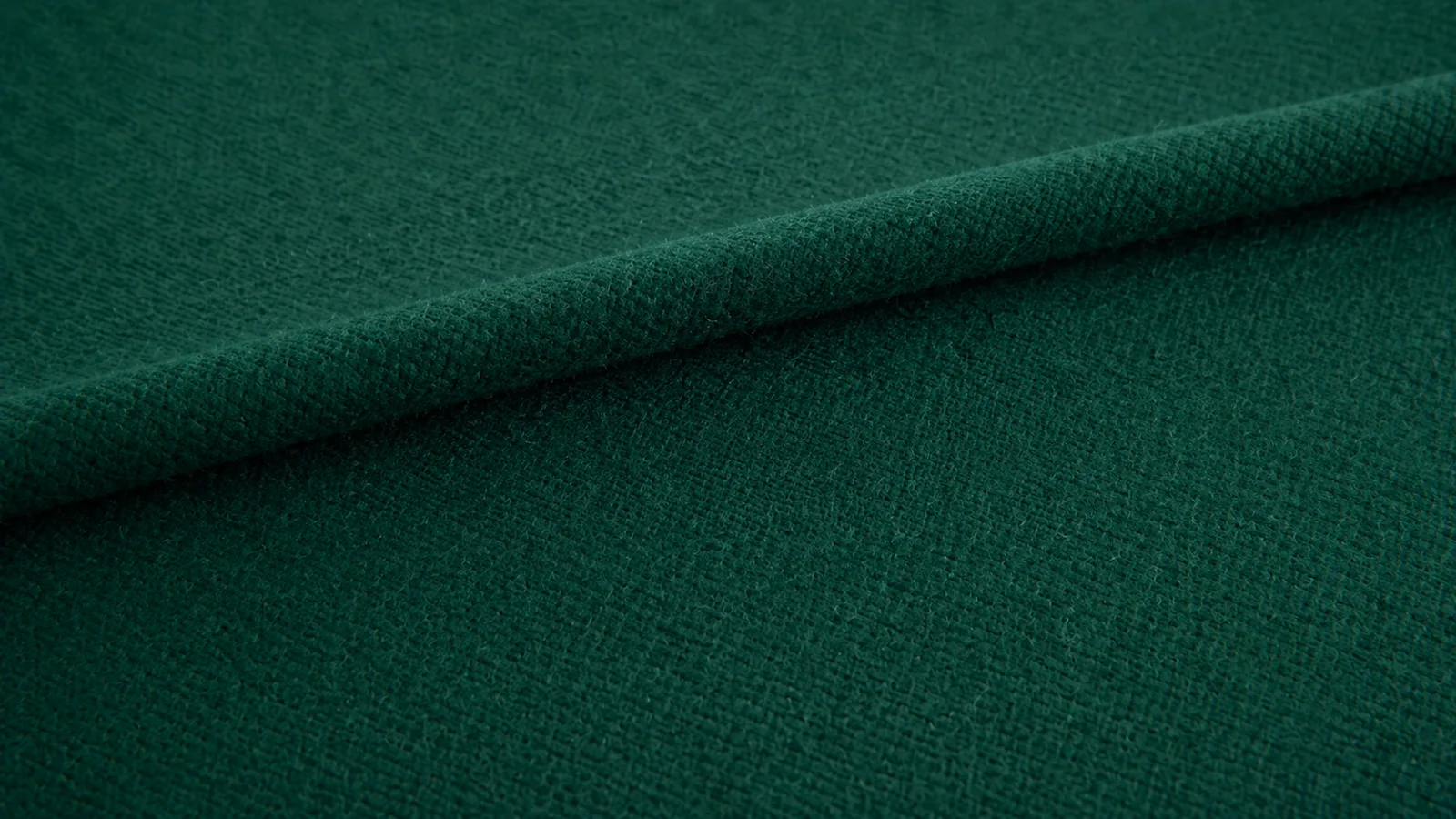
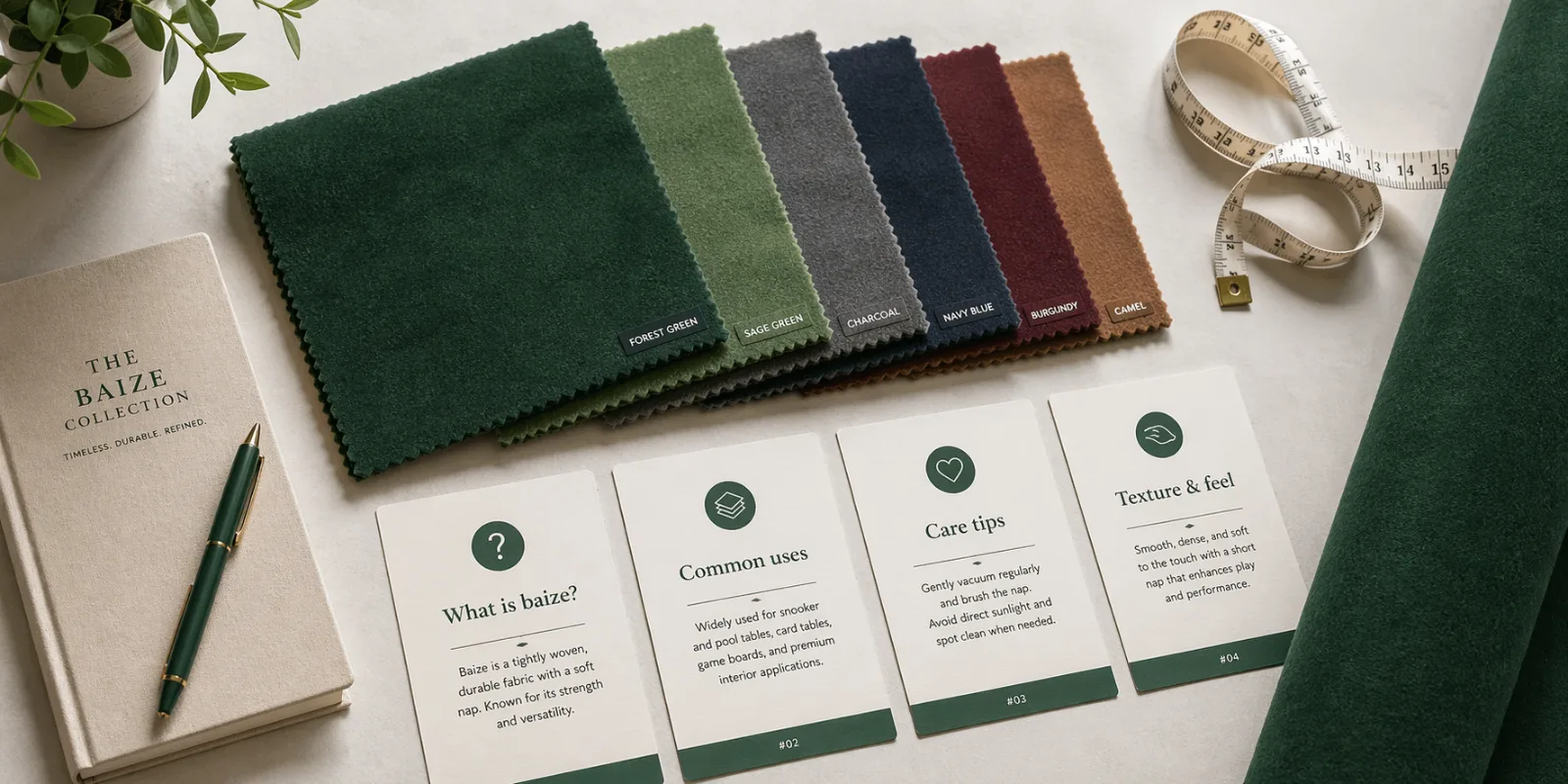
Baize is a woven textile with a raised or napped surface that gives it a soft, slightly fuzzy, felt-like appearance. The fabric is traditionally made from wool, although cotton, synthetic, and blended versions are also available.
Unlike felt, which is produced by compressing and matting fibers together, baize begins with yarns that are woven into a stable fabric. After weaving, the surface is brushed, raised, or finished to create its characteristic nap.
This construction gives baize two valuable qualities:
- Surface softness: Its napped finish protects objects and creates a refined tactile feel.
- Structural strength: Its woven foundation gives it greater dimensional stability than many nonwoven felts.
Baize is usually medium to heavy in weight, although lighter varieties are available. Its surface may be tightly finished and relatively smooth or more visibly brushed, depending on the intended use.
Traditional green baize is strongly connected with card tables and game rooms, but modern baize comes in many colors and performance grades.
Baize Fabric at a Glance
Baize performance varies according to fiber content, fabric density, nap quality, backing, finishing treatment, and intended application. A lightweight craft baize may behave very differently from a dense wool baize intended for premium interior use.
A Brief History of Baize Fabric
Baize has a long connection with European interiors, furniture, gaming, and protective surface coverings. Historically, it was valued less for decorative shine and more for its combination of softness, durability, and practical surface protection.
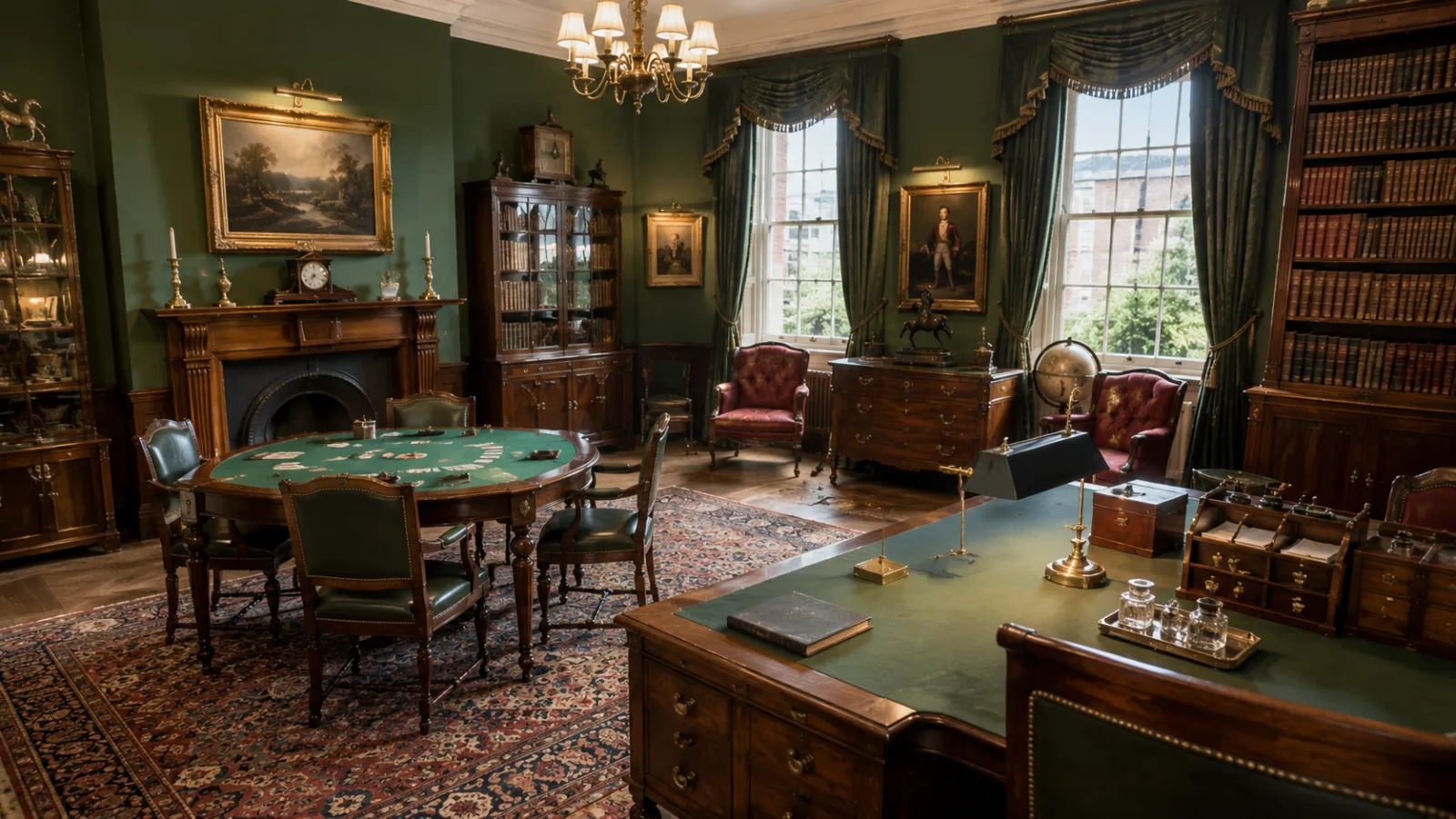
Woolen baize became widely associated with tables used for cards, billiards, and other indoor games. Its soft surface helped reduce noise, protect playing pieces, and provide a consistent background that made cards and objects easier to see.
Green eventually became the most recognizable baize color. The shade is often connected with traditional card rooms, billiard halls, writing desks, government interiors, and private clubs. Its muted color also provided a visually comfortable surface under indoor lighting.
Beyond games, baize was used for:
- Writing desk surfaces.
- Drawer and cabinet linings.
- Table coverings.
- Protective furniture layers.
- Door coverings.
- Storage compartments.
- Display surfaces.
- Traditional household interiors.
Baize-covered doors also became associated with older British interiors, where the soft fabric could help reduce noise and visually separate household service areas. This contributed to the fabric’s connection with traditional architecture and classic interior design.
Today, baize continues to appear in heritage restoration, gaming products, premium storage, crafts, furniture details, and decorative projects.
How Is Baize Fabric Made?
Baize production starts with a woven base fabric. The exact process varies depending on fiber content, quality level, surface finish, and final use.
A typical manufacturing process includes the following stages.
1. Fiber Selection
Manufacturers select wool, cotton, synthetic fibers, or a blend. The fiber choice affects softness, density, durability, cost, color absorption, and care requirements.
Wool is traditionally preferred for premium baize because it creates a rich surface and naturally warm handle. Cotton and blended versions may be chosen for lower cost, lighter weight, or easier production.
2. Yarn Preparation
The selected fibers are spun into yarn. Yarn thickness, twist, and quality influence the final fabric’s strength and surface appearance.
A dense, consistent yarn generally produces a smoother and more reliable baize surface.
3. Weaving
The yarn is woven into a stable textile. This woven foundation is the key difference between baize and nonwoven felt.
The weave must be sufficiently compact to support later brushing and finishing without becoming weak or unstable.
4. Fulling or Consolidation
Traditional wool baize may undergo a fulling process. Moisture, heat, pressure, and mechanical action help consolidate the wool fibers, making the fabric denser and more compact.
The exact process depends on the desired texture and weight.
5. Raising the Nap
The fabric surface is mechanically brushed or raised. This lifts the fibers and creates the soft, fuzzy appearance associated with baize.
The nap may then be cropped or sheared to make the surface more even.
6. Dyeing
Baize may be fiber-dyed, yarn-dyed, or piece-dyed depending on the production system. Green remains the classic option, but modern mills produce baize in many shades.
Colorfastness is especially important for baize used on visible surfaces, near windows, or in frequently handled products.
7. Finishing
The fabric may be pressed, sheared, stabilized, backed, treated, or inspected. Some baize products receive additional finishing to improve abrasion resistance, dimensional stability, or ease of installation.
8. Final Inspection
Manufacturers check the fabric for:
- Nap consistency.
- Color variation.
- Weave defects.
- Width accuracy.
- Surface contamination.
- Weight consistency.
- Fraying.
- Bowing or skewing.
- Usable roll length.
Types of Baize Fabric
Baize is available in different fiber compositions and performance grades. Choosing the right type depends on how the fabric will be used.
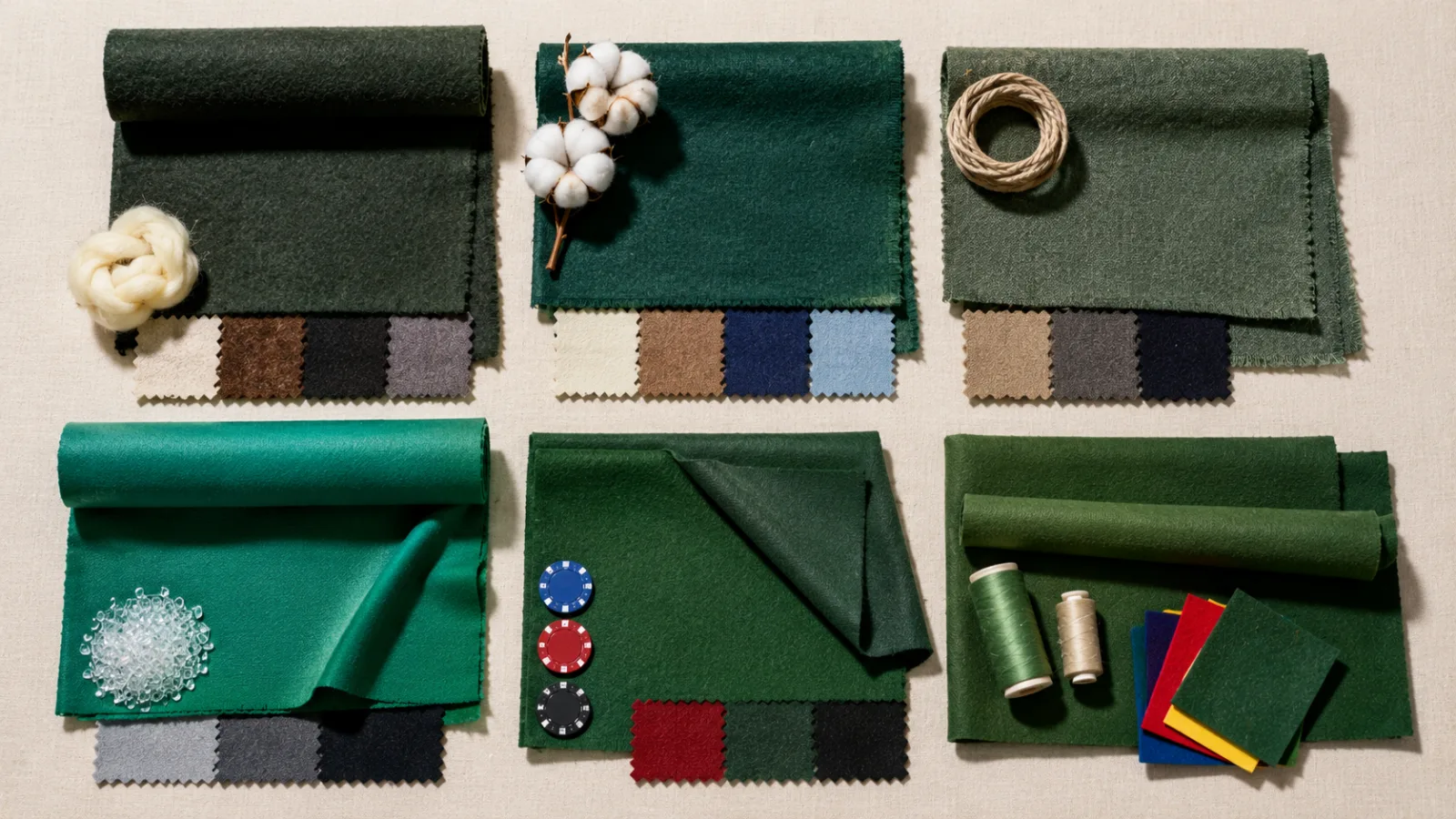
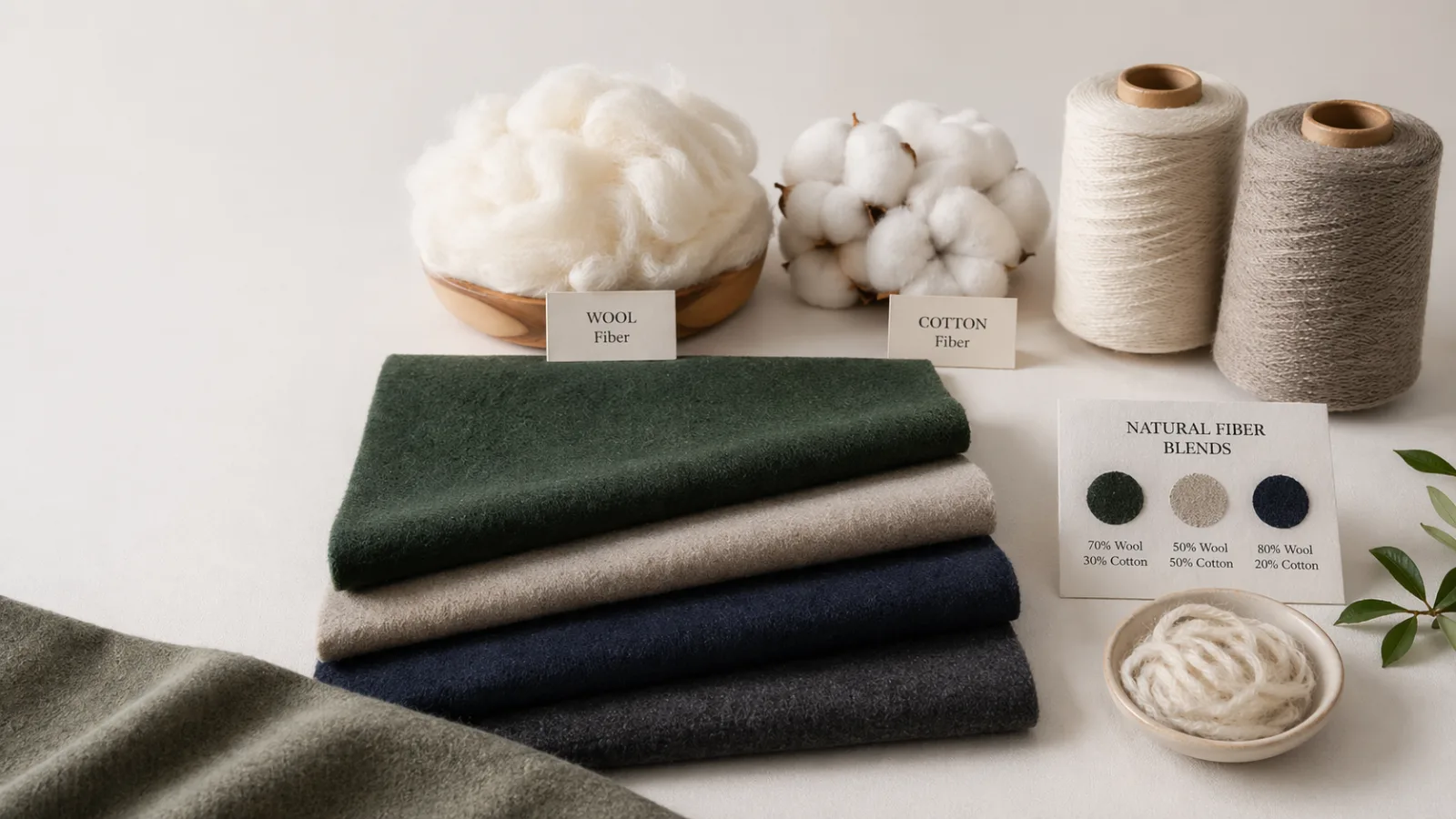
Wool Baize
Wool baize is the traditional and usually more premium option. It has a dense surface, rich texture, good resilience, and a classic appearance.
Its natural fiber structure makes it suitable for:
- Heritage interiors.
- Premium writing desks.
- Furniture restoration.
- Traditional game tables.
- Presentation cases.
- High-quality linings.
- Costume and period design.
Wool baize may cost more than cotton or synthetic alternatives, but it often provides a more authentic surface and refined tactile quality.
Best for: Premium, traditional, restorative, and heritage-inspired applications.
Cotton Baize
Cotton baize offers a lighter and often more affordable alternative. It can still have a soft brushed surface, although it may not feel as dense or resilient as high-quality wool baize.
It may be used for:
- Drawer linings.
- Craft projects.
- Decorative coverings.
- Light-duty tables.
- Display surfaces.
- Costume accessories.
- Fabric-backed storage products.
Cotton can absorb more moisture than polyester-based alternatives, so it should be protected from damp environments.
Best for: Lightweight indoor applications, crafts, and cost-conscious projects.
Blended Baize
Blended baize combines two or more fiber types. Common combinations may include wool with synthetic fibers or cotton with polyester.
Blends can help balance:
- Softness.
- Durability.
- Cost.
- Abrasion resistance.
- Dimensional stability.
- Color consistency.
- Ease of maintenance.
The blend percentage matters. A fabric with a small wool content will not necessarily perform like traditional wool baize.
Best for: Commercial products that need a balance of appearance, durability, and price.
Synthetic Baize
Synthetic baize may be produced from polyester, acrylic, or other manufactured fibers. It is generally designed to offer consistent color, lower cost, and practical durability.
Possible applications include:
- Promotional game tables.
- Crafts.
- Display boards.
- Protective linings.
- Decorative event products.
- Costumes.
- Low- to medium-duty furniture details.
Synthetic versions can vary significantly in feel. Some imitate wool successfully, while others have a flatter or more artificial-looking surface.
Best for: Cost-controlled applications, bright colors, and products requiring consistent production.
Adhesive-Backed Baize
Some baize products are supplied with a pressure-sensitive adhesive backing. These are designed for convenient application to shelves, drawers, boxes, display trays, and craft projects.
Adhesive-backed baize can save installation time, but buyers should check:
- Adhesive strength.
- Surface compatibility.
- Removal behavior.
- Heat resistance.
- Edge stability.
- Long-term bonding performance.
Best for: DIY lining projects, drawer interiors, craft products, and small display surfaces.
Key Characteristics of Baize Fabric
Baize has several characteristics that make it useful across both practical and decorative applications.
Soft Napped Surface
The brushed surface feels soft and helps protect items from scratching. This is one reason baize is popular for drawers, cases, trays, and desk surfaces.
Woven Strength
Unlike felt, baize has a woven base. This gives it greater structural stability and makes it less likely to pull apart under normal handling.
Muted, Refined Appearance
Baize has a matte or softly textured surface rather than a shiny finish. This creates a traditional, understated look.
Sound-Dampening Qualities
The dense, brushed surface can help soften small impacts and reduce the sharp sound of cards, gaming pieces, writing tools, or stored objects.
Surface Protection
Baize creates a barrier between hard objects and wood, metal, glass, or painted surfaces. It is commonly used where scratch prevention matters.
Moderate Warmth
Wool baize in particular has an insulating feel. This can make it useful in traditional interior applications and selected garments or accessories.
Color Depth
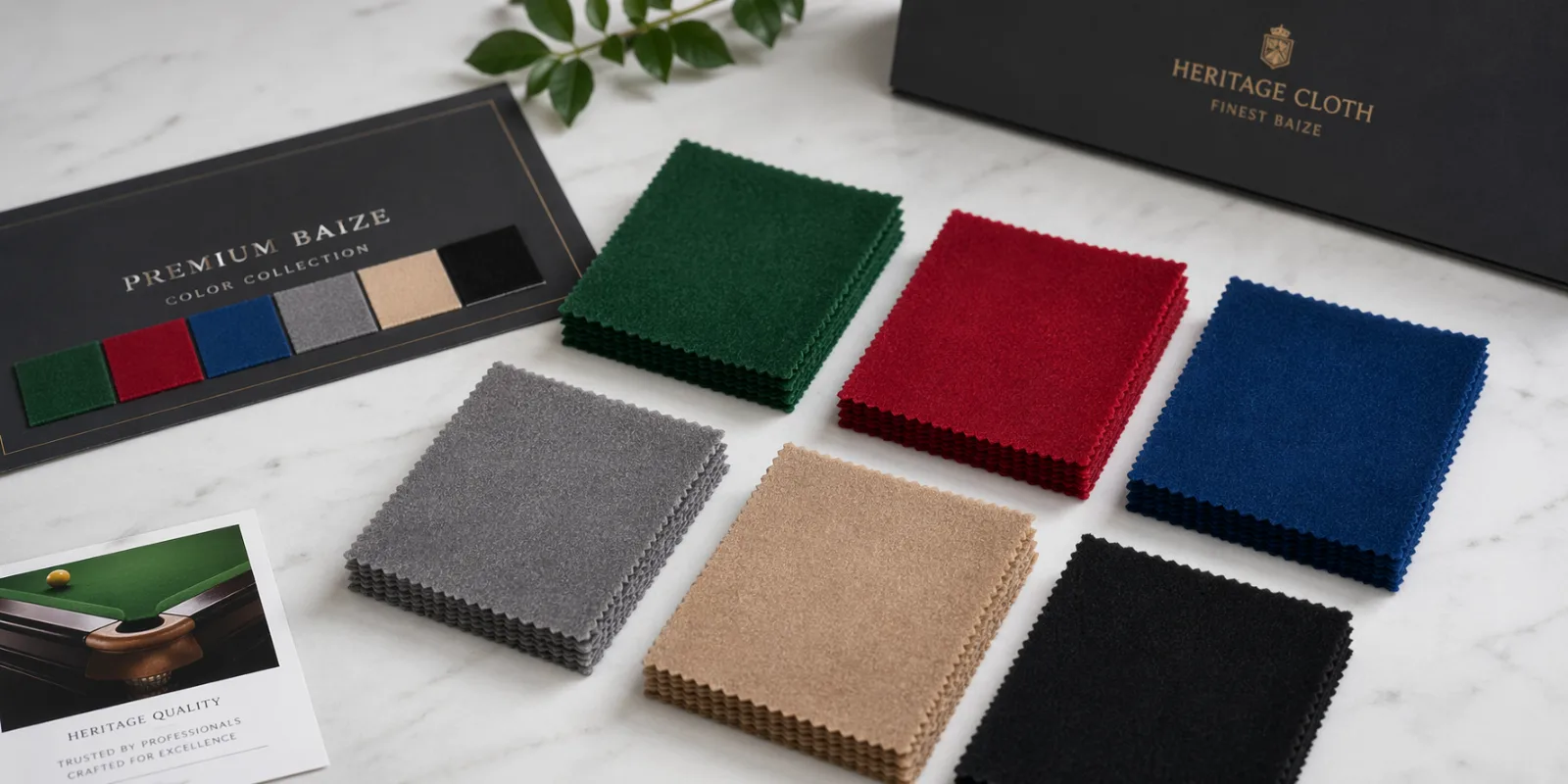
The napped surface can give dark and rich colors added visual depth. Green, burgundy, navy, and black baize often appear especially saturated.
Cut-Edge Behavior
Baize can fray because it is woven. Edge finishing may be needed, especially for furniture, accessories, and frequently handled products.
Common Uses of Baize Fabric
Baize can be used anywhere a project needs a soft surface, woven stability, controlled friction, visual warmth, or traditional character.
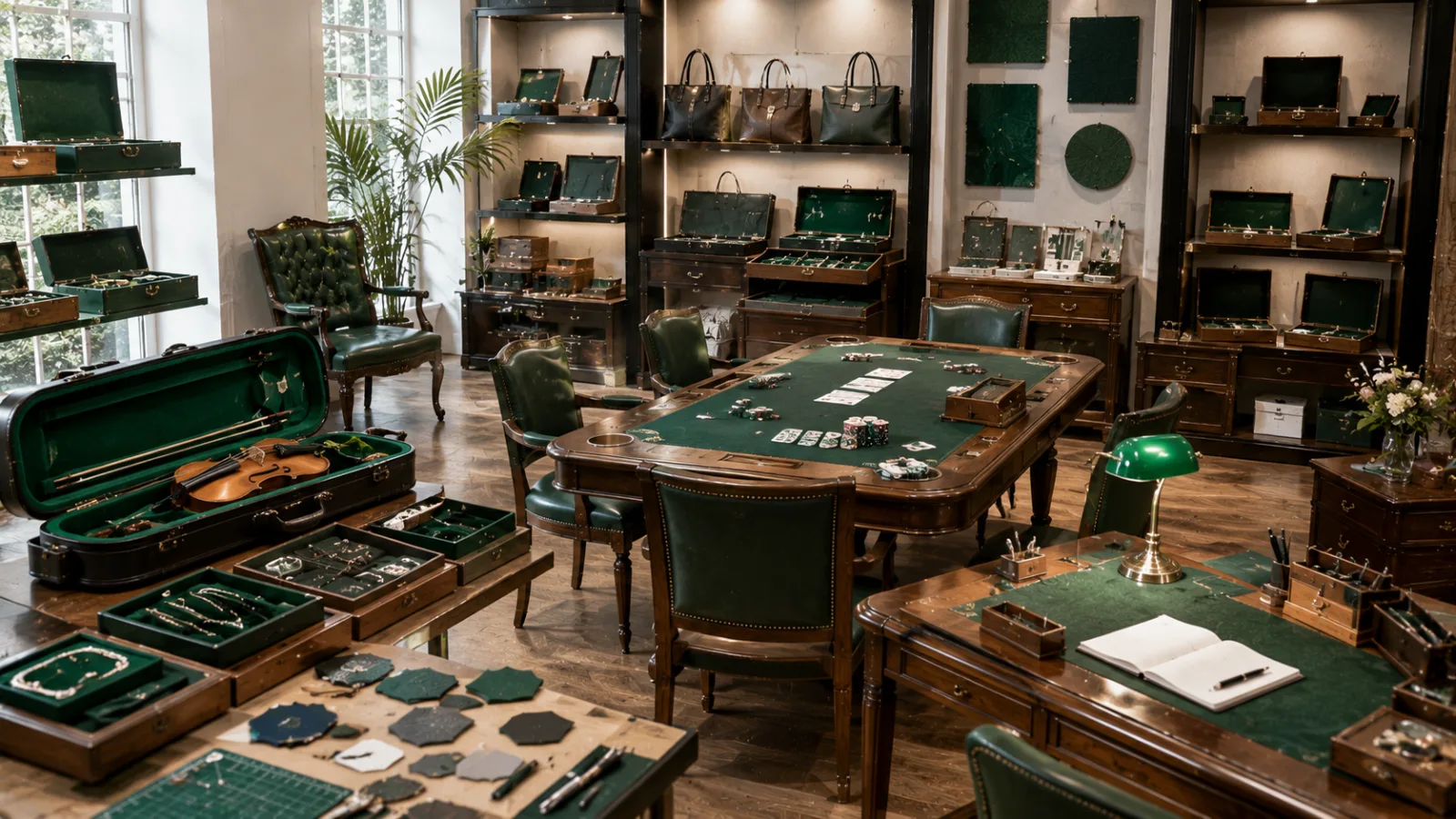
Gaming and Card Tables
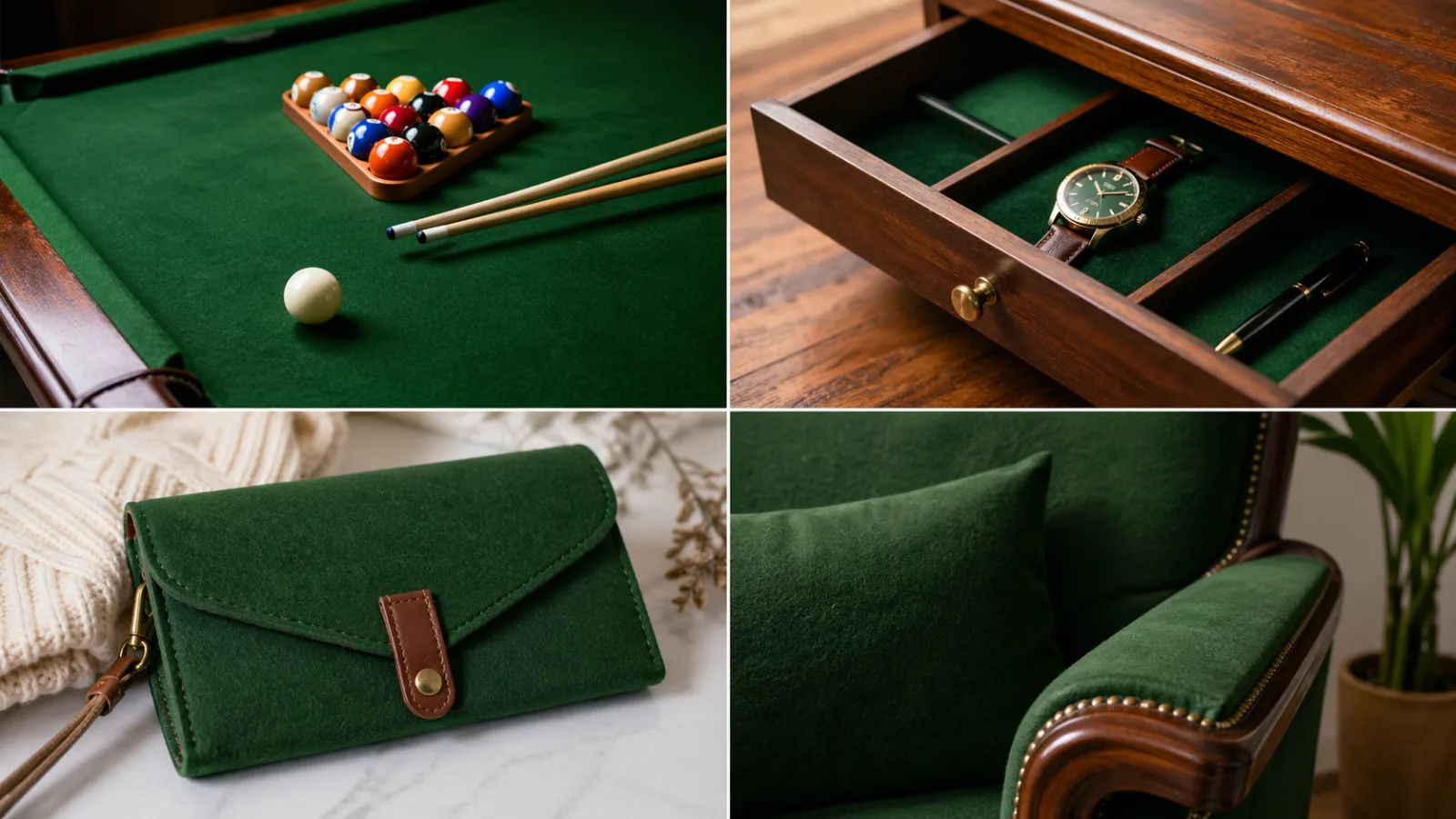
Gaming tables are the application most strongly associated with baize. The fabric may be used on:
- Card tables.
- Poker tables.
- Dice-game surfaces.
- Traditional billiard tables.
- Snooker-style tables.
- Board-game tables.
- Casino-style furniture.
- Portable game mats.
Its soft surface helps reduce sound and protects both the table and gaming pieces.
However, buyers should understand that professional billiard and snooker cloth may be engineered differently from general decorative baize. High-performance playing cloth requires controlled speed, consistency, stretch, and wear resistance.
A fabric suitable for a casual card table may not meet the requirements of a professional pool table.
Writing Desks and Table Surfaces
Baize has traditionally been used on writing desks and library tables. Its soft surface protects wood from ink containers, pens, stationery, decorative objects, and repeated contact.
A baize writing surface can also:
- Reduce noise.
- Prevent objects from sliding too easily.
- Add traditional visual character.
- Conceal light scratches.
- Create a comfortable surface for writing.
For restoration projects, color and fiber composition should match the furniture’s period and intended level of authenticity.
Drawer and Cabinet Linings
Baize is useful inside drawers, cabinets, wardrobes, and storage compartments. It protects delicate items and creates a more finished interior.
Common applications include:
- Cutlery drawers.
- Jewelry drawers.
- Watch storage.
- Tool chests.
- Display cabinets.
- Antique furniture.
- Collectible storage.
- Desk organizers.
For drawer lining, a thinner baize may be easier to install than heavy upholstery-grade fabric.
Jewelry Boxes and Presentation Cases
Baize can provide a soft protective layer inside:
- Jewelry boxes.
- Medal cases.
- Watch cases.
- Presentation boxes.
- Luxury packaging.
- Display trays.
- Collectible boxes.
- Ceremonial cases.
The fabric’s matte texture creates an elegant background that helps metal, jewelry, glass, or polished objects stand out.
For premium packaging, buyers should check whether the baize sheds fibers, transfers color, or reacts with stored materials.
Musical Instrument and Equipment Cases
Baize may be used as a protective lining for musical instruments, tools, equipment, or display cases. The soft surface reduces direct abrasion and provides a traditional appearance.
It may appear in:
- Violin or string-instrument cases.
- Brass instrument compartments.
- Tool cases.
- Precision equipment boxes.
- Camera or optical storage.
- Heritage-style cases.
For sensitive equipment, the material should be tested for fiber shedding, dye transfer, humidity behavior, and chemical compatibility.
Furniture and Interior Design
Interior designers and furniture restorers may use baize for:
- Desk inserts.
- Shelf coverings.
- Cabinet interiors.
- Table undersides.
- Drawer linings.
- Upholstered panels.
- Decorative screens.
- Acoustic details.
- Heritage restorations.
- Soft door coverings.
Baize works particularly well in traditional libraries, private clubs, game rooms, studies, historic interiors, and classic hotels.
Craft and Hobby Projects
Baize is popular with crafters because it is visually rich, soft, and relatively easy to cut.
Craft applications include:
- Board-game mats.
- Handmade boxes.
- Book covers.
- Decorative panels.
- Storage organizers.
- Costume props.
- Table decorations.
- Model displays.
- Wall art.
- Educational materials.
Because woven baize may fray, craft projects may need adhesive, binding, stitching, or sealed edges.
Fashion and Accessories
Baize is not a mainstream clothing fabric, but it can be used in selected products that benefit from structure, warmth, and heritage character.
Possible fashion applications include:
- Structured jackets.
- Period costumes.
- Stage garments.
- Hats.
- Bags.
- Belts.
- Decorative panels.
- Shoe details.
- Protective accessory linings.
- Historical reproductions.
Baize is usually better suited to structured or decorative pieces than lightweight, flowing garments.
For apparel, designers should test:
- Drape.
- Skin comfort.
- bulk at seams.
- fraying.
- lining requirements.
- abrasion.
- colorfastness.
- garment weight.
Baize vs Felt: What Is the Difference?
Baize and felt may look similar because both can have soft, matte, fuzzy surfaces. Their construction, however, is fundamentally different.
When to Choose Baize
Choose baize when you need:
- Woven stability.
- A refined traditional finish.
- Better resistance to pulling.
- A smooth protective lining.
- A premium game-table or desk appearance.
When to Choose Felt
Choose felt when you need:
- Easy cutting without fraying.
- Simple craft construction.
- Padding or cushioning.
- Low-cost lining.
- Moldable material.
- Quick decorative application.
Benefits of Baize Fabric
Baize remains useful because it provides several functional and visual advantages.
Soft Surface Protection
Its brushed finish helps protect wood, metal, glass, jewelry, tools, and decorative objects from scratches.
Durable Woven Base
The woven construction gives baize more stability than many simple nonwoven linings.
Reduced Noise
Baize can soften the sound of small objects contacting a table, drawer, or storage surface.
Traditional Appearance
Its matte, rich surface works well in heritage interiors, game rooms, libraries, and classic furniture.
Good Color Depth
The napped finish makes darker colors look rich and visually soft.
Versatile Indoor Use
Baize works across gaming, storage, crafts, furniture, packaging, accessories, and restoration.
Customization Potential
It can be cut, stitched, adhered, shaped, printed, or combined with wood, leather, metal, and cardboard.
Limitations of Baize Fabric
Baize is practical, but it is not suitable for every project.
It May Fray
Because it is woven, cut edges can fray. Binding, folding, stitching, adhesive, or edge sealing may be required.
It Can Hold Dust
The napped surface may collect lint, dust, and small particles. Regular gentle cleaning is important.
Moisture Can Cause Problems
Wool and cotton baize can absorb moisture, leading to staining, distortion, mildew risk, or slow drying.
It Is Usually an Indoor Fabric
Most baize is not designed for rain, strong sunlight, or changing outdoor temperatures.
Nap Direction May Matter
The fabric may look lighter or darker depending on which direction the nap is brushed. Panels should be cut consistently.
Premium Wool Baize Can Be Expensive
High-quality wool baize may cost significantly more than craft felt or basic synthetic coverings.
It May Not Be Suitable for Every Pool Table
General baize may not provide the speed, stretch, or consistency needed for professional play.
How to Care for Baize Fabric
Proper care helps baize maintain its color, nap, and surface quality. The safest method depends on fiber content, backing, installation method, and product use.
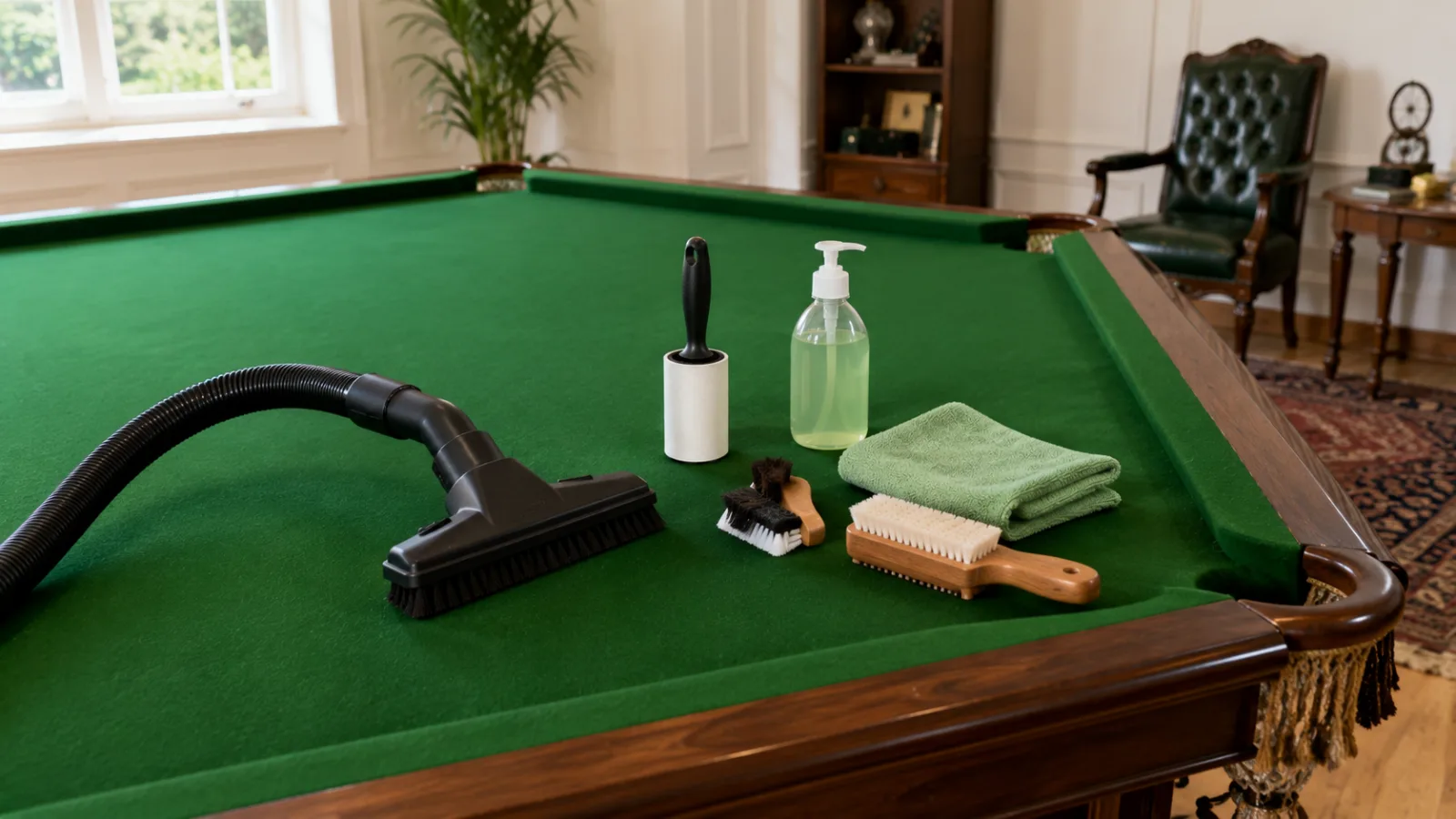
Routine Dust Removal
Use a soft brush, clean lint roller, or low-suction vacuum with a soft upholstery attachment.
Brush or vacuum in the direction of the nap to maintain an even surface.
Avoid aggressive scrubbing, which can disturb the finish or create uneven patches.
Spot Cleaning
For small marks:
- Remove loose debris.
- Blot the area gently.
- Use minimal moisture.
- Test a mild cleaning solution on a hidden area.
- Work from the outside of the mark inward.
- Avoid soaking the fabric.
- Let it dry naturally.
- Brush the nap gently after drying.
Do not rub aggressively, as this may spread the stain or damage the surface.
Managing Spills
Blot liquid immediately using an absorbent, colorfast cloth. Do not press the liquid deeper into the fabric.
For valuable furniture, heritage pieces, premium gaming tables, or wool baize, professional cleaning may be safer than home treatment.
Protecting Baize From Sunlight
Long exposure to direct sunlight can fade the color. Keep baize-covered furniture and tables away from strong windows or use curtains, shades, or protective covers.
Storage
Store unused baize fabric:
- Clean and dry.
- Rolled when possible.
- Away from moisture.
- Away from direct sunlight.
- Protected from moths if it contains wool.
- Wrapped in breathable protective material.
- Free from heavy objects that may crush the nap.
Common Baize Care Mistakes to Avoid
Avoid the following mistakes:
- Soaking the fabric.
- Using bleach.
- Scrubbing the nap aggressively.
- Applying strong stain removers without testing.
- Using high heat.
- Ironing directly on the face.
- Cleaning against the nap repeatedly.
- Leaving spills untreated.
- Storing wool baize in damp conditions.
- Exposing the fabric to prolonged direct sunlight.
- Using high-powered vacuum suction.
- Applying adhesive or cleaning chemicals without testing.
Is Baize Environmentally Friendly?
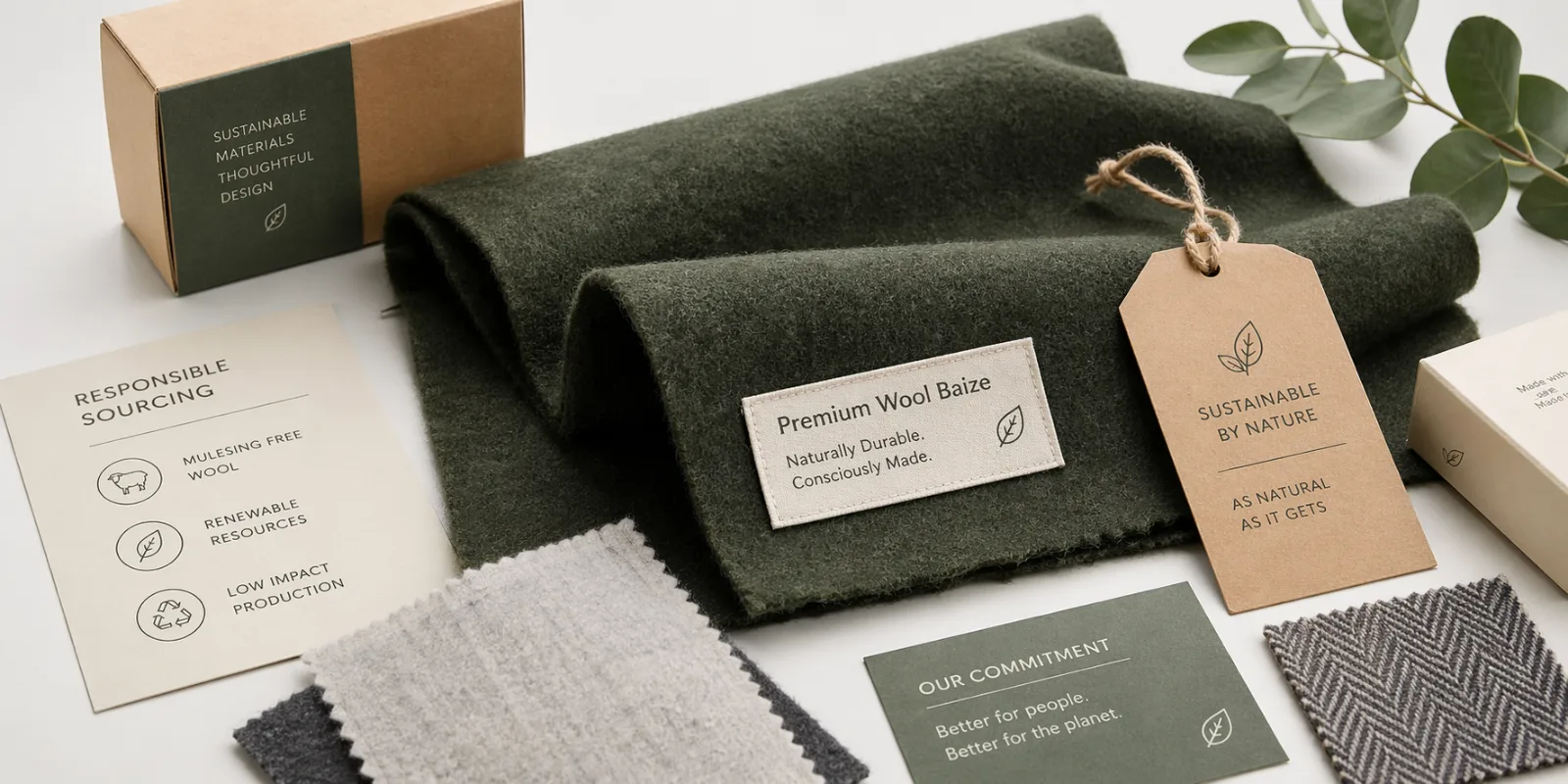
The environmental profile depends on the fiber content. Wool baize may be a more natural and renewable option. In general, a durable fabric that lasts a long time can support a more responsible product approach. Always check the fiber content and finishing process.
Can Baize Be Used Outdoors?
Standard baize is usually not recommended for outdoor use. Rain, direct sunlight, and changing weather conditions can damage the fabric or fade its color. It is best suited for indoor settings.
Can Baize Fabric Be Used Outdoors?
Standard baize is generally designed for indoor use. Outdoor exposure can lead to:
- Fading.
- Moisture absorption.
- Mildew.
- Surface distortion.
- Loss of adhesive strength.
- Dirt accumulation.
- Nap damage.
- Reduced fabric life.
A synthetic product with suitable UV, water, and mildew-resistant finishing may perform better in a temporary covered outdoor setting. However, it should not automatically be considered an outdoor fabric.
For outdoor tables or furniture, a specialized marine, awning, performance upholstery, or outdoor gaming textile is usually more appropriate.
If baize must be used outdoors temporarily:
- Keep it under cover.
- Avoid rain and dew.
- Store it indoors after use.
- Use a protective cover.
- Avoid prolonged sunlight.
- Allow it to dry fully before storage.
Is Baize Fabric Sustainable?
The environmental profile of baize depends on its fiber content, production method, dyeing, finishing, durability, transport, use, and disposal.
Wool Baize
Wool is a renewable natural fiber and may biodegrade under suitable conditions. However, its environmental impact also depends on animal management, land use, processing, dyeing, and transportation.
A durable wool baize that remains in use for many years may provide greater long-term value than a lower-quality covering that requires frequent replacement.
Cotton Baize
Cotton is plant-based and biodegradable under suitable conditions, but conventional cotton production can involve significant water, land, pesticide, and energy use.
Organic or responsibly sourced cotton may address some concerns, though buyers should review specific certifications and production evidence.
Synthetic Baize
Synthetic baize may be durable and affordable but is generally derived from fossil-based materials and is not readily biodegradable. It may also release small synthetic fibers during use or cleaning.
Blended Baize
Blended fabrics can offer useful performance, but they may be more difficult to recycle because the fibers need to be separated.
Responsible Selection Tips
Buyers can make more informed choices by asking about:
- Fiber origin.
- Recycled content.
- Dyeing methods.
- Chemical finishes.
- Manufacturing location.
- Product durability.
- Repair options.
- Packaging.
- Certifications.
- End-of-life pathways.
Sustainability should not be judged by fiber type alone. A well-made product that remains useful for years can be more responsible than a disposable product with a seemingly preferable material label.
ApparGlobal: Supporting Baize Product Development and Sourcing
Selecting baize for a commercial product involves more than choosing a color. Fiber composition, weight, nap, fraying, surface durability, colorfastness, installation method, and supplier consistency all affect the final result.
ApparGlobal helps fashion and product brands align textile selection with sampling, product development, supplier evaluation, and manufacturing planning. This can be particularly useful when baize is being used in accessories, packaging, cases, storage products, costumes, furniture details, or heritage-inspired apparel.
Brands can explore ApparGlobal’s:
- Sampling Program to test baize texture, construction, lining, seams, adhesion, and product fit.
- Private Label Program to develop branded products from established manufacturing foundations.
- Manufacturing Support to coordinate material sourcing and production planning.
- Vendor Program to identify suitable textile and product suppliers.
- Manufacturer Catalog to explore relevant production capabilities.
- Resources for additional guidance on textiles, sourcing, and apparel development.
A structured sampling process helps brands identify problems such as excessive shedding, unstable edges, poor adhesion, inconsistent nap, incorrect weight, color variation, and unsuitable surface performance before bulk production begins.
Placement Instruction: Add this section before the FAQs and conclusion. It creates relevant internal links while keeping the main article educational.
Image Generation Prompt:
Create a realistic textile sourcing consultation showing a product founder and manufacturing specialist reviewing baize swatches, case prototypes, desk accessories, gaming products, specification sheets, supplier profiles, test reports, and production plans in a bright modern office, no logos, no text, 16:9.
Frequently Asked Questions About Baize Fabric
Placement Instruction: Add this FAQ section near the bottom of the article. Use FAQ schema in your SEO plugin where appropriate.
Image Generation Prompt:
Create a realistic FAQ-style baize fabric photo showing green and burgundy swatches, textile loupe, care brush, gaming pieces, drawer lining sample, fiber labels, and a notebook arranged on a clean studio table, no logos, no text, 16:9.
1. What is baize fabric used for?
Baize is used for card and gaming tables, writing desks, drawer linings, jewelry boxes, instrument cases, presentation trays, cabinet interiors, furniture details, craft projects, costumes, and selected fashion accessories. Its soft surface protects objects while its woven structure provides stability.
2. Is baize the same as felt?
No. Baize is a woven fabric with a brushed or napped surface. Felt is nonwoven and is made by compressing, matting, or bonding fibers. Baize may fray when cut, while felt generally does not.
3. Why is baize traditionally green?
Green baize became strongly associated with card tables, billiard rooms, private clubs, writing desks, and traditional interiors. The muted shade creates a visually comfortable background and has remained part of classic gaming-room design.
4. Is baize fabric durable?
Baize can be durable because it has a woven base. Durability depends on fiber content, weave density, fabric weight, nap quality, finishing, and use. Premium wool or commercial blended baize generally offers better performance than thin craft-grade material.
5. Can baize be used for a pool or snooker table?
Some types can be used for casual gaming tables, but general-purpose baize may not meet professional billiard or snooker requirements. Professional cloth is engineered for controlled ball speed, consistent roll, stretch, abrasion resistance, and sometimes directional nap.
6. Can baize be washed?
Many baize products should not be fully washed or soaked. Gentle vacuuming, brushing, and careful spot cleaning are usually safer. Always follow the supplier’s care instructions, especially for wool, adhesive-backed, or furniture-installed baize.
7. Does baize fabric fray?
Yes. Because baize is woven, its cut edges can fray. Edges may need binding, overlocking, hemming, adhesive, trim, or another finishing method.
8. Is baize suitable for outdoor use?
Standard baize is generally unsuitable for permanent outdoor use. Moisture, sunlight, dirt, and temperature changes can damage its color, nap, structure, or backing. Specialized outdoor textiles are usually a better choice.
9. Can baize be used for clothing?
Yes, but it is more common in structured jackets, costumes, hats, bags, historical garments, and decorative panels than in everyday lightweight clothing. Designers should test weight, drape, comfort, seam bulk, and fraying.
10. What should I check before ordering baize?
Check fiber composition, fabric weight, width, nap direction, colorfastness, abrasion performance, shedding, backing, adhesive options, care requirements, minimum order quantity, and intended application. Always request a physical sample before bulk ordering.
Conclusion
Baize fabric is a classic textile that combines softness, durability, and visual character. While it is best known for use on billiard and card tables, it is also valuable in protective linings, soft furnishings, decorative interiors, and specialty fashion accessories. Its woven construction gives it more strength than felt, while its brushed surface gives it the refined, tactile finish that makes it so distinctive.
For anyone looking for a fabric that offers both function and traditional charm, baize remains an excellent choice. Whether you need it for a gaming table, a storage lining, or a decorative project, understanding its texture, quality, care needs, and fiber options will help you choose the right version for your purpose.