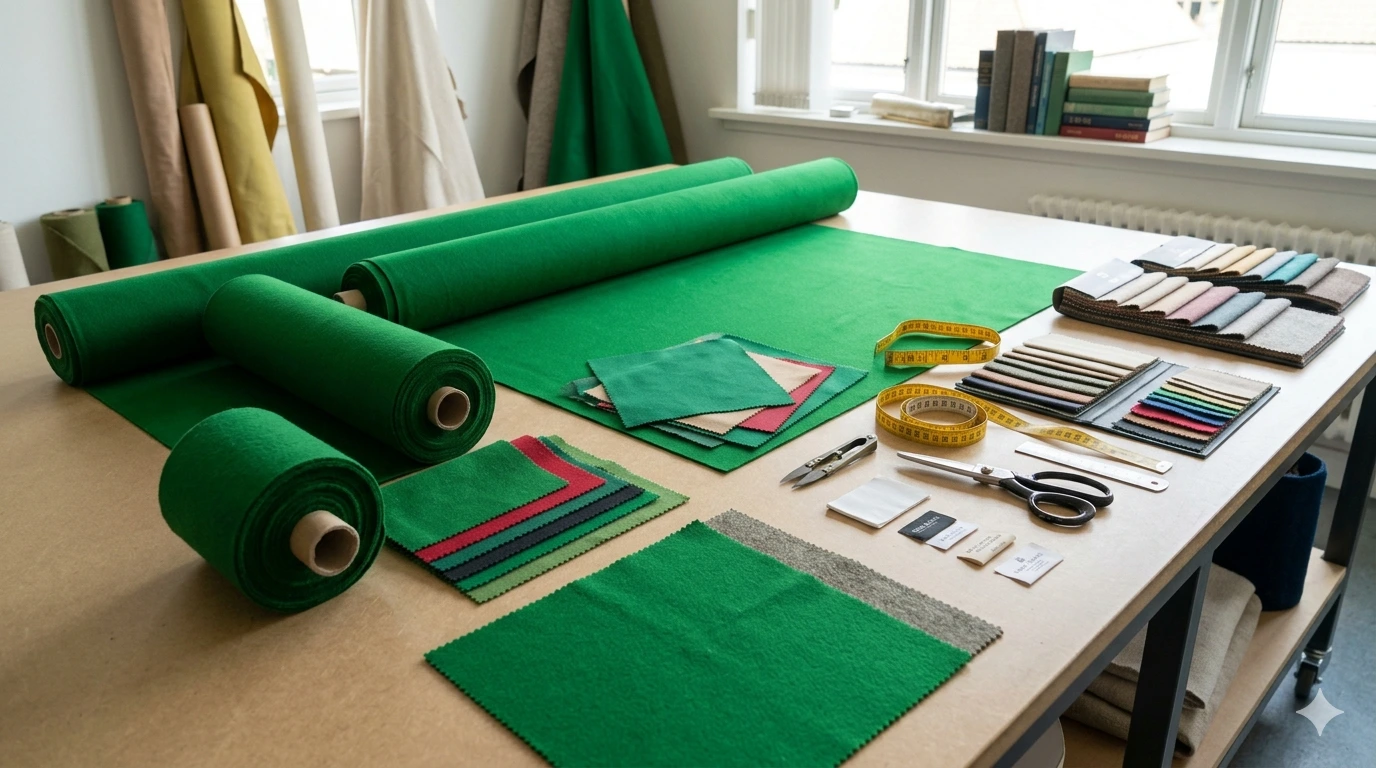
Baize fabric is one of those textiles that many people recognize by sight but do not fully understand by name. It is often associated with green gaming tables, card tables, billiard rooms, snooker tables, notice boards, desk linings, and old-fashioned interiors. Yet despite its familiar look, baize is surrounded by many myths.
Some people think baize is just felt. Others believe it is only used for billiard tables. Some assume it is always green, always wool, always cheap, or only useful for old traditional spaces. These ideas are understandable, but they do not tell the full story.
Baize is traditionally a coarse woollen cloth with a long nap, commonly dyed green or red, and it has also been made from cotton in some versions. Historical references describe it as a woollen cloth with a long nap, while modern fabric guides often describe baize as a woven, felted fabric commonly used for gaming tables.
That small detail matters. Baize is not simply any fuzzy green fabric. Its value comes from its surface texture, grip, softness, sound-dampening quality, protective function, and traditional connection with gaming surfaces and lined furniture. It can be made from wool, cotton, wool blends, nylon blends, or synthetic fibers, depending on quality and purpose.
This blog debunks the most popular myths about baize fabric in a clear, practical, and human-written way. Whether you are a fabric buyer, interior designer, craft maker, apparel brand, tailoring student, table restorer, furniture maker, or textile enthusiast, this guide will help you understand what baize really is, where it works best, how to choose it, and how to avoid common buying mistakes.
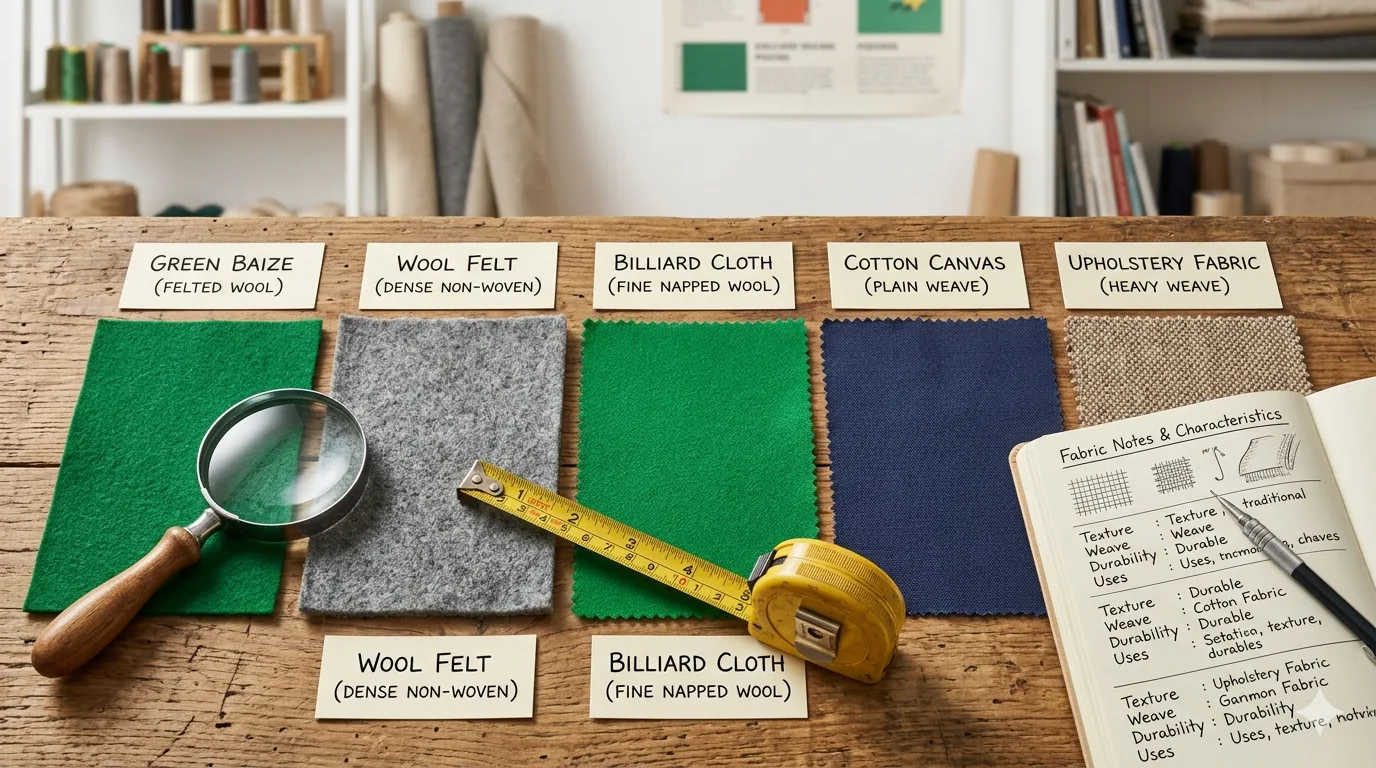
What Is Baize Fabric?
Baize fabric is a woven cloth with a soft, napped, felt-like surface. Traditionally, it was made from wool and used for table coverings, gaming surfaces, doors, furniture linings, and protective coverings. Today, baize may be made from wool, cotton, wool blends, nylon blends, or synthetic fibers, depending on its intended use and price point.
The surface of baize is one of its most important features. It has a slightly fuzzy or brushed texture that gives it grip and softness. This is why it became popular for card tables, billiard rooms, snooker surfaces, writing desks, and protective table linings. The fabric can reduce noise, protect surfaces, and create a smooth but controlled playing or working area.
Baize is often green because gaming tables historically used green cloth to imitate the look of grass or lawn-like playing surfaces. However, baize can be produced in many colors, including red, blue, black, brown, burgundy, and custom shades. Dictionary sources commonly define baize as a woollen fabric resembling felt, usually green, and mainly used for billiard table tops.
One important thing to understand is that baize is not just about color. A green fabric is not automatically baize. A felt-like fabric is not automatically baize. A gaming table cloth is not always the same grade as general craft baize. The material, weave, nap, weight, density, finish, and purpose all matter.
Why Baize Has a Special Place in Textile History
Baize has a long association with gaming rooms, domestic interiors, and protective textile use. A historical Britannica entry says baize manufacture was introduced into England in the 16th century by refugees from France and the Netherlands, and that it became commonly dyed green or red.
The fabric also has cultural connections. The phrase “green baize door” historically referred to a cloth-covered door used to reduce noise and separate service areas from family living spaces in large homes. This shows that baize was valued not only for appearance but also for function.
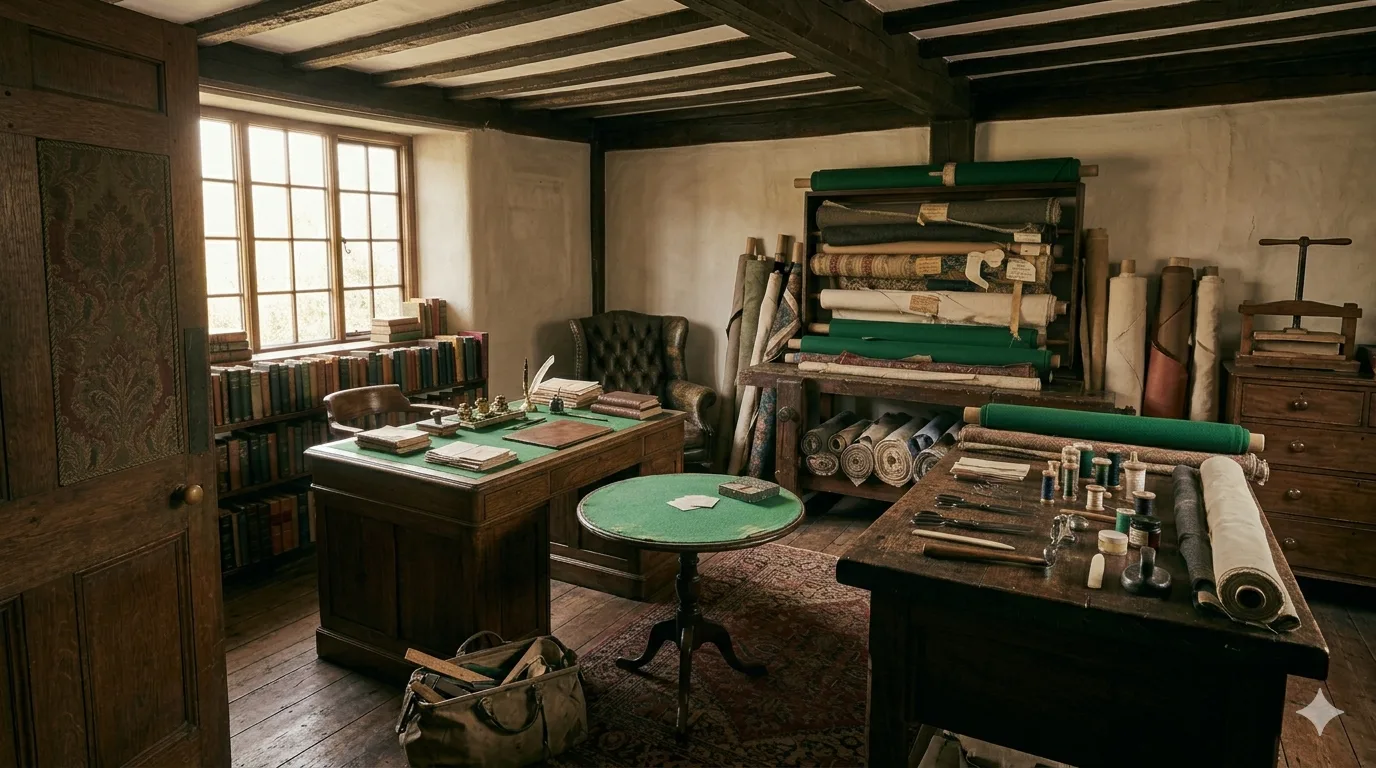
Myth 1: Baize Fabric Is the Same as Felt
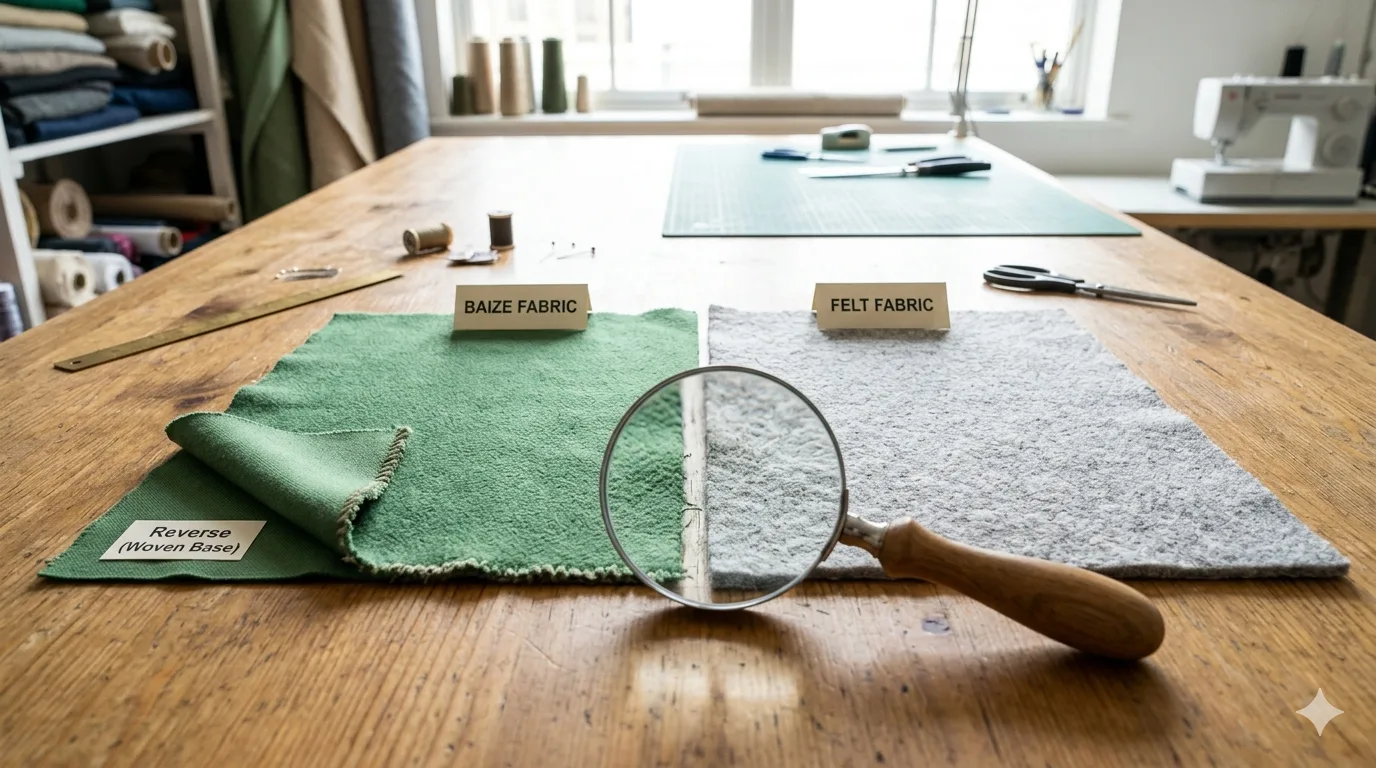
One of the biggest myths about baize fabric is that it is the same as felt. This confusion is very common because baize can look and feel similar to felt. Both may have a fuzzy surface, both can be soft to the touch, and both are used for protective or decorative surfaces. However, they are not structurally the same.
Felt is usually made by matting, compressing, and bonding fibers together without weaving. Baize, on the other hand, is commonly described as a woven and felted fabric. That means baize usually begins as a woven cloth and is then finished to create its soft, napped surface. Sewport explains that baize is similar to felt in appearance but structurally distinct because it is woven and felted.
This difference affects durability, stretch, fraying, sewing behavior, table performance, and surface control. Felt can be useful for crafts, padding, and decorative uses, but it may not behave like baize when used on a gaming table or furniture surface. Baize usually has a more fabric-like structure because of its woven base.
The Truth
Baize may resemble felt, but it is not the same as felt. Baize is generally a woven fabric with a napped or felted surface, while felt is usually made by bonding fibers without a woven structure.
Why This Myth Matters
If you buy felt when you really need baize, the result may be disappointing. Felt may stretch, wear, pill, or perform differently on a card table, desk surface, or game board. It may not offer the same combination of grip, smoothness, and stability.
For example, a card table needs a surface that allows cards to sit securely while still being easy to pick up. A writing desk lining needs softness without excessive looseness. A gaming surface needs consistency. Baize is often chosen because it offers this balance better than ordinary craft felt.
How to Tell the Difference
Check the backing and edge. Baize often shows a woven structure if you look closely at the reverse side or cut edge. Felt usually looks more like a compressed fiber mat. Baize may fray slightly because it has woven yarns, while felt often does not fray in the same way.
Myth 2: Baize Is Only Used for Billiard and Snooker Tables
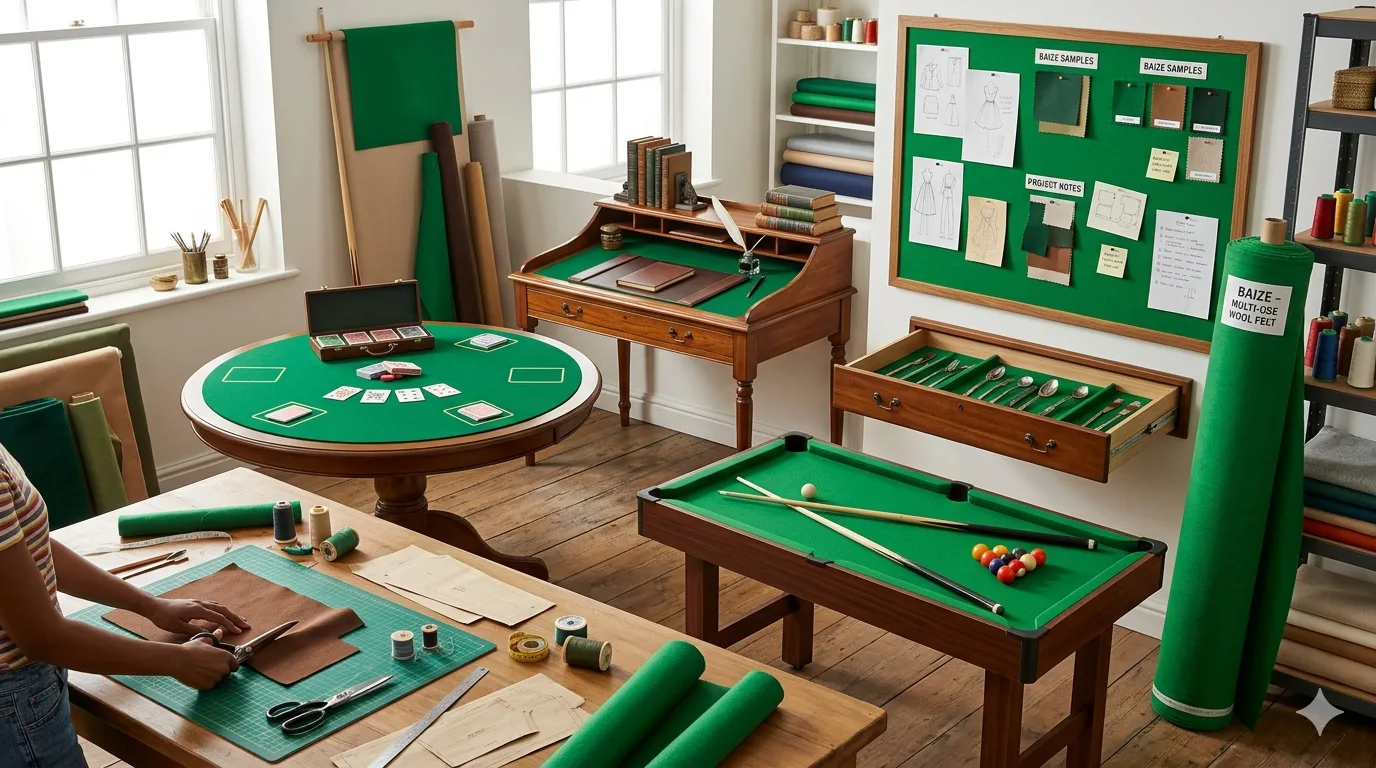
Baize is strongly associated with billiard and snooker tables, but it is not limited to them. It has also been used for card tables, poker tables, casino-style table layouts, writing surfaces, desk linings, notice boards, furniture protection, door coverings, crafts, costumes, and upholstery details.
Modern product descriptions often list baize as suitable for card tables, poker tables, billiard tables, pool tables, snooker tables, crafting, and even clothing. One fabric supplier lists a woven baize composition of 80 percent wool and 20 percent nylon, with uses including card tables, poker tables, pool tables, snooker tables, coats, and upholstery.
Historically, baize was also used to line furniture and protect surfaces. Its soft texture helped prevent scratches. Its dense surface helped reduce sound. This made it useful for writing desks, cabinets, drawers, and covered doors.
The Truth
Baize is widely known for gaming tables, but it can also be used in interiors, crafts, restoration work, desk linings, notice boards, furniture protection, and selected apparel or costume applications.
Why This Myth Limits Creative Use
If you think baize belongs only in billiard rooms, you may miss many practical uses. Baize can be useful anywhere a soft, protective, slightly grippy fabric is needed. It can line a jewelry drawer, cover a card table, protect a writing surface, back a display board, or add a traditional textile detail to a furniture restoration project.
In fashion and costume design, baize is less common than wool flannel, felt, or melton, but it can still work for specific historical costumes, coats, structured accessories, or decorative applications. The key is choosing the right weight, fiber composition, and finish.
Practical Uses of Baize
Baize is commonly used for:
- Card tables
- Billiard-style tables
- Snooker table surfaces
- Poker table surfaces
- Desk linings
- Writing surfaces
- Notice boards
- Drawer linings
- Furniture restoration
- Door sound-dampening panels
- Craft projects
- Display surfaces
- Costume and historical apparel details
- Light upholstery or decorative applications
Myth 3: Baize Fabric Is Always Green
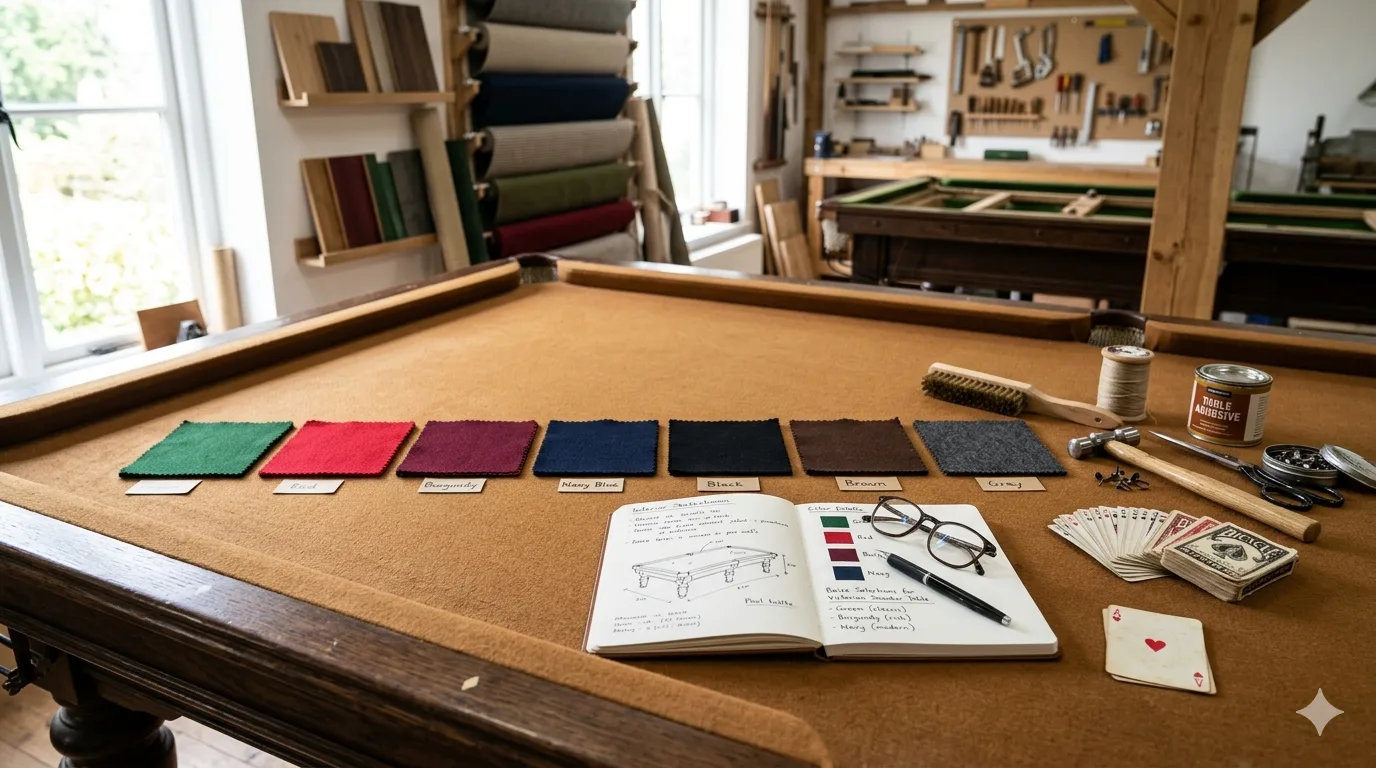
Green is the most iconic baize color, but baize is not always green. Historically, baize was commonly dyed green or red. Modern baize can be found in many colors, including green, red, burgundy, navy, black, brown, blue, gray, and custom shades. The traditional green color became closely linked with gaming tables because of its visual connection to outdoor lawn games and traditional playing surfaces.
Cambridge
defines baize as thick, usually green material made from wool and used to cover tables for snooker, billiards, and card games. The word “usually” is important because it leaves room for other colors.
The Truth
Baize is often green, but it can be produced in many different colors.
Why Green Became So Popular
Green baize became popular because it created a calm, traditional, and game-friendly surface. Green is easy on the eyes, gives good contrast for cards or balls, and connects visually to the history of lawn-based games. Many traditional gaming rooms and card tables still use green baize because it feels familiar and classic.
However, modern interiors may use other colors. Red baize can feel rich and traditional. Black baize can look modern and dramatic. Navy or burgundy can work well in luxury interiors. Brown or gray may suit furniture linings or desk surfaces.
Choosing the Right Baize Color
Choose green for classic gaming tables and traditional card tables. Choose red or burgundy for heritage interiors or dramatic decorative surfaces. Choose black or navy for modern gaming rooms. Choose neutral shades for furniture restoration, drawer linings, or desk surfaces.
Color should support function. A fabric that looks beautiful may not be practical if it does not provide enough contrast for cards, chips, balls, writing tools, or display objects.
Myth 4: All Baize Fabric Is Made From Wool
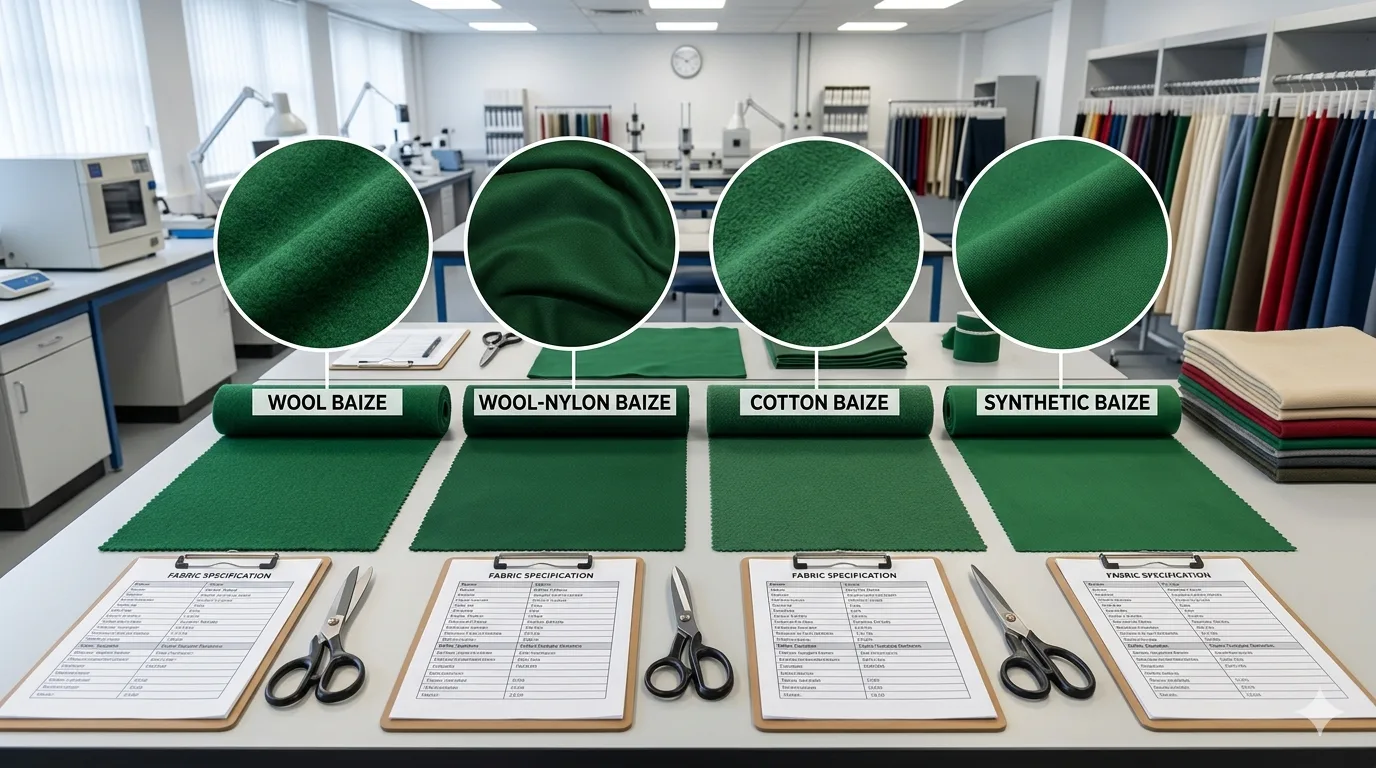
Traditional baize is closely connected with wool, but not all baize fabric is made from wool today. Historical descriptions often call baize a woollen cloth, and many higher-quality versions are still wool or wool-blend. However, baize may also be made from cotton, synthetic fibers, or blends depending on cost and purpose. Historical and modern fabric sources both note that baize may be made from wool, cotton, or synthetic fibers in different versions.
Wool baize is often valued because wool can provide warmth, resilience, natural texture, and a traditional hand feel. Wool also responds well to napping and finishing. Wool-nylon blends may improve durability, abrasion resistance, and stability, especially for surfaces that receive repeated use.
Cotton or synthetic baize may be more affordable, easier to source, or suitable for craft and decorative projects. However, lower-cost versions may not perform as well for professional gaming tables or demanding use.
The Truth
Baize may be wool, wool blend, cotton, synthetic, or mixed composition. Wool baize is traditional, but it is not the only option.
Why Fiber Content Matters
Fiber content affects durability, surface feel, price, cleaning method, color, stretch, and performance. A wool baize may feel more traditional and perform better for certain table uses. A synthetic baize may resist some stains better or cost less. A cotton baize may feel different and may not offer the same durability.
For gaming tables, the wrong fiber can affect movement, grip, speed, and wear. For furniture lining, the wrong fiber may pill or fade. For crafts, an affordable synthetic option may be completely acceptable.
What to Ask Before Buying
Ask the supplier:
- What is the fiber content?
- Is it wool, cotton, nylon, polyester, or a blend?
- Is it woven or nonwoven?
- What is the weight or GSM?
- Is it suitable for gaming tables?
- Is it suitable for upholstery or lining?
- Can it be glued, stretched, stapled, or sewn?
- What care method is recommended?
Myth 5: Baize and Professional Billiard Cloth Are Always the Same
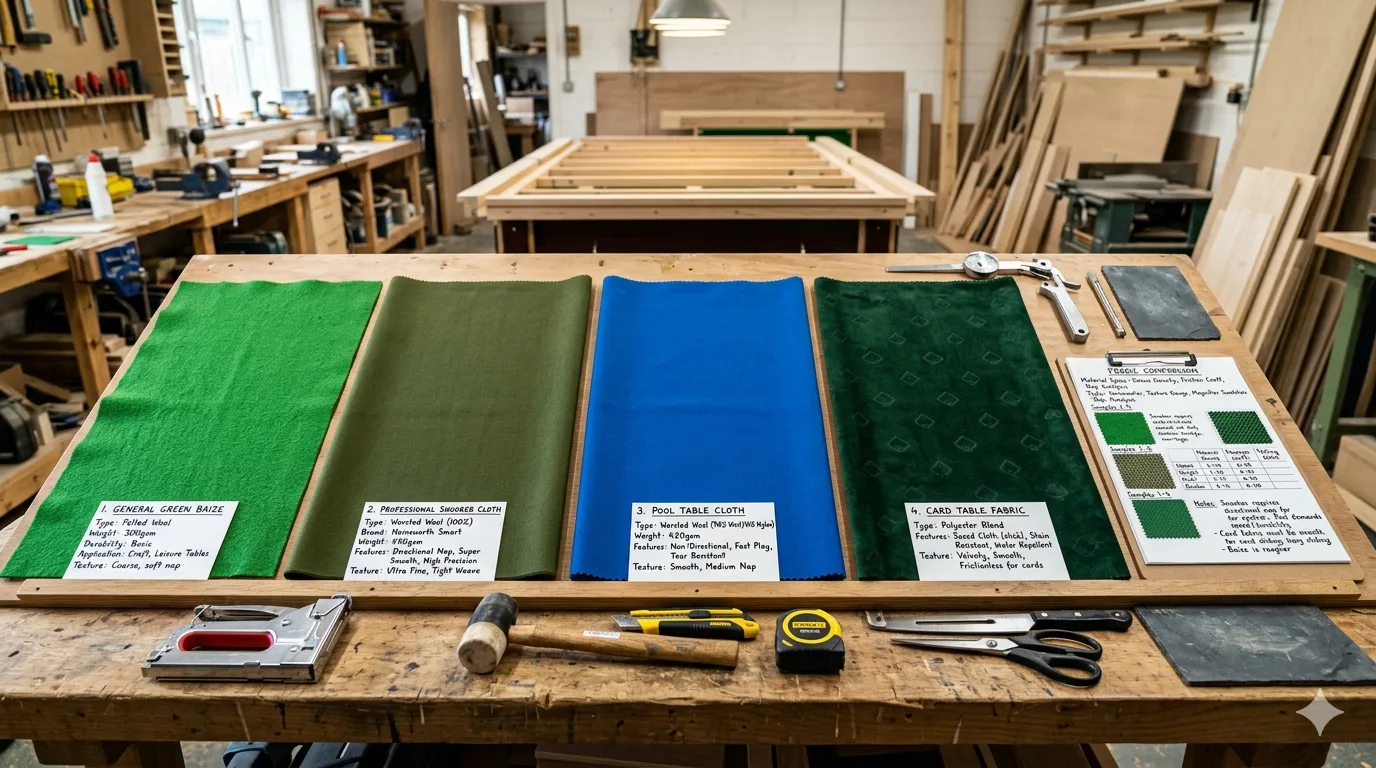
Many people call all pool, billiard, and snooker table fabric “baize.” In casual language, this is common. However, specialist table cloths can differ significantly from general baize. A professional snooker or billiard cloth may be an engineered wool cloth with a carefully controlled nap, speed, direction, and surface response. General baize used for card tables or crafts may not perform at the same level.
Some billiard sources distinguish between baize for card tables and more specialized snooker cloth. Snooker Heritage notes that baize is often a wool and cotton mix used for card tables and notice boards, while snooker table cloth is a specialist pure wool material with a raised nap. This distinction is important because a casual buyer may purchase general baize for a serious table and then wonder why gameplay feels slow, uneven, or inconsistent.
The Truth
Baize is often used as a general term for gaming table cloth, but professional billiard, pool, or snooker cloth may be a more specialized textile.
Why This Myth Matters
Gaming table cloth affects performance. Surface texture influences ball speed, rolling resistance, spin, direction, and consistency. A general craft baize may be fine for a decorative card table but unsuitable for a high-performance snooker table.
The nap of table cloth can also matter. A napped cloth has fibers brushed in one direction, which can influence how balls move. Dr. Dave’s pool information explains that traditional napped billiard cloth has a raised surface created by brushing fibers in one direction, and that nap direction can be important in games such as snooker.
How to Choose Correctly
For casual card tables, general baize may be enough. For professional snooker, pool, or billiard surfaces, buy cloth specifically made for that table type. Check whether it is napped or napless, wool or wool-nylon blend, and suitable for your game.
Myth 6: Baize Fabric Is Cheap and Low Quality
Baize is sometimes seen as cheap because affordable craft versions are widely available. However, baize can range from low-cost craft fabric to high-quality wool or wool-blend table cloth. Price and quality depend on fiber content, weight, density, finish, width, supplier, and intended use.
A high-quality wool or wool-nylon baize may be more expensive than simple synthetic felt. A professional table cloth designed for performance may cost much more than craft baize. Some listed wool baize fabrics have high GSM weights and are marketed for card tables, pool tables, snooker tables, coats, and upholstery.
The Truth
Baize is not automatically cheap or low quality. It exists in different grades for different uses.
Why Price Differences Matter
A cheap baize may be fine for a school display board, craft project, or temporary table cover. But if you need a durable gaming table surface, furniture restoration cloth, or premium desk lining, a higher-quality baize may be worth the investment.
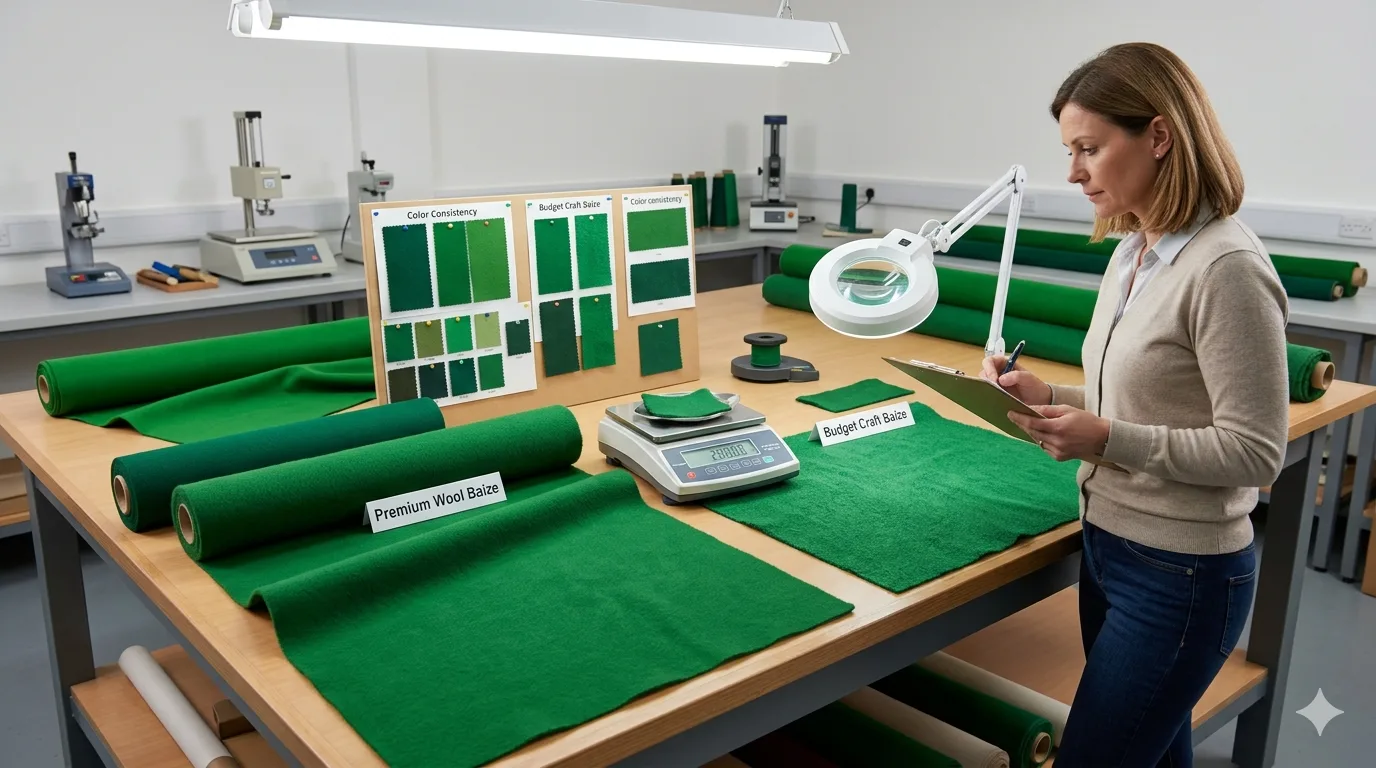
Low-cost baize may have uneven nap, weak backing, poor colorfastness, low density, or poor abrasion resistance. It may stretch during installation, fray easily, or wear quickly. Higher-quality baize usually feels denser, smoother, more stable, and more consistent.
Quality Signs to Look For
Good baize should have:
- Even surface texture
- Consistent color
- Stable woven base
- Suitable thickness
- Firm but soft hand feel
- No strong chemical odor
- Minimal loose fibers
- Clean cutting behavior
- Good recovery after light pressure
- Correct weight for the use
- Clear fiber content information
Myth 7: Baize Fabric Is Too Old-Fashioned for Modern Interiors
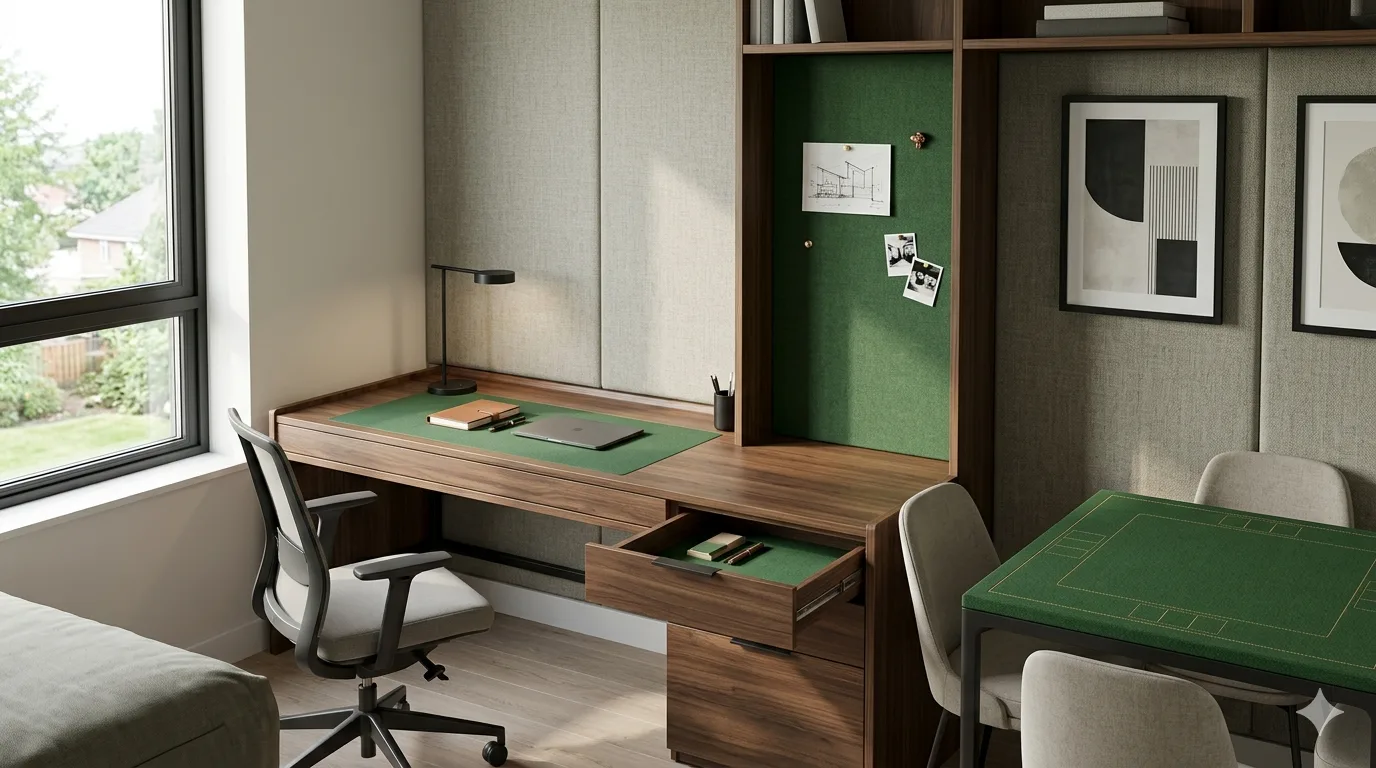
Baize has a strong traditional image because of its connection with old card rooms, billiard halls, writing desks, and heritage furniture. But that does not mean baize is outdated. In modern interiors, baize can still work beautifully when used thoughtfully.
Green baize can create a classic club-style look. Black or navy baize can feel contemporary. Burgundy baize can feel rich and luxurious. Neutral baize can work for desk surfaces, drawer liners, and display boards without looking old-fashioned.
Baize also serves practical functions that remain useful today. It can protect surfaces, reduce noise, add grip, create a soft workspace, and bring tactile warmth to furniture. These qualities are relevant in modern homes, studios, libraries, offices, game rooms, and boutique interiors.
The Truth
Baize is traditional, but it is not outdated. It can be used in classic, modern, vintage, academic, luxury, and functional interiors.
Modern Interior Uses
Baize can be used for:
- Modern card tables
- Custom game room surfaces
- Desk tops and writing surfaces
- Jewelry drawer linings
- Display cases
- Wall boards
- Cabinet interiors
- Luxury storage boxes
- Home library details
- Boutique retail displays
- Furniture restoration
- Sound-softening door panels
Myth 8: Baize Is Difficult to Cut, Glue, or Install
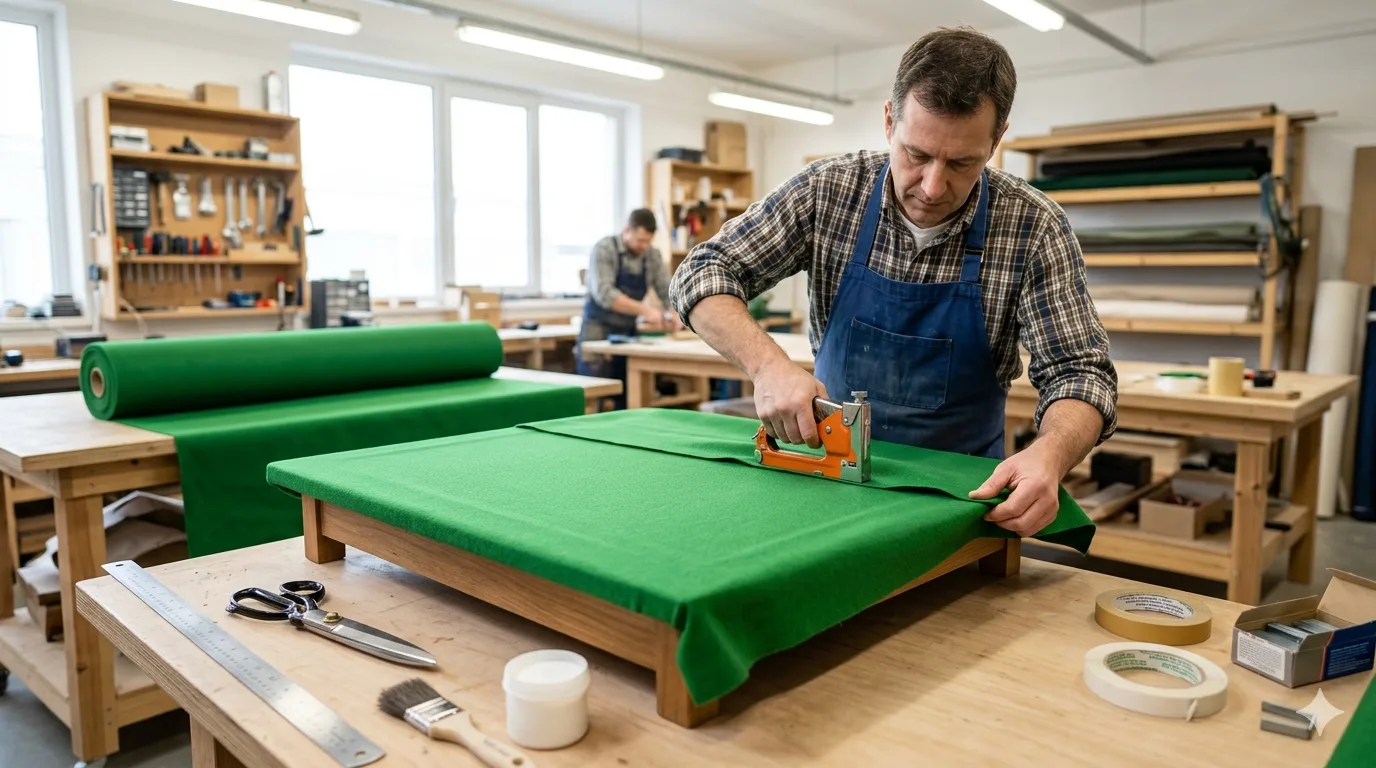
Baize can require careful handling, but it is not impossible to cut, glue, staple, stretch, or install. The ease of working with baize depends on its thickness, backing, fiber content, stretch, and intended use.
For table surfaces, installation must be smooth and even. Wrinkles, uneven tension, bubbles, or loose edges can affect appearance and function. For desk linings or drawer linings, accurate measurement and clean adhesive application matter. For crafts, baize is usually manageable with sharp tools and a stable work surface.
The Truth
Baize is workable, but it needs proper measuring, cutting, and installation technique.
Practical Working Tips
- Use sharp scissors or a rotary cutter.
- Measure twice before cutting.
- Cut on a clean flat surface.
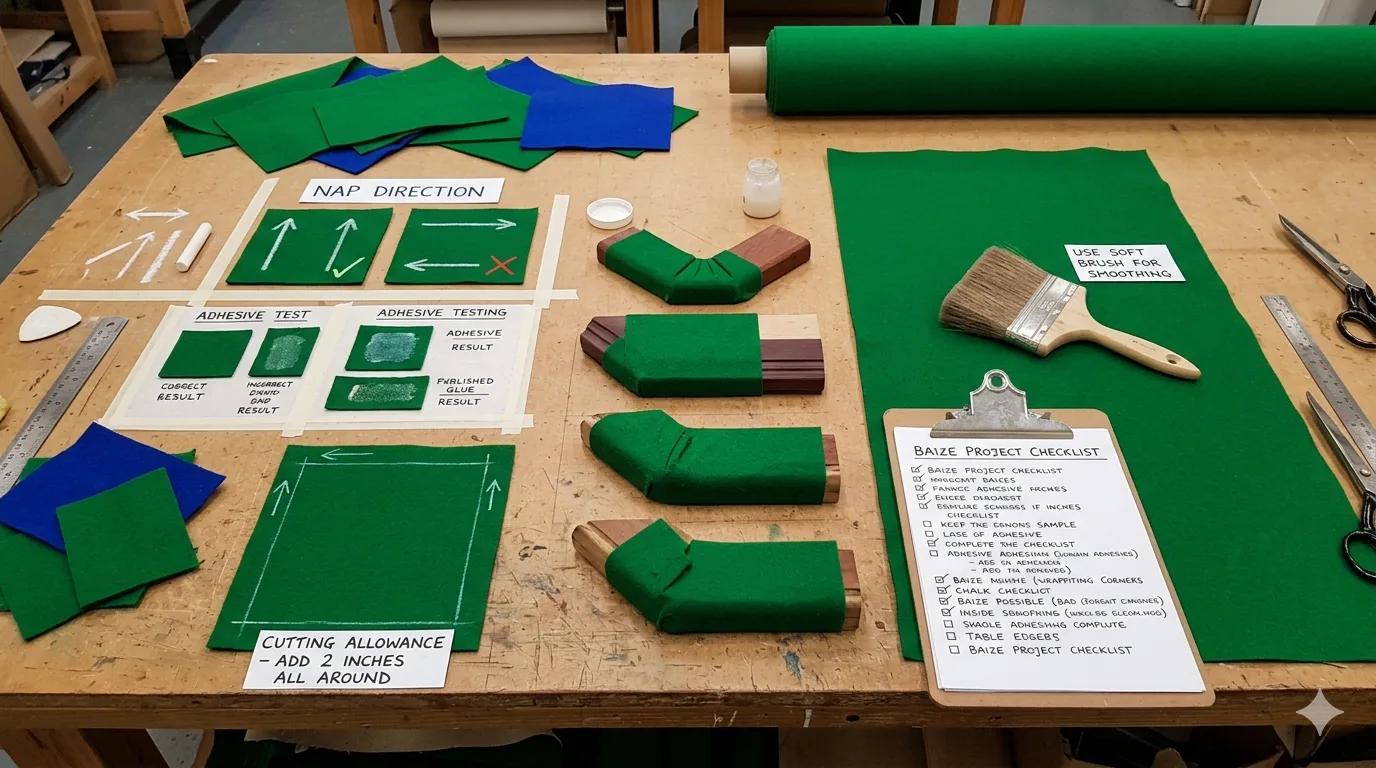
- Check nap direction before installation.
- Use suitable fabric adhesive for lining projects.
- Avoid over-applying glue.
- Stretch evenly if covering a table.
- Secure edges neatly.
- Test adhesive on a scrap first.
- Allow fabric to relax before final fitting.
Nap Direction Matters
If the baize has a visible nap, direction can affect color appearance, texture, and performance. Always keep nap direction consistent across panels. For gaming tables, nap direction may affect play, so table-specific guidance should be followed.
Common Installation Mistakes
Common mistakes include cutting too small, pulling unevenly, using too much adhesive, ignoring nap direction, failing to smooth air pockets, and using low-quality fabric for heavy-use surfaces.
Myth 9: Baize Is Not Durable Enough for Regular Use
Baize can be durable when the correct grade is chosen for the correct use. Historically, it was used for table coverings, doors, protective linings, and furniture surfaces because it could withstand handling while protecting other materials. However, durability varies widely.
A thin craft baize may not survive heavy table use. A dense wool or wool-blend baize may hold up much better. A professional table cloth may be engineered for repeated play. A decorative baize used as drawer lining will face far less abrasion than a table surface.
The Truth
Baize can be durable, but durability depends on quality, fiber content, density, finish, and usage.
What Affects Durability?
Fiber blend matters. Wool-nylon blends may improve abrasion resistance. Weight matters because heavier fabrics often provide more structure. Density matters because loosely made fabric can wear faster. Surface finish matters because an uneven nap may flatten or pill quickly.
Use also matters. A card table used occasionally will not need the same durability as a commercial gaming surface. A desk lining used for writing may need a smooth, stable surface. A notice board may need fabric that resists stretching and pin damage.
How to Extend Baize Life
- Keep it clean.
- Avoid food and drink spills.
- Brush gently in nap direction.
- Avoid dragging rough objects across it.
- Use suitable covers when not in use.
- Do not expose it to excessive sunlight.
- Repair loose edges early.
- Choose the correct grade for the project.
Myth 10: Baize Is Always Thick and Heavy
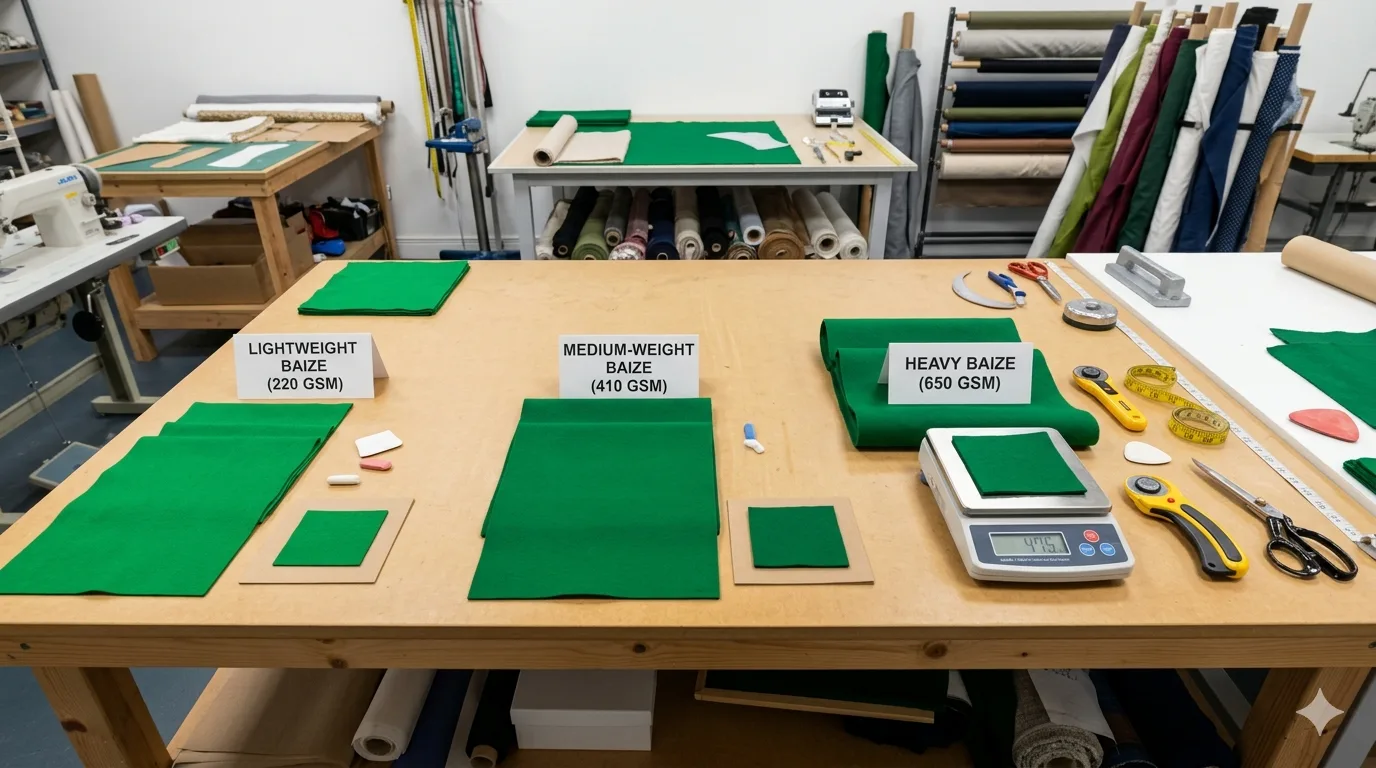
Baize is often thought of as thick because it is commonly used for table coverings and protective surfaces. However, not all baize has the same thickness or weight. Some baize is heavy and dense, while other versions are lighter and more flexible.
Fabric weight is usually measured in GSM, or grams per square meter. Some wool baize products are around 450 GSM, which is a relatively substantial weight suitable for table coverings, upholstery, or structured uses. But lighter versions may be available for crafts, linings, display surfaces, or decorative projects.
The Truth
Baize can be light, medium, or heavy depending on construction and purpose.
Choosing the Right Weight
Use lighter baize for crafts, drawer liners, display boards, and decorative panels. Use medium-weight baize for card tables, desk linings, and furniture protection. Use heavier baize for durable table surfaces, upholstery-style projects, and structured applications.
The wrong weight can cause problems. Too light, and the fabric may wrinkle, stretch, or wear quickly. Too heavy, and it may be difficult to install smoothly or may create bulky edges.
Test Before Buying in Bulk
Request a swatch if possible. Feel the thickness, test the drape, check the nap, and see how it behaves when folded or stretched. A fabric that looks correct online may feel too thin or too thick in person.
Myth 11: Baize Fabric Is Hard to Clean
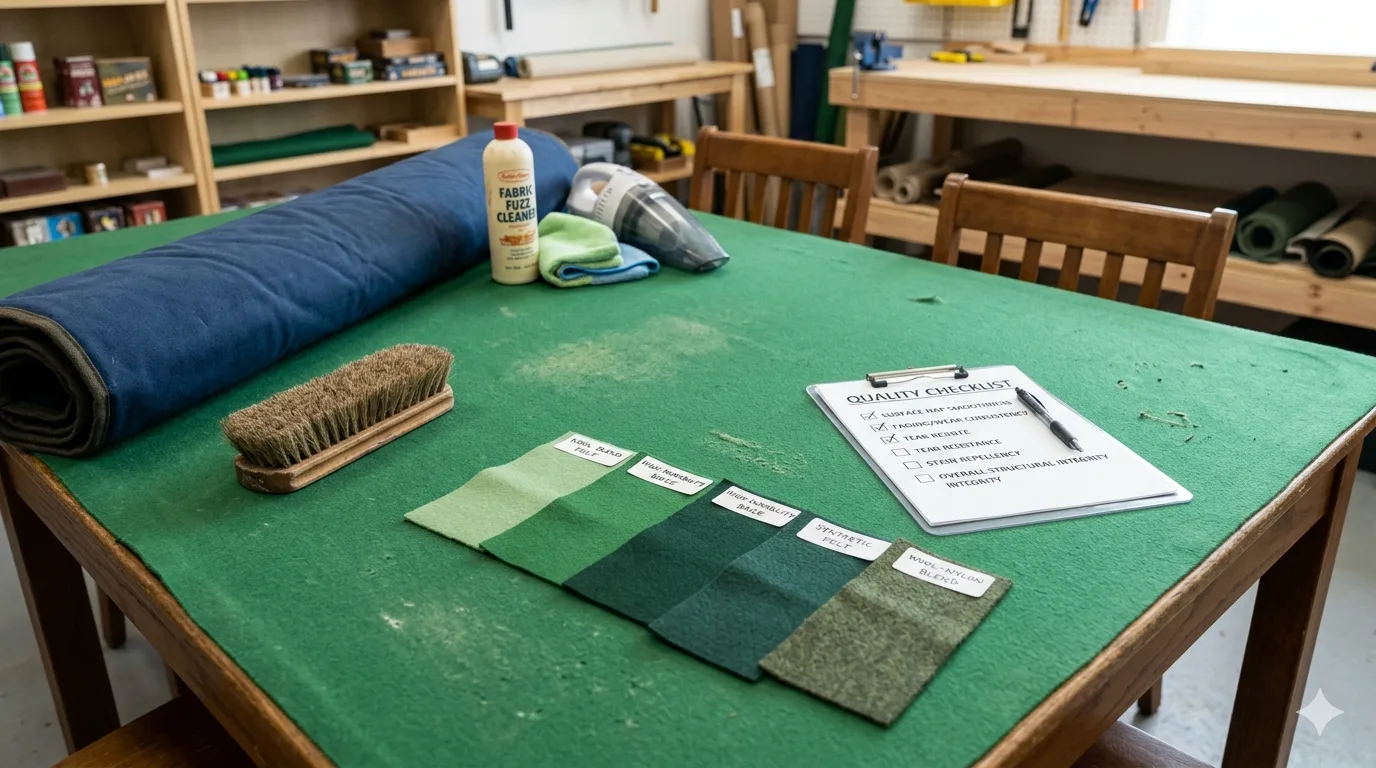
Baize can be sensitive to poor cleaning methods, but it is not impossible to maintain. The correct care method depends on fiber content, use, and finish. Wool baize may require more careful cleaning than synthetic baize. Table baize should be cleaned gently to avoid damaging the nap. Desk and drawer linings may need light brushing or spot cleaning.
Some wool baize suppliers recommend professional cleaning only, especially for heavier or higher-quality fabrics. That does not mean all baize is impossible to care for. It means you need to follow the correct method for the specific fabric.
The Truth
Baize is not necessarily hard to clean, but it should be cleaned gently and according to fiber content.
General Baize Care Tips
- Brush gently with a soft brush.
- Brush in the direction of the nap.
- Vacuum lightly with a soft attachment if suitable.
- Blot spills immediately.
- Avoid rubbing stains aggressively.
- Avoid soaking unless the supplier allows it.
- Keep food and drinks away from gaming surfaces.
- Avoid harsh chemicals.
- Test cleaning products on a hidden area.
- Use professional cleaning for valuable wool baize.
What Not to Do
Do not scrub baize roughly. Do not use high heat. Do not use strong bleach. Do not over-wet wool baize. Do not drag rough tools across the surface. Do not ignore spills, especially on table surfaces.
Myth 12: Baize Has No Place in Apparel
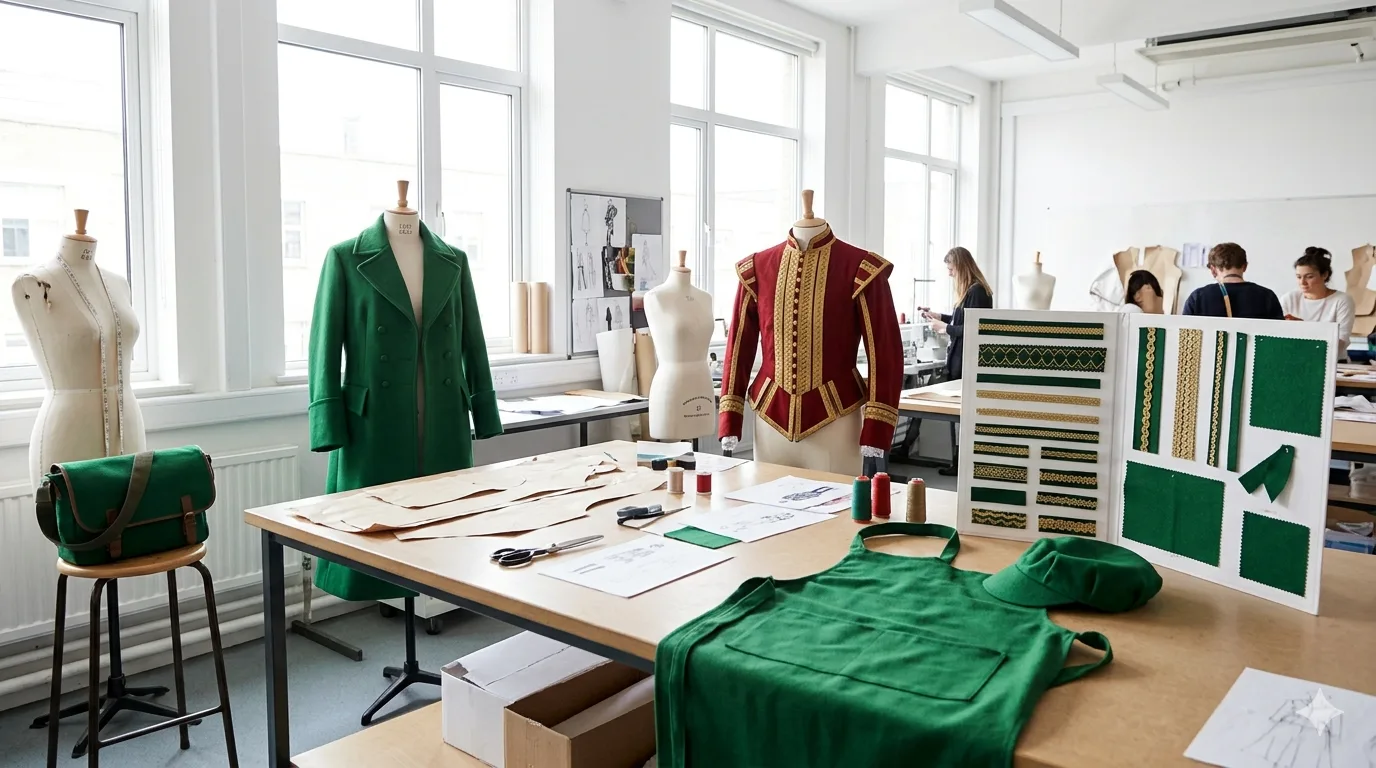
Baize is not a mainstream fashion fabric today, but that does not mean it has no place in apparel. Historically, baize was used in clothing and protective garments. Today, it may appear in costumes, historical clothing, structured coats, stagewear, aprons, accessories, or experimental fashion.
That said, baize is not ideal for every garment. Its napped surface, thickness, and table-cloth association can make it less suitable for soft everyday fashion. It may not drape like wool crepe, feel as soft as flannel, or wash as easily as cotton. But for certain design goals, it can work.
The Truth
Baize can be used in apparel, but it is best for selected applications rather than everyday fashion basics.
When Baize Works in Clothing
Baize may work for:
- Historical costumes
- Theatrical garments
- Structured coats
- Aprons
- Caps
- Bags
- Decorative trims
- Protective clothing details
- Traditional-inspired clothing
- Experimental fashion pieces
What Apparel Brands Should Consider
Before using baize for clothing, check comfort, weight, drape, care requirements, lining needs, seam bulk, abrasion, and customer expectations. A fabric that works on a table may not feel good as a garment. Sampling is essential.
For children’s clothing, baize is usually not the best everyday fabric because kids need soft, washable, flexible materials. It may work for costume pieces or decorative accessories, but not as a main fabric for daily wear.
How to Identify Good Quality Baize Fabric
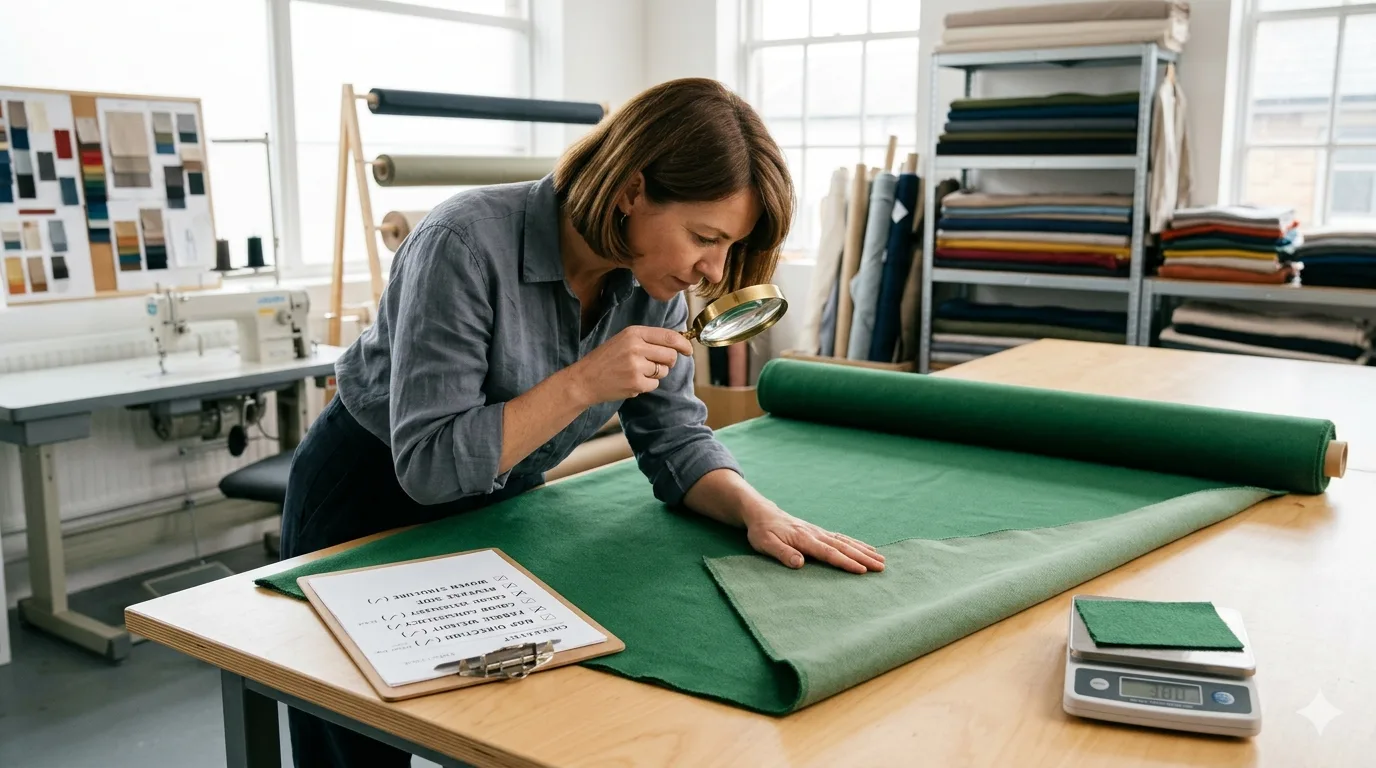
Good quality baize should feel stable, smooth, and evenly napped. It should not look patchy, thin, loose, or overly fuzzy. The color should be consistent, the backing should feel secure, and the fabric should suit its intended use.
Quality Signs to Look For
- Even nap direction
- Smooth surface texture
- Stable woven base
- Suitable thickness
- Good color consistency
- Minimal loose fibers
- No patchy areas
- Clean edge behavior
- Suitable width for your project
- Clear fiber content
- Good abrasion resistance for table use
- Supplier guidance on care and installation
Check the Nap
Run your hand across the surface in two directions. If the fabric has a nap, one direction may feel smoother and the opposite direction may feel more resistant. This can also change how the color appears under light. Nap direction should be considered when cutting and installing.
Check the Reverse Side
The reverse side should help you understand the structure. If it looks too loose, weak, or unstable, the fabric may not be suitable for stretching over a table or lining a high-use surface.
Check the Weight
Weight should match purpose. A craft board may not need heavy baize. A game table may need a denser cloth. A furniture restoration project may need a traditional wool or wool-blend option.
Best Uses of Baize Fabric
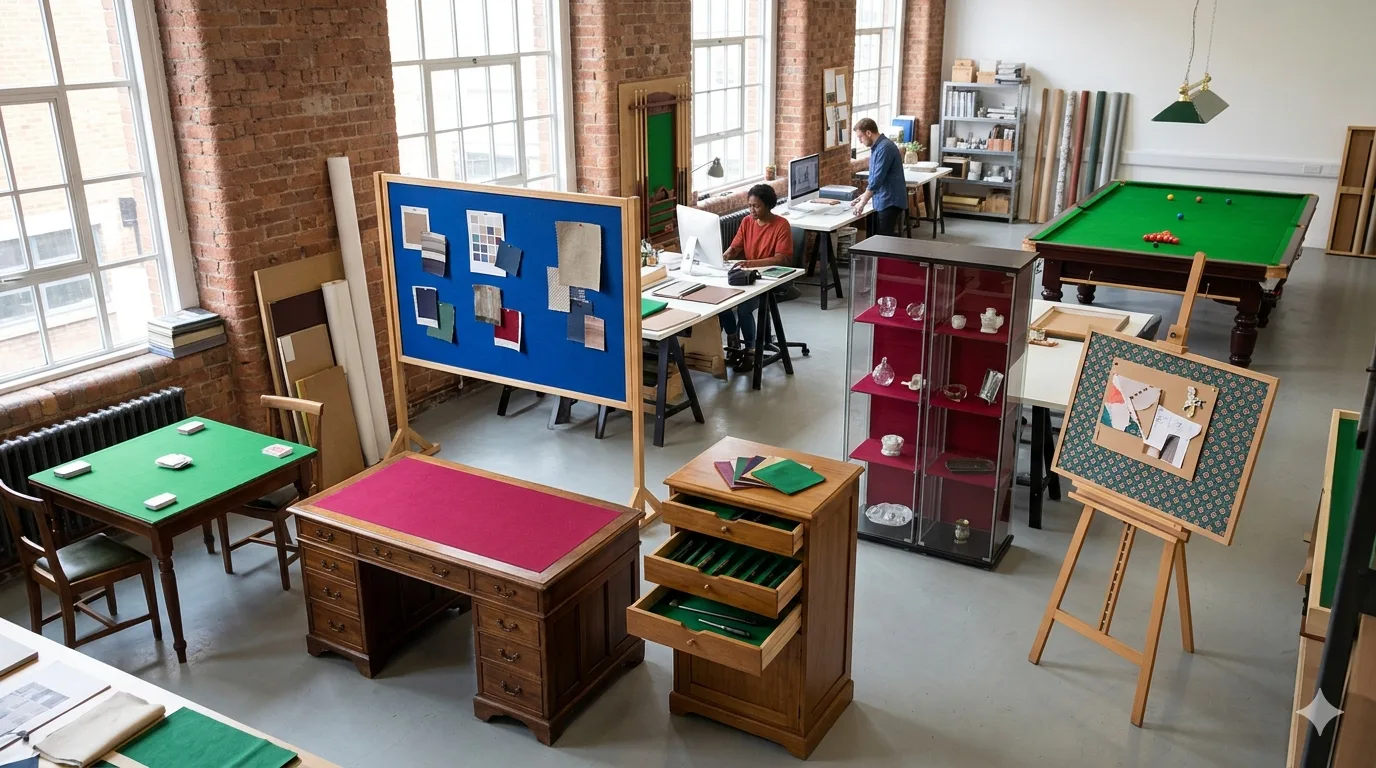
Baize is a functional textile with a strong surface purpose. It is not just decorative. Its soft, napped surface makes it useful for grip, protection, sound control, and traditional style.
Card Tables
Baize is one of the most classic card table fabrics. It helps cards stay in place while making them easier to pick up from the surface.
Billiard, Pool, and Snooker-Style Tables
Baize is commonly associated with cue sports, although professional table cloth should be chosen carefully based on the exact game and performance requirement.
Writing Desks
A baize-lined writing surface can protect the desk, soften sound, and create a traditional writing experience.
Drawer and Cabinet Linings
Baize can protect delicate objects such as jewelry, silverware, collectibles, and instruments from scratches.
Notice Boards and Display Surfaces
Baize can be used as a soft display backing, especially when a traditional or premium look is desired.
Furniture and Interiors
Baize can appear in restoration projects, door coverings, cabinet interiors, and decorative surfaces.
Crafts and Model-Making
Baize can be used for craft tables, miniature landscapes, game boards, display bases, and protective pads.
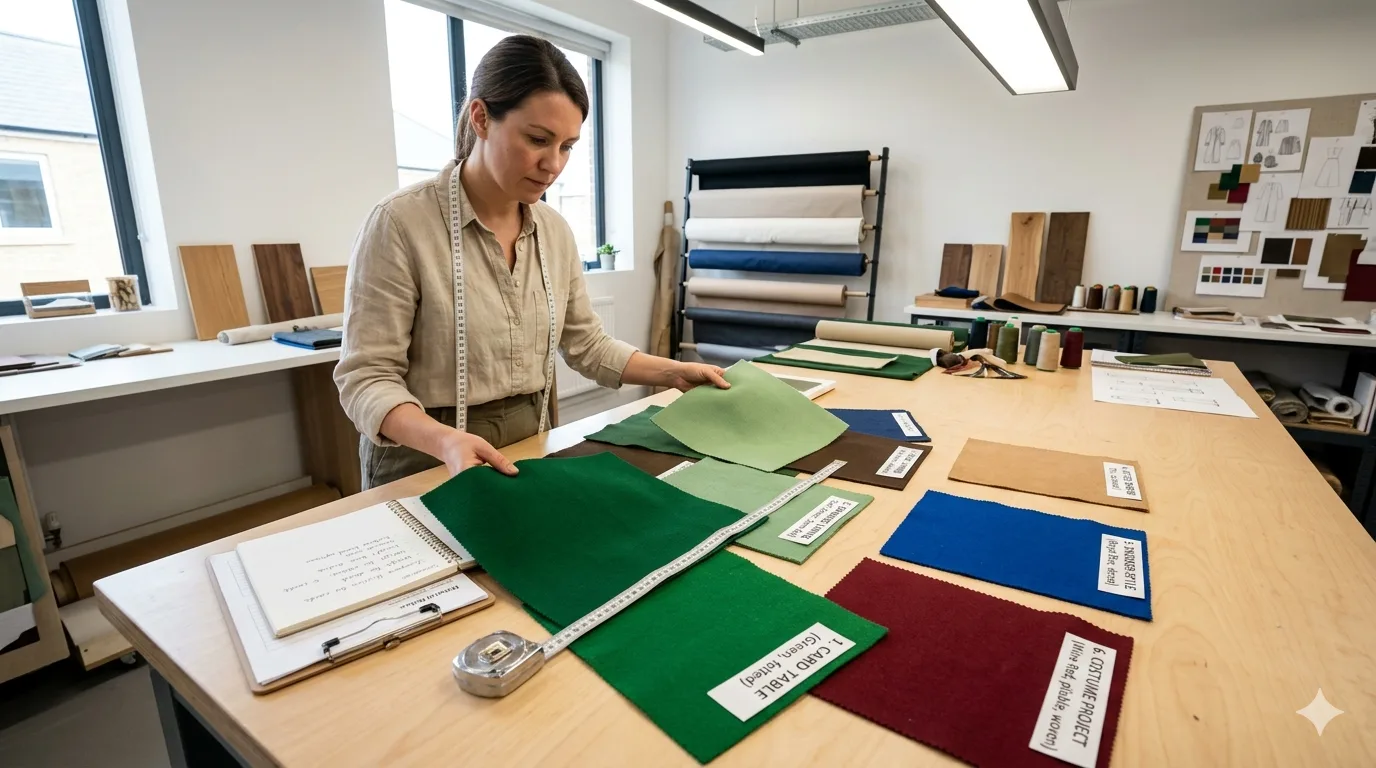
How to Choose the Right Baize Fabric for Your Project
Choosing the right baize fabric depends on what you want to make. A card table, snooker table, drawer liner, notice board, costume, and desk surface all need different performance qualities.
For Card Tables
Choose a smooth, stable baize with enough grip for cards. Green is traditional, but burgundy, navy, or black can also work. Make sure it can be stretched or glued smoothly.
For Billiard or Snooker Tables
Choose specialist table cloth rather than general craft baize. Check whether you need napped or napless cloth, and follow game-specific installation guidance.
For Desk Linings
Choose a smooth baize that writes comfortably under paper and protects the wood surface. Avoid overly thick or rough fabric.
For Drawer Linings
Choose a soft, stable fabric that will not shed heavily. Consider color, adhesive compatibility, and thickness.
For Notice Boards
Choose baize that holds pins well and stays smooth when mounted. Avoid fabric that stretches too much.
For Apparel or Costume
Choose the right weight and check comfort, lining needs, seam bulk, and cleaning requirements.
Common Mistakes to Avoid When Working With Baize
Baize can be simple to use when chosen correctly, but common mistakes can create poor results.
Choosing Craft Baize for a Professional Table
Craft baize may not have the speed, density, nap, or durability needed for professional play.
Ignoring Nap Direction
Nap direction can affect appearance, texture, and table performance. Always keep it consistent.
Using Too Much Glue
Too much adhesive can soak through, stiffen the fabric, create stains, or cause uneven texture.
Cutting Without Extra Allowance
When covering tables or panels, cut with enough allowance for stretching, folding, and securing edges.
Choosing the Wrong Weight
Too thin may wrinkle. Too thick may create bulky edges. Match weight to the project.
Cleaning Too Aggressively
Scrubbing can damage the nap and surface. Use gentle care methods.
Not Testing First
Always test cutting, gluing, brushing, cleaning, and installation on a small piece before working on the final project.
Baize Fabric Care Guide
Baize care should be gentle, especially for wool or wool-blend fabric. The goal is to protect the nap, avoid flattening the surface, prevent stains, and keep the fabric smooth.
For table surfaces, brush lightly in the nap direction. Avoid rough vacuuming or aggressive scrubbing. Keep drinks, oily food, and sharp objects away from the surface. If a spill happens, blot immediately rather than rubbing.
For desk or drawer linings, keep the surface dust-free and avoid dragging metal or sharp objects across the fabric. For notice boards, avoid repeated pinning in the same area if the fabric begins to loosen.
For valuable wool baize, professional cleaning may be the safest choice. Always follow supplier instructions.
ApparGlobal
For apparel and textile brands, baize fabric is a useful reminder that material selection should always be based on function, not appearance alone. A fabric may look soft, traditional, or easy to use, but the final product depends on fiber content, weight, nap direction, surface finish, durability, care requirements, installation method, and end-use performance.
Many brands face production problems when they select specialty fabrics without understanding how those fabrics behave in real applications. Baize, brocade, velvet, felt, melton, wool blends, jacquard, fleece, and other textured fabrics all require careful planning before sampling or bulk production. If the wrong weight is chosen, the product may feel too stiff, too thin, or unsuitable for its purpose. If nap direction is ignored, the final item may look uneven. If care requirements are unclear, customers may damage the product after purchase.
Companies such as ApparGlobal help clothing brands and textile-focused businesses align fabric selection, sourcing decisions, product development, sample review, quality control, and scalable production workflows. For brands developing apparel, accessories, custom textile products, private label collections, or specialty fabric-based items, this kind of support can make the manufacturing process more structured and reliable.
When brands work with a production partner that understands tech packs, fabric behavior, trim standardization, MOQ planning, supplier coordination, quality checkpoints, and material testing, they can make better decisions before moving into bulk production. This helps reduce costly mistakes and supports a smoother path from design concept to finished product.

Final Thoughts
Baize fabric is often misunderstood because it sits between several familiar textile categories. It looks a little like felt, behaves like a practical woven cloth, carries a strong gaming-table identity, and has a long history in interiors and furniture. Because of that, myths are easy to believe.
But baize is more versatile and more technical than many people realize. It is not simply felt. It is not always green. It is not always wool. It is not limited to billiard tables. It is not automatically cheap, outdated, heavy, or difficult to maintain. Baize is a functional napped fabric that can be used for gaming surfaces, desks, drawer linings, notice boards, furniture restoration, crafts, and selected apparel or costume applications.
The key is choosing the right baize for the right project. A craft board does not need the same cloth as a professional snooker table. A writing desk needs a different surface than a card table. A drawer lining needs softness and stability, while a table surface needs smoothness, grip, and durability.
Before buying baize, check the fiber content, weight, nap, width, backing, care instructions, and intended use. Ask suppliers whether the fabric is suitable for your specific project. Test a small piece before cutting, gluing, stretching, or installing it.
Used correctly, baize is practical, traditional, attractive, and surprisingly adaptable. It has lasted for centuries because it solves real surface problems while adding a refined textile finish. Whether you are restoring an old card table, designing a game room, lining a desk, creating a craft project, or exploring specialty fabrics for product development, baize deserves to be understood beyond the myths.