An apparel manufacturing contract is not just a formal document to sign before production starts. It is the operational rulebook for your relationship with the factory. It explains what is being made, who is responsible for materials, how quality will be checked, when goods must be delivered, how payment works, what happens if something goes wrong, and how both sides will handle risk.
For startups, private label brands, wholesalers, sourcing teams, and growing fashion businesses, this matters even more. Smaller brands often assume trust, emails, or purchase orders are enough. In reality, when production gets delayed or quality fails, a clear clothing manufacturing agreement becomes one of the most valuable tools you have.
This guide explains what to include in an apparel manufacturing contract, why each section matters, which terms reduce real production risk, and how to create a contract that supports smoother production, better supplier accountability, and stronger long-term sourcing relationships.
An apparel manufacturing contract is a written agreement between a clothing brand, buyer, or sourcing company and a garment manufacturer that defines product specifications, production responsibilities, pricing, quality standards, timelines, ownership rights, payment terms, and dispute procedures for apparel production.
What is a Clothing Manufacturing Contract?
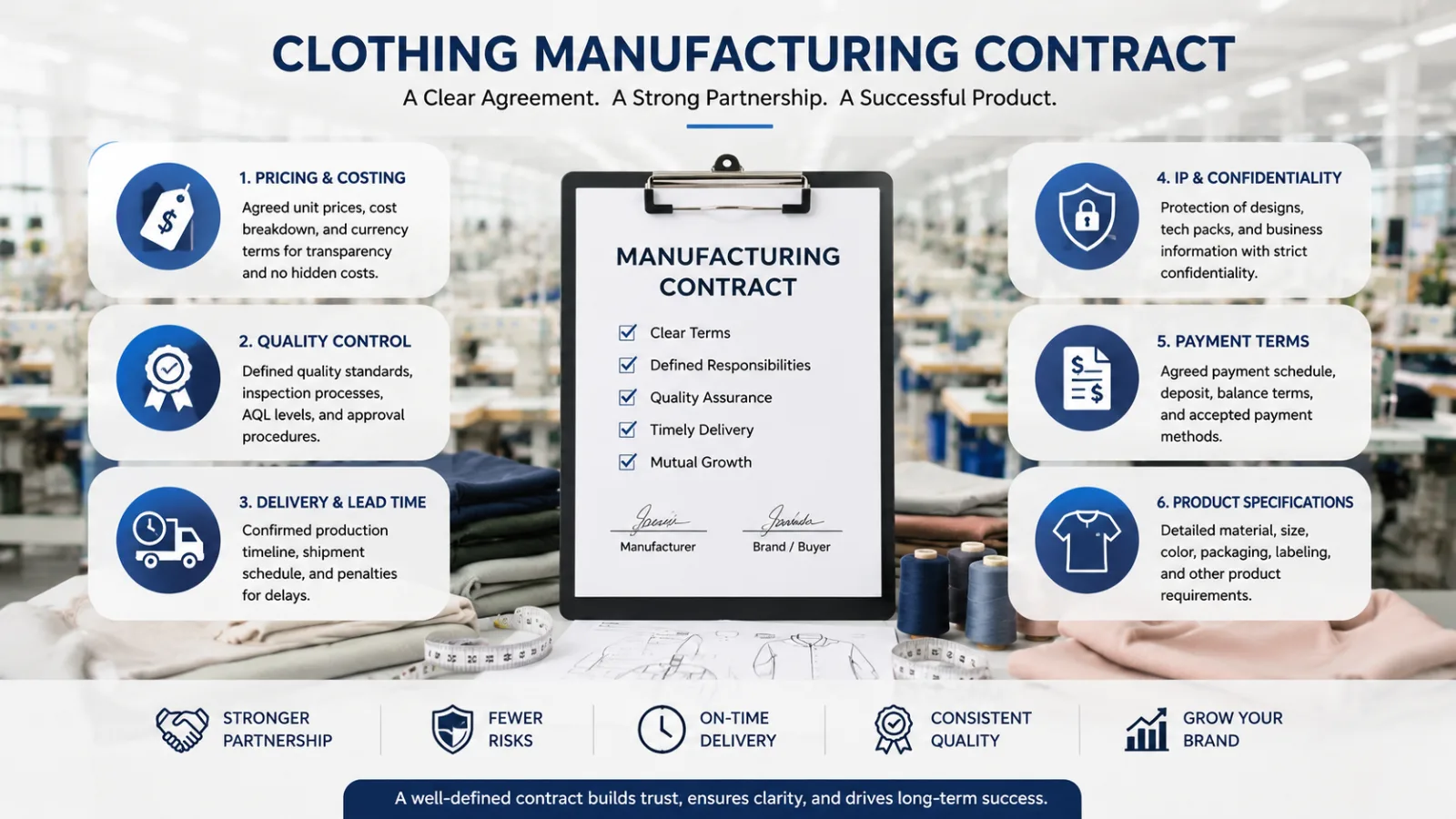
A clothing manufacturing contract is a legally binding agreement between a fashion brand and a factory that hires or outsources to produce manufacturing goods. Drafters draft precise provisions that ensure quality, delivery terms, reproduction rights, and use of CAD files, while permitting the use of sewing machines or a maquila arrangement. The contract must be comprehensive yet adaptable, allowing the brand to leverage relationships with sales representatives and third parties in international trade.
Good agreements encompass compliance with labor standards, labor laws, and adherence to fashion law both in the U.S. and abroad, and include protocols for transit, import clearance, permits to permit shipment, and clauses that keep operations compliant. By clearly defining responsibilities, timelines, and remedies, the contract helps ensure the brand’s designs are produced to spec and delivered on time.
How the Apparel Manufacturing Contract Works
In the apparel industry, a clothing manufacturing contract template provides a comprehensive, legally binding agreement that outlines the scope of manufacturing services and the roles of a fashion brand and its manufacturing facility, whether domestic or a maquila used to outsource production.
The contract will encompass manufacturing goods, delivery terms, transit expectations, permit and import requirements, and provisions for compliance with labor and applicable labor laws in the u.s or internationally to ensure adherence and a compliant supply chain. A well-drafted agreement references fashion law, CAD, and technical specs from pattern to sewing machines, defines the manufacturing relationship, remedies, IP, and payment terms to leverage the brand’s rights, and includes protocols for audits, hire of staff, collaboration with sales representatives, and precise quality controls so partners can adapt and scale.
Why Apparel Manufacturing Contracts Matter So Much
In apparel production, many problems do not come from bad intent. They come from unclear expectations. A brand thinks the factory will use one trim quality, while the factory thinks a similar substitute is acceptable. The buyer expects polybag stickers and carton marks to match retailer format, while the supplier believes standard packing is enough. The brand expects delivery by a hard launch date, while the factory treats the timeline as flexible.
A contract solves this by turning assumptions into agreed-upon terms.
A strong manufacturing contract helps with:
- clarifying product scope and technical requirements
- confirming who supplies fabric, trims, labels, and packaging
- fixing price, MOQ, and payment structure
- setting delivery timelines and approval milestones
- defining inspection standards and acceptance rules
- protecting designs, patterns, and confidential business information
- reducing dispute risk when something goes wrong
For brands, contracts protect margin, launch timing, and brand reputation. For manufacturers, contracts reduce customer confusion, last-minute scope changes, and unfair blame. A good agreement protects both sides by creating a practical framework for production.

What an Apparel Manufacturing Contract Actually Covers
A manufacturing contract for clothing should not be confused with a simple purchase order. A purchase order may confirm style, quantity, and price, but it usually does not address quality standards, IP rights, inspection procedures, delays, remedies, or dispute handling in enough detail.
A proper contract should cover the full commercial and operational relationship, including:
- the identity of the parties
- The products being manufactured in the apparel industry
- technical specifications and approved references
- Materials and sourcing responsibilities outlined in the manufacturing facility agreement.
- production volume and delivery schedule in the clothing manufacturing contract template
- pricing and payment
- quality control and inspection
- defects, rework, and rejection procedures
- confidentiality and ownership of designs
- compliance, labeling, and legal obligations
- termination rights and dispute resolution
Think of the contract as the foundation document, while purchase orders, tech packs, approved samples, and packing instructions work as supporting attachments in the manufacturing relationship.
Example Table
Full Legal Names and Business Details of Both Parties
Start with the basics, but do them properly. The contract should clearly identify the legal entities involved, not just brand names or informal business names. This includes the full legal company name, registered address, business registration number if relevant, and the contact persons authorized to manage the relationship.
This matters because many sourcing disputes become complicated when the agreement is signed by a trading company, while production is actually done by a different factory. If the production party is different from the contracting party, that should be stated clearly.
Include:
- full legal name of the buyer or brand
- full legal name of the manufacturer or supplier
- registered addresses
- primary business contact details
- statement of who is authorized to sign
This section seems simple, but it determines who is actually responsible under the agreement.
Product Scope and Description of Goods
Your contract must clearly describe what the manufacturer is producing. Vague wording such as “women’s tops” or “garments as ordered” is not enough. Apparel products need specific references to style numbers, product categories, collections, and technical documents.
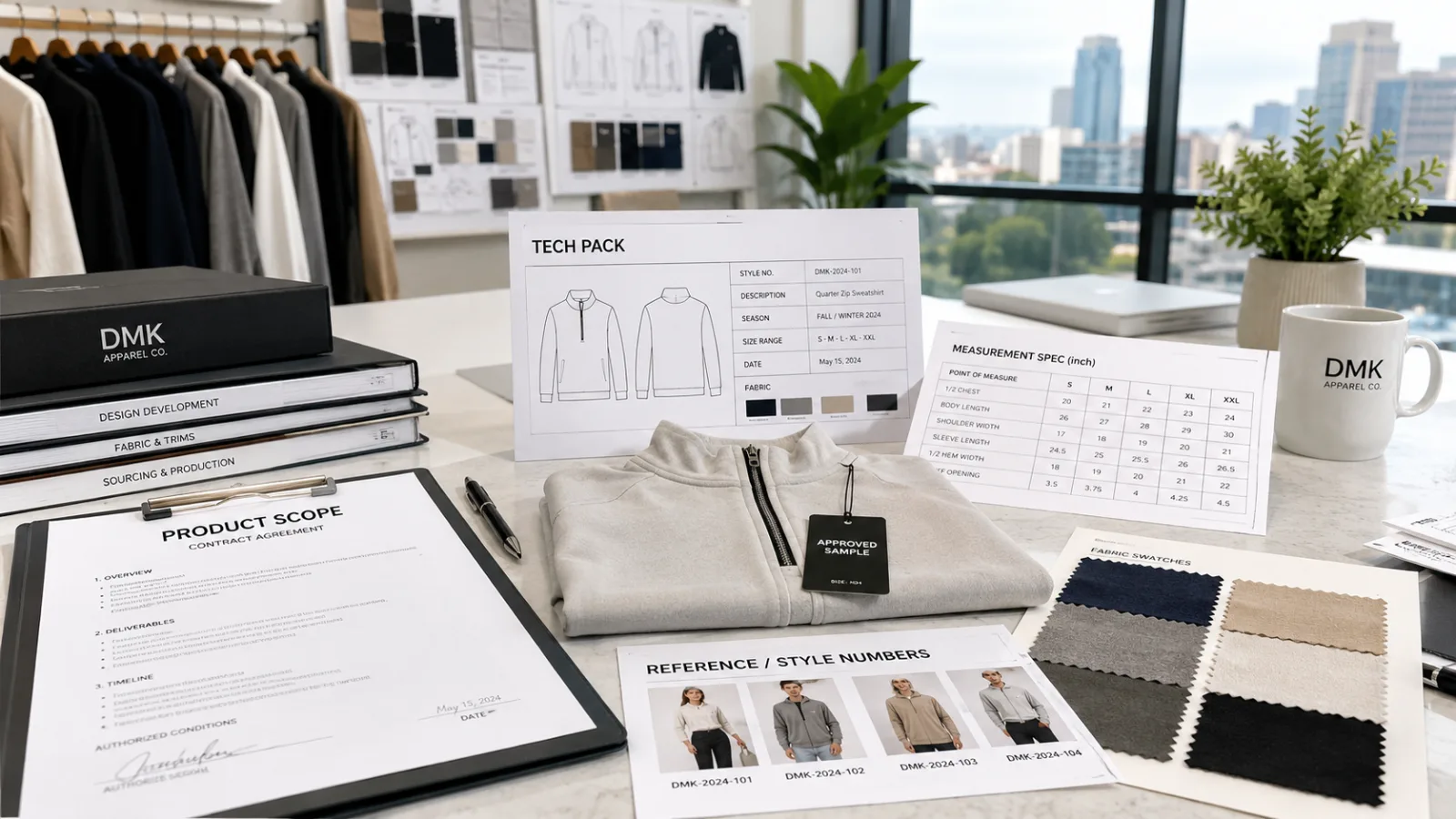
A strong product description section should refer to the relevant supporting documents, such as:
- tech packs
- approved samples
- measurement spec sheets
- fabric and trim approvals
- label artwork
- packaging instructions
You do not need to write every technical detail inside the main contract body if those details already exist in attachments. But the contract should state that those attached documents form part of the agreement and are binding.
This is one of the most important sections because many later disputes come from the question: “What exactly was the designer supposed to ensure the factory was supposed to make?”
Technical Specifications and Approved Standards
In apparel manufacturing, the product is not just a garment category. It is a combination of fabric, fit, construction, trims, labeling, and finishing standards. Your contract should state which technical specifications control production and which approvals are binding.
Key references may include:
- approved proto or fit sample
- pre-production sample or seal sample
- measurement tolerances
- fabric composition and weight
- color approvals or lab dips are critical stages that must be outlined in the apparel industry contracts.
- trim card approvals
- print, embroidery, or wash approvals must be included in the clothing manufacturing contract template.
- packaging and folding instructions
This section should also say that the manufacturer cannot change or substitute materials, construction details, or trims without written approval from the buyer. That one sentence can prevent a lot of trouble.
Without this clause, a supplier may treat a “similar” trim, fabric shade, zipper, or label as acceptable. Your contract should remove that ambiguity.
Manufacturing Model: CMT, FOB, or Full Package
Your contract should make the production model crystal clear. This affects cost, responsibility, and risk.
If the arrangement is CMT
The contract should explain that the buyer supplies fabric, trims, labels, or packaging, while the manufacturer provides cutting, sewing, finishing, and related labor services.
If the arrangement is FOB
The contract should state that the manufacturer is responsible for sourcing agreed materials and delivering finished goods according to the agreed specifications and commercial terms.
If the arrangement is full package
The agreement should cover development support, material sourcing, production coordination, QC, packaging, and delivery responsibilities.
This matters because many disputes happen when brands assume the factory is responsible for material quality, while the factory says the buyer nominated the material. The contract should remove guesswork by assigning responsibility clearly.
MOQ, Order Volume, and Forecasting Expectations
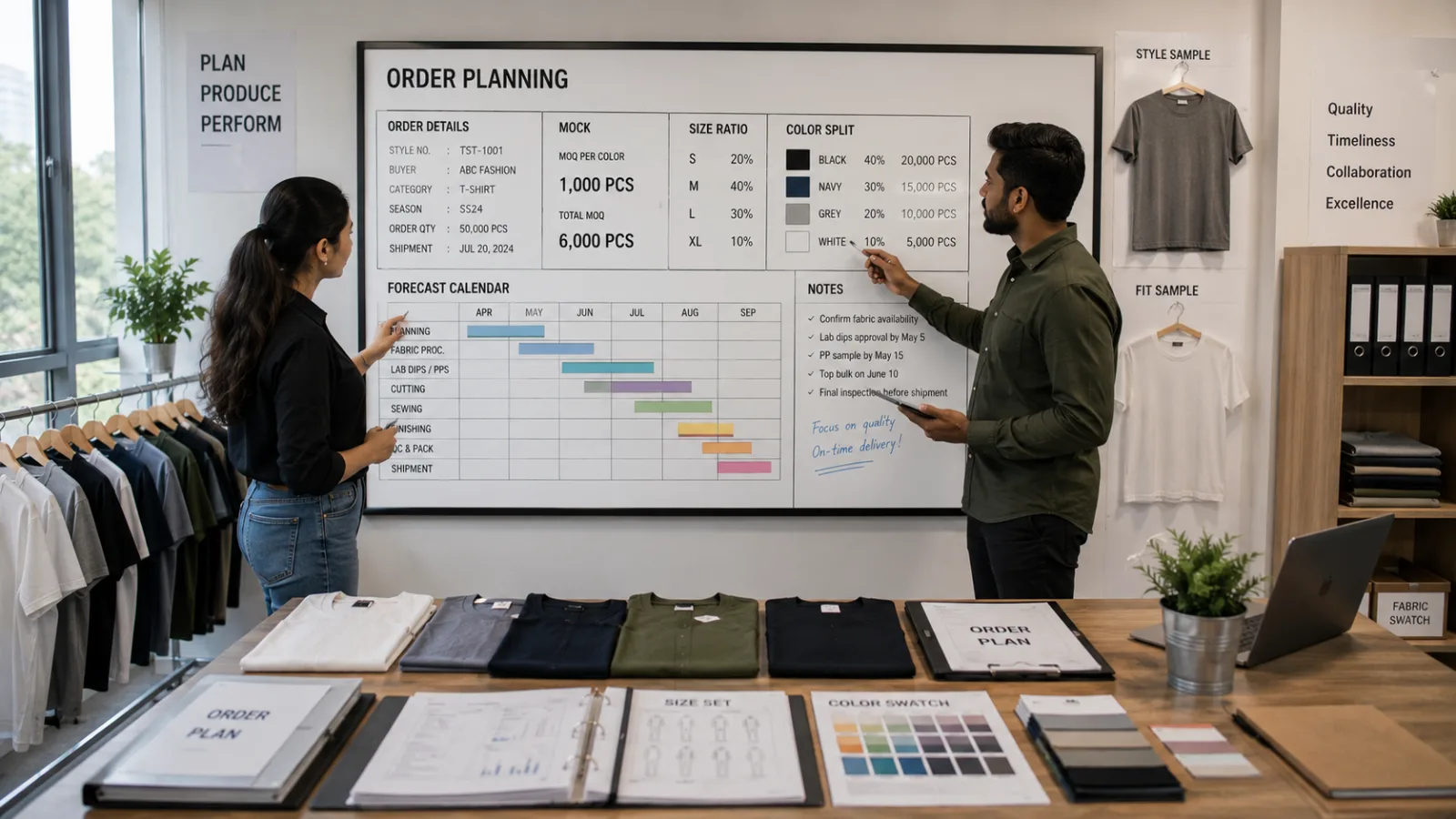
Apparel production depends heavily on volume planning and effective manufacturing services. Your contract should explain the expected minimum order quantity, whether MOQ applies by style, by color, by size, or by fabric color lot, and what happens if actual orders fall below the agreed threshold.
You may also want the agreement to cover:
- whether split color quantities are allowed
- whether size ratios can vary
- whether overrun or underrun percentages are acceptable
- whether future forecasts are binding or only indicative
For repeat business, some brands include forecast language to help the factory reserve capacity, while making clear that forecasts are not guaranteed purchase commitments unless issued through formal purchase orders.
MOQ terms matter because factories price garments based partly on efficiency and volume. If this is unclear, pricing disputes can appear later when the buyer reduces quantity or changes the assortment.
Pricing Structure and What the Price Includes
The contract must clearly state the pricing model. Do not assume that a quoted unit price automatically includes everything.
You should define:
- price per piece or price per style
- currency considerations in manufacturing contracts are crucial for international textile transactions.
- whether the price is CMT, FOB, EXW, or another basis
- whether price includes packaging, labels, hangtags, barcodes, carton packing, testing, or inspection
- whether price can change due to raw material changes, exchange rate changes, or buyer-requested modifications
- whether the price is fixed for one order or multiple orders
It is also smart to define what happens when the buyer changes the specification after pricing is agreed. If you change fabric, construction, packaging, or artwork, the manufacturer should have the right to re-cost the style.
This protects both sides. The buyer gets clarity. The factory gets protection against scope creep.
Payment Terms and Payment Triggers
Payment terms are one of the most important parts of a clothing manufacturing agreement. If they are vague, tension shows up quickly.
Your contract should define:
- deposit amount or percentage
- when the deposit is due
- when balance payment is due
- whether payment is due before shipment, against shipping documents, after inspection, or under letter of credit
- payment method
- responsibility for bank charges should be specified in the clothing manufacturing contract template.
- consequences for late payment
You may also want to state whether sample charges are separate and whether those charges will be credited against bulk production if an order proceeds.
For larger or repeat relationships, the agreement may include different payment terms for first orders versus later orders.
A clear payment clause protects cash flow and reduces the risk of shipment holds or misunderstandings.
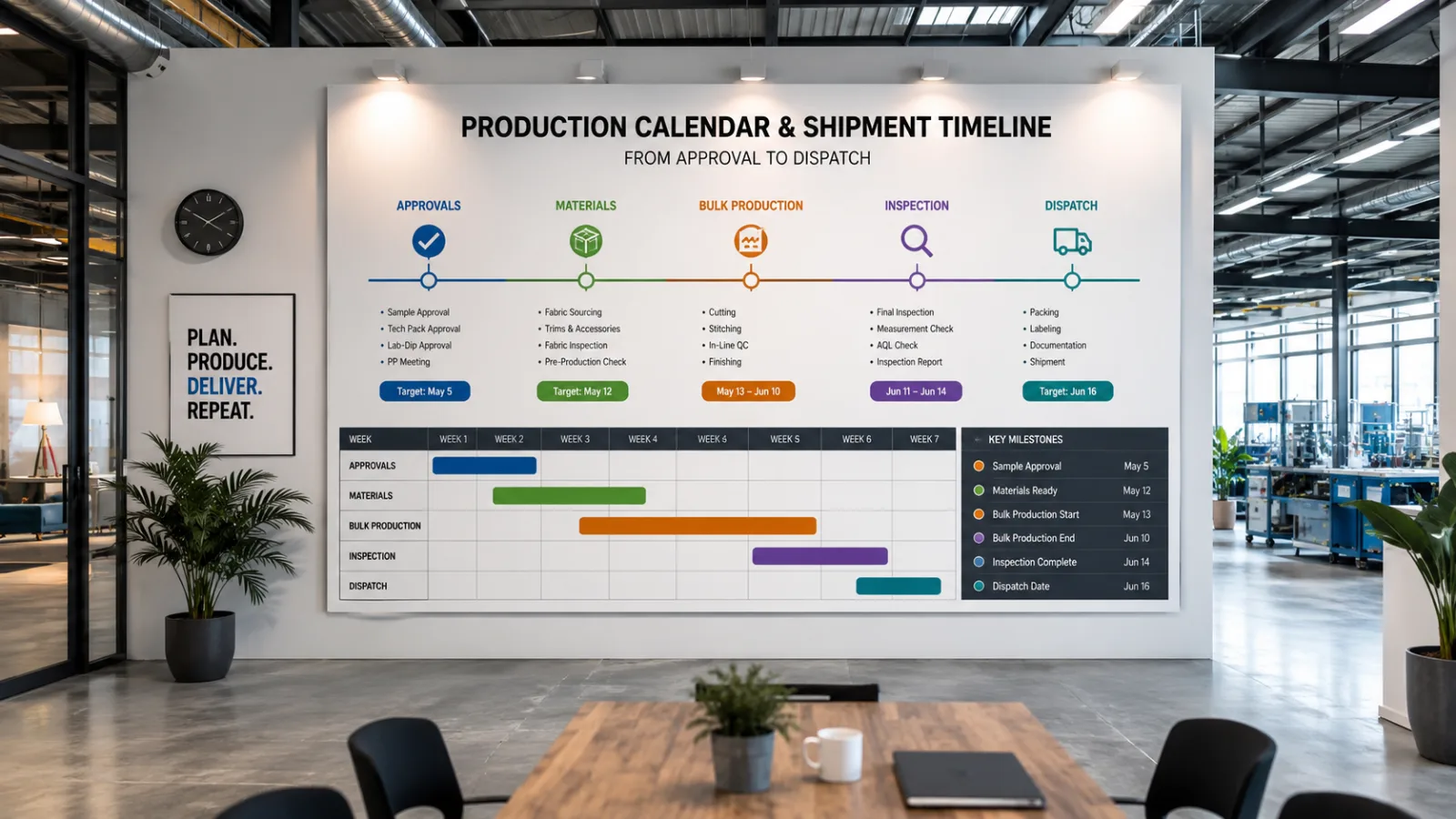
Production Timeline, Lead Time, and Delivery Dates
In apparel, timing is often as important as quality. Missing a seasonal launch can destroy margin even if the garments are well made.
Your contract should state: the designer's responsibilities and ensure clarity in the manufacturing facility's obligations.
- estimated production lead time
- target shipment date
- whether delivery dates are firm or estimated
- the point from which lead time starts running, such as after receipt of deposit, approved sample, and all materials
- whether partial shipments are allowed
- what happens if the manufacturer anticipates delay
- notification requirements for delay risk
This is critical because delivery disputes often come from missing the exact trigger for the timeline. For example, the buyer may think the clock started when the PO was issued, while the factory thinks it started only after trim approvals and deposit receipt.
Your contract should define that clearly.
Materials and Sourcing Responsibilities
A well written apparel contract should state who supplies what. This applies to fabric, trims, labels, packaging, accessories, and even testing or compliance documents.
Define:
- who supplies fabric
- who supplies trims and labels
- who approves sourcing vendors
- who bears the risk of material defects
- whether substitute materials are allowed
- what happens if nominated materials arrive late or defective
- who pays for excess wastage beyond agreed allowance
If the buyer supplies materials, include terms for receiving, inspection, storage, usage, and reporting of shortages or defects. If the manufacturer sources materials, require written approval before switching supplier, composition, or quality level.
Material confusion is one of the biggest sources of production disputes, so this section deserves detail.
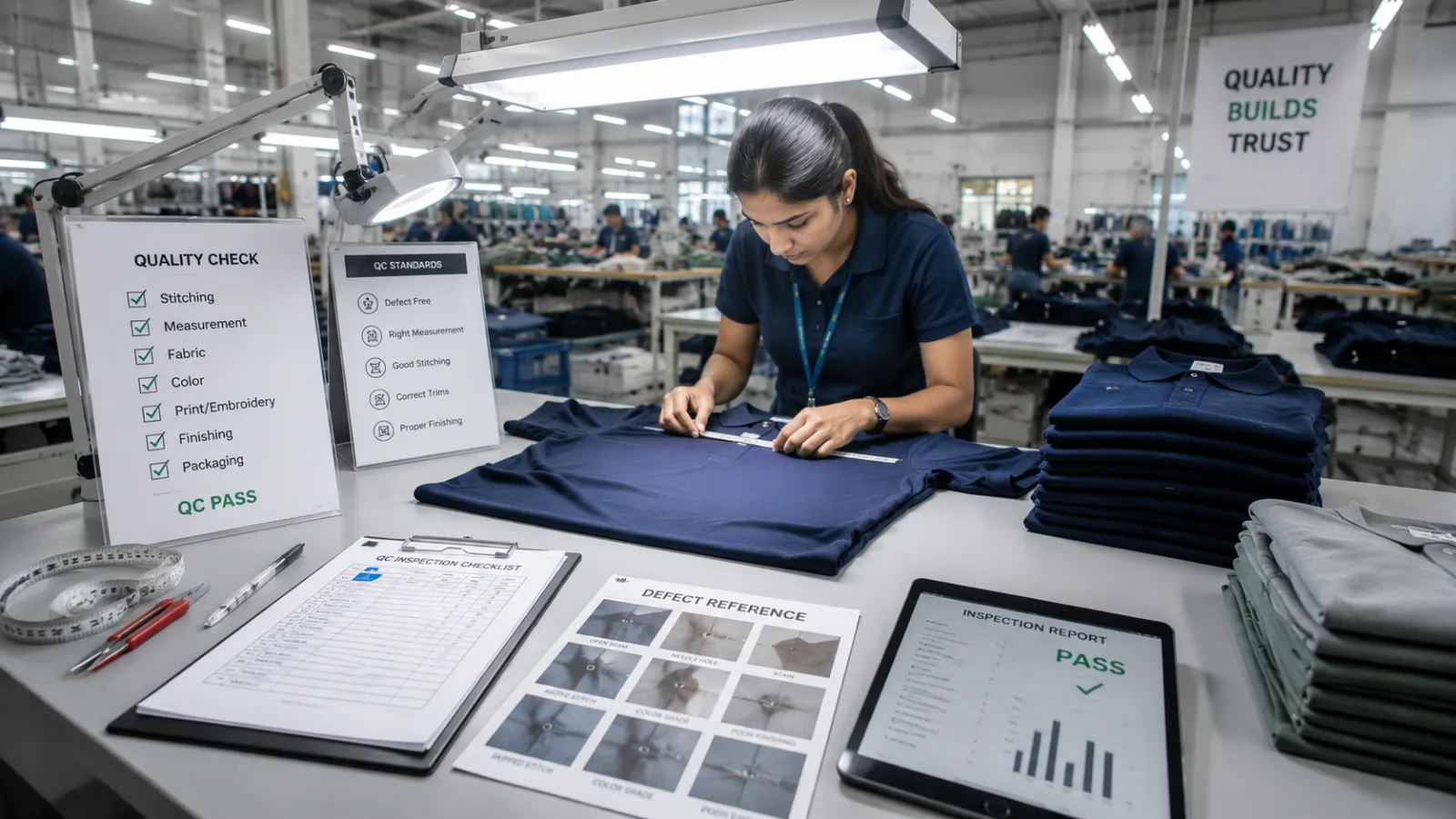
Quality Standards, Inspection Procedures, and Acceptance Criteria
You should never rely on “good quality” as a contract standard. That phrase is too vague. Apparel quality needs measurable references.
A strong quality section should include:
- compliance with approved sample and tech pack
- measurement tolerance rules
- stitching and workmanship standards
- color and shade consistency requirements
- labeling and packaging accuracy standards
- defect categories such as critical, major, and minor
- whether AQL or another inspection standard applies
- whether third-party inspection is allowed or required
- when inspection takes place, such as pre-shipment or final random inspection
Most importantly, define what happens if the goods fail inspection. Can the manufacturer rework them? Within what time? Who pays for re-inspection? At what point can the buyer reject the goods?
This section is one of the strongest protections in the whole agreement.
Defects, Rework, Returns, and Remedies
Even good factories can produce defects. The contract should explain how both sides handle those situations.
Include terms covering:
- notification period for reporting defects
- whether the manufacturer has the right to inspect returned claims
- rework process and timeline
- repair, replacement, credit, or refund options
- whether rejected goods can be sold elsewhere
- who pays transport costs for returns or replacements
- whether the buyer may reject part of a shipment or only the full lot
You may also want a clause that prevents the manufacturer from selling rejected or cancelled branded goods without written approval, especially if the garments carry your brand name or private label.
A contract is strongest when it does not just define success. It also defines failure management.
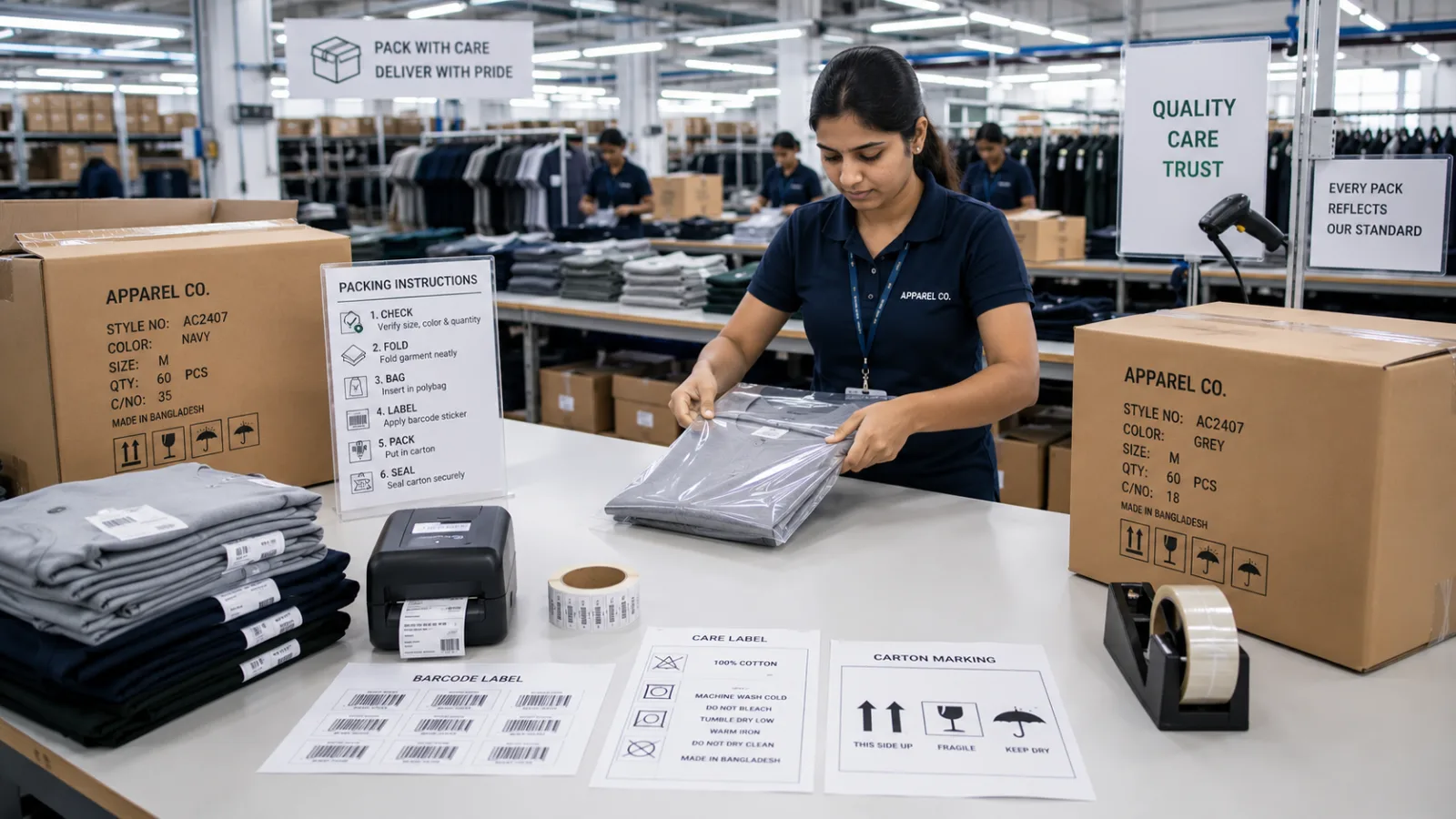
Packaging, Labeling, and Carton Marking Requirements
In apparel export, packaging errors can create retailer penalties, customs problems, or warehouse confusion. These details must be contractual if they are important to your business.
Include references to:
- folding method
- polybag specifications
- hangtags and barcode labels
- size stickers
- care labels and composition labels
- carton assortment
- carton dimensions and weight limits
- shipping marks and carton markings
You should also state that all labeling must match approved artwork and legal requirements for the destination market. This is especially important for fiber composition labels, country of origin labels, care instructions, and retailer-specific barcode systems.
A contract that ignores packaging is incomplete because packaging failures often happen after production is finished, when fixing them becomes expensive.
Compliance, Testing, and Regulatory Responsibilities
Apparel brands increasingly need factories to meet compliance standards beyond sewing quality. Your contract should state what compliance expectations apply to the goods and who is responsible for proving them.
Depending on your product and market, this may include:
- fiber composition accuracy
- restricted substance compliance
- child safety rules for drawcords or trims
- flammability requirements where relevant
- social compliance or audit requirements
- documentation for testing and certification
- destination market labeling rules
The contract should also explain who pays for required testing, whether test failures trigger rework or rejection, and whether the manufacturer may use only approved chemicals, trims, and materials. This section matters because compliance problems can stop goods at the border or create expensive recall risk later.
Intellectual Property, Designs, Patterns, and Branding Rights
This is one of the most important sections for private label and original brands. If you provide original designs, patterns, artwork, prints, logos, brand labels, or packaging concepts, your contract should clearly state who owns them.
Include clauses covering:
- ownership of brand name, logos, artwork, and designs
- ownership of patterns and tech packs created by or for the buyer
- restrictions on factory reuse of those designs
- prohibition on selling overruns, seconds, or copied goods using the buyer’s branding
- prohibition on making similar styles for direct competitors if relevant
- return or destruction of buyer-owned molds, screens, patterns, or labels upon request
Without these clauses, some brands face unauthorized production, sample copying, or resale of branded excess goods.
If your brand value depends on originality, this section is non-negotiable.
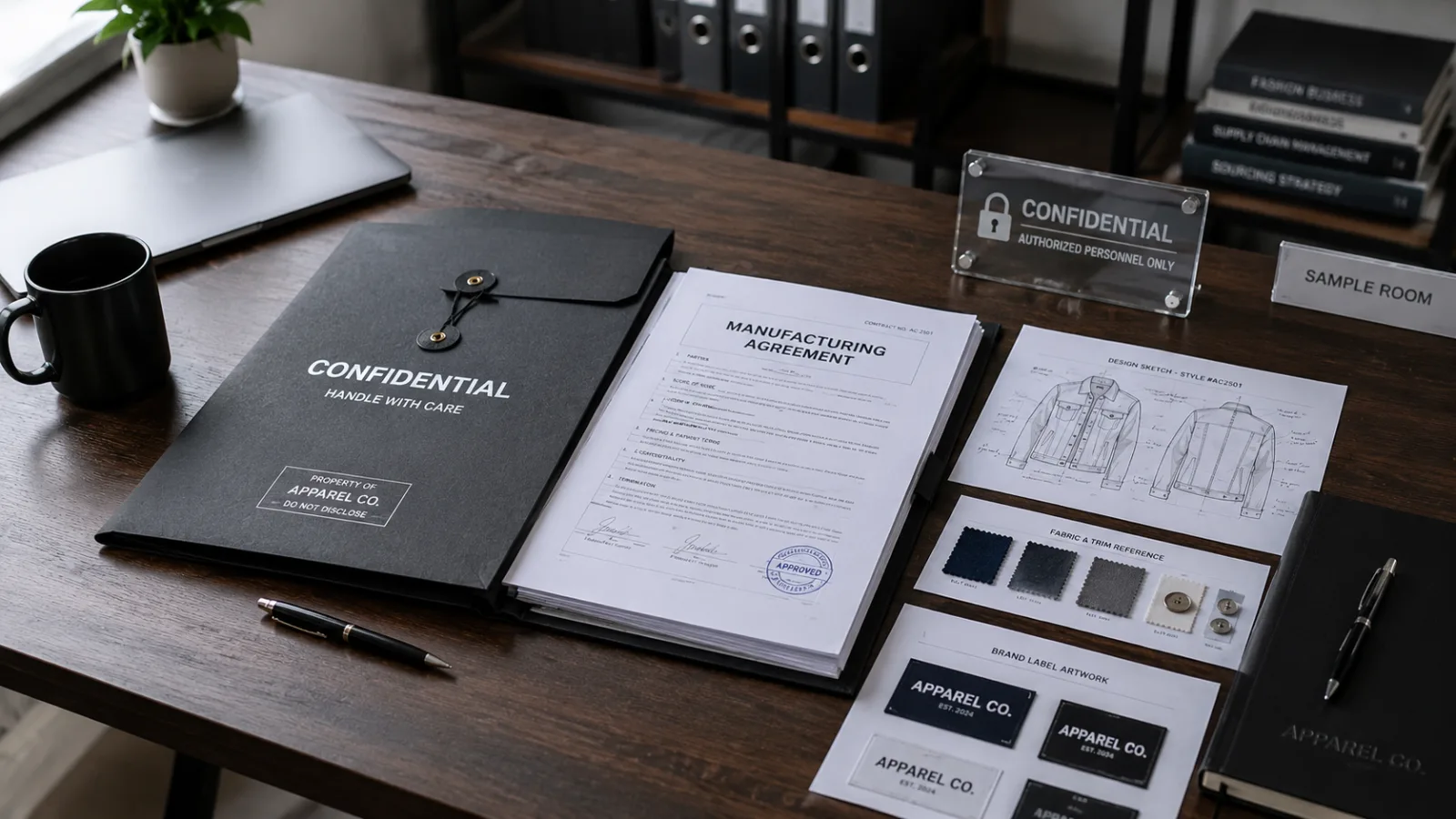
Confidentiality and Non-Disclosure
Apparel brands often share sensitive information during development and production, including designs, fabric sources, pricing, launch plans, customer lists, and retailer requirements. Your contract should include a confidentiality clause or a separate non-disclosure agreement.
This clause should protect:
- designs and future collections
- supplier and costing information
- customer and retailer information
- business plans and forecasts
- technical documents and approvals
It should also explain how long confidentiality survives after the contract ends.
This is especially important if the factory works with multiple brands in similar categories. A confidentiality clause creates a clearer boundary around your proprietary business information.
Subcontracting and Use of Other Factories
Many brands assume the supplier they are talking to will produce the garments in its own facility. That may not always be true. In some cases, a vendor or factory may subcontract part or all of the order to another production site.
Your contract should state:
- whether subcontracting is allowed
- whether buyer approval is required before subcontracting
- whether the same quality and compliance obligations apply to subcontractors
- whether the original manufacturer remains fully responsible for the goods
This clause matters because unauthorized subcontracting can create issues with quality, social compliance, delivery timing, and traceability.
If your brand has strict audit or compliance requirements, this section becomes even more important.
Ownership of Materials, Work in Progress, and Finished Goods
Many production disputes become messy when one side assumes it owns goods at a certain stage and the other side disagrees. Your contract should define ownership clearly.
Important points may include: responsibilities for color approvals or lab dips in the manufacturing relationship.
- who owns buyer-supplied materials
- when title to finished goods transfers
- whether work in progress belongs to the buyer after deposit payment
- what happens to unused materials after order completion
- whether the manufacturer can hold finished goods if payment is overdue
This helps prevent disputes over fabric leftovers, packaging stock, cancelled orders, and goods waiting at the factory.
For private label brands using custom labels and packaging, leftover materials can have real value and should be addressed clearly.
Cancellations, Termination, and Exit Rights
Sometimes a relationship must end. Your contract should explain how and when.
Include terms covering:
- cancellation rights before production begins
- cancellation consequences after materials are committed
- termination for breach
- termination for repeated late delivery or failed quality
- termination for insolvency or business closure
- notice period for ending an ongoing supplier relationship should be clearly defined in the contracts and agreements.
- financial treatment of work already completed
A fair termination clause protects both sides. The buyer should not be forced to stay in a failing relationship. The manufacturer should not lose recovery for committed materials and labor due to arbitrary cancellation.
Without clear termination rules, even ending the relationship becomes a dispute.

Force Majeure and Unexpected Disruption
Apparel supply chains can be affected by events outside either party’s control, such as natural disasters, port disruptions, major utility failures, labor disruptions, pandemics, or government restrictions. Your contract should include a force majeure clause that defines what counts as an extraordinary event and what happens if one occurs.
A good clause should state:
- what events qualify
- that the affected party must notify the other promptly
- what obligations are suspended
- whether timelines are extended
- when the other party may terminate if the disruption continues too long
This clause is not meant to excuse normal production problems. It is meant to address truly exceptional events.
Governing Law, Jurisdiction, and Dispute Resolution
If a dispute happens, you need to know where and how it will be handled. This section is often ignored by small brands, but it matters greatly in international manufacturing.
Your contract should specify:
- governing law
- court jurisdiction or arbitration venue
- language of the controlling contract
- process for good-faith negotiation before legal escalation
- whether mediation is required first
For international apparel sourcing, arbitration is sometimes preferred because it may be easier to enforce across borders than court litigation, depending on the parties and jurisdictions involved. But the right approach depends on your business, risk level, and legal strategy.
This is one area where legal advice is especially helpful, because cross-border enforcement can be complex.
Communication, Notices, and Change Approval Procedures
Many apparel disputes begin with email chains and message screenshots. Your contract should set a formal process for communication on important issues.
Define:
- official notice email addresses
- who can approve changes
- which changes must be in writing
- how approvals for sample changes, delivery changes, or material substitutions are documented
- whether WhatsApp or informal messages count as binding approval
This section may sound administrative, but it prevents confusion when one merchandiser informally approves a change the brand never intended to accept. Formal communication rules reduce production mistakes and blame shifting.
Attachments and Supporting Documents That Should Be Part of the Contract
A clothing manufacturing agreement becomes much stronger when important documents are attached and incorporated by reference.
Common attachments include:
- purchase order template
- tech pack
- approved sample reference
- measurement sheet
- bill of materials
- label artwork
- packaging instruction
- quality manual or inspection checklist
- compliance requirements
- delivery schedule
The contract should clearly state that these attachments form part of the agreement and that in the event of conflict, there is an order of priority. For example, the signed contract may control first, followed by purchase order, then tech pack, then packing instructions. Or you may prefer a different order.
This is important because when documents conflict, someone needs to know which one wins.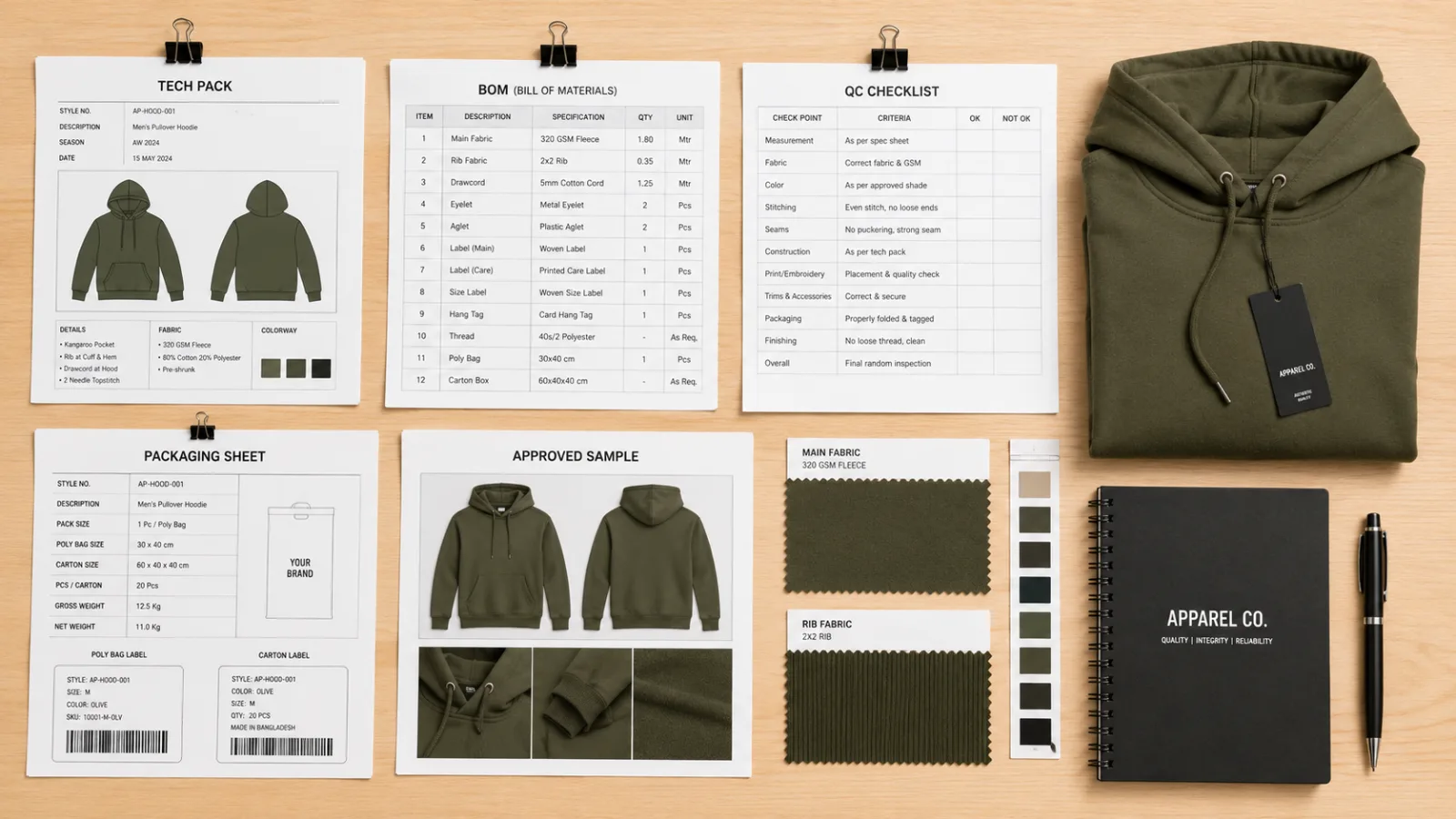
Common Mistakes Brands Make in Apparel Manufacturing Contracts
Even brands that use contracts often make avoidable mistakes.
Common errors include:
- relying only on emails or purchase orders
- using vague language like “good quality” or “on time delivery”
- not attaching the approved tech pack and sample references
- leaving material responsibility unclear
- ignoring packaging and labeling requirements
- failing to cover defect remedies and re-inspection can lead to disputes in manufacturing services agreements.
- forgetting IP and confidentiality protections
- allowing subcontracting without control
- not defining who owns leftover materials and rejected goods
The best contract is not necessarily the longest one. It is the one that clearly addresses the real risks of your production model.
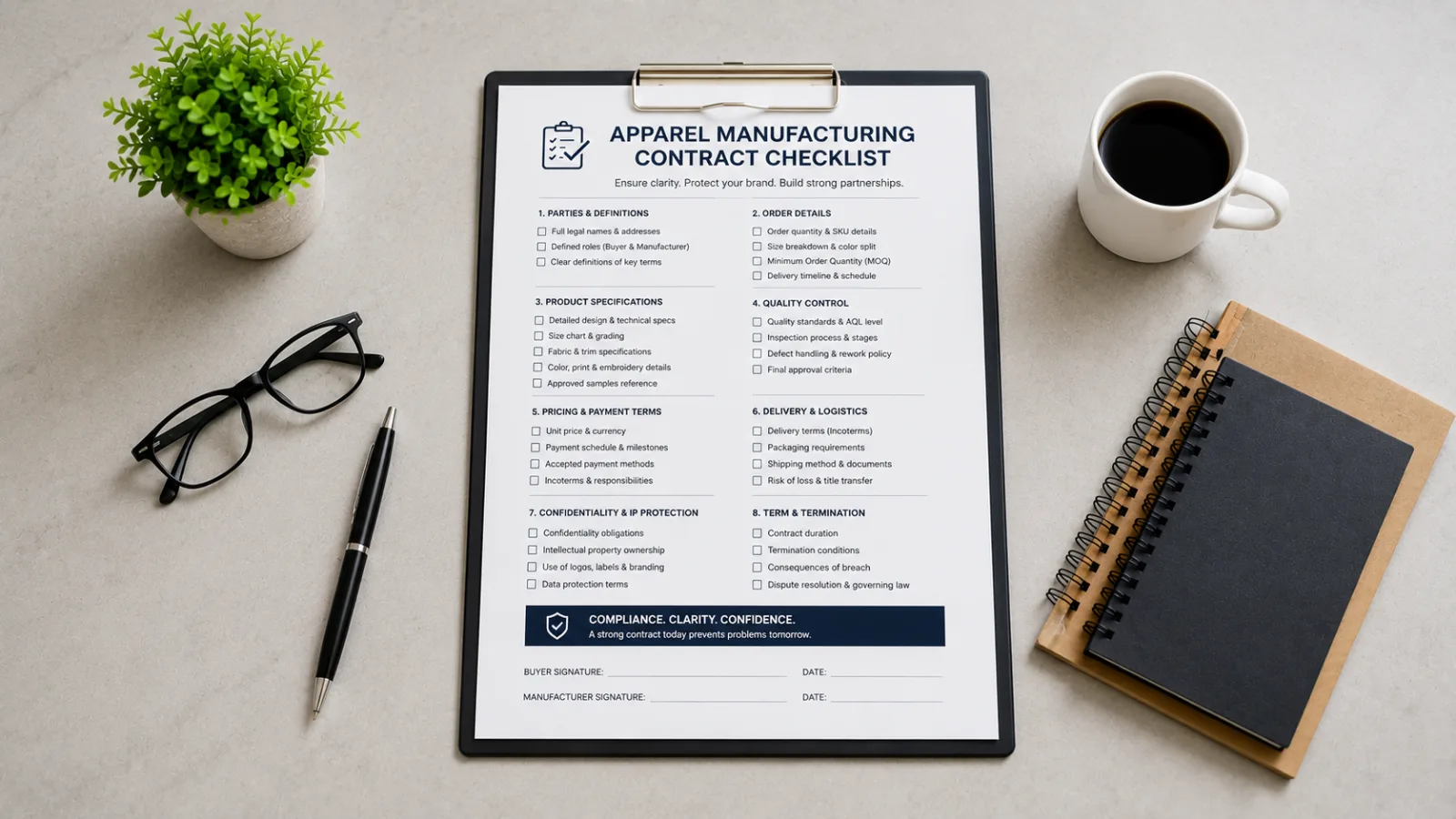
A Practical Contract Checklist for Apparel Brands
Before signing with a manufacturer, review this practical checklist:
- Are both legal parties correctly identified?
- Does the contract clearly define the product and reference the tech pack?
- Does it assign responsibility for fabric, trims, labels, and packaging?
- Does it fix price, payment terms, MOQ, and delivery timeline?
- Does it explain quality standards, inspection rights, and defect remedies?
- Does it protect your brand, designs, patterns, and confidential information?
- Does it address compliance, labeling, and testing?
- Does it control subcontracting?
- Does it define termination, force majeure, and dispute resolution?
- Does it include all key attachments and specify document priority?
If the answer is no to several of these questions, the agreement likely needs improvement before production starts.
When to Use a Lawyer and When a Template Is Not Enough
Many startups begin with a simple template, and that is understandable. But apparel manufacturing becomes more complex when you have custom branding, international shipping, compliance risk, large order values, or important intellectual property.
A basic template may help structure your thinking, but it should not replace legal review in higher-risk situations. You should consider professional legal input if:
- you are placing large international orders
- the contract value is significant
- the goods carry your private label or proprietary design
- the agreement includes cross-border enforcement issues
- you are dealing with exclusivity or non-compete terms
- the manufacturer wants broad rights to subcontract or change materials
- the payment and liability terms feel one-sided
A good lawyer will not only make the document more formal. They will help you identify risks you may not have noticed.
This blog is meant as a business guide, not legal advice. For high-value or cross-border contracts, professional legal review is a smart investment.
Apparel Manufacturing Contracts and Long Term Supplier Relationships
Some brands worry that detailed contracts signal mistrust. In reality, strong suppliers usually appreciate clear agreements because they reduce confusion and create better workflows.
A detailed contract does not have to damage the relationship. The key is to present it as a professional operating framework rather than a hostile legal weapon. Good manufacturers want clarity on price, quality, approvals, delivery, and payment just as much as buyers do.
The best supplier relationships are not built on vague trust. They are built on clear expectations, fair terms, quick communication, and consistent execution. A contract supports all of those.
When expectations are clearly documented, both sides spend less time arguing and more time producing successfully.
5 Reasons Why Nearshore Manufacturing is a Perfect Fit for Mexico’s Textile and Apparel Industry
Nearshore manufacturing in Mexico offers a strategic advantage for the textile and apparel industry through geographic proximity to key U.S. markets, cutting transit times and inventory costs while enabling faster response to fashion trends.
Second, a skilled and experienced workforce familiar with garment production and modern technologies ensures high quality and efficient scaling. Third, favorable trade agreements and lower logistics expenses improve cost efficiency, making nearshore partners competitive against distant suppliers.
Fourth, supply chain resilience increases as companies reduce exposure to long overseas disruptions and benefit from easier on-site oversight and collaboration. Finally, many Mexican manufacturers embrace sustainability initiatives and lean manufacturing, supporting ethical sourcing, shorter lead times, and greater flexibility for seasonal or bespoke collections—making nearshore manufacturing a perfect fit for the evolving needs of the apparel sector.
ApparGlobal
Many apparel brands reduce sourcing risk by working with manufacturing partners that support clear documentation, structured production processes, and transparent quality systems from the beginning. Companies such as ApparGlobal help clothing brands align tech packs, production requirements, compliance expectations, and factory coordination so contract discussions become more practical, organized, and scalable for long-term apparel manufacturing.

FAQ: Apparel Manufacturing Contracts
Why do clothing brands need manufacturing contracts?
Manufacturing contracts help define product specifications, pricing, quality standards, and delivery timelines. Without a contract, misunderstandings between brands and factories can lead to delays, defects, or payment disputes.
What is the difference between a purchase order and a manufacturing contract?
A purchase order confirms a specific order, while a manufacturing contract defines the overall production relationship, including quality standards, intellectual property protection, and dispute procedures.
Do startups need apparel manufacturing contracts?
Yes. Startups are often more vulnerable to production risks, making clear agreements about materials, pricing, and delivery even more important.
Can a clothing manufacturer change materials without approval?
In a properly written contract, manufacturers cannot substitute materials or trims without written approval from the buyer.
Conclusion
An effective apparel manufacturing contract should do much more than confirm a price and quantity. It should define the product clearly, assign sourcing and quality responsibilities, protect your timeline, explain how inspections work, cover payment and remedies, and protect your brand’s intellectual property and confidential information.
If you treat the contract as a simple formality, you leave too much room for confusion once production starts. If you treat it as a practical production framework, you create a much stronger foundation for quality, delivery, and supplier accountability.
The best clothing manufacturing contracts are clear, detailed, and realistic. They reflect how apparel production actually works, from tech pack approval to final shipment. For startups and established brands alike, that level of clarity is one of the smartest investments you can make before your next order goes into production.