Starting a sustainable fashion brand sounds inspiring, but it is also more complex than many founders expect. A sustainable fashion brand is not simply a clothing brand that uses organic cotton, recycled polyester, natural dyes, or eco-friendly packaging. It is a business that makes more responsible decisions across product design, sourcing, production, inventory, pricing, marketing, customer education, and end-of-life planning.
Sustainability in fashion is not one decision. It is a system. A brand may use a lower-impact fabric but still overproduce. It may use recycled materials but create poor-quality garments that customers discard quickly. It may promote ethical values but fail to verify factory conditions. It may use biodegradable packaging but ship products inefficiently. It may claim to be sustainable but offer vague proof.

That is why building a sustainable fashion brand requires clarity, discipline, and honesty. You need to understand your materials, suppliers, costs, MOQ, customer expectations, quality standards, production timelines, certifications, and environmental claims before you launch.
The fashion and textiles sector carries a serious environmental footprint. UNEP reported in 2025 that the fashion and textiles sector accounts for an estimated 2 to 8 percent of global greenhouse gas emissions, contributes about 9 percent of annual microplastic pollution reaching oceans, and consumes 215 trillion liters of water. Textile Exchange also reported that global fiber production reached 132 million tonnes in 2024, with polyester making up 59 percent of global fiber output. These numbers show why responsible fashion is not just a trend. It is a necessary shift.
But sustainability does not mean perfection. New brands do not need to solve every industry problem immediately. They need to make informed choices, avoid greenwashing, reduce unnecessary waste, and build a product system that is better than the default fast-fashion model.
This guide explains everything you need to know before starting your own sustainable fashion brand, from defining your mission to choosing materials, finding suppliers, managing MOQ, pricing correctly, and communicating honestly with customers.

What Is a Sustainable Fashion Brand?
A sustainable fashion brand is a clothing business that tries to reduce negative environmental and social impact across its product lifecycle. This includes how materials are sourced, how garments are made, how much is produced, how long products last, how workers are treated, how products are shipped, how customers care for them, and what happens when they are no longer worn.
Sustainable fashion can include many practices, such as:
- Using lower-impact materials
- Choosing responsible suppliers
- Reducing overproduction
- Producing durable garments
- Using ethical manufacturing
- Improving traceability
- Reducing textile waste
- Offering repair or resale options
- Designing for circularity
- Reducing harmful chemicals
- Using better packaging
- Communicating honestly
However, no brand is completely impact-free. Every garment has some environmental cost. Fabric must be grown or produced. Materials must be processed. Garments must be sewn, packed, transported, worn, washed, and eventually handled at end of life. The goal is not to claim perfection. The goal is to make better choices and be transparent about them.
Sustainable Fashion vs Ethical Fashion
Sustainable fashion focuses mainly on environmental impact, including materials, waste, water use, carbon emissions, pollution, durability, and circularity. Ethical fashion focuses more on people, including fair wages, safe working conditions, worker rights, supplier transparency, and responsible labor practices.
A strong responsible fashion brand should think about both. A fabric can be eco-friendly, but if the workers are treated poorly, the product is not truly responsible. A factory can be ethical, but if the product is overproduced and discarded quickly, the environmental issue remains.
Sustainable Fashion Is a Business Model
A sustainable fashion brand must also be financially sustainable. If the business cannot make profit, pay suppliers, manage inventory, and serve customers, it will not survive. Responsible fashion requires both values and business discipline.

1. Start With a Clear Sustainability Mission
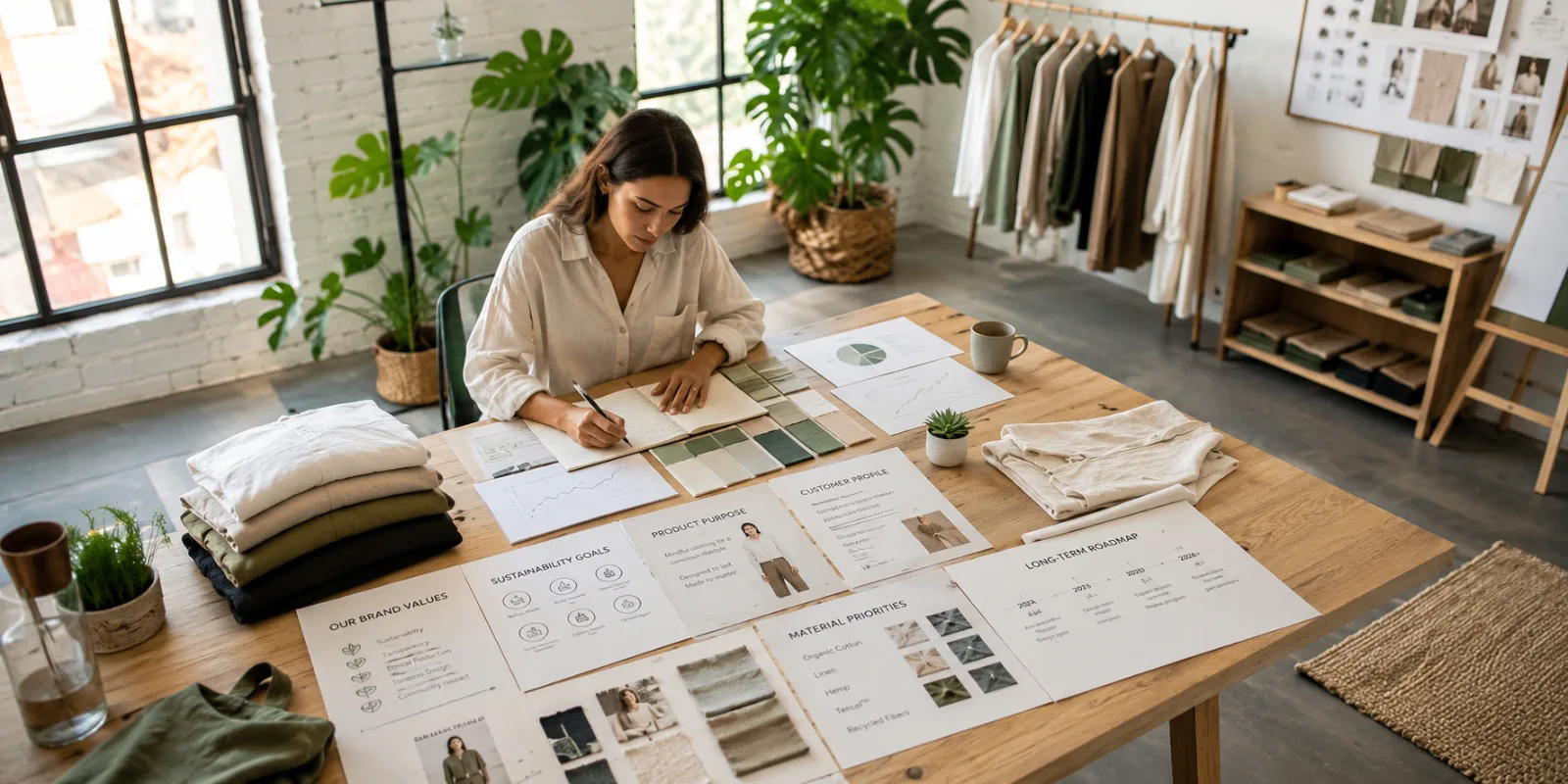
Before choosing fabric or contacting manufacturers, define what sustainability means for your brand. Many founders want to be “eco-friendly,” but that word is too broad. You need a specific mission that guides real decisions.
Your sustainability mission should answer:
- What problem are we trying to reduce?
- Are we focused on waste reduction?
- Lower-impact materials?
- Ethical manufacturing?
- Durability?
- Circularity?
- Local production?
- Small-batch manufacturing?
- Inclusive sizing?
- Transparency?
- Plastic reduction?
A clear mission helps you avoid random decisions. Without it, you may choose materials or claims only because they sound good.
Examples of Sustainability Missions
- A basics brand may focus on long-lasting wardrobe staples made with organic cotton and transparent production.
- An activewear brand may focus on recycled or lower-impact performance materials, durability testing, and microfiber education.
- A kidswear brand may focus on safe materials, durable construction, hand-me-down quality, and repairability.
- A streetwear brand may focus on small-batch drops, deadstock fabric, limited waste, and slow release cycles.
- A workwear brand may focus on durability, repair programs, and longer product life.
Why Mission Matters for Business Decisions
Your mission affects your product design, pricing, suppliers, packaging, marketing, and customer education. If your mission is durability, you should invest in fabric testing and stronger seams. If your mission is waste reduction, you should avoid overproduction and choose realistic MOQ. If your mission is circularity, you should think about fiber blends, trims, repair, and end-of-life from the beginning.
2. Understand Your Customer Before Designing Products
A sustainable fashion brand can only grow if customers actually want and buy the products. Good intentions are not enough. You need to understand your customer’s lifestyle, budget, style preferences, values, pain points, and buying behavior.
Many sustainable brands fail because they focus too much on the brand’s values and not enough on the customer’s real needs. A product can be responsibly made and still fail if the fit is wrong, the price is unrealistic, the style is not wearable, or the customer does not understand the value.
Customer Questions to Answer
- Who is our ideal customer?
- What do they currently wear?
- What problem do they have with existing clothing?
- Do they care most about price, quality, comfort, style, sustainability, or convenience?
- How much are they willing to pay?
- Where do they shop?
- What fabrics do they prefer?
- What sustainability claims do they trust?
- What would make them buy again?
Sustainability Alone Is Not Always Enough
Customers may care about sustainability, but they still expect good design, comfort, fit, quality, delivery, and price value. Most people do not buy a product only because it is sustainable. They buy because it fits their life. Your product must be desirable first, then responsible.
Build Products Around Real Use
Think about how customers will wear the garment. Is it for work, travel, home, fitness, school, casualwear, outdoor use, or special occasions? Does it need to be washable? Wrinkle-resistant? Breathable? Durable? Soft? Easy to style? Sustainable design begins with making products people will actually use for a long time.

3. Choose Materials Carefully, Not Emotionally
Material choice is one of the biggest decisions in a sustainable fashion brand. But sustainable materials are not simple. There is no perfect fabric. Every material has benefits and trade-offs.
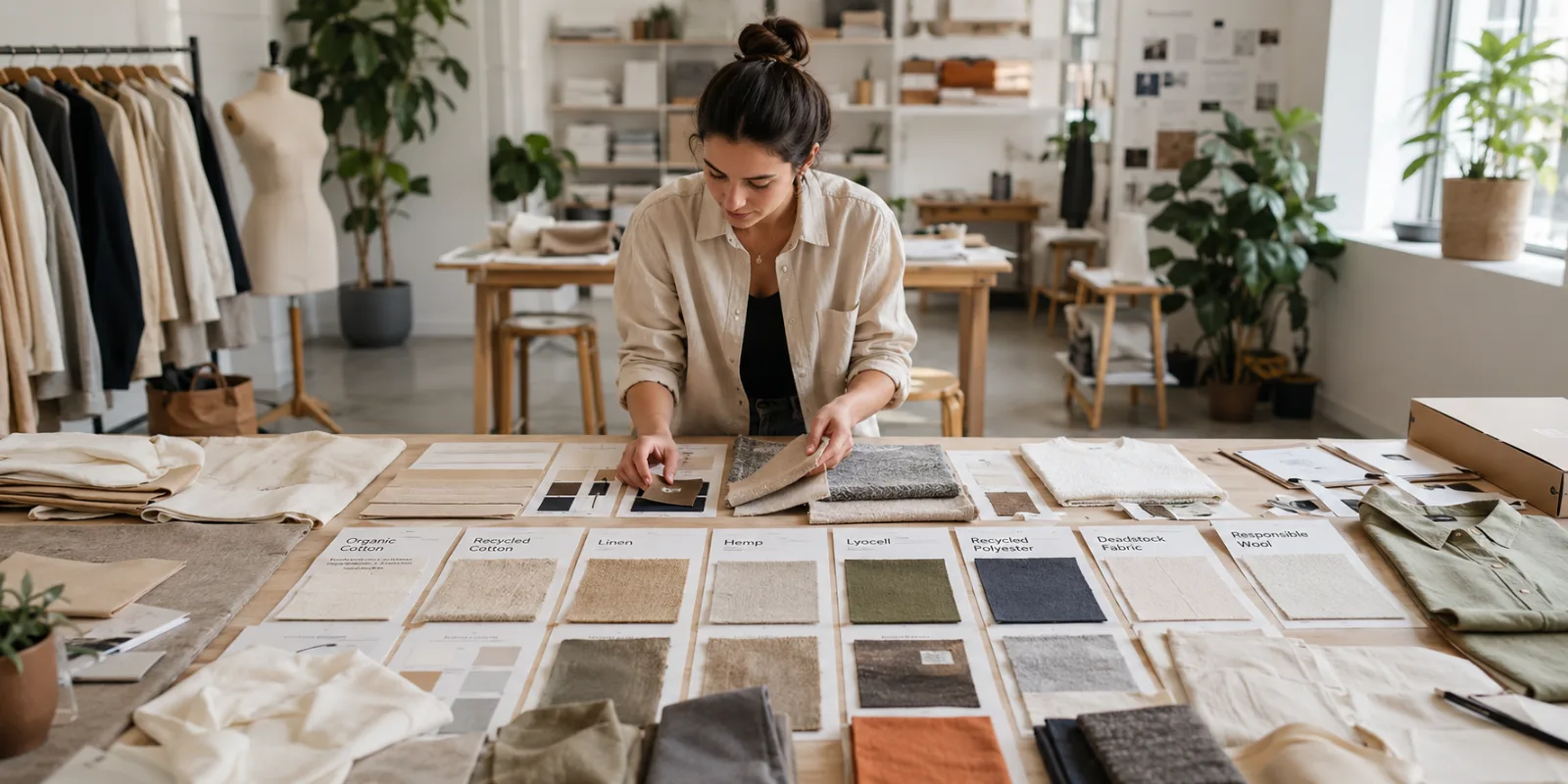
Organic cotton may reduce synthetic pesticide use compared with conventional cotton systems, but it still uses land and water. Recycled polyester reduces demand for virgin polyester but can still shed microfibers. Linen and hemp can be durable and lower-input in some systems, but they may wrinkle and cost more. Lyocell can have a soft drape and more responsible processing when sourced properly, but supply chain transparency still matters. Deadstock fabric can reduce waste, but repeat production may be difficult.
Common Sustainable Material Options
- Organic Cotton: Good for T-shirts, basics, babywear, casualwear, and underwear. It is familiar, soft, and widely understood by consumers.
- Recycled Cotton: Useful for reducing virgin fiber demand, but quality and fiber length can vary.
- Linen: Breathable, durable, and suitable for warm-weather clothing, shirts, dresses, trousers, and home textiles.
- Hemp: Strong and durable, often used for casualwear, workwear, and blends.
- Lyocell: Soft, drapey, and suitable for dresses, shirts, sleepwear, blouses, and soft basics.
- Recycled Polyester: Useful for activewear, outerwear, bags, swimwear, and performance clothing, but not a complete sustainability solution.
- Deadstock Fabric: Uses existing surplus material, reducing waste, but availability can be inconsistent.
- Wool From Responsible Sources: Durable and warm, but sourcing, animal welfare, and land management matter.
Do Not Choose Fabric by Label Alone
A fabric name does not tell the full story. Ask about origin, certification, dyeing, finishing, MOQ, testing, shrinkage, pilling, colorfastness, and care.
A “sustainable” fabric that pills quickly or shrinks badly can create waste. A durable, well-made fabric that customers wear for years may support better long-term sustainability.
4. Understand Certifications and Traceability
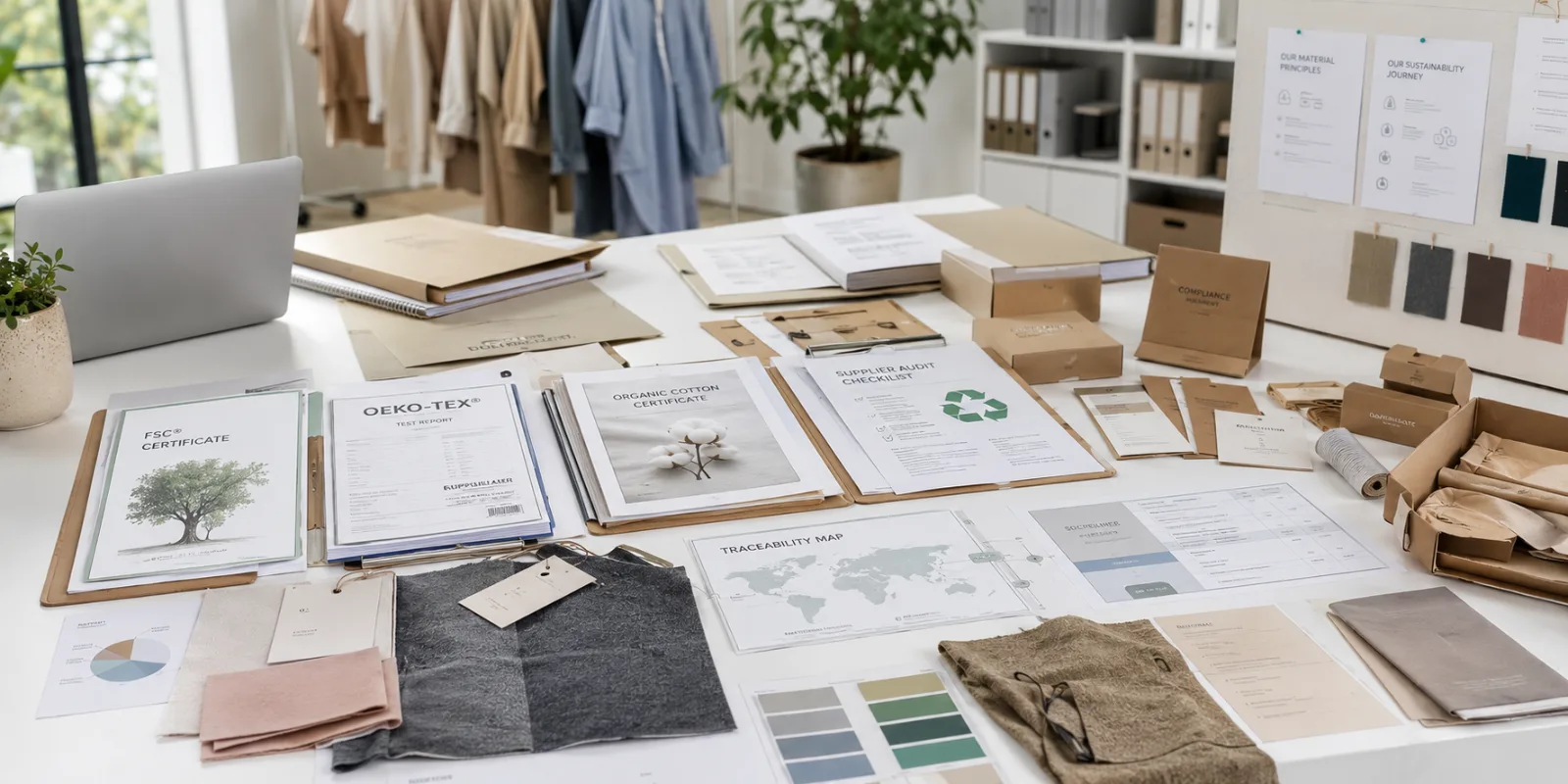
Certifications can help support sustainability claims, but they are not magic. They provide useful standards, documentation, and third-party verification for materials, chemicals, social compliance, or production processes. However, founders must understand what each certification actually covers.
Common Certifications and Standards to Know
- GOTS: Often used for organic textiles and processing requirements.
- OEKO-TEX Standard 100
- : Tests textiles for certain harmful substances.
- GRS: Global Recycled Standard, used for recycled content and chain of custody.
- RCS: Recycled Claim Standard, focused on recycled material claims.
- FSC
- : Relevant for forest-based fibers, packaging, and paper materials.
- bluesign
- : Focuses on chemical management and safer textile production systems.
- Fair Trade Standards: Relevant for social and labor-related claims in some supply chains.
- Leather Working Group
- : Relevant for leather manufacturing facility audits.
Traceability Matters
Traceability means knowing where materials come from and how they move through the supply chain. This can include farm, fiber, yarn, fabric mill, dye house, factory, packaging supplier, and logistics.
A brand does not need perfect traceability on day one, but it should know more than “our supplier said it is sustainable.” Ask for documents. Keep records. Understand what claims you can prove.
Avoid Certification Confusion
Do not use certification logos or claims unless you are allowed to use them. Some certifications apply to the material, some to the facility, and some to the final product. Misusing certification language can create trust problems.
5. Find Suppliers Who Understand Sustainable Production
Your supplier can make or break your sustainable fashion brand. A supplier who does not understand responsible materials, fabric testing, MOQ, chemical management, quality control, and documentation can create problems later. Do not choose a manufacturer only because they say they can make sustainable clothing. Ask specific questions.
Supplier Questions to Ask
- What sustainable materials do you work with?
- Can you provide fabric certificates?
- Do you have experience with organic or recycled fabrics?
- Do you have low MOQ options?
- Can you source trims and labels responsibly?
- How do you manage waste during cutting?
- Do you work with certified mills?
- Can you provide quality inspection reports?
- What dyeing and finishing options are available?
- Do you allow third-party inspection?
- Do you subcontract production?
- What packaging options do you offer?
- Can you support small-batch production?
Why Supplier Experience Matters
Sustainable fabrics can behave differently from standard materials. Recycled fibers may have quality variations. Deadstock fabric may be limited. Organic cotton may shrink if not tested properly. Natural fibers may need careful washing and finishing. Some lower-impact materials may have higher MOQ or longer lead time. A supplier with experience can help prevent mistakes.
Build Long-Term Supplier Relationships
Sustainability improves when brands and suppliers work together over time. A strong relationship supports better planning, better communication, fewer surprises, and more realistic production.
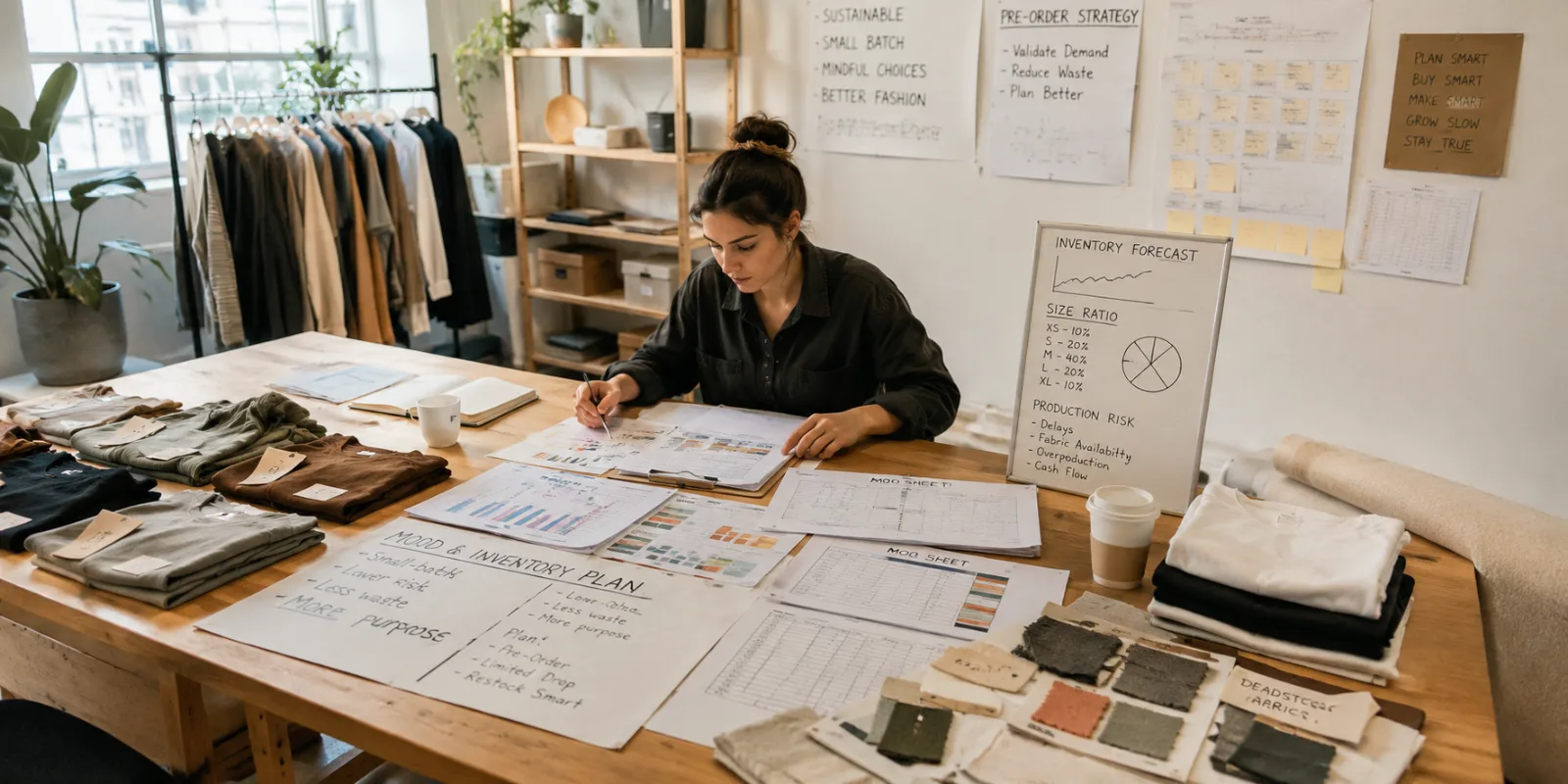
6. Plan MOQ and Inventory Carefully
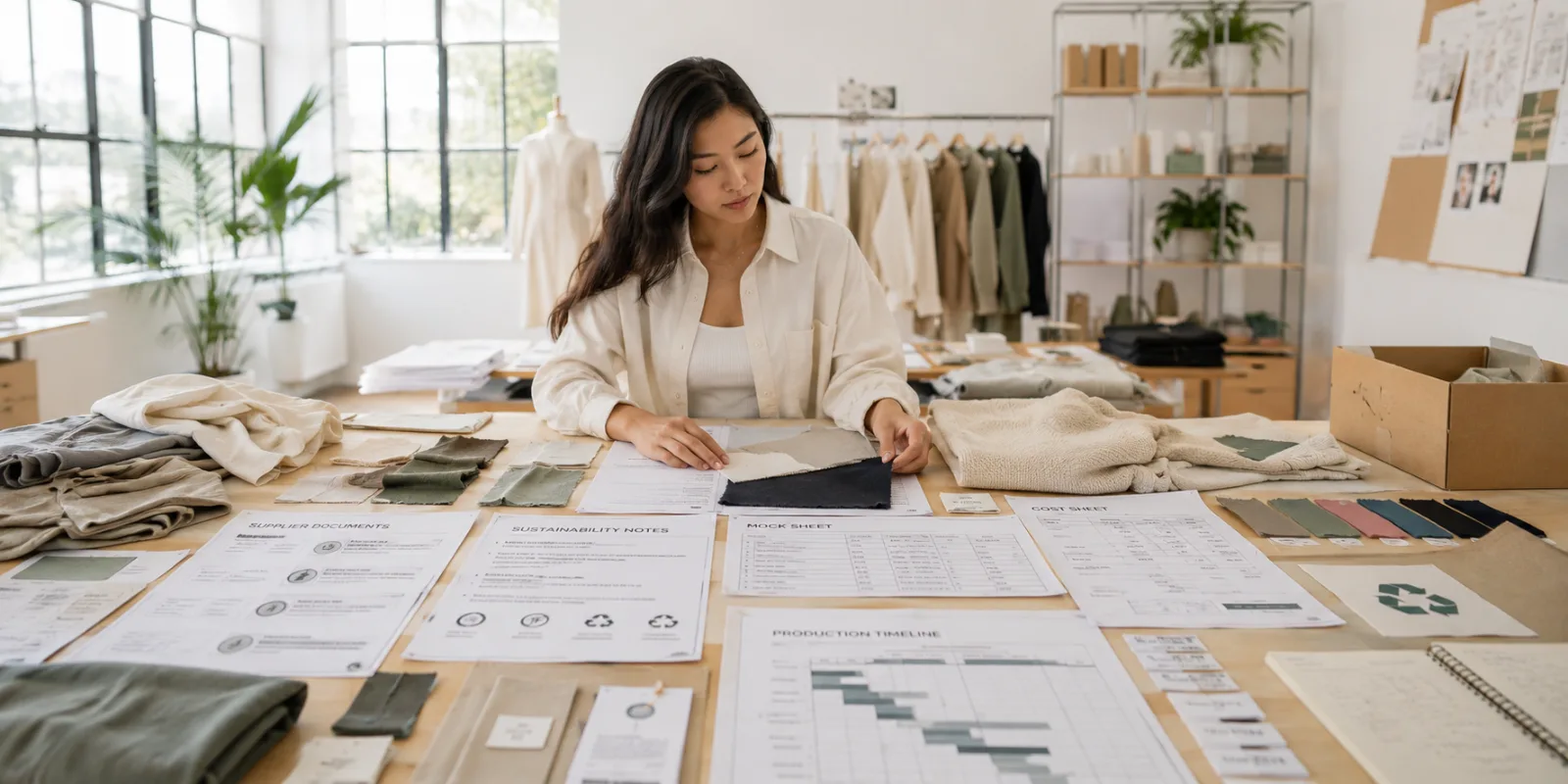
MOQ, or minimum order quantity, is one of the biggest challenges for sustainable fashion brands. Sustainable fabrics, custom colors, certified materials, recycled trims, and ethical production may come with higher minimums or higher costs.
If you produce too much inventory, sustainability suffers. Overproduction creates waste, cash flow pressure, markdowns, storage costs, and potential deadstock.
Why Small Batch Can Be Smarter
Small-batch production can reduce inventory risk. It allows you to test demand, learn from customers, and improve future products. However, small batches usually cost more per unit. This is a trade-off. A lower unit cost from high MOQ may look attractive, but if the product does not sell, the brand may create waste and lose cash.
Pre-Orders and Made-to-Order
Some sustainable brands use pre-orders or made-to-order systems to reduce overproduction. These models can work, but they require strong customer communication. Customers need clear timelines and realistic expectations.
Pre-orders are not an excuse for poor planning. You still need reliable suppliers, sample approval, accurate costing, and delivery discipline.
Inventory Planning Tips
- Start with fewer styles.
- Use proven colors.
- Avoid too many sizes without demand data.
- Test before scaling.
- Track sell-through.
- Plan restocks carefully.
- Avoid trend-chasing.
- Use deadstock fabric for limited drops.
- Create markdown and liquidation rules early.
7. Price Your Products Realistically
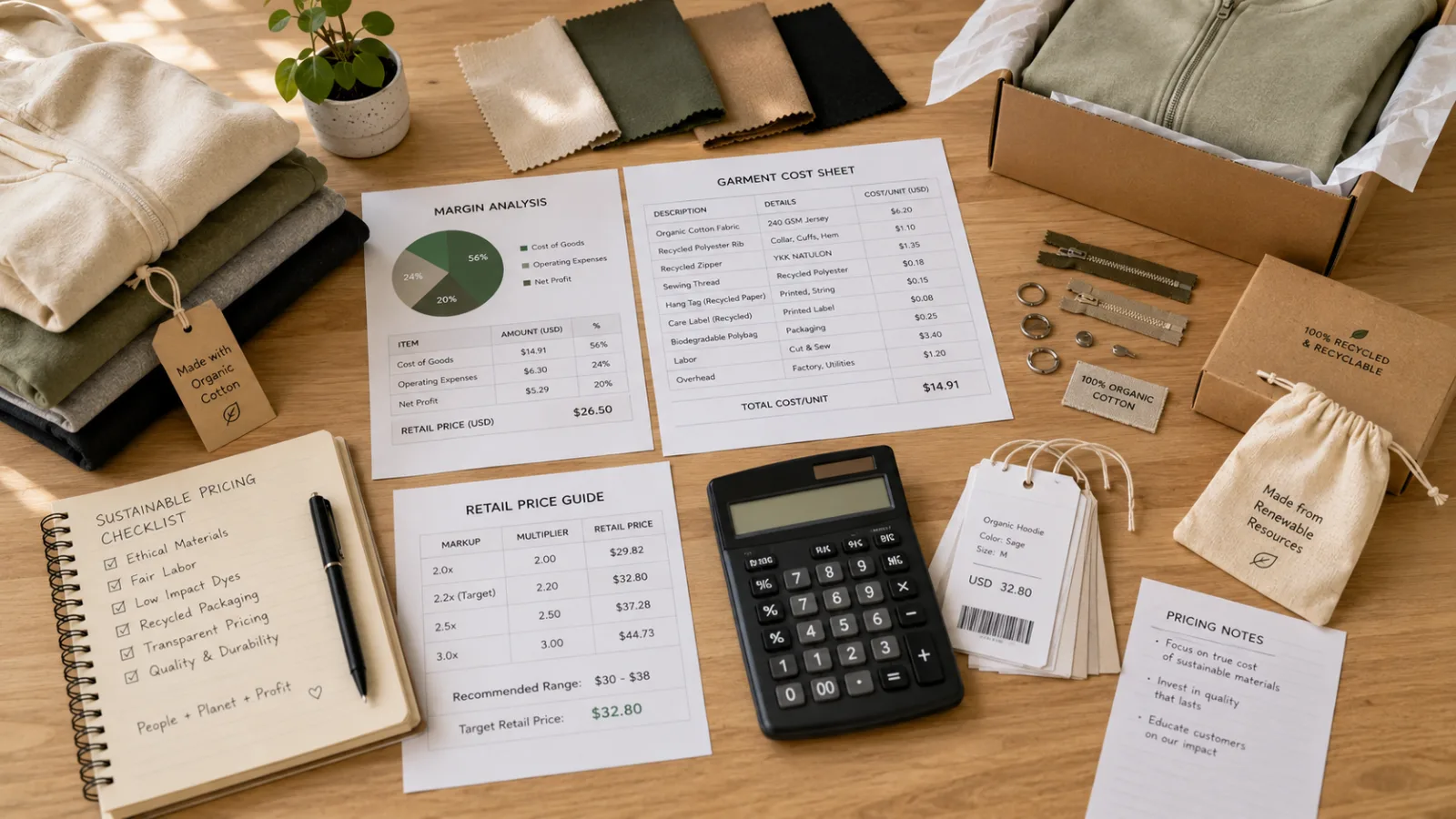
Sustainable fashion usually costs more to produce than fast fashion. Better materials, fairer production, certifications, lower MOQs, quality testing, responsible packaging, and traceability can all increase cost. If you price too low, the brand may not survive. If you price too high without clear value, customers may not buy. Pricing must be based on real numbers.
Calculate Your True Cost
Your product cost may include:
- Fabric
- Trims
- Labels
- Packaging
- Sampling
- Pattern making
- Grading
- Cutting and sewing
- Printing or embroidery
- Quality control
- Freight
- Duties and taxes
- Warehousing
- Returns
- Payment processing
- Marketing
- Website tools
- Customer service
Do not price only from factory cost. Calculate landed cost and business overhead.
Communicate Value Clearly
Customers may pay more for sustainable products when they understand the value. Explain what makes the product better: fabric, durability, production method, fit, limited production, repairability, responsible sourcing, or quality. Avoid guilt-based selling. Focus on product value and honest impact.
Do Not Compete With Fast Fashion Pricing
A sustainable fashion brand should not try to match fast fashion prices if the cost structure is completely different. Instead, position around quality, longevity, thoughtful design, transparency, and better value per wear.
8. Design for Durability, Not Just Sustainability Claims
A garment is not sustainable if it falls apart quickly. Durability is one of the most important parts of responsible fashion. A well-made product that customers wear for years can have better value than a trendy item made from an eco-friendly material but discarded after a few uses.
What Makes Clothing Durable?
- Good fabric quality
- Strong seams
- Proper stitching
- Colorfastness
- Shrinkage control
- Good fit
- Quality trims
- Repairable construction
- Care instructions
- Timeless design
- Comfortable wear
- Resistance to pilling
Design for Real Life
Think about how the garment will be worn and washed. A sustainable T-shirt should not twist after two washes. A hoodie should not pill heavily after a few wears. A dress should not shrink unexpectedly. Activewear should recover after stretching. Kidswear should handle movement and washing.
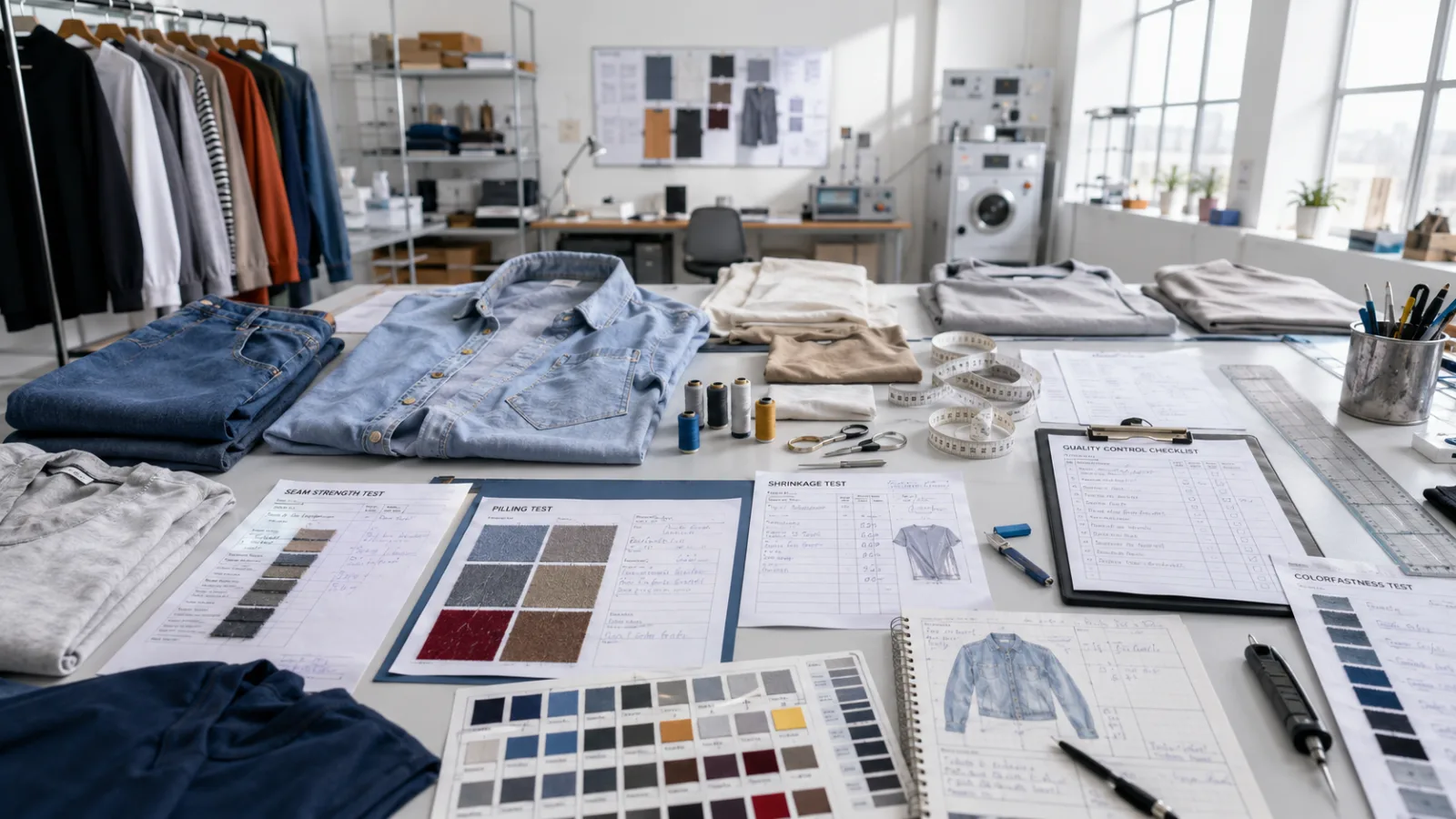
Durability Testing
Before production, test samples. Wash them. Wear them. Stretch them. Check seams. Check color. Check shrinkage. Check pilling. If possible, ask early users to test samples and give feedback.
Longevity Is a Selling Point
Teach customers how to care for garments. Offer repair guidance. Explain why quality matters. A brand that helps customers keep products longer builds trust.
9. Build a Responsible Packaging and Shipping Strategy
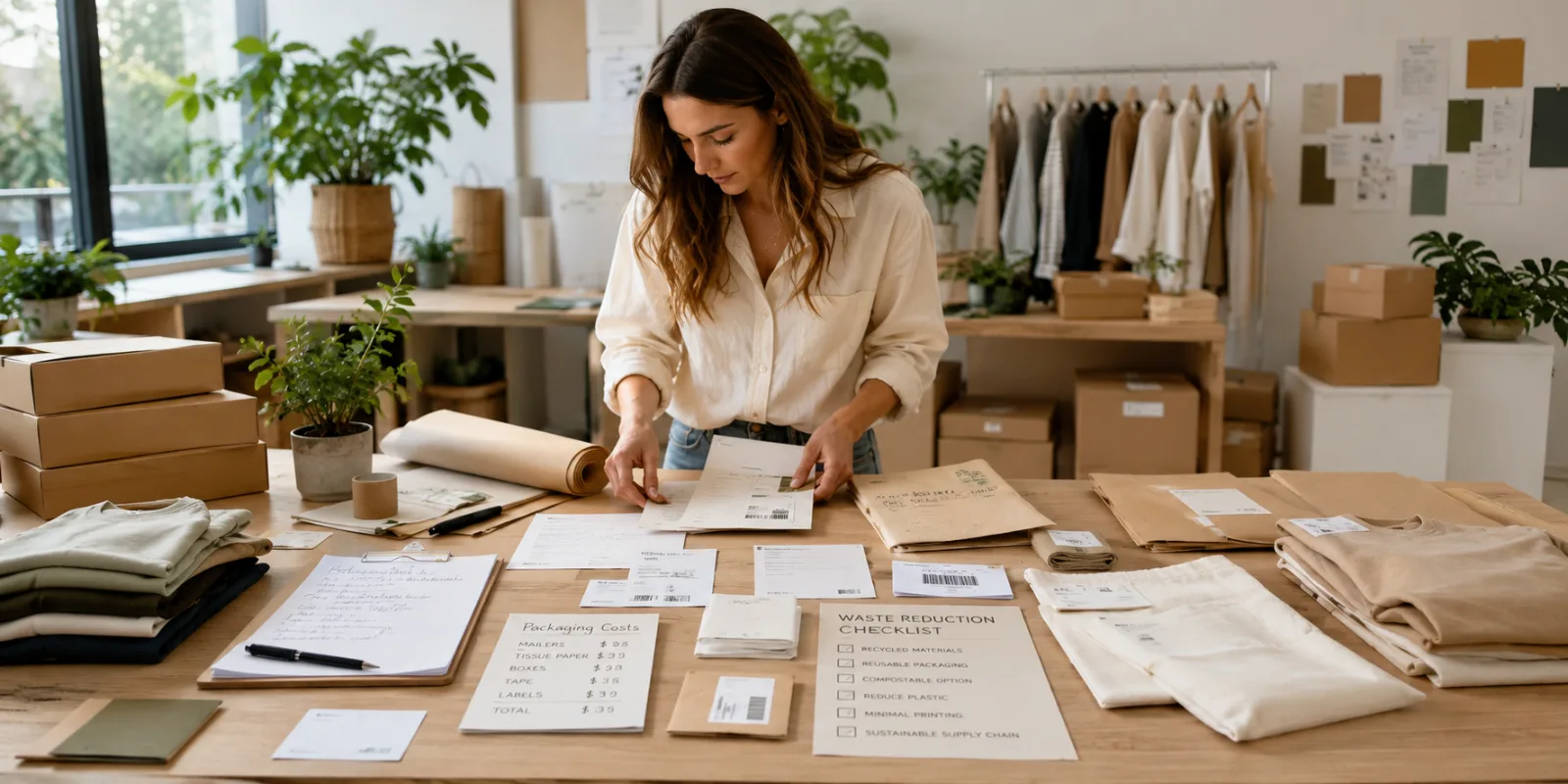
Packaging is often one of the first things customers notice, but sustainable packaging is not always simple. Many brands switch to recycled or compostable packaging without understanding durability, cost, shipping protection, or local disposal systems.
The best packaging strategy is usually minimal, protective, and clear.
Packaging Questions to Ask
- Does the product need individual polybags?
- Can packaging be reduced?
- Is recycled content available?
- Is the packaging recyclable in the customer’s region?
- Is compostable packaging actually compostable in real conditions?
- Will packaging protect the garment during shipping?
- Can we avoid unnecessary inserts?
- Can we use paper labels responsibly?
- Can we reduce box size?
Shipping Impact
Shipping also matters. Regional production, efficient order packing, lower return rates, and better inventory planning can reduce unnecessary shipping impact. A return-heavy brand may create more emissions and waste than expected.
Avoid Over-Packaging
Luxury does not need to mean excessive packaging. A clean, thoughtful, minimal package can feel premium and responsible.
10. Avoid Greenwashing From Day One
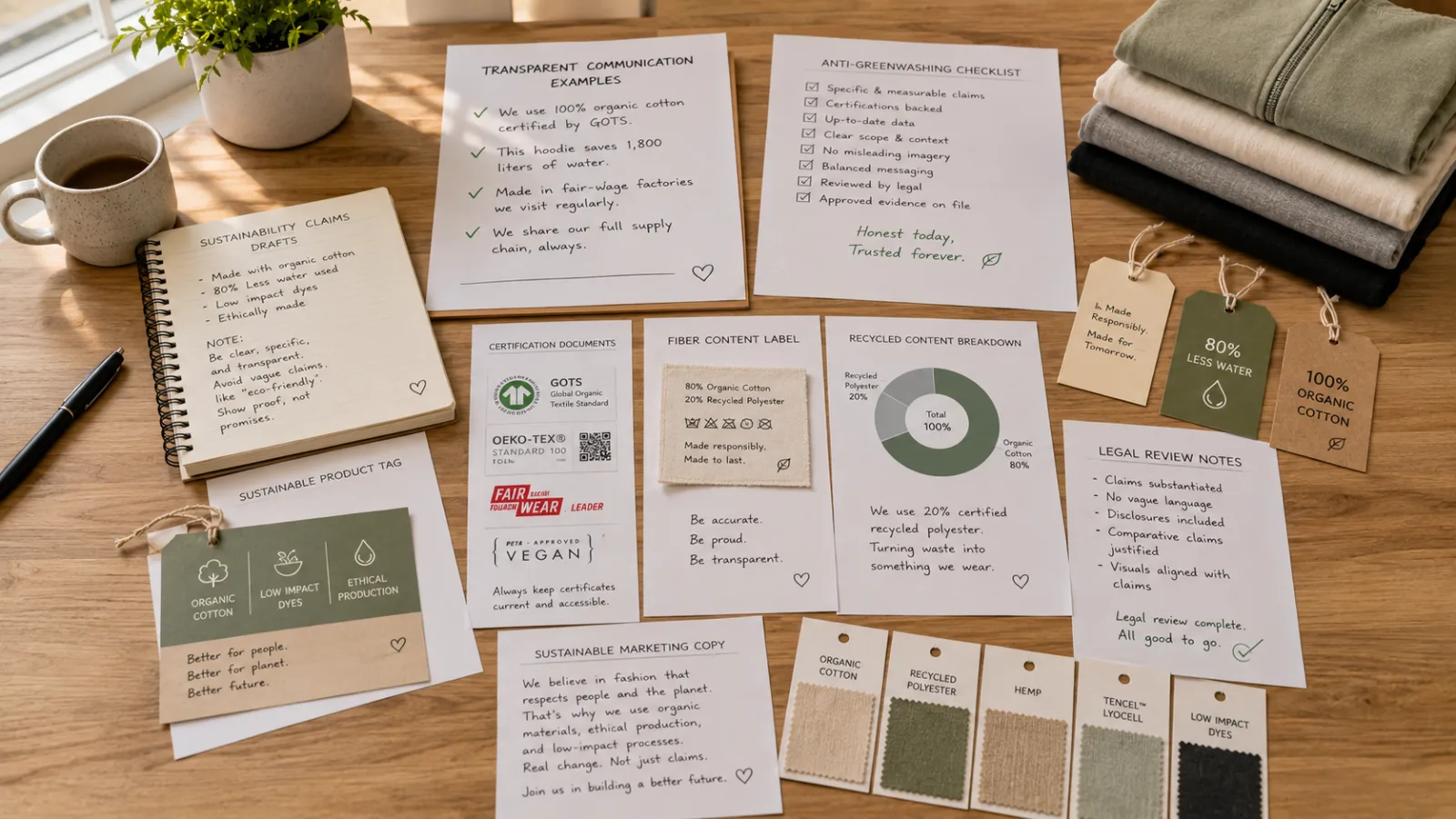
Greenwashing is one of the biggest risks for sustainable fashion brands. It happens when a brand makes sustainability claims that are vague, exaggerated, misleading, or unsupported. Customers are becoming more aware, and regulators are paying closer attention to environmental claims.
Common Greenwashing Mistakes
- Using “eco-friendly” without explanation
- Calling a product “sustainable” without evidence
- Saying “natural” as if it always means low-impact
- Promoting recycled content without percentage
- Claiming “zero waste” without proof
- Using certification logos without permission
- Hiding synthetic blends
- Ignoring factory conditions
- Making packaging claims that are unclear
- Using emotional language instead of facts
Better Sustainability Communication
Be specific. Instead of saying “made sustainably,” say what you actually did.
Examples:
- Made with 100 percent organic cotton.
- Produced in small batches to reduce overstock.
- Made from deadstock fabric, so quantities are limited.
- Contains 60 percent recycled polyester.
- Designed for cold washing and long-term wear.
- Packaged with recycled paper materials.
- Manufactured in a facility that provided certification documents.
- Specific claims are more trustworthy than broad claims.
Honesty Builds Trust
It is okay to say your brand is still improving. Customers often respect transparency more than perfection. Share what you are doing now, what you cannot do yet, and what you plan to improve.
11. Plan Your Brand Story Around Trust, Not Guilt
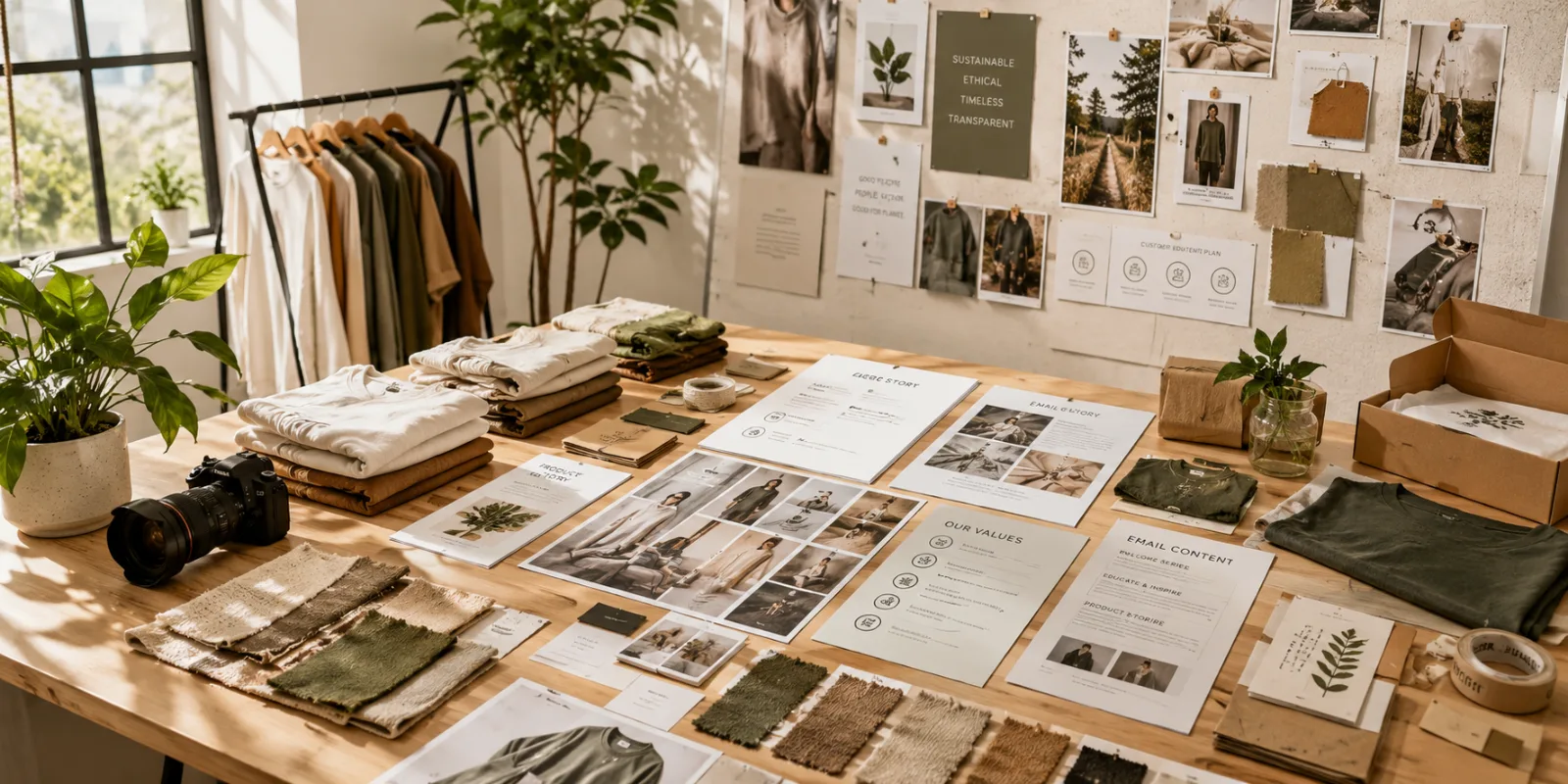
Many sustainable fashion brands make the mistake of building their story around guilt. They tell customers everything wrong with fashion, but they do not give them a positive reason to buy. A strong sustainable brand should educate customers while still making the product desirable, stylish, comfortable, and useful.
What Customers Need to Believe
- Customers should understand:
- What the brand stands for
- Why the product is useful
- Why the price makes sense
- How the product is made
- How it should be cared for
- How long it is designed to last
- What sustainability claims are supported
- Why the brand is different
Storytelling Should Connect Product and Values
If your brand focuses on durability, show construction details. If you use deadstock fabric, explain limited availability. If you produce small batches, explain how that reduces overstock. If you use organic cotton, explain why it fits your product.
The story should support the product, not replace it.
Build Owned Channels
Do not rely only on social media. Build an email list, blog, customer community, and website content. Sustainable fashion requires education, and owned channels help you explain details clearly.
12. Think About Circularity Before You Launch
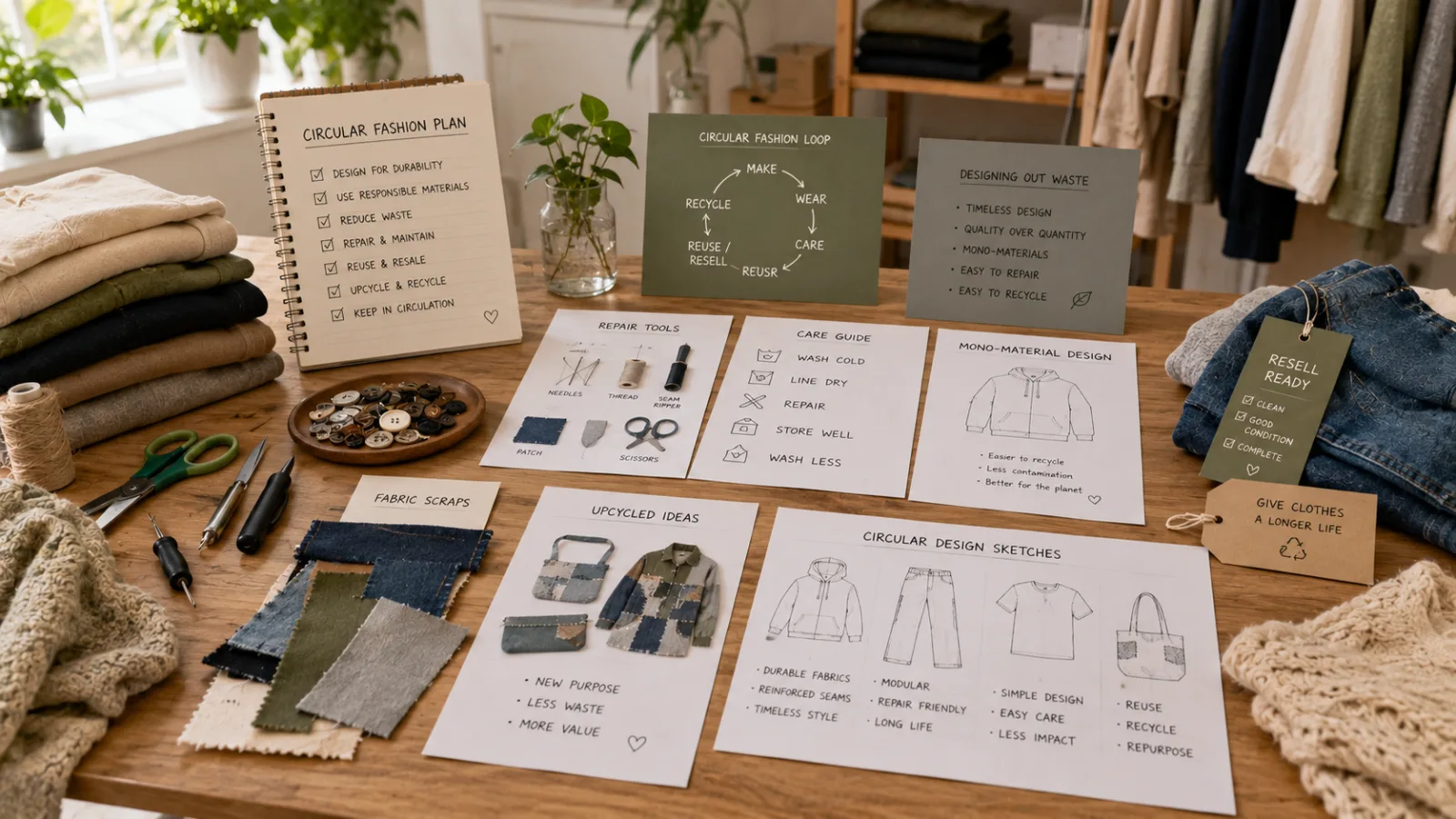
Circularity means designing products and systems so materials stay in use longer and waste is reduced. This can include repair, resale, recycling, upcycling, take-back programs, mono-material design, modular parts, and durable construction. A new brand does not need a full circular system on day one, but it should think about end-of-life from the start.
Circular Design Questions
- Can the garment be repaired?
- Can buttons, zippers, or trims be replaced?
- Is the fabric blend recyclable?
- Can customers resell it easily?
- Can the product be upcycled?
- Can scraps be reused?
- Are trims making recycling harder?
- Can the garment last long enough to justify production?
Start Simple
Small brands can start with simple circular practices:
- Repair instructions
- Spare buttons
- Care guides
- Resale encouragement
- Small-batch production
- Deadstock fabric use
- Fabric scrap reuse
- Take-back partnerships later
- Durable timeless design
Circularity is not just about recycling. It is about designing less waste into the system from the beginning.
Common Mistakes to Avoid When Starting a Sustainable Fashion Brand
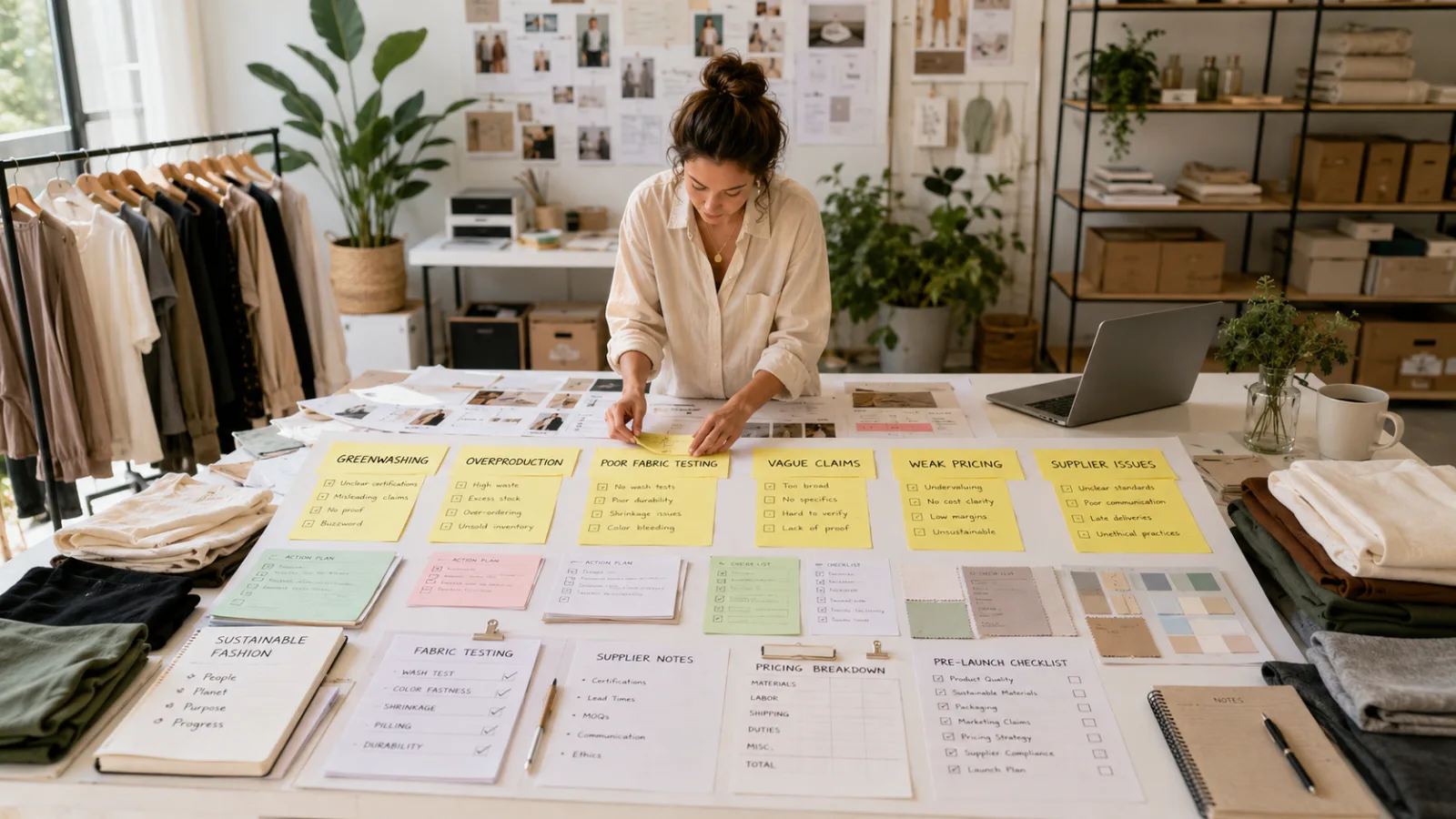
Starting a sustainable fashion brand is rewarding, but many founders make avoidable mistakes.
Mistake 1: Starting With Fabric Before Customer
A sustainable fabric does not guarantee a product people want. Start with customer need.
Mistake 2: Making Vague Claims
Avoid unclear words like eco, conscious, green, and sustainable without proof.
Mistake 3: Overproducing
Large MOQ can create waste and cash flow problems.
Mistake 4: Ignoring Product Quality
Poor quality creates returns, waste, and unhappy customers.
Mistake 5: Pricing Too Low
Responsible production costs money. Underpricing can make the business unsustainable.
Mistake 6: Choosing Suppliers Too Quickly
Suppliers must understand materials, quality, documentation, and timelines.
Mistake 7: Not Testing Samples
Always test fit, washing, shrinkage, pilling, comfort, and colorfastness.
Mistake 8: Treating Sustainability as Marketing Only
Sustainability must show up in product decisions, not only brand messaging.
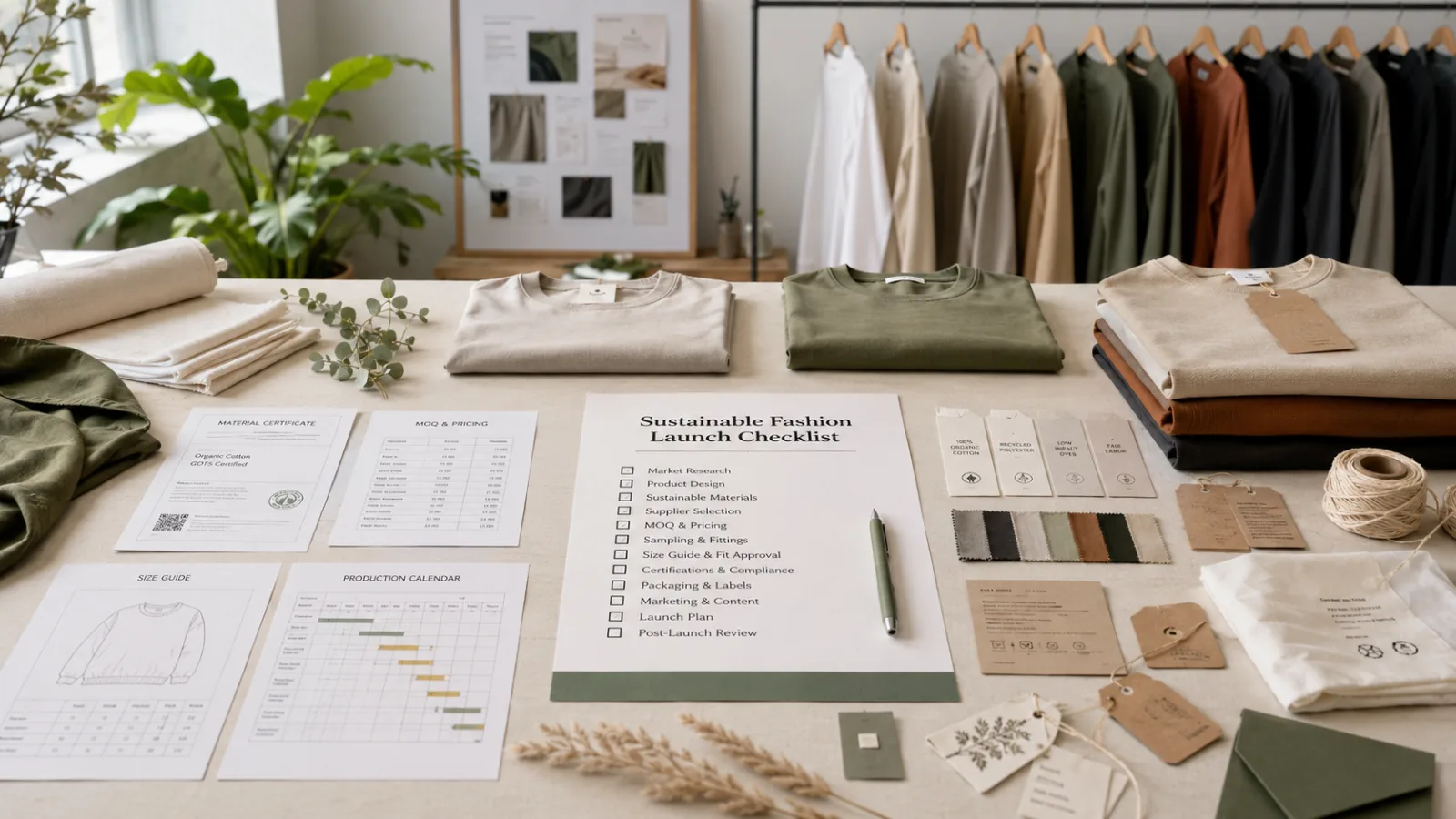
Sustainable Fashion Brand Launch Checklist
- Use this checklist before launching your brand:
- Have we defined our sustainability mission?
- Do we know our target customer?
- Is the product desirable beyond sustainability?
- Have we chosen materials based on performance and impact?
- Can we prove our material claims?
- Have we tested fabric quality?
- Have we selected responsible suppliers?
- Do we understand MOQ?
- Have we calculated landed cost?
- Is our pricing realistic?
- Have we planned inventory carefully?
- Are our claims specific and honest?
- Have we created care instructions?
- Have we reduced unnecessary packaging?
- Do we have product photos and size guides?
- Have we planned fulfillment and returns?
- Do we have a customer feedback process?
- Can we improve after launch?
This checklist helps new founders launch with more structure and fewer costly mistakes.
ApparGlobal Internal Link Section
For sustainable fashion brands, responsible product development becomes much easier when sourcing, fabric selection, sampling, MOQ planning, quality control, and production timelines are connected from the beginning. A brand may have strong sustainability values, but the final product still depends on supplier capability, fabric behavior, trim choices, inventory discipline, and quality standards.
Many new sustainable apparel brands struggle because they focus on material claims before building a practical production system. This can lead to high costs, unclear certifications, weak samples, late production, overstock, poor fit, and unsupported sustainability messaging. Better planning helps brands reduce waste and avoid making promises they cannot prove.
Companies such as ApparGlobal help clothing brands align material sourcing, vendor coordination, tech packs, sample review, MOQ planning, production timelines, quality control, and scalable manufacturing workflows. For brands developing sustainable T-shirts, hoodies, activewear, kidswear, uniforms, private label apparel, or custom collections, this kind of production-focused support can make responsible manufacturing more structured and reliable.
When brands work with a partner that understands fabric behavior, supplier communication, trim standardization, cost breakdowns, quality checkpoints, and bulk production requirements, they can build sustainable fashion products that are more practical, more transparent, and more ready for real customers.
Final Thoughts
Starting your own sustainable fashion brand is not just about choosing eco-friendly fabrics or writing responsible messaging. It is about building a better system for how products are designed, sourced, made, sold, used, and handled after use.
A sustainable fashion brand needs a clear mission, a real customer, thoughtful materials, reliable suppliers, realistic MOQ, strong product quality, honest claims, careful inventory planning, and financially sound pricing. Without these foundations, even the best intentions can lead to overproduction, weak margins, greenwashing, and products that do not last.
The most successful sustainable brands do not try to be perfect. They try to be clear, consistent, and honest. They make better choices where they can. They explain those choices simply. They keep improving after launch.
For new founders, the best starting point is not “How do I look sustainable?” It is “How do I build a product and business model that reduces waste, serves customers well, treats production seriously, and can survive long term?”
That mindset creates a stronger brand. It helps you avoid empty claims and build something people can trust. Sustainable fashion is not only about what your clothing is made from. It is about how responsibly your entire brand is built.