
Struggling to name your fashion label? Follow these ten essential steps to create a memorable, SEO-friendly brand name that resonates with your fashion brand.
In today’s competitive fashion industry, building a recognizable brand requires more than attractive products and strong visual design. Customers encounter hundreds of clothing labels across social media, online marketplaces, retail stores, advertisements, and influencer content. A distinctive fashion brand name can help your label become easier to recognize, remember, discuss, and search for. Your name is often the first element of the brand that potential customers notice. Before they inspect your stitching, understand your materials, or read your story, they may already form assumptions based on the words you have chosen. A name can make a fashion label feel luxurious, youthful, sustainable, experimental, minimal, athletic, romantic, or rebellious.
A strong fashion brand name should do more than sound attractive. It should support your positioning, connect with your intended audience, work across digital and physical channels, and remain relevant as the business grows. It should also be easy enough to pronounce, spell, and remember while remaining distinctive enough to stand apart from competing labels.
Choosing that name can be difficult. Founders often become attached to the first idea that sounds appealing, only to discover that the domain is unavailable, the social handles are confusing, the name is difficult to trademark, or its meaning does not work in another market.
This guide explains 10 practical steps for creating a fashion brand name that is creative, memorable, strategically useful, and suitable for long-term growth. It also includes naming formulas, evaluation criteria, common mistakes, testing methods, and a final checklist to help you move from a large collection of ideas to one confident choice.

Why Your Fashion Brand Name Matters
A fashion brand name is not merely a label placed above a website or printed on a garment tag. It becomes a central part of how customers identify, discuss, and remember the business.
A well-chosen name can support several important brand functions.
It Creates the First Impression
Customers may form an immediate opinion about your fashion label based on its name. A refined name may suggest luxury, while an energetic name may feel more appropriate for activewear or youth-focused streetwear.
The name should create an impression that matches the experience your products eventually deliver.
It Supports Recognition
A distinctive name is easier to recognize across a website, social media profile, hangtag, shopping bag, garment label, advertisement, or retail display.
When customers repeatedly encounter the same clear identity, brand recognition becomes stronger.
It Communicates Positioning
A fashion brand name can hint at the label’s world without describing every product. It may communicate simplicity, craftsmanship, innovation, heritage, rebellion, femininity, performance, or environmental responsibility.
It Influences Word-of-Mouth Marketing
A name that is easy to pronounce and remember is easier for customers to recommend. If people cannot confidently say or spell the name, they may struggle to find the brand again or share it with friends.
It Affects Digital Discoverability
A distinctive brand name can make branded search results easier to own over time. If the name is too generic, it may compete with ordinary dictionary terms, unrelated businesses, and product categories.
It Can Support Legal Protection
A more distinctive name is often easier to differentiate from existing businesses than a highly descriptive or generic phrase. Legal availability still needs to be checked in every relevant market.
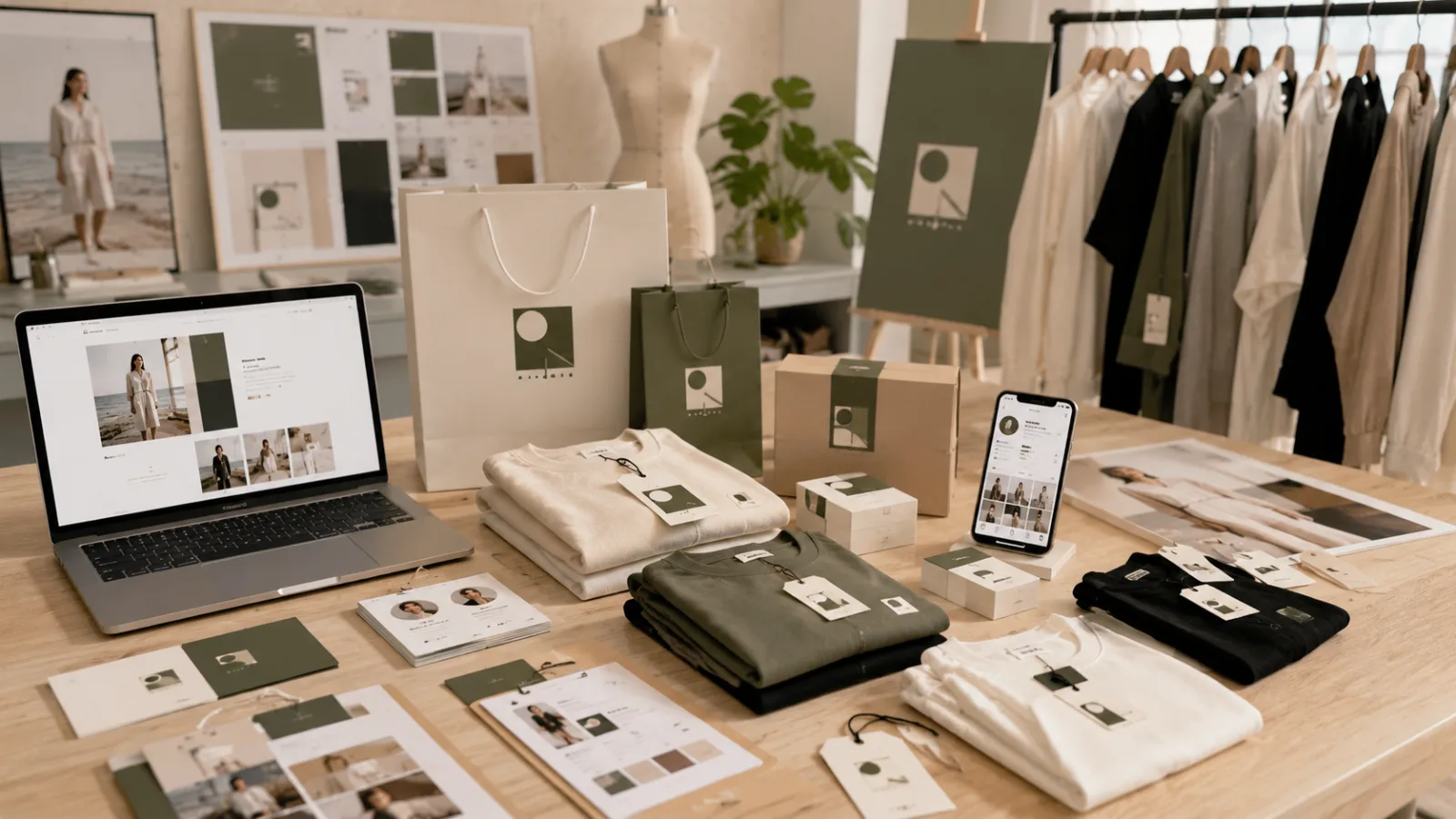
It Shapes Future Brand Assets
Your name influences:
- Logo design.
- Typography.
- Packaging.
- Garment labels.
- Website domain.
- Social media handles.
- Advertising copy.
- Collection names.
- Retail signage.
- Brand storytelling.
Choosing carefully at the beginning can reduce the cost and disruption of renaming later.
What Makes a Strong Fashion Brand Name?
There is no single naming formula that works for every clothing business. However, successful fashion brand names usually share several qualities.
A strong name should ideally be:
- Distinctive: It should not sound interchangeable with dozens of competitors.
- Memorable: Customers should be able to recall it after limited exposure.
- Relevant: It should fit the brand personality, audience, and positioning.
- Easy to pronounce: People should feel comfortable saying it aloud.
- Easy to spell: Customers should be able to search for it without confusion.
- Visually attractive: It should work in logos, labels, packaging, and website headers.
- Flexible: It should allow the business to expand into additional products.
- Culturally appropriate: It should avoid unintended meanings in important markets.
- Digitally usable: Suitable domains and social handles should be realistically obtainable.
- Legally reviewable: It should be checked for trademarks and confusing similarity.
Not every name will perform perfectly in all categories. Some successful fashion brands use unusual spellings or abstract words. The important question is whether those choices are intentional and supported by a clear branding strategy.
10 Steps to Create a Unique Fashion Brand Name
Step 1: Define Your Fashion Brand Identity
Do not begin by randomly combining attractive words. Begin by clarifying what your fashion business represents.
A brand name becomes stronger when it grows from a clear identity. If your brand positioning is vague, your naming ideas will also feel inconsistent.
Ask the following questions:
- What type of clothing will you sell?
- Who is the collection designed for?
- What price level will the brand occupy?
- What emotions should customers associate with it?
- What visual style defines the label?
- What problem or desire does the product address?
- What makes the brand different from competitors?
- What values guide product development?
- What type of lifestyle does the brand represent?
- Where do you expect the business to grow?
Define Your Fashion Category
A name for a luxury eveningwear label should generally feel different from a name for a youth streetwear line.
Possible categories include:
- Luxury fashion.
- Streetwear.
- Activewear.
- Sustainable clothing.
- Modest fashion.
- Bridalwear.
- Children’s clothing.
- Resortwear.
- Denim.
- Workwear.
- Casual basics.
- Plus-size fashion.
- Accessories.
- Performance apparel.
- Boutique womenswear.
Define Your Brand Personality
Imagine the brand as a person. Is it:
- Bold or understated?
- Modern or traditional?
- Playful or serious?
- Accessible or exclusive?
- Romantic or practical?
- Minimal or expressive?
- Refined or rebellious?
- Technical or artistic?
Choose three to five personality words that every possible name should support.
Create a One-Sentence Brand Positioning Statement
A useful format is:
We create [product category] for [target customer] who wants [main benefit or identity], expressed through [style, material, or design difference].
For example:
We create elevated everyday clothing for creative professionals who want minimalist pieces with strong tailoring and responsible material choices.
This statement gives your naming process direction.
Should You Use a SWOT Analysis?
A SWOT analysis can help clarify the business context:
- Strengths: What does your brand do especially well?
- Weaknesses: Where might the business struggle?
- Opportunities: What market gap can the label address?
- Threats: Which competitors or trends may challenge it?
SWOT analysis does not generate the final name, but it can help you avoid choosing one that conflicts with your actual positioning.
Practical Exercise
Create a one-page brand identity sheet containing:
- Product category.
- Target customer.
- Price positioning.
- Three to five personality words.
- Visual direction.
- Brand values.
- Long-term product plan.
- One-sentence positioning statement.
Do not evaluate names until this sheet is complete.

Step 2: Understand Your Target Customer
A name does not need to appeal to everyone. It needs to feel relevant to the people most likely to buy from your brand.
A teenage streetwear audience may respond to a different naming style than professionals shopping for premium workwear. Parents buying organic baby clothing may value softness, trust, and simplicity, while performance athletes may respond to energy, precision, and movement.
Consider your customer’s:
- Age range.
- Location.
- Income or spending behavior.
- Lifestyle.
- Fashion influences.
- Shopping platforms.
- Social media habits.
- Cultural references.
- Values.
- Preferred brands.
- Product priorities.
- Reasons for buying fashion.
Consider Emotional Motivation
Customers do not buy clothing only for practical reasons. They may buy to feel:
- Confident.
- Attractive.
- Comfortable.
- Creative.
- Professional.
- Powerful.
- Rebellious.
- Responsible.
- Included.
- Distinctive.
- Connected to a community.
Your brand name should support the emotional promise behind the product.
Use Customer Language Carefully
Review how your ideal customers describe their style, but do not simply copy popular phrases. Trend language can become outdated quickly.
Look for lasting themes rather than temporary slang.
For example, a streetwear audience may value individuality and cultural relevance, but building the entire brand around a short-lived phrase can reduce longevity.
Practical Exercise
Write a short customer profile:
Our ideal customer is a [age/lifestyle description] who values [three priorities], shops through [main channels], and wants clothing that makes them feel [desired emotion].
Then ask whether each potential name would feel natural in that customer’s world.
Step 3: Analyze Competitor Brand Names
Competitive analysis is not about copying existing labels. It is about understanding the naming environment so your brand does not disappear into it.
Create a list of direct and indirect competitors. Review:
- Their name length.
- Word type.
- Language.
- Tone.
- Spelling.
- Sound.
- Meaning.
- Logo treatment.
- Market positioning.
- Domain structure.
- Social handle format.
Common Fashion Naming Patterns
You may notice patterns such as:
- Founder or surname names.
- Single invented words.
- Geographic references.
- Initials.
- Two-word combinations.
- Conceptual dictionary words.
- French- or Italian-inspired language.
- Nature references.
- Numbers.
- Collective or studio terms.
- Product-related names.
- Abstract names with no direct fashion meaning.
Knowing these patterns helps you decide whether to fit into category expectations or intentionally challenge them.

Look for Naming Gaps
Suppose most competitors in your sustainable fashion category use words such as “green,” “eco,” “earth,” and “conscious.” Choosing another similar combination may make your brand feel generic.
A stronger opportunity might be a distinctive symbolic or invented name that expresses responsibility through the broader brand story rather than directly describing it.
Avoid Confusing Similarity
Do not create a name that looks, sounds, or feels too close to an existing brand. Changing one letter may not create enough distinction.
Confusing similarity can create:
- Customer mistakes.
- Search competition.
- Trademark problems.
- Social media confusion.
- Negative brand perception.
- Rebranding costs.
Practical Exercise
Create a competitor name map with four columns:
Use the final column to guide your naming direction.
Step 4: Build a Keyword, Theme, and Story Bank
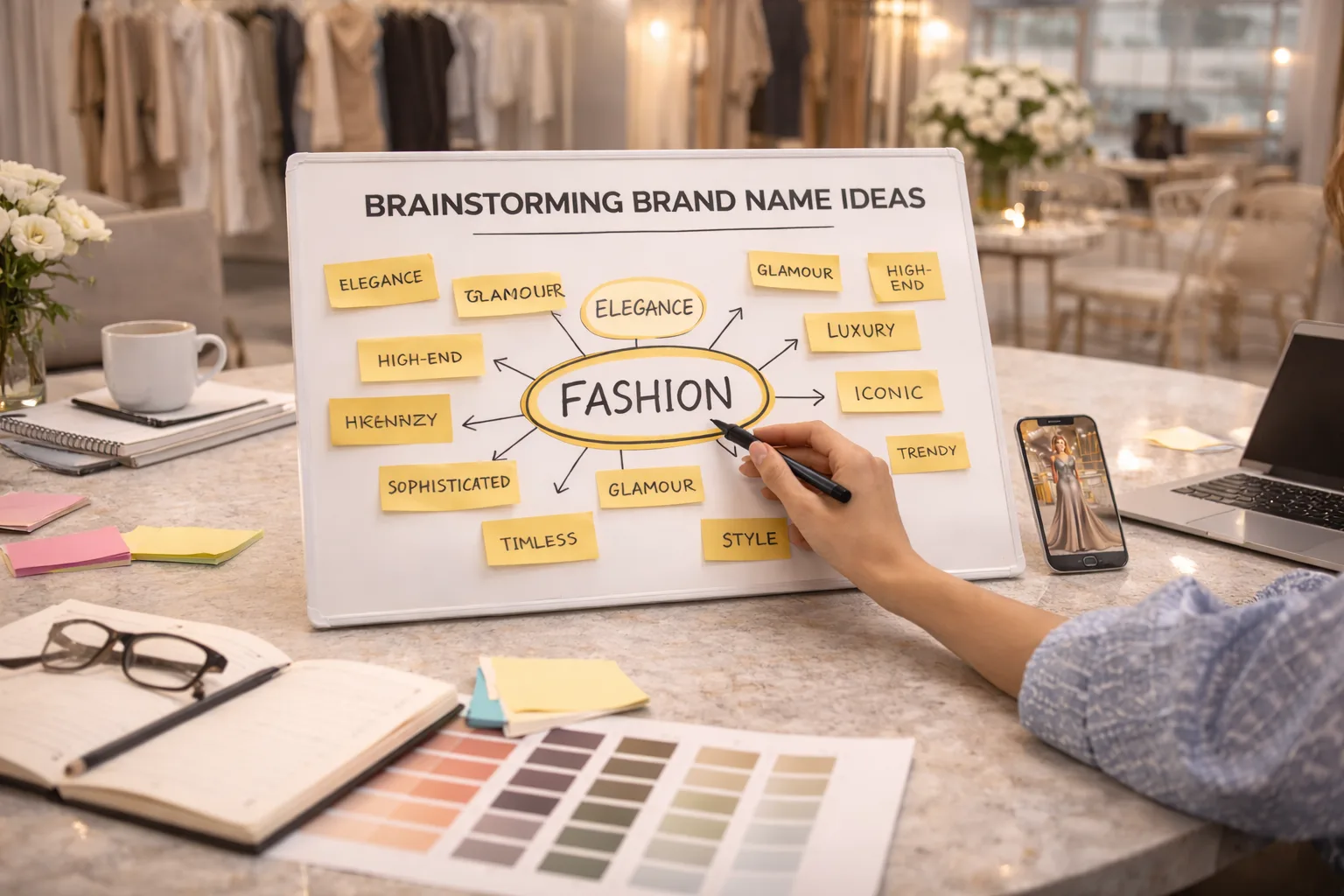
Now begin generating raw naming material. At this stage, do not try to find the perfect name. Build a broad bank of words, concepts, sounds, images, and stories connected to your brand.
Create Multiple Word Categories
Organize your ideas into groups.
Product and Construction Words
Examples might relate to:
- Thread.
- Weave.
- Form.
- Cut.
- Line.
- Stitch.
- Fold.
- Grain.
- Loom.
- Drape.
- Structure.
- Silhouette.
Emotion and Identity Words
Consider words connected to:
- Freedom.
- Confidence.
- Calm.
- Motion.
- Strength.
- Curiosity.
- Belonging.
- Elegance.
- Rebellion.
- Renewal.
Nature and Place Words
Potential themes include:
- Coast.
- Horizon.
- Forest.
- Stone.
- River.
- Bloom.
- Desert.
- Sky.
- Mountain.
- Light.
- Season.
Heritage and Personal Story
Explore:
- Family names.
- Childhood locations.
- Cultural references.
- Founding experiences.
- Craft traditions.
- Meaningful dates.
- Historical figures.
- Personal symbols.
- Languages connected to the founder.
Visual and Design Language
Use words connected to your aesthetic:
- Minimal.
- Raw.
- Soft.
- Sharp.
- Fluid.
- Quiet.
- Bold.
- Sculpted.
- Layered.
- Refined.
- Unfinished.

Should a Fashion Brand Name Include SEO Keywords?
A fashion brand name does not need to contain a high-volume search keyword to succeed online. Generic phrases such as “Affordable Women’s Clothing Store” may describe the business but are difficult to distinguish and protect.
A unique brand name can develop strong search visibility through:
- Optimized product pages.
- Category content.
- Brand storytelling.
- Backlinks.
- Social mentions.
- Reviews.
- Public relations.
- Consistent use across platforms.
Use descriptive words only when they feel natural and strengthen the identity. Do not sacrifice memorability merely to place a search term in the name.
Practical Exercise
Generate at least 50 raw words across the categories above. Include objects, emotions, sounds, places, colors, actions, materials, and symbolic concepts.
The larger your starting bank, the less likely you are to settle for an obvious or generic name.
Step 5: Test for Memorability and Appeal
Audience Feedback
Once you have a list of potential names, test their memorability and appeal with a focus group or through online surveys. Gathering feedback will help you gauge how your potential customers perceive each name and which ones resonate best. This step ensures that your brand name aligns with customer perception and expectations.
Emotional Connect
A brand name should evoke emotion and create a connection with your audience. Analyze whether the names you’re considering align with the feelings and image you want to project.
Combine Two Relevant Words
Pair words from different categories.
Examples of structures:
- Material + emotion.
- Place + movement.
- Color + form.
- Nature + construction.
- Personal reference + design term.
The words do not need to describe the clothing literally. Their combined impression should feel appropriate.
Step 6: Test Pronunciation, Spelling, and Memorability
A name may look attractive on paper but fail when spoken aloud. Fashion brands need names that can move easily between conversation, search, packaging, social media, and retail.
Perform the Pronunciation Test
Ask several people to read the name aloud without guidance.
Watch for:
- Different pronunciations.
- Long pauses.
- Incorrect syllables.
- Embarrassment or uncertainty.
- Confusion about emphasis.
An unusual pronunciation is not automatically a problem, but the brand must decide whether it is willing to correct customers repeatedly.
Perform the Spelling Test
Say the name aloud and ask someone to write it down.
If most people spell it incorrectly, consider whether the creative value is worth the digital friction.
Perform the Memory Test
Show participants a list of possible names briefly. Ask them to recall the names later without looking.
The names remembered most often may have stronger sound, rhythm, imagery, or emotional association.
Perform the Recommendation Test
Ask:
Would you feel comfortable recommending this brand verbally to a friend?
A name should be easy enough to share in natural conversation.
Perform the Visual Test
Place the name in realistic formats:
- Garment label.
- Website header.
- Social profile.
- Packaging box.
- Hangtag.
- Shopping bag.
- Embroidery.
- Small mobile advertisement.
A name that looks appealing in large type may become unreadable on a small woven label.
Look for Negative Sound Associations
Say the name quickly, slowly, and in different accents. Check whether it resembles an unwanted phrase, competitor, joke, or inappropriate word.

Step 7: Make Sure the Name Can Grow With the Brand
A fashion business may launch with one product category and expand later. A name that is too narrow can make that growth feel confusing.
For example, a name built entirely around T-shirts may feel limiting if the company later sells outerwear, footwear, bags, fragrance, or home products.
Review Your Future Product Roadmap
Consider where the business may move during the next five to ten years.
Possible expansion areas include:
- Additional clothing categories.
- Men’s, women’s, or children’s lines.
- Footwear.
- Accessories.
- Beauty.
- Home textiles.
- Retail stores.
- International markets.
- Collaborations.
- Licensing.
The name does not need to describe every future category, but it should not make expansion unnecessarily difficult.
Avoid Names Tied to Temporary Trends
Fashion changes quickly. Slang, platform-specific phrases, viral expressions, and trend terms may lose relevance.
A name can feel contemporary without depending entirely on one temporary cultural moment.
Consider Price-Positioning Flexibility
A playful name may work for accessible casualwear but become difficult if the brand later moves into luxury. Similarly, an extremely formal name may feel mismatched with relaxed basics.
Choose a name aligned with your intended long-term position.
Test Global Compatibility
Before entering international markets, investigate:
- Meaning in major languages.
- Pronunciation in target regions.
- Cultural associations.
- Religious or political sensitivity.
- Existing businesses in other countries.
- Availability of local domains or handles.
- Whether the name is difficult to write in another script.
Practical Exercise
Complete the sentence:
This name would still make sense if we expanded into ________.
Test each shortlisted name against at least five possible future categories.

Step 8: Check Digital Availability and Search Potential
Your fashion brand will likely appear across websites, social platforms, marketplaces, email, digital advertising, and online search. The name must function effectively in this environment.
Check Domain Availability
Review relevant domain options, especially the most familiar extension in your target market.
A matching .com domain can be valuable, but it is not the only option. Alternatives may include:
- Country-specific domains.
- Category-based extensions.
- A short supporting word such as “wear,” “studio,” “label,” “official,” or “shop.”
- A carefully structured brand domain.
Avoid domains that are excessively long, confusing, or full of hyphens.
Check Social Media Handles
Search the name across:
- Instagram.
- TikTok.
- Facebook.
- Pinterest.
- YouTube.
- LinkedIn.
- Snapchat.
- Relevant regional platforms.
Exact handles may not always be available. Consistent variations are usually better than using a completely different username on each channel.
Search the Name Online
Search the exact phrase and close spelling variations.
Look for:
- Existing fashion labels.
- Businesses in other industries.
- Products.
- Public figures.
- Geographic locations.
- Negative news.
- Slang meanings.
- Adult or inappropriate associations.
- Similar domains.
- Search results that may dominate the term.
Evaluate Branded Search Distinctiveness
A unique or invented name may initially have no search volume. That is not necessarily a disadvantage. It may become easier to dominate branded results as awareness grows.
A highly generic name may face stronger competition from unrelated pages.
Avoid Keyword Stuffing the Brand Name
Do not force phrases such as “best sustainable affordable luxury fashion” into the name. SEO performance is built through the entire website, not only through the brand title.
Use your product and category keywords in:
- Collection pages.
- Product descriptions.
- Blog content.
- Metadata.
- Internal links.
- Image alt text.
- FAQs.
- Digital PR.
- Backlink campaigns.
Check Email Practicality
Consider how the name will look in email addresses such as:
Extremely long or complicated domains create unnecessary friction.
Practical Exercise
Create a digital availability sheet for every shortlisted name:

Step 9: Conduct Trademark and Legal Checks
A name should not be finalized simply because the domain and social handles are available. Domain ownership does not automatically provide trademark rights.
Trademark rules vary by country, product category, and legal jurisdiction. A proper review should assess both exact matches and names that may be confusingly similar.
Begin With Preliminary Searches
Search:
- National trademark databases.
- Regional trademark systems.
- Company registries.
- Search engines.
- Ecommerce marketplaces.
- Social platforms.
- Fashion directories.
- Domain records.
- Similar spellings and pronunciations.
Fashion and apparel products are often registered within specific trademark classes, but the correct filing strategy depends on the products and services your business will offer.
Look Beyond Exact Matches
A name may still create risk even if no identical trademark exists.
Review similarities in:
- Pronunciation.
- Spelling.
- Appearance.
- Meaning.
- Product category.
- Customer audience.
- Distribution channel.
- Overall commercial impression.

Step 10: Finalize the Name and Build Its Brand Story
After strategic, audience, digital, and legal checks, you should have a short list of viable options. The final decision should balance logic with emotional conviction.
Create a Final Shortlist
Limit the list to three to five strong candidates. Too many options can make the decision less focused.
Each finalist should meet the essential criteria:
- Fits the brand identity.
- Appeals to the target audience.
- Is easy enough to say and spell.
- Feels distinctive.
- Works visually.
- Allows future growth.
- Has realistic digital availability.
- Has passed preliminary legal checks.
Use a Brand Name Scorecard
Score each finalist from 1 to 5.
A scorecard should support judgment, not replace it. The highest mathematical score may still feel wrong if the name lacks emotional strength.
Seek Focused Feedback
Ask specific questions rather than “Do you like this name?”
Better questions include:
- What type of fashion brand do you imagine?
- What price level does the name suggest?
- Which three words describe it?
- How would you spell it after hearing it once?
- Which name do you remember after ten minutes?
- Does anything feel confusing or negative?
- Which name would you be most curious to explore?
Do not allow one person’s personal taste to control the decision. Look for patterns across responses.
Reach Internal Alignment
Founders, designers, marketers, and investors should understand why the name was selected. Complete agreement may not always be possible, but the final choice should have clear strategic reasoning.
Develop the Name’s Story
Once selected, define:
- What the name means.
- Where it came from.
- How it relates to the brand.
- What emotion it represents.
- How it connects to the products.
- How it supports the founder’s vision.
The story should be genuine. Avoid inventing an elaborate history that customers may perceive as artificial.
Create the Visual Identity
After the name is cleared, begin developing:
- Logo.
- Wordmark.
- Typography.
- Color palette.
- Garment labels.
- Hangtags.
- Packaging.
- Website.
- Social templates.
- Photography direction.
- Brand guidelines.
Register and Secure Key Assets
Secure appropriate:
- Domains.
- Social media accounts.
- Trademark applications.
- Company registrations.
- Email accounts.
- Marketplace seller names.
- Relevant usernames.
Plan the Launch
Introduce the name consistently through:
- Website launch.
- Founder story.
- Social media.
- Email.
- Press outreach.
- Influencer partnerships.
- Pop-up events.
- Packaging.
- Product labels.
- Behind-the-scenes content.
Consistency helps the audience connect the new name with one clear brand identity.
Fashion Brand Naming Formulas to Explore
Naming formulas can help when brainstorming feels unstructured. They are starting points, not rules.
Founder or Surname
Formula: Founder name or surname
Best suited to designer labels, luxury fashion, personal craftsmanship, and heritage positioning.
Two Concept Words
Formula: Emotion + object
Formula: Nature + movement
Formula: Place + material
Formula: Color + structure
This method can create evocative two-word names.
Invented Word
Formula: Fragment of word A + fragment of word B
Useful for creating distinctiveness, provided pronunciation and spelling remain manageable.
Symbolic Word
Choose a single word associated with your values, worldview, or desired customer emotion.
Geographic Inspiration
Use a location, landscape feature, street, district, or regional reference connected to the brand story.
Check whether the geographic term is legally available and culturally appropriate.
Initials or Abbreviation
Combine founder initials, a meaningful phrase, or several concept words.
Make sure the result is memorable and not already associated with another major organization.
Historical or Cultural Reference
Draw inspiration from art, architecture, literature, mythology, or traditional craft—but research the reference carefully and use it respectfully.
Sound-Based Name
Choose a name for rhythm, repetition, or phonetic appeal. Fashion names often benefit from strong cadence, but meaning and cultural interpretation should still be checked.
How ApparGlobal Can Support Your Fashion Brand After Naming
Choosing the name is an important milestone, but the brand becomes meaningful only when it is connected to a strong product, consistent quality, and reliable customer experience.
After establishing a name and identity, fashion founders need to develop products that reflect the promise created by the brand.
ApparGlobal can support apparel businesses through:
- Sampling Program for testing garment fit, fabric, trims, construction, and finishing.
- Private Label Program for building customized collections from established product foundations.
- Manufacturing Support for coordinating apparel production.
- Vendor Program for exploring suitable suppliers.
- Manufacturer Catalog for reviewing potential production options.
- Resources for learning more about fashion sourcing, product development, and manufacturing.
A refined brand name may create curiosity, but the quality of the clothing determines whether customers trust the label and return. Product planning, sampling, sourcing, and quality control should therefore develop alongside the visual identity and launch strategy.

Final Fashion Brand Naming Checklist
Before committing to your new fashion brand name, confirm the following.
Brand Strategy
- The brand identity is clearly defined.
- The target customer is documented.
- The name fits the intended price and market position.
- The name supports the desired emotional impression.
- The name aligns with the design aesthetic.
Creative Quality
- The name feels distinctive.
- It does not imitate a major competitor.
- It is memorable.
- It has a clear story or symbolic value.
- It works in visual branding.
Practical Use
- Customers can pronounce it.
- Customers can spell it with reasonable accuracy.
- It fits on labels and packaging.
- It remains readable on mobile screens.
- It works in email addresses.
- It does not rely on a temporary trend.
Growth Potential
- The name can support additional categories.
- It works beyond the first collection.
- It is suitable for international expansion.
- Its meaning has been checked in relevant languages.
- It does not create unwanted cultural associations.
Digital Review
- Suitable domain options have been reviewed.
- Social handles have been checked.
- Search results have been investigated.
- Similar spellings have been searched.
- Online reputation concerns have been checked.
Legal Review
- Preliminary trademark searches have been completed.
- Company-name registries have been checked.
- Similar names have been assessed.
- Professional legal advice has been considered.
- Registration plans are prepared for important markets.
Launch Preparation
- The visual identity is ready.
- Domains and social accounts are secured.
- Trademark applications are underway where appropriate.
- Garment labels and packaging are consistent.
- The brand story is clear.
- The marketing launch plan is prepared.

Frequently Asked Questions About Fashion Brand Names
1. How do I create a unique fashion brand name?
Start by defining your brand identity, target customer, product category, personality, and future goals. Research competitors, build a wide word bank, experiment with several naming formulas, and test the strongest options for pronunciation, memorability, digital availability, and legal risk.
2. Should a fashion brand name describe the clothing?
Not necessarily. A descriptive name can make the product category clear, but an abstract, symbolic, founder-based, or invented name may offer greater flexibility and distinctiveness. The best choice depends on the brand’s positioning and long-term strategy.
3. Should I include fashion keywords in the brand name for SEO?
A fashion brand does not need an exact product keyword in its name to perform well in search. Distinctiveness, website optimization, product pages, content, backlinks, reviews, and consistent digital branding are usually more important than forcing a keyword into the name.
4. How short should a fashion brand name be?
There is no fixed length, but the name should be easy to remember, pronounce, display, and apply to labels. One- and two-word names are common, but a longer name can still work when it has good rhythm and remains practical.
5. How can I check whether a clothing brand name is available?
Search trademark databases, business registries, search engines, domains, social media platforms, online marketplaces, and industry directories. Check exact and similar names. For a serious commercial launch, consult a qualified trademark professional.
6. Is domain availability enough to confirm I can use a name?
No. A domain may be available even when another business has trademark rights or prior commercial use. Domain registration and trademark clearance are separate issues.
7. Can I use my own name for a fashion label?
Yes. Founder and surname brands are common in fashion. Check pronunciation, memorability, legal availability, digital usability, and whether you want the founder’s identity permanently connected to the company.
8. What makes a fashion brand name memorable?
Memorable names often have clear rhythm, distinctive sound, strong imagery, emotional meaning, simple pronunciation, and a close connection with the brand’s identity.
9. Should I use a foreign word in my fashion brand name?
You can, but verify the translation, pronunciation, cultural context, trademark status, and possible meanings in different regions. Avoid using language only to create a superficial impression of luxury.
10. What should I do after selecting the name?
Complete appropriate legal checks, secure domains and social handles, begin trademark registration where suitable, develop the visual identity, prepare the brand story, and make sure the product development and customer experience support the name’s promise.

Conclusion
Creating a unique fashion brand name requires both creativity and strategic thinking. The strongest names do not come from choosing a fashionable word at random. They grow from a clear understanding of the brand’s identity, audience, products, values, competitive environment, and long-term goals. Begin by defining what the label represents and who it is designed to serve. Research competitors so you can identify crowded naming patterns and opportunities to differentiate. Build a broad word and theme bank, experiment with several naming techniques, and test the strongest ideas for pronunciation, spelling, memorability, and visual impact.
The process should also include practical checks. A promising name must work across websites, social media, garment labels, packaging, email, advertising, and retail environments. It should remain flexible enough to support new collections and international growth. Most importantly, complete proper trademark and legal research before investing heavily in the launch. An available domain does not automatically mean the name is legally safe to use.
The final name should feel like a natural expression of the fashion brand you are building. It should create curiosity, support recognition, and give your products a distinctive identity. But the name is only the beginning. Long-term brand strength comes from combining that identity with thoughtful design, reliable manufacturing, consistent quality, meaningful storytelling, and a customer experience people want to return to.